Big Take
1,015 episodes — Page 11 of 21
The $250 Million Bribery Charges Rocking the Adani Empire – and India
India’s Gautam Adani, one of the world’s richest men, was charged last week by US prosecutors over his alleged involvement in a $250 million bribery scheme. The indictment sent the stocks and bonds of Adani’s vast conglomerate tumbling and is the second governance crisis to hit the group in two years. On today’s Big Take Asia Podcast, host K. Oanh Ha and Bloomberg’s Menaka Doshi discuss what the charges mean for Adani’s empire and corporate India, and the implications for US-India relations. Read more: Gautam Adani Bribery Charges Impact His Net Worth, Markets Beyond IndiaFurther listening: $200 Billion, Four Heirs And One Mighty EmpireSee omnystudio.com/listener for privacy information.
New York City’s Big Battle Over Broker Fees
New York City has some of the highest housing costs in the US. In addition to sky-high rents, tenants often have to pay a fee to a real estate broker when they sign a new lease — whether they hire them or not. But that’s about to change. Today on the show, host Sarah Holder speaks with City Councilmember Chi Ossé about the passage of his bill that will eliminate upfront broker fees for most renters, and hears from supporters and opponents of the legislation. And Bloomberg reporter Paulina Cachero unpacks what the effort could mean for New York’s renters. Become a Bloomberg.com subscriber using our special intro offer at bloomberg.com/podcastoffer. You’ll get episodes of this podcast ad-free and unlock access to deep reporting, data and analysis from reporters around the world.See omnystudio.com/listener for privacy information.
Pakistan Is Getting Too Expensive For Its Middle Class – So They’re Leaving
A record number of Pakistanis are leaving at a rapid speed. Among them are some of the country’s top talent including doctors, engineers, accountants and managers. Over the last three years, one million skilled workers like them have left Pakistan.On today’s Big Take Asia Podcast, host Rebecca Choong Wilkins talks to Bloomberg’s Pakistan Bureau Chief Faseeh Mangi about what’s behind the severe brain drain in one of the world’s most populous nations, where the immigrants are going, and what it means for the country’s already fragile economy that depends on loans from the International Monetary Fund. Read more: Pakistan’s Top Talent Is Leaving the Country in Record Numbers See omnystudio.com/listener for privacy information.
As the US Turns Inward, the World Order Realigns
This year’s G-20 summit in Brazil revealed a new reality: The world order is shifting as President Joe Biden wraps up his final months in office and President-elect Donald Trump returns to power. On today’s Big Take podcast, Bloomberg’s Flavia Krause-Jackson and host David Gura join the show from Rio de Janeiro to talk through the gathering of the world’s largest economies and how they’re preparing for a new geopolitical era.See omnystudio.com/listener for privacy information.
The Shadowy Fleet of Tankers Moving Iranian Oil to China
Every year, billions of dollars of sanctioned Iranian oil finds its way to China, even though on paper the country hasn’t imported a single drop in more than two years. How? On today’s Big Take Asia podcast, host K. Oanh Ha speaks to Bloomberg’s Serene Cheong on her team’s investigation into a clandestine shipping hub off the coast of Malaysia that funnels Iranian crude to China. Read more: The Clandestine Oil Shipping Hub Funneling Iranian Crude to ChinaSee omnystudio.com/listener for privacy information.
Inflation’s Latest Victim: Brand Loyalty
Bloomberg reporter Leslie Patton has noticed a pattern looking at the earnings of mid-priced, brand name companies like Kraft and Luvs. Their sales are down, while the sales of similar products on either end of the price spectrum — cheaper generics and high-end premium goods — are up. On today’s Big Take podcast, Leslie joins host Sarah Holder to discuss how this “middle brand squeeze” is playing out on grocery store shelves. Read more: Shoppers Are Ditching Classic Brands They Once Loved Become a Bloomberg.com subscriber using our special intro offer at bloomberg.com/podcastoffer. You’ll get episodes of this podcast ad-free and unlock access to deep reporting, data and analysis from reporters around the world.See omnystudio.com/listener for privacy information.
COP29 Confronts Tensions Over Funding Clean Energy Transition
Climate leaders from around the world have convened in Baku, Azerbaijan for the UN’s biggest annual climate conference, COP29. And this year, it’s all about money. Member nations are negotiating over how much responsibility rich countries have to finance the energy transitions of smaller economies. But larger global tensions loom over the proceedings — including the reelection of Donald Trump. In today’s episode, Bloomberg’s senior climate reporter and host of Zero Akshat Rathi calls in from COP29 to update host Sarah Holder on the unfolding negotiations and how America’s new president-elect changes the conversation. See omnystudio.com/listener for privacy information.
Another Trump Term Is Coming. Is Asia Ready?
Higher tariffs. Geopolitical flare-ups. Inflammatory comments. All across Asia, countries are bracing for the return of Donald Trump. On today’s Big Take Asia Podcast, we unpack what a second Trump term means for China, India and other Asian economies – who are the potential winners and losers and what’s ahead. Host K. Oanh Ha is joined by Daniel Ten Kate, Bloomberg’s executive editor for Asia economy and government, Chan Heng Chee, the ambassador-at-large with the Singapore Foreign Ministry, and Erin Murphy, deputy director of Chair on India and Emerging Asia Economics at the Center for Strategic and International Studies. Read more: Trump Is Set to Elevate China Hawks, Deepening Beijing RiftFurther listening: The Economic Impact of Trump’s PromisesSee omnystudio.com/listener for privacy information.
Why Bitcoin Is Surging to All-Time Highs
Since Donald Trump’s reelection, Bitcoin has surged to its highest value ever, surpassing $89k per coin on Tuesday. It’s a trend playing out across cryptocurrency, an industry that could benefit from deregulation under President Trump. On today’s Big Take podcast, Bloomberg’s stacy-marie ishmael and David Gura break down whether the recent “melt up” in crypto prices is part another of boom-bust cycle or if the US’s first crypto-friendly president is likely to usher in a new era in digital assets.See omnystudio.com/listener for privacy information.
The Economic Impact of Trump’s Promises
President-elect Trump ran on a promise to help American consumers. As he prepares to take office, the question becomes whether his policies will play out the way he sold them — and how they could evolve as he tries to put them into practice. Bloomberg Economics has done the math on Trump’s plans, and chief economist Tom Orlik joined host Sarah Holder to look at what Trump’s agenda could mean for inflation, GDP and US taxpayers. Read more: Your Guide to Trump’s Day-One Agenda — From Taxes to Tariffs Become a Bloomberg.com subscriber using our special intro offer at bloomberg.com/podcastoffer. You’ll get episodes of this podcast ad-free and unlock access to deep reporting, data and analysis from reporters around the world.See omnystudio.com/listener for privacy information.
A Big Winner From Trump’s Election Victory? His Businesses
President-elect Donald Trump’s business ventures, from Truth Social to crypto, stand to benefit from his return to power. But just how much? Today on the Big Take podcast, Bloomberg’s Tom Maloney joins host David Gura to break down Trump’s business interests and assets, and explore how he could cash in on his second term in office. Read more: Donald Trump’s Billion-Dollar Windfall After Election Is Just the StartSee omnystudio.com/listener for privacy information.
Trump Wins, Trump Trade Surges
In a stunning political comeback, Donald Trump has been elected the 47th president of the United States. Just before 2:30 on Wednesday morning, he took the stage at his campaign headquarters in Mar-a-Lago, heralding the “greatest political movement of all time” after Vice President Kamala Harris’ path to the Oval Office had all but evaporated. On today’s Big Take podcast, Bloomberg’s Wendy Benjaminson joins host Sarah Holder to break down how Election Day played out, the surge of the so-called Trump Trade, and what we can expect from a second Trump term.See omnystudio.com/listener for privacy information.
Listen Now: US Election Coverage on Bloomberg Podcasts
Be in the know this election with Bloomberg Podcasts. Follow Bloomberg News Now for up-to-the minute election results, all night long. And go deeper with The Big Take podcast, featuring in-depth global analysis of the US election every day this week. See omnystudio.com/listener for privacy information.
How the World Is Bracing for a Trump or Harris Win
From conflicts in Europe and the Middle East, to global issues like trade and migration, whoever becomes the next president of the United States will have a huge impact on the rest of the world. Bloomberg’s Flavia Krause-Jackson and a team of reporters around the world asked government officials one question: How are you preparing for what happens next? Today on the Big Take podcast, she joins host David Gura to share what they found.See omnystudio.com/listener for privacy information.
Why Elon Musk Is Opening His Wallet for Donald Trump
Elon Musk has become one of Donald Trump’s most formidable — and vocal — allies. He’s spoken at Trump rallies, formed a pro-Trump PAC, and funneled more than $100 million into Trump and his allies’ campaigns. This political pivot stunned people who long thought of Musk as a hero of the green energy transition. So how did this happen? In the first episode of Citizen Elon, host Max Chafkin explains the grievances, grudges and online influences that have shaped Elon Musk’s political ideology — and the ways his money and megaphone are shaping the race. Read More: When Elon Musk Got PoliticalSee omnystudio.com/listener for privacy information.
Silicon Valley Elites Want to Block the Sun. Not Everyone’s On Board
It sounds like science fiction, but it’s real: Venture capitalists, startup founders, and Silicon Valley elites are pouring money into a controversial technology called solar radiation modification that could cool the planet by blocking the sun.Today on the show, host Sarah Holder talks to Bloomberg reporter Sophie Alexander about the international coordination needed for something like this to work, and why funding for it is ramping up even as researchers express concerns about the possible consequences. Read more: Silicon Valley’s Elite Pour Money Into Blotting Out the SunBloomberg wants to hear from you! Help make shows like ours even better by taking the Bloomberg audience survey and have a coffee on Bloomberg for doing so. Become a Bloomberg.com subscriber using our special intro offer at bloomberg.com/podcastoffer. You’ll get episodes of this podcast ad-free and unlock access to deep reporting, data and analysis from reporters around the world.See omnystudio.com/listener for privacy information.
The US Pledged to Contain China’s Tech Ambitions. It’s Not Working
China is making steady progress in its quest to dominate key industries of the future, despite years of US tariffs, export controls and sanctions. On today's Big Take Asia Podcast, host K. Oanh Ha talks to Bloomberg’s Rebecca Choong Wilkins about how the US is struggling to curb Beijing’s technological advances, and whether the upcoming election could change the dynamic. Read more: US Efforts to Contain Xi’s Push for Tech Supremacy Are Faltering Further listening: How China’s BYD Became King of the Affordable EV On Thursday, Odd Lots will dig into Bloomberg’s research on the Made in China plan, and why it largely succeeded in spite of US efforts. Subscribe here. See omnystudio.com/listener for privacy information.
Wall Street Is Betting Big on a Trump Win
With the US presidential election just over a week away, most major polls, including the latest Bloomberg/Morning Consult poll, show Vice President Harris and former President Trump in a dead heat. But Wall Street seems increasingly convinced Trump is going to win. And that is manifesting in what's come to be called “The Trump Trade.”Today on the Big Take podcast, Bloomberg Opinion’s John Authers sits down with host David Gura to break down what the trade is, and what it reveals about how Wall Street sees this election and the future of the economy. Read more: Prediction Markets Reflect That the Clock Favors TrumpSee omnystudio.com/listener for privacy information.
So Your Business Went Viral. Now What?
For a small business, going viral might sound like a good thing. But when a TikTok video turns a shop into an overnight success, that attention can come with major challenges. On today’s Big Take podcast, host Sarah Holder visits small business owners riding the wave of overnight success, and explores the economics of virality with Amanda Mull. Read more: How Online Influencers Got Addicted to Swedish Candy Amanda Mull’s “Buying Power” column Bloomberg wants to hear from you! Help make shows like ours even better by taking the Bloomberg audience survey and have a coffee on Bloomberg for doing so. Become a Bloomberg.com subscriber using our special intro offer at bloomberg.com/podcastoffer. You’ll get episodes of this podcast ad-free and unlock access to deep reporting, data and analysis from reporters around the world.See omnystudio.com/listener for privacy information.
To Save the Amazon, Brazil Is Betting You Can’t Just Save the Trees
Decades-long efforts to save Brazil’s Amazon have hit a brutal reality. Impoverished local communities often turn to agribusiness and other industries that drive deforestation. On today’s Big Take podcast, Bloomberg’s Brazil bureau chief Vanessa Dezem joins host Sarah Holder to talk through the link between poverty and deforestation and the country’s new efforts to save its rainforest by building up local economies. Read more: The Amazon’s Relentless Poverty CycleSee omnystudio.com/listener for privacy information.
How China’s BYD Became King of the Affordable EV
Started as a battery company in the 1990s in Shenzhen, BYD is now one of the best-selling EV brands in the world. Once mocked by Elon Musk, the company’s startling growth made it a global player and has sparked tariffs in the US and EU. On today’s Big Take Asia Podcast, host K. Oanh Ha talks to Bloomberg’s Gabrielle Coppola and Danny Lee about the company’s aggressive expansion and what it means for the global auto market. Read more: BYD Is Winning the Global Race to Make Cheaper EVsSee omnystudio.com/listener for privacy information.
The Big (Climate) Short
In recent years, investors of all kinds bet big on the future of the so-called Green Economy. But now, some hedge funds are shorting green stocks — a sign that investor enthusiasm may be waning. A new Bloomberg analysis examines the positions that more than 500 hedge funds have taken on the green economy. On today’s Big Take podcast, Bloomberg ESG reporter Sheryl Lee joins host David Gura to discuss the findings, and why some investors who had bet on a sustainable future are now betting against it.See omnystudio.com/listener for privacy information.
What Happens When Your School Thinks AI Helped You Cheat
The education system has an AI problem. As students have started using tools like ChatGPT to do their homework, educators have deployed their own AI tools to determine if students are using AI to cheat. But the detection tools, which are largely effective, do flag false positives roughly 2% of the time. For students who are falsely accused, the consequences can be devastating. On today’s Big Take podcast, host Sarah Holder speaks to Bloomberg’s tech reporter Jackie Davalos about how students and educators are responding to the emergence of generative AI and what happens when efforts to crack down on its use backfire. Read more: AI Detectors Falsely Accuse Students of Cheating—With Big ConsequencesSee omnystudio.com/listener for privacy information.
Bloomberg’s Trump Interview: Inside His Economic Vision for a Second Term
With the US presidential election less than a month away, and the economy top of mind for many voters, former President Donald Trump sat down for an interview with Bloomberg Editor-in-Chief John Micklethwait at the Economic Club of Chicago on Tuesday. On today’s Big Take podcast, host David Gura highlights the key takeaways from the interview. From Trump’s defense of tariffs, to his plans for the Federal Reserve and immigration, the interview offers a view of what a second Trump term could mean for the global economy.Read more: Trump Says Growth to Outpace Feared Debt, Inflation From AgendaSee omnystudio.com/listener for privacy information.
How an Infamous Vietnamese Businesswoman Engineered a $12 Billion Fraud
Vietnamese real estate tycoon Truong My Lan was convicted in April of orchestrating a $12.3 billion fraud. She was sentenced to death by lethal injection, which she is appealing. And this week, the court is expected to hand down another verdict on additional charges. On today’s Big Take Asia podcast, host K. Oanh Ha speaks to Bloomberg’s John Boudreau about how Lan was able to embezzle so much money for so long, how she went from riches to death row and what her multibillion fraud case means for one of the fastest growing economies in Asia.See omnystudio.com/listener for privacy information.
Insurers Are Struggling to Keep Up With Disasters Like Helene and Milton
In recent weeks, two monster storms have pummeled the US. Hurricanes Helene and Milton left more than 200 dead — and early estimates suggest the recovery could cost more than $100 billion. It’s a huge strain on affected homeowners and the insurance industry that’s meant to shoulder some of that burden. On today’s Big Take podcast, Bloomberg’s Leslie Kaufman joins host David Gura to talk about the increasing severity and frequency of extreme weather events, and how the new normal is changing the calculus for insurers. Read more: Federal Flood Maps Are No Match for Florida’s Double HurricaneSee omnystudio.com/listener for privacy information.
How Uber and Lyft Used ‘Lockouts’ to Deny NYC Drivers Millions
Uber and Lyft promised to give drivers independence and the flexibility to work whenever they wanted. But this summer in New York City, these ride share companies started restricting when their drivers could go online. A new Bloomberg investigation found that driver lockouts were designed to save the companies millions in minimum wage payments — and ultimately cost drivers in the process.On today’s Big Take podcast, Bloomberg tech reporter Natalie Lung joins host Sarah Holder to talk about the strategy behind the lockouts, and how she and her team crowd-sourced stories from hundreds of drivers to understand the impact. Read more: How Uber and Lyft Used a Loophole to Deny NYC Drivers Millions in PaySee omnystudio.com/listener for privacy information.
Could Contaminated Water Dull Perrier’s Sparkle?
Perrier, the popular French bottled water brand, has long been a symbol of luxury. But it’s now under scrutiny after regulators found trace amounts of fecal matter and pesticides where its water is sourced. On today’s Big Take podcast, Bloomberg consumer goods reporter Dasha Afanasieva joins host David Gura to talk about how Perrier and its parent company, Nestlé, have responded — and ask bigger questions about sustainability in the global water business. Read more: Perrier Well Contamination Sparks Scrutiny for Luxe Water BrandSee omnystudio.com/listener for privacy information.
Inside the Succession Drama at a Hong Kong Property Dynasty
Adrian Cheng, the third-generation scion of property dynasty New World Development, seemed poised to take over his family’s $20 billion empire. But last month, in a surprising twist, he was replaced as CEO by someone outside of his family. On today’s Big Take Asia Podcast, host K. Oanh Ha talks to Bloomberg’s Shawna Kwan about the succession drama at New World, the possible ripple effects on other family dynasties in the region, and what it all could mean for the future of one of Hong Kong’s major property developers. Read more: New World Scion’s Fall Upends Succession at $23 Billion DynastyFurther listening: $200 Billion, Four Heirs and One Might Indian EmpireSee omnystudio.com/listener for privacy information.
One Year Later, a Region in Conflict
On October 7, 2023, Hamas attacked Israel and Israel responded by declaring war. One year later, that war rages on, conflict has spread through the region, and activists around the world are calling for peace. Today on the Big Take podcast, Bloomberg’s Israel bureau chief Ethan Bronner joins host David Gura to reflect on how the October 7 attacks have transformed the region and what comes next. Further listening: The Escalating Conflict in the Middle EastSee omnystudio.com/listener for privacy information.
Inside the Deal That Held Off the Dock Workers Strike
Shipping ports all along the East Coast and Gulf Coast shut down earlier this week, as the 47,000 members of the International Longshoremen’s Association went on strike. Their demands: A pay raise of nearly 80% over 6 years and strict limits on the use of automation in the nation’s ports. Shipping companies refused and worries mounted that the strike could drag on for weeks, creating gridlock at the ports, and recreating some of the pandemic-era supply chain snarls. But dockworkers and shipping companies struck a temporary deal late Thursday. Today on the Big Take, Sarah Holder and reporter Laura Curtis talk through the details of the deal, why the White House got involved and who the winners and losers are. See omnystudio.com/listener for privacy information.
US Tech Is Helping Guide Russian Missiles Into Ukraine
After a Russian missile hit the Ukrainian city of Chernihiv, Ukrainian investigators found the navigation system had components made by four Western companies, including two in the US. Today on the Big Take, Bloomberg reporter Stephanie Baker talks to host David Gura about how these components are making their way to the battlefield and what steps the US government is taking to try to prevent that from happening. See omnystudio.com/listener for privacy information.
The Escalating Conflict in the Middle East
Iran attacked Israel for the second time in five months Tuesday, with a volley of missiles coming hours after Israel launched a ground incursion into Lebanon. Today on the Big Take, Bloomberg’s Dan Williams, a reporter in Bloomberg’s Jerusalem bureau, and Joumanna Bercetche in Dubai join host David Gura to talk about the latest on the Middle East and what that means for the region – and the US.See omnystudio.com/listener for privacy information.
The Investment Strategy Behind Harvard’s Record Endowment — and How It Fell Apart
Harvard University’s endowment fund is larger than the endowment of any other university on the planet. That’s, in part, because of a pioneering investment strategy. But in recent years, the returns haven’t measured up to rival universities like Yale or Brown.Bloomberg’s Janet Lorin joins host David Gura to talk about how Harvard University’s early edge seems to have waned in the midst of changing leadership and strategies.Read more: Harvard’s Not-So-Smart Money: Two Decades of Poor Returns and Rich PayFurther Listening: Facing Huge Challenges, One College Tries to Be Too Big to Fail If College Is an Investment, These Offer the Best ROI See omnystudio.com/listener for privacy information.
China’s Economic Crackdowns Are Crushing the Dreams of a Generation
This week, China’s central bank announced a stimulus package designed to revive the economy, cutting an interest rate and reducing the amount of money banks need to hold in reserve.But the country’s ongoing drive to upgrade its struggling economy has left millions of people facing job losses or pay cuts, fueling an existential crisis among some of its best and brightest workers. On today's Big Take Asia Podcast, host K. Oanh Ha talks to Bloomberg's Lulu Chen about the impact Xi Jinping’s push is having on professionals, from banking to tech, and what this anxiety could mean for the outlook of the world’s second-largest economy. Read more: Xi Unleashes a Crisis for Millions of China's Best-Paid Workers China Unleashes Stimulus Package to Revive Economy, Markets Further listening: Why China’s Investment Bankers Are Breaking Up With Capitalism What Does China’s Economic Slowdown Mean For the Communist Party?See omnystudio.com/listener for privacy information.
Private Equity, But for Dying Universities
Skyrocketing tuition costs, COVID and fewer high school graduates have been straining the survival of smaller American colleges, leading many to shut down. Now, some are joining a surprising new path: mergers and acquisitions. Bloomberg reporter Francesca Maglione sits down with Big Take host David Gura to discuss why some colleges are eager to merge with others, and what this new dynamic might mean for the future of higher education. See omnystudio.com/listener for privacy information.
Could the Chinese Yuan Ever Replace the US Dollar?
Talk of de-dollarization has been gaining momentum among China, India, Brazil, Russia and South Africa in the wake of significant US led sanctions on Russia. Former US President and candidate Donald Trump has said the currency is under attack — and that any country that shuns it would face new tariffs on imports if he is elected. On today's Big Take Asia Podcast, host K. Oanh Ha talks to Bloomberg’s Saleha Mohsin about the unique role the dollar plays in the world economy — and what, if anything, could replace it. Read more: The Dollar’s Dominance, ExplainedFurther listening: Odd Lots Podcast – How the US Dollar Became an International Weapon of WarSee omnystudio.com/listener for privacy information.
The Pager Attack Was a Deadly Warning About Supply Chains
Fighting has escalated in the Middle East after thousands of pagers and walkie talkies held by Hezbollah operatives exploded across Lebanon last week. That attack is the most recent example of supply chain interference — a global problem that national security officials say is now “rampant.” Bloomberg cybersecurity reporter Katrina Manson and defense and intelligence reporter Peter Martin sit down with Big Take host Sarah Holder to break down what we know about how and when the Hezbollah pagers were turned into bombs — and what countries like the US and China are doing to protect their supply chains from foreign infiltration. Read more: Exploding Pagers Raise Global Supply-Chain Security ConcernSee omnystudio.com/listener for privacy information.
The Genius Minds Behind the World’s Best Poker Bots
Computers have outplayed humans in chess and Go for decades. But poker was long considered unhackable. The game requires not just crunching numbers, but creativity and complex strategy. That only started to change about 10 years ago, when a new generation of unbeatable poker bots began to appear online. The makers of the technology remained in the shadows, so Bloomberg’s Kit Chellel set out to find them. On today’s Big Take podcast, he joins David Gura to share the story of how a group of Russian students invented the world’s best online poker bots and what that means for the multi-billion-dollar industry. Read more: The Russian Bot Army That Conquered Online PokerSee omnystudio.com/listener for privacy information.
California’s Controversial AI Bill Could Upend the Industry
A controversial AI safety bill was just passed by California’s legislature. It’s been spurned by OpenAI and Nancy Pelosi, championed by Elon Musk – and could radically reshape the future of the technology’s development not just in the state, but globally.On today’s podcast, host Sarah Holder speaks with California State Senator Scott Wiener, the author of SB 1047, about why he thinks California needs to take a lead in regulating AI. And Bloomberg tech reporter Shirin Ghaffary explains why even if the bill is vetoed by Governor Gavin Newsom, the questions it has raised about AI regulation could be long-lasting.See omnystudio.com/listener for privacy information.
Apple’s Strategy to Rule the World
Apple is at a turning point. It ascended from a scrappy tech underdog to the most valuable company in the world through selling devices like iPhones, Macs and Apple watches. But now, a significant portion of its revenue comes from digital services.On today’s Big Take podcast, Bloomberg’s Austin Carr tells host Janet Paskin what this shift means for Apple’s appetite for risk, its battles with regulators in the US and Europe, and what that means for all of us.Read more: How Apple Rules the WorldSee omnystudio.com/listener for privacy information.
Janet Yellen’s Predictions for the US Economy
On today’s podcast, host David Gura speaks to US Treasury Secretary Janet Yellen about everything from the health of the economy to negotiating with China. He also accompanies her on a trip to an IRS processing facility in Texas to talk about tax cheats and what to do about them. Read more: Yellen Says Jobs Report Confirms Labor Market ‘Quite Healthy’See omnystudio.com/listener for privacy information.
Everything Is Content Now. Even Your Layoff
Eleven million people have been let go in the US so far this year. And the job market they’re entering isn’t easy: the latest jobs report showed the economy added just 142,000 jobs in August. But ever since the pandemic, the way we experience — and process — getting laid off has fundamentally changed. It’s no longer just a source of shame. It’s become social media content. Today on the show, host Sarah Holder speaks with a tech worker who’s at the forefront of the hottest new job market trend: posting publicly about your layoff. And Bloomberg reporter Jo Constantz explains what the shift in how we approach layoffs means for employees and employers everywhere. Read more: Losing Your Job Used to Be Shameful. Now It’s a Whole Identity Further listening: The Sahm Rule, Explained (By Claudia Sahm) Workers Are Getting Ghosted. Here’s Why See omnystudio.com/listener for privacy information.
The Billionaire Brothers Capitalizing on the NFL, Soccer, and Taylor Swift
Billionaire brothers Clark and Dan Hunt, co-owners of the Kansas City Chiefs, aren’t resting on their laurels after back-to-back Super Bowl victories. They’re hoping for another title, and they’re growing their family’s sports portfolio. The Hunts want to boost the NFL’s popularity overseas, and as co-owners of FC Dallas, they’re also trying to capitalize on the 2026 FIFA World Cup. Bloomberg reporter Randall Williams shares highlights from a recent conversation he had with the Hunt brothers about their latest deals and their hopes for the future. Further Listening: Big Take: The Last Great American (Football) Dynasty - Bloomberg See omnystudio.com/listener for privacy information.
Seeking Asylum in the US? Good Luck.
The US asylum process is meant to offer a fair shot at safe haven. But new reporting from Bloomberg uncovers how the difference between those who are granted asylum and those who are denied often boils down to chance.On today’s Big Take podcast, Bloomberg investigative reporter Monte Reel joins host David Gura to trace the arc of one man’s journey and discuss new data analysis that reveals the flaws at the core of the US asylum system.Read more: Justice Is Beside the Point in America’s Immigration CourtsSee omnystudio.com/listener for privacy information.
Elon, Inc.: Grok-Generated Chaos, Cybertruck In Strange Places
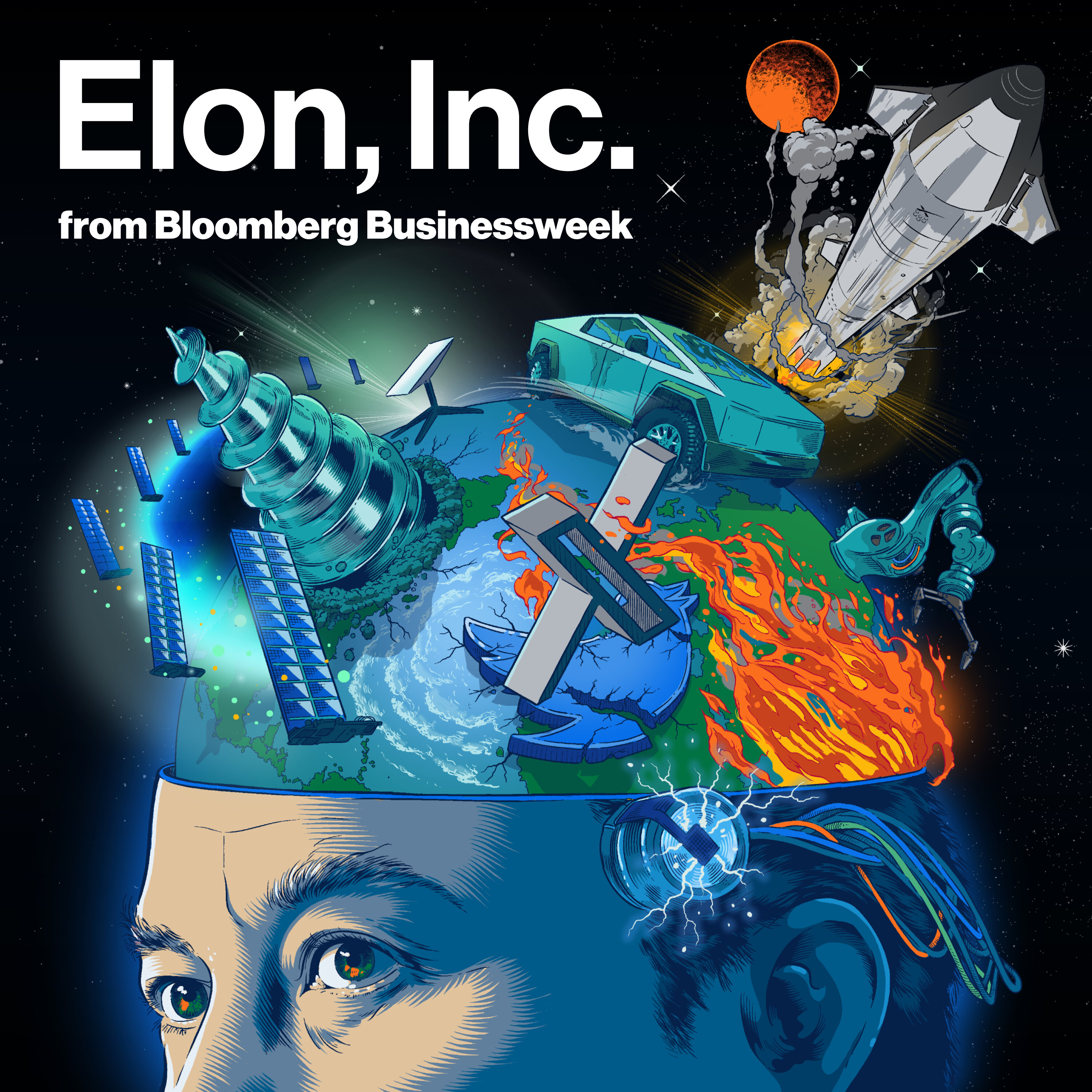
X users might have noticed a new kind of artificial intelligence-generated image proliferating: strange visions of Elon Musk next to Disney characters carrying guns, or Donald Trump in all kinds of, well, weird situations. This was what followed a new release of Musk’s Grok AI tool, which can now make images—unsurprisingly with fewer guardrails than other image-creating machines out there.On this episode we’ll talk about Grok’s new skillset and also get into the semiotics of the Cybertruck. Initially conceived of as a mass-market truck, it’s slid into another category: marker of a certain kind of right-wing flex, the kind Musk himself has engaged in on his struggling social network. Joining David to discuss is Davey Alba, a Bloomberg technology reporter, along with Max Chafkin and Dana Hull. See omnystudio.com/listener for privacy information.
A Flying Taxi Ride Into the Future of Transportation
The taxis of the future are already here. And they’re airborne. After years of research and development and billions in investment, autonomous flying taxis are finally poised to take off. Companies working on these pilotless vehicles have been quietly working on prototypes — and recently, Bloomberg reporter Colum Murphy took a test flight in one of the first models operating in China.But once the technology is proven, new challenges begin: the industry will have to navigate regulatory hurdles, which can vary country to country, and find a customer base that will trust this new form of air-travel. On today’s episode, Murphy takes the Big Take on his flying taxi ride, and his colleague Angus Whitley explains why it’s a make or break moment for the industry. See omnystudio.com/listener for privacy information.
The Latest Mpox Emergency Was Entirely Avoidable
The World Health Organization declared the last mpox global emergency over in May 2023. And just over a year later, here we are again. Since the start of 2024, a deadlier, more transmissible strain of the virus has killed about 575 people in the Democratic Republic of Congo and infected 30 times more. New cases have recently appeared in Europe and Asia. In August, the WHO declared a new mpox global health emergency. Bloomberg’s Ashleigh Furlong joins host Sarah Holder to explain why the latest outbreak could have been avoided — and what it will cost to beat it.See omnystudio.com/listener for privacy information.
Humans and AI Bots Blur in the World's Call Center Capital
Call centers in the Philippines, the world’s second-biggest outsourcing center after India, are embracing artificial intelligence - and it’s radically changing what it looks and sounds like to work there. On today's Big Take Asia Podcast, host Rebecca Choong Wilkins demos the Sanas AI app and talks to Bloomberg's Saritha Rai about the industry's rapid transition and what it might mean for workers around the world. Read more: The World's Call Center Capital Is Gripped by AI Fever — and FearSee omnystudio.com/listener for privacy information.
Powell Says Rates Are Coming Down: How Low Will They Go?
The time has finally come for a rate cut. That was the takeaway of Fed Chair Jerome Powell's remarks in Jackson Hole on Friday when he let the world know to expect a cut at the next Fed meeting in September.Bloomberg’s Mike McKee joins host Sarah Holder from Jackson Hole to discuss what that cut could look like — and what it would mean for the economy, the US election and the American consumer.Read more: Powell’s Pivot Leaves Traders Debating Size, Path of Rate CutsListen more: The Federal Reserve's Tricky Economic and Political TerrainSee omnystudio.com/listener for privacy information.