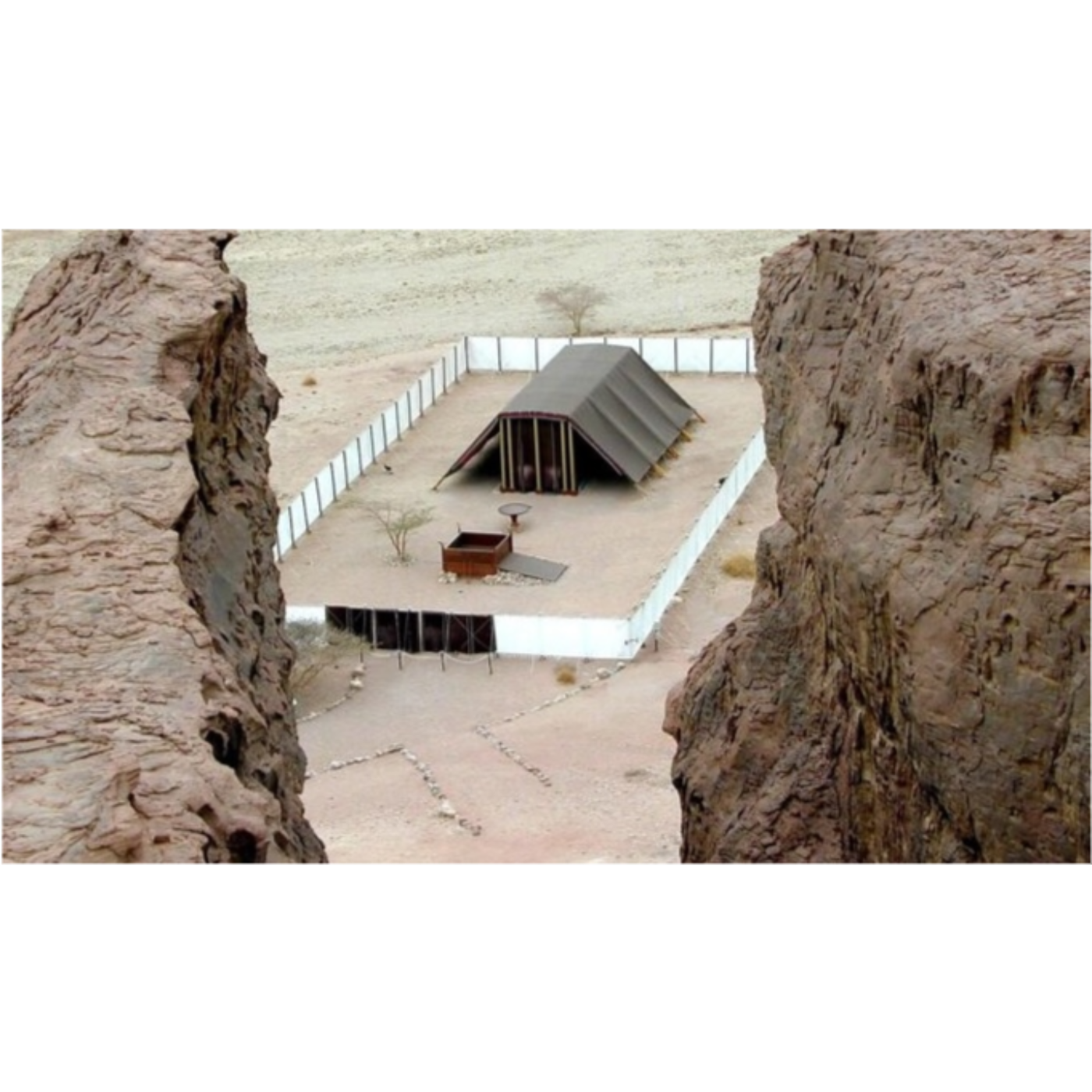
Day 29 - Consecration of the Tabernacle
Bible in a Year with Fr Paul · Fr Paul Guirgis
Audio is streamed directly from the publisher (content.rss.com) as published in their RSS feed. Play Podcasts does not host this file. Rights-holders can request removal through the copyright & takedown page.
Show Notes
For if any one do, without prejudice, and with judgment look upon these things, he will find they were every one made in way of imitation and representation of the universe. When Moses distinguished the tabernacle into three parts, and allowed two of them to the Priests, as a place accessible and common, he denoted the land and the sea: for these are accessible to all. But when he set apart the third division for God, it was because heaven is inaccessible to men. And when he ordered twelve loaves to be set on the table, he denoted the year, as distinguished into so many months. And when he made the candlestick, of seventy parts, he secretly intimated the Decani, or seventy divisions of the planets. And as to the seven lamps upon the candlesticks, they referred to the course of the planets, of which that is the number. And for the veils, which were composed of four things, they declared the four elements. For the fine linen was proper to signify the earth; because the flax grows out of the earth. The purple signified the sea; because that colour is dyed by the blood of a sea shell-fish. The blue is fit to signify the air; and the scarlet will naturally be an indication of fire. Now the vestment of the High Priest being made of linen, signified the earth; the blue denoted the sky; being like lightning in its pomegranates, and in the noise of the bells resembling thunder. And for the ephod it shewed that God had made the universe of four [elements:] and as for the gold interwoven, I suppose it related to the splendor by which all things are inlightened. He also appointed the breast-plate to be placed in the middle of the ephod, to resemble the earth: for that has the very middle place of the world. And the girdle which encompassed the High Priest round, signified the ocean: for that goes round about and includes the universe. Each of the sardonyxes declares to us the sun and the moon: those I mean that were in the nature of buttons on the High Priests shoulders. And for the twelve stones, whether we understand by them the months; or whether we understand the like number of the signs of that circle which the Greeks call the Zodiack, we shall not be mistaken in their meaning. And for the miter, which was of a blue colour, it seems to me to mean heaven: for how otherwise could the name of God be inscribed upon it? That it was also illustrated with a crown, and that of gold also, is because of that splendor with which God is pleased―Josephus