What You Need To Know Before Scheduling With A “CSAT THERAPIST NEAR ME”
Betrayal Trauma Recovery · Anne Blythe, M.Ed.
Audio is streamed directly from the publisher (media.blubrry.com) as published in their RSS feed. Play Podcasts does not host this file. Rights-holders can request removal through the copyright & takedown page.
Show Notes
For decades, men who choose to engage in problematic sexual behaviors have been treated as “addicts” according to the traditional addiction model. Tragically, some professionals have labeled label victims of domestic abuse as co-addicts or codependents or told her that she can do something to “help” him. Here’s what you need to know before searching for a “CSAT therapist near me” or other sex addiction therapist or program.
As you read and listen, if you relate and find you need support, check out the Betrayal Trauma Recovery Group Session Schedule.
Trauma Is Caused By Abuse, Not “Addiction”
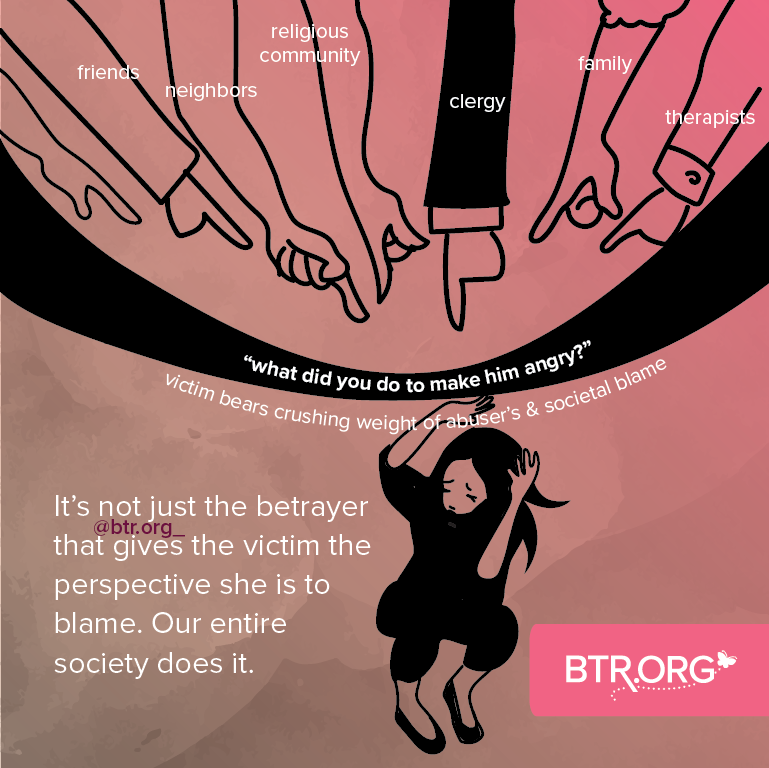
When experts call betrayed women co-addicts or codependents, they ignore the fact that we’re abuse victims.
Betrayed women are not to blame that our husband betrayed us. We’re injured due to his abuse. Many people can agree that partners experienced trauma.
Dear Sex Addiction Therapists, if you can agree that we experienced trauma due to our husband’s infidelity, why can’t you correctly define what caused the trauma?
At Betrayal Trauma Recovery, we understand the devastation of re-traumatization when professionals imply a victim cased her own abuse by labeling her a “co-addict” or “codependent”. Having personal experience going to addiction therapists, and interviewing over 200 victims of betrayal trauma throughout the years, it’s my opinion that the addiction model misses the boat because it doesn’t identify the situation as domestic abuse. BTR would never label a victim in such a way as to give her partial responsibility for his abuse.
Just to prove the point, if you’re husband has been diagnosed as an addict, he’s likely using many of these 19 different types of emotional abuse. To see, take our free emotional abuse quiz.
Transcript: What You Need To Know Before Scheduling With A Addiction Expert
Anne: It’s just me today. It’s heartbreaking, Many women who find this podcast have just found out their husband uses exploitative content. Or that he’s been secretly paying for women who have been exploited. Otherwise known as prostitutes, or other secret things.
If this has happened to you, maybe you went to clergy, and the clergy suggested your husband is a addict. Or perhaps you went to therapy, and a therapist suggested he’s an addict. And that diagnosis probably makes sense to you. Because if he wasn’t some kind of addict, why would he have been lying to you for years about his use or other secret behaviors?
And if you do a little research, you’ll see that many people recommend a CSAT, a certified addiction therapist, or an AASAT. So thinking you might need to get your husband one of these specializes in addiction, the rest of this episode, we’ll explain why searching for a “CSAT therapist near me” is not a good idea until you’ve been educated about abuse.
Understanding Codependency
Anne: We first need to talk about codependency. Codependency came out of the chemical dependency scene in Minnesota, around the 1970s. That was when the term was originally used to describe the symptoms that people would have, who were closely related to, or in a relationship with someone with a chemical dependency problem.
The basic idea of codependency is that a codependent person has, “Let another person’s behavior affect her.”
Now, before I get any farther. I’m setting this all up for you to realize how wrong this is when applied to sexual or emotional abuse. To know a little bit about what to expect when you go to an addiction specialist.
Definition Of Co-Addicts
Anne: Addiction specialists generally describe co-addiction as someone who is married to, or in a significant relationship with, an addict. These so-called co addicts demonstrate behavioral characteristics, including denial, preoccupation, enabling, rescuing, taking excessive responsibility, emotional turmoil, efforts to control, compromise of self and intimacy issues.
So how is codependency diagnosed? One of the main diagnostic criteria for codependency is that the wife of an addict is trying to control the addict. Addiction specialists in general say that co-dependency or co-addiction can range in severity. And then the “treatment” for a co addict, is to figure out how to stop letting the addict’s actions affect her. And in general views her efforts to control his behaviors are part of her “illness”.
So the main reason not to go to an addiction specialist if your husband is a so-called addict is that they won’t approach the situation from an abuse perspective.
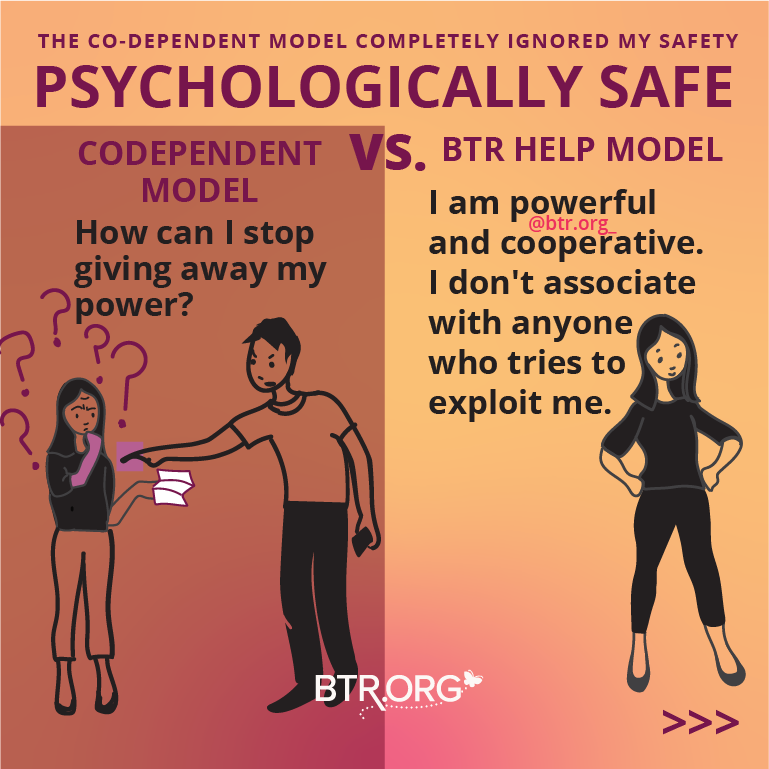
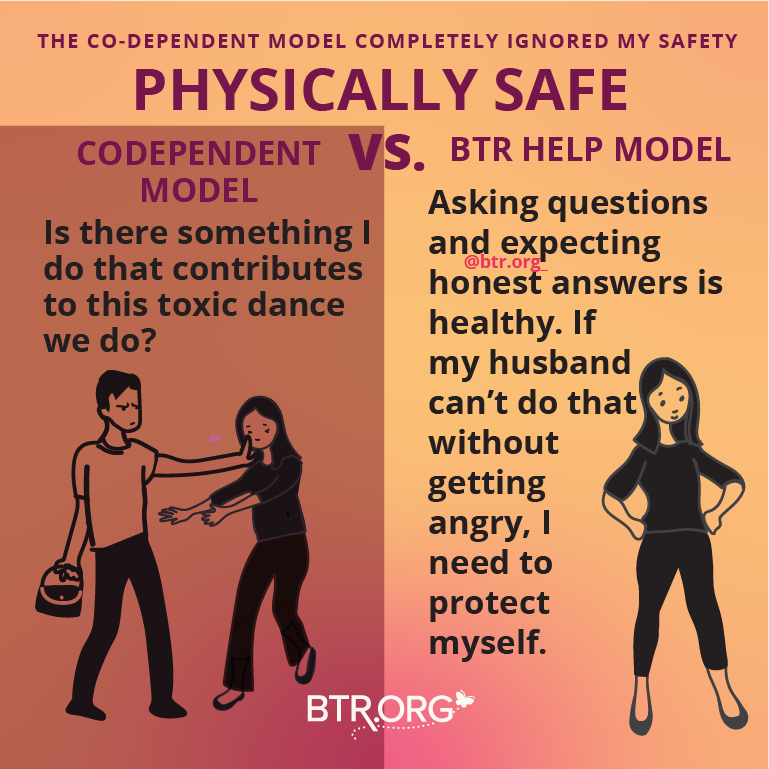
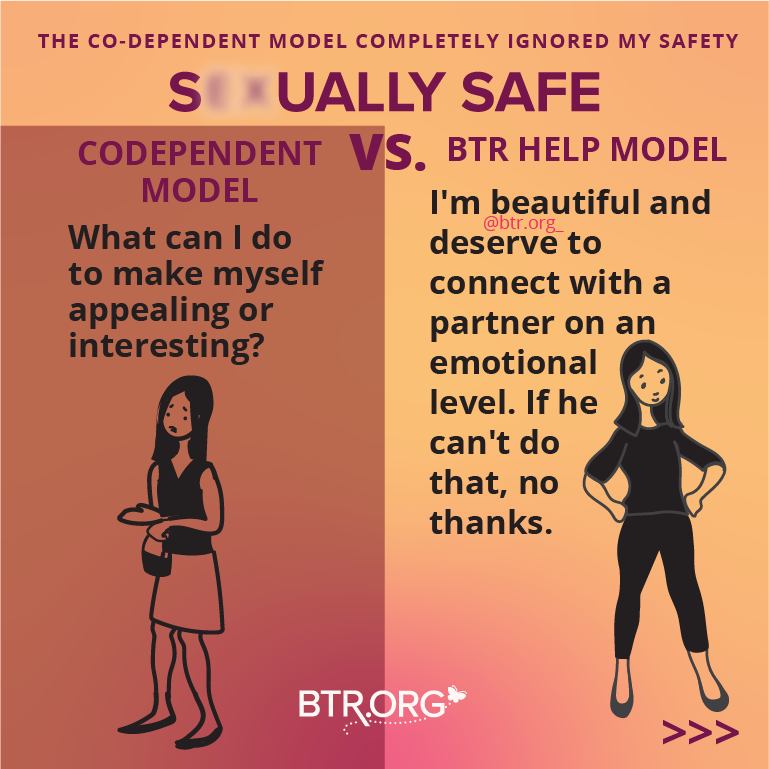
Betrayal Trauma vs. Codependency Model Used By A “CSAT Therapist near me”
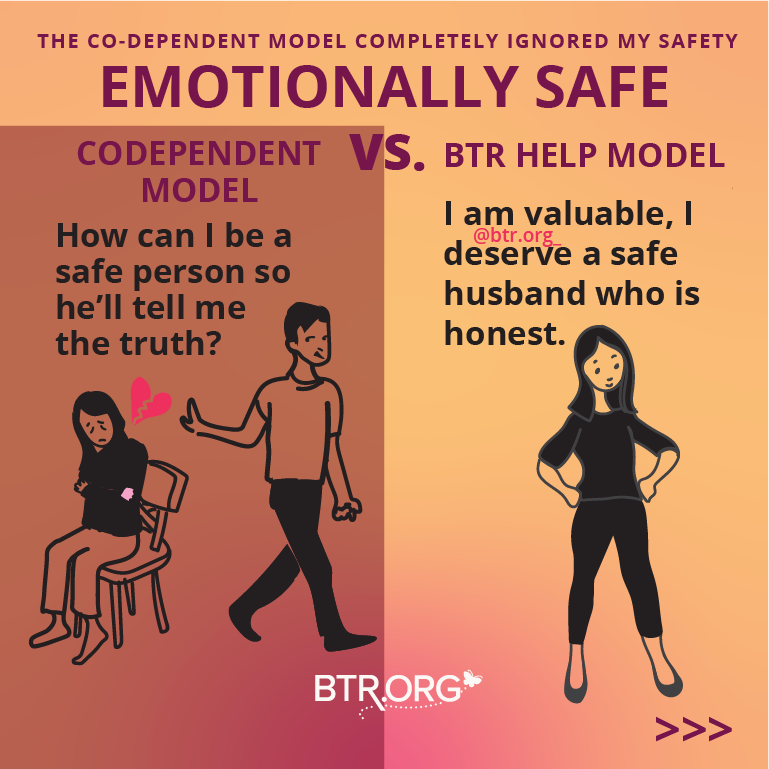
Anne: Which sounds good, because betrayal trauma is the right term to use. Thank goodness it’s not a diagnosis. Healthy women react in a normal way to abuse. So if they use this term betrayal trauma, you’re like, oh, I’ll be in good hands.
But the problem is they’re not using the right model. They’ve just slapped the right word on the same old codependent, co- addict model “treatment.” And so today, with everything we know about abuse, addiction therapists still use the codependent, co-addict model. But instead of saying she needs to recover from her codependency, they say she needs to heal from her trauma. And to heal from her trauma. What does she need to do?
And they’ll tell you the same thing. Not be affected by his actions. So it’s no different than codependency in terms of what they tell you to do and how to interact. They did not and do not identify your normal reaction to abuse. So let’s go through these symptoms one at a time.
The first one denial. They say, if you refuse to see your part in it, then you’re in denial. You’re not in denial. Your husband lied to you. That’s totally different than denial.
Preoccupation Is A Normal Reaction To Abuse
Anne: Preoccupation, well, of course you’re preoccupied. It’s not a sign that you’re sick. It’s a sign that you’re smart. You’re rightfully trying to ensure you’re safe. For example, if someone steals from your online bank account, and you notice a lot of money gone. It would be normal to be preoccupied with checking your bank account every day. You might end up checking it several times a day. That would be a normal thing to do.
They say you’re enabling him by rescuing him. I don’t know what they’re talking about. You want a safe and peaceful home. And so to resist the abuse, you try to get him to stop abusing you because divorce feels unsafe. Breaking up your family feels unsafe. That’s not rescuing him. That is a safety seeking behavior, because you are a completely normal person who loves her husband and wants to protect her family.
And ignoring the abuse will not protect you or your family, and you know that. And so you’re going for help. But then this help tells you that you’re part of the problem.
Misogyny In Sex addiction Therapy
Anne: So it’s a misogynistic way of basically silencing a victim to stop her from resisting the abuse, so that he can continue to do whatever he’s going to do without her complaining about it or doing anything about it. It’s extreme victim blaming, and this type of therapy traps victims into further abuse. Taking excessive responsibility, there’s anything wrong with taking responsibility for yourself.
They say you have emotional turmoil, which is apparently a problem. Your emotions will be all over the place because you’re being groomed. And then overtly abused. Of course, an abused woman is emotionally dysregulated. That makes sense.
They’re saying you are trying to control him. That’s not happening either. You are trying to create safety. They’re saying you’re angry, like it’s a bad thing. You’re angry and fantastic! You should be angry. They’re saying you have “issues.” Nope, you’re just a healthy person who doesn’t want to be intimate with an abuser.
Symptoms Of Abuse Are Normal For Victims
Anne: She could also have physical symptoms. For example, her husband, who’s been cheating on her for years when he bought services from a prostitute, then he doesn’t use protection with his wife. A woman who gets a STI from her husband, who she thinks is monogamous. That’s going to bring all kinds of emotions and reactions, and all of them are normal.
Similarly, her physical safety is on the line here. Having a roof over her head, being able to parent her children. Being able to feed her children. These are also physical risks. She doesn’t want to be out on the street nursing a baby. So to label her emotional reactions as a disease and be like, oh, why is she so angry? Oh, she needs to come at this healing from a place of compassion, not anger, is crazy. She should be angry!
The Reality Of Abuse Is Emotional Ups & Downs
Anne: Some women go numb. When women go numb, many therapists will be like, “Oh, you’re reacting well to this.” It may sound like a compliment, but it’s a veiled threat. Like, “You’re reacting well to this because you’re not reacting at all.” Which actually means if you were reacting in any other way, like becoming angry or having emotional ups and downs or getting up in front of your whole congregation and telling them the whole story. “That is inappropriate,” some may say.
But being numb after abuse actually means you’re frozen in a highly traumatized state. Only functioning administratively, and suppressing a lot of your deeper reactions for your own survival. That’s not reacting “Well.” If they’re telling you that feeling numb is good, and that anger and uncontrollable crying is inappropriate. That can’t be right. That doesn’t even make sense.
Because most victims cycle through different stages of being numb, crying and angry. The reality is that you’re resisting abuse the best way you know how at the time. Not even understanding it’s abuse. And how you react makes sense. She actually focuses on her own emotional and psychological safety. That’s why she searched for help online.
If her husband’s behaviors didn’t affect her, she wouldn’t be concerned about it. But a CSAT or AASAT or other addiction therapists may tell her that his actions are due to his addiction and don’t have anything to do with her. While simultaneously telling her she’s now suffering from pathological trauma. That she needs to resolve so that the marriage can heal.
Recap Of A The Addiction Circus
Anne: So to recap, a addiction expert will tell you, this isn’t about you. He’s not doing it to hurt you. And you need to heal from the trauma, but they never tell you what the trauma is from. There’s no part of that that makes sense. Even though this has nothing to do with you. This affects you. It hurts you. And you’re not part of the solution.
I find most women who have spent a lot of time in couple therapy or in addiction recovery therapy with their addicted husband, when they learn about emotional and psychological abuse and intimate coercion, they feel validated. Many women write me and say, “How did I not know this was abuse?” Why did the addiction professional, that I paid thousands of dollars to, not identify what this actually is: emotional and psychological abuse?
Women resonate with the abuse model because they ARE abuse victims. And it’s the only thing that makes sense. So after a victim listens to this podcast, she may go back to the addict or the CSAT therapist and say, “Hey, this is abuse.” Even though you’re trying to get to safety, and that’s the intent of confronting your abuser or telling his therapist that it’s abuse.
At Betrayal Trauma Recovery, we teach a safety strategy that helps you avoid confronting them. Because in that case, both the addict and the abuser will deny it. Or they’ll admit it. But it still won’t give you the right solution.
The Ethical Dilemma Of Treating Victim & Perpetraters Together
Anne: So let’s look at the first one, when they deny its abuse. Most addiction, recovery programs or addiction programs, whether the therapist or not, will push back, because if it’s abuse, she doesn’t need therapy. And if she doesn’t need to go to therapy, or she’s not involved somehow. Her husband will not go to therapy.
And I want you to know that the therapist may or may not know that it’s abuse. He might know it’s abuse, but avoid identifying it. Or he might not understand abuse at all, so he says it’s not abuse. If they call it abuse, for whatever reason, they can’t ethically treat both partners in the same setting.
The second the word abuse is brought up, they’ll have to basically say, I’m sorry, I can’t treat you because this is abuse. So they would have zero clients, because in my view it’s always abuse. That would implode their entire practice. And what would they do for a living? That one is about money. And let’s look at the second one when they admit it. But they still don’t give you the right solution. So there’s about a one in a million chance that they are going to identify the abuse.
So they’re going to give you the impression that they can help him. So they’re going to say, “If you keep coming back and work together, he can stop his abusive behaviors. As long as you’re willing to do your part in this relationship. And you’re going to be like, of course, because I want to save my family.”
Most Therapists Are Generally Marriage & Family Therapists
Anne: They’re not going to say to you, “This is abuse, and it’s unethical for me to treat an abuser and a victim. And so I can’t see either of you.” See, if you go to a addiction specialist, they’re likely marriage and family therapists. And the foundation of their training is family systems, which means everybody has a part to play. And it absolutely does take two people to create a healthy relationship, but it only takes one person to destroy that relationship.
A secret life, lying, pathological manipulation, gaslighting, grooming, deflection, withdrawal, coverup, hiding and blaming. None of these things take two people to pull off. One person can do them all by themselves. So whether the addiction specialist identifies the abuse and says, “No, no, no, this isn’t abusive,” or identifies the abuse and tells you, “Yes, it is abuse and I can help you.” Either way, it’s not going to be the right solution for you. The therapist should never, ever be the therapist for an abuser and his victim. Thus, joint counseling does not get you the relief that you’re likely seeking for yourself.
BTR’s Approach To Abuse Is Teaching Safety Strategies
Anne: Here at Betrayal Trauma Recovery, we don’t think victims of abuse are pathological. We don’t think victims need treatment. We think victims need to be educated about emotional and psychological abuse and intimate coercion. And since victims resist the abuse by going for help, we teach them effective safety strategies to stay safe. She’s been resisting the abuse the whole time, trying to establish emotional and psychological safety in her home. She just didn’t realize what she was facing.
And not knowing that it was abuse and not knowing that what she was resisting was abuse. She did exactly what she was supposed to do. Which was to go for help. But the problem was that the person she went to for help, did not help her. And that’s not her fault
At Betrayal Trauma Recovery, we say to victims of abuse, “Hey, you did great. You did exactly what you were supposed to do, and resisted abuse by going for help. You were trying to get to safety. Good job.” And no matter where you are in your journey to emotional and psychological safety.
There are safety strategies that work for everyone, no matter what their situation. Whether you’re still married, living with an abuser in your home, or even post divorce when you’re suffering from post-separation abuse. When he’s using your kids as pawns to continue to manipulate you.
Living Free Workshop Teaches Strategies That Work
Anne: So I’ve created The Living Free Workshop. That will teach you safety strategies that work. As we learn these new safety strategies. It’s important that we interact with other women who have been through this. Who have experienced the same type of wounding, and can hold our experience and our pain and we can do that together in our betrayal trauma recovery group sessions.
At Betrayal Trauma Recovery, that’s what we’re all about. We’re here for you, and we’re anxious to help you.
The views, opinions, and perspectives expressed in this article, podcast, or related
content reflect the personal beliefs, opinions, and experiences of the speaker(s) or
author(s). They are not intended to be, nor should they be construed as, definitive
statements of fact, professional diagnoses, or legal, medical, or therapeutic advice.
BTR provides this content for educational and informational purposes only, based
on information available to us at the time of publication. We do not guarantee the
applicability of any statements to individual circumstances.