What Is Exploitative? Dr. Gail Dines Exposes the Shocking Truth About THIS Industry
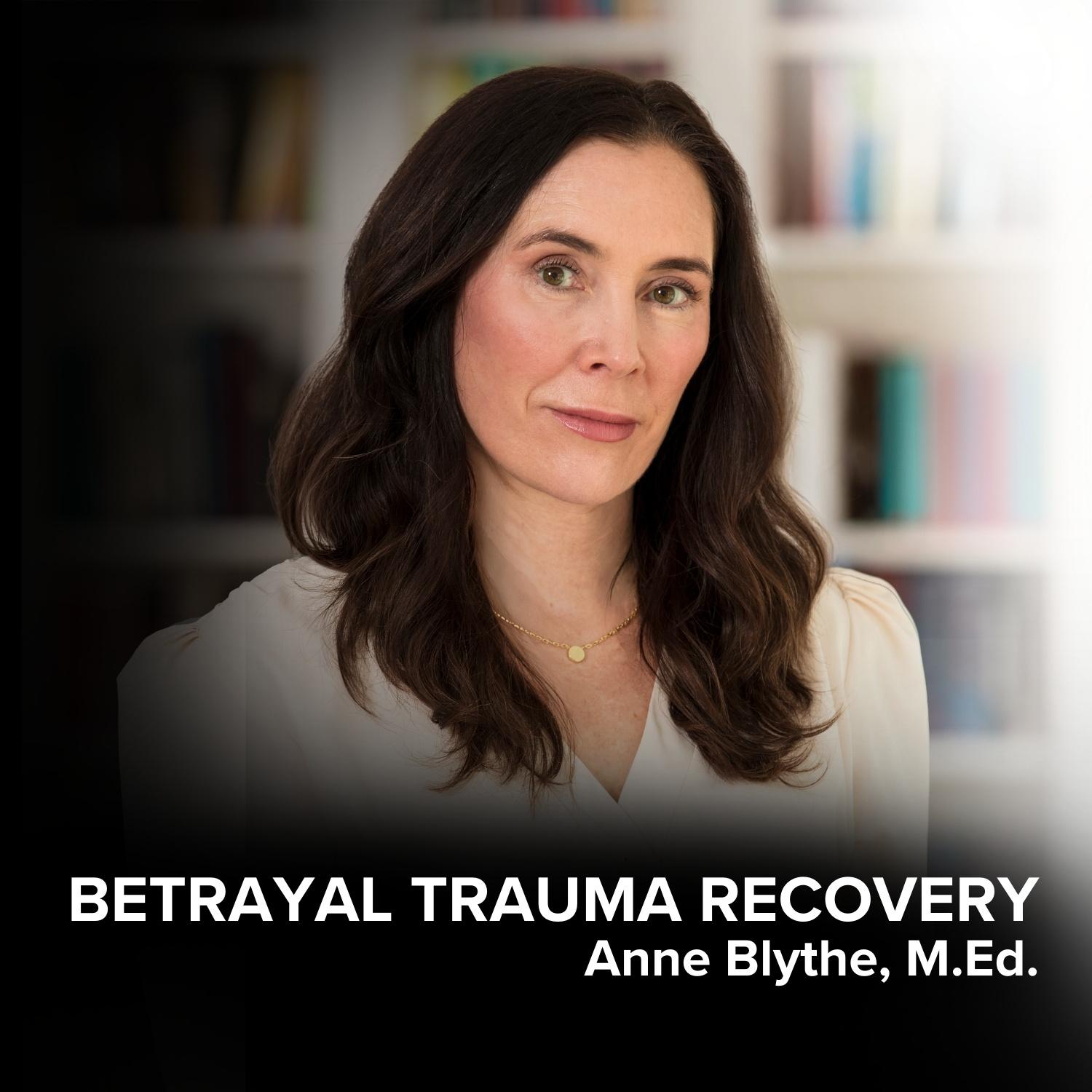
Betrayal Trauma Recovery · Anne Blythe, M.Ed.
Audio is streamed directly from the publisher (media.blubrry.com) as published in their RSS feed. Play Podcasts does not host this file. Rights-holders can request removal through the copyright & takedown page.
Show Notes
What is exploitative? A global industry that uses coercion and abuse to make money. Understanding how exploitative media harms women’s rights will help you understand what exploitative really means.
Did you know that wives of men who exploit women are likely to be emotionally abused? To discover if you’re experiencing emotional abuse, take this free emotional abuse quiz.
What is Exploitative? Violence Against Women
Understanding that exploitative media often depicts graphic violence against women highlights the reality that this is a human rights issue. There is a clear connection between exploitative media and violence toward women.
Victims of the exploitative media and trafficking industry are women targeted and oppressed by perpetrators benefiting from systemic privileges. Women everywhere can unite to stand with our sisters who have been harmed by this insidious industry by recognizing exploitative media for what it truly is: a human rights issue.
Transcript: What Is Exploitative?
Anne: I’m so excited to have one of my absolute heroes on today’s episode. Her name is Dr. Gail Dines. Dr. Dines is a Professor Emerita of Sociology at Wheelock College. She has been researching and writing about this exploitative industry for over 25 years.
Dr. Dines is the founding president and CEO of the non-profit Culture ReFramed, dedicated to building resilience and resistance in children and youth to the harms of exploitation. Culture ReFramed develops cutting edge educational programs that promote healthy development, relationships, and intimacy. Dr. Dines has been described as one of the leading anti-exploitation scholars and activists in the world.
Anne: Welcome Gail.
Dr. Dines: Pleasure to be here.
Anne: I’m like starstruck right now. I’m so excited to have you on and grateful for the work you do. So let’s just jump right into this. Gail, why is exploitative media a feminist issue? And why is it a human rights issue?
Dr. Dines: It was the feminist movement, especially the radical feminist movement, who first began to understand that we need to see exploitative media as a harms issue. This hurting real women human trafficking survivors. And it had real world consequences on both men and women in the industry and outside the industry. It really grew out of the radical feminist anti-violence movement, where we began to see the relationship between exploitative media and violence against women.
The Challenges Of Embracing Feminism
Anne: Some women are still uncomfortable with the word feminist. I’m trying to get everyone to be extremely comfortable with it, and to sit in it and realize that it’s a beautiful, wonderful thing. Do you have any advice for women uncomfortable with the notion of a feminist?
Dr. Dines: Well, I would say for many women it can actually be scary to call yourself a feminist. Because you open yourself up to all sorts of criticism, ridicule, and caricaturing. In this society, to be a feminist is to fight back against male power.
And whenever you resist being oppressed, the oppressor class comes after you. So I understand why some women are nervous and anxious about that. But if you want a full life, if you want to feel like you have power in the world. And sisterhood and the capacity to change the world, then the answer for women is to be a feminist and proud one at that. Hold your head up high. And wear that term with pride.
Anne: I agree, I’ve taught my little four year old daughter to say, I’m a feminist, definitely. And also my six year old and my nine year old son. And it kind of makes me a little teary to think about when they say it. It’s so cute and I’m so proud of them. Why do some feminists or some women who call themselves feminists support exploitative media?
Dr. Dines: I used to teach a whole 14 week course on this, so let me try and get it into a couple of minutes.
The Third Wave of Feminism & Exploitative Media
Dr. Dines: So, when you think about this feminism that grew out of the 1960s, 70s, and 80s. It was a given that if you called yourself a feminist, you were anti-exploitative media. There was no question. And then what happened around the 90s is that there was a sort of new movement, which we often sometimes call the third wave.
Where what we call feminism lite or faux feminism was the idea that somehow, if you embraced exploitative media. Because the argument was that we’re never going to get rid of it. So let’s embrace it and use it in ways that empower us. I would argue it was really a capitulation to male power and the industry. And what’s happened is over the years, this view that somehow exploitative media can be empowering has taken hold, especially in academic circles.
I think I need to say this, that the more privileged a woman is, and the further away she is from ever having to be in exploitative media to put food on the table for her kids. The easier it is to endorse it as empowering. It’s a privileged white position to say it, and I have to add in here, prostitution.
Many of the same women who are pro-exploiation argue they’re pro-prostitution. It’s a privileged white position, because most of those women who have that argument are women of color. They are so far away from ever having to be in it or in prostitution.
The first rule of feminism is to do no harm to women, and exploitative media is one of the most harmful forms of visual representation that we have. It delivers to men’s brains via the penis, a clear image of misogyny.
Anne: Absolutely.
It’s A Human Rights Issue: If You Are In It, You Lose Rights
Anne: Why do you think they don’t realize they’re hurting other women?
Dr. Dines: I think many students would come in with kind of pro-exploitation views. But it didn’t take long to get them to see the violence in it, and the impact on women in it.
Women who date men who watch it and got their information about intimacy from it. When you think about it, who wants to be penetrated on camera by many men in violent, brutal, and ways where you lose rights to your image, bodily integrity, and bodily privacy?
You know, so I asked my students, think about what it would be like if you had to do this to survive financially. And often I think what happens is we can theorize and theorize, but there’s something to be said for just plain, simple empathy. Put yourself in that position and say, would I want that for me? Would I want it for my friends? Would I want it for my daughter, my sister, my mother? And the answer is no.
Anne: Yeah, absolutely. The men who support this stance simply lack empathy. Do you see it’s easier to persuade women to this stance than men?
Dr. Dines: Yes, because when women look at exploitative media, they identify with the woman. So yes, in that way, you’re getting a visceral bodily reaction to what’s happening to her.
Mainstream Exploitative Media Today
Dr. Dines: But I have to say that when I give lectures to high schoolers, middle schoolers and university students. Many of them are young men, all of whom have seen mainstream exploitative media. Which we have to say clearly, mainstream online today is hardcore. That’s the only kind you get when you put it into Google, or through Instagram, Snapchat, or YouTube.
This is what it is today. Mainstream is what, pre-internet, was considered hardcore. It was hard to find in shops. You had to know somebody who had that kind. Today, it’s free and accessible. It’s anonymous, and it’s five seconds away. So the shift from 2000 when the internet became domesticated to today is absolutely remarkable. And what happens is interesting.
So I’ll go into say a college campus, and when I’m speaking, often there are hundreds of students.
This starts with these male students, who you can feel their hostility towards me. It’s actually coming off them in waves. And they’re thinking, what the hell does this woman, this middle aged woman, know about it? I’m standing on a stage, so I’m watching their body language. And as I start to talk, it is amazing to see the changes. Suddenly, they begin to relax.
Young Men Are Dragged Into The Mess
Dr. Dines: They begin to reach out, and I have to say if they could reach out and touch me, they would. Why? Because I think many of these young men have been dragged into it. It is like a spider’s web to catch young men through algorithms and all sorts of ways of dragging them into it. They see images that they themselves probably would not want.
I do not believe that when a 12 year old puts a body part into Google, thinks he’s going to see a world of brutality, violence, and torture. He’s probably thinking he’s going to see maybe breasts, maybe a vagina. He’s not prepared for what he’s going to get catapulted into. And I would argue that the industry is traumatizing a generation of boys.
And many of these boys who grow up into young men, who I’m meeting colleges, feel deep shame about what they’re watching. They want to stop watching it. Some of them are habitual or addictive users. And they are so grateful that someone has come in and said, is this who you want to be? A guy who gets aroused to images of violence against women? And for many of them, the answer is no, they don’t want that.
They’ve just been pulled into this trap that this predatory industry has laid for them. To suggest boys or men are on the hunt for violent misogyny. As a somehow biological imperative of masculinity, it is to lower the bar about men. And it’s to say boys want violence. Maybe there’s maybe a hiccup in masculinity that they want violence. I would argue that’s anti-male because I truly believe men do not want this, or boys certainly don’t want this.
Exploitative Media Harms Women In Every Way
Dr. Dines: I believe men and boys are born equal to women, with all the capacity for humanity and empathy. And I believe that as a sociologist, feminist, and most profoundly as the mother of a son. My son was not born violent or with a desire for violence. This culture certainly wanted to turn him into that, but I know he was born with all the capacity for love, empathy, and connection that women are.
And if my son was born that way, then your son was born that way. So we need to think as feminists, as men’s best friends, the ones who say to men, we have faith in your humanity. We will fight for that humanity, because the industry is about destroying it.
First of all, I think there is a moral issue, and this is not from a religious position. This is more from a feminist position, it is a moral issue, because it harms women physically, emotionally, and in every way. So I don’t think we need to say it’s not moral, but what we also need to add is that it’s a civil rights issue, because it undermines the civil rights of women. You cannot have a society based on equality if you have this exploitative industry.
This industry we’ve got today teaches men that women are a subhuman category. That women exist to be used and abused, women are just objects to be discarded when you’re done with them. And the civil rights of women cannot be fully achieved when men are trained to think of women as subhuman.
The Civil Rights Impact Of Exploitative Media
Anne: And we see that with our community. Our community is all wives of users who have been abused by their husbands. They are being harmed significantly because of their husband’s abusive views. Many don’t understand what marital coercion is. I like to think that these men were born as empathetic, good people, and that they have become unable to empathize through their excessive exploitative media use. And because of that, their behavior becomes abusive and scary. It’s hurting families and women.
Dr. Dines: Oh, absolutely. Studies show that women who are partnered with men who are users feel greater betrayal than if their husband had an affair. So the level of pain, humiliation and shame that women feel when they find out their husband is an addict is profound, and nobody’s speaking about it.
Anne: Yeah, I guess, except me, right. What we’ve found is the trauma isn’t just from finding out about their husband’s cheating and use. The trauma is from all the abuse, the emotional and psychological abuse they’ve suffered for years. And women are often blamed for the emotional abuse. It’s mind blowing.
Dr. Dines: Toxic secrets, what’s interesting is that I meet many, many women wherever I go. I can have my hair blown out, sitting on a train, or interviewed, and many women I speak to tell me about their partners and what it feels like. And that now, once they realize what’s going on, they look back, and we always say, hindsight’s 20 20. They saw cues, but didn’t join the dots.
Recognizing The Signs Of Addiction
Dr. Dines: And I would say, first of all, there are many cues to look for. The first thing I would argue is that when you’re living with somebody in a relationship. There should be no password protected devices that you don’t have access to. That’s a big clue. If you cannot get on to your partner’s cell phone, computer or laptop, and don’t know the password, that’s a red flag. Also, if suddenly his interest starts to wane or he’s asking you to do stuff he’s never asked you to do before.
Many women say I began to see a difference in him. He acted, felt, and spoke differently. So looking back, they realized there were clues, but of course they didn’t pick up on that. It didn’t occur to them. They were unaware of how big a public health crisis this is. Of course, then comes the enormous pain. This man you’ve lived with, loved and probably had children with, has this awful, subtextual life. That you did not know about, but it’s poisoning your own life, relationship, and family.
Anne: Yeah, and that’s why we here at Betrayal Trauma Recovery actually see it as a consent issue with wives of users. They are unaware of what is going on, so they can’t give their consent in that situation. Because they’re being lied to in their most intimate relationship. So it is an abuse issue, an emotional abuse issue and a consent issue. We’re trying to help people understand that, so they can view its use with the lens of severity that it deserves.
Dr. Dines: Yeah, I don’t think any woman should consent to her husband or partner using it.
A Consent Issue In Relationships
Dr. Dines: And you know what was interesting is that many women I speak to say, well, you know, we watch it together. We don’t watch the violent stuff. And I say, well, that’s what he watches with you, but he watches completely different stuff when you’re not there. So I would say, first of all, even if you watch it together and think that’s a way to ensure there’s no secrets, there’s a ton of secrets behind that.
Because when you leave that house, or when you’re not there, what he’s watching is different to what you’re watching together. And, even if it’s not hardcore, still, the question becomes, why does he need to watch it? Right?
Anne: Yeah, absolutely, when I say consent issue, I don’t mean it in that context. The context in which I mean it is that you expect the relationship to be free of it. He’s using it, and he’s not telling you about it. There’s the consent issue. If he said to you, I will use exploitative media, whether you like it or not. Even though you say I don’t want this in my relationship, I’m going to disregard it. I will do it anyway. secretly behind your back. Then she could give her consent to be in the relationship, right?
She would say, Hmm, I don’t want to be with a man like you. No, thank you. But when they lie to her face and say, I’m not using it. No, I would never do that, and they are, that’s what I’m talking about. That’s a consent issue. Men don’t realize that when they lie to a woman about it, they are not obtaining her consent.
Dr. Dines: They’re betraying everything.
Lies & Gaslighting By The Industry
Anne: So that’s the context in which I brought that consent issue up. Let’s talk about the lies that the industry tells people to gaslight them. Can you talk about what types of lies they are using to manipulate and gaslight people into viewing it?
Dr. Dines: Oh, well, they have a multi-billion dollar well oiled PR machine to perfect these lies. First of all, they argue it’s harmless. No one’s getting hurt. It’s a victimless crime. It has no effect. Lighten up. If you don’t like it, it’s your problem. This is the discourse that the industry has sold to women and men. But specifically to women. If you don’t like it, then there’s something wrong with you.
I mean, there’s even male sexologists who write for Psychology Today, and different outlets who say if your husband or partner is using it and you don’t like it. You have to ask yourself, what’s wrong with you? What’s your problem? That is utter gaslighting of women. As if it’s your problem, that you don’t want your husband masturbating to images of violence against women, and you’re the one with the problem?
It’s insane. But the whole culture is pro-exploitation now. For Teen Vogue, and why they called it sex work, I would not call it that, I’d call it prostitution, is a choice for women. That’s coming from the teen magazines, and then you’ve got films, shows on TV.
The Profit-Driven Nature Of Exploitative Media
Dr. Dines: Everywhere you go. You’ve got this consistent message that it’s part of being hip, being woke, and being cool. That you, you prude you, you’re the one who’s got to figure out why you’re not, and they say anti-sex. In fact, I can’t think of any group that’s more anti than the producers of it. They hate it, they’re not into it, they’re into profits.
I went to the exploitation convention in Las Vegas, and when you go to their workshops, we got passes to get into the workshops, and no one’s talking about it. Everyone’s talking about money. I went to one, like, unbelievably boring session about what’s best, bulk emailing versus targeted emailing. It was as if they were selling toothpaste.
And this was interesting. It was downstairs, there are two floors. That is where they have their meetings and talks about selling exploitative media like any other business, and upstairs were the fans. So I went upstairs and downstairs, and interviewed both groups. The fans kept saying to me, it’s fun, it’s just lighthearted. And I wanted to say to them, you know what? Come downstairs with me and sit in these seminars, because no one’s having any fun.
They’re all thinking about ways to get as much money out of you as possible. This is not about fun. This is about profit. And if you took the profit out of the industry, it would collapse tomorrow. No one’s doing this because they love intimacy. No one’s doing this because they want us to have a fun life. They’re doing this to maximize profits.
The Dehumanizing Effects of Exploitative Media
Dr. Dines: And the result of their maximizing profits is a bankruptcy of emotion, connection, intimacy, and of what it means to be human.
Anne: I love how you say that. It is so degrading to humanity in general. So let’s talk about what you said. We know that people who are opposed to exploitation are not sex negative. What word would you use rather than positive? Because today, if you say I’m positive, people think you would like exploitation, and hookups are good. Describe what that means, and how that may help or hurt people.
Dr. Dines: Well, the term has been co-opted by the pro-exploitation crowd. I think it’s a real problem, because those who are against exploitation are, by definition, negative. What I always say is I am pro, and that’s why I’m anti-exploitation. You can’t be pro-pornography and pro-intimacy. You have to pick one, and I’ve picked being pro-intimacy. And when I say pro-sex, I am pro healthy, creative, fun intimacy that you are the author of.
Not a where a group of creepy men who are out to maximize profits decide what is the best act to degrade and debase a woman to maximize profits. We’ve got to think about it as an industry. Like all industries, it will do whatever it takes to maximize their profit. If it takes completely destroying a woman’s body, which they do all the time. If it takes giving her, I don’t know how many STDs.
Because we know from studies that women get gonorrhea of the eye, chlamydia of the anus, all things you don’t normally hear. If you think about what it does to women’s bodies, then how can you possibly call it positive?
Healthy Intimacy Vs. Exploitative Abuse
Dr. Dines: So what we want to talk about is what does it mean to be the author of your own sexuality? What does it mean to have fun experimentation and creativity? And that is none of my business. What is of interest to people in what as long as it’s not hurting anyone, consensual, and doesn’t involve violence. Then people should develop any they want.
Often when I go into lecture. People say to me, well, if we don’t use it, what should we do? And I say, well, look, if I was coming here to speak against the fast food industry, you wouldn’t say to me, what can I eat? And I wouldn’t give you recipes, because I don’t know what you want to eat. You figure out what you like to eat.
Figure out what flavors you like. Figure out what you want to cook. You go and experiment, but don’t ask me to tell you what to eat. Same thing with intimacy. I don’t know what’s going to interest you, but again, as long as it’s consensual, non-violent, and based on an egalitarian intimacy, go and have fun.
Anne: Yeah, I love you, thank you. I hope that women listening can gain more confidence in knowing that so many people in the world are behind you. Who support you and say exploitation is wrong. You do not have to put up with it in your relationship.
Dr. Dines: Yeah, I understand that women have been completely caught in this net, just as men have. But for women, it’s often worse, because you often have a family with this guy. You have a mortgage to pay. In a way, you’re trapped in this.
If Your Partner Doesn’t See This As A Problem, You Can’t Stay
Dr. Dines: So what I want to say to women is that you cannot live with a man who is a user. And also have a sense of bodily integrity, of loving your own body, and a sense of a healthy intimacy. The two just don’t go together. So you have to figure out how you’re going to deal with this. And one way, which is not always so great, is to figure out therapy with the guy. But often a lot of intimacy therapists make it worse, rather than better. Because they will be on his side.
If your partner is not willing or does not see this as a problem, then you cannot stay. You can’t do that to yourself. You cannot give up that part of yourself that says this is wrong. Because you will look back in 10, 15 years, 5 years, and you’ll look in the mirror one day and wonder, Who am I? What have I become? And what is my life? You don’t want to do that. And plus, if you have kids, you do not want your kids around this toxic life of a man using it in the home.
First of all, it puts them at risk. And secondly, you want your kids to be healthy. And if their father or whoever the man they’re living with uses it, ultimately, it will seep into their lives on every level about who they are. For girls, it will have a whole set of messages about what it means to be a girl. For boys, a whole different set of messages. And kids are very savvy. They pick up things that we think they don’t pick up on. They know when this is going on.
Being Hijacked By The Recovery Movement
Dr. Dines: So as difficult as this is, and I understand, ultimately you have to do what is right for your moral compass. Which is not living with a man who is exploitative. And if you have children, your first and most important commitment is to bring up healthy adults, and you cannot do that in a toxic home.
Anne: Thank you, I love hearing this from you as a feminist. It feels different and sounds different. It sounds so much more empowering than typical church talks about love, forgiveness and service.
Dr. Dines: What bothers me is this whole notion of the recovery movement. Some groups have hijacked us. But I’ve been at conferences where I’ve spoken to some of these recovery teams. One of the things I noticed was that I was visiting a conference where they all had their materials out. I was going along speaking to them. Many of them had their arms firmly planted around their wife, like she was a prop here, and they would say, we’re in recovery.
And I would say, okay, I’m just a bit confused here, so who was using this stuff? And he would say, I am. So you mean you’re in recovery? And she’s recovering from you using it. Let’s be clear here. Who’s doing what? And it felt disingenuous. It felt their wives were being used as a prop. And the questions they never addressed are that if a man has been using it, the answer is not simply to stop using it, because that’s not enough.
He Needs A Serious Change Because His Identity Has Been Defined By This Garbage
Dr. Dines: That’s like beating a dry drum, because he still has all those images in his head. All those notions of what it means to be a man, which is power over women. It is the key message of exploitative media. The hotter it is, the more power you have over her. Or rather the more power you have over. So I don’t believe in that forgiveness. If he is truly sorry and has been through a journey. And understands the pain he’s caused, and also the women in in it.
He has to make amends with all those women. He has basically supported an industry that has also destroyed women’s lives. It’s the women in it, not just the women he lives with. But to just jump into this notion of forgiveness is too easy an out. It doesn’t get to the core of what he has learned. in his many years of using it. Which is, believe me, not what you want in your life. What you’re hearing here is a much more feminist analysis coming from a non-faith based position.
This is not to criticize the faith-based positions. But to say it’s not enough to say that you believe in God and forgiveness, or whatever. You need a serious change and commitment from your partner to this. Because otherwise, you’re just dealing with somebody whose development has been defined by exploitative media. Even if he’s not looking at it, absolutely.
Anne: The same abusive thought processes, entitlement, and feelings of superiority will remain. That is dangerous. What we’re seeing right now is so many men claim to be in recovery. Yet they still exhibit these abusive behaviors, lying, manipulation, and anger.
The Importance Of Joy & Safety
Anne: I don’t know whether the exploitative media has stopped or not, right? Because the lying continues, but at least we can see that the abusive behaviors are continuing.
Dr. Dines: And even if they’re not looking at it, they’ve got it in their head.
Anne: Right, that’s why here at Betrayal Trauma Recovery, we see it as an abuse issue. As women start to wrap their heads around that, it makes it easier to know what to do. Okay, instead of loving, serving, and forgiveness, I need to protect myself. What do I need to have a safe home and live a safe life? And I’m going to work toward my own personal safety and the safety of my children.
Dr. Dines: And a joyful life. We want joy in our lives, and connection, intimacy, and love. All those things that make life worth living. Safety is obviously the most important, but we want much, much more than that, and we deserve more than that.
Anne: Many of my listeners are just trying to get to safety. That is the first base, so to speak, and they’re not there yet. When you’re in that abuse, it’s so overwhelming to even think. All I want is he’s, you know, please just get me to the shore.
Dr. Dines: I totally understand that, but what I say is, and why I bring joy, is that because your life is often so steeped in misery in this position. It’s hard to ever think that you can ever feel joy again. And it’s important to look to the future, as well as to what you want for yourself. And in that future, it has to be joy, and you deserve a loving connected relationship.
Important Work To Stop Exploitation
Dr. Dines: One with absolutely no exploitation in it, because as soon as it gets into your relationship, it becomes toxic.
Anne: Dr. Dines, thank you so much for spending time with me and coming on today’s episode.
Dr. Dines: Well, it was a pleasure, and thank you for asking me. It’s wonderful work you’re doing Anne.
Anne: Thank you.