3 Ways to Know He’s Love Bombing You – Laurel’s Story
Betrayal Trauma Recovery · Anne Blythe, M.Ed.
Audio is streamed directly from the publisher (media.blubrry.com) as published in their RSS feed. Play Podcasts does not host this file. Rights-holders can request removal through the copyright & takedown page.
Show Notes
After the emotional abuse seems to have stopped, is your husband vulnerable, loving, and making an effort to change, or is he love bombing you? Laurel is on the podcast today, talking about 3 ways to know he’s love bombing you.
If you need support check out our Betrayal Trauma Support Group Schedule.

1. Grooming With False Vulnerability & Image Management Is Love Bombing
Abusive husbands weaponize false vulnerability – they’ll abuse their wives, then reel them back in by love bombing them with false vulnerability. This can look like:
- Confessing “sins”
- Admitting to affairs, pornography use, dark secrets
- Opening up about their traumatic past relationships or traumatic childhood
- Admitting insecurities
Abusers use the concept of vulnerability to generate compassion from the victim to keep her in the relationship.
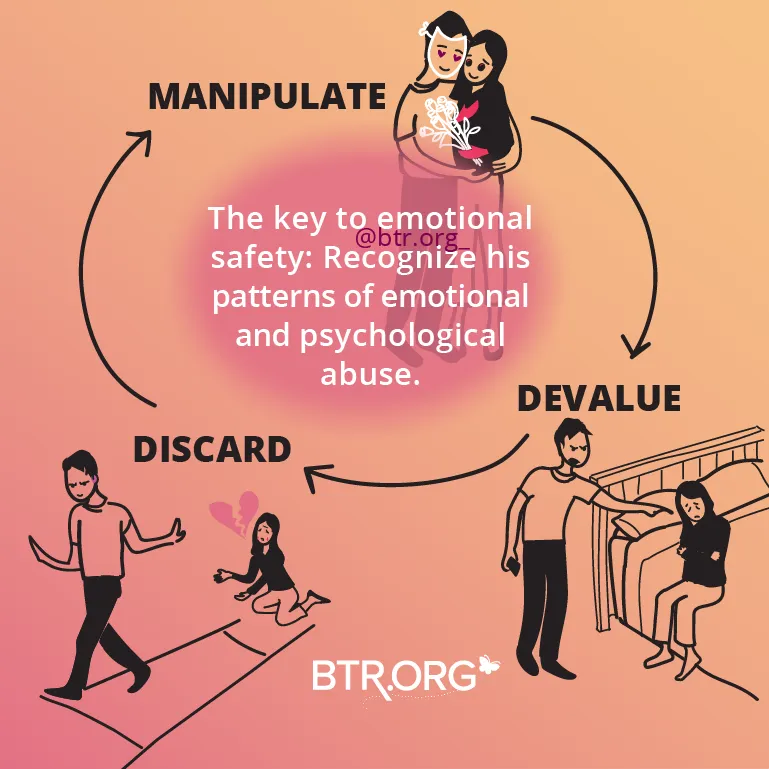
2. Is He Mirroring You? That’s Love Bombing
Often, abusive men use “Mirroring” to love bomb victims. This can be subtle, like mirroring the victim’s:
- Religious beliefs
- Family values
- Academic interests
- Political views
Or more specific, like mirroring the victim’s:
- Hobbies
- Facial expressions
- Favorite foods
- Saying his experience is the same dreams, or traumas of the victim
The abuser uses mirroring as a love bombing tool to generate feelings of intimacy and image management. This form of love bombing can make the victim believe he relates to her; it can manipulate her into feeling seen and understood.
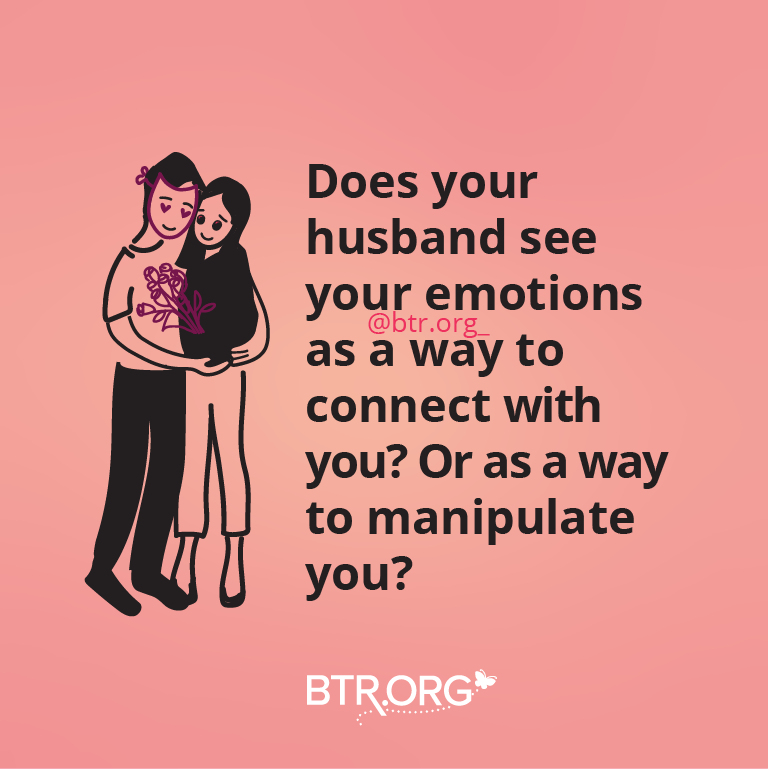
3. He Lies With Intent, That’s Love Bombing
Love bombing is essentially a lie, because it’s a manipulation that he does to give you the impression that he’s the perfect guy for you.
But How Do I Know It’s Love Bombing, & Not Just Life?
Many victims want to give the abuser the benefit of the doubt:
- Maybe he’s just going through a mid-life crisis
- Maybe he’s just stressed out and that’s why there are these extreme ups and downs
- Don’t all relationships go through periods of romance and connection and then pain?
Please understand that gaslighting, lying, secret pornography use, coercion, are NOT “just life”. They are NOT present in healthy marriages. If you are experiencing any of these abusive behaviors in your marriage, you are not safe.
If the abuser shows vulnerability, mirroring, lies and other forms of love bombing, in addition to overtly abusive psychological, emotional, and intimate behaviors, then you can be sure that the loving, vulnerable behaviors are simply his attempt to groom you into staying.
We believe you. We trust you. Listen to your intuition. Our Group Sessions can provide immediate support. We’re here for you.

Transcript: 3 Ways To Know He’s Love Bombing You
Anne: On today’s episode, we have a member of our community. We’re going to call her Laurel. She spent nearly two decades constantly scrambling to please and be enough for her never pleased and abusive husband. She vetted her partner for nearly a decade before marriage. And she believed he was the exact opposite because of love bombing.
And as she shares her story, I’ll point out three ways to know he’s love bombing you. Her husband progressively gaslit her into believing she was the source of every difficulty in their relationship. He used that against her and weaponized that against her. So she spent basically the entire marriage in therapy, working on herself to be enough. He was unfaithful. He also abused alcohol. All of that seemed to fuel his contempt for her.
A lot of us have that experience. Welcome, Laurel.
Laurel: Thanks, Anne.
Anne: So let’s go back to the beginning. When you’re vetting him for these years, looking for someone who’s not abusive, keeping in mind your own history of abuse from your own family. Talk about love-bombing at that time, what did that look like for you over those years?
Laurel: I actually did not know I was dealing with love-bombing. We were friends for seven years before we ever started dating. He used to call me on the phone and just leave a voicemail saying, “Marry me!”
And hang up and not say anything else. He always asked me to marry him, I thought he was just kidding. I thought it was a joke and I didn’t take it seriously.
1. Grooming With False Vulnerability & Image Management Is Love Bombing
Laurel: We continued our friendship, mostly long distance for several years. We met in college, but then went away to our various experiences after that. He continued leaving these voicemails for me, and would continue to be what I thought was a friend at the time.
When we started dating, he didn’t do those things. He seemed like he had become a mature person who was extremely patient, was very sure of himself, was deep into his relationship with God, and exploring his faith. He was kind outwardly to other people. His patience, calm and centering struck me the most. He handled adversity. And how deep it seemed he was becoming in his faith.
That’s what I thought of him when we started dating.
Anne: So you didn’t experience love bombing in the form of flowers or extravagant dates. But what you’re describing is your husband grooming you focused on image management, right?
Laurel: Yes.
Anne: So that’s the first way to know if he loved bombing you, if he’s engaging in a lot of image management behaviors. Making sure the people around him know that he’s “healthy, patient, and spiritual.”
Laurel: Correct, what I have learned since has helped put some pieces together for me. I see that he actually does love bombing in all his relationships. Whether they are professional in his artistic pursuits, day job work, or community relationships. I have seen him do this same pattern with everyone.
Anne: Does he use different things with different people?
Laurel: Yes.
Grooming Begins With Image Management
Anne: I’ve noticed this too. For example, if someone’s interested in science, he’s becoming more in tune with the scientific community. And if someone is more interested in being a vegan, he’s learning more about the environment. Is he like a chameleon when he’s love bombing? He grows and learns the interests of the other person?
Laurel: Absolutely, looking back, I not only see he did that with me regarding my faith, but also in our artistic pursuits. When he was in graduate school. One of his primary professors and advisors was faithful and studying to become a religious leader in his community. Perhaps because of that professor’s interest, he became interested in his faith. Also, I think because of my interest in faith, he mirrored back that to me as values he held.
At the beginning, we talked about our faith and prayed together. After we married, we attended a marriage workshop together. The deeper we got in our relationship, the more I realized that wasn’t who he really was. At the end of our relationship, he actually blamed me for all the time he had ever spent in church. He made it out to be my fault, and that he should have been at home performing his artistic pursuits instead.
He said, “I did everything I was supposed to do. I prayed, gave money, served in the church in all these positions, and God didn’t give me what I wanted.” Talking about his artistic desires. He said, therefore, F God, and he basically abandoned his faith. Like God was a vending machine. I now wonder if his faith was ever genuine or if he was just mirroring.
2. Is He Mirroring You? That Is Love Bombing
Anne: So that’s the second way to know if he’s love bombing you. If you meet him, his spiritual traditions help you feel loved, cherished, and appreciated. But later, he turns those spiritual traditions against you. Then you can know that he was love bombing you.
I wonder if he almost thought he could convince God, like. Even though I don’t care about him. If I can like, lie to God and convince God that I’m obedient. Even though I’m not. If I can convince God I’m this certain type of person, he’s going to give me these blessings. And then, of course, he doesn’t get the blessings of obedience because he’s not actually being obedient.
Laurel: Correct, that behavior is consistent throughout all the relationships I saw him hold in jobs and the arts. And clearly with me and with his faith.
Anne: So his grooming was systematic.
Laurel: Yes, I was a little smarter toward the end of the relationship. That things were really off. I was starting to google all these things. I’m starting to read narcissism, narcissism, narcissism. I’m like, “What’s going on here?” I found some questionnaires online for narcissistic husband behaviors and relationships. I stripped the title off, separated the questions out, and put them into an Excel spreadsheet. We both took the questionnaire.
He self-assessed as very high in narcissistic behaviors and relationships. And admitted in that questionnaire, he lied to people in his professional career. About his successes and qualifications, to impress them and get ahead. Which was a shock to me. I didn’t know that he did that.

3. He Lies With Intent, That Is Love Bombing
Laurel: He lied with intent. On the questionnaire, there were direct questions about stealing, hiding money, and other things. He assessed at a problematic level. It would have been much higher if he had told the truth about all the things I later found out.
Anne: And that’s the third way to know that he is love bombing you is if he lies with intent. Love bombing is essentially a lie, because it’s a manipulation that he does to give you the impression that he’s the perfect guy for you. With that testing, it’s interesting, because you think because he lies so much, he would just also lie on the test. But since we don’t diagnose here at Betrayal Trauma Recovery.
I don’t know how those tests work. When women come to Betrayal Trauma Recovery and say, “Hey, these are the behaviors I’m experiencing.” We don’t ever worry about the “cause.” Because we know the effect is abuse. Our job at BTR is to help women start making their way to emotional and psychological safety.
How did you feel about that when you got that test? Were you like, um, why didn’t he just lie on the test if he lies everywhere else?
Laurel: He said he did some surprising things. Especially the one about lying professionally to other people. That’s where I started to get a clue that things were more wrong than I thought.
Anne: But he wanted you to know that.
False Vulnerability: The Illusion Of Honesty
Laurel: Yes. That’s a very interesting point, because he could have lied more. He lied about a lot of the things that had to do with me specifically, but did admit some of the others. We can only speculate why he did that and what the motive was. We obviously don’t know what issue he actually has going on. This is a pervasive pattern of behaviors.
Anne: Absolutely, I wonder if it’s a false vulnerability?
Laurel: Hmm, that’s interesting.
Anne: So many women will tell me, “He did say he had an affair with his previous wife, or he did say he struggled with exploitative material in high school.”
They feel like he’s being honest, because if he were lying, he wouldn’t have said that. It’s like you can’t know if they’re being honest unless they tell you a little bit, because they have to seem a little bit vulnerable. So they pick and choose what they want you to know. Is this a pseudo vulnerability to groom some more? This is the acceptable form of lying, “I would never lie to you, but I have lied to these other people.” I’m going to admit to that, it will make me seem more vulnerable.
Laurel: I think that’s likely the case. I look back at the things he admitted before we ever started dating. There was a lot of poor me victimhood, how this or that relationship didn’t work out. It was more like a hapless I’m just not lucky with relationships kind of victimhood.
Anne: Rather than an outright, “My previous girlfriend abused me.”
The Cycle Of Grooming & Abuse
Laurel: Correct, he had a lot of resentment for other people who had money, wealth, and status. People who had the kinds of professional successes in the arts that he wanted to have. I did see a lot of that, but he masked the other things.
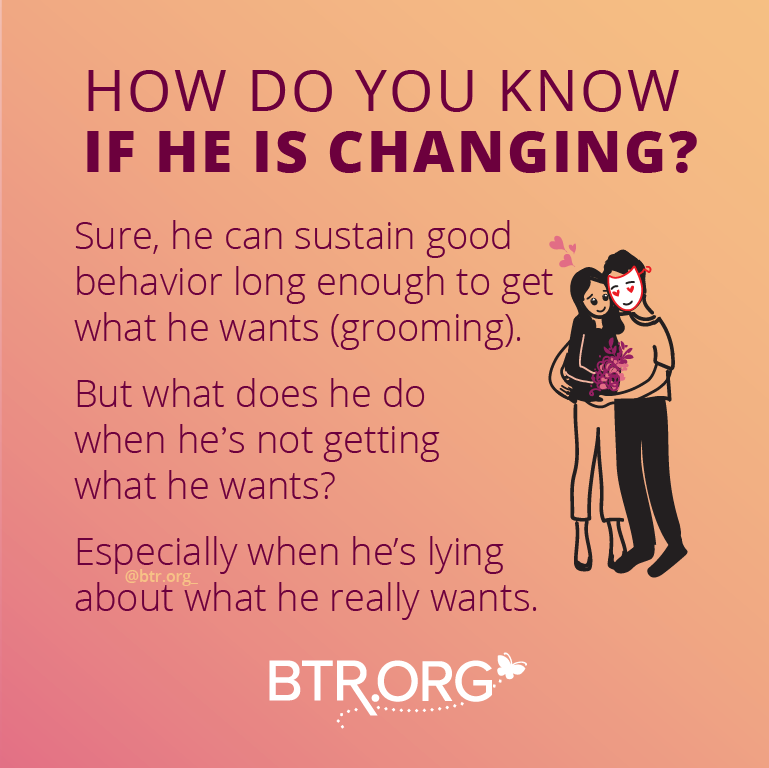
Anne: You’ve got grooming while you’re dating. Then you marry and continue to have grooming episodes. The grooming periods don’t look like abuse at the time. They feel normal and good. If a hundred percent of the relationship was awful and felt terrible. Women could pretty much figure out what was going on sooner rather than later. But they don’t recognize that those good times are grooming and love bombing in their abuse.
When do you start to see changes in how he’s treating you and what did that look like?
Laurel: He made sure to tell me it was okay not to be perfect all the time when we were dating. He encouraged me to be myself, how it was okay to make mistakes. And he allowed me to show my vulnerabilities. He treated me differently after we married.
For example, within the first month of marriage, we lived with his parents in an extra space they had. I recall him coming back home from work one day. I was working on my thesis at the time. Apparently, I had not cleaned the room to his standards. He was very angry, disapproving, and withholding from me. He surprised me because he was a different person than he showed me for several years.
That’s my first inkling, because of love bombing, that things were not the way they had been before we got married.
The Reality Of Long-Distance Relationships
Anne: Your relationship was mostly long distance before you got married?
Laurel: Yes, it was. We met in college. We knew each other for two years before I stayed to continue my undergrad and he went on for graduate school.
Anne: This happened with my relationship. I knew him online and through phone calls for three months, and then I knew him in person for two months before I married him. The total was only five months. I realized when I thought he’s changed, it wasn’t that. I was never actually around him in person a lot. And what he said was different than what he did.
He’d say, “It’s so important to do this.” But when he was actually there, he didn’t act according to the way he had talked. Is that your experience too?
Laurel: I only saw that change happen after marriage, after love bombing. Like you, we had many telephone conversations, wrote letters, and wrote emails, because that was way back in the day. We didn’t have all this digital, video and all the other things we have now. He walked the talk during the short periods we were together before we married. Again, this is impression management, like you said. And after we married it all changed.
Another point you made is that absolutely no woman would want to stay in a marriage where it was terrible all the time. Because it would become obvious to us that something is wrong. The good periods of love bombing are as critical to the abuse cycle as everything else.

Grooming Masks Intent & Makes Love Bombing Believable
Laurel: There were plenty of good periods where it seemed like, Oh, we’ve turned a corner again. He’s not raging at me anymore, he’s not throwing things, and he’s not breaking things. While there were some overt things, it was the covert stuff in between, love bombing, I didn’t recognize, and the good periods helped mask that.
Anne: The grooming, doesn’t just help to mask that it’s their intent.
Laurel: Correct.
Anne: Those good periods are abuse because it’s not genuine. The intent is to control and control the narrative. That’s so heartbreaking to realize. A stab in our hearts when we realize that those good times weren’t actually good for us. They were bad for us.
Laurel: In my particular situation, it was painful for me to look back. I realize the love and relationship I thought I had weren’t reciprocated in a loving way. Looking back, it’s painful to say I don’t think my husband ever loved me the way I perceive love should be.
Anne: Well, because we loved them, it’s hard to understand.
Laurel: Correct.
Anne: It’s like a true, real love. There was no grooming on our part. We were just being ourselves.
Betrayal: A Hidden Struggle
Anne: When did you realize he was using exploitative material?
Laurel: I did not see any evidence of any kind of issue with or problems with intimacy. In fact, he told me he was intentionally celibate for seven years for one period of his life, because that was important to him. I had no idea that was going on until we had moved to another state and no longer lived with his parents.
As I worked on my thesis at night, I looked up something on the internet. I started typing an address and found this huge, long list of all these site’s addresses that started with the same character I started typing. I was horrified, shamed and embarrassed. Because I felt like something about me must be wrong. That I’m not enough for you to need to look at it.
I was also upset because that computer held all our professional artistic work. It held my thesis, and his professional artistic work. If it got infected with something from one of these sites, we could lose everything. I approached him about it, we had this conversation, and he was angry at me, which was interesting.
The exploitative material thing came up on and off for years. He would go through periods where it seemed like he wasn’t using it. Then, he would start using it again, and I’d find more stuff on the browser.
Abusive Behavior Patterns With Exploitative material Use
Laurel: Eventually, I said, “Look, you can’t continue to use a computer that also belongs to me. If you need to do this from time to time, that’s not okay with me, and I still have a problem with it. It still makes me feel terrible about myself as a wife, and that I’m not good enough. I can’t put my own artistic work at risk. You need your own laptop.”
From that point on, I didn’t see what he was doing. I noticed a pattern during these periods. When he started using, he would start getting very cold towards me. He would be hostile. He had a lot of contempt. His mouth was in a tight line. Most of the time when he was around me, his body was tense. His fists clenched sometimes.
He was clearly disgusted and disappointed that he was in my presence. And that I was his wife. There was so much anger and contempt. It was palpable for periods of time whenever he started using.
Anne: You use this phrase I love: The Reconciliation Industrial Complex. I think that’s an awesome phrase. Sometimes I call it The Addiction Recovery Industrial Complex. Is it an addiction recovery situation, or through your church, or therapy?
Laurel: We were married for 18 years at that point. I had lost both of my parents very close together. I had dealt with both of their illnesses and deaths in a very short span of a few years. While I went through all this, instead of being a loving, supportive husband. He used exploitative material, cheating, gaslighting me about it, and blamed me.
The Reconciliation Industrial Complex: A Cult Experience
Laurel: The Reconciliation Industrial Complex happened for me after he moved out. He left to go be with his mistress, who was his direct employee.
I had just lost my father shortly before. And I was dealing with a nightmare of an estate situation, and literally couldn’t manage another loss. I couldn’t handle the absolute destruction of my entire life. Losing both parents, losing my childhood home, having this nightmare going on, and then losing my marriage. And losing my new home that we had just bought together.
It seemed unmanageable, so I involved myself with this group that I found online for saving marriages. I ended up basically sucked into what I would call a cult for about a year and a couple of months.
My husband’s behavior, though, continued to escalate during this period. It became more and more apparent to me how dangerously abusive he was. That’s when I started to wake up about this Reconciliation Industrial Complex. They minimized a lot of the behavior, and they gaslit me. It was a terrible experience overall.
Anne: Was this a Christian organization?
Laurel: They claim to be, yes.
Anne: Was it therapeutic? Or more like God, Biblically centered, Christ can do everything sort of thing?
Laurel: Funny you should ask. They say they are not a faith-based organization, but they are. They preach a lot of faith-based stuff.
Faith-Based Gaslighting: The Damaging Doctrine & Love Bombing
Laurel: What’s interesting is this experience hooked into some of the prior gaslighting and love bombing I experienced as a Christian woman. Telling me how I need to do and be in my marriage. There was a particular book I won’t mention I found damaging.
Anne: So we have context, even though we’re not saying the title of the book. This book is about how if you pray enough, you can solve any problem, essentially.
Laurel: That’s the gist of it. “Wives, if you just fast and pray enough for your husbands, then you can fix all his problems: with his job, his disappointment in life, his self-esteem, and everything. It’s your responsibility as a wife to make things okay for him. One of the primary ways is by praying right. If you don’t pray right, you still have problems. So if you still have problems, you must not be praying right.”
Anne: Yes.
Laurel: They said biblical quotes and references about how wives need to behave in marriage. It’s basically teaching women they need to be doormats. They need to put up with all this terrible behavior, because if they hold their husband accountable or say anything to him, they’re just going to chase him away.
The responsibility is all placed on wives to just figure out the puzzle of the abusiveness. That is the cheating. That is everything else that goes along with that.
Anne: It’s actually a manual for how to comply with abuse.
Laurel: Yes, that’s what this group was. It was so damaging for me, but I didn’t see it at the time. Here’s another thing that’s important.
Covert Abuse: Recognizing the Signs
Laurel: Because I experienced a lot of covert abuse, I didn’t understand I was in an abusive marriage. I knew some of the rage attacks, the name calling, and the other things were abuse, but most of the abuse was covert. I didn’t know what it was. He spent a lot of time in the marriage, telling me there was something wrong with me. He convinced me I needed therapy, and my history of childhood abuse made me this and made me that.
I spent almost the whole marriage in therapy, like you said, and yet it was still never enough. I was constantly “pretzeling” myself to do whatever I needed to be enough and be right. This reconciliation group fed into this because it capitalized on the belief you need to do and be enough for this abusive partner. Now they say that they don’t support abuse in marriage, but they absolutely do.
Anne: Because nothing is abuse, apparently. “This doesn’t apply to you, if you’re abused. That’s a different situation. In our group, we’re reconciling. If he’s unkind or if he lies a little bit, you just need to be safer so that he feels like he can tell the truth.”
Laurel: Oh my gosh, yes, that’s exactly what they said.
Anne: They’re trying to say that everything you’re experiencing isn’t actual abuse. This probably wouldn’t be right for you if you were actually abused. But since you’re not, you just need to be better.
Laurel: You need to work on your spiritual health. You need to work on your emotional attractiveness, your spiritual attractiveness, your physical attractiveness. You need to never hold him accountable.
Reconciliation Groups Enable Abuse
Laurel: You don’t want to say anything that’s going to upset him, or else it’s your fault that he doesn’t come home.
Anne: Women who aren’t being abused don’t need to go to stuff like that. That’s the crazy thing. Generally speaking, women in healthy marriages who feel loved, appreciated, and cherished. They don’t go to reconciliation camps.
Laurel: Correct.
Anne: They’re not trying to get addiction recovery services. They don’t know that most of the population of women they’re “trying to help,” are abuse victims.
Laurel: These folks say, “if you’re in an abusive marriage, we’re not talking about you.” Actually, they are enabling that same abuse.
Anne: I find that same trouble with real harm. For example, if a rape victim says, “I was raped.” People say things like “Oh, he was your husband? You didn’t scream, yell, and scratch his eyes out? You weren’t actually raped, and you saying you were raped hurts real rape victims.”
As if there’s some real rape victim out there who has experienced it and you did not. So you didn’t experience a real rape when you did. It was real rape. It was real abuse.
Saying, “We don’t want to call that abuse. This is just regular marriage stuff. If we do call it abuse, that’s going to hurt real abuse victims.” In the meantime, they’re hurting actual abuse victims in trying to discount the abuse they’re experiencing.
The Realization: Understanding Abuse & Love Bombing
Laurel: I thought because he hadn’t hit me yet, it wasn’t actual abuse. I was so ashamed and gaslit. I believed he had been this amazing, beautiful, kind, strong, patient person. It was love bombing. I turned him into an abusive person because I’m messed up. It was my fault. The real him was the him I thought I married, the him I dated. He told me all the time it was because of my trauma and my past. He was the way he was.
I never told anyone during my marriage about any of the things that went on at home, including the overt rage attacks where he would throw things, break things. Stuff clearly abusive. I didn’t say anything until after he moved out. But I told one person just a few small things, and that person said, “Oh my gosh, that’s abuse!”
I thought, “That can’t be true. That can’t be right. I can’t have been in an abusive marriage.” I was so confused, I started looking stuff up, and I got even more confused. I called the hotline and shared with them a few of the things I’d been through. “Oh my gosh, this is abuse.” When I shared more things, they said, “This is abuse.” That’s when I came to understand how abusive my marriage was.
Anne: I wish, instead of the reconciliation stuff, the addiction recovery stuff, the addiction recovery. Or any of that, they would first do a big introduction to what abuse is. And then, stay there. Don’t ever go anywhere else. Just stick with this is what abuse is. This is how it impacts you. This is how to set boundaries around it.
“Accidental” Abuse
Anne: It’s abuse, there’s no other way around it. It is love bombing. There’s no way to avoid it. You can’t avoid it by calling it something else. It is just abuse. I’m so grateful that you got to that point. You mentioned that one of the videos at Betrayal Trauma Recovery helped you recognize covert physical abuse. Can you talk about that?
Laurel: I didn’t know that violence against objects was part of physical abuse. I heard in that video, that one thing.
Anne: Was this on TikTok or on Instagram?
Laurel: I saw it on Facebook, but I think you’d posted it to multiple platforms. Some of the things mentioned in that video I made notes about that happened to me. They were “playing,” wrestling, grabbing, tearing my clothing, and tickling when I asked him to stop. He kissed me forcefully at times so that I couldn’t breathe, and I asked him to stop. And sometimes hurt me in his “play.”
He had “accidents,” and claimed he “accidentally” stepped on me. It happened repeatedly or “accidentally” running into me. It got so bad I started being hypervigilant about being aware of where his body was in space at all times. I was constantly afraid he would hurt me by stepping on me or running into me. Looking back, I noticed he didn’t seem to have that problem with anyone else, not in the community, not at work. I never saw it happen.
Anne: People didn’t know him as a klutz or clumsy?
Laurel: No, I never saw him at any of the arts things, running into people. He only did the behavior with me. That was eye opening to me when I heard about some of that in the video.
Intentional Harm & Physical Abuse
Laurel: He kept running me off the road when we were on a trip. I would say to him, “You’re running me into fire hydrants, into trees, into this stuff. Could you please leave a little more space for my body so that I could have enough space to walk?”
But he kept doing it. I realized it was intentional. The fifth or sixth time I had to say, “Hey, it’s still happening. Could you please leave enough space for my body?” We would be having a disagreement when he was driving the car. He would start getting really angry, start accelerating and driving in a way I thought he would wreck the car with me in it. He was breaking and damaging my things.
And he also admitted intentionally exposing me to germs to make me sick. I have some immune issues, which he knew before we ever married. I said, “If you’re sick, please don’t kiss me. If you have an intestinal illness, please don’t handle food.”
But he did it on purpose and lied about not feeling well or handling food anyway, and then I would be sick for weeks. He wouldn’t feel bad, except maybe a day or two. He also admitted before he moved out that he intentionally went around the house wiping germs on the surfaces of things. That I had to handle for my health care needs to make me sick.
There were situations near the end where he intentionally locked me out of the house despite asking him to stop doing it. So he admitted to many things like that.
Intentional Harm: The Admission Of Guilt With Love Bombing
Anne: When you say “admit,” I think this is an interesting concept, because they do everything with a goal in mind. They have an outcome that they’re going for. So when they “admit” something, I believe it’s intentional to get some type of result. In that case, it sounds like he wanted you to know he was doing that. Either to hurt you, or to get you to kick him out, or some type of goal. Do you have any idea of what his goal was in telling you?
Laurel: I didn’t at the time, but looking back on it, I believe he was trying to control me. He was cheating with his direct employee at the time. This was just after I had lost my father and mother. He didn’t want to be the “bad guy.”
I think he wanted me to be the “bad guy” and tell him I wanted a divorce. So he wouldn’t have to feel guilty or bear any responsibility. Like you said earlier about the impression management and love bombing, it was important to him to be perceived by the community as a good guy. I believe he was trying to force my hand so he could say he was the victim of the whole situation.
Anne: That’s what happened to me. I think he was lying about exploitative materail, and then suddenly he said, “I used pornography today.”
I thought he was using anew, that he had been “sober,” for years. Then suddenly he’s using it again. I don’t think that was the case.
The Strategy Behind Admissions: Control & Manipulation
Anne: I think he was using it the whole time, but then there was a strategic reason in his mind why he was telling me. It’s the same thing. The reason was he wanted me to kick him out. Everything they say, it’s important to think, “What is the goal here?”
Rather than thinking, “He admitted to this, so maybe he’s changing.” No, think, “What is his aim in doing this? What does he want the end result to be?”
When they get to the point where they want to move on, they want us to be the ones to kick them out. They don’t want to do it because then they’d look like the bad guy.
Laurel: In addition, he wanted to make sure I understood he thought I was a piece of garbage. There were many other things he did to make it clear to me that he was discarding me, throwing me away. I was trash, I meant nothing to him, and the past 27 years we’d known each other were meaningless. He made that clear over and over. I was trash and he was throwing me away.
Anne: For our listeners, we’re intentionally keeping this vague to protect Laurel. In your artistic endeavors, can you talk about how he used you and his control of your artistic projects and your ideas? How that was also an element of the abuse?
Laurel: We went to school together for the same artistic pursuits. I was in one particular vein of that pursuit, he was in another. However, it was the same type of education.
Uncredited Artistic Contributions
Laurel: We both went on to graduate school for the same artistic field. When we got married, I performed some of his things, and he seemed to appreciate that. When I had a physical issue that caused me to not do that as often, suddenly he started withholding from me.
For example, I was expected to make posters announcing his events, do all this graphic design work for him and to use that to serve him. I was also expected to attend the events, which I was glad to do because I wanted to support my partner. I was also asked to work at them like an employee, which also didn’t bother me at the time.
But he did not give me credit for any of the graphic design work I did. He used a lot of my graphics work for his own artistic things, and he did not credit me on them.
Anne: Did he claim they were his?
Laurel: He just didn’t say whose they were at all and who did all this beautiful work for him. After he left, I said, “I would like you to please include a credit on all my things I have created that you’re using. That includes all paper copies, all digital copies. All you have to do is add a tagline with my copyright, and that’s it.”
Rather than do that, he just deleted everything, as if I had never existed. Instead of giving me credit for my work, he had to erase me, which I found to be very telling.
Living With Disapproval Not Love Bombing
Laurel: We lived together at home for almost two decades. He would hear me doing my art in the home, and he would not encourage me. He also would not come to my events. I attended basically all his. In many years, I had sixty four events, and he came to three or four. All these combined messages told me my work wasn’t worthwhile. It wasn’t good enough. If it were, he would not only attend, but also say it was good.
It was clear he disapproved and that it wasn’t good enough. He did not use love bombing then. The subtle looks of lips pressed together when I’d be making my art at home, no compliments, no support.
Anne: My guess is you’re way better than he is.
Laurel: I guess that’s a matter of opinion, thank you.
I will say as an aside, because the gaslighting was so bad, I started asking a few other people. I said, “This is what I’ve come to believe about my artistic work. So I need to check in with you, because you have hired me to do this and that. Is that what you think of my work?” And one woman said to me, “Laurel, would this organization I represent have kept hiring you all these years, if you were that terrible?”
I had to laugh because I realized, “You know what? You’re right. That’s absurd. I clearly am good enough!”
Anne: Heaven forbid he let you know any bit of that because then you might be equal, right?
Power Imbalance & Exploitation
Anne: There has to be the power imbalance for abuse to occur so he’s always got to keep you lower.
Laurel: You can’t see me waving my arms right now, because it’s literally like you climbed into my brain and pulled those exact words out of my own thoughts. That’s exactly what it was. He needed to be the person who was thought of by everyone as the artist in our home. He had to keep me down to pump himself up.
Anne: I’ve thought about this a lot, it’s like they want to just mine you for resources.
Laurel: Yes!
Anne: They’re trying to mine you for resources, exploit you, and want to have power over you. If you were so terrible and awful, and you had nothing to give them. Then they wouldn’t want to exploit you or mine you for resources. So they have to somehow live in these two worlds where what you have is worth exploiting, but they’re never going to let you know.
Laurel: A hundred percent. That is exactly what happened in my marriage. He spent a lot of time telling me before we got married how amazing I was, which is probably part of the love bombing and grooming. But I didn’t know that at the time. He wrote this big long letter to a faculty person about those who “have it” and those who “don’t have it.” That he’s a person who has it, and what it’s like for people who have it.
He also wrote what happens when you think a person has it and then you find out that they don’t. Then you’re so upset because they betrayed you and they lied to you.
The Illusion Of “Having It”
Laurel: That’s how he treated me after we got married. As time progressed, he told me over and over through his withholding and disapproval that I had misled him, I never had it. I was just a horrible liar.
Anne: You tricked him into thinking that you were super artistic and you weren’t. You didn’t have that spark.
Laurel: That’s right. What a horrible person I am.
Anne: That’s funny because that’s something you can’t self-assess.
Laurel: Yeah, it’s funny that.
Anne: You could have it or not have it. A lot of people who don’t have it think they do, i. e. your ex.
Laurel: He was convinced he had it and knew who had it and who didn’t. He was the authority.
Anne: We’ve mentioned a few times the abuse you suffered growing up. That has nothing to do with his abuse and love bombing of you. At Betrayal Trauma Recovery, we do not believe there is anything about a child being abused, which would mean she deserves abuse as an adult. Or she picked someone on purpose, or she’s some kind of magnet for abuse, or anything like that.
We all know someone who has suffered childhood abuse, grown up, and married someone who is awesome. That just has nothing to do with it. That being said, abusers like to use anything they can as a weapon, including past trauma, therapeutic modalities, spiritual stuff, scripture. Specifically for you, when we’re talking about this covert abuse, I want you to talk a little bit about how he used your past trauma to hook you in. Degrade you, and how that was especially difficult.
Childhood Trauma As A Weapon To Use With Love Bombing
Laurel: Because I experienced physical abuse in my childhood, he used that to intimidate and control me. He would use rage attacks, where he would scream, curse, call me horrible names, throw things, and pound on objects. Whether that’s a wall, a door frame, the steering wheel, or a dashboard. He would be close to me with his fists all clenched up, like he could just lose it at any time, and I could be next.
There were times when I said to him, after the fact, “This behavior triggers my childhood abuse trauma. Could you not do that? Let’s find some other way of communicating or managing your anger or whatever’s going on.”
Instead of saying what a good partner would say, and not because of love bombing, which is, “Oh my gosh, I’m so sorry. I’m going to fix that. I won’t do that again.”
He took that as a note. Then, he used that more and more often. So those periods of violence accelerated over time instead of stopped. That was one of the ways it showed up.
He used my childhood abuse to make me believe I was crazy and unstable. I had problems with anxiety, and there’s nothing wrong with the world I’m living in. It’s just my anxiety when it was actually a lot of his behavior. Anything I came to him with, he would do it more and use it as a tool.
We had a long conversation where I explained why it wasn’t okay. When you’re cleaning the basement. You don’t put the old computers on the lawn, because someone could