
Bendy Bodies with Dr. Linda Bluestein
214 episodes — Page 3 of 5
Genetic Testing in EDS with Dr. Paldeep Atwal (Ep 112)
In this enlightening episode of the Bendy Bodies podcast, Dr. Linda Bluestein, the Hypermobility MD, is joined by renowned clinical geneticist Dr. Paldeep Atwal to delve into the complexities of genetics in hypermobile Ehlers-Danlos Syndrome (hEDS) and related conditions. Dr. Atwal explains the importance of genetic testing, the significance of variants of uncertain significance (VUSs), and the complexities of gene interactions in understanding EDS. They also explore the future of genetic research and what patients should know about genetic testing to avoid misinformation and unnecessary stress. Whether you're new to the world of EDS or looking for cutting-edge insights, this episode offers valuable guidance. Takeaways: Importance of Genetic Testing: Genetic testing can reveal rare types of Ehlers-Danlos Syndromes (EDS), even when hypermobile EDS is suspected. Understanding Genetic Variants: Variants of uncertain significance can lead to confusion, making expert interpretation crucial for proper diagnosis. Gene-Environment Interactions: Genetic variants do not work in isolation—gene-gene and gene-environment interactions play a significant role in how conditions manifest. Complexity of Genetics in EDS: The absence of a genetic marker for hypermobile EDS highlights the need for continued research into the genetic basis of the condition. Avoiding Direct-to-Consumer Pitfalls: Be cautious with direct-to-consumer genetic testing, as inaccurate results can cause unnecessary stress. Always consult a geneticist for interpretation. Connect with YOUR Bendy Specialist, Dr. Linda Bluestein, MD at https://www.hypermobilitymd.com/. Thank YOU so much for tuning in. We hope you found this episode informative, inspiring, useful, validating, and enjoyable. Join us on the next episode for YOUR time to level up your knowledge about hypermobility disorders and the people who have them. Join YOUR Bendy Bodies community at https://www.bendybodiespodcast.com/. Learn more about Human Content at http://www.human-content.com Podcast Advertising/Business Inquiries: [email protected] YOUR bendy body is our highest priority! Learn about Dr. Paldeep Atwal Website: https://atwalclinic.com/ IG / X / FB : @atwalclinic Youtube: https://www.youtube.com/channel/UCffZDBcvf-vFRsT7k9GppTQ Keep up to date with the HypermobilityMD: YouTube: youtube.com/@bendybodiespodcast Twitter: twitter.com/BluesteinLinda LinkedIn: linkedin.com/in/hypermobilitymd Facebook: facebook.com/BendyBodiesPodcast Blog: hypermobilitymd.com/blog Part of the Human Content Podcast Network Learn more about your ad choices. Visit megaphone.fm/adchoices
My Essential EDS Advice | Office Hours (Ep111)
In this unique solo episode of the Bendy Bodies podcast, Dr. Linda Bluestein, the Hypermobility MD, answers listener-submitted questions about hypermobile Ehlers-Danlos syndrome (hEDS), POTS, and related conditions. From understanding the importance of a correct diagnosis to tips for managing symptoms, Dr. Bluestein offers valuable insights on living with chronic illness. Learn what to ask your doctor, how to pace yourself with hEDS and POTS, and discover Dr. Bluestein’s favorite hypermobility hacks. Whether you’re newly diagnosed or have been managing symptoms for years, this episode provides practical advice for navigating the complexities of hypermobility. Takeaways: Diagnosis Matters: A correct diagnosis can provide validation and guide more effective treatment strategies. Pacing with POTS: Learning to listen to your body and finding the right balance between activity and rest is crucial in managing POTS and EDS. Doctor-Patient Communication: Organize and report symptoms clearly to your doctor to improve diagnosis and treatment. Importance of Empathy: Finding a healthcare provider who shows empathy and is willing to learn about EDS can make all the difference. Hypermobile Hacks: Simple strategies, like journaling symptoms and gradual movement, can help manage hypermobility-related pain. Connect with YOUR Bendy Specialist, Dr. Linda Bluestein, MD at https://www.hypermobilitymd.com/. Thank YOU so much for tuning in. We hope you found this episode informative, inspiring, useful, validating, and enjoyable. Join us on the next episode for YOUR time to level up your knowledge about hypermobility disorders and the people who have them. Join YOUR Bendy Bodies community at https://www.bendybodiespodcast.com/. Learn more about Human Content at http://www.human-content.com Podcast Advertising/Business Inquiries: [email protected] YOUR bendy body is our highest priority! Keep up to date with the HypermobilityMD: YouTube: youtube.com/@bendybodiespodcast Twitter: twitter.com/BluesteinLinda LinkedIn: linkedin.com/in/hypermobilitymd Facebook: facebook.com/BendyBodiesPodcast Blog: hypermobilitymd.com/blog Part of the Human Content Podcast Network Learn more about your ad choices. Visit megaphone.fm/adchoices
hEDS vs HSD: Controversies in Diagnosis with Alan Hakim, MD (Ep 110)
In this episode of the Bendy Bodies podcast, Dr. Linda Bluestein, the Hypermobility MD, welcomes Dr. Alan Hakim, a world-renowned rheumatologist and expert in Ehlers-Danlos Syndromes (EDS) and Hypermobility Spectrum Disorders (HSD). Dr. Hakim reveals for the first time something about his own health. Listen in to find out what Dr. Hakim really thinks about the Beighton Score and the 2017 hEDS Classification Criteria. He also shares when he feels genetic testing is indicated and how to interpret variants of uncertain significance (VUSs). Takeaways: Difference Between Connective Tissue Disorders: Dr. Hakim clarifies the difference between hereditary connective tissue disorders like EDS and autoimmune connective tissue disorders such as lupus and rheumatoid arthritis. Evolving EDS Criteria: The 2017 classification of EDS has improved the understanding of conditions like hypermobile EDS, but there’s still ongoing research and work being done to refine the criteria. Dr. Hakim shares his thoughts on the criteria and the process. Comorbidities in EDS and HSD: Conditions such as POTS (Postural Orthostatic Tachycardia Syndrome) and GI disorders often accompany hypermobility-related disorders, though more research is needed to establish how these comorbidities are connected. The Importance of Instability: Joint instability, rather than just hypermobility, may play a more significant role in patient symptoms, making proper diagnosis and treatment plans essential. Future of Genetic Testing: While genetic markers for hypermobile EDS have not yet been identified, significant research is underway to find biomarkers and better understand the genetic components of these disorders. Dr. Hakim shares his thoughts on when genetic testing should be performed and covers red flags for more rare types of EDS and other hereditary connective tissue disorders. Connect with YOUR Bendy Specialist, Dr. Linda Bluestein, MD at https://www.hypermobilitymd.com/. Thank YOU so much for tuning in. We hope you found this episode informative, inspiring, useful, validating, and enjoyable. Join us on the next episode for YOUR time to level up your knowledge about hypermobility disorders and the people who have them. Join YOUR Bendy Bodies community at https://www.bendybodiespodcast.com/. Learn more about Human Content at http://www.human-content.com Podcast Advertising/Business Inquiries: [email protected] YOUR bendy body is our highest priority! Learn about Dr. Alan Hakim: Instagram: @ehlers.danlos Keep up to date with the HypermobilityMD: YouTube: youtube.com/@bendybodiespodcast Twitter: twitter.com/BluesteinLinda LinkedIn: linkedin.com/in/hypermobilitymd Facebook: facebook.com/BendyBodiesPodcast Blog: hypermobilitymd.com/blog Part of the Human Content Podcast Network Learn more about your ad choices. Visit megaphone.fm/adchoices
How EDS and HSD Impact Fascia and Pain with Tina Wang, MD (Ep 109)
In this episode of the Bendy Bodies podcast, Dr. Linda Bluestein, the Hypermobility MD, welcomes Dr. Tina Wang, a leading expert in physical medicine, rehabilitation, and fascia research. Dr. Wang delves into the complexities of fascia, particularly its role in Ehlers-Danlos Syndrome (EDS) and Hypermobility Spectrum Disorders (HSD). She explains how fascial dysfunction contributes to myofascial pain, joint instability, and other challenges faced by individuals with hypermobility. Dr. Wang also discusses innovative diagnostic techniques and treatment approaches, including the use of ultrasound and manual therapy. This episode is a must-listen for anyone who wants to better understand their pain, or is interested in the cutting-edge research and clinical insights on fascia and connective tissue disorders. Takeaways: Fascia’s Role in EDS: Fascia plays a crucial role in connective tissue disorders like EDS and HSD, impacting everything from joint stability to chronic pain. Myofascial Pain: Myofascial pain, often misunderstood, can be a significant source of discomfort in hypermobility conditions due to fascial dysfunction. Ultrasound for Diagnosis: Advanced ultrasound techniques are improving the ability to diagnose fascial changes and guide treatment in EDS patients. Manual Therapy Benefits: Proper manual therapy can help alleviate fascial dysfunction, but it must be approached cautiously, especially in hypermobile patients. Holistic Management: Managing hypermobility-related pain requires a holistic approach, including movement therapy, manual therapy, and collaboration with healthcare professionals. Connect with YOUR Bendy Specialist, Dr. Linda Bluestein, MD at https://www.hypermobilitymd.com/. Thank YOU so much for tuning in. We hope you found this episode informative, inspiring, useful, validating, and enjoyable. Join us on the next episode for YOUR time to level up your knowledge about hypermobility disorders and the people who have them. Join YOUR Bendy Bodies community at https://www.bendybodiespodcast.com/. Learn more about Human Content at http://www.human-content.com Podcast Advertising/Business Inquiries: [email protected] YOUR bendy body is our highest priority! Learn about Dr. Tina Wang: Linkedin: @tupelopointe Tiktok: @tupelopointe Keep up to date with the HypermobilityMD: YouTube: youtube.com/@bendybodiespodcast Twitter: twitter.com/BluesteinLinda LinkedIn: linkedin.com/in/hypermobilitymd Facebook: facebook.com/BendyBodiesPodcast Blog: hypermobilitymd.com/blog Part of the Human Content Podcast Network Learn more about your ad choices. Visit megaphone.fm/adchoices
Welcome, Bendy Buddies!
trailerEach week, join Dr. Linda Bluestein (AKA The Hypermobility MD) on her quest to demystify the wide world of symptomatic joint hypermobility. Get ready to better understand your own bendy body in our newest season – available now! Learn more about your ad choices. Visit megaphone.fm/adchoices
Overcoming Pain in EDS: Building Stronger Bodies with Whealth Founders Katie & Andrew Dettelbach (Ep 108)
In this episode of the Bendy Bodies podcast, Dr. Linda Bluestein, the Hypermobility MD, chats with Katie and Andrew Dettelbach, founders of Whealth, a program dedicated to helping people with hypermobility and chronic pain. Both Katie and Andrew have hypermobile Ehlers-Danlos Syndrome (hEDS) and have turned their personal struggles into a platform that empowers others to manage their pain and regain strength. Katie, a critical care nurse, and Andrew, a kinesiologist, discuss their journeys, challenges with hypermobility, and the innovative methods they’ve developed to help thousands worldwide overcome chronic pain. Learn how movement, strength, and understanding your body can transform your life. Takeaways: Movement and Hypermobility: Finding the right type of movement is crucial for managing hypermobility and chronic pain, though it may take trial and error. Strength Training and Pain Relief: Tailored strength training can significantly reduce pain and improve function in hypermobile bodies. Listening to the Body: It’s essential to distinguish between good and bad pain, adjusting your activities accordingly. Holistic Approach: Programs like Whealth emphasize not just movement but also nutrition, stress management, and environment for better overall health. Self-Compassion: Managing chronic conditions requires patience and self-compassion, recognizing that healing and strength-building is a journey. Connect with YOUR Bendy Specialist, Dr. Linda Bluestein, MD at https://www.hypermobilitymd.com/. Thank YOU so much for tuning in. We hope you found this episode informative, inspiring, useful, validating, and enjoyable. Join us on the next episode for YOUR time to level up your knowledge about hypermobility disorders and the people who have them. Join YOUR Bendy Bodies community at https://www.bendybodiespodcast.com/. Learn more about Human Content at http://www.human-content.com Podcast Advertising/Business Inquiries: [email protected] YOUR bendy body is our highest priority! Learn about Whealth Founders Katie & Andrew Dettelbach: X / Twitter: @spreadwhealth Instagram: @whealth Facebook: @spreadwhealth Youtube: @whealth Tiktok: @whealth_ Andrew IG: @the.shirtlessdude Keep up to date with the HypermobilityMD: YouTube: youtube.com/@bendybodiespodcast Twitter: twitter.com/BluesteinLinda LinkedIn: linkedin.com/in/hypermobilitymd Facebook: facebook.com/BendyBodiesPodcast Blog: hypermobilitymd.com/blog Part of the Human Content Podcast Network Learn more about your ad choices. Visit megaphone.fm/adchoices
Grief, Healing, and Mental Health Strategies for Chronic Illness with Natasha Trujillo, PhD (Ep 107)
In this insightful episode of the Bendy Bodies podcast, Dr. Linda Bluestein speaks with Dr. Natasha Trujillo, a licensed sports psychologist specializing in grief, loss, and chronic illness. Dr. Trujillo and Dr. Bluestien both work with the Colorado Ballet. Dr. Trujillo discusses the complex emotional landscape of grieving when faced with chronic pain, disability, and the loss of identity. She shares valuable strategies for processing grief, moving towards acceptance, and navigating self-compassion. Whether you’ve experienced grief from illness, injury, or significant life changes, this episode provides tools and approaches to living a fuller, more resilient life. Takeaways: Grief Beyond Death: Grief can occur after any significant loss, not just death, especially when living with chronic illness and disability. Acceptance and Resilience: Acceptance is not about giving up; it’s about acknowledging reality while continuing to strive for personal growth and well-being. Grief is Nonlinear: The stages of grief do not always follow a predictable order and can vary widely from person to person. Processing Emotions: Identifying, expressing, and working through emotions are key steps in moving through grief and loss. Self-Compassion: Developing self-compassion is crucial when dealing with grief and loss, as it helps counteract self-blame and fosters emotional healing. Connect with YOUR Bendy Specialist, Dr. Linda Bluestein, MD at https://www.hypermobilitymd.com/. This episode is sponsored by EDS Guardians. If you want to learn more, check them out here: https://www.edsguardians.org/ Thank YOU so much for tuning in. We hope you found this episode informative, inspiring, useful, validating, and enjoyable. Join us on the next episode for YOUR time to level up your knowledge about hypermobility disorders and the people who have them.🎧 Join YOUR Bendy Bodies community at https://www.bendybodiespodcast.com/. Learn more about Human Content at http://www.human-content.com Podcast Advertising/Business Inquiries: [email protected] YOUR bendy body is our highest priority! 🧬🔬🦓 Learn about Dr. Natasha Trujillo: Instagram: @npttherapy Keep up to date with the HypermobilityMD: YouTube: youtube.com/@bendybodiespodcast Twitter: twitter.com/BluesteinLinda LinkedIn: linkedin.com/in/hypermobilitymd Facebook: facebook.com/BendyBodiesPodcast Blog: hypermobilitymd.com/blog Part of the Human Content Podcast Network Learn more about your ad choices. Visit megaphone.fm/adchoices
Group Rehabilitation for POTS with Emily Rich, OT (Ep 106)
In this episode of the Bendy Bodies podcast, Dr. Linda Bluestein, the Hypermobility MD, sits down with Emily Rich, an occupational therapist specializing in POTS (Postural orthostatic tachycardia syndrome), Ehlers-Danlos syndromes, and other chronic conditions. Emily, who is also a patient with hypermobile EDS and POTS, shares her insights on how occupational therapy can help individuals regain control over their daily lives. From adaptive tools to fatigue management strategies, Emily provides practical advice and discusses her groundbreaking research on group rehabilitation programs for POTS. Tune in to learn how to manage symptoms and improve your quality of life with expert guidance. Takeaways: Occupational Therapy for POTS: Occupational therapy can play a crucial role in helping POTS patients manage daily tasks and improve their quality of life through adaptive tools and strategies. Group Rehabilitation Programs: Emily Rich has developed a group-based rehabilitation program that combines occupational therapy, physical therapy, and mindfulness to help POTS patients manage symptoms effectively. Managing Fatigue: Fatigue is a significant challenge for individuals with POTS and EDS. Techniques like pacing, energy conservation, and strategic rest breaks can help manage energy levels. The Role of Compression: Proper use of compression garments, including abdominal binders, can significantly help manage POTS symptoms by improving blood circulation and reducing symptoms like dizziness and fainting. Holistic Approaches: Emily emphasizes the importance of a holistic approach to managing POTS and EDS, incorporating lifestyle changes, movement, and psychological support to enhance overall well-being. Connect with YOUR Bendy Specialist, Dr. Linda Bluestein, MD at https://www.hypermobilitymd.com/. This episode is sponsored by EDS Guardians. If you want to learn more, check them out here: https://www.edsguardians.org/ Thank YOU so much for tuning in. We hope you found this episode informative, inspiring, useful, validating, and enjoyable. Join us on the next episode for YOUR time to level up your knowledge about hypermobility disorders and the people who have them.🎧 Join YOUR Bendy Bodies community at https://www.bendybodiespodcast.com/. Learn more about Human Content at http://www.human-content.com Podcast Advertising/Business Inquiries: [email protected] YOUR bendy body is our highest priority! 🧬🔬🦓 Learn about Emily Rich: Instagram / YouTube: @emilyrichot Linkedin: @emilymrich Keep up to date with the HypermobilityMD: YouTube: youtube.com/@bendybodiespodcast Twitter: twitter.com/BluesteinLinda LinkedIn: linkedin.com/in/hypermobilitymd Facebook: facebook.com/BendyBodiesPodcast Blog: hypermobilitymd.com/blog Part of the Human Content Podcast Network Learn more about your ad choices. Visit megaphone.fm/adchoices
Understanding the Brain's Role in Chronic Pain with Kaitlin Touza, PhD (Ep 105)
In this episode of the Bendy Bodies podcast, Dr. Linda Bluestein, the Hypermobility MD, engages in an enlightening conversation with Dr. Kaitlin Touza, a renowned pain psychologist. Dr. Touza delves into the complexities of chronic pain, explaining how the nervous system, brain processes, and psychological factors contribute to pain experiences. She discusses multiple different pain management techniques while emphasizing the benefits of understanding pain neuroscience. Dr. Touza also highlights the value of self-compassion and psychological flexibility in improving quality of life for those with chronic pain. Takeaways: Psychological Factors and Pain: Psychological factors such as stress, anxiety, and fear can significantly influence the perception of chronic pain and its severity. Pain as a Danger Signal: Pain is often a response to perceived danger, not just physical injury. The brain’s interpretation of pain involves complex neural circuits. Cognitive and Behavioral Therapy: CBT and ACT are effective therapies for managing chronic pain by addressing thought patterns and behaviors that influence pain perception. Importance of Self-Compassion: Developing self-compassion and psychological flexibility can improve resilience and coping strategies for individuals with chronic pain. Understanding Pain Neuroscience: Educating patients and healthcare providers about pain neuroscience can empower individuals to better manage their pain and improve their quality of life. Connect with YOUR Bendy Specialist, Dr. Linda Bluestein, MD at https://www.hypermobilitymd.com/. This episode is sponsored by EDS Guardians. If you want to learn more, check them out here: https://www.edsguardians.org/ Thank YOU so much for tuning in. We hope you found this episode informative, inspiring, useful, validating, and enjoyable. Join us on the next episode for YOUR time to level up your knowledge about hypermobility disorders and the people who have them.🎧 Join YOUR Bendy Bodies community at https://www.bendybodiespodcast.com/. Learn more about Human Content at http://www.human-content.com Podcast Advertising/Business Inquiries: [email protected] YOUR bendy body is our highest priority! 🧬🔬🦓 Learn about Kaitlin Touza: Linkedin: https://www.linkedin.com/in/kaitlin-touza-phd-9117148a/ Keep up to date with the HypermobilityMD: YouTube: youtube.com/@bendybodiespodcast Twitter: twitter.com/BluesteinLinda LinkedIn: linkedin.com/in/hypermobilitymd Facebook: facebook.com/BendyBodiesPodcast Blog: hypermobilitymd.com/blog Part of the Human Content Podcast Network Learn more about your ad choices. Visit megaphone.fm/adchoices
Ep 104Connective Tissue Disorders and Lipedema with Karen Herbst, MD (Ep 104)
In this episode of the Bendy Bodies podcast, Dr. Linda Bluestein, the Hypermobility MD, hosts an enlightening discussion with Dr. Karen Herbst, a leading expert on lipedema and other adipose connective tissue diseases. Dr. Herbst shares her extensive knowledge on the complexities of lipedema, Dercum's disease, and their connection to connective tissue disorders, inflammation, and hormonal factors. Learn about the latest research, diagnostic challenges, and effective treatments, including diet, supplements, and surgery. Don't miss the valuable insights and practical advice shared in this episode. Takeaways: Lipedema Misdiagnosis: Lipedema is often misdiagnosed as regular obesity or confused with lymphedema, highlighting the need for better awareness and diagnostic criteria. Connection to Hormones: Hormonal changes, such as those during puberty, pregnancy, and menopause, can trigger or worsen lipedema due to increased fat and hormonal fluctuations. Inflammation and Fibrosis: Inflammation in lipedema leads to fibrosis, making the tissue nodular and tender, and potentially contributing to the chronic pain experienced by patients. Diet and Supplements: Anti-inflammatory diets, intermittent fasting, and certain supplements like berberine and CoQ10 can help manage lipedema symptoms by reducing inflammation and supporting metabolic health. Surgical and Non-Surgical Treatments: While liposuction can significantly improve symptoms, non-surgical treatments such as compression therapy, manual lymphatic drainage, and whole-body vibration are also beneficial in managing lipedema. Connect with YOUR Bendy Specialist, Dr. Linda Bluestein, MD at https://www.hypermobilitymd.com/. This episode is sponsored by EDS Guardians. If you want to learn more, check them out here: https://www.edsguardians.org/ Thank YOU so much for tuning in. We hope you found this episode informative, inspiring, useful, validating, and enjoyable. Join us on the next episode for YOUR time to level up your knowledge about hypermobility disorders and the people who have them.🎧 Join YOUR Bendy Bodies community at https://www.bendybodiespodcast.com/. Learn more about Human Content at http://www.human-content.com Podcast Advertising/Business Inquiries: [email protected] YOUR bendy body is our highest priority! 🧬🔬🦓 Learn about Dr. Karen Herbst: Instagram: @advancedlipedematreatment Tik Tok: @alt.program Keep up to date with the HypermobilityMD: YouTube: youtube.com/@bendybodiespodcast Twitter: twitter.com/BluesteinLinda LinkedIn: linkedin.com/in/hypermobilitymd Facebook: facebook.com/BendyBodiesPodcast Blog: hypermobilitymd.com/blog Part of the Human Content Podcast Network Learn more about your ad choices. Visit megaphone.fm/adchoices
S5 Ep 103Linking Mast Cell Activation, Autoimmunity, and EDS with Kara Wada, MD (Ep 103)
In this episode, Dr. Linda Bluestein, the Hypermobility MD, delves into the intricate connections between the immune system and hypermobility disorders with Dr. Kara Wada. A quadruple board-certified physician and Sjogren's patient, Dr. Wada shares her expertise on mast cell activation syndrome, autoimmunity, and the role of inflammation. Discover holistic approaches to managing these conditions and gain valuable insights into the latest research and treatments. Don't miss the special hypermobility hacks at the end! Takeaways: Interplay Between Immune System and EDS: The immune system plays a significant role in hypermobility disorders, with conditions like mast cell activation syndrome and autoimmunity frequently seen in patients with EDS. Differences in Allergy and Mast Cell Activation: Allergy involves the immune system's memory of proteins, whereas mast cell activation syndrome can be triggered by various factors, often without the presence of traditional allergies. Inflammation's Role in Chronic Conditions: Chronic inflammation is a core issue in many modern diseases, including EDS and autoimmune disorders. It's the body's prolonged response to injury or infection that can lead to various health issues. Impact of Hormones: Hormones, particularly estrogen and progesterone, significantly influence immune system functioning and can affect conditions like POTS, often seen in EDS patients. Holistic and Lifestyle Approaches: Managing EDS and related conditions can benefit from holistic approaches, including anti-inflammatory diets, regular movement, adequate sleep, and stress management techniques such as meditation and journaling. Connect with YOUR Bendy Specialist, Dr. Linda Bluestein, MD at https://www.hypermobilitymd.com/. This episode is sponsored by EDS Guardians. If you want to learn more, check them out here: https://www.edsguardians.org/ Thank YOU so much for tuning in. We hope you found this episode informative, inspiring, useful, validating, and enjoyable. Join us on the next episode for YOUR time to level up your knowledge about hypermobility disorders and the people who have them.🎧 Join YOUR Bendy Bodies community at https://www.bendybodiespodcast.com/. Learn more about Human Content at http://www.human-content.com Podcast Advertising/Business Inquiries: [email protected] YOUR bendy body is our highest priority! 🧬🔬🦓 Learn about Kara Wada: Website: https://www.drkarawada.com/ Instagram: @immuneconfidentmd Youtube: @drkarawada Keep up to date with the HypermobilityMD: YouTube: youtube.com/@bendybodiespodcast Twitter: twitter.com/BluesteinLinda LinkedIn: linkedin.com/in/hypermobilitymd Facebook: facebook.com/BendyBodiesPodcast Blog: hypermobilitymd.com/blog Part of the Human Content Podcast Network Learn more about your ad choices. Visit megaphone.fm/adchoices
S5 Ep 102Examining The Future of EDS Diagnosis and Care with EDS Society CEO Lara Bloom (Ep 102)
In this episode, Dr. Linda Bluestein, the Hypermobility MD, hosts a captivating conversation with Lara Bloom, President and CEO of the Ehlers-Danlos Society. Lara shares her journey in advocating for rare diseases, the progress made in Ehlers-Danlos syndromes (EDS) and hypermobility spectrum disorders (HSD), and the upcoming updates in diagnostic criteria. Tune in to learn about the challenges, successes, and future directions in EDS research and patient care. Takeaways: Global Progress: The Ehlers-Danlos Society has significantly advanced global awareness and research on EDS and HSD. Diagnosis Challenges: Misdiagnosis and lack of understanding among doctors persist; re-education efforts are ongoing. Bloom's Journey: Lara Bloom's path from volunteer to CEO highlights the impact of lived experience in advocacy. Diagnostic Criteria Update: The 2017 criteria for hypermobile EDS will be revisited by 2026, involving extensive research and collaboration. Movement and Self-Care: Regular physical activity is crucial for managing EDS and HSD symptoms, as emphasized by both Bloom and Bluestein. Connect with YOUR Bendy Specialist, Dr. Linda Bluestein, MD at https://www.hypermobilitymd.com/. This episode is sponsored by EDS Guardians. If you want to learn more, check them out here: https://www.edsguardians.org/ Thank YOU so much for tuning in. We hope you found this episode informative, inspiring, useful, validating, and enjoyable. Join us on the next episode for YOUR time to level up your knowledge about hypermobility disorders and the people who have them.🎧 Join YOUR Bendy Bodies community at https://www.bendybodiespodcast.com/. Learn more about Human Content at http://www.human-content.com Podcast Advertising/Business Inquiries: [email protected] YOUR bendy body is our highest priority! 🧬🔬🦓 Learn about Lara Bloom: Website: https://www.larabloom.com/ Twitter: @larabloom Instagram: @lara.bloom Youtube: @LaraBloom Keep up to date with the HypermobilityMD: YouTube: youtube.com/@bendybodiespodcast Twitter: twitter.com/BluesteinLinda LinkedIn: linkedin.com/in/hypermobilitymd Facebook: facebook.com/BendyBodiesPodcast Blog: hypermobilitymd.com/blog Part of the Human Content Podcast Network Learn more about your ad choices. Visit megaphone.fm/adchoices
Season 4 Wrap: Reading Your Comments
bonusWelcome back, every Bendy Body! In this special episode, I wrap up season four and share exciting plans for season five. Join me as I reflect on our journey, from focusing on high-risk populations like dancers and gymnasts to diving deep into medical topics. Listen in for gratitude-filled shoutouts from our wonderful listeners as I read their heartwarming reviews! See you soon for Season 5! Connect with YOUR Bendy Specialist, Dr. Linda Bluestein, MD at https://www.hypermobilitymd.com/. Thank YOU so much for tuning in. We hope you found this episode informative, inspiring, useful, validating, and enjoyable. Join us on the next episode for YOUR time to level up your knowledge about hypermobility disorders and the people who have them..🎧 Join YOUR Bendy Bodies community at https://www.bendybodiespodcast.com/. YOUR bendy body is our highest priority! 🧬🔬🦓 Learn more about your ad choices. Visit megaphone.fm/adchoices
Ep 101Breaking the Vicious Cycle of Chronic Illness with Ashok Gupta (Ep 101)
In this conversation, Dr. Linda Bluestein interviews Ashok Gupta about his experience breaking the vicious cycle of chronic illness when he had ME-CFS. They discuss the impact of chronic conditions, the brain's priority of survival, and the vicious cycle of symptoms. Ashok explains the Gupta Program, which aims to make patients aware of subtle danger signals in the brain and retrain the brain's response. They also explore the concept of neuroimmune conditioned syndromes and address common myths about brain retraining. With a focus on hypermobility, they discuss the time commitment required to see results, different ways to engage with the program, the importance of somatic retraining and its impact on brain structures, and how clinicians can recommend brain retraining to their patients without sounding like gaslighting. They also explore the duration of the program, potential worsening during the program, and the accessibility and cost of the program. The conversation ends with a discussion on the power of neuroplasticity and a hypermobility hack to make friends with your body. Takeaways Chronic conditions often accompany joint hypermobility and can have a significant impact on individuals and the global economy. Brain retraining involves making patients aware of subtle danger signals in the brain and retraining the brain's response. The brain's priority is survival, which can lead to maladaptive responses and chronic illness. The Gupta program has shown promising results in improving symptoms and overall health in various conditions. Brain retraining requires a time commitment of at least 20 to 30 minutes a day, along with short exercises throughout the day. An independent audit looked at 16 different conditions for three months. They found improvement of 84% with Long COVID, 116% with Lyme disease, 67% with mold illness, and 85% with chemical sensitivities Clinicians can recommend brain retraining by emphasizing that it is not in the mind but in the brain, and that the brain is triggering the immune and nervous systems. The program is a minimum six-month commitment, but some people may continue for longer to maintain their progress and manage stress levels. Connect with YOUR Bendy Specialist, Dr. Linda Bluestein, MD at https://www.hypermobilitymd.com/. Thank YOU so much for tuning in. We hope you found this episode informative, inspiring, useful, validating, and enjoyable. Join us on the next episode for YOUR time to level up your knowledge about hypermobility disorders and the people who have them..🎧 Join YOUR Bendy Bodies community at https://www.bendybodiespodcast.com/. YOUR bendy body is our highest priority! 🧬🔬🦓 Resources: Neuroplasticity Intervention, Amygdala and Insula Retraining (AIR), Significantly Improves Overall Health and Functioning Across Various Chronic Conditions https://pubmed.ncbi.nlm.nih.gov/38404605/ Mindfulness-Based Program Plus Amygdala and Insula Retraining (MAIR) for the Treatment of Women with Fibromyalgia: A Pilot Randomized Controlled Trial Mindfulness-Based Program Plus Amygdala and Insula Retraining (MAIR) for the Treatment of Women with Fibromyalgia: A Pilot https://www.guptaprogram.com/ https://www.youtube.com/@GuptaProgram #MECSF #GuptaProgram #BrainRetraining #ChronicIllness #Hypermobility #ZebraStrong #ZebraWarriors #Neuroplasticity #ChemicalSensitivity #LongCOVID #LymeDisease #MoldIllness #MindBodyConnection #HypermobilityHacks #Podcast #BendyBodiesPodcast #BendyBodies #MedicalPodcast #BendyBuddy #HypermobilityMD Learn more about your ad choices. Visit megaphone.fm/adchoices
Ep 100Milestones and Reflections: 100 Episodes of Bendy Bodies with Linda Bluestein, MD
Dr. Linda Bluestein celebrates 100 episodes of Bendy Bodies discussing the most rewarding part of hosting the podcast and the challenges of podcasting. She emphasizes the importance of balancing the complexity of EDS and the need for healthcare professionals to understand and empathize with the struggles of patients with hypermobility conditions. Dr. Bluestein discusses the symptom burden experienced by individuals with EDS and the challenges they face in getting their symptoms understood and validated by healthcare professionals. She shares her approach to treatment as well as the top three concerns among EDS patients. Dr. Linda Bluestein and guest host Kate Colbert discuss the importance of effective communication between doctors and patients, and the need for healthcare professionals to understand the patient's perspective. Dr. Bluestein shares her goals for the Bendy Bodies podcast and they end with a hypermobility hack for traveling with EDS. Takeaways Healthcare professionals should strive to understand and empathize with the struggles of patients with hypermobility conditions and recognize their heroic efforts in managing their symptoms. Offering the correct dose of hope is difficult, as it is important to be responsible and not oversimplify the complexities of hypermobility conditions. Individuals with EDS often experience a high symptom burden, including pain, fatigue, and gastrointestinal symptoms. Getting symptoms understood and validated by healthcare professionals can be challenging for EDS patients. Empathy and understanding from both patients and doctors are crucial in managing EDS symptoms. Treatment approaches for EDS are discussed. Effective communication between doctors and patients is essential for better care. Patients can learn how to communicate better and doctors can understand how patients think. The Bendy Bodies podcast aims to improve care for people with symptomatic joint hypermobility, educate healthcare professionals, and support nonprofit organizations. Patients, caregivers, advocates, and medical professionals can contribute to the EDS community by representing it well, sharing their stories, and spreading awareness about the podcast. Chapters ➡ 00:00 Introduction and Celebration of 100 Episodes 25:52 Understanding and Empathizing with Patients' Struggles 36:40 The Top Three Concerns Among EDS Patients 41:20 The Most Effective Treatment Approaches for EDS 44:23 The Role of Mast Cell Activation Syndrome (MCAS) 52:12 How an EDS Doctor can Facilitate a Patient's Healthcare Team 01:03:16 The Future and Goals of the Bendy Bodies Podcast: Improving Care and Spreading Awareness 1:05:21 Improving Quality of Care for Everyone 01:14:05 Hypermobility Hack: Packing Heavy and Lightening the Burden on Your Body Connect with YOUR Bendy Specialist, Dr. Linda Bluestein, MD at https://www.hypermobilitymd.com/. Thank YOU so much for tuning in. We hope you found this episode informative, inspiring, useful, validating, and enjoyable. Join us on the next episode for YOUR time to level up your knowledge about hypermobility disorders and the people who have them..🎧 Join YOUR Bendy Bodies community at https://www.bendybodiespodcast.com/. YOUR bendy body is our highest priority! 🧬🔬🦓 Resources: https://journals.lww.com/topicsinpainmanagement/citation/2023/04000/hope_for_hypermobility__part_2_an_integrative.1.aspx https://www.sciencedirect.com/science/article/abs/pii/S0161589014000546 https://www.edsguardians.org/ #MedicalPodcast #PatientAdvocacy #EDSAwarenessMonth #EDSAwareness #DoctorPatientCommunication #HSD #MCAS #ChronicIllness #EmpathyInMedicine #HealthcareInsights #Hypermobility #ZebraStrong #ZebraWarriors #hEDS #HypermobileEhlersDanlosSyndrome #Podcast #BendyBodiesPodcast #BendyBodies #BendyBuddy #HypermobilityMD #100thEpisode Learn more about your ad choices. Visit megaphone.fm/adchoices
Ep 99From News Anchor to Advocate: A POTS and EDS Journey with Summer Dashe (Ep 99)
Summer Dashe, a former news anchor and advocate for the chronically ill, shares her POTS and EDS journey. She covers how she manages her symptoms in everyday life and the challenges of getting diagnosed with POTS (Postural Orthostatic Tachycardia Syndrome) and EDS (Ehlers-Danlos Syndrome). #dysautonomia #ChronicIllness #POTSAwareness Takeaways Getting a POTS diagnosis can be challenging, and it often takes multiple visits to different doctors before receiving a proper diagnosis. Awareness about POTS among doctors has improved over the years, but there is still a need for more education and understanding. Finding supportive coworkers and a job that accommodates your symptoms is crucial for managing a chronic illness in the workplace. Open and honest communication is key when asking for accommodations, and providing informed reasoning behind the request can help employers understand the need. Remote work has opened up opportunities for individuals with chronic illnesses, allowing them to work in a way that suits their symptoms and abilities. Managing the unpredictability of POTS requires self-compassion and finding strategies that work for you, even if it may not always feel graceful. Know your limits and make decisions based on your boundaries to remain reliable in work and personal life. Accepting a lifelong condition can be challenging, but it allows for a more realistic approach to treatment. Genetic research and advancements in technology provide hope for future awareness, treatment, and potentially a cure. It's important to be honest and transparent about the realities of chronic illnesses to better prepare patients for their journey. Technology played a crucial role in Summer's car accident, with her Apple Watch automatically calling 911 and alerting her emergency contacts. The support and care from family, friends, and coworkers were instrumental in helping Summer through the aftermath of the accident. Summer's experience highlights the importance of valuing oneself and advocating for accommodations in the workplace and she shares her favorite hypermobility hack. Chapters ➡ 00:00 Introduction and Background 08:01 Supportive Coworkers and Accommodations 16:01 Benefits of Remote Work 32:09 The Impact of Ehlers-Danlos Syndrome on Treatment Approach 42:25 Hope for the Future: Advances in Awareness, Treatment, and Cure 49:39 The Role of Technology in a Car Accident 56:11 The Support System: Family, Friends, and Coworkers 01:06:31 Valuing Oneself and Advocating in the Workplace Connect with YOUR Bendy Specialist, Dr. Linda Bluestein, MD at https://www.hypermobilitymd.com/. Thank YOU so much for tuning in. We hope you found this episode informative, inspiring, useful, validating, and enjoyable. Join us on the next episode for YOUR time to level up your knowledge about hypermobility disorders and the people who have them..🎧 Join YOUR Bendy Bodies community at https://www.bendybodiespodcast.com/. YOUR bendy body is our highest priority! 🧬🔬🦓 Resources: Learn more about Summer Dashe https://www.summerdashe.com/ #SummerDashe #dysautonomia #ChronicIllness #POTsie #POTSAwareness #ZebraWarriors #ZebraStrong #POTS #EhlersDanlos #Podcast #BendyBodiesPodcast #BendyBuddy #HypermobilityMD Learn more about your ad choices. Visit megaphone.fm/adchoices
Ep 98Environmental Triggers of Mast Cell Disease with Tania Dempsey, MD (Ep 98)
Summary Dr. Tania Dempsey discusses mast cell activation syndrome (MCAS) with a focus on environmental triggers of mast cell disease. Takeaways Infections can trigger mast cell reactions and people with MCAS may react differently than those without. Identifying and addressing environmental triggers, such as mold and plastics, is important in managing MCAS. Immunotherapy for allergies and asthma may impact MCAS symptoms. Treatment options like Xolair (Omalizumab), ketotifen, cromolyn, and low dose naltrexone (LDN) are discussed. Nutrition, particularly protein intake, supports overall health and affects MCAS symptoms. Fish can be a good source of protein, but it is important to be aware of mercury levels and choose smaller fish. Testing mercury levels can help identify potential toxicity and guide treatment. Antihistamines can be beneficial for managing MCAS symptoms and should not be feared. Individuals with MCAS may have sensitivities to scents, environmental triggers, and EMFs. Finding healthcare providers who understand and can effectively treat MCAS is crucial. Chapters ➡ 00:00 Introduction to MCAS and Dr. Tanya Dempsey 02:28 Infections and MCAS 14:31 Immune Deficiency and Infections 28:37 Environmental Triggers 37:00 Air Purification and Food Quality 42:01 Quality of Meat vs. Pesticide-Free Vegetables 43:11 Fish as an Alternative to Meat 44:32 Toxins in Fish and Mercury Levels 46:02 Detoxing Mercury and Sushi Concerns 47:08 Reactions to Sushi and Scombroid Food Poisoning 48:43 Sensitivity to Scents and Environmental Triggers 49:30 Long-Term Antihistamine Use and Dementia 52:21 Reactions to Laundry and Facial Products 56:23 Treatment Options after Failing Xolair 57:12 Food Dyes and MCAS 58:18 EMFs and MCAS 59:22 Why Some Doctors Fail to Believe in MCAS 01:03:41 Immunotherapy for Allergies and MCAS 01:04:56 Managing Heat, Sun, and Exercise Triggers 01:09:54 Diagnosing MCAS and Lab Testing Challenges 01:11:20 Final Thoughts and Finding Answers Connect with YOUR Bendy Specialist, Dr. Linda Bluestein, MD at https://www.hypermobilitymd.com/. Thank YOU so much for tuning in. We hope you found this episode informative, inspiring, useful, validating, and enjoyable. Join us on the next episode for YOUR time to level up your knowledge about hypermobility disorders and the people who have them.🎧 Join YOUR Bendy Bodies community at https://www.bendybodiespodcast.com/. YOUR bendy body is our highest priority! 🧬🔬🦓 Resources: Learn about Dr. Tania Dempsey, MD: Website: https://www.drtaniadempsey.com/ Twitter Link: https://twitter.com/drtaniadempsey Instagram Link: https://www.instagram.com/drtaniadempseymd/ Facebook Link: https://www.facebook.com/taniadempseymd/ Linkedin Link: https://www.linkedin.com/in/tania-dempsey-m-d-82834a44 Mast Cell Matters Podcast https://podcasts.apple.com/us/podcast/mast-cell-matters-deep-dives-on-mcas-with-tania/id1717106678 Article: Learned Cautions Regarding Antibody Testing in MCAS https://pubmed.ncbi.nlm.nih.gov/37566881/ Article: Diagnosis of mast cell activation syndrome: a global "consensus-2 https://pubmed.ncbi.nlm.nih.gov/32324159/ Article: Molecular Mechanisms of Scombroid Food Poisoning https://pubmed.ncbi.nlm.nih.gov/36614252/ Supportive Oligonucleotide Therapy (SOT) as a Potential Treatment for Viral Infections and Lyme Disease: Preliminary Results https://pubmed.ncbi.nlm.nih.gov/36412742/ Efficacy of Double-Dose Dapsone Combination Therapy in the Treatment of Chronic Lyme Disease/Post-Treatment Lyme Disease Syndrome (PTLDS) and Associated Co-infections: A Report of Three Cases and Retrospective Chart Review https://www.ncbi.nlm.nih.gov/pmc/articles/PMC7690415/ #MCAS #MastCell #MastCellActivationSyndrome #MastCellActivationDisorder #MastCellDisease #EDSAwarenessMonth #HSDAwarenessMonth #Podcast #BendyBodiesPodcast #BendyBuddy #BendyBodies #HypermobilityMD Learn more about your ad choices. Visit megaphone.fm/adchoices
Ep 97Learning to Spot the Signs of Ehlers-Danlos Syndromes with Guest Host, Kate Colbert (Ep 97)
In this special “EDS Awareness Month” episode of the Bendy Bodies Podcast, founder Dr. Linda Bluestein and guest host Kate Colbert discuss how everyone can learn to spot the signs of Ehlers-Danlos Syndromes. Dr. Bluestein emphasizes the importance of EDS awareness, as many people are still not getting the evaluations and care they need. She also debunks several myths about EDS, including the misconception that EDS does not cause pain and that only geneticists can diagnose it. She emphasizes the importance of early intervention and appropriate treatment for better patient outcomes. They cover the importance of understanding Mast Cell Activation Syndrome (MCAS), the challenges faced by individuals with EDS in their relationships, and how to communicate with romantic partners and family members. Colbert and Dr. Bluestein also discuss the impact of EDS in the workplace and provide tips for employers and coworkers to support individuals with EDS. The conversation emphasizes the need for awareness, empathy, and support for individuals with EDS and other poorly recognized conditions. Takeaways EDS Awareness Month is an opportunity to educate and spread awareness about Ehlers-Danlos Syndromes (EDS), Hypermobility Spectrum Disorders (HSD), and associated conditions. Healthcare professionals should listen to their patients and believe them, even if a clear diagnosis is not yet established. Teachers, daycare providers, and nannies can play a crucial role in identifying hypermobility conditions in children. Coaches and athletic instructors should be aware of the signs of EDS in athletes and dancers and provide resources for further evaluation and support. Several myths about EDS, such as the misconception that EDS does not cause pain and that only geneticists can diagnose it, should be debunked. Early intervention and appropriate treatment are crucial for better patient outcomes. Mast Cell Activation Syndrome (MCAS) is an important condition to consider in individuals with environmental sensitivities, even if their tryptase levels are not elevated. Understanding and empathy are crucial in relationships where a partner has EDS or HSD, as the condition can cause dynamic disability and varying needs. Communication is key in relationships, and using mirroring techniques and talking boundaries can help improve understanding and compassion. Employers and coworkers should show support and offer accommodations to individuals with EDS, such as checking in with them, providing grace, and making the workplace more accessible. Increasing awareness about EDS and related conditions is essential to foster empathy, support, and better partnerships in healthcare, workplaces, and society. Chapters ➡ 00:00 Introduction and EDS Awareness Month 09:30 Identifying Hypermobility Conditions in Children 31:06 Early Intervention and Appropriate Treatment 42:04 Supporting Individuals with EDS in the Workplace 54:59 The Importance of Awareness and Empathy for EDS and Related Conditions Connect with YOUR Bendy Specialist, Dr. Linda Bluestein, MD at https://www.hypermobilitymd.com/. Thank YOU so much for tuning in. We hope you found this episode informative, inspiring, useful, validating, and enjoyable. Join us on the next episode for YOUR time to level up your knowledge about hypermobility disorders and the people who have them.🎧 Join YOUR Bendy Bodies community at https://www.bendybodiespodcast.com/. YOUR bendy body is our highest priority! 🧬🔬🦓 Resources: https://www.ehlers-danlos.com/ https://iadms.org/ https://www.edsguardians.org/ https://www.ncbi.nlm.nih.gov/pmc/articles/PMC10328215/ https://pubmed.ncbi.nlm.nih.gov/34524722/ #EDSAwarenessMonth #EDSAwareness #EhlersDanlosMyths #HSD #MCAS #Hypermobility #Podcast #BendyBodiesPodcast #BendyBuddy #HypermobilityMD Learn more about your ad choices. Visit megaphone.fm/adchoices
Ep 96Coping with Dance Injuries and Career Transitions with Chelsea Pierotti, PhD and Guest Cohost, Jennifer Milner (Ep 96)
In this episode, Dr. Chelsea Pierotti discusses coping with dance injuries and transitions, both from a physical and psychological perspective. She explains that the way dancers appraise their injuries and their emotional response to them can greatly impact their coping mechanisms. Dr. Pierotti emphasizes the importance of shifting the mindset from seeing an injury as a disaster to viewing it as a challenge that can be overcome. She also highlights the role of social support in the recovery process and the need for dancers to define success in ways that are within their control. Additionally, Dr. Pierotti addresses the challenges dancers face when transitioning between different forms of dance or when they have to give up dancing altogether. When transitioning out of dance, it is important to consider your values and what truly matters to you in life. This will help guide your future goals and decisions. It is also helpful to reflect on who you admire and what you admire about them, as this can highlight your own values. Grief and loss are common when leaving a dance career, and it is important to acknowledge and process these emotions. The dance world can be more supportive by adopting a positive coaching approach and focusing on the whole athlete, not just their performance. Developing mental skills and self-awareness is crucial for dancers and can be beneficial for everyone. Chapters ➡ 00:00 Introduction 00:54 Introducing Dr. Chelsea Pierotti 01:13 Coping with Injuries 03:38 Coping Mechanisms 06:34 The Influence of Childhood Experiences 08:29 Developing Resilience 09:48 Transitioning from Dance 12:11 The Role of Pain 13:09 Challenges Faced by Hypermobile Dancers 13:23 Supporting Dancers through Challenges 17:49 The Importance of Social Support 18:43 Grief and Loss of a Dance Career 20:34 Developing Resilience and Coping Strategies 24:57 The Importance of Values 27:52 Shifting the Dance Culture 29:25 Coping with Career Shifts 33:22 Positive Coaching Approach 35:55 Developing Mental Skills 36:51 Applying Mental Skills to Life 37:24 The Importance of Self-Awareness in Dance 38:25 Mindset: Controlling the Controllables Connect with YOUR Bendy Specialist, Dr. Linda Bluestein, MD at https://www.hypermobilitymd.com/. Thank YOU so much for tuning in. We hope you found this episode informative, inspiring, useful, validating, and enjoyable. Join us on the next episode for YOUR time to level up your knowledge about hypermobility disorders and the people who have them.🎧 Join YOUR Bendy Bodies community at https://www.bendybodiespodcast.com/. YOUR bendy body is our highest priority! 🧬🔬🦓 Learn about Dr. Pierotti: https://chelseapierotti.com https://instagram.com/dr.chelsea.pierotti #Dancers #Dance #Injuries #Transitions #Grief #MentalSkills #Hypermobility #Podcast #BendyBodiesPodcast #BendyBuddy #HypermobilityMD Learn more about your ad choices. Visit megaphone.fm/adchoices
Ep 9595. Pain Care Redefined: Non-Drug Therapies for Pain Relief with Heather Tick, MD
Dr. Heather Tick, a renowned pain expert, discusses non-drug therapies for pain relief; applying the principles of integrative medicine for comprehensive pain care. She emphasizes the need for education and understanding of pain neuroscience to empower patients. Dr. Tick also highlights the significance of nutrition in reducing chronic pain and inflammation. Additionally, she explores various modalities, such as acupuncture and manual therapies, as effective strategies for pain relief. Dr. Heather Tick discusses the impact of habits on movement and the importance of developing healthy movement practices. She also explores various modalities for pain relief, including heat, cold, Epsom salt baths, and movement therapies like yoga and Tai Chi. Dr. Tick emphasizes the role of mast cells in the stress response and the importance of managing diet to reduce mast cell activation. She discusses the effectiveness of laser therapy, ozone injections, and shockwave therapy for pain management. Dr. Tick also addresses the overprescription of medications and the potential benefits of supplements. She provides insights into the appropriate use of interventional pain management and the risks associated with steroid injections. Finally, she discusses the challenges of determining the expertise of medical professionals and the need for caution when considering regenerative medicine. Connect with YOUR Bendy Specialist, Dr. Linda Bluestein, MD at https://www.hypermobilitymd.com/. Thank YOU so much for tuning in. We hope you found this episode informative, inspiring, useful, validating, and enjoyable. Join us on the next episode for YOUR time to level up your knowledge about hypermobility disorders and the people who have them.🎧 Join YOUR Bendy Bodies community at https://www.bendybodiespodcast.com/. YOUR bendy body is our highest priority! 🧬🔬🦓 Resources: Learn more about Dr. Tick https://heathertickmd.com/ https://www.facebook.com/heathertickmd/ Heather Tick - YouTube Buy Dr. Tick’s book https://tinyurl.com/3na9zchp Fibromyalgia and other pain conditions https://www.ncbi.nlm.nih.gov/pmc/articles/PMC3236313/ Evidence-Based Nonpharmacologic Strategies for Comprehensive Pain Care: The Consortium Pain Task Force White Paper (Dr Tick is the first author) https://www.sciencedirect.com/science/article/pii/S1550830718300223 Medical errors https://pubmed.ncbi.nlm.nih.gov/28186008/ https://nap.nationalacademies.org/resource/9728/To-Err-is-Human-1999--report-brief.pdf https://psnet.ahrq.gov/issue/incidence-adverse-events-and-negligence-hospitalized-patients-results-harvard-medical Sham acupuncture https://www.frontiersin.org/journals/neuroscience/articles/10.3389/fnins.2022.834112/full Acupuncture in the emergency department https://www.ncbi.nlm.nih.gov/pmc/articles/PMC8896475/ Risk of stroke after chiropractic manipulation https://www.jmptonline.org/article/S0161-4754(14)00267-X/fulltext WUSTL program developed by Shirley Sahrmann, PT, PhD https://pt.wustl.edu/education/movement-system-impairment-syndromes-courses/ Mast cells: Versatile gatekeepers of pain https://www.sciencedirect.com/science/article/abs/pii/S0161589014000546 Carla Stecco, MD Learn more about your ad choices. Visit megaphone.fm/adchoices
Ep 9494. Support and Bracing for Hypermobile Joints with Susan Chalela, MPT, and Guest Cohost, Scott Borjeson
In this Bendy Bodies with the Hypermobility MD podcast, Susan Chalela, MPT discusses support and bracing for hypermobile joints. She shares how her personal and professional experience with joint hypermobility led her to develop the Finding Functional Foundations approach which is being taught as part of The Ehlers-Danlos Society EDS ECHO program. She emphasizes the importance of proper alignment and biomechanics in everyday activities and explains why traditional physical therapy approaches may not be effective for hypermobile patients. Susan also discusses the role of bracing and supports in providing stability and controlling motion. She explains the benefits of using different types of braces for the feet, ankles, pelvis, and neck, and emphasizes the need for proper sizing and education for both patients and physical therapists. Susan also shares her experience with durable medical equipment (DME) and provides recommendations for clinicians interested in offering bracing services. She concludes by highlighting the resources available for further education and support in the field of hypermobility. Watching this episode on YouTube is recommended since there are some graphics used. Takeaways Proper alignment and biomechanics are crucial for protecting joints and managing symptoms in hypermobile individuals. Traditional physical therapy approaches may not be effective for hypermobile patients and can even worsen symptoms. The Finding Functional Foundations approach focuses on teaching patients proper alignment and functional movement patterns. Bracing and supports can provide stability and control motion in hypermobile joints. Proper support and bracing can help manage symptoms and improve function in patients with hypermobility. Different types of braces are available for the feet, ankles, pelvis, and neck, and proper sizing is crucial for optimal support. Education and guidance are essential for both patients and physical therapists to ensure the correct use of braces and maximize their benefits. Clinicians interested in offering bracing services should consider the specific needs of their patients, stock commonly used sizes, and collaborate with DME suppliers. Chapters ➡ 00:00 Introduction 01:22 Background and Interest in Hypermobility 11:56 Neurological Interest and Stroke Recovery 16:23 Traditional Physical Therapy Approaches 25:24 Importance of Bracing and Supports 39:18 Feet and Ankle Support 40:28 Pelvis Support 43:32 Neck Braces 51:46 Dispensing DME and Bracing 56:56 Carrying Products in the Clinic 01:02:59 Final Thoughts and Resources Connect with YOUR Bendy Specialist, Dr. Linda Bluestein, MD at https://www.hypermobilitymd.com/. Thank YOU so much for tuning in. We hope you found this episode informative, inspiring, useful, validating, and enjoyable. Join us on the next episode for YOUR time to level up your knowledge about hypermobility disorders and the people who have them.🎧 Join YOUR Bendy Bodies community at https://www.bendybodiespodcast.com/. YOUR bendy body is our highest priority! 🧬🔬🦓 Resources: Chalela Physical Therapy Institute for EDS and CCI/Cervical Instability Bendy Bodies's Amazon Page Eclipse Cervical Collar - Thuasne USA https://www.ehlers-danlos.com/echo/ Patricia Stott, PT, DPT, ATC, CHT, CYT | MedBridge https://www.tamingthezebra.org/ Hypermobility/Ehlers-Danlos Syndrome Educational Handouts #ZebraWarriors #ZebraStrong #HSD #PhysicalTherapy #EhlersDanlos #Podcast #BendyBodiesPodcast #BendyBuddy #HypermobilityMD #Bauerfeind Learn more about your ad choices. Visit megaphone.fm/adchoices
Ep 9393. Unveiling Taming the Zebra: A Discussion with Physical Therapists Patricia Stott and Heather Purdin
This episode centers around unveiling 'Taming the Zebra', a book co-authored by physical therapists, Dr. Patty Stott and Heather Purdin. The book aims to fill a void in understanding and provide therapists with the knowledge to effectively work with patients with hypermobility spectrum disorders (HSD) and Ehlers-Danlos Syndromes (EDS). It covers the impact of connective tissue disorders on various body systems and provides practical tips for modifying physical therapy approaches. The book emphasizes the importance of addressing primary issues and understanding the complexity of each individual's presentation. The chapters cover topics such as modifying movement for gentle exercise, addressing deconditioning and weakness, building confidence and safe strengthening programs, finding physical therapists open to working with EDS patients, expanding the toolkit for physical therapy, and more. Takeaways The book 'Taming the Zebra' fills a void in understanding and provides physical therapists with the knowledge to effectively work with patients with HSD and EDS. The book emphasizes the importance of addressing primary issues and understanding the individualized nature of each patient's presentation. A collaborative approach between therapists and patients is essential in managing overlapping problems and setbacks. Modifying movement can allow individuals with HSD and EDS to engage in gentle exercise and maintain movement despite physical limitations. Deconditioning and weakness are common issues for individuals with HSD and EDS, and addressing these problems requires a comprehensive approach that considers the underlying causes and individual goals. Physical therapists should approach treatment with intention, focusing on building confidence and creating safe strengthening programs tailored to the individual's needs. Expanding the toolkit of physical therapy techniques, such as neural rehabilitation and manual therapies, can improve outcomes for individuals with HSD and EDS. Chapters ➡ 00:00 Introduction and Background 01:58 Motivation for Writing the Book 03:28 Challenges in Managing EDS and HSD 06:08 Different Types of Hypermobility and Connective Tissue Disorders 07:35 Approaching Physical Therapy for EDS and HSD 09:21 Primary Treatment Approach and Identifying Key Issues 21:04 Approaching Physical Therapy with Overlapping Problems 22:48 Non-Linear Path of Physical Therapy 31:01 Modifying Movement for Gentle Exercise 31:21 Addressing Deconditioning and Weakness 35:13 Neural Rehabilitation and Muscle Firing 36:09 Steps to Successful Strengthening 40:18 Expanding the Toolkit for Physical Therapy 43:13 Approaching Stabilization and Alignment 56:32 Hypermobility Hacks Connect with YOUR Bendy Specialist, Dr. Linda Bluestein, MD at https://www.hypermobilitymd.com/. Thank YOU so much for tuning in. We hope you found this episode informative, inspiring, useful, validating, and enjoyable. Join us on the next episode for YOUR time to level up your knowledge about hypermobility disorders and the people who have them. Join YOUR Bendy Bodies community at https://www.bendybodiespodcast.com/. YOUR bendy body is our highest priority! 🧬🔬🦓 Resources: Virtual book event sign up https://www.tamingthezebra.org http://www.elevationwellness.co/ www.goodhealthphysicaltherapy.com/clinic-staff/ www.medbridge.com/heather-purdin-physical-therapy https://www.olagrimsby.com/courses-page/ https://www.naiomt.com https://feldenkrais.com https://counterstrain.com https://frequencyspecific.com https://pt.wustl.edu/education/movement-system-impairment-syndromes-courses/where-in-the-world-is-shirley-sahrmann/ #ZebraWarriors #ZebraStrong #HSD #PhysicalTherapy #EhlersDanlos #Podcast #TamingTheZebra #BendyBodiesPodcast #BendyBuddy #HypermobilityMD Learn more about your ad choices. Visit megaphone.fm/adchoices
Ep 9292. Empowering Zebra Warriors: THE Guide to Effective Physical Therapy for EDS and HSD with Lilian Holm, DPT
In this Bendy Bodies podcast episode, Dr. Lillian Holm discusses effective physical therapy for EDS and HSD and the importance of correcting function to achieve pain relief and tolerance for exercise. She explains why physical therapy may not always lead to the expected outcome, emphasizing the need for specialized therapists and individualized treatment. She addresses common misconceptions about physical therapy and highlights the importance of communication and realistic expectations. Dr. Linda Bluestein and Dr. Holm cover topics such as progress and setbacks, balancing stretching with strengthening, starting to walk again after severe limitations, physical therapy for scoliosis, and helpful resources and information. Dr. Holm also shares her favorite hypermobility hacks to help individuals stay motivated and achieve their goals. Takeaways Physical therapy can be highly beneficial for symptomatic joint hypermobility, providing pain relief and improving function. Finding a specialized physical therapist with expertise in hypermobility conditions is crucial for successful treatment. Misconceptions about physical therapy, such as the belief that it should be painful, can hinder progress. Individualized treatment plans and gradual progression are key to achieving the best outcomes in physical therapy. Open communication with the physical therapist and realistic expectations are essential for success. Chapters ➡ 00:00 Introduction to Dr. Lillian Holm 01:15 What can physical therapy do for people with symptomatic joint hypermobility? 04:19 Reasons why physical therapy may not lead to expected outcomes 09:09 How to find the best possible physical therapist for EDS and HSD 11:58 Misconceptions about physical therapy for joint hypermobility 21:25 Approach for people who don't like to exercise 25:41 Resetting the boom and bust cycle 35:23 Metrics for measuring success in physical therapy 50:18 Progress and Setbacks 52:47 Balancing Stretching with Strengthening 56:22 Starting to Walk Again 58:12 Physical Therapy for Scoliosis 01:01:04 Resources and Information 01:02:23 Hypermobility Hacks Connect with YOUR Bendy Specialist, Dr. Linda Bluestein, MD at https://www.hypermobilitymd.com/. Thank YOU so much for tuning in. We hope you found this episode informative, inspiring, useful, validating, and enjoyable. Join us on the next episode for YOUR time to level up your knowledge about hypermobility disorders and the people who have them. Join YOUR Bendy Bodies community at https://www.bendybodiespodcast.com/. YOUR bendy body is our highest priority! 🧬🔬🦓 Resources: Learn more about guest, Dr. Lilian Holm: https://www.lilianholm.com/ https://www.instagram.com/hypermobilitydoctor/ https://www.facebook.com/HypermobilityD Read her guest blog post for the Hypermobility MD website: https://www.hypermobilitymd.com/post/hypermobile-five-principles-to-make-physical-therapy-work-for-you #RareDiseaseDay #ZebraWarriors #ZebraStrong #HSD #PhysicalTherapy #EhlersDanlos #HypermobilityDoctor #Podcast #BendyBodiesPodcast #BendyBuddy #HypermobilityMD Learn more about your ad choices. Visit megaphone.fm/adchoices
Ep 9191. Hand Problems in EDS with Corinne McLees, OT and Hand Coach
In this episode, Dr. Linda Bluestein and Corinne McLees discuss hand problems in EDS including pain, weakness, and injuries. This conversation covers various topics related to hand problems, including ring splints, hand exercises, avoiding strain and hyperextension, tips for traveling, challenges of the medical system for chronic pain, hand pain with writing, hand pain and numbness in sleep, thumb pain and De Quervain's tendonitis, cubital tunnel syndrome, TFCC tear, trigger finger and so much more. Takeaways Hand pain, weakness, and injuries are common in individuals with joint hypermobility. Hand pain in connective tissue disorders can be caused by hypermobility, subluxations, nerve impingement, and arthritis. TheraPutty is a useful tool for strengthening hands. Low profile hand support options include kinesio tape, silicone thumb supports, and the Push MetaGrip. Traditional therapies may not work for hand pain in hypermobility if the underlying hypermobility is not addressed. Ring splints can provide support and stability for hypermobile joints in the hands. Insurance coverage for ring splints may vary, and Silver Ring Splints is a US-based provider that offers insurance coverage options. Trigger finger occurs when the tissue surrounding a tendon becomes knotted, causing the tendon to catch and lock when the finger is flexed. Steroid injections combined with splinting can be effective in treating trigger finger, especially in acute cases. Trigger finger may be misdiagnosed in the hypermobile population, as it can be a result of subluxation rather than tissue accumulation. Hypermobility hacks include ergonomic hand movements, swimming, abdominal compression, and prioritizing daily movement. YOUR host, as always, is Dr. Linda Bluestein, the Hypermobility MD. Chapters 00:00 Introduction and Overview 01:38 Difference between Occupational and Physical Therapy 04:44 Common Reasons for Hand Pain in Connective Tissue Disorders 09:53 Approach to Hypermobility in Hands 12:46 Strengthening Hands with TheraPutty 20:55 Strengthening Hands without Overdoing It 21:27 Reasons Traditional Therapies May Not Work for Hand Pain 24:08 Low Profile Hand Support Options 28:23 Ring Splints and Insurance Coverage 38:34 Ring Splints and Plastic Splints 40:33 Hand Exercises for Different Age Groups 42:33 Avoiding Strain and Hyperextension 45:21 Tips for Traveling with Hand Problems 47:51 Challenges of the Medical System for Chronic Pain 51:22 Hand Pain with Writing 53:52 Hand Pain and Numbness in Sleep 56:16 Thumb Pain and De Quervain's Tendonitis 59:17 Cubital Tunnel Syndrome 01:02:19 Torn Triangular Fibrocartilage Complex (TFCC) 01:06:14 Decuervain's Tendonitis 01:09:17 TFCC Tear 01:13:32 Trigger Finger 01:17:31 Differentiating Trigger Finger from Subluxation 01:18:38 Pulley Injuries in Rock Climbers 01:19:25 Hypermobility Misdiagnosis 01:20:46 Hypermobility Hacks Connect with YOUR Bendy Specialist, Dr. Linda Bluestein, MD at https://www.hypermobilitymd.com/. Thank YOU so much for tuning in. We hope you found this episode informative, inspiring, useful, validating, and enjoyable. Join us on the next episode for YOUR time to level up your knowledge about hypermobility disorders and the people who have them. Join YOUR Bendy Bodies community at https://www.bendybodiespodcast.com/. YOUR bendy body is our highest priority! 🧬🔬🦓 Resources: Learn more about guest, Corinne McLees here: https://www.handcoachcorinne.com/ Check out the items mentioned in episode 91 here: https://amzn.to/49FkaGY Check out the Bendy Bodies Amazon Shop here: https://www.amazon.com/shop/hypermobilitymd Links to other products: https://www.silverringsplint.com/ https://www.evabellejewelry.com/ https://bracelab.com/metagrip.html?utm_source=Affiliate+Partnership&utm_medium=Social&utm_campaign=Corinne #HandPain #HandProblems #HandWeakness #WristPain #BendyBodiesPodcast #BendyBuddy #HypermobilityMD Learn more about your ad choices. Visit megaphone.fm/adchoices
Ep 9090. Decoding Brain Fog: Expert Insights with Ilene Ruhoy, MD, PhD
In this episode, Dr. Linda Bluestein interviews Dr. Ilene Ruhoy about causes of brain fog, as well as its relationship to various conditions such as mast cell activation syndrome, craniocervical instability, dysautonomia, and CSF leaks. She explains how these conditions contribute to cognitive dysfunction and the importance of identifying underlying causes. Dr. Ruhoy emphasizes the need for a comprehensive evaluation and individualized treatment approach for patients experiencing brain fog. They delve into the role of nutrition in cognitive function, emphasizing the impact of food choices on inflammation. They highlight the importance of avoiding processed foods and sugar, increasing vegetable consumption, and improving lifestyle factors. Dr. Ruhoy shares surprising findings on the MRI of mast cell activation syndrome (MCAS) patients. YOUR host, as always, is Dr. Linda Bluestein, the Hypermobility MD. Takeaways Brain fog is characterized by cognitive difficulties such as slow thinking, difficulty learning and recalling information, and trouble focusing and paying attention. Conditions such as mast cell activation syndrome (MCAS), craniocervical instability (CCI), dysautonomia, Ehlers-Danlos Syndromes, and CSF leaks can contribute to cognitive dysfunction and brain fog. Intracranial hypertension (high pressure), hypotension (low pressure), and Tarlov cysts can also contribute to brain fog. Identifying the underlying causes of brain fog is crucial for developing an effective treatment plan. A comprehensive evaluation, including medical history, imaging studies, and laboratory tests, can help determine the contributing factors and guide treatment decisions. Applying knowledge gained from podcasts and research in clinical practice can help healthcare professionals provide better care to their patients. Making a meaningful difference in patients' lives is a rewarding aspect of being a healthcare professional. Nutrition plays a crucial role in cognitive function, and food choices can either be anti-inflammatory or pro-inflammatory. Avoiding processed foods and sugar, increasing vegetable consumption, and improving lifestyle factors can positively impact cognitive function. Chapters 00:00 Introduction of Dr. Ilene Ruhoy 01:57 Defining Brain Fog 04:14 Risk Factors for Brain Fog 09:42 Identifying Contributing Factors 11:52 Cognitive Dysfunction and Mast Cell Activation Syndrome 14:09 Cognitive Dysfunction and Craniocervical Instability 18:18 Cognitive Dysfunction and CSF Leak 22:59 Cognitive Dysfunction and Dysautonomia 25:25 Cognitive Dysfunction and Upper Cervical Instability 30:12 Cognitive Dysfunction and CSF Leak 38:11 Applying Knowledge in Clinical Practice 39:04 The Importance of Making a Meaningful Difference 40:31 The Role of Nutrition in Cognitive Function 42:38 The Impact of Food Choices on Inflammation 43:44 Avoiding Processed Foods and Sugar 44:38 The Role of Complex Carbohydrates and Dairy 45:28 Increasing Vegetable Consumption 46:44 Improving Lifestyle Factors 47:09 Where to Find Dr. Ilene Ruhoy Online Connect with YOUR Bendy Specialist, Dr. Linda Bluestein, MD at https://www.hypermobilitymd.com/. Thank YOU so much for tuning in. We hope you found this episode informative, inspiring, useful, validating, and enjoyable. Join us on the next episode for YOUR time to level up your knowledge about hypermobility disorders and the people who have them. Join YOUR Bendy Bodies community at https://www.bendybodiespodcast.com/. YOUR bendy body is our highest priority! 🧬🔬🦓 Resources: https://www.bendybodiespodcast.com/13-healing-the-brain-holistically-with-ilene-ruhoy-md-phd/ https://patreon.com/unraveledpod https://instagram.com/ileneruhoymdphd/ https://twitter.com/RuhoyMD https://tiktok.com/ileneruhoymdphd #BrainFog #BrainFogAwareness #BrainHealth #FunctionalMedicine #NutritionForBrainHealth #InflammationAwareness #MastCellActivationSyndrome #MCAS #CSFLeakInsights #TarlovCystAwareness #TarlovCystWarrior #BendyBodiesPodcast #BendyBuddy #HypermobilityMD Learn more about your ad choices. Visit megaphone.fm/adchoices
Ep 8989. Conquering the Sleep Struggle with Roger Seheult, MD
In this episode, Dr. Linda Bluestein interviews Dr. Roger Seheult about the importance of sleep for people with chronic illness, chronic pain, and joint hypermobility. Dr Seheult, a quadruple board-certified physician with expertise in sleep medicine, discusses various topics related to sleep, including the circadian rhythm, the impact of light on sleep, the effect of blue light on sleep, ideal bedtime, the impact of electronics on sleep, the role of melatonin, and the timing of eating and its effect on sleep. Other topics include challenges of working from home, sleep schedules and chronic illness, shifting sleep patterns, sleep apnea and its relationship with chronic illness, sleep medications, sleep watches and monitoring devices, sleep positions and joint instability, and the importance of sleep education in medical training. Dr. Seheult provides valuable insights and recommendations for improving sleep quality and managing sleep-related issues. YOUR host, as always, is Dr. Linda Bluestein, the Hypermobility MD. Takeaways: Sleep is crucial for people with chronic illness, chronic pain, and joint hypermobility. Understanding the circadian rhythm is important for optimizing sleep. Light, especially blue light, can significantly impact sleep quality. The suprachiasmatic nucleus plays a key role in regulating the sleep-wake cycle. Morning light exposure is important for setting the body's internal clock. The timing of eating can affect sleep quality. Establishing a consistent sleep schedule and avoiding late-night eating can improve sleep quality. Shifting sleep patterns can be challenging, especially for individuals with chronic illness. Sleep apnea is common in individuals with chronic illness and connective tissue disorders like Ehlers-Danlos Syndromes. Home sleep studies can be effective in detecting sleep apnea, but in-lab studies may be necessary for individuals at higher risk of central apnea. Sleep medications should be used cautiously due to potential side effects and dependency issues. Sleep watches and monitoring devices can provide valuable insights into sleep patterns and quality. Proper sleep positions, pillows, and mattresses can help alleviate joint instability and pain during sleep. Education on sleep disorders and their relationship with chronic illness should be improved in medical training. Patient advocacy and sharing information through podcasts can help raise awareness and improve access to sleep education. Chapters 00:00 Introduction of Dr. Roger Seheult 03:22 Understanding the Circadian Rhythm 07:02 Impact of Light on Sleep 09:20 The Suprachiasmatic Nucleus and its Role in Sleep 09:49 The Importance of Light for People with Chronic Illness 13:35 The Effect of Blue Light on Sleep 15:28 Ideal Bedtime for Optimal Sleep 17:25 The Impact of Electronics on Sleep 19:26 The Role of Melatonin in Sleep 20:05 The Importance of Morning Light 23:29 The Timing of Eating and its Effect on Sleep 24:00 Challenges of Working from Home and Small Meals 25:20 Sleep Schedule and Chronic Illness 28:57 Falling Asleep While Watching TV 31:49 Sleep Apnea and Chronic Illness 39:05 Sleep Apnea and Temporomandibular Dysfunction 44:09 EDS and Central Sleep Apnea 44:30 Elevating the Head of the Bed 45:23 Alignment Problems and Breathing 47:37 Sleep Medications and Side Effects 1:00:15 Supplements for Sleep 1:02:01 Sleep Watches and Monitoring Devices 1:03:01 Sleep Positions and Joint Instability 1:04:46 Paresthesias and Numbness in Sleep 1:05:11 Pillow Recommendations for Cervical Instability 1:07:35 Waking Up in Pain 1:09:58 Sympathetic Nervous System Activation 1:12:23 Safety of Melatonin 1:14:49 Improving Education on EDS and HSD Connect with YOUR Bendy Specialist, Dr. Linda Bluestein, MD at https://www.hypermobilitymd.com/. Thank YOU so much for tuning in. We hope you found this episode informative, inspiring, useful, validating, and enjoyable. Join us on the next episode for YOUR time to level up your knowledge about hypermobility disorders and the people who have them. Join YOUR Bendy Bodies community at https://www.bendybodiespodcast.com/. YOUR bendy body is our highest priority! 🧬🔬🦓 Resources: www.medcram.com https://www.youtube.com/@Medcram https://www.optum.com/care/locations/california.html https://www.ncbi.nlm.nih.gov/pmc/articles/PMC6175781/ https://www.ncbi.nlm.nih.gov/pmc/articles/PMC7052958/ https://www.itamar-medical.com/professionals/watchpat-300/ https://youtu.be/OIwHYaDyswA?si=xSOW5miP4otLEKR6 #BendyBodiesPodcast Learn more about your ad choices. Visit megaphone.fm/adchoices
Ep 8888. Service Dogs and Disability Rights with Tiffany Lee, JD
In this episode, Professor Tiffany Lee is interviewed about service dogs and disability rights and accommodations. They discuss the Americans with Disabilities Act, the definition of disability, and disability benefits. They also explore reasonable accommodations in the workplace and education settings, as well as the challenges and advocacy involved. The conversation covers topics such as disclosing disabilities to employers and universities, getting a service dog, dealing with unresponsive disability lawyers, appealing denied disability benefits, and correcting inaccuracies in medical records. The episode provides valuable insights and guidance for individuals with disabilities navigating legal and practical aspects of their rights and accommodations. Professor Lee wanted to clarify the following points from the discussion of Social Security disability. SSI places limits on assets ($2000 for an individual) and income. SSDI does not have an asset limit but requires the recipient not be able to engage in “substantial gainful activity,” which generally acts as an income limit. There is a “Ticket to Work” program called “Choose Work” available that provides some options similar to those in the earlier “Ticket to Work” program mentioned in this episode. YOUR host, as always, is Dr. Linda Bluestein, the Hypermobility MD. Key points discussed: **Americans with Disabilities Act (ADA):** The conversation explores the ADA, a crucial piece of legislation that prohibits discrimination against individuals with disabilities and mandates reasonable accommodations. **Disability Benefits:** The episode delves into disability benefits, including the process of applying, appealing denied benefits, and addressing inaccuracies in medical records. **Workplace and Education Accommodations:** Reasonable accommodations in both workplace and education settings are explored, shedding light on the challenges and advocacy involved. **Disclosure to Employers and Universities:** Professor Tiffany Lee provides insights into the considerations and potential challenges of disclosing disabilities to employers and universities. **Service Dogs:** The episode discusses obtaining a service dog and the associated considerations. **Dealing with Disability Lawyers:** Challenges related to unresponsive disability lawyers are addressed, offering guidance on how to navigate such situations. **Financial Impact of Disability:** The limitations and financial impact of applying for disability, including asset limits and restrictions on work and income, are discussed. **Flaws in the Disability System:** Issues within the disability system, such as the poverty threshold and its impact on marriage, are highlighted. **Emergency Response Accessibility:** Making disaster and emergency response accessible to people with disabilities is discussed. Overall, the episode provides an exploration of the legal, practical, and personal aspects of disability rights and accommodations, offering valuable insights and guidance for individuals with disabilities. Chapters 00:00 Introduction and Overview 01:14 Americans with Disabilities Act 03:28 Reasonable Accommodations in the Workplace 04:38 Determining Reasonable Accommodations 09:07 Accommodations in High School and College 11:22 Challenges with Disability Services in Education 13:59 Advocating for Accommodations in Education 16:36 Disclosing Disabilities to Employers and Universities 19:03 Determining Job Compatibility with Accommodations 21:03 Getting a Service Dog 23:37 Regulations and Considerations for Service Dog Training 36:33 Dealing with Unresponsive Disability Lawyers 38:07 Appealing Denied Disability Benefits 40:03 Legal Recourse for Undertreatment of Pain 43:07 Accommodations for Productivity Standards 43:45 Correcting Inaccuracies in Medical Records 47:46 Knowing When to Get an Accommodation or Apply for Disability 48:36 Considerations for Applying for Disability 50:23 Assets and Poverty Threshold for Disability 58:58 Making Disaster and Emergency Response Accessible 01:02:44 Hypermobility Hack: Walking Desk Connect with YOUR Bendy Specialist, Dr. Linda Bluestein, MD at https://www.hypermobilitymd.com/. Thank YOU so much for tuning in. We hope you found this episode informative, inspiring, useful, validating, and enjoyable. Join us on the next episode for YOUR time to level up your knowledge about hypermobility disorders and the people who have them. Join YOUR Bendy Bodies community at https://www.bendybodiespodcast.com/. YOUR bendy body is our highest priority! 🧬🔬🦓 Resources: For disability rights in general: https://www.ada.gov and https://adata.org/ For service dogs: https://www.ada.gov/resources/service-animals-2010-requirements/ and https://www.ada.gov/resources/service-animals-faqs/ For disability rights in employment: https://www.dol.gov/general/topic/disability/ada and https://www.eeoc.gov/laws/guidance/your-employment-rights-individual-disability https://choosework.ssa.gov/ #BendyBodiesPodcast
Ep 8787. Disordered Eating in Dance with Josh Spell, LICSW, and Guest Co-Host Jennifer Milner
In this episode, psychologist Josh Spell discusses disordered eating in dance. Josh shares insights into the coping mechanisms behind eating disorders and offers advice for directors, teachers, and friends who suspect someone may be struggling with an eating disorder. YOUR host, as always, is Dr. Linda Bluestein, the Hypermobility MD. YOUR guest co-host is Jennifer Milner, former professional ballet and Broadway dancer and founder of Bodies In:Motion. Takeaways Dancers, especially those with hypermobility, are at a higher risk for developing eating disorders due to the pressure to achieve a certain body image and the overlap with other mental health issues. Eating disorders are often coping mechanisms that provide a sense of control or avoidance of difficult emotions and stressors. The dance world's emphasis on perfectionism and sacrifice can contribute to the development of eating disorders. It is important for dance studios and companies to have protocols in place for addressing eating disorders and to provide support and resources for dancers. If you suspect someone may be struggling with an eating disorder, reach out to a trusted adult or professional for guidance and support. Chapters 00:00 Introduction and Welcome 00:30 Introducing Josh Spell 01:36 Prevalence of Eating Disorders in Dancers 03:09 The Relationship Between Hypermobility and Eating Disorders 05:08 Understanding Eating Disorders as Coping Mechanisms 08:00 The Intersection of Eating Disorders and Other Mental Health Issues 10:35 The Impact of Social Media and Diet Culture on Eating Disorders 13:25 Self-Image and Body Standards in the Dance World 16:19 The Influence of Social Media and Zoom on Body Image 20:25 Balancing Sacrifice and Suffering in the Dance World 23:00 The Role of Dance Studios and Companies in Supporting Dancers' Mental Health 27:13 Steps for Directors and Teachers to Take When Suspecting an Eating Disorder 32:47 Steps for Friends and Loved Ones to Take When Suspecting an Eating Disorder 36:31 Steps to Take If You Suspect You Have an Eating Disorder 42:18 Hypermobility Hack: Giving the Eating Disorder a Persona 45:12 Where to Find Josh Spell Online This important conversation with Josh Spell about disordered eating in dance will leave you feeling more knowledgeable and better equipped to handle difficult situations. Connect with YOUR Bendy Specialist, Dr. Linda Bluestein, MD at https://www.hypermobilitymd.com/. Thank YOU so much for tuning in. We hope you found this episode informative, inspiring, useful, validating, and enjoyable. Join us on the next episode for YOUR time to level up your knowledge about hypermobility disorders and the people who have them. Join YOUR Bendy Bodies community at https://www.bendybodiespodcast.com/. YOUR bendy body is our highest priority! 🧬🔬🦓 Resources mentioned during the episode: Links for show notes: https://flexiblemindcounseling.org/ https://www.instagram.com/spellbound20/ https://www.linkedin.com/in/josh-spell-msw-licsw-07b17816/ https://www.jennifer-milner.com/ National Suicide Prevention Lifeline: 1.800.273.8255 Crisis Text Line: Text HOME to 741741; Free crisis support, anywhere in US Eating Disorder Helpline: Call or text 1.800.931.2237 NEDA – National Eating Disorders Association: www.nationaleatingdisorders.org NAMI – National Alliance on Mental Illness: www.nami.org Project Heal – https://www.theprojectheal.org/ Find an Accredited Registered Dietitian (RDN) – www.eatright.org/find-an-expert Find a Therapist: www.psychologytoday.com/us/therapists #Hypermobility #JointHypermobility #BalletLife #HypermobilityAware #DanceWellness #BodyPositiveBallet #HealthyDancer #BalletBodyLove #DancerTips #NutritionForDancers #EmpoweredDancer #NourishYourPassion #MindBodyBallet #BalancedDancerLife #hEDS #EhlersDanlos #HSD Learn more about your ad choices. Visit megaphone.fm/adchoices
Ep 8686. The Unfair EDS Journey with Amanda Cassil, PhD
In this episode, psychologist Dr. Amanda Cassil discusses the unfair EDS journey (Ehlers-Danlos Syndromes) and provides strategies for effectively communicating with healthcare providers. Dr. Cassil provides valuable insights and tools for navigating the healthcare system and improving the quality of life for individuals with chronic illnesses. In this conversation, Dr. Amanda Cassil and Linda Bluestein, MD discuss the challenges faced by patients with hypermobility disorders (like Ehlers-Danlos Syndromes) and chronic illnesses. YOUR host, as always, is Dr. Linda Bluestein, the Hypermobility MD. Takeaways Approach advocacy from a place of compassion and understanding Regulate your nervous system and slow down to make more intentional and strategic decisions Acknowledge and process grief as a natural part of living with chronic illness Consult with trusted individuals and healthcare providers for guidance and support. Collaboration between patients and healthcare providers can be challenging due to the merging of different knowledge and experiences. Patients can advocate for themselves by asking doctors how to prioritize and address multiple symptoms and issues. Dialectical behavioral therapy (DBT) is an effective tool for nervous system and emotional regulation. Patients should remember that their medical journey is often unfair, but there are healthcare providers working to make systemic changes. Chapters 00:00 Introduction 01:04 Motivation for Giving the Talk at the EDS Society Global Conference 04:14 Advocacy and the Challenges of the Healthcare System 07:16 Approaching Advocacy without Blame 10:27 Grief and Acceptance in Chronic Illness 13:34 Key Takeaways from the Talk 18:04 The Role of the Prefrontal Cortex in Chronic Illness 19:12 Neurodiversity and Advocacy 20:12 Presenting Research to Doctors 23:02 Dealing with Suboptimal Experiences with Clinicians 26:09 Processing Traumatic Experiences 29:16 The Role of Grief in Chronic Illness 36:09 Coping with Traumatic Experiences 40:36 Presenting Research to Doctors (Continued) 46:27 Navigating the Challenges of Collaboration 48:07 Addressing Multiple Symptoms and Issues 53:42 Dialectical Behavioral Therapy (DBT) for Nervous System and Emotional Regulation 59:41 Finding Your Way Through an Unfair Journey This important conversation with Dr. Amanda Cassil about the unfair EDS journey will leave you feeling better equipped to handle difficult medical encounters. Connect with YOUR Bendy Specialist, Dr. Linda Bluestein, MD at https://www.hypermobilitymd.com/. Thank YOU so much for tuning in. We hope you found this episode informative, inspiring, useful, validating, and enjoyable. Join us on the next episode for YOUR time to level up your knowledge about hypermobility disorders and the people who have them. Join YOUR Bendy Bodies community at https://www.bendybodiespodcast.com/. YOUR bendy body is our highest priority! Resources mentioned during the episode: https://www.STEMpsychology.com https://www.instagram.com/stempsychology/ https://www.linkedin.com/in/drcassil https://drgabormate.com/book/the-myth-of-normal/ https://www.resmaa.com/merch https://www.besselvanderkolk.com/ #HealthJourney #ChronicIllness #ChronicPain #EhlersDanlos #HSD #JointHypermobility #HypermobileLife #MedicalGaslighting #BendyBuddy #HypermobilityMD #BendyBodies #HealthAdvocacy #SupportPatients #PatientEmpowerment #HealthcareStruggles #WomenInStem #DisabledInStem Learn more about your ad choices. Visit megaphone.fm/adchoices
Ep 8585. Making a MCAS Documentary with Drs. Weinstock, Dempsey, Bluestein, Afrin, Kinsella & Jill Brook, MA
In this Bendy Bodies with the Hypermobility MD podcast episode, making a MCAS documentary is discussed. Distinguished participants in this collaborative effort include Dr. Leonard Weinstock, Dr. Larry Afrin, Dr. Tania Dempsey, Dr. Laurence Kinsella, and Dr. Linda Bluestein, alongside dedicated patient advocate Jill Brook. YOUR host, as always, is Dr. Linda Bluestein, the Hypermobility MD. Key Highlights: 1. The initiative incorporates both a documentary and an online educational library strategically designed to elevate awareness surrounding MCAS, Dysautonomia, and Hypermobility Spectrum Disorders. 2. Renowned healthcare professionals, namely Dr. Leonard Weinstock, Dr. Larry Afrin, Dr. Tania Dempsey, Dr. Laurence Kinsella, and Dr. Linda Bluestein, in conjunction with patient advocate Jill Brook, are pivotal contributors to this initiative. 3. The documentary aspires to elucidate the myriad challenges confronted by individuals navigating the complexities inherent in the triad of syndromes, emphasizing the imperative of heightened awareness among healthcare providers to facilitate more efficacious treatment modalities. 4. Dr. Afrin underscores the prevalence of MCAS and advocates for its consideration in the differential diagnosis for patients with complex medical presentations. 5. The term "dystrophism" is introduced within the discourse, signifying aberrations in growth and development propelled by dysfunctional mast cells. 6. Participants candidly share their experiences during the documentary's filming process, underscoring the inherent difficulty of condensing intricate information into concise soundbites. 7. The timely recognition of MCAS is underscored as a critical determinant for effective treatment interventions and an enhanced quality of life. 8. The team is dedicated to elucidating the nuances of MCAS, POTS, and EDS through the medium of a documentary, with the aim of providing comprehensive knowledge about these medical conditions. 9. Emphasis is placed on the significance of joint hypermobility. Should it give rise to complications, it may serve as a potential indicator for dysautonomia or MCAS. 10. Dysautonomia serves as an encompassing term, inclusive of conditions such as POTS and Inappropriate Sinus Tachycardia. 11. Identifying growing pains (quite literally!) associated with these conditions can be a challenging endeavor. The gradual development poses a considerable challenge for all involved. 12. A fervent commitment is made towards establishing an educational repository, replete with in-depth explorations by experts, delving into the intricacies of these subjects. 13. The team candidly discloses the necessity for financial support to conclude their documentary project. Their overarching objective is to disseminate awareness about MCAS, POTS, and EDS. 14. The documentary, at its core, is designed to render this information easily accessible, ensuring that individuals – be they patients, families, or clinicians – can acquire a comprehensive understanding of coping with these conditions. Chapters 00:00 Introduction00:37 Creating Awareness and Increasing Treatment Options03:09 The Birth of the Documentary Project05:20 Filming in New York07:19 Filming in St. Louis10:32 The Motivation to Work with Complex Patients15:49 The Journey of Recognizing MCAS17:34 The Impact of MCAS Treatment21:00 Personal Experiences and Incorporating MCAS Treatment22:42 The Need for an Educational Library25:29 The Challenge of Condensing Information26:21 Describing MCAS in Sound Bites31:10 The Importance of Raising Awareness34:42 Growth and Development Abnormalities in MCAS40:03 Main Points about Hypermobility Syndromes and Dysautonomia44:48 Partnership with LDN Research Trust51:47 Final Words and Call for Support54:26 Recognition and Treatment of Unrecognized Patients55:44 Importance of Learning and Trying56:13 Gratitude for Dedicated Doctors56:47 Closing Remarks and Resources Connect with YOUR Bendy Specialist, Linda Bluestein, MD! Thank YOU so much for tuning in. We hope you found this episode informative, inspiring, useful, validating, and enjoyable. Join us on the next episode for YOUR time to level up your knowledge about hypermobility disorders and the people who have them. Join YOUR Bendy Bodies community at https://www.bendybodiespodcast.com/. YOUR bendy body is our highest priority! Products, organizations, and services mentioned in this episode: https://www.mcasfund.org/https://aimcenterpm.com/https://www.gidoctor.net/leonard-weinstock-mdhttps://www.ssmhealth.com/find-a-doctor/doctor-details/laurence-j-kinsella-mdhttps://www.hypermobilitymd.com/https://www.standinguptopots.org/ #MCAS #film #documentary #HealthJourney #ChronicIllness #ChronicPain #EhlersDanlos #HSD #JointHypermobility #HypermobileLife #POTS #Dysautonomia #BendyBuddy #HypermobilityMD #BendyBodies #UnexplainedHealthIssues #POTSsyndrome #MastCells #PainManagement #PatientAdvocacy Learn more about your ad choices. Visit megaphone.fm/adchoices

Ep 8484. Slipping Rib Surgery in EDS with Adam Hansen, MD
In this episode, join thoracic surgeon and chest wall reconstruction expert Adam Hansen, MD, to learn about slipping rib surgery in EDS. Well known for his innovative surgeries for slipping rib syndrome (SRS), Dr Hansen has treated close to 1000 SRS patients. Many of his patients are challenged with Ehlers-Danlos Syndrome and other skeletal hypermobility disorders. YOUR host, as always, is Dr. Linda Bluestein, the Hypermobility MD. Takeaways Slipping rib syndrome and other chest wall disorders are often related to skeletal hypermobility. Evaluation and diagnosis of chest wall problems require a thorough physical exam and imaging, such as CT scans. Symptoms of chest wall compression syndromes include pain, breathing difficulties, and organ dysfunction. Emerging areas of discovery include posterior joint disorders and bridging cartilage separation. Self-help strategies, such as improving posture and specific exercises, can help manage chest wall problems and potentially avoid surgery. Maintaining good posture and performing exercises that strengthen the back can help alleviate slipping rib syndrome. Taping strategies and lifestyle changes, such as using lumbar pillows and sit-to-stand desks, can provide relief and improve posture. Avoid high velocity manipulation, as it can exacerbate slipping rib syndrome. Candidates for surgery should have a strong core, realistic expectations, and should reduce or eliminate the use of pain medications before the procedure. The Hansen 3.0 technique is the preferred surgical procedure for slipping rib syndrome, offering better outcomes compared to previous techniques. The surgery has a low rate of complications, with the most common being collapsed lungs, hematomas, and wound infections. There is no significant difference in outcomes between patients with hypermobility spectrum disorder and those with Ehlers-Danlos syndrome. The likelihood of recurrence or additional slipped ribs after repair is low when the surgery is performed correctly. Physicians should be aware of slipping rib syndrome and other chest wall problems and stay updated on the latest techniques and treatments. Dr. Adam Hansen teaches other surgeons how to address slipping ribs and complex chest wall reconstruction. He has built a network of surgeons around the world to provide local treatment options for patients. There is a correlation between cervical instability and slipping ribs, and both are part of the broader issue of hypermobility and skeletal disorders. Focusing on key areas for stability, such as the core, can have a significant impact on overall care and muscle strength. Chapters 00:00 Introduction and Warm-up01:03 Background and Expertise of Dr. Adam Hansen03:14 Understanding Slipping Rib Syndrome and Other Chest Wall Disorders09:32 Relationship Between Chest Wall Disorders and Skeletal Hypermobility14:01 Evaluation and Diagnosis of Chest Wall Problems21:16 Symptoms and Impact of Chest Wall Compression Syndromes24:49 Emerging Areas of Discovery in Slipping Rib Syndrome28:47 Evaluation of Chest Wall Problems: Physical Exam and Imaging36:37 Abdominal Compression Syndromes and Chest Wall Disorders41:19 Self-Help Strategies and Avoiding Surgery43:48 Posture and Exercise45:09 Taping Strategies and Lifestyle Changes46:23 Avoiding High Velocity Manipulation48:08 Qualifications for Surgery51:18 Preparing for Surgery53:21 Surgical Procedures58:08 The Hansen 3.0 Technique01:01:18 Outcomes and Complications01:20:06 Hypermobility Spectrum Disorder and EDS01:21:09 Male-Female Differences01:22:11 Recurrence and Additional Slipped Ribs01:23:49 Physician Awareness and Education01:24:58 Teaching Other Surgeons01:26:05 Building a Network of Surgeons01:26:50 Correlation Between Cervical Instability and Slipping Ribs01:28:38 Hypermobility and Skeletal Disorders01:29:59 Key Areas for Stability01:30:17 Hypermobility Hacks01:31:00 Finding Dr. Adam Hansen Online01:33:33 Closing Remarks This important conversation with Dr. Adam Hansen about surgery for slipping rib syndrome and other chest wall problems will leave you feeling more knowledgeable and with a better understanding of the key factors to consider when contemplating surgery for these painful conditions. Connect with YOUR Bendy Specialist, Linda Bluestein, MD! Thank YOU so much for tuning in. We hope you found this episode informative, inspiring, useful, validating, and enjoyable. Join us on the next episode for YOUR time to level up your knowledge about hypermobility disorders and the people who have them. Join YOUR Bendy Bodies community at https://www.bendybodiespodcast.com/. YOUR bendy body is our highest priority! Products, organizations, and services mentioned in this episode: http://www.youtube.com/@adamhansen6524 Slipping Rib Syndrome Physical Examination SD 480p:https://www.youtube.com/watch?v=Na69xXUZGhg Learn more about your ad choices. Visit megaphone.fm/adchoices

Ep 8383. Expert Insights: Breath Work in Pain Management with Jill Miller
In this episode, YOUR guest is Jill Miller, author of the book 'Body by Breath: The Science and Practice of Physical and Emotional Resilience.' Jill has 30 years of corrective movement expertise that forges links between the worlds of yoga, massage, athletics, and pain management. Her signature self-care fitness programs, Yoga Tune Up® and The Roll Model® are found at gyms, yoga studios, hospitals, athletic training facilities and corporations worldwide. Jill is the former anatomy columnist for Yoga Journal, has been featured in New York Times, Wall Street Journal, Shape, Women’s Health, O, the Today Show, and is a contributing expert on the Oprah Winfrey Network. YOUR host, as always, is Dr. Linda Bluestein, the Hypermobility MD. Takeaways Jill Miller's book 'Body by Breath' is a comprehensive guide to physical and emotional resilience.Bendy bodies should care about fascia because it is the organizing tissue of the entire body and affects mobility and stability.Self-mobilization and self-myofascial release are important for bendy bodies to address tension and enhance proprioception.The five P's of the parasympathetic nervous system (perspective, place, position, pace of breath, and palpation) can help induce relaxation and enhance body awareness.The low back decompression exercise using therapy balls can provide relief and improve proprioception for bendy bodies. Improving core strength and breathing is essential for hypermobile bodies.Understanding zone one, zone two, and zone three breathing can help manage pain, movement, and emotional states.Self-fascial treatments, such as deep gut and rib massage, can improve breathing and alleviate hypertonicity.Extracorporeal shockwave therapy is a non-invasive treatment that can reduce inflammation and alleviate pain.Community support and engagement are crucial for managing hypermobility.High-intensity interval training can improve aerobic capacity and overall well-being for hypermobile individuals. It is highly recommended to have individual guidance for this. Chapters 00:00 Introduction and Background03:01 Inspiration for Writing the Book09:11 Organization of the Book13:30 Why Bendy Bodies Should Care About Fascia15:40 Starting with Limited Budget19:02 Helpful Exercises for Bendy Bodies23:27 Addressing Mixed Picture of Bendiness and Stiffness28:07 The Five P's of the Parasympathetic Nervous System36:14 Low Back Decompression Exercise46:07 Improving Core Strength and Breathing51:41 Understanding Zone One, Zone Two, and Zone Three Breathing57:29 Self-Fascial Treatments for Better Breathing01:00:10 Managing Hypermobility Symptoms01:03:35 Extracorporeal Shockwave Therapy for Acute Pain01:09:10 The Power of Community and High-Intensity Interval Training This important conversation with Jill Miller about using the breath to reduce pain will leave you feeling more knowledgeable and with a better understanding of the contributing factors to suboptimal pain control. Connect with YOUR Bendy Specialist, Linda Bluestein, MD! Thank YOU so much for tuning in. We hope you found this episode informative, inspiring, useful, validating, and enjoyable. Join us on the next episode for YOUR time to level up your knowledge about hypermobility disorders and the people who have them. Join YOUR Bendy Bodies community at https://www.bendybodiespodcast.com/. YOUR bendy body is our highest priority! Products, organizations, and services mentioned in this episode: www.tuneupfitness.comhttps://thereadystate.com/https://thereadystate.com/product/becoming-a-supple-leopard-2nd-edition/https://fasciaguide.com/experts/carla-stecco/ https://jen.health/ https://www.tuneupfitness.com/shop/online-course/roll-into-hiit https://patternpt.com/ https://www.youtube.com/@TuneUpFitness https://www.amazon.com/Yoga-Bendy-People-Optimizing-Hypermobility/dp/B0B2TSN3W3/ref Learn more about your ad choices. Visit megaphone.fm/adchoices
Ep 8282. The Impact of Clinician-Associated Trauma on EDS and HSD with Colin Halverson, PhD
In this episode, YOUR guest is Colin Halverson, PhD. He received his Ph.D. in linguistic and medical anthropology from the University of Chicago, where he studied communication issues in medical genetics, based on fieldwork at Mayo Clinic. At Chicago, he also completed a fellowship in clinical ethics, and then a postdoctoral fellowship in medical ethics at Vanderbilt. He is currently a professor at Indiana University School of Medicine, where his research focuses on ethical care for patients with rare disease, in particular Ehlers-Danlos Syndrome (EDS). YOUR host, as always, is Dr. Linda Bluestein, the Hypermobility MD. Takeaways Patients with Ehlers-Danlos syndrome often face an antagonistic relationship with healthcare professionals, leading to mistrust and negative health outcomes. The diagnostic odyssey experienced by patients with EDS can be likened to a hero's journey, characterized by challenges, misdiagnoses, and a long path to diagnosis. The panoply of symptoms in EDS and the complexity of chronic pain make it difficult for patients to describe their experiences and receive appropriate care. Clinician-associated traumatization is a distinct construct that captures the negative experiences and trauma patients with EDS face in their interactions with healthcare professionals. Building a trustworthy team of clinicians and seeking support from the EDS community can help patients navigate the challenges of their condition and improve their healthcare experiences. Chapters 00:00 Introduction 00:29 Dr. Halverson's Background and Research Interest 03:02 The Hero's Journey of Patients with Ehlers-Danlos Syndrome 05:51 Challenges Faced by Patients with Ehlers-Danlos Syndrome 07:02 Antagonistic Relationship with Healthcare Professionals 08:29 Impact of Antagonistic Relationship on Patients 09:47 Triggers for Transition into Unbearable Symptoms 12:36 The Panoply of Symptoms in Ehlers-Danlos Syndrome 13:44 Importance of Panoply of Symptoms in Diagnosis 15:22 Challenges in Describing Multi-Systemic Symptoms 16:26 Numeric Pain Scales and the Complexity of Chronic Pain 19:40 Research on Hypermobile Ehlers-Danlos Syndrome 20:39 Research on Other Forms of Ehlers-Danlos Syndrome 23:56 Failure of Empathy in Patient-Provider Relationships 27:24 Worse Health Outcomes and Trust Issues 28:06 Impact of Failure of Empathy on Patients 30:33 Dealing with Antagonistic Relationships 31:45 The Isolation and Invisibility of Ehlers-Danlos Syndrome 36:12 Clinician-Associated Traumatization and its Differences from Other Constructs 39:21 Surprising Aspects of the Research 42:01 Recommendations for Patients with Clinician-Associated Traumatization 45:01 Future Directions of Research 49:04 Closing Remarks This important conversation with Dr. Halverson about clinician-associated trauma in patients with Ehlers-Danlos Syndromes (EDS) and Hypermobility Spectrum Disorder (HSD) will leave you feeling better prepared to advocate for the care you need. Connect with YOUR Bendy Specialist, Linda Bluestein, MD! Thank YOU so much for tuning in. We hope you found this episode informative, inspiring, useful, validating, and enjoyable. Join us on the next episode for YOUR time to level up your knowledge about hypermobility disorders and the people who have them. Join YOUR Bendy Bodies community at https://www.bendybodiespodcast.com/. YOUR bendy body is our highest priority! Products, organizations, articles, and services mentioned in this episode: https://bioethics.iu.edu/people/colin-halverson.html https://pubmed.ncbi.nlm.nih.gov/34524722/ https://doi.org/10.1016/j.ssmqr.2023.100237 Dr. Halverson can be reached at [email protected]. #InvisibleIllness #HealthJourney #PatientAdvocacy #ChronicIllness #ChronicPain #EhlersDanlos #HSD #JointHypermobility #HypermobileLife #BendyBuddy #HypermobilityMD #BendyBodies #EhlersDanlosResearch #MedicalGaslighting #PatientSupport #ResearchOpportunity #DiagnosticJourney Learn more about your ad choices. Visit megaphone.fm/adchoices
Ep 8181. Foot Pain 101: Everything You Need to Know with EDS and HSD with Lisa Ralston, PT
In this episode, YOUR guest is Lisa Ralston, a physical therapist with over 30 years of experience in orthopedics, joint hypermobility, foot pain, and sports medicine. Since 2009, she has traveled internationally treating Team USA Olympians and World level figure skaters. Lisa was the physical therapist for Team USA figure skating for the 2022 Winter Olympics in Beijing. Lisa is the owner and founder of Ralston Physical Therapy and Wellness in Arvada, CO. YOUR host, as always, is Dr. Linda Bluestein, the Hypermobility MD. Takeaways Posture and alignment play a crucial role in foot pain in people with joint hypermobility. Orthotics can be an effective intervention for managing foot pain in hypermobile patients. Assessing and addressing foot pain early in children can prevent the development of other pain problems. Proper shoe selection and tying techniques are important for managing foot pain. Failed physical therapy may be due to a lack of addressing all systems and factors contributing to the condition. Orthotics can fail if they are not properly assessed and customized to the individual's foot flexibility and posture. Over-the-counter orthotics can be a more affordable option, but it is important to choose ones that provide proper support and alignment. Self-mobilization exercises, such as using a foam ball to mobilize the foot joints, can help improve foot mobility and relieve pain. Addressing foot stability and proprioception is crucial for maintaining proper foot alignment and preventing issues related to hypermobility. Hypermobility in ice skaters is a specific topic that may be worth exploring in a future episode. Foot problems are common and can cause significant discomfort and pain. Proper lacing techniques can help alleviate foot pain and discomfort. Lisa Ralston provides valuable insights and tips for managing foot problems. Chapters 00:00 Introduction and Guest Introduction 02:05 Causes of Foot Pain in People with Joint Hypermobility 06:12 Approach to Hypermobility Patients 08:18 Common Causes of Foot Pain 10:10 Pain Begets Pain 11:36 Approach to Hypermobile Patients 14:59 Orthotics for Children 17:02 Different Approach for Hypermobile Patients 19:06 Assessment and Treatment of Foot and Ankle 21:00 Shoe Selection and Tying Techniques 23:19 Different Foot Types and Shoe Recommendations 26:31 Importance of Firm Heel Counter in Shoes 27:45 Tying Shoes Properly 31:40 Recommended Shoe Brands 34:53 Orthotics and Failed PT 39:51 Addressing Failed PT 47:51 Orthotics and Failed Orthotics 53:48 Over-the-Counter Orthotics 56:06 Self-Mobilization of Feet 01:08:46 Hypermobility in Ice Skaters 01:09:16 Hypermobility Hacks 01:09:26 Foot Problems and Solutions 01:10:21 Lacing Techniques for Foot Comfort 01:10:54 Finding More Information Online This important conversation about foot pain and orthotics in people with Ehlers-Danlos Syndromes (EDS), Hypermobility Spectrum Disorder (HSD) and other hypermobility conditions will leave you feeling more knowledgeable, better prepared to advocate for the care you need, and with a better understanding of the contributing factors to suboptimal foot function. Connect with YOUR Bendy Specialist, Linda Bluestein, MD! Thank YOU so much for tuning in. We hope you found this episode informative, inspiring, useful, validating, and enjoyable. Join us on the next episode for YOUR time to level up your knowledge about hypermobility disorders and the people who have them. Join YOUR Bendy Bodies community at https://www.bendybodiespodcast.com/. YOUR bendy body is our highest priority! Products, organizations, and services mentioned in this episode: https://lisaralstonpt.janeapp.com/ https://www.bauerfeind.com/b2c/ https://www.oofos.com/ https://www.abeofootwear.com/ https://www.humanlocomotion.com/ https://www.brooksrunning.com/en_u https://www.hoka.com/en/us/ https://www.aetrex.com/home https://yoursole.com/us https://www.vasylimedical.com/ https://www.birkenstock.com/us https://www.nike.com/ https://www.saucony.com/en/home https://naot.com/ https://www.keenfootwear.com/ https://www.merrell.com/US/en/home https://www.chacos.com/US/en/home https://www.mephisto.com/us/ https://www.theballetblog.com/about-us/lisa-howell/ https://nyulangone.org/locations/harkness-center-for-dance-injuries https://www.vasylimedical.com/products/easyfit https://www.humanlocomotion.com/product/peel-and-stick-balances-sesamoid-balance/ Learn more about your ad choices. Visit megaphone.fm/adchoices
Ep 8080. A Multidimensional Approach to EDS and HSD Care with Dacre Knight, MD
In this episode, YOUR guest is Dacre Knight, MD. Dr. Knight established a specialty clinic for treating patients with hypermobility syndromes including hypermobile Ehlers-Danlos Syndrome (hEDS) and hypermobility syndrome disorder (HSD) at Mayo Clinic Jacksonville, Florida in 2019. YOUR host, as always, is Dr. Linda Bluestein, the Hypermobility MD. Explored in this episode: · What specialty evaluations are most important for patients with hypermobility syndromes · What tests he feels are most helpful for patients with Ehlers-Danlos Syndromes (EDS) and HSD · How they determine when to perform genetic testing and the findings in this group of patients · How his approach has evolved since the clinic’s inception in 2019 · The research that he has conducted and relevant findings · The role of autoimmunity in EDS and HSD · Findings in patients with orthostatic intolerance vs Postural Orthostatic Tachycardia Syndrome (POTS) · The role of the immune system in symptomatic joint hypermobility · The relationship with fibromyalgia · What percentage of patients are diagnosed with hEDS vs HSD · What he says to people who assume that HSD is a less serious condition This important conversation about Dr. Knight’s approach to the evaluation and treatment of hEDS and HSD will leave you feeling more knowledgeable, better prepared to advocate for the care you need, and with a better understanding of the evaluation process. Connect with YOUR Bendy Specialist, Linda Bluestein, MD! Thank YOU so much for tuning in. We hope you found this episode informative, inspiring, useful, validating, and enjoyable. Join us on the next episode for YOUR time to level up your knowledge about hypermobility disorders and the people who have them. Join YOUR Bendy Bodies community at https://www.bendybodiespodcast.com/. YOUR bendy body is our highest priority! Products, organizations, and services mentioned in this episode: Ehlers-Danlos Syndrome Newsfeed | Mayo Clinic Connect Ehlers-Danlos Syndrome Clinic in Florida - Overview - Mayo Clinic https://www.mayoclinic.org/biographies/knight-dacre-m-d/bio-20477206 https://x.com/knidac?s=21 https://www.frontiersin.org/articles/10.3389/fmed.2023.1096180/full https://link.springer.com/content/pdf/10.1007/s42399-022-01218-w.pdf https://pubmed.ncbi.nlm.nih.gov/35687402/ https://www.ehlers-danlos.com/ https://www.ehlers-danlos.com/healthcare-professionals-directory/ #BendyBuddy #HypermobilityMD #POTSawareness #HolisticHealth #MayoClinicJax #SpecialtyClinic #HealthInnovation #WholeBodyTreatment #MedicalCollaboration #InvisibleIllness #PatientAdvocacy #ChronicIllness #ChronicPain #EhlersDanlos #HSD #JointHypermobility Learn more about your ad choices. Visit megaphone.fm/adchoices
Ep 7979. Gastrointestinal Problems in Hypermobile EDS: Learning to Treat and Spot them with Leonard Weinstock, MD
In this episode, YOUR guest is gastroenterologist Leonard Weinstock, MD, author of over 150 peer-reviewed journal articles. His extensive research on MCAS (Mast Cell Activation Syndrome) and diseases of the esophagus, stomach, small intestine, and colon has been presented at national and international conferences. He is actively researching the connection of the gut and small intestinal bacterial overgrowth (SIBO) with several medical problems, including restless legs syndrome (RLS) and chronic pelvic pain syndromes. He presented several lectures in Oregon at the first SIBO symposium and in France at the international rosacea study group. YOUR host, as always, is Dr. Linda Bluestein, the Hypermobility MD. Explored in this episode: · What can cause abdominal pain in those with EDS (Ehlers-Danlos Syndromes), MCAS (Mast Cell Activation Syndrome) and/or dysautonomia (syndromes like POTS - Postural Orthostatic Tachycardia Syndrome) · How gastrointestinal tract symptoms and extraintestinal problems like RLS (restless leg syndrome), rosacea, and interstitial cystitis are related · What unique treatments are available for restless leg syndrome, rosacea, and interstitial cystitis · How Dr. Weinstock’s medical practice evolved after becoming “MCAS aware, POTS aware and EDS aware” · What correlations exist between Crohn's disease, irritable bowel disease and RLS · Why it is so crucially important to listen to AND believe our patients · How Mast Cell Activation Disease and MCAS differ from one another · Why the term “syndrome” can be problematic · What environmental factors can play a role in MCAS · When to suspect a compression syndrome (like Median Arcuate Ligament Syndrome or MALS, Nutcracker Syndrome, or pelvic congestion syndrome), visceroptosis (drooping of the intestines) or gastroparesis · What testing can be performed for MCAS and the significance of tryptase levels · How YOU can help support our nonprofit documentary film and free online educational library, Still Standing. The goal of our documentary film and free online educational library is to promote wider awareness and physician education about three complex chronic conditions, MCAS, dysautonomia and hypermobility syndromes. Better recognition will help patients get treatment and hope for a better quality of life. This important conversation about extraintestinal manifestations of gastrointestinal diseases will leave you feeling more knowledgeable, better prepared to advocate for the care you need, and with a better understanding of the interaction of the gastrointestinal system with other bodily systems. Connect with YOUR Bendy Specialist, Linda Bluestein, MD! Thank YOU so much for tuning in. We hope you found this episode informative, inspiring, useful, validating, and enjoyable. Join us on the next episode for YOUR time to level up your knowledge about hypermobility disorders and the people who have them. Join YOUR Bendy Bodies community at https://www.bendybodiespodcast.com/. YOUR bendy body is our highest priority! Products, organizations, and services mentioned in this episode: https://www.gidoctor.net/provider/leonard-weinstock-md https://www.bendybodiespodcast.com/34-highlighting-gi-disorders-with-leonard-weinstock-md/ https://www.mcasfund.org/ https://www.nowleap.com/leap/ https://www.ifm.org/ https://ldnresearchtrust.org/ https://www.ldnscience.org/ https://www.genebygene.com/ #BendyBuddy #HypermobilityMD #GITract #EDSInsights #EhlersDanlos #GastroHealth #ChronicIllness #MCAS #MCAD #PotsSyndrome #RestlessLegSyndrome #LowDoseNaltrexone #MALS #CrohnsDisease #GutHealth #HypermobilityPodcast #PodcastDiscoveries #EDSdoctor #CompressionSyndrome Learn more about your ad choices. Visit megaphone.fm/adchoices
Ep 7878. Uncovering Inequality in Healthcare with Brianna Cardenas, DMSC, PA-C
In this episode, YOUR guest is Brianna Cardenas, DMSC, PA-C, ATC and the founder of Healed and Empowered. Brianna courageously shares her own personal journey with Ehlers-Danlos Syndrome (EDS), cervical instability, spinal CSF leak, and dysautonomia, shedding light on the mistreatments she endured - both as a patient and a healthcare professional. YOUR host, as always, is Dr. Linda Bluestein, the Hypermobility MD. Explored in this episode: · Inequality in healthcare and how we can best advocate for ourselves · Why we should prioritize diversity, equity, and inclusion in medical spaces · The need for personal responsibility when learning about sensitive topics · Discrimination and power dynamics in the healthcare setting · Handling microaggressions · Addressing internalized ableism · The importance of outward visible signs of safety for marginalized groups such as LGBTQ plus and BIPOC This important conversation about inequality in healthcare will leave you feeling more informed, better prepared to tackle that next step, and with a better understanding of the multitude of factors that can impact the healthcare you receive. Connect with YOUR Bendy Specialist, Linda Bluestein, MD! Thank YOU so much for tuning in. We hope you found this episode informative, inspiring, useful, validating, and enjoyable. Join us on the next episode for YOUR time to level up your knowledge about hypermobility disorders and the people who have them. Join YOUR Bendy Bodies community at https://www.bendybodiespodcast.com/. YOUR bendy body is our highest priority! Products, organizations, and services mentioned in this episode: https://www.healedandempowered.com/ #Podcast #EDSPodcast #HealthcareInequality #LGBTQ #BIPOC #Hypermobility #HypermobilityPodcast #HypermobilityMD #BendyBuddy #ChronicIllness #ChronicPain #InvisibleIllness #HypermobileHacks #EhlersDanlosSyndrome #EhlersDanlos #PainManagementJourney #EDSdoctor Learn more about your ad choices. Visit megaphone.fm/adchoices
Ep 7777. Neurosurgical Insights from Paolo Bolognese, MD and Guest Cohost Pradeep Chopra, MD
In this episode, YOUR guest is neurosurgeon, Paolo Bolognese, MD, founder of the Chiari Neurosurgical Center in New York. Dr. Bolognese is also on the Board of Directors of the American Syringomyelia & Chiari Alliance Project, Inc. (ASAP), on the Scientific Education and Advisory Board of the Chiari Syringomyelia Foundation (CSF), and is a member of the International Consortium on EDS, HSD, and Related Disorders. The Chiari EDS Center is focused on the diagnosis and treatment of Chiari I Malformation, Syringomyelia, Craniocervical Instability, Tethered Cord, Eagle Syndrome, Idiopathic Intracranial Hypertension, and Intracranial Hypotension. Dr Bolognese’s surgical experience includes more than 1,600 Chiari Decompressions and 900 Craniocervical Fusions, 300 of which with condylar screws. He is on the Board of the main national and international organizations focused on Chiari and Syringomyelia and has also made contributions in the field of Intraoperative Ultrasound and Laser Doppler Flowmetry. YOUR guest co-host is Pradeep Chopra, MD, Harvard-trained anesthesiologist double Board Certified in Pain Management and Anesthesiology, Director of the Center for Complex Conditions and Assistant Professor, Brown Medical School with a special interest in chronic complex pain conditions and their associated co-existing conditions. YOUR host, as always, is Dr. Linda Bluestein, the Hypermobility MD. Explored in this episode:· How Dr Bolognese discovered the link between Ehlers-Danlos Syndromes (EDS) and Chiari I malformation · Why people with EDS are at increased risk of craniocervical instability· What type of imaging he prefers for the evaluation of Chiari I malformation and/or cervical instability · Why he started performing surgery for Eagle’s Syndrome · Why he feels invasive cervical traction is an essential part of the neurosurgical evaluation for upper cervical spine problems· Causes of elevated intracranial pressure This episode is really special as it is rare to get a neurosurgeon's point of view outside of a medical appointment. It may be easier for you to have the transcript in front of you while you are watching this episode of the Bendy Bodies Podcast on our YouTube channel or listening to this episode on your favorite podcast player. Dr. Bolognese uses his hands a lot for demonstration so you may find watching this episode on YouTube beneficial. This important conversation about neurosurgical problems will leave you feeling hopeful, prepared to tackle that next step, with a better understanding of the multitude of factors that can impact symptoms. Connect with YOUR Bendy Specialist, Linda Bluestein, MD! Thank YOU so much for tuning in. We hope you found this episode informative, inspiring, useful, validating, and enjoyable. Join us on the next episode for YOUR time to level up your knowledge about hypermobility disorders and the people who have them. Join YOUR Bendy Bodies community at https://www.bendybodiespodcast.com/. YOUR bendy body is our highest priority! Products, organizations, and services mentioned in this episode: https://chiariedscenter.com/ Access Dr. Bolognese's intake forms here. https://www.dropbox.com/scl/fo/2vrapu5w2b0ara2pyke8l/h?rlkey=06e9q7pjhwhyypo0xjhn0jkgy&dl=0 #Hypermobility #EDSpodcast #JawPain #TMD #TMJ #HypermobilityPodcast #HypermobilityMD #BendyBuddy #ChronicIllness #ChronicPain #InvisibleIllness #HypermobileHacks #EhlersDanlosSyndrome #PainManagementJourney #PhysicalTherapy #EDSdoctor Learn more about your ad choices. Visit megaphone.fm/adchoices
Ep 7676. Orofacial Pain with Robinson-Smith, DDS
In this episode, YOUR guest is Julie Robinson-Smith, DDS, diplomate of the American Board of Oral Medicine, a diplomate of the American Board of Orofacial Pain and an instructor of Orofacial Pain at the University of Colorado Anschutz School of Dental Medicine. Following dental school, she served in the US Air Force for five years as a general dentist. After her time in the Air Force, she completed a two-year residency in Orofacial Pain and Oral Medicine at the University of Southern California. Dr Smith is also Dr. Bluestein’s amazing TMD (jaw and facial pain) doctor! YOUR host, as always, is Dr. Linda Bluestein, the Hypermobility MD. Explored in this episode: · Why the jaw is problematic so frequently in those with joint hypermobility · How ligamentous laxity contributes to jaw dysfunction · The influence of hormones and puberty on jaw pain and function · Open locking - what is it and how can you reduce the risk? · How you can make dental visits less traumatic This important conversation about orofacial pain will leave you feeling hopeful, prepared to tackle that next step, with a better understanding of the multitude of factors that can impact pain in the teeth, jaw pain, and open and closed locking. Connect with YOUR Bendy Specialist, Linda Bluestein, MD! Thank YOU so much for tuning in. We hope you found this episode informative, inspiring, useful, validating, and enjoyable. Join us on the next episode for YOUR time to level up your knowledge about hypermobility disorders and the people who have them. Join YOUR Bendy Bodies community at https://www.bendybodiespodcast.com/. YOUR bendy body is our highest priority! Products, organizations, and services mentioned in this episode: https://www.ofpcos.com/ #Hypermobility #EDSpodcast #JawPain #TMD #TMJ #HypermobilityPodcast #HypermobilityMD #BendyBuddy #ChronicIllness #ChronicPain #InvisibleIllness #HypermobileHacks #EhlersDanlosSyndrome #PainManagementJourney #PhysicalTherapy #EDSdoctor Learn more about your ad choices. Visit megaphone.fm/adchoices
Ep 7575. Cervical Instability: Thinking Beyond the Neck with Patty Stott, DPT
In this episode, YOUR guest is Patricia Stott, DPT, physical therapist with expertise in Ehlers-Danlos Syndromes and related conditions. Dr Stott and Dr Bluestein presented together on integrative approaches to pain management at the EDS Society Global Learning Conference in August 2023 in Dublin, Ireland. Dr Stott is the founder of Elevation Wellness, and is also trained in visceral manipulation, neural manipulation, fascial Counterstrain, Craniosacral Therapy, and is certified in Reiki. She frequently addresses instability and neck pain in her patients and is currently enrolled in a PhD program for integrative medicine. YOUR host, as always, is Dr. Linda Bluestein, the Hypermobility MD. Explored in this episode: · Whether or not hypermobility spectrum disorder (HSD) and Ehlers-Danlos Syndrome (EDS) have different clinical presentations · Severity of presentation versus the severity of instability · How inflammation impacts cervical instability · How dysfunction in other bodily systems can impact cervical instability · Treatment options beyond “usual” physical therapy and surgery This important conversation about causes of cervical instability beyond the neck will leave you feeling hopeful, prepared to tackle that next step, with a better understanding of the multitude of factors that can impact instability of the neck. Connect with YOUR Bendy Specialist, Linda Bluestein, MD! Thank YOU so much for tuning in. We hope you found this episode informative, inspiring, useful, validating, and enjoyable. Join us on the next episode for YOUR time to level up your knowledge about hypermobility disorders and the people who have them. Join YOUR Bendy Bodies community at https://www.bendybodiespodcast.com/. YOUR bendy body is our highest priority! Products, organizations, and services mentioned in this episode: https://chalelapti.com/about-us/ https://peterattiamd.com/outlive/ https://www.posturalrestoration.com/ https://www.uprightmrico.com/ https://www.asha.org/practice-portal/clinical-topics/orofacial-myofunctional-disorders/ https://www.tarlovcystfoundation.org/ https://www.elevationwellness.co/ https://www.frontiersin.org/articles/10.3389/fmed.2022.1072764/full #Hypermobility #EDSpodcast #HypermobilityPodcast #HypermobilityMD #BendyBuddy #ChronicIllness #ChronicPain #InvisibleIllness #HypermobileHacks #EhlersDanlosSyndrome #PainManagementJourney #PhysicalTherapy #PhysicalTherapists #EDSdoctor Learn more about your ad choices. Visit megaphone.fm/adchoices
Ep 7474. Podcast Secrets and Sneak Peeks with Guest Host Kate Colbert
In this episode, where we close out Season 3 of the podcast and kick off Season 4, YOUR guest (and host!) is Bendy Bodies founder, Dr. Linda Bluestein, the Hypermobility MD. YOUR guest co-host – serving up questions to Dr. Bluestein – is Kate Colbert, outspoken EDS advocate, world-renowned marketer, and award-winning healthcare and higher-education writer. Explored in this episode: How the Bendy Bodies Podcast has evolved since its founding in 2020 from a resource for hypermobile dancers to a resource for EVERYONE with hypermobility (and their medical providers too!). What it’s like for Dr. Bluestein to be a physician who treats hypermobile patients AND a podcaster and social media icon in the hypermobility community. Learn the truth about the challenge of educating hundreds of thousands of people vs. working one-on-one with someone in the clinic setting. The perfect Bendy Bodies episodes for “newbies” – where to start listening and why – if you’re new to a hypermobility disorder diagnosis or suspicion. Run-away BEST episodes in terms of listenership and the “buzz.” Dr. Bluestein’s favorite part of working with other professionals who care so much about hypermobile patients. What excitement YOU can look forward to in Season 4 of the Bendy Bodies Podcast! Chapters 00:00 Introduction and Background 03:01 Career Trajectory and Transition 08:37 Specializing in Symptomatic Joint Hypermobility 10:24 Challenges in Healthcare System 20:33 Starting the Bendy Bodies Podcast 30:59 Recommended Episodes for New Listeners 35:33 Balancing Expectations and Realities 39:35 The Importance of Patient-Provider Collaboration 40:18 Teaching Healthcare Providers about Hypermobile Conditions 41:37 The Role of Patients in Educating Doctors 42:53 Continual Learning and Growth in Medical Practice 45:08 Practical Tips for Living with Hypermobility 48:28 Hypermobility Hacks and Their Importance 55:41 Working with Professionals in Hypermobility Medicine 01:00:39 The Evolution of the Bendy Bodies Podcast 01:06:23 The Impact of the Bendy Bodies Podcast 03:00 Benefits of Yoga for Flexibility and Strength 09:30 Yoga for Stress Relief and Mental Health 15:45 Yoga for Injury Prevention and Rehabilitation 22:10 Yoga for Overall Well-being 28:20 Different Types of Yoga and Finding the Right Practice 34:50 Yoga for Different Age Groups 40:15 Yoga for Pregnancy and Postpartum 46:40 Yoga for Seniors 52:55 Yoga for Children and Teens 59:20 Yoga for Athletes 01:05:10 Yoga for Chronic Pain Management 01:11:25 Yoga for Specific Health Conditions 01:16:17 Conclusion This important conversation about the beginnings (and the future) of the Bendy Bodies Podcast featuring the Hypermobility MD will leave you feeling inspired, prepared to get more from this community, and with a better understanding of how to use this platform to improve your health. Connect with YOUR Bendy Specialist, Linda Bluestein, MD! Thank YOU so much for tuning in. We hope you found this episode informative, inspiring, useful, validating, and enjoyable. Join us on the next episode for YOUR time to level up your knowledge about hypermobility disorders and the people who have them. Join YOUR Bendy Bodies community at https://www.bendybodiespodcast.com/. YOUR bendy body is our highest priority! #EDSdoctor #DrBluestein #KateColbert #Hypermobility #EDSpodcast #HypermobilityPodcast #Podcast #HypermobilityMD #Bendy #BendyBuddy #EhlersDanlosSyndrome #EDS #EhlersDanlos Learn more about your ad choices. Visit megaphone.fm/adchoices
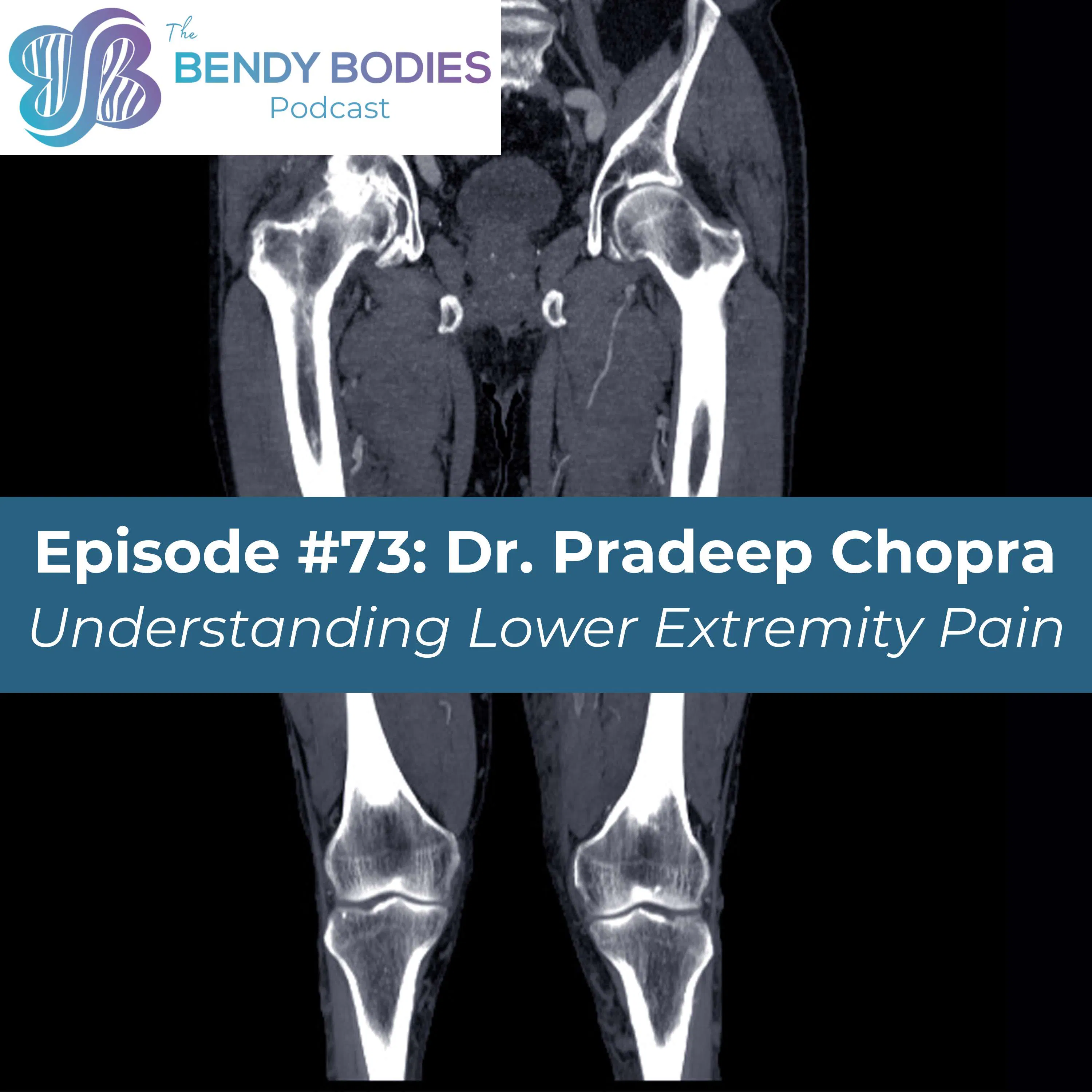
Ep 7373. Understanding Lower Extremity Pain with Pradeep Chopra, MD
The lower extremities must bear the weight of our whole bodies. Problems in the hip may cause a chain reaction of aches, imbalances, or chronic issues that could manifest in the knee, ankle, or somewhere else along the kinetic chain. Continuing our series on pain with Dr. Pradeep Chopra, we explore the hips, knees, ankles and feet, diving into multiple possible causes of issues in these joints. Dr. Chopra discusses why rolling of the ankles is unhealthy, even if it’s asymptomatic, explains how pain in one part of the leg may be due to an issue in a different joint, and explores why and how you might correct knee hyperextension. Dr. Chopra dives into the hip joint structure, outlining possible reasons for hip subluxation. He shares different ways to treat SI joint pain, and offers practical suggestions for dealing with multiple lower extremity pain issues. Filled with detailed information, accessible medical explanations, and Dr. Chopra’s popular “hack” tips, this episode belongs on your must-listen list! Learn more about Dr. Chopra here. Check out the products discussed during this episode: https://pedagusa.com/ https://medspec.com/product-category/knee/patellofemoral/ https://www.bauerfeind.com/ https://www.drmartens.com/us/en/ https://www.converse.com/ #Podcast #HypermobilityHacks #HypermobilitySyndrome #HypermobilitySpectrumDisorder #EhlersDanlos #Hypermobility #Hyperextension #HipPain #Subluxation #PainManagementStrategies #JointPainRelief #LowerBodyPain #MobilityIssues #HipProblems #JointHealth #ChronicPainSupport #LowerBackPain #KneePain #BendyBuddy Learn more about your ad choices. Visit megaphone.fm/adchoices
Ep 7272. Examining Upper Extremity Pain with Pradeep Chopra, MD
Joints of the upper extremity (eg: shoulders, elbows, fingers, etc) can be prone to subluxation and dislocation in those with joint hypermobility and/or joint instability. As we continue our discussions on common causes of pain throughout the body with Pradeep Chopra, MD, we focus on an often-overloaded area of the body: the upper extremities. Dr. Chopra breaks down the shoulder joint and its inherent instability. He gives advice on how to have hard conversations about sports that push an excessive range of motion in the upper extremities, and addresses noisy joints (eg: cavitation) in the hypermobile person. Dr. Chopra shares his experience with muscle relaxants, and why releasing tight muscles is not always helpful with joint pain. He also explains thoracic outlet syndrome and how it can mimic cervical disc issues, making it difficult to find effective treatments. We cover complex regional pain syndrome (CRPS) and how this extremely painful condition may influence treatment choices. Pain and hypermobility in the wrists and hands are covered, and Dr. Chopra shares how your writing style might be influenced by joint hypermobility. He offers hacks to increase proprioception in fine motor skills, and explains the downside to wearing a full hand brace. With an incredible body of knowledge to share, Dr. Chopra continues to help us examine complicated issues in a methodical way. For doctors, therapists, patients, and anyone associated with connective tissue disorders, this is another episode to add to your must-listen list. Learn more about Dr. Chopra here. Check out the products discussed during this episode: https://www.oxo.com/ https://www.ancient-minerals.com/ https://www.zebrasplints.com/ https://www.etsy.com/ Learn more about your ad choices. Visit megaphone.fm/adchoices
Ep 7171. Examining Head, Spine, and Chest Pain with Pradeep Chopra, MD
Connective tissue runs throughout your body, surrounding and connecting every system. This is what makes treating issues that arise from connective tissue disorders so difficult: when everything is connected, it’s hard to find the root cause of something. We’re in the midst of our summer series with Dr. Pradeep Chopra, renowned expert on connective tissue disorders such as Ehlers-Danlos Syndromes. In this discussion, Dr. Chopra talks through several common causes of head, neck, and chest pain in people with connective tissue disorders or symptomatic joint hypermobility. Dr. Chopra discusses his approach to exploring a patient’s signs and symptoms, and dives into common causes of headaches in this population and how to seek treatment. He shares headache hacks for different types of head pain and explains Chiari malformation and various problems that may arise from it. Dr. Chopra also offers hacks for TMD head pain, and touches briefly on craniocervical instability. He shares why he looks for cranial settling, looks at rib subluxations, and offers hacks for them as well. Finally, Dr. Chopra discusses chronic pain and the loneliness it may cause, emphasizing the benefits that may come from having an understanding support group. Another episode full of wisdom and encouragement from one of the world’s top experts in his field, you will find yourself listening, saving and sharing it with everyone! . . . . . #RootCauseAnalysis #PatientCare #HeadAndSpineHealth #ChiariAwareness #UprightMRIAdvantage #SpinalConditions #ChiariWarrior #MRIInnovation #NeurologicalDisorders #SpineHealthMatters #ChiariJourney #AdvancedImaging #HSD #JointHyermobility #ChronicIllness #ChronicPain #EhlersDanlos --- Send in a voice message: https://podcasters.spotify.com/pod/show/bendy-bodies/message Learn more about your ad choices. Visit megaphone.fm/adchoices
Ep 7070. Examining Abdominal Pain with Pradeep Chopra, MD
Abdominal pain is an extremely common finding in people with connective tissue disorders, like Ehlers-Danlos Syndromes (EDS). Similar to other issues patients face with EDS or Hypermobility Spectrum Disorders (HSD), getting answers can be challenging. Often, people go from specialist to specialist, trying to get help. Gastroenterologists, allergists, nutritionists, and pain specialists may look at abdominal pain from very different points of view. So getting complete information can be elusive and frustrating. That’s why Bendy Bodies took this opportunity to talk about abdominal pain with Dr. Pradeep Chopra, a pain management physician who works with complex chronic pain conditions. Dr. Chopra lists many possible causes of abdominal pain, and talks through different diagnoses and how they might be interrelated. Dr. Chopra looks at over two dozen different diagnoses, from gastroparesis to small intestinal bacterial overgrowth (SIBO) to postural orthostatic tachycardia syndrome (POTS) to endometriosis. He shares his approach to uncovering abdominal pain sources, as well as the question he asks himself with every patient. Finally, Dr. Chopra offers some concrete tips for people suffering with abdominal pain. He suggests solutions for people who have trouble absorbing medication, and reveals his hacks for people working to sort out the source of their abdominal pain. For doctors looking to deepen their understanding of abdominal pain, as well as people trying to figure their own issues out, this deep dive of a podcast is not to be missed. Learn more about Dr. Chopra here. --- Send in a voice message: https://podcasters.spotify.com/pod/show/bendy-bodies/message Learn more about your ad choices. Visit megaphone.fm/adchoices
Ep 6969. Traveling with a Chronic Disorder with Dr. Linda Bluestein, Kristin Koskinen RDN, and Jennifer Milner NCPT
Travel comes with a lot of uncertainty: flights get canceled, hotel reservations are lost, luggage never turns up. But add the complications of traveling with a chronic disorder like Ehlers-Danlos Syndrome, and voyaging becomes even more complicated. How can you plan for contingencies, guard yourself against flares, and still have a fantastic time while traveling? The Bendy Bodies team shares their favorite tips on traveling during this round table discussion. We share suggestions for actions to take leading up to the trip, reveal items we cannot live without on a trip, and look at ways to combat the effects of travel on a bendy body. Dr. Bluestein gives advice on preparing for traveling without your “pit crew”. Jennifer Milner addresses how to stay active on the trip without overdoing it, and Kristin Koskinen shares her top three tips for finding food to support your nutritional needs while away from your favorite grocery stores. The team offers their best all-around travel tips and advice for planning - as well as knowing that if things go awry, it will be ok! For anyone planning to travel soon, this episode is so packed with tips that you’ll find yourself taking notes while you listen! Learn more about Jennifer Milner, NCPT, Kristin Koskinen, RDN, and Linda Bluestein, MD. PS: Do not transport controlled substances across state (or country) lines outside of their original container, as that is illegal. If you need a smaller container, ask your pharmacist. --- Send in a voice message: https://podcasters.spotify.com/pod/show/bendy-bodies/message Learn more about your ad choices. Visit megaphone.fm/adchoices
Ep 6868. Fostering Hope for Hypermobility with Cortney Gensemer, PhD, Victoria Daylor, and Linda Bluestein, MD
Symptomatic joint hypermobility can be difficult to understand and can present in so many different ways. Recently, Victoria Daylor, Dr. Cortney Gensemer, Dr. Russell Norris, and Dr. Linda Bluestein published a CME two-part series titled “Hope for Hypermobility - An Integrative Approach to Treating Symptomatic Joint Hypermobility”. We were able to sit down with Dr. Gensemer, Ms. Daylor, and Dr. Bluestein to discuss their research and the results. They share how the collaboration came about and the developmental process they went through. The co-authors reveal their intentions behind the articles, and three things they want people to know about symptomatic joint hypermobility (SJH). The panel of guests discuss what they see for the future of joint hypermobility and related conditions, and stress the importance of properly done research. Written to be accessible both for people with SJH and medical professionals, these articles may well be a defining reference for many people in the future! With limited-time free access to Part 1 and Part 2 of this peer reviewed series, you will want to dive into these papers and share with others as soon as possible! . . . . . #Hypermobility #ChronicPain #ConnectiveTissueDisorder #JointSupport #MedicalResearch #JointPain #SymptomManagement #Healthcare #PatientEducation #DoctorPatientRelationship #HopeForHypermobility #KnowledgeIsPower #Education #Scientist #WomenInStem #DisabledInStem --- Send in a voice message: https://podcasters.spotify.com/pod/show/bendy-bodies/message Learn more about your ad choices. Visit megaphone.fm/adchoices
Ep 6767. Destigmatizing Eating Disorders with Dr. Jennifer Gaudiani
Eating disorders are complicated and not uncommon in artistic athletes. Common comorbidities of symptomatic joint hypermobility (SJH), like mast cell activation disorder (MCAD) or gastroparesis, may contribute to disordered eating, which can spiral into an eating disorder. For years, eating disorders have been stigmatized and dismissed by many in the health community. To discuss this difficult topic, Bendy Bodies sat down with Dr. Jennifer Gaudiani, MD, CEDS-S, FAED, and founder of the Gaudiani Clinic for Eating Disorders. Dr. Gaudiani shares how she became so passionate about caring for this complex population and the importance of understanding her patient’s stories. She talks about why there’s such a stigma around eating disorders and how she’s working to change that. We discuss why this topic is so important for those with SJH and cover possible eating disorder mimickers. We break down definitions and explore possible predictors of eating disorders. Dr. Gaudiani shares the aspects of treatment that she has found vital, and offers tips on how to speak to someone you suspect may have an eating disorder. Finally, she reveals ways to find experts for getting the help needed for an eating disorder. Learn more about the Gaudiani Clinic here. For physicians, dance teachers, coaches, and anyone struggling with an eating disorder, this episode is a valuable look at a difficult topic. . . . . . #MentalHealth #BodyPositive #Nutritionist #DoctorsOfIG #IntuitiveEating #EDWarriors #Recovery #SportsNutrition #ChronicIllness #EatingDisorders #PlantBasedNutrition #MentalHealthMatters #NutritionMatters #InvisibleIllness #AntiDiet #AntiDietCulture --- Send in a voice message: https://podcasters.spotify.com/pod/show/bendy-bodies/message Learn more about your ad choices. Visit megaphone.fm/adchoices
Ep 6666. Codifying Upper Cervical Instability with Leslie Russek, DPT, PhD
Upper cervical instability (UCI) occurs quite commonly in the mild form and more rarely in the severe form in those with symptomatic generalized joint hypermobility (S-GJH). Both can be impactful and are frequently missed. An international team of physical / physiotherapy clinicians and a S-GJH expert rheumatologist recently published expert consensus recommendations for screening, assessing and managing patients with UCI associated with S-GJH. Bendy Bodies sat down with first author, Leslie Russek, DPT, PhD, to discuss this important paper. Hypermobility (too much range of motion) is different from instability (difficulty controlling motion at the joints). UCI, upper cervical instability, means that the muscles and nerves lack the ability to appropriately control movement at the joint and sense where the joint is in space. When UCI is severe it can be debilitating. Except in the most extreme forms of UCI, conservative (ie: non-surgical) therapies are usually considered first. Improving joint stability is the goal and Dr. Russek explains what patient factors are important to consider in determining treatment strategy. Dr. Russek explains the difference between “highly suggestive” and “common” symptoms as well as musculoskeletal UCI vs neurological UCI. She describes the three levels of irritability and how those should be approached in clinical practice. Yellow and red flags in the history and the physical examination are addressed. Whether you are someone who suspects upper cervical instability or treats them, this is an episode you will not want to miss. Learn more here. Hashtags: #CervicalSpineInstability #EhlersDanlosSyndrome #ChronicIllness #SpineInstability #ZebraSurvivor #ChronicPain #CervicalSpinalFusion #InvisibleIllness #Hypermobility #SpineHealth #hEDS #EDSawareness #ChronicPainWarrior #SpineFusion #ButYouDontLookSick #Instability #HSD --- Send in a voice message: https://podcasters.spotify.com/pod/show/bendy-bodies/message Learn more about your ad choices. Visit megaphone.fm/adchoices
Ep 6565. Finding Balance with Jenelle Manzi
Thriving as a professional artist with Ehlers-Danlos Syndrome can be challenging. Finding a balance between pushing yourself physically and listening to your body when it needs rest is difficult when you are part of a company. How do you push yourself to the edge of your limits, but not over them? We asked Jenelle Manzi, a professional dancer with New York City Ballet, this very question. enelle shares her stories of growing up dancing with EDS. She describes her journey as a young professional, figuring out how to work with a chronic illness, and talks through her early injuries and what she learned from them. Jenelle opens up about hitting a wall with her EDS, and how she took time to get her health under control and figure out what works for her. She shares how her health journey inspired her to start her company Get Golden, and goes deep into her methods for staying at an elite performance level while maintaining long-term health. Learn more about Jenelle here. . . . . . #EDSawareness #BalletWithEDS #ChronicIllnessWarrior #EhlersDanlosSyndrome #DancerWithEDS #SpoonieBallet #DisabilityInclusion #HealthJourney #InvisibleDisability #BalletDancer #DisabilityAdvocate #BalletInspiration #ChronicPainLife #HealthStory #EDSsupport #hEDS --- Send in a voice message: https://podcasters.spotify.com/pod/show/bendy-bodies/message Learn more about your ad choices. Visit megaphone.fm/adchoices