PLAY PODCASTS
Behind the Markets Podcast

Behind the Markets Podcast

Jeremy Schwartz, Global Chief Investment Officer …

Behind the Markets

496 episodesEN

Show overview

Behind the Markets Podcast has been publishing since 2017, and across the 9 years since has built a catalogue of 496 episodes. That works out to roughly 410 hours of audio in total. Releases follow a weekly cadence.

Episodes typically run thirty-five to sixty minutes — most land between 52 min and 54 min — and the run-time is fairly consistent across the catalogue. None of the episodes are flagged explicit by the publisher. It is catalogued as a EN-language Business show.

The show is actively publishing — the most recent episode landed earlier today, with 23 episodes already out so far this year. Published by Behind the Markets.

Episodes
496
Running
2017–2026 · 9y
Median length
53 min
Cadence
Weekly

From the publisher

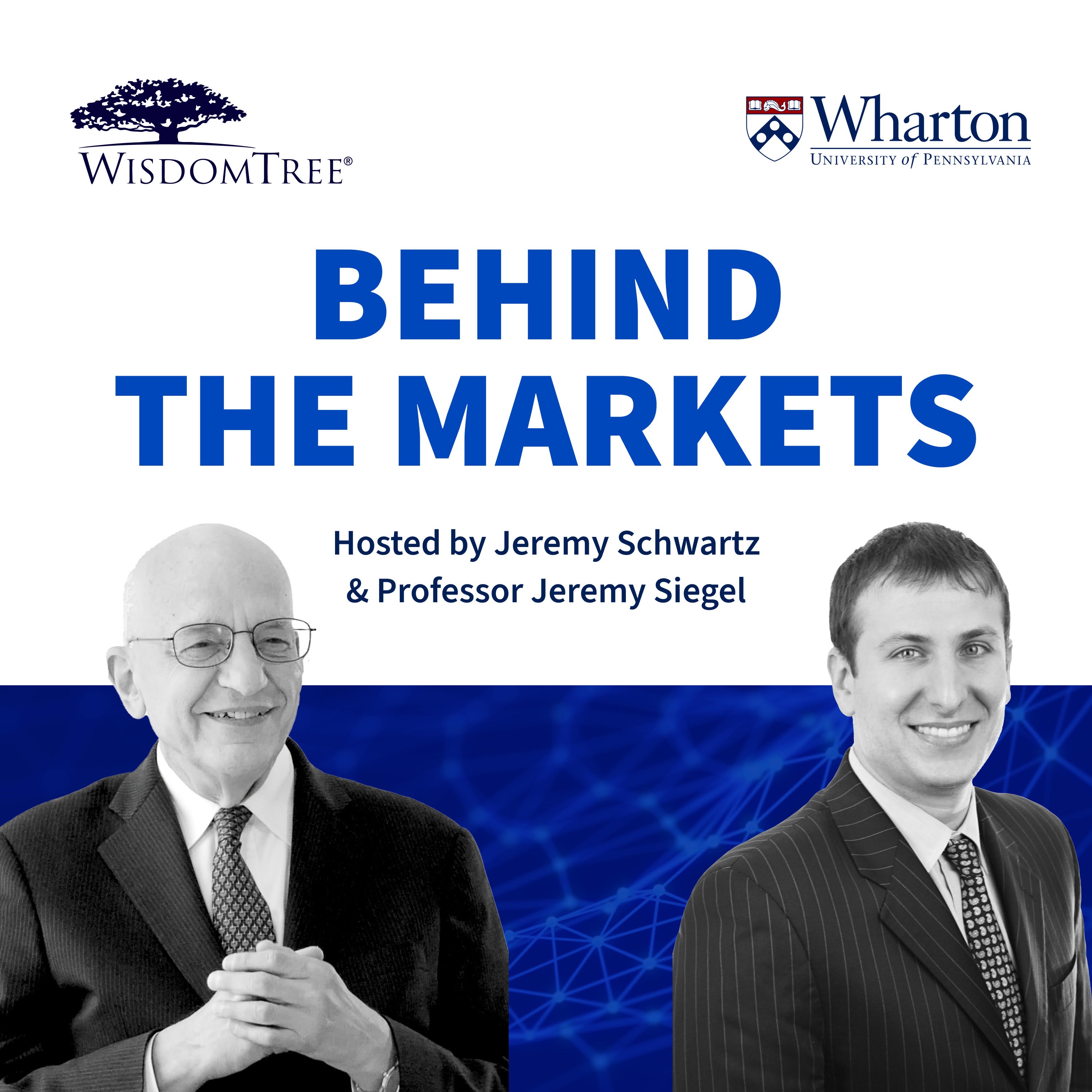
Jeremy Schwartz, Global Chief Investment Officer at WisdomTree and Jeremy Siegel, professor of finance at Wharton and author of Stocks for the Long Run, host this long-running podcast that dives into the how and why of market performance with leading economists and market strategists to inform you what’s ahead for the economy and your portfolio. Regularly joining the two Jeremys is the Deep Rooted Macro Team that decodes the forces shaping markets and portfolios worldwide. Chris Gannatti, CFA, Global Head of Research, offers an analytical and thematic edge—bridging macro trends with on-the-ground technology and innovation. Whether unpacking the infrastructure powering the AI age or latest biotech breakthroughs, Chris translates complexity into conviction. Jeff Weniger, CFA, Head of Equity Strategy, injects the pulse of behavioral markets and valuation discipline. With sharp macro instincts, Jeff dissects cycles, sentiment, and structural change with trademark clarity and wit. Sam Rines, Macro Strategist for Model Portfolios, ties the threads together—linking policy, politics, and portfolio construction. His pragmatic macro lens captures how geopolitics, industrial policy, and energy dynamics flow into real-world GeoAlpha. Together, the Deep Rooted Macro squad creates a fusion of rigorous research, accessible insights, and genuine debate. Behind the Markets provides a regular masterclass in how the world really works beneath the surface of prices, data, and headlines. Tune in to hear where the Deep Rooted Macro team sees the next big shifts taking root.

Latest Episodes

View all 496 episodes

Risk & Reward with Ben Carlson

Jun 5, 20261h 2m

Strength Beneath the Noise

May 29, 202655 min

India to Mars: Contrarian Opportunities in a Changing World

May 22, 202647 min

China Summit Disappoints: Rated Minus 2 Out of 10

May 15, 202644 min

Paris, Tariffs, and S&P 8,000

May 8, 202656 min

AI CapEx, Fed Dissent, and the Bull Market That Won’t Quit

May 1, 202653 min

Waiting for Signal

Apr 24, 202636 min

New Highs and Low-lights

Apr 17, 202638 min

Behind the Charts

Apr 10, 202659 min

Long-Term Bull, But Short-Term Cautious

Show from 04/03/26 Host Jeremy Schwartz and Professor Siegel discuss a surprisingly strong jobs report, the impact of rising geopolitical tensions and oil prices on the economic outlook, and the recent acceleration in money supply and its implications for Fed policy. Professor Siegel notes that while the labor market remains firm and long-term optimism persists, increased uncertainty from war and inflation risks warrants more short-term caution. (11:42) Jeremy continues with Chris Gannatti and Jeff Weniger to cover the potential SpaceX IPO and its implications for index inclusion and market structure, along with broader themes around companies staying private longer and the challenges that creates for public market investors. They also explore valuation trends in equities, shifting earnings expectations, and the evolving impact of AI—particularly in areas like drug discovery—while debating reporting standards and long-term innovation trends. WisdomTree: https://www.wisdomtree.com/investments

Apr 3, 202644 min

Tech Turbulence Today, A Retirement Sketchbook for Tomorrow

Show from 03/27/26 Host Jeremy Schwartz, joined by Jeff Weniger, Michael Fridman, and Chris Gannatti, discuss the recent tech-led market selloff, compression in equity valuations, and geopolitical-driven volatility impacting oil, rates, and global markets. They highlight that despite multiple contraction, forward earnings expectations remain intact, while dislocations in areas like cybersecurity and AI-linked equities may present selective opportunities. (59:58) Jeremy continues with Jamie Hopkins to discuss his new book on retirement planning, focusing on behavioral finance and the role of emotions in financial decision-making. Jamie emphasizes the importance of connecting with your future self, using visualization and automation to improve saving behaviors, and balancing emotional awareness with disciplined planning. He also highlights rising financial fraud risks in an AI-driven world and shares practical strategies for protecting personal data and making more resilient long-term financial decisions. Mike Fridman: https://x.com/justmikeel Your Retirement Sketchbook: https://www.amazon.com/Your-Retirement-Sketchbook-Planning-Financial/dp/1804091952 Jamie Hopkins: https://investors.wsfsbank.com/governance/board-of-directors/person-details/?ItemId=37a7fed2-efb6-4b89-8dc7-4f2b3404d370 WisdomTree: https://www.wisdomtree.com/investments

Mar 27, 20261h 48m

New Strategic Reserve Assets for the AI Era

Show from 03/20/26 Host Jeremy Schwartz is joined by Sam Rines and Chris Gannatti to break down the broader market and macro landscape. Sam analyzes the geopolitical situation involving Iran, energy markets, and global responses, noting potential de-escalation and limited long-term economic damage. Chris dives into major themes from NVIDIA’s GTC event, including the rise of AI agents, token-based productivity, and the accelerating shift toward physical AI such as robotics and autonomous systems. The group also explores the evolving labor market, AI’s impact on hiring and productivity, and the concept of a “strategic reserve of compute,” where chip scarcity and geopolitical risks could make existing AI infrastructure increasingly valuable. (33:51) Jeremy is joined by Professor Siegel and Kevin Flanagan. They discuss the latest market developments, including rising oil prices driven by escalating tensions in the Middle East, volatility around the S&P 500’s key technical levels, and the recent selloff in gold and commodities. Professor Siegel highlights the Fed’s updated projections, including a notable increase in long-term GDP growth expectations driven by productivity and AI, while emphasizing that geopolitical risks—particularly oil shocks—are currently the dominant force driving markets. He explains that while inflation pressures from tariffs and energy remain a concern, housing data is softening and AI continues to act as a long-term disinflationary force. WisdomTree: https://www.wisdomtree.com/investments

Mar 20, 20261h 2m

Markets on Edge: Oil and AI Crosscurrents

Show from 03/13/26 Host Jeremy Schwartz and the WisdomTree team begin the episode discussing the surge in oil prices tied to tensions in the Middle East and how higher energy costs could affect consumers, transportation, and global supply chains. They also examine stress signals in private credit markets, the divergence between private equity firms and the broader S&P 500, and the recent rotation away from mega-cap tech despite improving valuations. The group closes the segment with a discussion on emerging AI themes like agentic AI and robotics, semiconductor capacity constraints, and how investors may rebalance portfolios after energy’s strong performance while looking for opportunities in areas like Japan, industrials, and consumer discretionary. (31:51) Professor Siegel joins Jeremy to share his outlook on the recent oil shock and its impact on markets, noting that while higher gasoline prices may weigh on sentiment and cause short-term volatility, real oil prices remain near long-term averages. He also explains why the Federal Reserve is unlikely to react to a supply-driven oil shock, expects policy to remain on hold for now, and reiterates his long-term optimism for equities and the continued growth of AI. WisdomTree: https://www.wisdomtree.com/investments

Mar 13, 202641 min

Weak Payrolls, a Productivity Boom, and Disruptive Tech

Show from 03/06/26 Host Jeremy Schwartz and Professor Siegel discuss the surprisingly weak payroll report and how it contrasts with strong economic indicators like ISM data and retail sales, with the Professor suggesting rising productivity—potentially driven by AI—may explain how GDP remains strong with little job growth. They also review geopolitical tensions involving Iran, rising oil prices, and the Strait of Hormuz, with Siegel noting energy shocks could pressure markets but would not likely change the Fed’s near-term policy stance. (18:13) Jeremy continues with Sam Rines and Jeff Wenniger to analyze the oil spike, global geopolitics, and labor market data, including how weather disruptions and strikes may distort the jobs report and lead to a rebound in March employment. The group also discusses China’s economic outlook, energy constraints, and broader investment themes such as international defense spending and innovation cycles outside the U.S. The episode concludes with Jeremy interviewing Ian De Bode of Ando Finance and WisdomTree’s Maredith Hannon about tokenization, stablecoins, and how blockchain-based financial rails could reshape investing, trading hours, and global access to U.S. financial markets. Ian De Bode on LinkedIn: https://www.linkedin.com/in/idebode/ Maredith Hannon on LinkedIn: https://www.linkedin.com/in/maredith-hannon/ WisdomTree: https://www.wisdomtree.com/investments

Mar 6, 20261h 29m

AI is Not An Apocalypse

Show from 02/27/26 Host Jeremy Schwartz and Professor Siegel discuss Professor Siegel’s response to a viral AI “doomsday” scenario, emphasizing that productivity gains from AI would expand output, wages and leisure rather than cause mass permanent unemployment, and arguing that macroeconomic growth from higher productivity would generate trillions in new income to absorb displaced workers. He also weighs in on falling 10-year yields, recent inflation data, oil risks tied to Iran, productivity trends, and his expectation for market rotation away from the MAG 7 toward value and non-AI sectors. (13:40) Jeremy continues with Jeff Weniger and Sam Rines to debate whether AI lowers barriers to entry and enhances innovation rather than destroying knowledge work, put recent tech and software selloffs into perspective against broader market resilience, and examine global equity leadership with strong performance in Japan, Korea and Europe relative to a flat S&P 500, highlighting valuation gaps and structural underweights to non-U.S. markets in portfolios. WisdomTree: https://www.wisdomtree.com/investments

Feb 27, 202645 min

The Tariff Rotation

Show from 02/20/26 Host Jeremy Schwartz and Professor Siegel break down the latest GDP report, PCE inflation data and housing trends, with the Professor noting that fourth quarter growth was not as weak as headlines suggested once government distortions are adjusted for and that differences between CPI and PCE components explain the recent upside surprise in inflation. He emphasizes that the Supreme Court’s pending tariff ruling and rising tensions with Iran are far more important to markets in the near term than incoming economic data, expecting continued choppiness until there is clarity on both fronts. (9:08) Following the Professor’s departure, Jeremy is joined by Sam Rines, Chris Gannatti and Jeff Weniger to react in real time to the Supreme Court’s 6–3 decision striking down IEPA tariffs as illegal, discussing the implications for corporate refunds, margin expansion and sector rotation. The group examines geopolitical risks tied to Iran, the ongoing rotation into small caps and international equities, weakness in private credit and software, and valuation compression across mega-cap tech ahead of NVIDIA earnings. They also explore improving rental trends, sector leadership shifts toward value and cyclicals, and longer-term themes ranging from AI-driven physical automation to autonomous vehicles and global events like the World Cup as potential economic tailwinds. WisdomTree: https://www.wisdomtree.com/investments

Feb 20, 20261h 6m

Trading the Disruptions

Show from 02/13/26 Host Jeremy Schwartz and Professor Siegel discuss a strong employment report and a softer-than-expected CPI print, highlighting rising real wages, easing rental inflation, and stabilization in unemployment claims. Professor Siegel also addresses growing AI-driven market anxiety, tariff developments, and why he believes the ongoing rotation away from the MAG-7 does not derail the broader bull market. (35:13) Jeremy is joined by Jeff Wenniger, Sam Rines, and Chris Gannatti to break down major global developments, including Russia’s potential return to the dollar system, Taiwan and Singapore’s strong GDP prints, and Japan’s election results strengthening fiscal and defense tailwinds. The group explores the global defense spending supercycle, Asia’s critical role in AI supply chains, and how AI disruption fears are driving sharp rotations within U.S. equities, particularly in software. They also debate whether AI-driven margin compression, pricing competition, and shifting capital flows signal a broader geographic and sector rotation toward international markets and non-tech sectors. WisdomTree: https://www.wisdomtree.com/investments

Feb 13, 202650 min

When Momentum Breaks: the Unwind Opportunities

Show from 02/06/26 Host Jeremy Schwartz discusses recent volatility across asset classes, including sharp drawdowns in commodities, bitcoin, and select software stocks. (1:38) Jeremy continues the conversation with Blake Heimann and Michael Fridman, former PM at a major Israeli insurer, and the WisdomTree research team. The discussion centers around AI capital expenditure, the sustainability of tech valuations, and the rotation from mega-cap names into more niche infrastructure and semiconductor plays. Michael and the team also touch on geopolitical factors, including the Japanese elections and Middle East tensions, and examine implications of consumer shifts like Pepsi’s price cut strategy for broader market and advertising trends. Michael Fridman: https://www.linkedin.com/in/michaelfridman23/ Blake Heimann: https://www.linkedin.com/in/blakeheimann/ WisdomTree: https://www.wisdomtree.com/investments

Feb 6, 202648 min

Warsh for the Win: Prof Siegel Approves!

Show from 01/30/26 Host Jeremy Schwartz and Professor Siegel discuss the appointment of Kevin Warsh as incoming Fed Chair, expressing optimism about his independence and stance on inflation. The Professor also comments on the latest inflation print, the Fed’s balance sheet strategy, and the potential impact of tariffs and money supply trends. (13:43) Jeremy is joined by Chris Gannatti, Sam Rines, and Jeff Weniger for a wide-ranging conversation covering tech earnings from Meta and Microsoft, the implications of AI investments on memory and fiber infrastructure, and recent commodity surges in metals like silver and copper. They also explore geopolitical risks in the Middle East and Cuba, European investor sentiment toward U.S. equities and currencies, commodity allocation trends, and macroeconomic developments in Italy with WisdomTree’s Peter Braganti. Piergiacomo Peter Braganti, Director, Macro Research at WisdomTree: https://x.com/peterbraganti Chris started a substack, follow him here: https://christophergannatti.substack.com/ WisdomTree: https://www.wisdomtree.com/investments

Jan 30, 20261h 14m

Good Luck with That

Show from 01/23/26 Host Jeremy Schwartz and Professor Siegel discuss updates on the Fed chair race, government shutdown prospects, and delayed tariff rulings. The Professor sees strong economic momentum, rising productivity, and continued strength in value and small-cap stocks. (11:23) Jeremy continues the conversation with Dave Goodson, Head of Securitized Credit at Voya, who discusses bond market reactions to recent policy announcements, including the $200 billion GSE purchase program and its impact on mortgage-backed securities. The group explores trends in spreads, non-agency RMBS opportunities, policy shifts affecting the housing market, and global macro forces including Japan and Iran. They close with a focus on AI-driven infrastructure investments and how they are impacting securitized credit markets. Dave Goodson is a managing director, head of securitized fixed income and a senior portfolio manager for non-agency and agency mortgage-backed securities, commercial mortgage-backed securities and asset-backed securities strategies at Voya Investment Management. Prior to joining Voya, he was a principal at an independent investment bank focused on asset-backed commercial paper transactions. Previously, Dave began his career as a vice president in Wachovia Securities’ asset-backed finance group, marketing and executing securitizations for the bank’s corporate clients. He earned a BS in management from the Georgia Institute of Technology Voya: https://advisors.voya.com/ WisdomTree: https://www.wisdomtree.com/investments

Jan 23, 202649 min
All rights reserved