BBC Inside Science
672 episodes — Page 10 of 14
Antisense RNA therapy, Fossils vs Trump, Printing mini-kidneys, Electric eel power
Promising results from a small clinical trial of Huntingdon's disease patients have led to RNA-directed therapy such as antisense RNA being hailed as possibly a turning point in the treatment of neurodegenerative diseases. Adam Rutherford discusses this class of drugs with Heidi Ledford of Nature News.At the beginning of the month, Donald Trump decreed that two national monument landscapes be drastically down-sized. Strict protections against exploitation were removed from vast tracts of land bearing some of the world's most important fossil bearing strata. President of the Society of Vertebrate Paleontologists, Professor David Polly explains why his organisation is now suing Trump.At Harvard University, bioengineers are growing parts of functioning kidneys in small chips using a form of 3D printing. Jennifer Lewis' lab is doing this to learn how kidneys function and explore the possible therapeutic applications of the mini-kidneys-in-a-chip. Roland Pease visits the team at work.The electric eel can deliver a 600 volt shock, from a stack of electrically charged cells along the length of its body. Inspired by the eel's biology, Michael Mayer and his colleagues at the Universities of Fribourg and Michigan have now created their own version of its electric organ with the help of jelly babies and clever origami. In the future, it could power devices in the human body.
The Future of Coral Reefs, Little Foot, Arthur C Clarke
Oxford is hosting the European Coral Reef Symposium this week. Climate change is seen as the number one threat to the future of coral reefs. Adam talks to Morgan Pratchett of James Cook University about the two recent coral bleaching events that hit the Great Barrier Reef, and to Barbara Brown of Newcastle University about the potential for coral species to adapt to warmer seas.After twenty years of excavation and preparation, the most complete fossil skeleton of an Australopithecine has been unveiled to the public in South Africa. Its discoverer Ron Clarke explains its significance for understanding human evolution.December 16th is the 100th anniversary of Arthur C Clarke. Science writer Marcus Chown and cultural journalist Samira Ahmed join Adam to discuss Clarke's visions and works of science fiction.
Trophy hunting, Gene drives, Nuclear lightning, Peregrine falcons and drones
Trophy hunters are always after the lion with the largest darkest name and the stag with the most impressive antlers. Research by Rob Knell at Queen Mary University of London finds that removing a small proportion of these top males can drive whole populations to extinction, if their environment is changing.Gene drive is a new genetic technology that could be used to eradicate populations of species of 'pest' animals. The Roslin Institute in Edinburgh has just announced it is to begin research on gene drives to control rat and mouse populations. The Institute's Bruce Whitelaw and Simon Lillico explain how the approach would work and argue that it would be humane compared to traditional methods of vermin control. However there are concerns about its potential ecological consequences - namely the risk of female infertility in the targeted species spreading without no geographical limits. Kevin Esvelt of MIT voices his reservations. Bruce Whitelaw outlines how future research aims to bring gene drives under more control. Researchers in the USA and Japan talk about their discovery of nuclear reactions in lightning strikes, and Caroline Brighton and Graham Taylor of the University of Oxford explain why they have been attaching small cameras and GPS units to peregrine falcons and recording the birds chasing drones.
Prehistoric Strong Women, Semi-synthetic Life, Listener Feedback, Artificial Superintelligence
More than 5,000 years of heavy agricultural labour by women can be read from the bones found in ancient cemeteries from the Neolithic to Iron Age times. Cambridge University anthropologist Alison Macintosh compared the arm bone dimensions and strength of women from these times with those of modern female athletes such as runners to rowers. Her conclusion is that average upper body strength of women through the Neolithic to the Iron age times exceeded that of today's semi-elite female rowers.A laboratory at the Scripps Research Institute have created a semi-synthetic bacterium with two new man-made genetic letters in its DNA, in addition to the natural four A, G, T and C. What's more, the engineered microbe can use its enhanced genetic alphabet to build synthetic amino acids into the proteins it makes. Chemist Floyd Romesberg talks to Adam Rutherford about what we can learn from his team's extraordinary feat of synthetic biotechnology, what we might gain from it and why, in his opinion, we've no need to be worried.Adam deals with some of your correspondence on axolotls by talking to laboratory salamander breeder Randal Voss at the University of Kentucky. He also notes listeners' comparisons of the recent visit by interstellar asteroid Oumuamua with the alien vessel in Arthur C Clarke's 'Rendezvous with Rama'.Cosmologist and AI researcher Max Tegmark visits BBC Inside Science to discuss the possibility of artificial intelligence machines with super-intelligence and how humanity should be preparing for their advent.Producer: Andrew Luck-Baker.
Interstellar visitor, Svante Paabo, Synthetic biology, Plight of the Axolotl
On 19th October, a mysterious object sped through our solar system. It was first spotted by astronomers with a telescope in Hawaii. Its trajectory and speed told of its interstellar origins. It is the first body to be detected from outside our solar system. Scientists are now publishing their papers on the enigmatic visitor. They estimate that it was about 400 metres long and bizarrely elongated in shape. Adam Rutherford talks to astronomer Alan Fitzsimmons of Queens University in Belfast. Twenty years ago, geneticist Svante Paabo began a revolution in human evolution science when he extracted fragments of DNA from the 40,000 year old bone of a Neanderthal. Among other first, he went onto sequence the entire genome sequence of Homo Neanderthalenisis. Professor Paabo was in the UK this week at a conference on DNA and human evolution at the Wellcome Genome Campus to mark the anniversary. He tells Adam about one of the new directions of research for him now.What does the future hold for synthetic biology? Who will be the practitioners of this fast-growing branch of bioengineering and what will be its impact on the world - for good and possibly ill? Experts in the field have just published a horizon-scanning report in the journal eLife. One of its authors, Jenny Molloy of the University of Cambridge, talks to Adam about the nascent democratisation of the discipline and where this might lead the field and society.The paradoxical plight of the axolotl: popular aquarium pet, laboratory animal and critically endangered species in the wild. This species of salamander is a wonder of nature. It's the amphibian that never grows out of its larval stage yet it's able to reproduce. Most remarkable is its ability to regrow limbs, which is of great potential interest to researchers developing regenerative medicine. There are many thousands of axolotls in labs and homes around the world. But in the wild, in their native Mexico, they are on the very edge of extinction. Inside Science talks to conservation biologist Richard Griffiths of the University of Kent and axolotl researcher Tatiana Sandoval Guzman of the Technical University in Dresden, Germany.Producer: Andrew Luck-Baker.
Can we forecast earthquakes?, Britain's space race rocket Skylark, Francis Galton
What might the length of the day have to do with the likelihood of destructive earthquakes around the world? According to Professors Rebecca Bendick and Roger Bilham, there's a correlation between changes in the rate at which the Earth rotates and the incidence of earthquakes of Magnitude 7 and above. The rotation speed of the planet increases and decreases over periods of years and decades. From their research, the earth scientists say that there's an substantial increase in the number of powerful earthquakes around the world five years after the Earth attains a peak in its spin speed and enters a period of slow down. The difference in day length is tiny but it is enough, say the researchers, to trigger already stressed faults in the crust to move sooner than later.In the year that the Soviet Union launched Sputnik into orbit, the UK launched its own rocket into the Space Race. 1957 saw the launch of the first Skylark space rocket. Inside Science talks to two veterans of the Skylark programme - Professors John Zarnecki and Ken Pounds - who cut their space research teeth with some of the 440 launches. The Science Museum in London is staging a Skylark exhibition in celebration.Francis Galton was one of the UK's most influential 19th century scientists and laid important methodological foundations for genetics and other fields of science today. But he was also a racist and leading proponent of eugenics. Adam discusses Galton's legacy with historian Subhadra Das of University College London and clinical geneticist Han Brunner of the Maastricht University Medical Centre in the Netherlands. Both guests attended a meeting of the Galton Institute in London which brought together researchers of many disciplines to discuss the bad and the good in Francis Galton's legacy.Producer: Andrew Luck-Baker.
Boy gets New Skin, The York Gospels, Stephen Hawking's Thesis
Researchers in Italy and Germany have saved the life of a boy with a life threatening genetic skin disease, using a combination of stem cell and gene therapy. 7 year old Hassan had lost 60% of his protective epidermis because of the condition, junctional epidermolysis bullosa. The severe blistering and consequent bacterial infections put his life in imminent danger. In a final attempt to save him, the scientists took a small area of unblistered epidermis from his body, separated the constituent skin cells and then engineered them with a normal version of the gene that was malfunctioning in Hassan's body. Sheets of healthy epidermis of an area of about one square metre were then grown in culture, and then grafted onto 80% of his body. Hassan is now living a normal life, back at school, playing football. Lead researcher Michele de Luca describes the remarkable recovery and Fiona Watt, director of the Centre for Stem Cell and Regenerative Medicine at Kings College London, explains how the procedure worked.Scientists at the University of York are investigating medieval livestock farming through the study of the 1,000 year old York Gospels manuscript: not by reading it but by extracting proteins and DNA from its animal skin parchment pages. Inside Science listener and Middle Eastern archaeologist Melissa Sharp takes the programme to task for suggesting that anyone can now use publically available sonar and satellite data to search for shipwrecks and other archaeological sites. It opens up the world's ancient and not so ancient heritage to looters, she says. Since the University of Cambridge made Stephen Hawkings 1966 PhD thesis free to view and download last month, more than a million people have at least looked at it. Adam Rutherford talks to cosmologist Andrew Pontzen, biologist Matthew Cobb and neuroscientist Sophie Scott about the record-breaking thesis and asks whose first research project they'd like to download.Producer: Andrew Luck-Baker
Climate Change and Health; Moth Snow Storm Feedback; Whale Brain Evolution; Pharoah's Serpent
Adam Rutherford talks to researchers on a major global study that aimed to quantify how climate change has already damaged the health of millions of people. Hugh Montgomery is the co-chair of the Lancet Countdown report and says that climate change is the largest single threat to global health. Climate scientist Peter Cox talks about his stark findings on the increase in the number of vulnerable people exposed to heat waves between now and the turn of the century.We hear anecdotes and concerns from listeners following our item last week on the catastrophic decline in flying insects in the last quarter century and the disappearance of moth snow storms.What can the social lives and brains of whales and dolphins tell us about the evolution of our species cognitive capacities and white matter? Adam talks to Susanne Shultz of the University of Manchester.Everyone's favourite indoor firework, the Pharoah's Serpent, is under scientific scrutiny from chemists Tom Miller and Andrea Sella at University College London.
Insects disappearing, DNA Biosensor, Dog faces, Bandit dinosaur
The total biomass of flying insects in the environment has decreased by 75% in the last quarter of a century. That's the conclusion of research published at the end of last week in the journal PLOS One. The discovery, made in Germany, has shocked many, but should we in the UK be worried too? The answer is yes, according to Adam Rutherford's guests Dave Goulson, professor of biology at the University of Sussex, and Michael McCarthy, environmental journalist and author of 'The Moth Snow Storm.'The speed and ease of precise infection diagnosis could be transformed by synthetic biologists at Imperial College, London. Paul Freemont tells Adam about a simple DNA biosensor that turns green in the presence of a pneumonia-causing bacterium that is a particular problem for people with Cystic Fibrosis. He adds that the technology is adaptable to any kind of bacteria and may also aid efforts to curb the spread of antibiotic resistance.When dogs know you are looking at them, they ramp up the expressiveness of their faces. Marnie Chesterton visits the Dog Cognition Centre at the University of Portsmouth to talk to the researchers who made this discovery, and to meet Jimmy the Staffy.Palaeontologists at the University of Bristol have figured out the colour patterning on a dinosaur that lived 120 million years ago. Sinosauropteryx was a small feathered dinosaur. Two spectacular fossils of it were found in northeast China. The specimens are so well preserved that remnants of pigment remain in the feathers. This allows Jakob Vinter and colleagues to see that Sinosauropteryx was reddish brown in colour, with light stripes on its tail, light and dark counter-shading on its body and a dashing bandit-style face mask.Producer: Andrew Luck-Baker.
Colliding Neutron Stars, Krakatoa, Centigrade vs Celsius
Adam Rutherford talks to astrophysicists about the astronomical discovery of the year, if not the last couple of decades: the collision of two neutron stars and the cosmic gold-forging aftermath. The discovery of this long-hypothesized event on 17th August came from the much awaited marriage of the capabilities of the gravitational wave detectors LIGO and Virgo with those of ground-based and space-based telescopes. Samaya Nissanke of Radboud University, Sheila Rowan of the University of Glasgow and Nial Tanvir of the University of Leicester take Inside Science through the story.What made the infamous 1883 eruption of Krakatoa so devastating? Roland Pease meets the earth scientists trying to answer the question by recreating in the lab the conditions under the volcano prior to the eruption.Following a temperature-related faux pas by Adam in the last episode, Michael de Podesta of the National Physical Laboratory explains the difference between Celsius and Centigrade.Producer: Andrew Luck-Baker.
HiQuake, Plate Tectonics@50, Sonic Weapon Puzzle, The Chinese Typewriter
Gareth Mitchell talks to Gillian Foulger of Durham University about HiQuake, the world's largest database of human-induced earthquakes. Professor Foulger and her colleagues have so far compiled close to 750 seismic events for which there are reasonable cases to be made for anthropogenic triggers. Triggers include mining operations, fossil fuel extraction, reservoir filling, skyscraper construction and tunnelling. Among the surprises is the fact that the US state of Oklahoma is more seismically active than California because of quakes and tremors set off by the local oil and gas industry. The theory of plate tectonics is 50 years old. It's as fundamental to understanding the Earth as evolution by natural selection is to understanding life. Roland Pease meets geologists such as Dan McKenzie, John Dewey and Xavier Le Pichon who played key roles in proving the hypothesis in the late 1960s.The United States has removed more than half of its diplomats from its embassy in Havana, Cuba. A signficant number of staff have complained of ailments such as hearing loss, dizziness, headaches and nausea, and there has been speculation that some kind of sonic or acoustic weapon might be responsible. Trevor Cox, professor of acoustic engineering at the University of Salford, discusses the likelihood with Gareth.Stanford University's Tom Mullaney is the author of 'The Chinese Typewriter: A History'. He talks to Gareth about the great engineering and linguistic challenge in the 19th and 20th centuries of getting the Chinese language onto a table top machine. The survival of the ancient language or China's entry into the modern world depended on the success of numerous inventors. In fact one consequence was the development of predictive text in the Chinese IT world long before it appeared in the West.Note: In the podcast version of this programme, there is an additional item on new research on the role of the world's botanical gardens in global plant conservation. One of the scientists involved, Dr Paul Smith of Botanical Gardens Conservation International, tells Gareth that there's good news about these institutions' contributions and there are areas where there is room for improvement.Producer: Andrew Luck-Baker
Gravity wave breakthrough, The antibiotic pipeline, Microbial waste recycling, Fausto - an AI opera
The gravitational waves produced by two massive black holes colliding have for the first time been detected by three gravitational wave detectors. Professor Sheila Rowan of the University of Glasgow explains the importance of this new three way observation.The World Health organisation reports that there are too few new candidate antibiotics in the development pipelines to replace those becoming obsolete through the rapid spread of antibiotic resistance. Professor Willem van Shaik of the University of Birmingham and pharma-biotech analyst Dr Jack Scannell discuss where the problems and solutions might lie.Could bacteria recycle all of our waste? Waste disposal is a growing concern as nations run out of space and ecosystems are increasingly polluted. Microorganisms may hold the key for turning household waste into biodegradable plastic and perhaps one day even into food and basic chemical feedstocks. Hans Vesterhoff, Professor of Systems Biology at Amsterdam University is developing microbial networks with the aim of converting all carbon-based waste into useful or edible stuff.AI and Opera: Prof Luc Steels, an AI and language researcher at the Institute for Advanced Studies of Catalonia is also a composer. He has just had his new opera premiered. With a libretto written by a neuropsychiatrist colleague, the opera 'Fausto' is a re-telling of the Faust story. It explores the dangers and flawed thinking of silicon-based transhumanism. In the opera, the Faust character is a social media-obsessed hipster and Mephistopheles is a malevolent AI in the cloud. In a twist on the original, Fausto trades his body rather than his soul so that he can be uploaded and reunited with his lover in the cloud.
Cassini's finale; Science and Technology Select Committee; Crick's lecture; Cave acoustics
After last week's Inside Science's edition devoted to Cassini ended, the Cassini spaceship plunged into the atmosphere of Saturn, and became part of the planet it studied. But the project lives on, as the data and photos generated by Cassini right up until contact was lost will be studied and scrutinised for years to come. Linda Spilker is the Project Scientist for the Cassini mission. Adam Rutherford spoke to her to find out what was captured in the last few moments of Cassini's closest and fatal encounter with the ringed planet. The House of Commons has announced its Science and Technology Select Committee - the body of MPs that holds the Government to account on scientific matters, and offers advice on scientific issues of the day. Some controversy has followed, concerning the scientific credentials and the gender imbalance of the committee make-up so far. Norman Lamb, MP for North Norfolk was elected chair of the committee, and he came into the Inside Science studio to discuss the committee selection and its future ambitions.This week was the 60th anniversary of one of the greatest conceptual leaps in all biology, made by Crick at a lecture at University College London. Matthew Cobb, biologist and historian from Manchester University, who's written a new account of the lecture, discusses its fundamental significance.It has long been suggested that there's something about the acoustics of a cave that correlates with the location of motifs and sometimes paintings on the walls.Bruno Fazenda is an acoustic scientist at the University of Salford, and reveals how he went into the caves to conduct the first methodical study of this theory by listening to the past.
Farewell to Cassini, the epic 20 year mission to Saturn
As Cassini's epic journey to Saturn finally ends tonight, Adam Rutherford celebrates the incredible discoveries of a mission that has changed the way we see our solar system. BBC Science Correspondent Jonathan Amos is at Mission Control in Pasadena as scientists assemble to witness the final few hours of the Saturnian observations beforeCassini completes its death dive into the planet. We also hear from key scientists who've played a role in capturing and interpreting the multitude of data from the last 12 years. With contributions from Michele Dougherty, Professor of space physics at Imperial College Robert Brown, Professor Planetary surface processes Arizona University Carl Murray, Professor of Astronomy, Queen Mary,University of London Ellen Stofan, former chief NASA scientistProducer Adrian Washbourne.
North Korea Bomb Tests, Warming Antarctic Sea Life, the Microbiome, Cuckoo Chuckle
The Democratic People's Republic of Korea claims to have successfully tested a thermonuclear weapon, a hydrogen bomb. Tom Plant, director of Proliferation and Nuclear Policy at the Royal United Services Institute, talks to Adam Rutherford about how the boast might be proved by monitoring technology around the world.How will marine life respond to warming of the seas around Antarctica this century? Dramatically, according to the results of the most realistic attempt so far to warm the sea bed to temperatures predicted for the coming decades. The British Antarctic Survey installed gently heated panels at 12 metres depth off the West Antarctic coast to mimic rock surfaces and then over 9 months monitored how marine creatures colonised and grew on them. All creatures flourished on panels at 1 degree C above today's chilly waters and in fact grew astonishingly quickly on them. But a 2 degree increase saw some continue to flourish vigorously but many species fail. Experiment mastermind Lloyd Peck tells Adam what the findings may mean, and describes the extraordinary cold water diving skills that made the experiment a success.'I contain Multitudes' is shortlisted for the Royal Society Insight Investment Science Book Prize this year. Its subject is the microbiome - the trillions of benign , friendly and not so friendly bacteria which inhabit our bodies and those of all other animals.For 30 years, Cambridge University zoologists have studied the evolutionary arms race between the cuckoo and the reed warbler that rears the cheating bird's offspring. They have figured out many of the deceptions and counter-tactics adopted by the two co-evolving species. The latest revelation concerns the strange chuckling call which the female cuckoo makes after laying her egg in the warbler's nest. Jenny York describes the experiments which show that the cuckoo is mimicking a predatory sparrow hawk which distracts the warblers and makes them much more likely to not recognise her egg as something they should reject from the nest.
Noxious haze over south coast; In Pursuit of Memory book; technosphere; Big Wasp Survey
Last weekend a chemical ‘haze’ on the East Sussex coast saw 150 people needing hospital treatment after something in the air led to streaming eyes, sore throats and nausea. Leading theories so far include a chemical spill from shipping in the English channel, a localised spike in ozone levels and an algal bloom, where algae suddenly proliferate and release harmful gasses. Dr Simon Boxall of the National Oceanography Centre at the University of Southampton tells Gareth Mitchell why he’s favouring the algal bloom theory. We know about extinct species from fossils in rocks. But in the future there will be techno-fossils too, evidence of our civilisation. Katie Kropshofer has been finding out from Professors Jan Zalasiewicz and Sarah Gabbot of the University of Leicester what we’re leaving for the hypothetical geologists of the future. Neuroscientist Joseph Jebelli's book, In Pursuit of Memory: The Fight Against Alzheimer's, is the one of the six titles on the shortlist of the Royal Society Insight Investment Science Book Prize. He explains to Gareth Mitchell that it was his grandfather's development of the condition that made him interested in Alzheimer’s. The Big Wasp Survey is a citizen project to trap wasps and send them off to teams at the University of Gloucester and University College London, so that scientists can then learn more about the distribution of different species around this land. One of the organisers, entomologist and professor of Science Communication at the University of Gloucester Adam Hart, talks to Gareth about why these unpopular insects are ecologically valuable.
Killer robots; Myths and superstitions and conservation; Science book prize nominee - Cordelia Fine; Taxidermy
Once again, the ethical side of fully autonomous weapons has been raised, this time by over 100 leading robotics experts, including Elon Musk of SpaceX and Tesla, and Mustafa Suleyman of DeepMind. They have sent an open letter to the United Nations urging them to take action in order to prevent the development of "killer robots". The letter says "lethal autonomous" technology is a "Pandora's box", once opened it will be very difficult to close - they have called for a ban on the use of AI in managing weaponry. Gareth asks AI expert, Professor Peter Bentley from University College London, if this is the right approach or is this just an attempt to delay the inevitable? When a paper titled "Fantastic Beasts and Why to Conserve Them" is printed in the journal Oryx, we had to take a closer look. Far more than a publicity stunt, this work by George Holmes, an expert in conservation and society at the University of Leeds, covers an important point. It explores the dangers of neglecting local beliefs, myths and superstitions about the natural world, and animals in particular, when trying to come up with conservation strategies. Cordelia Fine is a professor of the history and philosophy of science at the University of Melbourne. She is the third shortlisted author of the Royal Society Insight Investment Science Book Prize. Her book "Testosterone Rex" explores the science behind gender. She argues that testosterone isn't necessarily the basis for masculinity and that there is so much more to gender than merely our biological sex. 200 years ago, taxidermy was a crucial part of zoological teaching and research, and in the days before BBC wildlife films, often the only way that many people could see strange and exotic wildlife from other lands. Lots of those early specimens are incredibly valuable, and can still be found in museums around the world, although being so old they are often in need of urgent repair. Usually this happens out of sight behind the scenes, but not so at the Grant Museum of Zoology in London, which has been doing its conservation live in the gallery for all to see, to draw attention to the art and science of taxidermy. Some of the more serious repairs get sent to taxidermy conservator Lucie Mascord in Lancashire.Produced by Fiona Roberts Presented by Gareth Mitchell.
Antarctica's volcanoes, science book prize nominee - Mark O'Connell, US solar eclipse and 40 years of NASA's Voyager mission
Not so much hiding in plain sight, but tucked under the ice-sheet in Antarctica are 91 volcanoes. This adds to the 47 volcanoes already known on the continent. After a graduate student posed the question,"are there any volcanoes in Western Antarctica?", Dr Robert Bingham, and colleagues, at Edinburgh University, scoured the satellite and database records to find the volcanoes. This huge region is likely to dwarf that of East Africa's volcanic ridge, which is currently the most volcano-dense region on Earth.Journalist Mark O'Connell is the second of our Royal Society Insight Investment Science Book Prize 2017 nominees. His broad-minded, yet sceptical look at the world of 'transhumanism', "To be a Machine: Adventures Among Cyborgs, Utopians, Hackers, and the Futurists Solving the Modest Problem of Death", questions how and why some of us are looking to use technology to fundamentally change the human condition. On Monday 21st of August 2017, some of the United States will go dark. This is the first total solar eclipse, visible from coast to coast in the US for 99 years. Gareth gets excited with veteran eclipse watchers, David Baron and Jackie Beucher.On the 20th of August 1977, NASA's probe Voyager 2 launched. This was quickly followed two weeks later by the launch of Voyager 1 (which was on a faster trajectory). Since then the two spacecraft have been exploring our Solar System, the Heliosphere and interstellar space. Surpassing all expectations, the probes have taught us so much about our planets, their moons and beyond. Gareth looks back at the highlights with the Voyager mission's chief scientist, Professor Ed Stone, in a celebration of the 40 year mission. Produced by Fiona Roberts Presented by Gareth Mitchell.
European heatwave and climate change, Eugenia Cheng, Next generation batteries for electric cars, Joseph Hooker exhibition.
The current heat wave in Europe is proving deadly. High day and night temperatures, coupled with high humidity, can be a very dangerous combination. A new study has calculated the risk of deadly heat on a global basis, and shown that between 48% and 74% of the world's population will be subjected to life-threatening heat and humidity for at least 20 days a year. Ed Hawkins, Professor of Climate Science at the University of Reading, discusses the findings. Gareth also asks BBC weatherman, Darren Betts, whether the recent wave of climate trend animations, or gifs, doing the rounds on social media, are a helpful tool in communicating climate change risks.Professor of Mathematics, Eugenia Cheng, is one of the shortlisted authors for the Royal Society Insight Investment Science Book Prize 2017. She talks Gareth through the inspiration for her book "Beyond Infinity: An expedition to the Outer Limits of the Mathematical Universe".The UK Government announced last week that it was aspiring to remove all petrol and diesel vehicles from roads by 2040. Current battery technology relies on lithium-ion batteries. Are lithium, and the other metals required for batteries, sustainable for a totally electric transport system? And do they have the charge capacity to make them a reliable alternative to fossil fuels? Dr Billy Wu, of the Dyson School of Design Engineering at Imperial College London, goes through the alternatives and the next generation of battery technology.To mark the 200th anniversary of the birth of one of Victorian Britain's most important scientists, Joseph Hooker (1817-1911), Kew Royal Botanic Gardens is holding an exhibition titled Joseph Dalton Hooker: Putting plants in their place. It's a fascinating selection of his photographs, journals and paintings. Gareth is taken on a tour by the curators - historian Professor Jim Endersby of the University of Sussex and Galleries and Exhibitions Leader at RBG Kew, Maria Devaney. They explain how as a tireless traveller and plant collector, Hooker was the founder of modern botanical classification and a close friend of Charles Darwin.Produced by Fiona Roberts Presented by Gareth Mitchell.
Gene-editing human embryos, Spaceman's eyes, Science book prize, Sexual selection in salmon
Hypertrophic cardiomyopathy is the heart condition that can lead to seemingly super-fit athletes collapsing with heart failure. It affects one in 500 people, and is a heritable disorder. Scientists using the precise gene-editing technique, Crispr CAS 9, have identified one of the genes responsible for the disease and 'fixed' it. This is in very early stage human embryos, prior to implantation. Dr. Fredrik Lanner at the Karolinska institute, is a leader in this field and he describes the work as purely at the experimental stages, but the team have managed to overcome various issues with the technique. Despite the obvious benefits of being an astronaut... exploring new worlds, seeing Earth from space, and of course the glory and fame, it can take a real toll on the body. Astronauts' skeletons and muscles deteriorate in zero gravity, their immune system weakens, and they experience nasal congestion and sleep disturbance. Many symptoms persists once they're back on Earth. But, there's another to add to the list, space flight-associated neuro-ocular syndrome or SANS. Ophthalmologist at Houston Methodist Hospital, Dr Andrew Lee explains that the build-up of fluid in the brain can squeeze the eye and optic nerve and lead to visual disturbance and even vision loss. The shortlist for the Royal Society Insight Investment Science Book Prize 2017 has just been announced. Adam pesters judge Claudia Hammond for the name of the winner (she doesn't tell!) and discusses the criteria for this £25,000 prestigious award. The top 6 books will be featured over the next 6 weeks on BBC Inside Science.Sexual selection - who you decide to have babies with - is usually decided at the dating stage. But the choice does not have to stop at copulation. Post-mating sexual selection is a thing. Mechanisms such as sperm competition, and cryptic female choice, can happen after sex, but before the sperm fertilises the egg. It's not just an internal thing either, it happens in 'external fertilizers', where eggs are laid, and then fertilized by the male sperm outside the female's body, like come fish do in water. Professor Neil Gemmell, at the University of Otago in Dunedin in New Zealand, has been studying just such processes in Chinook salmon. His findings are surprising and could inform us about human reproduction and fertility.Produced by Fiona Roberts.
Cod fisheries, Our connection to nature, Domestic electricity and Gamma ray bursts
News that the Marine Stewardship Council has reopened the North Sea cod fishery is met by some concern from marine biologist Professor Callum Roberts at the University of York. He says, this may be good news for cod and cod fishermen, but other marine species getting caught up in the drag nets may not be so capable of bouncing back.In a report out this week, the UK Government announced they are funding £246 million for major changes to the way electricity is produced and stored. New rules will make it easier for people to generate their own power with solar panels, and store it in batteries. But do we have the technology to make it work in a cost effective way? Steven Harris, a consultant in sustainable energy, thinks we'll soon have smart domestic appliances in our homes which better manage the fluctuating supply and demand for power. Expert in energy systems, at the University of Newcastle, Professor Phil Taylor, is researching the next generation of smart appliances and domestic storage batteries.A new study reports that 69% of Brits feel they have lost touch with nature. Dr. Rachel Bragg, at the Green Exercise Research Unit at the University of Essex and Care Farming UK, unpicks the anecdotal evidence from the facts and explores why a connection with the natural world is so important, why the connection is being broken and what we need to do about it.Professor of Extragalactic Astronomy at the University of Bath, Carole Mundell, explains how she and other astronomers captured the most complete picture yet of the most powerful type of explosion in the universe - Gamma Ray Bursts. These short-lived bursts of the most energetic form of light, shine hundreds of times brighter than a supernova and trillions of times brighter than our sun.
Genetics and privacy, Global plastic, Great Ape Dictionary, Ocean Discovery X Prize
Should our genomes be private? Professors Tim Hubbard and Nils Hoppe join Adam Rutherford to discuss concerns about data security and privacy of our genetic data. Once our DNA has been extracted, sequenced and stored as a digital file, what is done with it, who gets to see it and what say do we have in all this? Back in the 1950's at the dawn of the new plastic age, its everlasting properties were a major selling point. Now, we're dealing with escalating plastic pollution and bulging landfill. But how much plastic are we dealing with? Dr. Roland Geyer has calculated the production, use and fate of all plastics ever made.Chimpanzees are very communicative animals: they tend to use gestures foremost with vocalisation just to emphasise the flick of a wrist or a stretch of the hand. In an attempt to get a grasp on why, and how, we humans made the shift from gesture-led communication to talking, we need to see how well we can decipher our ape relatives. A new online study called the 'Great Ape Dictionary' wants you to have a go.The bottom of our seas remains a mysterious other world. Yet, adventuring into the deep depths of the ocean is a major challenge, which is probably why only 5% of it has ever been explored - even though it covers more than 70% of our planet. So to start learning more about our own planet, the Shell Ocean Discovery XPRIZE is awarding a total of $7 million to teams that develop autonomous, unmanned vehicles to map and image the bottom of the seas. Dr Jyotika Virmani tells Adam why ocean exploration is so important, and why it tends to take a backseat to adventuring into space.Presented by Adam Rutherford Produced by Fiona Roberts.
Genetic testing; Pugs on treadmills; Frankenstein
What can genome science do for you? Chief Medical officer Dame Sally Davies recently published her annual report, issuing a plea for a revolution in the use of genetic information in the NHS. She wants DNA tests to be as routine as biopsies or blood tests. Adam chats to geneticist Ewan Birney, head of the European Bioinformatics Institute in Hinxton, about the potential uses and limitations of genetic testing.Pugs are set to become Britain's most popular breed in the next couple of years. Together with similar dogs, like bulldogs and Frenchies, they are classed 'brachycephalic', having short snouts and compact skulls which makes them susceptible to a breathing problems. Veterinary surgeon Jane Ladlow has studied 1,000 dogs to improve their health today and in future generations. Reporter Graihagh Jackson went to visit the team at Cambridge Veterinary School.To mark the forthcoming 200th anniversary of the publication of Frankenstein, a new edition has been created especially for scientists and engineers. Adam talks to editor David Guston, from Arizona State University about the lessons this cautionary tale contains for science today.Presenter: Adam Rutherford Producer: Michelle Martin.
Neonics dispute, Hygenic bees, Hip-hop MRI
The results of the first large-scale field study looking at neonicotinoid pesticides and their impact on bees has caused controversy. It was carried out by the Centre for Ecology and Hydrology (CEH) and commissioned and funded by the agricultural chemical companies Syngenta and Bayer. However, both companies have expressed dissatisfaction with the paper. Adam Rutherford talks to Dr Peter Campbell from Syngenta and Dr Ben Woodcock from CEH about the results.In a separate project, beekeepers have been trying to improve hive health by breeding 'hygienic bees'. These nifty insects love to keep their homes clean and free from disease, improving colony numbers and reducing the need to use antibiotics. Reporter Rory Galloway embarks on some fieldwork at the University of Sussex, with Luciano Scandin, Honeybee Research Facility Manager and Francis Ratnieks, Professor of Apiculture.What happens when you rap inside an MRI scanner? Neuroscientist Sophie Scott wanted to find out. She's been making movies of the internal workings of some extraordinary voice boxes, owned by beatboxers, opera singers and rappers, like biochemist Alex Lathbridge aka Thermoflynamics.Presenter: Adam Rutherford Researcher: Caroline Steel Producer: Michelle Martin.
Sex bias in biology, Engineering prize, Olympic bats, Angry Chef
Teams from all over the world have been looking at the differences between male and female mice. They've assessed hundreds of characteristics, from weight changes to cholesterol to blood chemistry. The surprising results show huge differences between the sexes, which have great repercussions for drug development which mostly uses male mice, and humans, for testing. Medicines may be less effective in females, or have greater side-effects, due to the extent of genetic differences being found between the sexes. Adam talks to one of the authors, Prof Judith Mank from University College London.Three global engineering technologies are in the running for this year's coveted MacRobert Award, the UK's top innovation prize. Adam Rutherford talks to judge Dr Dame Sue Ion to find out more about each of the finalists - Darktrace, Raspberry Pi and Vision RT.Urban bats are getting smart - sensors newly installed at the Queen Elizabeth Olympic Park in Stratford are using machine learning algorithms to recognise and record the different colonies that emerge after dark. One in five mammal species are bats, and they are often used as an indicator to measure the health of our environment. BBC Science reporter Helen Briggs talks to Prof Kate Jones and the team involved in creating and installing these hi-tech bat phones.Anthony Warner is a chef. And he's angry. With a background in biochemistry he's pledged to fight fad diets, bogus nutritional advice and celebrity food nonsense wherever he finds it. From Clean Eating to the Paleo Diet, he busts some diet myths for us, and explains why we've unfairly demonised ingredients like gluten.Presenter: Adam Rutherford Assistant Producer: Caroline Steel Producer: Michelle Martin.
Forensics Centre in Dundee; D'Arcy Thompson centenary; Scottish science adviser; Coffee and climate
The Leverhulme Research Centre for Forensic Science at the University of Dundee has expanded to test new psychoactive substances. Adam Rutherford talks to Professors Sue Black and Niamh Nic Daeid, who jointly run the Centre, about how they can keep up with the many new illegal drugs coming onto the market and about how they intend to modernise forensics. 2017 is the centenary of the publication of On Growth and Form, the book by D'Arcy Thompson that influenced many people from mathematical biologists to architects. Adam discusses the man and the book with Matthew Jarrron in the D'Arcy Thompson Museum at the University of Dundee. Astrophysicist Sheila Rowan has been the Chief Science Adviser to the Scottish Government for just over a year. Adam asks her about the role and how she deals with controversial issues such as GM crops. And Aaron Davis of Kew Gardens explains the impact of climate change on coffee growing in Ethiopia.
Science in Fire Prevention
Applying scientific techniques to reduce fire risk in tall buildings. We look at practical measures to prevent building fires and also how science can improve evacuation plans.Modeling the brain with maths. new research using multidimensional models is helping researchers understand the levels of complexity in brain function. Sexism in science, its as old as...science. We look at how sex bias has influenced the outcome of scientific research throughout history. And also look at how science itself is changing as opportunities for women to pursue scientific careers increase. And a unique study which turns recordings from police body cameras into empirical data that can be used to assess and improve police interactions with the public.
Early Humans Were Even Earlier Than We Thought
Early human fossils from Morocco suggest our ancestors walked the earth much earlier than previously thought. Human ancestral fossils from the area were first discovered in the 1960's, but now a re-examination of these and more recent finds suggests they are from an early form of us - Homo sapiens - living in the area around 300,000 years ago.We have news of a one in a million stellar observation: light bending around a distant star. This is the first time the phenomenon has been observed outside our solar system, and is further proof of Einstein's theory of General Relativity. It involved measurements millions of miles away and many times smaller than the width of a human hair.Gold mining is a highly polluting process involving toxic chemicals. Marnie Chesterton visits a Scottish gold mine and looks at attempts to make the extraction of gold more environmentally friendly by replacing the toxic chemicals with ingredients more commonly found in vitamins and natural fertilisers. And US President Trump has announced his intention to pullout of the Paris climate agreement. We look at the implications of the decision for global emissions reduction.
The Importance of Basic Research
Adam Rutherford discusses the relationship between basic and applied scientific research with guests at the Hay Festival. Adam is joined by the Astronomer Royal, Lord Martin Rees, physicist Professor Robbert Dijkgraaf, the director of the Institute for Advanced Studies at Princeton University and author of a new essay introducing On the Usefulness of Useless Knowledge, behavioural psychologist Professor Theresa Marteau of Cambridge University and geneticist and writer Professor Steve Jones of University College London.
Sherpas - dolphin rescue - quantum computing - hot lavas
The superior performance of Sherpa guides on Mountain Everest is legendary. New findings reveal how their bodies make the most of low oxygen levels at high altitude.Presenter Gareth Mitchell also talks to the Mexican biologist heading a last ditch attempt to save the world's most endangered marine mammal - a small porpoise called vaquita. There are fewer than 30 animals left, all of them in the Gulf of California. The plan is to capture up to half of them and move them to a safe haven in the Gulf, away from the illegal fishing nets that have been trapping and drowning them. Key players in the plan are US Navy dolphins, trained to find and follow the vaquitas so the scientists can catch and move them. The idea is to keep the porpoises in a protected bay until the illegal fishing threat has been tackled. Also in the programme, white hot lavas and reporter Roland Pease asks whether quantum computing is finally coming of age.
Childhood cancers - Ghana telescope - Nano-listening device for cells - Ancient whales
Adam Rutherford goes the pathology archive of Great Ormond Street Hospital in London to hear how tumour samples from child patients about one hundred years ago may improve the diagnosis and treatment of very rare cancers in children today. He meets cancer geneticist Sam Behjati of the Wellcome Trust Sanger Institute and Great Ormond Street pathologist Neil Sebire in the hospital's basement archive.Africa now has its first radio telescope outside South Africa. It is located in Ghana near the capital Accra. The telescope is in fact a defunct telecoms satellite dish which was spotted on Google Earth images and then re-purposed for cutting edge astrophysics. It is hoped the dish will be the founding instrument of a pan African network of radio telescopes scrutinising exotic celestial objects in the skies above the continent. South African science journalist Sarah Wilds tells the story of how the Ghanaian dish was found and converted.Nano-engineers in California have created a device 100 times thinner than a human hair which they have used to measure the turbulence created by swimming microbes and record the sounds of heart cells contracting. Don Sirbuly is the professor of nano-engineering at the University of California San Diego who led the team. A spectacular new whale fossil unearthed Peru is the oldest known member of the evolutionary branch which gave rise to the giant filter-feeding baleen whales of today. The 36 million year old fossil provides evidence for how ancestral whales transitioned from capturing prey with their teeth to filter-feeding with baleen fibres. They may gone through a period of sucking prey from the sea bed.
Violins - Social networks and cliques in great tits and snow monkeys - Exploring DNA and art
Classical music fans will know well the legendary violins made by the likes of Stradivarius and Guarneri in the 17th and 18th century. But new acoustical research has found that concert goers rated the music of new fiddles higher than that from old and revered Italian violins. Dr Claudia Fritz of the Pierre and Marie Curie University in Paris explains how she did this study and what she found. Virtuoso soloist Tasmin Little plays her 260 year old Italian instrument for presenter Adam Rutherford and offers her thoughts on the findings.Adam also hears about personality and social cliques in great tits in Oxfordshire, and social networks and disease in Japanese snow monkeys. Adam chats with Leicester University geneticist Turi King and artists Ruth Singer and Gillian McFarland about their collaborative project to explore DNA through art.
The moral brain, stem cell developments, ancient DNA in cave dirt, mangrove forest
Adam Rutherford talks to neuroscientist Molly Crockett about moral decision-making in the brain. She combined brain scanning with a test involving money and electric shocks.Geoff Marsh reports from Japan where stem cell research appears to be bringing regenerative medicine for a common cause of blindness ever closer.A team at the Max Planck Institute for Evolutionary Anthropology has pulled off another triumph in the study of ancient human DNA. Viviane Slon explains how they've extracted DNA of extinct species of humans from the soil in caves across Europe and Russia. Adam discusses the significance with Ian Barnes, ancient DNA specialist at the Natural History Museum in London.Dan Friess of the National University of Singapore studies mangrove forests around the coasts of tropical Pacific and Indian ocean countries. This kind of forest has turned out to store much more carbon than even rainforests, as measured by the hectare. Dr Friess talks about carbon counting in mangroves and how this research may save the forests from further destruction.
Homo naledi, First humans in America, Dark matter detector, New theory of dark matter
Controversy has followed the remains of a new species of human, Homo naledi, since it was described in 2015. Buried deep in a South African cave, its primitive features led scientists to believe it was up to three million years old. This week it's been revealed that this estimate was wrong. New dating evidence suggests the skeletons are only 200 000 to 300 000 years old and that means they may have lived alongside other homo species. Previously, humans were thought to have travelled to America via a land bridge between eastern Siberia and modern day Alaska, somewhere between 17 000 - 40 000 years ago when sea levels were lower than they are today. Researchers from the San Diego Natural History Museum now present evidence that suggests this transition could have been much earlier - nearly 100 000 years earlier. Adam talked to Chris Stringer, researcher in human evolution at the Natural History Museum in London, to unpick the evidence.Dark matter is a mystery that has evaded scientists for decades. Now the biggest and most sensitive detector is being built in South Dakota and scientists believe the Lux-Zeppelin experiment will soon be able to detect one of the candidates for dark matter, the elusive particle known as a weakly interacting massive particle (WIMP). Graihagh Jackson got a sneak peak of the key components, including the 'eyes' of the detector, before they're sent off for installation. Adam Rutherford talks to cosmologist Carlos Frenk from the University of Durham and learns of an alternative theory to describe this mysterious dark matter - a whole new dark sector. This sector contains a vast range of different dark particles, from photons to bosons, that could interact with normal particles.
Cassini’s death, scrapping diesel, weather balloon, satellites monitoring volcanos
The Cassini-Huygens mission has been monumental for science. For thirteen years the probe has gathered data on Saturn, revealing more about the gas giant than we have ever known before. But now, Cassini is running out of fuel. Adam Rutherford talks to Professor Michele Dougherty of Imperial College about the plans for Cassini's spectacular end, which will be to burn up in Saturn's atmosphere later this year. The descent begins this week and Cassini will collect exciting new data until the end. Next week, Theresa May will unveil her plans to kerb air pollution and it is believed that some diesel drivers could be paid up to £2,000 to trade in their vehicles. Diesel cars emit nitrogen oxides - a pollutant that has been linked to nearly 12,000 UK deaths in 2013. This is the second highest in Europe after Italy. However, this isn't the first scrappage scheme to be brought in. Philippa Oldham from the Institution of Mechanical Engineers and Adam discuss the merits and pitfalls of an initiative like this. Thousands of balloons are launched every day to measure temperature, pressure and humidity of the air. Kerri Nicoll from the University of Reading wants to add cheap, volcanic ash sensors to these balloons which are going up anyway. This could vastly improve the limited information we currently have on volcanic eruptions, allowing us to quickly see rises in ash particles and therefore improve ash cloud forecasting. Many of the world's volcanoes aren't monitored but a new technology from the University of Leeds should mean that scientists can keep track of all 1,500 them by the end of the year. The technology involves monitoring changes in ground deformation from satellites in space, which will give clues as to whether a volcano is about to erupt. For those living near unmonitored volcanoes, this could provide an early warning system and save their lives.
23andMe Genetic Sequencing, Human Knockout genes, Coral Bleaching
23andMe is one of the biggest providers of home genetic testing kits and if you live in the UK, it's the only one that also includes various genetic analyses relevant not just to ancestry, but also to health. After a previous ban, the Food and Drug Administration for the first time approved marketing of the 23andMe Genetic Health Risk tests for diseases in the US. Adam Rutherford talks to geneticist Professor Matthew Cobb of the University of Manchester and to medical ethicist Dr Sarah Chan of the University of Edinburgh about how useful this genetic information can be and about who owns the data. New research published this week has revealed something really quite bizarre about our own genomes: that we can survive normally with a considerable number of dysfunctional genes. We've got around 20,000 genes, and you might think that you need them all, as when they don't work, they could lead to a serious health condition. But from a study of more than 10,000 people from Pakistan more than 1300 mutations were found to have no effect on their health. Geneticist Robert Plenge explains the research. The Great Barrier Reef has taken another huge hit with a mass bleaching event occurring a second year in a row. Over two thirds of the reef is now seriously damaged. Professor Jorg Wiedenmann of the University of Southampton explains that if bleaching events continue to happen at this rate, the world's largest coral reef will never recover.
Creation of island Britain, Sleep gene, Mary Kelly forensics, Global Tree Search survey
Adam Rutherford examines a new study published this week which reveals how a megaflood and giant waterfalls severed our connection to what is now France, resulting in the creation of island Britain and the watery moat of the English Channel. Jenny Collier of Imperial College London uncovers the ancient evidence dating back 450 000 years ago.The dream of unbroken sleep is a complex interaction between our environment and our genes, and new research is a step towards understanding the genetics of sleeping patterns. Jason Gerstner of Washington State University discusses his isolation of a gene that seems to play a crucial role in sleep across a number of species including humans.Turi King played a pivotal role in the identification of Richard III from bones discovered in a Leicester car park She's now involved in another infamous cold case - that of Jack the Ripper. Her interest is in the last of his five canonical victims, known as Mary Kelly, and she's authored a commissioned report on the possibility of identifying the body of Mary Kelly using DNA.And Paul Smith from Gardens Conservation International discusses the new Global Tree Survey - the biggest and the most comprehensive database of all the trees in the world - accumulated from 500 papers, and nearly four centuries of dendrology. Producer Adrian Washbourne.
Climate change and extreme weather; Primate brain size; Earthquake forecasting; Planet 9
Following yesterday's US House Committee on Science,Space,and Technology's controversial hearing on scientific method and climate change, Adam Rutherford meets atmospheric scientist Professor Michael Mann after he emerged from the heated debate and who's just published a new paper suggesting a direct link between extreme weather and greenhouse gases via a particular behaviour of the jet stream across the northern hemisphereHow has intelligence evolved? For over 2 decades the idea has prevailed that primate brain size and intelligence has been driven mainly by complex social hierarchies. But a new study by Alex DeCascien of New York University suggests that diet is a better predictor of brain size. This month is the 6th anniversary of the earthquake and tsunami that devastated much of Japan's coastline. Roland Pease reports on new research that aims to embrace uncertainty to improve quake forecastingAnd we hear how you can join in the search for the missing mysterious 9th planet of our solar system. Adam Rutherford hears from astronomer Brad Tucker on Walkabout at the Mount Stromlo Observatory in New South WalesProducer: Adrian Washbourne.
Comet 67P images; Etna eruption; Brain navigation; Octopus intelligence
The recent Rosetta mission to image and land a probe on a comet was an astounding achievement. Rosetta took thousands of photos mapping the entire surface of comet 67P/Churyumov-Gerasimenko , as it dramatically changed over 2 years. This week analysis of 18000 67P pictures are out of the shade and into the sunlight. Adam Rutherford talks to study leader Raamy El Maary on the intriguing insights and what they suggests about the evolution of comets as they pass through our solar system.And while no-one has any doubt that volcanoes are extremely dangerous forces of nature, Science correspondent Rebecca Morelle was caught in an unusual and terrifying eruption last week. She tells BBC Inside Science the perils of reporting up close from the side of Etna and the rare kind of eruptions that are unique to snowy volcanoes.What are our brains doing when we're navigating through towns and cities? A new study from a team at University College London has made detailed maps of brain activity when negotiating the very windy London streets of Soho and compared it to what our brains are up to when we're simply following a sat nav. Hugo Spiers discusses the results and how this kind of neuroscience has a role to play in the future design of new street networks and cities.And we feature the private life of the octopus - a seemingly alien intelligence right here on Earth as philosopher Peter Godfrey-Smith discusses his new book "Other Minds: The Octopus and the Evolution of Intelligent Life", in which he literally dives into the oceans and delves in to the workings of the octopus mindProducer Adrian Washbourne.
Boaty McBoatface in Antarctica, Aeroplane biofuels, Bakhshali manuscript, Goldilocks zones
The submarine famously named Boaty McBoatface is deployed this week for its first mission to examine a narrow submarine gap in the South Atlantic. Mike Meredith of the British Antarctic Survey tells Adam Rutherford how this research into the behaviour of deep water at this crucial point in the oceans will help us answer key questions about global ocean temperature flows.Some close-quarter flying in the wake of a jet has provided new insights on reducing aircraft pollution. Richard Moore at NASA Langley in Virginia describes how he's taken to the skies to measure gasses emitted by new biofuels to assess their impact in reducing carbon soot particles, aircraft contrails and climate-changing cloud formations across the skyAngela Saini visits the Bodleian Library in Oxford where the Bakhshali manuscript which contains possibly the very first graphical representation of the number zero is finally being carbon dated so we can better understand its scientific importanceAnd the habitable zones around stars in our the universe just got a whole lot bigger. Lisa Kaltenegger of the Carl Sagan Institute reveals how the presence of volcanoes pumping out hydrogen has a significant warming effect on planets, and increases the range of the so called Goldilocks Zone Producer: Adrian Washbourne.
Rise of the Robots: 3. Where is my mind?
From Skynet and the Terminator franchise, through Wargames and Ava in Ex Machina, artificial intelligences pervade our cinematic experiences. But AIs are already in the real world, answering our questions on our phones and making diagnoses about our health. Adam Rutherford asks if we are ready for AI, when fiction becomes reality, and we create thinking machines.
Cells and Celluloid: Aliens on Film
With Adam Rutherford and Francine Stock.
Rise of the Robots: 2. More human than human
Adam Rutherford explores our relationship with contemporary humanoid robots
Rise of the Robots: 1. The history of things to come
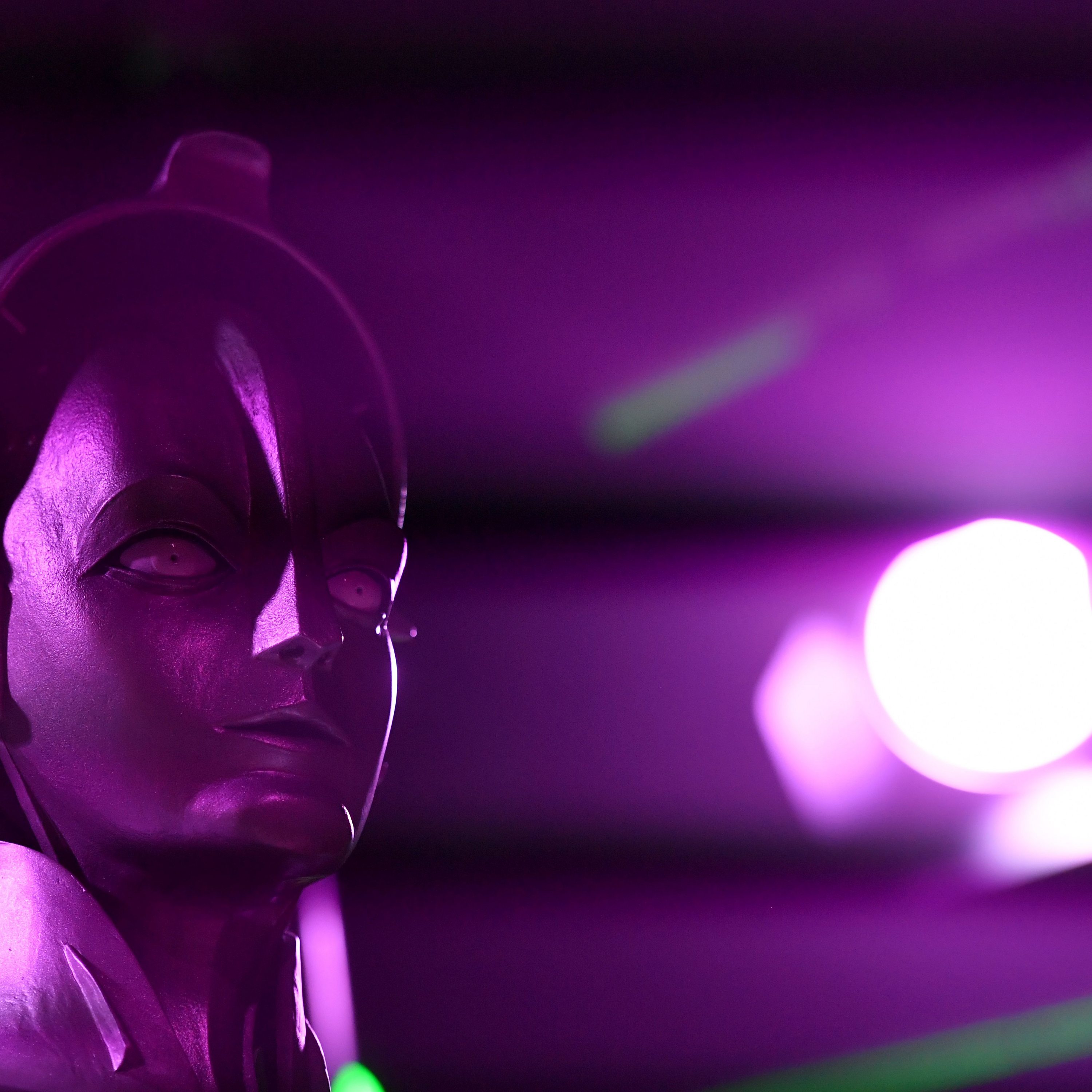
The idea of robots goes back to the Ancient Greeks. In myths Hephaestus, the god of fire, created robots to assist in his workshop. In the medieval period the wealthy showed off their automata. In France in the 15th century a Duke of Burgundy had his chateau filled with automata that played practical tricks on his guests, such as spraying water at them. By the 18th century craftsmen were making life like performing robots. In 1738 in Paris people queued to see the amazing flute playing automaton, designed and built by Jacques Vaucanson.With the industrial revolution the idea of automata became intertwined with that of human workers. The word robot first appears in a 1921 play, Rossum's Universal Robots, by Czech author Carel Chapek.Drawing on examples from fact and fiction, Adam Rutherford explores the role of robots in past societies and discovers they were nearly always made in our image, and inspired both fear and wonder in their audiences. He talks to Dr Elly Truitt of Bryn Mawr College in the US about ancient and medieval robots, to Simon Shaffer, Professor of History of Science at Cambridge University and to Dr Andrew Nahum of the Science Museum about !8th century automata, and to Dr Ben Russell of the Science Museum about robots and workers in the 20th century. And Matthew Sweet provides the cultural context. Show less
Earth's Earliest Life, The Benefits of Pollution, Sexuality and Science and New ideas on Evolution
The World's oldest sedimentary rocks reveal traces of our earliest ancestors. New analysis shows life forms existed more than 3.7 billion years ago which were very similar to those found in our deepest oceans today, microbial life around hydro thermal vents. Some pollution might be good for the world oceans. New finding from China show how iron oxide pollution from power generation and industry has been turned into a source of nutrients for phytoplankton - by interacting with other chemical pollutants. The researchers say this is increasing the ability of the ocean to lock up atmospheric carbon dioxide and so reduce the impact of man made greenhouse gasses. They query whether reducing this kind of pollution could have a negative impact. This week The Royal Society celebrated LGBT history month and 50 years since the partial decriminalisation of homosexuality in England and Wales Rory Galloway meets Sir Dermot Turing, the nephew of renowned computer scientist Alan Turing, to discuss Alan’s Legacy for LGBT scientists today, and we look at the continued impacted of homophobia in science. And we hear about a new test for ideas in Evolution. This involves recreating the ancestors of fruit flies. The findings have overturned an established theory on genetic inheritance in these alcohol tolerant flies.
The perils of fake science news, The neanderthal inside us, What The Beatles really sang - statistically speaking
A woolly story about resurrecting mammoths raises serious questions for medical ethics. News of a scientist's plan to resurrect mammoths has spread around the world. However the story is largely untrue. We look at how this kind of 'fake science news' story can impact on perceptions of real medical research - some times with negative consequences. Almost all Europeans and Asians carry Neanderthal genes. Until recently these were thought to have little impact on us today, but new research shows they may be involved with determining height and aspects of both our physical and mental health. And what were Lennon and McCartney really thinking when they wrote their hit songs? Thanks to the number crunching power of computer algorithms the emotional content of 23 years worth of their compositions have been analysed. The results are both startling and for Beatles fans perhaps a little unsurprising.
Science and cyber security, Dinosaur babies, Winston Churchill and level crossings
Testing cyber security with science. The UK now has a new National Cyber Security Centre. However there is very little scientific evidence against which to test the detection of cyber attacks and effectiveness of measures to prevent them. We ask what is needed to turn cyber security into a more scientific discipline.Winston Churchill and Aliens. Throughout his life Churchill maintained a strong interest in scientific developments and wrote widely on subjects from quantum mechanics to nuclear energy. Newly discovered papers show he also had an interest in the potential for life on other planets.Dinosaurs and egg laying. A new fossil find revealing a dinosaur with an unborn baby suggests live births may have occurred many years earlier than previously thought. Turn off at level crossings. New research suggests personal messages about the impact of engine fumes on health may be the most effective way of persuading drivers to switch off their engines at level crossings.
Measuring human impact on earth, Awards for engineers, Sounds of space junk.
Quantifying the impact of humanity on the earth's natural systems. Why human activity now has a larger effect on our planet than the forces of nature. We look at how mathematical equations can now be used to compare historical natural processes with contemporary man made changes. And we ask where current developments will take us in years to come.The Queen Elizabeth Prize for Engineering has been awarded to the inventors of digital imaging sensors. First invented in the 1970's, many of us use this technology everyday. These sensor can be found inside every digital camera ever made, from the devices used on space probes to collect distant images from the far reaches of the universe to the ubiquitous pocket cameras in our mobile phones.The earth is surrounded by junk - space junk. Many thousand of pieces of junk orbit the planet, left over from the history of everything we've ever sent into space. A new project has given a voice to this junk, and created a machine which plays simulated sounds of the junk as it passes overhead.Producer: Julian SiddlePresenter: Gareth Mitchell
Wildlife trafficking, New quantum computers, Ancient bird beaks, Glassblowing.
Conservation and conflict. A year long BBC investigation has exposed an illegal animal trafficking network stretching from West Africa to the Middle East and Asia. Traffickers have used fake permits to undermine international conservation efforts.New developments in Quantum computing. Sussex University are building a new type of modular Quantum computer. We attempt to explain what Quantum computing is.A Massive citizen science project to map bird beak evolution- using records from the Natural History Museum.And the last scientific Glassblower at Imperial College gives us a demonstration of his craft.
Crime, volcanoes, ghosts and how we are influenced by the genes of unrelated others
The genes of unrelated others can influence our health and behaviour. New research suggests the genetic make up of our partners can have a profound influence on our lives. Scientists have quantified genetic influence , in mice at present but the plan is to try to extend this to human interactions. If accepted this has potentially far reaching consequences for studying heritability and also perhaps modern medicine as the findings suggest an illness can in part be influenced by those we live with. The use of DNA evidence in criminal cases has sometimes been given far more weight than it deserves. In the worst examples there have been miscarriages of justice where DNA evidence has been misinterpreted. The fiction of DNA as a 'magic bullet' pervades TV drama and films - but views of DNA evidence as infallible are also widely held amongst the public, police and lawyers. Forensic specialists explain what we can and can't find from DNA evidence.Oxford's Bodleian library has manuscripts stretching back to medieval times depicting volcanos discovered in the 6th century. These manuscripts also contain remarkable interpretations of eruptions and associated volcanic events, often mixed with mythology. Although those recording such events did not understand what they were scientifically, some of the depictions and ideas of what was happening are surprisingly accurate. Roland Pease and Professor David Pyle take a look at this remarkable collection.Nearly a hundred years ago, Oliver Lodge, eminent physicist and the first to demonstrate radio waves, published a book about life after death. It was entitled 'Raymond' after his son who was killed in the First World War. Lodge was a believer in ghosts and telepathy, and conducted experiments to test their existence. Adam Rutherford and Samira Ahmed look at how Oliver Lodge squared his scientific and spiritualist beliefs - and how the latter led to him, as Britain's most well know scientist of his time, being written out of scientific history.