Study Africa to Understand The Future of Europe
Based Camp | Simone & Malcolm Collins · Based Camp | Simone & Malcolm
Audio is streamed directly from the publisher (api.substack.com) as published in their RSS feed. Play Podcasts does not host this file. Rights-holders can request removal through the copyright & takedown page.
Show Notes
Explore the fascinating and unsettling transformation of Johannesburg, South Africa—a city at the crossroads of decline and adaptation. In this episode, Simone Collins and Malcolm discuss how Johannesburg is crumbling in unexpected ways, with public infrastructure failing and private solutions rising to fill the gaps. From “crime hotspot” road signs to walled garden communities with private security and independent utilities, the city offers a glimpse into a possible future for urban centers worldwide.
We dive into personal experiences touring Johannesburg’s townships, the realities of daily life amid power and water outages, and the stark contrast between struggling neighborhoods and luxurious, self-sufficient estates. The conversation also draws parallels to other cities facing similar challenges, like Detroit, New York, and Lima, and examines how demographic shifts, government failures, and private enterprise are reshaping the urban landscape.
Discover why insurance companies are fixing potholes, why citizens are directing traffic, and how the wealthy are building their own modern-day fortresses. We also discuss the broader implications for anyone considering where to live, how to prepare for infrastructure decline, and what the rise of “walled gardens” means for society.
Whether you’re interested in urban planning, social trends, or the future of cities, this episode offers thought-provoking insights and real-world stories you won’t want to miss.
Don’t forget to like, comment, and subscribe for more deep dives into the world’s most pressing issues!
BTW, this was another Simone-outlined episode, so here’s the outline which includes links as more jumping off points. You’ll find the transcript at the end. :)
Based Camp - Johannesburg: Coming to a City Near You!
The Gist
* The G20 summit is being held in Johannesburg this month, which is putting it back in the news as the city scrambles to not humiliate itself when big deal people come to visit
* The WSJ did a hilarious piece on it—we’ll share the highlights
* Ironic side note: This year’s summit in South Africa is themed “Solidarity, Equality, Sustainability” and is focused on inclusive economic growth, food security, and technology-driven sustainable development.
* This is funny given both the nature of Johannesburg and the trends wer’e about to discuss
* This is a great time for us to remind people that Johannesburg represents the future for SO MANY cities
* So in this episode, we’ll
* Dive into a little more detail on the state of Johannesburg, which has some fascinating sci-fi dystopian vibes
* Explain why and how the Johannesburg model is coming to a city near you
Johannesburg—What’s Going On?
The Degradation
Some Visual Examples
* The sorry state of things https://x.com/AliceVLAuthor/status/1984968880851419589
* That famous Ponte Tower: https://youtube.com/shorts/65b3jQ_TTt4?si=sWBITkT3gaBp-8Cm
* Our Soweto township experience in 2018
* The school we visited; the school lunch
* The houses
* The landscape
* The…. ads
The WSJ Piece
Title: Welcome to Johannesburg. This Is What It Looks Like When a City Gives Up.
Subtitle: Tourists are dumbfounded by the many signs of apathy in the South African city; the ‘Jozi Jacuzzi’ pothole
The beginning of the article says it all:
JOHANNESBURG—What does it look like when a city stops trying? Visit Johannesburg, where instead of providing basic public services, the government just warns residents not to expect them.
Signs tell you what crime you’re most likely to fall victim to at highway exits and intersections; beware “Hi-Jacking Hot Spot” or “Smash and Grab Hot Spot.” Homeless people routinely direct traffic when the stoplights don’t work. Minibus taxis that ferry workers around the city often drive on the wrong side of the road to avoid rush hour traffic.
Johannesburg, South Africa’s biggest metropolis, markets itself as a “world class African city.” It’s home to some of the continent’s biggest companies and its largest stock exchange. But private firms have gradually taken over public services, from security to healthcare to mail delivery. Insurance companies fix potholes and sponsor fire brigades to reduce claims.
It’s all become a bit embarrassing for the South African government, which is set to host the G20 Summit meeting of heads of state here in November. In March, South African President Cyril Ramaphosa chided Johannesburg officials for what he called “not a pleasing environment” and told them to address a slew of issues ahead of the meeting.
“City of Joburg is as ready as it will ever be for G20 Summit,” said a spokeswoman for Johannesburg Mayor Dada Morero.
Morero, the city’s ninth mayor in 10 years, in May launched a task force dubbed the “Bomb Squad” to address service-delivery issues in various neighborhoods.
Some of the team’s achievements, according to Morero’s spokeswoman: The resolution of a 15-day water outage, the restoration of power to 1,000 households within one day of a substation failure, and the rectification of a seven-yearlong water blockage in 24 hours.
Decades of decline have pockmarked the city, including some now-famous failings.
In August, a popular investigative journalism show ran a segment on the “Jozi Jacuzzi” pothole, in the Randburg area of Johannesburg. The six-foot deep pothole had been filling with water for years, even causing low water pressure in nearby houses.
Some other highlights:
* Another nearby pothole, dubbed Kenny’s Canyon after a local politician, was dug by Johannesburg Water as it searched for a leak. Drainage pipes, fiber cables and piles of sand were left blocking a lane of traffic for more than a year, while the 26-foot deep hole filled with water. In July, South Africa’s biggest opposition party held a birthday party with cake for its one-year anniversary.
* In February, a borehole that was being drilled on private property in the Killarney suburb went straight into a tunnel used by the Gautrain, a 50-mile commuter rail system that operates partly above ground and partly underground. The tunnel flooded with water and soil, interrupting service for more than a week.
* “Think of it as a scenic surface route, a chance to see Johannesburg for a change!” Gautrain said in a statement after the mishap. “You may discover a new favorite coffee shop. Or a massive pothole. It’s Johannesburg, after all.”
* Sometimes, citizens clap back. In 2013, the provincial government that encompasses Johannesburg implemented an electronic toll system on major highways to recoup costs associated with expanding roads for the 2010 soccer World Cup. Since then, most of the city’s residents refused to pay, ignoring invoices and threats of legal action. Alasdair Condie, 66, works in construction and says he has never paid an e-toll. He estimates he owes around $3,000, but stopped getting bills years ago “because the postal system doesn’t work.” “If they prosecuted me, they would have to prosecute tens of thousands of others and the courts couldn’t handle it,” he said.
The Sorry State of Policing
Conversations with Tyler Episode
https://conversationswithtyler.com/episodes/jonny-steinberg/
Highlights:
* Tyler Cowen interviewed author Jonny Steinberg, who spent about 350 hours riding around in South African police vans from 2004-2007
* Basically, there was only policing with consent—police would only go when they were called (basically in domestic violence cases)
* It is normalized to pay police to investigate crimes when they actually want help.
On policing in South Africa
* COWEN: Your work on the police in South Africa — if there are two policemen in a township in South Africa, how large is the crowd they can successfully confront and still manage to handle?
* STEINBERG: It depends very much on the circumstances: where they are, the time of day. But if it’s a Saturday night, and there’re 10 or 20 people, and they’re young, those two cops don’t want to be there. They’ll make sure that they’re not.
* COWEN: So they just don’t even show up and take the call.
* STEINBERG: Yeah. When I was riding around with them, it was really amusing. They had an equivalent of a CompStat system, which told them where the hot spots were, which was where they had to police, and they’d make absolutely sure to do the opposite and not be in hot spots, because if there were only two of them, they were not sure that they could control people.
The Sequestered Nice Bits
IMPORTANT: Johannesburg is not remarkable because it has rough parts and degradation, it’s remarkable because communities have successfully roped themselves off
* Johannesburg’s rough parts didn’t necessarily feel worse than less nice neighborhoods in Mexico or Peru
* South Africa’s purchasing power parity GDP per capita is $13,700-16,000
* Peru’s is ~$16,000
* HOWEVER, even in the wealthiest parts of Peru, we’d lose power and water
* Even last time I visited in 2024, there was a power outage and even the Marriott hotel where I stayed in the NICEST part of the NICEST district lost power
Examples of these Walled Gardens
Johannesburg is one of those rare place where amidst crumbling infrastructure, there are high-security paradises with their own backup power and borehole water.
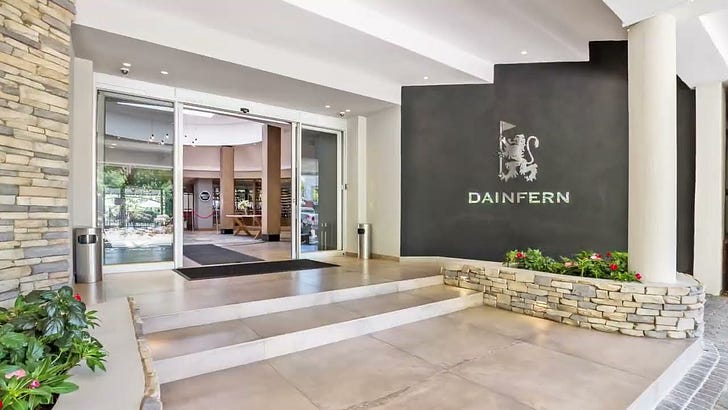
Dainfern Golf Estate
* Recommended by Joburg redditors
* Brief promo vid:
*
* https://dainfern.co.za/lifestyle
Country Gardens Estate
https://www.countrygardens.estate/
* https://www.countrygardens.estate/projects-7
* Country Gardens Estate: This new development features dedicated borehole water and a solar farm to ensure continuous power and water supply. It has 24/7 security, fully gated access, and eco-conscious living with timber homes and a natural pool. The estate includes communal areas and a Montessori preschool, appealing for families needing both safety and uninterrupted utilities.
The Parks (a little more downmarket)
* Drone View:
*
A View into the Walled Gardens via Reddit
* Where the wealthy post (about their gardens, swinging…)
* Though even they are not exempt from Johannesburg’s shortcomings:
* NO WATER: Are there gyms or hotels in Jhb that allow you to shower only Haven’t had water for over a week... Trying to see if there are any gyms or hotels that allow you to use their shower facilities
* ASKING FOR ADVICE ON MOVING BACK (FROM LIVING IN THE UK)
* It’s great except for the fact that it’s falling apart: “Only problem with SA - is the theft of taxes and neglect when it comes to maintaining things, as well the large amount of poor folks left out - they eventually end up doing crime as there is nothing for them to advance in this country. So its a statistic that you will likely end up being a victim of crime here and as well suffer with electricity or water issues. Otherwise its a GREAT COUNTRY.”
* Move somewhere with borehole water and backup power: “It’s not too bad. Especially if you have the funds to stay in a place with borehole water and backup power. Come live here. Meet people here. Spend money on small businesses here. Pay the uber drivers here. Enjoy the restaurants and touristy stuff you havent yet done here until your heart is content. Spend the pounds. Our economy benefits off of the tourism. Maybe it suits you too.”
* Move to a gated community: “Depending on where you settle in Joburg it’s really not that bad. I’m able to live an ordinary life. Do you wear plenty of diamonds? As a fully remote person you might be able to set yourself up in Dainfern Golf Estate. The Parks are also well loved and plenty of people lead comfortable ordinary lives and go for walks with their families.”
* Go back if you’re rich: “SA is great for the wealthy or those who earn foreign currency, your quality of life would be better than the equivalent over seas for the same price For the middle class /youth they’re currently effed, having kids here is dooming them to dark futures, The crime would always be a risk though, however you can minimise the risk with money (private security, gated estates)”
* True, u only get to experience the perks of living in S.A if you’re wealthy or earning in foreign currency.
* Goes to show people will return to crumbling areas merely out of nostalgia: My hubby and I recently tried living in the Netherlands for a few years. We left SA because of the government, infrastructure etc. going downhill and the difficulty to get a job. We returned primarily because we missed family. Underneath that though I missed SA and specifically jozies… the awesome people making it by each day, the great weather (including highveld thunderstorms) and vibes. The ability to talk to strangers and share a laugh and not get looked at weirdly. Making what feels like firm friends in the space of minutes even though you know you will never see them again. I am glad we came back. NL was great, everything worked, everyone was friendly but between feeling like outsiders, the reasonably ok but not great medical and the continuous rain and depression that came with it, it was not home. Not to mention the continual worrying news about the rise of right wing parties in the area, crazy politicians etc. I realised though that the green is not greener anywhere in the world … it’s just different grass and you have to decide what will make you happy. So if jozies is your place then move. Great you earn pounds. Check out tax implications. Good luck … you would always be welcome in jozies.
* Theft: johannesburg stolen phones Stay vigilant, redditors in Johannesburg warn about phone theft in public places. https://www.reddit.com/answers/72f3b629-377d-4fbc-aff2-d32bef652814/?q=johannesburg+stolen+phones&source=SERP&upstreamCID=e973eac1-4043-4f09-9e2c-a548cdcf8b3a&upstreamIID=6629f439-1069-4717-b022-1a2f5840004e&upstreamQ=johannesburg+stolen+phones&upstreamQID=6fb53e3e-a5ff-44e2-9172-f5e18eeb5617
Why We’re Next
* Our rougher parts are going to look more like the degraded parts of Detroit
* But long story short, we have a twofold problem
* Even without demographic collapse, American towns are screwed
* With demographic collapse, this issue is compounded (and all towns and cities are at risk, regardless of whether their economics were sound with stable populations)
The Liability of American Cities, as revealed by Strong Towns
Since the end of World War II, our cities and towns have experienced local economic growth using three primary mechanisms:
* Transfer payments between governments, where the federal or state government makes a direct investment in growth at the local level, such as funding a water or sewer system expansion.
* Transportation spending, where transportation infrastructure is used to improve access to a site that can then be developed.
* Public and private-sector debt, where cities, developers, companies, and individuals take on debt as part of the development process, whether during construction or through the assumption of a mortgage.
In each of these, the local unit of government benefits immediately from all the permit fees, utility charges, and increased tax collection. This is real money that provides revenue for the current budget. Cities also assume the long-term liability for servicing and maintaining all the new infrastructure, a promise that won’t come fully due for decades. This exchange—a near-term cash advantage for a long-term financial obligation—is one element of a Ponzi scheme.
“Over a life cycle, a city frequently receives just a dime or two of revenue for each dollar of liability, a ridiculously low level of financial productivity.
American cities have a ticking time bomb of unfunded liability for infrastructure maintenance. The American Society of Civil Engineers (ASCE) estimates deferred maintenance at multiple trillions of dollars, but that’s just for major infrastructure, not the local streets, curbs, walks, and pipes that directly serve our homes. Every mature city has a backlog of deferred maintenance, a growing list of promises with no discernible path to make good on them.
What Johannesburg Shows We Should Expect
* Cities where
* Police may come when called, but don’t proactively police
* Citizens pay police extra to actually do their jobs
* Insurance companies may fix some infrastructure just to reduce costs
* Citizens will step in to help more than we might expect
* E.g. the WSJ article mentions how homeless people are directing traffic in Johannesburg where traffic lights are down
* Walled communities with
* Private security
* Independent or backup water and electricity
What Families Should Consider Now + What’s Already Happening
Wealthy early adopters are already:
* Funding private developments (e.g. our to-be-unnamed friend with two very wealthy benefactors who want to build a modern Chattaqua)
* Building bunkers in Hawaii and New Zealand (Zuckerberg and Thiel)
* Zuckerberg’s Hawaiian compound—called Ko’olau Ranch—features a 5,000-square-foot underground shelter connected to two mansions by tunnels, with a blast-proof concrete-and-metal door, escape hatch, living areas, and its own supplies.
* Thiel’s New Zealand compound—designed by Kengo Kuma, known for the 2020 Tokyo Olympics stadium—includes a lodge built into the hillside with north-facing views over Lake Wanaka
* Funding city states
* Prospera
* Praxis
To consider:
* Where should your family be set up, long-term?
* How energy and water independent can you get?
* How will you manage security?
Episode Transcript
Simone Collins: [00:00:00] Hello, Malcolm. I’m so excited to be with you today because we are gonna be talking about Johannesburg coming to a city near you. Why? Because it is crumbling, but crumbling in very interesting ways in which not only is it falling apart, but it has these protected walled gardens where things are actually really nice.
And we need to expect this to happen a lot more in the future. But let’s give some context. The G 20 summit is being held in Johannesburg this month, which is putting it back in the news as the city scrambles to not humiliate itself when big deal people come to visit. So that’s why like a lot of people are now talking about how crappy it is.
When I mean it, it always has had problems. But the Wall Street Journal recently did this hilarious piece on it, and we’ll share the highlights. There’s some great pictures from it. And there’s also this ironic side note, which I think is really wonderful that the, the, the, the summit, the, the G 20 summit that’s happening this month.
Yeah. The theme is. Solidarity equality, sustainability and it’s focused on inclusive economic growth, food security, and technology driven sustainable [00:01:00] development. And this is in Johannesburg, in the thing. And, and to give an idea, can you talk about some of the, like the signs for crime spots and stuff like that?
Yeah. We’re gonna get into that. It, because Yeah, they’re, they’re, no, I mean, you lead, you lead with interesting novel things.. I will show you. Okay. Just to give you a teaser, here is a sign that you can now find in, in Johannesburg.
It for those who are just listening, it’s, it’s at a road sign. It’s just a big red dot, and it says crime hotspot. So that. They’re not trying to like stop crime. So what they’ve done is, is, and I sent you an article on this, the policing system in Johannesburg has gone to just sort of a labeling parts of the city where you are likely to have certain types of crime committed and then tell you what crime is likely to be committed to you.
Like carjacking is frequent here, and then the cops [00:02:00] are, if. Intentionally avoiding these areas. Yeah. They’re just like, oh, there’s gonna be crime here. Guess we better stay away from it. Don’t wanna get hurt. You know, like, this is the police. So this is just kind of how things have, have gotten. I wanna, I want us to stand and like jack up cars in these areas and just point to the sign.
Be like, look, it’s common here. Okay. No, no. Really though. I, I feel like, yeah, at this point you kind of have impunity. If, if you’re carjacking in the area, you’re like, listen, you were warned, sir. What did you expect? It’s like, like it’s like a, like deer crossing or something? Yeah. Like, well, okay, so this is the crosswalk.
You cross in the crosswalk. This is the carjacking zone. You, you, you carjack. This is a carjacking zone. This really is, is a, is a great time to. To remind people that Johannesburg in, like I said, represents the future. So what we’re gonna do is dive into some more detail on the state of Johannesburg, which has some fascinating sci-fi dystopian vibes.
We’re also going to talk about how we’re seeing some of this model go to places in [00:03:00] outside Johannesburg. So first, the degradation. So, so you get to live in a sci-fi dystopia if you live in Johannesburg. Now. That’s, that’s really cool. Yeah. I mean, who doesn’t want to live in a sci-fi dystopia? There’s, there’s a, if you just look on, on x, like sort of top posts about Johannesburg, here’s an example of just sort of like a video of the city.
Just, it, it, it’s, it’s crappy. It looks like a third world country. It, it doesn’t look very good. There’s the famous Pont Tower. You’ve, you’ve heard of this one. It’s that big circular tower that for a long time was just taken over by aids. Yeah. And then what, what, what happened to it? So actually it is, it has been reclaimed.
There’s this this great YouTube short though I’m gonna send to you where there’s this guy like very enthusiastically standing in the center of the tower being like, this is where the dead bodies were dumped.
Speaker: And this is where all the dead bodies were and all the trash. It piled up 13 stories high.
Simone Collins: Because people literally would throw their trash into the center of this tower. But yeah, it, it has actually since been reclaimed and it now has multiple shops and [00:04:00] people actually live in there. But it still looks kind of. Kind of dystopian and ruined. And then of course, you and I actually went to Johannesburg in 2018. We toured the Soweto Township, which is one of the not nice areas.
Okay. I’m just gonna send you some of the photos that we took there. Okay. Sort of showing the, the state. These are, these are very much shanties we visited. Oh, but she’s mentioning is, is that we, Simone and I did a tour of one of the townships, like one of the shanty towns in Johannesburg. Yeah. I, I actually included one photo of me when we were in the, the school we visited just for proof that we were actually there.
Me, like showing the kids the photos. But like, you know, there’s, you can see there’s a photo of like the school lunches that the kids were served there. Like, this is not a nice. Place to go to. I mean, like the kids actually were amazing. The teachers were fantastic. Like the actual community that we interacted with when we went there.
The all the people are great, but the infrastructure is terrible. There are constant power outages. There are constant water [00:05:00] outages. The, I don’t know to what extent people are experiencing food insecurity, but the school lunches that I, I I’ve literally picture, theyre just a white mush. It’s, it’s, it, yeah, it’s white mush of some sort.
I’m not exactly sure what it is, but it’s very much like Oliver Twist. I want some more porridge, kind of. Yeah. That’s, that’s the mood we’re going for here. I also shared some signs, some signs that were on just like a random wall that we walked by that for the men, there’s, there’s penis enlargement. And then for the women, there’s a abortion.
I think it says same day, pain-free with, with a number to call. Just so you know, everyone gets, I love, I love it for men and wi Oh my God. Imagine going for like an abortion that you just saw as like a sign on a wall in Johannesburg. Yeah. I, I feel like this is the, this is the, the Johannesburg version of HIMSS and hers vitamins.
I’m sure you’ve seen like. Extensive ad campaigns for himss. I love that you took a picture of this. Just Yeah, and they’re all over the wall too, right? Like Yeah, it’s, it’s just like, get, get what you need, you know, gender specific. And then the, what really [00:06:00] prompted me to, to dive back into this was just this fantastic.
Wall Street Journal piece called welcome to Johannesburg. This is what it looks like when a city gives up subtitle. Tourists are dumbfounded by the many signs of apathy in South African City, the Josie Jacuzzi pothole.
Speaker 2: when it comes to service delivery, you can lead a horse to water, but you can’t make a drink. Guys, where’s the horse? Liters and liters. Water. They are gushing out, and it’s been like this for two years. I mean a Porsche, Wendy, in their last weekend. So what it tells you is that somebody is not doing their job.
Join us on Sunday as we dive into the depths of the Jo Jacuzzi.
Simone Collins: I just, I wanna read the beginning of the article to you because it, it’s just so good and it says it all, but I’m also gonna send you some highlight photos of, by the, for example, you’re wondering what the TFR of South Africa is these days.
Uhhuh, it’s 2.2. I mean, that’s pretty good. They’re almost below replacement right now. Yeah, I mean, well, but it’s, it’s poverty. I mean, those abortion doctors must be good, you know, I mean, [00:07:00] they’re handling it. And I wouldn’t expect, I wouldn’t expect to still be fertile after one of those roadside penis enlargement surgeries.
I know seriously that that’s probably not helping with the fertility. Those are both. Basically, probably two forms of, of curtailing the population. So the Wall Street Journal article signs tell you what crime you’re like most likely to fall victim to at highway exits and intersections. Beware of hijacking, hotspot, or smash and grab hotspot.
Homeless people. Routinely direct traffic when the stoplights don’t work. Mini bus taxis that ferry workers around the city often drive on the wrong side of the road to avoid rush hour traffic. I mean, that’s sometimes I wish taxis would do that. Johannesburg, south Africa’s biggest Metropolis Markets itself as a world class African city.
It’s home to some of the nce. Biggest companies and it’s largest stock exchange. But private firms have gradually taken over public services from security to healthcare, to mail delivery in current insurance companies, fix potholes and [00:08:00] sponsor fi, fire brigades to reduce claims. Now this is really important.
That last sentence. Mm-hmm. This is what we need to expect in the future, and this is why Johannesburg is different. Okay. One thing I wanna highlight is that while I, I just shared a bunch of photos of like. Soweto town township that we saw, you know, we’ve been in, in other places that are not very wealthy and they don’t feel that different, like mm-hmm.
One of the, the, the more popular complaints about people in Johannesburg is that people will like, just, you’ll be sitting at a restaurant or a, or on a street and someone will just grab your phone and steal it from you. That happened to me in Peru. Yeah. But the the the thing you didn’t really dwell on the the so Lato jacuzzi no, no.
We’re, we’re gonna get to that in the article. But my, the point I wanna add though, is what makes, so we’ve seen basically the, the bad neighborhoods in Johannesburg didn’t feel too different. To me from bad neighborhoods in the United States and bad neighborhoods in Peru and other countries we’ve been to.
What is different about Johannesburg, and this is [00:09:00] very important, is that they have experienced this for so long and so systemically that private industry and private individuals are starting to step in where the government is failing because now it’s so expected the government is so corrupt. People are like, well, I’m just not gonna depend on it anymore.
So literally that insurance companies are fixing potholes because they’re just not getting fixed. They’re sponsoring fire brigades to reduce claims to, to save money, and that homeless people are directing traffic. I think this is what we’re ultimately gonna see more of in the rest of the world. And people need to be thinking about this when they decide where they wanna live, what companies they wanna deal with and, and when they can go somewhere where they can expect private individuals and private industry to step in.
Or governments will fail because where you don’t wanna be is where. You, you move somewhere where government fails and nobody steps in, like you’re just literally written off entirely [00:10:00] because that is going to happen in many places as well. So I’ll go back to the Wall Street Journal article. It’s all become a bit embarrassing for the South African government, which is a about to set host to the G 20 summit meeting of heads of State November in March.
South African President Cyro Osa Chi to Johannesburg officials for what he claimed is not a pleasing environment. And told them to address the slew of issues ahead of the meeting. City of Joburg is as ready as it ever will be for the G 20 summit. Said a spokeswoman for Johannesburg Mayor. Data. Marrero Marrero, the city’s ninth mayor in 10 years in May, launched a task force dubbed the bomb squad to address service delivery issues in various neighborhoods.
Some of the team’s achievements according to Marrero spokeswoman, the resolution of a 15 day water outage. 15 days without water. There were rotted water outages all the time in, in Lima, Peru too, where we lived. Yeah. But 15 days is next level. The restoration of power to 1000 households within one [00:11:00] day of a substation failure.
1000, 1000 households, not even a storm. And the Octavian, we will find the power cord when we’re done recording. Okay. Can you say hi to the fans? Hi. What do you know about Africa? Octavian, I know about Africa that they have like to depress, like have a, like a real vehicle and a, and a decoy. That’s nothing to do with Africa.
Nothing to do with Africa at all, I dunno. Oh, okay. Octavian, go, go back downstairs and I will come and get you if you can leave me alone for a little bit.
And the rectification of a seven year long water backlog blockage for 24 hours or in 24 hours, so a seven year long water blockage. These are just, they’re, they’re issues that have clearly been left behind by the government. Just nobody cares. Yeah, yeah. When you, when you get this. Well, because they don’t see, they see their job as collecting taxes and spinning them on themselves and their cronies not [00:12:00] actually doing the job of governing.
Yeah. And then there’s the Josie Jacuzzi. So in August, a popular investigative journalism show ran a segment on the Josie Jacuzzi pothole in the Randberg area of Johannesburg. The six foot deep pothole had been filling with water for years, even causing low water pressure in nearby houses. There’s this great new segment that I shared with you.
I’ll, I’ll send you a link again if you wanna include it in the video. Yeah. Where like, literally the, the, the journalist gets in like scuba gear and like an inner tube and just like, jumps in. It’s just like, ha ha ha. It’s, it’s so bad. There’s also, but it’s going to people’s houses. Yeah. And they’re, they’re, they’re nicknaming, the potholes.
There’s another pothole that’s called Kennedy’s can, or sorry, Kenny’s Canyon after a local politician. And it was, it was, it was dug by Johannesburg Water. Is it searched for a leak? Drainage pipes, fire cables, and piles of sand were left blocking a lane of traffic for more than a year, while the 26 foot deep hole filled with water in July.
South Africa’s biggest opposition party held a birthday party with cake [00:13:00] for its one year anniversary. In February, a borehole that was being drilled on private property in the Kili Murray suburb went straight into a tunnel used for the gal train a 50 mile commuter rail. System that operates partly above ground and partly underground.
The tunnel flooded with water and soil interrupting service for more than a week. Quote. Think of it as a scenic surface route. A chance to see Johannesburg for a change. Gal train said in a statement after the mishap quote, you may discover a new favorite coffee shop or a massive pothole. It’s Johannesburg.
After all this is, oh my gosh, amazing. It note that the, the reason why that particular train was shut down was because. Someone was digging a borehole in a suburban neighborhood. The reason why they were doing that is because the water gets shut off for 15 days at a time. And borehole water is, is actually trying to reach well, water.
Yeah, exactly. Is is that they were just trying to get basically water autonomy because they couldn’t depend on the city and they just broke [00:14:00] more of the city. In doing that, what does it make you feel? Better? That we have well water at our house. Yeah. And actually that’s one of the things I wanna point to.
Like where are you getting your water? Do you have backup power? Like all these sorts of things are things that families need to be increasingly thinking about as we move toward demographic co collapse. And as in general cities and especially Americans. Suburban cities reach a point where they increasingly experience cascading bankruptcy.
And we’re gonna talk about that next. You know, and this is all downstream of just like extreme wokes. Yes and no. There, it’s, it’s a combination of things. No. So the, the, the type of bureaucracy and corruption we explicitly see in South Africa. Hmm. Oh, that, yes. That’s all apartheid based. Yes. Yeah. Yeah.
And, and I think that it is in structure very similar to the way that many progressives in the United States, like, look at Mond, right? Like New York is a hellscape right now, right? Like, all the businesses are moving out. It’s, it’s. Empty everywhere you go. Yeah. The [00:15:00] crime is constant. Well, same with California.
If they institute that billionaire tax, that one time, like 5% of your total wealth, unearned included tax or whatever to like just pay off California’s debt like that, they’re just gonna leave. Yeah. But the point being is that with the AMI situation. New York knows how bad it is already, and yet they’re still voting on a guy like this who will only make every one of their preexisting problems worse.
Well, I, I partially think when it comes to mom Donny, that he is the woke or progressive version of Trump where it’s, it’s clear from pulling in coverage in interviews as well, that a lot of the people who are voting for him don’t actually think that he’s going to make things better. In fact, I think they believe he’s going to make things worse, but they also just want to like.
Take a a, a hammer to New York and just bust it up. ‘cause they’re just so angry about everything. It, it’s very much the same way that people wanted to vote Trump and to drain the swamp and just break Washington DC ‘cause they just freaking hated [00:16:00] it. So I think that’s part of what’s going on.
There’s one more thing though that I wanted to point out that’s just so great and just a wonderful absurdist detail about Johannesburg and how bad it is and also kind of what we should be expecting in other cities in the future. Sometimes citizens. This I’m reading from the Wall Street Journal article again, sometimes Citizens Clap Back in 2013, the provincial government that encompasses Johannesburg implemented an electronic toll system on major highways to recoup costs recoup costs on cities associated with expanding roads in the, for the 2010.
Soccer World Cup. Since then, most of the city’s residents refused to pay ignoring invoices and threats of legal action. Sair Condi 66 works in construction and says he has never paid an eol. He estimates he owes around $3,000, but stopped getting bills years ago because the postal system doesn’t work.
Wait, so what is this e toll for? It’s a bill for, it’s it’s toll roads. There are toll [00:17:00] roads in Johannesburg, and the citizens have just decided to not pay them, and they don’t even receive the bill because the postal system doesn’t work. Quote, if they prosecuted me, they would have to prosecute the tens of thousands of others in courts and they couldn’t handle it.
Like the courts literally couldn’t help them prosecute all of the unpaid. Total bill holders because the courts don’t work, so the roads don’t work. They tried to fix them by charging people tolls. The people don’t pay the tolls and partially the bills aren’t even getting to them ‘cause the mail doesn’t work.
And even if they tried to take the people to court because they’re not paying the toll road bills to fix the roads that aren’t working, that they, they couldn’t ‘cause the courts didn’t work. So, yes. And I think when people think that this is, again, something that can’t happen by you, it absolutely can. We are seeing our cities degrade and as they degrade, the voters are not co course correcting.
They are going more [00:18:00] woke. Yeah. That’s what why I brought up madami, right? Like, yeah. Yeah, the, the, well, and I mean, you even see this actually, I mean, like, this is something that gets covered a lot around the world and especially increasingly speaking of Ma Doni in New York, in New York with criminals, for example, not being prosecuted properly for things like shoplifting.
And this is something that you, you highlighted a little bit earlier, the issue with police in South Africa. You sent me a conversations with Tyler podcast episode with Tyler Cowan. In which he interviews the author Johnny Steinberg, who spent around 350 hours riding around with South African Police between 2000 four and 2007.
So quite a long time ago. And things are much worse now. Basically he, he shares in this interview that there was only policing with consent. Police would only go, were basically when they were called. So most of the things that they actually were looking at while on their shifts or whatever. Domestic violence cases where people ask them to come though, even in these cases, it’s very [00:19:00] normalized to pay police to investigate crimes when you actually want help.
So you basically have to bribe police to investigate a crime. Yeah. So the. I, you can either include a clip, but basically Cowan was like your work in the police in South Africa. If there were two policemen in a township in South Africa, how large is the crowd they can successfully confront and still manage to handle Steinberg?
It depends very much on the circumstances where they are and the time of day, but if it’s a Saturday night. And if they’re 10 to 20 people and they’re young, those two cops don’t wanna be there. They’ll make sure they’re not Cowan, so they just don’t even show up and take the call. Steinberg. Yeah, when I was riding around with them.
It was really amusing. They have an equivalent of the CompStat system, which told them where the hotspots were, which was where they had to police, and they’d make absolutely sure to do the opposite and not be in the hotspots, because if there were only two of them, they were not sure that they could control [00:20:00] people.
So this is, this is the state again, of Johannesburg. Well, you know, bad, this is gonna be a part of Europe where cops don’t even have guns. Yeah. Where they just have their fabulous batons, like in the uk. Yeah. I would point out though, one thing they discussed briefly in this conversations with Tyler interview is, okay, well are, are, are people in Johannesburg afraid of the police?
Right? Like, you have to bribe the police to get them to do something, to get them to help you. Where you also bribe police a lot very classically is in Mexico, but also in Mexico, the police are like actively scary. Like you’re really worried that the police are gonna like. Hurt you. Yeah. And, and basically the, the guy being interviewed, Steinberg was like, ah, like they’ll rough you up and stuff, but people aren’t scared of the police like they are in Mexico.
And I just wanna point out that like Johannesburg isn’t, isn’t worse than rough parts of Mexico, than rough parts of Peru and rough parts of any country with, with somewhat similar per capita GDP and Peru. And, and Johannesburg [00:21:00] basically have, well, I would note that it is words in a way that you’re not.
Really discussing here, which is to say and I always note that this is something you have to be careful about, Uhhuh, is to assume that a developed country that is collapsing is going to be at an equivalent level of quality of life to a country with an equal GDP that is developing. And that just isn’t the case.
That’s, yeah. Yeah. And that’s true. But yeah, Johannesburg, you go and then you go again in 10 years and it’s worse. Peru, every time we went and we loved this, there’d be some new construction. There’d be something new that was built, something that was improved, something that was fixed. A new bridge, a new road.
You’re right. And it’s, it’s very, but that’s the, the bigger issue is the way that you utilities collapsed when we were in Peru. I don’t think. We had a single power outage the entire time we were there. Yes we did. In fact, just the last time that I was in Peru, in the nicest neighborhood, there was a power outage and I was in the nicest hotel of the nicest neighborhood.
We had water outages and we had power outages. And you’re just conveniently For kidding. No, I, I, if we had them, it couldn’t have been more than once a month. Yeah, it, [00:22:00] it wasn’t frequent. It wasn’t that frequent. And the water outages you, you would typically receive a warning about them. Yeah. Well, so how long, so sorry, what are you considering?
Was it like one power outage every, like two? It would, it would often be like for 12 hours in a day. And, and in, in Johannesburg it’s like 15 days. So obviously it’s way. Yeah. Yeah. But it, they were rare enough that it never inconvenienced me in a meaningful way. It inconvenienced me because I wanted to take my shower and I couldn’t take my shower and I’m on a schedule and you’re like, well, if, if I have to go one day without a thing, it’s not so bad.
And I’m like, no, if I can’t have it at 3:00 PM which is my time to take a shower or whatever, like, then I freak out. But me losing internet or power is a big thing because I spend my life online. Right. Yeah. But you would just tether to your phone and use batteries for that period? Yeah, I just tethered to my phone.
That’s why you don’t remember it. It’s very different obvi. I agree. It’s different if, if it’s 15 days, but again, my point is this is something that isn’t unique to Johannesburg. What is unique is that Johannesburg has these walled gardens, and in Peru we couldn’t evade it. We [00:23:00] were in the nicest neighborhood, in the nicest city in Peru, and there were still water outages that I could be at the Marriott Hotel in Miura Flores and still experience a power outage.
Meant, you know, something different from a Johannesburg where you have backup power, you have borehole water, and you live in these walled communities. So I wanna, I wanna talk about these a little bit. And I’m gonna share some some examples of some of these, these walled estates, they have private security, they have borehole water and they look totally different from Johannesburg.
So I’m gonna send some links with some of like the little like promo videos they have.
Simone Collins: Some of the more notable ones in Johannesburg are Dan Femme Golf Estate, [00:24:00] and there’s also country gardens estate. The, the Dan Femme. Dan Dane Fme, Gar Golf estate is more old and then the country gardens estate is newer and here’s some pictures of the country gardens, estate houses.
They’re like very modern. Very pretty. You would never know that these places were in Harrisburg that interesting. There isn’t anything like this exactly. Exactly. You can’t escape the, the, the hazards of buru. Whereas in Johannesburg, you can absolutely escape it. There were like little suburb developments for like a wealthier people that you could go to.
Yeah. But you were still on the main grid. They weren’t, they weren’t these walled communities with private gardens, they didn’t have like a literally like different feeling environment, whereas right. And, and I think that this is actually, again, really telling mm-hmm. When I’m talking about the difference between a collapsing developed economy mm-hmm.
And a developing economy. Mm. Yeah, because those nice neighborhoods in Peru, like it’s with the expectation that everything’s getting better. Whereas in Johannesburg, they’ve declared [00:25:00] bankruptcy. They’re like, I don’t know. I’m just like, this is our space colony. Yeah. I’m cutting myself off from society.
Exactly. But it also is due to the extent of the collapse. It’s when you reach a certain level of collapse and this is actually something that we should probably talk about or like name in our advocacy or whatever. Mm-hmm. And I’ll call it just the inflection 0.0, which is the point at which it is worth it for communities to cut themselves off from the state grid.
Yeah. Yeah. And in Peru they haven’t reached the inflection point yet. Yeah. Because of the expectation that, well, the state grid is always getting better. Mm-hmm. That the power grid is always getting better, the water supply is always getting better. It’s gonna get better. Yeah. Is always getting better.
So even if it’s not perfect today and you know, you’ve got, like me was pretty high standards. I’m like, it’s not. Perfect, but it’s usable. Yeah. Like I can requisite this. The only reason why Simone cared is ‘cause she’s autistic about like showering and stuff like that. And she can’t be like, I’m just gonna take a shower later in the day.
God forbid. No. But in Johannesburg [00:26:00] that, and then, then that is why in Peru that even when I go to the, and we lived in the second nicest neighborhood the nice, no, we lived meter Flores is the nicest. What do you No, the nicest is better. San San Ysidro, I believe it was called. Oh, San Oh yeah.
San Ysidro was super, yeah, like more residential. San generally considered slightly nicer than Miura Flores. Miura Flores is like more touristy. San Ysidro is more like