
Badly Governed
Lydje Lahens
Show overview
Badly Governed has been publishing since 2023, and across the 3 years since has built a catalogue of 10 episodes, alongside 1 trailer or bonus episode. That works out to roughly 7 hours of audio in total. Releases follow an irregular cadence.
Episodes typically run thirty-five to sixty minutes — most land between 43 min and 52 min — and the run-time is fairly consistent across the catalogue. None of the episodes are flagged explicit by the publisher. It is catalogued as a EN-language Health & Fitness show.
There hasn’t been a new episode in the last ninety days; the most recent episode landed 9 months ago. Published by Lydje Lahens.
From the publisher
Welcome to season one of Badly Governed, a podcast focused on community discussions. Our goal is to facilitate discussions about important social issues that affect our daily lives by interviewing community leaders and professionals in various fields such as science, policy, healthcare, and more. To share your ideas or questions, email us at [email protected] or visit us at https://www.badlygoverned.com/.
Latest Episodes

S1 Ep 9ICE, White Nationalism, and Who Gets to Be American
When immigration, policing, and white supremacy collide, whole communities pay the price. This episode of Badly Governed breaks down how ICE raids, white nationalism, and the U.S. criminal legal system work together to target Black and Brown people under the banner of “public safety” and “border security.” We look directly at who gets labeled a criminal, who is treated as worthy of protection, and how state violence is justified through racialized fear.Our guest, Amy “Amy Mac” McDonald—content creator and host of the Foolish Optimist podcast- joins us to talk about the real‑life impact of immigration enforcement: unannounced raids, families living in constant fear, and neighborhoods reshaped by detention and deportation. Together, we examine how white privilege structures every step of this process and why dismantling that power is essential for any honest conversation about ICE, mass incarceration, and who truly gets to belong in America.Resources:Triolo, T. (2025). The empathy gap: It is Black and White. Self-published.Support the podcast:Donation: https://www.paypal.com/donate/?hosted...Buy something: https://lahensnet.creator-spring.com/References:Pillai, A., Pillai, D., & Artiga, S. (2025, September 30). Health issues for immigrants in detention centers. KFF. https://www.kff.org/racial-equity-and-health-policy/health-issues-for-immigrants-in-detention-centers/Pinedo, M., & Valdez, C. R. (2020). Immigration enforcement policies and the mental health of US citizens: Findings from a comparative analysis. American Journal of Community Psychology, 66(3–4), 427–439. https://doi.org/10.1002/ajcp.12464Credits:Host & Executive Producer: Lydje LahensProducer: Lydje LahensWriters: Lydje Lahens and Amy McDonaldVideographer: Anthony SchultzDigital Copy Editor: Lydje LahensSocial Media Graphics & Management: Lydje Lahens & Dream BigWeb Developer: Lotin Enterprise (https://www.lotin.net)Video Editors & Shorts: KINGRIQUOSUAVEBranding: ZozimusKeywords:#whiteprivilege #whitenationalism #whitesupremacy #ICEraids #ICEimmigrationraids #immigrationenforcement #deportationintheUnitedStates #familyseparation #immigrationandcriminaljustice #criminallegalsystemandrace #racialprofiling #antiBlackracism #racisminimmigration#Americancitizenshipandrace #BlackandBrowncommunities #stateviolenceandpolicing #abolitionistperspectivesonICE #podcastaboutwhiteprivilege #podcastaboutimmigration #socialjusticepodcast #BadlyGovernedpodcast #AmyMcDonald #FoolishOptimist
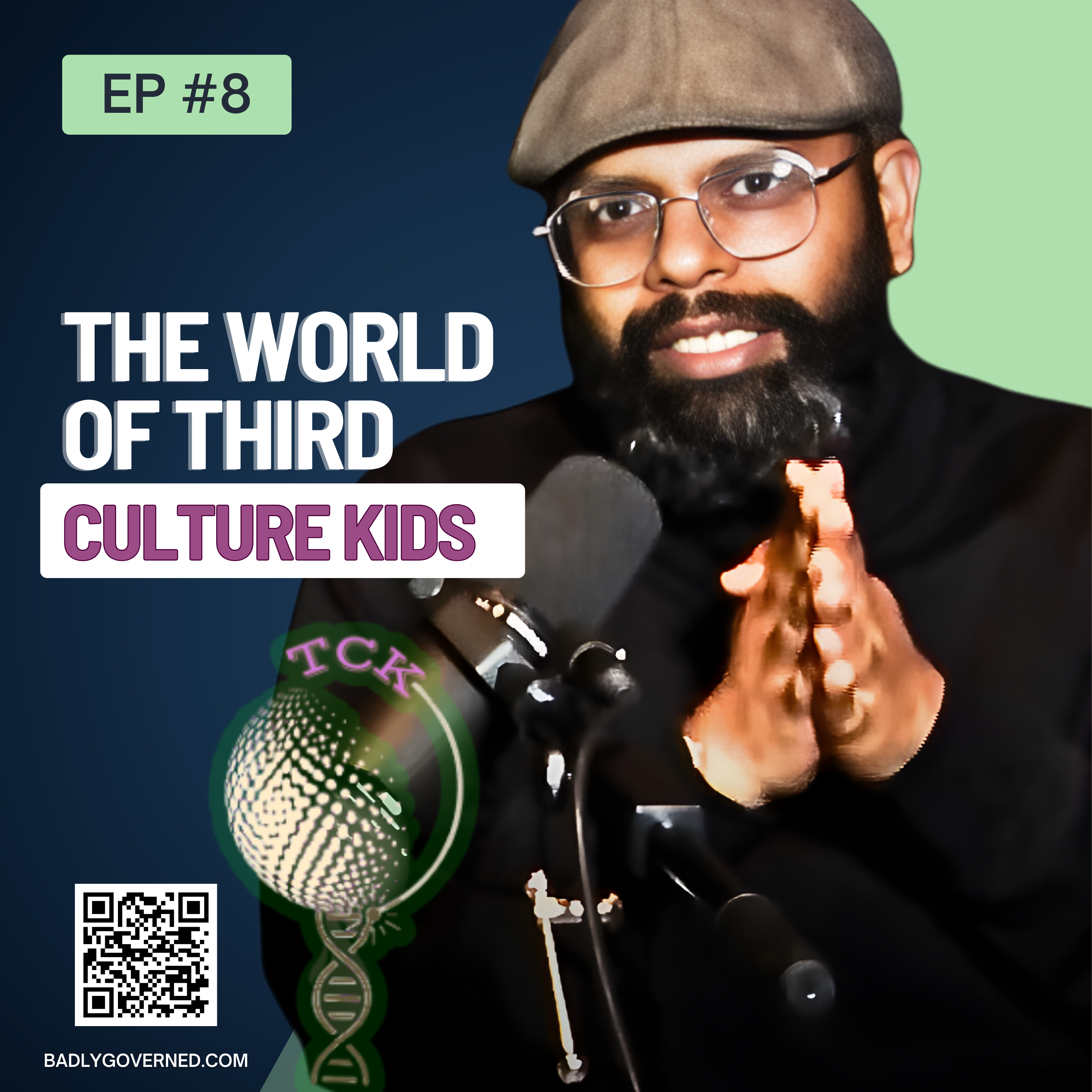
S1 Ep 8The World of Third Culture Kids - Reflection & Highlights
The World of the Third Culture Kid – BG Season 1 Episode 8 Reflection & HighlightsWhat does it mean to grow up everywhere and belong nowhere? In this episode of Badly Governed, we unpack the reality of Third Culture Kids (TCKs); children of immigrants, expats, diplomats, military and missionary families who are raised between cultures, countries, and identities.We dive into how life “in between” shapes identity, belonging, mental health, friendships, family dynamics, school, and self‑worth, and why so many TCKs struggle to answer a simple question: Where is home? Perfect for anyone navigating cross-cultural childhood, diaspora life, global mobility, or raising kids across borders.Hashtags: #ThirdCultureKids #TCK #Diaspora #ImmigrantChildren #GlobalMobility #CrossCultural #Identity #Belonging #MentalHealth #BadlyGovernedPodcast #BG #Church #MiddleEast #India Support “BG*:Donation: https://www.paypal.com/donate/?hosted...Buy something: https://lahensnet.creator-spring.com/ Resources for Third Culture Kids, their parents, and adult TCKs.Third Culture Kids: The Experience of Growing Up Among Worlds – David C. Pollock, Ruth E. Van Reken, Michael V. Pollock. https://www.tckidnow.com/resources/books/Belonging Beyond Borders – https://www.adultthirdculturekid.com/my-bookTCK Training – https://www.tcktraining.comTCKidNOW – https://www.tckidnow.comTCK Connect by Interaction International – https://interactionintl.org/programs/tck-connect/Third Culture Kids International (TCKI) – https://tcki.org/resources/TCK Resources – http://tckresources.comCredits:Host & Executive Producer: Lydje LahensProducer: Lydje LahensWriters: Lydje Lahens and Clyde D’MelloVideographer: Anthony SchultzDigital Copy Editor: Lydje LahensSocial Media Graphics & Management: Lydje Lahens & Dream BigWeb Developer: Lotin Enterprise (https://www.lotin.net)Video Editors & Shorts: KINGRIQUOSUAVEBranding: Zozimus Keywords:
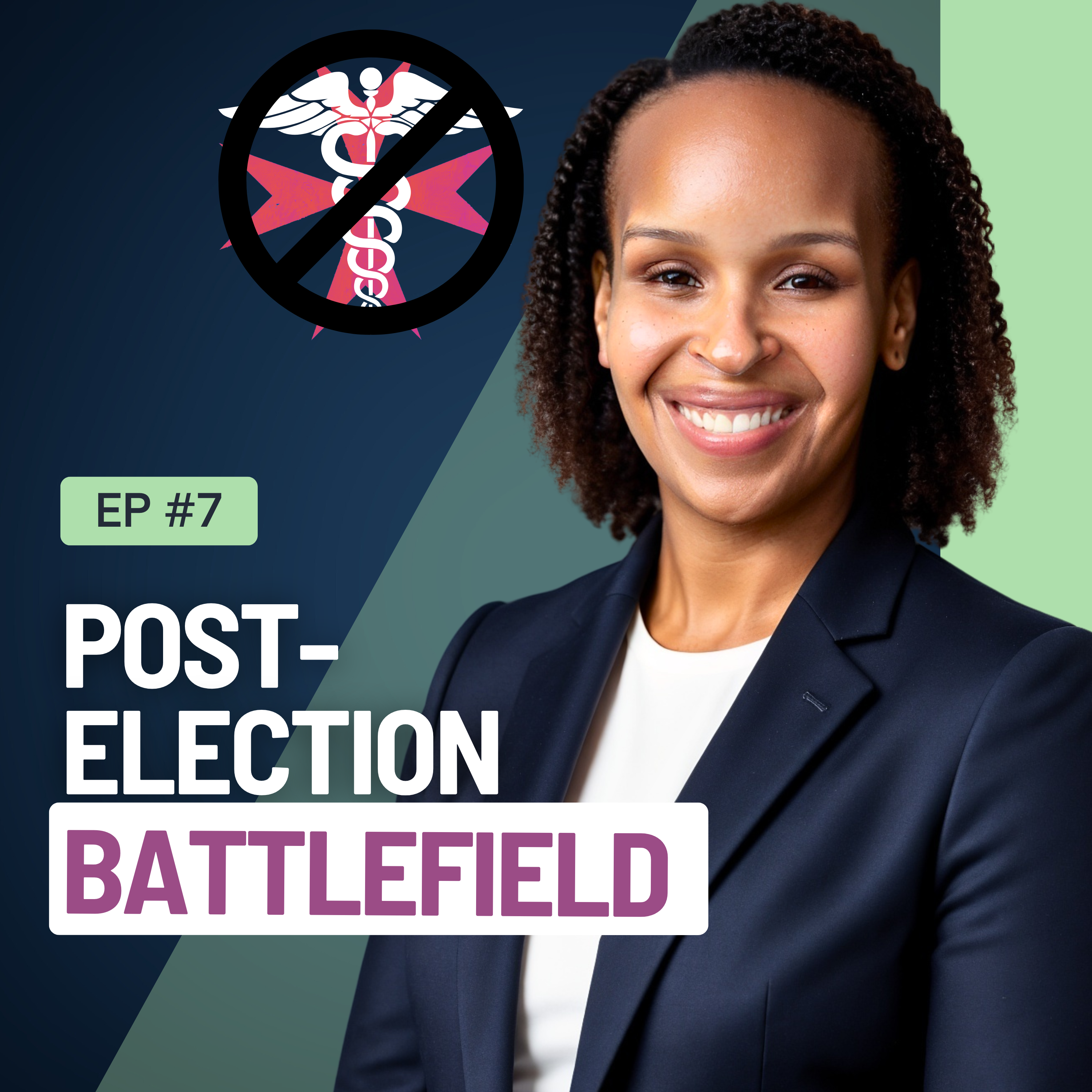
S1 Ep 7Healthcare in hostile times
Welcome to a new episode of "Badly Governed." In today's show, we dive into a critical conversation inspired by the 2024 U.S. election results and the timely book by Dr. Tiffany D. Joseph, "Not All In." This important book takes a close look at how race, immigration, and healthcare intersect, revealing the deep-rooted challenges that keep immigrant communities from getting fair healthcare, even with reforms. With a new president known for his anti-immigrant views, our chat with the author is set to be especially revealing. We'll discuss how today's political environment impacts these issues and what it means for immigrants nationwide. Get the book: https://www.press.jhu.edu/books/title/12819/not-all?srsltid=AfmBOoqmzIqhTpQE07WH7a9mU3RglztdTb4GQoW3N7SvSdk_vFmV3vFSBook Launch Party: RSVP: https://www.eventbrite.com/e/not-all-in-a-book-launch-with-professor-tiffany-joseph-tickets-1205021835749?aff=oddtdtcreator#PublicHealth #HealthEquity #PolicyMatters #ImmigrantRights #UndocumentedAndUnafraid #HealthcareForAll #NotAllIn #NoHumanIsIllegal #HealthForAll #EndHealthcareDiscrimination
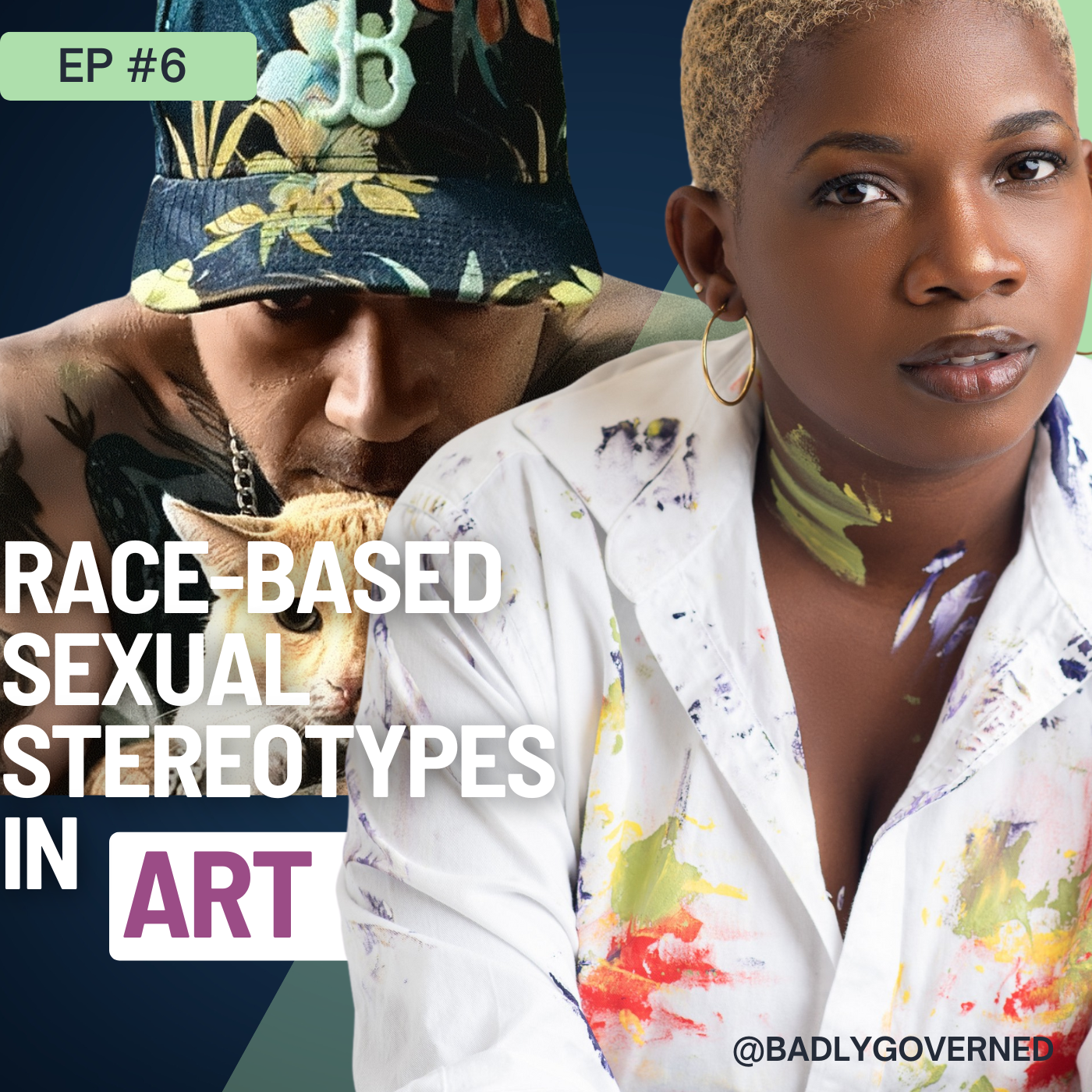
S1 Ep 6The Hidden Bias in American Art
In this episode of "Badly Governed," the focus is on social justice, specifically addressing the disparities in sexuality and representation of Black women in American art. Guests Allan Sousa, curator at Black Walls Gallery, and PHIA, a Boston-based multidisciplinary artist, join the discussion.Despite some progress, Black women remain significantly underrepresented in U.S. museums, contributing to harmful stereotypes like the Mammy, Jezebel, and Sapphire. These stereotypes distort the true experiences of Black women, leading to social exclusion and mental health challenges linked to discrimination.Black women artists are actively reclaiming their space and challenging these portrayals, but they still face considerable barriers. This conversation examines the impact of these disparities on social well-being, mental health, and cultural representation in the art world.ResourcesPilgrim, D. (2012). The mammy caricature. Ferris State University. Ferris State University. https://www.ferris.edu/jimcrow/mammies/YouTube Video: Black Feminist Thought by Patricia Hill Collins. https://www.youtube.com/watch?v=2teqoyPe3TU Jim Crow Museum. (n.d.). Jezebel Stereotype. Jim Crow Museum. Available at: https://www.ferris.edu/HTMLS/news/jimcrow/jezebel/index.htmBaptist News Global. (n.d.). Jezebel is one of three common racial slurs against all Black women and girls. Available at: https://baptistnews.com/article/jezebel-is-one-of-three-common-racial-slurs-against-all-black-women-and-girls/Springer. (2022). The Jezebel Stereotype. https://link.springer.com/referenceworkentry/10.1007%2F978-3-319-77827-6_620 • Jim Crow Museum. (n.d.). Sapphire Stereotype. Jim Crow Museum. https://www.ferris.edu/HTMLS/news/jimcrow/sapphire/index.htmSkeptic Ink. (2015). Mammy, Jezebel, Sapphire, or Queen: Stereotypes of the African American Female. http://www.skepticink.com/lateraltruth/2015/02/18/mammy-jezebel-sapphire-or-queen/Credits:Host & Executive Producer: Lydje LahensProducer: Lydje LahensWriters: Lydje Lahens, Alan Sousa, Sophia DubuissonVideographer: Anthony SchultzDigital Copy Editor: Lydje LahensSocial Media Graphics & Management: Lydje Lahens & Dream BigWeb Developer: Lotin Enterprise (https://www.lotin.net)Video Editors & Shorts: Luis Romero and Anthony SchultzBranding: ZozimusKeywords:#ArtAndIdentity#BreakingStereotypes#BlackWomenInArt#SocialJusticeInArt#RepresentationMatters#ReclaimingNarratives#ArtAndSexuality#MentalHealthThroughArt#DiverseArtVoices#ArtAgainstDiscrimination
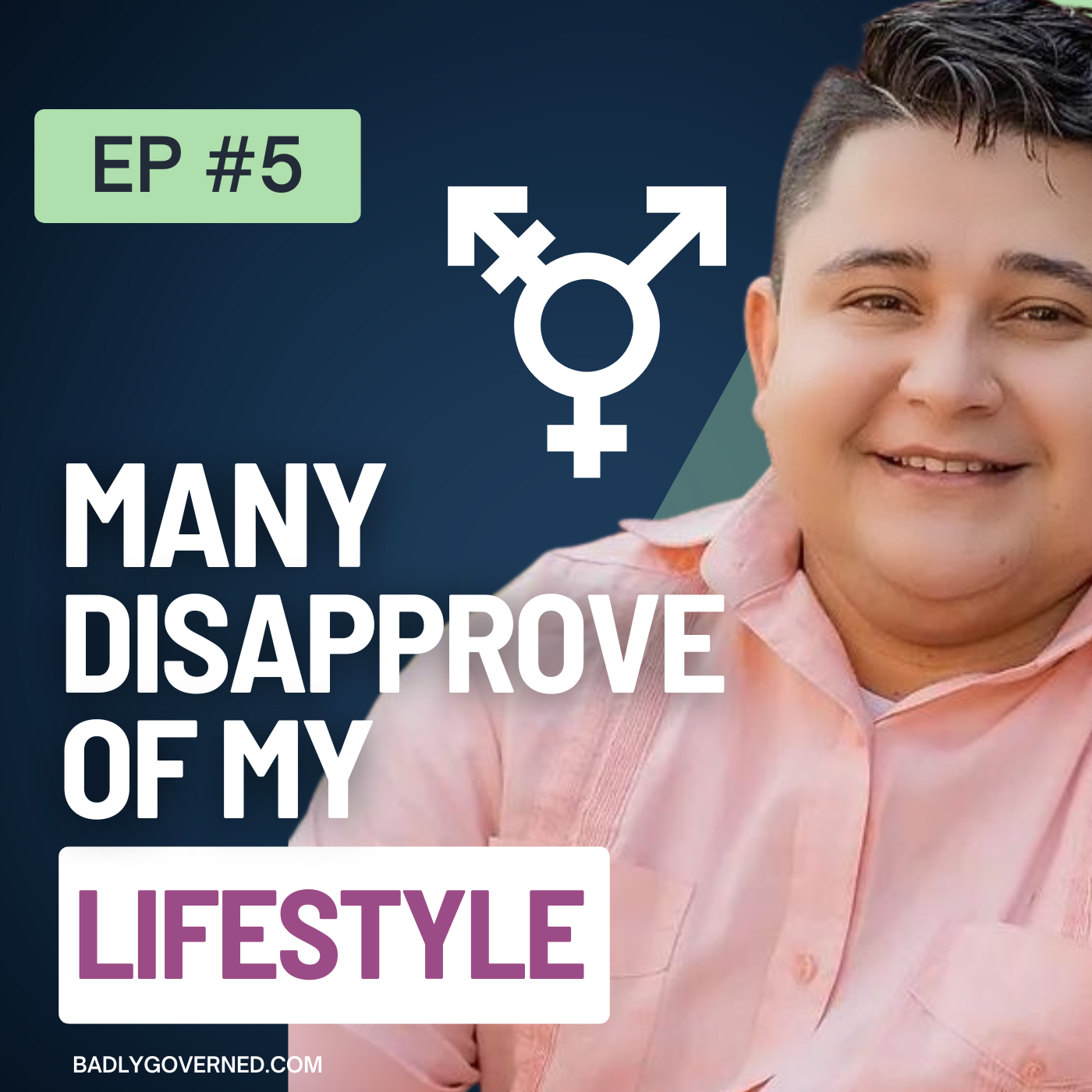
S1 Ep 5The Untold Truth of Trans-Cis Relations
We dive into the relationships between transgender and cisgender people. We're unpacking the challenges faced by nearly 1 in 5 individuals (NTDS, 2020; USTS, 2022) in various areas like healthcare, societal concerns, adverse childhood events (ACEs), and mental health.But we're not just throwing numbers at you. This episode is all about real stories and feelings. We're sharing personal experiences that highlight these communities' daily struggles and victories. We'll also explore how society and different life experiences shape this complex dynamic between transgender and cisgender groups.Join us on this journey to better understand what these folks go through. This podcast is all about creating empathy and opening up a conversation. We want to find solutions that make our world more inclusive for everyone. So, let's break down the walls together and build a community based on understanding, kindness, and unity. Because, in the end, it's about real people, their stories, and the connections that bind us all.References: Barbee, H., Deal, C., & Gonzales, G. (2022). Anti-Transgender Legislation-A Public Health Concern for Transgender Youth. JAMA pediatrics, 176(2), 125–126. https://doi.org/10.1001/jamapediatrics.2021.4483 https://www.ncbi.nlm.nih.gov/pmc/articles/PMC8955456/ https://www.plannedparenthood.org/learn/teens/all-about-sex-gender-and-gender-identity/what-do-transgender-and-cisgender-mean https://www.icpsr.umich.edu/web/RCMD/studies/37888 https://www.ustranssurvey.org/ Credits: Host & Executive Producer: Lydje Lahens Producer: Lydje Lahens Writers: Lydje Lahens & Damian Lima Videographer: Anthony Schultz Digital Copy Editor: Lydje Lahens Social Media Graphics & Management: Lydje Lahens & Dream Big Web Developer: Lotin Enterprise (https://www.lotin.net) Video Editors & Shorts: Luis Romero and Anthony Schultz Branding: Zozimus Keywords: #Transgender #Cisgender #LGBTQ+ #GenderIdentity #Diversity #Inclusion #Empathy #SocialJustice #HealthcareEquity #MentalHealthAwareness #AdverseChildhoodEvents #CommunityBuilding #HumanStories #PersonalExperiences #SocietalChallenges #Understanding #Kindness #Unity #Intersectionality #Advocacy #BreakingBarriers #Dialogue #Acceptance #Authenticity #NormalizeLGBTQExperiences
S1 Ep 4The health disparities in fibroids
Health and racial disparities in uterine fibroids or non-cancerous tumors are, unfortunately, quite prevalent. Research indicates that 80% of Black women are more likely to develop uterine fibroids by the age of 50 compared to White women. Not only are Black women more likely to be diagnosed with uterine fibroids at an earlier age, but they also tend to experience more severe symptoms and complications like heavy menstrual bleeding and fertility issues.Additionally, fibroids may cause more than physical pain – women with the condition also reported experiencing significant distress that negatively affected their quality of life, including depression, anxiety, body image issues, and their overall mental health. This psychological impact particularly affected black women in lower income brackets.The reasons for these disparities likely involve a complex interplay of genetic, environmental, and socioeconomic status. Some studies suggest disparities in healthcare access, including early detection and treatment, play an essential role. Therefore, addressing these disparities is essential to ensure equitable healthcare outcomes for all individuals.This public health issue is significant and has prompted a need for more community discussions and interventions promoting awareness, improving access to healthcare services, addressing clinician bias, eliminating structural determinants, and calling for more inclusive research free of scientific racism to understand better the underlying factors contributing to these disparities.In this episode of Badly Governed, Nagede Volcy White shares her experience living with uterine fibroids. Here we go! And remember, if you are not included, then chances are you are not represented.Keywords: #inclusive research, #Mental Health, #Health care access, #Uterine fibroids, #non-cancerous tumors, #ethnic minorities, #racial disparities, #severe symptoms, #quality of life, #socioeconomic status, #White counterparts, #White women, #Black women, #public health issue, #heavy bleeding, #scientific racism, #clinician bias, #reproductive health, #menstrual bleeding, #structural determinants, #ethnic minorities, #Lack of representation, #Black female GynecologistCredits:Host & Executive Producer: Lydje LahensProducer: Lydje LahensWriters: Lydje Lahens & Nadege V. WhiteVideographer: Anthony SchultzDigital Copy Editor: Lydje LahensSocial Media Graphics & Management: Lydje Lahens & Dream BigWeb Developer: Lotin Enterprise (https://www.lotin.net)Video Editors & Shorts: Luis Romero, Anthony Felice, Alex Kulikoff, and Anthony SchultzBranding: ZozimusReferences:Baird, D. D., Patchel, S. A., Saldana, T. M., Umbach, D. M., Cooper, T., Wegienka, G., & Harmon, Q. E. (2020). Uterine fibroid incidence and growth in an ultrasound-based, prospective study of young African Americans. American journal of obstetrics and gynecology, 223(3), 402-e1.Yu, O., Scholes, D., Schulze-Rath, R., Grafton, J., Hansen, K., & Reed, S. D. (2018). A US population-based study of uterine fibroid diagnosis incidence, trends, and prevalence: 2005 through 2014. American journal of obstetrics and gynecology, 219(6), 591-e1.
S1 Ep 3The demographic shift in Boston and our unprepared health and social systems.
The United States has experienced population growth across all races, with the Black population reaching 47.2 million in 2021, which is a 30% increase since 2000.The US Black population includes individuals who identify as Black alone or combined with other races and Hispanics or Latinos who identify as Black.In 2021, there were 4.8 million foreign-born Black Americans, representing 10% of the U.S. Black population. This is up from 2.4 million people, or 7%, in 2000.The median age of the U.S. Black population in 2021 was 33, five years younger than the overall US population. Around 30% of Black people were under 20, and 12% were 65 or older.The New York City metro area has the most Black residents, followed by Atlanta and Washington, D.C.In this episode of Badly Governed, Professor Leigh Kamore Haynes and Research Analyst Peter Ciurczak look at how the Black population is changing in major cities like Boston and the unpreparedness of our health and social systems.CREDITSHost & Executive Producer: Lydje LahensProducer: Lydje LahensWriters: Lydje Lahens, Leigh Kamore Haynes, and Peter CiurczakVideographer: Anthony SchultzDigital Copy Editor: Lydje LahensSocial Media Graphics & Management: Aunonto Islam & Dream BigWeb Developer: Lotin Enterprise (https://www.lotin.net)Video Editors: Luis Romero, Alex Kulikoff, and Anthony SchultzBranding: ZozimusRESOURCESBagley, A. (n.d.). Can Massachusetts overcome its cost and demographic headwinds to compete for talent?Bureau, U. C. (n.d.). National Black (African American) history month: February 2023. Census.Gov. https://www.census.gov/newsroom/facts-for-features/2023/black-history-month.htmlGreat migration to global immigration: A profile of Black Boston. (n.d.). https://bostonindicators.org/reports/report-detail-pages/great-migration-to-global-immigrationMitchell, T. (2019). Views of demographic changes. Pew Research Center’s Social & Demographic Trends Project. https://www.pewresearch.org/social-trends/2019/03/21/views-of-demographic-changes-in-america/Vespa, J., Medina, L., & Armstrong, D. M. (n.d.). Demographic Turning Points for the United States: Population Projections for 2020 to 2060. Population Estimates and Projections.MERCHSlahens.net (creator-spring.com)
S1 Ep 2Without a trace: The intersections of mental health, ghost guns, and communities of color.
As gun violence continues to ravage communities of color, the issue of ghost guns has become an increasingly pressing topic.Ghost guns are untraceable firearms that individuals can make using 3D-printing technology or kits containing the parts necessary to assemble a gun without serial numbers or registration information.The risk posed by these weapons is especially concerning in communities of color, as they can be disproportionately affected by the increased presence of these untraceable firearms, undermining community policing and gun violence prevention efforts.In this episode of Badly Governed, state representative Brandy Fluker Oakley and Assistant Professor of Psychology Brian T. Jones discuss the challenges of the epidemic of gun violence, but more precisely, Ghost guns and the threat they represent to communities of color.CREDITSHost & Executive Producer: Lydje LahensProducer: Lydje LahensWriters: Lydje Lahens, Brandy Fluker Oakley, and Brian T. JonesVideographer: Anthony SchultzDigital Copy Editor: Lydje LahensSocial Media Graphics & Management: Aunonto Islam & Dream BigWeb Developer: Lotin Enterprise (https://www.lotin.net)Video Editors: Luis Romero, Alex Kulikoff, and Anthony SchultzBranding: ZozimusRESOURCESA Definition: https://www.teamenough.org/what-are-ghost-gunsMA Bill HD4420: https://malegislature.gov/Bills/193/HD4420Summary of HD4420: Summary of HD4420, An Act Modernizing Firearm Laws (repmindydomb.com)Mental Health Provider: https://www.reimaginecounseling.com/Find Your Rep Here: https://malegislature.gov/Search/FindMyLegislatorMERCHSlahens.net (creator-spring.com)
S1 Ep 1Shattering stigmas: The heartbreaking truth about racial inequality in mental health.
The U.S. Mental Health System requires significant improvement. The system leaves many people and families facing challenges accessing resources and receiving treatment. Meanwhile, the rate of mental health disorders and suicide has significantly increased among Black and African American communities, leading to significant racial disparities for black families across the country. In this episode of Badly Governed, our guest speaker Coles Voyard joins us to discuss the increased suicide among black children, some systemic challenges parents face, and what needs to be done.CREDITSHost & Executive Producer: Lydje LahensProducer: Lydje LahensWriters: Lydje Lahens & Coles VoyardVideographer: Anthony SchultzDigital Copy Editor: Lydje LahensSocial Media Graphics & Management: Aunonto Islam & Dream BigWeb Developer: Lotin Enterprise (https://www.lotin.net)Video Editors: Luis Romero, Alex Kulikoff, and Anthony SchultzBranding: ZozimusMENTAL HEALTH RESOURCESNational Suicide and Crisis Lifeline: 988Youth.gov: https://youth.gov/youth-topics/youth-mental-healthGreater Boston Regional Suicide Prevention Coalition: https://www.greaterbostonpreventssuicide.org/youth-mental-healthYouth Mental Health Resources: https://ymhproject.org/resources/Mental Health Counseling: https://www.reimaginecounseling.com/The Milton Coalition: https://www.milton-coalition.org/mental-health-resourcesINSPIRATION“Mental health problems don’t define who you are. They are something you experience. You walk in the rain and you feel the rain, but, importantly, you are not the rain.” — Matt Haig “We would never tell someone with a broken leg that they should stop wallowing and get it together. We don’t consider taking medication for an ear infection something to be ashamed of. We shouldn’t treat mental health conditions any differently.” — Michelle Obama“If you are broken, you do not have to stay broken.” — Selena Gomez
Badly Governed Video Trailer
trailerThe Badly Governed podcast provides a platform for discussing issues related to corruption, lack of transparency, arbitrary policy-making, and dishonesty within systems of governance. Our approach involves collaborating with individuals from diverse backgrounds and perspectives, including community leaders and professionals in fields such as science, policy, and healthcare. Our goal is to encourage discussions about important societal issues related to the systems that impact our daily experiences. To suggest ideas for upcoming podcast episodes, please send an email to [email protected].