
Backyard Ecology™
119 episodes — Page 2 of 3

Ep 68Should you mow your meadow or pollinator planting?
Have you planted a meadow or pollinator planting on your property? Or, do you know someone or some place in your community that has one? If it's on your property then part of the recommended management for it may have been to mow it periodically. Or if it's not on your property then you may have driven by it only to see it being mowed or find that it had recently been mowed. If you're initial reaction was something along the lines of "Wh…What?!" "Wait!" "Stop!" "No" "Why?" or included feelings of confusion, sadness, anger, or frustration, then you aren't alone. In this episode of the Backyard Ecology podcast, we talk about why people mow meadows and larger pollinator plantings. We also talk about whether it is really necessary. The answers to both of those questions are rooted in the grassland and prairie ecosystems that meadows and larger pollinator plantings are often trying to replicate. Topics discussed in this episode include: Benefits of meadows and pollinator plantings: 2:15 Factors that create and maintain prairie and grassland ecosystems: 3:34 Ecological reasons why someone would mow or recommend mowing a meadow or pollinator planting and alternatives to mowing: 7:46 Recommendations for where to get local advice on managing your meadow or pollinator planting: 12:17 Philosophical discussion of natural succession and letting nature take its course: 13:52 I hope you've found this episode helpful and that it has encouraged you to think about things. If you're listening to this in January 2023, please don't forget to take our survey. Until next time, I encourage you to take some time to enjoy the nature in your yard and community. Related episodes: Grasslands and Grassland Birds of the Eastern U.S.: https://www.backyardecology.net/grasslands-and-grassland-birds-of-the-eastern-u-s/ A Conversation with Kyle Lybarger from the Native Habitat Project: https://www.backyardecology.net/a-conversation-with-kyle-lybarger-from-the-native-habitat-project/ Conserving our Southeastern Grasslands with Dwayne Estes: https://www.backyardecology.net/conserving-our-southeastern-grasslands-with-dwayne-estes/ Backyard Ecology Links: January 2023 Survey: https://forms.gle/ztJECiwWjPeU4Aes5 Website: https://backyardecology.net YouTube Channel: https://www.youtube.com/backyardecology Blog: https://www.backyardecology.net/blog/ Patreon page: https://www.patreon.com/backyardecology Make a one-time donation: https://www.paypal.com/biz/fund?id=K7F3HJLJT9F8N Subscribe to Backyard Ecology emails: https://www.backyardecology.net/subscribe/ Episode image: Native plants in a pollinator planting. Photo credit: USFWS Midwest Region, public domain

Ep 67Ecology Based Landscaping with Larry Weaner
Do you want your yard to benefit nature, while also being a place that speaks to you and is somewhere you enjoy spending time? Would you love for your yard to also be a place your neighbors admire and that inspires them to create pollinator and wildlife friendly landscapes? In this episode of the Backyard Ecology podcast, we talk with Larry Weaner about how to achieve both those goals. Larry is a Landscape Designer and the founder of Larry Weaner Landscape Associates and its educational affiliate, New Directions in the American Landscape, or NDAL. He is also the author of the book, Garden Revolution. According to Larry, ecology based landscaping or ecological landscaping takes into consideration where and how native plants naturally grow then adapts that knowledge to your property. The goal is to create a landscape that not only benefits nature, but is also a place that speaks to you and is somewhere you enjoy being. One of the topics that came up several times, and in several different ways, was how we connect and engage with a place. The place-based parts of our conversation included not only personal connections, but also community connections. Community connection is important because if our ecology based landscaping connects with our neighbors, then they may replicate some of those principles on their own properties, thus increasing the ecological benefits. Another topic that wove its way throughout our conversation was maintaining and managing our landscapes. This topic came up multiple times and in multiple ways. As Larry said, there probably isn't any such thing as a "no maintenance" landscape. Larry also talks about the biggest challenge he sees people face, especially when getting started. Larry is a wealth of knowledge when it comes to integrating ecological principles and landscape design. His approach is one that really resonates with me and has done so for several years. I encourage anyone who is interested in creating ecology based landscapes to read his book and look into his courses. Until next week, I encourage you to take some time to explore the nature in your own yard and community. Guest Links: New Directions in the American Landscape (NDAL): https://www.ndal.org/ Larry Weaner Landscape Associates: https://lweanerassociates.com/ Garden Revolution*: https://amzn.to/3Ckbp6F Backyard Ecology Links: January 2023 Survey: https://forms.gle/ztJECiwWjPeU4Aes5 Website: https://backyardecology.net YouTube Channel: https://www.youtube.com/backyardecology Blog: https://www.backyardecology.net/blog/ Patreon page: https://www.patreon.com/backyardecology One-time donation: https://www.paypal.com/biz/fund?id=K7F3HJLJT9F8N Subscribe to Backyard Ecology emails: https://www.backyardecology.net/subscribe/ Episode image: Red spotted purple on purple coneflower. Photo credit: USFWS Midwest Region, public domain

Ep 66Top 10 Most Popular Backyard Ecology Episodes: Thanksgiving 2021 – Thanksgiving 2022
Over the past year, we've had some amazing conversations with a variety of highly talented and passionate people. I am very grateful to them for sharing their enthusiasm and knowledge with us. What was your favorite episode of the year, and why? Please let us know in the comments. For today's episode, I'm going to quickly review the 10 most popular Backyard Ecology episodes that were published between Thanksgiving 2021 and Thanksgiving 2022. 10) 5 Late Summer Blooming Native Plants I Love: https://www.backyardecology.net/5-late-summer-blooming-native-plants-i-love/ (1:42) 9) Light Pollution and Its Impacts on Birds and Other Wildlife: https://www.backyardecology.net/light-pollution-and-its-impacts-on-birds-and-other-wildlife/ (2:38) 8) Getting the Community Involved in Creating Pollinator Habitat: https://www.backyardecology.net/getting-the-community-involved-in-creating-pollinator-habitat/ (3:56) 7) Grasslands and Grassland Birds of the Eastern U.S.: https://www.backyardecology.net/grasslands-and-grassland-birds-of-the-eastern-u-s/ (4:51) 6) Planting for Pollinators: https://www.backyardecology.net/planting-for-pollinators/ (6:00) 5*) Ask a Bumble Bee: What Flowers Do Bumble Bees Prefer?: https://www.backyardecology.net/ask-a-bumble-bee-what-flowers-do-bumble-bees-prefer/ (8:05) 4*) Are Larger Patch Sizes Better When Planting for Pollinators?: https://www.backyardecology.net/are-larger-patch-sizes-better-when-planting-for-pollinators/ (9:30) 3*) A Conversation with Kyle Lybarger from the Native Habitat Project: https://www.backyardecology.net/a-conversation-with-kyle-lybarger-from-the-native-habitat-project/ (10:49) 2) Attracting Ruby-Throated Hummingbirds to Your Yard: https://www.backyardecology.net/attracting-ruby-throated-hummingbirds-to-your-yard/ (11:58) 1) Gardening with Native Plants: https://www.backyardecology.net/gardening-with-native-plants/ (13:00) * Note: Numbers 3, 4, and 5 were essentially a 3-way tie. There were only 9 downloads separating numbers 3 and number 5. I listed them in the order that they were on the day that I looked at the stats. But I have no doubt that if I had looked at the numbers on a different day, then they could very easily have been in a different order. Bonus: A Glimpse into the Fascinating World of Cedar Glades: https://www.backyardecology.net/a-glimpse-into-the-fascinating-world-of-cedar-glades/ (14:47) I hope you enjoyed that review of the most popular episodes published between Thanksgiving 2021 and Thanksgiving 2022. Please help Backyard Ecology continue to grow by telling others about the Backyard Ecology blog, podcast, and YouTube Channel. I wish you the happiest of holiday seasons and until next week, I encourage you to take some time to explore the nature in your own yard and community. Links: Backyard Ecology website: https://backyardecology.net Backyard Ecology YouTube Channel: https://www.youtube.com/backyardecology Backyard Ecology blog: https://www.backyardecology.net/blog/ Backyard Ecology Patreon page: https://www.patreon.com/backyardecology One-time donation: https://www.paypal.com/biz/fund?id=K7F3HJLJT9F8N Subscribe to Backyard Ecology emails: https://www.backyardecology.net/subscribe/

Ep 65The Christmas Bird Count: An Over 120 Year Tradition
The Christmas Bird Count, also known as the CBC, began in 1900. For the past 122 years, volunteer birders of all ages and abilities have gathered together to conduct surveys of the birds found in their areas. The Christmas Bird Count is the longest running, community science or citizen science program in the U.S. and has spread to Canada and many other countries. The data collected through the Christmas Bird Count are extremely valuable and have been used in numerous scientific papers. Perhaps the most well recognized of those papers in recent years is the one published in 2019 citing the drastic decline in bird populations over the past roughly 50 years. In this episode of the Backyard Ecology podcast, we are joined by James Wheat. James is the President of the Kentucky Ornithological Society and the Regional Editor for the Christmas Bird Counts in Kentucky. During our conversation, James and I talk about what the Christmas Bird Count is and why it is so important. He also shares with us what happens on a Christmas Bird Count, who can participate (spoiler alert: anyone who enjoys birdwatching), how people can get involved, and some of his favorite CBC experiences. Just as a quick reminder, every week, I send a short email with links to the most recent Backyard Ecology blog article, podcast episode, and video, as well as, any other news of interest. It's the best way to make sure that you never miss anything in the Backyard Ecology world. You'll also get a free e-booklet as my gift to you when you join my email list. If you haven't signed up, then please do so using the link below. Until next week, I encourage you to take some time to enjoy the nature in your own yard and community. Related Links: James' email: [email protected] National Audubon's Christmas Bird Count webpage: https://www.audubon.org/conservation/science/christmas-bird-count Kentucky Ornithological Society's Christmas Bird Count webpage: https://www.birdky.org/annualcbc.php Backyard Ecology Links Website: https://backyardecology.net YouTube Channel: https://www.youtube.com/backyardecology Blog: https://www.backyardecology.net/blog/ Patreon page: https://www.patreon.com/backyardecology One-time donation: https://www.paypal.com/biz/fund?id=K7F3HJLJT9F8N Subscribe to Backyard Ecology emails: https://www.backyardecology.net/subscribe/ Episode image: Birdwatchers Photo credit: USFWS, public domain

Ep 64Thank You for Being Part of Backyard Ecology
The holiday seasons are upon us. This is often a time to gather with family and friends, give thanks, share memories, exchange gifts, and reflect both on what we have and what we hope to achieve in the coming year. I thought about skipping this episode completely since it will release on Thanksgiving Day and many of us will be involved with holiday activities. But then I decided that instead of skipping the episode, I wanted to take just a few minutes to express my gratitude. Backyard Ecology is now 2 years old. In that short time, it has grown from a blog, to a blog and podcast, and now a blog, podcast, and YouTube channel. I am eternally grateful for everyone who takes the time to read the blog articles, listen to the podcast episodes, or watch the videos. Thank you so much for allowing Anthony and I to share our love of nature with you. I am also thankful for those of you who share our content with others. Knowing that you find our articles, podcast episodes, and videos valuable enough to share with your own friends, family, and community members means a lot to us. Thank you also to those of you who take the time to reach out to us and share your own experiences and observations with us. We love hearing from you and your emails, stories, and questions help us stay inspired and dedicated to putting in the time required to produce all of the free content that we create. I also want to say an extra special thank you to our monthly supporters on Patreon because their contributions are extremely important and deserve to be recognized. I thank them at the beginning of each episode and on the website, but I really can't thank them enough. In addition to all of the time and energy Anthony and I invest in producing the Backyard Ecology content, there are also significant financial costs associated with purchasing the necessary equipment and software, paying the monthly fees for hosting the content, and more. Without the financial help of our Patrons, we probably wouldn't be able to continue producing the Backyard Ecology blog, podcast, and videos. We are extremely grateful to each of our Patrons and are honored that they believe so much in us and our message that they choose to help us make Backyard Ecology freely available to all of our readers, listeners, and viewers. As we gather around our holiday tables this season and think about the people and things that we are grateful for, please know that each member of the Backyard Ecology audience is in my heart. Thank you for being a part of that audience and for allowing us to be a part of your life. Until next week, don't forget to take some time to enjoy the nature in your own yard and community. Note: If you would like to help support Backyard Ecology you can make a one-time donation or join our Patrons in making a monthly donation for less than the cost of a cup of coffee or a meal at your favorite fast food place. Links to do so can be found below. Links: Backyard Ecology Website: https://backyardecology.net Backyard Ecology YouTube Channel: https://www.youtube.com/backyardecology Backyard Ecology Blog: https://www.backyardecology.net/blog/ Backyard Ecology Patreon page: https://www.patreon.com/backyardecology One-time donation: https://www.paypal.com/biz/fund?id=K7F3HJLJT9F8N Subscribe to Backyard Ecology emails: https://www.backyardecology.net/subscribe/

Ep 63Fascinating Wasp Diversity
Wasps are often portrayed as one of "the bad guys" in the insect world. But part of that common misconception comes from a lack of knowledge or understanding about wasps in general and stereotypes that don't apply to most wasp species. The truth is that wasps are extremely diverse and what most of us think of when we think of a "wasp" makes up only the tiniest percentage of all wasps out there. In fact, there are likely many different species of wasps that haven't even been identified yet. And wasps play an extremely important role in the ecosystem – one that is often overlooked and not well-understood. In this episode of the Backyard Ecology podcast, we are joined by Louis Nastasi who is a self-proclaimed ambassador for wasps. Louis is a PhD candidate at Penn State's Frost Entomological Museum which is Penn State's research collection of insects and other arthropods. He also founded and is one of the instructors for the Wasp ID Course, which will have its second session in January 2023. During our conversation, Louis and I dive into the fascinating diversity of wasps, especially parasitoid wasps, and their vital roles in the ecosystem. Louis believes that a lot of the misconceptions around wasps are due to a lack of recognition of just how diverse wasps are. Contrary to popular belief, most wasps aren't capable of stinging people and many are the size of a speck of dust. Like with the first episode that Louis was on, our conversation takes many twists and turns. We talk a lot about parasitoid wasps and just how amazing it is that many of these parasitoid relationships developed in the first place. (One of the wasps we talk about lays its eggs in diving beetle eggs which are found underwater!) We also discuss how much we don't know about these species and how much there is still to learn. But through it all, Louis's passion for wasps and wasp education shines through. Links: Louis's contact info: Email: [email protected] Twitter: https://twitter.com/toomanywasps Wasp ID Course Website: https://WaspIDCourse.WordPress.com/ Twitter: @WaspIDCourse https://twitter.com/WaspIDCourse/ Email: [email protected] Other Resources: Forbes, A.A., Bagley, R.K., Beer, M.A. et al. Quantifying the unquantifiable: why Hymenoptera, not Coleoptera, is the most speciose animal order. BMC Ecol 18, 21 (2018). https://link.springer.com/article/10.1186/s12898-018-0176-x Wasps: Their Biology, Diversity, and Role as Beneficial Insects and Pollinators of Native Plants [hardcover] Heather N. Holm February, 2021 * : https://amzn.to/3fMZAho Wasp related video clips (including the fairy wasp one) from Life in the Undergrowth hosted by David Attenborough: Underwater wasps: https://www.bbc.co.uk/programmes/p003lcxg Oak Tree and Wasp Eggs: https://www.youtube.com/watch?v=CzXccvoJThI Paper colony: https://www.bbc.co.uk/programmes/p003lcxv Life in the Undergrowth hosted by David Attenborough (Full Documentary)*: https://amzn.to/3zYkGQU Related Backyard Ecology Resources: Galls: Amazingly Diverse and Fascinating Plant Growths: https://www.backyardecology.net/galls-amazingly-diverse-and-fascinating-plant-growths/ American Pelecinid Wasp: A Unique and Fascinating Critter: https://www.backyardecology.net/american-pelecinid-wasp-a-unique-and-fascinating-critter/ Wasps: Victims of an Often Undeserved Reputation: https://www.backyardecology.net/wasps-victims-of-an-often-undeserved-reputation/ Four-toothed Mason Wasp: https://www.backyardecology.net/four-toothed-mason-wasp/ Cicada Killers: Not as Menacing as They Appear: https://www.backyardecology.net/cicada-killers/ Eastern Red Velvet Ants: Doesn't Kill Cows and Isn't an Ant: https://www.backyardecology.net/eastern-red-velvet-ants-doesnt-kill-cows-and-isnt-an-ant/ Backyard Ecology Website: https://backyardecology.net YouTube Channel: https://www.youtube.com/backyardecology Blog: https://www.backyardecology.net/blog/ Patreon page: https://www.patreon.com/backyardecology Subscribe to Backyard Ecology emails: https://www.backyardecology.net/subscribe/ Episode image: A species of Ichneumon wasp, one of our many parasitoid species. Photo credit: USFWS Midwest Region, public domain

Ep 62Monarch Butterflies and OE (Ophryocystis elektroscirrha)
Monarch butterflies have become an increasingly hot topic in recent decades, and especially in the last couple of years. Conversations about monarchs often revolve around topics like their migrations, the importance of milkweeds, or other flowers we can plant for monarchs. Rarely do the topics of monarch health or monarch diseases come up. Yet these can also be fascinating and important topics to learn about and discuss. In this episode of the Backyard Ecology podcast, we are joined by Dr. Sonia Altizer and Kade Donaldson. Sonia is a Professor of Ecology at the University of Georgia and Kade is the Project Manager for Monarch Health which is a community science project based out of the University of Georgia. Most of our conversation revolves around the tiny protozoan, Ophryocystis elektroscirrha, more commonly referred to by its initials: OE. OE is a parasite of monarch butterflies that has been interacting with monarchs for the past several centuries, at least, and likely for almost as long as there have been monarchs. However, over the last couple of decades, something has changed. OE has gone from being relatively rare to infecting very high percentages of some monarch populations. Exactly what has changed is still a topic of ongoing research, but the increased prevalence of OE appears to correlate to changes in human activities. The goal, therefore, is to determine what has changed and find ways to keep OE from spreading any more than it would naturally spread. One of the ways that OE infections are being studied is through Project Monarch Health. Project Monarch Health is a community science project that asks members of the public to help document OE infections throughout the country. Anyone can participate in this project which is based out of the University of Georgia, and we talk about Project Monarch Health quite a bit during our conversation. Other topics that we discussed are some of the common questions they get through Project Monarch Health. Those questions include ways people can help monarch butterflies and inquiries about raising monarchs. We also talked about how monarchs are only one part of the larger ecosystem. Protecting and conserving monarchs can also help lots of other organisms, but we need to be careful not to get so focused on monarchs that we lose sight of the big picture. Links: Project Monarch Health: Email: [email protected] Website: https://www.monarchparasites.org Facebook: https://www.facebook.com/ProjectMonarchHealth Instagram: https://www.instagram.com/projectmonarchhealth/?hl=en Other monarch-related Backyard Ecology content: Monarch vs Viceroy - Easy Identification Sitting or Flying: https://www.youtube.com/watch?v=zL5RJokLhp4 Everything You Need to Know about the IUCN Listing of the Monarch Butterfly: https://www.backyardecology.net/everything-you-need-to-know-about-the-iucn-listing-of-the-monarch-butterfly/ Diversity Matters When Gardening for Monarchs: https://www.backyardecology.net/diversity-matters-when-gardening-for-monarchs/ Plant Multiple Species of Native Milkweeds for Monarch Caterpillars: https://www.backyardecology.net/plant-multiple-species-of-native-milkweeds-for-monarch-caterpillars/ What does the endangered species ruling for the monarch butterfly really mean?: https://www.backyardecology.net/what-does-the-endangered-species-ruling-for-the-monarch-butterfly-really-mean/ Milkweeds in Urban and Suburban Monarch Waystations with Dr. Adam Baker: https://www.backyardecology.net/milkweeds-in-urban-and-suburban-monarch-waystations-with-dr-adam-baker/ Plant Taller Milkweed Species for Monarchs: https://www.backyardecology.net/plant-taller-milkweed-species-for-monarchs/ Backyard Ecology: Website: https://backyardecology.net YouTube Channel: https://www.youtube.com/backyardecology Blog: https://www.backyardecology.net/blog/ Patreon page: https://www.patreon.com/backyardecology Subscribe to Backyard Ecology emails: https://www.backyardecology.net/subscribe/ Episode image Male monarch butterfly Photo credit: Sonia Altizer, all rights reserved
Ep 615 Native Plants that Bloom in the Late Fall
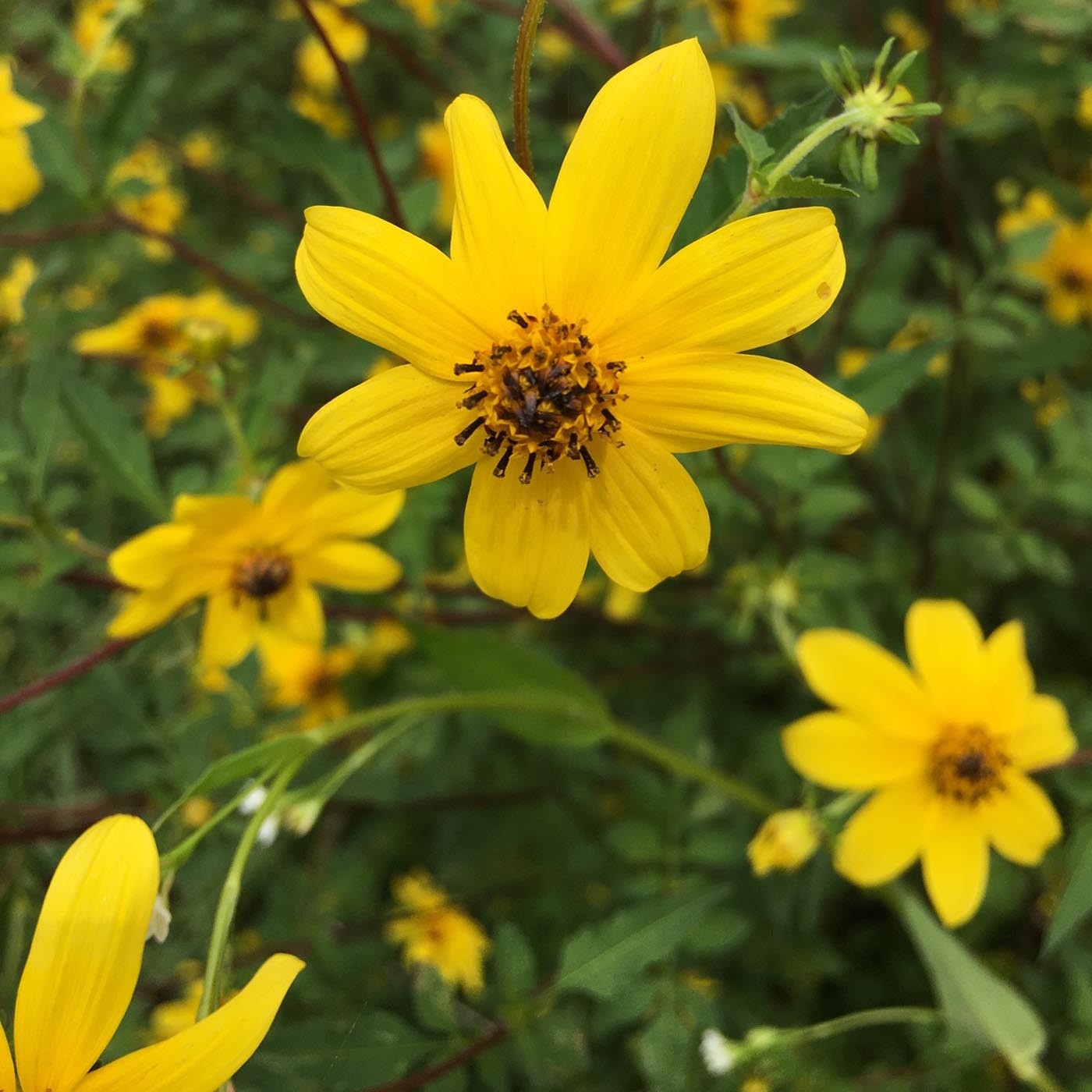
One of the most common pieces of advice given related to pollinator gardening is to try and have a constant supply of blooms available throughout the growing season. That's easy in the spring. The summer is a little more challenging than the spring, but is still relatively easy. Even early fall isn't too bad thanks to the goldenrods, ironweeds, and other fall flowers. It's the shoulder seasons that are the most challenging for providing flowers for pollinators. By shoulder seasons I mean the late winter / early spring and the late fall / early winter. For me, that typically corresponds to February / March and October / November. Your shoulder seasons may occur at slightly different times depending on how far north or south you live and your elevation. One of the reasons that the shoulder seasons are difficult is because the weather is so crazy at that time. Most flowers just can't take the cold temps, frosts, and freezes that are often associated with the shoulder seasons. However, there are a few native plants that can handle the crazy weather of the shoulder seasons. I'm recording this in October, so I'm going to focus on native plants that bloom in the late fall /early winter shoulder season, or the October / November time period. On a side note, if the weather is good, many of our goldenrods, white fall asters, thoroughworts, and other fall flowers will bloom well into October. However, most of those flowers will be killed off with the first good frosts. The native plants that I'm focusing on in this episode are the ones that typically don't start blooming until around October and that can survive those first frosts after most of the earlier blooming fall flowers are gone. To make it easier for you to refer back to particular parts of the podcast, here are the plants and the time I start talking about each: American witch hazel (Hamamelis virginiana): 4:39 Short's aster (Symphyotrichum shortii) and Wavy leaf aster (Symphyotrichum undulatum): 8:05 Tickseed sunflower (Bidens aristosa): 12:24 American mistletoe (Phoradendron leucarpum): 15:03 Links: Relevant Backyard Ecology blog articles and podcast episodes: American Witch Hazel: The Last Flowers of the Year: https://www.backyardecology.net/american-witch-hazel-the-last-flowers-of-the-year/ Short's Aster: https://www.backyardecology.net/shorts-aster/ Wavy leaf aster – A late feast for pollinators: https://www.backyardecology.net/wavy-leaf-aster-a-late-feast-for-pollinators/ American Mistletoe – A Holiday Plant Enjoyed by Pollinators and Wildlife: https://www.backyardecology.net/american-mistletoe-a-holiday-plant-enjoyed-by-pollinators-and-wildlife/ Remember the Shoulder Seasons when Planting for Pollinators: https://www.backyardecology.net/remember-the-shoulder-seasons-when-planting-for-pollinators/ 5 Fall Blooming Native Plants I Love: https://www.backyardecology.net/5-fall-blooming-native-plants-i-love/ Busy Bee Nursery and Consulting: https://busybeenurseryandconsulting.com/ Backyard Ecology Website: https://backyardecology.net Backyard Ecology YouTube Channel: https://www.youtube.com/backyardecology Backyard Ecology Blog: https://www.backyardecology.net/blog/ Backyard Ecology Patreon page: https://www.patreon.com/backyardecology Subscribe to Backyard Ecology emails: https://www.backyardecology.net/subscribe/ Episode image: Tickseed sunflowers Photo credit: Becky, cc-0

Ep 60Galls: Amazingly Diverse and Fascinating Plant Growths
Have you ever found a leaf with weird little balls or spiky things attached to it? Or found a plant with a weird growth on its stem or a dense clump of leaves growing out of an odd place? Chances are those were galls. Going into this conversation, I knew a little bit about galls, but not much. However, what I knew was pretty interesting. So I wanted to learn more, and I thought you might be interested in learning more about them too. My mind was almost instantly blown. Galls are so much more diverse, interesting, and amazing than I ever dreamed of. Louis Nastasi joined me for this conversation. Louis is a PhD candidate at Penn State's Frost Entomological Museum which is Penn State's research collection of insects and other arthropods. His research is looking at gall wasps in prairie plants, particularly Silphiums, of the Midwest. At its most basic level, a gall is a piece of plant tissue that has been modified by the activity of another organism. However, in reality, galls are so much more than that implies. They can be formed by a variety of different organisms, although most of the ones we think about and encounter are formed by different types of insects. They can also be found in a variety of different places on the plant, including hidden inside the stem in such a way that you would never know it was there unless you cut the stem open. Louis and my conversation touches on all kinds of topics related to galls. We start out talking a little about what galls are and the types of organisms that can form them, then focus more on insect-induced galls. From there our conversation covers topics like why insects might choose to form a gall in this plant over that plant, the importance of galls and the ecosystem, and how little we actually know about galls. This was a really fun and educational conversation. I learned so much and am completely intrigued. I could have kept discussing and learning more about galls for much longer because they are so much more complex and interesting than I realized. I hope you find the conversation as interesting and educational as I did. I also encourage you to check out the resources that Louis shared with us. Links: Louis's contact info: Email: [email protected] Twitter: https://twitter.com/toomanywasps Louis's wasp I.D. course: https://waspidcourse.wordpress.com An example of a new state record of a gall wasp that was posted on i-Naturalist: https://www.inaturalist.org/observations/117815477 Field Guide to the Herb and Bramble Gall Wasps of North America by Louis F Nastasi and Charles K Davis: https://scholarsphere.psu.edu/resources/1acfec30-7e4d-4130-98f5-46ab75972e08 Other resources Louis recommends: Gall Formers: https://gallformers.org/ Gall wasp page on BugGuide: https://bugguide.net/node/view/14878 i-Naturalist: https://inaturalist.org/ Related Backyard Ecology articles and episodes: The Goldenrod Gall Fly: An Insect with a Fascinating Life History and Valuable Role in the Ecosystem: https://www.backyardecology.net/the-goldenrod-gall-fly-an-insect-with-a-fascinating-life-history-and-valuable-role-in-the-ecosystem/ An Introduction to iNaturalist with Maddy Heredia: https://www.backyardecology.net/an-introduction-to-inaturalist-with-maddy-heredia/ Backyard Ecology Website: https://backyardecology.net Backyard Ecology YouTube Channel: https://www.youtube.com/backyardecology Backyard Ecology Blog: https://www.backyardecology.net/blog/ Backyard Ecology Patreon page: https://www.patreon.com/backyardecology Subscribe to Backyard Ecology emails: https://www.backyardecology.net/subscribe/ Episode image: A gall on a leaf. Photo credit: Andy Deans, all rights reserved

Ep 59Planting for Pollinators
One of the most common questions I get is, "What should I plant for pollinators?" As you'll hear in today's conversation, I'm not the only one who frequently gets that question. It's probably the most common question asked of anyone who promotes pollinator gardening. Unfortunately, there isn't a simple answer to that question because lots of different factors go into determining the best plants for any given area or situation. However, research into this topic can give us clues as to what plants might be good ones to consider for our own gardens. In this episode, we are joined by Dr. Laura Russo. Laura is an Assistant Professor of Ecology and Evolutionary Biology at the University of Tennessee. She and her colleagues have been studying interactions between native plants and flower visiting insects. They recently published a report evaluating pollinator preferences of 18 different native plants in garden settings. Laura and my conversation covers, not only some of the findings of the study, but also the complexities that go into conducting scientific research like this. There's a lot more to it than simply planting a garden and seeing what visits the flowers. Recognizing those complexities can help us understand why this type of work is so important and why research related to planting for pollinators isn't done as often or cover as many species as many of us might like. Obviously, with only 18 different species in the study, there are a lot of species that were left out of the study. So, another one of the topics we talked about was their reasons for picking the species they picked for the study. We also discussed the importance of taking into account the gardener's preferences, as well as, the pollinators' preferences when planting for pollinators around our homes. No project can ever test every single flowering plant out there under every single condition possible, but research like what Laura and her colleagues are doing is still really important. And you don't have to live in east Tennessee for this research to be valuable, especially when you look at this research in conjunction with similar research from other areas. By looking at projects from a variety of locations, patterns can emerge, such as a genus that is consistently popular among flower visiting insects. These patterns can give us hints as to generalizations that we can make and point us in potential directions to go in the absence of exhaustive research in our exact location. Links: Planting for Pollinators in East Tennessee: https://extension.tennessee.edu/publications/Documents/W1095.pdf Backyard Ecology Website: https://backyardecology.net Backyard Ecology YouTube Channel: https://www.youtube.com/backyardecology Backyard Ecology Blog: https://www.backyardecology.net/blog/ Backyard Ecology Patreon page: https://www.patreon.com/backyardecology Subscribe to Backyard Ecology emails: https://www.backyardecology.net/subscribe/ Episode image: A leafcutter bee on a yellow wild indigo (Baptisia tinctoria) flower Photo credit: Laura Russo, all rights reserved

Ep 58Tips and Resources for Identifying Plants
We've all been there. We are walking in the woods, in a field, along a creek bank, around our property, or around the local park and we stumble upon an interesting plant. It isn't one that we know and we immediately begin to wonder, "what is that?" It's a simple question that holds so much potential because once we know what the plant is, we can find out more about it. The plants we find growing in a location can also help tell fascinating stories about the history of that area, provide hints as to the types of animals or even other plants that might also be found there, and so much more. But it all starts with being able to accurately identify the plant. In today's episode, I am joined by my husband, Anthony Trimboli. Anthony and I discuss some of the reasons why identifying plants you find can be important and some of the resources you can use for identifying plants (including pros and cons of each resource). We also share some of the things we look at when we are identifying plants. To make it easier for you to refer back to particular parts of the podcast, here is a rough outline of our conversation and the times we start discussing each topic. Importance of identifying plants: 1:34 Apps: 5:05 Field guides: 18:45 Dichotomous keys: 28:00 Building your own knowledge: 35:53 Summary: 1:01:46 Links Woody Plants in Winter: A Manual of Common Trees and Shrubs in Winter in the Northeastern United States and Southeastern Canada:https://amzn.to/3q50Yxf * Flora of the Southeastern United States by Alan Weakley: https://ncbg.unc.edu/research/unc-herbarium/flora-request/ Shannon and Anthony's upcoming classes / workshops: https://shannontrimboli.com/events/category/classes/ Backyard Ecology Website: https://backyardecology.net Backyard Ecology YouTube Channel: https://www.youtube.com/backyardecology Backyard Ecology Blog: https://www.backyardecology.net/blog/ Backyard Ecology Patreon page: https://www.patreon.com/backyardecology Subscribe to Backyard Ecology emails: https://www.backyardecology.net/subscribe/ Episode image: Woodland sunflower Photo credit: USFWS, public domain

Ep 575 Fall Blooming Native Plants I Love
Fall is an extremely important time for pollinators, so having plenty of flowers available at this time of year is crucial if one of your goals is to attract pollinators. Luckily, there are lots of fall blooming, native plants that you can grow in your gardens. In the last Backyard Ecology podcast episode I talked about five late summer blooming native wildflowers that I love. Lots of people contacted me and said that they loved the episode and would like to hear more of my favorites. So, this time I thought I would share five of the fall blooming native plants that I love. I'm loosely defining fall as August through October. And just like last time, I'm not saying these are "the best native plants" to include in your pollinator garden. Because the best native plants for your yard and your goals, may not be the same plants that would be best for my yard, your neighbor's yard, or for someone in a different state. These are simply a few of the many native plants that I love which bloom in the fall, that the pollinators love, that songbirds love, and which work well in a garden setting. You'll have to decide if they are right for you or not. I'm also defining native as native to my area, which means you'll have to double check whether these plants are native to where you live. To make it easier for you to refer back to particular parts of the podcast, here are the plants and the time I start talking about each: Sunflowers (Helianthus spp.): 2:17 Ironweeds (Vernonia spp.): 5:54 Joe-pye weeds (Eutrochium spp.): 7:32 Devil's walking stick (Aralia spinosa): 11:40 Asters (Symphyotrichum spp.): 14:47 Links: Relevant Backyard Ecology blog articles about the plants I talk about: Rough sunflower: https://www.backyardecology.net/rough-sunflower/ Tall Ironweed: A Beautiful Source of Fall Nectar and Pollen: https://www.backyardecology.net/tall-ironweed-a-beautiful-source-of-fall-nectar-and-pollen/ Joe-pye weed: https://www.backyardecology.net/joe-pye-weed/ Devil's walking stick: https://www.backyardecology.net/devils-walking-stick/ New England Aster: A Beautiful and Diverse Native Wildflower: https://www.backyardecology.net/new-england-aster-a-beautiful-and-diverse-native-wildflower/ Wavy leaf aster – A late feast for pollinators: https://www.backyardecology.net/wavy-leaf-aster-a-late-feast-for-pollinators/ Short's aster: https://www.backyardecology.net/shorts-aster/ 5 Late Summer Blooming Native Plants I Love: https://www.backyardecology.net/5-late-summer-blooming-native-plants-i-love/ Busy Bee Nursery and Consulting: https://busybeenurseryandconsulting.com/ Backyard Ecology Website: https://backyardecology.net Backyard Ecology YouTube Channel: https://www.youtube.com/backyardecology Backyard Ecology Blog: https://www.backyardecology.net/blog/ Backyard Ecology Patreon page: https://www.patreon.com/backyardecology Subscribe to Backyard Ecology emails: https://www.backyardecology.net/subscribe/ Episode image: Monarch butterfly on New England Asters Photo credit: USFWS, public domain

Ep 565 Late Summer Blooming Native Plants I Love
Late summer is often thought of as a challenging time for gardening. It's hot, it's humid, we may or may not be getting regular rainfall, and there are often lots of other summertime activities competing for our attention. But if our goal is to plant for pollinators and wildlife, then it is important to make sure we have plenty of plants blooming at this time of year too. In this episode of the Backyard Ecology podcast, I share some of the native plants that I love and why I love them so you can decide if they are right for you. All of these plants bloom in the July / August time frame, attract lots of pollinators, and have a large native range that includes Kentucky. You'll have to look up the plant to see if it is native to where you live. I'm not saying these are the "best native plants to plant," because there is no way for me to know if these are the best plants for you without talking to you and learning more about your property and goals. These are simply some of the native plants I love and are in no particular order because my "favorite" has a tendency to change based on which one I'm looking at and what pollinators I'm thinking about. To make it easier for you to refer back to particular parts of the podcast, here are the plants and the time I start talking about each: Purple coneflower (Echinacea purpurea): 3:22 Black-eyed Susan (Rudbeckia hirta): 5:43 Mountain mints (Pycnanthemum sp.): 9:22 Goldenrods (Solidago sp.): 12:51 Cup plant (Silphium perfoliatum): 17:22 Links Relevant Backyard Ecology blog articles about the plants I talk about: Purple Coneflower: https://www.backyardecology.net/purple-coneflower/ Black-eyed Susan: A favorite nectar source for butterflies: https://www.backyardecology.net/black-eyed-susan-a-favorite-nectar-source-for-butterflies/ Slender Mountain Mint: https://www.backyardecology.net/slender-mountain-mint/ Sweet Goldenrod: https://www.backyardecology.net/sweet-goldenrod/ Goldenrods: https://www.backyardecology.net/goldenrods/ Cup plant: https://www.backyardecology.net/cup-plant/ Wasps: Victims of an Often Undeserved Reputation: https://www.backyardecology.net/wasps-victims-of-an-often-undeserved-reputation/ Busy Bee Nursery and Consulting: https://busybeenurseryandconsulting.com/ Backyard Ecology Website: https://backyardecology.net Backyard Ecology YouTube Channel: https://www.youtube.com/backyardecology Backyard Ecology Blog: https://www.backyardecology.net/blog/ Backyard Ecology Patreon page: https://www.patreon.com/backyardecology Subscribe to Backyard Ecology emails: https://www.backyardecology.net/subscribe/ Episode image: Eastern tiger swallowtails on cup plant flowers Photo credit: Shannon Trimboli, all rights reserved

Ep 55Getting the Community Involved in Creating Pollinator Habitat
I often hear comments or questions such as, "I do what I can in my yard, but I wish more people in my community would plant pollinator gardens." Or, "What can I do to get my community involved and to make my community more pollinator friendly?" It can feel overwhelming and like there isn't anything we can do beyond our own individual space. But, sometimes all it takes is one person to step forward, raise their hand, and say "This is important. I can take the lead, but I can't do it on my own. Who wants to help?" In many ways, that's what happened in Bexley, Ohio. Today we are talking to Rebecca Ness. Rebecca is the Vice Chair of the Environmental Sustainability Advisory Council in Bexley, Ohio. She is also the Chair of Love Your Alley, which is a local program that encourages community involvement in creating pollinator habitat. Rebecca and I discuss how the pollinator habitat emphasis for the Love Your Alley program came about, program successes, challenges, and lessons learned. I love how the Love Your Alley Program is bringing the community of Bexley, Ohio together in so many different ways. The program seems like it is a win, not only for their local pollinators, but also for the people who participate in the program. I also think that the Love Your Alley program can serve as an example, or case study, for people who would like to do something similar in their own community or neighborhood. It is my hope that this conversation will help you gain insights on ways to get your community or neighborhood involved with creating pollinator habitat. Or, at least provide encouragement from knowing that it can be done and that there are others who are not only doing it but are willing to share their experiences. Links Love Your Alley Resources Webpage: https://bexley.org/loveyouralley/ Facebook page: https://www.facebook.com/LoveYourAlley Private Facebook group: https://www.facebook.com/groups/1519015388490244 Bexley's Mosquito Management Pilot Program: https://bexley.org/mosquitopilot/ Backyard Ecology Resources: Website: https://backyardecology.net YouTube Channel: https://www.youtube.com/backyardecology Blog: https://www.backyardecology.net/blog/ Patreon page: https://www.patreon.com/backyardecology Subscribe to Backyard Ecology emails: https://www.backyardecology.net/subscribe/ Episode image: Alley mural and pollinator garden in Bexley, OH Photo credit: Rebecca Ness, all rights reserved

Ep 54The Fascinating World of Venus Flytraps
Did you know that Venus flytraps are insect pollinated? Or that they are native to a very small part of eastern North and South Carolina? Or that they rarely eat flies? I didn't either until I stumbled upon a research paper talking about the pollination of Venus flytraps. That paper led me down a rabbit hole of questions and fascinating discoveries about a plant that I had always been intrigued by, but had never taken the time to really learn about. In this episode of the Backyard Ecology podcast, we're joined by Laurie Hamon. Laurie is an entomologist who recently completed her dissertation at North Carolina State University studying Venus fly traps and their pollination. She is also the author of the paper that I stumbled upon and which sent me on my own quest to learn more about Venus flytraps. Laurie and I began our conversation by talking about how the only place in the world that you can find Venus flytraps growing naturally is in a small region on the border of North and South Carolina. We also talked about the fact that Venus flytraps are insect pollinated and all the complicated questions that arise from the idea of a carnivorous plant being insect pollinated. Other topics of discussion included the feeding habits of Venus flytraps (which eat more ants and spiders than flies), the population status of Venus flytraps, where you can find them, and the threats that they face. We wrapped up the conversation by talking about how small populations of this rare and infinitely fascinating species can sometimes be found on private lands or along boggy roadsides. Laurie also provided us with a website where people who are lucky enough to have Venus flytraps on their property can go to learn more about how to care for and protect this charismatic little plant. Links Venus Flytrap Champions website: https://www.venusflytrapchampions.org/ Laurie's dissertation: The Pollination Ecology of the Venus Flytrap (Dionaea muscipula) and a Status Survey of its Native Populations: https://repository.lib.ncsu.edu/bitstream/handle/1840.20/39455/etd.pdf?sequence=1&isAllowed=y Laurie's email: [email protected] Backyard Ecology Resources: Website: https://backyardecology.net YouTube Channel: https://www.youtube.com/channel/UCRQSzkcCJzYK6cBVm66drQA Blog: https://www.backyardecology.net/blog/ Patreon page: https://www.patreon.com/backyardecology Subscribe to Backyard Ecology emails: https://www.backyardecology.net/subscribe/ Episode image: Venus flytraps Photo credit: North Carolina Wetlands, public domain

Ep 53Summertime Activities and an Exciting Backyard Ecology Announcement
Summer brings with it butterflies, lightning bugs, caterpillars, hummingbirds, fawns, baby birds, and so much more. It can be a really fun time to just get outside and observe all of the fascinating plants and animals around us. There are also plenty of things that we can be doing at this time of year to help make our yards more attractive to pollinators and wildlife. My husband, Anthony Trimboli, joins us again for this episode of the Backyard Ecology podcast. Anthony has been on the podcast a few times, so you may remember that, like me, he is a wildlife biologist and educator. He also frequently helps me with my nursery and habitat consulting. This is an episode that I have really been looking forward to sharing with you because we have an exciting announcement to share. We now have a Backyard Ecology YouTube channel! Anthony is taking the lead on it and in this podcast episode, we share some of our plans for the new YouTube channel. In addition to talking about the new YouTube channel, we share some of the many things that you can be doing or observing in your yards at this time of year. Links YouTube Channel: https://www.youtube.com/channel/UCRQSzkcCJzYK6cBVm66drQA Spring Hole Trail Cam - 18 Species Critter Parade: https://www.youtube.com/watch?v=JAvdIlynBFU Other Backyard Ecology Resources Attracting Ruby-Throated Hummingbirds to Your Yard: https://www.backyardecology.net/attracting-ruby-throated-hummingbirds-to-your-yard/ Trail cameras: A fun way to watch wildlife in your yard: https://www.backyardecology.net/trail-cameras-a-fun-way-to-watch-wildlife-in-your-yard/ Attract Butterflies with Overripe Fruit and Melon Rinds: https://www.backyardecology.net/attract-butterflies-with-overripe-fruit-and-melon-rinds/ Lightning bugs and Fireflies: A conversation with Lynn Faust, Part 1: https://www.backyardecology.net/lightning-bugs-and-fireflies-a-conversation-with-lynn-faust-part-1/ Lightning bugs and Fireflies – A conversation with Lynn Faust, Part 2: https://www.backyardecology.net/lightning-bugs-and-fireflies-a-conversation-with-lynn-faust-part-2/ Make a Bee Waterer: https://www.backyardecology.net/make-a-bee-waterer/ Create Mudding Spots for Butterflies: https://www.backyardecology.net/create-mudding-spots-for-butterflies/ Other Resources: Fireflies, Glow-worms, and Lightning Bugs: Identification and Natural History of the Fireflies of the Eastern and Central United States and Canada by Lynn Faust *: https://www.amazon.com/gp/product/0820348724/ref=as_li_tl?ie=UTF8&camp=1789&creative=9325&creativeASIN=0820348724&linkCode=as2&tag=backyardecolo-20&linkId=67cfaa76687d86421a5e0ca6d4c54ad8 Website: https://backyardecology.net Blog: https://www.backyardecology.net/blog/ Patreon page: https://www.patreon.com/backyardecology Subscribe to Backyard Ecology emails: https://www.backyardecology.net/subscribe/ My email: [email protected] Episode image: White-tail deer and her fawn Photo credit: USFWS, Midwest Region, public domain

Ep 52Ask a Bumble Bee: What Flowers Do Bumble Bees Prefer?
I often get asked what people can plant for bees. I can give good general answers to those questions, because we have a good idea of what types of flowers tend to be attractive to bees in general. We can then use that information along with personal observations made by ourselves and others to fairly easy determine what we can plant in a given area for bees in general. However, we still have a lot to learn when it comes to knowing what types of flowers certain types of bees prefer or what we can plant for specific types of bees. This is especially true when it comes to our native bees. Ask a Bumble Bee, is a new community science, or citizen science, project that is striving to answer some of those questions specifically for bumble bees. Finding out what types of flowers bumble bees prefer and what we can plant for them is especially important, because many species of bumble bees appear to be declining in number. In this episode of the Backyard Ecology podcast, we talk with Jenan El-Hifnawi. Jenan is the Project Coordinator for Ask a Bumble Bee. Jenan joins us to talk about the project, the types of questions it hopes to answer, and how anyone who is interested can help out by observing bumble bees on flowers. Along the way we also share some of our own stories and experiences. Links Ask a Bumble Bee website: https://u.osu.edu/askabumble/ Jenan's email: [email protected] Related Backyard Ecology episodes: Are Larger Patch Sizes Better When Planting for Pollinators?: https://www.backyardecology.net/are-larger-patch-sizes-better-when-planting-for-pollinators/ Factors that Make Pollinator Gardens More Attractive to Pollinators: https://www.backyardecology.net/factors-that-make-pollinator-gardens-more-attractive-to-pollinators/ Wasps: Victims of an Often Undeserved Reputation: https://www.backyardecology.net/wasps-victims-of-an-often-undeserved-reputation/ Checking In After 50 Episodes of the Backyard Ecology Podcast: https://www.backyardecology.net/checking-in-after-50-episodes-of-the-backyard-ecology-podcast/ Backyard Ecology's website: https://backyardecology.net Backyard Ecology blog: https://www.backyardecology.net/blog/ Backyard Ecology's Patreon page: https://www.patreon.com/backyardecology Subscribe to Backyard Ecology emails: https://www.backyardecology.net/subscribe/ My email: [email protected] Episode image: Bumble bee on purple coneflower Photo credit: USDA, public domain

Ep 51A Glimpse into the Fascinating World of Cedar Glades
Glades are ecosystems where the soils are really shallow and rocky, often with patches of rock showing on the surface. They can be found all over the world, including multiple states within the eastern U.S. These ecosystems are unique areas that support some really interesting and sometimes highly specialized or rare organisms. Admittedly, they can also be frustrating for homeowners who may have one in their yard and be trying to force it to conform to the standards of a "normal" yard because they think something is wrong with it. However, sometimes all it takes is discovering that there isn't anything wrong with that area, but instead it is something special and can be celebrated for its own uniqueness. In this episode of the Backyard Ecology podcast, we are talking with Dr. Kim Cleary Sadler. Kim is a professor of biology education at Middle Tennessee State University and co-director of the Center for Cedar Glade Studies. Glades are classified by the type of rock that is found there. So, you can have limestone glades, chert glades, sandstone glades, shale glades, etc. Much of Kim and my conversation focuses on limestone glades, or what in some areas are more commonly known as cedar glades. However, we also touch on a few other types of glades and the basic concepts that we talk about can be applied to pretty much any type of glade. In this episode, Kim and I discuss some of the characteristics of glades, some of the different types of organisms you can find there, ways homeowners can deal with glades on their properties, and much more. We also share numerous stories related to our experiences with glades. Links Center for Cedar Glade Studies: https://www.mtsu.edu/glade-center Kim's email: [email protected] Related Backyard Ecology episodes: Liking lichens: A Glimpse into the Fascinating World of Lichens: https://www.backyardecology.net/liking-lichens-a-glimpse-into-the-fascinating-world-of-lichens/ Checking In After 50 Episodes of the Backyard Ecology Podcast: https://www.backyardecology.net/checking-in-after-50-episodes-of-the-backyard-ecology-podcast/ Backyard Ecology's website: https://backyardecology.net Backyard Ecology blog: https://www.backyardecology.net/blog/ Backyard Ecology's Patreon page: https://www.patreon.com/backyardecology Subscribe to Backyard Ecology emails: https://www.backyardecology.net/subscribe/ My email: [email protected] Episode image: Couchville Cedar Glade in spring Photo credit: Darel Hess, all rights reserved

Ep 51A Glimpse into the Fascinating World of Cedar Glades
Glades are ecosystems where the soils are really shallow and rocky, often with patches of rock showing on the surface. They can be found all over the world, including multiple states within the eastern U.S. These ecosystems are unique areas that support some really interesting and sometimes highly specialized or rare organisms. Admittedly, they can also be frustrating for homeowners who may have one in their yard and be trying to force it to conform to the standards of a "normal" yard because they think something is wrong with it. However, sometimes all it takes is discovering that there isn't anything wrong with that area, but instead it is something special and can be celebrated for its own uniqueness. In this episode of the Backyard Ecology podcast, we are talking with Dr. Kim Cleary Sadler. Kim is a professor of biology education at Middle Tennessee State University and co-director of the Center for Cedar Glade Studies. Glades are classified by the type of rock that is found there. So, you can have limestone glades, chert glades, sandstone glades, shale glades, etc. Much of Kim and my conversation focuses on limestone glades, or what in some areas are more commonly known as cedar glades. However, we also touch on a few other types of glades and the basic concepts that we talk about can be applied to pretty much any type of glade. In this episode, Kim and I discuss some of the characteristics of glades, some of the different types of organisms you can find there, ways homeowners can deal with glades on their properties, and much more. We also share numerous stories related to our experiences with glades. Links Center for Cedar Glade Studies: https://www.mtsu.edu/glade-center Kim's email: [email protected] Related Backyard Ecology episodes: Liking lichens: A Glimpse into the Fascinating World of Lichens: https://www.backyardecology.net/liking-lichens-a-glimpse-into-the-fascinating-world-of-lichens/ Checking In After 50 Episodes of the Backyard Ecology Podcast: https://www.backyardecology.net/checking-in-after-50-episodes-of-the-backyard-ecology-podcast/ Backyard Ecology's website: https://backyardecology.net Backyard Ecology blog: https://www.backyardecology.net/blog/ Backyard Ecology's Patreon page: https://www.patreon.com/backyardecology Subscribe to Backyard Ecology emails: https://www.backyardecology.net/subscribe/ My email: [email protected] Episode image: Couchville Cedar Glade in spring Photo credit: Darel Hess, all rights reserved

Ep 50Checking In After 50 Episodes of the Backyard Ecology Podcast
I can't believe that I've been podcasting for a year and a half and that this is my 50th episode of the Backyard Ecology podcast! I am truly honored and humbled that so many people enjoy hearing what I have to say and are following the podcast. Looking back, we've covered such a wide range of subjects including: crayfish, land snails (I still laugh every time I think about that episode), lightning bugs, hummingbirds, grassland ecosystems, all kinds of topics related to gardening for pollinators, probably just as many topics related to gardening with native plants, vernal pools, invasive species, habitat management, and much, much more. I'm eternally grateful for all of the scientists, educators, and resource managers who have taken the time to talk with us. I've had so much fun learning from and geeking out with each of them. I also appreciate each of you who have taken the time to email me and share your own thoughts, experiences, and discoveries. Those emails always bring a smile to my face. As this 50th episode approached, I kept trying to think of the "perfect" topic to cover. After all, isn't 50 supposed to be a big milestone? Regardless of whether we're talking birthdays, anniversaries, or podcast episodes. But the more I thought about it, the more I realized that I really didn't want to do a typical episode this time. Instead, I wanted to stop a second and check in with you. I wanted to find out your thoughts. After all, I don't want to just be blabbering into the digital airwaves. I want the Backyard Ecology podcast to be valuable to you and that means I need to make sure it is meeting your needs. To allow me to more easily gather and distill everyone's thoughts and feedback I've created a short survey. The link to the survey will be in the show notes and on the webpage for this episode. Please take a few minutes to fill out the survey. Your answers will help guide me as I produce future episodes of the Backyard Ecology podcast. The survey will be available until June 12, 2022. As a thank you for sharing your thoughts with me, anyone who fills out the survey will have the option to enter a drawing to win 1 of 5 copies of my new book, Attract Pollinators and Wildlife to Your Yard: 15 Free and Easy Ways. Before I wrap up, I wanted to say once again how grateful I am to my Patrons on Patreon who help support this podcast, for everyone who listens to this podcast, and to the guests who have shared their knowledge and passion with us. Until next week, I encourage you to take some time to enjoy the nature in your own yard and community. Links: Survey: https://forms.gle/eh7mGD2wwx41g4SG6 Backyard Ecology's website: https://backyardecology.net Backyard Ecology's Patreon page: https://www.patreon.com/backyardecology My email: [email protected] Survey about the Backyard Ecology podcast.

Ep 49Gardening with Native Plants
The interest in gardening with native plants has been growing steadily, and I am very excited about that fact. Growing native plants in our gardens and landscapes can have many benefits – both for us as the gardeners and for the pollinators and wildlife that also call our yards home. Plus, we have some absolutely gorgeous native plants that deserve to be recognized in their own right. In this episode of the Backyard Ecology podcast, we talk with Jennifer Ceska about gardening with native plants. Jennifer is a Conservation Coordinator with the State Botanical Garden of Georgia at the University of Georgia, Athens. She and her colleagues are doing some amazing work and I am grateful for their efforts to help others learn about and grow native plants. Jennifer and I both love sharing our knowledge and passion of the natural world, as well as continuing to learn ourselves. We've just always been naturally curious and that is reflected in this very informal conversation. One of the many topics we discuss is growing regionally appropriate native plants. This is especially important because many plants are native to one part of the country, but not another. For example, I was recently surprised to learn that common milkweed (Asclepias syriaca) isn't native to Georgia and can actually become problematic there because it spreads so aggressively. Jennifer said that she was surprised as well when she first learned that common milkweed isn't native to Georgia because so many resources and online maps show it as native across the eastern U.S. However, newer research has shown that it isn't native to Georgia which is one of the reasons why the State Botanical Garden of Georgia has created a brochure discussing the best milkweeds to plant in Georgia and the ones to avoid. Other topics of conversation include some of our favorite native species to plant in smaller areas and cues to care for native plant gardens or even when growing native plants in fields and "wilder" areas. Jennifer also shares with us some of the fantastic native plant programs and resources available through the State Botanical Garden of Georgia. If you live in Georgia, then I encourage you to take a look at these valuable resources. Links: Jennifer's email: [email protected] Brochure about what milkweeds to grow in Georgia gardens: https://botgarden.uga.edu/wp-content/uploads/2018/03/milkweedinformation.pdf State Botanical Garden of Georgia: https://botgarden.uga.edu/ Georgia Plant Conservation Alliance: https://botgarden.uga.edu/conservation-science/georgia-plant-conservation-alliance/ Georgia Native Plant Initiative: https://botgarden.uga.edu/conservation-science/georgia-native-plant-initiative/ Connect to Protect: https://botgarden.uga.edu/conservation-science/connect-to-protect/ Georgia Pollinator Plants of the Year Program: https://botgarden.uga.edu/conservation-science/pollinator-plant-program/ Georgia Grasslands Initiative iNaturalist project: https://www.inaturalist.org/projects/georgia-grasslands-initiative-ggi Backyard Ecology's website: https://backyardecology.net My email: [email protected] Episode image: Purple coneflowers in a pollinator garden Photo credit: USFWS, public domain

Ep 48Light Pollution and Its Impacts on Birds and Other Wildlife
Once upon a time, the moon was the brightest object in the night sky followed by the stars. However, that's no longer the case. Today the night sky is so brightly lit by artificial lights sources that the majority of people living in North America can no longer see the Milky Way from their yards. Even for those of us who can see the Milky Way, it is often greatly dimmed by nearby artificial light sources or sky glow caused by the closest city or town. Does it matter if our view of the stars is diminished? Actually, it does. All of that extra light that is obscuring the stars is called light pollution and it has significant impacts on a wide variety of wildlife species and can even affect us. In this episode of the Backyard Ecology podcast, we talk with Murry Burgess. Murry is an ornithologist, urban ecologist, and children's author. She is also working on her PhD at North Carolina State University where she is studying the effects of light pollution on barn swallows. Murry and I start our conversation by defining light pollution and discussing some of its sources. We then talk about some of the different impacts it can have on birds, insects, and even us. During the conversation, Murry shares with us some of the findings from her research with barn swallows and how those results are likely to translate to other bird species. We also discuss some of the ways we can minimize light pollution, both at an individual scale and at larger community-wide scales. And while most of our conversation focuses on light pollution, we frequently interweave other stories and topics related to our mutual passions for wildlife and inspiring others to appreciate the nature around them. Links: Murry's contact information: Email: [email protected] Website: https://www.mlburgess.org/ Blog: http://notasnakedoctor.squarespace.com/ Instagram: https://www.instagram.com/murryloub/?hl=en Twitter: https://twitter.com/murryloub Backyard Ecology's website: https://backyardecology.net Related Backyard Ecology episodes: Lightning bugs and Fireflies: A conversation with Lynn Faust, Part 1: https://www.backyardecology.net/lightning-bugs-and-fireflies-a-conversation-with-lynn-faust-part-1/ Lightning bugs and Fireflies – A conversation with Lynn Faust, Part 2: https://www.backyardecology.net/lightning-bugs-and-fireflies-a-conversation-with-lynn-faust-part-2/ Reconnecting with the Natural World at Night: https://www.backyardecology.net/reconnecting-with-the-natural-world-at-night/ My email: [email protected] Episode image: The Milky Way with sky glow on the horizon. Photo credit: EvgeniT, cc-0

Ep 47Attracting Ruby-Throated Hummingbirds to Your Yard
Ruby-throated hummingbirds are common and much beloved summer visitors to yards and gardens throughout the eastern U.S. and Canada. In this episode of the Backyard Ecology podcast, we talk about ruby-throated hummingbirds, their northward migration, and how to make our yards more hummingbird friendly. We are joined in this conversation by Cyndi Routledge who is the CEO of Southeastern Avian Research (SEAR). When people think about attracting hummingbirds to their yards, the most common reaction is to put up a hummingbird feeder. However, making your yard more attractive to hummingbirds goes way beyond just putting up a feeder. Approximately, 80% of a ruby-throated hummingbird's diet consists of soft-bodied insects. Hummingbirds also prefer natural nectar sources over sugar-water while they are nesting and raising young. Water sources and places to build nests or find shelter from storms are also important factors that hummingbirds look for when choosing their territories. Cyndi and I spend a significant amount of time discussing what makes good hummingbird habitats and how we can use this knowledge to make our yards more attractive to ruby-throated hummingbirds. Cyndi also shares with us the proper way to maintain our feeders if we choose to put up hummingbird feeders. As she points out, hummingbird feeders are for our enjoyment, not the hummingbirds' survival. So, if we choose to put out feeders, then it is our responsibility to make sure that they aren't going to inadvertently harm the birds. Other topics in our conversation include the ruby-throated hummingbird's migration north, some common myths and folktales that we often hear, how hummingbirds are adapted to survive cold temperatures, the different roles of the male and female hummingbirds, and much more. Links: Southeastern Avian Research: Website: https://southeasternavianresearch.org/ Facebook: https://www.facebook.com/southeasternavianresearch/ Backyard Ecology's website: https://backyardecology.net Related Backyard Ecology episodes: Winter Hummingbirds in the Eastern U.S.: https://www.backyardecology.net/winter-hummingbirds-in-the-eastern-u-s/ My email: [email protected] Episode image: Ruby-throated hummingbird drinking nectar from an obedient plant flower. Photo credit: USFWS Midwest Region, public domain

Ep 46Grasslands and Grassland Birds of the Eastern U.S.
Grassland birds such as bobwhite quail, meadowlarks, sparrows, northern harriers, burrowing owls, and many others represent one of our fastest declining groups of birds. In many ways, this makes sense since grasslands are some of our fastest declining ecosystems, especially in the eastern U.S. Yet, many people don't realize how rapidly grassland birds and the grassland ecosystems they depend on our disappearing. In this episode of the Backyard Ecology podcast, we talk with Jeremy French about grasslands and grassland birds. Jeremy is the Interior Low Plateau Ecoregion Coordinator for Quail Forever and the Southeastern Grasslands Initiative. Jeremey and I begin our conversation by talking about grasslands and the fact that many people don't realize just how common grasslands were in the eastern U.S. Both of us share that we didn't always know about our Eastern grasslands either. We may have known something about the grasslands in parts of Florida, but not for the rest of the eastern U.S. Yet, the plants, animals, and even historical accounts of the first European explorers to the area all provide hints of a very different and much more diverse landscape than the near solid forest that many of grew up thinking existed here. Our conversation then moves to the grassland birds that depend on the grassland ecosystems that are rapidly disappearing and have often been forgotten. We talk about some of the different types of grassland birds, how they are declining, and actions we can take on our own properties to help support grassland birds. We also share how important we both believe it is to learn about our grassland plants, grassland birds, and other organisms, as well as how some of the hardest and most eye-opening questions we've been asked have come from people just starting to learn about a topic. We wrap up with Jeremy telling us a little bit about the Southeastern Grasslands Initiative, Quail Forever, and ways that these two organizations can help our listeners. Links: Jeremy's email: [email protected] Quail Forever Website: https://www.quailforever.org/ Facebook page: https://www.facebook.com/quailforever Southeastern Grassland Initiative Website: https://www.segrasslands.org/ Facebook page: https://www.facebook.com/southeasterngrasslands/ Backyard Ecology's website: https://backyardecology.net Related Backyard Ecology episodes: A Conversation with Kyle Lybarger from the Native Habitat Project: https://www.backyardecology.net/a-conversation-with-kyle-lybarger-from-the-native-habitat-project/ Acorns, Birds, Reptiles, Amphibians, and More: Responses to Forest Disturbances: https://www.backyardecology.net/acorns-birds-reptiles-amphibians-and-more-responses-to-forest-disturbances/ Conserving our Southeastern Grasslands with Dwayne Estes: https://www.backyardecology.net/conserving-our-southeastern-grasslands-with-dwayne-estes/ My email: [email protected] Episode image: Eastern meadowlark on a fence post. Photo credit: USFWS Midwest Region, public domain

Ep 44Spotted Lanternfly: Invasive Species Alert
The spotted lanternfly (Lycorma delicatula) is an invasive species of leafhopper (a type of insect) that was accidentally brought to the U.S. from Asia. It was first detected in Pennsylvania in 2014 and has spread to multiple states since then. This episode of the Backyard Ecology podcast is all about the spotted lanternfly and is a little different than most episodes, because I don't just have one guest – I have four guests. Each of the guests on this episode represents a different part of the spotted lanternfly story and response. Erin Otto is the National Policy Manager for the spotted lanternfly and is with the USDA's Animal and Plant Health Inspection Service or APHIS. She joins us to help us understand the overarching work and coordination at the national level in regard to spotted lanternflies. Dana Rhodes is the Pennsylvania Department of Agriculture's State Plant Regulatory Official. She brings with her the "been there, done that" wisdom, experiences, and lessons learned of a state that has been dealing with spotted lanternflies for several years now. Subba Reddy Palli is Kentucky's State Entomologist and a Department Chair at the University of Kentucky. He represents those states that are on the leading edge, don't have spotted lanternflies yet, and would like to keep it that way for as long as possible. Tracy Leskey is a Research Entomologist and Director at the USDA's Appalachian Fruit Research Station. Tracy joins us to share some of the research going on related to spotted lanternflies. The researchers aren't always the most visible individuals when it comes to emerging threats, but the work they do is vital to helping resource managers and others better understand the threat and ways to stop it, or at least manage it. Our conversation covers a wide range of topics including basic biology of the spotted lanternfly, information about its life cycle, the impacts caused by the spotted lanternfly, how it spreads, ways to manage it, current research, and much more. One of the points that came up over and over again in our conversation is how this is such a collaborative team effort. Federal agencies, state agencies, cities and local municipalities, universities, corporations, industries, and private individuals are all working together to address the spotted lanternfly. We all have a role to play when it comes to combatting this invasive species. Links: National Plant Board's members page: https://www.nationalplantboard.org/members.html Penn State Extension spotted lanternfly page: https://extension.psu.edu/spotted-lanternfly Pennsylvania Department of Agriculture spotted lanternfly page: https://www.agriculture.pa.gov/Plants_Land_Water/PlantIndustry/Entomology/spotted_lanternfly/Pages/default.aspx Stop SLF website: https://www.stopslf.org/index.cfm USDA APHIS spotted lanternfly page: https://www.aphis.usda.gov/aphis/resources/pests-diseases/hungry-pests/slf/ Backyard Ecology's website: https://backyardecology.net My email: [email protected] Episode image: Spotted lanternfly (Lycorma delicatula) winged adult and 4th instar nymph. Photo credit: U.S. Department of Agriculture, public domain

Ep 44Are Larger Patch Sizes Better When Planting for Pollinators?
When it comes to planting for pollinators or gardening for pollinators, the traditional advice has always been to plant larger patch sizes or clumps of plants. The thought is that the larger patch sizes will be easier to see and more attractive to pollinators than smaller clumps or patch sizes. But saying that assumes that all pollinators are attracted to the same thing and that they respond to different species of plants in the same way. In this episode of the Backyard Ecology podcast, we talk with Tristan Barley. Tristan recently received his Masters degree from Miami University in Ohio, and is currently a PhD student in Entomology at the University of Illinois. The research that Tristan conducted for his Master's thesis questioned the traditional advice. Tristan's research looked at whether all pollinators prefer larger patch sizes and whether those preferences would vary not only based on the type of pollinator but also based on the type of plant. Perhaps, not surprisingly, he found that patch size preferences were different for some pollinators compared to others, specifically bumble bees and some of our tiny bees. He also found that the species of flower sometimes influenced the pollinator's patch size preference. In addition, Tristan looked at how different patch sizes affected seed production in one of the plant species he studied. It was interesting to think about the influences of patch size from the plant's perspective, and not just from the pollinator's perspective. Our conversation discussed his research including what his findings meant from a practical standpoint and how we can apply his findings in our own pollinator gardens and pollinator plantings. We also talked about how many different types of animals visit flowers and how much happens on a flower. We both recommend taking time to just stare at a flower and enjoy getting to know everything that visits the flower. Links: Do Pollinators Prefer Dense Flower Patches? Sometimes Yes, Sometimes No: https://entomologytoday.org/2022/01/12/pollinators-prefer-dense-flower-patches-sometimes-yes-no/ The Effects of Flower Patch Density on Pollinator Visitation: https://etd.ohiolink.edu/apexprod/rws_etd/send_file/send?accession=miami1605828141532099&disposition=inline Bauer Lab at Miami University: https://jonathantbauer.com/ The Dolezal Bee Research Lab: https://publish.illinois.edu/dolezalbeelab/ Backyard Ecology's website: https://backyardecology.net Related Backyard Ecology resources: Conserving our Southeastern Grasslands with Dwayne Estes: https://www.backyardecology.net/conserving-our-southeastern-grasslands-with-dwayne-estes/ My email: [email protected] Episode image: Rattlesnake master (Eryngium yuccifolium)growing in a prairie. Photo credit: Jason Johnson, Iowa NRCS, public domain

Ep 43A Conversation with Kyle Lybarger from the Native Habitat Project
In 2021, Kyle Lybarger began creating TikTok videos about native plants and grassland ecosystems in Alabama. He quickly became a social media star and even gained the attention of more traditional media streams including The Weather Channel. Kyle is doing terrific work teaching about and raising awareness of native plants and grassland communities. He is also actively involved in multiple on-the-ground conservation and restoration projects. Kyle has been on my list of people to invite on the Backyard Ecology podcast for a while, but I couldn't decide on the right topic. Well, if you follow his Native Habitat Project videos on any of his social media platforms, then you know that Kyle is a wealth of information on a variety of topics. He's the type of person who would just be a lot of fun to go out in the field with or sit down and have a conversation with. So I decided, why not do that? Instead of trying to pick one specific topic to talk about, let's just have a conversation and that's what we did for this episode of the Backyard Ecology podcast. Like any good conversation, ours takes many different twists and turns. One topic we talked about in detail is how less than 1% of our native grasslands remain, but well over 90% of the eastern U.S. is privately owned. The result is that many of our remaining grassland ecosystem in the East are on private land. Often times, the landowners don't know they have anything rare or special, because to them it is just "normal." This can sometimes be true even in the middle of a neighborhood like with the Porter's goldenrod story that he shared with us. Other topics we discussed included habitat management activities we are doing, how people can learn to identify plants or grassland remnants, and his goals for the Native Habitat Project. Links: Native Habitat Project: Patreon: https://www.patreon.com/NativeHabitatProject Instagram: https://www.instagram.com/nativehabitatproject/ Facebook: https://www.facebook.com/NativeHabitatProject TikTok: https://www.tiktok.com/@nativeplanttok YouTube: https://www.youtube.com/channel/UCISRiNeM7BACmSGq_dg-UJA Native Habitat Managers Facebook Page: https://www.facebook.com/groups/224100792703827/ Tennessee Valley Natives (Kyle's native plant nursery): https://www.facebook.com/TennesseeValleyNatives/ Kyle's email: [email protected] Backyard Ecology's website: https://backyardecology.net Related Backyard Ecology resources: Conserving our Southeastern Grasslands with Dwayne Estes: https://www.backyardecology.net/conserving-our-southeastern-grasslands-with-dwayne-estes/ An Introduction to iNaturalist with Maddy Heredia: https://www.backyardecology.net/an-introduction-to-inaturalist-with-maddy-heredia/ My email: [email protected] Episode image: Field of native grassland flowers. Photo credit: USFWS

Ep 42Songbirds, Fire, and Seed Dispersal
Sometimes you read or hear something that makes you say, "Wait a minute! What?" It was one of those moments that led to this episode. In this episode of the Backyard Ecology podcast, I talk with David Mason. David is a PhD candidate at the University of Florida who has been doing some really interesting work related to songbirds, seed dispersal, and disturbed areas. Open habitats such as grasslands, shrublands, and open woods are often very rich in bird diversity and abundance. Fires used to be a relatively common occurrence in these areas and would help them remain open instead of growing up into closed canopy forests. Many of these areas are adapted to fire, but we don't always realize it because fires have been suppressed for centuries. Over the last few decades, however, the use of prescribed fires for maintaining open habitats has become increasingly common. Much of David's research is focused on seed dispersal by songbirds after a prescribed fire. David shares this research with us including the types of seeds that birds are bringing to his research sites. We also talk about what he isn't finding, which is actually why I wanted to have him as a guest on the podcast. We not only discuss his findings, but also the potential implications and applications of those findings. David's research on songbird-mediated seed dispersal after prescribed fires is the main focus of our conversation. However, his broader interest is in seed dispersal after a variety of disturbance events – prescribed fire being just one type of disturbance and songbirds being just one method of dispersal. Towards the end of our conversation, we briefly touch on another branch of his seed dispersal research. This is a connection that I don't know if I ever would have thought about on my own, but it raised some interesting questions for me and made me think about things a little differently. Links: David's contact info: Website: https://davidmason.work/ Instagram: @ecograffito Twitter: @ecograffito email: [email protected] UF D.E.E.R Lab Facebook: https://www.facebook.com/ufdeerlab/ Instagram: @ufdeerlab Twitter: @ufdeerlab Backyard Ecology's website: https://backyardecology.net My email: [email protected] Episode image: Mockingbirds and other songbirds can be important agents for seed dispersal. Photo credit: Matt MacGillivray, CC-BY 2.0

Ep 41Habitat Management and Observing Nature in the Winter
Winter is often depicted as being dark and cold. A time to slow down and spend more time inside, than outside. But winter can be a really great time for observing nature and doing many habitat management activities. Habitat management activities that we can do in the winter is a topic that I get asked about frequently. So, I thought it might be helpful to share with you some of the things that we do on our farm at this time of year or that we recommend to others. In this episode of the Backyard Ecology podcast, we're talking with Anthony Trimboli. You may remember Anthony from the trail camera episode he did with us several months ago. Anthony is a wildlife biologist and my husband. He also helps me with my nursery and habitat consulting business. Anthony and my conversation is very fluid. We cover a wide range of habitat management activities such as identifying and treating invasive species, identifying erosion issues that may need to be addressed in the future, cutting trees, and planting. Our conversation also frequently wanders from habitat management activities to more general activities related to observing nature. That only made sense to us, because being able to see and enjoy the nature on our property is one of the reasons why we do the habitat work that we do. Some of the nature observations we frequently like to do in the winter are search for cool native plants, look for vernal pools and observe the animals found there, look for shed antlers, and watch the birds. Hopefully, you enjoy are our conversation and find it helpful as you think about activities to do on your property this winter. Links: Backyard Ecology's website - https://backyardecology.net Other relevant Backyard Ecology podcast episodes: NRCS Programs for Pollinators and Wildlife - https://www.backyardecology.net/nrcs-programs-for-pollinators-and-wildlife/ Trail cameras: A fun way to watch wildlife in your yard - https://www.backyardecology.net/trail-cameras-a-fun-way-to-watch-wildlife-in-your-yard/ More than a Mud Puddle: The Exciting World of Vernal Pools - https://www.backyardecology.net/more-than-a-mud-puddle-the-exciting-world-of-vernal-pools/ Other relevant Backyard Ecology blog articles: The Goldenrod Gall Fly: An Insect with a Fascinating Life History and Valuable Role in the Ecosystem - https://www.backyardecology.net/the-goldenrod-gall-fly-an-insect-with-a-fascinating-life-history-and-valuable-role-in-the-ecosystem/ Ground Cedar: A Unique Evergreen Groundcover of Eastern Forests - https://www.backyardecology.net/ground-cedar-a-unique-evergreen-groundcover-of-eastern-forests/ Cranefly Orchid: A cryptic native orchid - https://www.backyardecology.net/cranefly-orchid-tipularia-discolor-a-cryptic-native-orchid/ My email: [email protected] Episode image: A patch of goldenrod on our farm. Photo credit: Shannon Trimboli, all rights reserved

Ep 40Top 10 Backyard Ecology Podcast Episodes in 2021
The first "real" episode of the Backyard Ecology podcast went live on December 3, 2020. (Technically that was episode 2, but I don't count the introduction episode as a "real" episode because all I was doing was telling you that I was going to start the Backyard Ecology podcast.) This is episode 40, and we are fast approaching 25,000 total downloads. I am excited by how both the Backyard Ecology blog and the Backyard Ecology podcast have grown over the last year, and I am thankful to all my listeners and readers. In this episode of the Backyard Ecology podcast, I thought it would be fun to review the top 10 most downloaded episodes in 2021. Maybe you'll find one that you missed, or be reminded of one that you wanted to listen to but then forgot about. Hopefully, you'll also be reminded of some of the episodes that you really enjoyed. Also, let me know in the comments what your favorite episode was this year. Was it one of these? Or was it another one that didn't make the top 10 list? I know there were a lot of good episodes that didn't quite make the top 10 list. Top 10 most downloaded Backyard Ecology podcast episodes this year 10) NRCS Programs for Pollinators and Wildlife - https://www.backyardecology.net/nrcs-programs-for-pollinators-and-wildlife/ 9) Deer Ticks and Lyme Disease - https://www.backyardecology.net/deer-ticks-and-lyme-disease-why-is-lyme-disease-more-common-in-the-north/ 8) Winter Hummingbirds in the Eastern U.S. - https://www.backyardecology.net/winter-hummingbirds-in-the-eastern-u-s/ 7) Bats and Bat Houses - https://www.backyardecology.net/bats-and-bat-houses/ 6) Acorns, Birds, Reptiles, Amphibians and More: Responses to Forest Disturbances - https://www.backyardecology.net/acorns-birds-reptiles-amphibians-and-more-responses-to-forest-disturbances/ 5) Mysterious Bird Deaths of 2021 - https://www.backyardecology.net/mysterious-bird-deaths-of-2021-digging-deeper-into-the-bird-mortality-event/ 4) Growing Native Plants in Small Yards - https://www.backyardecology.net/growing-native-plants-in-small-yards/ 3) Growing Native Plants: Insights and Stories from 3 Native Plant Nurseries - https://www.backyardecology.net/growing-native-plants-insights-and-stories-from-3-native-plant-nurseries/ 2) A Conversation with the Co-Hosts of the Native Plants, Healthy Planet Podcast - https://www.backyardecology.net/a-conversation-with-the-co-hosts-of-the-native-plants-healthy-planet-podcast/ 1) Factors that Make Pollinator Gardens More Attractive to Pollinators - https://www.backyardecology.net/factors-that-make-pollinator-gardens-more-attractive-to-pollinators/ Bonus episode: Some people prefer listening to podcasts on YouTube, but YouTube views don't count as downloads. So, for a bonus, I wanted to share the most viewed episode on YouTube. That episode is: Milkweeds in Urban and Suburban Monarch Waystations with Dr. Adam Baker -https://www.backyardecology.net/milkweeds-in-urban-and-suburban-monarch-waystations-with-dr-adam-baker/.

Ep 39Liking lichens: A Glimpse into the Fascinating World of Lichens
Lichens are AMAZING organisms. You can find them practically everywhere from very urban areas to very rural areas. You can find them growing on trees, rocks, buildings, benches, and all kinds of different things. But many of us really don't know a whole lot about lichens. In today's episode of the Backyard Ecology podcast, I talk with Dr. James Lendemer. James is the lichenologist at the New York Botantical Gardens and a professor at the City University of New York. He also co-authored the book, Urban Lichens: A Field Guide for Northeastern North America. Our conversation dives into many different realms of the fascinating world of lichens. James and his colleagues say that "Lichens are a lifestyle," because lichens don't have a single common ancestor like you would find for all sunflowers or all oak trees. Instead, lichens have evolved multiple times in multiple different types of fungus. In some ways saying a fungus is a lichen is like saying an animal is an herbivore, carnivore, or parasite. It is simply describing a feeding style. We also talked about how lichens are made up primarily of a fungus and either an algal or cyanobacteria, but also include all kinds of other organisms. Each lichen is kind of like its own little ecosystem. It's also the fungus that determines the species of lichen. Depending on the species of lichen, the individual lichens could all share the same species of algal or cyanobacteria or the individuals could contain different species of algae and cyanobacteria. It can get complicated, but very intriguing at the same time. James and my conversation covered many other topics including how most species of lichens in eastern North America can be identified in the field with a hand lens and a good field guide. The new book, Urban Lichens: A Field Guide for Northeastern North America, that he co-authored with Jessica Allen and Jordan Hoffman provides one such field guide. Urban Lichens was primarily written as a field guide to the lichens in New York City and other large urban areas in the northeast, but it isn't good only in urban areas. Many of the species found in those areas are also the most common species found in yards throughout the temperate regions of eastern North America. That makes it a great option for those of us wanting to learn more about the lichens in our own yards and communities, regardless of whether we live in a large metropolitan area, a suburban area, or a more rural area. Links: James' books Urban Lichens: A Field Guide for Northeastern North America * - https://www.amazon.com/gp/product/0300252994/ref=as_li_tl?ie=UTF8&camp=1789&creative=9325&creativeASIN=0300252994&linkCode=as2&tag=backyardecolo-20&linkId=ecd8e598790d4d007d3463fc00002488 Field Guide to the Lichens of Great Smoky Mountains National Park * - https://www.amazon.com/gp/product/1621905144/ref=as_li_tl?ie=UTF8&camp=1789&creative=9325&creativeASIN=1621905144&linkCode=as2&tag=backyardecolo-20&linkId=a4c3cb5df024e7516aaf65846c98a9e7 Other resources recommended by James Lichens of North America * - https://www.amazon.com/gp/product/0300082495/ref=as_li_tl?ie=UTF8&camp=1789&creative=9325&creativeASIN=0300082495&linkCode=as2&tag=backyardecolo-20&linkId=593214d1815f6555ea597d5a6415b902 Lichen Monitoring Curriculum: Middle School - https://www.nps.gov/grsm/learn/education/classrooms/lp-ncms-lichens.htm Lichen Monitoring Curriculum: High School - https://www.nps.gov/grsm/learn/education/classrooms/lp-nchs-lichens.htm Backyard Ecology's website - https://backyardecology.net My email: [email protected] Episode image: Lichens growing on the trunk of a city tree. Photo credit: James Lendemer, all rights reserved

Ep 38Wild Turkeys: A Conservation Success Story, Where We Are Now, and What We Can Do
Wild turkeys are fascinating birds that are only found in North America. They are also a conservation success story – one which most people aren't aware of because the turn-around was so successful. In this episode of the Backyard Ecology podcast, we talk with Dr. Bret Collier. Bret is a Professor of Wildlife Ecology at Louisiana State University who specializes in studying wild turkeys. If you ask a room of wildlife biologists to name our nation's greatest conservation success stories, you are most likely to hear wild turkeys, white-tailed deer, and wood ducks come up frequently. It's hard to believe now, but there was a time, not too long ago really, when wild turkeys, white-tailed deer, and wood ducks had been extirpated from many areas and were steadily declining in population numbers. Losing them would have been a distinct possibility. But massive conservation efforts turned those declines around. Now all three of those species are so common throughout much of their range that the conservation success stories they represent have been mostly forgotten. Bret and I discuss the wild turkey's conservation success story because we both believe that it is a story worth telling and one that doesn't need to be forgotten. We also talk about current turkey populations, because in the southeast we are seeing a decrease in turkey populations. There are hints that this might be starting to occur in other parts of the country too. As Bret said during our conversation, "Wild turkey conservation at a national level rests on the private landowners." This is because so much of our land is privately owned, especially in the eastern U.S. So, in addition to talking about wild turkey populations, Bret shares with us the types of habitat that turkeys need and helps us understand some of the things we can do to make our properties a little better for turkeys. Links: Bret's contact information email: [email protected] Twitter – https://twitter.com/drshortspur Instagram – https://www.instagram.com/drshortspur Bret's webpage – https://www.lsu.edu/rnr/people/profiles/collier.php Wild Turkey Doc sites that Bret recommended Twitter – https://twitter.com/wildturkeydoc Instagram – https://www.instagram.com/wildturkeydoc Backyard Ecology's website - https://backyardecology.net My email: [email protected] Episode image: Male wild turkey Photo credit: Alabama Extension, public domain

Ep 37Diversity Matters When Gardening for Monarchs
When it comes to gardening for monarchs, the most common thing you hear is "plant milkweeds." Milkweeds are important, because they are the only thing that monarch caterpillars can eat. But they aren't the whole story. In fact, having other types of flowering plants available can actually make your gardens more attractive to monarchs according to recent research from the University of Florida. In this episode of the Backyard Ecology podcast, we talk with Rebecca Nestle. Rebecca recently completed her Master's degree at the University of Florida where she explored several different topics related to gardening for monarchs. Part of Rebecca's research looked at how many eggs monarchs laid on focal milkweed plants in gardens composed only of milkweeds compared to gardens with several species that bloomed throughout the growing season. She also dove into another topic that relates to concerns we both often hear about monarch predators. In this part of her study, she compared the number of "natural enemies" (parasitoids and predators of monarchs) in mixed-species gardens compared to milkweed-only gardens. She then compared how well monarch caterpillars survived in each of those situations. Her results for all three of these studies were both surprising and exciting. Another part of Rebecca's research that we discussed related to the effects of high nitrogen levels on swamp milkweeds (Asclepias incarnata). She again, conducted a study that compared monoculture stands of swamp milkweed and swamp milkweeds intermixed with other species. She then looked at the impacts of these treatments on monarch caterpillars. Once again, the results were a little surprising, and potentially a little comforting for people gardening for monarchs in urban environments, near golf courses, or in other heavily fertilized locations. Links Articles about Rebecca's Research Study: For monarch butterflies, plant variety is the spice of life – http://blogs.ifas.ufl.edu/news/2020/10/15/study-for-monarch-butterflies-plant-variety-is-the-spice-of-life/ Mixed-Species Gardens Increase Monarch Oviposition without Increasing Top-Down Predation – https://www.mdpi.com/2075-4450/11/9/648/htm Rebecca's Thesis Investigating the Effects of Plant Diversity and Nutrients on Drivers of Monarch Fitness and Abundance – https://ufdc.ufl.edu/UFE0056937/00001 Backyard Ecology's website - https://backyardecology.net My email: [email protected] Episode image: Monarch butterfly nectaring on a New England aster Photo credit: USFWS Northeast Region, public domain

Ep 36Bats and Bat Houses
Bats are often associated with Halloween and relegated to roles in scary movies, but they are so much more. Bats are very diverse and fascinating creatures that play an invaluable role in our ecosystem. I love the fact that more people seem to be recognizing this and wanting to do things like put up bat houses and make their yards more bat friendly. In this episode, I talk with Reed Crawford. Reed is a PhD student in Ecology, Evolution, and Conservation Biology at the University of Illinois at Urbana-Champaign. He is studying bats and how they thermoregulate. His research has lots of implications for how we can make our bat houses safer for and more attractive to bats. Reed and I start out talking about some of the common myths we hear about bats and the many threats that bats face. We then move on to discuss how bats need roosting spots with different conditions depending on factors like the time of year and the reproductive stage of the bat. The temperature of the site throughout the day and night is one of those important conditions, especially for moms and their young (pups). Unfortunately, sometimes our bat houses can provide nice, warm, attractive conditions for mother bats to raise their young, but on our really warm summer days can get too hot and potentially kill the bats. Part of Reed's research is looking at different modifications we can make to bat houses to make them safer for the bats. We talk about many of those modifications including a different style of bat house called a rocket box, that doesn't look like the flat boxes that are commonly sold as bat houses. In addition to Reed's research, we talked about suggestions for putting up a bat house and improving the bat habitat around our homes. One of the questions Reed and I both commonly get in regards to bat houses, is "Why aren't bats using the bat house that I put up?" Unfortunately, there isn't a simple answer to that question. It often depends on a number of different factors. But, hopefully Reed's research and those of others pursuing similar questions, will help us give more solid answers to that question in the future. Links Reed's email: [email protected] Websites Reed Recommends: Tips for making bat boxes safer for bats - https://wildlife.nres.illinois.edu/tips-for-making-bat-boxes-safer-for-bats/ Human-Wildlife Interactions Lab - https://wildlife.nres.illinois.edu/ Center for Bat Research, Outreach, and Conservation - https://www.indstate.edu/cas/isubatcenter Bat Conservation International - https://www.batcon.org/ Research Papers Reed Recommends: Avoiding a conservation pitfall: Considering the risks of unsuitably hot bat boxes - https://conbio.onlinelibrary.wiley.com/doi/10.1111/csp2.412 In artificial roost comparison, bats show preference for rocket box style - https://journals.plos.org/plosone/article?id=10.1371/journal.pone.0205701 Surface reflectance drives nest box temperature profiles and thermal suitability for target wildlife - https://journals.plos.org/plosone/article?id=10.1371/journal.pone.0176951 Backyard Ecology's website - https://backyardecology.net My email: [email protected] Episode image: Big brown bats (Eptesicus fuscus) Photo credit: USGS, public domain

Ep 35Winter Hummingbirds in the Eastern U.S.
We always think of hummingbirds as being summer birds. But, did you know that we also have winter hummingbirds? They aren't common, and they become less common the further you are from the southern coastal plains; however, they aren't unique either. In the winter of 2011-2012, I was lucky enough to host one of these winter hummingbirds at my home in Kentucky. In this Backyard Ecology episode, I talk with Brainard Palmer-Ball about these winter hummingbirds. Brainard is a retired zoologist from the Office of Kentucky Nature Preserves. He's also the person who captured and banded my winter hummingbird in 2011. In the eastern U.S., our winter hummingbirds aren't the familiar ruby-throated hummingbirds that we see all summer. Instead, most of the hummingbirds that overwinter in the eastern U.S. are western species. There are a handful of western species that sometimes spend the winter in the eastern U.S., but the most common one is the rufous hummingbird. It is thought that we probably always had a few winter hummingbirds, but we just didn't notice them. Then as hummingbird feeding increased in popularity in the 80s and 90s, more available food sources and more eyes watching those food sources meant that we became more aware of this phenomenon. These food sources aren't drawing the winter hummingbirds or encouraging them to overwinter where they shouldn't, but they are potentially improving survival chances during the worst parts of our winters. In our conversation, Brainard and I talk in more detail about our winter hummingbirds, how they aren't "lost," as was once thought, and how they survive through the winter. We also discuss the importance of feeders and tackle the question of whether leaving our feeders up, or putting them back out for late hummingbirds, is a good thing. In addition, we talk about banding hummingbirds and what can be learned from that process. Of course, Brainard also shares with us what we need to think about and do if we are lucky enough to have one of these winter hummingbirds show up at our homes. Links: Operation Ruby Throat Hummingbird Research, Inc. Southeastern Avian Research Report a bird band Hummer's Heated Delight Backyard Ecology's website My email: [email protected] Episode image: Rufous hummingbird that Brainard banded in Kentucky. Photo credit: Brainard Palmer-Ball, all rights reserved

Ep 34Acorns, Birds, Reptiles, Amphibians, and More: Responses to Forest Disturbances
What happens when you do a shelterwood cut, conduct a prescribed burn, or have some other natural or human-made disturbance event in oak hickory forests? What happens to the acorn crop? How do different types of wildlife respond? What about the other vegetation in the woods? In this Backyard Ecology episode I talk with Dr. Cathryn Greenberg. Katie is a Research Ecologist with the US Forest Service, Southern Research Station. She has been involved in multiple long-term studies looking at how different species, or groups of animals, respond to forest disturbances, both natural disturbances (wind, wildfires, etc.) and human-created disturbances (logging, prescribed burns, etc.). These forest disturbances can cause openings in the closed canopy of mature forests or may be more low-grade and not have much of an impact on the canopy. Two aspects that make Katie's research unique are: she and her colleagues have taken more of an ecological approach and studied the responses of many different types of organisms instead of focusing on only one type, and her studies are long-term projects that in many cases last 10-20 years. We talked about a wide variety of topics including how forest disturbances such as shelterwood cuts can affect acorn production. We also discussed the impacts of different types of forest disturbances on breeding songbirds populations and diversity, as well as, on reptile and amphibian populations. We even took a side tangent to discuss a long-term study she and her colleagues have conducted looking at amphibian use of ephemeral pools in Florida. One important concept to recognize from her research is that forest disturbances don't affect all species the same, even within the same general "group," such as songbirds. Some may benefit from the disturbances; some not-so-much, at least temporarily. Like with anything else, there isn't a one-size-fits- all answer. We wrap up with Katie reminding us how important it is to know our goals and what we are trying to accomplish with our land management. Links: Katie's email: [email protected] Summaries / Compass Live articles about Katie's research Books that Katie has edited Natural Disturbances and Historic Range of Variation: Type, Frequency, Severity, and Post-disturbance Structure in Central Hardwood Forests USA Hardcover * Kindle * Sustaining Young Forest Communities: Ecology and Management of early successional habitats in the central hardwood region, USA Hardcover * Kindle * Chapter 8: The role of young, recently disturbed upland hardwood forest as high quality food patches (free) Backyard Ecology's website More than a Mud Puddle: The Exciting World of Vernal Pools My email: [email protected] Episode image: White oak acorns. Photo credit: Paul Wray, Bugwood.org, cc-by 3.0

Ep 33A Conversation with the Co-Hosts of the Native Plants, Healthy Planet Podcast
Sometimes it's just fun to sit down and have a fun conversation with other people in the industry, and that's exactly what we did in this episode of the Backyard Ecology podcast. In this episode, I talk with Fran Chismar and Tom Knezick. Fran is the Sultan of Sales for Pinelands Nursery and the co-host of the Native Plants, Healthy Planet Podcast. Tom is the General Manager at Pinelands Nursery, the owner of Pinelands Direct Native Plants, and the other co-host of the Native Plants, Healthy Planet Podcast. This was a very fun, relaxed, free-form conversation that covered a wide variety of topics related to native plants, the native plant industry, and gardening with native plants among other things. We all enjoyed hearing the perspectives and stories of someone from a different part of the country because Tom and Fran are in New Jersey, while I'm located in Kentucky. Many parts of our conversation came back to the shared belief that we need to make space for everyone in the native plant community. We don't all need to have the same knowledge levels or goals. One person may be completely new to the world of native plants, while someone else may have decades of experience. Another person may be interested in growing native plants for pollinators, while someone else may be planting fields of native plants to improve quail habitat. There are a million different entry points and levels of involvement, and that's ok. We're all working towards the same overall goals, and we can accomplish so much more together, than any of us can on our own. We also discussed some of the challenges associated with obtaining native plants as a consumer and growing native plants for a nursery. Later, our conversation turned towards common questions that we get asked, such as "What is a native plant?" and the flipside of that question, "What is an invasive plant?" While on the surface, both those answers may seem simple, the more we dig into them, the more complicated the answers become. We agreed that we don't have the answers, and nobody really does, but that it's important to be having these conversations and asking these questions. Our conversation continued to twist and turn as we talked about how important it is to give kids the opportunity to connect with nature and shared our own childhood memories of spending time outside. We covered a lot of ground and a lot of different topics in this conversation, and I encourage everyone to check out the Native Plants, Healthy Planet podcast to hear more from Tom and Fran. Links: Native Plant / Healthy Planet Podcast Website Facebook page Pinelands Nursery Website Facebook page Pinelands Direct Website Facebook page Backyard Ecology's website My email: [email protected] Episode image: Bumble bee on purple coneflower Photo credit: Brian Martin, CC-0

Ep 32Factors that Make Pollinator Gardens More Attractive to Pollinators
Pollinator gardens have rapidly increased in popularity, but unfortunately, there hasn't been a lot of research on the best ways to create those gardens or on how effective those gardens really are. Happily, that's beginning to change. More and more scientists are beginning to tackle those types of questions in order to help us better manage and protect the pollinators in our built environments. In this episode of the Backyard Ecology Podcast, we talk with Travis Watson. Travis is the Horticulture Manager at East Tennessee State University. He also recently completed his thesis research on the types of factors make pollinator gardens more attractive to pollinators. Travis and I talk about his research and some of his findings that stood out. One of potentially the most comforting findings to many people is that size didn't really matter. His largest study sites had proportionately the same number of insect pollinators as his smallest study sites. The types of pollinators present may have changed, but overall insect abundance was proportionally similar between all sites. This means that no matter how small your property is, you can still do something to support pollinators. Another key finding in his research was the importance of floral diversity. Having diverse flower families, species, colors, shapes, sizes, and bloom times all contributed to greater pollinator diversity and attractiveness. Travis attributes this to the fact that with greater floral diversity, the odds increase that you'll be "inviting a pollinator specialist to the table" without excluding any of the generalist species that would be there anyways. However, we also discuss that this shouldn't be taken to the extreme of trying to plant a single individual of a bunch of different species. You still need multiples of each species. As with most things in life, it is important to find that happy medium. Our conversation covers a wide range of other topics related to his research and ways that we can apply his findings in our own gardens and yards. We end with him offering suggestions for other ways that you can get involved and make a difference, even if you don't have land of your own. Links: Travis's email: [email protected] Travis's thesis Not All Pollinator Gardens are Created Equally: Determining Factors Pertinent to Improving Pollinator Garden Effectiveness Other online resources Travis recommends Xerces Society Pollinator Partnership Backyard Ecology's website Related episodes Flower Flies or Hover Flies: Bee Mimic Extraordinaires Wasps: Victims of an Often Undeserved Reputation My email: [email protected] Episode image: Pollinator garden Photo credit: Eileen Hornbaker, USFWS, public domain

Ep 31NRCS Programs for Pollinators and Wildlife
If you listen to the Backyard Ecology podcast, then you are likely interested in creating pollinator and/or wildlife habitat on at least part of your property. The Natural Resources Conservation Service or NRCS is a federal agency that has a number of programs which can help us do just that. Previously, NRCS programs and services were restricted to people with 10 acres or more, but that is no longer the case. In this episode of the Backyard Ecology Podcast, we talk with Randall Alcorn. Randall is a Private Lands Biologist with the Kentucky Department of Fish and Wildlife Resources and an NRCS Area Liaison. (The NRCS is a federal agency, but in some states like Kentucky, they partner closely with the state fish and wildlife agency.) During our conversation, Randall tells us about several NRCS programs including cost-share programs for pollinator habitat, timber stand improvement, invasive species management, early successional growth habitat, edge feathering, wetland conservation easements, riparian corridors, stream bank mitigation, ephemeral pools, and shallow wetlands. Some of these NRCS programs have a more regional scope, while others have a national scope. Randall and I also talked about who to contact if you are interested in finding out more about the NRCS programs available in your area. Additionally, Randall walked us through a general timeline of what to expect if you apply for an NRCS program and how that works from a practical standpoint, including options for those who may have difficulty financing everything upfront before receiving the cost-share reimbursement. Links: How to receive conservation assistance from NRCS NRCS website Resources for our Kentucky listeners Kentucky Department of Fish and Wildlife Resources Kentucky's NRCS page Backyard Ecology's website Related podcast episodes More than a Mud Puddle: The Exciting World of Vernal Pools Native Seed Production and Tips for Starting a New Native Plant Garden or Restoration Area Conserving our Southeastern Grasslands with Dwayne Estes My email: [email protected] Episode image: Part of an NRCS planting in the Chesapeake Bay Watershed Photo credit: Bob Nichols, NRCS, public domain

Ep 30Mysterious Bird Deaths of 2021: Digging Deeper into the Bird Mortality Event
In the spring of 2021, reports started coming in of birds dying with weird eye and/or neurological symptoms. At first, it seemed like the bird mortality event was only in Washington, D.C., Maryland, and Virginia, but before long reports began to also come in from West Virginia, Delaware, New Jersey, Pennsylvania, Ohio, Indiana, Kentucky, Tennessee, and Florida. Researches and others from multiple state, federal, and private organizations and agencies have been working together to try and determine what is causing this mysterious bird mortality event. In this episode of the Backyard Ecology Podcast, we talk with Dr. Brian Evans. Brian is an ornithologist at the Smithsonian National Zoo and Conservation Biology Institute. He has been involved with studying the bird mortality event at a regional level since soon after it started to be recognized as an issue. This is a very open and candid discussion about a subject that has garnered a lot of confusion and frustration in only a couple of short months. Our conversation covers a wide range of topics related to what we know and don't know, because at this point, what we don't know about this mortality event far outweighs what we do know. That can be frustrating, but at the time of this recording, two months ago we knew absolutely nothing about this bird mortality event. Given that we've been building our knowledge from practically zero, we've actually learned quite a bit in a short time. It just doesn't always feel that way, because there is so much more that we want and need to know. In addition to talking about the bird mortality event itself, Brian and I also discuss what goes on behind the scenes when something like this happens. We would all love to be able to snap our fingers and have all the answers for what is causing this mortality event and how to stop it, but that's not the way things work. We also know that this is not the first bird disease or mortality event to suddenly pop up, and it probably isn't going to be the last. Similar things have happened with just about every other group of animals. So, having a basic understanding of what goes into studying and learning about something like this, can be very helpful for those of us who love wildlife and nature. We also talk about some of the concrete action steps that we can take to help protect our birds and to help with the research. One of the points that Brian really wanted to highlight is how vital community involvement is to learning about this bird mortality event. Researchers need our help to determine the answers to even the most basic questions about this event. There is just so much that we don't know and the more data the researchers have, the better chance they have of finding the answers that we all want to know. Reporting what we are seeing to the Smithsonian's national database, and where appropriate, our individual states' databases can go a long way towards helping them gather that data. Links: Smithsonian's National Zoo and Conservation Biology Institute's National Reporting Data Base State pages and reporting systems as of this recording Delaware Georgia Florida Indiana Kentucky Maryland New Jersey Ohio Pennsylvania Tennessee Virginia West Virginia Also recommended by Brian Live Bird Friendly d-bird Backyard Ecology's website My email: [email protected] Episode image: Juvenile blue jay Photo credit: Eileen Hornbaker, USFWS, public domain

Ep 29Deer Ticks and Lyme Disease: Why is Lyme disease more common in the north?
Lyme disease is our most common tick-borne disease and it is estimated that there are around 400,000 cases each year. Black-legged ticks or deer ticks (Ixodes scapularis) are the only species of tick that carries Lyme disease in the eastern U.S. Although deer ticks are found throughout the eastern U.S., Lyme disease is much more common in the northeast, than it is in the southeast. In this episode of the Backyard Ecology Podcast, we talk with Dr. Howard Ginsberg. He is a Research Ecologist with the Eastern Ecological Science Center of the U.S. Geological Survey. Recently, he and a number of his colleagues published a journal article about their research into why Lyme disease is more common in the north. Our conversation covers a number of different topics from basic tick biology to the research and their conclusions. One of the things that really stood out to me about their research was just how complicated the issue is. It isn't as simple as just looking at how common deer ticks are in your area. Instead, deer ticks in different parts of the country often choose different hosts, and not all of those hosts are equally likely to transfer the bacterium that causes Lyme disease. The immature ticks also have different behavioral patterns depending on where they are from. All of these factors help to contribute to our risk of catching Lyme disease in different regions of the country. Ticks may not be our favorite organisms. I'll admit to having no great love for them. But, as people who enjoy nature and presumably spend quite a bit of time outside, I think it is important to understand our risks of catching different tick-borne diseases. The recent research by Dr. Ginsberg and his colleagues shines an important light on how complicated this topic is and how behavioral and ecological factors at a regional level can impact risks of contracting Lyme disease. This is one of those situations where the answers can be complicated, but at the same time fascinating and intriguing. It also shows just how much we still have to learn. Links: Howard Ginsberg's USGS research profile Journal article Why Lyme disease is common in the northern US, but rare in the south: The roles of host choice, host-seeking behavior, and tick density Other resources Project blog Project Homepage CDC Lyme disease webpages Backyard Ecology's website My email: [email protected] Episode image: Deer tick nymph Photo credit: Graham Hickling, University of Tennessee, public domain

Ep 28Trail cameras: A fun way to watch wildlife in your yard
I've always really enjoyed looking at the pictures and watching the videos captured by the trail cameras on our property. The videos are always my favorite because you get to see more of the behaviors. Either way, retrieving the SD card from a camera is always exciting because you just never know what we are going to see when you begin going through the images. In this episode of the Backyard Ecology podcast, we talk with Anthony Trimboli about trail cameras. Anthony is a wildlife biologist, conservation educator, and my husband. He also has experience working in sporting goods stores where he helped people pick out the right cameras for them, which is why I asked him to talk with us about this subject. During our discussion, Anthony and I touch on the history of trail cameras and their use for wildlife research and management. We also talk in detail about some of the different features that today's cameras have, some of the different ways that trail cameras can be used, and some of the things you might want to consider if you are purchasing one. In addition, Anthony shares tips for where to locate your trail camera so that it has the best chance of picking up wildlife moving through your property. Throughout the conversation we share some of the stories about things that we've seen on our own trail cameras. In my opinion, trail cameras are a great way to watch wildlife, no matter what size property you have. It's always more fun to see things in person, but trail cameras give us the opportunity to see what's happening when we aren't watching or to see animals that may be a little more wary. This is true no matter how big or small your property is or whether it is located in a more urban or more rural area. Links: Anthony's email: [email protected] Backyard Ecology's website Trail cameras for Pollinators My email: [email protected] Episode image: A doe and a deer feeding at our pond – picture captured from video taken by one of our trail cameras Photo credit: Shannon Trimboli, all rights reserved

Ep 27Crossover Episode with Nature's Archive: Charley Eiseman - Naturalist, Author, Innovator, and Leaf Mining Insect Specialist
This episode is different from anything I've done before, because Michael Hawk, who hosts the Nature's Archive podcast, and I are sharing each other's episodes. One of the things I really like about the Nature's Archive podcast is that in addition to the biology, Michael also digs into the stories of how his guests got to where they are. My personal experiences, plus those of the interns, volunteers, college students, and recent grads that I've worked with in the past have made me realize how valuable those stories are. So, often the thought is that we can't be successful unless we know exactly what we want to do and forge a laser straight path forward. But that's usually not the case. I think hearing that and discussing that can be so valuable and helpful for all of us. The Nature's Archive episode that I chose to share with you is about leaf mining insects. Every year I notice the trails of leaf mining insects in my garden or on leaves out in the fields or woods. But I've never really gone much further than saying "Yep, leaf miner." In this episode, however, Michael talks to Charley Eiseman who is a leaf mining insect specialist. Wow! I never dreamed leaf mining insects were so diverse and fascinating. I always assumed that they were all caterpillars, which I now know is not true. I'm definitely going to be looking at leaves with leaf mining insect trails a lot differently now. After listening to this episode, I highly encourage you to follow the link below to look at the original show notes for this episode on the Nature's Archive Podcast. Michael has some cool pictures of leaf mining insect trails in leaves, as well as, links to the books and other resources that he and Charley talked about. While you're visiting the Nature's Archive website, you may find some other episodes that you would enjoy listening to. I know I've downloaded several that I want to listen. Oh! And check out Michael's photography while you're there. He has some amazing pictures. Links: Nature's Archive Original show notes for leaf miner episode Other podcast episodes Michael's photography Backyard Ecology's website My email: [email protected] Episode image: Leaf mining insect trails on eastern columbine Photo credit: Shannon Trimboli, all rights reserved

Ep 26Laurel Wilt Disease: Something we all need to be aware of
Laurel wilt disease is a disease caused by an introduced beetle and fungus. This disease is deadly to members of the Laurel family which includes redbay, sassafras, and spicebush. Laurel wilt disease also kills avocados, which aren't native to the eastern U.S., but are in the Laurel family and are an important agricultural crop. As of spring 2021, laurel wilt disease has been found in 11 states in the eastern U.S. with the potential to spread to much further – even down into Mexico and Central America. In this episode of the Backyard Ecology podcast, we talk with Alexandra Blevins about laurel wilt disease. Alexandra is the Forest Health Specialist with the Kentucky Division of Forestry and has been monitoring laurel wilt disease in Kentucky. This isn't a topic that any of us really want to discuss, but it is an important one and one that we all need to be aware of. In our conversation, Alexandra and I discuss the relationship between the redbay ambrosia beetle and the fungus that it carries. It is the fungus that causes laurel wilt disease. We also discuss how the disease kills the trees, what to look for in order to know if your trees have been infected, and what to do if you think you've found it. In addition, Alexandra shares with us some of the current research related to laurel wilt disease treatment and management. Unfortunately, as of this recording, there are no approved treatment options or "cures" for laurel wilt disease in sassafras and spicebush. As much as this could be a complete doom and gloom story, there is also a small ray of potential hope. The primary way that laurel wilt disease is spreading is from humans moving wood products which contain the beetle larva and the fungus. If we are the primary cause of the spread of the disease, then we also hold the key to stopping it, or at least greatly slowing its spread. One of the primary ways that we can keep from spreading the disease is to not move wood products such as firewood, smoking / grilling wood, uncured lumber, etc. Not only will that reduce the risk of spreading laurel wilt disease, but it will also reduce the risk of spreading lots of other introduced diseases and pests. Links: National / Regional resources USDA National Invasive Species Information Center – Laurel Wilt Southern Regional Extension Forestry Laurel Wilt Distribution of Counties with Laurel Wilt Alabama-based resources Alabama Forestry Commission Arkansas-based resources University of Arkansas Cooperative Extension Service Florida-based resources Florida Department of Agriculture and Consumer Services Georgia-based resources Georgia Forestry Commission Kentucky-based resources Kentucky Division of Forestry Forest Health Program University of Kentucky Cooperative Extension Offices University of Kentucky Forestry Extension and Information on Laurel Wilt Disease Alexandra's contact information Email: [email protected] Phone: (502) 382-1720 Mississippi-based resources Mississippi Forestry Commission North Carolina-based resources North Carolina Forest Service Tennessee-based resources University of Tennessee Cooperative Extension Texas-based resources Texas Invasive Species Institute Backyard Ecology's website My email: [email protected] Episode image: Tell-tale signs of laurel wilt disease in a sassafras tree Photo credit: Alexandra Blevins, all rights reserved

Ep 25Encouraging Curiosity and Engaging Young People with Heather Montgomery
I know from the emails and messages that I've received that many of you are parents, teachers, grandparents, aunts, uncles, or friends of young people. Well, this episode is for all of you. In this episode of the Backyard Ecology podcast, we talk with Heather L. Montgomery. Heather is an award-winning author, educator, and someone I'm honored to call a friend. Her books include: Bugs Don't Hug: Six-Legged Parents and Their Kids, How Rude! Real Bugs Who Won't Mind Their Manners, Something Rotten: A Fresh Look at Roadkill, and Who Gives a Poop?: Surprising Science from One End to the Other. Her newest book, What's in Your Pocket?: Collecting Nature's Treasures, will come out in September 2021. As you'll quickly discover in this episode, Heather is an amazing storyteller who is passionate about engaging people, especially young people, in nature. Like me, she is also a big kid at heart. Our conversation covers a wide variety of topics including ways to engage young people in nature, but the theme that carries through all those topics is curiosity. Heather and I both believe that encouraging young people to be curious can help them throughout their lives, no matter what career path they end up taking. It's also just fun to be curious and see where a question takes us – no matter what our age is. Links: Heather's website Heather's twitter handle @HeatherLMont You can order copies of Heather's currently published books through the independent bookstore Parnassus. List of Heather's books available through Parnassus Request "Autographed" in the comments section during checkout to receive an autographed copy. If you prefer to order your books through Amazon, then you can do so through the individual links below Bugs Don't Hug: Six-Legged Parents and Their Kids * How Rude! Real Bugs Who Won't Mind Their Manners * Something Rotten: A Fresh Look at Roadkill * Who Gives a Poop?: Surprising Science from One End to the Other * You can also pre-order What's in Your Pocket?: Collecting Nature's Treasures which is scheduled to come out in September 2021 Through Parnassus Through Amazon * STEM Tuesdays Writing resources recommended by Heather Society of Children's Book Writers and Illustrators Highlights Foundation Backyard Ecology's website My email: [email protected] Episode image: Heather and the covers of some of her books Photo credit: Heather L. Montgomery, all rights reserved

Ep 24Important Backyard Ecology News and Changes
Thank you for joining me on this Backyard Ecology journey. I can't believe we're already up to episode 24 of the Backyard Ecology podcast! And the blog has been going on, in one form or another, for much longer than that. I am really looking forward to continuing on this journey with you. This week's Backyard Ecology podcast episode is a short, but important one because it talks about some changes that are coming to both the podcast and the blog. Don't worry, Backyard Ecology isn't going away. I enjoy it too much and know that you find it valuable too, but I've also realized that I need to make some changes. This was a hard episode for me to record, because I opened up about some of what I've been going through over the last few months. I also shared the reasons why I am making the changes that I am making and how I hope those changes will help all of us. I wrap up this episode with a very specific request for help related to one area of Backyard Ecology. Links: Backyard Ecology's website Subscribe to the e-mail list Ways to support Backyard Ecology My email: [email protected]

Ep 23Tracking the Periodical Cicadas with Dr. Gene Kritsky
For many of us, the rhythmic chatter of annual cicadas is a natural part of every summer. But then… every once in a while… the trees explode in a deafening chorus of periodical cicadas. Periodical cicadas will spend over a decade as nymphs underground before emerging and maturing into adults. The adults only live a few weeks, but what an impression they make while they are here! In this episode of the Backyard Ecology podcast, we talk with Dr. Gene Kritsky. Gene is the Dean of the School of Behavioral and Natural Sciences at Mount St, Joseph University in Cincinnati. He is also the author of the book Periodical Cicadas: The Brood X Edition. During our conversation, Gene talked about the different species of 17-year periodical cicadas, as well as, the difference between broods and species. We also talked about the interesting life history of periodical cicadas and the important roles they play in the local ecosystems when they emerge. In addition, Gene provided tips for anyone who might be a little concerned about any negative impacts that periodical cicadas might have on their trees. One of the most exciting things Gene shared with us is his research on documenting and mapping the different broods. The idea that whole broods could be missed for centuries or that we have new broods appearing as portions of known broods shift their emergence patterns is fascinating to me. I also love the fact that he has given all of us the opportunity to help document and map the different broods through his Cicada Safari app. Using the Cicada Safari app, we can help Gene and other researchers gain a better understanding of the distribution of the different broods. With today's tools and technology, we have the opportunity to easily help create much more detailed and comprehensive maps of the broods than scientists have ever been able to do before. But to it will take all of us working together and documenting what is happening in our own yards and communities. I think that's exciting and hope we can help grant Gene's wish to completely overwhelm him with data. I also appreciate all of the fun and educational resources that are included in the Cicada Safari app and on the Cicada Safari website. Whether you want to learn how to identify the different species, just have some fun making origami cicadas, learn how to dive into the historic records to try and identify overlooked broods in your area, or are looking for potential science fair project ideas, the Cicada Safari website has you covered. Links to the Cicada Safari website, Gene's book, and other periodical cicada resources he recommended can be found below. When we recorded this in 2021, Brood X was the periodical cicada emergence that we were looking forward to. However, at least one brood of periodical cicadas emerges somewhere in the country every year. So, no matter when you listen to this episode, it is likely that there will be an emergence somewhere in the U.S. that needs to be documented and mapped. Links: Cicada Safari Periodical Cicadas: The Brood X Edition Paperback edition * Kindle edition * Other recommended resources Cicada Mania Backyard Ecology's website My email: [email protected] Episode image: Periodical cicada Photo credit: Gene Kritsky, Mount St. Joseph University, all rights reserved

Ep 22Growing Native Plants: Insights and Stories from 3 Native Plant Nurseries
Gardening with native plants has been growing in popularity. Some people want to grow native plants for plant conservation purposes or to showcase the diverse, local flora of their region. Others want to grow native plants for the benefits they provide to pollinators and wildlife. Still others are interested in native plants as sources of food or herbal medicine. And some people want to grow native plants in their gardens for a combination of reasons. Whatever the underlying purpose is, we all share a common interest and often face some of the same general questions and challenges. This week's episode of the Backyard Ecology podcast features a roundtable type discussion with the owners of three native plant nurseries located in Kentucky. Those nursery owners are Alicia Bosela from Ironweed Native Plant Nursery, Margaret Shea from Dropseed Native Plant Nursery, and myself from Busy Bee Nursery and Consulting. Even though we're all located in Kentucky, our conversation is applicable to people in other states as well. Our conversation is a very fun, fluid discussion where our passion and enthusiasm for our work really shows through. Some of the many topics we cover include collecting, recommendations for people just getting started with growing native plants, some of our favorite starter native plants, and dealing with insect pests. We also discuss some of the questions that we are commonly asked. And of course, we share lots of stories and observations from our nurseries and our own gardens / properties. Throughout the conversation, you'll also hear us asking each other questions and learning from each other. All of us recognize that there is always more to learn and we enjoy learning ourselves as well as helping others learn. I always find conversations like this educational and inspiring. I hope you find this episode educational and inspiring as well. Links: Dropseed Native Plant Nursery (Margaret) Website Facebook page Email: [email protected] Ironweed Native Plant Nursery (Alicia) Website Facebook page Email: [email protected] Busy Bee Nursery and Consulting (Me) Website Facebook page Email: [email protected] Backyard Ecology's website My email: [email protected] Episode image: Cup plant (Silphium perfoliatum) Photo credit: Shannon Trimboli, all rights reserved

Ep 21Eastern Bluebirds: Biology and Tips for Attracting
Eastern bluebirds are a conservation success story. Their numbers plummeted in the early 1900s. Then in the 1960s and 70s, consorted efforts were started to establish bluebird trails and similar programs. Growing up in the late 1970s and 1980s, I remember often hearing about the plight of the eastern bluebird and the need to put up nest boxes for them. Today, their numbers have rebounded and they are considered a low conservation concern. In this week's episode of the Backyard Ecology podcast, we talk with Michael Patton. Michael is an Avian Biologist with the Kentucky Department of Fish and Wildlife Resources. He also recently completed a research project looking at eastern bluebird nesting behavior. During our conversation we talk about some general life history traits of the eastern bluebird including population trends, mating behaviors, and nesting behaviors. We also talk about Michael's research looking at the factors that influence how many clutches a pair of eastern bluebirds will have in a year including provisioning rates of each parent. Michael also shared with us a variety of tips for attracting bluebirds to our properties. Instead of jumping straight to "put up a bluebird house." Michael took a big picture view with his answer. He discussed the need to provide the right type of vegetative habitat, the different types of food eastern bluebirds need and how to provide those, and then of course the need to provide cavities for the bluebirds to use as nesting sites. Whenever possible, Michael provided both natural and artificial alternatives. For example, when it comes to providing nesting cavities he suggested leaving standing dead trees for natural cavities if it was safe to do so as a natural option, or providing bluebird nest boxes as an artificial option. We wrap up the conversation with Michael sharing some interesting facts that he learned while doing his research. Links: Websites recommended by Michael: Sialis Eastern bluebird overview page on All About Birds Eastern bluebird NestWatch page Michael's email: [email protected] Backyard Ecology's website My email: [email protected] Episode image: Male and female eastern bluebirds on a nest box. Photo credit: Michael Patton, all rights reserved

Ep 20Reconnecting with the Natural World at Night
It is so easy to come home at the end of a long day, eat supper, and then just sink into the couch to veg out for a bit or keep ourselves busy with household activities that need to be done. I'll be honest, I'm as guilty as the next person of falling into that trap. But nature doesn't just stop when the sun goes down. Instead, a whole new world opens up and comes to life – a world that is just as interesting and fascinating as anything we find during the daytime. In this week's episode of the Backyard Ecology, I talk with Bill Napper. Bill is a volunteer night naturalist at Bernheim Arboretum, a caver, an author, and much more. At Bernheim, Bill leads night hikes and other night programs that cover a variety of seasonal topics related to the natural world at night. He jokes that he has spent over a decade in the dark. Bill just has a general love of the night and enjoys sharing that passion with others. During our conversation, Bill and I talk about many different topics. Some of the animals we talk about include crickets and katydids, lightning bugs, the night jars (whip-poor-wills, chuck-wills-widows, poor-wills, and night hawks), moths, and bats. We also talk about the night sky, noise pollution, and light pollution. In addition, Bill offers tips for finding formal night programs that you can participate in, as well as, ways you can enjoy the natural world at night in your own backyard. You really don't have to travel to the middle of nowhere to experience nature's night life. There is likely a lot going on in your own yard. This was just an easy, fun conversation that touched on lots of different topics related to the natural world at night. We don't dive too deep into any of the topics we discussed. We'll do that in other episodes. Our goal with this episode was simply to remind all of us about how captivating nature's night life can be, and hopefully inspire us to make the time to go outside at night and reconnect with the nocturnal world in our own ways. Links: Bernheim Arboretum and Research Forest's website Resources recommended by Bill The Great Animal Orchestra: Finding the Origins of Music in the World's Wild Places * National Park Service Nigh Skies website Bill's email address: [email protected] Backyard Ecology's website Related Backyard Ecology articles and episodes Lightning bugs and Fireflies: A conversation with Lynn Faust, Part 1 Lightning bugs and Fireflies – A conversation with Lynn Faust, Part 2 Giant Leopard Moth: Cousins of the Much-Loved Wooly Worm Moths in the Winter with Shelby Fulton Try Mothing – Attracting and observing moths Luna Moth Big Brown Bat Red Bat My email: [email protected] Episode image: Photo credit: floms, cc-0