PLAY PODCASTS
Auto Supply Chain Champions

Auto Supply Chain Champions

because supply chain is where the money is!

QAD | Redzone

109 episodesEN

Show overview

Auto Supply Chain Champions has been publishing since 2022, and across the 4 years since has built a catalogue of 109 episodes, alongside 1 trailer or bonus episode. That works out to roughly 40 hours of audio in total. Releases follow a fortnightly cadence, with the show now in its 3rd season.

Episodes typically run twenty to thirty-five minutes — most land between 19 min and 28 min — though episode length varies meaningfully from one episode to the next. None of the episodes are flagged explicit by the publisher. It is catalogued as a EN-language Business show.

The show is actively publishing — the most recent episode landed 4 days ago, with 9 episodes already out so far this year. Published by QAD | Redzone.

Episodes
109
Running
2022–2026 · 4y
Median length
23 min
Cadence
Fortnightly

From the publisher

We really can’t predict the future … because nobody can. What we can do, though, is help auto manufacturers recognize, prepare for, and profit from whatever comes next. Auto Supply Chain Champions gives you timely and relevant insights and best practices from industry leaders.

Latest Episodes

View all 109 episodes

From Playing With AI to Putting It to Work: A Practical Guide for Supply Chain and IT Leaders

May 11, 202626 min

When the Hacker Changes a One to a Zero

Apr 27, 202632 min

Q1 Is Done. What Did It Teach Us and What's Coming Next?
Apr 13, 202621 min

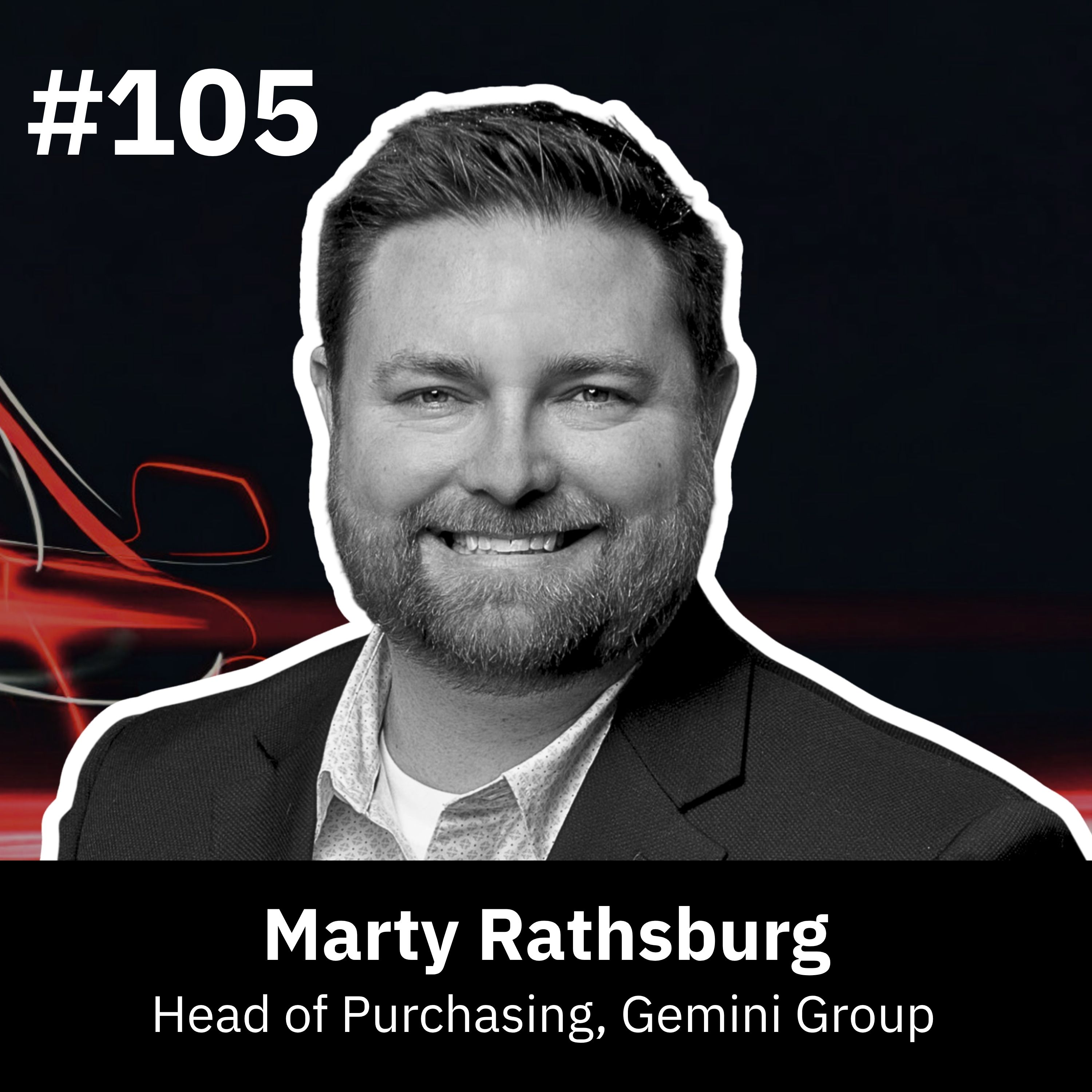
S3 Ep 105The First 90 Days: How to Take Over a Purchasing Organization and Win

What does it really take to walk into a new purchasing leadership role and make it work?Not the strategy deck. Not the org chart. The real work: the people, the data, the relationships, and the hard lessons learned along the way.In this episode, Jan Griffiths and co-host Tom Roberts sit down with Marty Rathsburg, newly appointed Head of Purchasing at the Gemini Group, a tier one and tier two automotive supplier with 17 locations across North America. Marty brings decades of experience in operations, purchasing, quality, and private equity. But this episode isn't about what he's done before. It's about what he's doing right now and what he's learning in real time.One of the challenges Marty ran into? The ERP. Gemini operates on a single ERP platform across all 17 locations, which sounds like an advantage until you realize every plant has customized it differently. Job shops, serial production, different commodity codes, and different supplier codes for the same vendor. The data is there. Getting it to mean something is another challenge entirely. It's a problem that plays out across the industry every day, and it's exactly the kind of execution gap that the right technology and the right systems of action are designed to close.This is Episode 1 of a two-part journey. We're bringing Marty back in six months to find out how it actually went.Themes Discussed in This EpisodeWhy do people come before strategy in any new leadership roleThe myth of "one ERP" and why it doesn't solve your data problemHow to prioritize suppliers when everything feels urgentStakeholder alignment: building credibility without the egoWhat vulnerability looks like in a purchasing leadership roleThe courage to call out your own misstepsFeatured GuestName: Marty RathsburgTitle: Head of Purchasing, Gemini GroupAbout: Marty is a transformation-focused operations and procurement leader known for bringing clarity to complex challenges. With 20+ years' experience improving performance and developing high‑impact teams, he’s delivered consistent growth by aligning people, simplifying systems, and driving action. Marty is recognized for his hands-on leadership style, building relationships at every level, and creating cultures where teams move fast and win together. Whether integrating acquisitions or strengthening supply resilience, He brings a grounded, people-first approach to automotive and industrial supply chains.Connect: LinkedInAbout Your HostsJan GriffithsJan is the host and producer of the Auto Supply Chain Champions Podcast and The Automotive Leaders Podcast. A former automotive manufacturing and supply chain executive, Jan is recognized as a Champion for Culture Change in the automotive industry. She brings direct, grounded conversations to leaders navigating execution, disruption, and transformation across the global automotive ecosystem.Tom Roberts (Co-host)Tom is Co-host of the Auto Supply Chain Champions Podcast and Vice President of Strategic Industry Development at QAD. He works closely with automotive and industrial manufacturers to close the gap between insight and execution, helping leaders move from visibility to systems of action that drive real operational outcomes.Mentioned in the Episode:Tony Trecapelli, CEO of Gemini Group, on the Automotive Leaders PodcastEpisode Highlights[00:01:22] The Real Challenge of a New Role: Jan sets the stage: stepping into a purchasing and supply chain role is not about strategy on paper. The real challenge is deciding what to focus on first amid complexity.[00:02:47] Why Marty Chose Gemini Group: Marty shares what drew him to Gemini, rooted in firsthand experience working with them as a supplier and seeing their culture in action.[00:04:59] Start with People, Not Process: Marty’s first move: sit down with every buyer, listen, take notes, and understand the human dynamics before making any changes.[00:07:01] One ERP, Many Realities: Despite having a single ERP across the organization, inconsistencies and plant-level differences require deep validation and gut-checking of data.[00:09:11] The Danger of Silo Optimization: Jan calls out a common industry issue: optimizing at the plant level at the expense of enterprise-wide visibility. The mindset must shift to the full ecosystem.[00:12:59] Prioritizing Suppliers Beyond Spend: Marty explains how prioritization goes beyond spend, factoring in risk, single sourcing, and future growth. A four-hour car ride with a plant manager becomes a strategic turning point.[00:14:51] Building Stakeholder Alignment Through Action: Alignment is not achieved in meetings. It is built through listening, collaboration, and solving problems together. Walking in with all the answers is the fastest way to lose trust.[00:18:17] Three Principles for New Leaders: Marty’s advice: build relationships first, be relentless about understanding the data, and stay focused on outcomes while adapting the path to get there.Top Quotes[00:07:01] Marty Rathsburg: “You can't make decisio
Mar 30, 202620 min

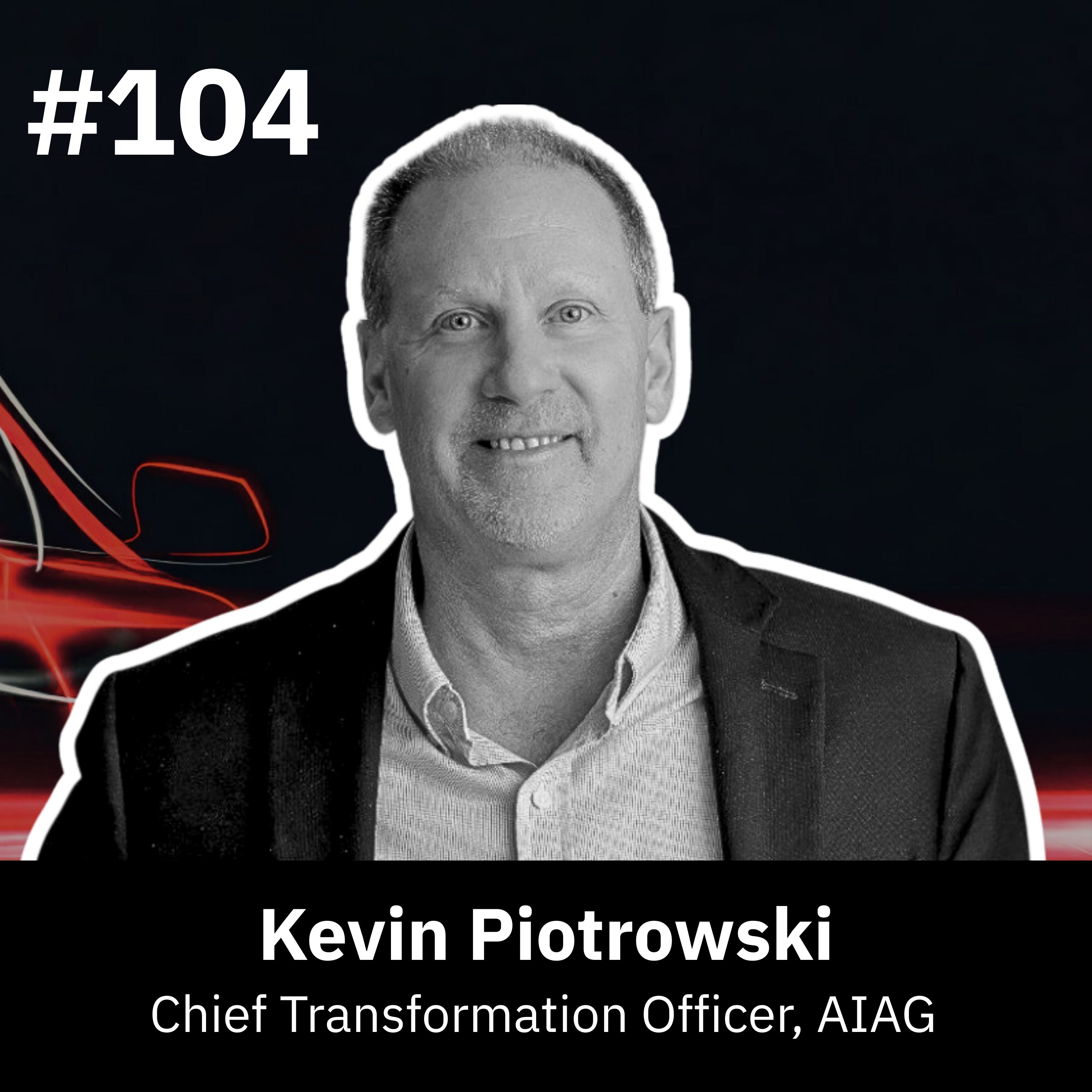
S3 Ep 104Your Data Supply Chain Is Broken - Here's How to Fix It

Your physical supply chain is optimized. Your data supply chain is broken. That's the hard truth at the center of this conversation and it's one most automotive leaders haven't fully faced yet.In this episode, Jan Griffiths and Tom Roberts sit down with Kevin Piotrowski, Chief Transformation Officer at AIAG, to break down Catena-X: what it is, why it matters, and why the automotive industry can no longer afford to ignore it.Kevin makes the case clearly: the data that companies need to make decisions no longer lives inside their four walls. 60, 70, 80% of decision-critical data now comes from outside the enterprise, from supply chains both upstream and downstream. Catena-X is the ecosystem built to move that data securely, at scale, across the entire supply chain, while protecting IP, maintaining data sovereignty, and enabling AI and robotics to act on it.This is not another IT initiative. It's a movement. Approaching its fifth anniversary in Europe and hitting year one or two in North America, Catena-X is entering the adoption phase and AIAG is driving that effort as the North American hub. The Readiness Booster Program, a 12-week onboarding, is already helping companies of all sizes get connected. From small suppliers using an Excel file to large manufacturers building their own certified connectors, there's an on-ramp for everyone.The challenges are real. Trust between OEMs and suppliers has never been a strength of this industry. Data extraction from fragmented ERP systems is hard. And many companies haven't even defined a data strategy yet. But the companies that wait will absorb the cost. The companies that move will build a competitive advantage that compounds: in quality, sustainability, carbon footprint reporting, digital twins, and beyond.Jan and Tom will both be at the AIAG Elevate conference in Detroit on May 21st. If you want to understand what's coming and where the real tension between OEMs and suppliers sits, that's the room to be in.Themes Discussed in This EpisodeWhy the data supply chain is the next frontier for automotiveWhat Catena-X is and why it's more than a data exchangeData sovereignty: how suppliers protect IP while sharing across the chainThe path from data to AI to robotics and why it's now one integrated systemThe Readiness Booster Program: how to get connected in 12 weeksWhy every supplier needs a data strategy before they pick a solutionThe trust deficit between OEMs and suppliers, and why it has to changeCatena-X in two years and five years: the global expansion roadmapAIAG Elevate Detroit Conference, May 21st: what to expectFeatured GuestName: Kevin PiotrowskiTitle: Chief Transformation Officer, AIAGAbout: Kevin Piotrowski serves as Chief Transformation Officer at AIAG, where he leads North American efforts around Catena-X adoption and digital transformation across the automotive supply chain. Kevin brings deep expertise in data strategy, supply chain technology, and industry collaboration, working directly with OEMs, suppliers, and solution providers to accelerate the shift toward connected, AI-ready supply chains.Connect: LinkedInAbout Your HostsJan GriffithsJan is the host and producer of the Auto Supply Chain Champions Podcast and The Automotive Leaders Podcast. A former automotive manufacturing and supply chain executive, Jan is recognized as a Champion for Culture Change in the automotive industry. She brings direct, grounded conversations to leaders navigating execution, disruption, and transformation across the global automotive ecosystem.Tom Roberts (Co-host)Tom is Co-host of the Auto Supply Chain Champions Podcast and Vice President of Strategic Industry Development at QAD. He works closely with automotive and industrial manufacturers to close the gap between insight and execution, helping leaders move from visibility to systems of action that drive real operational outcomes.Mentioned in the Episode:American Manufacturing SummitCatena-X North America HubAIAG North American Catena-X ConferenceEpisode Highlights[00:00:00] The Broken Data Supply Chain: Jan explains that while automotive perfected the physical supply chain, the data supply chain remains fragmented across disconnected systems. Catena-X aims to connect and standardize how critical supply chain data moves.[00:03:04] What Catena-X Actually Is: Kevin explains Catena-X simply: a secure way for companies to exchange complex supply chain data across the entire network, not just point-to-point.[00:04:56] Data Sovereignty in Practice: Kevin describes how Catena-X protects sensitive relationships. Data moves only one level up or down the chain, so companies see outcomes without exposing supplier identities.[00:08:00] From Data to AI to Robotics: Clean data feeds Catena-X, which enables secure exchange, powers AI decision-making, and ultimately drives automation and robotics.[00:10:07] The Readiness Booster Program: AIAG’s 12-week onboarding program helps companies quickly join the Catena-X network with training,
Mar 16, 202620 min

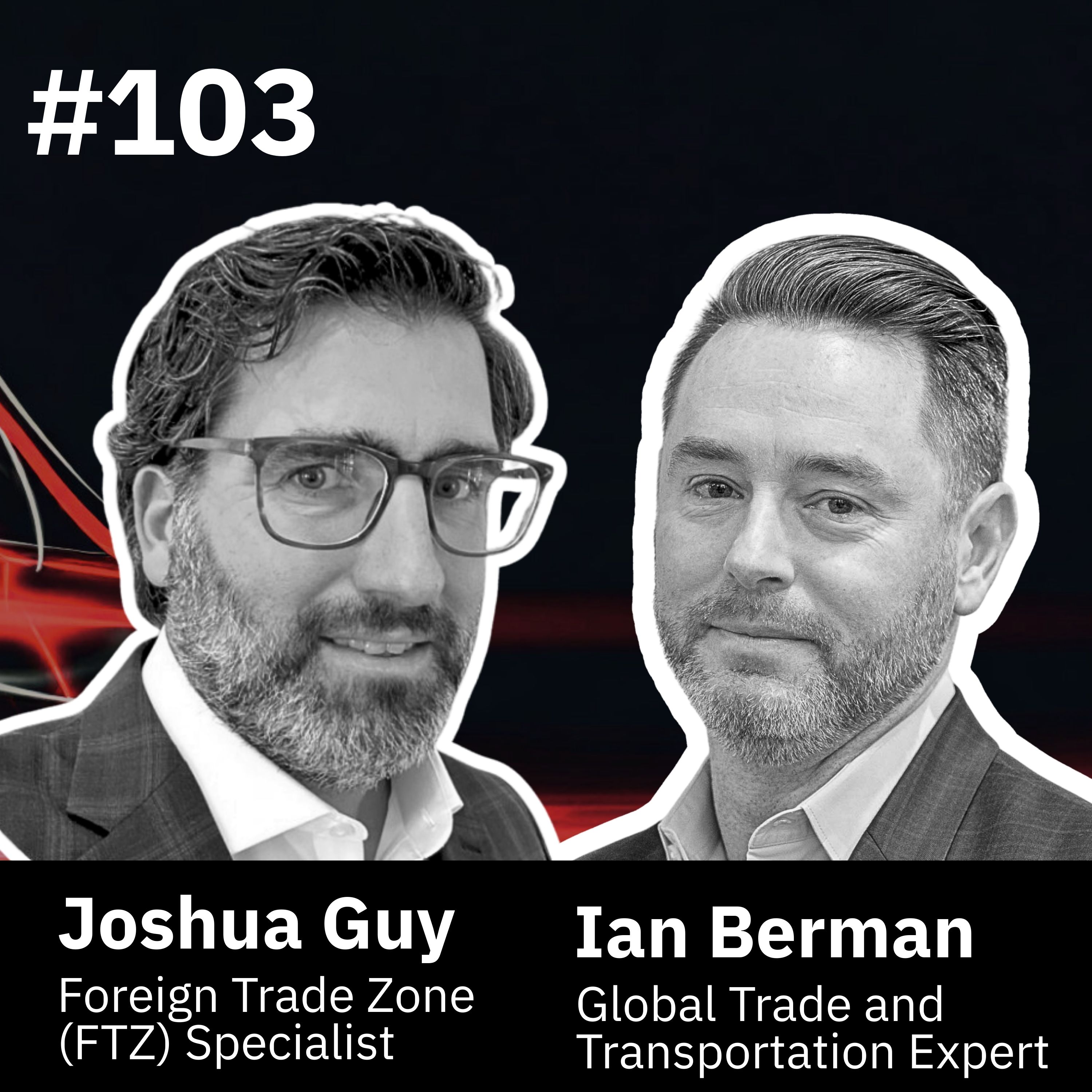
S3 Ep 103You’re Looking at Global Trade the Wrong Way

Contact Ian at [email protected] and Joshua at [email protected] for further conversationGlobal trade does not have a compliance problem. It has an execution gap. The classifications exist. The brokers are in place. The duties are being paid. Yet too often, trade is treated as documentation instead of strategy. In this episode, Jan Griffiths and Tom Roberts sit down with Ian Berman, Global Trade and Transportation expert, and Joshua Guy, Foreign Trade Zone specialist, to challenge that mindset and introduce a new one.Ian and Joshua make the case that tariffs are no longer a temporary disruption. They are a structural operating condition. With layered duties, stacked exposure, and policy volatility, organizations cannot afford to treat trade compliance as a cost center. The companies that will win are the ones that shift from a system of record to a system of action. That means modeling exposure before it hits. Scenario planning under uncertainty. Using infrastructure like FTZs deliberately. And building systems that react at the speed policy changes.The honesty in this conversation sets the tone. Jan openly admits she once treated trade compliance as something to “just like keep me clean. Don’t get me into trouble.” Ian confirms how common that mindset is, saying, “They look at that as just a cost center. Honestly, Jan…” That old-world thinking no longer works.Joshua explains why the stakes have changed: “This is way too complicated of an environment that is changing daily, and so you have to be dependent on systems for this. You cannot be dependent on the old way of how things work.” In a world where executive orders drop on Friday and implementation happens Tuesday, modeling tools and automation are no longer optional. They are survival mechanisms.This episode is a reminder that global trade is not back-office reporting. It is strategic infrastructure. Leaders who treat it as such gain flexibility, cash flow timing advantages, and margin recovery. Those who do not will absorb cost and call it unavoidable.Themes Discussed in This EpisodeWhy treating trade compliance as a cost center is a strategic mistakeThe shift from system of record to system of action in global tradeTariffs as a structural operating condition, not a temporary disruptionModeling exposure before policy changes hitThe critical role of data accuracy under refund and audit scrutinyBuilding scenario capability to react at the speed of volatilityForeign Trade Zones as strategic infrastructure, not paperworkTurning landed cost management into a competitive advantageFeatured GuestName: Ian BermanTitle: Global Trade and Transportation ExpertAbout: Ian is the Manager of Business Consulting with QAD Supply Chain. Ian has been with QAD for 11 years and has 20 years of experience in global trade and transportation management. He holds a Masters Degree in Supply Chain Management as well as an ASCM CLTD Certification.Connect: LinkedInName: Joshua GuyTitle: Foreign Trade Zone (FTZ) SpecialistAbout: For more than 25 years, Joshua has worked at the intersection of engineering, product leadership, and global trade, helping organizations bring structure and clarity to complex supply chains. Today, he leads strategy for Foreign-Trade Zone solutions that enable multinational importers to manage tariff exposure, reduce compliance risk, and strengthen financial performance. He also led the development of QAD FTZ, an industry-leading Inventory Control and Recordkeeping System that supports manufacturers, distributors, and 3PLs as they move from reactive compliance to proactive, resilient trade strategy in a volatile global environment.Connect: LinkedInAbout Your HostsJan GriffithsJan is the host and producer of the Auto Supply Chain Champions Podcast and The Automotive Leaders Podcast. A former automotive manufacturing and supply chain executive, Jan is recognized as a Champion for Culture Change in the automotive industry. She brings direct, grounded conversations to leaders navigating execution, disruption, and transformation across the global automotive ecosystem.Tom Roberts (Co-host)Tom is Co-host of the Auto Supply Chain Champions Podcast and Vice President of Strategic Industry Development at QAD. He works closely with automotive and industrial manufacturers to close the gap between insight and execution, helping leaders move from visibility to systems of action that drive real operational outcomes.Episode Highlights[01:38] Falling on the Sword: Jan opens with honesty, acknowledging that she once viewed trade compliance as protection, not potential. It was about staying out of trouble, not driving advantage. That mindset, she admits, is exactly what leaders must now challenge.[03:58] Cost Center Thinking: Ian names the pattern many organizations fall into. Trade teams are treated as overhead, brought in after decisions are made, measured by cost instead of contribution. In today’s environment, that thinking leaves value on the table.[10:51] The New Real
Mar 2, 202624 min

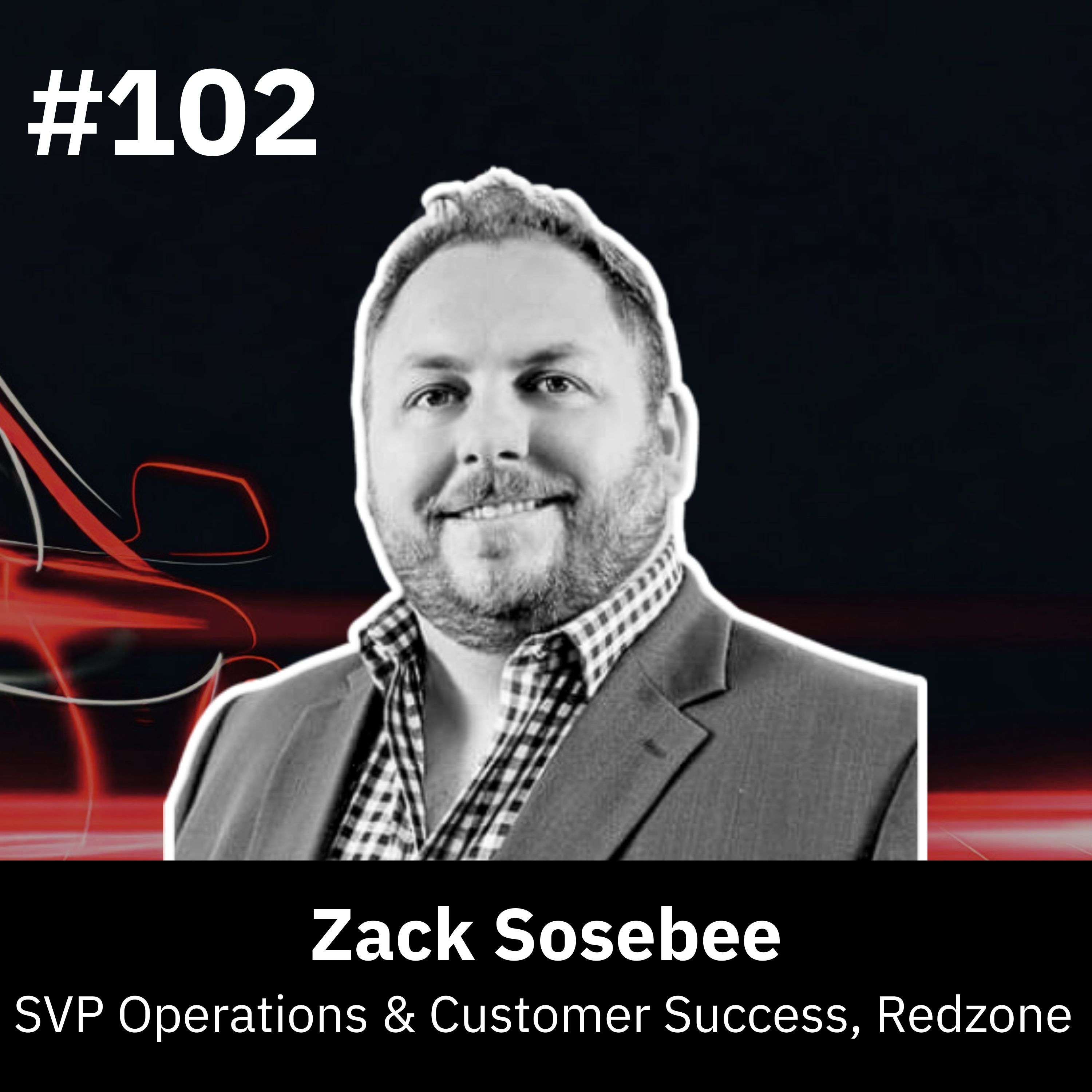
S3 Ep 102Beyond Dashboards: Building a Connected Workforce

Manufacturers do not have a data problem. They have an execution gap. The dashboards exist. The reports are generated. The KPIs are reviewed. Yet too often, action stalls between insight and impact. In this episode, Jan Griffiths and Tom Roberts sit down with Zack Sosebee, SVP of Operations & Customer Success at Redzone, to explore what changes when data moves beyond visibility and into the hands of the people closest to the work.Zack shares a clear and practical vision of the connected workforce. Not as another layer of software. Not as another reporting system. But as a system of action. By giving frontline operators simple, real-time visibility through red, yellow, and green performance signals, manufacturers create clarity in the moment decisions are being made. That clarity builds accountability. And accountability drives results.What makes this approach powerful is its simplicity. Instead of overwhelming teams with endless metrics, Redzone focuses on a few meaningful signals that operators can influence hour by hour. When teams see performance in real time, they respond in real time. Maintenance is called sooner. Problems are escalated faster. Peer-to-peer competition becomes a positive force. Execution accelerates because ownership shifts to the frontline.But technology alone does not transform a factory. Coaching does. Zack explains how culture change happens when leaders reinforce new behaviors, close feedback loops, and respond quickly to issues raised by operators. When a long-tenured employee logs a safety concern and sees it fixed the same day, trust is built. When a retiring expert captures knowledge that strengthens the next generation, pride returns to the shop floor. These are not software wins. They are human wins.This conversation is a reminder that digital transformation is not about collecting more data. It is about empowering people to act with confidence and clarity. When operators think like supervisors and supervisors think like leaders, performance improves. More importantly, culture evolves. And in today’s manufacturing environment, the companies that win will be the ones that move from reporting yesterday to deciding what happens next.Themes Discussed in This EpisodeWhat “connected workforce” really means in manufacturingWhy digital transformation often stalls at dashboardsOverall Equipment Effectiveness explained in simple termsRed, yellow, green real-time visibility on the shop floorCoaching vs training in culture changeTurning skeptics into championsEliminating paper logs and manual downtime reportingUsing simplicity to accelerate adoptionTechnology as an enabler of ownership, not oversightEmpowering operators to think like leadersFeatured GuestName: Zack SosebeeTitle: SVP Operations & Customer Success, RedzoneAbout: Zack is Senior VP of Operations & Customer Success at Redzone, where he leads the entire customer experience across coaching, implementation, and support, with a clear focus on delivering measurable results. A member of the early Redzone team, Zack helped build the company’s coaching organization and drives a people-first, customer-focused approach that empowers frontline teams and creates sustainable operational impact. Prior to Redzone, he held operations leadership roles at Ignite Solutions, Lockheed Martin, Porsche Cars North America, and Ford Motor Company. Zack holds both a bachelor’s and a master’s degree in Mechanical Engineering from the Georgia Institute of Technology.Connect: LinkedInAbout Your HostsJan GriffithsJan is the host and producer of the Auto Supply Chain Champions Podcast and The Automotive Leaders Podcast. A former automotive manufacturing and supply chain executive, Jan is recognized as a Champion for Culture Change in the automotive industry. She brings direct, grounded conversations to leaders navigating execution, disruption, and transformation across the global automotive ecosystem.Tom Roberts (Co-host)Tom is Co-host of the Auto Supply Chain Champions Podcast and Vice President of Strategic Industry Development at QAD. He works closely with automotive and industrial manufacturers to close the gap between insight and execution, helping leaders move from visibility to systems of action that drive real operational outcomes.Episode Highlights[01:30] Data in the Right Hands: Jan challenges the idea of simply “moving data to the shop floor” and raises the deeper issue of empowerment. Technology alone is not enough. Culture must enable action.[03:11] The Connected Workforce Vision: Zack explains Redzone’s founding vision: take critical executive-level data and put it directly in the hands of operators so they can think like supervisors and leaders.[04:42] Speed to Value Over Analysis Paralysis: Instead of overwhelming teams with data, Redzone focuses on just a few signals that drive immediate decisions and measurable operational gains.[09:33] Red, Yellow, Green in Real Time: Operators see hour-by-hour efficiency through simple visu
Feb 18, 202621 min

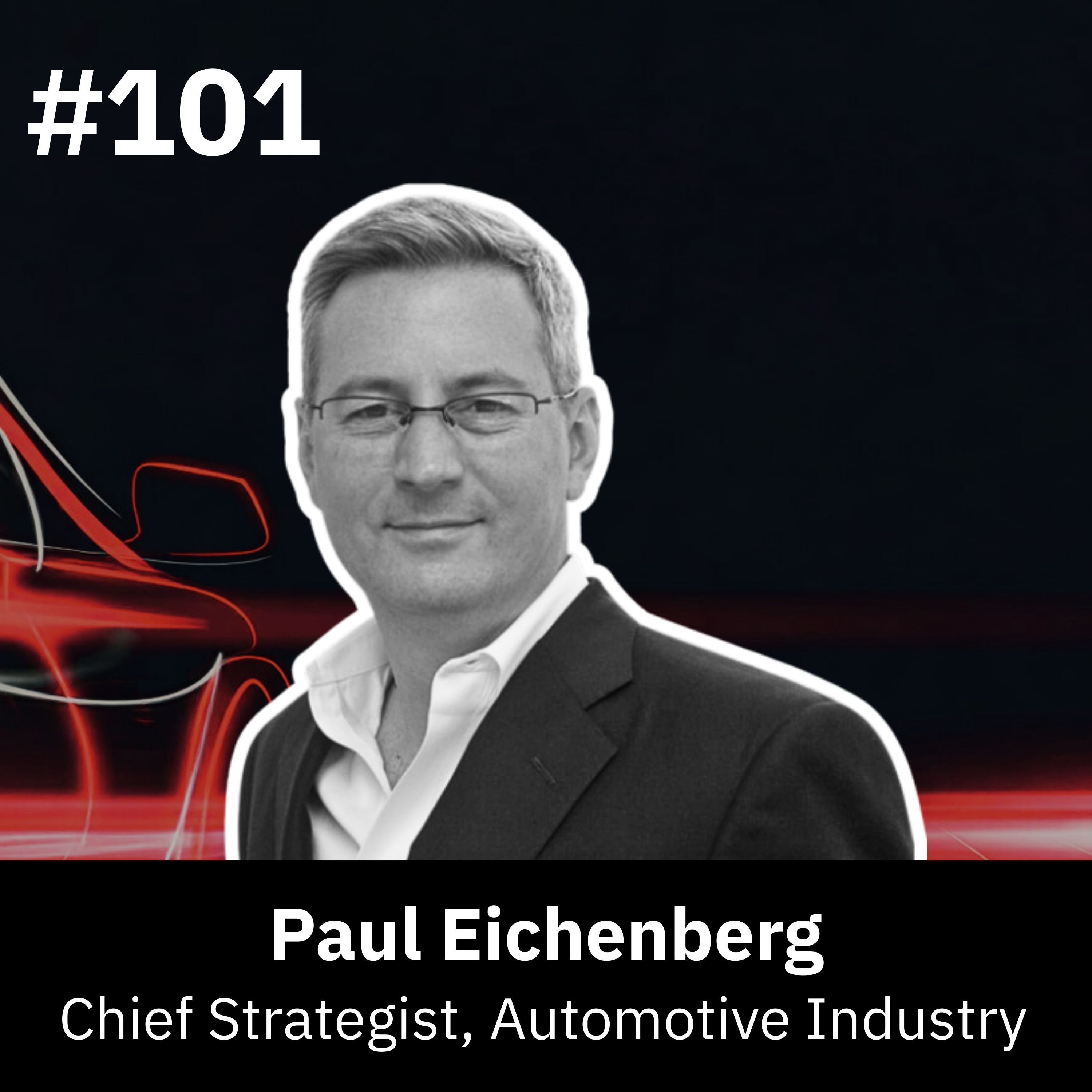
S3 Ep 1012026 Is Where Comfortable Strategies Go to Die

Automotive supply chains are no longer being reshaped by crisis. They are being reshaped by clarity, and clarity is forcing hard choices.In this episode of the Auto Supply Chain Champions Podcast, Jan Griffiths and co-host Tom Roberts are joined by Paul Eichenberg, Chief Strategist and author of The Road Ahead: Five Key Predictions for the Global Automotive Industry in 2026, for a blunt, reality-check conversation about what lies ahead for suppliers.The industry has moved past the chaos of shortages and disruptions, but that does not mean conditions are improving. Flat volumes. Thin launch schedules. Policy volatility. Long-standing assumptions that once protected supplier business models no longer apply.Paul makes the case that 2026 is not about recovery. It is about reckoning. Growth will not lift all boats. Outgrowth will be selective. Capital allocation, portfolio focus, and strategic intent will determine who wins and who fades.This conversation challenges automotive leaders to confront the most dangerous assumption still in play: that the industry is operating under the same rules it always has. The leaders who succeed in 2026 will be decisive, intentional, and willing to make hard bets instead of spreading resources thin.Themes Discussed in This EpisodeWhy flat volumes expose weak supplier strategiesThe end of “a rising tide lifts all boats” thinkingWhat outgrowth really means in a 0–1% marketCapital allocation as the ultimate strategy leverWhy the next decade is the hybrid decadePortfolio focus vs being all things to all customersWhy clarity, not comfort, defines 2026 leadershipFeatured GuestName: Paul EichenbergTitle: Chief Strategist, Automotive IndustryAbout: Paul is a seasoned automotive strategist and industry advisor with decades of experience supporting OEMs and suppliers through major market transitions. He is the author of The Road Ahead: Five Key Predictions for the Global Automotive Industry in 2026, where he outlines the structural shifts redefining growth, competition, and portfolio strategy across the global automotive value chain.Connect: LinkedInAbout Your HostsJan GriffithsJan is the host and producer of the Auto Supply Chain Champions Podcast and The Automotive Leaders Podcast. A former automotive manufacturing and supply chain executive, Jan is recognized as a Champion for Culture Change in the automotive industry. She brings direct, grounded conversations to leaders navigating execution, disruption, and transformation across the global automotive ecosystem.Tom Roberts (Co-host)Tom is Co-host of the Auto Supply Chain Champions Podcast and Vice President of Strategic Industry Development at QAD. He works closely with automotive and industrial manufacturers to close the gap between insight and execution, helping leaders move from visibility to systems of action that drive real operational outcomes.Mentioned in This EpisodeThe Road Ahead: Five Key Predictions for the Global Automotive Industry in 2026Episode Highlights[02:52] The most dangerous assumption suppliers are still making as they enter 2026[05:27] Why outgrowth, not volume recovery, will separate winners from losers[09:44] Why the next decade belongs to hybrids, not single-path electrification[17:17] Why portfolio and footprint choices now define competitiveness[22:22] The one bold move Tier One CEOs must make in 2026Top Quotes[05:19] Paul Eichenberg: “The idea that the tide raises all boats is no longer the assumption that suppliers should have going forward.”[07:23] Paul Eichenberg: “Strategy execution comes down to how you allocate capital in your talent or your resources.”[22:51] Paul Eichenberg: “Being all things to all people is a path to failure in this type of constricting market.”[23:17] Paul Eichenberg: “This is a year of clarity.”Follow the Auto Supply Chain Champions Podcast for real conversations with leaders who are making hard choices, focusing their bets, and leading with intent.🎧 Follow the podcast: 🔗 Learn more about QAD Redzone: https://www.qad.com/
Feb 2, 202623 min

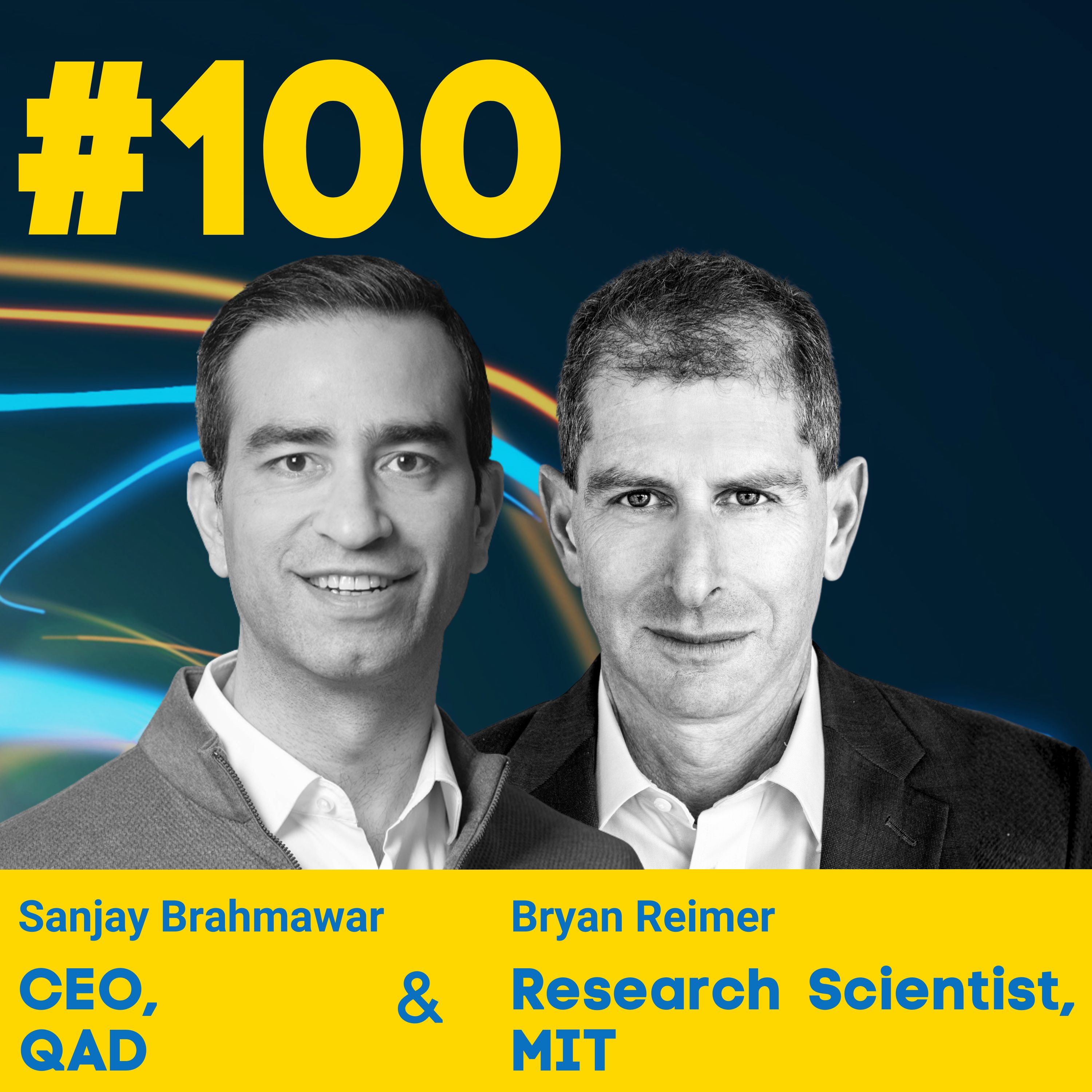
S3 Ep 100Agentic AI Isn’t the Future. It’s the Line Between Winners and Laggards

Automotive manufacturing leaders have no shortage of data, but only those who turn it into action are winning, and AI is the accelerator.In this milestone episode, Jan Griffiths is joined by Sanjay Brahmawar, CEO of QAD, and Dr. Bryan Reimer, MIT Research Scientist and author of How to Make AI Useful, for a grounded conversation about how AI is creating real advantage in automotive manufacturing.The challenge facing automotive manufacturing leaders is not visibility. Leaders know where problems exist. The issue is that action often stalls between insight and execution. Dashboards explain what happened. They do not decide what happens next.Sanjay and Bryan draw a clear distinction between systems of record and systems of action. Systems of record observe. Systems of action decide, execute, and learn. Agentic AI belongs in the second category. It creates value when it removes friction from work, accelerates routine decisions, and gives people better context at the moment action is required.Frontline teams in automotive manufacturing do not resist AI. They adopt it when it respects their expertise and helps them do their jobs better. Adoption follows usefulness, not mandates. When AI amplifies human judgment instead of supervising it, execution speed improves and results follow.This episode challenges automotive manufacturing leaders to stop treating AI as a reporting layer and start using it as an execution engine. The organizations pulling ahead are not waiting for perfect conditions. They are starting small, learning fast, and letting action build confidence.Themes Discussed in this episode:Why data visibility alone does not drive performance in automotive manufacturingSystems of record vs systems of actionHow AI removes friction from automotive manufacturing operationsFrontline-first AI adoption in plantsAgentic AI as an execution multiplierLeadership ownership of decisionsBuilding momentum with 60 to 90-day winsFeatured Guests: Name: Sanjay BrahmawarTitle: CEO of QAD About: Sanjay Brahmawar is the CEO of QAD, a cloud software company delivering cloud-based solutions for manufacturers and global supply chains. With more than two decades of experience leading global technology businesses, he brings deep expertise in digital transformation, AI, IoT, and data-driven platforms, built through senior leadership roles at IBM and Software AG.Connect: LinkedInName: Dr. Bryan ReimerAbout: Dr. Bryan Reimer is a Research Scientist at the MIT Center for Transportation & Logistics and a key member of the MIT AgeLab. He is also the author of How to Make AI Useful: Moving beyond the hype to real progress in business, society and life. His work focuses on how drivers behave in an increasingly automated world, using a combination of psychology, big data, and real-world testing to study attention, distraction, and human interaction with vehicle technology. He leads three major academic-industry consortia that are developing new tools to measure driver attention, evaluate how people use advanced driving systems, and improve in-vehicle information design, thereby guiding automakers and policymakers toward safer, human-centered mobility solutions.Connect: LinkedInAbout Your Host – Jan GriffithsJan Griffiths is the host and producer of the Auto Supply Chain Prophets podcast and The Automotive Leaders Podcast, and is recognized as the Champion for Culture Change in the automotive industry. A former automotive manufacturing and supply chain executive, Jan focuses on leadership, culture, and execution, bringing practical, real-world conversations to the forefront of industry change.Mentioned in this episode:QAD Champion AIHow to Make AI Useful: Moving beyond the hype to real progress in business, society, and lifeEpisode Highlights:[03:16] Data Isn’t Enough: Automotive manufacturers often have abundant data, but without ownership, trust, and decisive follow-through, insights fail to drive real results.[06:28] Trust Through Action: Leaders in manufacturing must embrace experimentation and small steps, because confidence in AI and new systems grows only when action precedes certainty.[10:53] 90-Day Mindset: Transformative leadership in manufacturing means challenging norms, leveraging AI, and rallying teams to achieve ambitious goals in record time.[15:20] Sandbox Leadership: Automotive leaders stall by overthinking and seeking perfect solutions, while real progress comes from small experiments, empowering teams, and proving concepts before scaling.[19:53] Manufacturing Love: Sanjay’s passion comes from his shop floor roots and belief that AI and modern tools can empower people, attract talent, and transform the future of manufacturing.[22:20] Process Passion: Bryan’s focus is optimizing workflows, amplifying teams with AI, and shifting the narrative from fear to the positive impact of technology in manufacturing.[24:46] Start Small, Win Big: Leaders can kick off AI adoption with role-based agents, targeted problem-solving, and r

Jan 19, 202633 min

S3 Ep 99Wrapping 2025: Farewells, Milestones, and Next Year’s Plans

At the heart of The Prophets’ vision are “The 24 Essential Supply Chain Processes.” What are they? Find out, and see the future yourself. Click here As 2025 wraps up, the Auto Supply Chain Prophets podcast looks back on its journey and shares thoughts about what’s next. Hosts Jan Griffiths, Jim Liegghio, and Terry Onica take a moment to celebrate the podcast’s impact, highlighting 15,000 downloads in over 20 countries, and look forward to their 100th episode in 2026, a milestone only a few podcasts achieve.Jim encourages listeners to revisit past episodes to hear how industry leaders think, solve problems, and approach supply chain challenges. Terry shares her retirement from QAD after 23 years, celebrating a career spent promoting supply chain excellence and promising to continue contributing to projects she loves.Jan confirms the podcast isn’t going anywhere. In 2026, it will return with a refreshed format and new energy. For now, listeners can check out past episodes, dive deeper into the content on the website, and follow along as the hosts continue sharing conversations that shape the automotive supply chain.Featured on this episode: Name: Jan GriffithsTitle: President and Founder, Gravitas Detroit About: Jan is the architect of cultural change in the automotive industry. As the President & Founder of Gravitas Detroit, Jan brings a wealth of expertise and a passion for transforming company cultures. Additionally, she is the host of the Automotive Leaders Podcast, where she shares insightful conversations with industry visionaries. Jan is also the author of AutoCulture 2.0, a groundbreaking book that challenges the traditional leadership model prevalent in the automotive world. With her extensive experience and commitment to fostering positive change, Jan is at the forefront of revolutionizing the automotive landscape.Connect: LinkedInName: James “Jim” LiegghioTitle: Manager, Customer Experience & Engagement, Automotive Industry Action Group (AIAG)About: Jim is a seasoned supply chain leader with over 25 years of experience, particularly in the automotive sector. His expertise spans a wide range of areas, from hands-on plant-level material and production control to high-level corporate logistics roles at major OEMs like FCA. He has navigated the complexities of international logistics, trade compliance, and cross-functional collaboration, gaining a global perspective that enhances his approach to supply chain management. He excels at working across departments to achieve strategic goals, with a strong focus on optimizing operations and fostering relationships. His work isn’t just about logistics; it’s about cultivating a culture of continuous improvement, community, and diversity. Throughout his career, Jim has remained committed to lifelong learning, driven by a genuine curiosity and a passion for leadership.Connect: LinkedInName: Terry OnicaTitle: Director, Automotive at QADAbout: For two decades, Terry has been the automotive vertical director of this provider of manufacturing Enterprise Resource Planning software and supply chain solutions. Her career began in the supply chain in the late 1980s when she led a team to implement Electronic Data Interchange for all the Ford assembly and component plants.Connect: LinkedInMentioned in this episode:Check out every episode of the Auto Supply Chain Prophets podcast here.
Dec 29, 20255 min

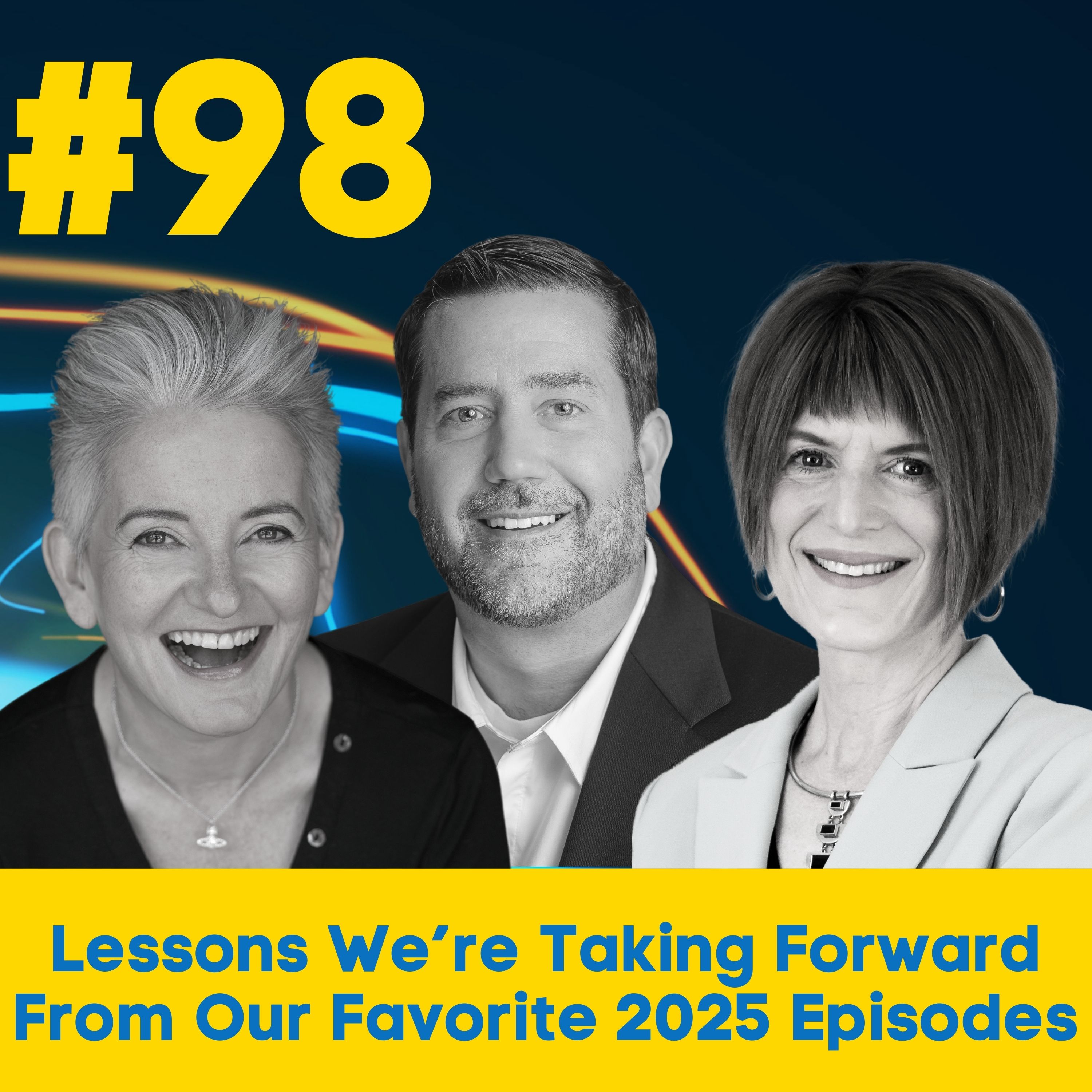
S3 Ep 98Lessons We’re Taking Forward From Our Favorite 2025 Episodes

At the heart of The Prophets’ vision are “The 24 Essential Supply Chain Processes.” What are they? Find out, and see the future yourself. Click here This episode takes a break from our usual detailed discussions to reflect on the conversations that shaped the year for the Auto Supply Chain Prophets podcast. Jan Griffiths, joined by co-hosts Jim Liegghio and Terry Onica, looks at why specific episodes stuck with them and what those moments reveal about where the automotive supply chain is heading.Live podcasting quickly rises to the top, especially the Midwest User Group episodes. Hearing customers talk openly about what they deal with every day brought everything back to reality. The hosts agree that these conversations stood out because they were raw, unscripted, and focused on real-life challenges rather than polished talking points.From there, the focus shifts to the next generation of supply chain leaders. Episodes recorded at the GM Wayne State Case Competition and other student-focused events captured something rare: genuine excitement about supply chain careers. Hearing students wrestle with real GM case studies and receive direct feedback from senior leaders reinforced why investing time in education and mentorship matters.Jim then reflects on episodes centered on leadership under pressure, including Kyle Price from Caterpillar and Darrin Lucas from Nissan. Both talked about disruption as something you plan for, not something that throws you off balance. Tariffs, volatility, aftersales pressure, none of it was treated as a crisis. The focus remained on preparation, trusting teams, and staying level-headed. The takeaway was simple but powerful. The way leaders respond sets the tone for everyone else.For Jan, Kate Vitasek’s work on collaborative agreements stood out because it moved beyond talk and into how collaboration actually works. But with structure, accountability, and measurable business impact.Ted Mabley’s data-driven discussion on RFQs exposed how outdated processes still slow the industry down and why technology only works when people are willing to rethink habits and silos.The episode closes with a grounded reminder: AI, standards, and platforms matter, but they are not shortcuts. Progress depends on people, relationships, and the willingness to unlearn old ways of working. With that perspective, the hosts wrap up 2025 grateful for the conversations, the community, and the momentum heading into the year ahead.Featured on this episode: Name: Terry OnicaTitle: Director, Automotive at QADAbout: For two decades, Terry has been the automotive vertical director of this provider of manufacturing Enterprise Resource Planning software and supply chain solutions. Her career began in the supply chain in the late 1980s when she led a team to implement Electronic Data Interchange for all the Ford assembly and component plants.Connect: LinkedInName: Jan GriffithsTitle: President and Founder, Gravitas Detroit About: Jan is the architect of cultural change in the automotive industry. As the President & Founder of Gravitas Detroit, Jan brings a wealth of expertise and a passion for transforming company cultures. Additionally, she is the host of the Automotive Leaders Podcast, where she shares insightful conversations with industry visionaries. Jan is also the author of AutoCulture 2.0, a groundbreaking book that challenges the traditional leadership model prevalent in the automotive world. With her extensive experience and commitment to fostering positive change, Jan is at the forefront of revolutionizing the automotive landscape.Connect: LinkedInName: James “Jim” LiegghioTitle: Manager, Customer Experience & Engagement, Automotive Industry Action Group (AIAG)About: Jim is a seasoned supply chain leader with over 25 years of experience, particularly in the automotive sector. His expertise spans a wide range of areas, from hands-on plant-level material and production control to high-level corporate logistics roles at major OEMs like FCA. He has navigated the complexities of international logistics, trade compliance, and cross-functional collaboration, gaining a global perspective that enhances his approach to supply chain management. He excels at working across departments to achieve strategic goals, with a strong focus on optimizing operations and fostering relationships. His work isn’t just about logistics; it’s about cultivating a culture of continuous improvement, community, and diversity. Throughout his career, Jim has remained committed to lifelong learning, driven by a genuine curiosity and a passion for leadership.Connect: LinkedInMentioned in this episode:QAD Midwest Users Conference: Community, Culture and InnovationDeveloping Future Leaders: Inside the General Motors and WSU Supply Chain Case CompetitionResilient by Design: Embedding Risk Strategy into Procurement Decisions with Kyle PriceNissan Redefines Aftersales Across the Americas with Darrin LucasV

Dec 15, 202525 min

S3 Ep 97Nissan Redefines Aftersales Across the Americas

At the heart of The Prophets’ vision are “The 24 Essential Supply Chain Processes.” What are they? Find out, and see the future yourself. Click here Brand loyalty at Nissan isn’t earned during a sale. It’s earned later, when a driver needs a repair, and the part they need is already there. That moment shapes Darrin Lucas’s work. He leads after-sales supply chain operations across the Americas, making sure vehicles stay in service instead of sitting in a bay waiting for parts.His team manages warranty support, service parts, and dealer inventory with one goal in mind: a repair should feel routine to the customer. The planning beneath it, however, is anything but routine. Instead of reacting to dealer requests, they work ahead of demand and stock items based on what they expect will be needed weeks from now.To make those decisions earlier and with more accuracy, Nissan is moving past traditional forecasting habits. The company utilizes AI-driven predictions, real-time performance dashboards, and automation in its distribution centers to prepare the correct parts before customers arrive for service. With better insight comes a different kind of supply chain partnership. Suppliers aren’t just shipping parts; they’re sharing data, adapting quickly, and helping Nissan support both production and service without sacrificing one for the other.Dealers are also part of the strategy. Darrin talks about advisory boards where dealers give feedback, test ideas, and influence how inventory gets planned. This helps Nissan prevent shortages before they occur, and it provides a clearer picture of what customers are actually experiencing in service bays, not just what spreadsheets predict.Darrin’s own career mirrors the way Nissan wants the organization to work. He joined Nissan as a packaging engineer and moved into logistics, quality, and operations because leaders encouraged him to learn beyond his role. That gave him the perspective he uses today. Now, he leads by giving his team the same space to grow, allowing people to learn, think independently, and solve problems without being controlled by every metric. When people understand the business, the KPIs follow.Nissan views after-sales as an ongoing promise to customers who have already chosen the brand. It isn’t a backup to manufacturing or a response to breakdowns. It’s part of the relationship that continues long after the car leaves the showroom, earning loyalty through every mile the vehicle stays on the road.Themes discussed in this episode:How stocking service parts weeks in advance prevents vehicles from sitting idle at the dealershipThe shift from outdated forecasting methods to AI-driven demand planning in automotive after-salesHow automation in distribution centers speeds up service part delivery and reduces wait timesWhy suppliers must support both production and after-sales to meet customer repair expectationsThe increasing demand for OEM parts through e-commerce and how it disrupts traditional delivery modelsHow proactive parts planning turns after-sales into a strategic advantage instead of a reaction to breakdownsThe value of cross-functional experience in building leaders who understand the entire parts lifecycleThe responsibility of after-sales supply chain teams to maintain customer confidence after the saleFeatured on this episode:Name: Darrin LucasTitle: Director, Aftersales Supply Chain Operations Americas at Nissan North AmericaAbout: Darrin is the Director of Aftersales Supply Chain Operations for the Americas region at Nissan Motor Corporation, where he leads strategies to optimize logistics and ensure the timely delivery of parts across the dealer network. With nearly two decades at Nissan, Lucas has played a pivotal role in strengthening supply chain resilience and driving operational excellence. Passionate about collaboration and continuous improvement, Lucas emphasizes efficiency, speed to market, and customer satisfaction as core priorities for Nissan’s aftersales operations.Connect: LinkedInEpisode Highlights:[04:41] Where Loyalty Actually Starts: After sales is the part of the business that earns trust by keeping vehicles on the road through parts support, service, and warranty care long after the sale.[06:50] Forecasting the Fix: Nissan is shifting from traditional demand guesses to AI forecasting and stronger supplier partnerships to keep the right parts flowing where repairs are needed most.[08:43] Manual to Smart: Nissan is introducing AI forecasting, real-time dashboards, and new automation tools to replace manual after-sales planning and boost operational efficiency.[09:24] From Hesitant to All In: Darrin admits he once doubted AI, but now pushes his team to embrace it fully as a tool that strengthens customer support and future talent development in supply chain.[10:13] Collaboration Still Wins: Darrin credits better forecasting and open performance data as the foundation for trust-driven collaboration with suppliers,

Dec 1, 202522 min

S3 Ep 96Quote Chaos: Inside The Rising Pressure On Automotive Industry's RFQ Teams

At the heart of The Prophets’ vision are “The 24 Essential Supply Chain Processes.” What are they? Find out, and see the future yourself. Click here Quoting might sound like routine paperwork, but in today’s automotive supply chain, it’s becoming one of the biggest pressure points.Behind every new program sits an RFQ process that’s overworked, outdated, and dangerously dependent on a few people who know how to make it run.That’s where Ted Mabley, Director at UHY and co-author of a new white paper with the Center for Automotive Research (CAR), steps in. His study compares how suppliers manage RFQs today versus in 2002, and the numbers tell the story.The average supplier now handles approximately 800 RFQs per year, up from 495 two decades ago; yet, the tools and processes remain largely the same. Most companies are still managing quotes through emails, spreadsheets, and manual coordination, leaving room for costly errors and missed opportunities.Ted explains that while technology in other areas has advanced, the RFQ process is stuck. It relies heavily on “sticky knowledge,” the experience locked inside a handful of veterans who know which levers to pull and whom to call. As those experts retire, companies are left scrambling without proper succession or mentoring plans in place. The result is confusion, inconsistent data, and at times, quotes submitted with zero profit margins.Some suppliers are making progress by utilizing supplier relationship management tools to track and compare quotes; however, Ted notes that the gap between leaders and laggards remains wide. The bigger issue, he adds, is cultural. Siloed departments, poor communication, and a lack of accountability slow everything down.Ted believes the way forward starts with people, not technology. Building mentoring and training programs, or “farm clubs,” ensures new talent learns the process before stepping into key roles.From there, automation and AI can take on repetitive tasks, such as comparing supplier data, reconciling quotes with production performance, and even auditing PPAP documentation. But the key isn’t just automation; it’s connecting people, process, and systems so data actually works for the business.To fix the system, Ted recommends documenting every step of the RFQ process, identifying leaks and inefficiencies, and modernizing with lightweight digital tools that integrate existing data. He also calls on OEMs and suppliers to collaborate more closely, not just commercially, but to standardize and strengthen the systems that power their shared supply chain.The message is clear: the RFQ process might seem routine paperwork, but it’s the foundation of every program launch. How suppliers manage it will determine their ability to compete and deliver in an industry that’s moving faster than ever.Themes discussed in this episode:The growing complexity of the RFQ process and how it impacts supplier performance in automotive manufacturingHow the lack of automation and standard systems slows down the quoting process for suppliersThe problem of “sticky knowledge” and the risk of losing critical expertise as experienced employees retireWhy mentoring and structured training programs are essential to preserving quoting knowledge in the supply chainThe benefits of using supplier relationship management (SRM) tools to improve accuracy and speed in RFQ handlingHow siloed departments and disconnected systems cause costly errors in quote preparation and reviewThe need for suppliers to document, analyze, and streamline their end-to-end RFQ workflow for better resultsHow stronger collaboration between OEMs and suppliers can create a more consistent and efficient quoting process across the industryFeatured on this episode: Name: Ted MableyTitle: Director at UHY ConsultingAbout: Edward “Ted” Mabley has over 15 years of experience optimizing sales and business development operations, providing customer-specific solutions catering to a wide array of industries on a global scale. He works with OEMs, tier-one suppliers, and other manufacturing companies to create transparency in their cost process and develop vendor management programs to address relevant KPIs. His experience includes active cost management in accordance with enterprise product costing procedures, as well as developing strategic business roadmaps, product visions, and sales strategies. Connect: LinkedInMentioned in this episode:QAD Midwest User GroupAIAG Quality SummitAIAG IMDS Compliance ConferenceCatena-XAutomotive Suppliers and the Revenue Acquisition Process – Then and Now: 2025 UpdateEpisode Highlights:[04:33] Then and Now: Ted breaks down how the RFQ process has evolved since 2002, revealing that while quoting volumes have soared, automation and knowledge transfer haven’t kept up, leaving suppliers overwhelmed and understaffed.[06:25] The Bottleneck Problem: Outdated tools and scattered systems are clogging the RFQ pipeline, leaving suppliers to chase quotes through emails, spre

Nov 17, 202528 min

S3 Ep 95Developing Future Leaders: Inside the General Motors and WSU Supply Chain Case Competition

At the heart of The Prophets’ vision are “The 24 Essential Supply Chain Processes.” What are they? Find out, and see the future yourself. Click here Every strong supply chain starts with strong talent, and at Wayne State University, that’s exactly what’s being built. This episode takes listeners inside the General Motors and Wayne State Supply Chain Case Competition, where students from across the country step into real-world challenges and learn what it takes to lead the industry’s future.The conversation opens with Lori Sisk from Wayne State University, who introduces the FAST Program (Future Advantage Supply Chain Training), a groundbreaking initiative designed to expose Detroit high school students to the world of supply chain management long before college.Lori explains how the program combines classroom learning with hands-on experience, allowing students to graduate with a certificate in supply chain and a clearer path toward college or immediate industry work. She’s joined by two standout students from the program, Malik and Jeffrey, whose stories bring the program’s impact to life.Jeffrey recalls how little he knew about supply chain before joining, but after a summer internship with WF Whelan, he found himself fascinated by the behind-the-scenes logistics that keep goods moving.Malik adds that what surprised him most was how many steps it takes to make something as simple as a roll of tissue. He says that getting hands-on at each stage gave him a new appreciation for the complexity and teamwork involved in manufacturing. Both now see supply chain not just as a career option, but as a field full of opportunity and purpose.Then comes Chris, a graduate of the Automotive Supply Chain Immersion Program (ASCIP), a 20-week course co-led by AIAG and Wayne State. For him, the program went far beyond the classroom. It provided him with direct access to industry leaders, real-world learning experiences, and a network of mentors who helped him view the supply chain from an entirely new perspective.The focus shifts to the General Motors and Wayne State Supply Chain Case Competition itself, with GM’s Bill Hurles and Dave Leich. They recount how the program began in 2011, shortly after GM’s bankruptcy, as a way to strengthen the industry’s talent pipeline. What started as a small idea has now evolved into a global event, drawing universities from across North America, Mexico, and beyond. Student competitors Danielle Griffin and Daniel Kuzniar then share their perspective on tackling this year’s case, focused on EV adapter sourcing for GM’s Factory Zero. They explain how teamwork, diverse expertise, and late-night preparation sessions helped them stay composed under pressure.Finally, Lori Sisk and GM’s Christina Meredith take listeners behind the scenes of organizing the event. From coordinating sponsors to creating an unforgettable Detroit experience, their shared goal is clear: showcase the city, connect students to industry, and grow the future of manufacturing talent.Themes discussed in this episode:The FAST Program’s role in introducing Detroit high school students to real-world supply chain experienceThe role of Wayne State University in developing the next generation of supply chain professionalsHow partnerships between universities and industry leaders like GM strengthen the talent pipelineThe value of the AIAG–Wayne State Automotive Supply Chain Immersion Program in advancing professional growthHow case competitions prepare students to solve real industry challenges with creativity and collaborationHow industry-university partnerships help Detroit remain a global hub for supply chain education and manufacturing growthThe case competition’s lasting impact on students, sponsors, and educators as they collaborate to strengthen the supply chain communityFeatured guests:Name: Lori SiskTitle: Assistant Professor, Wayne State UniversityDiscussed: [01:14] Talks about launching the FAST Program (Future Advantage Supply Chain Training) to introduce Detroit high school students to supply chain careers through real-world learning and industry exposure.Name: Malik and JeffreyTitle: FAST Program Students, Southeastern High SchoolDiscussed: [02:25] Describe how the program helped them understand how products move, how teamwork drives operations, and how their internship experience at WF Whelan inspired them to pursue careers in supply chain.Name: Chris RochonTitle: Student, AIAG–Wayne State Automotive Supply Chain Immersion Program (ASCIP)Discussed: [07:53] Shares how the 20-week immersion program deepened his understanding of real supply chain challenges and gave him access to industry leaders who shaped his professional growth.Name: Bill Hurles and Dave LeichTitle: Former Executive Director of Supply Chain and Executive Director, Supply Chain, General MotorsDiscussed: [11:39] Explain how the GM & Wayne State Case Competition began in 2011 and how it continues to challenge students to solve real GM supply cha

Nov 3, 202540 min

S3 Ep 94Beyond Transactions: Why 3PL Partnerships Are Critical to Supply Chain Transformation Today

At the heart of The Prophets’ vision are “The 24 Essential Supply Chain Processes.” What are they? Find out, and see the future yourself. Click here Logistics doesn’t always get the attention it deserves in the automotive world. Yet a wealth of knowledge is sitting inside 3PLs; companies that don’t just move parts but keep the entire system running.That’s why she brings in Jeff Kosloski, Vice President of Supply Chain Operations for Automotive, Aerospace, and Industrial at Ryder, to talk about what a modern 3PL really does.Jeff explains that Ryder handles everything from transportation and warehousing to sequencing, line-side delivery, and industrial engineering support. It’s not just outsourcing; it’s about helping manufacturers design better, leaner supply chains.He describes how Ryder has invested more than $1.7 billion in automation and AI over the past several years, exploring robotics, data tools, and new tech through its venture fund, Ryder Ventures, to keep up with the rising cost and complexity of manufacturing.But behind those investments is a simple truth: change is constant. Short-term uncertainty keeps logistics teams on their toes, while automation and AI are the biggest long-term disruptors, Jeff says.The challenge in automotive is standardization: every part, container, and process looks different, so implementing automation requires more creativity. Ryder’s engineering teams constantly test new robotics and warehouse systems to meet that challenge.Jim asks how Ryder manages efficiency when the environment keeps shifting. Jeff says flexibility is key. They move with customers as priorities change while focusing on improvement across the supply chain.That leads to the heart of the episode: collaboration. Jeff says the best partnerships are built on trust and open communication. His ideal scenario? A meeting where you can’t tell who the customer is and who the 3PL is, and everyone is rowing in the same direction.On the subject of AI, Jeff is clear: it’s no longer hype. Ryder uses it to forecast problems, improve routing, and make faster decisions. But people remain central to the work. That’s why Ryder focuses on growing new talent through leadership programs that expose young professionals to every side of logistics while building their technical and people skills.When asked what skills matter most for the future, Jeff doesn’t hesitate: digital fluency and critical thinking. Leaders need to understand AI tools firsthand and learn how to apply them in real operations. He admits he’s learning it himself because ignoring it isn’t an option anymore.When asked what advice he’d give to supply chain leaders facing constant disruption, Jeff says the speed of change has never been faster, so don’t chase every new idea or wait for perfection. Surround yourself with smart people, embrace the unknown, and give your team the freedom to innovate. Mistakes will happen, but staying still is worse.Themes discussed in this episode:The evolving role of 3PLs as strategic partners driving efficiency in automotive supply chainsHow Ryder integrates automation and AI to enhance logistics performance and reduce operational costsThe challenges of applying automation in automotive logistics where parts and packaging lack standardizationThe power of collaboration and trust between OEMs and 3PLs in achieving long-term supply chain successHow shared goals and transparent communication strengthen partnerships between manufacturers and logistics providersThe growing impact of AI and predictive analytics on real-time logistics planning and decision-makingHow Ryder’s leadership development programs prepare the next generation of logistics professionals through hands-on experienceWhy embracing change, learning new technology, and empowering teams are key to staying competitive in a fast-moving supply chain industryFeatured on this episodeName: Jeff KosloskiTitle: Vice President, Supply Chain Operations - Automotive & Industrial at Ryder Supply Chain SolutionsAbout: Jeff is the Vice President of Supply Chain Operations at Ryder Supply Chain Solutions, where he oversees North American logistics operations across the automotive, aerospace, and industrial sectors. With more than 30 years of experience at Ryder, Jeff has built deep expertise in global logistics planning, industrial engineering, procurement, and transportation management. His career includes leading complex customer implementations, standardizing business processes across regions, and developing tailored solutions for automotive supply chains.Connect: LinkedInMentioned in this episode:Champions of Manufacturing Customer ConferenceAIAG Quality SummitCatalyst NYC 2025RyderVenturesEpisode Highlights:[04:07] Beyond Trucks and Warehouses: Jeff breaks down what a 3PL really does, revealing how Ryder’s work goes far beyond moving freight — from managing transportation networks to supporting manufacturing and improving supply chain efficiency.[05:21] Automation in

Oct 20, 202527 min

S3 Ep 93QAD Midwest Users Conference: Community, Culture and Innovation

At the heart of The Prophets’ vision are “The 24 Essential Supply Chain Processes.” What are they? Find out, and see the future yourself. Click here This episode, recorded live at the QAD Midwest Users Conference, brings together voices shaping the future of automotive supply chains. Hosts Jan Griffiths, Terry Onica, and Jim Liegghio sat down with leaders across the supply chain to explore the future of manufacturing, technology, and collaboration.French Williams from Royal Technologies began by sharing how his company approaches automation. Rooted in a culture of “better tomorrow than today,” Royal has built a model where IT and supply chain work hand in hand, co-developing solutions that allow the company to scale and respond to customer needs.Autokiniton’s Andy Amstuz takes the mic next. As VP of IT and president of the Midwest User Group, he explains why user groups matter. The community becomes a lifeline when challenges hit.Autokiniton already puts real-time performance data in front of operators at every work center, proof that frontline visibility drives better decisions.Fresh off his keynote, QAD’s new CEO, Sanjay Brahmawar, outlined his vision for ERP as a “system of action” rather than a “system of record.” He introduced QAD’s Champion AI, designed to reduce mundane work, tackle complex challenges like inventory costs, and accelerate implementations through “Champion Pace.”For Sanjay, culture is as critical as technology. He points to Redzone’s track record — 26% productivity gains, 81% more engagement, and 35% lower attrition — as proof that empowering shop-floor teams changes the game.Andrea Hyska and Jon Smith of Lacks Enterprises brought the conversation down to the plant level, sharing how their IT teams succeed by staying connected to the business. From extending QMS capabilities to implementing shop floor applications, they credit a collaborative culture and hands-on leadership with making automation practical and effective.AIAG’s Fred Coe closes with where data exchange is heading. EDI is not going away, but APIs and Catena-X will complement it, which makes standardization and supplier voices at the table urgent. He reminds listeners that shaping the future requires participation, not waiting for others to decide the direction.By the end of the conference, a clear theme had emerged: culture drives adoption, community accelerates learning, and technology is only effective when people are fully engaged. At this conference, the future of automotive supply chains didn’t feel theoretical; it felt like it was already being built, one conversation at a time.Themes discussed in this episode:The role of company culture in driving collaboration between IT, supply chain, and operationsHow automation helps tier two suppliers like Royal Technologies scale effectively and serve customers betterThe value of peer networks and user groups in supporting manufacturers through industry volatilityWhy empowering frontline workers with real-time production data strengthens decision-making on the shop floorThe shift from ERP as a “system of record” to ERP as a “system of action” under QAD’s Champion AI visionWhy Lacks Enterprises prioritizes teamwork and floor-level engagement to ensure technology projects succeedThe growing importance of APIs and Catena-X in shaping the future of EDI and supply chain data exchangeThe risk suppliers face if they fail to engage in setting industry standards for connectivity and collaborationFeatured guests:Name: French WilliamsTitle: Director of IT at Royal Technologies Corp.Discussed: [01:27] French shared how Royal Technologies approaches automation with purpose. Guided by the mission “better tomorrow than today,” the company uses collaboration between IT and supply chain to scale effectively, serve customers better, and stay ahead of change through partnerships with QAD and AIAG.Name: Andrew AmstutzTitle: Vice President, Information Technology at AutokinitonDiscussed: [09:50] Andy talked about the value of user groups, the challenges of volatility and rising demands in the industry, and how Autokiniton empowers its frontline workers with real-time data to stay ahead.Name: Sanjay BrahmawarTitle: CEO of QADDiscussed: [17:21] Sanjay laid out his vision for QAD, introducing Champion AI to cut routine work, lower inventory costs, and speed ERP activation to 90 days, while stressing that culture and speed matter as much as technology.Name: Andrea HyskaTitle: Applications Manager at Lacks EnterprisesName: Jon SmithTitle: Director of IT at Lacks EnterprisesDiscussed: [32:19] Andrea and Jon explained how Lacks Enterprises keeps IT close to the business by meeting people where they work, breaking silos, and driving projects like QMS extensions and shop floor apps that actually fit daily operations.Name: Fred CoeTitle: Chair, AIAG EDI Advisory GroupDiscussed: [38:10] Fred returned to talk about the future of EDI, APIs, and Catena X, noting both excitement and caution among supp

Oct 7, 202548 min

S3 Ep 92Vested Partnerships: Transforming Automotive Negotiations Into Win-Win Partnerships

At the heart of The Prophets’ vision are “The 24 Essential Supply Chain Processes.” What are they? Find out, and see the future yourself. Click here The automotive industry is famous for its tough negotiations—OEMs squeezing suppliers, suppliers passing the pressure down the line. For decades, that approach was seen as a strength. But what if it’s actually holding the industry back?In this episode of the Auto Supply Chain Prophets Podcast, Jan Griffiths and co-host Terry Onica welcome Kate Vitasek, leading authority on collaborative business models and creator of the Vested framework. Kate has spent nearly 25 years proving that companies don’t have to settle for win-lose deals. Instead, they can build partnerships where both sides succeed.Kate explains the mindset shift in simple terms. Negotiation means sitting across the table, each side fighting for its own interests. Collaboration means sitting on the same side, co-creating solutions.She describes how even the most toxic relationships can be reset with the right process: aligning on outcomes, establishing trust, and piloting a new way of working one relationship at a time.Data is another barrier. Too often, companies stall because they argue over whose numbers are right. Kate insists on one source of truth, even if it’s a simple spreadsheet. Agreement matters more than sophistication. Once both sides trust the data, they can move forward together instead of wasting time in conflict.Jan presses on a key point: leadership may say the right things at the top, but when directives reach the buyer level, behaviors often revert to “beat up the supplier” mode. Kate acknowledges the challenge and stresses the need to equip frontline teams with new rules, incentives, and the authority to design better processes within clear guardrails.Toward the end, Kate offers a direct challenge to automotive leaders: don’t send one person to learn the Vested model, send a team. Procurement, operations, and legal must be part of the process so contracts reflect collaboration instead of undoing it.The episode closes with a reminder that real change won’t come from declarations or slogans. It will come from fixing one relationship at a time, with the right people in the room, the right metrics in place, and a mindset that values shared success over short-term wins.Themes discussed in this episode:Why the traditional adversarial style of automotive negotiations is breaking down supplier relationships and creating long-term riskHow OEM behavior sets the tone for the entire supply chain and directly influences tier one and tier two practicesThe Vested model as a proven framework for turning win-lose deals into win-win partnerships based on shared outcomesThe five rules of Vested contracts and why starting with one strategic relationship helps companies pilot change effectivelyCase studies from healthcare, defense, and retail that demonstrate the impact of collaborative contractingHow one source of truth in data eliminates arguments, builds trust, and enables transparent decision-making across companiesHow companies like IBM and Securitas redefined supplier agreements to create long-term strategic valueFeatured on this episode:Name: Kate VitasekTitle: Global Authority on Collaborative Business Models and Architect of the Vested MethodologyAbout: Kate Vitasek is a recognized authority on strategic partnerships and the creator of the Vested® business model, a framework that helps organizations move from “what’s in it for me” to “what’s in it for we.” An accomplished author of seven books and a faculty member at the University of Tennessee, she combines award-winning research with real-world experience from companies like P&G and Microsoft to show leaders how to build collaborative, innovative, and sustainable business relationships.Connect: LinkedInMentioned in this episode:Uniting Industry: How AIAG is Building Resilient Supply Chains Through Collaboration and Standardization with Tanya Bolden2025 WRI Study results: Trust, transparency, and the new competitive edgeWhat Is Vested?Compatibility and Trust AssessmentHow Walmart Canada Uses Blockchain to Solve Supply-Chain ChallengesCollaborative Contracting CourseAIAG Supply Chain Steering CommitteeEpisode Highlights:[05:40] Win-Win by Design: The Vested approach shifts negotiations from adversaries across the table to partners working side by side toward shared success.[07:10] Start Small, Think Big: Instead of trying to overhaul the entire supply chain, Kate urges leaders to test collaboration with one partner and prove the value of moving beyond traditional negotiations.[08:26] From Win-Lose to Win-Win: By aligning on outcomes, building trust, and co-creating agreements, organizations move beyond promises of “win-win” to contracts that genuinely deliver shared success.[11:42] Fixing Broken Incentives: Kate Vitasek explains how two-in-a-box deal teams and replacing purchase price variance with total cost of ownership can stop b

Sep 22, 202533 min

S3 Ep 91Uniting Industry: How AIAG is Building Resilient Supply Chains Through Collaboration and Standardization

At the heart of The Prophets’ vision are “The 24 Essential Supply Chain Processes.” What are they? Find out, and see the future yourself. Click here The pace of change in automotive supply chains isn’t slowing down, and waiting for OEM direction is no longer an option. Regulations, tariffs, sustainability requirements, and labor laws are reshaping the way suppliers operate, and the companies that act first are the ones that stay ahead. That’s where AIAG comes in. In this episode, Tanya Bolden, VP of Supply Chain and Corporate Responsibility, walks through how her team is tackling the issues keeping suppliers up at night.She starts with tariffs, a constant pressure point. AIAG is working with members to create common reporting templates that reduce confusion and repeated requests up and down the chain. From there, the conversation moves to the Forced Labor Due Diligence Program, where six major OEMs are aligned. Tanya explains how global legislation drives the need for complete visibility, and what happens if companies fail to comply—such as seized shipments at the border, missed deadlines, and increased costs that ripple throughout the entire supply chain.Sustainability is another focus. AIAG is expanding IMDS to include carbon footprint reporting at the part level, tying compliance to the lean principles already familiar to the industry. Tanya also highlights AIAG’s role as the North American hub for Catena-X, giving suppliers new tools to connect and share data faster across tiers.Training remains central too. With seasoned professionals retiring and new people entering the industry, AIAG offers over 50 programs to keep knowledge flowing and prepare the workforce for today’s challenges.Tanya wraps up with a look at AIAG’s upcoming events and one reminder to every supply chain leader: Don’t try to take this on alone. Collaboration among OEMs, suppliers, and associations makes the industry stronger and better prepared for the future.Themes discussed in this episode:The growing pressure on suppliers to act proactively instead of waiting for OEM directionHow AIAG is streamlining tariff reporting with standardized templates across the supply chainWhy the Forced Labor Due Diligence Program demands complete supply chain visibility to raw materialsHow six global OEMs are working with AIAG to align on compliance and industry standardsThe role of Catena-X in boosting supply chain connectivity, transparency, and data sharingHow lean manufacturing principles support sustainability goals and help reduce carbon emissionsThe value of AIAG training programs in transferring knowledge and preparing the next generation of supply chain leadersHow AIAG events and industry collaboration help suppliers adapt to new regulations and global requirementsFeatured on this episode:Name: Tanya BoldenTitle: Vice President of Supply Chain and Corporate Responsibility at Automotive Industry Action Group (AIAG)About: Tanya Bolden is Vice President of Supply Chain and Corporate Responsibility at AIAG, where she leads initiatives that connect sustainability, compliance, and collaboration across the automotive industry. With more than 30 years of experience, she brings deep expertise in corporate responsibility, sustainability, community relations, and supply chain management.Her work focuses on the issues that matter most today — from environmental stewardship and sustainability to global forced labor compliance and supply chain transparency. She is well-versed in navigating regulations such as the Uyghur Forced Labor Prevention Act (UFLPA), guiding companies in proving supply chain integrity and staying ahead of enforcement trends.Connect: LinkedInMentioned in this episode:Champions of Manufacturing EuropeForced Labor Due Diligence ProgramCatena-XAIAG International Material Data System (IMDS)Materials Management Operations Guideline/Logistics Evaluation (MMOG/LE)AIAG IMDS, Product Compliance & Sustainability ConferenceAIAG North American Customs and Trade Town HallAIAG Training Catalog Episode Highlights:[03:51] Proactive, Not Passive: Suppliers can no longer wait for OEM instructions; they need to establish their own policies and procedures to stay ahead of fast-moving regulations and customer expectations.[08:50] Forced Labor in Focus: Global legislation is demanding full supply chain visibility, and AIAG is leading efforts to ensure companies can prove their goods are free from forced labor.[11:00] When OEMs Don’t Align: Without a common approach to forced labor compliance, the industry faces chaos and inconsistent reporting standards.[14:07] IMDS Uncovered: The International Material Data System, long used for material reporting, is now being expanded to address sustainability.[15:21] Data Without Borders: By managing enormous amounts of supply chain data, Catena-X gives companies the transparency they need to meet strict global regulations.[17:16] Passing Down Knowledge: With experienced supply chain profes

Sep 8, 202523 min

S3 Ep 90Closing Gaps: The Tier Two Perspective on Supply Chain Success

At the heart of The Prophets’ vision are “The 24 Essential Supply Chain Processes.” What are they? Find out, and see the future yourself. Click here When OEMs change their schedules or requirements, the ripple effect through the supply chain can feel like a game of telephone. Messages get passed down the chain, sometimes altered and ignored, leaving those further down the line piecing together what has changed. That's the reality for Jenni Smith, VP of Supply Chain at Royal Technologies, who joins the show to share what managing that complexity as a tier two supplier is like.She explains how this constant guessing game makes planning nearly impossible and why direct visibility into the "why" behind OEM decisions is just as important as the numbers themselves.Jenni clarifies that communication and speed are non-negotiable, but doesn't stop there. At Royal, automation is a core strategy, not a side project. She talks about the company's use of robotics to offset labor challenges and how AI is helping them forecast demand, spot volatility, and identify risks months in advance.The conversation then turns to MMOG/LE. While many treat it as a compliance headache, Royal approaches it differently, using it as a framework to uncover process gaps, improve efficiency, and strengthen profitability. Jenni gives a practical example with packaging standards: on paper, Royal could pass certification, but by actually listening to warehouse teams and standardizing packaging, they unlocked real cost savings and smoother operations.But systems and standards only go so far if people are burning out. Jenni is candid about "supply chain fatigue" in today's unpredictable environment. Instead of ignoring it, she leans into knowing her team, rotating responsibilities, giving people recovery time, and jumping into the trenches alongside them during crises.When asked what she'd like to see from tier ones, Jenni's answer is simple: open the doors and invite tier twos in. Real efficiency happens when suppliers can see processes firsthand, ask questions, and solve problems together instead of working in silos. Engagement, she says, is the foundation of stronger relationships up and down the chain.Looking ahead, Jenni's focus is on stability—aligning Royal's supply base to MMOG standards and preparing for the next disruption before it hits. With a culture that values quality, delivery, innovation, and people in equal measure, Royal Technologies proves that even a tier two can lead the way in how supply chains adapt to the future.Themes discussed in this episode:How OEM requirement changes travel through EDI and disrupt tier two suppliersWhy communication speed and context are critical for supply chain stabilityThe role of automation and robotics in reducing labor constraints and boosting efficiencyUsing AI for demand sensing, forecasting, and identifying supply chain risks months in advanceHow MMOG/LE can be used as a tool for profitability and process improvement rather than just complianceThe rise of supply chain fatigue post-COVID and strategies to prevent burnout in small teamsThe value of AIAG membership for tier two suppliers and how it supports training and collaborationWhy stronger engagement between tier one and tier two suppliers is key to solving problems and building efficiency across the chainFeatured on this episode:Name: Jennifer SmithTitle: Vice President of Supply Chain at Royal TechnologiesAbout: Jennifer is the Vice President of Supply Chain at Royal Technologies Corp., bringing more than 20 years of leadership experience across every corner of the supply chain. Her career spans strategic sourcing, purchasing, supplier quality, demand planning, materials management, customer service, and ERP implementations—always with a focus on building and guiding high-performance teams.Her expertise also extends to financial analysis and operations management, making her a versatile leader with a proven record of achieving results in complex, cross-functional environments. Known for her clear communication and collaborative style, she consistently delivers outcomes that strengthen both performance and relationships across the supply chain. Connect: LinkedInMentioned in this episode:Materials Management Operations Guideline/Logistics Evaluation (MMOG/LE)Automotive Trade Compliance MasterclassSupervisor Boot CampEpisode Highlights:[02:58] From Grocery to Gears: A listener question on EDI changes sets the stage as Jennifer Smith joins the show, bringing a unique supply chain journey from grocery aisles to automotive tiers.[04:31] The Telephone Game: Jenni Smith explains how OEM changes ripple down like a game of telephone, leaving tier twos guessing unless clear communication and context are shared.[06:41] Never Too Much: In supply chain, silence is costly—every delay or vague update leaves teams scrambling, which is why constant, fast communication is the only way to keep production aligned and avoid chaos.[07:33] Robot

Aug 25, 202523 min

S3 Ep 89Resilient by Design: Embedding Risk Strategy into Procurement Decisions

At the heart of The Prophets’ vision are “The 24 Essential Supply Chain Processes.” What are they? Find out, and see the future yourself. Click here When constant disruption becomes part of the job, how do you build a supply chain that can withstand the pressure?In this episode, Kyle Price, Vice President of Procurement at Caterpillar, joins Jan, Terry, and James to talk about building a resilient, flexible supply chain in a world that doesn't slow down. With more than 20 years at Caterpillar, Kyle offers valuable insights that acknowledge the complexity of supply chain management, but don't get stuck in it, either.Supply chains have gone from regional and predictable to global and deeply complex. And the risks? They're not just more frequent; they're evolving. So how do you lead through that? Kyle says don't wait for the perfect solution. You build flexibility into the design from the start. That means dual sourcing, holding strategic inventory, and using AI to spot risk early.These ideas aren't new, but Kyle explains how to make them work. Dual sourcing, for example, doesn't have to mean doubling your cost. You can move quickly when needed by identifying backup suppliers early and setting up agreements in advance, without spending heavily up front.Kyle brings up the importance of prioritization. With massive amounts of supplier data, it's easy to get lost. He explains how Caterpillar uses internal tools, including AI, to focus on what matters most to the business. For them, managing risk is not a side task. It's part of how procurement works day to day.He also talks about the impact of new regulations. Kyle doesn't see this as something to push back on. For him, it's about being prepared and building the capability to respond. Resiliency, in his view, isn't just about avoiding disruption. It also affects cost, quality, safety, and how competitive you can be.Jan asks Kyle what he'd tell supply chain leaders who feel too busy or too stretched to think about risk strategy. His advice? Start small. Don't wait for perfection. Focus on the pain points you already know, and build from there. Whether you do it in-house or partner up, just start.Toward the end, Kyle talks about how he stays connected to the industry outside Caterpillar through his work on the AIAG board and with students at BYU's supply chain program. His goal isn't just to manage risk today but to help build better supply chain leaders for the future.Themes discussed in this episode:Why flexibility needs to be designed into the supply chain from the startHow AI and data tools are reshaping procurement risk strategiesHow to lead a supply chain team when the pressure never stopsHow risk planning must be embedded into everyday procurement processesThe growing compliance pressure to trace materials across global supply chainsHow supply chain resiliency drives cost, quality, and safety improvementsThe importance of industry engagement in building the next generation of supply chain leadersFeatured on this episode:Name: Kyle PriceTitle: Vice President of Procurement at CaterpillarAbout: Kyle is the Vice President of Procurement at Caterpillar, overseeing the Supply Resiliency organization. In this role, he leads a global procurement team that supports all four Caterpillar verticals and is responsible for developing enterprise strategies and processes that promote operational excellence within the supply network.Over his 24 years with Caterpillar, Kyle has worked in various areas of the business, taking on increasing levels of responsibility in procurement, operations, quality, supply chain, and product development. He has also completed an international assignment in Europe. Additionally, Kyle is a member of the Board of Directors for the Automotive Industry Action Group (AIAG) and the Global Supply Chain program at the BYU Marriott School of Business.Connect: LinkedInMentioned in this episode:Materials Management Operations Guideline/Logistics Evaluation (MMOG/LE)Customs Brokers Continuing Education ProgramSupervisor Boot CampEpisode Highlights:[03:15] Volatility Isn’t Going Anywhere: Supply chains used to be local and predictable, now they’re global and exposed to everything from tariffs to cyberattacks. Kyle breaks down the two biggest reasons volatility keeps growing and why flexibility is no longer optional.[05:02] No Silver Bullet: Managing risk isn't one thing; it's a mix of smart design, early warning, and fast response when the unexpected hits.[07:54] Rethinking Dual Sourcing: Flexibility doesn’t have to mean double the cost. Kyle explains how smart planning makes backup sourcing possible without breaking the bank.[12:48] When Priorities Shift: Kyle shares how Caterpillar uses dynamic tools and AI to reassess priorities as customer needs and global risks evolve constantly.[14:59] Built into the Process: Forget the flashy initiatives that fade with leadership changes, Kyle explains why real resiliency only sticks when it's embedded in

Aug 11, 202526 min
Powered by QAD | Redzone