
Autistic and ADHD Kids Parenting Strategies: Every Brain is Different
204 episodes — Page 2 of 5
Ep 143Why Your PDA Child Isn’t Being Defiant and How to Support Them | Ep. 143
In this episode, Samantha and Lauren discuss strategies for effectively parenting children with Pathological Demand Avoidance (PDA). They emphasize the importance of collaboration over direct demands to help children feel more in control and safe, which mitigates reactive behaviors.They explain how giving children choices and involving them in decision-making can prevent the activation of their parasympathetic nervous system, which is linked to anxiety and defensive behaviors.Practical examples like offering options instead of direct commands are given and the importance of flexibility and patience in parenting, particularly for neurodivergent families is discussed.Samantha and Lauren also highlight the significance of co-regulation and maintaining a calm demeanor to support a child's sense of autonomy and safety.A PDA cheat sheet with useful scripts and strategies is available for listeners. 00:00 Introduction00:39 Understanding Pathological Demand Avoidance (PDA)03:00 Collaborative Parenting Strategies06:08 Practical Examples and Scripts09:37 Managing Parental Expectations and Flexibility21:30 Maintaining a Regulated Nervous System24:30 Conclusion and Resources Join the Neurodivergent Parenting Community: https://www.everybrainisdifferent.com/membershipGet the PDA Cheat Sheet: https://www.everybrainisdifferent.com/pda-cheat-sheet Connect with Samantha Foote!Website: https://everybrainisdifferent.com/Instagram: https://www.instagram.com/everybrainisdifferentYouTube: https://www.youtube.com/@everybrainisdifferent
Ep 142Shove Your Shoulds with Jessica Frew | Ep. 142
In this episode, Samantha and Lauren engage in a compelling conversation with Jessica Frew, the author of 'Shove Your Shoulds,' a pivotal book aimed at helping ambitious women shed societal conditioning and make bold decisions without guilt or fear. Throughout the discussion, Jessica shares insights into the importance of setting personal boundaries, trusting one's intuition, and the role of parents in modeling behavior for their children.Jessica’s teachings are for everyone, particularly those raising neurodivergent children, advocating for a parenting approach free from societal 'shoulds'. She provides real-life examples of navigating difficult relationships, establishing firm boundaries, and making aligned decisions. 00:00 Introduction to Every Brand Is Different Podcast00:39 Meet Jessica Fru: Author and Bold Decision Coach01:36 The Concept of 'Shove Your Shoulds'02:17 Releasing the Shoulds and Trusting Your Gut06:32 Setting Boundaries and Silencing the Noise13:40 Building a Support System20:12 Raising Kids Without Shoulds26:20 Where to Find Jessica Fru and Her Book27:34 Jessica Fru's Fun and Family Life28:30 Conclusion and Final Thoughts Get the book: https://shoveyourshoulds.com/freebookConnect with Jessica: https://www.instagram.com/heyjessicafrew/ Join the Community: https://www.everybrainisdifferent.com/membership Connect with Samantha Foote!Website: https://everybrainisdifferent.com/Instagram: https://www.instagram.com/everybrainisdifferentYouTube: https://www.youtube.com/@everybrainisdifferent
Ep 141Autistic Burnout and What You Can Do About It | Ep. 141
In this episode, Samantha and Lauren discuss autistic burnout, especially prevalent during the holiday season. They explain the difference between stress and burnout, and share personal experiences to illustrate the impact of prolonged masking and sensory overload on neurodivergent children.Samantha and Lauren provide detailed signs of burnout, including increased irritability, emotional outbursts, and physical symptoms, along with practical advice on how to support recovery through reduced demands, predictability, sensory rest, and encouraging autonomy.They emphasize the importance of parental regulation and offer strategies to prevent future burnout, such as prioritizing recovery time, practicing energy accounting, and teaching children to advocate for their needs. 00:00 Introduction00:39 Discussing Autistic Burnout During the Holidays02:58 Understanding Autistic Burnout09:22 Early Warning Signs of Burnout12:10 Common Triggers of Burnout14:59 Supporting Recovery from Burnout20:48 Preventing Future Burnout24:28 Conclusion and Community Support Join the Neurodivergent Parenting Community: https://www.everybrainisdifferent.com/membership Connect with Samantha Foote!Website: https://everybrainisdifferent.com/Instagram: https://www.instagram.com/everybrainisdifferentYouTube: https://www.youtube.com/@everybrainisdifferent
Ep 140Using Gratitude to Shift Out of Meltdown Mode | Ep. 140
In this episode, Samantha and Lauren dive talk about of gratitude. They share personal anecdotes and practical strategies for incorporating gratitude into daily life, especially for parents of neurodivergent children.The discussion covers how gratitude can serve as a tool for self-regulation, helping both parents and kids navigate challenging moments by shifting focus from problems to solutions.Additionally, they explore various sensory and creative methods to make gratitude a concrete and engaging practice for children, thereby fostering emotional well-being and resilience. 00:00 Introduction to Every Brain Is Different Podcast00:43 Today's Topic: The Power of Gratitude01:44 Real-Life Example: Halloween Gratitude Story04:21 The Science Behind Gratitude06:14 Practical Gratitude Tips for Parents13:20 Modeling Gratitude for Kids15:17 Sensory and Creative Gratitude Activities21:22 Conclusion and Support Resources Join the Neurodivergent Parenting Community: https://www.everybrainisdifferent.com/membership Connect with Samantha Foote!Website: https://everybrainisdifferent.com/Instagram: https://www.instagram.com/everybrainisdifferentYouTube: https://www.youtube.com/@everybrainisdifferent

Ep 139Why Play Is the Best Way to Teach Neurodivergent Kids | Ep. 139
In this episode, Samantha and Lauren talk about the significant role that play has in children's development. They discuss how play is not only about having fun, but it actually changes brain structure and function, aiding in the learning process. They explain that play releases dopamine, helping with motivation, focus, and learning, especially for children with ADHD.Samantha and Lauren highlight the importance of engaging in play to teach social skills, problem-solving, emotional regulation, and cognitive flexibility. They also share personal anecdotes and professional experiences to emphasize the profound impact play has on building trust and connection with children. 00:00 Introduction00:39 The Importance of Play for Adults and Kids02:36 Neuroscience Behind Play04:49 Play and Emotional Regulation06:09 Building Trust and Perspective Through Play10:11 Connecting with Kids Through Play15:35 Effective Therapy Through Play20:15 Practical Tips for Incorporating Play22:49 Conclusion and Final Thoughts Join the Neurodivergent Parenting Community: https://www.everybrainisdifferent.com/membership Connect with Samantha Foote!Website: https://everybrainisdifferent.com/Instagram: https://www.instagram.com/everybrainisdifferentYouTube: https://www.youtube.com/@everybrainisdifferent
Ep 138Rethinking ADHD and Autism Treatment with Functional Medicine Expert Yana Kleyman | Ep. 138
In this episode, Samantha and Lauren interview Yana Kleyman, a functional medicine health consultant. Yana shares her personal journey from traditional healthcare as a pharmacist to discovering the transformative power of functional medicine.This transition was inspired by her own health crisis at age 33, which led her to explore root cause medicine. Today, Yana is dedicated to helping children with ADHD and other developmental disorders thrive naturally by challenging predetermined futures.Yana and the hosts discuss various approaches to functional medicine, emphasizing the importance of addressing root causes like gut health, genetics, and environmental factors rather than just treating symptoms with medication. 00:00 Introduction00:41 Meet Our Special Guest: Janna Klayman02:08 Yana's Personal Health Journey03:25 Understanding Functional Medicine05:27 The Role of Nutrition and Lifestyle14:35 Practical Tips for Parents20:36 Resources and Final Thoughts26:36 Conclusion and Highlights Join the Neurodivergent Parenting Community: https://www.everybrainisdifferent.com/membership Connect with Yana: Instagram: https://www.instagram.com/atypically.awesomeFacebook: https://www.facebook.com/profile.php?id=61558184355910YouTube: https://www.youtube.com/@DrYanaKleymanLinkedIn: https://www.linkedin.com/in/yana-kleyman-45a76a313/ Connect with Samantha Foote!Website: https://everybrainisdifferent.com/Instagram: https://www.instagram.com/everybrainisdifferentYouTube: https://www.youtube.com/@everybrainisdifferent
Ep 137Go Touch Grass: Why Nature Is the Ultimate Regulation Tool | Ep. 137
In this episode, Samantha and Lauren discuss the positive impacts of spending time in nature on mental health. They explore how outdoor activities activate the parasympathetic nervous system, decreasing cortisol levels, lowering heart rates, and improving sensory integration and attention.Using personal anecdotes and scientific explanations, Samantha and Lauren highlight nature's ability to provide a gentle and predictable sensory input conducive to emotional and cognitive rejuvenation. They also discuss practical strategies for encouraging neurodivergent children to spend more time outdoors, emphasizing the importance of making such activities a part of daily routines. 00:00 Introduction00:52 Today's Topic: Touching Grass for Mental Health01:43 Personal Stories and Benefits of Nature04:59 The Neuroscience Behind Nature's Benefits15:37 Practical Outdoor Activities for Kids18:40 Overcoming Barriers to Outdoor Time19:52 Seasonal Outdoor Activities22:04 Conclusion and Final Thoughts Join the Community: https://www.everybrainisdifferent.com/podcastScavenger Hunt Cards: https://amzn.to/42Ul4hT Connect with Samantha Foote!Website: https://everybrainisdifferent.com/Instagram: https://www.instagram.com/everybrainisdifferentYouTube: https://www.youtube.com/@everybrainisdifferent
Ep 136Halloween Overwhelm in Kids with Autism and ADHD | Ep. 136
In this episode, Samantha and Lauren talk about Halloween and the sensory challenges that can come with it. They discuss the sensory overload issues related to costumes, decorations, loud noises, and changes in routine.To help parents navigate these challenges, they offer practical advice on practicing with costumes, managing trick-or-treating expectations, and choosing sensory-friendly environments.They also emphasize the importance of understanding that children's behavior is a form of communication and suggest strategies to support children before, during, and after Halloween events to prevent sensory overload and ensure a positive experience for both parents and their kids. 00:00 Introduction01:28 Homeschooling Decision and Mom Burnout04:51 Halloween Sensory Overwhelm11:57 Preparing for Halloween Night16:56 Managing Halloween Night18:12 Post-Halloween Tips and Reflection20:02 Conclusion and Resources Join the Neurodivergent Parenting Community: The Neurodivergent Parenting Community | Every Brain is DifferentHarkla: Harkla - Special Needs Products for Happier and Healthier Families Connect with Samantha Foote!Website: https://everybrainisdifferent.com/Instagram: https://www.instagram.com/everybrainisdifferentYouTube: https://www.youtube.com/@everybrainisdifferent
Ep 135Supporting Kids Who Stutter with Jason Heffler | Ep. 135
In this episode, Samantha and Lauren welcome Jason Heffler, author of 'Tongue Tied'. Jason shares his personal journey of growing up with a stutter and the challenges he faced, including bullying. His book is designed to help children with speech disorders gain confidence and understand that their speech does not define them.Jason discusses the importance of representation in literature and offers valuable tips for parents to support their children, like praising the effort rather than fluency and teaching empathy and resilience.The discussion touches on the power of acknowledgment, as Jason highlights how owning his stutter changed his life and career prospects.He elaborates on cognitive reframing strategies and the use of music as a therapeutic tool, sharing his own experiences as a DJ and writer in the music industry. 00:00 Intro00:41 Meet Jason Heffler: Author and Advocate01:27 Jason's Journey with Stuttering02:48 The Inspiration Behind 'Tongue Tied'04:00 Supporting Children with Speech Impediments09:58 The Power of Music in Overcoming Stuttering12:53 Advice for Parents on Bullying and Empathy15:18 Acknowledging and Embracing Neurodiversity19:35 Resources and Final Thoughts Connect with Samantha: https://www.everybrainisdifferent.comGet the Book: https://amzn.to/478a2H8Connect with Jason: https://rebrand.ly/tonguetied Connect with Samantha Foote!Website: https://everybrainisdifferent.com/Instagram: https://www.instagram.com/everybrainisdifferentYouTube: https://www.youtube.com/@everybrainisdifferent
Ep 134Following Your Child’s Lead: Redefining Autism Support with Jennifer Celeste Briggs | Ep. 134
In this episode, Samantha and Lauren interview Jennifer Celeste Briggs, a mother who shares her transformative experience with the Sunrise program. Jennifer talks about how the program, which she tailored for her daughter, significantly improved her language and social skills.We explore the importance of meeting children where they are, the collaborative effort between parents and professionals, and the impact of patient and targeted interaction on neurodivergent children.Jennifer also talks about her book, "Watching Sarah Rise," which documents their journey and offers recommendations for other parents navigating similar paths. 00:00 Introduction00:39 Meet Jennifer Celeste Briggs!02:18 The Sunrise Program03:50 Therapy Approaches and Parenting Insights05:27 Challenges and Successes in Therapy10:08 Collaborating with Professionals and Schools21:37 Jennifer's Book and Resources for Parents24:46 Conclusion and Final Thoughts Harkla: https://harkla.co/?rfsn=8804907.29f26d5Get the Book here! https://amzn.to/42SAUt7 Connect with Jennifer:Website: https://www.watchingsarahrise.com/Facebook: https://www.facebook.com/jennifercelestebriggsauthorInstagram: https://www.instagram.com/jennifercelestebriggsauthor/ Other Resources:Autism Treatment Center of America: https://autismtreatmentcenter.org/Autism Optimism International: https://www.autismoptimisminternational.com/Autistic Logistics Book: https://amzn.to/4gPNBeb Connect with Samantha Foote!Website: https://everybrainisdifferent.com/Instagram: https://www.instagram.com/everybrainisdifferentYouTube: https://www.youtube.com/@everybrainisdifferent
Ep 133Tools for Moms in Burnout Part 3: Self-Regulation Strategies | Ep. 133
In this episode, Samantha and Lauren discuss the conclusion of their conversation on managing mom's mental load.They provide five practical strategies to help moms regulate stress and manage interruptions, including the one-minute reset, setting interruption boundaries, sensory swaps, a decision diet, and maintaining a daily white space block.Additionally, they discuss the importance of co-regulation and self-care, emphasizing that a well-supported mom is a better-regulated mom, which benefits the entire family. 00:00 Introduction to Every Brain Is Different Podcast00:47 Addressing Autism Causes and Concerns01:37 Mom's Mental Load: Recap and New Strategies02:25 Micro Regulation Techniques04:18 Interruption Boundaries06:20 Sensory Swap and Decision Diet09:31 Daily White Space Block15:47 Weekly Routine and Family Meetings22:13 Homework and Final Thoughts Join the Neurodivergent Parenting Community: https://www.everybrainisdifferent.com/membership Connect with Samantha Foote!Website: https://everybrainisdifferent.com/Instagram: https://www.instagram.com/everybrainisdifferentYouTube: https://www.youtube.com/@everybrainisdifferent
Ep 132Tools for Moms in Burnout Part 2: Delegation and Ownership | Ep. 132
In this episode, Samantha and Lauren continue their discussion on managing the mental load experienced by moms. They address the difficulties of delegating household responsibilities and provide practical steps to shift tasks to family members or others to alleviate stress.Samantha and Lauren emphasize the importance of accepting different methods of task completion, trusting the process, and providing clear instructions and ownership of tasks.They also offer valuable advice on involving children in household responsibilities in age-appropriate ways, all aimed at reducing burnout and creating a more balanced family dynamic. 00:00 Introduction00:43 Continuing the Conversation on Mental Load00:59 Shifting Responsibilities to Reduce Mental Load01:24 Overcoming Blocks in Delegation04:42 Steps to Effective Delegation16:35 Involving Kids in Household Responsibilities23:27 Scripts for Effective Communication Join the Community: https://www.everybrainisdifferent.com/membership Connect with Samantha Foote!Website: https://everybrainisdifferent.com/Instagram: https://www.instagram.com/everybrainisdifferentYouTube: https://www.youtube.com/@everybrainisdifferent
Ep 131Tools for Moms in Burnout: Boundaries, Breaks, and Resets | Ep. 131
In this episode, Samantha and Lauren discuss the mental load carried by moms, marking the beginning of a three-week series on the topic. They explore the often-overwhelming responsibilities that mothers juggle daily, from managing household chores to coordinating children's schedules.Samantha and Lauren emphasize the significance of self-care and provide practical advice on managing sensory input, making micro-decisions, and employing positive self-talk methods to alleviate stress and prevent burnout.A structured approach for recognizing and managing different stages of overwhelm is introduced. 00:00 Introduction to Every Brain Is Different Podcast00:43 The Mental Load of Moms01:51 Strategies for Offloading Responsibilities03:44 Understanding the Mental Load of Motherhood08:05 Stages of Overwhelm: Whisper, Talk, Shout13:32 Practical Tips for Managing Overwhelm14:49 Parenting Power Hour Invitation23:52 Daily Check-ins and Reset Strategies27:40 Recommended Self-Care App: Finch29:05 Conclusion and Support Resources Finch App: https://finchcare.com/ Join the Neurodivergent Parenting Community: https://www.everybrainisdifferent.com/membership Connect with Samantha Foote!Website: https://everybrainisdifferent.com/Instagram: https://www.instagram.com/everybrainisdifferentYouTube: https://www.youtube.com/@everybrainisdifferent
Ep 130Mealtime Struggles and ARFID in Neurodivergent Kids | Ep. 130
In this episode, Samantha and Lauren talk about Avoidant Restrictive Food Intake Disorder (ARFID). They explain that ARFID is a recognized eating disorder, different from simple picky eating, characterized by extreme avoidance or restriction of food, leading to nutritional, growth, or emotional problems.The disorder is often misunderstood, with myths such as it being due to bad parenting or something children will grow out of.Samantha and Lauren discuss sensory sensitivities, negative food experiences, interoception challenges, and anxiety as key factors contributing to ARFID, particularly in children with autism and ADHD.They also share their personal experiences and emphasize the importance of patience, understanding, and professional help in managing ARFID.00:00 Introduction to the Podcast00:52 Understanding ARFID: Avoidant Restrictive Food Intake Disorder03:50 Common Signs and Symptoms of ARFID05:01 Challenges and Myths Surrounding ARFID05:46 Causes and Triggers of ARFID12:39 Impact on Family Dynamics17:35 Support and Professional Help18:40 Final Thoughts and Takeaways Join the Neurodivergent Parenting Community: https://www.everybrainisdifferent.com/membershipHarkla Link: https://harkla.co/?rfsn=8804907.29f26d5 Connect with Samantha Foote!Website: https://everybrainisdifferent.com/Instagram: https://www.instagram.com/everybrainisdifferentYouTube: https://www.youtube.com/@everybrainisdifferent

Ep 129How to Reduce Mealtime Battles With Neurodivergent Kids | Ep. 129
In this episode, Samantha and Lauren discuss the challenges and methods of handling food aversions in autistic children.They share personal experiences and emphasize that forcing children to eat can be counterproductive. Instead, they recommend engaging the help of a feeding therapist and employing assent-based strategies.Steps include gradually introducing the disliked food by first placing it nearby, then on the plate, and finally encouraging the child to touch, smell, and play with the food before tasting it.Samantha and Lauren stress the importance of patience and allowing children to progress at their own pace, while also highlighting the benefits of involving children in meal preparation and planning. 00:40 Feeding Therapy for Neurodivergent Kids01:12 Personal Stories and Challenges with Food Aversions04:35 Steps to Help Kids Try New Foods05:43 The Importance of Feeding Therapy and Exposure Therapy14:22 Final Tips and Encouragement19:39 Conclusion and Upcoming Episodes Join the Neurodivergent Parenting Community: The Neurodivergent Parenting Community | Every Brain is DifferentHarkla Link: Harkla - Special Needs Products for Happier and Healthier Families Connect with Samantha Foote!Website: https://everybrainisdifferent.com/Instagram: https://www.instagram.com/everybrainisdifferentYouTube: https://www.youtube.com/@everybrainisdifferent
Ep 128Tips for Neurodivergent Kids After a Long School Day | Ep. 128
In this episode, Samantha and Lauren talk about the challenges and changes families face when children transition back to school.They provide practical advice on managing children's after-school meltdowns and emphasize the importance of establishing coping skills, ensuring children are well-fed and hydrated, and maintaining a consistent routine to help children adjust.They also discuss the benefits of positive reinforcement and the effectiveness of switching caregivers to avoid power struggles, showcasing various strategies to create a supportive environment for neurodivergent kids. 00:51 Back to School Transitions02:58 Understanding Meltdowns and Masking05:24 Coping Skills and Sensory Processing07:34 Practical Tips for Parents17:53 Positive Reinforcement Strategies20:28 Handling Power Struggles21:48 Parent Communication23:25 Conclusion and Wrap-Up Join the Neurodivergent Parenting Community: https://www.everybrainisdifferent.com/membership Connect with Samantha Foote!Website: https://everybrainisdifferent.com/Instagram: https://www.instagram.com/everybrainisdifferentYouTube: https://www.youtube.com/@everybrainisdifferent
Ep 127Back-to-School Tips for Neurodivergent Kids and Their Parents | Ep. 127
In this episode Samantha and Lauren share practical advice for a smoother transition back to school. They discuss the excitement and challenges of children starting school, emphasizing the importance of planning and coping strategies.Samantha and Lauren share tips such as creating a balanced schedule, managing anxiety, building excitement about school, and practicing practical skills like eating lunch within a limited time. They also highlight the significance of attending school events and ensuring kids can handle their supplies independently. 00:00 Introduction to the Podcast00:39 Back to School Excitement and Challenges04:13 Managing Summer Activities and Nervous Systems07:02 Preparing Kids for School: Practical Tips14:21 Lunch Preparation and School Events21:29 Final Thoughts and Encouragement Join the Neurodivergent Parenting Community: https://www.everybrainisdifferent.com/membership Connect with Samantha Foote!Website: https://everybrainisdifferent.com/Instagram: https://www.instagram.com/everybrainisdifferentYouTube: https://www.youtube.com/@everybrainisdifferent
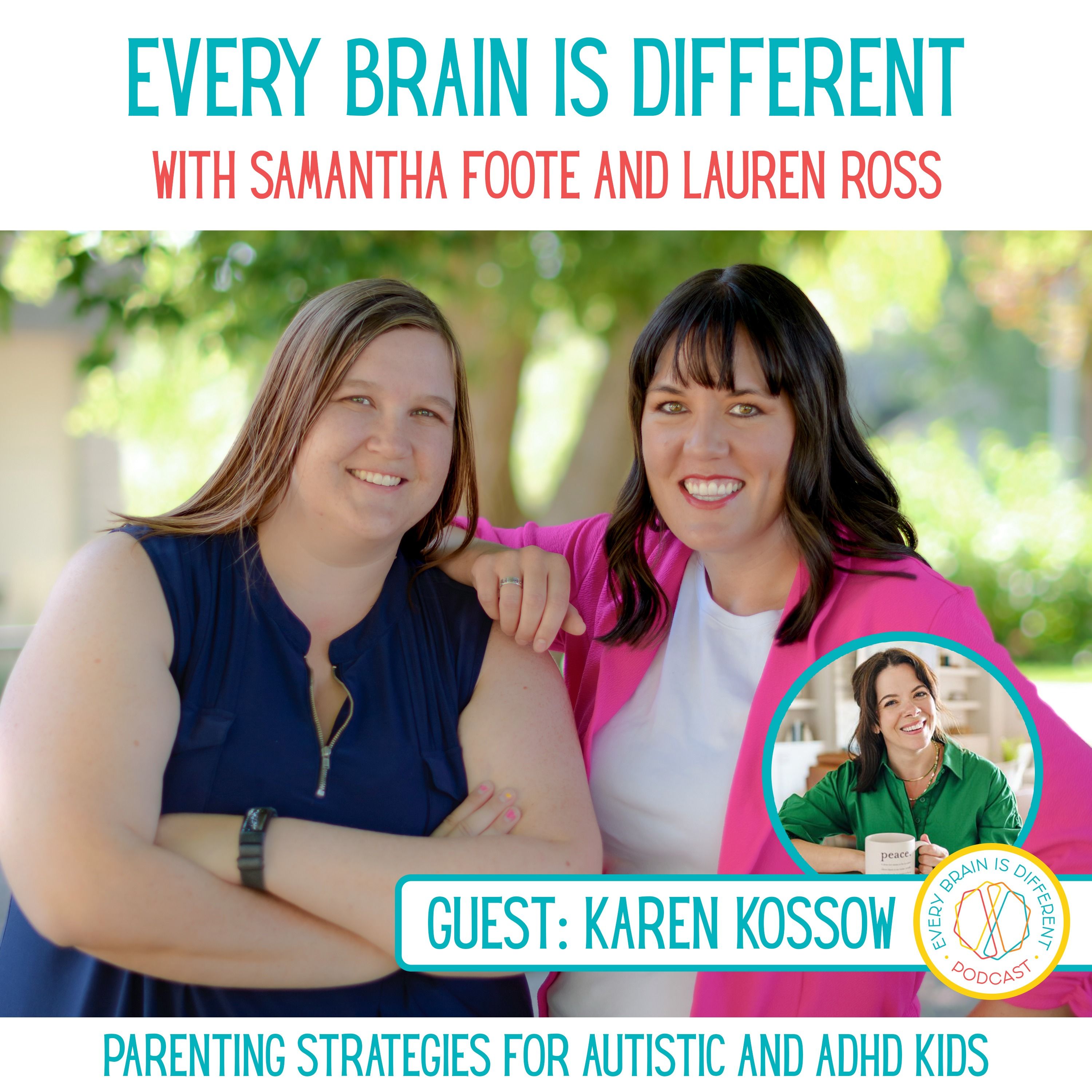
Ep 126Why Homeschooling Works for Autistic and ADHD Kids With Karen Kossow | Ep. 126
In this episode, we welcome back Karen Kassow, a writer, certified master life coach, and founder of AI-Powered Homeschool.As a neurodivergent parent raising two autistic children, Karen shares her journey and dedicated advocacy within the neurodivergent community.She discusses the challenges faced by families in navigating special education services, especially with the potential removal of crucial programs like the family-paid caregiving waiver. Karen emphasizes the importance of making educated voting choices to support these programs and shares the heartbreaking stories of families that rely on them.Karen talks about homeschooling as a viable, flexible alternative for neurodivergent families, offering various strategies and resources that cater to the unique needs of these children.Listeners are encouraged to get involved in local disability resources and make their voices heard to enact change and support for families in similar situations. 00:00 Introduction to the Podcast00:40 Meet Karen Caso: Life Coach and Advocate01:57 Challenges in the Neurodivergent Community02:29 The Importance of Educated Voting09:31 Homeschooling for Neurodivergent Kids16:18 Flexibility and Support in Homeschooling19:34 Homeschooling Standards and Regulations20:59 Idaho Homeschooling Regulations21:47 Standardized Testing Concerns24:43 Personal Homeschooling Experiences26:09 Flexibility in Homeschooling28:37 Challenges in Public Schooling32:00 Homeschooling Resources and Support35:16 Final Thoughts and Reflections Connect with Karen: Website: https://www.karenkossow.com/Join the Neurodivergent Parenting Community: https://www.everybrainisdifferent.com/membership Connect with Samantha Foote!Website: https://everybrainisdifferent.com/Instagram: https://www.instagram.com/everybrainisdifferentYouTube: https://www.youtube.com/@everybrainisdifferent
Ep 125Summer Burnout in Neurodivergent Families | Ep. 125
In this episode, Samantha and Lauren discuss summer burnout experienced by both parents and neurodivergent children.They share personal stories and offer practical tips for recognizing signs of burnout, such as emotional dysregulation and behavioral changes.Samantha and Lauren emphasize the importance of creating a balanced routine that includes adequate downtime and sensory-friendly spaces to help children self-regulate and recover from overstimulation.They also discuss their own experiences and strategies for managing burnout and encourage listeners to share their own tips for overcoming burnout. 00:00 Introduction to Summer Burnout00:38 Personal Experiences with Burnout02:09 Recognizing Burnout Symptoms06:11 Managing Burnout in Kids09:01 Self-Regulation Strategies10:29 Host's Personal Burnout10:58 Conclusion and Next Episode Preview Follow us on Instagram: www.instagram.com/everybrainisdifferent Connect with Samantha Foote!Website: https://everybrainisdifferent.com/Instagram: https://www.instagram.com/everybrainisdifferentYouTube: https://www.youtube.com/@everybrainisdifferent
Ep 124What Kids Really Hear When You Say “Don’t” | Ep. 124
In this episode, Samantha shares practical tips for implementing language shifts and going from telling kids what not to do using "don't" to telling what to do.She emphasizes redirecting behavior with clear and positive alternatives, keeping instructions simple and specific, and being consistent in using positive language. 00:00 Introduction to Positive Language00:55 Understanding the Impact of Negative Language01:15 Shifting to Positive Instructions02:10 Practical Examples and Tips03:32 Consistency and Final Thoughts04:17 Upcoming Events and Sign-Off Parenting Power Hour: 2nd Thursday of the month from 12:45-1:45 PM MDT. Sign up at www.everybrainisdifferent.com Connect with Samantha Foote!Website: https://everybrainisdifferent.com/Instagram: https://www.instagram.com/everybrainisdifferentYouTube: https://www.youtube.com/@everybrainisdifferent
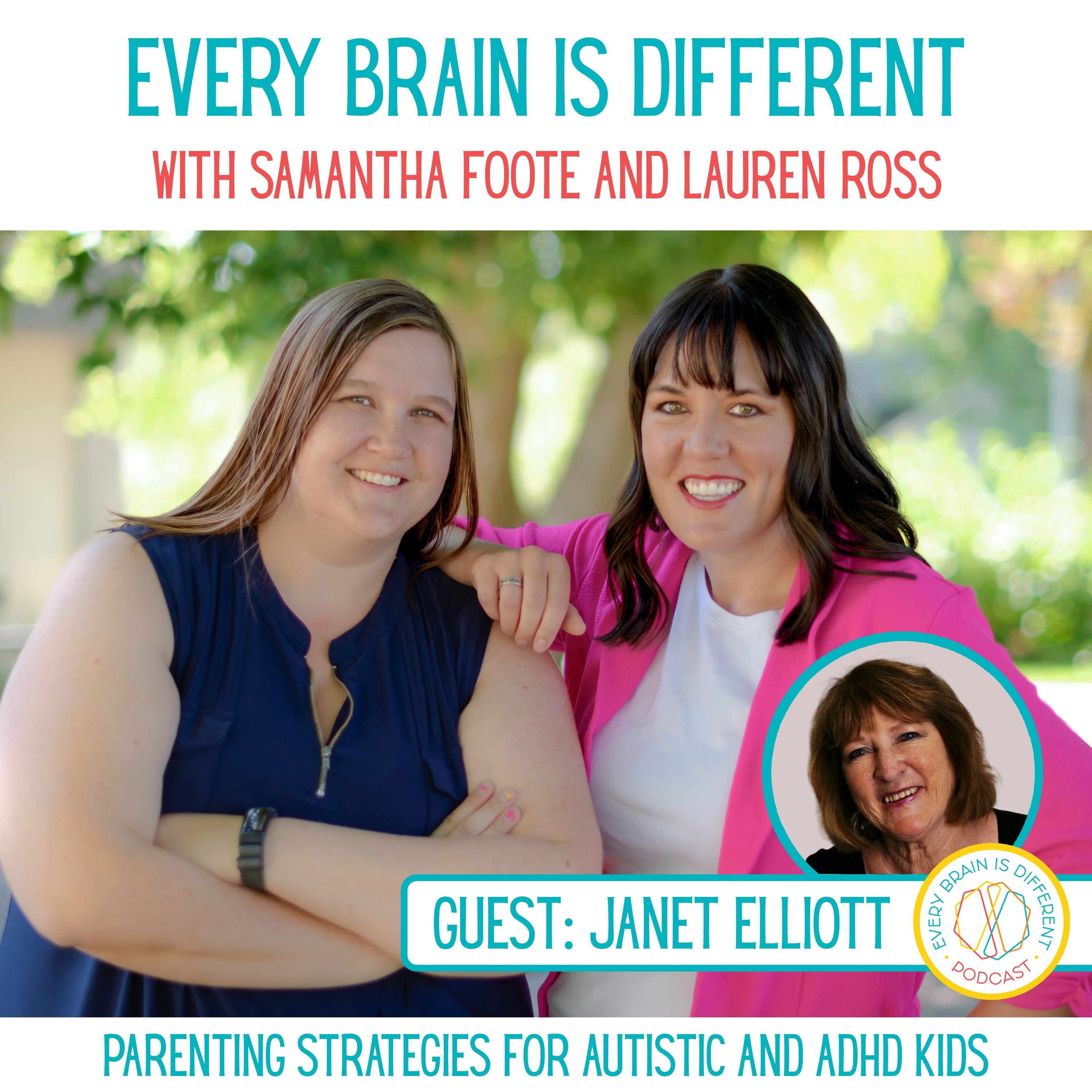
Ep 123Advocating Before Autism Had a Name With Janet Elliott | Ep. 123
In this episode Samantha and Lauren speak with Janet Elliot, author of 'The Alien Savant,' a poignant exploration of her autistic brother's journey through a neurotypical world.Janet recounts the challenges faced by her family in the 1960s and 1970s, highlighting the lack of understanding and resources for children with developmental disabilities during that time.She discusses the evolution of special education and family advocacy, emphasizing the importance of recognizing strengths and fighting for appropriate educational and social services for neurodivergent individuals.The conversation also touches on the ongoing need for societal acceptance and support for adults with disabilities, along with practical advice and valuable resources for parents and caregivers. 00:00 Introduction to the Podcast and Guest00:43 Janet's Involvement in the Neurodivergent Community01:23 Challenges and Advocacy in the 1960s and 1970s05:08 Michael's Education Journey08:31 Michael's Adult Life and Continued Advocacy12:30 Advice for Parents of Neurodivergent Children14:40 Resources for Adults with Disabilities18:57 Janet's Book and Where to Find It21:31 Conclusion and Final Thoughts Connect with Janet:Website: https://www.myguidedpen.com/Buy the Book, The Alien Savant: https://www.bookshop.org/Connect with Sweet Zola's: https://sweetzolascandy.com/ Connect with Samantha Foote!Website: https://everybrainisdifferent.com/Instagram: https://www.instagram.com/everybrainisdifferentYouTube: https://www.youtube.com/@everybrainisdifferent
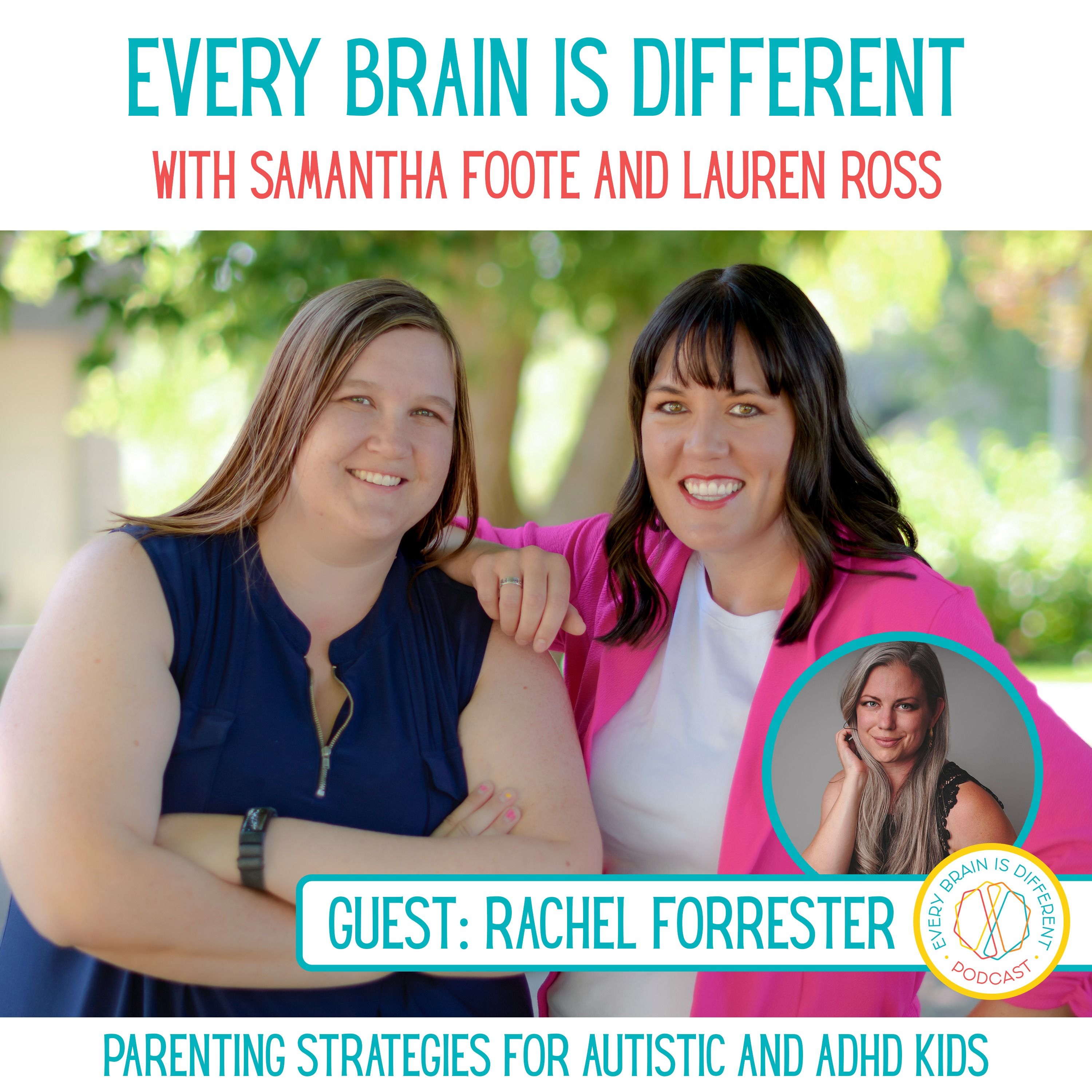
Ep 122Navigating Housing Decisions for Kids With Disabilities with Rachel Forrester | Ep. 122
In this episode, Rachel Forrester, an Idaho real estate broker and founder of the support group Idaho Autism Moms, shares her expertise in assisting families with special needs children in finding suitable homes in and around Boise, Idaho.She discusses various considerations when buying a house, such as proximity to therapy services, neighborhood safety, and the importance of functional spaces like sensory rooms.Rachel also addresses the challenges of moving with special needs children and offers strategies to make the process as smooth as possible, including the usefulness of video walkthroughs and conducting thorough neighborhood research. 00:00 Introduction and Guest Welcome00:18 Rachel's Involvement in the Neurodivergent Community01:11 Housing Needs for Families with Special Needs02:30 Considerations for Home Features and Safety07:25 Importance of Proximity to Resources13:05 Navigating Neighborhood Safety and Community19:21 Rachel's Free Guide and Final Thoughts21:00 Conclusion and Highlights Parenting Power Hour: www.everybrainisdifferent.com Get Rachel's Guide:tinyurl.com/rachelinboise Connect with Rachel:Instagram: https://www.instagram.com/the.208.rachel?igsh=MXA1Z2t4YWtxanQxaQ Connect with Samantha Foote!Website: https://everybrainisdifferent.com/Instagram: https://www.instagram.com/everybrainisdifferentYouTube: https://www.youtube.com/@everybrainisdifferent
Ep 121What to do When Your Neurodivergent Child's Meltdown Comes out of Nowhere | Ep. 121
In this episode, Samantha Foote narrates a personal story about her son's meltdown during a family trip. She recounts the events leading up to the meltdown, the meltdown itself, and what they did after.Samantha shares what she did well in managing the situation, , and also reflects on what she could have done better.She emphasizes the importance of helping children return to a self-regulated state during meltdowns and discusses the plans they made to ensure her son had personal space and ways to calm himself for the rest of the trip. 00:00 Introduction and Episode Overview00:10 The Meltdown02:41 Understanding the Meltdown03:17 Reflecting on the Response04:52 Moving Forward: Strategies and Plans05:39 Final Thoughts and Takeaways Connect with Us: www.everybrainisdifferent.com Connect with Samantha Foote!Website: https://everybrainisdifferent.com/Instagram: https://www.instagram.com/everybrainisdifferentYouTube: https://www.youtube.com/@everybrainisdifferent
Ep 120The Gut-Brain Connection and it's Effect on ADHD Symptoms with Dana Kay | Ep. 120
In this episode, Samantha and Lauren talk with Dana Kay, a board-certified health practitioner, and two-time international bestselling author.Dana shares her extensive experience working with families across the US through her company, ADHD Thrive Institute, where she helps parents reduce ADHD symptoms naturally by focusing on biological triggers like diet, gut health, and inflammation.She emphasizes the importance of supporting a child's biology rather than 'fixing' them, and discusses the profound impact of the gut-brain connection on overall health and behavior, providing insights into how gut health can influence ADHD symptoms and other disorders. 00:00 Introduction to Donna Kay00:34 Donna's Work with Neurodivergent Families02:14 The Gut-Brain Connection04:15 Impact of Antibiotics on Gut Health08:17 The Role of the Vagus Nerve10:14 Strategies for Supporting Gut Health20:16 Addressing Picky Eating21:41 Donna's Personal Life and Interests23:10 Conclusion and Resources Join the Neurodivergent Parenting Community: https://www.everybrainisdifferent.com/membership Connect with Dana:Website: https://adhdthriveinstitute.com/Facebook: https://www.facebook.com/adhdthriveinstituteInstagram: https://www.instagram.com/adhdthriveinstitute/YouTube: https://www.youtube.com/@ADHDThriveInstitute Connect with Samantha Foote!Website: https://everybrainisdifferent.com/Instagram: https://www.instagram.com/everybrainisdifferentYouTube: https://www.youtube.com/@everybrainisdifferent

Ep 119Mastering Transitions Without Meltdowns in Your ADHD/Autistic Kid | Ep. 119
In this episode, Samantha Foote discusses effective strategies for managing transitions for neurodivergent children. Understanding that transitions can trigger anxiety, resistance, or meltdowns, she emphasizes the importance of preparation and planning.Suggestions include using visual schedules, musical cues, and countdowns to create predictability and ease anxiety.Additionally, she highlights the need for consistent daily routines, transitional objects, positive reinforcement, sensory considerations, and supportive communication as vital tools for smooth transitions. 00:00 Introduction to Managing Transitions00:10 Understanding Transitions and Their Challenges00:32 Preparation and Planning for Smooth Transitions00:43 Using Visual Schedules and Musical Cues01:44 Creating Predictability with Consistent Routines02:20 Utilizing Transition Objects for Comfort02:47 Countdowns and Timers for Effective Transitions03:03 Positive Reinforcement and Encouragement03:43 Sensory Considerations for Transitions04:42 Supportive Communication Strategies05:39 Key Strategies Recap and Conclusion Join the Neurodivergent Parenting Community: https://www.everybrainisdifferent.com/membership Connect with Samantha Foote!Website: https://everybrainisdifferent.com/Instagram: https://www.instagram.com/everybrainisdifferentYouTube: https://www.youtube.com/@everybrainisdifferent
Ep 118Parenting Sensory Seekers and Avoiders Under One Roof (Part 1) | Ep. 118
In this episode, Lauren and Samantha discuss strategies for managing multiple children with different sensory needs. They share personal experiences and provide initial tips, such as understanding individual sensory profiles, creating dedicated sensory spaces, establishing predictable routines, incorporating sensory breaks, and adapting communication strategies.Practical advice is offered for accommodating sensory avoiders who prefer quiet spaces and sensory seekers who crave constant stimulation. The episode concludes with a promotion for their neurodivergent parenting community, where listeners can seek further support and advice. 00:00 Introduction to the Podcast00:43 Understanding Differing Sensory Needs02:12 Tips for Managing Sensory Differences04:06 Creating Individual Sensory Spaces10:08 Establishing Predictable Routines13:43 Incorporating Sensory Breaks17:26 Communication Strategies for Sensory Needs23:31 Conclusion and Community Support Join the Neurodivergent Parenting Community: https://www.everybrainisdifferent.com/membership Connect with Samantha Foote!Website: https://everybrainisdifferent.com/Instagram: https://www.instagram.com/everybrainisdifferentYouTube: https://www.youtube.com/@everybrainisdifferent
Ep 117What to Look for in a Modern ABA Program | Ep. 117
In this episode Samantha discusses Applied Behavioral Analysis (ABA) and its significance in supporting the neurodivergent community.She explains ABA as a scientific method aimed at improving socially significant behaviors such as communication, self-help skills, emotional regulation, and social interactions through individualized goals, data collection, positive reinforcement, and environmental modifications.Samantha highlights the importance of client-centered care, where the preferences and consent of the individuals are prioritized, and discusses the controversial beginnings of ABA, emphasizing the need for programs that respect and empower individuals rather than solely focusing on behavior modification to appear neurotypical.She also advises on selecting an appropriate ABA program, stressing the involvement of parents and caregivers in the process, and warns against programs that do not respect the insights and expertise of families regarding their own children. 00:00 Introduction to the Podcast00:02 Understanding Applied Behavioral Analysis (ABA)00:41 Key Elements of ABA01:16 Controversies and Personal Experiences with ABA02:36 Choosing the Right ABA Program03:49 Parental Involvement and Final Thoughts05:22 Conclusion and Contact Information Connect with me: www.everybrainisdifferent.com Connect with Samantha Foote!Website: https://everybrainisdifferent.com/Instagram: https://www.instagram.com/everybrainisdifferentYouTube: https://www.youtube.com/@everybrainisdifferent
Ep 116Creating Space for Autistic Dancers with Amanda Trisdale & Leta Rundell | Ep. 116
In this episode, Amanda Trisdel and her daughter Leta Rundell join the discussion to talk about their journey in the neurodivergent community and the founding of the Autistic Wings Dance Company.Amanda, the CEO, and Leta, who has been a dedicated dancer since a young age, talk about the struggles faced in traditional dance studios, leading them to establish a safe and accommodating space for neurodivergent dancers.The conversation also touches on the detailed approach towards developing dance IEPs (Individualized Education Plans) for their students, the challenges of dealing with misconceptions about neurodivergence, and the importance of patience and understanding from dance instructors.This episode highlights the importance of specialized programs that go beyond adaptive dance, aiming to provide serious and skill-focused dance education to neurodivergent individuals. 00:00 Introduction to the Podcast00:39 Meet Amanda and Lita: The Story Behind Autistic Wings Dance Company01:58 Challenges in Traditional Dance Studios04:37 Creating a Neurodiverse-Friendly Dance Curriculum05:40 The Importance of Individualized Education Plans (IEPs)07:14 Hiring the Right Teachers for Neurodiverse Students11:00 Overcoming Misconceptions and Building a Supportive Community22:18 Conclusion and Final Thoughts25:31 Parenting Power Hour: Join Us!26:15 Highlights and Reflections Get the Ultimate Guide to Parenting Your Neurodivergent Child: www.everybrainisdifferent.com/ultimate-guideConnect with Amanda and Leta: Website: https://www.letatapstyles.com/ | https://www.autisticwingsdancecompany.org/YouTube: https://www.youtube.com/@letatapstylesInstagram: https://www.instagram.com/@antrisdale | https://www.instagram.com/@letatapstyles | https://www.instagram.com/@autisticwingsdancecompanyTikTok: https://www.tiktok.com/autisticwingsdance Connect with Samantha Foote!Website: https://everybrainisdifferent.com/Instagram: https://www.instagram.com/everybrainisdifferentYouTube: https://www.youtube.com/@everybrainisdifferent
Ep 115Mastering Self-Regulation When Your Child Is Escalating | Ep. 115
In this episode, Samantha talks about the importance of emotional self-regulation, particularly the effective technique of stepping away.She discusses the significance of managing one's emotions to support both oneself and one’s child, and how stepping away during a moment of escalating emotions can help maintain composure and prevent further escalation.Samantha provides actionable steps on how to ensure a child's safety before taking a break, using breathing and grounding techniques to regain calmness, and returning to the situation with a composed demeanor.She underscores that taking a break is a healthy and necessary part of parenting, and emphasizes the importance of reflecting on triggers and seeking support when needed.The episode also highlights the role of modeling appropriate behavior for children and the value of practicing self-care to manage overwhelming situations effectively. 00:00 Introduction to Self-Regulation00:11 Understanding Emotional Regulation00:41 When to Step Away01:36 Techniques to Regain Composure02:21 Returning to Your Child02:53 Dealing with Meltdowns03:52 Reflecting and Planning Ahead04:55 Seeking Support05:48 Final Thoughts and Resources Join the Neurodivergent Parenting Community: The Neurodivergent Parenting Community | Every Brain is Different Connect with Samantha Foote!Website: https://everybrainisdifferent.com/Instagram: https://www.instagram.com/everybrainisdifferentYouTube: https://www.youtube.com/@everybrainisdifferent
Ep 114Trusting Your Gut Over the Experts While Raising a Neurodivergent Child with Robert Delena | Ep. 114
Samantha and Lauren speak with Robert Delena who discusses the journey he and his son Ryan have navigated through various therapeutic schools and a diagnosis of pervasive developmental disorder.Robert highlights the challenges of overdiagnosis and misdiagnosis, emphasizing the importance of parental instinct and finding appropriate support. A pivotal moment arrives when Ryan, initially labeled and restrained by the system, discovers skiing, an activity that reshapes his confidence and self-worth.Through their shared experience, Robert underscores the significance of recognizing a child's unique strengths and interests. He recalls how skiing, an unexpected outlet, brought substantial improvement to Ryan's overall well-being.This episode provides insights into parenting neurodivergent children, the potential difficulties with the current educational and medical systems, and the need for perseverance in seeking what genuinely benefits one's child.Samantha, Lauren, and Robert also talk about Robert and Ryan's book, 'Without Restraint, chronicling their remarkable journey. 00:00 Introduction to the Podcast00:40 Meet Robert Delena01:20 Ryan's Diagnosis Journey02:18 Challenges with the System10:38 Skiing: A Life-Changing Discovery18:33 Encouraging Curiosity and Passion in Children19:20 Ryan's Journey: From Skiing to Rock Climbing20:58 The Impact of College and Certifications22:58 Ryan's Online Presence and Sponsorships24:44 Reflections on Parenting and Finding the Right Path27:00 Connecting with the Audience and Final Thoughts31:16 Parenting Power Hour: Join the Community Connect with Robert and Ryan:www.robertdelena.comwww.without-restraint-book.comInstagram: www.instagram.com/extreme_ryan_delenawww.instagram.com/robert.delena Join the Parenting Power Hour: www.everybrainisdifferent.com Connect with Samantha Foote!Website: https://everybrainisdifferent.com/Instagram: https://www.instagram.com/everybrainisdifferentYouTube: https://www.youtube.com/@everybrainisdifferent
Ep 113Backtalk or Miscommunication? Communicating With Neurodivergent Kids | Ep. 113
In this episode Samantha discusses strategies for responding to children who speak disrespectfully, particularly focusing on neurodivergent children such as those with ADHD and autism.She emphasizes the importance of maintaining respect and firmness in responses, highlighting how these children may face unique communication challenges and may not always understand social norms.Samantha shares practical tips for setting clear expectations, modeling respectful communication, and avoiding impulsive reactions to foster better understanding and cooperation within the family.Listeners are invited to attend the next Parenting Power Hour for further discussion and brainstorming on this topic. 00:00 Introduction to Responding to Disrespectful Kids00:22 Understanding Neurodivergent Communication Challenges01:15 Setting Clear Expectations and Consequences01:42 Modeling Respectful Communication01:57 The True Meaning of Discipline02:08 Conclusion and Invitation to Parenting Power Hour Parenting Power Hour:Website: www.everybrainisdifferent.com Connect with Samantha Foote!Website: https://everybrainisdifferent.com/Instagram: https://www.instagram.com/everybrainisdifferentYouTube: https://www.youtube.com/@everybrainisdifferent
Ep 112Navigating School Challenges with Curiosity and Collaboration with Scotti Weintraub | Ep. 112
In this episode, Samantha and Lauren speak with Scotti Weintraub and discuss the importance of parents paying attention to the struggles their children face in school, collaborating with teachers and professionals, and advocating effectively during school meetings.Scotti emphasizes leading with curiosity, gathering information, and building solid relationships with educators to create a supportive environment for their children's unique needs.Additionally, the conversation touches on the emotional aspects of parenting, the significance of not viewing children’s struggles as a reflection of parenting skills, and the value of involving children in discussions about their needs. 00:00 Introduction to the Podcast00:02 Scotty Weintraub's Background and Mission00:42 Challenges Faced by Neurodivergent Families03:39 Recognizing and Addressing School Struggles09:24 Effective Communication with Schools16:40 Collaborating with Teachers and Professionals20:11 Resources and Support for Parents23:30 Conclusion and Final Thoughts24:57 Reflections and Key Takeaways View the Summit: Neurodiversity in Harmony Summit Connect with Samantha Foote!Website: https://everybrainisdifferent.com/Instagram: https://www.instagram.com/everybrainisdifferentYouTube: https://www.youtube.com/@everybrainisdifferent
Ep 111Celebrating Neurodiversity in Everyday Life | Ep. 111
In this episode Samantha Foote discusses the importance of celebrating neurodiversity.She explains that neurodiversity includes the natural differences in how people think and learn and emphasizes the value of these differences.Samantha provides practical tips for creating inclusive spaces, such as listening to neurodivergent voices and respecting individual needs.She highlights the importance of challenging stereotypes and celebrating individual strengths to foster a community where everyone feels valued and included. 00:00 Introduction to the Podcast00:20 Defining Neurodiversity01:24 The Importance of Celebration02:37 Practical Ways to Celebrate Neurodiversity04:23 Conclusion and Further Resources Neurodivergent Parenting Community: www.everybrainisdifferent.com Connect with Samantha Foote!Website: https://everybrainisdifferent.com/Instagram: https://www.instagram.com/everybrainisdifferentYouTube: https://www.youtube.com/@everybrainisdifferent
Ep 110What Will It Take? Phrases That Build Partnerships for Your Neurodivergent Child with Tucker Miller | Ep. 110
In this episode of the 'Every Brand Is Different' podcast, executive coach and author Tucker Miller shares her extensive experience in leadership and advocacy. The conversation addresses the challenges and importance of having difficult conversations, especially for parents of neurodivergent children.Tucker emphasizes the need for neutrality and collaboration in these dialogues, suggesting strategies to ensure effective communication and mutual understanding. Additionally, she touches on her book, 'First Four Words,' which provides practical advice for initiating impactful discussions in both professional and personal contexts. 00:00 Introduction to Every Brand Is Different Podcast00:39 Meet Tucker Miller: CEO of Onward Leadership01:18 Tucker's Involvement in the Neurodivergent Community03:58 The Importance of Inclusive Accommodations05:58 Navigating Hard Conversations as Parents09:06 Advocating for Your Child in School15:39 The Parenting Power Hour Announcement16:39 Collaborating with School Counselors21:05 Finding Support for Neurodivergent Kids24:52 Fun and Hobbies: Getting to Know the Hosts26:24 Episode Highlights and Closing Thoughts Parenting Power Hour: www.everybrainisdifferent.comConnect with Tucker: LinkedIn: www.linkedin.com/in/tuckermillerWebsites: OnwardLeadership.com and JTuckerMIller.com Connect with Samantha Foote!Website: https://everybrainisdifferent.com/Instagram: https://www.instagram.com/everybrainisdifferentYouTube: https://www.youtube.com/@everybrainisdifferent

Ep 109Speech Therapy for Autistic and ADHD Kids | Ep. 109
In this episode Samantha explores the scope of speech therapy for neurodivergent children, including those with autism or ADHD.She explains how speech therapy covers expressive and receptive language, social communication skills, and alternative communication methods.Samantha offers practical signs that may indicate a need for speech therapy and provides home strategies to support communication.She emphasizes the importance of professional evaluations for personalized insights and guidance. 00:00 Introduction to the Podcast00:05 Understanding Speech Therapy00:24 Components of Speech Language Therapy01:40 Why Speech Therapy Matters for Neurodivergent Kids02:42 Signs Your Child May Benefit from Speech Therapy03:26 Supporting Communication at Home04:21 Getting an Evaluation04:46 Conclusion and Additional Resources Neurodivergent Parenting Community: www.everybrainisdifferent.com Connect with Samantha Foote!Website: https://everybrainisdifferent.com/Instagram: https://www.instagram.com/everybrainisdifferentYouTube: https://www.youtube.com/@everybrainisdifferent
Ep 108Strategies for the ADHD-Autism Brain | Ep. 108
Samantha and Lauren discuss the complexities of managing both ADHD and autism, which often have competing needs. They discuss the unique challenges faced by individuals with both diagnoses.Practical strategies to manage these dual diagnoses are explored, such as creating flexible routines, adapting the environment, building internal awareness, and using transition helpers.Samantha and Lauren emphasize the importance of patience and support, stressing that individuals with ADHD and autism are not broken but need better support to thrive. 00:35 Introduction to Competing Needs of ADHD and Autism00:58 Understanding the Struggle: ADHD vs Autism03:07 Navigating Flexibility in Schedules08:05 Creating a Supportive Environment11:07 Teaching Self-Regulation and Awareness12:58 Strategies for Smooth Transitions17:14 Conclusion and Final Thoughts Join the Community: https://www.everybrainisdifferent.com/membershipParenting Power Hour: https://www.everybrainisdifferent.com/ Connect with Samantha Foote!Website: https://everybrainisdifferent.com/Instagram: https://www.instagram.com/everybrainisdifferentYouTube: https://www.youtube.com/@everybrainisdifferent
Ep 107Musical Breaks That Help Prevent Meltdowns in Autistic Kids and Caregivers | Ep. 107
Samantha Foote discusses the benefits of taking musical breaks to prevent meltdowns and manage stress. She highlights how music can enhance the immune system, release endorphins, reverse stress, promote creative expression, and offer other benefits without needing any musical training.Samantha shares several practical methods for incorporating music into daily routines, including improvising on instruments, creating mood-specific playlists, having dance parties, and engaging in yoga with music. She also introduces fill-in-the-blank songwriting and the blues format to make songwriting accessible and enjoyable for all ages.Tune in to learn more about how music can be a powerful tool for maintaining emotional well-being. 00:00 Introduction to Musical Breaks00:26 Benefits of Music01:04 Playing Instruments for Stress Relief01:51 Listening to Music02:29 Dance Party for Stress Relief03:10 Yoga and Progressive Muscle Relaxation with Music03:42 Songwriting as a Fun Activity04:55 Conclusion and Final Tips Join the Community: https://www.everybrainisdifferent.com/membership Connect with Samantha Foote!Website: https://everybrainisdifferent.com/Instagram: https://www.instagram.com/everybrainisdifferentYouTube: https://www.youtube.com/@everybrainisdifferent
Ep 106Finding the Right Home for Neurodivergent Families with Carissa Beaman | Ep. 106
In this episode of the Every Brand Is Different podcast, hosts Samantha and Lauren speak with Carissa Beaman, a real estate agent who specializes in helping neurodivergent families find the perfect home.Carissa shares her unique approach to real estate, which includes developing tailored solutions that go beyond standard checklists. Focusing on sensory-friendly spaces, accessible features, and inclusive communities, Carissa provides insights for families with special needs. 00:35 Meet Carissa Beman: A Unique Real Estate Agent01:35 Carissa's Personal Journey with Neurodivergence02:02 Finding the Right Home for Neurodivergent Families04:00 The Importance of Community and Advocacy04:41 Challenges and Solutions in Home Buying09:35 The Role of DEI in Real Estate11:16 Tips for Finding the Perfect Home19:34 The Value of Patience in Home Buying20:36 Carissa's Personal Interests and Conclusion Connect with Carissa:Website: https://card.winlocal.com/carissa-beamanFacebook: https://www.pinterest.com/BeamanPartners/Instagram: https://www.pinterest.com/BeamanPartners/Pinterest: https://www.pinterest.com/BeamanPartners/ Connect with Samantha Foote!Website: https://everybrainisdifferent.com/Instagram: https://www.instagram.com/everybrainisdifferentYouTube: https://www.youtube.com/@everybrainisdifferent
Ep 105Preventing Meltdowns with Connection Not Punishment | Ep. 105
In this episode of the Every Brain Is Different podcast, Samantha Foot introduces and explains the positive discipline strategy known as Distract and Redirect. This approach involves shifting a child's attention from inappropriate or potentially harmful activities to more suitable and engaging alternatives, which is especially effective for children with emotional regulation challenges like ADHD and autism.Samantha provides practical examples and offers key insights, including the importance of using this technique proactively to prevent meltdowns, building trust by supporting rather than shaming children, and practicing regulation without resorting to punishment.She also emphasizes the need to stay calm, understand a child's interests, and address serious behaviors appropriately to ensure the strategy is effective. 00:00 Introduction to Positive Discipline00:20 Defining Distract and Redirect01:04 Practical Examples of Distract and Redirect02:07 Why Distract and Redirect Works04:20 Tips for Effective Implementation05:25 Conclusion and Final Thoughts Join the Neurodivergent Parenting Community: The Neurodivergent Parenting Community | Every Brain is Different Connect with Samantha Foote!Website: https://everybrainisdifferent.com/Instagram: https://www.instagram.com/everybrainisdifferentYouTube: https://www.youtube.com/@everybrainisdifferent

Ep 104Curiosity Over Shame: Helping Neurodivergent Kids Thrive with David Chalk | Ep. 104
In this episode of the Every Brand Is Different podcast, David Chalk shares his journey as a neurodivergent individual. Diagnosed at the age of 42 with ADHD, dyslexia, and prosopagnosia, David reveals how these conditions affected his life.He highlights the role his mother played in providing unconditional love and a positive environment, which significantly contributed to his success despite his challenges.David also discusses his groundbreaking approach to teaching reading using an AI-based application, emphasizing the importance of curiosity and calmness in learning. The conversation gets into the biological impacts of stress and fight-or-flight responses on neurodivergent individuals, providing insights and practical advice for parents to support their children effectively. 00:36 Introduction and Guest Welcome02:16 Developing Reading Solutions04:06 Parental Support and Unconditional Love13:08 The Power of Curiosity16:36 David's Diagnosis Story20:06 Final Thoughts and Resources24:47 Conclusion and Farewell Parenting Power Hour: www.everybrainisdifferent.com Introduction to David: Issue 13: The Dystinct Journey of David Chalk Contact David: [email protected] Connect with Samantha Foote!Website: https://everybrainisdifferent.com/Instagram: https://www.instagram.com/everybrainisdifferentYouTube: https://www.youtube.com/@everybrainisdifferent
Ep 103Rethinking Social Skills for Autistic and ADHD Kids | Ep. 103
In today's episode, Samantha Foote discusses how to support social skills in neurodivergent children, such as those with ADHD and autism. She highlights the differences in communication and thinking styles between neurotypical and neurodivergent individuals and emphasizes the importance of understanding these differences to foster meaningful social interactions.Key strategies for supporting social skills include structured play, visual supports, role-playing, and social stories. Samantha shares practical tips for integrating social skills practice into daily routines at home, school, and within the community. 00:00 Introduction to Supporting Social Skills01:12 Understanding Social Challenges02:03 Strategies for Supporting Social Skills03:33 Integrating Social Skills into Daily Routines04:28 Conclusion and Additional Resources Parenting Power Hour: www.everybrainisdifferent.com Connect with Samantha Foote!Website: https://everybrainisdifferent.com/Instagram: https://www.instagram.com/everybrainisdifferentYouTube: https://www.youtube.com/@everybrainisdifferent
Ep 102How to Advocate for Your Autistic Child Without Burning Bridges with Gail Ewell | Ep. 102
Samantha and Lauren welcome Gail Ewell, founder and executive director of Hope Technology School (HTS), an award-winning K-12 school for neurodivergent students, including those with autism and ADHD.Gail shares her journey of founding HTS, starting as a pilot program for five students and growing into a fully accredited school. As a parent of three, two of whom are neurodivergent, she discusses the motivation behind HTS and key inclusive education strategies like differentiated instruction, project-based learning, and sensory sensitivity awareness.Gail also talks about fostering friendships between neurodivergent and neurotypical students through peer mentoring and collaborative projects. She offers advice on advocating for inclusion in public schools and maintaining positive relationships with educators.Gail highlights HTS’s resources and programs that support neurodivergent learners, making this episode a must-listen for parents, educators, and anyone passionate about inclusive education. Episode Breakdown:00:00 – Introduction to the Podcast and Guest00:30 – Gail's Journey and the Founding of HTS02:23 – Inclusive Education Strategies at HTS05:15 – Advocating for Inclusive Education06:59 – Personal Experiences and Challenges13:08 – Fostering Friendships and Social Skills18:40 – Fun and Personal Interests20:06 – Podcast Wrap-Up and Highlights Connect with Samantha Foote!Website: https://everybrainisdifferent.com/Instagram: https://www.instagram.com/everybrainisdifferentYouTube: https://www.youtube.com/@everybrainisdifferent
Ep 101Friday Five: Helping Kids Thrive with Occupational Therapy | Ep. 101
Samantha explores the role of occupational therapy in supporting children with autism and ADHD. Discover how occupational therapy enhances essential skills for daily living, including dressing, playing, eating, and learning.Samantha shares personal insights into the impact occupational therapy has had on her children's sensory regulation, motor skills, and emotional well-being.Learn how occupational therapy focuses on empowering children rather than 'fixing' them, providing tailored tools to thrive in their environments.Samantha details specific goals of occupational therapy for neurodivergent children, encompassing sensory regulation, fine and gross motor skills, executive functioning, self-care, and emotional regulation.Explore the importance of finding a skilled occupational therapist who can customize therapy plans to meet each child's unique needs. 00:00 Introduction to the Every Brain Is Different Podcast00:28 Samantha's Personal Experiences with Occupational Therapy02:14 Understanding the Impact of Occupational Therapy02:56 Benefits for Autistic and ADHD Children03:57 Common Goals Addressed in Occupational Therapy05:18 Importance of Personalized Therapy Plans05:56 Tips for Finding the Right Occupational Therapist Join the Neurodivergent Parenting Community: The Neurodivergent Parent Connect with Samantha Foote!Website: https://everybrainisdifferent.com/Instagram: https://www.instagram.com/everybrainisdifferentYouTube: https://www.youtube.com/@everybrainisdifferent

Ep 1005 Lessons Learned About Parenting Autistic and ADHD Kids in 100 Episodes | Ep. 100
In this milestone 100th episode of 'Every Brain is Different,' Samantha and Lauren express their excitement and gratitude to the listeners who have supported them from the beginning.They discuss five major themes that have emerged from their interviews and personal experiences over the last year and a half. They emphasize the importance of community for neurodivergent individuals and parents, trusting oneself in parenting, the significance of advocacy, understanding and interpreting children's behavior, and the educational value of play.Samantha and Lauren also highlight the creation of the Neurodivergent Parenting community as a resource for parents seeking support and understanding. 00:00 Welcome to the 100th Episode Celebration!00:56 The Importance of Community04:32 Trusting Yourself as a Parent09:03 Get Curious, Not Furious15:59 Incorporate Play for Better Learning19:12 Wrapping Up and Looking Forward Join the Neurodivergent Parenting Community: https://www.everybrainisdifferent.com/membership Connect with Samantha Foote!Website: https://everybrainisdifferent.com/Instagram: https://www.instagram.com/everybrainisdifferentYouTube: https://www.youtube.com/@everybrainisdifferent

Ep 99What to Say to Yourself When Parenting Feels Hard | Ep. 99
In this episode, Samantha talks about self-regulation with a specific focus on positive self-talk. She begins by defining emotional self-regulation and explains its significance in parenting, emphasizing how this skill can help caregivers respond thoughtfully and constructively to various situations.Samantha then discusses how positive self-talk can serve as a powerful tool for self-regulation, providing techniques such as affirmations, reframing, and self-compassion to help parents manage their emotions effectively. By integrating these strategies into daily routines, parents can model emotional resilience and foster a supportive family environment.The episode concludes with an invitation to the Parenting Power Hour, a free monthly event designed to offer further guidance on these practices. 00:00 Introduction to Positive Self-Talk00:15 Understanding Emotional Self-Regulation00:48 Importance of Emotional Self-Regulation in Parenting01:28 Benefits of Positive Self-Talk for Parents02:38 Techniques for Practicing Positive Self-Talk04:08 Integrating Positive Self-Talk into Daily Routines05:01 Invitation to Parenting Power Hour05:28 Conclusion and Farewell Parenting Power Hour: www.everybrainisdifferent.com Connect with Samantha Foote!Website: https://everybrainisdifferent.com/Instagram: https://www.instagram.com/everybrainisdifferentYouTube: https://www.youtube.com/@everybrainisdifferent
Ep 98Supporting a Foster Child with ADHD and Trauma | Ep. 98
In this episode, Andrea, a foster mother with three biological children and a 10-year-old foster daughter, shares her struggles with managing her foster daughter's ADHD-related behaviors and past trauma.The conversation goes into Andrea's concerns about morning routines, task completion, and the challenges of maintaining a balance between flexibility and structure in parenting practices.Samantha introduces the concept of Pathological Demand Avoidance (PDA) and discusses potential strategies for managing anxiety-driven oppositional behaviors and fostering a more positive family dynamic. 00:37 Introduction to the Podcast and Guest01:31 Challenges of Parenting a Foster Child with ADHD04:21 Understanding Pathological Demand Avoidance (PDA)11:50 Strategies for Managing Mornings and Chores25:13 Final Advice and Resources Parenting Power Hour: www.everybrainisdifferent.com Connect with Samantha Foote!Website: https://everybrainisdifferent.com/Instagram: https://www.instagram.com/everybrainisdifferentYouTube: https://www.youtube.com/@everybrainisdifferent
Ep 97Setting Boundaries Without Power Struggles With Autistic and ADHD Kids | Ep. 97
In this episode, Samantha talks about the challenges and benefits of setting boundaries and following through in parenting.She explains that boundaries should clearly define what actions parents will take if certain behaviors occur, instead of trying to control the child's behavior. Consistent follow-through on these boundaries helps reduce power struggles and fosters a predictable environment, which is especially beneficial for neurodivergent children.Samantha emphasizes the importance of proactive decision-making in managing parental reactions and maintaining emotional balance in the parent-child relationship. By planning responses ahead of time, parents can reduce stress and ensure consistent, constructive interactions with their children.Samantha also highlights that following through on boundaries with love and kindness encourages better compliance and understanding from children, promoting healthier behavior and emotional regulation.Parents are encouraged to integrate these strategies into their daily practices and to seek additional support through the Parenting Power Hour, a free monthly event offering further guidance. 00:00 Introduction to Positive Parenting00:49 Understanding Boundaries01:57 The Importance of Follow Through02:21 Proactive Decision Making03:36 Maintaining Emotional Balance04:11 Communicating Boundaries with Love05:39 Recap and Encouragement06:19 Upcoming Events and Conclusion Parenting Power Hour: www.everybrainisdifferent.com Connect with Samantha Foote!Website: https://everybrainisdifferent.com/Instagram: https://www.instagram.com/everybrainisdifferentYouTube: https://www.youtube.com/@everybrainisdifferent

Ep 96Parenting Differently Doesn’t Mean Parenting Wrong with Kari Baker | Ep. 96
In this episode, Samantha and Lauren talk with Kari Baker, a former financial services executive, author, speaker, and founder of Kind Families. Kari shares her journey from the financial sector to becoming an advocate for the neurodivergent community after her son was diagnosed with autism and ADHD. She talks about the importance of advocacy, the need for early diagnosis, and shares valuable parenting strategies for neurodivergent children. Kari further elaborates on the invisible nature of autism, the challenges of masking, and the significance of open communication about diagnoses to foster an understanding environment. 00:00 Introduction to the Podcast00:39 Meet Carrie Baker00:58 Carrie's Journey into Neurodivergence02:33 Parenting Neurodivergent Children03:43 Challenges and Strategies04:49 Dealing with Judgement06:53 Advocating for Your Child11:21 The Importance of Diagnosis12:55 Brady's Story13:56 Creating a Supportive Community17:06 Resources and Support17:50 Carrie's Book and Podcast21:55 Future Plans for Kind Families24:32 Carrie's Personal Interests25:09 Conclusion and Highlights Join us for the Parenting Power Hour: www.everybrainisdifferent.comJoin the Neurodivergent Parenting Community: The Neurodivergent Parenting Community | Every Brain is Different Link to episode 59 about autistic people in entertainment with Marlene Sharp and Judith Uttal: 59 - Marlene Sharp and Judith Uttal - Autism in Entertainment Find Kari on Instagram, Facebook, and LinkedIn: @kariabakerKari's website: www.kariabaker.com | www.kindfamilies.comThe KIND Families Podcast:Apple: https://podcasts.apple.com/br/podcast/the-kind-families-podcast/id1727783515Spotify: https://open.spotify.com/show/5BKcP3X2VA53QrVAVVLW56?si=6fceee13e79047fe&nd Connect with Samantha Foote!Website: https://everybrainisdifferent.com/Instagram: https://www.instagram.com/everybrainisdifferentYouTube: https://www.youtube.com/@everybrainisdifferent
Ep 95Sensory Processing Differences in Autism and ADHD | Ep. 95
In this episode, Samantha discusses sensory processing differences experienced by neurodivergent individuals. She explains the various sensory inputs, such as sight, sound, touch, taste, smell, proprioception, and the vestibular system, and how these inputs are processed differently among neurotypical and neurodivergent people.Samantha outlines key differences, including sensory sensitivities, difficulties in filtering information, varied responses to sensory input, and the overall impact on daily functioning.She emphasizes the importance of creating supportive environments and strategies like sensory integration therapy, environmental modifications, and occupational therapy to accommodate sensory needs. 00:00 Introduction to Sensory Processing00:35 Understanding Proprioception and Vestibular Input02:16 Emotional Regulation and Sensory Processing02:52 Sensory Differences in Neurodivergent Individuals05:41 Impact on Daily Functioning06:53 Strategies for Managing Sensory Challenges07:30 Personal Experiences and Recommendations08:16 Conclusion and Encouragement Parenting Power Hour: www.everybrainisdifferent.com Connect with Samantha Foote!Website: https://everybrainisdifferent.com/Instagram: https://www.instagram.com/everybrainisdifferentYouTube: https://www.youtube.com/@everybrainisdifferent

Ep 94Creating Inclusive Music Classrooms for Neurodivergent Kids with Bryson Tarbet | Ep. 94
In this episode of the 'Every Brand Is Different' podcast, Bryon Tarbet, a former music teacher turned instructional coach, discusses his journey from a neurodiverse student to an advocate for inclusive music education.Diagnosed with ADHD and Sensory Processing Disorder, Bryson shares his insights on creating emotionally and sensory-inclusive classrooms. He emphasizes the importance of universal design for learning and shares practical strategies, such as offering fidgets and over-the-ear headphones to all students, to create an environment that supports neurodiverse individuals. 00:00 Introduction to the Podcast and Guest00:49 Bryon's Journey with Neurodiversity01:56 Challenges and Strategies in Music Education05:20 The Power of Music in Brain Development08:01 Creating Inclusive Classrooms12:56 Practical Tips for Parents and Educators18:14 Connecting with Bryon and Final Thoughts Parenting Power Hour: www.everybrainisdifferent.comNeurodiversity in Harmony Summit: www.everybrainisdifferent.com/register Connect with Samantha Foote!Website: https://everybrainisdifferent.com/Instagram: https://www.instagram.com/everybrainisdifferentYouTube: https://www.youtube.com/@everybrainisdifferent