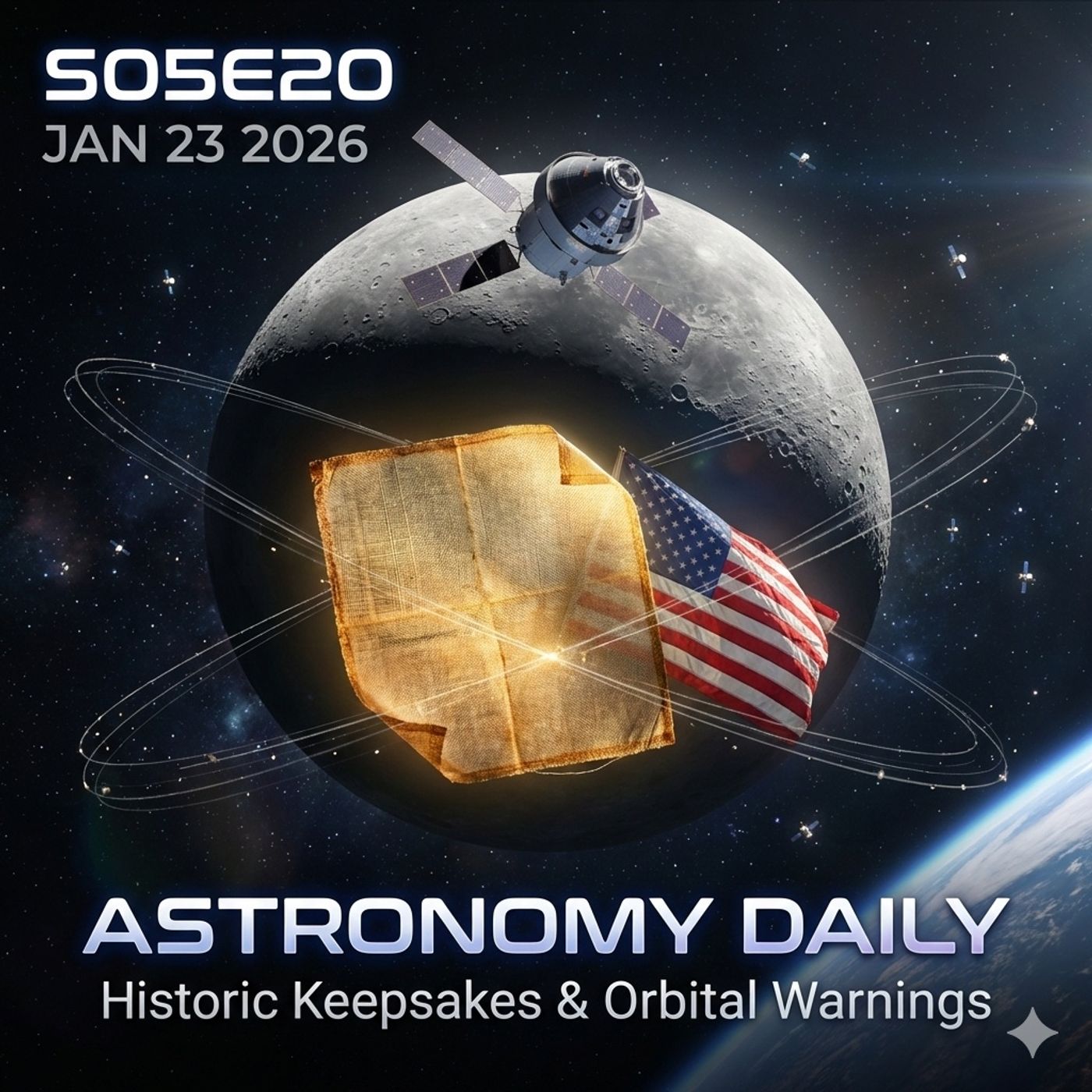
Season 5 · Episode 20
Artemis II's Historic Cargo, Orbital Debris Crisis, and AI Finds 7,000 New Worlds
Welcome to Astronomy Daily! Today we explore NASA's inspiring collection of historic keepsakes heading to the Moon on Artemis II, including fabric from the 1903 Wright Flyer. We examine an urgent warning about orbital debris—the CRASH Clock shows...
Astronomy Daily: Space News Updates
January 23, 202618m 13s
Audio is streamed directly from the publisher (dts.podtrac.com) as published in their RSS feed. Play Podcasts does not host this file. Rights-holders can request removal through the copyright & takedown page.
Show Notes
Welcome to Astronomy Daily! Today we explore NASA's inspiring collection of historic keepsakes heading to the Moon on Artemis II, including fabric from the 1903 Wright Flyer. We examine an urgent warning about orbital debris—the CRASH Clock shows catastrophic collision could occur in just 5.5 days if satellites lose maneuvering capability. New analysis of Apollo lunar samples challenges our understanding of where Earth's water came from. Irish researchers solve the mystery of how supermassive black holes grew so quickly in the early universe. Plus, Blue Origin schedules its third New Glenn launch with a reused booster, and NASA's AI tool ExoMiner++ identifies 7,000 new exoplanet candidates in TESS data.
Hosts: Anna & Avery
Episode: S05E20
Become a supporter of this podcast: https://www.spreaker.com/podcast/astronomy-daily-space-news-updates--5648921/support.
Sponsor Details:
Ensure your online privacy by using NordVPN. To get our special listener deal and save a lot of money, visit www.bitesz.com/nordvpn. You'll be glad you did!
Become a supporter of Astronomy Daily by joining our Supporters Club. Commercial free episodes daily are only a click way... Click Here
This episode includes AI-generated content.
Hosts: Anna & Avery
Episode: S05E20
Become a supporter of this podcast: https://www.spreaker.com/podcast/astronomy-daily-space-news-updates--5648921/support.
Sponsor Details:
Ensure your online privacy by using NordVPN. To get our special listener deal and save a lot of money, visit www.bitesz.com/nordvpn. You'll be glad you did!
Become a supporter of Astronomy Daily by joining our Supporters Club. Commercial free episodes daily are only a click way... Click Here
This episode includes AI-generated content.
Topics
aiapolloartemisiiastronomyastronomydailyblackholesblueoriginexoplanetskesslersyndromelunarsciencemachinelearningnasanewglennsciencespacedebrisspaceexplorationspacenewsspacetechnologystemtess