
Are We There Yet?
225 episodes — Page 4 of 5
Can life exist on a planet without a surface?
Can life exist on a planet without a surface? Plus, a look at new evidence from the Webb Space Telescope about galactic evolution.
Scientists psyched about mission to metal-rich asteroid Psyche
NASA scientists can't wait to launch a probe to the metal-rich asteroid Psyche. Its findings could uncover how our own planet formed.
The commercial space world is over the moon about lunar exploration
The upcoming Artemis missions have grabbed the attention of the nation — and the commercial space sector. Plus, a look at how a NASA engineer honors his Native American heritage with his work.
The space dust has landed! Here's why scientists are so eager to examine asteroid dirt
A capsule of space dust arrived on Earth from an asteroid hundreds of millions of miles away, and scientist can't wait to start analyzing the sample. Plus, Firefly Aerospace discusses efforts to launch a rocket in record time.
Once again, phosphine spotted in the clouds of Venus. Could this mean life on another planet?
Signs of phosphine were detected in the atmosphere of Venus alluding to signs of life on the hot planet. Plus, a new era of moon exploration has started.
'The Six' explores the stories and impact of NASA's first female astronauts
A new book by space journalist Loren Grush dives into the stories of the first female astronauts. Plus, a look at the new decadal survey outlining the next 10 years of space exploration.

Martian sounds create music and melodies in new science-inspired symphony
Sound that is collected by tiny microphones are being used to understand Martian life and create musical symphonies.
John Shoffner flew to space on a commercial spaceflight. His new mission is to inspire a new generation of space travelers
John Shoffner is working to inspire the next generation of astronauts to follow in his path. We also eplore the theoretical existence of white holes.
Ep 384A tale of two climates. Tracking climate change on Earth and on Mars
Scientists are working to understand climate change both here on Earth and on Mars. On Earth, these warmer temperatures are part of human-driven climate change. On Mars, understaning the planet's climate history is helping scientists uncover the possibility past life.
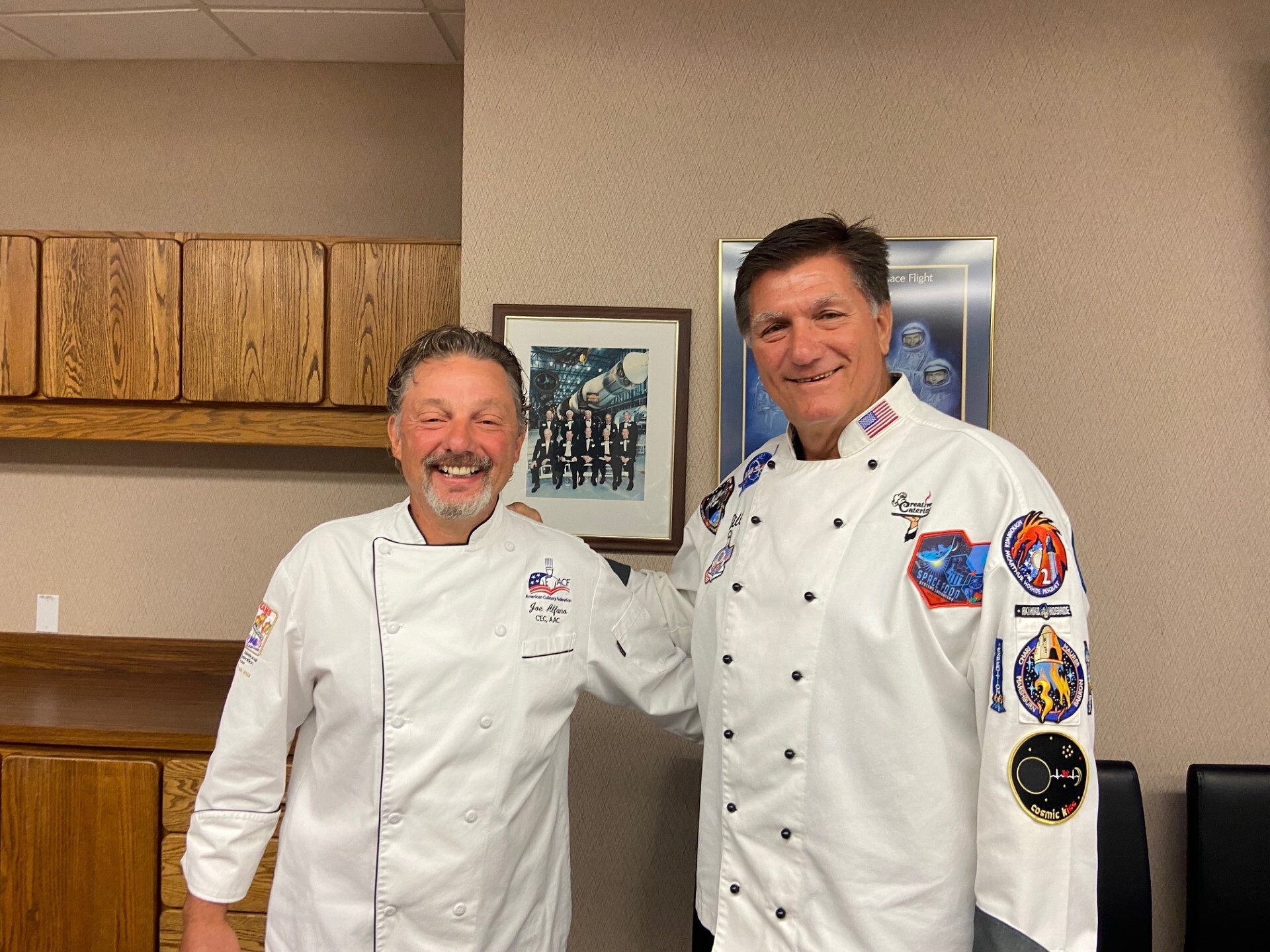
NASA Chefs prepare food good enough to send you into orbit
Cooking for astronauts, space news around the world and a conversation with NASA astronaut Woody Hoburg.

How artificial gravity and a giant telescope may change space exploration
The Vast aerospace company is creating a space station with artificial gravity. We'll hear why gravity is a good thing in space exploration. Plus, a giant telescope will launch within the decade that could capture images of planets outside of our own solar system.
A space for artistic inspiration with veteran astronaut Nicole Stott
Sending art into orbit. Veteran astronaut Nicole Stott talks about her Space for Art Foundation and fields questions from kids at a live taping Friday from the Orlando Science Center.
Sierra Space's new Dream Chaser hopes to bring people into orbit
Sierra Space plans to launch humans on the company’s Dream Chaser spacecraft. NASA’s Perseverance rover found evidence of organic molecules on Mars.
Asteroid dust returning to Earth could explain the origin of life
What do scientists hope to learn from a sample of asteroid dust from NASA's OSIRIS-REx mission? Plus, a look at the public's reaction to one year of Webb Telescope images.
Ripples in the cosmos: What we're learning from gravitational waves
Scientists have observed more ripples in the fabric of space-time, in the form of gravitational waves. The most recent discovery appears to be supermassive black holes on a collision course.
Ep 376OceanGate disaster puts spotlight on high-risk tourism, including space
The catastrophic implosion of a submersible visiting wreckage of the Titanic that left all five people on board dead is raising questions about regulation in the high-risk tourism industry, including space.
Sun science on the summer solstice and how Mars rocks get their names
We dig into the science of the sun as we approach the summer solstice. Plus, a look at how rocks on Mars get their names.
From malware to barf, dealing with the nasty side of space exploration
A security company found malware on an unnamed aerospace company's computers — what's the risk for the industry at large? And kids ask question about puking in space.
Space-flown seeds take root in orbit, NASA's UAP interest, and Florida gets STARCOM
Seeds adapt to grow in the harsh environment of space. Do they pass along these changes to the next generation? Researchers hope to soon find out.
Private space station astronaut John Shoffner speaks with WMFE from orbit
Astronaut and Ax-2 mission pilot John Shoffner speaks with WMFE from orbit about art, food, and the future of commercial space travel.
"Unfolding the Universe" brings new perspective to Webb telescope images
At the Museum of Arts and Sciences in Daytona Beach, a new exhibit gives patrons a new way to view and interact with images from the Webb Space Telescope.
"When The Heavens Went On Sale"
Author Ashlee Vance's new book explores the people and companies reshaping the commercial space industry.
Can we make food from CO2? On Mars?
Carbon dioxide is generally a bad thing when it comes to space travel. But what if you could harness it for good?
A conversation with commercial space pilot John Shoffner
Shoffner is piloting the SpaceX Crew Dragon that will carry Axiom Space's second private space mission to the International Space Station
More private space missions mean more data on astronaut health
A research institute is leveraging a surge in private space missions to collect critical data on how space travel affects the human body
What's driving the private space economy?
We'll hear from one investor in the private space sector on what's driving this industry upward despite economic uncertainty.
Artemis II: We have a crew
NASA announced the next crew to head to the moon, the first in more than 50 years. Plus, a conversation with retired astronaut Eileen Collins.
Breaking down NASA's $27 billion budget proposal
The proposal includes funding for NASA’s human missions like trips to the moon and maintenance of the International Space Station and science missions like a Mars sample return and probe heading to Venus.
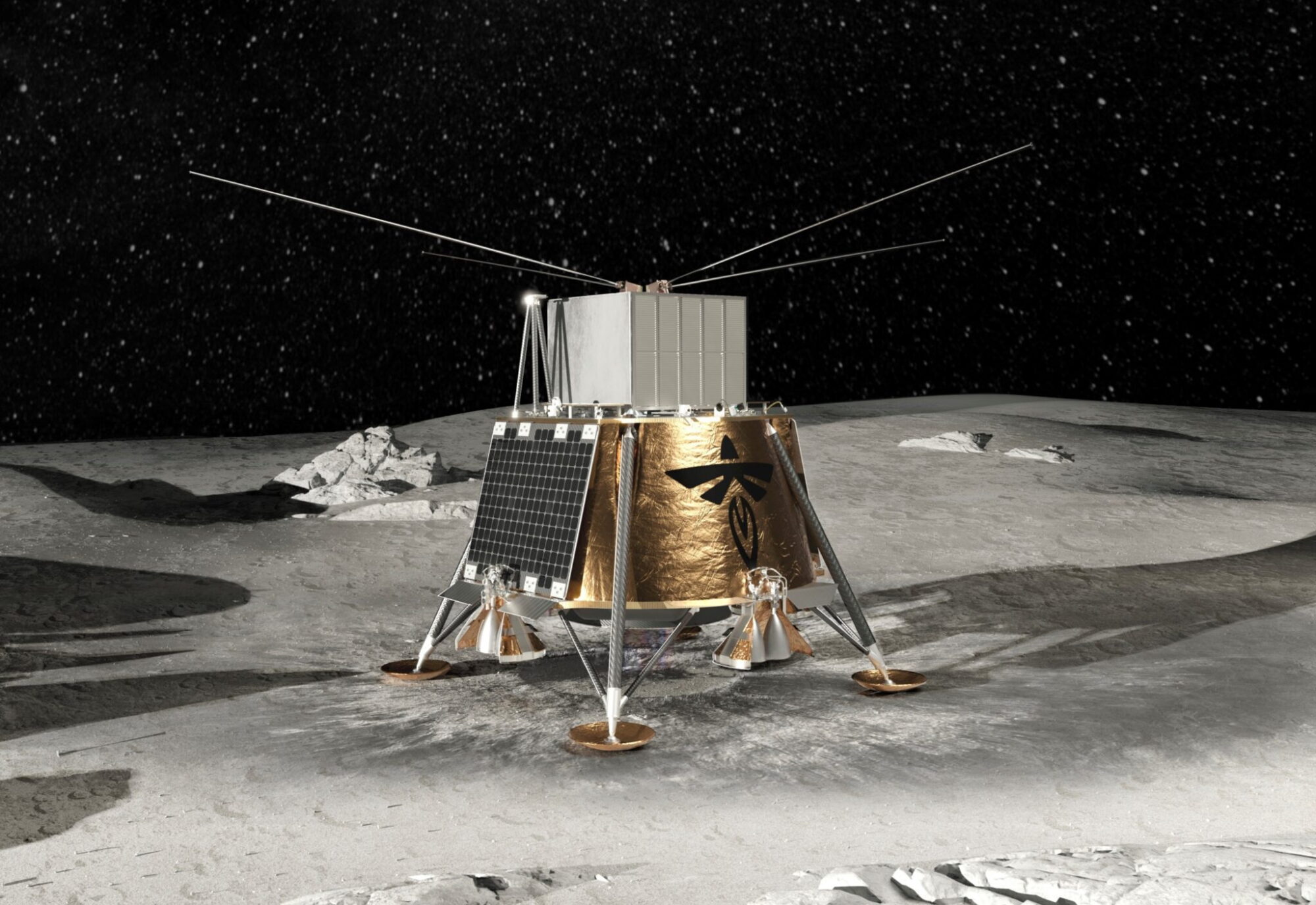
Ep 363A commercial mission to the far side of the moon
Firefly Aerospace is flying a mission to the far side of the moon for NASA, paving the way for astronauts and other companies to explore the lunar surface. And, we'll talk about efforts to keep astronauts' brains sharp.
The history of women in the U.S. astronaut corps
For Women's History Month, we revisit conversations chronicling the inclusion of female astronauts at NASA.
Ep 361A 3D printed rocket could soon take flight. Where does it fit in to a growing launch market?
Relativity Space plans to launch its first 3D printed rocket this week, joining a growing number of commercial launch companies. We'll hear from CEO Tim Ellis about the compnay's plans and industry analyst Caleb Henry about its place in this market.
Ep 360SETI's search for ETs & NASA's new science chief
The SETI Institue has been searing for extraterrestrial life for decades. Now, the organization is closer than ever to hearing from life outside our planet.
Measuring the sound of rockets & NSYNC's Lance Bass chronicles "The Last Soviet" in space
NASA's Artemis I launch was really loud. That's according to new research by physicists hoping to better understand the behavior of rocket sounds. Plus, boy band superstar Lance Bass talks about his new podcast "The Last Soviet."
Starship & stitches: A look at SpaceX's Super Heavy test firing and the history of space mission patches
SpaceX completed a critical test of its Super Heavy booster. NASASpaceflight.com's Chris Gebhardt explains what's next for the massive vehicle that will take us to places like the moon and Mars? Plus, a look at this history of space mission patches with CollectSpace's Robert Pearlman.
Mars updates: Percy's sample collection and the possibility of astronaut missions
A look at the latest robotic explorer on Mars and a conversation about efforts to send humans to the red planet.
In the search for life in the universe, it's time to get nuclear
As NASA develops nuclear thermal propulsion rockets for human exploration in our solar system, some astrobiologists say the technology could help us answer the age-old question: Are we alone?
Oh the places we're going, for science!
From missions to the moon, a heavy metal asteroid, and findings outside our solar system, it's going to be a busy year for space science.
The planet is getting hotter. Here's how NASA is measuring Earth's changing temperature
Last year was the fifth warmest on record, according to new data released by NASA and the NOAA. How is NASA tracking out warming planet?
Neil deGrasse Tyson on the search for life outside our planet
Is there life out there? Astrophysicist Neil deGrasse Tyson says the answer to that question could come from our own solar system.
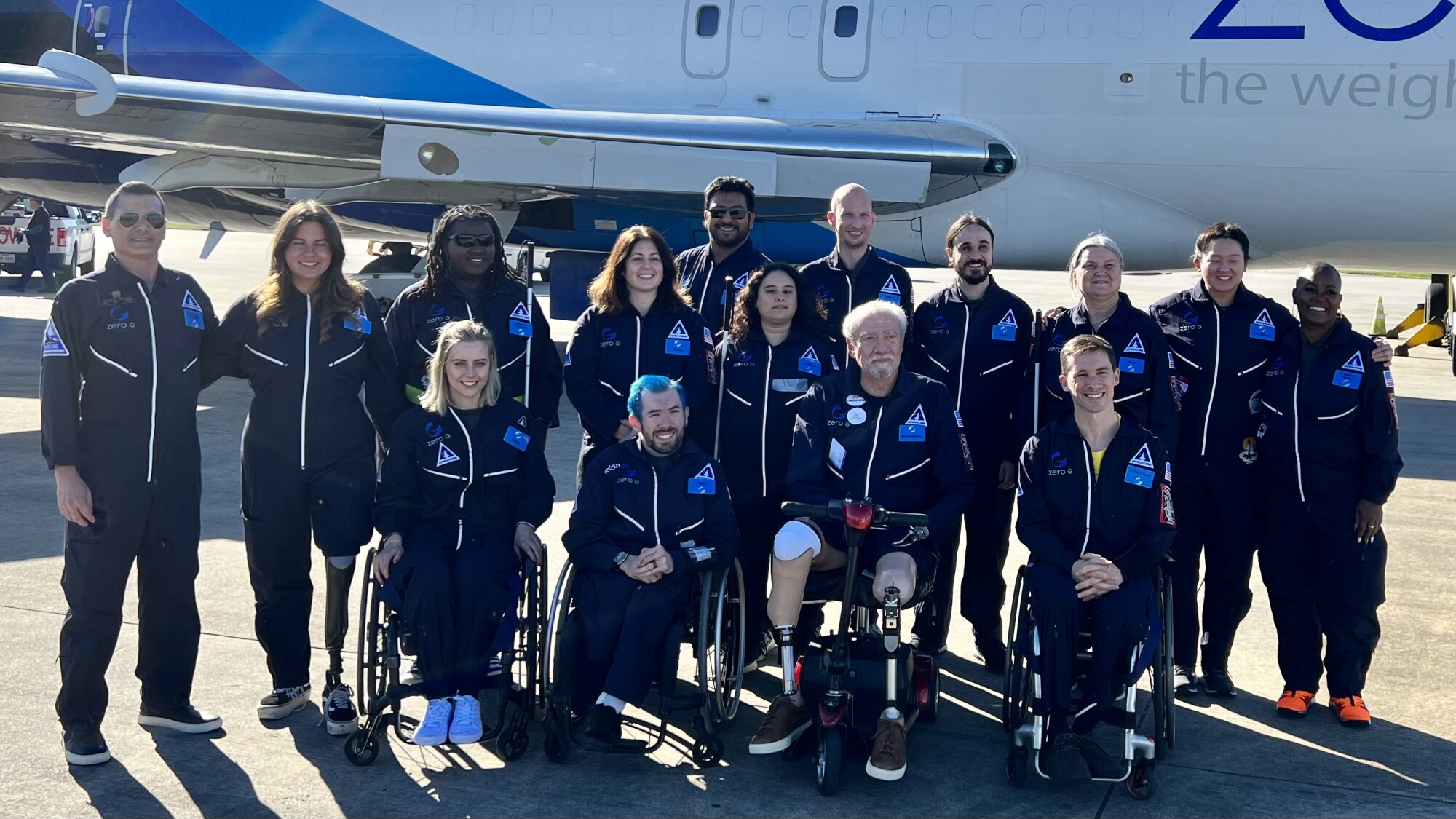
Making space accessible for all
Fourteen disabled crew members took trip on a Zero-G flight, conducting research with the hope of making space accessible for all.
Inflatable space is bursting at the seams
Inflatable habits could be the future of space exploration. But before they leave this planet, they have to explode.
Ep 350Artemis I is back on Earth. What's next?
NASA's newest moon mission appears to be a success. So what's next for the agency's lunar ambitions.
Ep 349Seeing the clouds of Titan
The Webb Space Telescope has captured weather on Titan, one of the moons of Saturn.
Ep 348To the moon, for good?
NASA's Artemis I mission is a big step in the agency's plans for permanent presence on the moon. Just how close is the agency to that goal, and what is left to be done?
From the moon to Mars
NASA's Artemis I mission has made it to the moon. We check in with the mission and preview what's ahead. Plus, the new documentary "Goodnight Oppy" chronicles a planned 90 day mission on Mars that lasted 15 years.
Artemis I, take three
NASA’s next moon mission could take flight this week. Artemis I is poised to launch from Kennedy Space Center as early as Wednesday morning. The mission has faced a handful of obstacles, from engine issues, a gas leak, to riding out a hurricane.
The Pillars of Creation in a brand new light
We’re getting a fresh new look at this cosmic nursery thanks to the James Webb Space Telescope.
Zero G and I feel fine
What’s it like to feel weightless, like the astronauts on the International Space Station?
From the Space Shuttle to Starship
A look at a new documentary which highlights the people behind the scenes that kept the Space Shuttle program flying. Plus, and update on SpaceX's Starship plans.
Let's talk about the weather (and space, of course)
People in the path of Hurricane Ian are still dealing with its aftermath. Before and during the storm, residents rely on forecasts from meteorologists to track the storm and plan to prepare. Many of the tools these forecasters use come from space.