
Aphasia Access Conversations
105 episodes — Page 2 of 3
Ep 91Episode #91: LPAA Internationally - A Conversation with Ilias Papathanasiou
Welcome to this edition of Aphasia Access Conversations, a series of conversations about topics in aphasia that focus on the LPAA model. My name is Janet Patterson, and I am a Research Speech Language Pathologist at the VA Northern California Health Care System in Martinez, California. These Show Notes follow the conversation between Dr. Papathanasiou and myself, but are not an exact transcript. Dr. Ilias Papathanasiou is a Professor of Speech and Language Therapy at the Department of Speech and Language Therapy, University of Patras, and a Research Associate at the Voice and Swallowing Clinic, the First ENT Clinic of the Medical School of the National Kapodistrian University of Athens Greece. He is a Fellow of the American Speech-Language-Hearing Association and has received numerous awards and recognition for his tireless efforts on behalf of aphasia awareness and rehabilitation research in the international community. In today's episode you will hear about: considering LPAA values across social, cultural and international norms, increasing aphasia awareness through actions in the local community, mentoring speech-language pathologists who are learning about aphasia and LPAA in countries initiating aphasia rehabilitation services. Dr. Janet Patterson: As Ilias and I start this podcast, I want to give you a quick reminder that this year we are sharing episodes that highlight at least one of the gap areas in aphasia care identified in the Aphasia Access, State of Aphasia report, authored by Dr. Nina Simmons-Mackie. For more information on this report, check out Podversations episode # 62 with Dr. Liz Hoover, as she describes these 10 gap areas or go to the Aphasia Access website. This episode with Dr. Papathanasiou focuses on gap area number seven, insufficient or absent communication access for people with aphasia or other communication disorders, and gap area 10, failure to address family and caregiver needs including information, support, counseling, and communication training. I hope our conversation today sheds additional light on these gap areas. With that introduction, I would like to extend a warm welcome to my friend and noted aphasiologist, Dr. Ilias Papathanasiou. Welcome Ilias and thank you for joining me today on Aphasia Access Podversations. Dr. Ilias Papathanasiou: Thank you very much for this kind invitation. I'm thrilled to be with you and speak about aphasia from a rather international perspective. As you know, I have been trained in UK, I work in Greece, and have been active in many places around the world and working with developing countries, for people with aphasia. Janet: Ilias, I'm just thrilled to have you here, and as a side note to our listeners, Ilias and I have already been talking for about an hour sharing wonderful stories about aphasia and international aphasia. Sadly, most of that won't be caught on this particular tape, but I hope a good bit of it will, because Ilias, you are a fount of information, not only about aphasia, but also about aphasia and the international community. Let me start by saying that our listeners, Ilias, are likely very familiar with the LPAA model, which as we all know, places the person with aphasia at the center of decision-making, to support them in achieving their real-life goals and reduce the adverse consequence of aphasia. How do you think social and cultural norms play a role in understanding the LPAA model? Ilias: This is a very interesting question, which we'll have to answer. But first of all, I think we have to start with what is aphasia and how the implications of aphasia start in the community. I will say, aphasia is a language impairment, first of all, which is related from the focal lesion, which has, of course, great effects on the person with aphasia, on the quality of life, on the social network and the person, on the making friendships, on how the person functions, and the everyday environment. Now, how the person functions in the everyday environment, is related to many, many social norms. I have been working for 15 years in UK and then back to Greece. And I think that's changed my perspective. What is the social role? What the social model can offer in aphasia, because we have two different societies so they believe there are too many different societies around the world which can see aphasia as a different perspective. Taking the example from Greece, I think Greece has got a much-closed family network and supportive network comparing with other developing countries. I mean, the traditional Greece accepted that people will live with or very near their children, will have family nearby, they have their friends nearby, and they will try to - the family - to take the leadership support of the person with aphasia. This is something which might be a bit different with the USA. So in this way, the decision relies on the person and their LPAA approach of getting together and having a chat, which is not what it is for me. It is totally
Ep 90Episode #90: Texting for Success in Aphasia Rehabilitation - A Conversation with Jaime Lee
Interviewer I'm Ellen Bernstein-Ellis, Program Specialist and Clinical Supervisor for the Aphasia Treatment Program at Cal State East Bay and a member of the Aphasia Access Podcast Working Group. AA's strives to provide members with information, inspiration, and ideas that support their aphasia care through a variety of educational materials and resources. Today, I have the honor of speaking with Dr. Jaime Lee who was selected as a 2022 Tavistock Distinguished Scholar. We'll discuss her research interests and do a deeper five into her work involving the study of texting behaviors of individuals with aphasia and her efforts to develop an outcome measure that looks at success at the transactional level of message exchange. As we frame our podcast episodes in terms of the Gap Areas identified in the 2017 Aphasia Access State of Aphasia Report by Nina Simmons-Mackie, today's episode best addresses Gap areas: 5. Insufficient attention to life participation across the continuum of care; 6. Insufficient training and protocols or guidelines to aid implementation of participation-oriented intervention across the continuum of care; 7. Insufficient or absent communication access for people with aphasia or other communication barriers For more information about the Gap areas, you can listen to episode #62 with Dr. Liz Hoover or go to the Aphasia Access website. Guest bio Jaime Lee is an Associate Professor in the department of Communication Sciences and Disorders at James Madison University. Jaime's clinical experience goes back nearly 20 years when she worked as an inpatient rehab SLP at the Rehabilitation Institute of Chicago (now Shirley Ryan Ability Lab). She later worked for several years as a Research SLP in Leora Cherney's Center for Aphasia Research and Treatment. Jaime earned her PhD at the University of Oregon, where she studied with McKay Sohlberg. Her research interests have included evaluating computer-delivered treatments to improve language skills in aphasia, including script training and ORLA, examining facilitation of aphasia groups, and most recently, exploring text messaging to improve participation, social connection and quality of life in IWA. Listener Take-aways In today's episode you will: Learn about why texting might be a beneficial communication mode for IwA Explore the reasons it's important to consider the communication partner in the texting dyad Find out more about measures examining texting behaviors, like the Texting Transactional Success (TTS) tool. Consider how Conversational Analysis may be helpful in understanding texting interactions Edited show notes Ellen Bernstein-Ellis Jaime, welcome to the podcast today. I'm so excited that we finally get to talk to you. And I want to offer a shout out because you mentioned two mentors and colleagues who I just value so much, McKay Solberg and Leora Cherney, and I'm so excited that you've also had them as mentors. Jaime Lee 02:44 Thanks, Ellen. It's really great to talk with you today. And speaking of shout outs, I feel like I have to give you a shout out because I was so excited to meet you earlier this summer at IARC. We met at a breakfast. And it was exciting because I got to tell you that I assigned to my students your efficacy of aphasia group paper, so it was really fun to finally meet you in person. Ellen Bernstein-Ellis 03:11 Thank you, that is the paper that Roberta Elman was first author on. I was really proud to be part of that. I was excited to get to come over and congratulate you at the breakfast on your Tavistock award. I think it's very, very deserving. And I'm excited today that we can explore your work and get to know each other better. And I'm just going to start with this question about the Tavistock. Can you share with our listeners what you think the benefits of the Tavistock Distinguished Scholar Award will be to your work? Jaime Lee 03:43 Sure, I think first off being selected as a Tavistock Distinguished Scholar has been really validating of my work in terms of research and scholarship. It's made me feel like I'm on the right track. And at least maybe I'm asking the right kinds of questions. And it's also really meaningful to receive an award that recognizes my teaching and impact on students. And I was thinking about this and a conversation that I had with my PhD mentor McKay Solberg. And it was early into my PhD when we were talking about the impact of teaching and how important it was, where she had said that when we work as a clinician, we're working directly with clients and patients were hopefully able to have a really positive meaningful impact. But when we teach, and we train the next generation of clinicians, you know, we have this even greater impact on all of the people that our students will eventually work with throughout their career. And so that's just huge. Ellen Bernstein-Ellis 04:51 It really is huge. And I have to say I went to grad school with McKay and that sounds like something she would say, absol
Ep 89Episode #89: Aphasia is a Complex Disorder: Mental Health, Language, and More – A Conversation with Dr. Sameer Ashaie
Thanks for listening in today. I'd like to welcome you to this episode of Aphasia Access Conversations Podcast. I'm Katie Strong, Associate Professor in the Department of Communication Sciences and Disorders and Director of the Strong Story Lab at Central Michigan University and serving as today's episode host. Today I'm talking with Dr. Sameer Ashaie from the Shirley Ryan Ability Lab. Before we get into our conversation, Let me tell you a bit about our guest. Dr. Ashaie is a Research Scientist in the Think and Speak Lab at the Shirley Ryan AbilityLab and a Research Assistant Professor in the Department of Physical Medicine and Rehabilitation at the Feinberg School of Medicine, Northwestern University. He earned is PhD in Speech-Language-Hearing Sciences at the Graduate Centre, CUNY. He is recipient of the 2022 Tavistock Trust for Aphasia Distinguished Scholar Award. Dr. Ashaie was also a recipient of NIDILRR's Switzer Merit Fellowship and NIDILIRR's Advanced Rehabilitation Research and Training post-doctoral fellowship. His lab the Shirley Ryan Affective and Emotion Rehabilitation Lab (SAfER) focuses on aphasia rehabilitation, particularly identifying post-stroke depression and related psychosocial disorders. He employs a variety of techniques in his research including eye-tracking and heart-rate variability. In this episode you will: Learn about the value of having researchers integrated into clinical care. Be empowered to think about depression on a continuum and why how we measure depression matters. Hear how network models can be a more useful way to examine complex disorders. KS: Sameer welcome and thank you for joining me today. I'm really excited about this conversation with you, and having our listeners get to know you and your work . SA: Thank you for having me here. You know I listen to the podcast, and I wasn't expecting to be here one day. So, it's a privilege being here. I KS: Congratulations on receiving the Tavistock Distinguished Scholar Award. Can you tell us a bit about the impact of receiving this recognition? SA: It's a big honor. You know, oftentimes as an early career researcher in the field of physiology or I guess any field me especially I'm wondering like, if I'm doing whatever I'm doing, is it making sense? Is it making a difference? Are people noticing it? So getting this award especially and people that have gotten before me and the work they're doing? It really validates what I'm trying to do as an indication of where I'm trying to take my research program and I'm hoping that it has an impact on people with aphasia, and as well as the broader research community. KS: Absolutely! I'm excited to start talking about your research. But before we get to that, I'd love to hear a little bit about how you came into the field of speech language pathology, because it wasn't a direct line. Your story is in fact quite interesting. And I think you refer to it as a winding path. Could you tell us a little bit about how you came to be working in the area of aphasia? SA: I started my PhD in theoretical linguistics, looking at generative phonology. And then I ended up taking a class with Dr. Loraine Obler. It was a class on the historical debates on language localization. And that really got me interested in language. After two years in theoretical linguistics, I switched tracks to neuro linguistics, communication science disorders. Because I really got interested in just language, more than just a theoretical perspective that I had as a linguist. And then, of course, there are two people that really had an impact on my career and continue to have an impact on my career. One is that I did my PhD with Dr. Jamie Reilley at Temple. And that's how I got interested into sort of the semantic aspects of aphasia. And he was really supportive and was really great in how we think about science and how we do science. And then I would say that the person who's had the most impact and continues to have the most impact, and really has made me think about this field is Dr. Leora Cherney. And I'm really indebted to her in terms of how I think about this field, how I think about our participants, how I think about how aphasia impacts their life in totality. And just seeing that kind of dedication and thinking about research that is support to impact people's life. And getting that inspiration from Leora. She has been really critical for me to really falling in love with this field, because you're keeping your participants at the center of the work you do. I mean, you might not see the impact, but you're trying to keep them that that is what your aim is. And I guess that's how I kind of came to this field, you know, some from sort of theoretical linguistics and interested in semantics and then getting a postdoc with Leora. And being inspired by her and the support she's given me to explore things. And carry a different line of research, but always keeping the participants in mind. KS: So, you're a research scient
Ep 88Episode #88: Everyone's an Expert: Person-Centeredness in the Clinic and Research -- A Conversation with Jackie Hinckley
During this episode, Dr. Katie Strong, Associate Professor in the Department of Communication Sciences and Disorders and Director of the Strong Story Lab at Central Michigan University talks with Dr. Jackie Hinckley from Nova Southeastern University about stakeholder engaged research and Project BRIDGE. Dr. Jackie Hinckley is Professor and Director of the Undergraduate Program at Nova Southeastern University. She is Board Certified in Neurogenic Communication Disorders by the Academy of Neurologic Communication Disorders and Sciences (ANCDS) and Fellow in Person-Centered Care. Dr. Hinckley is currently a Board Member of Aphasia Access and the National Aphasia Association. She is Executive Director Emeritus of Voices of Hope for Aphasia. She is Project Lead for Project BRIDGE, formerly funded by two PCORI Engagement Awards and now supported by NSU. She is the author of two books, Narrative-Based Practice in Speech-Language Pathology, and What Is It Like to Have a Communication Impairment? Simulations for Family, Friends, and Caregivers. She is an Editor for The Qualitative Report, and on the Editorial Board of Topics in Stroke Rehabilitation and Journal of Interactional Research in Communication Disorders. In this episode you will: Learn about the importance of including people with aphasia and clinicians in the research process to make the research better. Find out what stakeholder engaged research is and its importance in developing relevant evidence for clinical practice Hear how Project BRIDGE has enhanced stakeholder engagement in research related to aphasia. Be empowered to embrace your own expertise and the expertise of your clients and their family members. KS: Jackie, Welcome back to the Aphasia Access Conversations Podcast. I believe you were first interviewed on our podcast in 2016 – Episode #2! We now have over 86 episodes that are available! Who knew the series would have such staying power. It's really amazing! Thanks for joining me today. I'm really excited about this conversation with you and having our listeners hear about what you've been up to lately and how that is impacting our clinical practice and the people with aphasia that we work with. JH: Well, thank you, Katie, for the introduction, and thank you to you and Aphasia Access for the opportunity to be on this podcast. I'm really excited to talk about these issues and talk about them with you. KS: Well, let's dig in. So, today's topic is "everyone's an expert". How does that relate to our clinical work and our research? JH: Well, you know, Carl Rogers, the famous psychologist said that we are the best experts on ourselves. And I think that we all have that thought in our minds, but it really hits at the core of person-centeredness. An expert is someone with authoritative knowledge. So that has two parts, the authority and the knowledge. And an expert comes about when people agree that an individual has high performance or high knowledge in an area. I think that the idea of person-centered care in our clinical work is that we acknowledge that our clients are the best experts on themselves. And I think most of us who are practicing speech pathologists would certainly acknowledge that and agree with that. But in reality, in a normal clinical process, it's actually kind of hard to do. Because the clinician is, by definition, an expert, and has a certain degree of authority in the clinical interaction. So, for example, clinicians need to do an assessment and a diagnosis. And the client really can't self-diagnose, so there's an issue of authority and knowledge from the point of view of the clinician. But now that authority tends to seep into other areas like goal setting, where really the client needs to bring forward their own expertise about themselves. When we continue to exercise authority over what the goal should be, and yet, evidence shows that collaborative goal setting like goal attainment scaling significantly improves not just the immediate outcomes of therapy, but also how active the client is after they are discharged home. So, there's a tension around expertise. It has to shift back and forth during the clinical process. And a lot of times, it starts with the clinician having a lot of authority, but we have to know how to give our client that authority about themselves. So, it's only in the last decade or so that the idea of who's an expert and person-centeredness really has been applied to research. For example, if we think about a traditional research process, the researcher reads the literature and identifies the knowledge gap comes up with the experiment or whatever study that can contribute to that gap. And the researcher determines the design, the method, the measurement, does the research, publishes it and gets it out in a way that the researcher basically is crossing their fingers is going to have the impact that they hoped for. The problem is that it this ignores who is going to be affected by the research. So, aphasi
Ep 87Episode #87: Tailored LPA interventions for dementias: A Conversation with Becky Khayum
Welcome to the Aphasia Access Conversations Podcast. I'm Jerry Hoepner, a faculty member in the department of Communication Sciences and Disorders at the University of Wisconsin – Eau Claire. Today, I'm joined by Becky Khayum. Biosketch: Becky is a speech-language pathologist and specializes in providing person-centered care for people living with different dementia syndromes. Over the past 15 years, she has held leadership positions in rehabilitation centers, assisted living communities, memory care communities and home health environments. In 2009, Becky co-founded MemoryCare Corporation, a therapy company specializing in providing care for families coping with dementia. Becky currently serves as the President of MemoryCare. In 2020, she co-founded Cognitive Concierge, which provides digital services and programs for people living with cognitive challenges. She has been involved in research initiatives in Primary Progressive Aphasia at the Northwestern Mesulam Center for Cognitive Neurology & Alzheimer's Disease. Becky speaks nationally to train healthcare providers and families on how to creatively apply the life participation approach for people living with dementia. Take aways: Learn about applications of the LPAA framework to individuals with dementias, including primary progressive aphasia (PPA). Learn about tools you can use to implement LPAA interventions with individuals with Alzheimer's disease and PPA. Learn about several key authors/researchers/clinicians in the areas of dementia interventions that should serve as starting points for learning about person-centered care in dementias. Learn how to frame person-centered, LPAA goals for persons with dementias, including PPA. Learn how to document so that LPAA interventions are reimbursable for Medicare and other insurance providers. Interview Transcript: Jerry Hoepner: Hi Becky so glad to have you with me today and really looking forward to this conversation. Becky Khayum: Well, thanks for having me Jerry I'm looking forward as well to our discussion. Jerry Hoepner: You know, I was mentioning to our listeners that if they weren't familiar with your work, they really need to explore your work, because there's just so many important connections about the life participation approach applied to individuals with progressive diseases like dementias and so forth. We know that, at least in the Aphasia Access circles you're well known for your person-centered life participation approach for individuals with dementia, including the individuals with primary progressive aphasia. Can you share just a little bit about how you got connected with Aphasia Access and the life participation approach? Becky Khayum: So, so I'm sure others have the same story, but I was going about my ordinary day and I get a call from Audrey Holland and she's so excited and says there is this summit, and you have to go and begins to tell me all about it, and you know, of course, said Aphasia Access you know this is new and I had you know, the summit is new and I had actually hadn't heard of Aphasia Access at that point, which was surprising considering I tried to you know base my clinical work on person centered care and I was so sad because I actually couldn't make of the first [Aphasia Access Leadership] Summit but of course, I went to the Aphasia Access website at that point and signed up, and it was startling and I was so delighted because, "Oh, my goodness, everything that I am trying to think about as the clinician and train other you know speech language pathologist on is completely captured and this one group with so many leaders in our field," so that is how I first got connected. Jerry Hoepner: Oh that's fantastic I didn't know that story but I kind of figured that was one of the connections, I know that I had spoken to Audrey I don't know if it was that the first or the second Aphasia Access Leadership Summit and she just spoke so she raved about you and the great work that you were doing and was just so excited that you were a part of the organization so that's fantastic and like you said a lot of people have that connection. So it was fabulous that a few weeks back to have a conversation with her again on a podcast and recognize her lifetime of just brilliant work so she's been a mentor and an encourager for so many of us so fantastic. Becky Khayum: Absolutely 100% yep. Jerry Hoepner: Well, you found a perfect fit and a perfect home in Aphasia Access and I, as someone who loves working with individuals with aphasia my passion is really with people with cognitive disorders, with traumatic brain injuries and so forth, as well, and I just think the life participation approach has so many applications that are much broader than aphasia and certainly we're excited to talk with you today about those applications as they're made to individuals with dementia and including your work on primary progressive aphasia as well. Becky Khayum: sure. Jerry Hoepner: Absolutely you you've don
Ep 86Episode #86: Making Aphasia Groups Work: A Conversation with Kathryn Pettigrove
Meet Our Newest Interviewer! Lyssa Rome is a speech-language pathologist in the San Francisco Bay Area. She is on staff at the Aphasia Center of California, where she facilitates groups. She owns an LPAA-focused private practice and specializes in working with people with aphasia, dysarthria, and other neurogenic communication impairments. She has worked in acute hospital, skilled nursing, and continuum of care settings. Prior to becoming an SLP, Lyssa was a public radio journalist, editor, and podcast producer Guest bio Kathryn Pettigrove is a speech pathologist passionate about supporting wellbeing and connection for people with aphasia and their loved ones. She has worked in acute stroke wards and in- and outpatient hospital rehabilitation, but most loves engaging with people with aphasia in community settings, and is a particular advocate of community aphasia groups. Kathryn is a PhD candidate with the Aphasia Centre of Research Excellence (Aphasia CRE) at La Trobe University in Australia where her research focuses on aphasia groups and their facilitation. She also works as a clinical educator at the University of Sydney and serves on the Board of the Australian Aphasia Association. Her other loves include coffee, hiking, and singing with her a cappella choir. Listener Take-aways In today's episode you will: Identify different models for community aphasia group facilitation. Learn about the skills required to successfully facilitate aphasia groups. Understand the range of roles speech-language pathologists can play within community aphasia groups. Edited show notes Lyssa Rome Welcome to the Aphasia Access Aphasia Conversations Podcast. I'm Lyssa Rome. I'm a speech language pathologist on staff at the Aphasia Center of California and in private practice. I'm also a member of the Aphasia Access podcast working group. Aphasia Access strives to provide members with information, inspiration, and ideas that support their aphasia care through a variety of educational materials and resources. I'm today's host for an episode that features Kathryn Pettigrove. Kathryn is a PhD candidate with the Aphasia Center of Research Excellence at La Trobe University in Australia, where her research focuses on aphasia groups and their facilitation. She also works as a clinical educator at the University of Sydney and serves on the board of the Australian Aphasia Association. Welcome, Kathryn, and thank you for talking with me. Kathryn Pettigrove Thanks, Lyssa. I'm really happy to be here. Lyssa Rome So what motivated you to explore aphasia groups as part of your clinical practice? Kathryn Pettigrove It's a bit of a story, I guess. I had been working in inpatient, acute and rehabilitation wards for the first four and a half years or so as a speech pathologist. And in those contexts, I worked pretty exclusively, almost exclusively, in impairment therapy in one-on-one settings. And it was great work, I really loved it, it was really important work. But I just really often had this feeling that I wasn't able to do nearly as much as I wanted to for people with aphasia before they were discharged back home and back to the community. And I think that's a common experience actually, that people have. So I decided that I wanted to shift out of hospital settings for a while and see if I could pursue some other paths that would give me opportunities to work more closely with people with aphasia. One of the first roles that I took on after that was working as a speech pathologist for the Aphasia COMPARE trial that was happening in Australia at the time, led by Miranda Rose and her team. These trials involved delivering aphasia therapy, intensive aphasia therapy, over two weeks for people with aphasia in groups of three. I know that on the Aphasia Access podcast, you guys sometimes talk about "aha" moments. The very first day that I showed up for work in the trial, with this group of three women was just full of "aha" moments for me. So the first one was that we started to do language therapy in the group. I have not had that experience before of delivering language therapy in a group setting. Almost straight away, I just thought it was so amazing how much more engaging it was, how much more motivating it was for everybody involved, and how much more realistic it felt to actual communication. The participants in the therapy were communicating in a way that reflected real communication, it was much more social, it was much more interactive, not just transactional. I thought, "How have I not realized this before, how much more reflective of communication group settings can be?" So that was the first sort of "aha" moment for me. But then after that, in the lunch break, we were chatting and getting to know each other. I learned that the three women all knew each other because they were part of the same community aphasia group. And they were so motivated to tell me about their experience with this group. They said to me that it had been the mo
Ep 85Episode #85: Navigating the "Slow Road to Better": A Conversation with Melissa Richman and the Podcast Team from the Stroke Comeback Center
For today's episode, Ellen Bernstein-Ellis, Program Specialist and Past Director for the Aphasia Treatment Program in the Department of Speech, Language and Hearing Sciences at Cal State East Bay, speaks with Melissa Richmond and members of the Slow Road To Better (SRTB) podcast group from the Stroke Comeback Center (SCC). This show celebrates Aphasia Awareness Month and is honored to feature 5 individuals with aphasia who are consumer advocates through their work on the Slow Road to Better podcast. Guests: Melissa Sigwart Richman, MS, CCC-SLP is a speech-language pathologist with 30 years of experience working in rehabilitation with stroke and brain trauma survivors. She holds degrees from James Madison University and the University of Maryland, College Park. Her career has included inpatient and outpatient rehabilitation, long-term care, home care, community-based and virtual settings. Melissa served as a Senior SLP on the inpatient Stroke Recovery Team for Medstar National Rehabilitation Hospital for over ten years and in 2006 became the Program Director for the Stroke Comeback Center in Vienna, Virginia. During her tenure, the organization grew to three locations starting with a handful of groups to well over 50 classes per week utilizing a life participation approach. In 2019, Melissa moved to the Outer Banks of North Carolina and started the Virtual Stroke Comeback Center which has continued to grow and thrive. She continues to focus her energy on improving the lives of survivors and families living with aphasia, with the primary focus of helping them get back to the business of living. Slow Road to Better Podcast Team Members: Kitti Tong: At the age of 27, Kitti Tong earned the CEO's Exceptional Performance Award at Choice Hotels – the highest recognition in the company. A data analyst, growth strategist, and event facilitator, she founded a Toastmasters Chapter in Maryland and co-chaired several committees for women's leadership and human rights. Kitti's life was changed forever when she was struck by a car walking home from work, sustaining a severe traumatic brain injury. With determination and grit, she relearned to walk, talk and participate in life. She has founded S.A.Y. Younger Aphasia on YouTube to help create awareness of this isolating condition. Kitti's YouTube channel is: S.A.Y -- Younger Aphasia Group - YouTube Pat Horan: My name is Pat Horan, I was a Captain in the Army. In 2007 I was wounded in combat serving in Iraq. After my injury I couldn't talk, read or write. Over the past 10 years the Stroke Comeback Center has helped me improve my writing, reading and speech more than I could have ever thought possible. Today I am a proud father of a new son and an adopted nephew. My continued recovery will help me be a better father and husband. Erin Adelekum: Erin's Instagram is: stroke.mama Chris Vincent Dante Thomas Listener Take-aways In today's episode you will: Learn how interprofessional education with physical therapists led to the launch of this member-focused aphasia podcast. Find out how the members prepare for the podcast by embracing spontaneous conversation Listen to members share insights on the benefits of being part of the SRTB podcast Hear the podcast team share the insight that even though aphasia is not "leaving it, but we'd like to crush it a little bit." Crush it, they do! Edited show notes Ellen Bernstein-Ellis 00:54 Welcome to the Aphasia Access Aphasia Conversations Podcast. I'm Ellen Bernstein Ellis, Program Specialist with the Aphasia Treatment Program at Cal State East Bay in the Department of Speech, Language and Hearing Sciences and a member of the Aphasia access podcast Working Group. Aphasia Access strives to provide members with information, inspiration, and ideas that support their aphasia care through a variety of educational materials and resources. In recognition of June being Aphasia Awareness Month, I'm excited and honored to be today's host for an episode that features the five members of the podcast team from the Stroke Comeback Center located in Vienna, Virginia. They are joining me today along with Melissa Richmond, the speech pathologist who produces the show. The Slow Road to Better has launched over 100 episodes that offer authentic and engaging discussions about how to adapt and live well following brain injury or stroke. They share what keeps them all on the "slow road to better". Welcome everybody! And I'm going to start with Melissa's introduction. And then I'll ask the podcast members to introduce themselves. Ellen Bernstein-Ellis 03:21 Melissa, thanks for joining us today. And now I want to get the rest of this show on the road. But in this case, it's actually The Slow Road to Better. I want to have the team introduce themselves. I'm excited to have the podcast team here today. I was wondering who wants to jump in first with the introduction? Because we got five of you. Any volunteers? So Chris, let's start with you. And could you share with
Episode #84: Interprofessional Practice and Interprofessional Education: In Conversation with Mary Purdy
During this episode, Dr. Janet Patterson, Research Speech-Language Pathologist at the VA Northern California Healthcare System, speaks with Dr. Mary Purdy about aphasia rehabilitation, Interprofessional Practice (IPP) and Interprofessional Education (IPE). In today's episode, you will: Learn how IPP and IPE are related, in concept and practice. Hear about the similarities and differences in IPP in inpatient settings and outpatient settings. Listen to ideas on delivering client-centered treatment in an atmosphere of IPP. Interview Transcript: Janet Patterson: Welcome to this edition of Aphasia Access Podversations, a series of conversations about community aphasia programs that follow the LPAA model. My name is Janet Patterson, and I am a Research Speech-Language Pathologist at the VA Northern California Healthcare System in Martinez, California. Today I am delighted to be speaking with my colleague and friend, Mary Purdy, about Interprofessional Education, or IPE, and Interprofessional Practice, or IPP. Dr. Purdy is Professor and Graduate Program Coordinator in the Department of Communication Disorders at Southern Connecticut State University in New Haven, Connecticut, and a speech- language pathologist at Hartford Health Care Rehabilitation Network. Mary has been involved with educating graduate students in the principles and practices of IPE for several years and is currently Chair of Southern Connecticut State University's College of Health and Human Services IPE committee. Additionally, she actively engages in Interprofessional Practice in the outpatient setting. As Mary and I start this podcast, I want to give you a quick reminder that this year we are again sharing episodes that highlight at least one of the ten gap areas in aphasia care identified in the Aphasia Access White Paper authored by Dr. Nina Simmons-Mackie. For more information on this White Paper, check out Podversation Episode #62 with Dr. Liz Hoover as she describes these gap areas, or go to the Aphasia Access website. This episode with Dr. Purdy focuses on gap area five, attention to life participation across the continuum of care, and gap area six, training and protocols or guidelines to aid implementation of participation-oriented intervention across the continuum of care. We focus on these areas through our discussions of IPE and IPP. Two previous Aphasia Access podcasts included conversations about IPE, Episode #7 with Darla Hagge and Episode #78 with Michelle Gravier, Albert Mendoza and Jennifer Sherwood. For so many reasons, IPE and IPP are crucial in creating and sustaining high quality aphasia rehabilitation programs. I hope our conversation today adds to the growing body of knowledge in IPP and IPE. With that introduction, I would like to welcome Dr. Mary Purdy to Aphasia Access conversations. Thank you, Mary for joining me today to discuss aphasia rehabilitation, IPP and IPE. Mary Purdy: Well, thanks Janet. And thank you. It's really good to be here. Janet: Let me just jump right in then Mary to say we've heard a lot about Interprofessional Education, or IPE, and Interprofessional Practice, or IPP. How do you define and think about these two related, but different concepts, both in general, and as they apply to aphasia rehabilitation? Mary: Well, in general, when we think about IPP, the whole concept of collaboration, we know, leads to improved health care outcomes, and that's what we're all after, with our people with aphasia. In terms of the education students need, to learn how to collaborate with other professionals, and this can be quite complex. First of all, they need to understand what their own roles and responsibilities are, just related to their profession. Plus, they have to learn to work as a member of a team, and not just operate on their own, solo. In order to have students become comfortable in these roles, we have to provide them with opportunities to learn, and those opportunities, I think, really need to be both didactic and interactive. Specifically, to aphasia rehabilitation, in addition to just general education about collaboration, students need to understand that individuals with aphasia really do have complex needs and to meet these needs, we have to focus on the patient. We hear a lot about patient-centered care, and that's really what it is that we need to be doing. So, students need to have some training in how to communicate with people with aphasia, and they need to get to the point where they can be comfortable training others to help communication. We have to help our patients identify what their goals are. Interprofessional collaboration and practice, and patient-centered care really is all about the patient goals. They have to be really included with the whole program. Students have to be comfortable in aiding patients in identifying their goals, and they have to understand how other professionals can help meet those goals. You know, when we work with our clients, we of course, are focused on
Episode #83: In Conversation with a Robin Tavistock Award Recipient: Audrey Holland "As common as dirt... but not really."
During this episode, Jerry Hoepner, a faculty member in the Department of Communication Sciences and Disorders at the University of Wisconsin – Eau Claire, speaks with Dr. Audrey Holland about receiving the 2022 Robin Tavistock Award. In today's episode, you will: Learn about Audrey's recognition as the Robin Tavistock Scholar for her lifetime of achievements. Learn about Audrey's humble beginnings and how she moved out of the Skinner box and into functional communication. Learn about Audrey's philosophy on mentorship and being a mentor to the masses. Audrey shares advice to the next generation of LPAA practitioners. Find out if Audrey is truly "as common as dirt." Interview Transcript: Jerry Hoepner: Welcome to the Aphasia Access Conversations Podcast I'm Jerry Hoepner, a faculty member in the department of communication sciences and disorders at the University of Wisconsin - Eau Claire. Today I'm joined by Dr. Audrey Holland, the 2022 recipient of the Robin Tavistock Award. Although I feel as though no introduction is necessary, nor would that completely reflect the lifetime of work by Audrey, it is my distinguished privilege to introduce today's podcast guest. For over 60 years and she started when she was roughly 5, Audrey has been a leader in moving aphasia care towards holistic participation-based interventions that ultimately improve the quality of life for people with aphasia and their families. From her work on functional communication to aphasia bank to co-founding Aphasia Access, she has made remarkable impacts on so many of us. Her work on coaching and counseling has influenced the speaker. Her work on coaching and counseling has influenced the field of speech language pathology even more broadly without further ado, it is my distinct privilege to introduce Dr. Audrey Holland. Jerry Hoepner: Well, again so good to see you today Audrey. It's always nice to connect with you and have a conversation. Audrey Holland: Yeah, I just wish there were more opportunities, and I think this has been a very sparsely here for the kind of things that really make a difference for a lot of us, which is that last meeting seems so long ago and the last one for me was the one I had in Baltimore and whoa. Jerry Hoepner: Yeah it seems like- Audrey Holland: Centuries. Jerry Hoepner: Yeah it seems like a long time since we've all gotten to be face to face, since all of this pandemic stuff has gone around yeah that's for sure. Really looking forward to getting back to seeing people, and you know, giving hugs and all of those things again yeah for sure yeah definitely. Audrey Holland: I mean that's as much the meeting as the meeting. Jerry Hoepner: Yeah absolutely. I agree, there's, you know, there's good things about connecting virtually but it doesn't quite feel the same as when you're in this. Yeah for sure. So hopefully by the time the next of Aphasia Access Summit comes around we'll be able to meet in person and I know we have a lot of new friends and old friends that we'll be able to reconnect with at that time, too, oh. Audrey Holland: Yeah that's going to be pretty fast. I think that's going to be faster than right now. I can visualize. Jerry Hoepner: I hope so yeah, I hope that's the case that we can, yeah like you said, get back into rubbing shoulders with each other again. Yeah it was like we're getting can see the end of the tunnel. I hope- I should knock on wood when I say that. But it seems like getting there. Yeah well Audrey it's my pleasure to have a conversation with you today about your recent award the Robin Tavistock Award. Would you be willing to talk a little bit about what that means to you? Audrey Holland: Oh yes, I'm very, very, very, very honored by that. I believe I'm not sure of them, I meant to open up this morning and I didn't. I believe it's been in existence for more than 15 years, but this is only the second time that it's gone to an American. I think those things are correct. Jerry Hoepner: I believe you're right, I think in 2018, Simmons Mackey was the first American and then we've had another North American in 2020 and it was Aura Kagan. And, of course, a really long list of respected names in the in the field of aphasiology. Linda Worrall, Chris Cote, and Marion Brady and so many more that that come to mind that have just been such a great influence on the field in. Audrey Holland: Are there Australians? Jerry Hoepner: I believe, Linda Worrall. I'm not sure if there were besides Linda. Audrey Holland: I think. But even so that's really wonderful that its international. Jerry Hoepner: Agreed. Audrey Holland: Don't mind that it's English speaking I think that's kind of appropriate but that. Jerry Hoepner: Yeah, it's a pretty remarkable group of people that have been awarded this so we're really happy to see that honor being bestowed on you and certainly more than well-deserved given your work. With that in mind, maybe we can take just a little bit of a conversational journey through your

Ep 82Episode #82: About the International Aphasia Rehabilitation Conference: A Conversation with Linda Worrall
During this episode, Janet Patterson, Research Speech-Language Pathologist at the VA Northern California Healthcare System, speaks with Dr. Linda Worrall. Linda is Emeritus Professor at the University of Queensland, a fellow of Speech Pathology Australia, and founder of the Australian Aphasia Association. They will be discussing IARC; a bit of history, the influence it has had on aphasia research and practice, and what to look forward to in 2022. In today's episode you will: Learn some history and exciting information about the 2022 International Aphasia Rehabilitation Conference Find out the value of international collaboration to people with aphasia and to the aphasia research and clinical community Hear about tiny habits, change, and a challenge to ask ourselves, "If I had aphasia, I would want…". Janet Patterson: Welcome to this edition of Aphasia Access podcast, a series of conversations about community aphasia programs that follow the LPAA model. My name is Janet Patterson, and I am a Research Speech-Language Pathologist at the VA Northern California Healthcare System in Martinez, California. Today I am delighted to be speaking with my esteemed colleague and friend, Dr. Linda Worrall. Dr. Worrall is an individual who, to most of us associated with Aphasia Access, needs little introduction. She is Emeritus Professor in the School of Health and Rehabilitation Sciences at the University of Queensland in Australia. She is a fellow of Speech Pathology Australia, and founder of the Australian Aphasia Association. This is only a small part of the tireless work she does to serve people with aphasia, their family members and care partners, and the clinicians who interact with them on their aphasia journey. Today, my conversation with Linda focuses on her experiences with the International Aphasia Rehabilitation Conference, or IARC. As Linda and I start this podcast, I want to give you a quick reminder that this year we are sharing episodes that highlight at least one of the gap areas in aphasia care identified in the Aphasia Access White Paper, authored by Dr. Nina Simmons-Mackie. For more information on this White Paper, check out Podversations Episode # 62 with Dr. Liz Hoover, as she describes these ten gap areas, or go to the Aphasia Access website. Today's episode with Dr. Worrall crosses all the gap areas as we talk about the upcoming International Aphasia Rehabilitation Conference. Aphasia Access is honored to host the 2022 International Aphasia Rehabilitation Conference, which will be held in June in Philadelphia, Pennsylvania. This event is based on a tradition of excellence and brings together 200 to 300 delegates, researchers and clinical specialists in speech- language pathology, linguistics, neuropsychology and rehabilitation medicine, all of whom are dedicated to aphasia rehabilitation. Before moving on to our interview today, I want to take a moment to acknowledge our colleagues Tammy Howe, Eavan Sinden and Brent Paige, who chaired IARC 2020 in Vancouver. They collaborated to create a wonderful conference that unfortunately had to be cancelled in the middle of the pandemic. We appreciate their efforts and are glad we have been able to return to an in-person conference in 2022. I'm excited for the conference this year and in this discussion with Dr. Worrall, hope to spread that excitement to those of you who are listening. I am honored to have Dr. Worrall as my guest today. We will be talking about IARC, a bit of history, the influence it has had on aphasia research and practice, and what to look forward to in 2022. Welcome, Linda. And thank you for joining me today. Lina Worrall: Ah, thank you, Janet. I'm absolutely delighted to be talking about IARC. Janet: Let's start our conversation today, Linda, with a bit of history about IARC. I know it's been around for quite a while, but I'm not sure exactly how long. How did the idea for IARC come into being, and when or where was the first meeting? Tell us about the sense of spirit and collegiality at those early meetings? Linda: Sure. I joined the IARC conference in its second year, but I'm led to believe by Ilias Papathanasiou, who has recorded the history of this conference, that there were three people who said that we needed an international conference that focused on aphasia rehabilitation. And those three people were Maria Pachalska from Poland, Renata Whurr from London, and your very own Nancy Helm-Estabrooks. And so the first of these conferences happened in 1984, in Krakow, in Poland. I joined the next conference in Gothenburg in 1986, as a PhD student, and since then it's sort of gone mostly through Europe, but also to other parts of the world. So, Florence, Edinburgh, Zurich, Aalborg. And then I missed a few of those because I was in my childbearing years. But then I rejoined it in 1996, when it came to the US in Boston, and Carl Coelho and Robert Wertz convened the conference. Then it went to the very exciting one of Johannesburg in South
Episode #81: A Conversation with Aphasia Access President 2022, Dr. Tom Sather: IARC, Shout-Outs, and Social Networks
Episode #80: Keeping the PEOPLE Who We Engage in Research in Mind: In Conversation with Tyson Harmon
During this episode, Jerry Hoepner, a faculty member in the Department of Communication Sciences and Disorders at the University of Wisconsin – Eau Claire, speaks with Dr. Tyson Harmon, 2021 recipient of the Tavistock Trust for Aphasia Distinguished Scholar award, about his work that addresses factors outside of language that influence communication success. In today's episode you will: Learn about the importance of contextual factors and how the environment can place cognitive demands on people with aphasia. Learn about some potential cognitive factors that can prevent people with aphasia from participating fully in everyday communication. Learn about how communication partner responsiveness and emotional arousal can affect everyday communication participation. Learn specific strategies to help people with aphasia cope with these environmental, task, partner, and emotional demands. Learn about strategies for helping people with aphasia to change their mindsets in a way that helps them deal with these everyday challenges. Interview Transcript: Jerry Hoepner: Welcome to the Aphasia Access Conversations Podcast I'm Jerry Hoepner, a faculty member in the department of communication sciences and disorders at the University of Wisconsin - Eau Claire. Today I'm joined by Dr. Tyson Harmon 2021 recipient of the Tavistock Trust for Aphasia Distinguished Scholar award. Tyson Harmon is an assistant professor in the department of communication disorders at Brigham Young University and is interested in the assessment treatment and psychosocial aspects related to aphasia and acquired apraxia of speech. His current research is focused on understanding how attention emotion and language interact to affect functioning and recovery and aphasia. I'm privileged today to discuss Tyson's work with him. Broadly, his work addresses factors outside of language that influence communication success contextual factors such as cognition emotion, environment, and social or partner factors. Those topics obviously fit within the model of LPAA, so I'm really excited to have this conversation with you today. Tyson I'm a big fan of your work and its relevance to what we do every single day so. Tyson Harmon: Thanks so much for having me, Jerry. I really appreciate it, and just thrilled to be able to speak with you. You've always been just a great support to me and my work and I just have really appreciated your mentorship so thank you. Jerry Hoepner: Thank you, and I can remember the first time we met, I think, maybe the first or second Aphasia Access Leadership Summit. Tyson Harmon: That's right, it's been a few years. Jerry Hoepner: Yeah, we were both 10 years old, at that time. Tyson Harmon: Yeah, it's gone by fast. Jerry Hoepner: It sure does it's amazing how quickly that goes by. Yeah well, maybe I'll start out with kind of a big question and ask you a little bit about your experience and your mentors in the LPAA model I know you've had some really good ones, but not all of our listeners are aware of who they are. Tyson Harmon: Sure, yeah, I would be so happy to talk about that. So yeah, I mean I have been blessed to have many mentors and a lot of people who just take an interest in me and my work from early on, and I mean, as I mentioned Jerry, you've been one of those people. But I want to mention a few people specifically and I first need to mention my doctoral advisors Katarina Haley and Adam Jacks, I mean they have just had such a profound influence on who I am as a researcher. The topics that I'm interested in, the way I go about what I do in research, and for those of you who know Katarina and Adam you understand that they're kind of a package deal, they collaborate a lot and I was it was very blessed to be co-advised by them during my doctoral training. One thing about Katarina that I think is important to mention is, as we'll talk about today, I do both qualitative and quantitative work and Katarina was very influential in kind of mentoring me towards learning qualitative methodologies that really allowed me to pursue some of the psychosocial interests that I have and we'll talk a little bit more about so that has just been really, really important. I think, at that time, when I was an early PhD student at trying to figure out what my interests were and what methods I needed to get a handle on, I didn't really have the foresight myself to understand how important qualitative methods might be but Katarina did. And she really guided me in that direction which I'm really grateful for. And you know I guess just the other thing I'll say about Katarina and Adam is they just always were such excellent models for me of trying to really keep the people that we're trying to serve through our research in mind and to recognize them as people not subjects or participants and to try to you know just do things that will really help them and I have just been really grateful for that and remember that as I've tried to kind of start my own indepe
Episode #79: FOQUS...On Discourse, Technology and Aphasia Rehabilitation: In Conversation with Brielle Stark
During this episode, Dr. Janet Patterson, Research Speech-Language Pathologist at the VA Northern California Healthcare System, speaks with Dr. Brielle Stark about the Distinguished Aphasia Scholar USA Award from the Tavistock Trust, technology, and aphasia rehabilitation, measuring discourse, and FOQUSAphasia. In today's episode you will hear about: Applications of technology to aphasia treatment, including provision of virtual care, Ideas for measuring discourse in a clinical environment, and FOQUSAphasia Dr. Janet Patterson: Welcome to this edition of Aphasia Access Podversations, a series of conversations about community aphasia programs that follow the LPAA model. My name is Janet Patterson, and I am a research speech-language pathologist at the VA Northern California Health Care System in Martinez, California. Today I am pleased to be talking with Dr. Brielle Stark, who is an assistant professor in the Department of Speech Language and Hearing Sciences at Indiana University in Bloomington, Indiana. Dr. Stark was a Gates Cambridge Trust scholar during her doctoral work, which focused on the effectiveness and feasibility of iPad-delivered speech-language therapy in adults with post-stroke aphasia. Using MRI, she also evaluated the neural correlates of inner speech in this population. During her postdoctoral fellowship, she researched brain and genetic biomarkers related to acquired language difficulties and language improvements following transcranial direct current stimulation in post-stroke aphasia. Presently, she's interested in modeling and predicting language reorganization recovery in acquired adult language disorders and in older adults, using structural and functional brain markers acquired from MRI. Brie is a co-founder of FOQUSAphasia, which brings together experts to improve the research on spoken discourse, specific to aphasia. Finally, she's interested in the relationship between manual gesture and language and communication and brain injury. In 2021, Brie was named a Distinguished Aphasia Scholar USA by the Tavistock Trust UK. The trust aims to help improve the quality of life for those with aphasia, their families and care partners. Congratulations on this honor Brie, and welcome to Aphasia Access Podcast. Dr. Brielle Stark: Pleasure to be here and finally to meet you in person. I say that with quotes since we're on a video, but close enough. Janet: Agreed. I feel the same Brie. You were named to Tavistock Trust Distinguished Scholar in 2021. Congratulations again, as you have joined a talented and dedicated group of individuals. How has the Tavistock Award influenced your work in aphasia, both your clinical and research efforts? Brie: Yeah, first, I was super humbled to join this group I admire all of the prior and current Tavistock Trust Award winners and also work with quite a few of them. It's a privilege to be a part of this group. But, you know, for me, something I've always thought about is, we can do science for science's sake, but for me, it's a lot more meaningful when we can make the science create meaningful outcomes for people with aphasia, include people with aphasia in designing the studies, and giving feedback on the studies. That's something I've tried to do throughout my career and hopefully am getting better and better at the more I do it. For me, that's the main point, is that we're doing science that's meaningful. That's our lab motto as well. Janet: Isn't that so important now, because we read a lot of publications about treatments or ideas or assessments, but then they become very difficult to implement in the clinic. That's the whole world of implementation science, in fact we were talking about that just a little bit earlier, the challenge of implementing a treatment that we read about. Brie: It's so difficult, and I have so much respect for people who work in the field of implementation science. I've dipped my toes into it and then promptly run away on a few occasions. At some point, I'll be brave enough to go back there. As a researcher without a clinical license, I often rely on clinicians to really feed back to me, is this worthwhile? Can we do this? Is this feasible? That's a really important part of my research and what my lab does, trying to make sure we're doing things that are useful. Janet: Good for you because that is so very important. One of your research interests is technology, as it can be used with individuals with aphasia. As I mentioned earlier, this encompasses a broad range of topics such as iPads speech-language pathology, transcranial direct current stimulation, virtual treatment, and in particular, I want to highlight mentoring women in technology. Across all of these, is there a theme or an idea, or how do you see technology, such as you're using, influencing our clinical and research work with persons with aphasia? Brie: Yeah, I love technology. Absolutely. I'm a member of a group here at Indiana University called the Center for Women and
Episode #78: A Llama, a Resistance Band, and Neil Diamond Walk Into a Bar - An Interprofessional Exercise Program for Individuals with Aphasia: A Conversation with Michelle Gravier, Albert Mendoza, and Jennifer Sherwood
Ellen Bernstein-Ellis, Program Specialist with the Aphasia Treatment Program at Cal State East Bay speaks with Michelle Gravier, Jennifer Sherwood, and Albert Mendoza to highlight their research exploring the impact of an online exercise program on the fitness, well-being, and cognitive-communication skills of adults with aphasia as part of the Aphasia Treatment Program at CSUEB. This show addresses several gap areas addressed in the Aphasia Access White Paper authored by Nina Simmons Mackie, including: Lack of holistic approach to community reintegration, Insufficient attention to life participation across the continuum for care, and Inadequate communication access GUESTS: Michelle Gravier is an assistant professor at Cal State East Bay. In addition to teaching coursework in adult communication disorders and supervising in the Rees Speech, Language, and Hearing Clinic and the Aphasia Treatment Program, Michelle directs the Neurocognitive Research on Rehabilitation of Language Lab (NRRL). Among other research goals, the NRRL seeks to develop and refine interdisciplinary group-based interventions for PWA and explore how these interventions affect language, cognition, mood, and engagement/participation in PWA Dr. Albert Mendoza and Dr. Jennifer Sherwood are faculty in the Kinesiology Department at Cal State East Bay and both work in the Physical Activity and Health Lab, known as PAHL. The research goals of the PAHL include advancing knowledge pertaining to physical activity and sedentary behavior assessment using data collected from wearable sensors, such as the identification of target behaviors that reduce disease risk and improve quality of life in minority, healthy, and clinical populations. Dr. Albert Mendoza is an assistant professor who teaches coursework in exercise physiology and clinical exercise physiology. Dr. Jennifer Sherwood is an associate professor who teaches coursework in exercise nutrition, exercise prescription and exercise in gerentology. Jennifer also works with the Muscle Power in Older Adults Lab and is past president of the Western Society for Kinesiology and Wellness. Listener Take-aways: In today's episode you will: Learn about some of the associated benefits of physical activity for individuals post stroke Find out about some of the limitations of exercise intervention research in terms of including individuals with aphasia Hear a description of both physical activity and cognitive-communication outcomes measures for the LLAMA study Reflect on how SLPs can offer training and support to Kinesiologists in becoming skilled communication partners. Transcript edited for conciseness: Ellen Bernstein-Ellis/Interviewer I am welcoming you all to this episode. Thank you for being here. Michelle. Albert, Jennifer, thank you. Albert Mendoza 04:04 Thank you for having us. Jennifer Sherwood 04:04 Thank you for having us. Interviewer 04:05 Absolutely. I'm going to just kick off with a question that I'm going to pass to you, Michelle. Would you care to share an aphasia access favorite resource or moment to start us off today? Michelle Gravier 04:24 I would love to, thank you, Ellen. I appreciate so much what Aphasia Access provides for all of us. But I just would like to highlight the Brag and Steal sessions. So we actually had the opportunity as a group to present at the Brag and Steal a while ago to present this project that we'll be talking about today. And as you'll hear, it's one of our goals to help people start an exercise group in their aphasia program. It was really amazing to be able to share some of the lessons that we've learned along the way. We were able to implement some of the other ideas that people shared in the Brag and Steal in our own Aphasia Treatment Program. Interviewer 05:07 Absolutely great ideas and great information. And most of all, just a great community culture of sharing with each other and supporting folks who are really interested in Life Participation approaches. Before we dive in further, I like to share why I find this topic of exercise so meaningful. My first couple summers of college, I worked as an adaptive PE aide at De Anza Community College in Silicon Valley. And it was just a great opportunity to learn about making physical activity more accessible to a wide range of community members with disabilities. Now, one class member was an elderly woman who had had a stroke. When she came in with her husband, we would help her from her wheelchair to the mats for exercise, but she would often sob through her session. This was just long before I understood the concept of lability or aphasia, and we just did not have any training on how to be a skilled conversation partner. And without any idea of how to support her communication, her ability to participate in the class was negatively impacted. I just remember feeling that the loss of the ability to communicate was just deeply devastating. Well, fortunately, I found the speech pathology major at UC Santa Barbara.
Episode #77: Voltage Drop and Aphasia Treatment: Thinking About the Research-Practice Dosage Gap in Aphasia Rehabilitation: In Conversation with Rob Cavanaugh
Dr. Janet Patterson, Research Speech-Language Pathologist at the VA Northern California Healthcare System, speaks with Rob Cavanaugh of the University of Pittsburgh, about dosage in delivering aphasia treatments, and about the difference between dosage in research settings and dosage in clinical settings. In today's episode you will hear about: The concept of voltage drop, its definition, and how it applies to aphasia rehabilitation, Opportunity cost and factors that affect the ability to deliver a treatment protocol with fidelity to the research evidence, and Mindful clinical decision-making to assure delivery of the best and most efficient treatment possible within existing clinical parameters. Janet Patterson: Welcome to this edition of Aphasia Access Podversations, a series of conversations about community aphasia programs that follow the LPAA model. My name is Janet Patterson, and I am a Research Speech-Language Pathologist at the VA Northern California Healthcare System in Martinez, California. Today I am delighted to be speaking with my friend and an excellent researcher, Rob Cavanaugh, from the University of Pittsburgh. Rob and I have had several conversations about aspects of aphasia rehabilitation, beginning when he was a Student Fellow in the Academy of Neurologic Communication Disorders and Sciences. Our conversation today centers on a topic we both have been thinking about, dosage and aphasia treatment. As Rob and I start this podcast, I want to give you a quick reminder that this year we are sharing episodes that highlight at least one of the gap areas in aphasia care identified in the Aphasia Access White Paper, authored by Dr. Nina Simmons-Mackie. For more information on this White Paper, check out Podversations Episode 62 with Dr. Liz Hoover, as she describes these 10 gap areas, or go to the Aphasia Access website. This episode with Rob Cavanaugh focuses on gap area 4 - Insufficient intensity of aphasia intervention across the continuum of care. Treatment intensity is not a singular concept, but rather has several components to it, including decisions about dosage. Much has been written about intensity in aphasia rehabilitation, however, as yet there is no clear and convincing argument about what, exactly, is the best intensity for delivering an aphasia treatment to an individual with aphasia. I hope our conversation today can begin to shed some light on this topic. Rob Cavanaugh is a third year Ph.D. candidate in the Department of Communication Sciences and Disorders at the University of Pittsburgh. Before moving to Pittsburgh, he worked as a clinical speech-language pathologist in Charlotte, North Carolina, in outpatient and inpatient rehabilitation settings. His research interests focus on identifying implementation gaps in aphasia rehabilitation, improving patient access to therapy services through technology, improving treatment outcomes, and advancing statistical methods used in aphasia research. Rob received his master's degree in Speech and Hearing Sciences from the University of North Carolina at Chapel Hill. He is currently doing interesting work at Pitt, and I look forward to our conversations, Rob, today and in the future. Welcome, Rob to Aphasia Access Podversations. Rob Cavanaugh: Thanks Janet, it's great to be here, and I'm really excited to talk about dosage and aphasia treatment. Janet: Great! I think the only thing I'm going to have to worry about Rob, is keeping us contained because we could probably talk for days on this subject, and our listeners would get tired of hearing us. Rob: That is definitely true. Janet: Today, as I said, Rob, I'd like to talk to you about dosage and aphasia treatment. You and your colleagues recently published a paper in AJSLP that compared dosage in research papers and dosage in clinical practice. The team did great work, and I think it's an impressive paper. As we try to create an effective and efficient treatment program for our clients with aphasia, one of the elements we consider is dosage of the treatment we select. Simply defined, dosage can be thought of as the amount of treatment provided at one time, how often that treatment is provided, and the length of time the treatment lasts. We sometimes hear the terms session length, frequency and duration. Would you agree with that definition, Rob? Rob: Thanks, Janet. I'm really excited about this work, and I want to take a minute to acknowledge the research team on this project before we really get into dosage because it really was a big team effort. Christina Kravetz is a clinical speech language pathologist here in Pittsburgh, Yina Quique, who is now a postdoctoral fellow at Northwestern, Lily Jarold who is now working on her clinical master's degree at the University of South Carolina, and Brandon Nguy who I think you had on an Aphasia Access Podversations a couple weeks ago to talk about his presentation and some of his work analyzing demographic trends in these data. I should also ackno
Episode #76: Robin Pollens & Students from Coast to Coast
Jerry Hoepner, a faculty member in the department of Communication Sciences and Disorders at the University of Wisconsin – Eau Claire, interviewed six very bright students about their experiences at the Aphasia Access Leadership Summit. Today, Dr. Hoepner is joined by Robin Pollens, from Western Michigan University to discuss their contributions and chat about student learning. So, get ready to kick back and enjoy these fabulous conversations. As the title implies, we heard from six students from Florida, Michigan, Wisconsin, and California. They all attended the 2021 Aphasia Access Leadership Summit. Today, they will share a bit about their experiences and highlight why it is so important to engage students in Aphasia Access and teach them about the LPAA. I am joined by Robin Pollens, who many of you know as a wise teacher and mentor. She shares her perspectives on teaching and mentoring LPAA and some of the lessons she has learned from students. You're in for a treat! Abby Joski is a first-year graduate student at the University of Wisconsin – Eau Claire who served as a student ambassador at the Leadership Summit. She has served as a student clinician for the Blugold Aphasia Group and Chippewa Valley Aphasia Group. Summer Marske is an undergraduate student, senior, at the University of Wisconsin – Eau Claire who also served as a student ambassador at the Leadership Summit. She helped compose many of the daily summaries at the summit. Raveena Birdie is now a clinical fellow, formerly a graduate student at Cal State East Bay under the mentorship of Ellen Bernstein-Ellis. She and her peers gave a wonderful presentation on aphasia choirs and were awarded the inaugural Aphasia Access Student Presentation Award. Nick Malendowski is a student at Central Michigan University who participated in the Strong Story Lab and collaborated on a project with Dr. Katie Strong and Dr. Jackie Hinkley on stakeholder engaged research. Brandon Nguy is an undergraduate student at the University of Pittsburgh, mentored by Dr. Will Evans. Brandon gave a wonderful presentation on a scoping review of gender representation in aphasia research at the summit. Clarisse El Khouri Faieta is a graduate student at Nova Southeastern University. She collaborated on a project with Dr. Jackie Hinkley and Dr. Katie Strong within the Project Bridge program on stakeholder engaged research. We know that there are many more student voices and we value each and every one of them. For now, listen in on these fantastic students and you can refer to interview transcripts to see their wonderful definitions of the LPAA highlighted in yellow within the transcript. Take aways: Learn from Robin Pollens examples of teaching and mentorship in the LPAA. Be buoyed by the hope inspired by this next generation of LPAA practitioners. Consider why it is so important to offer learning opportunities like the Leadership Summit, other Aphasia Access resources, and teaching/mentorship in LPAA principles. Be inspired by the knowledge, insights, and accomplishments of future LPAA practitioners represented within this podcast, knowing that you have great next generation practitioners learning from each of you, at your universities, aphasia groups, and aphasia programming. You are all teachers whether you are a professor, a group leader, a clinical supervisor, a partner of someone with aphasia, or a person with aphasia. Our students are forever grateful. Interview Transcripts: Robin Pollens' segment Jerry Hoepner: Hi Robin, so good to see you today. Robin Pollens: Good to see you today, Jerry. Jerry: Yeah, happy to have a conversation about student learning with you, as I know, that's something that's really important to you and your previous work has certainly inspired me in terms of mentoring, students and teaching students so, really, a pleasure to have this conversation. Robin: Thank you, I'm glad to be here. Jerry: So, I proposed a couple of big questions to you about our student experiences at the aphasia access leadership summit and thought, maybe that would be a good way to start you know the fall semester talking about student learning and mentoring students in the LPAA. So, I'm going to start you with the first big question which is from your perspective, why is it so important to teach and mentor students in the LPAA approach? Robin: I think a couple reasons. I think this is just the direction our field, thankfully, has moved into, not just for aphasia but, hopefully in general, where we no longer are thinking about what we're doing is just changing. Their speech in the room that they're in with us, but they were really thinking about it more holistically and how it impacts their life and students, I think they appreciate taking that approach once they get the hang of it, and I find that if we give them the tools to help them think about the bigger picture of somebody communication they get it right away, and if we start them out in the beginning of their clinical
Episode #75: Family Impacts on Children When a Parent has Aphasia: A Conversation with Brooke Ryan
Ellen Bernstein-Ellis, Program Specialist and Clinical Supervisor for the Aphasia Treatment Program at Cal State East Bay, speaks with Dr. Brooke Ryan. We'll discuss her research looking at the impact on children of having a parent with aphasia and the role of the speech pathologist in addressing these issues. She'll share her efforts to understand the lived experience of the children, the parent with aphasia and the parent without aphasia. This year, our shows are highlighting the gap areas identified in the Aphasia Access White Paper authored by Dr. Nina Simmons-Mackie. This show hones in on gap area #10: Failure to address family/caregiver needs including information, support, counseling, and communication training. For more information about the Gap areas, you can listen to episode #62 with Dr. Liz Hoover or go to the Aphasia Access website. Guest Bio: Brooke Ryan is a Postdoctoral Research Fellow, from University of Technology, Sydney, Australia working in the Aphasia Centre for Research Excellence, the aphasia CRE for short. Brooke is very passionate about improving the lives of families living with aphasia. Her research is distinct, because she is a speech pathologist, working interdisciplinary with clinical psychology to adapt assessment techniques and mental health interventions. Brooke's research has spanned many areas from living successfully with aphasia to the management of depression and anxiety post stroke. A specific focus of her work is on young stroke and in particular the impact of parental stroke on young children Listener Take-aways In today's episode you will: Learn about some of the mental health impacts that children who have a parent with aphasia may experience and the gaps in providing services to this group. Hear about the advice a mother gives about the care she would recommend giving families when a parent with young children experiences aphasia. Learn about how the Behavior Change Wheel model may help identify barriers and facilitators in achieving desired behaviors. Identify some specific roles and resources a speech pathologist may offer to families with children who have a parent with aphasia. Check out the show notes for a list of educational materials. This transcript has been edited for conciseness: Ellen Bernstein-Ellis (interviewer): Welcome to the episode Brooke. Thank you for being here today. And for being our guest and getting up at the crack of dawn for this episode. And for juggling Covid work-at-home logistics with children. I am so grateful you made this all work today. Thank you. Guest: Brooke Ryan Thank you. I'm very privileged. And it's an honor to be invited to talk with your podcast. Thank you. Ellen Bernstein-Ellis I would like you just to share a little bit about yourself with our listeners. What can we do to describe who you are to them? Brooke Ryan Sure. Oh, that's a big question. To answer it simply, I'm from Brisbane, Australia. I have two young children that keep me really, really busy. One of my favorite things to do, just to share a little bit about myself, is having a cup of tea on my front porch with my dog while watching the sunset. It sounds a little bit silly, but it's something that I've found that's really mindfully relaxing. I really do enjoy that. Ellen Bernstein-Ellis We all have to find our approaches to replenishing, especially during this particularly stressful past year. So, if a sunset can do that for you, I think that's just wonderful. Brooke Ryan That's exactly right. And just to set the scene and where I'm talking to you from. Ellen Bernstein-Ellis Do you have a favorite clinical experience that points to the value of incorporating life participation approach to aphasia into your clinical work? Brooke Ryan Oh, great question. I guess it's my favorite clinical experience because it's had a silver lining, but when COVID hit back in March last year, the aphasia groups that usually meet in person had to stop meeting. There was a real push to try and get online aphasia groups up and running. And in Australia, we didn't have this model of service running frequently, and especially not through our community organization, the Australian Aphasia Association, so I was really involved in helping get those groups running. And I've been volunteering ever since. It's kept going since the pandemic, highlighting to me the benefit of aphasia groups in helping to reduce social isolation. I've really noticed a lot of things about those groups where we've been able to connect like young people with aphasia, or people with aphasia with similar interests, such as travel. So that's been one of my favorite clinical experiences, really, is experimenting with those online groups. Ellen Bernstein-Ellis Thank you for sharing that. And you actually just triggered something I wanted to mention, because you work with the CRE, The Australian Center for Research Excellence. I want to remind our listeners that they have produced an absolutely phenomenal resource f
Episode #74 - The Whys and The Hows of the Clinical Doing: A Conversation with Rochelle Cohen-Schneider
Dr. Katie Strong, Assistant Professor in the Department of Communication Sciences and Disorders at Central Michigan University, talks with Rochelle Cohen-Schneider from the Aphasia Institute about the importance of developing and attending to our clinical selves. Rochelle Cohen-Schneider is the Director of Clinical and Educational Services at the Aphasia Institute in Toronto, Canada. She has worked in the field of aphasia (across the continuum of care) for most of her career spanning 38 years. She studied Speech and Hearing Therapy in South Africa and completed a master's degree in Adult Education in Toronto. In addition to her interests in clinical education, continuing education and working within a social model of aphasia Rochelle is passionate about understanding 'how clinicians think, and why they do what they do.' In this episode you will: Hear stories about clinicians connect the dots in the things you can't see as a clinician but have a critical role in the work you do. Understand the difference between reflective and reflexive work, and why both are essential to developing our clinical selves. Learn a few tips and some resources to broaden and deepen your clinical lens. KS: Rochelle, welcome to this episode of the Aphasia Access Conversations Podcast. I'm so excited for you to be here today, and to have this conversation and for our listeners to really hear about your work and perspectives. RCS: Thank you very much for this invitation, Katie, I'm really looking forward to digging into this topic with you. Thank you. KS: Oh, me too. I'm just so excited. And as we get started, Rochelle, I'd love for our listeners to hear a bit about your story and how you became interested in this area of the 'clinical self'. That's powerful, that's powerful Rochelle. I mean I Wow. RCS: So, Katie, it became clear to me that the therapeutic encounter was a multi-dimensional endeavor requiring multiple skill sets, right from the days of being a student in, as you said earlier, in Johannesburg, South Africa. So, the physical structure of what was known as the Speech and Hearing Therapy Department housed both lecture halls, and small clinic rooms, where we, the student clinicians, carried out our therapy activities under the watchful eyes of our clinical tutors. These tutors watched from behind one-way mirrors and spent a lot of time debriefing with us about the session, our goals, the treatment methods, we chose, why we chose them, how we performed, and also how we enacted our clinical selves. In other words, how we related to our patients, where we sat, why we sat where we set, and we will often put through the paces to have us begin to understand how we positioned ourselves as clinicians. And it was really important in the clinical setting and how we learned to be, the relationship and relating to the clients was really, really important. And in fact, when we wrote our reports for our tutors, the first goal, regardless of age, or communication disorder, had to be establishing rapport. And actually, as the literature tells us rapport is actually only one small element within the clinical relationship. Maybe it's a gateway. It's a fairly static notion, because the relationship is much more dynamic, you know, interactive and an unscripted interaction. So because of the way this physical physically was set up, our academic and our clinical learning took place under the same roof, allowing for a very dynamic and stimulating learning environment, which focused both on rigorous academic growth and clinical development. So as a clinician stepping into the role of a clinician. And I think I might be able to say that this environment really helped us student clinicians "think with theory", as Felicity Bright calls it. And we were trained to understand both the objective and subjective aspects of being a clinician and that fully engaging in a therapeutic encounter is really important. Another little aspect of this was in our third year of training in a four-year Honors Program, the clinical load was divided over four years and kind of matched what we were learning in those lecture halls. In the third year, we were observed by one of the professors from the psychology department. We had a couple of observations, and his job was simply to observe our therapeutic interactions, and how we engaged with the clients. And he obviously was not able to comment on the content of the therapy session because he had no idea. But he again, like our tutors, but even more rigorously asked us lots of questions around our positionality, both the physical and conceptual positionality, and all kinds of really very difficult and grueling questions. When I interviewed for the job at the Aphasia Institute, and I was interviewed by my boss, Dr. Aura Kagan, she asked me to tell her a little bit about what my day involved. That was one of the interview questions. I told her about the fact that I had to go, unlike the other professions, the physiotherapist
Ep 73Episode #73: Promoting Conversation and Positive Communication Culture: In Conversation with Marion Leaman
Ellen Bernstein-Ellis, Co-Director of the Aphasia Treatment Program at Cal State East Bay, speaks with Dr. Marion Leaman about how personal experience of social isolation during COVID might be leveraged as a catalyst for change in how we provide services in long term care settings. They also discuss Dr. Leaman's work on promoting the value of conversation as a clinical goal across the continuum of severity in aphasia. Marion Leaman, recipient of a 2021 Tavistock Trust for Aphasia Distinguished Scholar, is an assistant professor at the University of Kansas Medical Center, where she is the director of the ALL-CAN-Converse Lab. she conducts research focused on aphasia intervention that has the goal to improve real world everyday conversation for people with aphasia and their families. Before returning to school in 2015 for her PhD, Marion had practiced as a speech-language pathologist specializing in aphasia for 22 years. Listener Take-aways In today's episode you will: Learn how experience of social isolation during Covid can help SLPs personalize their communication partner training in SNF settings Hear about individual and system changes that can contribute to creating a more positive communication culture in SNF settings Learn how conversation can be a viable and important clinical goal across the continuum of aphasia severity Hear about the search for clinical tools to help SLPs reliably and meaningfully measure conversation Show notes edited for conciseness Ellen Bernstein-Ellis (interviewer): Welcome to the Aphasia Access Aphasia Conversations podcast. Welcome to the episode Marion. Guest: Marion Leaman Thank you. Hello, It's so nice to be here. Well, congratulations again on being selected as one of the 2021 Tavistock Trust for Aphasia Distinguished Scholars this year. It was exciting to have that announced at the Clinical Aphasiology Conference. And it's early in your award. But what do you see as the benefits of being a Tavistock scholar? Marion Leaman: It's been really terrific so far, and I could not be more honored for this recognition. I'll say even in this short time since May, the Tavistock Scholar Award has given me so many opportunities to talk with more clinicians, researchers and even people outside the field--personal friends, other people in other disciplines at my university, to explain to them why therapy that addresses everyday conversation for people with aphasia is so urgent. We're going to be exploring that more today. It's going to be a wonderful conversation about conversation. I'd like to start with asking you if you have a favorite clinical experience, that points to the value of incorporating life participation approach to aphasia, or LPAAA, into your clinical work? Marion Leaman: I actually have two small stories that I would really love to share with you. So we often hear about big and exciting LPAA experiences, but I want to highlight how small LPAA moments can also have big therapeutic impact. These two people whose stories I'm going to share, we're each living in different skilled nursing facilities. They each had nonfluent aphasia, which was quite severe. They had each been labeled as noncompliant because after working with their SLPs for several sessions, they refuse to allow their SLPs back in their rooms and SLP services were then discontinued. Importantly, these people were at different facilities with different SLPs and none of these people knew each other. So the first person had global aphasia, and he loved following the stock market. So in my best LPAA clinician mode, I thought I was very clever, and I made laminated logos of his favorite stocks. For our first session, when I proudly showed them to him, he pushed them aside and took out the box where he kept his hearing aids. Just then, I heard his wife sigh in the background. She verbally and with frustration told me that he kept taking out those hearing aids, and that she and the nurse had to keep putting them away to redirect his attention to physical therapy, or tasks like dressing and grooming. She was angry that he, once again, was noncompliant with speech therapy when he pushed away my materials. She commented with annoyance that she changed the batteries the day before when he was sleeping. I signaled to her to not say anything more just then and to let me interact and communicate with her husband regarding his concerns. I followed his lead and trained my attention on his hearing aids engaging intensely and trying to understand what he wanted to tell me in that very moment. And in this highly nonverbal conversation, which took a good 10 minutes or so, he communicated to me that he wanted more than anything else that day, to have the batteries of his hearing aids changed. So we changed the hearing aid batteries. The second person's story that I want to share with you she had severe transcortical motor aphasia. At my first visit, she allowed me to administer some formal and informal testing. But when I came
Ep 72Episode # 72: Implementation Science, Aphasia, and Sauce: A Conversation with Natalie Douglas
Dr. Katie Strong, Assistant Professor in the Department of Communication Sciences and Disorders at Central Michigan University talks with Dr. Natalie Douglas from Central Michigan University implementation science and how this applies to aphasia practice. Natalie Douglas is Lead Collaborator at Practical Implementation Collaborative, an Associate Professor in the Department of Communication Sciences & Disorders at Central Michigan University, and an Editor at the Informed SLP. She completed her B.S. and M.A. degrees at Ohio University and after a decade of clinical practice as a speech-language pathologist in hospital and long-term care environments, she completed her Ph.D. at the University of South Florida. Her work aims to advance best, person-centered practices in communication and quality of life interventions for people with dementia, aphasia and other acquired communication disorders in adults. She additionally aims to empower local healthcare and educational teams to support best practices, quality improvement initiatives and person-centered care through applying principles of implementation science. In this episode you will: Learn about what implementation science is and how this applies to aphasia practice Hear about how using an implementation lens can lead to better outcomes with clients and families. Learn about Sam, the Bocce player, his sauce, and the importance of a person-centered approach to care in people living with dementia. KS: Natalie, welcome to the Aphasia Access Conversations Podcast. Thank you for joining us today. I'm looking forward talking with you and having our listeners learn about your work. ND: Thank you, Katie. I'm always so happy to talk with you, especially here today. KS: So, I feel like we should share with our guests, a couple of fun tidbits about how you and I are connected before we get into the meat of today's conversation. ND: Okay, let's do it. KS: So first and foremost, we are colleagues at Central Michigan University. We share actually share a wall. Our offices are in the same hallway, although with pandemic, it's been awhile since we have both been in the office together. So, we are colleagues and have a lot of great fun together. But we have another way that we are connected as well. ND: Yes. So, we crossed paths. I think in the early 2000s. So, I was working at a certain hospital system from 2003 to about 2013. And then I came to find…this was in Florida, by the way, we're in Michigan now. And then I found out that you worked for that same hospital system, also as an SLP right before I started, or something close to it. KS: I did! Yes, we came up to Michigan in 1999 so I was there just a couple of years before you were, and we had shared colleagues! ND: Amazing. KS: Crazy. ND: It was meant to be can't get away for me, I was going to find you! KS: Absolutely, well fate! Fate. I love it! NS: Indeed. KS: Let me first congratulate you on being named a Tavistock Trust for Aphasia Distinguished Scholar. It's fabulous! Tell me a bit about what this award means to you. ND: Thanks for that so much. And this award really means a lot to me. I'm just so truly honored, grateful and humbled to receive it, along with people such as yourself and many other esteemed colleagues. And upon finding out about the receipt of this award, it really kind of prompted me into a lot of reflection from when I first started studying speech language pathology. So, this was, you know, in my undergrad degree in 1997. And I, a couple years after that, was introduced to what aphasia was. And, you know, this was further nurtured by working with Dr. Brooke Hallowell. And then continuing, you know, through clinical practice and trying to improve life for people with aphasia, working with Jackie Hinckley in my PhD program. And it really had me become extremely reflective upon what I've been doing recently, which is more system level changes. So how can we ensure that people with aphasia and other communication disorders, how does everybody have access to the best interventions? How do we make it so that best practice is not based on where you have your stroke, geographically speaking? You know, how do we spread what we know, works for people? How do we get the word out so that it becomes routine based care? So, this award, it just served as a catalyst for a lot of deep reflection and gratitude for the work that I've done in the past and now and also for the work that needs to be done in the future. So, I'm just extremely grateful to the Tavistock Trust and colleagues and mentors for this really humbling award. So, thank you for that. KS: Congratulations! The award is well deserved, and we are excited to hear about your work, both the work you have been doing and the work the will come in the future too. Natalie, as we get started, I'd love to hear the story of how you became interested in implementation science as an area of research and expertise. ND: Sure, so, I think like many of us, when I wa
Episode #71: I Think I Did This Wrong: In Conversation with Brendan Constantine
Welcome to the Aphasia Access Conversations Podcast. I'm Jerry Hoepner, a faculty member in the department of Communication Sciences and Disorders at the University of Wisconsin – Eau Claire. I am privileged to introduce today's guest, Brendan Constantine. I'm excited to have a conversation with Brendan about his work with poetry for individuals with aphasia and related disorders. Brendan Constantine is a poet based in Los Angeles. His work has appeared in many of the nation's standards, including Poetry, Best American Poetry, Prairie Schooner, Poetry Daily, Tin House, Ploughshares, Field, Virginia Quarterly, and Poem-a-Day. His most recent collections are 'Dementia, My Darling' (2016) from Red Hen Press and 'Bouncy Bounce' (2018), a chapbook from Blue Horse Press. A new book, 'The Opposites Game,' is on the way. He has received support and commissions from the Getty Museum, James Irvine Foundation, and the National Endowment for the Arts. A popular performer, Constantine has presented his work to audiences throughout the U.S. and Europe, also appearing on TED ED, NPR's All Things Considered, numerous podcasts, and YouTube. He holds an MFA in poetry from Vermont College of Fine Arts and currently teaches at the Windward School. Since 2017 he has been working with speech pathologist Michael Biel to develop poetry workshops for people with Aphasia and Traumatic Brain Injury (TBI). Take aways: Learn about Brendan's poetry workshops for individuals with aphasia and traumatic brain injuries. Hear about the work he has done with Michael Biel's poetry group, the Chippewa Valley Aphasia Camp, and the Blugold Thursday Poetry Guild. Learn how poetry can reveal competence, self-efficacy, confidence, and self-worth for poets with aphasia and brain injuries. Hear examples of some of the poetry writing prompts and supports needed to facilitate successful outcomes. Learn how poetry fits into the life participation approach. Hear a few of the perceived outcomes from poets with aphasia and brain injuries. Interview Transcript: Note – a person with aphasia in the group calls Jerry "The Professor" and Brendan the "California Guy", so we decided to keep it that way in the transcript. The Professor: All right, well hi Brendan good to see you. I'd say nice to see you again, but we just had poetry class together a few moments ago, so great to see you again five minutes ago. Yeah, we're glad to have you. California Guy: So, yes, it's wonderful it's wonderful to see you again and yeah, we did just have a great class. The Professor: Yeah, it's been a real treat and a real privilege to be a part of the poetry group so I'm excited to talk about that a little bit tonight and about some of your work and other poetry classes and workshops as well. So, shall we dive into it? California Guy: yeah, absolutely okay. The Professor: sounds good, well, maybe, before we start, I know you but not everyone does. Can you share a little bit about yourself, about your poetry about your teaching. That kind of stuff. California Guy: I'm a poet, based in Los Angeles California born and raised and for roughly the last 25 to 26 years I've been making my living here as a poet, and the teacher identified as a poet first and the teacher second maybe because even though I've been doing it for a long time teaching still scares me, and I think of it is something that I do, in addition to writing permanently I've got or a collections of poetry in print and based on the way and a lot of publications in in national journals and I've been fortunate enough to have my work adapted for the screen and I'm doing I'm doing pretty well for a poet these days and trying to think what else I. I've been fortunate enough also that my work has been proven useful. That is to say that my poetry is taught in a lot of places and because it seems so conducive to teaching that's really how I got started with teaching was that began with people reaching out and asking if they could use phones in the classroom and then asking if I would come and visit their classrooms and now I'm not only a full-time teacher at a local high school or high school, I should point out, incidentally, that rejected me as a student back in '78. But I also I also get to work with different groups I work with adults who have been away from writing and are just coming back I work with I frequently work with pick an elementary school and lecture at the local colleges a few times a year. And then there are groups like ours, and some of the some of the classes, that I would say, are more specialized. I think a long ago with some around 2009 I met a man named Gary Glaser who had developed a series of poetry workshops for people with Alzheimer's he created a really interesting series called the old timers poetry project and, on the strength of that and working with him. I started working with the facial book Club in Los Angeles, and then ultimately got to work with got to meet and work with you. The Professor: I thi
Episode #70: Consumer-led Advocacy for Aphasia: In Conversation with Avi Golden and Angie Cauthorn
Ellen Bernstein-Ellis, co-director of the aphasia treatment program at Cal State East Bay in the department of Speech, Language and Hearing Sciences and the member of the aphasia access podcast Working Group aphasia access strives to provide members with information inspiration and ideas that support their aphasia care through a variety of educational materials and resources. I'm today's host for an episode with Angie Cauthorn and Avi Golden. In honor of National Aphasia Awareness month, we'll be featuring these two stroke survivors who are very engaged in aphasia advocacy. Guest: Avi Golden Avi Golden was a practicing EMT and former critical care and flight paramedic with Northwell EMS and New York Presbyterian EMS. Avi holds a Bachelor of Science in Biology and has extensive experience as a practicing paramedic, both in the US and with Magen David Adom in Israel. After experiencing a stroke in 2007 with resulting aphasia, Avi now is a volunteer EMS. He actively partners with speech pathologists to educate the medical and lay community and is an active advocate for aphasia awareness. Guest: Angie Cauthorn Angelique Cauthorn, better known as "Angie," is the proud wife of Charles Cauthorn. They live in Moorestown, NJ along with their cat Tigger. Prior to her stroke, her jobs included a national top selling manager of Radio Shack, a mortgage banker, and at the time of her stroke in 2017, the finance manager of one of the largest car dealers in the country. Pre-stroke, Angie was on the Board of the Eleone Dance Theatre for 15 years as well as a youth leader and basketball coach. Angie was a panelist at the Aphasia Access 2021 Leadership Summit. She is now an ardent aphasia advocate and is co-founder of the newly formed Aphasia Resource Collaboration Hub (ARCH). ARCH is working to become a clearing house for available aphasia resources and services in South Jersey, Philadelphia, and Delaware areas. Listener Take-aways In today's episode you will: Learn why it's important to provide aphasia education and communication partner training to EMS students and providers Learn the benefits of engaging in disability sports for individuals with aphasia as a means of strengthening social connections and creating opportunities for fun. Understand the value of having updated flyers in your waiting room or on your office bulletin board Learn about the plans for the Aphasia Resource Collaboration Hub (ARCH) and how the organization hopes to connect stroke survivors, their families, and researchers. Edited show notes. This transcript reflects the guests' original responses as a way to acknowledge and honor their ability to be highly effective and gifted communicators even when facing word finding challenges due to their aphasia. Interviewer: Ellen Bernstein-Ellis Avi, welcome to the podcast. We've had fun just trying to get everything to work today. And you've been laughing a lot already. I know it will be fun to interview you today. Avi Golden: Thank you very much. And you too as well. So we'd like to start with an opening question. Is there an aphasia mentor that you want to give a shout out to? Avi Golden: So for me, again, for me, the speech, a speech pathologist works with me together every day and I love it. I work all the time. I laugh, but very good, but also, I speak with a speech pathologist together talking about aphasia with EMS or police or hospital around the world. And I want to say I forget the name, the guy, the girl, the girl the Karen. Not Karen. The one that we talked about earlier, Kaitlin Brooks? Is that right? Avi Golden: Yes. She and I spoke many times, many times, with EMS or hospitals. And Kaitlin is amazing. You just gave a hats off to speech pathologists in general because you're still working hard on your communication, but you also now have a different role where you're partnering and presenting together all the time, and that's part of what we're going to talk about today. So, thank you. Avi, you had your stroke in 2007. And it was following surgery for mitral valve prolapse. Maybe we could start with what you were doing before your stroke. Would you like to provide our listeners with a little personal background? Avi Golden: Sure. 4, 5, 6, 7, 8 years I was a nor-uh, paramedic in Columbia Presbyterian and North Shore and a lot of part time at EMS. And then later I was riding for critical care and flight paramedic as well. And I was going to go to medical school. But first, I had, my father, who is a radio- he was a radiologist and he, he has a, he is, he was going to surgery twice to have a mitral valve prolapse. So I have a hereditary, is hereditary. So I have prolapse. So I say l, you know what, before medical school, I want to go to surgery and then go to medical school. Okay? Unfortunately, in the surgery, I have a stroke resulting in aphasia. Okay, and Abi, what was your communication? Like right after your stroke? Avi Golden: Sorry, sorry, I'm not laughing at all. I'm crying no--. It's funn
Ep 69Episode #69: Motivation and Engagement in Aphasia Rehabilitation: In Conversation with Michael Biel
During this episode, Dr. Janet Patterson, Chief of Audiology & Speech-Language Pathology Service at the VA Northern California Health Care System, talks with Dr. Michael Biel about theories of motivation and their application and value in aphasia rehabilitation. Guest Bio: Michael Biel is an Associate Professor in the Communication Disorders and Sciences department of California State University, Northridge and senior speech-language pathologist at UCLA Medical Center. From 1993 to 2012, Michael was a full-time speech-language pathologist working in the Los Angeles and Pittsburgh VA healthcare systems. Michael is board certified in neurologic communication disorders from the Academy of Neurologic Communication Disorders and Sciences and specializes in working with persons with aphasia. In today's episode you will hear about: Self-Determination Theory, and Flow, and Aphasia rehabilitation Psychological nutrients of competency, autonomy, and relatedness, including a short list of actions one can take to satisfy these nutrients Intrinsic and extrinsic motivation, and therapeutic engagement as a process. Interview Transcript Dr. Janet Patterson: Welcome to Aphasia Access Conversations. Today, I am delighted to be speaking with my dear friend, research partner, and pioneer in the study of engagement, motivation and aphasia. Dr. Michael Biel. Dr. Biel earned his master's degree in Communicative Disorders from California State University Northridge, and clinical doctorate degree in medical speech language pathology from the University of Pittsburgh. Mike dedicates much of his clinical practice and research efforts to understanding the science of motivation, and how to translate well established theories in the psychology literature to clinical practice and research in aphasia rehabilitation. He also has an interest in the role of the arts and humanities in adult neurorehabilitation, and with his wife, Francie Schwarz, started a book club for persons with aphasia. You can hear about that book club in Aphasia Access Podversation # 12, where Francie describes the aphasia book club within the Los Angeles Public Library System. Before joining the faculty at CSUN, Dr. Biel worked as a speech-language pathologist for the VA Healthcare System, and the UCLA Medical Center. Mike is Board Certified in Neurologic Communication Disorders from the Academy of Neurologic Communication Disorders and Sciences or ANCDS. Welcome, Mike. I am pleased to have a conversation with you today, and to turn the tables on you so to speak, as you are typically a podcast interviewer with ANCDS. Today you are our aphasia expert on motivation and engagement. Thank you for talking with me today about aphasia, rehabilitation, motivation, and engaging patients, family and clinicians in the treatment enterprise. Dr. Michael Biel: Great, thank you so much for having me. Janet: Mike, I would like to start our conversation by asking you about motivation, and how we might think about it as a concept in rehabilitation. People scatter their conversations with the word motivation, attributing all sorts of their actions and reactions to motivation or the lack thereof. Knowing that this is a vast topic, can you help our listeners develop a frame of reference for thinking about how motivation fits into aphasia rehabilitation? Mike: Well, Janet, you're right. Motivation is a broad term. I think one author said that motivation is the why behind all human behavior. Some years ago, a paper was published, exploring the definition of motivation, and I think the author catalogued something like 200 different definitions. In its simplest form, I think we could say that motivation is the energy that causes us to do something, to act. Typically, whether motivation is effective, the many theories of motivation, are regarding its strength. The stronger the motivation, the more someone's going to pursue their goals and, and persist. Another way to think about motivation, one that I've kind of subscribed to comes from Self-determination Theory, and they focus more on the quality of motivation. They acknowledge that the strength is important, but they argue that more than the strength the quality is important and in its simplest terms, they define motivation as being either intrinsic or extrinsic. Intrinsic motivation is motivation where we're moved to act, because the activity itself is enjoyable, interesting, or satisfying. When people play video games that would probably be an example of intrinsic motivation. I use the example of going dancing, right, we dance because we'd like to dance not because we're expecting some kind of outcome after we're done. And so, if we are expecting an outcome, or if we have a goal in mind, then that would be considered extrinsic motivation. When I teach my students about motivation, they are in some ways, very tied to this notion that intrinsic motivation is good, an extrinsic motivation is bad. Extrinsic motivation is not necessarily bad. M
Episode #68: Communication Access in Health Care Settings During Covid: In Conversation with Bob Williams & Tauna Szymanski from CommunicationFIRST
During this episode, Ellen Bernstein-Ellis, Co-Director of the Aphasia Treatment Program at Cal State East Bay in the Department of Speech, Language and Hearing Sciences, talks with Bob Williams and Tauna Szymanski from CommunicationFIRST. Guest Bios Bob Williams, Policy Director of CommunicationFIRST, helped to co-found the organization in 2019, after retiring from a distinguished four-decade career in federal and state government and the nonprofit sector, most recently as Director of the US Independent Living Administration at the US Department of Health and Human Services. He is a nationally recognized leader on policy issues relating to supporting people with the most significant disabilities to live, work, and thrive in their own homes and communities. For over 60 years, Mr. Williams has relied on an array of augmentative and alternative communication (AAC) strategies, including a series of speech generating devices over the past three decades. He lives with his wife in Washington, DC, where they enjoy visits with the grandkids, walking along the riverfront, Netflix binges, and all things Springsteen. Tauna Szymanski became the Executive Director and Legal Director of CommunicationFIRST in 2019. Previously, she spent twenty years working on climate change law and policy, including 13 years at an international law firm in London and Washington, DC, where she volunteered and represented clients pro bono in disability rights and inclusive education matters. Ms. Szymanski has graduate degrees in law and public policy. She grew up around the world as the child of US Foreign Service Officers and is multiply disabled. In today's episode you will: Learn about CommunicationFIRST's efforts to advocate for policy reform in order to protect and advance the rights of individuals with speech-related disabilities Hear the story behind the June 2020 ruling to protect the rights of individuals with communication disability to have access to their communication support partner in the hospital, even during Covid Find out the benefits to filling out the Communication Tool Kit before a person with aphasia enters a hospital Learn about using the Hospital Visitation checklist offered by CommunicationFIRST Find out why we talk about Bruce Springsteen Edited show notes: Greetings to our Podcast listeners, This is Ellen Bernstein-Ellis, your host today, and you're listening to an updated version of episode 68 with CommunicationFIRST. Let me share what happened to the original podcast because there's a valuable lesson in this story. Bob Williams, one of the guests that you'll be meeting shortly, uses an assistive device to speak. He is indeed an eloquent and powerful speaker, as you will soon hear. Bob spends considerable time preparing for interviews by prerecording content on his device since real time responses can be time consuming. However, as a matter of principle, Bob always opens his presentations by typing in real time in order to educate the public by providing some insight into the fuller experience of being an AAC user. The remainder of his interview responses are played at a more typical speaking rate. Unfortunately, because I didn't provide explicit instructions to our podcast producer, Bob's response in that section of the podcast was edited from four and a half minutes to 30 seconds to eliminate the audio lag. I failed to catch this unexpected revision in the final copy before it was posted. I want to thank Bob, and Tauna, our other guest, for bringing this to our attention so we could redo the episode and restore his original response as it was delivered. I sincerely offer my apologies and appreciate their gracious understanding as we worked together to resolve this issue. Thank you too to our podcast producer for quickly responding to our concerns. To our listeners, Bob's first response is a small but important window into the effort it takes to be an AAC user and also how to be a respectful listener and effective communication partner. I found Bob and Tauna's interview profoundly impactful. They are passionate, expert advocates, as their mission states, in advancing the rights, autonomy, opportunity, and dignity of people with speech-related communication disabilities and conditions. Be sure to check out the CommunicationFIRST website at www.communicationfirst.org Interviewer: Ellen Bernstein-Ellis Welcome to both of you today. Thank you for being here Bob, do you want to add anything to your impressive bio? What brought you to CommunicationFIRST? I want to explain to our listeners that for this response, you're going to respond in real time, which means the listener is going to hear some typing as you compose your response. Thank you, Bob. Bob Williams Thank you. Over 50 years ago, my parents, brothers and sisters, and I started to figure out ways I could express myself and that is why we can have this conversation. CommunicationFIRST is committed to making certain that all children and adults, and older Amer

Ep 67Episode #67: Considering Depression In People Who Have Aphasia and Their Care Partners: In Conversation with Rebecca Hunting Pompon
During this episode, Dr. Janet Patterson, Chief of the Audiology & Speech-Language Pathology Service at the VA Northern California Health Care System talks with Dr. Rebecca Hunting Pompon, assistant professor in the Department of Communication Sciences and Disorders at the University of Delaware in Newark, Delaware, about depression, the effect it can have on people with aphasia and their care partners, and how speech-language pathologists can recognize and address depression during aphasia rehabilitation. Guest Bio Rebecca Hunting Pompon, Ph.D., is an Assistant Professor in Communication Sciences and Disorders at the University of Delaware, and director of the UD Aphasia & Rehabilitation Outcomes Lab. Prior to completing a Ph.D. in Speech and Hearing Sciences at the University of Washington, she earned an M.A. in Counseling at Seattle University and worked clinically in adult mental health. Dr. Hunting Pompon's research focuses on examining psychological and cognitive factors in people with aphasia, and how these and other factors may impact aphasia treatment response. She also trains and advises clinicians on interpersonal communication and counseling skills adaptable for a variety of clinical contexts. In today's episode you will learn: about the similarities and differences among sadness, grief, and depression, and sobering statistics of their prevalence in persons with aphasia and their care partners, how the behavioral activation model can assist clinicians during planning an aphasia rehabilitation program for an individual with aphasia and his or her care partners, 5 tips to use in starting conversations about depression with persons with aphasia and their care partners, and fostering their engagement in the therapeutic enterprise, the value of community support groups for persons with aphasia. Janet: Rebecca, I would like to focus our conversation today on your work investigating depression, and other psychosocial factors that patients with aphasia and their care partners may experience. Let me begin our conversation by asking how we define and think about depression, because I think everyone has an idea about what depression is, and how it may manifest itself in an individual's interaction with family and friends, and certainly in the past year, as we've moved through this worldwide pandemic, focus on depression has increased. You have studied depression in persons with aphasia, and how depression affects their care, so first, let me ask, how do you define depression? And then how often does it appear in persons with aphasia? Rebecca: Depression is a concept that so many of us are familiar with. In one way or another, so many people have experienced depression themselves, or alongside a family member, so I think it's such a common concept. Likewise, many people know that the definition of depression that we use most often is about a mood disorder. Usually, the two fundamental ways we think about depression, clinically, is that it is either low mood, or it can be a loss of interest, or pleasure. So of course, we all experience this from time to time, but depression is really a much more marked, persistent low mood or loss of pleasure, or interest, and it can span across days and daily life and make a tremendous impact. Those two features go with some other features like a change in appetite, fatigue and energy loss. Some people experience a slowing of thought or slowing of physical movement, or experience trouble with concentrating, or trouble with focus. It also could include feeling worthless or excessive amounts of guilt, and it also can be accompanied by recurring thoughts of death, which can be with a plan or more abstractly without a specific plan. Those are the constellation of symptoms that can go with that formal depression diagnosis. Of course, aphasia, as we all know, comes with some significant changes in functioning after stroke or other types of brain injury. Loss and grief are commonly experienced by many people with aphasia and their families as well. Unfortunately, those losses that are experienced with aphasia can lead to depression in a significant number of people. Let me give you a little bit of context on that. In the general adult population, maybe like 9% of the population or so may experience a mild to major depressive disorder at some point; the number goes up for people that have experienced stroke to about 30% or so. In studies of stroke survivors with aphasia, the number is significantly higher. We recently completed a study with about 120 people with aphasia, and about half of them reported symptoms that were associated with a depressive disorder, mild to major. And I think it's really important to note that this is based on 120 people that were motivated to participate, to volunteer for research. We really believe that actually, depression may be experienced by a quite a greater number of people with aphasia, because we're not capturing those people that are at home, t

Episode #66: Avatars and Shout Outs and Mentors, Oh My! Leadership Summit Preview with Gayle DeDe
During this episode, Jerry Hoepner, a faculty member in the department of Communication Sciences and Disorders at the University of Wisconsin – Eau Claire, has a conversation with Dr. Gayle DeDe about the upcoming Aphasia Access Leadership Summit. Take aways: Get to know the back story about Gayle's LPAA mentors. Learn how the planning committee strategically distributed the schedule to reduce Zoom fatigue and to retain as much of the close knit, reunion feel that past Summit attendees love as possible. Hear a sneak peek about the Gathertown app, which will be used in our social get togethers at the summit. Make your own avatar (MYOA). Shout out to members of the planning committee! Multiple opportunities to learn about telepractice. New to this year's summit! Accepted oral talks. Hear about the great lineup of invited speakers. Check out the Aphasia Access Facebook page and Twitter feed! Interview transcript: Jerry Hoepner: Hi Gayle, nice to see you today. Gayle DeDe: Thank you, nice to see you too. Jerry: Long time, no talk. It's been at least two days. Well, I'm really excited to have a conversation with you about the upcoming Leadership Summit and kind of what we can expect when it comes to the summit. Before we jump into that conversation, can we start out just with a kind of a traditional question of mine just asking about your influences and your mentors in the life participation approach. Gayle: Sure. It's hard because there's just too many people to name them all. I have been raised academically and clinically by a village. In the traditional sense, so I would say that the first sort of really important mentorship that wasn't exactly about the life participation approach, but is related, I think. It was my undergraduate thesis mentors, so this is going back many, many years when I was in psychology and linguistics and I was very interested in those topics and I was doing a thesis with someone who is in the department of communication sciences and disorders, at my university. And as part of that I was able to go and observe treatment sessions, with one of my mentors, who was a speech pathologist and I had this epiphany, lightbulb moment; that this work that I really enjoyed That was really interesting to me from a theoretical perspective could have an influence on real life people and that that was what I wanted, but it wasn't enough to be purely theoretical that I wanted to be able to take what I was doing and apply it to people. Jerry: That's a great epiphany and definitely a life participation moment for sure. Gayle: um and then my PhD mentors are both, you know, strongly rooted in the cycle in mystic domain Gloria Waters and David Kaplan but also were really good about thinking clinically and thinking about relationships between theory and practice, and so I think that also had a really significant impact on me and how I think about clinic in general um and then. Liz Hoover actually hired me for my clinical fellowship is an exciting side note, but she when she came to Boston University. They started the official resource center when I was still in graduate school at BU, and so I was able to run some groups in that context and have my first real experiences with aphasia groups run within a life participation approach. And that was very impactful I ended up sort of stepping back from that to do more psycholinguistically oriented research for several years. At the University of Arizona, while I was there, I got to be pretty good friends with Audrey Holland, who is a professor emeritus at University of Arizona, and she helped me in a million different ways and mentored me in a million different ways. But one of those was when I was trying to think about where I really wanted to go with my career trying to decide if I was in the kind of position I wanted for the long term. She was really encouraging and help me think through what it was, I really wanted and without that I don't know that I would have been able to have been in the mental space to make the move from University of Arizona to Temple where I'm able to be the director of an Aphasia Center. And then the last group, I would mention is just the members of the Aphasia Community at Temple have had an enormous impact on my life as a researcher as a clinician and just as a human. Jerry: Yeah, what a what a great bridge from that theoretical background too strong applications with Audrey and Liz's guidance. And I 100% agree and I've heard so many aphasiologists talk about this that the people within our groups are our best teachers and really. I just continue to learn every day when I interact with my group members as well, so that's really that's really outstanding and valuable so appreciate that. Um, so thinking about that you know as you talked about what you wanted to do, how has the LPAA framework kind of influenced your research you're teaching your clinical work? I know that's a big question. Gayle: Indeed, yes, so in making the transition

Ep 65Episode #65: Nuts, and Bolts and S'mores and Aphasia: In Conversation with Marybeth Clark and Jerry Hoepner
During this episode, Dr. Janet Patterson, Chief of the Audiology & Speech-Language Pathology Service at the VA Northern California Health Care System talks with Dr. Jerry Hoepner, Professor in the Department of Communication Sciences and Disorders, University of Wisconsin Eau Claire, and Marybeth Clark, M.S., speech-language pathologist at the Mayo Clinic in Eau Claire, about improving the lives of people with aphasia, both indoors and outdoors, through the Chippewa Valley Aphasia Camp. These Show Notes capture the experiences, recollections and wisdom of Marybeth and Jerry at camp. In today's episode you will discover the philosophy of "Challenge by Choice" as a path to personal change and growth hear how activities that reveal competencies in persons with aphasia lead to transformations in many people – students, Aphasia Camp staff, individuals in the surrounding community, and of course the persons with aphasia themselves hear how the phrase, "We are all in this this together" takes on new meaning in the real life daily activities of Aphasia Camp. Dr. Janet Patterson. In 1997, with colleagues Tom Hintgen and Tina Radichel, Marybeth founded the Chippewa Valley Aphasia Group. Shortly after that Jerry started volunteering with the group and a beautiful partnership began. One of the outcomes of this partnership is the Chippewa Valley Aphasia Camp, which started in 2004. Tom Sather, Michelle Knudsen, and Carin Keyes are also part of the Chippewa Valley Aphasia Camp. The Chippewa Valley Aphasia Camp meets at Camp Manitou near New Auburn WI, and is a three-day retreat offering people with aphasia and their family members, activities and resources to increase social interaction and to facilitate communication success in daily life. Faculty and students from the University of Wisconsin at Eau Claire partner with staff from the Mayo Clinic Health System to offer communication activities nestled inside outdoor activities. This community partnership provides support for people with aphasia while providing a firsthand field experience for communication sciences and disorders students. Janet. Welcome Marybeth and Jerry. The idea of experiencing communication in an outdoor environment is appealing to me, and I hope also to our listeners. I have several questions for you today as we explore your work in aphasia camp. Marybeth, let me start by saying how sorry I am that Aphasia Camp had to be canceled in 2020, and I hope it will be back in business, if not this year, then hopefully next year. Thinking back to 2004, how did the Chippewa Valley Aphasia Camp grow from your work with the aphasia group? What led you and your colleagues to envision a clinic camp program? Marybeth Clark. Janet, back in 2004, it was our dream to be able to create a peaceful, relaxing retreat for individuals with aphasia and their significant others. Ultimately, we were thinking about providing the optimal aphasia friendly atmosphere. We were very much influenced by the Life Participation Approach to Aphasia. Tom Hintgen and I had traveled up to see the Aphasia Institute, the Pat Arato Aphasia Center, and we were also influenced by Lynn Fox's approach to conversational intervention. Those are the key drivers in our overall thinking of developing this relaxing weekend retreat. We were looking to create a participation-focused weekend experience that fosters socialization, and meaningful, authentic activities, within the backdrop of conversation, and at the same time instilling a sense of confidence within the activity participation, fostering a hopefulness, and promoting a sense of wellbeing. Jerry has heard me say this a number of times, but I was really fortunate when I was a young girl to work at Camp Manitou as a counselor, and then as a program director for seven years. Those experiences at camp were some of the most memorable experiences that I've had over my lifetime and I'm still in contact with those friends and counselors, and people I worked with. We talked about different venues and it all came back to, why not think about the YMCA Camp Manitou? It's a peaceful, relaxing atmosphere that has the opportunities for activity, and relationship building. It's quiet, serene, nestled in the woods, and yet has that rustic environment to it where people share cabins, there's a main lodge, there's a dining hall, etc. So, it just seemed to be the perfect, or at least in my mind, the perfect backdrop to provide this type of a weekend retreat. Janet. It sounds beautiful. I can visualize it up in the northern woods. Jerry, what attracted you to begin volunteering in the Aphasia Camp, and kept you returning year after year? Dr. Jerry Hoepner. As you said, in your introduction, Janet, I started volunteering with the Chippewa Valley Aphasia Group shortly after its inception and had the honor and the privilege of being mentored by Marybeth and by Tom Hintgen. They were really well versed in life participation-based aphasia interventions before that was e

Ep 64Episode #64: Solution Focused Brief Therapy: A Counseling Approach For SLPs: In Conversation with Sarah Northcott
Jerry Hoepner, a faculty member in the department of Communication Sciences and Disorders at the University of Wisconsin – Eau Claire. I am privileged to introduce today's guest, Dr. Sarah Northcott. We are fortunate to have a conversation about her work and the application of solutions focused brief therapy and psychological supports to individuals with aphasia. Dr. Sarah Northcott is a Senior Lecturer in Speech and Language Therapy at both the University of East Anglia, UK, and City, University of London, UK. Her research interests lie in exploring ways to support the emotional and social wellbeing of people living with stroke and aphasia. In 2016 she received the UK Stroke Association Jack and Averil (Mansfield) Bradley Fellowship Award for Stroke Research, which enabled her to lead the SOFIA Trial (Solution Focused brief therapy In post-stroke Aphasia), a feasibility wait-list controlled trial. She also led the qualitative evaluation on the SUPERB Trial, investigating peer befriending for people with aphasia, also funded by the UK Stroke Association. Take aways: Social networks are wonderful for people with aphasia after their stroke, and these social networks often predict outcomes more than the severity of the stroke. (9:30) It is crucial that speech language therapists receive training on this topic so they feel comfortable stepping into those moments when there is a need for psychosocial support, or at least recognize when they need extra support in doing so. Solution focused brief therapy is designed to help people build change. With training, it is important that speech therapists transition out of the "fixer mindset" and the thought that they need to fix everything, in order to successfully provide this psychosocial support. Paper and pen, or objects from the individual's environment that they are comfortable using, are the most effective visual communication methods when going into these unpredictable conversations. Always make the most of people's strengths and talents and focus on what is already going well. The client is the expert in their own life! Jerry: Greetings from across the pond, Sarah. I'd say good morning, but perhaps good afternoon for you. Really nice talk with you today. Sarah: It's lovely, thank you very much to be inviting me as part of your podcast series. That was really lovely to be here. Jerry: Absolutely, our privilege. I'm really excited to dive into this important conversation again, a topic near and dear to my heart as well. And before we get started, can you share just a little bit about your mentors and collaborators and kind of how you found your path, so to speak. Sarah: So, I first trained as a speech therapist about 20 years ago now, and it was when I was starting to work with adults who had a stroke for the first time, I guess, I started to realize how difficult it was to, how your life can be turned upside down by having the aphasia and how isolated some of the people I was working with were as well. And it was around that time that Katerina Hilari from City University contacted me and asked me if I'd like to do an MSC looking at social support for people with chronic aphasia. And that kind of tied in well with what I was noticing in my clinical work. And I think I was really struck by that project, I found it really exciting to be working on that project. And it also felt important because I could sort of see the clinical relevance from the work I was doing. I guess I'm very grateful to Katerina, because she sort of opened that whole door for me. And it was really Katerina, who encouraged me to do the PhD. the PhD was looking, taking that work forward, looking more generally at social support after a stroke. So, for people with and without aphasia, and what social support really mattered to them, what value it had, what tends to happen to their friendships. And yeah, I feel very lucky that she was had a lot of belief in me and really encouraged me to do that. And after my PhD, she was still there for me. So, I have quite a difficult season, because when you finish your PhD to know quite what to do next. And yeah, she's always been incredibly supportive and has been really there for me sort of had a belief that the work we were doing was important and valuable, and that I had something to contribute. So that was, yes, she's like, I really respect her academic judgments. And she's been a really big part of my life, I guess, the 15 years that we've done some lovely work together. And that's been really rewarding. And I guess more recently with the SOFIA fellowship project I've had, as well as Katerina, three other supervisors, so a mental health nurse, and two psychologists and I think, I there was real value for me and being supervised by people who weren't speech therapists. So, I really learned from those with different perspectives and what they were bringing to it. So, one of them Shirley Thomas, who sort of is leading the column base trial campaign for acti

Ep 63Episode #63: The Interesting Mix of Discourse, Neural Plasticity, Fidelity and Song: A Conversation with Jessica Richardson
Janet Patterson, Ph.D., CCC-SLP, Chief of the Audiology & Speech-Language Pathology Service at VA Northern California, speaks with Jessica Richardson, Ph.D., CCC-SLP, about aphasia, neural recovery, treatment outcome measures, and discourse, all at the center of her study to improve communication and life participation in persons with aphasia. These Show Notes are an abridged version of the conversation with Jessica. Jessica Richardson, Ph.D., CCC-SLP is an associate professor and speech-language pathologist in the Department of Speech and Hearing Sciences at The University of New Mexico. She is director of the Neuroscience of Rehabilitation Laboratory, the SPACE (Stable and Progressive Aphasia CEnter) within, and the UNM Neurochoir. She is also Outreach Director for the Center for Brain Recovery and Repair at The University of New Mexico Health Sciences Center. Her research focus is on improving assessment and treatment for adults with communication disorders following acquired brain injury (e.g., post-stroke aphasia, post-TBI cognitive-communication disorder) or due to progressive disease (e.g., primary progressive aphasia) in order to improve participation in everyday life activities. Her lab also studies the impact of brain stimulation on brain structure and function, as well as on behavioral outcomes, in these populations. She uses structural and functional neuroimaging (e.g., EEG, MRI) alongside narrative assessment (and other behavioral measures) to identify diagnostic biomarkers and/or to characterize recovery, disease trajectory, and response to treatment. Dr. Richardson is a 2020 Tavistock Distinguished Aphasia Scholar, USA. In the comments and highlights Below you will read about Jessica's work and the influence the Tavistock award has had on her career. Janet: How has being named a Tavistock Distinguished Scholar USA for 2020 influenced your continued work in aphasia clinical research? Jessica: This award has reenergized my work. As we go along in our careers it can become easy to lose track of our mission and, as I did, begin to ask why I am following this path. The Tavistock award has a focus on helping people change the lives of people with aphasia, and receiving this award reminded me of my mission and why I am here doing what I do every day, especially in 2020 which we all recognize posed an extra challenge to life. In addition, the Tavistock award supports networking with people around the country and the world to talk about ideas and building a bright future. Janet: Much of your work in aphasia has focused on measuring discourse production in persons with aphasia, in particular, conveying main concept information. How do you see production of main concepts in a discourse event as important in supporting successful communication between persons with aphasia and their communication partners? Jessica: As you know, there are hundreds of discourse analysis measures out there. I began examining discourse using Brookshire & Nicholas' CIUs – a measure that has power and limits and that clinicians both love and do not love. Brookshire & Nicholas also wrote about using Main Concepts as a measure of discourse and after reading about it, I was hooked! However, I could not find any tools using Main Concepts and so decided to do something about that. Communication requires that we give and receive information and the idea of Main Concepts focusses on packaging the gist of the information so partners will understand each other. If the packaging is faulty then the communication can be poor or can fail. Measuring and targeting how people package the gist of what they want to say is useful for our patients. Main Concept Analysis in assessment of person with aphasia is a psychometrically sound procedure, and clinically useful, but it only takes us so far because information has to also be organized. My team and I are expanding Main Concept Analysis by looking at story grammar and sequencing, using Main Concept Sequencing and Story Grammar Analysis because we know the packaging of the message is as important as the content. Janet: Clinicians working in a busy practice may find it challenging to add discourse measurement and treatment to their treatment plans for persons with aphasia, especially if the measures require a bit of time to administer or score. What advice or suggestions can you give to our listeners about how they can efficiently include discourse measures in assessment and treatment? Jessica: Another measure I have worked on is the Core Lexicon. Here is my message to clinicians: Dear Clinicians: Many researchers are dedicated to working on development of clinically useful discourse measurement. I am proud of recent work we published on utility Main Concept Measurement because it is clinically useful and does not require phonetic transcription. Our checklists and scoring methods are readily available to you. Other resources on discourse analysis available to you are a recent issue of Seminars in

Ep 62Episode #62 - Identifying Gaps in Aphasia Care and Steps Toward Action: A Conversation with Aphasia Access Board President Liz Hoover
Ellen Bernstein-Ellis, Co-Director of the Aphasia Treatment Program at Cal State East Bay in the Department of Speech, Language and Hearing Sciences is the host for today's episode with our guest Dr. Liz Hoover. We'll be discussing gaps in aphasia care identified by Dr. Nina Simmons Mackie in the 2017 White Paper and how Aphasia Access and we, as a community, can work together to address these challenges. Dr. Liz Hoover is a Clinical Associate Professor at Sargent College of Health and Rehabilitation Sciences and the Clinical Director of the Aphasia Resource Center at Boston University. She holds board certification in adult neurogenic communication disorders from ANCDS. Her research and clinical focus is on group treatment for aphasia. She is a founding member of Aphasia Access and is serving as the 2019-2021 board president. In today's episode you will: Find out how the Aphasia Access White Paper can be helpful to a student, clinician, researcher, or instructor. Learn about the gap areas in aphasia care identified in the White Paper and some current endeavors and future plans to address these needs. Gain understanding how these gap areas impact clinical services and how all stakeholders can address service gaps to improve the lives of those impacted by aphasia. Learn some exciting initiatives set by Aphasia Access for 2021. Listen to Dr. Hoover's perspective on the value of kindness as we support our clients and each other through these challenging times. Today's show highlights 10 gap areas outlined in the Aphasia Access White Paper authored by Simmons-Mackie. (Complete citation at end of show notes.): Insufficient awareness and knowledge of aphasia by health care providers and the wider public Insufficient funding across the continuum of care Insufficient availability of communication intervention for people with aphasia Insufficient intensity of aphasia intervention across the continuum of care Insufficient attention to life participation across the continuum of care Insufficient training and protocols or guidelines to aid implementation of participation-oriented intervention across the continuum of care Insufficient or absent communication access for people with aphasia or other communication barriers Insufficient attention to depression and low mood across the continuum of care Lack of a holistic approach to community reintegration Failure to address family/caregiver needs including information, support, counseling, and communication training "While significant advancements have been made in knowledge of aphasia and evidence-based management practices, gaps in services for people living with aphasia remain significant. These gaps create substantial personal, financial and social costs to people with aphasia, the people who care about them and to the community at large. With appropriate and sufficient services, the goal of enhanced life quality for those living with aphasia is achievable. The time is now for all stakeholders to come together to address service gaps and lead the way to a better life with aphasia." Simmons-Mackie, Aphasia Access White Paper. (p.126) Transcript edited for conciseness Interviewer: Ellen Bernstein-Ellis Liz, I am just delighted to have this conversation with you today. It's an honor to have this chance to interview you. Our book clubs have collaborated a few times. Our most recent book was Deborah Meyerson's book Identity Theft: Rediscovering Ourselves After Stroke. But our connection goes much farther back than that because you're the author of a book chapter in The Manual of Cooperative Group Treatment for Aphasia, edited by Dr. Jan Avent, that you wrote after your participation as a clinician in the Aphasia Treatment Program (ATP) as a master's student, and that book is our Bible in terms of guiding an introduction to Cooperative Therapy, especially as I started at Cal State East Bay. So, your roots with group treatment start back in your graduate training under Dr. Avent's mentorship. I think we both want to give her a shout out today. Liz Hoover Yes, yes, absolutely. Interviewer I consider her a talented mentor and a friend. And I was wondering if that early clinical experience motivated you to pursue research and group treatment? Liz Hoover Absolutely. She is just an unsung hero, in our community. She was such a mentor, such a generous professor. She was so impactful in shaping ideas about participation-oriented treatment, about making an impact in living successfully with aphasia, back many years ago in the early 90s. Just her wealth of knowledge and wisdom and sharing with what we now know as those luminaries in LPA movement back then. I cut my teeth on group treatments, so to speak. Thanks to her leadership, I grew up in the community not really realizing that there was any other way. So, what a start to have had in the field, right? Interviewer Absolutely, she has been an inspiration for me in my career, that is for sure. I'm glad we have this opportunity to give
Episode #61 - Something Sweet... LPA One Cupcake at a Time: A Conversation with Rik Lemoncello
Show Notes - Episode 61 Something Sweet... LPA One Cupcake at a Time: A Conversation with Rick Lemoncello Welcome to the Aphasia Access Conversations Podcast. I'm Jerry Hoepner, a faculty member in the department of Communication Sciences and Disorders at the University of Wisconsin – Eau Claire. I am privileged to introduce today's guest, Dr. Rik Lemoncello. We are fortunate to have a conversation about his work on supporting adults with acquired brain injuries in the Sarah Bellum's Bakery & Workshop. Rik Lemoncello, PhD, CCC/SLP (he/him/his) is an Associate Professor in the School of Communication Sciences and Disorders at Pacific University, Oregon. His work focuses on developing creative solutions to support adults with acquired brain injuries, interprofessional education, and the scholarship of teaching and learning. He founded and directs a non-profit program, Sarah Bellum's Bakery & Workshop, in Portland, Oregon. He serves on the ANCDS TBI Writing Committee, and speaks regularly at local and national conferences. Take aways: Start small, think big This organization's mantra is 'serendipity,' as it is a project that "just wants to happen." Serendipity led to much of the initial upbringing of the project and continues to inspire its producers and participants to grow the organization further. Sarah Bellum's Bakery uses the OT framework of Doing, Being, Belonging, and Becoming. By doing a task (baking in this case) and getting better, the bakers have this sense of being, and that turns into this sense of belonging, and then the sense of becoming and reformulating their identity. The participants are not called individuals with brain injuries or clients or certainly not patients! They are referred to as bakers and salespeople as a way to assist them in creating an identity for themselves other than their brain injury. In order to see results, consistently modeling desired behaviors for the participants and the students is an essential part of leading this type of apprenticeship program. Interprofessional collaborations with Occupational Therapy and Vocational Rehabilitation are crucial to leading individuals with brain injuries into supportive, paid employment opportunities Interview transcript: Jerry: Welcome to the Aphasia Access Conversations Podcast. I'm Jerry Hoepner, a faculty member in the Department of Communication Sciences and Disorders at the University of Wisconsin - Eau Claire. I'm privileged to introduce today's guest, Dr. Rik Lemoncello. We are so fortunate to have a conversation with him today about his work in supporting adults with acquired brain injuries in the Sarah Bellum's Bakery and Workshop. Dr. Lemoncello is an associate professor in the School of Communication Sciences and Disorders at Pacific University in Oregon. His work focuses on developing creative solutions to support adults with Acquired Brain Injuries, interprofessional education, and the Scholarship of Teaching and Learning. He founded and directs a nonprofit program, Sarah Bellum's Bakery and Workshop in Portland, Oregon. And he serves on the ANCDS TBI writing committee and speaks regularly at local and national conferences. Jerry: Well, good to see you today, Rik, how are you doing? Rik: I'm doing okay, hanging on, you know, COVID-19. It's a day by day week by week process. But... Jerry: Absolutely. This has been an interesting several months. So, we've all learned a lot. Rik: Yes. Thanks for having me here. Jerry. I'm glad we could finally make this connection. Jerry: Likewise, I'm really excited to have this conversation. So, I'm really excited to have a conversation about Sarah Bellum's and the work that you guys do. Before we dive into that really cool conversation. Just as kind of a tradition in my talks, my podcast, I should say. Can you talk a little bit about your mentors and influences? Rik: Absolutely. I think generally, McKay Sohlberg, who's at the University of Oregon is one of my primary influences. And before I knew her, I was a clinician working at rehab hospitals in the Boston, Massachusetts area. After completing my Master's in Boston at Emerson College, and I hadn't had a lot of background in cognitive rehabilitation. So, after working on the TBI unit in the hospital, one summer, as we do in Boston, we either tend to go up to Maine or down to Cape Cod for the summer, and I tended to be a person who went up to Maine. So, one summer I grabbed McKay Sohlberg and Katie Mateer's textbook on cognitive rehabilitation, brought it with me to the beach, and read it pretty much cover to cover in a week with so many aha moments. And then after reading that and being awoken to the wonderful world of cognitive rehab, I had the chance to see McKay do a live conference in Boston about the next year and I decided then in there that she was someone I wanted to continue to pursue my PhD with. And the rest of that was history. I moved out to University of Oregon to pursue my doctorate. The other person that I met along

Ep 60Episode #60 - Cementing the Friendship Between the AAC and LPAA Models: A Conversation with Joanne Lasker
Ellen Bernstein-Ellis, Director of the Aphasia Treatment Program at Cal State East Bay speaks with Dr. Joanne Lasker. We'll have the pleasure of discussing how AAC and LPAA models can work together to support meaningful intervention and participation for individuals with aphasia. Guest Bio: Joanne Lasker is an Associate Professor in the Department of Communication Sciences and Disorders at Emerson College in Boston, MA. Most recently, she has served as the Graduate Program Director for the new Speech@Emerson Online Master's Program. She has published numerous papers and chapters related to assessment and treatment of adults with acquired communication disorders who may benefit from augmentative and alternative communication techniques, in particular people living with aphasia and apraxia of speech. In collaboration with Dr. Kathryn L. Garrett, Joanne created an assessment tool entitled the Multimodal Communication Screening Task for People with Aphasia (MCST-A), designed for people with aphasia who may benefit from AAC strategies. Listener Take-aways: In today's episode you will: Learn how a recreational sailing program for individuals with aphasia positively impacted impairment, participation, and personal domain changes. Gain some "insider" advice on how to administer two assessment tools used for aphasia AAC evaluations Find out how Life Participation and AAC approaches both embrace a relationship-centered philosophy. Edited Interview transcript follows Ellen (interviewer): Welcome Joanne, I am so glad we get to have this conversation today. Guest: Joanne Lasker Thank you for having me, Ellen. Absolutely. We can just jump into this first question. Do you have a favorite clinical experience that points to the value of incorporating the life participation approach to aphasia LPA into your clinical work? Lasker: I would love to speak about a client that I worked with fairly early in my career. He was the type of person who loved to tackle difficult things. And he was, of course, before his stroke right handed. When he had his stroke, he chose to keep his " good" working left arm looped behind his back in his belt, and he forced himself to use his impaired limb for all of his daily activities. He essentially implemented a form of constraint induced limb therapy on himself. He was pretty amazing. He ultimately regained full use of his right hemi-paretic arm. When I first met him, he had been doing melodic intonation therapy for his aphasia/apraxia for about six years. We evaluated him and arranged for him to obtain a speech generating device through his insurance. When he received this system, he immediately took to it. Very quickly after he acquired it, he came in and showed me how he used the pre formulated messages on this tool for his own speech practice. Now, I didn't suggest this, but he chose to do this himself, similar to how he chose to work on his own limb use. We engaged him in treatment around both improving his use of the speech generating device and also improving his speech productions through a series of treatments. We were using a combined restorative and compensatory treatment approach. And he did ultimately regained some spoken language. But he continued, notably, to use his speech generating device across all activities in his life. And his case, illuminated for me how important it is to combine restorative and compensatory approaches to help all of our clients really meet their life goals and fully participate in their own lives. I think that really very much aligns with LPAA values. And that is the focus of today's conversation. But first, I have one more fun question I want to ask you. I've been following your AAC work for many years and it's truly informed my practice. I want to thank you for that. But at ASHA 2019, we got to share this great conversation about your poster. And your poster wasn't on AAC, it was actually a sailing project with individuals with aphasia. I was quite surprised when I stopped and read it and looked at who I was talking with. Tell us a little bit about that endeavor, even though we don't get to go sailing, right now. Lasker: Yes, of course. I first want to acknowledge my colleagues at Emerson College, Laura, Glufling-Tham and Lynn Conners who are both involved in the Robbins Center at Emerson College, because without them, the sailing project wouldn't have happened. Laura had a daughter who was very involved with sailing. And at Emerson, the Robbins Center where we see our clients, is a very short walk to the Charles River. There's an active community boating organization there. They offer specifically accessible sailing programs. We decided to offer this as a 10 week activity to adults in our acquired disorders groups from the Robbins center. It was a wonderful experience because we were able to integrate their communication goals with an engaging, exciting activity on the water. The people with aphasia who participated in this were all accompanied by a stu

Episode #59 - LPA for Traumatic Brain Injury: INSIGHT's from brain injury groups and collaborative learning contexts: In Conversation with Louise Keegan
Jerry Hoepner, a faculty member in the Department of Communication Sciences and Disorders at the University of Wisconsin, Eau Claire, speaks with our guest Dr. Louise Keegan about her work and the application of the LPA to serving persons with traumatic brain injuries. GUEST BIO: We're fortunate to have a conversation about her work and the application of the LPA to serving persons with traumatic brain injuries. Dr. Keegan is the founding program director of the Master of Science in speech language pathology program at Moravian College in Bethlehem, Pennsylvania. Her primary research focuses on identifying the linguistic skills of individuals with cognitive communication disorders after traumatic brain injury. She employs various linguistic analysis methods to investigate the communication, strengths and skills of this population, and also examines optimal treatment approaches for the communication cognitive communication difficulties experienced after a brain injury. In addition to clinical research, Dr. Keegan also conducts research in the Scholarship of Teaching and Learning one of my favorites, as related to the areas of clinical education, experiential learning, and problem-based learning. Dr. Kagan has numerous peer reviewed publications has received funding from the American Speech Language Hearing Association and has presented her work at many national and international conversation conferences. In today's episode you will: Learn about applications of the life participation approach to serving persons with traumatic brain injuries Learn about the INSIGHT group for persons with traumatic brain injuries, a life participation approach grounded in training communication in authentic settings that are personally relevant and meaningful to the participants Learn about a chapter Dr. Louise Keegan and Dr. Peter Meulenbroek contributed to Audrey Holland and Roberta Elman's recent book on the Life Participation Approach to Aphasia Learn about how a problem-based curriculum helps train future speech-language pathologists and nurture a person-centered learning context that aligns with the life participation approach Learn about the application of systemic functional linguistics to research examining contextualized discourse of persons with traumatic brain injuries Learn about how humor can be a strength for persons with traumatic brain injury And, did you know that there is a parallel movement to the LPAA approach that is blossoming in the treatment of persons with acquired cognitive communication disorders? Download the Full Show Notes

Episode #58 - Discourse, The Challenge of Measurement, and Communication Treatment: A Conversation with Tavistock Scholar Jen Mozeiko
Janet Patterson, Ph.D., CCC-SLP, Chief of the Audiology & Speech-Language Pathology Service at VA Northern California, speaks with Jen Mozeiko, Ph.D., CCC-SLP, about aphasia, discourse and communication, a project at the intersection of aphasia rehabilitation, adaptation deficits, gaming design, and community connectivity. Jen Mozeiko is an assistant professor Department of Speech, Language and Hearing Sciences at the University of Connecticut, where she leads the Aphasia Rehab Lab. Her research explores deficits in discourse production and adults following brain injury, and dosage and durability of treatment for persons with aphasia. In 2020 Jen was named a Tavistock Trust for Aphasia Distinguished Scholar, USA. In the questions and responses below you will read about Jen's work and the influence of the Tavistock award. Download the Full Show Notes

Episode #57 - Patient-Centered Home Programs Across the Care Continuum for Individuals with Aphasia: A Conversation with Sarah Baar
Ellen Bernstein-Ellis, Director of the Aphasia Treatment Program at Cal State East Bay speaks with Sarah Baar, creator of the Life Participation focused Honeycomb Therapy website and we'll have the pleasure of discussing how to create life participation-based home programs for individuals with aphasia across the care continuum. Guest Bio: Sarah Baar is a private practice speech-language pathologist in Grand Rapids, MI. She's had the opportunity to work in many settings across the continuum including acute care, acute rehab, home & community, and outpatient therapy. In 2016, she started the Honeycomb Speech Therapy website as a way to promote person-centered and functional therapy ideas and materials for adult rehab. Most recently, she launched the Activity Studio as a way to share and promote use of participation-focused speech therapy materials. Those who have attended her speaking events enjoy her practical approach and tips that the everyday SLP can implement for a functional therapy approach. Listener Take-aways: In today's episode you will: Learn how a self-management model of aphasia management empowers the IwA to take an active role in their recovery process Hear about the transformation from providing worksheet based to LPAA focused home programs Compare and contrast home programs that use the medical vs. social model as their approach Learn about the PACT approach to helping your clients prepare for communicating with their medical providers Download the Full Show Notes

Episode #56 - The Crossroads Between The Lived Experience and Qualitative Research Methods: A Conversation with Tavistock Scholar Brent Archer
Jerry Hoepner, a faculty member in the department of Communication Sciences and Disorders at the University of Wisconsin – Eau Claire, speaks with Tavistock Scholar Dr. Brent Archer about the crossroads between the lived experience and qualitative research methods. Dr. Brent E. Archer was born in Johannesburg, South Africa. He obtained his Master's degree in speech-language pathology (SLP) in 2006, and practiced in rural hospitals and schools. After immigrating to the US in 2011, he provided SLP services in nursing homes located in central New York state and Louisiana. In 2012, he enrolled in the Applied Speech and Language Sciences doctoral program at the University of Louisiana, Lafayette. Upon graduating in 2016, he assumed a position as an Assistant Professor in Communication Disorders and Sciences at Bowling Green State University. Brent's research interests include facilitated conversations for people with aphasia, the lived experiences of people and families living with aphasia and life participation approaches to treating aphasia. In today's episode you will: Learn about applications of qualitative research methodologies towards the Life Participation Approach to Aphasia. Consider how we may best examine client values and perspectives. Consider how we may support and reveal the perspectives of individuals with aphasia in guiding the research questions we ask. Consider how qualitative methods like interpretive phenomenological analysis, ethnography, and conversation analysis may help researchers to uncover the lived experience of people with aphasia and their families. Consider how information about the lived experience can help clinicians to better meet the needs of people with aphasia. Hear examples of how community-based programming, such as training docents at the Toledo Museum of Art to provide aphasia-friendly tours, a program that Brent is involved with, can be a mutual platform for meaningful life participation (meeting an authentic need) and research in an authentic environment. Consider opportunities to examine and support the recreational needs and desires of people with aphasia. Consider roles that people with aphasia can play in their own groups and recovery process. Download the Full Show Notes

Episode #55 - The Power of a Story: A Conversation with Katie Strong
Dr. Janet Patterson, Chief of the Audiology & Speech-Language Pathology Service at VA Northern California Health Care System, speaks with Dr. Katie Strong about the value of stories in the lives of people with aphasia as they think about who they were before aphasia, who they are now, and who they will become in the future. Dr. Strong is an Assistant Professor at Central Michigan University in the Department of Communication Sciences and Disorders, and by the way, my colleague on the Aphasia Access Podversation team. Katie received her Ph.D. in Interdisciplinary Health Sciences from Western Michigan University in 2015 and at CMU she leads the Strong Story Lab. Her research explores how speech-language pathologists can support people with aphasia as they rebuild their identities and improve their quality of life by co-constructing stories about who they are and will become. Dr. Strong is a 2019 Tavistock Distinguished Aphasia Scholar. She is a founding member of the Lansing Area Aphasia Support Group, and currently serves as a Regional Director for A Bigger BRIDGE, a project dedicated to helping those with communication disabilities engage in research that is about them. In today's episode we will discuss: The Tavistock Distinguished Scholar Award Aphasia Access Katie Strong's story Using stories as a way to connect with people with aphasia Download the Full Show Notes

Episode #54 - Pawsitively Engaging: From SFA to Animal Assisted Therapy with Individuals with Aphasia: A Conversation with Sharon Antonucci
Ellen Bernstein-Ellis, Director of the Aphasia Treatment Program (ATP) at Cal State East Bay in the Department of Speech, Language and Hearing Sciences and a member of the Aphasia Access Podcast Working Group, speaks with 2019 Tavistock Scholar Dr. Sharon Antonucci from Moss Rehabilitation Center about her work involving semantic feature analysis within a group context, and a pet project, pun intended, involving her pilot research with animal assisted therapy and its connection to the Life Participation Approach to Aphasia, the LPAA model. Dr. Sharon Antonucci is the Director of the Moss Rehabilitation Aphasia Center in Philadelphia, PA. She is a clinical researcher who has been working with those with aphasia and their families since 2001. Her work in aphasia rehabilitation integrates principles of cognitive neuropsychology, with those of the Life Participation Approach to Aphasia. She directs research in the assessment and treatment of lexical retrieval impairment in aphasia, outcome measurement for group aphasia treatment, and animal assisted treatment for people with aphasia, or work has been funded by the NIH, ASHA, and the American Speech Language Hearing Foundation. And she was one of four inaugural recipients of the Tavistock Trust for Aphasia Distinguished Scholar Award. In today's episode you will learn: Learn strategies for introducing SFA into a group setting Learn the difference between Animal Assisted Therapy (AAT) and Animal Assisted Activity (AAA) Learn what factors make an individual with aphasia and his/her dog good candidates for an obedience training partnership Learn potential benefits to participating in a program that targets teaching your dog new skills Download the Full Show Notes

Episode #53 - Aphasia, Games, and Behavioral Adaptation: A Conversation with Will Evans
Janet Patterson, Ph.D., CCC-SLP, Chief of the Audiology & Speech-Language Pathology Service at VA Northern California, speaks with Will Evans, Ph.D., CCC-SLP, about Aphasia Games for Health, a project at the intersection of aphasia rehabilitation, adaptation deficit, gaming design, and community connectivity. Dr. Evans is an assistant professor and aphasia rehabilitation researcher in the Department of Communication Sciences and Disorders at the University of Pittsburgh. In 2020 Will was named a Tavistock Trust for Aphasia Distinguished Scholar, USA. Will is spearheading a new project, Aphasia Games for Health, which is a collaborative effort among members of the aphasia community, professional game designers, and aphasia rehabilitation researchers. Together, they are seeking to 1) develop therapeutic games to help people with aphasia to continue to improve and connect long-term, and 2) help build and empower a broader aphasia games movement by providing resources for community groups, clinicians, and professional game designers to make games more aphasia friendly and accessible. This summer Will and his team are working on three prototype group aphasia card games that can be played in person or through group video chat, and which will be shared with the community for free through a creative commons license. Once their first prototype games are developed, they will be looking for people with aphasia and community groups to do playtesting, which is trying out the games and providing feedback to the team to improve the games. In today's episode you will learn: about adaptation deficit, and how games can be used to support behavioral adaptation how games developed for use in video chat format can help persons with aphasia interact in each other's space to create rich communication context how a team of aphasia rehabilitation experts, people with aphasia, and professional game developers are working to build the vision of an Aphasia Game Library Download the Full Show Notes
Episode #52 - Developing an Online Communication Partner Training for Hospital Staff: A Conversation with Michelle Armour
During this episode, Dr. Katie Strong, Assistant Professor in the Department of Communication Sciences and Disorders at Central Michigan University talks with Michelle Armour from the Northwestern Medicine Aphasia Center at Marianjoy Rehabilitation Hospital about starting this program and creating a training program for healthcare workers to be better communication partners for people with aphasia.. Michelle Armour is a Speech-Language Pathologist, Master Clinician, and Program Lead Clinician of the Northwestern Medicine Aphasia Center at Marianjoy Rehabilitation Hospital in Wheaton, IL. She specializes in stroke rehabilitation with specific areas of focus on aphasia and apraxia. She has presented her work at the national level and is currently serving as co-chair on the Aphasia and Other Communication Disorders Task Force through the American Congress of Rehabilitation Medicine (ACRM) Stroke iSIG Committee. Michelle and her team were awarded the first Northwestern Medicine Innovation Grant made possible by Superior Ambulance Services to initiate the Northwestern Medicine Aphasia Center at Marianjoy. In this episode you will: Learn about how a clinician wrote and won a grant competition that allowed for the development of an aphasia center Hear how listening to a patient's story about her experience in the hospital inspired and led to the development of an online communication partner training for hospital staff Learn about how an interdisciplinary team used the Integrated Behavioral Model to develop the online communication partner training program. Download the Full Show Notes

Ep 51Episode #51 - Fostering Social Participation in a Long-Term Care Setting: A Conversation with Tavistock Scholar Jamie Azios
Welcome to the Aphasia Access Conversations Podcast. I'm Jerry Hoepner, a faculty member in the department of Communication Sciences and Disorders at the University of Wisconsin – Eau Claire. I am privileged to introduce today's guest Jamie Azios. GUEST BIO: Dr. Jamie Azios is an Assistant Professor at Lamar University in Beaumont, Texas. She is also a 2019 recipient of Tavistock Trust for Aphasia Distinguished Scholar. Jamie has expertise in qualitative research methodologies. Her research focuses on co-construction of conversation in aphasia and therapeutic interactions between providers and individuals with aphasia. Her recent work on social interactions of individuals with aphasia in long term care contexts. In today's episode you will: Learn about common barriers to social interactions for persons with aphasia living in long-term care settings. Specifically, there is often a hyper-focus on care tasks which can get in the way of getting to know the person with aphasia during those interactions. Learn about the typical type of interactions that take place in long-term care settings. Reminder to focus on training partners – CNAs, nurses, other staff, visitors, family members, and everyday partners. Reminder to modify the physical environment to support persons with aphasia. Learn about ethnographic, qualitative research, where the researcher is embedded in the environment as they make their observations. Hear stories and examples of those deep, close observations. Reminder about the need to educate caregivers, family, and friends about aphasia. Reminder about the need to advocate for persons with aphasia. Learn about using key words to help scaffold comprehension for persons with aphasia and as a written support to point to during conversation. Reminder to use gestures as a multimodal support that also helps comprehension but also serves as a model for supporting expression. Consider your proximity and position in relation to persons with aphasia – get on the same level! Learn ideas about how to reduce social isolation in long-term care settings and beyond. Download the Full Show Notes

Ep 50Episode #50 - The Intersection of Telepractice and LPAA: A Conversation with Judy Walker
Ellen Bernstein-Ellis, Director of the Aphasia Treatment Program at Cal State East Bay, speaks with Judy Walker of the University of Maine about how we can use technology to improve the lives of individuals with aphasia, and how telepractice can promote the values of the life participation approach. Dr. Judy Walker is an associate professor and coordinator of the University of Maine speech therapy telepractice program. Her academic and research interests include speech therapy, telepractice, neuro linguistics and cognitive neuroscience. Dr. Walker established the University of Maine speech therapy telepractice program whose mission encompasses graduate student telepractice clinical training while providing speech therapy telepractice services to children and adults throughout Maine and at an international school in Fiji. In addition to coordinating this program, she provides clinical supervision to graduate students in the speech therapy telepractice practicum and teaches graduate courses in traumatic brain injury aphasia, right hemisphere damage and dementia. Her research focuses on improving the quality of life of people with aphasia and their caregivers through participation in synchronous telepractice groups. She consults with numerous academic programs and agencies who are interested in setting and starting a telepractice program. Dr. Walker has numerous presentations and scholarly articles related to the speech therapy telepractice service delivery model. Listener Take-aways: In today's episode you will: • Gain an overview of the University of Maine's telepractice program that has been providing individual and group therapy since 2012. • Learn why telepractice is suited to supporting LPAA goals. • Learn about how telepractice can capitalize on the home context, including a live tour to meet the family farm animals. • Hear how Google Earth can help you provide patient-centered care during telepractice • Consider how telepractice provides an opportunity to reduce social isolation and increase friendships. • Learn about the steps that help student clinicians progress from the bunny slope to the advanced slope on the telepractice landscape. Download the Full Show Notes
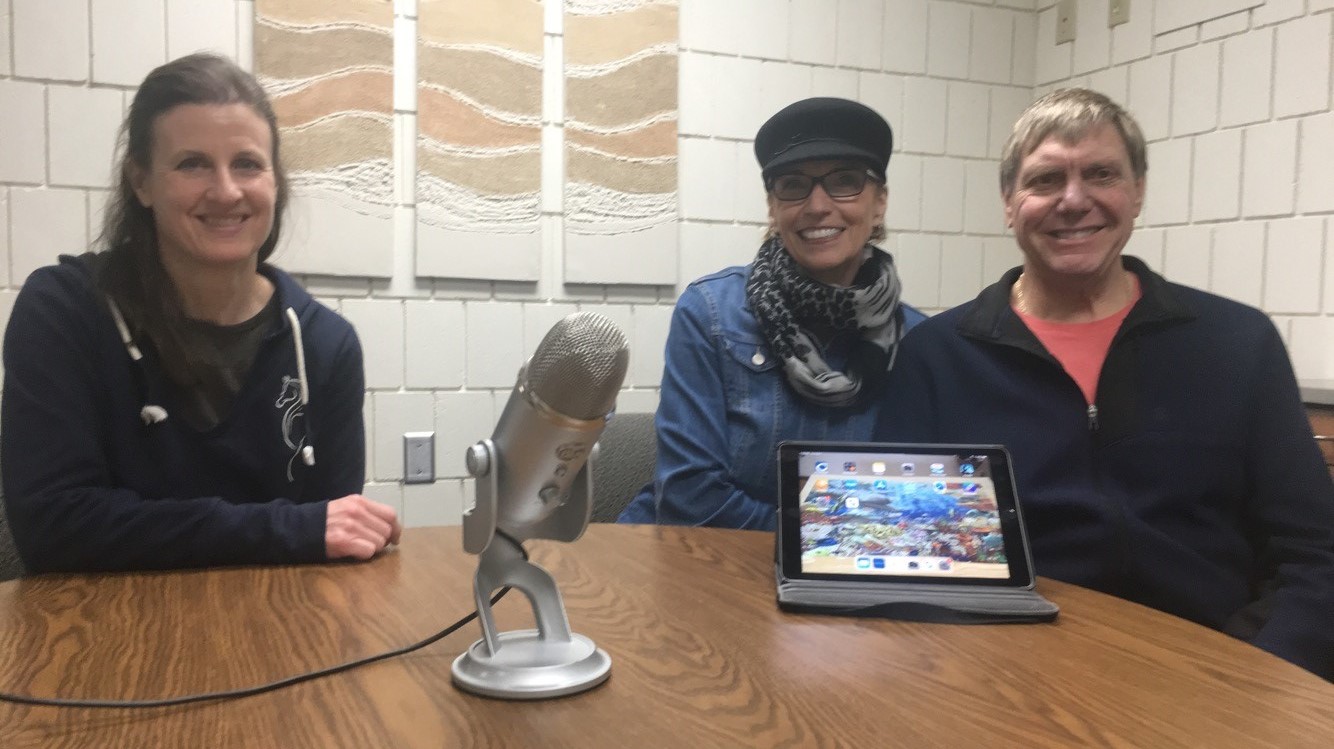
Ep 49Episode #49 - Primary Progressive Aphasia: A Collaborative Approach to Remaining Engaged in Life, A Conversation with Wayne Zorn, CeCelia Zorn, and Tania Riske
During this episode, Jerry Hoepner, a faculty member in the department of Communication Sciences and Disorders at the University of Wisconsin – Eau Claire, speaks with Wayne Zorn, CeCelia Zorn, and their speech-language pathologist Tania Riske, about primary progressive aphasia. They also discuss the trio's article, "Three Voices at the Table." Wayne Zorn is a man of many dimensions. As others discover who he is, they find a person with a giving heart, a curious, precise, and engineering mind, and a fun-loving soul. CeCelia and Wayne met in high school in rural northeastern Wisconsin. Married for 45 years, CeCelia brings a threefold background to our discussion about PPA. CeCelia strives for a life enriched by kindness, joy, perseverance, curiosity, patience, and collaboration. Tania Riske is a speech-language pathologist at Mayo Health Systems – Eau Claire. She initially entered the speech language pathology field through her volunteer work with the Chippewa Valley Aphasia Group and graduated from the University of Wisconsin – Eau Claire Communication Sciences and Disorders Program. Tania continues to enjoy treating patients with aphasia and their families within the LPAA Paradigm. In this episode you will: Learn about living successfully with primary progressive aphasia (PPA) from an individual with PPA, his partner, and their speech-language pathologist. Learn about examples of participating in personally relevant activities like singing, travel, and golfing – along with what it takes for this to happen through collaborations between an individual with PPA, his partner, and their speech-language pathologist. Learn about following the lead of the individual with PPA and his partner as context and vehicle for authentic, person-focused interventions. Learn how this trio implemented collaborative interventions and authentic steps they took in that process. Learn about how to engage community partners in meaningful, participation-based collaborations. Learn about the challenges this couple has encountered and the positive way they have addressed those challenges. Download the Full Show Notes
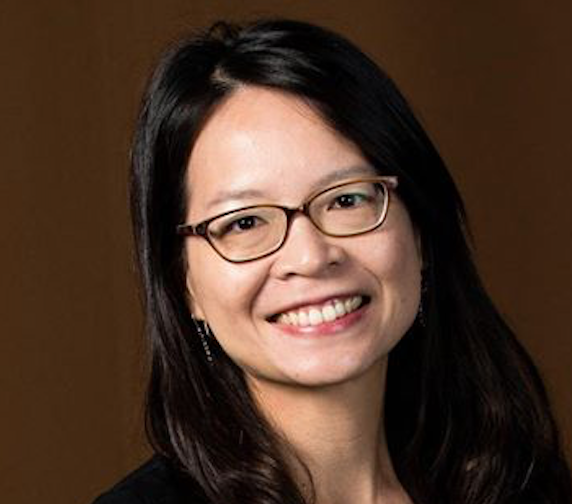
Ep 48Episode #48 - In Conversation with Dr. H. Sheen Chiou
During this episode, Dr. Katie Strong, Assistant Professor in the Department of Communication Sciences and Disorders at Central Michigan University talks with Dr. Hsinhuei Sheen Chiou from Minnesota State University, Mankato about metacognitive instruction and goal attainment scaling for people with aphasia and clinical education. Dr. H. Sheen Chiou, Ph.D. CCC-SLP is a full professor in the Department of Speech, Hearing and Rehabilitation Services at Minnesota State University, Mankato. She teaches courses in adult neurogenic disorders including aphasia and acquired cognitive disorders and runs language and cognitive rehabilitation research. Her current research and clinical practice focus on patient-centered language and cognitive intervention for people with brain injuries (stroke, traumatic brain injury, neurodegenerative disorders) and meaningful engagements for people with dementia and their care partners. She leads an aphasia conversation group for Minnesota Connect Aphasia Now in Minnesota. In this episode you will: Learn about metacognitive strategy instruction and goal attainment scaling Hear about how metacognitive strategy instruction and goal attainment scaling have been used with people with aphasia and in the training graduate students in working with people with aphasia Hear the importance of training LPAA practitioners who can apply LPAA to support clients with aphasia across the globe Learn about applying LPAA principles to supporting people with dementia and the Garden EngAGEment program Download the Full Show Notes

Ep 47Episode #47 - In Conversation with Megan Sutton
Ellen Bernstein-Ellis, Director of the Aphasia Treatment Program at Cal State East Bay speaks with Megan Sutton about how to empower individuals with aphasia to engage with home practice goals and how incorporating apps may enhance practice opportunities. Megan Sutton is a speech-language pathologist and the co-founder of Tactus Therapy Solutions, an app development company that creates popular aphasia therapy apps. She has designed 20 apps for adult speech pathology, including the best-selling Language Therapy 4-in-1. Megan has over 15 years of experience working with people with aphasia in a variety of clinical settings including acute care, inpatient and outpatient rehab, and an intensive aphasia treatment program. She is the co-author of the stroke recovery book entitled Healing the Broken Brain and is an international speaker on the topic of using technology in aphasia therapy. Megan lives near Vancouver, Canada where she regularly helps with the Sea to Sky Aphasia Camp and is on the clinical faculty of the University of British Columbia. She is a member of Aphasia Access and a volunteer with the Aphasia Recovery Connection. In today's episode you will: Learn why you should consider attending the next Aphasia Access Leadership Summit Hear a common misconception about LPAA and learn how addressing impairment is considered one of the four basic domains of the A-FROM Learn how personalization with apps is key to making home practice more person-centered. Consider the critical elements that contribute to creating a meaningful home program for a client. Hear a moving message from families regarding their experience at home coping with aphasia. Download the Full Show Notes

Ep 46Episode #46 - In Conversation with Carol Dow-Richards
Ellen Bernstein-Ellis, Co-director of the Aphasia Treatment Program at Cal State East Bay speaks with Carol Dow-Richards about the importance of social connection for individuals with aphasia and their care partners and how it became the driving motivation behind The Aphasia Recovery Connection. Carol Dow-Richards is the Director of The Aphasia Recovery Connection, (ARC) a nonprofit organization. Carol spends her days walking alongside families as they navigate the road to recovery. That is a road she knows all too well as her son David had a massive stroke destroying over half his left brain when he was only ten years old resulting in global aphasia and paralysis. While one Doctor suggested placing the fourth grader in a nursing home, David opted to fight - and clocked over 3,000 clinical hours of therapy over the next 15 years. Today, the mother and son duo are authors, have appeared on The Doctors, lead aphasia cruises and boot camps, speak at CEU events, and connect families like their own so others don't live in isolation every day on Facebook. Carol shares that one of ARC's most impactful programs is the A R C Care Partner and Friends Group on Facebook. Today, she will give us some insight into the life of care partners, share some of her own "aha" moments she's learned over the years, and provide resources and tips real families dealing with aphasia have shared on ARC. In today's episode you will: Learn what motivated the formation of the consumer-based Aphasia Recovery Connection Hear the caregiver's perspective of the impact of aphasia on the family shared through personal stories Discover the role ARC fills for providing connection among individuals with aphasia and their care partners Hear specific actionable steps every SLP can take to provide education and support to individuals with aphasia and their families. Download the Full Show Notes
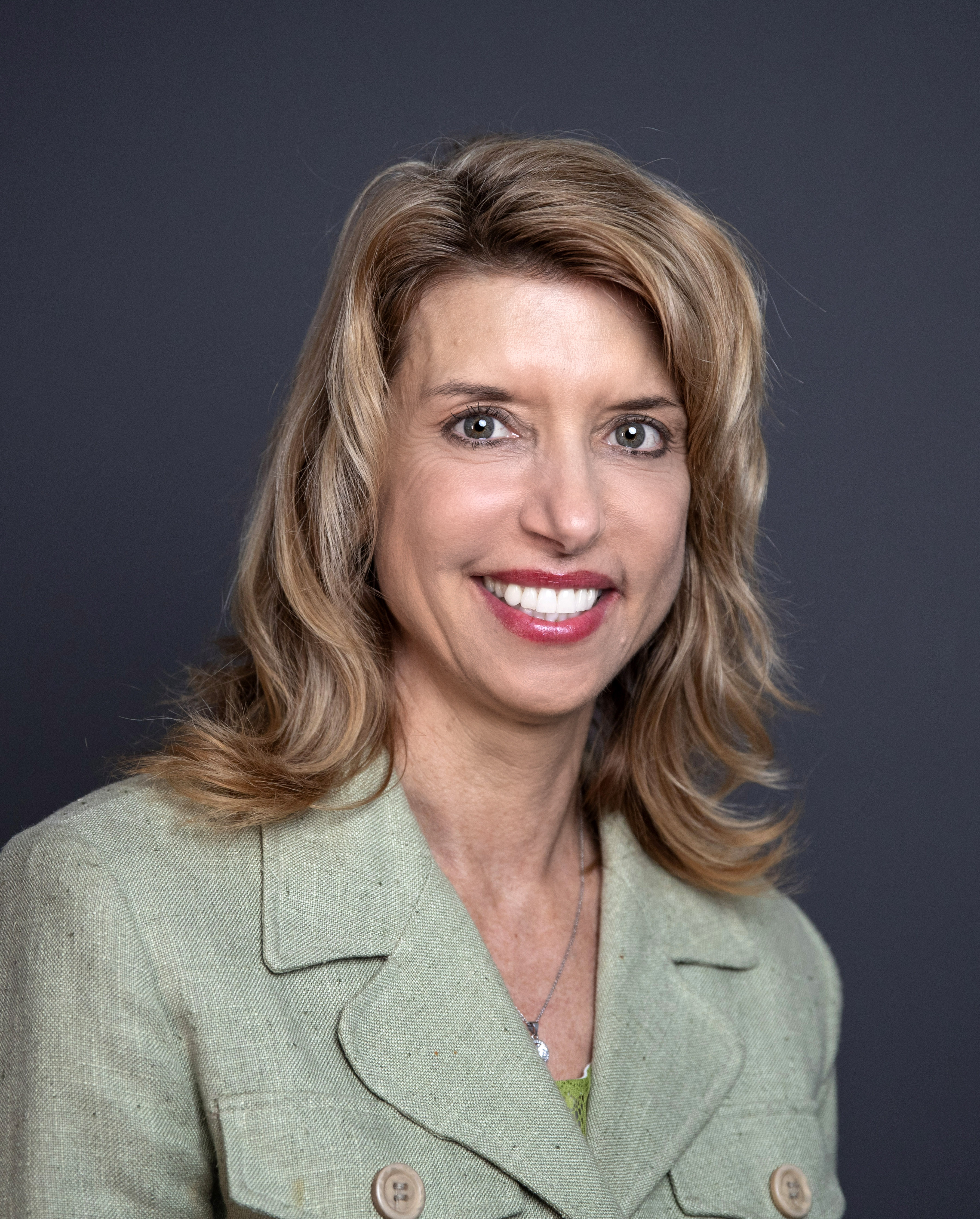
Episode #45 - A Conversation with Jodi Morgan
Katie Strong, Assistant Professor in the Department of Communication Sciences and Disorders at Central Michigan University, talks with Jodi Morgan about aphasia programming at Brooks Rehabilitation Aphasia Center. Jodi Morgan, CCC-SLP is a speech-language pathologist, manager and co-founder of the Brooks Rehabilitation Aphasia Center. She serves as Clinical Assistant Professor in the Department of Communication Sciences at Jacksonville University. She also teaches courses in adult language disorders and cognitive disorders and rehabilitation. Her research interests and publications are in the area of aphasia and cognitive-linguistic rehabilitation in adults. Jodi has received multiple ASHA ACE awards and is an active member of Special Interest Groups through ASHA. She is a member of the Jacksonville Area Speech Pathology Association and the Florida Speech and Hearing Association. Jodi recently received Brooks Rehabilitation Research Award. She is currently a board member of Aphasia Access and serves as co-chair of the Academic Curriculum Working Group and the Aphasia Access Research & Education Committee. She presents at the community, state, and national levels in the areas of aphasia, supported communication, life participation approach to aphasia, and improving functional communication in adults with aphasia. In this episode you will: hear how crowdsourcing gave Brooks Rehabilitation Aphasia Center it's start learn the benefits of partnering with high schools for intergenerational influence on aphasia programming learn how people with aphasia influenced and started an Ambassador Program hear Jodi's experience as an Aphasia Access Board Member and how you can become involved in volunteering Download the Full Show Notes
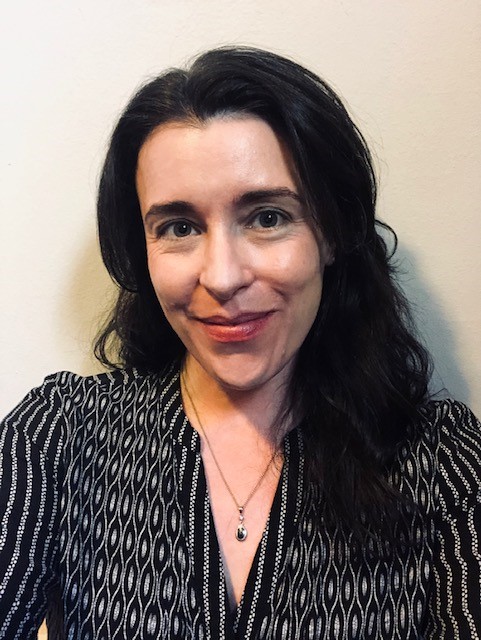
Ep 44Episode #44 - In Conversation with Amber Richardson
Janet Patterson, Chief of the Audiology & Speech-Language Pathology Service at VA Northern California, speaks with Amber Richardson about the intersection of aphasia rehabilitation, group treatment, and telehealth service delivery. Amber is a staff speech-language pathologist at the VA Northern California Health Care System. She received her Bachelor's degree in Psychology from the College of William and Mary and completed her Master's degree in Speech-Language Pathology at California State University, East Bay. Amber is pursuing her clinical doctorate in Speech Language Pathology at Northwestern University where her focus includes the study of aphasia group treatment, outcome measures and continuum of care. In today's episode you will learn: strategies to create and sustain a virtual aphasia group the importance of a whole-patient support network for patients using telespeech-language pathology how aphasia rehabilitation and group treatment use the Internet to connect people in California and Washington. Download the Full Show Notes

Ep 43Episode #43 - In Conversation with Julia Halvorson
Jerry Hoepner, a faculty member in the department of Communication Sciences and Disorders at the University of Wisconsin – Eau Claire, speaks to today's guest, Julia Halvorson, from MnCAN – Minnesota Connect Aphasia Now. Julia Halvorson is a founding member and Executive Director of MnCAN and is passionate about the opportunity to develop aphasia programs that will connect people with aphasia and their care partners in Minnesota. MnCAN is a nonprofit organization that has focused on providing supported conversation and life participation approaches to aphasia since it began in 2014. Julia directs a staff of 17 Speech pathologists and 2 licensed counselors who provide aphasia groups and programs as well as support groups for people with aphasia and their care partners. She has worked in the area of neurologic communication disorders for 40 years in acute care, long term rehab and outpatient settings as well as in rehab management. In this episode, listeners will hear and learn about: The logistics of developing and training a multi-site, group program (13 different sites) Learn how a graduate student planted an LPAA seed that grew into MnCAN Consider the idea of creating a manual for training and implementing LPAA group sessions Learn about the ripple effect that fosters growth, access to unique skillsets (accountants, marketing, musicians, etc.), and expansion of programming Learn about functional outcomes from aphasia group programming for individuals with aphasia, their partners, staff, and students Learn about the value of growing organically – not too fast, just right size, and timing of growth Insights into finding donated physical spaces to host group meetings Expansion from conversation groups to "ala carte" specialty groups Find out what a "merry little band of rebels" means Download the Full Show Notes
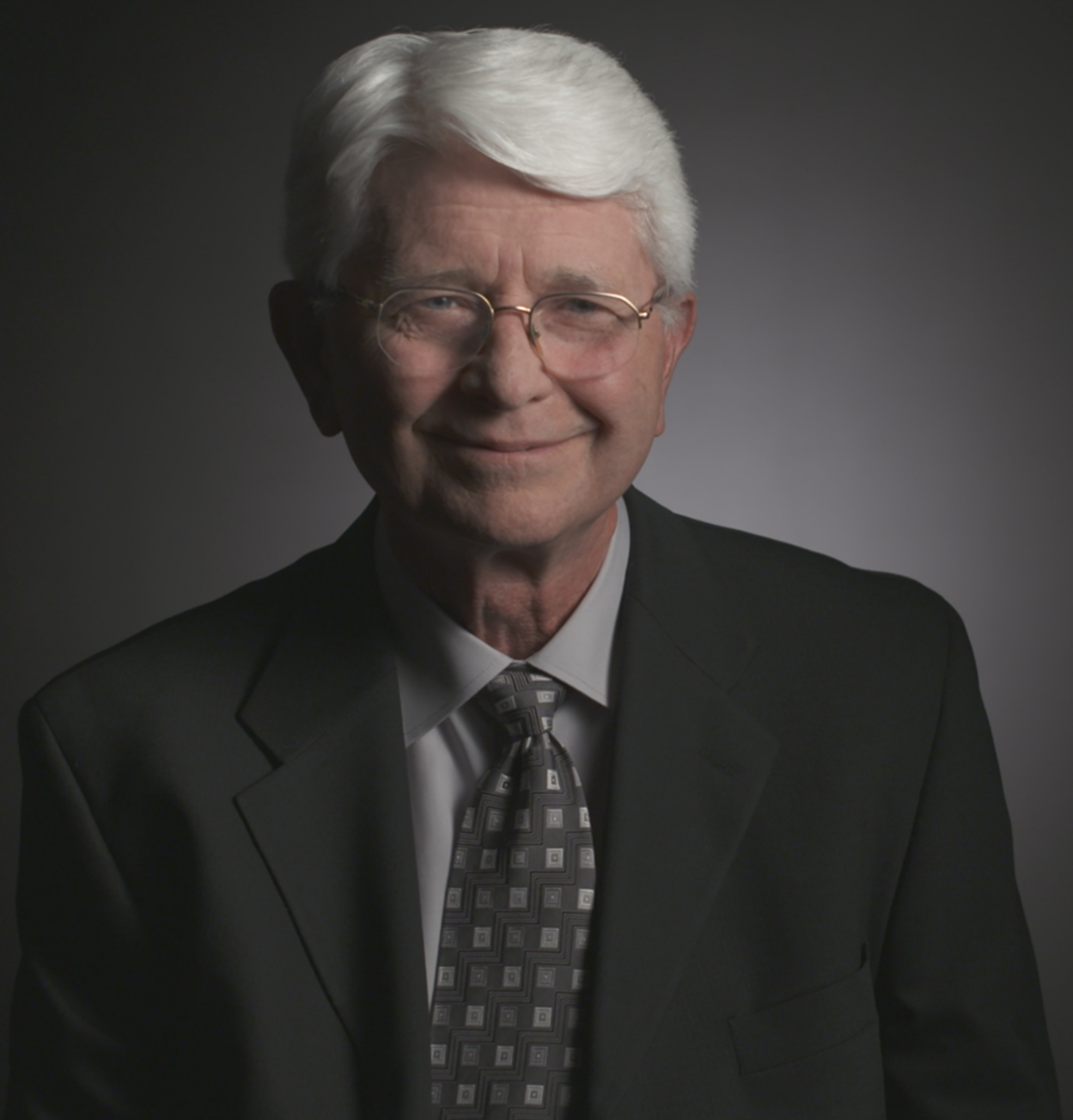
Ep 42Episode #42 - In Conversation with Tom Broussard
Dr. Katie Strong, Assistant Professor in the Department of Communication Sciences and Disorders at Central Michigan University talks with Dr. Thomas Broussard about broadening the importance of aphasia advocacy and awareness. Thomas G. Broussard, Jr., Ph.D. is an awarded author, public speaker, and three-time stroke survivor. He was a U.S. Naval Academy graduate, naval officer, naval shipbuilder, and a business owner in career development and training. He received his Ph.D. at The Heller School at Brandeis University in 2006. His work was focused on helping people with a disability find work. Dr. Broussard was associate dean at The Heller School at Brandeis University until his stroke in 2011. He lost his language and could not read, write or speak well, but kept a 500-page diary using metaphorical drawings with text that didn't make any sense. He started his company, Stroke Educator, Inc. in 2015. He is conducting a national "Aim High for Aphasia" awareness campaign dedicated to educating people about aphasia, an impairment of language. This is the fourth year of the campaign and he has spoken in 24 states so far. Dr. Broussard has written three of the Stroke Diary series: Stroke Diary, A Primer for Aphasia Therapy (Vol I); The Secret of Aphasia Recovery (Vol II) and Stroke Diary, Just So Stories, How Aphasia Got Its Language Back (Vol III) which won the 2018 Gold Medalist Award for the President's Book Award from the Florida Authors and Publishers Awards. In this episode you will: hear Tom's stroke story learn that awareness is its own modality learn about the Aim High for Aphasia campaign Download the Full Show Notes