How to Meditate for Concentration and Focus: A Simple Guide
Anthony Metivier's Magnetic Memory Method Podcast
Audio is streamed directly from the publisher (traffic.libsyn.com) as published in their RSS feed. Play Podcasts does not host this file. Rights-holders can request removal through the copyright & takedown page.
Show Notes
 If you’re looking for how to meditate for concentration and memory, this may be the most important blog post you ever read.
Why?
Because there are few things more frustrating than not knowing how to improve concentration!
Well, okay, there’s also the frustration of forgetting important details. Especially when you’re in the middle of something as important as recalling a person’s name, an important fact, or even a hilarious joke.
Or worse:
When you’ve prepared the perfect anecdote, yet, you can’t retrieve the single most important part from your memory.
Here’s where the real frustration sets in:
You can remember the newspaper where you read the information. You can even remember the look of the page where the information was found, including images and other small details.
And yet, in your mind’s eye …
That One Piece Of Information Is Painfully Out Of Reach!
Don’t worry.
You’re not losing your memory.
Your inability to remember is likely related to the level of concentration you used at the time you read the passage.
This is because concentration is key to memory recall. (In case you want to look it up on Wikipedia, concentration is also known by the slightly less sexy term, “attentional control.”)
And how to meditate for focus is exactly what you’ll learn in this post.
But first, a demonstration of just how easy it is to sit and meditate:
https://youtu.be/mBRZZEbX4w8
And now, an important question:
What Exactly Is Concentration?
Good question, especially when it comes to memory.
Why?
Because concentration is necessary for creating complete memories.
Lack of attention to detail leads to difficulty remembering crucial and important pieces of information.
Although having excellent concentration may not necessarily lead to better memory, concentration is essential to well-formed and useful recall of information.
But in a time with so much valuable information at our fingertips, there are more barriers for our concentration than ever. The notification-saturated world of the the internet constantly attacks our focus. (Good news, though: There is a way to become Indistractable.)
This reality has led some teachers to worry that students are growing up with decreased attention spans.
Thankfully, there is a powerful and scientifically proven method to improving concentration using meditation for concentration and memory. What’s more, this method has been practiced for thousands of years.
Best of all, it’s a simple practice anyone can take up, at no cost, with no fancy equipment, and no extensive training.

This 3,500 Year Concentration Meditation Technique Will Improve Your Concentration And Memory
The mind is a powerful thing.
Perhaps no other group of minds demonstrates this more strongly than experienced Buddhist monks.
These monks dedicate their lives to following the Buddhist 8-fold path to enlightenment. The path involves doing good, serving others, and extensive meditation.
Enlightenment is the ultimate state of mind. When enlightened, a meditator finally achieves a complete stillness of the mind and inner peace.
A Short History Of The Research Into How To Improve Concentration And Memory With Meditation
Although meditation has existed for over 3,500 years, the scientific community has only been studying meditation for over 50 years (Thomas and Cohen, 2013).
Everyday people have studied meditation too and discovered a lot about how it helps memory:
For both scientists and lay people, meditation has demonstrated impressive memory improvement and even helped stunning feats of long term retention and recall.
In one mind-defying example, Buddhist monks have been recorded controlling their body temperatures through a meditative practice called “g-tummo”. In controlled scientific tests, experienced monks were able to dry cold and moist sheets (Kozhevnikov et al. 2013).
These sheets were placed around each monk’s body, and were dried within an hour.
This meditation process was made possible through body heat produced by the monks while in their meditative state of “g-tummo”. Some witnesses of similar experiments report seeing steam emerge from the sheets while they dried (Kozhevnikov et al. 2013).
Researchers also measured the monks’ body temperatures, which rose by as much as 17 degrees Celsius.

How Is This possible?
No one quite understands the biological mechanisms behind meditation just yet.
But study after study demonstrates that meditation has far-reaching benefits – including for concentration and memory.
Indeed, meditation is perhaps the only mental exercise with so much evidence of its ability to improve cognition and focus.
And you don’t even have to be a monk to start using this tool to better your own mind, body, and soul.
The Long way To Better Concentration
As with everything, there’s an easy way and a hard way. Science doesn’t skip over the hard way and investigates everything (crazy right?).
Looking for links between meditation and cognition, researchers from the University of California, Davis, recruited 60 people for a study. Half were assigned to a meditation retreat to practice mindfulness meditation for an average of five hours a day for three months.
These participants were committed. Not only did they volunteer three months of their time. They also paid $5,300 to attend the retreat.
The other 30 were used as a control group and placed on a waiting list. This was to rule out that the passage of time alone was not to blame for any differences between the groups.
Both groups were asked to watch a series of lines flash on a screen. Participants were to click a mouse when they saw a line that was shorter than the others.
This detail-oriented test forced participants to focus intently. Researchers found that those who meditated were significantly more likely to see increasingly small differences in the lines (Maclean et al. 2010).
In other words, the meditation group were better able to focus in on small details through their improved concentration (Maclean et al. 2010).
But not everyone has the time to undergo a three month meditation retreat. So, where’s the shortcut for the majority of us who want the benefits without the commitment?
Science has a solution.

The Easy Way To Better Concentration
As benefits to cognition had been observed for longer-term meditation, researchers were curious to see whether less effort could be effective (Zeidan et al. 2010).
In a study conducted at the University of North Carolina, a group of 49 students volunteered for a meditation study. None of them had prior experience meditating.
24 participants were randomly assigned to meditation, while 25 were assigned to listening to an audiobook. Each group performed their activity for 20 minutes, four times a week, for one week under laboratory supervision.
At the end of the one week experiment, the meditation group experienced significant improvements in concentration compared to their audiobook counterparts (Zeidan et al. 2010).
Are There Any Limits To Meditation And Improvement To Concentration And Memory?
It’s important to note that this research has a few limitations. These results were seen in college students and may not extend to older adults. Also, there is no indication that this is as effective as longer-term and longer-duration mediation (Zeidan et al. 2010).
However, it is encouraging that immediate benefits to practicing short-term meditation were observed. This means that you don’t have to wait a few months before you can start benefiting from your practice. Within a week of consistent meditation, you can start to experience improved concentration.

But Will Concentration Meditation Really Improve Your Memory?
If the meditation-to-concentration-to-memory link seems shaky to you, don’t abandon meditation just yet. The link is more direct: meditation has also been shown to improve memory power and concentration.
A randomized controlled test studied the effects of meditation on the working memory capacity in adolescents.
Around 200 teenagers were recruited and assigned to either a mindfulness meditation practice, yoga, or were waitlisted as a control group. The groups meditated or practiced yoga once a day for 15-30 minutes. These were accompanied by two formal teaching sessions twice a week.
By the end of the study, teenagers participating in the meditation group had significantly better outcomes than their yoga counterparts. Particularly in terms of their working memory capacity (Quach et al 2015).
But Meditation Doesn’t Just Improve Memory And Focus For The Young!
Another study looked at the effects of mindfulness training in adult-aged college students studying for their GRE tests. Sure enough, the meditating participants experienced less mind-wandering and increase working memory capacity. This result was achieved with only two weeks of meditating ten minutes per day (Mrazek et al 2013).
By now, you must be getting excited about meditation’s potential to super-charge your cognition. Calm your mind for now and read on about how to get started on your practice.
How To Meditate For Concentration And Focus
There are as many ways to meditate as there are Buddhist monks.
By stripping away the religious practices, a secular, simple, and one-size-fits-all solution to meditation is available.
To start meditating, just follow these steps:
- Find a quiet spot, empty of distractions.
- Set a timer for the amount of time you want to meditate. Start with five minutes and move up from there.
- Sit on a chair or on the floor, whichever is more comfortable.
- Close your eyes and focus on your breath; on where it feels the strongest. When thoughts enter your mind, don’t reject them. Simply acknowledge them and gently return your attention to your breath.
If meditating in silence is too difficult, you can try a large variety of guided meditations. These include phone apps, such as Headspace and Breathe.
No research has been done showing any benefit to meditation less than four times a week. To get the most out of it, aim to meditate as consistently as you can, at least a few times per week.
And if you’d like a more advanced approach to meditation (the one I use most often), check out The Five Fold Path To Memory Improvement.
Advanced Meditation Techniques For Concentration And Memory
If you’re already well-skilled with meditation, you probably want a few more rigorous techniques you can try.
That’s great, and I’m happy to supply some.
Kirtan Kriya
This simple meditation has been show to increase memory, concentration and reduce stress. I learned about it from Dr. Gary Weber:
https://www.youtube.com/watch?v=ehvokeZnXMM
Getting started with Kirtan Kriya is simple.
Learn four syllables. I think any will do. You could even just count 1-4.
With each count, press one finger against one thumb.
If you want to memorize the syllables Weber discusses, or the Chinese version, which sounds like ah, may, toe, fo-ah, you can use mnemonics, which is great memory and brain exercise.
I suggest doing this exercise at least 4x a week, but daily is best for maximizing your results.
Number-skipping
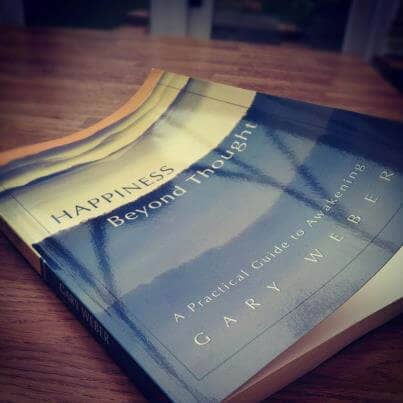
As I was learning Kirtan Kriya, I read Gary Weber’s excellent, Happiness Beyond Thought.
In it, he talks about counting from 1-10 while focusing on your breath. This is a standard meditation technique.
But what happens when you try to suppress the even numbers?
Your focus and concentration goes up!
To get started, find a place to sit and breath in. Count one.
Then, breath out and as you breath in, work on preventing yourself from representing the number two.
This is very challenging.
But what ends of happening is that the stress-release nature of the exercises teaches you a lot about how the brain symbolizes thoughts. You grow in mental strength as you work with this technique and start to experience more knowledge and insight into the nature of concentration and memory.
You can also “skip” the syllables of Kirtan Kriya, and this is an easier way to get started with this technique, especially if you struggle to count your breath from 1-10. (Many people will, and there’s not shame in it. Just practice.)
Memorize Mantras
As I continued working with Dr. Weber’s books and videos, I learned how to memorize and chant some Sanskrit mantras.
At first, I didn’t think it was going to be worth it, but it has made my memory and concentration so much sharper.
Here is a discussion and demonstration:
https://www.youtube.com/watch?v=CgNQ9bU-nEg
The mantras I’ve memorized so far include:
- Selections from the Bhagavad Gita (found in Dancing Beyond Thought)
- Upadesa Saram
- Nirvana Shatakam
- Selections from the Ribhu Gita (found in Evolving Beyond Thought)
If process is simple:
- Create a Memory Palace Network.
- Encode each word line by line using the classical rules of mnemonics and association. If you need help making associations, try these sensory memory exercises and visualization exercises.
- Use Recall Rehearsal, or something like Dominic O’Brien’s The Rule of Five to get the mantras into long term memory quickly.
- Practice daily if you can. 4x a week is the bare minimum.
- Make sure to use the hand “mudras” from Kirtan Kriya to assist your concentration.
One of the beautiful outcomes of this practice, especially when you learn the meaning of the suggested mantras, is that you’ll develop your crystal and fluid intelligence in addition to your memory and focus.
https://www.youtube.com/watch?v=61ZVu9dSb18
I have also found that this practice has helped serve as a reading comprehension booster. And if you want to know how to improve memory power naturally, there is nothing more organic than these three advanced techniques I’ve shared.
Ultimately, these are really challenging. But don’t give up. Treat these exercises to improve memory and concentration like a game and they will serve you faster and better than any brain exercise app on the market.
Enough Reflection, It’s Time For Action
Improving your concentration is a step towards improving your memory. Meditation is a powerful tool for improving concentration and bettering your cognition.
The best part is that meditation can help you use a Memory Palace.
Especially in an age of endless distractions and heightened stress, incorporating practices to re-focus your mind is important.
For some, daily meditation might seem like an impractical use of time.
However, think about the time you waste, lost in thought, unfocused, and scatter-brained. Don’t you owe it to yourself to improve?
With that in mind, it’s easy to understand how meditation yields impressive dividends for a relatively small investment in time.
Results are not instantaneous, but they do come quickly and you can be sure that they’re scientifically backed.
Personally, I’m glad that I learned how to focus my mind using these techniques. At first, I was reluctant to memorize Sanskrit, but eventually I learned that it too is scientific and completely secular. It’s just that strange people have sometimes made it more than the actual text says.
Give the benefits of better concentration and the ability to remember even more information, I’m glad I buckled down and learned how to memorize scripture so it could be part of my meditation practice.
You don’t have to go that far if you don’t wish, but here’s what I suggest:
Carve out ten minutes today for your first meditation session. No matter which technique you start with, your mind and memory will thank you.
Further Resources On Meditation For Concentration and Focus
3 Ridiculously Boring Ways To Add Focus And Excitement To Your Life.
Kozhevnikov, Maria, James Elliott, Jennifer Shephard, and Klaus Gramann. “Neurocognitive and Somatic Components of Temperature Increases during G-Tummo Meditation: Legend and Reality.” PLoS ONE (2013). Pubmed. Web. 28 Dec. 2015. <pubmed.com>.
Maclean, K. A., E. Ferrer, S. R. Aichele, D. A. Bridwell, A. P. Zanesco, T. L. Jacobs, B. G. King, E. L. Rosenberg, B. K. Sahdra, P. R. Shaver, B. A. Wallace, G. R. Mangun, and C. D. Saron. “Intensive Meditation Training Improves Perceptual Discrimination and Sustained Attention.” Psychological Science (2010): 829-39. Upaya. Web. 29 Dec. 2015.
Mrazek, M. D., M. S. Franklin, D. T. Phillips, B. Baird, and J. W. Schooler. “Mindfulness Training Improves Working Memory Capacity and GRE Performance While Reducing Mind Wandering.” Psychological Science (2013): 776-81. Sage Pub. Psychological Science. Web. 29 Dec. 2015.
Quach, Dianna, Kristen E. Jastrowski Mano, and Kristi Alexander. “A Randomized Controlled Trial Examining the Effect Of Mindfulness Meditation on Working Memory Capacity In Adolescents.” Journal of Adolescent Health. Science Direct. Elsevier. Web. 29 Dec. 2015.
Thomas, John W., and Marc Cohen. “A Methodological Review of Meditation Research.” Frontiers in Psychiatry Front. Psychiatry (2014). PMC. PMC. Web. 29 Dec. 2015.
Zeidan, Fadel, Susan K. Johnson, Bruce J. Diamond, Zhanna David, and Paula Goolkasian. “Mindfulness Meditation Improves Cognition: Evidence of Brief Mental Training.” Consciousness and Cognition (2010): 597-605. Print.