Anchor Change with Katie Harbath
77 episodes — Page 2 of 2

S2 Ep 12Speaking Out Amidst Unjust Attacks
ACK! I totally forgot to schedule this last night. So sorry for my delay.Don’t forget to follow us on YouTube!This week we welcome Nina Jankowicz to the podcast. She talks about the importance of recognizing Russia's use of disinformation as a geopolitical strategy and the need for more vocal online presence in countering disinformation. Nina also shares her observations of the impact of Russian disinformation during the 2016 US election from her vantage point in Ukraine. She discusses her research on disinformation in Central and Eastern Europe and the limits of counter disinformation programming. Nina then talks about her role in the Disinformation Governance Board and the misconceptions and attacks it faced. She emphasizes the importance of balancing free speech and protecting the information environment, citing examples from Germany, Singapore, Ukraine, and Brazil. The conversation covers various topics related to disinformation, online harassment, and the American Sunlight Project (of which I’m an advisor). It highlights the global nature of disinformation and the interconnectedness of these issues. The conversation also explores the challenges faced by women online, including gendered and sexualized abuse. The American Sunlight Project is introduced as a new initiative to combat disinformation and promote truth and transparency in the discourse. The importance of transparency and accountability in tech platforms and government is emphasized.Takeaways* Recognizing and addressing Russia's use of disinformation as a geopolitical strategy is crucial in countering disinformation.* The impact of Russian disinformation during the 2016 US election was significant, and the hubris of the United States in responding to it was concerning.* Counter-disinformation programming often faces challenges in balancing its goals with free speech considerations.* The Disinformation Governance Board faced misconceptions and attacks, highlighting the need for clear communication and understanding of its purpose.* Balancing free speech and protecting the information environment is complex, and different countries have approached it differently. Disinformation is not limited to foreign actors and is often based on pre-existing social fissures.* Women face gendered and sexualized abuse online, which has a silencing effect.* The American Sunlight Project aims to promote truth and transparency in the discourse and inform voters.* Transparency and accountability are crucial in addressing disinformation and online harassment.Key Links* Wilson Center: Freedom and Fakes: A Comparative Exploration of Countering Disinformation and Protecting Free Expression* MSNBC: New documents show how disinformation expert was unfairly tarredPlease support the curation and analysis I’m doing with this newsletter. As a paid subscriber, you make it possible for me to bring you in-depth analyses of the most pressing issues in tech and politics. This is a public episode. If you'd like to discuss this with other subscribers or get access to bonus episodes, visit anchorchange.substack.com/subscribe
S2 Ep 11The Reality of Data-Driven Campaigning
Kate Dommett, a professor of digital politics, discusses her book “Data-Driven Campaigning and Political Parties” and her research on how political parties use data in election campaigns. She explores the prevailing narratives around data-driven campaigning and how they often do not match reality. Dommett also discusses the role of regulation in data-driven campaigning and the potential threats to democracy. She emphasizes the need for a nuanced understanding of data use in campaigns and the importance of considering the regulatory environment and data security.Takeaways* Data-driven campaigning is not a new phenomenon, but the use of digital technology has disrupted traditional accountability systems.* The regulatory environment and electoral systems vary across countries, leading to different practices in data-driven campaigning.* Campaigns use data for targeting, mobilization, and message development, but the level of sophistication varies.* The role of online platforms in data-driven campaigning raises questions about access, responsibility, and unintended consequences.* Data security is a significant concern in data-driven campaigning, especially for smaller parties with limited resources.* Academic research should draw on historical lessons and theory to provide a responsible and nuanced understanding of the impact of new technologies, such as AI, on elections.Chapters* Introduction and Background* Types of Data and Decision-Making* Role of Online Platforms in Data-Driven Campaigning* Concerns and Challenges in Data-Driven Campaigning* Responsible Research on New Technologies in ElectionsLinks* Katharine Dommett, Glenn Kefford, and Simon Kruschinski, Data-Driven Campaigning and Political Parties* Amy Orben, The Sisyphean Cycle of Technology Panics* Fabio Votta at al. Who Does(n't) Target You? Mapping the Worldwide Usage of Online Political Microtargeting This is a public episode. If you'd like to discuss this with other subscribers or get access to bonus episodes, visit anchorchange.substack.com/subscribe

S2 Ep 10Pivot! Navigating Unprecedented Times with Audacity and Humility
Sorry for the slight delay today. The tech gods were not being kind. Watch this on YouTube!NOTE: A lot of this summary and show notes were generated via a new AI tool by Riverside.fmIn this episode, Brian Fishman, co-founder and chief strategy officer at Cinder, discusses his background in studying terrorism and his work at Facebook. He shares insights on the early days of using the internet for research on terrorist organizations and the challenges of trust and safety in the tech industry. Brian also talks about the importance of pivoting in one's career and the trade-offs involved. He discusses the future of the tech industry, including the impact of AI and the role of regulation in trust and safety. The conversation covers various topics related to content moderation, media coverage, and the role of technology in society. The main themes include the challenges of content moderation, the difficulty of making decisions in the face of complex issues, the role of the media in shaping narratives, and the need for a more comprehensive understanding of technology's impact. The conversation also touches on the importance of capturing the wider ecosystem of communication platforms and actors involved in events like January 6th. We also discuss the potential for storytelling to shed light on the challenges of trust and safety in the tech industry.Takeaways* Brian Fishman has a background in studying terrorism and has worked on trust and safety issues at Facebook.* The early days of using the internet for research on terrorist organizations provided valuable insights.* Pivoting in one's career requires a mix of audacity and humility.* The tech industry is facing challenges related to AI, synthetic content, and trust in institutions.* Regulation will raise the floor for trust and safety expectations but may lower the ceiling. Content moderation is a complex and challenging task, regardless of whether it is done by private companies or regulators.* The difficulty of making decisions in the face of complex issues remains even when responsibility is transferred from private companies to regulators.* Media coverage plays a significant role in shaping narratives and public understanding of events.* A comprehensive understanding of technology's impact requires considering the wider ecosystem of communication platforms and actors involved.* Storytelling can be a powerful tool to explore the challenges of trust and safety in the tech industry.Links* Trust and Safety Tycoon Game * How much mouse poop should be allowed in cereal boxes (a thought exercise that pertains to content moderation that we discuss and David Karpf wrote a piece about).Show Notes* Introduction and Background* Early Internet Research on Terrorism* Pivoting in a Career* Challenges and Opportunities in the Tech Industry* The Role of Regulation in Trust and Safety* The Challenges of Content Moderation* The Difficulty of Decision-Making* The Role of Media in Shaping Narratives* Understanding the Wider Ecosystem of Communication Platforms* Storytelling and the Challenges of Trust and SafetyAnchor Change with Katie Harbath is a reader-supported publication. To receive new posts and support my work, consider becoming a free or paid subscriber. This is a public episode. If you'd like to discuss this with other subscribers or get access to bonus episodes, visit anchorchange.substack.com/subscribe

S2 Ep 9Team Duco on Trends in Tech
Watch this episode on YouTube.As most of you know, I started working full-time as the Global Affairs Officer of Duco Experts in January. One of the things I like about the job is getting to work across the industry and seeing how companies tackle similar problems differently. Thus, I thought it would be fun to bring the leadership team on the podcast to discuss some trends. Sidney Olinyk is the founder and CEO. Neema Basri is the Chief Operating Officer, and Scott Hoch is the Chief Technology Officer. In this episode, Sidney and Scott talk a bit about the origins of Duco and some lessons learned from starting the business. Neema shares some of the work that we do and we all jump into sharing some trends we are seeing, our favorite productivity hacks and some hot take predictions for the future. Anchor Change with Katie Harbath is a reader-supported publication. To receive new posts and support my work, consider becoming a free or paid subscriber. This is a public episode. If you'd like to discuss this with other subscribers or get access to bonus episodes, visit anchorchange.substack.com/subscribe
S2 Ep 8Harbath Solo Session: Frequently Asked Questions
I’m trying something different for this week’s podcast. I originally hoped I would have a webinar to repurpose, but we ended up rescheduling it, so rather than not doing a podcast this week, I thought I would record the answers to questions I get quite often.In this discussion, I go into seven different areas of interest. Topics and time stamps are below. I hope you enjoy it! * 2:04 - My career path & how I mapped out my post-Facebook journey* Lessons from Striking Out on My Own* Mapping Out My Post Facebook Career* Lori Brewer Collins: On Leading: Transformative Conversations* 26:13 - Who I am outside of work* Reclaim the Fairy Tale* The Things We Whisper* 32:16 - What I do and a typical day looks like for me* 34:41 - How to get a job in tech* 40:54 - My reading/news consumption habits* 48:10 - Why I started my Substack and how I put it together each week* 57:25 - What’s next This is a public episode. If you'd like to discuss this with other subscribers or get access to bonus episodes, visit anchorchange.substack.com/subscribe
S2 Ep 7Trust & Safety & Integrity & Governance
Watch the video of our conversation on YouTube!This week, I welcome Professor Kate Klonick to the podcast. The name of this episode comes from some amazing swag Kate made for a conference she put on last year on the history of the Trust and Safety profession. (You know how much I love swag.)Kate is among the foremost experts on many things, including platform governance of speech. In 2018, she wrote a paper at Harvard titled “The New Governors: The People, Rules, and Processes Governing Online Speech,” which was a first-of-its-kind behind-the-scenes look at how platforms handle content moderation.In 2021, she wrote a piece for the New Yorker about how then-Facebook set up the Oversight Board titled, “Inside the Making of Facebook’s Supreme Court.”Recently, she has been writing on these topics at her Substack The Klonickles. One of her pieces I cite all the time is about the end of the golden age of tech accountability where in 2023 she makes the point:[F]or all the of the complaining we’ve done about Big Tech’s lack of cooperation with accountability, transparency, and research efforts, I unfortunately think we’ll look back on the last five years as a Golden Age of Tech Company access and cooperation.We talk about all of this and more. Enjoy!Kate Klonick teaches Property, Internet Law, and a seminar on information privacy. Klonick's research focuses on law and technology, most recently on private platform governance of online speech. Klonick's scholarly work has appeared in The Yale Law Journal, Harvard Law Review, The Georgetown Law Journal, the peer-reviewed Copyright Journal of the U.S.A., The Maryland Law Review, and The Southern California Law Review. Her popular press writing has appeared in the New Yorker, New York Times, The Atlantic, The Guardian, Lawfare, Slate, Vox and numerous other publications.Professor Klonick holds an A.B. with honors from Brown University where she studied both modern American History and cognitive neuroscience, a J.D. from Georgetown University Law Center where she was a Senior Editor on the Georgetown Law Journal, and a Ph.D. in Law from Yale Law School. She clerked for Hon. Eric N. Vitaliano of the Eastern District of New York and Hon. Richard C. Wesley of the Second Circuit. She is an affiliated fellow at the Yale Law School Information Society Project and a non-resident fellow at the Brookings Institution. She is on leave for 2022-2023 serving as a Visiting Scholar at the Rebooting Social Media Institute at Harvard University. This is a public episode. If you'd like to discuss this with other subscribers or get access to bonus episodes, visit anchorchange.substack.com/subscribe

S2 Ep 6Lies, Damn Lies and Disinformation
Don’t forget you can watch all of these on YouTube!This week, we are discussing all things online influence operations with one of the foremost experts - Olga Belogolva. We’re talking about Russians, Chinese, Iranians, and other actors who want to influence the online information environment. The title of this episode comes from one of her classes she used to teach at Georgetown.Olga is the Director of the Emerging Technologies Initiative at the Johns Hopkins School of Advanced International Studies (SAIS). She also a lecturer at the Alperovitch Institute for Cybersecurity Studies at SAIS, where she teaches a course on disinformation and influence in the digital age.At Facebook/Meta, she led policy for countering influence operations, leading execution and development of policies on coordinated inauthentic behavior, state media capture, and hack-and-leaks within the Trust and Safety team. Prior to that, she led threat intelligence work on Russia and Eastern Europe at Facebook, identifying, tracking, and disrupting coordinated IO campaigns, and in particular, the Internet Research Agency investigations between 2017-2019.Olga previously worked as a journalist, and her work has appeared in The Atlantic, National Journal, Inside Defense, and The Globe and Mail, among others. She is a fellow with the Truman National Security Project and serves on the review board for CYBERWARCON.Enjoy! This is a public episode. If you'd like to discuss this with other subscribers or get access to bonus episodes, visit anchorchange.substack.com/subscribe

S2 Ep 5Michael Bąk on the intersection of tech and civil society
Don’t forget you can also watch this on YouTube!This week, we are talking to Michael Bąk. Michael brings more than two decades of experience across international development, peacebuilding, diplomacy, and tech policy. Throughout his career, he has sustained a strong commitment to democratic governance, human rights, and information integrity.He is currently the Executive Director of the Forum on Information and Democracy and a former colleague of mine at Facebook, where he was the head of public policy for Thailand.We dig into the relationship between technology companies and civil society, how he’s thinking about our information environment and how we protect democracy in the age of social media and artificial intelligence.Show Links:* Global Call for Research to Expand Literature on Crucial Research Questions, with Emphasis on Global South Regions* Policy brief - Tech firms, governments urged to combat digital election threats (I forgot to mention that we did this with International IDEA and Democracy Reporting International)* Policy Brief - Information Integrity in Times of Conflict* AI as a Public Good: Ensuring Democratic Control of AI in the Information Space framework* Why Do We Need to Discuss So-called "Information Integrity"?* Euroviews. 'Regulation stifles innovation' is a misguided myth * Der Demokratieschützer Michael Bak über KI. - SZ.de * Fair Trade AI: https://background.tagesspiegel.de/digitalisierung/plaedoyer-fuer-eine-fairtrade-ki * Forum on Information and Democracy: www.informationdemocracy.org This is a public episode. If you'd like to discuss this with other subscribers or get access to bonus episodes, visit anchorchange.substack.com/subscribe

S2 Ep 4Nate Persily on Elections, Social Media and AI
Don’t forget you can also watch these on YouTube!This week we welcome Stanford Law Professor Nate Persily to the podcast. I’ve known Nate since 2013/2014 when he held a gathering at Stanford with folks in the tech/digital industry and the Federal Elections Commission. Nate has been a thought leader his entire career with experiences across technology, academia and election administration. We get into all of that in this conversation. Some links from what we talked about:* Nate’s bio* Stanford Cyber Policy Center* Social Science One research partnership with Facebook* Facebook 2020 election research* Senate Testimony on Platform Transparency This is a public episode. If you'd like to discuss this with other subscribers or get access to bonus episodes, visit anchorchange.substack.com/subscribe

S2 Ep 3Who Voters Trust for Election Information in 2024
Don’t forget you can now also watch these conversations on YouTube!This week, we are diving deep into elections and specifically where people go to get information on the election. Rachel Orey is the Bipartisan Policy Center’s Senior Associate Director where they are responsible for the organization’s election administration policy development, state and federal advocacy efforts, and the BPC Task Force on Elections. Their research focuses on evidence-based and data-driven reforms that meaningfully improve our elections ecosystem.As many of you know, I was a fellow on Rachel’s team for nearly three years and one of my last acts as both a BPC and Integrity Institute fellow was to help get this survey off the ground. We did a similar one in 2022 as well.Some of the findings include:Most Americans have confidence in the 2024 presidential election. They are more confident that votes in their community and state will be counted accurately than votes across the country. * A majority of respondents (69%) are confident their votes will be counted accurately in the 2024 election. This includes majorities of Republicans (60% very or somewhat confident), Independents (59%), and Democrats (85%).* Across all groups, Americans are most confident about an accurate count of votes in their community (74%). Just 64% are confident in an accurate count across the country.* This difference is most pronounced among Republicans. Only 50% of Republicans express confidence that votes will be counted accurately at the national level compared with 66% at the local level—a gap of 16 percentage points.* The confidence gap between local and national counting is an opportunity for voter education about how the counting and certification process works at all levels of our election system. While election officials may be doing a good job building confidence in their community, this gap shows the need for national and state media outlets, candidates, and political elites to help voters understand the robust processes and security measures that are present in every state.Rachel digs into that and more in this week’s podcast.Here’s the link to the security and integrity protections that make American elections strong, resilient, and trustworthy in every jurisdiction. This is a public episode. If you'd like to discuss this with other subscribers or get access to bonus episodes, visit anchorchange.substack.com/subscribe

S2 Ep 2Lie Detectives: How Political Campaigns Fight Disinformation
This week on the podcast, we are taking you to SXSW and discussing a conversation I had with Sasha Issenberg about his new book, Lie Detectives: How Political Campaigns Fight Disinformation. You might remember him from his popular book Victory Lab, which was published after Obama won.Sasha’s book looks at people in the U.S. and Brazil who were at the forefront of helping campaigns figure out how to combat disinformation—including when to ignore it. He also touches on how many on the Right view this work, and it’s something we talk about as well. You can read an excerpt on Politico.We interview each other in this conversation given our various experiences.A huge thank you to SXSW for the audio after my recorder ran out of batteries halfway through. 😬Please enjoy!Anchor Change with Katie Harbath is a reader-supported publication. To receive new posts and support my work, consider becoming a free or paid subscriber. This is a public episode. If you'd like to discuss this with other subscribers or get access to bonus episodes, visit anchorchange.substack.com/subscribe
S2 Ep 1Democracy Works: Helping voters navigate the first elections in the generative AI era
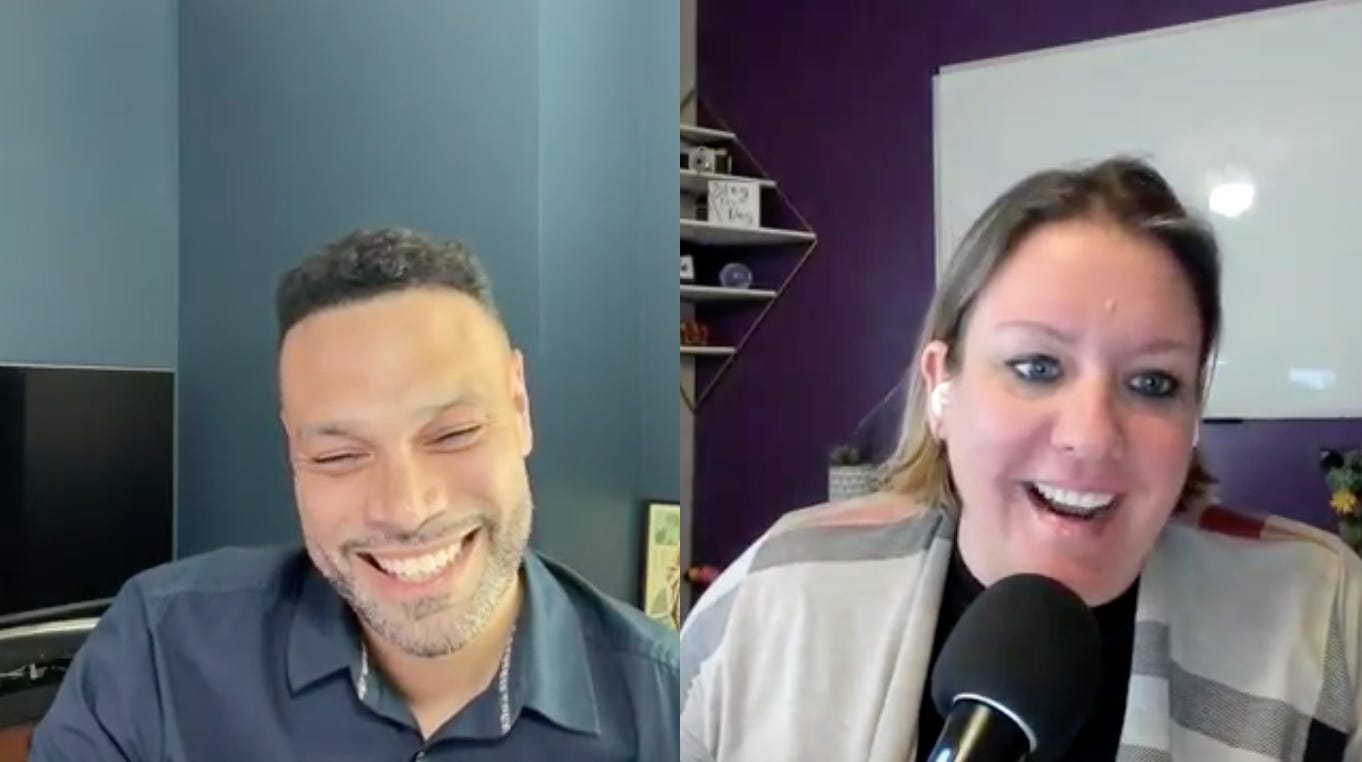
We’re back! I didn’t intend to take two full months off from the podcast, but as many of you know, I started a new job in January as the Chief Global Affairs Officer of Duco Experts - a technology consulting firm. It has been overwhelming, in a good way, but it took me a bit to get started again with the podcast. I’ve got some exciting guests lined up. I figure we’ll do this season through the end of May, and then I’ll re-evaluate for the rest of the year.To kick things off, I’m excited to have Luis Lozada, the CEO of Democracy Works. You may not have heard of Democracy Works, but you likely have encountered their work. They do the painstaking work of gathering all the information about where, when, and how to vote from the thousands of election officials across the country to put it in a readable format that companies like Google, TikTok, and Anthropic currently use. I started working with them when I was at Facebook, and we used them to power many of our U.S.-based Election Day reminders. I was invited to join the board while I was at Facebook and have now been a board member for five years.With the explosion of AI, Democracy Works is now helping companies think through the next generation of people getting election information. Luis and I cover that and more in our conversation.Enjoy!PS: If you are looking for the poll by the Bipartisan Policy Center, Integrity Institute and States United that we reference you can find it here.PS: We’re now on video, too! With Season 2, I’ve launched an Impossible Tradeoffs YouTube channel if you'd like to watch our conversation rather than listen. This is a public episode. If you'd like to discuss this with other subscribers or get access to bonus episodes, visit anchorchange.substack.com/subscribe
Facebook Turns 20
In this special episode of Impossible Tradeoffs, I sit down with Latika Bourke - a journalist who I first met in Sydney ten years ago - who now has her own Substack at Latika Takes . In celebration of Facebook’s 20th birthday we sat down to take a look back at the role the platform has played in politics and elections and what we might expect going forward. This is a public episode. If you'd like to discuss this with other subscribers or get access to bonus episodes, visit anchorchange.substack.com/subscribe
S1 Ep 13Lessons in building a safe platform from scratch
It’s our last podcast of the year! Thank you all for joining my journey in starting this podcast. As a reminder, I’ll take some time off before restarting episodes in 2024. Don't forget to fill out this short form if you have ideas for what you’d like to see.This week’s fun trade-off is:For our last guest of 2023, I’m welcoming Sarah Oh to the podcast.Sarah is a human rights expert and tech executive who has worked at Meta, Twitter, and, most recently, Pebble. Pebble worked a lot like Twitter, but one thing Sarah and the other co-founders were adamant about was building the platform with a human-rights and safety-first approach. While Pebble did shut down a few weeks ago (the success of Threads really hurt their ability to grow and get funding), there are a lot of lessons to be learned from their experiences. Sarah’s co-founder, Gabor Cselle, covered some of his lessons learned in this Medium post, and Sarah talks about what she learned in the podcast.Enjoy! This is a public episode. If you'd like to discuss this with other subscribers or get access to bonus episodes, visit anchorchange.substack.com/subscribe
S1 Ep 12Elections in Mexico
You all like your guacamole! In last week's poll, 64% of you voted for it over queso. I have friends who have strong feelings on either side of this debate. Maybe someday I’ll expand this podcast beyond just impossible tradeoffs in tech. By the way, I’m on team queso.This week’s fun tradeoff question is:This week, we are traveling to Mexico. They will have their elections on June 2, 2024. Mexico’s presidents are limited to one term and only get elected every six years. That’s part of the reason it makes 2024 so unique in that you have big countries on four-, five-, and six-year cycles all matching up.To help walk us through everything, Pamela San Martín joins us. Pamela is a member of the Meta Oversight Board and a former Electoral Councilor at the National Electoral Institute (INE) in Mexico.Pamela San MartínElections and the civic space are among the Oversight Board’s seven strategic pillars. They’ve made crucial decisions on the Cambodian Prime Minister, Pakistan, Turkey, and President Trump’s suspension. Pamela and I also talked about the Board’s approach to this pillar.Also, don’t forget I want your feedback! Please fill out this poll to help me think about making the podcast better next year.Enjoy! This is a public episode. If you'd like to discuss this with other subscribers or get access to bonus episodes, visit anchorchange.substack.com/subscribe
S1 Ep 11The Evolution of Trust and Safety
There are only a few more episodes of Impossible Tradeoffs for 2023! Today’s fun tradeoff question is a real challenge:From past tradeoff questions, most of you who took the polls prefer to live in the city (81%) rather than the country (19%). An equal number of you like to travel by plane and automobile (38%), and 25% of you like to take the train.Also, don’t forget to take this quick survey to let me know your thoughts about the podcast and what you want to see in 2024!Let’s get to this week’s podcast, which is with the amazing Dave Willner.Charlotte and Dave Willner.If you told me that the last breath of democracy would be picking rulers of the world, I would pick the Willners. I’ve known them both since my early Facebook days when they helped create the first content policies for the platform. They’ve both gone on to work at numerous platforms, and Charlotte runs the Trust and Safety Professionals Association. We don’t always agree, but I’ve never met two more thoughtful people on balancing really hard tradeoffs.Dave joins us in conversation this week to talk about those challenging decisions. About how the field got started and has since evolved. He most recently was at OpenAI, where among the billion things he was doing, he was looking at how AI could be used for content moderation. He recently left so that he could focus more time on his family while still advising in this space. It’s a worthwhile story to be told that it’s okay to jump off the rocketship sometimes. Enjoy!Please support the curation and analysis I’m doing with this podcast. As a paid subscriber, you make it possible for me to bring you in-depth analyses of the most pressing issues in tech and politics. This is a public episode. If you'd like to discuss this with other subscribers or get access to bonus episodes, visit anchorchange.substack.com/subscribe
S1 Ep 10Elections in India
Welcome to this week’s podcast. The fun question to kick things off with is …For this week’s podcast, we are heading to India. I’ve been following Indian politics since late 2013 and find it absolutely fascinating. Their elections are unlike any anywhere else in the world.To help us navigate all of that, Shoaib Daniyal joins me from the news website Scroll India. Shoaib is the political editor and walks us through everything from the mechanics of how election are run, all the various political parties, the leading candidates and what role tech will play.Forgive me that I don’t have a picture of us, but due to the internet connection we had to be video off.Also, don’t forget to share your feedback on the podcast overall. I want to make sure I’m taking your input into account when thinking about how to improve the podcast next year.Enjoy!Please support the curation and analysis I’m doing with this newsletter. As a paid subscriber, you make it possible for me to bring you in-depth analyses of the most pressing issues in tech and politics. This is a public episode. If you'd like to discuss this with other subscribers or get access to bonus episodes, visit anchorchange.substack.com/subscribe
S1 Ep 9Elections in the United Kingdom
Hi all, we are back after a week break for Thanksgiving with a new episode! This week, I recorded three more interviews, which, along with the ones I already have in the hopper, will take us through December 28th. After that, I plan on taking a short break - no more than a few weeks - to think about how I can make the podcast better. I’ve enjoyed putting it together and so appreciate my guests and you, the listener. To that end, I’d love your feedback. If you have a few minutes, please share your thoughts on the podcast here. Ok, on to the show. First, our fun hard tradeoff question:I’ve got two guests this week to talk all things elections and tech in the United Kingdom.First up is my former colleague and manager at Facebook, Richard Allan. Richard was at the company for over a decade, running the public policy team in Europe and the policy solutions team. He is also a British Lord who spent much time getting the Online Safety Bill passed. Richard also has his own podcast that I highly recommend called Regulate.tech.Next up is Sam Jeffers with Who Targets Me - an organization dedicated to bringing more transparency to political ads online. They also write a great Substack called Full Disclosure. In fact, they had a piece recently I highly recommend about how this upcoming UK election will be a digital election unlike anything the country has seen. Enjoy!Please support the curation and analysis I’m doing with this newsletter. As a paid subscriber, you make it possible for me to bring you in-depth analyses of the most pressing issues in tech and politics. This is a public episode. If you'd like to discuss this with other subscribers or get access to bonus episodes, visit anchorchange.substack.com/subscribe
S1 Ep 8Elections in Africa
Hey all, since I’m off elk hunting, there’s no fun question or intro interview for this episode. Instead, we’re going to jump right into the main discussion. This week, I chatted with Phumzile Van Damme, a fellow at Harvard and a long-time expert at the intersection of technology and human rights. She was kind enough to walk me through all things elections on the continent of Africa and the role that technology has played. This is a public episode. If you'd like to discuss this with other subscribers or get access to bonus episodes, visit anchorchange.substack.com/subscribe
S1 Ep 7The past, present and future of platforms' approach to elections
From last week's poll, most of you prefer physical books to digital ones. Physical books won 73 percent to 27 percent. This week’s question is:This week, we are nerding out on all things digital campaigning and the platforms’ approach to elections. First up is my interview with Henri Makembe who is the CEO of Do Big Things - a creative services firm. Henri has a long history of digital campaigns and so we talked a little bit about how the field has evolved the last 15 years and what he’s watching as we go into 2024.Then we turn to my conversation with Daniel Kreiss. Daniel is at the University of North Carolina and has long studied how campaigns use technology. He and I recently wrote a piece looking at the history of how platforms approach politics. We talk about that as well as the history of digital campaigning and the use of platforms.Enjoy!PS: Sorry for the weird opener. My original recording was screwed up so I re-recorded it using my iPhone voice memo app while at a conference. This is a public episode. If you'd like to discuss this with other subscribers or get access to bonus episodes, visit anchorchange.substack.com/subscribe
S1 Ep 6Biden's AI executive order and all things European elections
Welcome to another episode of Impossible Tradeoffs! Thank you all for bearing with me as I get used to being a podcast host. Listening to this latest episode, I realize I use some phrases a lot - like I’m always very excited for my guest. I'm going to work on standardizing some of these things.But this is another interesting episode — first, the fun tradeoff. Last week, many of you said you’d prefer to get up for a 6 a.m. flight than take a red eye. This week, the question is: Would you rather read a physical copy of a book or a digital one?First up this week is Theo Skeadas. Theo has a robust background, having worked at Twitter and in civil society and politics. Since leaving Twitter, she’s become an independent consultant, and much of her work focuses on AI. She was recently in the UK for the Partnership on AI. We discussed that, the executive order on AI from the White House and the UK AI Summit.Then we turn to Laetitia Avia. Laetitia is a lawyer and former French Member of Parliament. Since leaving public office, she’s focused on digital policy in Europe and the United States. In our conversation, we discussed how Europe’s governing bodies are structured (it’s a little complicated, and I still mix it up sometimes), how the European elections work (they’re going to the polls June 6-9, 2024), and her thoughts on the Digital Services Act as well as other legislation making its way through the EU.Enjoy! This is a public episode. If you'd like to discuss this with other subscribers or get access to bonus episodes, visit anchorchange.substack.com/subscribe

S1 Ep 5From the inside: When platforms engage with government
I have to apologize to you all. I forgot to put a poll in last week’s podcast notes about our fun tradeoff, which was how you would want to unwind.I won’t make that same mistake this week! The hard question for you today is:This week, we are joined by a bunch of exciting guests.First up is Diane Chang.Diane is a journalist-turned-product manager and was most recently Meta's election integrity product manager. She is an Entrepreneur-in-Residence at the Brown Institute for Media Innovation at Columbia Journalism School.For our first conversation, I wanted to talk to Diane about my current obsession with the role of news and politics on online platforms, given her experience as a journalist and a product manager.Then, I welcome three of my favorite people who are part of the OG Facebook DC crew - Adam Conner, Brooke Oberwetter, and Matt Perault. Our conversation centered on jawboning: “informal government efforts to persuade, cajole, or strong-arm private platforms to change their content-moderation practices.”From the top left, going clockwise, are Adam, Brooke, myself, and Matt.We all worked on Facebook’s public policy team, regularly engaging with governments worldwide. Two things spurred this conversation. The first was Adam asking which of them I would have on as a guest first, and then a recent piece Matt and I wrote for the Knight First Amendment Institute on our experiences. I didn’t dare pick between them, so I asked them all to come on together after Brooke responded to our piece on X/Twitter about how we should talk about Congressional letters as a form of jawboning. I thought that was a great point and invited them all to talk about their experiences.Enjoy!Please support the curation and analysis I’m doing with this podcast. As a paid subscriber, you make it possible for me to bring you in-depth analyses of the most pressing issues in tech and politics. This is a public episode. If you'd like to discuss this with other subscribers or get access to bonus episodes, visit anchorchange.substack.com/subscribe

S1 Ep 4Elections galore in Latin America
We’re back after a week off! At the beginning of this month, I was freaking out that scheduling guests was going slower than expected. However, in the last ten days, I’ve recorded six episodes (including this one) and one more to come. In the hopper includes conversations on India, the European Union, Africa, the United Kingdom, the history of tech policies on elections, and jawboning.This week, I first welcome Dina Sadek from the Atlantic Council’s Digital Forensic Research Lab, where she has been leading the monitoring of how the conflict in Israel is showing up online.Then, I welcome Carlos Cortez and Alejandro Moreno from Linterna Verde - an organization that analyzes how public opinion is built in networks and digital spaces.Our talk covers all things elections in Latin America, including Argentina’s election this year, the constitutional referendum in Chile, and Mexico’s election next year.Some links to their work that we cover:* Circuito: An effort by them to gather information and analyze the intersection between social networks and democracy in Latin America.* Here is an article on how they see recent changes to the region's content policies.* And here is another one on election misinformation last year in Colombia.* They have their own Substack, Botando Corriente, that you can subscribe to: * We also discussed this paper, “Mercenarios Digitales,” by CLIP: https://www.elclip.org/mercenarios-digitales/If you are looking for some other good sources of information on what is happening in the region, I recommend:* Latin America Risk Report* The Brazilian Report (From whom I stole the title of this episode)* Road to the Casa Rosada (This is all about the Argentina elections)Please support the curation and analysis I’m doing with this podcast. As a paid subscriber, you make it possible for me to bring you in-depth analyses of the most pressing issues in tech and politics. This is a public episode. If you'd like to discuss this with other subscribers or get access to bonus episodes, visit anchorchange.substack.com/subscribe

S1 Ep 3Yoel Roth on hard tradeoffs, speaking publicly and the future of trust and safety
Turns out I’m in the minority for last week’s fun tradeoff - 72% of you said you would choose the beach over going to the lake.This week’s question is, would you order pancakes or waffles?This week, I’m joined by two fabulous guests - Josh Lawson and Yoel Roth.Josh was a colleague of mine at Facebook and is now doing work with the Aspen Institute on AI, elections, and trust. He’s my guest host this week, and we open the show looking at the Supreme Court deciding to take up the Texas and Florida content moderation bills, how people should judge if platforms are doing enough on elections, and his work as Aspen.I then chatted with Yoel Roth - the former head of trust and safety at Twitter. Yoel has faced terrible harassment from former President Trump and Elon Musk, including this week when Musk said Roth and Kara Swisher - who interviewed Yoel last week at Code - are “the purest form of evil.”We talk about why he continues to speak out in the face of this type of harassment, how trust and safety people can protect themselves, some of the toughest decisions he made at the company, and how we can restore trust in the content moderation process.Here are some of the pieces we mention:Yoel’s Pieces* Lawfare: Content Moderation’s Legalism Problem * New York Times: Trump Attacked Me. Then Musk Did. It Wasn't an Accident. * New York Times: I Was the Head of Trust and Safety at Twitter. This Is What Could Become of It.Kate Klonick: The New Governors: The People, Rules, and Processes Governing Online SpeechResources for protecting yourself online* DeleteMe* Reputation Defender* TallPoppy* PrivacyPartyPlease support the curation and analysis I’m doing with this newsletter. As a paid subscriber, you make it possible for me to bring you in-depth analyses of the most pressing issues in tech and politics. This is a public episode. If you'd like to discuss this with other subscribers or get access to bonus episodes, visit anchorchange.substack.com/subscribe

S1 Ep 2What you need to know about the Indonesia elections
Welcome to the second Impossible Tradeoffs podcast! This week’s fun, hard question is: Would you rather go to the lake or the beach? Vote below on what you would choose, and feel free to debate it in the comments!I’m solo this week for the opener, so I tried out sharing all my hot takes on:* The elections coming up in Slovakia and Poland.* My takeaways from Bruce Mehlman’s latest quarterly trends report about what is happening in U.S. politics and policy - including AI regulation.* The tech issues the Supreme Court will likely be taking up in the next term.Then, for the main interview, I welcome Ryno Valdryno to the podcast. Ryno worked on the Indonesian elections at Facebook and, until recently, was the head of policy for the country.We had a fascinating discussion about the fact that Indonesia might have three elections next year, who the prominent political candidates and parties are, how the country conducts its elections, and the role online platforms will play in the overall process.I hope you enjoy!Related Links* New York Times: E.U. Law Sets the Stage for a Clash Over Disinformation* Politico EU: TikTok and Meta warned over Slovakia election lies* Axios: Expected Trump-Biden rematch shows how not to win, new analysis says* USA Today: How the Supreme Court could alter the way Americans interact on the internet* Google: Google and YouTube announce product features, partnerships and a US$2.5 million Google.org grant to support elections and equip Indonesians with the knowledge to detect misinformationPlease support the curation and analysis I’m doing with this newsletter and podcast. As a paid subscriber, you make it possible for me to bring you in-depth analyses of the most pressing issues in tech and politics. This is a public episode. If you'd like to discuss this with other subscribers or get access to bonus episodes, visit anchorchange.substack.com/subscribe

S1 Ep 1How will tech tackle the tsunami of elections in 2024
This week, my guest host is Crystal Patterson. She was on my team at Facebook for seven years and now is President of the Washington Media Group. She joins me to answer the hard questions such as if you could only order one of these would you choose french fries or ice cream? We also get into last week’s Congressional gathering on AI with tech executives and how companies will be preparing for the 2024 electionsThen I chatted with Rebecca Thein. Becca worked at Twitter in the pre-Musk times in trust and safety, focusing a lot on elections. We look at:* Why 2024 is such a special election year* Where the tech companies are today vis-a-vis elections* Her background and work at Twitter* The types of issues organizations have to be worried about* How teams prioritize what they work on* How companies can help people to vote* The Facebook 2020 research on the platform’s impact on elections* What she’s watching over the next 16 months This is a public episode. If you'd like to discuss this with other subscribers or get access to bonus episodes, visit anchorchange.substack.com/subscribe
Impossible Tradeoffs - Trailer
Technology and democracy are at a crossroads. Technology can potentially empower people and make our democracies more responsive. Or technology can be used to manipulate and divide us.Welcome to Impossible Tradeoffs. I’m Katie Harbath. In this weekly podcast, we’ll talk about and analyze the most fascinating headlines. We’ll make predictions about where things are going. And we’ll talk to experts about the challenges we face and how we might look for solutions.I’m a 20-year veteran in the technology and democracy space. I moved to DC from Wisconsin in 2003 to work on political campaigns. In 2011, I went to Facebook, where over the course of ten years, I built teams worldwide that work with politicians and governments on using the platform to engage with constituents. I also coordinated the company's work on elections. In 2021, I created Anchor Change—a consultancy and Substack newsletter focused on the intersection of technology and democracy.I’ve seen a lot. I’ve been in the rooms making tough decisions where you have to weigh some difficult choices. I call them impossible tradeoffs.Our first episode jumps right in with the tsunami of elections happening in 2024. This is the first time that, in the same year as a U.S. presidential election, we’ll have elections in India, Indonesia, Ukraine, Taiwan, Mexico, the United Kingdom and the European Parliament. In total, we are tracking 65 elections across 54 countries. That is not only a huge geopolitical moment for the world but a lot of fronts to protect the integrity of elections.In future episodes, we’ll interview experts on content moderation, how companies balance freedom of speech, and the need to protect people from harmful content. We’ll talk about the role of AI and the shifts in online political advertising. We’ll do deep dives into some countries going to elections and explore how these issues manifest themselves in those places.A lot is going on, and I can only guarantee change. I hope this podcast will help you make sense of these developing events, be prepared for what will happen next, and understand how these issues impact you and others around the globe. Be sure to follow this show on your favorite podcast platform so you don’t miss a single episode. I look forward to discussing impossible tradeoffs with you. This is a public episode. If you'd like to discuss this with other subscribers or get access to bonus episodes, visit anchorchange.substack.com/subscribe