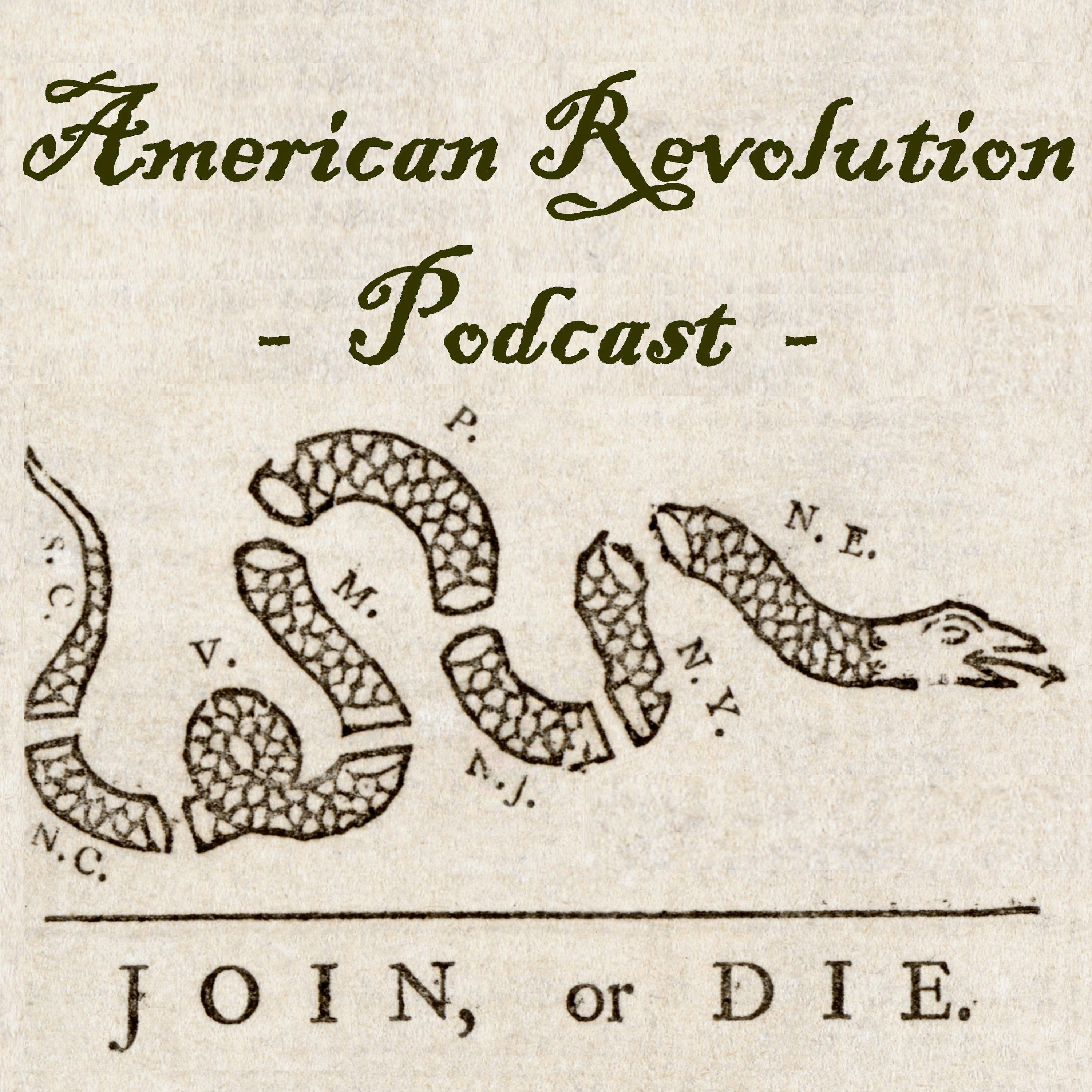
American Revolution Podcast
587 episodes — Page 12 of 12

Ep 37Episode 037: Committees of Correspondence and the Colony of Vandalia
As events quiet down after 1770, London tries to make many minor behind the scenes changes to the colonial power structure, making it harder for the colonies to resist the next confrontation. Samuel Adams works with others to set up Committees of Correspondence, so Patriots can keep track of these changes across the colonies and develop strategies to resist. Also, land speculators attempt to set up a new colony in western lands, reserved by the King for native American tribes. The attempted land grab leads to the resignation of Lord Hillsborough as Secretary of State for Colonial Affairs and the appointment of Lord Dartmouth to replace him. For more text, pictures, maps, and sources, please visit my site at AmRevPodcast.Blogspot.com Learn more about your ad choices. Visit megaphone.fm/adchoices

Ep 36Episode 036: Sinking the HMS Gaspee
Rhode Island colonists, like just about all other colonists, greatly resented the new tough enforcement of trade laws by British officials. It made profitable trade virtually impossible. The HMS Gaspee and its commander Lt. Dudingston developed a reputation for being one of the worst in terms of strict enforcement and poor treatment of civilians. One night in 1772, the Gaspee ran aground on a sandbar in Naragansett Bay. That night, locals rowed out to the ship, shot Dudingston, removed the crew, and burned the ship to the waterline. Officials tried to get tough and ship some of the attackers back to London for a treason trial. But the colonial code of silence prevented the government from being able to prosecute any of the attackers. For more text, pictures, maps, and sources, please visit my site at AmRevPodcast.Blogspot.com Learn more about your ad choices. Visit megaphone.fm/adchoices

Ep 35Episode 035: Carolina Regulators and the Battle of Alamance
In both North and South Carolina, colonists on the western frontier run into conflicts with the east coast dominated government. Westerners in each state form Regulator movements to enforce the law locally as they see fit. In North Carolina, this leads to open warfare with the colonial government. Regulators and militia do battle in 1771 near Alamance Creek. For more text, pictures, maps, and sources, please visit my site at AmRevPodcast.Blogspot.com. Learn more about your ad choices. Visit megaphone.fm/adchoices

Ep 34Episode 034: Massacre Fallout and Townshend Acts Repealed
After British Regulars kill five colonists and injure others at what becomes known as the Boston Massacre, local radicals force the government to relocate the soldiers to Castle Island, out in Boston Harbor. The Massacre becomes an example for why standing armies should not be maintained among a free people. For months following, both sides prepare for trials, in which John Adams, among other patriot lawyers, represents the British soldiers. A jury acquits Captain Preston and five of the seven soldiers involved in the shooting. The Jury finds two soldiers guilty of manslaughter and had the court brands their thumbs as punishment. Even before word of the Massacre reaches London, Lord North begins a partial repeal of the Townshend Acts, eliminating most taxes on the colonists. However, to make a point about Parliament's tax authority, North retains a tax on tea. For more text, pictures, maps, and sources, please visit my site at AmRevPodcast.Blogspot.com Learn more about your ad choices. Visit megaphone.fm/adchoices

Ep 33Episode 033: The Boston Massacre
Over the winter of 1769-70, locals in Boston make life as uncomfortable as possible for the British Regulars occupying the city. Fights break out regularly. The local courts would not punish locals and the army would not punish soldiers for fighting. Street brawls become more frequent. A mob chases customs informer Ebenezer Richardson into his house and threatens his life. He fires into the crowd, killing a young boy. A few weeks later, a British soldier on guard at the Customs House strikes a boy for being insolent. A mob soon forms, threatening the soldier. Another squad of soldiers attempts to rescue the guard, but soon finds itself surrounded. The situation flies out of control and the soldiers fire on the crowd, killing five and wounding several others. For more text, pictures, maps, and sources, please visit my site at AmRevPodcast.Blogspot.com Learn more about your ad choices. Visit megaphone.fm/adchoices

Ep 32Episode 032: The Battle of Golden Hill
During the winter of 1769-70, New Yorkers fight with British Regulars. When New York failed to come up with sufficient money to quarter the soldiers, British Regulars destroy the Liberty Pole. Isaac Sears, a leader in the local Sons of Liberty Chapter tries to make a citizen's arrest of several soldiers a few days later. Both sides quickly escalate the event into a massive street brawl involving thousands of soldiers and civilians. Dozens are wounded. Both Sears and Alexandar McDougall who gets arrested for a pamphlet opposing a tax to pay for the quartering of Regulars in the city, see their profiles rise as leaders of the colonial resistance. The Sons of Liberty build a new bigger liberty pole. For more text, pictures, maps, and sources, please visit my site at AmRevPodcast.Blogspot.com. Learn more about your ad choices. Visit megaphone.fm/adchoices

Ep 31Episode 031: Wilkes and Liberty & Tar and Feathers
Radical John Wilkes returns from France in 1768 to face the charges for seditious libel. He would spend the next two years in prison, during which time he would be elected to Parliament, which refused to seat him, as well as other goverment positions. As much as the King and Parliament hated Wilkes, the people of England loved him as a defender of liberty. The colonists also took up Wilkes as a hero of the fight for liberty. As the sides harden between Parliament and the colonies. Prime Minister Grafton sees no route for a compromise that will resolve the disputes and resigns. Lord North, a hardliner, becomes the new Prime Minister. During this same period, different Sons of Liberty organizations are attempting to maintain nonimportation agreeements against London and prevent customs enforcment. They begin using the practice of tarring and feathering customs informers or low level customs officials in order to prevent effective enforcement of British trade laws. For more text, pictures, maps, and sources, please visit my site at AmRevPodcast.Blogspot.com Learn more about your ad choices. Visit megaphone.fm/adchoices

Ep 30Episode 030: The Occupation of Boston
With officials in Boston unable to control the people and enforce the law, Secretary of State Hillsborough decides enough is enough and orders four regiments of British regulars to occupy the town. Radical colonists debate resisting the troops by force of arms, but decide in the end to back down. Instead, they simply send protests to London. Locals harass the soldiers at every opportunity, and make the occupation as difficult as possible. The Navy attempts to impress (force) local sailors into the fleet, leading to the death of a British officer from those resisting impressment. Gov. Bernard is recalled to London and will never return, leaving Lt. Governor Hutchinson in charge. Leading radical James Otis suffers an attack that leads to mental instability and his eventual withdrawal from politics. For more text, pictures, maps, and sources, please visit my site at AmRevPodcast.Blogspot.com. Learn more about your ad choices. Visit megaphone.fm/adchoices

Ep 29Episode 029: The Liberty Riot
The American Board of Customs arrives in Boston in 1767 ready to enforce the new Townshend duties. With the backing of the British Navy, the Board tries to show who is boss by seizing a ship belonging to the wealthiest merchant in Boston and a leader of the tax protests, John Hancock. The seizure of Hancock's ship Liberty results in a riot and the beatings of several customs officials. The Board learns that they are not the boss and must flee to Castle William, an island in Boston Harbor, to avoid further attacks. Tough enforcement of customs laws comes to a halt. For more text, pictures, maps, and sources, please visit my site at AmRevPodcast.Blogspot.com. Learn more about your ad choices. Visit megaphone.fm/adchoices

Ep 28Episode 028: Letters from a Pennsylvania Farmer
Following passage of the Towshend Acts in 1767, the colonists are unsure how to respond. These are import tariffs, not taxes, which was the line they drew over the earlier Stamp Act. They don't want to pay but have trouble articulating a good argument that everyone accepts. John Dickinson writes a series of 12 letters, purportedly from "a farmer in Pennsylvania" explaining why these new laws are just as objectionable. His letters push the colonists into real opposition to the new laws. British attempts to shut down the protests by force, only make things worse. For more text, pictures, maps, and sources, please visit my site at AmRevPodcast.Blogspot.com. Learn more about your ad choices. Visit megaphone.fm/adchoices

Ep 27Episode 027: Prime Minister Pitt Falls from Power
Prime Minister William Pitt's illness prevents him from running his administration. The Duke of Grafton becomes acting Prime Minister for over a year and eventually take the office officially when Pitt resigns in 1768. Although Grafton is a moderate on colonial issues, he moves hardliners like Lord North and the Earl of Hillsborough into his cabinet. The Ministry also adds to the Townshend Acts by creating several new Admiralty Courts in America to enforce the Townshend Acts and other customs laws. With tough enforcement, they hope the colonies will fall in line. For more text, pictures, maps, and sources, please visit my site at AmRevPodcast.Blogspot.com. Learn more about your ad choices. Visit megaphone.fm/adchoices

Ep 26Episode 026: The Townshend Acts
William Pitt, champion of colonial rights, finally becomes Prime Minister in 1766. Illness however, keeps him from active participation in the government. His Lord of the Exchequer Charles Townsend tries to boost revenue by increasing tariffs on a wide variety of colonial imports. While avoiding direct taxes, the new laws are designed to extract money from the colonies as well as increase enforcement actions. Townshend hopes to introduce colonial compliance to Parliament slowly with this first step. For more text, pictures, maps, and sources, please visit my site at AmRevPodcast.Blogspot.com. Learn more about your ad choices. Visit megaphone.fm/adchoices

Ep 25Episode 025: Tensions Simmer
Following the repeal of the Stamp Act in 1766, colonial protests stopped and trade resumed. Parliament is not happy about the pushback and seems determined to find a way to put the colonies in their place. The colonies are unhappy about the Declaratory Act and Parliament's assertion of complete tax authority over the colonies, despite a lack of colonial representation in Parilament. The colonists and the English people begin to view their interests as in competition with one another. During this time, many small issues push colonial interests further from those in England. The death of John Robinson in Virginia reveals a major financial scandal that creates a colonial cash shortage. Parliament passes the Free Port Act, attempting to give trade advantages to London over the colonies. A New York assault case Forsey v. Cunningham threatens the right of jury trials. Bostonians get into a big fight over search warrants. New Yorkers refuse to pay Quartering Act costs for British regulars in the colony. For more text, pictures, maps, and sources, please visit my site at AmRevPodcast.Blogspot.com. Learn more about your ad choices. Visit megaphone.fm/adchoices

Ep 24Episode 024: Stamp Act Repeal and Declaratory Act
The Stamp Act took effect on November 1, 1765. But colonial opposition prevented the use of any stamps. Protesters forced newspapers, courts, and ports to operate without stamped paper. Creditors could not go to court to collect on debts and trading vessels stop going to England. As a result, English merchants joined in opposition to the Act. Prime Minister Rockingham replaced Grenville and immediately set about to repeal the law. The problem was, Parliament did not want to look like it was backing down in the face of mob violence, or sending the message that it accepts colonial assertions that Parliament cannot impose taxes on the colonies. After months of wrangling and infighting, King George let it be known that he supports the repeal. Parliament passed the repeal, but on the same day also passes the Declaratory Act which says Parliament still has the authority to pass such laws whenever it wants. For more text, pictures, maps, and sources, please visit my site at AmRevPodcast.Blogspot.com. Learn more about your ad choices. Visit megaphone.fm/adchoices

Ep 23Episode 023: The Stamp Act Congress
Colonists at all levels of society protested the Stamp Act of 1765. Newspapers railed against it. Mobs marched in the streets, and destroyed the homes of tax agents and other supporters. Colonial politicians not only spoke out against the Act but organized the Stamp Act Congress to coordinate a unified response to this tax. At issue was "taxation without representation." Parliament, for the first time, was imposing a direct tax on the colonists, even though they had no representation in Parliament. For more text, pictures, maps, and sources, please visit my site at AmRevPodcast.Blogspot.com. Learn more about your ad choices. Visit megaphone.fm/adchoices

Ep 22Episode 022: The Stamp Act and Quartering Act of 1765
In 1765 Prime Minister Grenville led passage of the Stamp Act through Parliament. He designed the tax on newspapers, legal documents and a host of other paper to collect revenues from the colonies. Although some radical Whigs like William Pitt opposed the new taxes, the law sailed through Parliament with relative ease. Parliament wanted to pay off its war debt and thought the colonies needed to contribute more. To help with enforcement, Parliament also passed the Quartering act, forcing colonies to pay for housing for soldiers in their colonies. For more text, pictures, maps, and sources, please visit my site at AmRevPodcast.Blogspot.com. Learn more about your ad choices. Visit megaphone.fm/adchoices

Ep 21Episode 021: The Colonies React to Taxes
Following the passage of the Sugar Act in 1764, the British colonies in North America begin to organize opposition. The new taxes and trade enforcement policies hits the colonies just when they are experiencing other economic problems. Brtiain's removal of war subsidies leads to growing unemployment and a general lack of jobs. The Currency Act contributes to exisiting money shortages. The Wheelwright Scandal makes all of this worse. British restrictions on western lands cuts off a traditional economic resource. The colonies send petitions to London protesting the changes. They also begin writing editorials and circulating pamphlets among themselves as they start to orginaize colonial opposition. British customs officials face opposition at all levels as they attempt to enforce the law. For more text, pictures, maps, and sources, please visit my site at AmRevPodcast.Blogspot.com. Learn more about your ad choices. Visit megaphone.fm/adchoices

Ep 20Episode 020: The Sugar Act & Currency Act of 1764
In 1764, with Britain under a massive debt from the Seven Years War and with increased costs of maintaining its new colonies, the Grenville Ministry passes the Sugar Act to raise revenue from the colonists. The Act itself actually cuts tariff rates, but also institutes enforcement measures to ensure the colonists cannot evade the taxes as easily as they did in the past. Parliament also passes the Quartering Act, to make colonies pay for the quartering of British Regulars within their borders, whether they are there to protect the colonists or to enforce tariff and trade laws. For more text, pictures, maps, and sources, please visit my site at AmRevPodcast.Blogspot.com. Learn more about your ad choices. Visit megaphone.fm/adchoices

Ep 19Episode 019: Suppressing the Indians
In 1764, in response to the Native American attacks known as Pontiac's War, the colonists strike back at the Indians, killing the guilty and innocent alike. Gen. Amherst approves use of smallpox against the Indians. He proposes a campaign of terror and slaughter against the tribes. At the insistence of Indian agent Sir William Johnson, London recalls Amherst, leaving Gen. Thomas Gage in charge. Gage follows through on Amherst's attack plan, sending out two expeditions to destroy Indian villages and kill anyone they find, taking no prisoners. By the time the expeditions leave in the summer of 1764, the leaders find almost all tribes ready to settle. Indian attempts to bring the French back into the fight have failed. Most Chiefs realize they cannot continue the war. The Treaty of Niagara returns the Seneca to peace. Other tribes request diplomatic negotiations, eventually resulting in the Treaty of Fort Ontario in 1766. This Treaty recognizes British rule as far west as the Mississippi River. Meanwhile, King George III issues the Royal Proclamation of 1763, requiring all British colonial settlements to remain east of the Allegheny mountains, thus forbidding westward colonial expansion. The colonists strongly oppose this restriction. For more text, pictures, maps, and sources, please visit my site at AmRevPodcast.Blogspot.com. Learn more about your ad choices. Visit megaphone.fm/adchoices

Ep 18Episode 018: Pontiac's War
By 1763, France has left Canada after losing the the French and Indian war. British soldiers and colonists continue to occupy land west of the Allegheny mountains in violation of promises. To save money, Britain stops making annual gifts to the tribes. The Indian tribes unite and rise up against these continuing violations of treaties. The tribes seize multiple forts and besiege others. Soldiers and colonists hunker down in forts, flee the region, or die horrible deaths. For more text, pictures, maps, and sources, please visit my site at AmRevPodcast.Blogspot.com. Learn more about your ad choices. Visit megaphone.fm/adchoices

Ep 17Episode 017: Parsons Cause, Bishops, and Trade
As the Seven Years War comes to an end, Britain and her colonies begin bickering over issues unrelated to the war. In Virginia, a new lawyer named Patrick Henry convinces a jury not to pay ministers the wage required under the law. The Archbishop of Canterbury is thwarted in his attempts to force New England to accept an Anglican Bishop. James Otis Jr. becomes an early advocate against the enforcement of trade tariffs through the use of general warrants. For more text, pictures, maps, and sources, please visit my site at AmRevPodcast.Blogspot.com. Learn more about your ad choices. Visit megaphone.fm/adchoices

Ep 16Episode 016: Treaty of Paris & Wilkes Affair
The French try for one last land claim in North America at the Battle of Signal Hill. Following the end of combat, the British army in America shrinks, removing men and money from the colonies. Britain finally ends the Seven Years War with France and Spain through the Treaty of Paris in 1763. British politician John Wilkes learns the hard way that although the King has gotten involved in politics, you cannot criticize the King like any other politician. He goes on to become a hero for the cause of British liberities. For more text, pictures, maps, and sources, please visit my site at AmRevPodcast.Blogspot.com. Learn more about your ad choices. Visit megaphone.fm/adchoices

Ep 15Episode 015: Cherokee Uprising, Fighting in West Indies & Spain joins the War.
The Cherokee go to war against the settlers in the Carolinas who are encroaching on their land. Britain captures French colonies in the West Indies (what we today call the Caribbean). Newcastle and Pitt leave the government as the Earl of Bute takes charge. Spain finally joins France in the war against Britain, only to lose some of its own colonies. For more text, pictures, maps, and sources, please visit my site at AmRevPodcast.Blogspot.com. Learn more about your ad choices. Visit megaphone.fm/adchoices

Ep 14Episode 014: Canada Becomes British & Britain Gets King George III
The British Army in America captures the final concentration of French forces at Montreal in 1760. This effectively ends major combat operations in North America. With the death of his grandfather, 22 year old King George III claims the throne. For more text, pictures, maps, and sources, please visit my site at AmRevPodcast.Blogspot.com. Learn more about your ad choices. Visit megaphone.fm/adchoices

Ep 13Episode 013: The Battle of Quebec
British Gen. Wolfe defeats French Gen. Montcalm on the Plains of Abraham in 1759. The British capture the key city of Quebec. For more text, pictures, maps, and sources, please visit my site at AmRevPodcast.Blogspot.com. Learn more about your ad choices. Visit megaphone.fm/adchoices

Ep 12Episode 012: The Fall of Forts Duquesne, Niagara, and Carillon
After convincing most Indians to abandon the French in the Ohio Valley, the British take Fort Duquesne at the end of 1758. Gen. Amherst takes command of British forces for the 1759 fighting season, capturing Forts Niagara and Carillion as well. Fort Duquesne becomes Fort Pitt. Fort Carillion becomes Fort Ticonderoga. For more text, pictures, maps, and sources, please visit my site at AmRevPodcast.Blogspot.com. Learn more about your ad choices. Visit megaphone.fm/adchoices

Ep 11Episode 011: Louisbourg, Frontenac, & Treaty of Easton
Gen. Amherst captures Louisbourg in Britain's first major victory of the French and Indian War. The British follow up with a successful raid on Fort Frontenac. In Pennsylvania, the British sign the Treaty of Eastong. This ends most of the military opposition of Indians in the Ohio Valley. For more text, pictures, maps, and sources, please visit my site at AmRevPodcast.Blogspot.com. Learn more about your ad choices. Visit megaphone.fm/adchoices

Ep 10Episode 010: New British Strategy & Attack on Fort Carillon
After continuing defeats, Britain changes leaders. It also adopts a new strategy for encouraging British colonial support for the war in North America. Gen. Abercromby's army assaults Fort Carillon at Ticonderoga. For more text, pictures, maps, and sources, please visit my site at AmRevPodcast.Blogspot.com. Learn more about your ad choices. Visit megaphone.fm/adchoices

Ep 9Episode 009: Fort William Henry Massacre & Rise of William Pitt
The French offensive continues in 1757 as Gen. Montcalm takes Fort William Henry. France's Indian allies massacre part of the British and colonial garrison. In London, the King gives William Pitt a chance to turn around the war with new strategies. For more text, pictures, maps, and sources, please visit my site at AmRevPodcast.Blogspot.com. Learn more about your ad choices. Visit megaphone.fm/adchoices

Ep 8Episode 008: Surrender of Fort Oswego
The French go on the offensive, capturing Forts Ontario and Oswego. The British retreat, ceding much of upper New York to the French and their Indian allies. Various tribes also move aggressively to push British colonists out of the Ohio Valley. For more text, pictures, maps, and sources, please visit my site at AmRevPodcast.Blogspot.com. Learn more about your ad choices. Visit megaphone.fm/adchoices

Ep 7Episode 007: Acadia, Lake George, and Loudoun
The British expel the French inhabitants, of Acadia. The French and British fight over Lake George. Britain gets a new Prime Minister, the Duke of New Castle. Lord Loudoun arrives in America as the new British miltiary commander. For more text, pictures, maps, and sources, please visit my site at AmRevPodcast.Blogspot.com. Learn more about your ad choices. Visit megaphone.fm/adchoices

Ep 6Episode 006: British Take Charge: Battle of the Monongahela
Britain sends Gen. Braddock to America to recapture the Ohio Valley in 1755. He meets the French and Indians at the Battle of the Monongahela. For more text, pictures, maps, and sources, please visit my site at AmRevPodcast.Blogspot.com. Learn more about your ad choices. Visit megaphone.fm/adchoices

Ep 5Episode 005: Jumonville & Fort Necessity
Virginia sends a young man named George Washington into the Ohio Valley to challenge the French. There, he starts a world war. For more text, pictures, maps, and sources, please visit my site at AmRevPodcast.Blogspot.com. Learn more about your ad choices. Visit megaphone.fm/adchoices

Ep 4Episode 004: Britain, France, and the Indians
Britain and France had spent the prior century in almost continuous fighting. In American, Native tribes attempted to play off the two European powers against one another, while engaging in their own power struggles with neighboring tribes. Today's episode looks at the power dynamics in play before the outbreak of the French and Indian War. For more text, pictures, maps, and sources, please visit my site at AmRevPodcast.Blogspot.com. Learn more about your ad choices. Visit megaphone.fm/adchoices

Ep 3Episode 003: British Background
Background on the American Colonies. For more text, pictures, maps, and sources, please visit my site at AmRevPodcast.Blogspot.com. Learn more about your ad choices. Visit megaphone.fm/adchoices

Ep 2Episode 002: American Background
Background on the American Colonies. For more text, pictures, maps, and sources, please visit my site at AmRevPodcast.Blogspot.com. Learn more about your ad choices. Visit megaphone.fm/adchoices

Ep 1Episode 001: Introduction
Today I begin the American Revolution Podcast. For more text, pictures, maps, and sources, please visit my site at AmrevPodcast.blogspot.com. Learn more about your ad choices. Visit megaphone.fm/adchoices