American History Tellers
498 episodes — Page 9 of 10
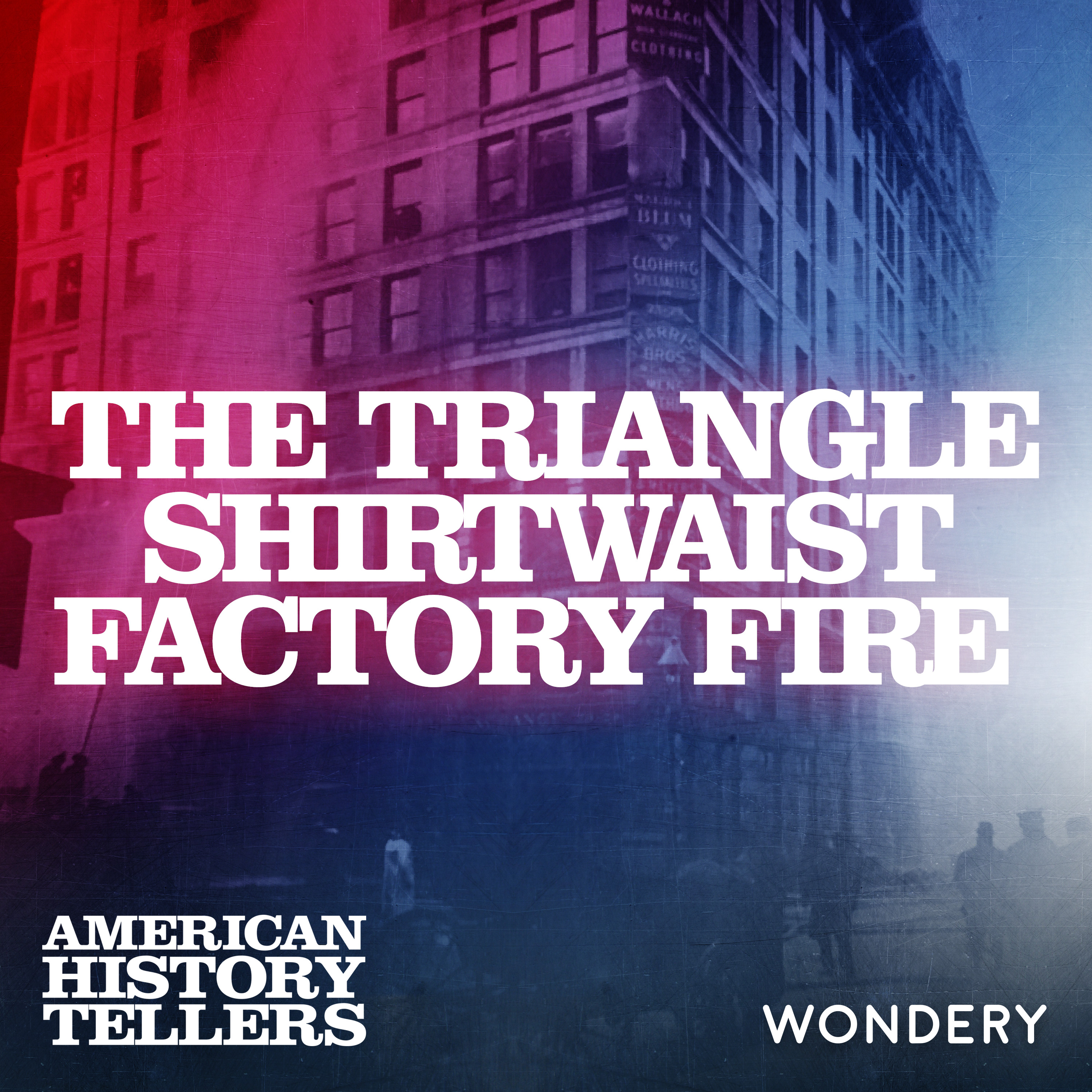
S16 Ep 2The Triangle Shirtwaist Factory Fire - Revolt of the Girls | 2
Inspired by the labor strikes at Triangle and other factories in Lower Manhattan, more than 30,000 garment workers took to the streets of New York in protest in late 1909. For the first time, an industry of women sought not to just halt production at one factory — they wanted to put the brakes on an entire trade. With over four hundred garment factories shut down, factory owners banded together with police and the courts to fight the striking workers. But as the labor movement attracted new high-society allies, internal politics began to fracture the labor movement, threatening to derail the entire cause.Support us by supporting our sponsors!See Privacy Policy at https://art19.com/privacy and California Privacy Notice at https://art19.com/privacy#do-not-sell-my-info.
S16 Ep 1The Triangle Shirtwaist Factory Fire - Wildcat | 1
On March 25, 1911, a fire broke out at the Triangle Shirtwaist Factory in Manhattan, claiming the lives of 146 garment workers — mostly women and girls. It was one of the deadliest workplace disasters in American history. Caused by a combination of carelessness and poor safety measures, the fire eventually set off a wave of workplace reforms that changed industry in America and sent New York party politics in a totally different direction.But in the years before the fire, the workers of the Triangle factory were focused on a different issue — advocating for higher pay. Facing long hours and unsympathetic bosses unwilling to implement change, the women decided they had only one option left. It was time to go on strike.Support us by supporting our sponsors!See Privacy Policy at https://art19.com/privacy and California Privacy Notice at https://art19.com/privacy#do-not-sell-my-info.
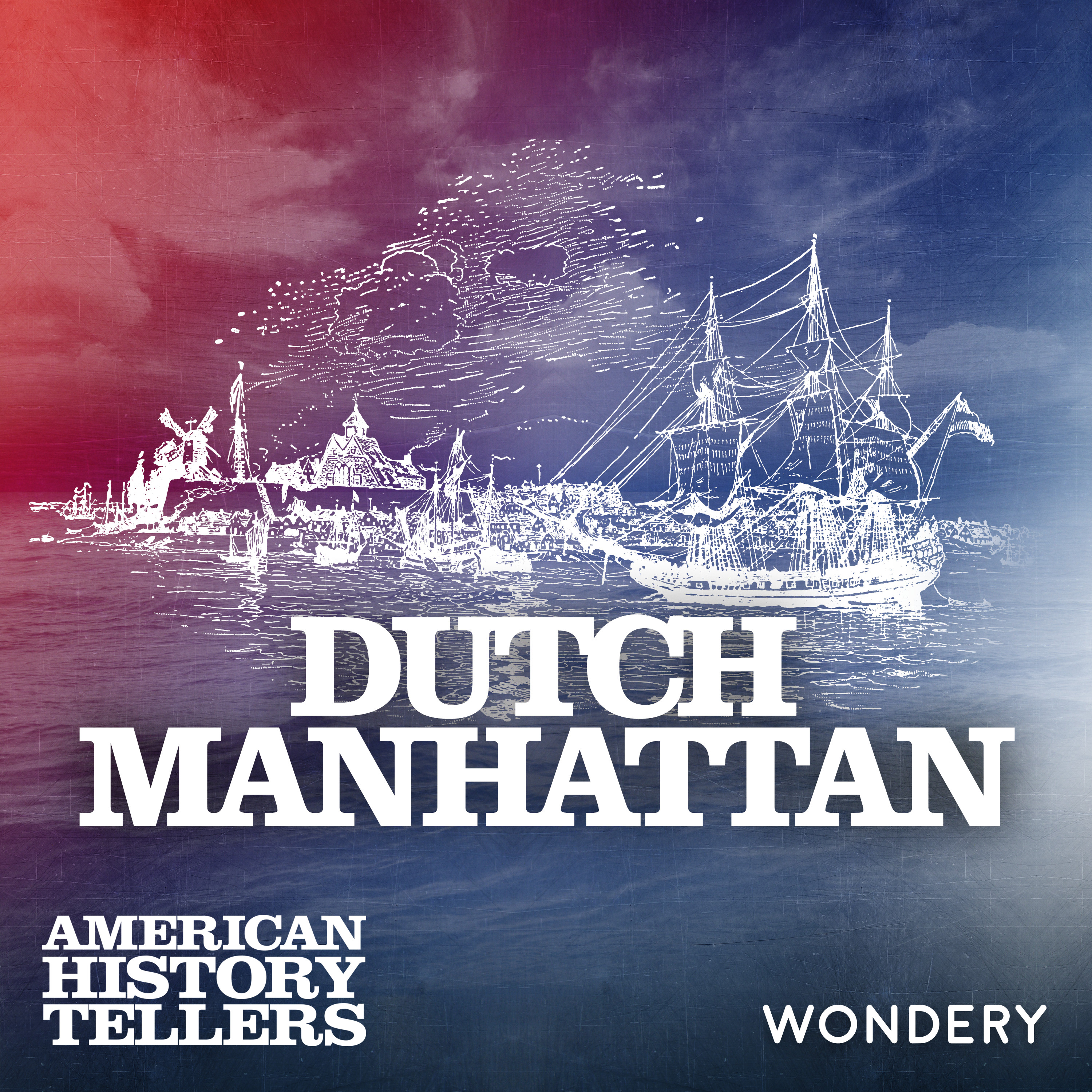
S15 Ep 7Dutch Manhattan - The Dutch Influence Today | 7
New York City was founded on the Dutch principles of tolerance and capitalism, both of which were new ideas at the time. But much of the city's early history was lost until the 1970s, when a renewed interest in the Dutch period led to the founding of the New Netherland Center. Here, thousands of previously untranslated records shed new light on this crucial moment in Gotham’s history. Our guest today is Greg Young, who co-hosts the Bowery Boys, a popular podcast about all things New York City history. Young visited the New Netherland Center, and he joins us to share what he found there and where Dutch influence can still be seen in New York today.Support us by supporting our sponsors!See Privacy Policy at https://art19.com/privacy and California Privacy Notice at https://art19.com/privacy#do-not-sell-my-info.
S15 Ep 6Dutch Manhattan - New York | 6
In the years after Adrian Van der Donck won a municipal charter for New Amsterdam, and under Peter Stuyvesant's stern but capable rule, the city flourished. Even English residents of New England and Virginia sent their goods to Europe via the future New York Harbor, because the Dutch were so good at the business of shipping. Dutch features that would become part of American culture — from cookies and cole slaw to Santa Claus — became ingrained. Most importantly, the Dutch notions of tolerance, which fostered a multi-ethnic society, and free trade, became rooted in Manhattan. But in London, King Charles II and his brother, James, the Duke of York, were eager to build an empire. Their plan involved taking over slaving posts in West Africa, reorganizing their American colonies, and taking the Dutch colony, with its strategically located capital. And soon, they would send a squadron of warships to Manhattan.Support us by supporting our sponsors!See Privacy Policy at https://art19.com/privacy and California Privacy Notice at https://art19.com/privacy#do-not-sell-my-info.
S15 Ep 5Dutch Manhattan - The One-Legged Soldier | 5
Peter Stuyvesant was fresh from losing a leg in battle against the Spanish when he arrived in Manhattan in 1647. He was a tough soldier who was ready to take charge of the unruly population of New Amsterdam. He soon clashed with Adrian Van der Donck, the leader of the opposition, who was secretly crafting a formal legal complaint that would compel the Dutch government to give the colony a form of representative government. When Stuyvesant discovered that Van der Donck had been spearheading an effort to overthrow his rule, he had him arrested for treason. But after a public faceoff revealed the Dutch government had come down on the side of colonists, Van der Donck was released. He returned to Europe and traveled to The Hague, where he argued that the Dutch government should take over the colony from the West India Company. At first, the Dutch government supported Van der Donck’s cause. It granted New Amsterdam a charter, giving the colony official status as a Dutch city, and ordered Stuyvesant's recall. But then order was abruptly rescinded. Oliver Cromwell’s English government was declaring war on the Dutch republic.Support us by supporting our sponsors!See Privacy Policy at https://art19.com/privacy and California Privacy Notice at https://art19.com/privacy#do-not-sell-my-info.
S15 Ep 4Dutch Manhattan - The Sheriff Comes to Town | 4
Just as it was becoming a New World success story, disaster came to New Amsterdam. Willem Kieft, the Dutch leader appointed by the West India Trading Company, declared war on local tribes, sending soldiers to slaughter them in their villages. The tribes responded with waves of death and destruction that would set the European settlers back decades in their development. A new colonist named Adriaen Van der Donck arrived to find the place in chaos. The colonists were furious at Kieft for endangering their settlement with his attacks. Van der Donck had been trained as a lawyer, and he soon found a role organizing the colonists against Kieft. He lobbied Kieft to permit the formation of a council to give the residents a say in their government. But when it became clear Kieft had no intention of giving the council any real power, Van der Donck responded by going over Kieft’s head and appealing directly to the leaders of the West India Company for intervention. The response wasn’t what he expected. It would lead to the appointment of a new Dutch leader, a hardliner tasked with wrestling the wayward colonists back under control. His name was Peter Stuyvesant.Support us by supporting ours sponsors!See Privacy Policy at https://art19.com/privacy and California Privacy Notice at https://art19.com/privacy#do-not-sell-my-info.
S15 Ep 3Dutch Manhattan - Pirates and Prostitutes | 3
New Amsterdam was a desperate place. For the first decade of its existence, the Dutch city on the tip of Manhattan Island served as a haven for pirates, prostitutes and smugglers. That was because the West India Company, which ran New Amsterdam, insisted on controlling all trade — something it simply couldn't manage effectively. Finally, in 1640, the Company gave up its monopoly, and what had been a rag-tag, Wild West kind of town quickly took on the hallmarks of Dutch capitalism. Trading firms in Amsterdam opened branch offices on Manhattan, and business boomed. Merchants traded in everything from furs to tobacco to Caribbean sugar and salt. Soon, Manhattan became a brash, free-wheeling pioneer settlement where visitors could hear some 18 different languages — at a time when the city’s population numbered only about 500. The ingredients were in place for an American success story utterly unlike the English colonies to the north. Support us by supporting our sponsors!See Privacy Policy at https://art19.com/privacy and California Privacy Notice at https://art19.com/privacy#do-not-sell-my-info.
S15 Ep 2Dutch Manhattan - Buying Manhattan | 2
Twelve years after Henry Hudson's 1609 trip charting the Hudson River, the Dutch used his voyage as the basis for a new colony, which would be wedged between the English colonies in New England and Virginia. New Netherland began with tiny numbers of people from different backgrounds. They settled the entire region that Hudson had traveled, from Delaware to New York to Connecticut. But being spread out so thinly exposed them to danger. In 1626, in the area around the future Albany, New York, a small party became embroiled in a fight between two native tribes, and some settlers were killed.In the aftermath, the colonists chose a new leader. Peter Minuit's first decision was to call all the settlers together for strength. Then he selected a location for a capital city, one that was strategically located in a world-class harbor and at the mouth of the colony's central river—a wilderness island called Manhattan. Support us by supporting our sponsors!See Privacy Policy at https://art19.com/privacy and California Privacy Notice at https://art19.com/privacy#do-not-sell-my-info.
S15 Ep 1Dutch Manhattan - Henry Hudson’s Big Mistake | 1
In 1609, a headstrong English sea captain named Henry Hudson set out on behalf of the Dutch East India Company to find a trade route to Asia — and promptly found himself and his crew stranded in icy waters off the coast of Norway. As supplies dwindled, Hudson announced to his frostbitten crew that the ship would change course. They set off across the Atlantic Ocean in search of an alternative route through the North American continent.Hudson never found the Northwest Passage, but he did come across something else on that journey — a small island the native people called Manna-hatta. That settlement would eventually give rise to a new Dutch colony called New Netherland, with Manhattan Island, or New Amsterdam, as it would come to be known, as its capital. New Amsterdam would come to be defined by two key Dutch values: tolerance and capitalism. This series by Russell Shorto, based on his book The Island at the Center of the World, traces how Manhattan’s brief chapter as a Dutch colony shaped the city for centuries to come.See Privacy Policy at https://art19.com/privacy and California Privacy Notice at https://art19.com/privacy#do-not-sell-my-info.
S14 Ep 7Remembering Emmett Till | 7
The murder of Emmett Till galvanized the nascent civil rights movement. But the full story of what happened in Money, Miss., on August 28, 1955, is significantly different than the narrative that emerged at the time. A new app developed by scholars at Florida State University now seeks to give a fuller picture of Till’s lynching by taking users on a GPS guided tour around the Mississippi Delta and the important sites related to the case. Davis Houck, a professor of rhetorical studies at FSU, developed the app, and he joins us to talk about educating people on the legacy of Till’s killing and why it's more significant than ever.Support us by supporting our sponsors!See Privacy Policy at https://art19.com/privacy and California Privacy Notice at https://art19.com/privacy#do-not-sell-my-info.
S14 Ep 6The Bastard Brigade - Showdown in the Alps | 6
The Alsos mission had a hard-charging leader in Boris Pash and an eccentric band of recruits. But if the so-called Bastard Brigade was going to track down the Nazi atomic bomb, they would also need scientific expertise. For that, they turned to the Dutch-American physicist Samuel Goudsmit. Goudsmit wasn’t the brigade’s first choice—far from it. He was considered weak and timid, and even Goudsmit himself worried he lacked the courage for the mission. But the scientist had been friends with Werner Heisenberg as a young man in Europe, and he felt personally betrayed by Heisenberg’s work for the Nazis. And as a Jew who’d lost his parents to the concentration camps, Goudsmit was determined to fight back against Hitler.But Goudsmit would eventually prove himself, and his brilliant detective work would lead the mission to a cave in Germany hewn into the side of a cliff — Heisenberg’s secret lair and the heart of the Nazi bomb project. Support us by supporting our sponsors!See Privacy Policy at https://art19.com/privacy and California Privacy Notice at https://art19.com/privacy#do-not-sell-my-info.
S14 Ep 5The Bastard Brigade - The Most Wanted Men | 5
As the Nazis inched closer to acquiring a nuclear weapon, panic grew among the Allied forces. The Alsos Mission — otherwise known as the Bastard Brigade — was put in charge of gathering intelligence on Hitler’s bomb project, seizing stores of Nazi uranium, and hunting down members of the Uranium Club. The first atomic spy outfit in history was underway. Their mission was led by the American-born son of a Russian Orthodox bishop, Colonel Boris Pash — a high school teacher, irreverent prankster, and veteran of two wars by his 18th birthday. Pash’s team would pursue leads across Europe, taking them on a dangerous journey from an Antwerp zoo to a French laboratory beset by snipers.Support us by supporting our sponsors!See Privacy Policy at https://art19.com/privacy and California Privacy Notice at https://art19.com/privacy#do-not-sell-my-info.
S14 Ep 4The Bastard Brigade - The Strangest Man | 4
By mid-1944, the Allies’ fight to track down and stop the Nazi atomic program had met with failure and disappointment. And so the Manhattan Project took a new tack by recruiting and developing atomic spies — including a backup catcher for the Boston Red Sox named Moe Berg. Although little known today, Berg was one of the most famous athletes of his day, and a certified genius. He could charm sports writers and fans alike with his tales of palling around with Babe Ruth and other celebrities, but he also held degrees from Princeton, Columbia, and the Sorbonne and spoke a dozen languages. When World War II broke out, Berg volunteered to work on behalf of the Office of Strategic Services as a spy. Over time, however, Berg’s focus would shift from espionage toward assassination. Soon, he would travel abroad to target the most feared scientist in the world and the sharpest mind in the Nazi Uranium Club: German physicist Werner Heisenberg. Support us by supporting our sponsors!See Privacy Policy at https://art19.com/privacy and California Privacy Notice at https://art19.com/privacy#do-not-sell-my-info.
S14 Ep 3The Bastard Brigade - The Kennedy Curse | 3
In early 1944, the Allies developed a desperate plan to destroy several massive bunkers in Nazi-controlled France—bunkers that reportedly housed atomic missiles. The plan called for filling up airplanes with napalm, flying them over to France via remote control, and ramming them into the bunkers, blowing them sky-high. But the military still needed pilots to get the napalm-filled planes off the ground and pointed in the right direction.It was dangerous in the extreme. But one of the first volunteers for the mission was none other than Joe Kennedy, the daring older brother of future president John F. Kennedy. John had recently become a war hero, and a ragingly jealous Joe was willing to risk everything to destroy Hitler’s bunkers—and, more importantly, turn the spotlight back on himself.Support us by supporting our sponsors!See Privacy Policy at https://art19.com/privacy and California Privacy Notice at https://art19.com/privacy#do-not-sell-my-info.
S14 Ep 2The Bastard Brigade - The Juice | 2
The discovery of uranium fission in Nazi Germany in 1938 terrified Allied nuclear scientists—especially since the Nazi atomic bomb project, the dreaded Uranium Club, had a two-year head start on the Manhattan Project.So the Allies decided to strike back. They couldn’t prevent Germany from acquiring uranium, but they could disrupt access to another key ingredient in atomic research—heavy water. Only one company in the world produced heavy water at the time, an isolated plant in Norway, so the Allies decided to send in teams of elite commandos on a top-secret mission to destroy it.These missions certainly didn’t go perfectly—some were in fact disasters. But to prevent Hitler from getting an atomic bomb, no price was too high to pay.Support us by supporting our sponsors!See Privacy Policy at https://art19.com/privacy and California Privacy Notice at https://art19.com/privacy#do-not-sell-my-info.
S14 Ep 1The Bastard Brigade - The Accidental A-Bomb | 1
The Second World War ended with two black mushroom clouds rising over the scorched remains of Hiroshima and Nagasaki. But most people don’t realize how easily the war could have ended not with an American atomic bomb but a German one, obliterating not a Japanese city but Paris, London, or even New York. As the war began, all the pieces were in place for the Germans to develop an atomic weapon. They had scientific visionaries like Werner Heisenberg, a manufacturing base committed to total war—and a big head start. The Allies were willing to go to desperate lengths to stop Adolph Hitler from getting his hands on an atomic bomb. They assembled a team of men and women to spy on, sabotage, and even assassinate members of the Nazi bomb project. They would become known as The Bastard Brigade.But in the years leading up to the war, the scientific community couldn’t yet anticipate that artificial radioactivity was possible, let alone that it could lead to a weapon on the scale of an atomic bomb. That initial discovery would fall to a husband and wife team in Paris with a famous surname, a string of failures behind them, and a lot to prove: Frédéric and Irène Joliot-Curie. Support us by supporting our sponsors!See Privacy Policy at https://art19.com/privacy and California Privacy Notice at https://art19.com/privacy#do-not-sell-my-info.
S13 Ep 6The Statue of Liberty | 6
The Statue of Liberty is one of America’s most iconic monuments to freedom. As we head into the Fourth of July holiday, we’ll look back on the amazing effort it took to get Lady Liberty built.Beckett Graham is co-host of The History Chicks podcast, a show that explores the legacies of women throughout history. Beckett joins us to talk about her approach to telling women’s stories and we’ll also play a portion of The History Chicks podcast episode on how the Statue of Liberty came to be. It’s a story that includes New York’s first ticker tape parade, some challenging construction issues and suffragists on a boat protesting the statue’s dedication.Support us by supporting our sponsors!See Privacy Policy at https://art19.com/privacy and California Privacy Notice at https://art19.com/privacy#do-not-sell-my-info.
S13 Ep 5Tulsa Race Massacre - Legacy and Lessons | 5
Nearly a century after a white mob leveled the affluent Tulsa district known as Black Wall Street, how is Greenwood faring? Mechelle Brown is the program coordinator for the Greenwood Cultural Center, which seeks to educate people about the rich history of the Greenwood District. She joins us to discuss why a race conflict in Tulsa was inevitable, the city’s ongoing struggle to fully acknowledge the history of the massacre, and what has — and still hasn’t — been done. Support us by supporting our sponsors!See Privacy Policy at https://art19.com/privacy and California Privacy Notice at https://art19.com/privacy#do-not-sell-my-info.
S13 Ep 4Tulsa Race Massacre - Rebirth | 4
On June 2, 1921, thousands of black Tulsans interned at the Tulsa Fairgrounds woke under armed guard. Many had no idea where their loved ones were or if they were still alive; they didn’t know whether their homes were still standing or if they’d been ransacked by the white mob. As Greenwood residents worked to restart lives that had been violently interrupted, sympathy for the survivors exploded around the country. In Tulsa, some white business leaders vowed to help them rebuild. But city officials and greedy real estate speculators had other ideas—ideas that would push Greenwood residents off their valuable land forever.But those white elites would fail to account for the ambition, leadership and tight bonds of community that Greenwood’s people had built over the years. What followed was one of the most astonishing displays of African American resilience in the 20th century. Against all odds, Black Wall Street would rise from the ashes.If you’d like to learn more about the Tulsa Race Massacre, we recommend a few great books we drew on for this series:Black Wall Street: From Riot to Renaissance in Tulsa’s Historic Greenwood District by Hannibal JohnsonReconstructing the Dreamland: The Tulsa Riot of 1921 by Alfred BrophyRiot and Remembrance by James S. HirschSupport us by supporting our sponsors!See Privacy Policy at https://art19.com/privacy and California Privacy Notice at https://art19.com/privacy#do-not-sell-my-info.
S13 Ep 3Tulsa Race Massacre - The Invasion | 3
By midnight on Tuesday, May 31, 1921, some Greenwood residents assumed the riot was calming down. Many families, far away from the action at the courthouse, hadn’t even heard about the violence, and went to bed as usual. But as much of the city slumbered, the white mob was transforming into something even more deadly: a highly organized, strategic force led by volunteer soldiers.That force held its fire until daybreak on Wednesday, June 1, when it sprang into action. All over Greenwood, men, women and children found themselves under siege, their homes, businesses and churches under attack from land and sky. Greenwood’s proud residents would defend themselves until they could defend themselves no more — calling the very survival of their fabled community into question.Support us by supporting our sponsors!See Privacy Policy at https://art19.com/privacy and California Privacy Notice at https://art19.com/privacy#do-not-sell-my-info.
S13 Ep 2Tulsa Race Massacre - The Powder Keg | 2
As Dick Rowland sat in a jail cell at the Tulsa courthouse on Tuesday, the news of his arrest and rumors about his alleged rape of Sarah Page flew through town. Egged on by an inflammatory op-ed in the Tulsa Tribune, a white mob bent on a lynching began assembling outside the courthouse. By that evening, the crowd of hundreds had swelled to thousands. Meanwhile in the office of the Tulsa Star newspaper, Greenwood’s most prominent citizens debated the proper course of action. Some young veterans of the recent world war were determined to defend Rowland, with their lives if necessary, while older, cooler heads urged caution and restraint.Both sides would gather at the courthouse Tuesday night, armed with their fists, guns and moonshine. Anything — or anyone — could set them off.Support us by supporting our sponsors!See Privacy Policy at https://art19.com/privacy and California Privacy Notice at https://art19.com/privacy#do-not-sell-my-info.
S13 Ep 1Tulsa Race Massacre - The Promised Land | 1
Between 1838 and 1890, thousands of African Americans moved to Oklahoma, brought there as Cherokee slaves or drawn there by the promise of free land. Black pioneers established towns where African Americans could govern themselves and thrive in community together, and in time, Oklahoma became known as “The Promised Land” of freedom, dignity, and economic self-sufficiency. Out of this movement, the wealthiest African American community in the nation was born. By 1921, the Tulsa neighborhood of Greenwood had become such a hotspot of entrepreneurship that it became famous as “Negro Wall Street.”But the Greenwood community lived uneasily in the racist, corrupt, lawless oil boomtown of Tulsa. On a hot May day in 1921, a young shoeshine boy would step into an elevator with a teenage white girl and accidentally spark the worst incident of racial violence in America -- a massacre that would be kept secret for decades.Support us by supporting our sponsors!See Privacy Policy at https://art19.com/privacy and California Privacy Notice at https://art19.com/privacy#do-not-sell-my-info.

S12 Ep 2Sponsored | American Epidemics - Dark Days In Dallas | 2
This episode is brought to you by Wondery in partnership with National Geographic in anticipation of their new series, The Hot Zone. In 2014, Ebola is tearing through Guinea, Liberia and Sierra Leone, but the deadly disease hasn’t yet made landfall in the United States. Then Thomas Eric Duncan, a Liberian visiting his fiancee and son in Dallas, stumbles into a local hospital with a fever. His eventual diagnosis — Ebola — sets off a nationwide panic that a full-scale outbreak might be looming. As local healthcare workers and epidemiologists put their lives on the line confronting a crisis they were never trained for, government officials struggle to mount an effective response. See Privacy Policy at https://art19.com/privacy and California Privacy Notice at https://art19.com/privacy#do-not-sell-my-info.

S12 Ep 1Sponsored | American Epidemics - The Great Pandemic | 1
This episode is brought to you by Wondery in partnership with National Geographic in anticipation of their new series, The Hot Zone. The three-night limited series is inspired by true events surrounding the origins of the Ebola virus and its arrival on US soil in 1989. One hundred years ago, the Spanish flu pandemic brought American society to the breaking point and forever reshaped the way the United States responds to public health crises. At a time when people around the world were already dying on an unprecedented scale due to World War I, Spanish flu devastated American cities, killing more than 675,000 people in the U.S. alone. As the death toll mounted, Philadelphia ran out of coffins, New York City officials outlawed uncovered sneezing and coughing, and scientists raced to find a cure. The virus would have a profound effect on impact on medicine, politics, and the media. It would reveal deep flaws in the U.S. government’s ability to respond to such a disaster. And it would help usher in a new era of global collaboration in the medical community. See Privacy Policy at https://art19.com/privacy and California Privacy Notice at https://art19.com/privacy#do-not-sell-my-info.
S11 Ep 7J. Edgar Hoover's FBI - Humanizing History with David McCullough | 7
Pulitzer Prize winner. National Book Award winner. Presidential Medal of Freedom recipient. Today David McCullough, one of America’s greatest living historians, joins us to discuss his new book, The Pioneers, about the heroic men and women who shaped the Northwest Territories, in present-day Ohio, Indiana, Wisconsin, Michigan, and Illinois. Without their bravery, foresight, and commitment to their ideals, the United States we know today might look very different. The author of Truman and John Adams shares how to make historical figures come alive on the page, why history matters, and what he sees as history’s two greatest lessons.Support us by supporting our sponsors!See Privacy Policy at https://art19.com/privacy and California Privacy Notice at https://art19.com/privacy#do-not-sell-my-info.
S11 Ep 6J. Edgar Hoover's FBI - Citizens Resistance | 6
On March 8, 1971, seven ordinary Americans broke into a poorly guarded FBI regional office in Media, Pennsylvania. They called themselves the Citizens Commission to Investigate the FBI, and they had one purpose: to gather evidence that would prove the agency was engaged in a covert and illegal spying campaign against American citizens. For more than 30 years, Director J. Edgar Hoover had maintained an iron grip on the media, and with it, public perception of the Bureau. But as packages of stolen documents began appearing in newsroom mailboxes, followed soon after by front page stories, a very different narrative about the FBI’s activities began to emerge. It would forever shift the balance of public opinion against the Bureau, and signal the beginning of Hoover’s downfall.Support us by supporting our sponsors!See Privacy Policy at https://art19.com/privacy and California Privacy Notice at https://art19.com/privacy#do-not-sell-my-info.
S11 Ep 5J. Edgar Hoover's FBI - Black Bag Job | 5
Between 1956 and 1971, the FBI carried out more than 2,000 top secret spying operations aimed at American citizens. Their target? The so-called Fifth Column, a network of undercover Soviet agents allegedly working to destroy the American government from within. The agency even had an internal code name for these operations: COINTELPRO. In the name of this mission, Hoover directed agents to infiltrate, penetrate, disorganize and disrupt their targets. But the FBI’s actions weren’t just aimed at taking down suspected Communists. They also targeted activists working across a broad spectrum of progressive causes, including civil rights, feminism, gay rights, abortion rights, and drug policy reforms.But no target would draw more of the FBI’s scrutiny — or malice — than Dr. Martin Luther King, Jr.Support us by supporting our sponsors!See Privacy Policy at https://art19.com/privacy and California Privacy Notice at https://art19.com/privacy#do-not-sell-my-info.
S11 Ep 4J. Edgar Hoover's FBI - Controlling the Message | 4
The rise of fascism and World War II shifted the FBI’s focus in the 1940s from fighting midwestern outlaws to catching Communists. To Hoover and the FBI, nearly anyone on the political left was suspect, potentially part of a Soviet conspiracy to overthrow Western democracies. In reality, the American left was fragmented. But again and again, Hoover would use the threat of Communism to go after the Bureau’s enemies. He would resort to exhaustive surveillance, including wiretaps, bugging and prying into personal lives to keep in check outspoken journalists and any other critics who threatened Hoover’s ironclad control of the media. Support this show by supporting our sponsors!See Privacy Policy at https://art19.com/privacy and California Privacy Notice at https://art19.com/privacy#do-not-sell-my-info.
S11 Ep 3J. Edgar Hoover's FBI - The Bobby Sox Bandit Queen | 3
During the mid-1930s, the FBI’s public relations department had effectively changed the image of its agents from accountants into action heroes; and its director, from a bureaucrat into an American icon. They pushed stories about heroic G-men facing off against violent foes, gunning them down in self-defense. And the press ate it up. But in April 1939, an FBI agent shot and killed a small town bank robber — in the back. The real story didn’t fit the FBI’s new heroic narrative. So Hoover changed it. Using his public relations machine, Hoover would twist the average story of a small-time midwestern criminal into one final, heroic, spellbinding triumph of the FBI.Support us by supporting our sponsors!See Privacy Policy at https://art19.com/privacy and California Privacy Notice at https://art19.com/privacy#do-not-sell-my-info.
S11 Ep 2J. Edgar Hoover's FBI - Giant Among G-Men | 2
J. Edgar Hoover became director of the FBI when he was just 29 years old. His orders? Clean up the Bureau. At first, he proved to be a brilliant and innovative leader, setting new standards for education, physical fitness, and training of federal agents.But there was a dark side to his success. Hoover was also obsessed with tracking anyone he considered to be disloyal to the U.S. government. By the early 1930s, the Bureau was secretly compiling dossiers on tens of thousands of American citizens, in defiance of government orders. And Hoover understood that the best cover for his actions lay in bolstering the Bureau’s reputation as a beloved and virtuous American institution. All he needed was the help of an expert in an emerging but promising field: public relations.Support us by supporting our sponsors!See Privacy Policy at https://art19.com/privacy and California Privacy Notice at https://art19.com/privacy#do-not-sell-my-info.
S11 Ep 1J. Edgar Hoover's FBI - The Department of Easy Virtues | 1
By the turn of the century, radical anarchists were becoming a growing -- and volatile -- political movement. As shifting workplace conditions exploited and endangered American workers, anarchists increasingly turned to violence to spur everyday citizens to upend the capitalist system. The growth of these politically motivated shootings and bombings stoked fear among American citizens — fear of immigrants, outsiders, and anyone else whose ideas might be considered a threat. Soon President Woodrow Wilson was calling on his attorney general A. Mitchell Palmer to investigate, arrest and imprison any noncitizen suspected of spouting “disloyal” or “radical” ideologies.The so-called Palmer Raids would move the little-known, poorly funded and notoriously corrupt Bureau of Investigation into the national spotlight. And it would eventually launch the career of an ambitious young civil servant named Edgar Hoover.Support us by supporting our sponsors!See Privacy Policy at https://art19.com/privacy and California Privacy Notice at https://art19.com/privacy#do-not-sell-my-info.
S10 Ep 7America's Anthem | 7
“Mine eyes have seen the glory of the coming of the lord.” That’s the opening line of “The Battle Hymn of the Republic” written by Julie Ward Howe in 1861. Over the years, it’s become something of an unofficial national anthem for all manner of political causes in the United States. Historian Richard Gamble joins us to talk about the song, its meaning, and its history in everything from The Civil War to The Civil Rights Movement.Read more: A Fiery Gospel: The Battle Hymn of the Republic and the Road to Righteous War.Support our show by supporting our sponsors!See Privacy Policy at https://art19.com/privacy and California Privacy Notice at https://art19.com/privacy#do-not-sell-my-info.
S10 Ep 6The Great Depression - Justice and Infamy | 6
As legal challenges to his New Deal programs mounted, President Roosevelt and his attorney general devised dramatic reforms to the Supreme Court’s structure. The proposed changes would open new rifts between the president and conservative members of his own party.Other greater challenges loomed. A recession was threatening to unwind four years of economic recovery. The Senate launched a politicized investigation into purported un-American activities in federal work programs.And on the other side of the world, a global crisis was building as war erupted in Asia and Europe. As the country re-armed and factories retooled to supply soon-to-be allies, the nationally finally pulled itself from the depths of Depression.Support us by supporting our sponsors!See Privacy Policy at https://art19.com/privacy and California Privacy Notice at https://art19.com/privacy#do-not-sell-my-info.
S10 Ep 5The Great Depression - Progress and Pushback | 5
After two of President Roosevelt’s closest advisors competed to create a new federal jobs program, the White House launched one of Roosevelt's keystone initiatives: the Works Progress Administration. Under this program, millions of Americans earned government salaries at a wide range of blue- and white-collar jobs — everything from building post offices and painting murals to delivering library books by horseback to rural communities.However, the federal government’s increased reach worried FDR’s opponents, especially a wildly popular Catholic radio preacher. Father Charles Coughlin once helped FDR get elected, but as the president’s power increased, Coughlin turned up the volume on hateful and anti-Semitic undertones in his attacks.Support us by supporting our sponsors!See Privacy Policy at https://art19.com/privacy and California Privacy Notice at https://art19.com/privacy#do-not-sell-my-info.
S10 Ep 4The Great Depression - Dust | 4
The Great Depression wasn’t the only crisis facing the country when Franklin Roosevelt took office in 1933. Following a decade-long drought that had shriveled crops, massive dust storms were pummeling huge swaths of the Midwest, the Great Plains, and the Northwest. Years of poor harvest practices had worsened the crisis, pushing farmers already strained by the financial hit of the Great Depression off their land. Only when a lifelong soil scientist made a dramatic testimony before Congress did the government finally begin to develop a solution.Many of those unmoored by environmental calamity searched for opportunity elsewhere — particularly in California. But when a controversial Los Angeles police chief sent armed officers to block access to the Golden State, he would launch a constitutional crisis and a showdown with a rural sheriff.Support us by supporting our sponsors!See Privacy Policy at https://art19.com/privacy and California Privacy Notice at https://art19.com/privacy#do-not-sell-my-info.
S10 Ep 3The Great Depression - A New Deal | 3
With the country was still hobbled by the Depression, New York Governor Franklin Delano Roosevelt promised a “New Deal” for the American people. That vow handed Roosevelt a contested Democratic nomination and helped him crush Hoover in the general election. Roosevelt began his presidency with a flurry of policy proposals and legislative efforts focused around three priorities: relief, recovery, and reform. These new efforts saw millions of young men put back to work preserving natural areas as part of the Civilian Conservation Corps and undertaking a massive rural electrification project in the Tennessee River Valley. And the country’s first female cabinet member led the creation of Social Security, one of the crowning achievements of Roosevelt’s administration.Meanwhile, a reckoning was in order for Wall Street. Years after the stock market crash, a raucous senate investigation would unveil egregious abuses by financiers.Support us by supporting our sponsors!See Privacy Policy at https://art19.com/privacy and California Privacy Notice at https://art19.com/privacy#do-not-sell-my-info.
S10 Ep 2The Great Depression - Brother, Can You Spare a Dime | 2
Factories have shut down, banks have failed, and millions are out of work. As the Depression worsens, public opinion sours toward President Hoover.Hoover’s allies attempt to counter criticism of the President by galvanizing anti-foreigner attitudes. They devise a scheme to frighten immigrants from Mexico and other countries with the specter of mass immigration raids in the hopes they’ll leave the country on their own, as hundreds of thousands do.Meanwhile, an unemployed cannery worker from Portland, Oregon leads tens of thousands of World War I veterans on a march to Washington, D.C., to demand payment of wartime bonuses. A deadly showdown looms as this “Bonus Army” wears out its welcome in the capital.Support us by supporting our sponsors!See Privacy Policy at https://art19.com/privacy and California Privacy Notice at https://art19.com/privacy#do-not-sell-my-info.
S10 Ep 1The Great Depression - The Crash | 1
The Roaring Twenties came to a screeching halt on October 29, 1929, with the collapse of the U.S. stock market. A year earlier, president Herbert Hoover had coasted to victory by promising the American people “a chicken for every pot” and “a car in every backyard.” Lured by the promise of skyrocketing markets, many first-time investors got caught up in margin trading, borrowing money to make bigger stock purchases than they could actually afford. It was a foolproof way to make money, so long as stock prices kept rising.But then, on the morning of Tuesday, October 29, more than sixteen million shares changed hands on the floor of the New York Stock Exchange. By the market’s close, investors had lost tens of billions of dollars — and kicked off a decade that would reshape American institutions, even as labor unrest, racial tensions, and the dark shadow of nativism pushed back from all sides.Support us by supporting our sponsors!See Privacy Policy at https://art19.com/privacy and California Privacy Notice at https://art19.com/privacy#do-not-sell-my-info.
S9 Ep 4Does History Repeat Itself? | 4
"Those who do not remember history are condemned to repeat it." On today’s show, we’ll consider what lessons we can draw from history, and what lessons we can’t. David Greenberg, a professor of history and media studies at Rutgers University, joins us to discuss how to connect the events of the past to the events of today. We’ll also talk about his latest book “Republic of Spin: An Inside History of the American Presidency,” which explores the history of political messaging inside the White House. Plus, Jesse James and this day in history.Support us by supporting our sponsors!See Privacy Policy at https://art19.com/privacy and California Privacy Notice at https://art19.com/privacy#do-not-sell-my-info.
S9 Ep 3The 1968 Chicago Protests - I Regret Nothing | 3
A special series with Legal Wars. The whole world was watching, and that’s exactly what the defendants wanted. As the end of 1969 approached, the Chicago 8 had become the Chicago 7. Bobby Seale, a Black Panther, had been removed from the trial in a brutal spectacle by Judge Julius Hoffman. The remaining defendants would respond by turning the courtroom upside down, much to the delight of the national media. Counterculture celebrities Allen Ginsberg and Norman Mailer would take the stand. And in the end, it was the establishment that would be put on trial.Check out Legal Wars for more stories behind America’s most famous courtroom battles.Support us by supporting our sponsors!See Privacy Policy at https://art19.com/privacy and California Privacy Notice at https://art19.com/privacy#do-not-sell-my-info.
S9 Ep 2The 1968 Chicago Protests - The Trial of the Chicago 8 | 2
EA special series with Legal Wars. In 1969, the war in the streets became a war in the courtroom. The trial of the Chicago 8 pitted the federal government against eight prominent anti-war activists. The charges: Conspiracy to incite a riot. But the case was about more than just who threw the first punch at the DNC protests the year before. It was a battle for the soul of American culture, and both sides planned to win...by any means necessary.Check out Legal Wars for more stories behind America’s most famous courtroom battles.Support us by supporting our sponsors!See Privacy Policy at https://art19.com/privacy and California Privacy Notice at https://art19.com/privacy#do-not-sell-my-info.
S9 Ep 1The 1968 Chicago Protests - The Battle of Michigan Avenue | 1
EA special series with our sibling show Legal Wars. The 1968 Democratic National Convention attracted demonstrators from all over the country. Thousands of students, Yippies, Peaceniks, and other protestors converged in Chicago to push for an end to the Vietnam War. But the city’s police had other plans and the would-be peaceful protests erupted into violence. News programs broadcast the clashes live to a nation of stunned viewers at home. Investigators called it a “police riot,” but five months later, the newly elected President Nixon found someone else to blame.Check out Legal Wars for more stories behind America’s most famous courtroom battles.Support us by supporting our sponsors!See Privacy Policy at https://art19.com/privacy and California Privacy Notice at https://art19.com/privacy#do-not-sell-my-info.
S8 Ep 71865 versus 2018 and Why History Matters | 7
We live in historic times, but how do they compare to that other tumultuous era of American history — 1865 and the years following President Lincoln’s death and the end of The Civil War? Steven Walters, writer of Lindsay Graham’s new scripted podcast “1865,” joins to discuss the thrilling story of how our country put itself back together again and brought Lincoln’s killers to justice. Plus, a preview of what’s to come on “American History Tellers” in 2019.You can listen to new weekly episodes of “1865” exclusively on Stitcher Premium. For a free month of Stitcher Premium, go to stitcherpremium.com/1865 and use promo code ‘1865’.Support this show by supporting our sponsors!See Privacy Policy at https://art19.com/privacy and California Privacy Notice at https://art19.com/privacy#do-not-sell-my-info.
S8 Ep 6Political Parties - The Reagan Revolution | 6
The year 1968 marked a watershed in American politics. Anti-war protests were roiling the country. Civil rights leader Martin Luther King Jr. was shot dead in Memphis. Democratic President Lyndon Johnson’s approval rating was plummeting. The assassination of Democratic presidential hopeful Robert Kennedy would throw the party into disarray, toppling the New Deal coalition built by Franklin Delano Roosevelt two generations earlier and leading to a conservative surge.The political sea change would drive Republican nominee Richard Nixon to the White House in 1968. And it would eventually elect a former actor and California governor who would change the face of American politics in ways that are still being felt to this day. His name was Ronald Reagan.Support us by supporting our sponsors!See Privacy Policy at https://art19.com/privacy and California Privacy Notice at https://art19.com/privacy#do-not-sell-my-info.
S8 Ep 5Political Parties - The New Deal Coalition | 5
The 1929 stock market crash saw 14 billion dollars vanish in a matter of hours — and with it, the Republican party’s decades-long grip on American politics. As Americans lost their livelihoods, they turned to President Herbert Hoover for relief. But the self-made man who had so successfully reversed his own fortunes seemed unable to do the same for his country. With discontent growing, Hoover turned on World War veterans demanding early bonus payouts to support their families. It would prove the last straw for many Americans.The landslide election of 1932 would mark a profound realignment in U.S. politics, bringing urban centers under Democratic control for the first time in the party’s history. And it would propel into the White House Franklin Delano Roosevelt, whose sweeping New Deal would permanently transform the American political landscape.Support this show by supporting our sponsors!See Privacy Policy at https://art19.com/privacy and California Privacy Notice at https://art19.com/privacy#do-not-sell-my-info.
S8 Ep 4Political Parties - The Golden Age of the GOP | 4
As the Civil War came to a close, the government set its sights once again on the future of the United States. Working closely with a Republican President, the Republican Congress expected a swift and peaceful road to Reconstruction. But then, a mere four weeks into his second term, Lincoln was assassinated, leaving the country in the hands of Andrew Johnson, a Southern Democrat who had personally owned slaves just three years before.While Johnson’s unwavering commitment to states rights cultivated a fraught relationship with his Congress, the tumult would ultimately be short-lived. After just four years of a Democratic president, America’s Grand Old Party would ascend to power—and hold it—for over 70 years.Support this show by supporting our sponsors!See Privacy Policy at https://art19.com/privacy and California Privacy Notice at https://art19.com/privacy#do-not-sell-my-info.
S8 Ep 3Political Parties - The Turbulent 1850s | 3
The United States won the The Mexican–American War in the 1840s, and with it vast new stretches of western land. But in the 1850s, the question of what to do with this land – and whether to allow slavery in the new territories or not – became a redning issue for politicians of all stripes.While the Whig Party collapsed over the issue, Democrats split into Northern and Southern factions, and a new Republican Party tried to bind the Union with an appeal to old Jeffersonian values. But in the houses of Congress and across the nation, negotiations fail, compromise is abandoned; and the issue of slavery will overshadow all else, leading to Civil War.Support this show by supporting our sponsors!See Privacy Policy at https://art19.com/privacy and California Privacy Notice at https://art19.com/privacy#do-not-sell-my-info.
S8 Ep 2Political Parties - Jacksonian Democracy | 2
Andrew Jackson lost the 1824 presidential election to John Quincy Adams through what some called a “corrupt bargain” in the House of Representatives. The maneuver was masterminded by hot-headed but politically savvy Henry Clay, who with Adams, announced their intent for far-reaching new federal programs. Fierce opposition to these policies united pro-Jackson supporters who formed a new party, the Democrats, to rally around their hero and elect him to president in 1828.But while Adams was defeated, Henry Clay had no intention of leaving the fight. He helped lead a new party which gathered together anti-Jackson, fiscal conservatives, and pro-states rights factions. The rise of Clay’s new Whig party seemed unstoppable–they captured both houses of Congress and the presidency–until, on April 4, 1841, president William Henry Harrison died in office and gave John Tyler the power of the veto.Support this show by supporting our sponsors!See Privacy Policy at https://art19.com/privacy and California Privacy Notice at https://art19.com/privacy#do-not-sell-my-info.
S8 Ep 1Political Parties - A Tale of Two Parties | 1
In the earliest days of the United States, there was no such thing as an organized political party. George Washington, elected twice to the presidency unanimously in the Electoral College, warned the new nation against political factions, writing that organized parties would become, “potent engines, by which cunning, ambitious, and unprincipled men subvert the power of the people.”But immediately after Washington vacated the Presidency, factions did spring up and bitter personal rivalries began to shape the nation. The two first political parties–the Federalists and the Republicans–had very different views of what America should become, and were led by very different men: Alexander Hamilton and Thomas Jefferson.Support us by supporting our sponsors!See Privacy Policy at https://art19.com/privacy and California Privacy Notice at https://art19.com/privacy#do-not-sell-my-info.
History of the Lincoln Motor Company
bonusNamed after one of the greatest U.S. presidents, the Lincoln Motor Company has become as ingrained in American culture as the Statue of Liberty. Founded by Henry Leland to produce plane engines during World War I, Lincoln became a key driver of the early automobile industry in the United States and a pioneer of the luxury car market. But when Leland’s vision proved too ambitious for the nascent American car market, Lincoln was purchased by the Ford Motor Company.The Ford acquisition would prove to be a game-changer for Lincoln. It provided the young company with a jolt of capital, marketing know-how, and a secret weapon: Henry Ford’s son, Edsel Ford, who possessed an uncanny sense of style and what customers wanted. He would lead the Lincoln to build an entirely new class of automobile: something “strictly continental.” Brought to you by the 2019 Lincoln MKC.See Privacy Policy at https://art19.com/privacy and California Privacy Notice at https://art19.com/privacy#do-not-sell-my-info.