
All Things Sustainable
368 episodes — Page 7 of 8

S3 Ep 41COP26 climate commitments send "clear signal" on how banks should finance transition
The 26th U.N. Climate Change Conference, known as COP26, is well underway in Glasgow. A big theme during the first week of the conference was the financial sector's role in addressing climate change. In this episode of the ESG Insider podcast, we talk to Samu Slotte, global head of sustainable finance at Danske Bank, Denmark's largest bank by assets. Samu talks about Danske Bank's recent decision to join the Net-Zero Banking Alliance, a group of banks committed to aligning the greenhouse gas emissions of their lending and investment portfolios with net zero by 2050 or sooner, in line with the Paris Agreement. A challenge being discussed at COP26 is ensuring adequate climate financing makes its way to developing nations. "The overarching picture is that there's plenty of cash around looking for suitable investments," Samu says. But he warns that the money is just not getting where it is needed. "The cash seems to be stuck in proven technologies in stable jurisdictions." Photo credit: Getty Images

S3 Ep 402021 proxy season marked "new era" of shareholder support for ESG issues
The 2021 proxy season brought a new level of shareholder support for key ESG-related themes ranging from climate change to diversity disclosures. In this episode of ESG Insider, we talk to Sustainable Investments Institute founding executive director Heidi Welsh. "We've entered a whole new era" of shareholder support for ESG issues, Heidi tells us. "Investors want more information on climate change, on diversity and inclusion, on corporate political influence," she says. For additional information about the 2021 proxy season, listen to our episode on the implications of shareholders' ouster of several Exxon Mobil board members: https://podcasts.apple.com/us/podcast/exxon-board-ouster-over-climate-change-has-big-implications/id1475521006?i=1000524283710 And you can also find all our coverage of COP26 at http://spglobal.com/cop26 Photo credit: Getty Images
S3 Ep 39At COP26, why Article 6 matters to companies and investors
At COP26 in Glasgow in the first two weeks of November, government officials from around the world will gather to discuss plans for achieving the Paris agreement on climate change. A key issue on the table is Article 6, which involves international cooperation through carbon markets. In this episode of ESG Insider, we talk with Kelley Kizzier, who was a lead Article 6 negotiator at previous COP gatherings, including in 2015 when countries reached the Paris agreement on climate change. Kelley, who is currently vice president for global climate at the Environmental Defense Fund, also recently joined the board of directors of the Taskforce on Scaling Voluntary Carbon Markets. Kelley explains why Article 6 matters to companies and investors. She also outlines how Article 6 could affect voluntary carbon markets, where companies buy carbon credits to help meet their net zero goals. To learn more about carbon markets and the role of Article 6, listen to the latest episode of the Platts Future Energy podcast from our colleagues at S&P Global Platts. https://www.spglobal.com/platts/en/market-insights/podcasts/platts-future-energy/101221-cop26-paris-agreement-article-6-voluntary-carbon-markets-carbon-footprint-emissions Photo credit: Getty Images
S3 Ep 38Morgan Stanley exec on net zero: 'We can't just wait 30 years and see what happens'
In this episode of the ESG Insider podcast, we talk to Jessica Alsford, Head of Global Sustainability Research at Morgan Stanley. In the run-up to COP26, the big United Nations climate conference taking place in Glasgow in November 2021, there has been a lot of discussion in the sustainability world about the path to net zero and the role the financial industry will play in reaching the goals of the Paris agreement. In the interview, Jessica talks about what needs to happen at COP26 to move companies beyond their headline net zero commitments into specific and transparent action plans. "We can't just wait 30 years and see what happens," Jessica says. "So now, what comes next is [companies providing] that granularity, that visibility, about what are the specific actions" they are taking to achieve their end goal. "Investors are looking for annual disclosure and reporting on progress so that you can very clearly see which companies are decarbonizing and at what rate," she adds. Jessica also says the lack of standardization in sustainability disclosure frameworks poses challenges for the ESG world. Still, she says, the direction of travel is clear: "You need more data in order to be able to make the ESG investment decisions." Photo credit: Morgan Stanley

S3 Ep 37How an EU social taxonomy could bring clarity to "S" in ESG
The coronavirus pandemic and a growing awareness of social risks have thrust the 'S' in ESG into sharper focus for many sustainability-minded companies and investors. Issuance of social bonds — debt instruments that raise money for things like affordable housing, health and education — surged nine-fold to $165 billion dollars in 2020 from the previous year, according to data from Environmental Finance, a global sustainable finance news and analysis provider. And as that market expands, investors are seeking clear guidance on social investment definitions. The European Union has already developed a green taxonomy, or a classification system of sustainable businesses and sectors. In this episode of ESG Insider, we look at the potential social taxonomy the EU has proposed to help define the 'S.' "We've got a good understanding of the E," says Victor van Hoorn, executive director at Eurosif, a European forum that promotes sustainable investment. "We're more or less starting with a blank sheet of paper when we're talking about the 'S.'" Check out our episode on the green taxonomy here: https://podcasts.apple.com/us/podcast/defining-green-what-investors-need-to-know-about-the/id1475521006?i=1000531954636 Photo credit: Getty Images

S3 Ep 36Goldman Sachs executive on demystifying, measuring the 'S' in ESG
Over the past year and a half, we've seen companies, investors and regulators put a growing emphasis on the 'S' in ESG. But there is still a common refrain in the ESG world that social issues are nebulous or difficult to measure. In this episode of ESG Insider, we hear how one of the largest financial institutions in the U.S. is tackling the 'S' and making it measurable. "The 'S' does get less focus," says Asahi Pompey, Global Head of Corporate Engagement at Goldman Sachs. "People still think it's kind of amorphous. What exactly is the 'S'? Is it in hiring? Is it in retention? Is it recruiting? Is it investments in communities? Here's the answer: It's all of those." Asahi talks about how Goldman Sachs is adapting its internal policies, its investment approach and its business models with the 'S' in mind. For example, earlier this year, the company launched its One Million Black Women initiative, committing more than $10 billion to advance racial equity and economic opportunity by investing in Black women. And in 2020, Goldman Sachs announced that it would stop underwriting IPOs for companies in the U.S. and Europe that don't have diverse boards. In the interview, Asahi also talks about corporate America's changing approach to social issues broadly and racial equity in particular. But she cautions that those changes could be short-lived if society does not keep the issue on the front burner. "Corporate America has a long way to go in order to drive sustained progress on the 'S,'" Asahi says. "Now, we've seen commitments across the industry and various sectors. That being said … it can't be episodic, and it has to be sustained, and it has to be measurable. We all know things get done when they're measured." Photo credit: Goldman Sachs

S3 Ep 35How The Big Apple is taking on the carbon footprint from buildings
In this special New York Climate Week episode of the ESG Insider podcast, we explore how the built environment – new building construction plus existing offices, apartment blocks, airports and other structures – is responsible for nearly 40% of all global carbon dioxide emissions, and what it will take to decarbonize this vast sector. In the episode, we interview three experts on the subject: Mark Reynolds, CEO of Mace Group, a large construction company focused on making buildings more sustainable; John Mandyck, CEO of a non-profit in New York City called Urban Green Council; and Dana Schneider, director of energy and sustainability at the Empire State Realty Trust, which owns the Empire State Building in New York, an iconic structure that has made significant headway in lowering its carbon footprint. Lowering the carbon footprint of the built environment is a massive task. Although building emissions reached their highest level in 2019, many cities have not yet embarked on sizable decarbonization plans. Some landlords could have to spend millions to retrofit buildings. Construction companies are under pressure to use less carbon-intensive materials. Homeowners are being prodded to spend money to make homes energy efficient. And investors with face the challenge of assessing the transition risk. That helps to explain why at least three panel discussions at this week's NY Climate Week were devoted to carbon emissions from the built environment, and why the big UN COP26 climate conference this fall will similarly dedicate an entire day to the subject. Photo credit: Getty Images

S3 Ep 34Pulling back the curtain on the promise of low-carbon hydrogen
When we talk about the technologies the world will need to tackle climate change, low-carbon hydrogen is increasingly part of the discussion. Two recent studies raise some big questions about whether some of these hydrogen technologies are as climate-friendly as proponents claim. In this episode of ESG Insider, we look at the research and development of blue hydrogen, which is derived from natural gas and paired with carbon-capturing technology to reduce the resulting emissions. And we also examine what role green hydrogen, which is created using renewable generation to separate water molecules, could play. We talk with the authors of those two recent studies and we hear from a hydrogen expert at a European research institute about the current state of the industry and what role the government is playing in promoting these technologies. Photo credit: Getty Images

S3 Ep 33How green banks can accelerate climate finance
There's a massive gap between the amount of investment needed to make the climate transition happen and what is occurring today. In this episode of ESG Insider, we explore the role that green banks can play in plugging that funding gap. Green banks can differ in scope and approach but are generally created to leverage government funds to mobilize private investment in clean and resilient infrastructure on the local scale. They exist in many parts of the world, including Australia, Japan, Malaysia, Switzerland, the U.S. and the U.K. In the episode, we'll hear from Reed Hundt, co-founder, chairman and CEO of the Coalition for Green Capital, which has helped organize a number of green banks and is pressing the U.S. Congress to create a federal green bank. And we'll look at how the first state-level green bank in the U.S. — the Connecticut Green Bank — has evolved since forming in 2011. We talk with Connecticut Green Bank President and CEO Bryan Garcia, who tells us: "Our goal is to demonstrate to the ... capital markets that this is a safe area of investment, and we're willing to put our capital at risk in front of you to do that." Photo credit: Getty Images

S3 Ep 32What Nasdaq's diversity rule tells us about the direction of disclosure in the US
In early August, the U.S. Securities and Exchange Commission approved a proposal by Nasdaq to require companies listed on the New York-based exchange to disclose certain board diversity information. In this episode of ESG Insider, we explore what the rule means in practice for companies and investors. We hear from Matt Patsky, the CEO of Trillium Asset Management, about why investors view board diversity as a material factor — and what the SEC approval indicates about the direction of disclosure in the U.S. "The SEC's willingness to approve this Nasdaq board diversity rule sends a strong signal that they believe there's materiality to diversity," Matt says. "And with that belief, I think it means we're moving closer to the SEC mandating disclosure of diversity information from companies broadly." For the corporate and regulatory perspective, we talk with Cam Hoang, a corporate securities and SEC compliance lawyer and partner at the law firm Dorsey & Whitney. We also hear the recruiter's perspective on the new rule from WSS Executive Search CEO & Founder Becky Heidesch, who has been helping companies find candidates with diverse profiles for decades. In the episode, you'll hear us refer to an S&P Global Market Intelligence analysis of gender diversity on U.S. company boards and executive teams. You can read that research here: https://platform.mi.spglobal.com/web/client?auth=inherit#news/article?id=65743394&cdid=A-65743394-9776 To learn more about human capital management disclosures in the U.S., listen to this earlier episode of ESG Insider: https://traffic.libsyn.com/secure/esginsider/ESG_Insider_US_Diversity_Regulations_-_v3.mp3 Photo credit: Getty Images

S3 Ep 31In fighting climate change, major IPCC report finds every little bit matters
A sobering new report from the U.N.'s Intergovernmental Panel on Climate Change tells corporations and governments in no uncertain terms: Act with urgency to lower emissions and adapt to the impacts of climate change at a more rapid pace and bigger scale. In this episode of ESG Insider, we look at the implications of the IPCC report for investors and companies, and we talk to two scientists who helped write the nearly 4,000-page document to better understand its key findings. Claudia Tebaldi, a scientist with the Joint Global Change Research Institute at the Pacific Northwest National Laboratory and one of the report's authors, says incremental changes can make a big difference — for better or for worse. "Every little bit matters," says Claudia. "This is in the bad sense that every little bit of warming is making the situation worse, but also that every little thing that we can make to slow down and stop [global warming] is going to matter." We also talk to Kirsten Spalding, senior director for the investor network at Ceres, on how the lPCC's latest findings will shape future investor engagement with companies on climate change. The report shows that "the need for action is even on a shorter timeline than we knew before," Kirsten says. Photo credit: Getty Images

S3 Ep 30TCFD gains momentum as climate reporting shifts from voluntary to mandatory
Several countries will soon make it mandatory for large companies and asset managers to calculate and publicly report their climate-related risks. It's a complex accounting challenge and many businesses aren't fully prepared. The governments of the U.K., New Zealand, Hong Kong and Switzerland, as well as the G7 group of nations, are among those backing mandatory reporting under the Taskforce on Climate-related Financial Disclosures, or TCFD, framework. The push towards compulsory TCFD reporting will put pressure on banks, businesses and asset managers that have yet to embrace such disclosure. A big reason why many companies struggle with TCFD implementation is because it's hard to collect, collate and analyze detailed emissions-related data in all areas of their operations. Companies also need to train their employees on technical aspects of reporting under the framework. Above all, TCFD implementation must be roundly embraced and instilled — all the way from the C-suite to product and client-teams — and that takes time. In this episode, we speak to Thora Frost, senior manager of green finance at the Carbon Trust, a London-based consulting firm that works on climate change and sustainability issues. And we interview Matthew Townsend, partner at U.K. law firm Allen & Overy. "You have a blizzard of regulation and policy coming down the line, certainly over the next five years, and I don't see it letting up in many jurisdictions," Townsend says. Photo credit: Getty Images

S3 Ep 29Defining green: What investors need to know about the EU taxonomy
If you've been following sustainability headlines over the past few years, chances are you've heard about the EU's green taxonomy — essentially, a dictionary that defines how sustainable a business or sector is. It assesses more than 100 economic activities and is designed to steer companies as they adapt their business strategies to climate change, as well as help investment funds judge sectors based on their environmental performance. Investors will also have to disclose what percentage of their investments are in line with the taxonomy. The new regulation is expected to radically change how investors and companies report on their environmental performance. It will be enforced from 2022, which does not leave investors a lot of time to get up to speed. And the taxonomy is not quite finalized, with further regulation expected in 2023 — creating some big challenges for investors trying to navigate the changing sustainability landscape. To talk us through what investors can expect from the taxonomy, we spoke to Helena Viñes Fiestas, commissioner at Spain's Financial Markets Authority. She's also rapporteur of the EU Platform on Sustainable Finance, a body of experts from industry, finance and civil society who advise the EU's executive arm on the future of sustainable finance policy in Europe. "I like to compare it a little bit with food products," Helena says of the taxonomy. "If you market your product as low fat, it's only fair to ask how much fat it has and whether or not it's too much. This is exactly the same, where the taxonomy becomes the recommended daily intake." Photo credit: Getty Images

S3 Ep 28'Unfathomable': Why US investors, regulators are rethinking human capital management disclosures
Wall Street's top regulator, the U.S. Securities and Exchange Commission, is in the early stages of creating a number of new ESG-related disclosure rules, including on the issue of human capital management. Human capital management refers to the way that companies manage their workforce. It includes things like a company's approach to hiring, recruitment, pay and benefits, and the working conditions a company provides. Right now, public corporate disclosures on these topics are voluntary in the U.S. But many investors say that leads to insufficient and inconsistent data. "I think it's unfathomable that, in this day and age, the only metric that companies are currently required to disclose is the number of people that they employ — especially when we talk to every company and they tell us that their human capital is their most important asset," says Aeisha Mastagni, a portfolio manager in the sustainable investment and strategies group at the California State Teachers' Retirement System, one of the largest public pension funds in the U.S. "And yet we as investors have no way to measure that, benchmark that, compare it to other companies in our portfolio." In this episode, we explore the changing state of human capital data disclosure in the U.S., why some investors want disclosures to become mandatory, and what to expect from the SEC. We also talk to securities and governance lawyers at the Philadelphia-based law firm Dechert and with Bryan McGannon, director of policy and programs at US SIF: the forum for responsible and sustainable investment.

S3 Ep 27Record floods highlight climate risks to business in Europe's richest nations
In mid-July 2021, the heaviest rainfall in a century triggered intense flash floods and inundated several towns in Germany, the Netherlands and Belgium, causing at least 188 deaths. The floods in Europe are a reminder that although emerging markets are likely to be hit hardest by a temperature rise, richer countries in the northern hemisphere are far from immune from the effects of severe weather. In this episode, we talk with experts to understand the biggest climate risks facing Europe's biggest economies, analyzing physical risk data from S&P Global Trucost. Guests on the episode include Irene Lauro, an economist with asset manager Schroders; and Swenja Surminski who leads adaptation research at the Grantham Research Institute on Climate Change and the Environment at the London School of Economics. And we talk to Berenberg Bank analyst Michael Huttner about how the floods could impact insurance companies.

S3 Ep 26CSRD: EU's latest proposed addition to alphabet soup of sustainability regulation
The EU is working to reform its Non-Financial Reporting Directive, regulation introduced in 2014 requiring large companies to report on environmental and social issues, such as the impact of climate change on their business and the diversity of its board. The proposed new rules, called the Corporate Sustainability Reporting Directive (CSRD), would expand the reporting requirements and drastically increase the number of companies disclosing this information. CSRD would also make auditing of companies' sustainability reports obligatory. Corporations, regulators and investors increasingly recognize that environmental, social and governance risks need to be accounted for alongside financial risks when valuing a company. Investors are seeking consistent data and standards to guide them in their investment decisions around ESG factors. In this episode, we speak to Saskia Slomp, CEO of European Financial Reporting Advisory Group, or EFRAG, which advises the EU on the use of accounting standards within the bloc and which was asked by the European Commission, the EU's executive arm, to develop proposals for the new directive. "The development of mandatory common sustainability reporting standards is necessary to progress to a situation in which sustainability information has a status comparable to that of financial information," she tells us. "So many companies receive additional information requests for sustainability information from stakeholders." Photo credit: Getty Images Related past podcast episodes: Banks' big green EU taxonomy challenge https://podcasts.apple.com/us/podcast/banks-big-green-eu-taxonomy-challenge/id1475521006?i=1000511776202 EU revolutionizes sustainability regulation with SFDR https://podcasts.apple.com/us/podcast/eu-revolutionizes-sustainability-regulation-with-sfdr/id1475521006?i=1000514008934

S3 Ep 25What EU's proposed green bond standards could mean for market
The EU has proposed a European Green Bond Standard as part of its strategy to drive investment into sustainable finance and achieve net zero carbon emissions by 2050. The new rules will also aim to protect investors from greenwashing, which is when an investment is made to sound greener than it is. Although they represent a tiny fraction of the overall debt market, green bonds — debt that finances environmentally friendly projects such as wind farms or solar power — have grown rapidly over the last eight years, from virtually nothing in 2012 to nearly $300 billion in 2020. The EU is counting on further growth in the market to meet the targets in its European Green Deal, designed to mobilize at least €1 trillion of sustainable investment over the next 10 years. The rules will be tougher than other existing green bond guidelines because issuers will have to prove their green bonds are financing projects in line with the EU's "green taxonomy," a dictionary of sustainable activities. In this episode, we speak to Climate Bonds Initiative CEO Sean Kidney, who was part of an advisory group that helped shape the new rules. Regulation has "been right from the beginning, a feature of the development of the market. Issuers have followed the regulations, and it's grown to be a very large successful market," he tells us. Listen to our episode on the EU's green taxonomy: https://open.spotify.com/episode/5b3qx805nauyVGvcJo9Wsr Photo credit: Getty Images

S3 Ep 24The new task force in town: TNFD co-chair talks biodiversity goals
The world's biodiversity is in peril and its loss poses big financial risks to businesses and the global economy. More than half of the world's economic output — or about $44 trillion — is moderately or highly dependent on nature, according to the World Economic Forum. Moreover, the collapse of biodiverse ecosystems could hurt global GDP by $2.7 trillion annually by 2030, the World Bank warns in a new report. Until recently, biodiversity loss was rarely viewed as a substantial risk to corporations. But that is changing and a new task force has been formed to help companies and financial institutions better understand the scope of the risk. The Task Force on Nature-related Financial Disclosures, or TNFD, aims to create a voluntary framework that companies can use to assess their nature-related risks and opportunities. In this episode, we talk with Elizabeth Mrema, who is co-chair of the TNFD, about the goals of the task force, how she envisions them being implemented and how biodiversity is inherently linked to climate change.

S3 Ep 23How Cousteau's grandson is bringing oceans to ESG investors
More than 50 years ago, explorer Jacques Cousteau introduced millions of viewers to the marvels of the undersea world. In 2021, the ESG world is increasingly focused on biodiversity, and the oceans are a big part of that picture. Goods and services from the world's oceans and coasts are worth at least $2.5 trillion annually, while the overall value of the ocean as an asset is at least 10 times that amount, according to a 2015 estimate from the WWF. In this week's episode, we interview Cousteau's grandson, Philippe, the co-founder of a nonprofit called EarthEcho International that works on ocean health. "It's important to start thinking about a restoration ethic and returning the oceans to abundance," says Philippe. "For far too long, the environmental movement has been a movement of deprivation and doom and gloom. It has not been enough of a movement of opportunity and hope." We also hear from Doug Heske, CEO of impact investing company Newday Impact that has teamed up with Philippe to promote ocean restoration, especially among younger investors. And we interview fund manager Paul Buchwitz from one of Germany's largest asset managers, DWS, about how the company is aiming to ocean-related risks while tapping into new investment opportunities offered by ocean restoration projects. Photo credit: Getty Images
S3 Ep 22Standard setters work to close climate accounting gaps
Investors are increasingly calling on companies to reflect climate-related risks in their financial results. In September 2020, global investor groups representing more than $103 trillion wrote an open letter asking companies and their auditors to include climate-related risks in financial reporting. Accounting standard setters and international auditing boards are also requesting that firms pay more attention to future climate risks when they produce their financial results. "There has been a big kind of anomaly there, almost a loophole, that climate has not been taken into account," David Pitt-Watson, executive fellow at Cambridge University's Judge Business School, tells us. We also interview International Accounting Standards Board (IASB) Vice Chair Sue Lloyd about plans for a new international sustainability standards board. "I still talk to a lot of investors who are surprised that there isn't more information in the notes to the financial statements about the assumptions that have been used," Sue says. And we speak to Veronica Poole of Deloitte for an auditor's point of view. She says recent guidance the International Auditing and Assurance Standards Board (IAASB) issued on the topic of climate-related risk "is extremely valuable, and I think certainly should be looked at and used by auditors in their work as they challenge the assertions made by clients around the impact of climate change risks and opportunities on their business."

S3 Ep 21How Corporate America is waking up to racial equity
On June 17, 2021, U.S. President Joe Biden signed legislation making Juneteenth a federal holiday. In this episode, we're looking at how corporate America is changing its approach to diversity — and race in particular. June 19th, or Juneteenth, marks the official end of slavery in the U.S. in 1865. But the ugly systemic racism that slavery was built on endures. In 2020, the murder of George Floyd put that racism front and center for the world. And in response, many companies begin publicly addressing race and inequality. One way that change has manifested itself is recognition of Juneteenth. In 2020, many companies started observing the holiday — including our own parent company, S&P Global. We spoke to Tamara Vasquez, Global Head of Diversity, Equity and Inclusion at S&P Global, about the company's decision to observe Juneteenth and her experience of the growing intersection of business and diversity. And we speak to Rodney Sampson, professor, angel investor and nonresident senior fellow at the Brookings Institution. Rodney is also Executive Chairman and CEO of Opportunity Hub, a platform he co-founded to build inclusive ecosystems for innovation, entrepreneurship and investment. "We have a theory that until there's capital at stake, whether it's investment capital or revenue, companies aren't really going to double click and actually become transformative in their investment as it relates to their racial equity or Diversity, Equity and Inclusion," Rodney says. Further reading from S&P Global: How The Advancement Of Black Women Will Build A Better Economy For All Image credit: Getty Images
S3 Ep 20Here's how you stress test for climate risk, according to France's central bank
Regulators and supervisors around the world are increasingly concerned about the effects of climate change on financial stability. So they're turning to climate stress tests to amass key data on financial institutions' exposure to potential stranded assets and their ability to manage risk. Since the 2008 financial crisis, stress tests have become a critical tool for regulators to gauge how well banks can withstand hypothetical adverse scenarios, such as a sharp market downturn or an economic shock. Regulators can then determine, for example, whether banks need to hold more capital to protect themselves against risk. In a world first, the French central bank conducted a climate stress test on its financial sector. In this episode, we speak to Laurent Clerc, director for research and risk analysis at France's Prudential Supervision and Resolution Authority, which conducted the tests in its role as the supervisory arm of the French central bank. "What is not necessarily perceived by institutions is the urgency," Laurent tells us. "Delays in reshaping lending or delays in insurance policies might also delay the necessary transition." Image credit: Getty Images

S3 Ep 19Exxon board ouster over climate change has big implications. Here's why
Last week the ESG world saw a major shakeup at one of the world's largest oil majors. Specifically, at Exxon Mobil's annual proxy meeting, shareholders voted to replace three board members with directors put forward by a small activist investor group — known as Engine No. 1. The group claimed Exxon was not moving fast enough to address climate change and that the board needed a fresh perspective to steer the company in the right direction. Shareholders have threatened for years to oust board members if companies don't move fast enough on climate change. But last week, they carried through on that threat. To better understand the implications of the vote for both Exxon and other companies, we talked with Andrew Logan, senior director of oil and gas at Ceres, which works with investors to press companies to tackle climate change. "I think this will certainly get the attention of other boards in this sector and beyond," Andrew said. "Nothing focuses the minds of a corporate director like the possibility that they might lose their job." Image credit: Getty Images

S3 Ep 18Carrot and stick: Why companies like Chipotle are linking executive pay to ESG targets
What do Chipotle, an air conditioning company and one of the world's largest activist investors have in common? They're all tackling the challenge of how to incentivize executives to advance corporate sustainability goals. In this episode, we talk with Chipotle Head of Sustainability Caitlin Leibert about the company's plan to tie 10% of annual executive incentive bonuses to sustainability goals. Linking executive compensation to ESG goals is a way for companies to "put your money where your mouth is," Caitlin says. But European activist investor Cevian Capital believes that many companies could make their ESG-linked incentives more robust and transparent, says Harlan Zimmerman, a senior partner at the firm. We also hear from Marcia Avedon, Trane Technologies' Chief Human Resources, Marketing and Communications Officer, about how the air conditioner and heating company is looking to incentivize all its employees to act on its sustainability targets. "We are weaving sustainability...into everything we do as a company," Marcia says. Photo credit: Getty Images

S3 Ep 17How companies are calculating financial benefits of intangible ESG programs
As more companies look to adopt ESG-friendly strategies, they sometimes run up against the challenge of finding the financial justification for doing so. Furthermore, opponents of ESG initiatives often question whether such efforts cost companies more money than it brings them. This is the heart of the debate over ESG – are companies sacrificing financial returns as they move to become more socially and environmentally responsible? A number of studies have found that companies with strong ESG practices tend to perform better. But it can be difficult to measure the financial impact of less tangible factors. For example, what's the payoff of cutting your company's emissions? What is the financial impact of expanding your paid sick leave? In this episode, we'll explore a methodology developed by the Center for Sustainable Business at the New York University's Stern School of Business that helps companies put a price on things like employee retention, avoided costs, and improved insurance rates. The methodology is called the Return on Sustainable Investment, or ROSI. From the center's director Tensie Whelan, we'll hear how the methodology has helped companies understand the financial benefits of their ESG programs. And we'll talk with Kate Chisholm, the Chief Sustainability Officer at Capital Power, a publicly-traded independent power producer in Canada, that used the ROSI tool to assess its decarbonization strategy and decided to retire its coal-fired power plant fleet in 2023 as a result. ROSI "helps you put numbers where intuition was the best thing you could do before," Kate said. Photo credit: Getty Images

S3 Ep 16New EU sustainable finance rules a 'game-changer' for private equity
The European Union's new Sustainable Finance Disclosure Regulation, or SFDR, is expected to drastically change the scope of sustainable investing by providing greater transparency and increasing disclosure. And this is a particularly big deal for the private equity world, which has historically relied on self-regulation. Broadly speaking, private equity refers to investments in or ownership of private companies, and in this episode, we ask how SFDR is impacting the private equity industry. We hear from Sophie Flak, managing partner in charge of ESG at French investment firm Eurazeo. Sophie was a member of an EU expert group that put in place some recommendations on SFDR. She says that the industry has a long way to go on ESG, and this new regulation will help drive progress and transparency. "But the road is a bumpy one," she adds. We also talk to Andy Pitts-Tucker, who works closely with private equity firms in his role as managing director of APEX ESG Ratings. He expects that SFDR will require "a significant leap" for a majority of the industry. "ESG is quite new to a lot of people in the private market world," Andy says. SFDR comes from the EU, but has a reach that extends far beyond Europe. Andy says international regulators are watching closely and learning. "It's a game-changer," he tells us. "What we're certainly going to see is regulators around the globe adopting their own policies." Photo credit: Getty Images

S3 Ep 15How 4 of the world's biggest companies are turning net zero goals into action
We've seen an explosion of companies setting net zero targets in 2021. That prompted us to ask: What comes next? After you set a decarbonization goal, how do you go about meeting it and measuring progress? To answer these questions, we talked to some of the world's largest companies — Walmart, AT&T, Duke Energy and State Street Global Advisors — in a recent S&P Global webinar. This episode of the podcast highlights some of the key takeaways we heard from those executives. Walmart Chief Sustainability Officer Kathleen McLaughlin tells us how the retail giant is working with thousands of suppliers to achieve zero emissions by 2040. AT&T Chief Sustainability Officer Charlene Lake talks about how the telecommunications giant is working up and down its supply chain to pursue its science-based target of reducing emissions. Duke Energy Chief Sustainability Officer Katherine Neebe explains how the utility, which has most of its emissions occur in the production of electric generation, is seeking the most reliable and affordable path to net zero. And we hear from Carlo Funk, the lead ESG Investment Strategist at State Street Global Advisors covering Europe, the Middle East and Africa regions. Carlo unpacks how the asset manager is engaging with companies to lower its portfolio emissions. Photo credit: Getty Images

S3 Ep 14How some companies cut corners to achieve renewable energy targets
Hundreds of companies around the world have made ambitious promises to purchase only wind, solar and other types of clean electricity to power their operations. But many of these corporations aren't buying actual physical electricity from renewable sources. Instead, they are snapping up incredibly cheap instruments known as unbundled renewable energy certificates, or RECs, which allows them to make "100% renewable power" claims while continuing to emit greenhouse gases as before. The practice is also problematic because it does little to encourage the establishment of new wind or solar farms —not a good outcome in the broader fight against climate change. In this episode, we talk to Max Scher, head of clean energy and carbon programs at software giant Salesforce, which used to buy RECs but no longer does so. "My general fear here is that if we are hyper-focused on… purchasing RECs, we're going to miss the hard work, the important work, on reducing energy consumption, thinking about siting of facilities on cleaner grids" and other real-world steps to lower the carbon footprint of corporations," Max tells us. We also hear from an analyst at Lazard Asset Management, and from Matthew Brander, a carbon accounting expert at the University of Edinburgh who cautions that buying RECS instead of actual renewable power can be "a very low-cost easy way of making it appear to have reduced emissions." Photo credit: Getty images

S3 Ep 13Banks turning green in pursuit of net zero
As countries across the world set out plans to bring their emissions to net zero by 2050, financial institutions are increasingly setting their own carbon neutrality goals. Limiting global warming to 2°C by 2050 will require $3 trillion annually in investment, according to an estimate by the Intergovernmental Panel on Climate Change, and banks will play an integral part in channeling that financing. To find out what banks are doing to get to their lending portfolios to net zero, we talk to Amit Puri, global head of environmental and social risk management at U.K.-based Standard Chartered, about the bank's net zero ambitions. "We are really trying to figure out on a sector-by-sector basis, on a geography basis, where are we today, where is the baseline, and therefore what do we need to do to reduce emissions in line with the commitment that we have made?" Amit says. We also hear from executives at Natixis about a tool the French investment bank created to make its lending portfolio more sustainable. That approach "should help us to drive the entire portfolio of the bank toward a net zero balance sheet," says Karen Degouve, head of sustainable business development at Natixis. To learn more about our ESG Thought Leadership, visit the new S&P Global Sustainable1 website. Photo credit: Getty Images

S3 Ep 12Big Oil's 'bumpy ride' to net-zero
Major oil and gas companies are beginning to set aggressive decarbonization targets, but the path ahead for them is riddled with challenges. The latest episode of S&P Global's ESG Insider podcast takes a deep dive into what net-zero goals mean for those energy companies. We'll hear from Ed Daniels, an executive vice president and the head of strategy at Royal Dutch Shell plc, about the company's plan for achieving net zero across its direct and indirect emissions. We also talk with Natasha Landell-Mills, the head of stewardship at Sarasin & Partners, a U.K.-based asset manager with more than £15 billion under management, about why the firm recently divested from Shell after years of engagement. And Simon Redmond, a senior director at S&P Global Ratings, explains the rating agency's decision to bump down the credit ratings of some companies in the oil sector, including Shell. Photo source: Getty Images

S3 Ep 11Shareholder proposals to watch this proxy season: climate, racial equity, stakeholder capitalism
Heading into the 2021 proxy season, investors are increasingly focused on equity issues, climate change, and the broader role of companies in society. Shareholders filed at least 435 ESG-related shareholder proposals for the 2021 proxy season, according to the respected Proxy Preview report. In this episode, we explore three emerging shareholder proposals. One asks companies to give investors a "Say on climate," a variation on "Say on pay" resolutions that gained traction after the 2008 financial crisis. To learn more, we talk with Chris Hohn, a British billionaire hedge fund manager and philanthropist behind the "Say on climate" resolution. We also hear from Tejal Patel, corporate governance director at CtW Investment Group, which is behind a resolution asking companies to perform racial equity audits. "Even the most well-meaning board might be missing certain ways that their policies affect communities of color," Tejal says. Financial institutions, in particular, need to look for those blind spots "because they play such a critical role in our economy and in our society." And we look at a proposal that asks companies to become "public benefit corporations" to further advance stakeholder capitalism. Stakeholder capitalism posits that companies are responsible for their role in society in addition to making money for shareholders, and the idea has gained traction in recent years. To read S&P Global's 2021 proxy report, click here. Photo credit: Getty Images

S3 Ep 10State Street Global Advisors expects a data 'revolution'
Last week, State Street Global Advisors released its annual asset stewardship report. With nearly $3.5 trillion in assets under management, the firm is one of the world's largest asset managers. In 2020, it voted in more than 19,000 meetings and engaged with over 2,400 companies. In this episode, we hear from Ben Colton and Rob Walker, co-heads of the firm's asset stewardship program. They tell us about the themes the firm focused on in shareholder engagements in 2020, like COVID-19 response, supply chain resilience and racial and gender diversity. And they say that last one is poised for rapid change. "I believe that in the next six to 12 months, you're going to see a revolution in the quality and the quantity of data related not only to racial and ethnic diversity, but human capital management more broadly," Ben says. They also talk about the emerging themes they're engaging on in 2021 proxy season. The Taskforce on Climate-related Financial Disclosures, or TCFD, has become widely adopted. Now, Ben and Rob say investors are shifting their focus from baseline climate disclosures to the governance of environmental issues. State Street Global Advisors' latest asset stewardship report can be found here: https://www.ssga.com/library-content/pdfs/asset-stewardship/asset-stewardship-report-2020.pdf Photo credit: Getty Images

S3 Ep 9Why companies, investors should be worried about water
World Water Day was March 22nd, and we're marking the occasion by looking at the looming threat of water scarcity and the lack of investor appetite for financing water-related projects. According to the United Nations, 2.2 billion people globally lack safely managed drinking water, and 4.2 billion people do not have safely managed sanitation. The U.N. also warns that water scarcity could displace 700 million people by 2030. Access to clean water has become even more vital with COVID-19, which created a worldwide need for constant hand-washing. Water management is a risk for companies, too. S&P Global Trucost data shows that more than half of companies' water usage comes from supply chains, so even companies operating in water-abundant regions can be affected by scarcity given the global nature of suppliers. In this episode, we hear from Will Sarni, founder and CEO of water consultancy Water Foundry. Will says the world struggles to value water, which makes it difficult to secure capital investments in water technologies and solutions. To learn about some of the solutions that do exist, we talk to Emilio Tenuta, Chief Sustainability Officer at Ecolab, a provider of water and hygiene solutions. "We're seeing that disruptions and challenges to our water resources from climate change can have significant operational risk to businesses," Emilio says. "It really impacts businesses and communities, whether it be operational costs for business, supply chain disruptions, growing constraints related to reputation and brand. Clearly, there's a growing concern for ESG investors who are investing in companies facing these challenges." Ecolab just released an enhanced version of the Smart Water Navigator, a free, publicly available online tool that helps companies manage water risk using S&P Global Trucost data. Read a white paper co-authored by Ecolab and S&P Global Trucost on the topic of corporate water management here: https://ecolab.widen.net/s/8mlk7dwnsp/smart-water-navigator-working-paper Photo source: Getty Images
S3 Ep 8EU revolutionizes sustainability regulation with SFDR
New sustainable finance disclosure regulations came into force in Europe on March 10 as part of the EU's push towards making the economy greener. The new Sustainable Finance Disclosure Regulation, or SFDR, is expected to drastically change the scope of sustainable investing by providing greater clarity and transparency and increasing disclosure. Fund managers will now have to disclose environmental, social and governance risks in their portfolios, marking the first step in a vast EU plan to drive capital to meet sustainable goals. In the episode we talk to Nathan Fabian, Chairperson of the European Platform on Sustainable Finance and Chief Responsible Investment Officer at the Principles for Responsible Investment, or PRI, a United Nations-backed network of investors. He heads up the platform, a group of experts from industry, finance and civil society who advise the European Commission, the executive arm of the EU, on the future of sustainable finance policy in Europe. Listen to a previous episode of ESG Insider to learn more about Europe's new green taxonomy for sustainable activities. another ESG push by the EU: https://podcasts.apple.com/us/podcast/banks-big-green-eu-taxonomy-challenge/id1475521006?i=1000511776202
S3 Ep 7Diversity data is lacking; New report seeks to fix that
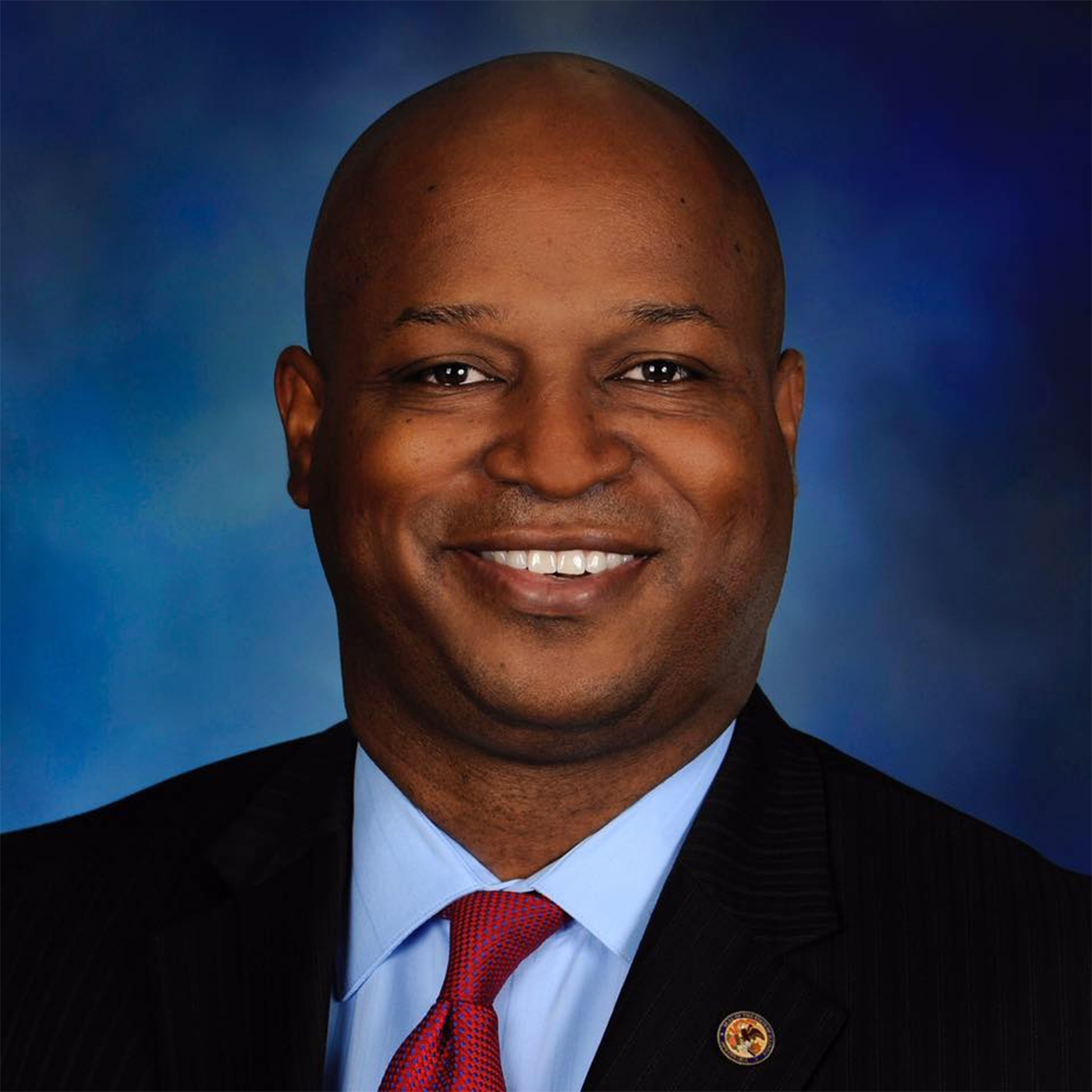
Investors, customers and employees are paying increasing attention to corporate diversity. That was true for gender in the wake of the #MeToo movement, and it has been increasingly true of race following the death of George Floyd in the U.S. But data is lacking, especially around racial and ethnic diversity. In this episode, we explore a first-of-its-kind diversity report that provides a much-needed window into corporate diversity. This new report is the result of an Illinois law that requires public companies headquartered in the state to report on the gender, racial and ethnic representation among corporate leaders and boards of directors. In March 2021, the University of Illinois used the disclosures from this law to publish the first report card evaluating how companies are faring on diversity. You can access the report here. We interview Illinois Speaker of the House Chris Welch, who sponsored the diversity law. He called the report "a goldmine of data." Speaker Welch said this data will help drive informed decisions. It will also put companies on public notice. "These companies spend a whole lot of money on their brands," he said. "Having this information out there, companies know that they can be publicly shamed. It shows where their values are, and their customers are paying attention." You can listen to our previous interview with Speaker Welch, from October 2020, here.

S3 Ep 6Banks' big green EU taxonomy challenge
Investors and banks have less than a year to comply with the European Union's new taxonomy for sustainable activities. In this episode, we explore the challenges financial institutions face in applying the taxonomy to their portfolios — something the Biden administration is sure to be watching as it tackles its own climate goals. Starting in January 2022 investors must explain how they use the taxonomy to assess the sustainability of their investments. They will also have to disclose what percentage of their investments are in line with the taxonomy. The new regulation is expected to radically change how investors and companies report on their environmental performance. We hear from Daniel Bouzas, a policy adviser at the European Banking Federation. We also talk to Hans Biemans, head of sustainable markets at Dutch bank ING Group, which took part in a recent study on how banks can apply the taxonomy to their lending. Photo credit: Getty Images

S3 Ep 5When climate science and business collide
Investor pressure is growing for companies and financial institutions to assess and disclose their exposure to climate risks such as wildfires, sea-level rise, hurricanes and other extreme weather events. But in a new report, a handful of climate scientists in Australia warn that many existing climate models are extremely nuanced and were not designed with a business-specific application in mind. In this episode of the ESG Insider podcast, we explore the challenges of using climate models in physical risk assessments. We speak with two authors of the report: Tanya Fiedler, who is a lecturer in the discipline of accounting at the University of Sydney, and Andy Pitman, a professor at the University of South Wales. We also talk with Steve Bullock, Global Head of ESG Product Innovation and Analytics at S&P Global Trucost. Trucost assesses risks relating to climate change and natural resource constraints with aim of translating those climate models and other data into information companies can use. Steve says financial market participants need some insight into the magnitude of these risks so that they can begin to take action. "Given the urgent need for action, having a blurry photograph of risk exposure is certainly better than having no visibility at all," Steve tells us.

S3 Ep 4Global stimulus funds fall short of boosting green economy
Over the last year, 30 of the world's richest countries have poured an unprecedented $14.9 trillion into stimulus spending to help revive their pandemic-hit economies. Some hoped that this massive wave of spending would turbo-charge investment in greener industries, such as electric cars, efficient buildings and renewable energy. But has that actually happened? In this episode of the ESG Insider podcast, we take a closer look at how much global stimulus spending has gone to fighting climate change or protecting the environment. The upshot, according to new research, is that stimulus measures are continuing to have a net negative impact on the environment, mainly because so much of spending is directed at more carbon intensive-industries such as transportation, agriculture and energy. Just 12% of overall stimulus spending is directed at the green economy. We talk to Jason Eis, executive director of Vivid Economics, a British research firm. Eis says there are signs that the "greenness" of stimulus spending is slowly improving, thanks in part to President Biden's plans to invest in a greener recovery. Photo credit: Getty Images
S3 Ep 3A deep dive into BlackRock's net-zero plan
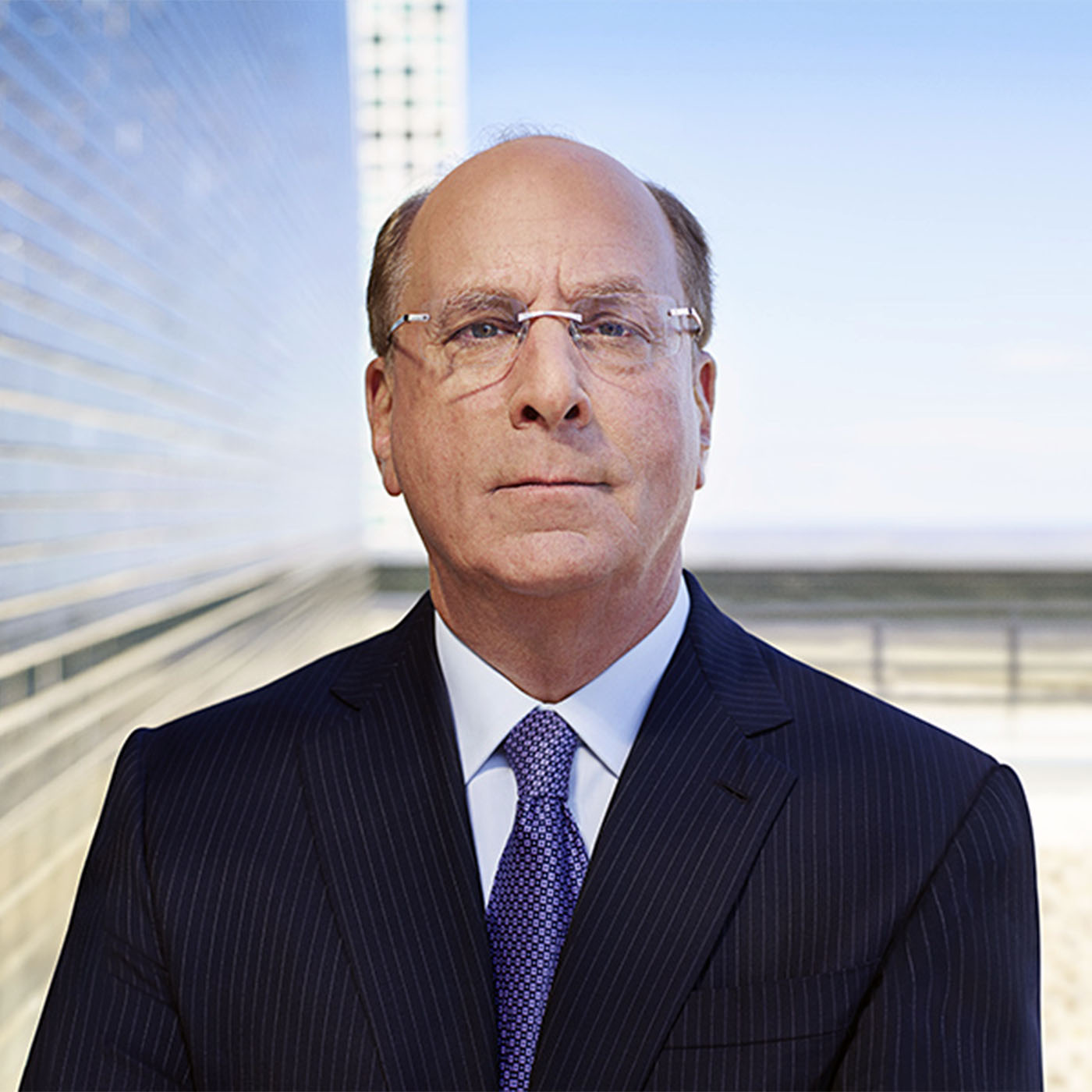
BlackRock CEO Larry Fink made waves in the ESG world last month by pushing companies to plan for a net-zero emissions future. His annual letter also committed to taking more concrete steps within BlackRock to enable the decarbonization transition. In this episode of the ESG Insider podcast, we dive into BlackRock's own net-zero strategy. We talk to experts about what it means and how much further the world's largest asset manager still needs to go. Fink has acknowledged that BlackRock has a carbon-intensive portfolio and is moving to change that. We'll hear from Kirsten Spalding, who leads the Investor Network at the sustainability-focused group Ceres. And we'll also hear from Moira Birss, who is Climate & Finance Director at Amazon Watch. Her group is part of a network of NGOs and finance advocates that are pressing asset managers like BlackRock to align their business practices with a climate-safe world. Photo credit: Getty Images
S3 Ep 2'Stakeholder capitalism,' the buzzword at Davos
Stakeholder capitalism — the idea that companies are responsible for their role in society in addition to making money for shareholders — has taken on new meaning thanks to COVID-19. It was the buzzword among major players in the ESG world like BlackRock CEO Larry Fink as well as heads of government at the Davos summit last week. In this episode of the ESG Insider podcast, we dive into stakeholder capitalism — what it means and what people were saying at the World Economic Forum's annual Davos gathering, which was virtual this year. You'll also hear an interview with the World Economic Forum's Project Lead for ESG, Emily Bayley. She describes the story behind a set of new stakeholder capitalism metrics that more than 60 major companies just agreed to use in their mainstream reporting, such as annual reports and proxy statements.

S3 Ep 1Biden transition brings wave of ESG uncertainty, opportunity
New U.S. President Joe Biden has made climate change a priority and is setting the nation on a much more sustainability-focused path than his predecessor. Just days into his term, Biden had already has taken dozens of executive actions, including rejoining the Paris agreement on climate change and ordering a review of rules the Trump administration finalized in the last days of its term. In the latest episode of S&P Global podcast ESG Insider, we talk to experts about what the change of administration and the inherent regulatory uncertainty mean for sustainability-minded companies and investors. We hear from Josh Zinner, CEO of the Interfaith Center on Corporate Responsibility. ICCR, a global coalition of institutional investors, engages with corporations on a wide range of ESG issues. Zinner said climate-minded investors take the long view and ignored the Trump administration's deregulatory agenda in the expectation that the pendulum would eventually swing back in their favor, which it now has under Biden. We talk to Alex Bond, one of the regulatory leads at the Edison Electric Institute, a trade group for investor-owned electric utilities in the U.S. Bond said the sector has been focused on climate for years and that utilities, like investors, take a long-term view. And we interview former bank regulator John Geiringer, who said that the tone in the financial sector was already shifting to take climate risk more seriously, even before the administration change. Photo source: Getty Images

S2 Ep 18The ESG trends that will drive 2021
In this final episode of 2020, we'll talk with experts about what key ESG themes they expect to unfold in 2021. State Street Global Advisors' EMEA Head of ESG Investment Strategy Carlo Funk outlines the firm's ESG priorities for the year ahead, while proxy advisory firm Glass Lewis' Director of ESG Research Courteney Keatinge describes why COVID-19 will continue to be a key theme behind shareholder engagement in 2021. Trillium Asset Management CEO Matt Patsky talks about the continued need for robust data and how the incoming Biden administration could establish disclosure requirements. And we hear from Jeff Hales, who chairs the Standards Board at the Sustainability Accounting Standards Board, or SASB. He talks about how COVID-19 altered the way companies and investors think about human capital management issues like worker mental health and paid sick leave. As a result, SASB is considering changing the way it measures human capital management in its industry-specific sustainability standards. Photo credit: Getty Images/Nora Carol Photography

S2 Ep 17Risky business: Investors seek meat industry changes amid COVID-19
This special pre-Thanksgiving episode puts a spotlight on the meat industry that is supplying the turkeys and other poultry, pork, fish, and beef products many Americans will be feasting on for the holiday. The meat industry has been hard hit by COVID-19, as the pandemic has exposed frailties in everything from supply chains to production processes and associated greenhouse gas emissions levels to worker safety. In the episode, we talk with Jeremy Coller, the founder of the industry activist group Farm Animal Investment Risk & Return, or FAIRR, about these weaknesses. Coller also discusses progress his group and investors have made in convincing companies to tackle these risks, and the continued challenges the sector faces. Photo credit: Getty Images

S2 Ep 16Financial regulators should act 'urgently' on climate, says CFTC commissioner
U.S. financial regulators need to step up in the fight against climate change, according to one of their own. Rostin Behnam, a commissioner at the U.S. Commodity Futures Trading Commission, talks to ESG Insider, an S&P Global podcast on environmental, social and governance issues, about a report released in September by a panel of nearly three dozen Wall Street, energy and sustainability executives and experts. In the report, the CFTC's Climate-Related Market Risk Subcommittee concluded that climate change poses a "major risk" to the stability of the American financial system and the broader economy. "U.S. financial regulators need to recognize this risk and move urgently and decisively to address" climate change," Behnam says in the episode. The landmark report included more than 50 recommendations calling on lawmakers and financial regulators across the U.S. to address climate risk. It has already sparked new conversations about the relationship between the financial industry and climate change. Oregon Senator Jeff Merkley, a Democrat, introduced legislation Oct. 21 that would ban financial companies from making new investments in fossil fuels, while citing the report from the CFTC subcommittee. And the New York Public Service Commission recently noted the CFTC panel's findings when discussing whether to require annual reports from major electric and gas utilities on their climate-related risks. "Climate change is not linear in many respects," Behnam said. "It's not comparable to a traditional financial analyst's work when they evaluate public companies or risk more generally. So we have to, both the public sector and the private sector, adapt to climate change over the years. Nothing is clearly predictable. We do have a sense that climate change will get worse if we don't change our patterns." Photo source: Busà Photography via Getty Images

S2 Ep 15The New 'Sandwich Generation': New York Hospital Exec Says Pandemic Will Force Rethink of Eldercare
Pictured is Pamela Sutton-Wallace and her two daughters. In this episode, we bring you an exclusive interview with Pamela Sutton-Wallace, a healthcare executive at a New York City hospital that is one of the largest in the U.S. She took on the role just weeks before the pandemic turned the city into a coronavirus hotspot. Sutton-Wallace shares her decades of personal and professional experience as a leader in the healthcare industry while raising her children. She tells us how she expects the coronavirus will change family leave policies. She talks about the guidance she gives to women looking to advance in their careers while balancing demands of childcare and caring for aging relatives. And she discusses the demands on the "sandwich generation" — adults caring for an aging parent who are also raising children or supporting them financially. Sutton-Wallace has two college-age daughters and her own mother lives with her. This is the second in a two-part series in which ESG Insider explores the ways corporate America is responding to COVID-19 and finding ways to retain employees. In the first part, we discussed research into gender, parental leave and family caregiving policies in the U.S. private sector, which S&P Global conducted in partnership with AARP.

S2 Ep 14How COVID-19 is forcing big changes for parents, family caregivers
In this special episode of the ESG Insider podcast, we explore how corporate America is responding to COVID-19 with new policies for employees caring for children and elderly relatives. S&P Global partnered with AARP to research how leave policies are evolving in the U.S. private sector as part of S&P Global's #ChangePays initiative, which produces research about the benefits of increasing women participation in the work force. In the episode we unpack that research, which found the pace of change has accelerated rapidly amid the pandemic. We also hear from women who are on the ground balancing childcare, virtual schooling and elder care alongside demanding careers amid the pandemic. The episode features interviews with Pamela Sutton-Wallace, an executive at New York-Presbyterian, one of the largest hospitals in the U.S.; Microsoft Corporate Vice President Rani Borkar; S&P Global Market Intelligence President Martina Cheung; and Arjuna Capital co-founder Natasha Lamb.

S2 Ep 13Duke Energy CEO explains new climate, environmental justice moves
Duke Energy Corp. President, CEO and board Chair Lynn Good sat down for an exclusive interview just hours after the electric utility company held its first ESG investor day on Oct. 9. Lynn talked to ESG Insider, an S&P Global podcast about environmental, social and governance issues, about Duke's evolving climate strategy. She also explained how the company is handling social issues ranging from racial tensions to working with customers who are struggling to pay their electric bills during the pandemic. At the ESG investor day event Duke announced several new initiatives including a methane emissions target, a climate-focused executive compensation metric and efforts to craft "principles for environmental justice." In the latest episode of the ESG Insider podcast, Lynn took a deeper dive into the compensation metric and environmental justice principles. She also defended the company's decision to build more natural gas plants despite having a net-zero emissions target. Lynn said that technologies such as battery storage are not where they need to be to make up for performance gaps in solar and wind. Therefore, "we see a need to use natural gas" to meet those needs — "probably in the medium term," , she said. But Lynn added that the company will continue to test that assumption as technologies develop. Lynn also said heightened racial tension in the U.S. is prompting Duke to reexamine diversity. Duke is "turning our attention into more rapid progression of minorities and women into the company into leadership in a way that this event has really catalyzed our good intentions to encourage us to move as quickly as we can," Lynn said. Photo source: Duke Energy

S2 Ep 12The 'name and shame' game: How 2 state laws tackle corporate racial diversity
Illinois and California have passed new corporate racial diversity laws to prod publicly traded companies to embrace racial diversity on their boards. In this episode of ESG Insider, an S&P Global podcast about environmental, social and governance issues, two of the lawmakers behind the bills explain why the move was needed and could have ramifications beyond their state borders. "Companies are responding to the public shame and making changes," Illinois State Representative Chris Welch said, explaining how the 2019 state law he sponsored requiring companies to report on their race metrics will be effective. "Public shaming works." In the U.S., the national dialogue has turned to race in 2020. Following the death of George Floyd while in police custody, companies have paid more attention to systemic racism and diversity in their own ranks. Investors are also increasingly talking about this topic as a human capital management issue. While the Illinois law does not mandate companies be racially diverse, it directs them to publicly disclose the racial, ethnic and gender diversity of their boards of directors by the end of this year. And then, starting in March 2021, the University of Illinois will publish a report card evaluating how companies are faring, which Welch said will be used to name and shame companies that are not up to snuff. "Everyone appreciates collecting data and making further decisions based on that data," Welch said. "I think this is going to become model legislation that you'll see in other states." California has also taken action to promote corporate board diversity. In the episode, we interview California Assemblyman Chris Holden, who co-authored a law passed in September of this year that expands the state's diversity requirements for the boards of publicly traded companies to include people who identify as being a part of a racial minority, an Indigenous community or the LGBTQ community. Holden said that companies should have no trouble finding qualified director candidates and noted that studies have shown companies with diverse boards generally perform better. The California law also includes a disclosure mandate. Specifically, it requires the California Secretary of State to track and publicly report compliance with the law as well as levy fines for noncompliance.

S2 Ep 11Walmart sustainability head talks climate change, supply chain strategy
The coronavirus has slammed the retail sector and caused many companies to go out of business. But the pandemic has been a catalyst for growth at Walmart Inc., one of the world's largest retailers. The company's e-commerce sales jumped 97% in the second quarter as consumers hibernated at home and relied increasingly on online shopping. That growth also means an expanding carbon footprint. In this special Climate Week episode of ESG Insider, an S&P Global podcast, we talk to Walmart's chief sustainability officer, Kathleen McLaughlin. She says the company is making significant strides toward the goals of Project Gigaton, its initiative to eliminate 1 billion metric tons of greenhouse gases by 2030. Walmart has enlisted more than 2,300 of its suppliers, including Unilever, Johnson & Johnson and Fruit of the Loom, to cut greenhouse gas emissions. "Our goal is to rewire the way that supply chains function so that the production of the products that all of use every day is actually sustainable," McLaughlin tells ESG Insider. Photo source: Walmart

S2 Ep 10Why one big asset manager dropped companies over lobbying
Companies that lobby against climate-friendly laws and policies are putting the overall goals of the Paris Agreement on climate change at risk and have a "weak recognition of the challenges ahead," Jan Erik Saugestad, CEO of Norway's largest private investment firm Storebrand Asset Management AS, said in an exclusive interview. In the latest episode of ESG Insider, an S&P Global podcast about environmental, social and governance issues, Saugestad talked about the new climate policy Storebrand Asset Management, a subsidiary of insurer Storebrand ASA, announced in August. Many banks and asset managers have announced plans to divest from carbon-intensive companies or cease financing certain fossil-fuel projects and companies, but Storebrand took its divestment strategy a step further. The Norwegian investment firm, which has more than $90 billion in assets under management, opted to exit investments in companies that it judged to have lobbied against climate change policies. The companies it divested from for alleged anti-climate lobbying practices include Exxon Mobil Corp., Chevron Corp. and Southern Co. Under its new policy, Storebrand also will no longer invest in companies that earn over 5% of their revenues from coal or oil sands, although Saugestad in the interview noted his firm has made some exceptions to that rule. The asset manager also plans to increase capital flows into low-carbon, climate-resilient and transition companies and provide clients with a range of sustainability and low-carbon funds to help them decarbonize their portfolios.