PLAY PODCASTS
All Creatures Podcast

All Creatures Podcast

599 episodes — Page 1 of 12

Backyard Conservation: The Preserver’s Garden with Stacy and Jeremy Hill

May 13, 202653 min

80 Left: The Fight to Save the Sumatran Rhino (Classic)

May 11, 20261h 8m

The Moment of Choice: Why Awareness Means Nothing Without Action

May 6, 202628 min

Dr Enric Sala Nat Geo Explorer-In-Residence (Classic)

May 4, 202659 min

Emperor Penguins: Super Dads on Melting Ice and the Urgent Call to Act

Apr 29, 20261h 9m

Jaguars: Apex Guardians of the Rainforest (Classic)

Apr 27, 20261h 15m

Extinction Begins with Silence: Apathy, Shifting Baselines, and Choosing to Act

Apr 22, 202628 min

Chinchillas: From Luxury Fur to the Edge of Extinction (Classic)

Apr 20, 20261h 4m

Noise Pollution Impacts on Birds w/Natalie Madden

Apr 15, 202645 min

The Truth About American Black Bears (Classic)

Apr 13, 20261h 2m

Migration Collapse: The Alarm Bells Are Ringing

Apr 8, 202652 min

Meerkats: The Tiny Sentinels Guarding the Desert (Revisited)
Apr 6, 20261h 2m

De-Extinction: A Scientist’s Perspective from Inside a Cloning Lab

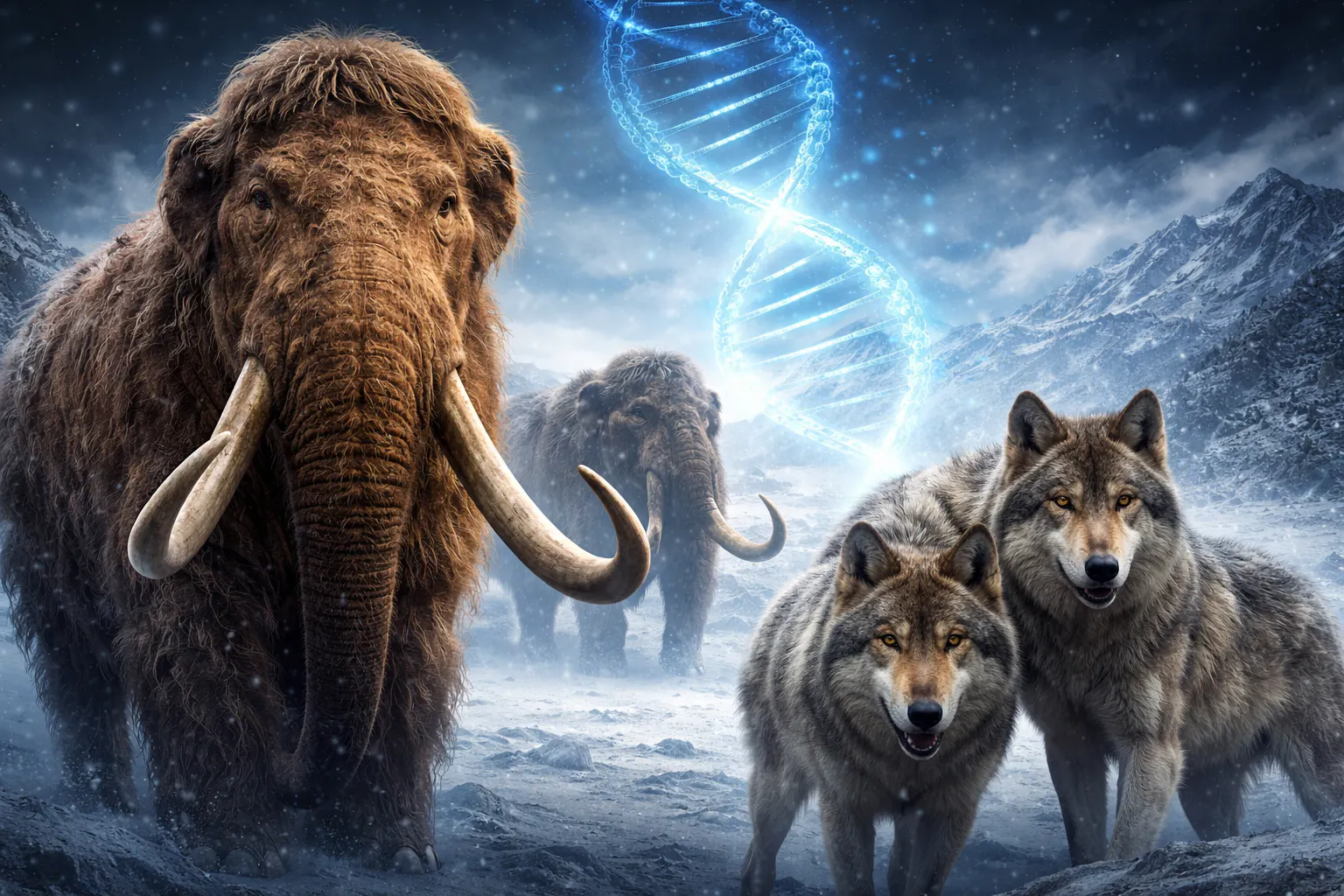
Chris draws on his PhD-era experience at Texas A&M—including meeting Dewey, the world’s first cloned deer—to unpack de-extinction and why cloning is far harder and less efficient than headlines suggest. He revisits Dolly’s breakthrough, explains somatic cell nuclear transfer, and highlights low success rates and frequent abnormalities. Chris explores the only true de-extinction attempt, the Pyrenean ibex, which survived only minutes, and explains why mammoths and “dire wolves” cannot be truly cloned due to fragmented DNA, with current efforts relying instead on genetic engineering. Chris also outlines major challenges around elephant egg sourcing, embryo transfer, and gestation, questions claims that mammoths could meaningfully impact climate change, and argues conservation resources are better directed toward protecting existing species, while acknowledging potential scientific benefits from the research. Timeline 00:00 Podcast Intro and De-Extinction 00:38 Meeting Dewey the Clone 03:31 Cloning Hype vs Reality 05:06 Elephant Repro Research Shift 07:02 Dolly and Cell Reset 10:22 How Cloning Works 15:46 Lab Data on Efficiency 20:50 De-Extinction Case Study Ibex 22:32 Why Mammoths Aren't Clones 26:40 Elephant Surrogates and Obstacles 30:36 Elephant Egg Retrieval 31:43 Lab Grown Gametes 32:33 Embryo Transfer Challenges 33:01 Welfare and Ethics 34:26 Climate Claims Debunked 36:28 Funding Priorities Debate 38:50 Real Conservation Wins 40:07 False Tech Fix Narrative 42:58 Forest Elephants Solution 47:01 Moonshot Case for Science 49:57 What De Extinction Delivers 52:02 Choose Protection Today =========================================================== Another thank you to all our Patreon supporters. You too can join for one cup of "good" coffee a month. With your pledge you can support your favorite podcast on Patreon and give back to conservation. With the funds we receive each month, we are have been sending money to conservation organizations monthly. We now send a check to every organization we cover, as we feel they all are deserving of our support. Thank you so much for your support and for supporting animal conservation. Please considering supporting us at Patreon HERE. We also want to thank you to all our listeners. We are giving back to every conservation organization we cover and you make that possible. We are committed to donating large portions of our revenue (at minimum 25%) to every organization we cover each week. Thank you for helping us to grow, and for helping to conserve our wildlife. Please contact us at [email protected] if you would like to advertise on our podcast You can also visit our website HERE. Learn more about your ad choices. Visit megaphone.fm/adchoices Learn more about your ad choices. Visit megaphone.fm/adchoices

Apr 1, 202658 min

Living Nightmares of the Deep: Anglerfish (Revisited)

Chris and Angie venture into the darkest depths of the ocean to meet one of the most bizarre and misunderstood creatures on Earth—the anglerfish. In this episode, we explore how these deep-sea predators survive in a world without light, using bioluminescent lures to hunt in the abyss. But it’s their reproduction that truly defies belief, featuring one of the most extreme mating strategies in the animal kingdom. We also unpack what anglerfish reveal about life in extreme environments and why the deep ocean, still largely unexplored, matters more than ever. =========================================================== Another thank you to all our Patreon supporters. You too can join for one cup of "good" coffee a month. With your pledge you can support your favorite podcast on Patreon and give back to conservation. With the funds we receive each month, we are have been sending money to conservation organizations monthly. We now send a check to every organization we cover, as we feel they all are deserving of our support. Thank you so much for your support and for supporting animal conservation. Please considering supporting us at Patreon HERE. We also want to thank you to all our listeners. We are giving back to every conservation organization we cover and you make that possible. We are committed to donating large portions of our revenue (at minimum 25%) to every organization we cover each week. Thank you for helping us to grow, and for helping to conserve our wildlife. Please contact us at [email protected] if you would like to advertise on our podcast You can also visit our website HERE. Learn more about your ad choices. Visit megaphone.fm/adchoices Learn more about your ad choices. Visit megaphone.fm/adchoices

Mar 30, 20261h 25m

Secrets of the Bees with Dr. Sammy Ramsey

Chris welcomes Dr. Sammy Ramsey (“Dr. Bugs”), entomologist at the University of Colorado Boulder, to discuss Secrets of the Bees (National Geographic, Disney+/Hulu). They explore surprising bee intelligence—from navigation using the sun to puzzle-solving, teaching, and even play—alongside fascinating behaviours like the waggle dance and swarm decision-making. Ramsey debunks common myths about honeybees and explains why they’re less aggressive than wasps. The episode also tackles colony collapse, ongoing hive losses, and the impact of varroa mites. He shares simple, practical ways people can help protect pollinators at home. Tune in on Nat Gro March 31, 2026 Disney+/HULU April 1, 2026 Dr. Ramey's website and socials can be found HERE Timeline 00:00 Welcome and Introductions 01:12 Why Bees Amaze Us 01:46 Tiny Brains Big Intelligence 02:52 Secrets of the Bees Visuals 04:03 Bees vs Wasps Misconceptions 07:24 Colony Collapse Explained 09:58 Annual Losses and Data Confusion 14:09 Bumblebee Lab Play and Puzzles 18:42 Insect Culture and Conservation 20:25 Inspiring Future Scientists 21:46 Why Bees Deserve Spotlight 22:01 Secrets Series Perspective Shift 23:39 Waggle Dance Explained 25:21 Honeybee Democracy Swarms 28:04 Varroa Mites Threat 31:41 Fighting Mites With Genetics 32:24 Help Pollinators At Home 35:51 Hope And Final Plug 37:19 Where To Follow Dr Sammy =========================================================== Another thank you to all our Patreon supporters. You too can join for one cup of "good" coffee a month. With your pledge you can support your favorite podcast on Patreon and give back to conservation. With the funds we receive each month, we are have been sending money to conservation organizations monthly. We now send a check to every organization we cover, as we feel they all are deserving of our support. Thank you so much for your support and for supporting animal conservation. Please considering supporting us at Patreon HERE. We also want to thank you to all our listeners. We are giving back to every conservation organization we cover and you make that possible. We are committed to donating large portions of our revenue (at minimum 25%) to every organization we cover each week. Thank you for helping us to grow, and for helping to conserve our wildlife. Please contact us at [email protected] if you would like to advertise on our podcast You can also visit our website HERE. Learn more about your ad choices. Visit megaphone.fm/adchoices Learn more about your ad choices. Visit megaphone.fm/adchoices

Mar 25, 202640 min

Monarch Butterfly- Revisited (Making a Comeback!)

Bringing back an older episode, but a classic! This week, great news as Monarch Butterfly winter populations have regained 60% of their population numbers vs previous years! Once again, conservation is proving to work and thus, we are releasing this older episode. Chris and Angie delve into their life cycle, migration patterns and unique 'super generation'. They also discuss the butterflies' ecological importance and the role they play in pollination and ecosystems. The hosts share their experiences of visiting a university's natural history museum and butterfly breeding program. With a focus on the alarming decline in the Monarch butterfly population, threats like climate change, pesticide use and habitat loss are highlighted. They also bring attention to active conservation organizations like Monarch Watch and the ESS Society, and promote involvement in citizen-science projects. They encourage listeners to contribute to butterfly conservation by planting pollinator gardens, with a forthcoming resource on suitable plants for different U.S regions. Podcast Timeline 00:50 Introduction and Welcome 00:59 Exploring the World of Insects 01:40The Significance of Monarch Butterflies 02:20 The Research and Preparation Process 02:37 The Passion for Learning about Creatures 03:06 The Fascinating Journey of Monarch Butterflies 04:28 The Importance of Insect Conservation 04:05 The Incredible Migration of Monarch Butterflies 04:42 The Monarch Butterfly in New Zealand 05:39 The Beauty and Importance of Monarch Butterflies 06:43 The Life Cycle of Monarch Butterflies 10:19 The Impact of Climate Change on Monarch Butterflies 15:27 The Role of Citizen Scientists in Monarch Conservation 32:13 The Evolution and Migration of Monarch Butterflies 42:24 The Mystery of Monarch Migration 43:10 Theories on Monarch Migration 44:26 Adaptation and Migration Patterns 44:48 Monarch Butterflies in New Zealand 45:20 The Fascinating Multi-Generational Relay Race 46:07 The Incredible Journey of Monarch Butterflies 53:32 The Monarch Butterfly Life Cycle 54:56 The Super Generation of Monarch Butterflies 57:02 The Intriguing Physiology of Monarch Butterflies 01:03:13 The Importance of Conservation Efforts 01:23:48 The Role of Citizen Science in Monarch Conservation 01:26:00 The Impact of Planting Pollinator Gardens ------------------------------------------------------ Another thank you to all our Patreon supporters. You too can join for one cup of "good" coffee a month. With your pledge you can support your favorite podcast on Patreon and give back to conservation. With the funds we receive each month, we are have been sending money to conservation organizations monthly. We now send a check to every organization we cover, as we feel they all are deserving of our support. Thank you so much for your support and for supporting animal conservation. Please considering supporting us at Patreon ⁠HERE⁠. We also want to thank you to all our listeners. We are giving back to every conservation organization we cover and you make that possible. We are committed to donating large portions of our revenue (at minimum 25%) to every organization we cover each week. Thank you for helping us to grow, and for helping to conserve our wildlife. Please contact us at ⁠[email protected]⁠ if you would like to advertise on our podcast You can also visit our website ⁠HERE.⁠ Learn more about your ad choices. Visit megaphone.fm/adchoices

Mar 23, 20261h 31m

Masters of Disguise: The Incredible Sea Dragons (From the Vault)

This was our 50th episode we did back in 2018. How far we have come over the years. Sea dragons are among the most extraordinary fish on Earth, found only in the temperate coastal waters of southern Australia. Close relatives of seahorses, species like the leafy, weedy, and ruby sea dragon drift through kelp forests and seagrass meadows disguised as floating seaweed. Their intricate, leaf-like appendages aren’t used for swimming but for camouflage, allowing them to vanish into their surroundings. And like seahorses, it’s the males who carry the eggs, brooding them externally until they hatch. Although they look mythical, sea dragons are very real — and increasingly vulnerable. They rely on healthy kelp forests and stable coastal ecosystems, which are under pressure from warming oceans, marine heatwaves, pollution, and habitat degradation. Because they are poor swimmers and highly specialized to their environments, they cannot easily relocate when conditions change. Protecting sea dragons means protecting entire underwater ecosystems that support rich marine biodiversity. =========================================================== Another thank you to all our Patreon supporters. You too can join for one cup of "good" coffee a month. With your pledge you can support your favorite podcast on Patreon and give back to conservation. With the funds we receive each month, we are have been sending money to conservation organizations monthly. We now send a check to every organization we cover, as we feel they all are deserving of our support. Thank you so much for your support and for supporting animal conservation. Please considering supporting us at Patreon HERE. We also want to thank you to all our listeners. We are giving back to every conservation organization we cover and you make that possible. We are committed to donating large portions of our revenue (at minimum 25%) to every organization we cover each week. Thank you for helping us to grow, and for helping to conserve our wildlife. Please contact us at [email protected] if you would like to advertise on our podcast You can also visit our website HERE. Learn more about your ad choices. Visit megaphone.fm/adchoices Learn more about your ad choices. Visit megaphone.fm/adchoices

Mar 16, 20261h 9m

The State of Nature in 2026: Crisis, Comebacks, and What Happens Next

Chris reflects on the state of nature in 2026, where conservation is defined by both loss and recovery. While habitat fragmentation, climate warming, coral bleaching, and Arctic instability continue, meaningful protection efforts are delivering results. He highlights conservation wins, including pandas downlisted to vulnerable, green sea turtles to least concern, tiger recovery in India through reserves and anti-poaching, Gabon’s protection of forest elephants for rainforest integrity and carbon storage, and community-led snow leopard conservation in Nepal. The episode also addresses ongoing losses, key drivers of biodiversity decline, global efforts like 30x30 and the High Seas Treaty, and practical ways listeners can help — from reducing consumption to supporting frontline conservation initiatives like Snow Leopard Sisters. 00:00 Welcome and Reality Check 00:46 Conservation Is Tension 02:40 Climate and Biodiversity Link 03:17 Resilience and Hope in Action 04:40 2026 Roadmap for Today 05:42 Big Wins Pandas and Turtles 07:55 India’s Wildlife Comeback 11:00 Gabon Forest Elephants 14:45 Snow Leopard Sisters Spotlight 19:44 Losses and Extinctions 24:25 Why Extinction Is Accelerating 27:45 Five Biggest Threats 29:46 Mainstream Momentum and 30x30 35:48 People Giving Hope 38:21 What You Can Do Now 42:43 Support Snow Leopard Conservancy 44:38 Final Call to Action Learn more about your ad choices. Visit megaphone.fm/adchoices

Mar 11, 202647 min

The Ostrich: Africa’s Feathered Giant (Revisited)

In this re-release, we revisit one of Africa’s most iconic species ,the Ostrich, the largest living bird on Earth. Native to sub-Saharan Africa, ostriches dominate open savannas and semi-arid landscapes with their towering height, powerful legs, and unmistakable presence. Though flightless, they are built for speed, capable of reaching up to 70 km/h (43 mph), making them the fastest birds on land. Ostriches are evolutionary marvels. They have only two toes per foot, a rare adaptation that increases stride efficiency and speed, and they lay the largest eggs of any living bird. Social and highly alert, they often live in loose groups and rely on keen eyesight to detect predators across vast plains. While some populations remain stable, wild ostriches face pressures from habitat loss and historical overhunting, reminding us that even the most formidable species depend on healthy ecosystems to endure. =========================================================== Another thank you to all our Patreon supporters. You too can join for one cup of "good" coffee a month. With your pledge you can support your favorite podcast on Patreon and give back to conservation. With the funds we receive each month, we are have been sending money to conservation organizations monthly. We now send a check to every organization we cover, as we feel they all are deserving of our support. Thank you so much for your support and for supporting animal conservation. Please considering supporting us at Patreon HERE. We also want to thank you to all our listeners. We are giving back to every conservation organization we cover and you make that possible. We are committed to donating large portions of our revenue (at minimum 25%) to every organization we cover each week. Thank you for helping us to grow, and for helping to conserve our wildlife. Please contact us at [email protected] if you would like to advertise on our podcast You can also visit our website HERE. Learn more about your ad choices. Visit megaphone.fm/adchoices Learn more about your ad choices. Visit megaphone.fm/adchoices

Mar 9, 20261h 12m

How Wildlife SOS Rescues and Rehabilitates India’s Wildlife

Chris sits down with Nikki Sharp, Executive Director of Wildlife SOS (US), to explore the organization’s frontline conservation and rescue work in India, with a special focus on Asian elephants. With only 35,000–40,000 Asian elephants remaining worldwide — and India home to roughly 60% of them — the species has declined significantly due to habitat loss, expanding infrastructure, and human-elephant conflict. Nikki shares how Wildlife SOS moved from ending India’s dancing bear practice to rescuing captive and wild elephants, supporting anti-poaching efforts, and protecting species from sloth bears to star tortoises. The episode highlights innovative solutions such as community WhatsApp alert systems and emerging AI tools to reduce train collisions, while also addressing the emotional realities of trauma in rescued elephants. The mission is clear: end elephant exploitation, reduce preventable deaths, and empower people everywhere to protect wildlife — starting with refusing elephant rides and supporting ethical conservation. Timeline 00:00 Meet Nikki Sharp 01:05 From Dinner to Mission 04:21 Why Asian Elephants Matter 05:11 Population Crash Explained 09:32 Why So Overlooked 11:03 Asian vs African Differences 14:54 Coexistence Solutions 17:50 Tech to Prevent Collisions 20:45 India Conservation Momentum 24:06 Elephant Rescue Realities 28:24 Manu Rescue Timeline 30:02 High Stakes Transport 32:55 Life at the Sanctuary 33:55 Trauma and Recovery Stories 38:00 Threats to Wild Elephants 40:35 Beyond Elephants Conservation Work 43:38 Welfare Meets Conservation 45:25 Next Decade Goals 47:52 How You Can Help 50:08 Where to Follow Wildlife SOS 50:33 Closing Thanks and Wrap =========================================================== Another thank you to all our Patreon supporters. You too can join for one cup of "good" coffee a month. With your pledge you can support your favorite podcast on Patreon and give back to conservation. With the funds we receive each month, we are have been sending money to conservation organizations monthly. We now send a check to every organization we cover, as we feel they all are deserving of our support. Thank you so much for your support and for supporting animal conservation. Please considering supporting us at Patreon HERE. We also want to thank you to all our listeners. We are giving back to every conservation organization we cover and you make that possible. We are committed to donating large portions of our revenue (at minimum 25%) to every organization we cover each week. Thank you for helping us to grow, and for helping to conserve our wildlife. Please contact us at [email protected] if you would like to advertise on our podcast You can also visit our website HERE. Learn more about your ad choices. Visit megaphone.fm/adchoices Learn more about your ad choices. Visit megaphone.fm/adchoices

Mar 4, 202654 min

Punch the Snow Monkey: Japan’s Winter Survivor (Re-Release)

Punch has taken the world by storm! As a Snow Monkey, Punch comes from a long line of survivors!! Snow monkeys, formally known as Japanese macaques, are the northernmost-living wild primates on Earth. Found across Japan’s mountainous forests, they endure freezing winters and deep snow — conditions no other non-human primate tolerates. Famous for bathing in hot springs, this behavior is learned socially within troops, highlighting their intelligence and cultural complexity. Although globally stable, snow monkeys face increasing pressures from habitat fragmentation, tourism management challenges, and climate shifts affecting snowfall and forest ecosystems. Their story is one of resilience and adaptation — but also a reminder that even the toughest species depend on stable environments to thrive. =========================================================== Another thank you to all our Patreon supporters. You too can join for one cup of "good" coffee a month. With your pledge you can support your favorite podcast on Patreon and give back to conservation. With the funds we receive each month, we are have been sending money to conservation organizations monthly. We now send a check to every organization we cover, as we feel they all are deserving of our support. Thank you so much for your support and for supporting animal conservation. Please considering supporting us at Patreon HERE. We also want to thank you to all our listeners. We are giving back to every conservation organization we cover and you make that possible. We are committed to donating large portions of our revenue (at minimum 25%) to every organization we cover each week. Thank you for helping us to grow, and for helping to conserve our wildlife. Please contact us at [email protected] if you would like to advertise on our podcast You can also visit our website HERE. Learn more about your ad choices. Visit megaphone.fm/adchoices Learn more about your ad choices. Visit megaphone.fm/adchoices

Mar 2, 20261h 13m

Aardvarks: Africa’s Nocturnal Ecosystem Engineers

Chris and Angie explore the remarkable aardvark—requested by John, a naturalist in Kentucky—highlighting this truly unique African mammal with no close living relatives. Built for an ant-and-termite diet, aardvarks use a 30 cm sticky tongue, enamel-free continuously growing teeth, and powerful claws to dig extensive burrows that shelter many other species, making them vital ecosystem engineers across sub-Saharan Africa. They cover fascinating adaptations (nostrils that seal shut while digging, an extraordinary sense of smell, bursts of speed up to 40 km/h), along with behavior, reproduction, and lifespan. Although listed as Least Concern by the IUCN, aardvarks face emerging pressure from climate-driven drought, which reduces insect prey and may be causing regional declines. The episode closes with conservation insights and ways listeners can support habitat protection efforts. Timline 00:00 Aardvark Teaser Intro 01:11 Why Aardvarks Matter 03:50 What Aardvarks Look Like 09:34 Size Range Habitat 11:32 Burrows Ecosystem Engineers 15:01 Climate Threats Energetics 24:18 Evolutionary Origins 28:17 Tube Teeth Convergence 31:40 Lifespan Zoo Care 32:48 Geriatric Animal Care 33:26 Aardvark Speed Secrets 34:54 Digging Like a Machine 37:28 Nose Physiology Deep Dive 40:26 Super Sniffer Rankings 43:51 Tongue Saliva and Gizzard 46:13 Ant Termite Defense Armor 49:47 Nocturnal Life and Social Cues 53:02 Breeding and Baby Aardvarks 58:54 Conservation and How to Help 01:02:37 Wrap Up and Call to Action =========================================================== Another thank you to all our Patreon supporters. You too can join for one cup of "good" coffee a month. With your pledge you can support your favorite podcast on Patreon and give back to conservation. With the funds we receive each month, we are have been sending money to conservation organizations monthly. We now send a check to every organization we cover, as we feel they all are deserving of our support. Thank you so much for your support and for supporting animal conservation. Please considering supporting us at Patreon HERE. We also want to thank you to all our listeners. We are giving back to every conservation organization we cover and you make that possible. We are committed to donating large portions of our revenue (at minimum 25%) to every organization we cover each week. Thank you for helping us to grow, and for helping to conserve our wildlife. Please contact us at [email protected] if you would like to advertise on our podcast You can also visit our website HERE. Learn more about your ad choices. Visit megaphone.fm/adchoices Learn more about your ad choices. Visit megaphone.fm/adchoices

Feb 25, 20261h 6m

Belugas Under Pressure: Climate Change, Noise & Survival

First release in 2020, we are re-releasing our Beluga Whale episode on rewind Monday. Beluga whales are among the most charismatic mammals of the Arctic — known as the “canaries of the sea” for their rich vocalizations and their striking white color. But populations like the critically endangered Cook Inlet belugas are declining due to climate change, industrial noise, pollution, and habitat disruption. Chris and Angie explore what makes belugas biologically unique — from their flexible necks to their ability to change facial expression — and why protecting Arctic ecosystems is vital for their future. A powerful reminder that what happens in the Arctic doesn’t stay in the Arctic. =========================================================== Another thank you to all our Patreon supporters. You too can join for one cup of "good" coffee a month. With your pledge you can support your favorite podcast on Patreon and give back to conservation. With the funds we receive each month, we are have been sending money to conservation organizations monthly. We now send a check to every organization we cover, as we feel they all are deserving of our support. Thank you so much for your support and for supporting animal conservation. Please considering supporting us at Patreon HERE. We also want to thank you to all our listeners. We are giving back to every conservation organization we cover and you make that possible. We are committed to donating large portions of our revenue (at minimum 25%) to every organization we cover each week. Thank you for helping us to grow, and for helping to conserve our wildlife. Please contact us at [email protected] if you would like to advertise on our podcast You can also visit our website HERE. Learn more about your ad choices. Visit megaphone.fm/adchoices Learn more about your ad choices. Visit megaphone.fm/adchoices

Feb 23, 20261h 17m

From Andean Mountains to Your Living Room: Guinea Pigs

Chris and Angie explore the fascinating world of guinea pigs (cavies), featuring a visit to Chris’s New Zealand pets, Thor and Prince, with special guest Pip. They unpack what makes guinea pigs unique — tailless rodents with continuously growing teeth, wide vision, sensitive hearing, and a grazing digestive system that requires constant hay and daily vitamin C. The episode dives into their South American wild relatives and conservation status (including the critically endangered Cavia intermedia), their 5,000–7,000-year domestication in the Andes, and their unexpected role in vitamin C and biomedical research. You’ll also learn why they’re social herd animals that should never live alone, plus practical care tips on housing, diet, temperature, and health. From popcorning and complex vocalizations to precocial babies and surprising physiology, this episode reveals why guinea pigs are far more biologically impressive than their “starter pet” reputation suggests. Follow and subscribe for more species deep dives from the All Creatures Podcast. Timeline 00:00 Welcome to the Guinea Pig Episode (Meet Thor & Prince!) 01:00 Angie’s Zookeeper Days & the Vitamin C Research That Hooked Her 03:32 What Guinea Pigs Look Like: Size, Fur Types, Teeth & Super-Wide Vision 06:33 Wild Cavy Relatives: South American Range & Conservation Status 09:20 Why Guinea Pigs Matter: Ecology, Scurvy Science & Great Classroom Pets 12:29 Domestication Story: Andes Origins, Culture, and How They Got the Name 17:53 Breeds & Selective Breeding: From Hairless to Long-Haired Peruvians 20:30 Guinea Pig Care Basics: Housing Space, Hay, Handling & Temperature 26:02 After the Break: Pip Joins with Thor—Diet, Pellets & Daily Routine 29:16 Meet Prince + Poop-Eating Explained, Vocalizations & Enrichment Tips 34:40 Wrapping Up with Pip, Thor & Prince (Goodbyes + Florida Talk) 35:14 Guinea Pig Evolution 101: Rodent Origins & Rafting to South America 38:05 Fun Facts: Lifespan, Speed Escapes & Surprising Swimming Skills 41:34 Senses & Physiology: Hearing Range, Color Vision, and Super-Fast Heart Rates 48:04 Digestion Deep Dive: Hindgut Fermentation, Diet, and Cecotrophy Explained 54:47 Behavior & Social Life: Herd Dynamics, Popcorning, and Enrichment 01:01:15 Talking Guinea Pigs: Wheeks, Purrs, Rumbles, and Teeth Chattering 01:05:36 Reproduction & Baby Pups: Gestation, Precocial Newborns, and Weaning 01:11:57 Responsible Ownership + Podcast Wrap-Up (Research, Rehoming, What’s Next) =========================================================== Another thank you to all our Patreon supporters. You too can join for one cup of "good" coffee a month. With your pledge you can support your favorite podcast on Patreon and give back to conservation. With the funds we receive each month, we are have been sending money to conservation organizations monthly. We now send a check to every organization we cover, as we feel they all are deserving of our support. Thank you so much for your support and for supporting animal conservation. Please considering supporting us at Patreon HERE. We also want to thank you to all our listeners. We are giving back to every conservation organization we cover and you make that possible. We are committed to donating large portions of our revenue (at minimum 25%) to every organization we cover each week. Thank you for helping us to grow, and for helping to conserve our wildlife. Please contact us at [email protected] if you would like to advertise on our podcast You can also visit our website HERE. Learn more about your ad choices. Visit megaphone.fm/adchoices Learn more about your ad choices. Visit megaphone.fm/adchoices

Feb 18, 20261h 17m

Empowering Snow Leopard Conservation with Community and Courage

Chris delves into the challenges and triumphs of snow leopard conservation with special guests Tshiring Lhamu Lama from Nepal and Ashleigh Lutz-Nelson, Executive Director of the Snow Leopard Conservancy. The discussion highlights the significance of protecting snow leopards, known as the 'Ghosts of the Mountain,' and the vital role local communities and women play in this effort. Tshiring shares her grassroots insights, emphasizing the balance between livestock protection and snow leopard conservation through innovative methods like predator-proof corrals and solar-powered lights. Ashleigh underscores the global and transboundary issues threatening these majestic cats and underscores the importance of community-driven efforts. The episode also explores the inspirational story behind the documentary 'Snow Leopard Sisters,' featuring Tshiring and Tenzing, and the profound impact of integrating traditional knowledge and spiritual practices in conservation. Tune in to learn about the power of community, the urgency of conservation, and how small actions can lead to big changes in preserving biodiversity. Snow Leopard Conservancy is HERE Fundraising Campaign for Snow Leopards HERE Timeline 00:00 Introduction to the All Creatures Podcast 00:54 Meet the Guests: Searing Lamu Lama and Ashley Lutz Nelson 01:23 Snow Leopard Conservation Efforts in Nepal 02:36 Challenges and Solutions in Snow Leopard Conservation 04:22 Empowering Local Youth and Community Involvement 06:18 The Role of Women in Conservation 09:00 Community-Driven Conservation Success Stories 17:36 Global Threats to Snow Leopards 27:19 Cultural and Spiritual Significance of Snow Leopards 29:22 The Healing Power of Nature 29:55 Traditional Knowledge and Snow Leopard Conservation 32:21 Inspiring the Younger Generation 34:50 The Making of Snow Leopard Sisters 43:25 Snow Leopard Population and Conservation Efforts 47:53 Final Thoughts and Call to Action =========================================================== Another thank you to all our Patreon supporters. You too can join for one cup of "good" coffee a month. With your pledge you can support your favorite podcast on Patreon and give back to conservation. With the funds we receive each month, we are have been sending money to conservation organizations monthly. We now send a check to every organization we cover, as we feel they all are deserving of our support. Thank you so much for your support and for supporting animal conservation. Please considering supporting us at Patreon HERE. We also want to thank you to all our listeners. We are giving back to every conservation organization we cover and you make that possible. We are committed to donating large portions of our revenue (at minimum 25%) to every organization we cover each week. Thank you for helping us to grow, and for helping to conserve our wildlife. Please contact us at [email protected] if you would like to advertise on our podcast You can also visit our website HERE. Learn more about your ad choices. Visit megaphone.fm/adchoices Learn more about your ad choices. Visit megaphone.fm/adchoices

Feb 11, 202656 min

Sloths Are One of Nature’s Greatest Survivors

Sloths are among the most extraordinary mammals on Earth—masters of energy efficiency, perfectly adapted to life in the treetops, and quietly unchanged for millions of years. Their slow movements, gentle faces, and calm presence have made them global icons of peace and patience, deeply loved across cultures. But behind their laid-back reputation lies a serious conservation story. Habitat loss, deforestation, and human encroachment are placing increasing pressure on many sloth populations, with some species now considered vulnerable or endangered. Their slow metabolism, once a survival advantage, makes them especially sensitive to rapid environmental change. In this episode, we revisit why sloths matter, not just because they’re adorable, but because they remind us that evolution doesn’t always reward speed. Sometimes, survival belongs to those who move gently, live lightly, and remain in balance with their world. =========================================================== Another thank you to all our Patreon supporters. You too can join for one cup of "good" coffee a month. With your pledge you can support your favorite podcast on Patreon and give back to conservation. With the funds we receive each month, we are have been sending money to conservation organizations monthly. We now send a check to every organization we cover, as we feel they all are deserving of our support. Thank you so much for your support and for supporting animal conservation. Please considering supporting us at Patreon HERE. We also want to thank you to all our listeners. We are giving back to every conservation organization we cover and you make that possible. We are committed to donating large portions of our revenue (at minimum 25%) to every organization we cover each week. Thank you for helping us to grow, and for helping to conserve our wildlife. Please contact us at [email protected] if you would like to advertise on our podcast You can also visit our website HERE. Learn more about your ad choices. Visit megaphone.fm/adchoices Learn more about your ad choices. Visit megaphone.fm/adchoices

Feb 9, 20261h 10m

Bearded Dragons: Care, Behavior, and Climate Challenges

Chris and Angie delve into the fascinating world of bearded dragons, particularly a beloved new addition to Angie's family. The duo discusses their personal experiences with caring for a bearded dragon, the reptile's natural behaviors, diet, and unique physiological traits. They highlight both the joys and challenges of keeping bearded dragons as pets, emphasizing the extensive care required. The conversation also covers the species' resilience in the wild, particularly against extreme heat and predators, as well as the impacts of climate change on their environment. Joined by Angie's son Xander, the episode provides charming insights into family life with a bearded dragon, touching upon the responsibilities shared in caring for these exotic pets. The episode concludes with discussions on conservation efforts and tips for prospective bearded dragon owners. 00:00 Introduction and Hosts 00:04 Meet the Bearded Dragon 01:39 Bearded Dragon Care Tips 03:20 Bearded Dragon Physiology and Behavior 05:20 Bearded Dragon Species and Habitat 12:45 Conservation and Ecological Role 16:13 Climate Change Impact 33:39 Special Guest: Pancake the Bearded Dragon 34:46 Xander's Insights on Bearded Dragon Care 41:06 Family and Nature 41:20 Introduction to Bearded Dragons 41:24 Reptile Evolution and Diversity 41:43 Unique Traits of Bearded Dragons 42:50 Bearded Dragon Behavior 52:32 Thermal Regulation and Adaptations 57:20 Diet and Feeding Habits 01:00:24 Predators and Survival 01:08:34 Reproduction and Parenting 01:13:50 Conservation and Pet Care 01:17:56 Conclusion and Final Thoughts =========================================================== Another thank you to all our Patreon supporters. You too can join for one cup of "good" coffee a month. With your pledge you can support your favorite podcast on Patreon and give back to conservation. With the funds we receive each month, we are have been sending money to conservation organizations monthly. We now send a check to every organization we cover, as we feel they all are deserving of our support. Thank you so much for your support and for supporting animal conservation. Please considering supporting us at Patreon HERE. We also want to thank you to all our listeners. We are giving back to every conservation organization we cover and you make that possible. We are committed to donating large portions of our revenue (at minimum 25%) to every organization we cover each week. Thank you for helping us to grow, and for helping to conserve our wildlife. Please contact us at [email protected] if you would like to advertise on our podcast You can also visit our website HERE. Learn more about your ad choices. Visit megaphone.fm/adchoices Learn more about your ad choices. Visit megaphone.fm/adchoices

Feb 4, 20261h 22m

Science of Forest Elephants w/Dr Daniella Chusyd

First released in early 2020, we are re releasing this episode, discussing the importance of research in the Critically Endangered Forest Elephant. In 2020 we caught Dr. Daniella Chusyd fresh from her research and travels in the Congo. Dr. Chusyd was out in the field when the coronavirus pandemic hit and had to hurry back to the United States. She shares with us her experiences in Africa studying Forrest Elephants from deep in the Congo. She gives a fascinating look at her life tracking and studying these mysterious elephants. Dr. Chusyd also explains her journey from her undergraduate studies, to becoming one of the few elephant researchers we have in the world. Her YouTube channel The Elephantologist can be found ⁠HERE⁠ You can support her research in Africa by going ⁠HERE.⁠ Then search for the "Elephant Research Fund" Show notes with some incredible images can be found ⁠HERE =========================================================== Another thank you to all our Patreon supporters. You too can join for one cup of "good" coffee a month. With your pledge you can support your favorite podcast on Patreon and give back to conservation. With the funds we receive each month, we are have been sending money to conservation organizations monthly. We now send a check to every organization we cover, as we feel they all are deserving of our support. Thank you so much for your support and for supporting animal conservation. Please considering supporting us at Patreon HERE. We also want to thank you to all our listeners. We are giving back to every conservation organization we cover and you make that possible. We are committed to donating large portions of our revenue (at minimum 25%) to every organization we cover each week. Thank you for helping us to grow, and for helping to conserve our wildlife. Please contact us at [email protected] if you would like to advertise on our podcast You can also visit our website HERE. Learn more about your ad choices. Visit megaphone.fm/adchoices Learn more about your ad choices. Visit megaphone.fm/adchoices

Feb 2, 20261h 16m

Fascinating World of Crayfish w/Dr. Zachary Graham

Angie dives into the intricate and essential world of crayfish, also known as crawfish or crawdads, with biologist and crayfish expert Dr. Zachary Graham. Dr. Graham, author of 'Crayfish, Crawfish, and Crawdads: The Biology and Conservation of North America's Favorite Crustaceans,' shares his journey from a childhood love of animals to becoming an expert in crayfish biology. He explains the importance of these crustaceans in freshwater ecosystems, their surprising diversity in colors, sizes, and habitats, and their intricate behaviors and interactions. The episode also touches on the conservation challenges crayfish face due to human impact and invasive species, providing listeners with actionable steps to support crayfish preservation and water health. Whether you're a biology enthusiast or simply curious about these lesser-known creatures, this episode is packed with intriguing facts and insights. Timeline 00:00 Introduction to the Podcast and Today's Topic 00:22 Meet Dr. Zachary Graham: Crayfish Expert 01:35 Zachary's Journey to Crayfish Research 10:16 Understanding Crayfish: Names and Diversity 15:48 The Ecological Importance of Crayfish 24:48 Crayfish Behavior and Sensory Systems 26:20 Crayfish Communication Through Urine 27:38 Unique Sensory Abilities of Crayfish 29:03 Crayfish Foraging and Feeding Habits 30:45 Conservation Challenges for North American Crayfish 32:50 Invasive Species and Their Impact 35:01 Freshwater Ecosystem Health 36:50 How to Help Crayfish Conservation 41:00 The Importance of Crayfish Diversity 45:29 Advice for Aspiring Biologists 48:59 Conclusion and Book Promotion =========================================================== Another thank you to all our Patreon supporters. You too can join for one cup of "good" coffee a month. With your pledge you can support your favorite podcast on Patreon and give back to conservation. With the funds we receive each month, we are have been sending money to conservation organizations monthly. We now send a check to every organization we cover, as we feel they all are deserving of our support. Thank you so much for your support and for supporting animal conservation. Please considering supporting us at Patreon HERE. We also want to thank you to all our listeners. We are giving back to every conservation organization we cover and you make that possible. We are committed to donating large portions of our revenue (at minimum 25%) to every organization we cover each week. Thank you for helping us to grow, and for helping to conserve our wildlife. Please contact us at [email protected] if you would like to advertise on our podcast You can also visit our website HERE. Learn more about your ad choices. Visit megaphone.fm/adchoices Learn more about your ad choices. Visit megaphone.fm/adchoices

Jan 28, 202655 min

Living Fossils in the Shadows: Malayan Tapirs

Tapirs are one of the world’s most unusual mammals, often described as a mix between a pig, elephant, and hippo. Yet, they’re actually related to horses and rhinos. The Malayan tapir stands out with its striking black-and-white coloring, flexible mini-trunk snout, and surprising ability to swim and dive. Shy and mostly nocturnal, tapirs are rarely seen, which only adds to their mystery. Beyond their odd looks, tapirs play a vital ecological role. They’re known as “gardeners of the forest,” dispersing large seeds across vast areas as they move through rainforests and rivers. Tapirs are also ancient survivors. Their lineage stretches back more than 50 million years, making them true living fossils. Despite outlasting ice ages and mass extinctions, the Malayan tapir is now Endangered, with habitat loss, road collisions, and fragmentation pushing populations into decline. This episode was originally released in 2021. Learn more about your ad choices. Visit megaphone.fm/adchoices

Jan 26, 20261h 5m

The Elephant We Nearly Lost: Africa’s Forgotten Forest Giant

Chris and Angie delve into the intricate world of the critically endangered forest elephant, exploring their unique behaviors, slow reproduction rates, and the devastating impact of poaching and habitat loss on their populations. With only approximately 80,000 left, the episode highlights the elephant’s critical role in rainforest ecosystems, emphasizing their impact on seed dispersion and carbon sequestration. The discussion also touches on conservation efforts, such as those by the Zoological Society of London in Cameroon, and the importance of global awareness and action in protecting these remarkable creatures. Efforts to educate listeners about the differences between forest and savannah elephants, including size, behavior, and ecological contributions, are thoroughly explored, underscoring the urgent need for protection and conservation. 00:00 Introduction to All Creatures Podcast 02:28 The Forest Elephant: A Unique Species 03:03 Population Decline and Conservation Efforts 03:27 Personal Encounters and Wildlife Cinematography 05:11 Physical Characteristics of Forest Elephants 19:47 Ecological Importance of Forest Elephants 31:44 Conservation Challenges and Success Stories 37:13 Evolutionary History of Elephants 40:33 Exploring Africa's Diverse Wildlife 41:48 Fascinating Facts About Forest Elephants 43:24 The Elusive Nature of Forest Elephants 44:33 Unique Physical Traits of Elephants 47:35 Elephants' Social and Behavioral Patterns 54:30 Forest Elephants' Seasonal Movements 59:06 Communication Among Forest Elephants 01:10:45 Reproductive Challenges of Forest Elephants 01:16:02 Conservation Efforts and Global Impact =========================================================== Another thank you to all our Patreon supporters. You too can join for one cup of "good" coffee a month. With your pledge you can support your favorite podcast on Patreon and give back to conservation. With the funds we receive each month, we are have been sending money to conservation organizations monthly. We now send a check to every organization we cover, as we feel they all are deserving of our support. Thank you so much for your support and for supporting animal conservation. Please considering supporting us at Patreon HERE. We also want to thank you to all our listeners. We are giving back to every conservation organization we cover and you make that possible. We are committed to donating large portions of our revenue (at minimum 25%) to every organization we cover each week. Thank you for helping us to grow, and for helping to conserve our wildlife. Please contact us at [email protected] if you would like to advertise on our podcast You can also visit our website HERE. Learn more about your ad choices. Visit megaphone.fm/adchoices Learn more about your ad choices. Visit megaphone.fm/adchoices

Jan 21, 20261h 23m

Fragile Future of Capuchin Monkeys

We released this episode originally in 2022 but is worth a relisten! Capuchin monkeys have long captured human imagination and for good reason. With complex social lives, remarkable problem-solving abilities, and some of the most sophisticated tool use seen outside of apes, capuchins challenge what we think intelligence in animals really means. In this episode, we dive deep into the world of capuchin monkeys, with a special focus on white-faced capuchins. We explore their behaviours, communication, culture, and cognition examining why many scientists consider them among the most intelligent monkeys on Earth. Out of the 22 recognised capuchin species, the majority are now facing population decline, habitat loss, and mounting extinction pressure. Understanding their intelligence makes their conservation all the more urgent. This episode is a reminder that intelligence isn’t uniquely human—and that some of our closest evolutionary mirrors are disappearing quietly in the forests of the Americas. If you’re fascinated by animal minds, behaviour, and what other species can teach us about ourselves, this is one not to miss. =========================================================== Another thank you to all our Patreon supporters. You too can join for one cup of "good" coffee a month. With your pledge you can support your favorite podcast on Patreon and give back to conservation. With the funds we receive each month, we are have been sending money to conservation organizations monthly. We now send a check to every organization we cover, as we feel they all are deserving of our support. Thank you so much for your support and for supporting animal conservation. Please considering supporting us at Patreon HERE. We also want to thank you to all our listeners. We are giving back to every conservation organization we cover and you make that possible. We are committed to donating large portions of our revenue (at minimum 25%) to every organization we cover each week. Thank you for helping us to grow, and for helping to conserve our wildlife. Please contact us at [email protected] if you would like to advertise on our podcast You can also visit our website HERE. Learn more about your ad choices. Visit megaphone.fm/adchoices Learn more about your ad choices. Visit megaphone.fm/adchoices

Jan 19, 20261h 19m

Humanity’s Greatest Partner: The Horse

Chris and Angie dive deep into the world of horses, marking 2026 as the Year of the Horse. They explore the monumental impact horses have had on human history, from their domestication over 5,000 years ago to their roles in warfare, transportation, and agriculture. Chris and Angie discuss the unique physiological and behavioral traits of horses that make them exceptional athletes and companions, their evolutionary history, and how they have influenced technology and human civilization. The episode also highlights therapeutic benefits provided by horses and their solid social dynamics, emphasizing their intricate communication skills and strong human bonds. The hosts share personal anecdotes and scientific insights, celebrating the profound connection between humans and horses. 00:00 Introduction and Hosts 00:40 The Significance of Horses in Human History 01:21 Personal Stories and Connections with Horses 03:40 Horses as a Technology and Their Global Impact 05:32 Domestication and Evolution of Horses 10:04 Feral Horses and Their Ecological Impact 11:25 Why Horses Matter Today 18:14 Comparing Horses to Other Domesticated Animals 33:36 The Unique Evolution of Odd-Toed Ungulates 38:24 The Evolutionary History of Horses 39:00 Understanding Equine Physiology 39:25 The Athleticism of Horses 41:28 The Role of Horses in Human History 43:41 Equine Anatomy and Physiology 54:20 The Unique Senses of Horses 01:02:43 Equine Behavior and Social Dynamics 01:08:47 The Horse-Human Bond 01:13:36 Equine Reproduction 01:17:54 The Lifespan and Impact of Horses 01:22:22 Celebrating the Year of the Horse =========================================================== Another thank you to all our Patreon supporters. You too can join for one cup of "good" coffee a month. With your pledge you can support your favorite podcast on Patreon and give back to conservation. With the funds we receive each month, we are have been sending money to conservation organizations monthly. We now send a check to every organization we cover, as we feel they all are deserving of our support. Thank you so much for your support and for supporting animal conservation. Please considering supporting us at Patreon HERE. We also want to thank you to all our listeners. We are giving back to every conservation organization we cover and you make that possible. We are committed to donating large portions of our revenue (at minimum 25%) to every organization we cover each week. Thank you for helping us to grow, and for helping to conserve our wildlife. Please contact us at [email protected] if you would like to advertise on our podcast You can also visit our website HERE. Learn more about your ad choices. Visit megaphone.fm/adchoices Learn more about your ad choices. Visit megaphone.fm/adchoices

Jan 14, 20261h 27m

Giants of Time: The Galápagos Tortoise

This episode dates back to 2020, but the Galápagos tortoise is one of the most iconic animals on Earth. Not only for its immense size and extraordinary lifespan, but for what it reveals about time, resilience, and the deep interconnectedness of life. These tortoises are true ecosystem engineers. As they move across the islands, they shape landscapes, create pathways, disperse seeds, and help maintain the balance between grasslands and forests. Many native plants rely on tortoises for survival. With lifespans exceeding 100 years, they are masters of survival, adapted to endure harsh conditions and long periods without food or water—embodying a slower, more efficient way of living. Today, Galápagos tortoises range from Vulnerable to Critically Endangered, depending on the population. While they were once pushed to the brink by overharvesting, habitat loss, and invasive species, long-term conservation efforts have helped several populations recover—one of conservation’s most hopeful success stories. =========================================================== Another thank you to all our Patreon supporters. You too can join for one cup of "good" coffee a month. With your pledge you can support your favorite podcast on Patreon and give back to conservation. With the funds we receive each month, we are have been sending money to conservation organizations monthly. We now send a check to every organization we cover, as we feel they all are deserving of our support. Thank you so much for your support and for supporting animal conservation. Please considering supporting us at Patreon HERE. We also want to thank you to all our listeners. We are giving back to every conservation organization we cover and you make that possible. We are committed to donating large portions of our revenue (at minimum 25%) to every organization we cover each week. Thank you for helping us to grow, and for helping to conserve our wildlife. Please contact us at [email protected] if you would like to advertise on our podcast You can also visit our website HERE. Learn more about your ad choices. Visit megaphone.fm/adchoices Learn more about your ad choices. Visit megaphone.fm/adchoices

Jan 12, 20261h 18m

Coexisting with Large Carnivores: Insights from Dr. Johnny Hanson

Chris engages in a profound discussion with Dr. Johnny Hanson, an environmental social scientist at Queen's University Belfast. Dr. Hanson, who has extensive experience in conservation and farming, shares his journey and insights from working on Snow Leopard conservation in Nepal and reintroducing large carnivores like lynx and wolves to the British Isles. They underscore the complexity of conservation, noting the importance of communication, long-term planning, compromise, and community-led initiatives. The conversation also emphasizes the role of ecotourism and financial compensation schemes in promoting coexistence between humans and wildlife. Dr Jonny Hanson Website HERE Timeline 00:00 Introduction and Guest Welcome 03:36 Dr. Hanson's Background and Early Influences 06:38 The Intersection of Conservation and Farming 08:03 Pivotal Moments and the Path to Nepal 11:44 Challenges and Realities of Conservation 16:59 Youth Perspectives on Reintroducing Carnivores 21:24 Cultural Perceptions and the Role of Media 26:05 Romanticizing and Demonizing Wildlife 27:20 Reintroducing Wolves and Lynx in the British Isles 28:58 Challenges and Debates on Lynx Reintroduction 29:47 Political and Social Aspects of Reintroduction 33:16 Ecological and Social Suitability for Reintroduction 35:54 Personal Experiences and Historical Context 36:49 Risks and Perceptions of Wolves 39:03 Comparing Conservation Models in Nepal 43:16 Financial Schemes and Ecotourism in Conservation 48:18 Hope and Principles for Coexistence 55:55 Conclusion and Final Thoughts =========================================================== Another thank you to all our Patreon supporters. You too can join for one cup of "good" coffee a month. With your pledge you can support your favorite podcast on Patreon and give back to conservation. With the funds we receive each month, we are have been sending money to conservation organizations monthly. We now send a check to every organization we cover, as we feel they all are deserving of our support. Thank you so much for your support and for supporting animal conservation. Please considering supporting us at Patreon HERE. We also want to thank you to all our listeners. We are giving back to every conservation organization we cover and you make that possible. We are committed to donating large portions of our revenue (at minimum 25%) to every organization we cover each week. Thank you for helping us to grow, and for helping to conserve our wildlife. Please contact us at [email protected] if you would like to advertise on our podcast You can also visit our website HERE. Learn more about your ad choices. Visit megaphone.fm/adchoices Learn more about your ad choices. Visit megaphone.fm/adchoices

Jan 7, 202656 min

Bison Brought Back From the Brink

We first released this episode in 2019 and the story of the Bison, hunted to near extinction, and then brought back is one you must not miss! Once numbering in the tens of millions, bison shaped the grasslands of North America through their movement, grazing, and sheer presence. Then, in the late 1800s, they were driven to the edge of extinction—reduced to fewer than 1,000 animals in just a few decades through industrial hunting, westward expansion, and the deliberate dismantling of Indigenous food systems. In this episode, we explore one of conservation’s most powerful comeback stories: how bison were brought back from the brink, and why their return matters far beyond the species itself. =========================================================== Another thank you to all our Patreon supporters. You too can join for one cup of "good" coffee a month. With your pledge you can support your favorite podcast on Patreon and give back to conservation. With the funds we receive each month, we are have been sending money to conservation organizations monthly. We now send a check to every organization we cover, as we feel they all are deserving of our support. Thank you so much for your support and for supporting animal conservation. Please considering supporting us at Patreon HERE. We also want to thank you to all our listeners. We are giving back to every conservation organization we cover and you make that possible. We are committed to donating large portions of our revenue (at minimum 25%) to every organization we cover each week. Thank you for helping us to grow, and for helping to conserve our wildlife. Please contact us at [email protected] if you would like to advertise on our podcast You can also visit our website HERE. Learn more about your ad choices. Visit megaphone.fm/adchoices Learn more about your ad choices. Visit megaphone.fm/adchoices

Jan 5, 20261h 9m

The Genius of Bats w/Dr Yossi Yovel

Angie welcomes Dr. Yoshi Jovel, an ecologist and neurobiologist, to discuss his new book 'The Genius Bat: The Secret Life of The Only Flying Mammal.' They delve into the fascinating world of bats, highlighting their intelligence, sophisticated social structures, and remarkable evolutionary traits. Dr. Jovel shares insights from his research, covering topics like echolocation, bat migration, and their robust immune systems. They also discuss the essential role bats play in ecosystems, the challenges they face due to human activities, and the importance of educating the public on bat conservation. 00:00 Introduction to the World of Bats 00:26 Meet Dr. Yoshi Jovel 01:58 Dr. Jovel's Background and Early Interests 04:46 Bats: Fascinating Facts and Misconceptions 10:51 The Importance of Bats in Ecosystems 13:56 Dr. Jovel's Multidisciplinary Approach 23:06 Echolocation: The Superpower of Bats 29:12 Understanding Doppler Shifts in Bats 30:35 AI and Bat Communication 33:29 Social Behavior and Navigation in Bats 39:22 Bats' Immune Systems and Their Secrets 44:27 Conservation Challenges and Efforts 51:36 Engaging the Public and Future Scientists =========================================================== Another thank you to all our Patreon supporters. You too can join for one cup of "good" coffee a month. With your pledge you can support your favorite podcast on Patreon and give back to conservation. With the funds we receive each month, we are have been sending money to conservation organizations monthly. We now send a check to every organization we cover, as we feel they all are deserving of our support. Thank you so much for your support and for supporting animal conservation. Please considering supporting us at Patreon HERE. We also want to thank you to all our listeners. We are giving back to every conservation organization we cover and you make that possible. We are committed to donating large portions of our revenue (at minimum 25%) to every organization we cover each week. Thank you for helping us to grow, and for helping to conserve our wildlife. Please contact us at [email protected] if you would like to advertise on our podcast You can also visit our website HERE. Learn more about your ad choices. Visit megaphone.fm/adchoices Learn more about your ad choices. Visit megaphone.fm/adchoices

Dec 31, 20251h 3m

Polar Bears: Eight Years On, What Have We Learned?

Chris and Angie revisiting one of their earlier subjects, the polar bear. They discuss significant changes in polar bear populations over the last eight years, focusing on the impact of climate change and sea ice loss on their habitat and survival. Updates on new data, changes in conservation status, and regional population trends are shared. The hosts also explore the adaptations, behaviors, and physiological traits that make polar bears unique, including their incredible sense of smell and swimming capabilities. Special guest John, Angie's husband, provides insights into managing polar bears under human care and the challenges involved. The episode ends on a hopeful note, highlighting positive global shifts in environmental policies and conservation efforts aimed at protecting polar bears and their ecosystem. Podcast Timeline 02:00 Introduction and Podcast Beginnings 02:08 Polar Bear Overview and Early Podcast Days 03:15 Polar Bear Adaptations and Climate Impact 04:23 Conservation Status and Regional Populations 05:55 Physical Characteristics and Habitat 09:18 Challenges of Climate Change 18:42 Energetics and Survival Strategies 31:46 Positive Conservation Efforts 36:00 Managing Polar Bears in Captivity 45:47 Ranking Carnivores: Polar Bears vs. Others 46:42 The Awe of Polar Bears: Up Close and Personal 48:56 The Importance of Protecting Polar Bears in the Wild 50:48 Evolution and Adaptations of Polar Bears 53:13 Polar Bears: Super Swimmers and Hunters 55:50 Polar Bear Physiology: Fur, Fat, and Survival 59:20 Polar Bear Behavior and Hunting Strategies 01:13:49 Polar Bear Reproduction: Mating and Maternal Care 01:21:00 Hope for Polar Bears: Conservation Efforts 01:23:56 Looking Forward: Future Episodes and Reflections =========================================================== Another thank you to all our Patreon supporters. You too can join for one cup of "good" coffee a month. With your pledge you can support your favorite podcast on Patreon and give back to conservation. With the funds we receive each month, we are have been sending money to conservation organizations monthly. We now send a check to every organization we cover, as we feel they all are deserving of our support. Thank you so much for your support and for supporting animal conservation. Please considering supporting us at Patreon HERE. We also want to thank you to all our listeners. We are giving back to every conservation organization we cover and you make that possible. We are committed to donating large portions of our revenue (at minimum 25%) to every organization we cover each week. Thank you for helping us to grow, and for helping to conserve our wildlife. Please contact us at [email protected] if you would like to advertise on our podcast You can also visit our website HERE. Learn more about your ad choices. Visit megaphone.fm/adchoices Learn more about your ad choices. Visit megaphone.fm/adchoices

Dec 24, 20251h 25m

Ghosts of the Ice Age: Raccoon Dogs

Going back to an old episode, this species warms our hearts! Raccoon dogs are one of the most unusual mammals on Earth. Often mistaken for raccoons, yet actually members of the dog family. Chris and Angie explore the deep evolutionary history of the raccoon dog, tracing its origins back millions of years to ancient canids that survived dramatic climate shifts and mass extinctions. We unpack how raccoon dogs evolved their distinctive traits, including their masked faces, omnivorous diet, and rare ability among canids to hibernate. We also examine their current conservation status, the challenges they face across parts of their native and introduced ranges, and why they are often misunderstood or overlooked in conservation conversations. From Ice Age survivors to modern ecological players, this episode reveals why raccoon dogs are truly special and why they deserve our curiosity, respect, and care. =========================================================== Another thank you to all our Patreon supporters. You too can join for one cup of "good" coffee a month. With your pledge you can support your favorite podcast on Patreon and give back to conservation. With the funds we receive each month, we are have been sending money to conservation organizations monthly. We now send a check to every organization we cover, as we feel they all are deserving of our support. Thank you so much for your support and for supporting animal conservation. Please considering supporting us at Patreon HERE. We also want to thank you to all our listeners. We are giving back to every conservation organization we cover and you make that possible. We are committed to donating large portions of our revenue (at minimum 25%) to every organization we cover each week. Thank you for helping us to grow, and for helping to conserve our wildlife. Please contact us at [email protected] if you would like to advertise on our podcast You can also visit our website HERE. Learn more about your ad choices. Visit megaphone.fm/adchoices Learn more about your ad choices. Visit megaphone.fm/adchoices

Dec 15, 20251h 19m

It’s Christmas… Island’s Red Crab!

Chris and Angie dive into the fascinating world of the Christmas Island Red Crab. They paint a vivid picture of waking up to find your entire town overtaken by millions of migrating red crabs. The duo explores the ecological significance, behaviors, and extraordinary migration journey of these crabs. They delve into the unique ecosystem of Christmas Island, an Australian territory teeming with various land and marine crab species, and discuss the conservation efforts to protect the Christmas Island red crab. The episode also touches on the physiological adaptations these crabs have developed to survive on land, their epic migration for reproductive purposes, and the community's involvement in helping these crabs during their journey. They share their personal reflections and thank listeners for their continued support, encouraging them to join various social media groups for more conservation discussions. Podcast Timeline 02:00 Introduction and Hosts 02:03 The Christmas Island Red Crab Phenomenon 02:54 Christmas Island: A Crab Paradise 05:06 Podcast Community and Support 06:21 Diving into Crab Anatomy 09:47 Crab Size Comparisons 19:26 Invasive Species and Conservation Efforts 31:55 Evolution of Land Crabs 39:02 Island Gigantism vs. Dwarfism 41:23 Crab Lifespan and Reproduction 42:32 Crab Speed and Movement 44:34 Surviving on Land: Hydration and Moisture 58:33 Crab Migration and Environmental Cues 01:10:18 Conclusion and Conservation =========================================================== Another thank you to all our Patreon supporters. You too can join for one cup of "good" coffee a month. With your pledge you can support your favorite podcast on Patreon and give back to conservation. With the funds we receive each month, we are have been sending money to conservation organizations monthly. We now send a check to every organization we cover, as we feel they all are deserving of our support. Thank you so much for your support and for supporting animal conservation. Please considering supporting us at Patreon HERE. We also want to thank you to all our listeners. We are giving back to every conservation organization we cover and you make that possible. We are committed to donating large portions of our revenue (at minimum 25%) to every organization we cover each week. Thank you for helping us to grow, and for helping to conserve our wildlife. Please contact us at [email protected] if you would like to advertise on our podcast You can also visit our website HERE. Learn more about your ad choices. Visit megaphone.fm/adchoices Learn more about your ad choices. Visit megaphone.fm/adchoices

Dec 10, 20251h 15m

Buttered Popcorn in the Canopy: World of the Binturong

The binturong (often called the “bearcat”) is one of Asia’s most unusual and enchanting mammals. With a prehensile tail like a monkey, the waddling stride of a small bear, and a face full of whiskers, this elusive forest dweller is unlike anything else on Earth. Known for smelling like buttered popcorn, binturongs glide silently through the canopy, playing a vital role in their ecosystems as seed dispersers, especially for strangler figs that many forest species depend on. But behind their charm lies a serious conservation story. Across Southeast Asia, binturong populations are declining due to habitat loss, deforestation, and the illegal wildlife trade. They’re currently listed as Vulnerable, with some regional populations now considered Endangered. As forests shrink, so does the world of the binturong and with them, the health of the ecosystems they help sustain. In this episode, we revisit our 2022 release and explore what makes binturongs so extraordinary, what threatens their survival, and why their protection matters not only for biodiversity but for the future of Asia’s rainforests. =========================================================== Another thank you to all our Patreon supporters. You too can join for one cup of "good" coffee a month. With your pledge you can support your favorite podcast on Patreon and give back to conservation. With the funds we receive each month, we are have been sending money to conservation organizations monthly. We now send a check to every organization we cover, as we feel they all are deserving of our support. Thank you so much for your support and for supporting animal conservation. Please considering supporting us at Patreon HERE. We also want to thank you to all our listeners. We are giving back to every conservation organization we cover and you make that possible. We are committed to donating large portions of our revenue (at minimum 25%) to every organization we cover each week. Thank you for helping us to grow, and for helping to conserve our wildlife. Please contact us at [email protected] if you would like to advertise on our podcast You can also visit our website HERE. Learn more about your ad choices. Visit megaphone.fm/adchoices Learn more about your ad choices. Visit megaphone.fm/adchoices

Dec 9, 20251h 10m

Snowy Albatross: Master of the Southern Ocean Skies

Chris and Angie dive into the fascinating world of the Snowy Albatross, also known as the Wandering Albatross. They discuss Chris's recent unforgettable trip, where he observed various species of albatrosses at sea, igniting a newfound admiration for these magnificent birds. The episode covers the Snowy Albatross's impressive wingspan, its remarkable ability to travel thousands of kilometers, and the extraordinary long-distance flights it undertakes. They delve into its superb navigational skills, primarily guided by an exceptional sense of smell. Sadly, the conversation also touches on the critical threats to albatross populations, including longline fishing, plastic pollution, and invasive species on breeding islands. The podcast highlights conservation efforts and organizations dedicated to saving these birds, stressing the importance of global collaboration and local actions. Listeners are encouraged to participate in bird-watching and support conservation initiatives to help the Snowy Albatross and other endangered seabirds. Podcast Timeline 02:00 Introduction to the Creatures Podcast 02:22 Chris's Albatross Adventure 03:04 Albatross Facts and Features 03:56 Conservation Concerns 06:11 Shoutout to Josh Carter and Rescuers 09:04 Albatross Species and Observations 16:39 The Importance of Albatross Conservation 32:18 Birdwatching and Citizen Science 36:02 Albatross Evolution and History 43:18 The Evolution of Albatrosses 43:49 The Threat of Extinction 44:18 Longevity and Reproduction 45:17 Flight Mechanics and Speed 49:20 Navigation and Super Senses 54:07 Feeding Habits and Hunting Techniques 01:05:35 Breeding and Nesting 01:21:10 Conservation Efforts and Hope 01:23:27 Final Thoughts and Call to Action =========================================================== Another thank you to all our Patreon supporters. You too can join for one cup of "good" coffee a month. With your pledge you can support your favorite podcast on Patreon and give back to conservation. With the funds we receive each month, we are have been sending money to conservation organizations monthly. We now send a check to every organization we cover, as we feel they all are deserving of our support. Thank you so much for your support and for supporting animal conservation. Please considering supporting us at Patreon HERE. We also want to thank you to all our listeners. We are giving back to every conservation organization we cover and you make that possible. We are committed to donating large portions of our revenue (at minimum 25%) to every organization we cover each week. Thank you for helping us to grow, and for helping to conserve our wildlife. Please contact us at [email protected] if you would like to advertise on our podcast You can also visit our website HERE. Learn more about your ad choices. Visit megaphone.fm/adchoices Learn more about your ad choices. Visit megaphone.fm/adchoices

Dec 3, 20251h 25m

Rescuing the Antipodes: How Rodent Eradication Saved an Island Ecosystem

We are going way back to Episode 49! An early interview but an important one. All about how conservationists are working hard to eradicate invasive species on some of our remotest islands on Earth. Chris interviewed Theo Van Noort in 2018, who was a Research Associate at the New Zealand Institute of Plant and Food Research. He worked on entomology, bombiculture and crop pollination. His Master’s research at the University of Auckland examined invasive wasp populations and their effect on pollination. Theo shares his trip to the Antipodes Islands in 2018 to evaluate the effectiveness of the Million Dollar Mouse Project, its ability to eradicate any rodents and also evaluating the work on rehabilitating insect populations. Show notes ⁠HERE⁠ =========================================================== Another thank you to all our Patreon supporters. You too can join for one cup of "good" coffee a month. With your pledge you can support your favorite podcast on Patreon and give back to conservation. With the funds we receive each month, we are have been sending money to conservation organizations monthly. We now send a check to every organization we cover, as we feel they all are deserving of our support. Thank you so much for your support and for supporting animal conservation. Please considering supporting us at Patreon HERE. We also want to thank you to all our listeners. We are giving back to every conservation organization we cover and you make that possible. We are committed to donating large portions of our revenue (at minimum 25%) to every organization we cover each week. Thank you for helping us to grow, and for helping to conserve our wildlife. Please contact us at [email protected] if you would like to advertise on our podcast You can also visit our website HERE. Learn more about your ad choices. Visit megaphone.fm/adchoices Learn more about your ad choices. Visit megaphone.fm/adchoices

Dec 1, 202553 min

At Last: The Prehistoric Planet Ice Age We Dreamed Of

We have asked someone, somewhere to make a show about all these incredible ancient animals, and here it is! Chris introduces Mike Gunton, the executive producer of the upcoming Apple TV series 'Prehistoric Planet: Ice Age'. They discuss the inspiration, challenges, and production process behind the series, which brings to life fantastical Ice Age creatures through groundbreaking visual effects merged with real-world landscapes. The conversation covers specific extinct species featured in the series, the scientific methodologies applied, and the emotional impact of witnessing these ancient animals in their natural habitats. The episode provides a unique peek into the technical and narrative elements that make 'Prehistoric Planet: Ice Age' a compelling watch. Podcast Timeline 02:00 Introduction to Our Creatures Podcast 02:53 Meet the Executive Producer: Mike Gunton 03:42 The Evolution of Prehistoric Planet 06:37 Challenges of Recreating Ice Age Mammals 05:55 Scientific Insights and Realism in Filmmaking 11:48 The Emotional Connection to Extinct Creatures 17:14 Environmental Changes and Extinction 22:42 Choosing the Species to Feature 23:08 Crafting the Narrative: Building Stories with Unique Creatures 26:35 The Power of Family and Social Bonds in Animal Stories 28:53 The Art of Filming: Blending CGI with Realism 32:55 Collaborating with John Favreau: Balancing Drama and Realism 34:22 Jaw-Dropping Moments: Bringing History to Life 37:15 The Importance of Science Explainers 40:41 Concluding Thoughts and Future Prospects =========================================================== Another thank you to all our Patreon supporters. You too can join for one cup of "good" coffee a month. With your pledge you can support your favorite podcast on Patreon and give back to conservation. With the funds we receive each month, we are have been sending money to conservation organizations monthly. We now send a check to every organization we cover, as we feel they all are deserving of our support. Thank you so much for your support and for supporting animal conservation. Please considering supporting us at Patreon HERE. We also want to thank you to all our listeners. We are giving back to every conservation organization we cover and you make that possible. We are committed to donating large portions of our revenue (at minimum 25%) to every organization we cover each week. Thank you for helping us to grow, and for helping to conserve our wildlife. Please contact us at [email protected] if you would like to advertise on our podcast You can also visit our website HERE. Learn more about your ad choices. Visit megaphone.fm/adchoices Learn more about your ad choices. Visit megaphone.fm/adchoices

Nov 26, 202542 min

Tuatara: A Window Into the Age of Dinosaurs

Chris and Angie step back into deep time with us as we revisit one of our most fascinating episodes, New Zealand’s iconic tuatara. Often called a “living fossil,” the tuatara isn’t just another reptile; it’s the sole surviving member of an ancient lineage that walked the Earth alongside dinosaurs. In this episode, we explore what makes the tuatara truly extraordinary, from its third “parietal” eye to its incredibly slow growth and one-of-a-kind evolutionary history. We dive into its natural habitat, behaviours, and ecological role, and highlight why its story matters now more than ever. You’ll also hear about ongoing conservation efforts that are helping tuatara reclaim parts of their former range, offering hope for one of the world’s most ancient species. Whether you love evolutionary biology, unique wildlife stories, or New Zealand’s incredible biodiversity, this episode is a must-listen. Tune in and rediscover the magic of the tuatara—an animal that has survived for over 200 million years and continues to inspire conservation today. =========================================================== Another thank you to all our Patreon supporters. You too can join for one cup of "good" coffee a month. With your pledge you can support your favorite podcast on Patreon and give back to conservation. With the funds we receive each month, we are have been sending money to conservation organizations monthly. We now send a check to every organization we cover, as we feel they all are deserving of our support. Thank you so much for your support and for supporting animal conservation. Please considering supporting us at Patreon HERE. We also want to thank you to all our listeners. We are giving back to every conservation organization we cover and you make that possible. We are committed to donating large portions of our revenue (at minimum 25%) to every organization we cover each week. Thank you for helping us to grow, and for helping to conserve our wildlife. Please contact us at [email protected] if you would like to advertise on our podcast You can also visit our website HERE. Learn more about your ad choices. Visit megaphone.fm/adchoices Learn more about your ad choices. Visit megaphone.fm/adchoices

Nov 24, 20251h 3m

Our Cats’ Wild Origins: The African Wildcat

Chris and Angie explore the fascinating origins of modern house cats by delving into the African Wildcat's history and features. The discussion highlights the wildcat’s behavior, physiology, and domestication journey that began over 10,000 years ago, leading to the friendly felines many have as pets today. They cover the super-sensory abilities of these wild cats, their role in ecosystems, and the challenges they face, such as habitat loss and hybridization with domestic cats. The duo also touches on important conservation efforts and the differences between wild African Wildcats and common domestic cats, emphasizing the complex dynamics and importance of these remarkable creatures. Podcast Timeline 02:00 Introduction to the Podcast 02:07 The African Wildcat: Origins and Domestication 04:00 YouTube Announcement and Personal Stories 07:17 Physical Characteristics of the African Wildcat 11:40 The African Wildcat's Range and Habitat 15:34 The Role of Cats in Human History 25:38 The Impact of Feral Cats on Wildlife 32:22 Evolution and Lineage of the African Wildcat 37:57 Guessing the Age of the Oldest Cat 38:28 Cream Puff and Grandpa Rex Allen: Record-Breaking Cats 39:01 The Secret to Long-Lived Cats 39:37 Indoor vs. Outdoor Cats: Lifespan Differences 40:05 Speed and Agility of Wildcats 41:04 Surviving Extreme Heat: Wildcats' Adaptations 43:32 Super Senses: Hearing, Sight, and Smell 46:09 The Unique Purring Mechanism of Wildcats 49:32 Flexibility and Agility: The Anatomy of Cats 51:22 Whiskers: The Built-In Sensors 52:22 Hunting and Survival Strategies 59:38 Breeding and Raising Kittens 01:06:41 Conservation and Threats to Wildcats 01:09:26 Why Wildcats Don't Make Good Pets 01:10:00 Adopting and Caring for Domestic Cats =========================================================== Another thank you to all our Patreon supporters. You too can join for one cup of "good" coffee a month. With your pledge you can support your favorite podcast on Patreon and give back to conservation. With the funds we receive each month, we are have been sending money to conservation organizations monthly. We now send a check to every organization we cover, as we feel they all are deserving of our support. Thank you so much for your support and for supporting animal conservation. Please considering supporting us at Patreon HERE. We also want to thank you to all our listeners. We are giving back to every conservation organization we cover and you make that possible. We are committed to donating large portions of our revenue (at minimum 25%) to every organization we cover each week. Thank you for helping us to grow, and for helping to conserve our wildlife. Please contact us at [email protected] if you would like to advertise on our podcast You can also visit our website HERE. Learn more about your ad choices. Visit megaphone.fm/adchoices Learn more about your ad choices. Visit megaphone.fm/adchoices

Nov 19, 20251h 12m

Pronghorn: North America’s Speed Champion Revisited

Step back into one of our favourite stories from the wild as we revisit the extraordinary pronghorn , one of North America’s most unique and misunderstood mammals. Chris and Angie explore the physiology that makes them the continent’s unrivalled speedsters, trace their deep evolutionary history alongside now-extinct predators, and look at the conservation journey that helped bring their numbers back from the brink. Their story is a powerful reminder of why protecting open landscapes and wildlife corridors matters now more than ever. Tune in to rediscover why pronghorns still hold such an important place in the ecosystems they call home. This episode was first released in January 2021 and wanted to bring them back into the spotlight. =========================================================== Another thank you to all our Patreon supporters. You too can join for one cup of "good" coffee a month. With your pledge you can support your favorite podcast on Patreon and give back to conservation. With the funds we receive each month, we are have been sending money to conservation organizations monthly. We now send a check to every organization we cover, as we feel they all are deserving of our support. Thank you so much for your support and for supporting animal conservation. Please considering supporting us at Patreon HERE. We also want to thank you to all our listeners. We are giving back to every conservation organization we cover and you make that possible. We are committed to donating large portions of our revenue (at minimum 25%) to every organization we cover each week. Thank you for helping us to grow, and for helping to conserve our wildlife. Please contact us at [email protected] if you would like to advertise on our podcast You can also visit our website HERE. Learn more about your ad choices. Visit megaphone.fm/adchoices Learn more about your ad choices. Visit megaphone.fm/adchoices

Nov 17, 20251h 5m

Exploring Environmental Crisis and Hope w/ Elizabeth Kolbert

Chris interviews renowned environmental journalist and author Elizabeth Kolbert. They discuss her impactful books, 'The Sixth Extinction' and the upcoming 'Life on a Little Known Planet,' which highlight the global biodiversity crisis caused by human activity. Elizabeth shares stories from her travels around the world, including Greenland, New Zealand, and Florida, examining environmental challenges and the resilience of nature. The conversation covers pressing topics like climate change, species extinction, and innovative scientific efforts to combat these issues. Despite the grim realities, the episode emphasizes the importance of continued scientific research, public awareness, and policy changes to foster hope and drive positive environmental action. Podcast Timeline 02:00 Introduction and Guest Welcome 02:12 Elizabeth Colbert's Impactful Work 04:24 Discussing 'The Sixth Extinction' 05:06 Hope and Inspiration in 'Life on a Little Known Planet' 07:37 The Importance of Every Species 11:22 Climate Change and Its Impact 15:30 AI and Conservation 19:01 Greenland's Melting Ice Sheets 24:19 Innovative Scientific Solutions 26:27 Challenges in Scientific Research 27:08 The Importance of Science Funding 30:13 Beekeeping Adventures and Challenges 32:02 Colony Collapse Disorder 35:30 Impact of Colonization on New Zealand's Wildlife 38:05 Conservation Efforts in New Zealand 42:01 Rights for Nature Movement 44:44 Reflections on Environmental Journalism 49:20 Final Thoughts and Book Promotion =========================================================== Another thank you to all our Patreon supporters. You too can join for one cup of "good" coffee a month. With your pledge you can support your favorite podcast on Patreon and give back to conservation. With the funds we receive each month, we are have been sending money to conservation organizations monthly. We now send a check to every organization we cover, as we feel they all are deserving of our support. Thank you so much for your support and for supporting animal conservation. Please considering supporting us at Patreon HERE. We also want to thank you to all our listeners. We are giving back to every conservation organization we cover and you make that possible. We are committed to donating large portions of our revenue (at minimum 25%) to every organization we cover each week. Thank you for helping us to grow, and for helping to conserve our wildlife. Please contact us at [email protected] if you would like to advertise on our podcast You can also visit our website HERE. Learn more about your ad choices. Visit megaphone.fm/adchoices Learn more about your ad choices. Visit megaphone.fm/adchoices

Nov 12, 202550 min

Dingo: Australia’s Wild Guardian

Dingoes are among Australia’s most iconic yet misunderstood animals. Believed to have arrived on the continent around 5,000 to 10,000 years ago, these wild canines have become an essential part of Australia’s ecosystems. As apex predators, dingoes help regulate populations of kangaroos, rabbits, and feral species, maintaining balance across fragile landscapes. Despite their ecological importance, dingoes face significant threats, from habitat loss and persecution to hybridization with domestic dogs. Their conservation status varies by region, but many wild populations are declining. Here we explore their origins, their role in shaping Australia’s ecosystems, and why protecting pure dingo lineages matters for the future of biodiversity. This episode first aired in 2021. =========================================================== Another thank you to all our Patreon supporters. You too can join for one cup of "good" coffee a month. With your pledge you can support your favorite podcast on Patreon and give back to conservation. With the funds we receive each month, we are have been sending money to conservation organizations monthly. We now send a check to every organization we cover, as we feel they all are deserving of our support. Thank you so much for your support and for supporting animal conservation. Please considering supporting us at Patreon HERE. We also want to thank you to all our listeners. We are giving back to every conservation organization we cover and you make that possible. We are committed to donating large portions of our revenue (at minimum 25%) to every organization we cover each week. Thank you for helping us to grow, and for helping to conserve our wildlife. Please contact us at [email protected] if you would like to advertise on our podcast You can also visit our website HERE. Learn more about your ad choices. Visit megaphone.fm/adchoices Learn more about your ad choices. Visit megaphone.fm/adchoices

Nov 10, 20251h 10m

Green Sea Turtles Give Us Hope

Chris and Angie revisit green sea turtles, focusing on their remarkable journey from being endangered to 'least concern’ under the IUCN classification. Originally covered in 2018, the conversation updates listeners on the latest developments, highlighting the role of science, legislation, and community in conservation success. They share personal experiences of snorkeling with sea turtles and discuss various facts about their behavior, migration, and navigation. The episode dives deep into the history of their near-extinction, the collaborative global efforts that aided their recovery, and the broader implications for other endangered marine species. Celebrating this conservation success, Chris and Angie stress the importance of continued efforts and individual actions in protecting these ancient, resilient creatures. Podcast Timeline 02:00 Introduction and Podcast History 02:35 The Green Sea Turtle's Comeback 03:24 Personal Encounters with Sea Turtles 03:51 The Importance of Conservation 04:40 Green Sea Turtle Characteristics 14:46 Global Distribution and Habitat 15:30 Conservation Efforts and Success Stories 21:35 Challenges and Ongoing Efforts 35:25 Evolution and Ancient Lineages 43:37 Ancient Lineage of Sea Turtles 44:27 Human Impact and Conservation Efforts 45:13 Life Cycle and Longevity 49:41 Survival Challenges from Hatchlings to Adults 51:26 Climate Change and Sex Ratios 58:51 Migration and Natal Homing 01:16:13 Reproduction and Nesting 01:23:43 How You Can Help Save Sea Turtles =========================================================== Another thank you to all our Patreon supporters. You too can join for one cup of "good" coffee a month. With your pledge you can support your favorite podcast on Patreon and give back to conservation. With the funds we receive each month, we are have been sending money to conservation organizations monthly. We now send a check to every organization we cover, as we feel they all are deserving of our support. Thank you so much for your support and for supporting animal conservation. Please considering supporting us at Patreon HERE. We also want to thank you to all our listeners. We are giving back to every conservation organization we cover and you make that possible. We are committed to donating large portions of our revenue (at minimum 25%) to every organization we cover each week. Thank you for helping us to grow, and for helping to conserve our wildlife. Please contact us at [email protected] if you would like to advertise on our podcast You can also visit our website HERE. Learn more about your ad choices. Visit megaphone.fm/adchoices Learn more about your ad choices. Visit megaphone.fm/adchoices

Nov 5, 20251h 27m