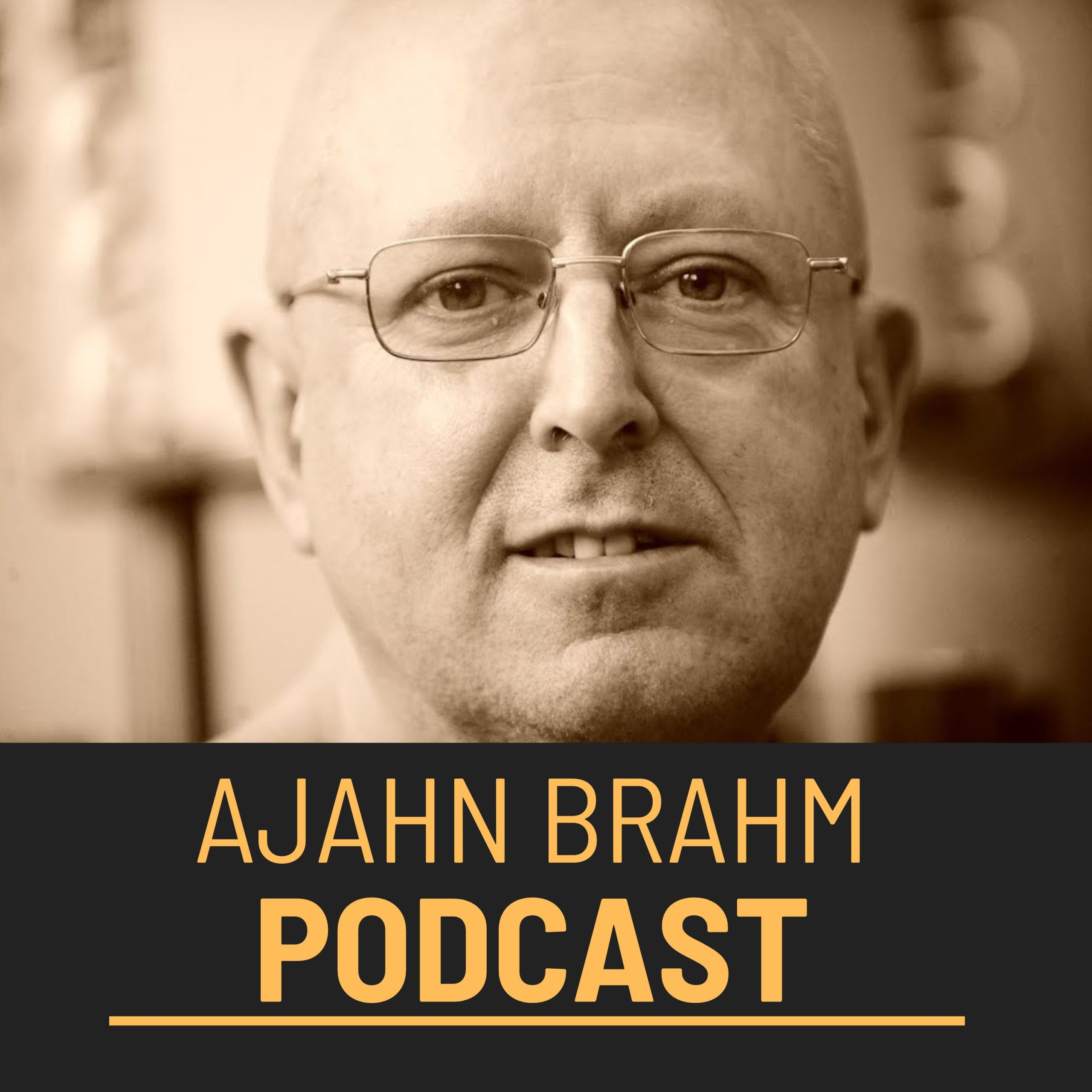
Ajahn Brahm Podcast
110 episodes — Page 1 of 3
Guided Meditation with Ajahn Brahm (20070714)
Buddhism and Politics
Right View - How and Where to Look
Guided Meditation with Ajahn Brahm (20070707)
Realising or revealing religion?
Ajahn Brahm Guided Meditation (20070630)
Guided Meditation with Ajahn Brahm (20070616)
Meditation Kamma
Guided Meditation with Ajahn Brahm (20070609)
Gossip
Ep 180Guided Meditation with Ajahn Brahm
This guided meditation by Ajahn Brahm was originally recorded in 02-06-2007. It includes a talk about some aspect of meditation followed by a 45 minute guided meditation. This guided meditation has been remastered and published by the Everyday Dhamma Network, and will be of interest to people who have started meditation but are seeking guidance to take it deeper. These talks by Ajahn Brahm have been recorded and made available for free distribution by the Buddhist Society of Western Australia under the Creative Commons licence. You can support the Buddhist Society of Western Australia by pledging your support via their Ko-fi page.
Ep 179Decisions, Decisions, Decisions
Ajahn Brahm explains that the fear of making a mistake is what makes decision making difficult, and it comes from the conditioning of punishment associated with making wrong choices. The speaker also mentions that whatever decision we make, we can always make something out of it and that life is continuously evolving. When it comes to decision making, it is important to not let personal desire, ill will, delusion, or fear influence our choices. We should learn to make decisions quickly and not be afraid of making mistakes. Many people make decisions out of fear, but we should remember that whatever path we choose, it will always lead to different options and learning experiences. The best way to make decisions is to be well informed and not let fear hold us back. — This dhamma talk was originally recorded in 9th May 2008. It has now been remastered and published by the Everyday Dhamma Network, and will be of interest to his many fans. These talks by Ajahn Brahm have been recorded and made available for free distribution by the Buddhist Society of Western Australia under the Creative Commons licence. You can support the Buddhist Society of Western Australia by pledging your support via their Ko-fi page.
Ep 178Guided Meditation with Ajahn Brahm (20070512)
This guided meditation by Ajahn Brahm was originally recorded in 12-05-2007. It includes a talk about some aspect of meditation followed by a 45 minute guided meditation. This guided meditation has been remastered and published by the Everyday Dhamma Network, and will be of interest to people who have started meditation but are seeking guidance to take it deeper. These talks by Ajahn Brahm have been recorded and made available for free distribution by the Buddhist Society of Western Australia under the Creative Commons licence. You can support the Buddhist Society of Western Australia by pledging your support via their Ko-fi page.
Ep 177Peace Is The Highest Happiness
Ajahn Brahm talks about the difference between happiness and peace. He points out that people often confuse happiness with material success and wealth, but these are fleeting and impermanent. He suggests that instead of striving for happiness, we should embrace the inevitable losses and failures in life, as they can bring true wisdom and peace. The purpose of losing in life is to understand that we are not always in control and that it is a normal part of life. Pain and disappointments can also teach us lessons about love and peace. When we cannot change a situation or heal someone, we can still care for them. Some problems in life have no solution, and in those cases, it is important to let go and focus on caring for ourselves and others instead of constantly trying to fix the problem. Ajahn Brahm talks about finding peace in the midst of turmoil and imperfection. — This dhamma talk was originally recorded in 2nd May 2008. It has now been remastered and published by the Everyday Dhamma Network, and will be of interest to his many fans. These talks by Ajahn Brahm have been recorded and made available for free distribution by the Buddhist Society of Western Australia under the Creative Commons licence. You can support the Buddhist Society of Western Australia by pledging your support via their Ko-fi page.
Ep 176Ajahn Brahm Guided Meditation (20070428)
This guided meditation by Ajahn Brahm was originally recorded in 28-04-2007. It includes a talk about some aspect of meditation followed by a 45 minute guided meditation. This guided meditation has been remastered and published by the Everyday Dhamma Network, and will be of interest to people who have started meditation but are seeking guidance to take it deeper. These talks by Ajahn Brahm have been recorded and made available for free distribution by the Buddhist Society of Western Australia under the Creative Commons licence. You can support the Buddhist Society of Western Australia by pledging your support via their Ko-fi page.
Ep 175Expanding Your View
Ajahn Brahm gives a talk about the origin of human views - including questioning why some people can believe in really crazy ideas - by looking at causality inside the mind and how our belief systems are shaped. And also how we can use an understanding of this process to bring our beliefs and views into line with reality. — This dhamma talk was originally recorded in 18th April 2008. It has now been remastered and published by the Everyday Dhamma Network, and will be of interest to his many fans. These talks by Ajahn Brahm have been recorded and made available for free distribution by the Buddhist Society of Western Australia under the Creative Commons licence. You can support the Buddhist Society of Western Australia by pledging your support via their Ko-fi page.

Ep 174Guided Meditation with Ajahn Brahm (20070331)
This guided meditation by Ajahn Brahm was originally recorded in 31-03-2007. It includes a talk about some aspect of meditation followed by a 45 minute guided meditation. This guided meditation has been remastered and published by the Everyday Dhamma Network, and will be of interest to people who have started meditation but are seeking guidance to take it deeper. These talks by Ajahn Brahm have been recorded and made available for free distribution by the Buddhist Society of Western Australia under the Creative Commons licence. You can support the Buddhist Society of Western Australia by pledging your support via their Ko-fi page.
Ep 173Below The Mist
Ajahn Brahm shares a story from his youth about getting lost in mist while hiking in Scotland, and uses it as a simile for the path to enlightenment. He explains that we can follow the path by focusing on what brings us peace, happiness, and freedom, and letting go of attachments and possessions. The speaker then mentions his simple lifestyle as a monk and the importance of emptying the mind to find peace and freedom. — This dhamma talk was originally recorded in 11th April 2008. It has now been remastered and published by the Everyday Dhamma Network, and will be of interest to his many fans. These talks by Ajahn Brahm have been recorded and made available for free distribution by the Buddhist Society of Western Australia under the Creative Commons licence. You can support the Buddhist Society of Western Australia by pledging your support via their Ko-fi page.

Ep 173Guided Meditation with Ajahn Brahm (20070317)
This guided meditation by Ajahn Brahm was originally recorded in 17th February 2007. It includes a talk about some aspect of meditation followed by a 45 minute guided meditation (starting at the 13 minutes mark). This guided meditation has been remastered and published by the Everyday Dhamma Network, and will be of interest to people who have started meditation but are seeking guidance to take it deeper. These talks by Ajahn Brahm have been recorded and made available for free distribution by the Buddhist Society of Western Australia under the Creative Commons licence. You can support the Buddhist Society of Western Australia by pledging your support via their Ko-fi page.
Ep 172No Complaints
This talk is about the habit of complaining and how it doesn't lead to anything productive. Ajahn Brahm gives an example of how he always tells silly jokes because of conditioning from his father. He then shares a story about a Brazilian goalkeeper who couldn't stop his conditioning to save a baby. Ajahn Brahm talks about how everyone can experience suffering, no matter their social status or occupation. He uses examples from their own life as a monk to show that even when they try to escape suffering, it is still there. Ajahn Brahm learned to stop complaining and accept things as they are, and in this talk, he talks about the harmful habit of complaining and how we often complain without really doing anything about the problem. — This dhamma talk was originally recorded in 14th March 2008. It has now been remastered and published by the Everyday Dhamma Network, and will be of interest to his many fans. These talks by Ajahn Brahm have been recorded and made available for free distribution by the Buddhist Society of Western Australia under the Creative Commons licence. You can support the Buddhist Society of Western Australia by pledging your support via their Ko-fi page.
Ep 171The Meaning of Life
As human beings, we are always searching and trying to understand our existence and emotions. It is important to encourage honesty and questioning, as these are the tools to dig deeper into the reality of life. During one of his recent talks, Ajahn Brahm discussed the purpose of life and how we need to question things and base our questions on our own experiences. He also shared stories to illustrate the importance of compassion, kindness, and generosity in life, citing examples of people who were willing to give selflessly, even in difficult situations. These acts of goodness give life a true purpose and meaning. In addition to finding purpose and fulfillment in love, there are several important meanings of life, including the act of generosity and selflessness, as well as the ability to let go and allow loved ones to be free. Acts of kindness and compassion can bring immense joy and inspire others to find meaning in their own lives. Love that is selfless and freeing is the highest form of love, and can bring immense peace and happiness even in the face of loss. — This dhamma talk was originally recorded in 1st March 2008. It has now been remastered and published by the Everyday Dhamma Network, and will be of interest to his many fans. These talks by Ajahn Brahm have been recorded and made available for free distribution by the Buddhist Society of Western Australia under the Creative Commons licence. You can support the Buddhist Society of Western Australia by pledging your support via their Ko-fi page.

Ep 170Guided Meditation with Ajahn Brahm (20070217)
This guided meditation by Ajahn Brahm was originally recorded in 17th February 2007. It includes a talk about some aspect of meditation followed by a 45 minute guided meditation (starting at the 13 minutes mark). This guided meditation has been remastered and published by the Everyday Dhamma Network, and will be of interest to people who have started meditation but are seeking guidance to take it deeper. These talks by Ajahn Brahm have been recorded and made available for free distribution by the Buddhist Society of Western Australia under the Creative Commons licence. You can support the Buddhist Society of Western Australia by pledging your support via their Ko-fi page.
Ep 169Letting Go of the Ones We Love
Death is part of life and should not be seen as a negative event. Understanding reincarnation can help us accept death. We should also let go of the negative part of our grief in order to move forward. Ajahn Brahm discusses the importance of understanding death and how it relates to the meaning of life. He share personal experiences, such as the death of his father and his work with individuals facing death or loss. Ajahn Brahm believes that death teaches us to appreciate life and to focus on spiritual values such as kindness and generosity. — This dhamma talk was originally recorded in 29th February 2008. It has now been remastered and published by the Everyday Dhamma Network, and will be of interest to his many fans. These talks by Ajahn Brahm have been recorded and made available for free distribution by the Buddhist Society of Western Australia under the Creative Commons licence. You can support the Buddhist Society of Western Australia by pledging your support via their Ko-fi page.

Ep 168Guided Meditation with Ajahn Brahm
This guided meditation by Ajahn Brahm was originally recorded in 10th Februar 2007. It includes a talk about some aspect of meditation followed by a 45 minute guided meditation (starting at the 13 minutes mark). This guided meditation has been remastered and published by the Everyday Dhamma Network, and will be of interest to people who have started meditation but are seeking guidance to take it deeper. These talks by Ajahn Brahm have been recorded and made available for free distribution by the Buddhist Society of Western Australia under the Creative Commons licence. You can support the Buddhist Society of Western Australia by pledging your support via their Ko-fi page.
Ep 167Guided Meditation
This guided meditation by Ajahn Brahm was originally recorded in 20th January 2007. It includes a talk about some aspect of meditation followed by a 45 minute guided meditation. This guided meditation has been remastered and published by the Everyday Dhamma Network, and will be of interest to people who have started meditation but are seeking guidance to take it deeper. These talks by Ajahn Brahm have been recorded and made available for free distribution by the Buddhist Society of Western Australia under the Creative Commons licence. You can support the Buddhist Society of Western Australia by pledging your support via their Ko-fi page.
Ep 1663 Aspects of Freedom
Ajahn Brahm talks about religious freedom and how it should be defined and protected. Many people use the term religious freedom to justify their control and indoctrination of others, but true religious freedom is the ability to make choices without fear or pressure. Governments need to enact laws that protect religious freedom in the same way that other rights are protected, and allow for open debate and inquiry without fear of violence or repercussions. We should not force our religions on others or restrict their freedom to choose their own beliefs Freedom is a fundamental concept in Buddhism, which values the freedom of inquiry and the freedom from emotional burdens such as fear and guilt. It is important to be able to question and argue without fear of rejection in the pursuit of truth. Forgiveness is also emphasized as a way to free oneself from the prison of the past and let go of emotional baggage. The freedom from fear and anxiety about the future is also valued in Buddhism. Ajahn Brahm talks about the concept of freedom in Buddhism, which is not defined by physical or political limitations, but rather by the freedom from inner burdens such as fear, anxiety, guilt, and anger. — This dhamma talk was originally recorded in 8th February 2008. It has now been remastered and published by the Everyday Dhamma Network, and will be of interest to his many fans. These talks by Ajahn Brahm have been recorded and made available for free distribution by the Buddhist Society of Western Australia under the Creative Commons licence. You can support the Buddhist Society of Western Australia by pledging your support via their Ko-fi page.
Ep 165The End of 'Evil'
Right view is an essential aspect of the Buddhist path and involves changing the way we perceive things in order to let go of suffering. Death is a natural part of life and it's important to have the right view and understanding about it. It's not an evil or something to be afraid of, but a part of the cycle of life. One way to have the right view is by remembering the story of The Falling Leaves or The Emperor's Ring, which teaches us that everything in life, whether good or bad, will pass. Ajahn Brahm explains the concept of "right view" in Buddhism, which is a way of thinking and perceiving the world that leads to happiness and peace. He gives examples and stories to illustrate this, including the story of two chicken farmers and the story of two bad bricks in a wall. Ajahn Brahm also talks about the importance of accepting and embracing our mistakes and flaws, as they make us human and can lead to laughter and connection with others. It is about focusing on the positive, letting go of the past and not worrying about the future. Living in the present is the key to happiness. Ajahn Brahm shares some stories to answer questions about good and evil in the world. He talks about how there is both good and bad in everyone and how it's important to see the good in others. Ultimately, the speaker believes that focusing on what unites us rather than what divides us can bring about healing and understanding in the world. — This dhamma talk was originally recorded using a low quality MP3 to save on file size on 7th December 2007. It has now been remastered and published by the Everyday Dhamma Network, and will be of interest to his many fans. These talks by Ajahn Brahm have been recorded and made available for free distribution by the Buddhist Society of Western Australia under the Creative Commons licence. You can support the Buddhist Society of Western Australia by pledging your support via their Ko-fi page.
Ep 164The Real Life Teachings of Ajahn Chah
Ajahn Brahm tells stories from his time as a monk studying under Ajahn Chah in Thailand. He explains how the simplicity and equality of life in the monastery taught him valuable lessons about letting go of attachment and status. He also shares a story about Ajahn Chah's wisdom when he visited Ajahn Brahm while he was sick in the hospital. He reminds readers that sickness and death are natural parts of life and we shouldn't fear them. Ajahn Brahm shares his experiences with living as a monk in Thailand and how it taught him about real Buddhism. — This dhamma talk was originally recorded using a low quality MP3 to save on file size on 7th December 2007. It has now been remastered and published by the Everyday Dhamma Network, and will be of interest to his many fans. These talks by Ajahn Brahm have been recorded and made available for free distribution by the Buddhist Society of Western Australia under the Creative Commons licence. You can support the Buddhist Society of Western Australia by pledging your support via their Ko-fi page.
Ep 163A Take On Fundamentalism
Ajahn Brahm discusses the Buddhist perspective on fundamentalism and its negative effects on religion and society. The Buddha's teaching states that true religion and spirituality will lead to peace and harmony, not create more problems. Ultimately, the goal is to promote harmony and peace. The problem with fundamentalism in our world is that it is based on faulty reasoning and limited experience, and it often creates an "us vs. them" mentality. One way to combat fundamentalism is to share truths and show kindness to those who hold different beliefs, as this can be disarming and can present a different perspective. Buddhists, in particular, should focus onactively helping others and publicizing their good deeds to counter the misconception that they are only concerned with their own enlightenment. — This dhamma talk was originally recorded using a low quality MP3 to save on file size on 7th December 2007. It has now been remastered and published by the Everyday Dhamma Network, and will be of interest to his many fans. These talks by Ajahn Brahm have been recorded and made available for free distribution by the Buddhist Society of Western Australia under the Creative Commons licence. You can support the Buddhist Society of Western Australia by pledging your support via their Ko-fi page.
Ep 162Conflict!
In this talk, Ajahn Brahm discusses the topic of conflict and suggests that people should have compassion and understanding towards their enemies. He emphasizes that people should focus on criticizing the action rather than the person, as attacking the person will only lead to more conflict. The speaker also suggests seeing the good qualities in others, even if they are obnoxious, in order to create a bridge between enemies and promote reconciliation. He ends by mentioning the importance of this approach during the holiday season, when people come together with family. In conflicts, we only see the negative behaviors of the other person. If we can look deeper and find something to respect and value in them, we can create a bridge and have a better understanding. This can lead to forgiveness and letting go of the past. --- — This dhamma talk was originally recorded using a low quality MP3 to save on file size on 7th December 2007. It has now been remastered and published by the Everyday Dhamma Network, and will be of interest to his many fans. These talks by Ajahn Brahm have been recorded and made available for free distribution by the Buddhist Society of Western Australia under the Creative Commons licence. You can support the Buddhist Society of Western Australia by pledging your support via their Ko-fi page.
Ep 161Much Ado About Nothing
Buddhism is often seen as a religion, way of life, philosophy, or practice. However, Ajahn Brahm believes that it is ultimately a practice that brings positive results in this life. The main goal of a Buddhist's spiritual life should be to cultivate kindness, patience, peace, and stopping. These qualities require effort and training, as they may not come naturally to us. — This dhamma talk was originally recorded using a low quality MP3 to save on file size on 7th December 2007. It has now been remastered and published by the Everyday Dhamma Network, and will be of interest to his many fans. These talks by Ajahn Brahm have been recorded and made available for free distribution by the Buddhist Society of Western Australia under the Creative Commons licence. You can support the Buddhist Society of Western Australia by pledging your support via their Ko-fi page.
Ep 160The Secret
This talk explores the concept of craving and desire in Buddhist teachings, specifically how it relates to modern lifestyles. While the Buddhist teachings state that craving is the source of suffering, it is difficult to reconcile this in a world where material possessions and success are highly valued. Ajahn Brahm discusses the harm that excessive craving has caused to our planet and society, and asserts that the key to being happy is not accumulating more wealth and possessions, but rather learning to be content with what we have. He cites studies that talksabout how most people's desires for wealth and fame often lead to suffering and that these desires are often based on societal norms rather than wisdom. He gives examples of how people who live in big houses often have to work hard to maintain them and don't have time for relationships, and how being famous is actually not as great as people may think. He also shares a story about an abbot who kindly gives a burglar food and questions when he last ate. Buddhist teachings emphasize the importance of craving for the right things in life. Craving for wealth and material possessions can lead to suffering, while craving for qualities like kindness and compassion can bring true happiness. — This dhamma talk was originally recorded using a low quality MP3 to save on file size on 30th November 2007. It has now been remastered and published by the Everyday Dhamma Network, and will be of interest to his many fans. These talks by Ajahn Brahm have been recorded and made available for free distribution by the Buddhist Society of Western Australia under the Creative Commons licence. You can support the Buddhist Society of Western Australia by pledging your support via their Ko-fi page.
Ep 159Power
This talk explores the topic of power, and the two different types of power – the power to control and the power of kindness. It delves into the dangers of becoming too focused on control and having a big ego, as well as the dysfunctional nature of exerting power over others. The Buddhist perspective is that true power comes from understanding and being kind to oneself and others, rather than trying to control and dominate. — This dhamma talk was originally recorded using a low quality MP3 to save on file size on 16th November 2007. It has now been remastered and published by the Everyday Dhamma Network, and will be of interest to his many fans. These talks by Ajahn Brahm have been recorded and made available for free distribution by the Buddhist Society of Western Australia under the Creative Commons licence. You can support the Buddhist Society of Western Australia by pledging your support via their Ko-fi page.
Ep 158The Power of Mindfulness and Compassion
Mindfulness is a natural state of mind that we can grow by being still and gentle. In our Western culture, we have an unhealthy obsession with working hard and achieving things. But in meditation, we need to learn how to rest our minds and bodies, to be able to slow down and see what is happening in the present moment. The faster we go, the less we are able to see. This talk is about how mindfulness and kindness can help us let go of the negative thoughts and emotions that clutter our minds. By being aware and compassionate towards ourselves and others, we can break negative habits and respond to situations in a more positive and effective way. — This dhamma talk was originally recorded using a low quality MP3 to save on file size on 9th November 2007. It has now been remastered and published by the Everyday Dhamma Network, and will be of interest to his many fans. These talks by Ajahn Brahm have been recorded and made available for free distribution by the Buddhist Society of Western Australia under the Creative Commons licence. You can support the Buddhist Society of Western Australia by pledging your support via their Ko-fi page.
Ep 157Read Your Mind, Not the Books
Buddhism doesn't follow a specific holy book like other religions do. The essence of Buddhism lies in the truth and wisdom that can be found within one's own mind through meditation, rather than in any written texts. In this talk, Ajahn Brahm, discusses the importance of understanding and applying the teachings of Buddhism in everyday life. He emphasizes the need for meditation and stillness as a means of developing intelligence and wisdom, and encourages individuals to think for themselves instead of blindly following religious leaders. — This dhamma talk was originally recorded using a low quality MP3 to save on file size on 12th October 2007. It has now been remastered and published by the Everyday Dhamma Network, and will be of interest to his many fans. These talks by Ajahn Brahm have been recorded and made available for free distribution by the Buddhist Society of Western Australia under the Creative Commons licence. You can support the Buddhist Society of Western Australia by pledging your support via their Ko-fi page.
Ep 156Tolerance Explored
In this talk, Ajahn Brahm discusses the concept of tolerance. He starts by talking about how sometimes we may need to tolerate aches and pains in the body, but instead of just bearing with them, we should investigate and understand them. This can help us find solutions and can also lead to a deeper understanding of the nature of our physical discomfort. Ajahn also talks about how taking breaks and resting can actually make us more efficient, and how investigating problems can be more effective than just trying: Tolerance alone is not enough in dealing with discomfort, pain, and suffering. Instead, we should seek to understand and empathize with these experiences in order to find growth and solutions. — This dhamma talk was originally recorded using a low quality MP3 to save on file size on 10th August 2007. It has now been remastered and published by the Everyday Dhamma Network, and will be of interest to his many fans. These talks by Ajahn Brahm have been recorded and made available for free distribution by the Buddhist Society of Western Australia under the Creative Commons licence. You can support the Buddhist Society of Western Australia by pledging your support via their Ko-fi page.
Ep 155Celebrating Celibacy
Ajahn Brahm shares some anecdotes about his experiences of challenging societal norms as a celibate monk, and discusses the benefits of being single or celibate. Overall, he suggests that religion should challenge us to think outside of the norm and that there is nothing wrong with living a different lifestyle. Human beings have a natural tendency to desire and be attracted to certain things, but we also have the ability to restrain ourselves from acting on those urges. This is known as "hiri otappa" or the fear of karmic consequences and a sense of conscience or shame. We must have some level of restraint in order to live a civilized life. Sometimes we may feel tempted to act in a certain way, but it is important to remember the potential negative effects and consequences of our actions.
Ep 154Happiness Industry: Joy At Last!
Ajahn Brahm discusses the idea of the "happiness industry," where there is a focus on finding happiness through seminars, classes, and other means. The author argues that this industry may not always address underlying social issues and may just promote changing one's attitude instead of taking action. He also discusses the overlap and potential contradiction between science and religion, particularly in addressing the story is about two Thai sisters who came to a monastery for counseling. The first sister had problems with her husband, while the other was struggling to find one. The counselor told them that changing their situation would only lead to a different form of suffering. This applies to all aspects of life, such as wealth, fame, or even owning a mobile phone. The happiness industry may tell us that achieving certain things will make us happy, but in reality, true happiness comes from within. — This dhamma talk was originally recorded using a low quality MP3 to save on file size on 6th July 2007. It has now been remastered and published by the Everyday Dhamma Network, and will be of interest to his many fans. These talks by Ajahn Brahm have been recorded and made available for free distribution by the Buddhist Society of Western Australia under the Creative Commons licence. You can support the Buddhist Society of Western Australia by pledging your support via their Ko-fi page.
Ep 153How To Change The World
Thistalk is about the responsibility of Buddhists to contribute to social issues, such as global warming and social activism, as the religion continues to grow in numbers. It compares the Buddha's rejection of becoming a world leader to the temptation of Jesus in Christianity. It emphasizes the importance of understanding and adapting to the world, rather than trying to control it. Ajahn Brahm shares personal experiences, such as delayed flights and participating in interfaith dialogue, to illustrate this point. He emphasizes the importance of active listening and understanding in order to bring about positive change in relationships, health, and the workplace. — This dhamma talk was originally recorded using a low quality MP3 to save on file size on 6th July 2007. It has now been remastered and published by the Everyday Dhamma Network, and will be of interest to his many fans. These talks by Ajahn Brahm have been recorded and made available for free distribution by the Buddhist Society of Western Australia under the Creative Commons licence. You can support the Buddhist Society of Western Australia by pledging your support via their Ko-fi page.
Ep 152Procrastination/Hierarchy of Life's Meaning
Ajahn Brahm briefly explores multiple suggestions for the topic of the talk, including the meaning of life, the approach to dealing with sick animals, separation, and procrastination. He then goes on to discuss the idea of procrastination as a useful tool in creating stillness and peace, and shares a story about a monk who declared his building project "finished" in the midst of an unfinished state. The author brings these ideas together to remind readers to prioritize stillness and peace in their lives. In order to understand the true meaning of life, we must prioritize what is most important to us. The highest purpose should be peace, happiness, contentment, and fulfillment. We often make the mistake of putting lesser purposes, such as work or being right, above these important aspects of life. — This dhamma talk was originally recorded using a low quality MP3 to save on file size on 6th July 2007. It has now been remastered and published by the Everyday Dhamma Network, and will be of interest to his many fans. These talks by Ajahn Brahm have been recorded and made available for free distribution by the Buddhist Society of Western Australia under the Creative Commons licence. You can support the Buddhist Society of Western Australia by pledging your support via their Ko-fi page.
Ep 151Interconnectedness
This talk is about the concept of interconnectedness, which is the idea that our actions and thoughts have a wider effect on others and the world around us. Ajahn Brahm talks about how small acts of kindness and caring can have a big impact, and encourages people to take responsibility for their actions. He also mentions a funny anecdote about a dancing lollipop lady in London. In this talk, Ajahn Brahm discusses the concept of interconnectedness and how small acts of kindness and happiness can spread, as well as the importance of detaching and disconnecting from negativity and being responsible for one's own happiness. --- This dhamma talk was originally recorded using a low quality MP3 to save on file size on 29th June 2007. It has now been remastered and published by the Everyday Dhamma Network, and will be of interest to his many fans. These talks by Ajahn Brahm have been recorded and made available for free distribution by the Buddhist Society of Western Australia under the Creative Commons licence. You can support the Buddhist Society of Western Australia by pledging your support via their Ko-fi page.
Ep 150Dealing With Your Emotions
This talk is about dealing with emotions from a Buddhist perspective. Ajahn Brahm points out that often people talk about negative emotions such as grief, anger, and fear, but positive emotions like inspiration, love, and compassion are also important. He mentions that emotions can be manipulated, as seen in movies and auctions, and shares a personal story about witnessing the calming of a distraught woman by a monk. The monk's calmness helped her gain perspective on her friend's suicide. The story says that the emotions that we feel are often created by our own thoughts and perceptions. The speaker gives examples of anger, fear, and grief and how they can be triggered and reinforced by our unskillful thinking. He encourages us to be more mindful and aware of our thoughts and to try to understand where our emotions come from. --- This dhamma talk was originally recorded using a low quality MP3 to save on file size on 1st June 2007. It has now been remastered and published by the Everyday Dhamma Network, and will be of interest to his many fans. These talks by Ajahn Brahm have been recorded and made available for free distribution by the Buddhist Society of Western Australia under the Creative Commons licence. You can support the Buddhist Society of Western Australia by pledging your support via their Ko-fi page.
Ep 149Accountability
Ajahn Brahm introduces the topic of accountability and how it is pertinent to issues such as climate change and ethics. He discuss how the demands of the present can take priority and prevent people from addressing bigger problems. He also talk about the benefits of slowing down and seeing the bigger picture in life, such as through monasteries and retreat centers. This talk discusses the importance of ethics and accountability in modern society, particularly in relation to issues like global warming and climate change. The speaker, a Buddhist monk, talks about how the belief in rebirth and the understanding of consequences for actions in future lives can help people to see the bigger picture and take ethical decisions. He also mentions the importance of wisdom in being compassionate, and how lack of wisdom can sometimes lead to unintended negative consequences. --- This dhamma talk was originally recorded using a low quality MP3 to save on file size on 1st June 2007. It has now been remastered and published by the Everyday Dhamma Network, and will be of interest to his many fans. These talks by Ajahn Brahm have been recorded and made available for free distribution by the Buddhist Society of Western Australia under the Creative Commons licence. You can support the Buddhist Society of Western Australia by pledging your support via their Ko-fi page.
Ep 148Buddhism and Sects
The title of the talk is Buddhism and Sex, but it is actually about the different sects of Buddhism. The speaker explains that there should be no judgment or hierarchy between different traditions and that it is more important to focus on how one uses the teachings. He gives examples of how monks from different traditions work together and that in reality, there is no difference between these traditions. He also mentions that common sense is an important aspect of Buddhism, as beliefs and dogmas can sometimes get in the way Buddhism is a religion that focuses on common sense and does not have any dogmas or texts that dictate what is right or wrong. Because of this, Buddhists have the freedom to express their own understanding of virtue and ethics. Unlike other religions, Buddhism does not have a central figure or hierarchy, which means each temple or monastery is responsible for its own success or failure. --- This dhamma talk was originally recorded using a low quality MP3 to save on file size on 1st June 2007. It has now been remastered and published by the Everyday Dhamma Network, and will be of interest to his many fans. These talks by Ajahn Brahm have been recorded and made available for free distribution by the Buddhist Society of Western Australia under the Creative Commons licence. You can support the Buddhist Society of Western Australia by pledging your support via their Ko-fi page.
Ep 147The Right To Believe?
The talk discusses the topic of the right to believe and how it affects our everyday lives. Ajahn Brahm brings up the dangers and consequences of holding extreme or harmful beliefs, such as seen in cases of mental illness or acts of violence. He also discusses the prioritization of beliefs and how it can lead to conflicts, using the example of a couple who argue over whether a sound is made by a chicken or a duck. The talk ultimately emphasizes the importance of critically examining our beliefs and ensuring that the most important of focusing on the primary beliefs of peace, harmony, and love. --- This dhamma talk was originally recorded using a low quality MP3 to save on file size on 18th May 2007. It has now been remastered and published by the Everyday Dhamma Network, and will be of interest to his many fans. These talks by Ajahn Brahm have been recorded and made available for free distribution by the Buddhist Society of Western Australia under the Creative Commons licence. You can support the Buddhist Society of Western Australia by pledging your support via their Ko-fi page.
Ep 146Freedom: The Path to Happiness
Ajahn Brahm talks about the possibility of real happiness in modern life and the cause of unhappiness. He mentions how people today are attached to suffering and grief, which is a cultural addition that does not exist in certain societies. He also discusses how people can form their identities around their suffering and enjoy the negative emotions, such as anger, grief, and jealousy. The Buddha teaches that there is a delight in these negative emotions, or else peoplewouldn't engage in them. Buddhism teaches that attachment to negative emotions, such as anger, jealousy, and grief, can prevent us from being truly happy. The Buddha observed that people often attach to these negative emotions because they feel a sense of delight in them, but they fail to see the danger and harm that comes from holding onto them. This attachment can also stem from societal expectations, such as the need for retribution and punishment for wrongdoing. However,Buddhism suggests that the most important thing is to let go. — This dhamma talk was originally recorded using a low quality MP3 to save on file size on 27th April 2007. It has now been remastered and published by the Everyday Dhamma Network, and will be of interest to his many fans. These talks by Ajahn Brahm have been recorded and made available for free distribution by the Buddhist Society of Western Australia under the Creative Commons licence. You can support the Buddhist Society of Western Australia by pledging your support via their Ko-fi page.
Ep 145Buddhism in the Business World
Ajahn Brahm disagrees with the belief that Buddhism and business do not match and argues that Buddhism has a lot to offer in the workplace. Mindfulness and compassion are important principles that Buddhism teaches, and Buddhism has developed strategies to apply these principles effectively. Caring for those involved in a business can lead to increased motivation and efficiency.
Ep 144Investigation Into The Ethics of Military Service
Growing up in London in the 1960s and protesting against the Vietnam War, Ajahn Brahm could never imagine that serving in the military was compatible with being a Buddhist. But a meeting with Buddhist servicemen in Britain caused him to rethink the ethics of military service and to challenge his own preconceptions. This talk is a thoughtful exploration of the ethics of serving in the military and various situations in life where simplistic, rules-based ethics falls short. Ajahn Brahm asks people to look at ethical choices from multiple perspectives and to be informed not just by rules, but compassionate intentions and wisdom. And to not judge the difficult ethical decisions others make until we’ve looked at it from other perspectives. — This dhamma talk was originally recorded using a low quality MP3 to save on file size on 27th April 2007. It has now been remastered and published by the Everyday Dhamma Network, and will be of interest to his many fans. These talks by Ajahn Brahm have been recorded and made available for free distribution by the Buddhist Society of Western Australia under the Creative Commons licence. You can support the Buddhist Society of Western Australia by pledging your support via their Ko-fi page.
Ep 143Building a House of Peace
Ajahn Brahm gives a talk on what meditation is and how it works. And how to find the most meaningful answer of all through the lived experience of deep peace inside the mind. — This dhamma talk was originally recorded using a low quality MP3 to save on file size on 13th April 2007. It has now been remastered and published by the Everyday Dhamma Network, and will be of interest to his many fans. These talks by Ajahn Brahm have been recorded and made available for free distribution by the Buddhist Society of Western Australia under the Creative Commons licence. You can support the Buddhist Society of Western Australia by pledging your support via their Ko-fi page.
Ep 142Higher Criticism
This talk is about how to deal with criticism in a wise and positive way, and why people often react negatively to criticism. We tend to take criticism personally because we identify with our ideas, views, and sense of self. It's important to have a more malleable sense of self and be open to change in order to be more receptive to criticism.