Episode 132
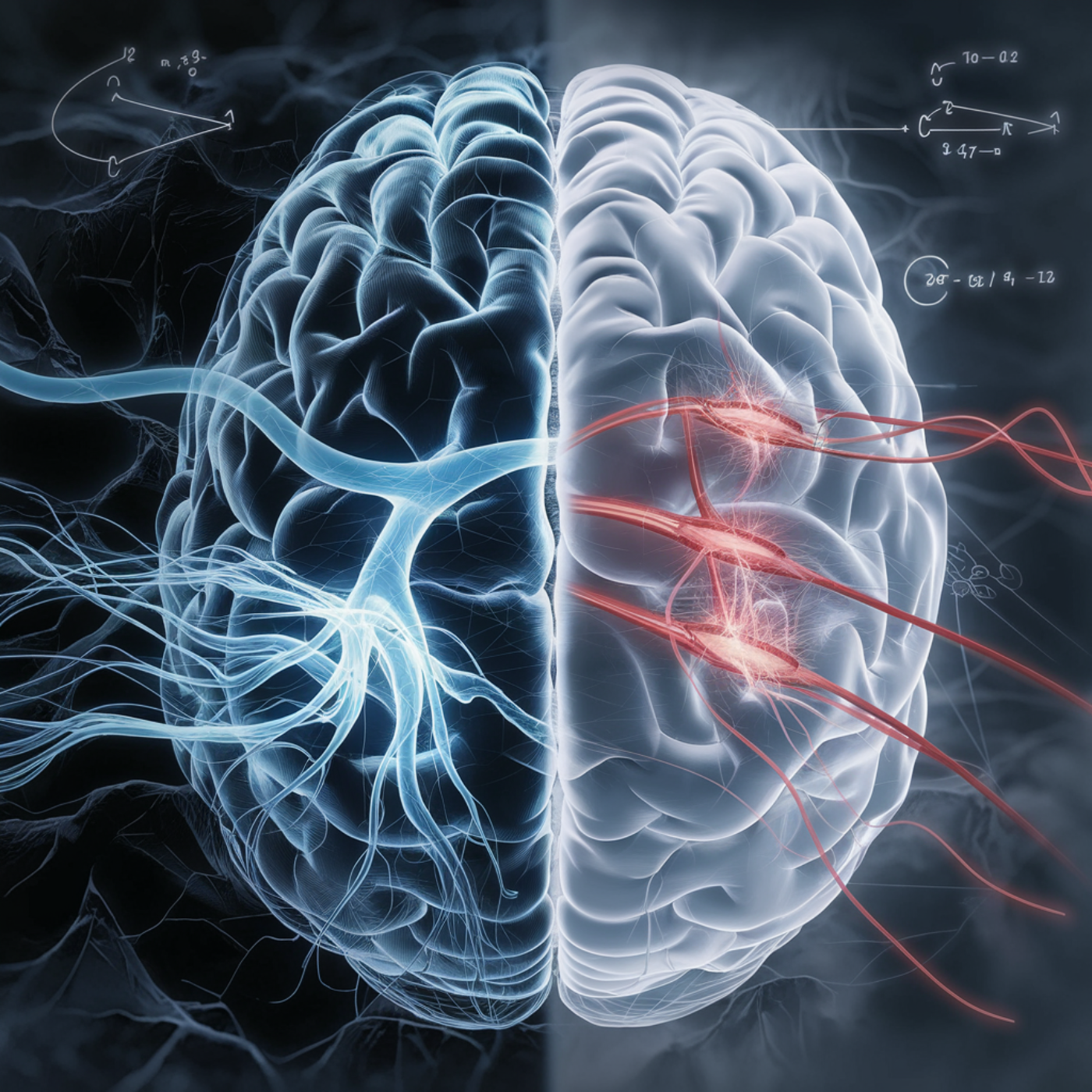
Why Your Brain Can't Learn Everything: Understanding Neural Constraints
AI and Us: Exploring Our Future · Alberto Rocha
March 6, 202511m 4s
Audio is streamed directly from the publisher (content.rss.com) as published in their RSS feed. Play Podcasts does not host this file. Rights-holders can request removal through the copyright & takedown page.
Show Notes
This educational piece explores groundbreaking research published in Nature Neuroscience that reveals fundamental hardware limitations in our neural circuitry that determine learning capabilities.
Key Segments:
- Introduction to Brain Learning
- Overview of brain's learning capabilities and limitations
- Discussion of neural firing patterns and activity sequences
- Comparison to orchestrated symphony of neural activity
- Research Methodology
- Explanation of biofeedback mechanisms
- Brain-computer interface (BCI) experiments with monkeys
- Recording of ~90 neurons in the motor cortex
- Translation of neural activity into cursor movements
- Key Findings
- Discovery of intrinsic neural trajectory constraints
- Demonstration that some neural patterns are impossible to generate
- Evidence that motivation/practice cannot overcome certain limitations
- Technical Details
- Neural activity mapping in 90-dimensional space
- Linear projection techniques for visualization
- Movement intention view vs separation maximizing view
- Corridor constraint experiments
Major Insights:
- Neural activity flows through preferred pathways like water through established channels
- Some neural sequences are physically impossible due to brain architecture
- Learning difficulties may stem from fundamental constraints rather than lack of effort
Production Quality:
- Well-structured scientific explanation
- Clear analogies and visual descriptions
- Balanced mix of technical and accessible content
- Includes Squarespace sponsorship segment
Target Audience: Suitable for viewers interested in neuroscience, learning theory, and cognitive limitations, with content accessible to both general audiences and those with scientific background.