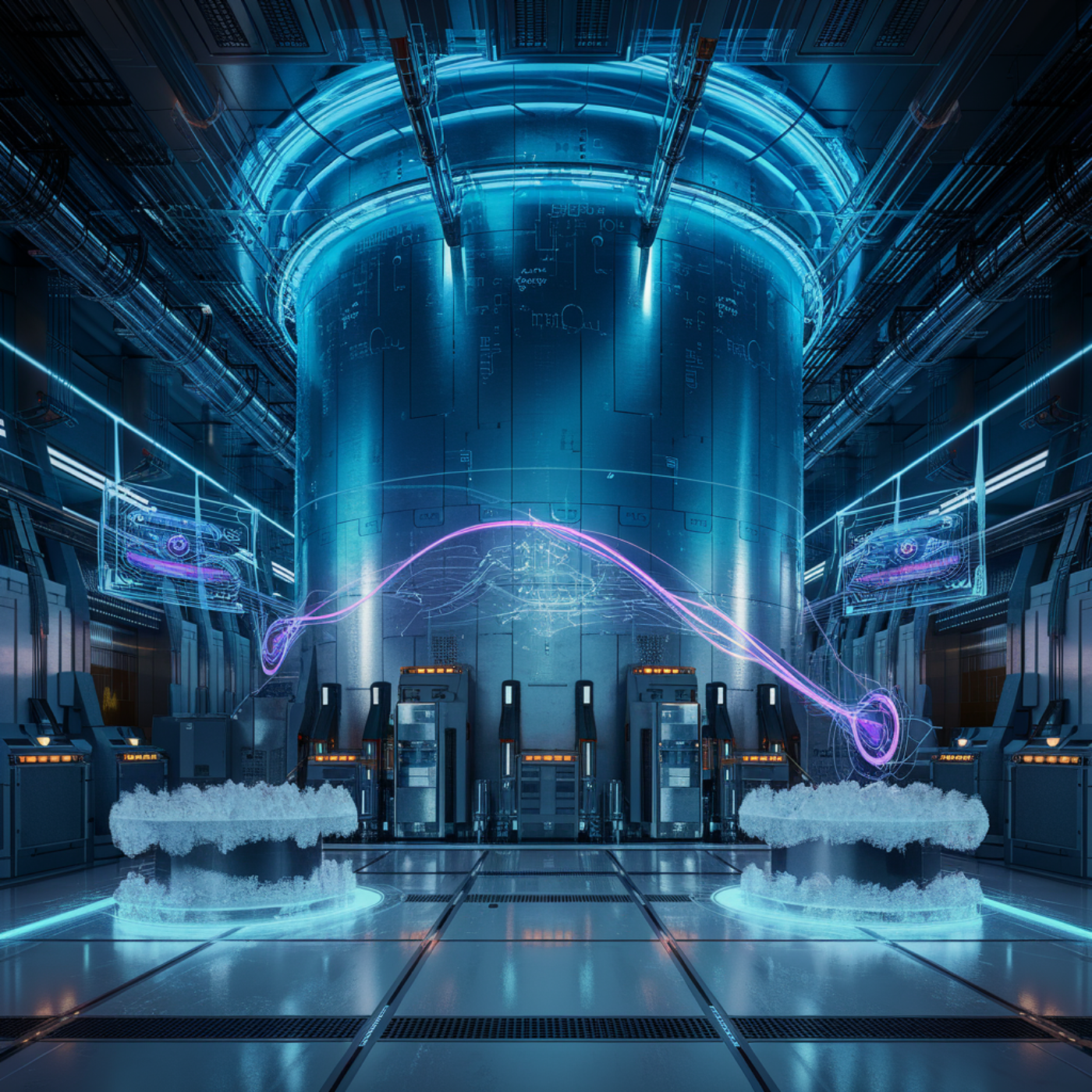
Quantum Computers and Faster-Than-Light Anomalies
AI and Us: Exploring Our Future · Alberto Rocha
Audio is streamed directly from the publisher (content.rss.com) as published in their RSS feed. Play Podcasts does not host this file. Rights-holders can request removal through the copyright & takedown page.
Show Notes
"Quantum Paradox: The Tachyonic Discovery"
A mind-bending exploration into one of physics' most controversial discoveries
Episode Synopsis:
An unprecedented quantum computing experiment has potentially detected tachyonic particles - theoretical entities that appear to move faster than light. This groundbreaking podcast episode delves into:
- The shocking anomaly detected during routine quantum experiments
- How quantum computers operating at near-absolute zero produced seemingly impossible results
- The theoretical implications of tachyons - particles that:
* Move faster than light
* Experience time differently than normal matter
* Could potentially transmit information backwards through time
Key Discussion Points:
- The involvement of prominent scientists like Brian Cox and their warnings about implications
- Analysis of "retrocausality" - future events potentially influencing the past
- Examination of major organizations' interest, including:
* DARPA
* NASA
* IBM
Controversial Elements:
- Potential classified government research into time manipulation
- Connections to unexplained phenomena and historical anomalies
- Implications for:
* Cybersecurity
* Financial markets
* Military applications
* Global events
Format: Deep-dive scientific exploration
Duration: Full episode
Target Audience: Science enthusiasts, physics aficionados, and curious minds interested in quantum mechanics and theoretical physics
Warning: Contains speculative scientific theories and discussions of classified research programs
Recommended hashtags: #QuantumPhysics #Tachyons #TimeTravel #QuantumComputing #TheoreticalPhysics