PLAY PODCASTS
Agrarian Futures

Agrarian Futures

Agrarian Futures · Agrarian Futures

40 episodesEN

Show overview

Agrarian Futures has been publishing since 2024, and across the 2 years since has built a catalogue of 40 episodes, alongside 1 trailer or bonus episode. That works out to roughly 30 hours of audio in total. Releases follow a monthly cadence, with the show now in its 2nd season.

Episodes typically run thirty-five to sixty minutes — most land between 38 min and 52 min — and the run-time is fairly consistent across the catalogue. None of the episodes are flagged explicit by the publisher. It is catalogued as a EN-language Science show.

The show is actively publishing — the most recent episode landed 1 weeks ago, with 8 episodes already out so far this year.

Episodes
40
Running
2024–2026 · 2y
Median length
45 min
Cadence
Monthly

From the publisher

Join hosts Emma Ractliffe and Austin Unruh as they explore what’s broken in our food system, and what it looks like to build something better.Visit agrarianfuturespod.com to join our email list for a heads up on upcoming episodes and bonus content.Agrarian Futures is produced by Alexandre Miller, who also wrote our theme song.Instagram: @agrarianfuturespodTwitter: @agrarianfuturesLinkedIn: https://www.linkedin.com/company/103857304/

Latest Episodes

View all 40 episodes

How Land Heals with Judith Schwartz

May 8, 202637 min

Life on the Range with Glenn Elzinga

Apr 20, 202655 min

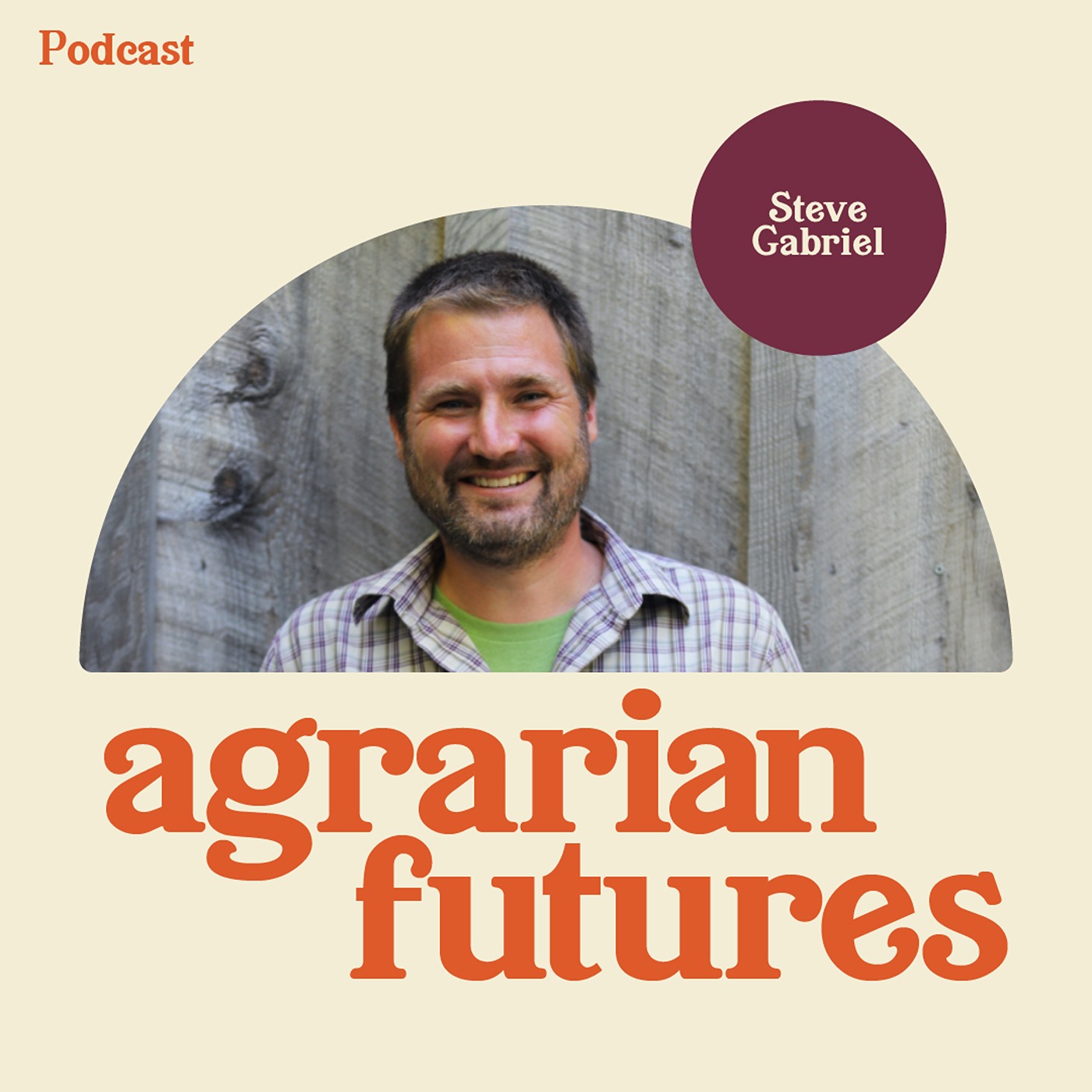
S2 Ep 15Blending Forest and Field with Steve Gabriel

Steve Gabriel joins us to unpack one of the most consequential myths shaping how we grow food in America: the separation between forest and field.As a co-steward of Wellspring Forest Farm in Mecklenburg, New York, author of Silvopasture, and researcher at the Cornell Small Farms Program, Steve has been listening. Through a SARE-funded project called Farming with Trees, he's been in conversation with over 120 farmers, from Bronx-raised beginners to multi-generational stewards, exploring not just how to plant trees, but why it matters and what gets in the way.What he's found is that the barriers to agroforestry aren't just technical. They're cultural, historical, and deeply personal, rooted in a Eurocentric agricultural paradigm that told farmers to clear the land and never look back.In this episode, we dive into: How personal relationships with trees in childhood shape a farmer's vision for the land The paradigm shift required to move from stark field or stark forest toward something in between How indigenous land stewardship modeled a working tree landscape long before "agroforestry" was a word What livestock farmers, vegetable growers, and flower farmers each need from trees and why those needs are so different Why starting with willow and poplar might matter more than starting with chestnuts and apples The role of community, craft traditions, and living fences in rebuilding our relationship with treesMore about Steve (links below):Steve Gabriel is an ecologist, farmer, and educator from the Finger Lakes Region of New York. Throughout his career spanning 20 years, Gabriel has taught thousands of farmers and land stewards about land planning, mushroom growing, and agroforestry. His experience working in academic research and extension, as a teacher and lecturer, and managing several working farm landscapes has built a unique balance of knowledge and practice which he brings to his work.With his family, Gabriel co-stewards Wellspring Forest Farm, which is an agroforestry demonstration farm that produces mushrooms, nursery trees, pastured lamb, maple syrup, and elderberry in Mecklenburg, New York. He also collaborates with diverse individuals and organizations through the Farming with Trees Collective.Gabriel previously served for 12 years as Extension Specialist for the Cornell Small Farm Program, focused on research and education on agroforestry and mushroom production. Steve co-authored Farming the Woods with Ken Mudge (2014) and is the author of Silvopasture (2019).www.MycenaTrees.org -- his new non profit working on social aspects of agroforestrywww.FarmingWithTrees.org -- report on listening sessions with farmers and nursery stewardswww.WellspringForestFarm.com -- Steve's farm websiteAgrarian Futures is produced by Alexandre Miller, who also wrote our theme song. This episode was edited by Drew O’Doherty.
Apr 1, 202629 min

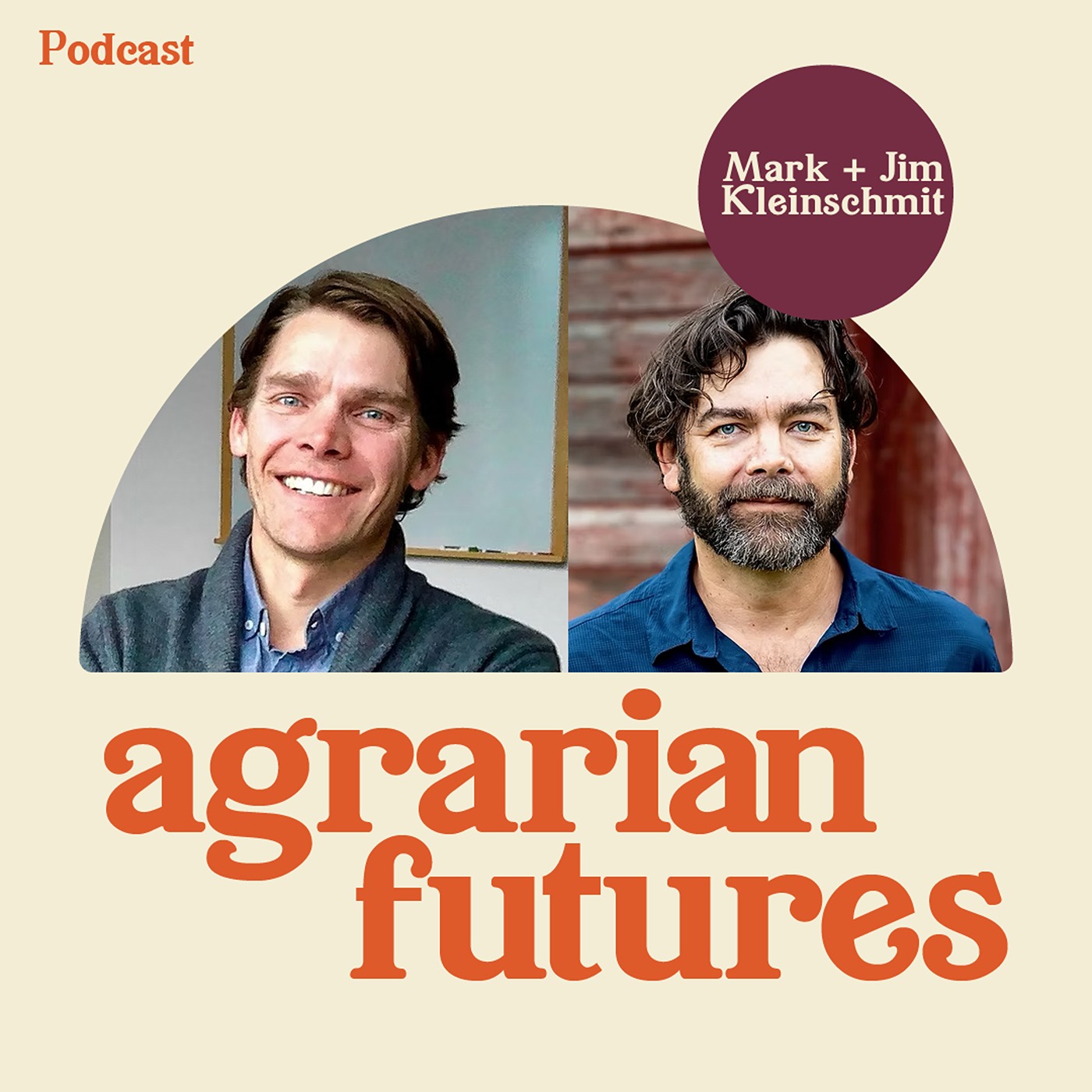
S2 Ep 14The Economics of the Other Half with Jim and Mark Kleinschmit

Regenerative agriculture isn’t just about how we raise animals. It’s about whether the entire system around them makes sense.Smaller, regenerative producers with meat businesses, have traditionally lacked an economic outlet for hides and other byproducts. That missing piece can be the difference between a system that works for regenerative farmers and one that doesn’t.Jim and Mark Kleinschmit are working to rebuild that piece. Through Other Half Processing, they’re creating new pathways for regenerative hides and reconnecting ranchers to a leather economy that reflects the full value of the animal.In this episode, we dive into: • Why whole-animal thinking is essential to regenerative systems • How value from hides and byproducts has been pulled out of local economies • What that means for the economics of regenerative ranching • What it takes to rebuild regional leather and processing infrastructure • The role of tanneries, brands, and partnerships in closing the loop • Where they see real opportunity to make these systems work againMore about Other Half Processing:Jim & Mark Kleinschmit. Brothers that grew up on a family farm in Northeast Nebraska. Raised by parents who were early adopters and champions for sustainable and regenerative agriculture.​OHP works directly with farmers/ranchers and small and medium sized meat processors to verify and buy traceable hides and other meat processing byproducts from regeneratively raised, organic, grassfed and other ethically raised animals. We aggregate and sell raw and finished products to apparel, food and pet sector companies.Their business model is centered on providing shared economic returns to producer and other value chain partners, and fair pricing for customers and market partners.Agrarian Futures is produced by Alexandre Miller, who also wrote our theme song. This episode was edited by Drew O’Doherty.
Mar 19, 202644 min

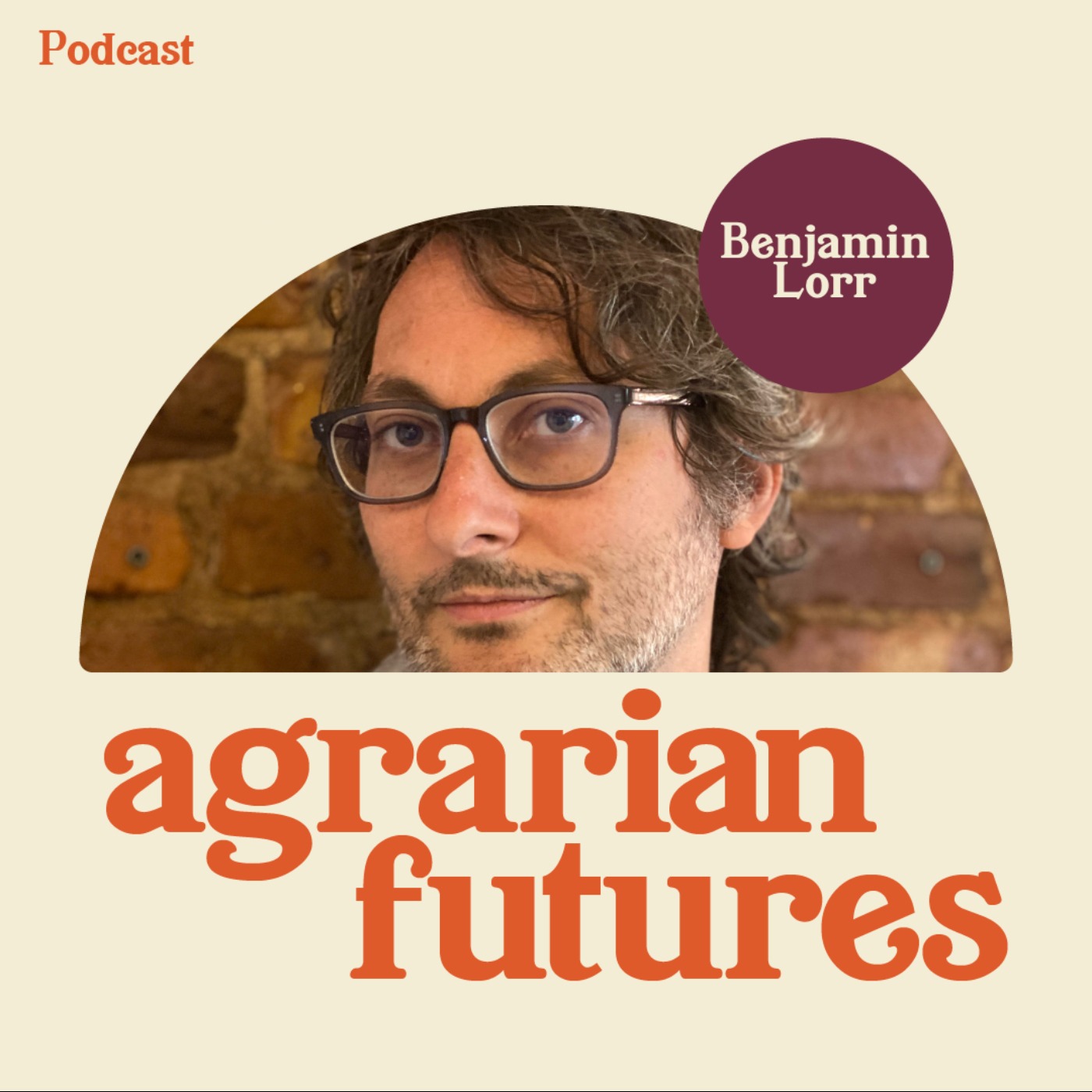
S2 Ep 13The Dark Miracle of the Supermarket with Benjamin Lorr

We walk into our local grocery store and most likely barely consider what’s on display in front of us. Forty thousand items. Stacked, uniform, produce. Cuisine from around the globe. Open often 24 hours.As author Benjamin Lorr points out, that can be considered a miracle.In The Secret Life of Groceries, Ben dives deep into the hidden machinery behind that miracle. He spent years inside the system, working behind a Whole Foods fish counter, riding cross-country with long-haul truckers, and tracing supply chains all the way to shrimp boats in Thailand. What he found is a system that delivers abundance, convenience, and quality at historically unprecedented levels. But it does so by squeezing every inefficiency out of the chain, and often squeezing workers and ecosystems along with it.In this episode, we dive into: • Why the modern supermarket truly is miraculous • How deregulation reshaped trucking and the invisible logistics backbone of food • What “just-in-time” efficiency means for grocery workers • The hidden labor dynamics behind ultra-cheap shrimp and other commodities • Why certifications and labels often can’t fix systemic incentives • The tension between convenience, price, and ethics • Whether we actually have the food system we’ve chosenMore about Benjamin:Benjamin Lorr is the author of Hell-Bent, a critically acclaimed exploration of the Bikram Yoga community that first detailed patterns of abuse and sexual misconduct by guru Bikram Choudhury, and The Secret Life of Groceries, called “a titanic achievement of reportage, insight, humor, and humanity” examining the American supermarket from all angles. Lorr is a graduate of Montgomery County, Maryland public schools and Columbia University. He lives in New York City.You can buy Benjamin’s books online here or for audiobooks, here.Follow him on Instagram.Agrarian Futures is produced by Alexandre Miller, who also wrote our theme song. This episode was edited by Drew O’Doherty.
Feb 27, 202650 min

Why Aren't We Eating Acorns? with Elspeth Hay

I’m willing to bet that most of our listeners - like us - have traditionally seen acorns as food for squirrels, not people. But as Elspeth Hay points out in this conversation, that assumption says more about our food system than it does about the acorn.For much of human history, acorns were a staple. They fed communities across North America, Europe, North Africa, and Asia - and in some cases - still do. They were managed, processed, stored, and celebrated. So how did we go from acorns as everyday food to acorns as woodland debris? In her fantastic book Feed Us with Trees, Elspeth traces how enclosure, industrial agriculture, and a narrow definition of “real farming” pushed perennial forest foods to the margins of our imagination.In this episode, we dive into: • Why acorns were once reliable staple crops, not novelty ingredients • The myth that we can only feed ourselves with annual row crops • How the loss of commons reshaped our relationship to forests and food • What Indigenous land management, including fire, meant for food abundance • The false divide between farming and foraging • How pigs, oaks, and people once formed integrated food systems • What it would take to bring acorns and other perennial tree foods back into our dietsMore about Elspeth:Elspeth Hay is the creator and host of the Local Food Report, a weekly feature that has aired on the Cape and Islands NPR station since 2008, and the author of Feed Us with Trees: Nuts and the Future of Food.Deeply immersed in her own local-food system, she writes and reports for print, radio, and online media with a focus on food and the environment. You can learn more about her work at elspethhay.com.Agrarian Futures is produced by Alexandre Miller, who also wrote our theme song. This episode was edited by Drew O’Doherty.
Feb 12, 202642 min

S2 Ep 11Could Leather Be the Missing Piece for Regenerative Ranching? with Cate Havstad of Range Revolution

We’ve spent a lot of time on this show digging into the dire state of modern farming and ranching, and the challenging economics for those trying to build a regenerative future. Our guest today, Cate Havstad, is no stranger to these challenges as a first-generation farmer and rancher. That experience led directly to an innovative solution that could be an important missing piece in this economic puzzle.As she explains, only about 65 percent of the cattle she sent out to slaughter was actually used, leaving hides and other materials treated as low-value byproducts rather than essential parts of a living system. That waste isn’t just ecological. It’s economic, and it puts real pressure on ranchers trying to do things the right way.Cate is changing that. As the founder of Range Revolution, she’s building a new market for regenerative hides, turning them into high-quality leather goods while creating an additional revenue stream for ranchers committed to land stewardship. Her work challenges the idea that sustainability and luxury are incompatible, and shows how value-added products can help make regenerative ranching financially viable.In this episode, we dive into: • Why hides have been devalued in the modern meat system • How waste in the supply chain undermines regenerative ranchers • What it takes to build a leather supply chain aligned with land health • Why luxury markets can play a role in regenerative economics • The hidden costs of conventional leather production • How whole-animal utilization strengthens rural livelihoods • What a more honest pricing of materials could unlock for agricultureMore about Cate and Range Revolution:Cate Havstad-Casad is a first-generation farmer/rancher, designer, systems-thinker and agricultural advocate.At the age of 23 Cate founded Havstad Hat Company and began her career as a designer and maker. She has crafted hats for Post Malone, Shania Twain, Kacey Musgraves among other notable pop-culture icons.Cate began farming with her husband in 2014, both first generation farmers. Starting on 5 acres of leased land, Cate and her husband now manage 1400 acres of farmland & rangeland at Casad Family Farms in Madras, Oregon. This work on the ranch and in building markets for regenerative meats informed the launch of Range Revolution in 2021; a category-defining regenerative leather goods company which is building 100% of its products out of traceable American cattle hides coming from verifiably regenerative ranches. Range Revolution addresses the 5 million cattle hides that are thrown into the trash each year, rebuilding systems for whole-carcass utilization, increasing margins for processors and producers, and harnessing brand building to tell stories that reconnect citizens to natural fibers and regional supply chains. Range Revolution offers both a collection of finished goods as well as B2B material development.Cate believes deeply in building businesses that support regional, decentralized systems for agriculture of the middle to thrive, and that human health and ecosystem health are one in the same.Agrarian Futures is produced by Alexandre Miller, who also wrote our theme song. This episode was edited by Drew O’Doherty.
Feb 3, 202635 min

S2 Ep 10The Regenerative Rebellion with Joel Salatin

Joel Salatin is one of the most influential voices in the modern regenerative farming movement. As the founder of Polyface Farm in Virginia, he’s become known for building a radically different model of agriculture, one rooted in ecological systems, local markets, and a refusal to accept industrial “efficiency” as the end goal.In this episode, Joel shares what he’s learned from decades of farming and advocacy, why the middle of the food system is where so many good farms get stuck, and what it will take to move regenerative agriculture to the center of our food system.In this episode, we dive into: • Why the industrial food system prioritizes scale and uniformity over real stewardship • What we lose when farming becomes a commodity business instead of a community livelihood • The biggest barriers that keep good farms from reaching more people • Why local processing and local markets matter more than most people realize • How Polyface built an alternative model that actually works economically • What it would take for regenerative agriculture to become “normal” again • Why Joel thinks the story we tell about food is just as important as the practices • Where he sees real hope, and what he thinks we need to stop pretending will fix thingsMore about Joel:Joel Salatin co-owns, with his family, Polyface Farm in Swoope, Virginia. Featured in the New York Times bestseller Omnivore’s Dilemma and award-winning documentary Food Inc., the farm services more than 5,000 families, 10 restaurants, and 5 retail outlets with salad bar beef, pigaerator pork, pastured poultry, and forestry products. The farm ships nationwide to your doorstep.Salatin is the editor of The Stockman Grass Farmer, granddaddy catalyst for the grass farming movement. He writes the “Confessions of a Steward” column for Plain Values magazine, the “Homestead Abundance” column for Homestead Living magazine, columns for Homesteaders of America, and a column a month for the e-magazine Manward. His blog is Musings from the Lunatic Farmer and he co-hosts a podcast titled BEYOND LABELS with co-author Dr. Sina McCullough.Agrarian Futures is produced by Alexandre Miller, who also wrote our theme song. This episode was edited by Drew O’Doherty.

Jan 9, 202635 min

S2 Ep 9Eating Fish in the Age of Limits with Paul Greenberg

Fish have long been one of the last wild foods, a source of nourishment that connects us to the powerful ecology of the planet’s waters. But as journalist and author Paul Greenberg chronicles in his award-winning book Four Fish: The Future of the Last Wild Food, our relationship with the sea has dramatically changed over the past century. Once nearly all of the seafood we ate was wild; today, nearly half is farmed and the pressures on both wild and farmed systems are intensifying.In this conversation, Paul doesn’t simply lament loss nor offer blind optimism. Instead, he helps us see where wild fisheries and aquaculture have faltered, where they remain strong, and how our choices today will shape the future of seafood and the oceans that feed us. Viewed through the lens of regenerative agriculture, his insights show that healthy waters and healthy land are part of the same story, and that ecological regeneration on farms must be paired with thoughtful stewardship of our rivers, estuaries, and oceans.In this episode, we get into: • What history teaches us about the human-ocean relationship and how it changed as we tamed the sea • How modern fishing and seafood production mirror some of the same challenges in industrial agriculture • Why some wild fisheries can still be models of careful management • Where aquaculture offers real promise and where it deepens existing problems • How ecological health, species diversity, and regional systems are essential for both land and sea • What eating fish in ways that support long-term abundance actually looks like • Why regenerative principles belong in discussions about oceans as much as soilMore about Paul:Paul writes at the intersection of the environment and technology, seeking to help his readers find emotional and ecological balance with their planet. He is the author of seven books including the New York Times bestseller Four Fish: The Future of the Last Wild Food. His other books are The Climate Diet, Goodbye Phone, Hello World, The Omega Principle, American Catch, A Third Term and the novel, Leaving Katya.Paul’s writing on oceans, climate change, health, technology, and the environment appears regularly in The New York Times and many other publications. He’s the recipient of a James Beard Award for Writing and Literature, a Pew Fellowship in Marine Conservation, a National Endowment for the Arts Literature Fellowship and many other grants and awards.A frequent guest on national television and radio including Fresh Air with Terry Gross and the co-creator of the podcast Fish Talk, Paul also works in film, television and documentary. His PBS Frontline documentary The Fish on My Plate was among the most viewed Frontline films of the 2017 season and his TED Talk has reached over 1.5 million viewers to date. He has lectured widely at institutions around the world ranging from Harvard to Google to the United States Senate. A graduate in Russian Studies from Brown University, Paul speaks Russian and French. He currently teaches within New York University’s Animals Studies program and lives at Ground Zero in Manhattan where he maintains a family and a terrace garden and produces, to his knowledge, the only wine grown south of 14th Street.Agrarian Futures is produced by Alexandre Miller, who also wrote our theme song. This episode was edited by Drew O’Doherty.

Dec 19, 202546 min

S2 Ep 8The Future of Food, Health, and Rural Life with Bob Quinn

If you want to understand what it takes to build a healthier local food system and bring rural communities back to life, you talk to someone who’s actually done it. Bob Quinn has spent decades farming in Montana, rebuilding soil, creating local markets, and pushing back against the idea that small towns and small farms are destined to disappear.Through his farm and the Quinn Institute, Bob is exploring what a healthier rural economy - and a healthier food system - could look like. That includes everything from improving soil health and growing better food to rethinking how we organize our communities, our businesses, and even our underlying values.In this episode, we get into: • Why rebuilding rural America starts with rebuilding soil • How regenerative practices can revive both land and local economies • What we’ve lost as rural communities hollow out • The mission behind the Quinn Institute and why Bob created it • Why scale isn’t the only measure of agricultural success • How local markets, local relationships, and local identity shape rural futures • The deeper cultural values we need to restore if regeneration is going to lastMore about Bob and the Quinn Institute:Bob Quinn's roots run deep into the rich soil of Big Sandy, Montana, where he returned after earning a PhD in plant biochemistry from UC Davis to apply his scientific knowledge to the family farm. From his return in 1978, Bob embarked on a transformative journey that led him to convert his entire farm of over 3000 acres to a regenerative organic system in just three years, from 1986 to 1988. At the same time he pioneered Kamut International, a thriving business that turned an ancient grain into a global superfood synonymous with health and community.Agrarian Futures is produced by Alexandre Miller, who also wrote our theme song. This episode was edited by Drew O’Doherty.

Dec 1, 202539 min

S2 Ep 8Why Soil Is the Key to Regeneration with David Montgomery

If regenerative agriculture is about rebuilding the foundations of our food system, then soil is where that story starts.Geologist and author David Montgomery has spent decades tracing how the health of our soil shapes everything else: the nutrition in our food, the resilience of our farms, and the long-term fate of entire civilizations. What he shows is both sobering and energizing. We have degraded our soils at an astonishing pace, yet we now understand enough about how they actually work to turn the tide.In this conversation, David helps us zoom out. He connects the collapse of ancient societies to the vulnerabilities we see in modern industrial agriculture, and he lays out what farmers around the world are doing to rebuild soil faster than it erodes. If regeneration is the goal, soil biology is the map.In this episode, we get into: • How soil degradation has shaped the rise and fall of societies • The real consequences of erosion, tillage, and synthetic nitrogen • Why soil microbes are central to nutrient density and farm resilience • What regenerative farmers are proving about soil recovery timelines • Three core principles that can rebuild fertility at scale • Why technology must complement, not replace, ecological understanding • The policies and incentives needed to make soil health the baseline, not the exceptionMore about David:David R. Montgomery is a MacArthur Fellow and professor of geomorphology at the University of Washington. He studies landscape evolution and the effects of geological processes on ecological systems and human societies. An author of award-winning popular-science books, he has been featured in documentary films, network and cable news, and on a wide variety of TV and radio programs. His books have been translated into ten languages.  He lives in Seattle with his wife, and co-author, Anne Biklé.  Their latest book What Your Food Ate: How to Heal Our Land and Reclaim Our Health was published summer 2022.  Connect with them at www.dig2grow.com.Agrarian Futures is produced by Alexandre Miller, who also wrote our theme song. This episode was edited by Drew O’Doherty.

Nov 20, 202545 min

S2 Ep 7Building Collective Power in the Rural South with Terence Courtney

Across the south, generations of Black farmers and business owners have faced losing not just their land, but their livelihoods - pushed out by discriminatory lending, land theft, and the consolidation of power. Yet from that struggle has grown something powerful: a movement rooted in cooperation, where farmers pool their resources, share their knowledge, and build wealth together instead of competing for survival.That spirit of collective power is what drives the Federation of Southern Cooperatives, where Terence Courtney works to support Black-owned farms and rural businesses through education, advocacy, and cooperative enterprise. The Federation’s model flips the extractive script of traditional capitalism, proving that shared ownership and community investment are sound economic strategies.In this episode, we dive into: The long history of Black cooperative movements in the South. How cooperative models help farmers build wealth and autonomy in the face of systemic discrimination. Why collective economics is key to sustaining rural communities. The Federation’s approach to balancing profitability with community values. How policy and history continue to shape access to land and opportunity. What true self-determination looks like in agriculture.More about Terence and the Federation of Southern Cooperatives:Terence Courtney began organizing with the Service Employees International Union to improve economic conditions for working people. He led union campaigns and later became the union’s statewide representative in Georgia. He’s co-founded and led coalitions such as Atlanta Jobs with Justice and a community group focused on the public sector called the Atlanta Public Sector Alliance.Expanding from a city to a regional focus, Terence organized US born and foreign born (immigrants) of African descent to educate and raise consciousness about immigrant rights and mass incarceration from a Black Diasporic perspective for the Black Alliance for Just Immigration. He co-developed the Organization for Human Rights and Democracy and served as the Director of Organizing overseeing campaigns against school privatization, as well as its spin off project: Cooperative Atlanta. Currently Terence serves as the Director of Cooperative Development & Strategic Initiatives for theFFederation of Southern CooperativesAgrarian Futures is produced by Alexandre Miller, who also wrote our theme song. This episode was edited by Drew O’Doherty.

Oct 14, 202553 min

Farming Against the Odds with Beth Hoffman

What happens when you leave behind a career in food journalism to take over a family farm in Iowa? For Beth Hoffman, it meant putting theory into practice - and learning firsthand just how difficult it is to make small and mid-sized farming work in today’s economy.In her book Bet the Farm and in her daily life raising grass-finished cattle and organic crops, Beth confronts the financial and cultural realities most farmers face: land that’s too expensive for beginners, markets that reward consolidation over stewardship, and infrastructure built for scale instead of community. Yet her story is also one of possibility -o f finding ways to align values with viability and imagining what a more just and sustainable food system could look like.In this episode, we dive into: Beth’s journey from food journalist to first-generation farmer in Iowa The hidden costs of farming and why most operations run on razor-thin margins The double bind of land access, generational transfer, and skyrocketing prices Why infrastructure like slaughterhouses and markets is as important as the land itself The trade-offs between environmental ideals and financial realities on the ground How gender and cultural narratives shape who is seen as a “real farmer” What a truly sustainable and just farming system would requireMore about Beth:Beth Hoffman began her food writing career focused on culture, producing a food series on KUER in Salt Lake City and receiving a grant to document the stories of immigrant women as they cooked in their homes (which became a radio series that aired on Weekend America). Now, twenty-five years into writing and producing work on food and agriculture, Beth has freelanced for radio and print publications (NPR, The World, The Guardian, Forbes and many more) and was an Associate Professor at the University of San Francisco in Media Studies. But perhaps most importantly, she and her husband John moved from the big city to rural Iowa to take over his family's 530-acre farm. She wrote a book called Bet the Farm: The Dollars and Sense of Growing Food in America, using their experiences to illustrate how the American food system works. The couple raises grass-fed and finished beef, pastured goats and some vegetables and offer cooking and writing classes on the farm.Agrarian Futures is produced by Alexandre Miller, who also wrote our theme song. This episode was edited by Drew O’Doherty.

Sep 18, 202559 min

S2 Ep 5Restoring the Underwater Forests with Jon Dickson

Before industrial dredging, clear-cutting, and destructive fishing practices, our rivers and oceans were full of wood. Fallen trees, driftwood, and branches created underwater forests where fish and countless other creatures could thrive. That wood provided shelter, food, and the foundation for entire aquatic ecosystems. Today, much of it is gone, and so are the fish.Marine restoration expert Jon Dickson noticed this loss while working along Europe’s coasts and asked a deceptively simple question: if we remove the wood, do we also remove the fish? His answer is the “tree reef,” an artificial reef made from pear trees and other natural materials that replaces destroyed habitat. It is a low-tech, high-impact idea with the potential to revive aquatic life far beyond local waters, and it is deeply connected to the broader regenerative agriculture movement on land and at sea.In this episode, we dive into: The forgotten role of wood in rivers, estuaries, and oceans and why it matters for fish How dredging and “cleaning” waterways destroyed essential aquatic habitats Why restoring fish populations is critical for global ecological balance, including land-based food systems The limitations of many well-meaning marine restoration efforts and how tree reefs succeed where others fail The design, construction, and surprising results of tree reefs How low-cost, replicable solutions could transform restoration at scale Why thinking like an ecosystem is the key to regeneration everywhereIf you have ever wondered how oceans and rivers fit into the future of regenerative food systems, Jon’s work might change the way you see both land and sea.More about Jon and Marine Trees:Jon grew up in British Columbia, Canada, where after university, he worked as a forest fire fighter. In the off season, he worked as a polar guide and boat driver in Antarctica, Greenland, and Northern Canada. These seasonal jobs and education were interspersed by backpacking trips; his favourite countries (so far) are Iceland, Mongolia, Uganda, Slovenia, and with a vote for the home team, Canada. Since moving to the Netherlands to work on a PhD, he noticed a distinct lack of driftwood in Europe and decided to see if fish were missing habitat due to lack of wood - and so invented tree-reefs, an artificial reef made of trees to replace destroyed habitat.Agrarian Futures is produced by Alexandre Miller, who also wrote our theme song. This episode was edited by Drew O’Doherty.

Aug 13, 202540 min

S2 Ep 4How to Leave the Industrial System Behind with Will Harris

Years before regenerative ag and grass-fed beef hit the spotlight, Will Harris was figuring it out on his own land.At White Oak Pastures in Bluffton, Georgia, Will spent the last few decades unwinding everything industrial agriculture taught him: the chemicals, the confinement, the commodity mindset. In its place, he’s built a vertically integrated, closed-loop system that honors the land, the animals, the people who work it, and the rural town that depends on it.White Oak Pastures is now one of the shining lights of what the future of agriculture can look like. If you’re thinking about what it takes to make regenerative ag not just real but resilient, you'll have something to learn from Will Harris.In this episode, we get into: The real costs of industrial efficiency and what it takes to opt out. Why Will restructured every aspect of his farm—from soil health to slaughter. How White Oak Pastures uses animal impact to build biology, not extract from it. The economics of rebuilding a rural economy around regenerative principles. Will’s take on corporate greenwashing, fake meat, and the soul of agriculture. And the core belief that drives it all: regeneration is about relationships, not inputs.More about Will and White Oak Pastures:Will Harris is a fourth-generation cattleman, who tends the same land that his great-grandfather settled in 1866. Born and raised at White Oak Pastures, Will left home to attend the University of Georgia's School of Agriculture, where he was trained in the industrial farming methods that had taken hold after World War II. Will graduated in 1976 and returned to Bluffton, where he and his father continued to raise cattle using pesticides, herbicides, hormones, and antibiotics. They also fed their herd a high-carbohydrate diet of corn and soy.In the mid-1990s, Will became disenchanted with the excesses of these industrialized methods. They had created a monoculture for their cattle, and, as Will says, "nature abhors a monoculture." In 1995, Will made the audacious decision to return to the farming methods his great-grandfather had used 130 years before.Since Will has successfully implemented these changes, he has been recognized all over the world as a leader in humane animal husbandry and environmental sustainability. Will is the immediate past President of the Board of Directors of Georgia Organics. He is the Beef Director of the American Grassfed Association and was selected 2011 Business Person of the year for Georgia by the Small Business Administration.Will lives in his family home on the property with his wife Yvonne. He is the proud father of three daughters, Jessi, Jenni, and Jodi. His favorite place in the world to be is out in pastures, where he likes to have a big coffee at sunrise and a 750ml glass of wine at sunset.Agrarian Futures is produced by Alexandre Miller, who also wrote our theme song. This episode was edited by Drew O’Doherty.

Jul 23, 202546 min

Why Farmland Shouldn't Be a Commodity with Sarah Mock

We all need land to eat, but more and more, farmland has become a financial asset instead of a source of food, livelihood, and community. And when agriculture becomes just another investment, we risk losing something essential, not just for farmers, but for the health, resilience, and future of our entire society.Journalist and researcher Sarah Mock joins us to unpack the deep consequences of treating land like a commodity - from pricing out new farmers, to consolidating ownership, to weakening the rural communities that once thrived around agriculture.We explore the forgotten history of agrarian populism, the modern land trap that affects both aging landowners and aspiring farmers, and why the future of food depends on rethinking ownership - not just optimizing yields.In this episode, we dive into: Why land "defies capitalism" - and what that means for our food system. The double bind of retiring farmers and new farmers locked out by land prices. How the disappearance of agrarian populism has shaped today’s agriculture policy. The myth of the silver-bullet tech fix for food and farming. Real alternatives to land as a speculative commodity. And what it would take to make small and mid-size farming viable again.More about Sarah:Sarah Mock is a food and agriculture writer, researcher, and podcaster. She grew up on a small farm in Wyoming, and since then has spent more than a decade working on everything from farm production, strategy, and marketing to ag history and economics to food logistics, supply chains, and climate impact. She’s worked in and around agriculture across the country and around the globe, with non-profits, the U.S. Department of Agriculture, Silicon Valley companies, the national news media, and directly with farms. Her work has culminated in a number of award-winning projects, including her best-selling book Farm (and Other F Words) and her podcast series The Only Thing That Lasts, which explores the past, problems, and possibilities of American farmland. Learn more at https://sarahkmock.com/.Agrarian Futures is produced by Alexandre Miller, who also wrote our theme song. This episode was edited by Drew O’Doherty.

Jun 30, 20251h 5m

S2 Ep 2Losing 10,000 Farms a Year — And How to Reverse It with Brian Reisinger

Are fewer, bigger farms putting our entire food system at risk?That’s the warning at the heart of Land Rich, Cash Poor, the latest book by Brian Reisinger. In it, he explores the forces—technological, political, and economic—that have hollowed out rural America and made it harder than ever to keep a family farm alive. Drawing from his own multigenerational farming roots in Wisconsin, Brian traces how policy choices and market consolidation have left farmers squeezed—sometimes literally sitting on millions of dollars of land they can’t afford to keep.In this episode, we dive into: Why the U.S. has lost over 70% of its farms in the past century—and what that’s done to rural communities. The role of technology and policy in fueling unnecessary consolidation. How farm crises, past and present, continue to push out small and mid-sized producers. The rise of land as an investment asset—and what that means for food producers. The growing divide between those who own the land and those who work it. Why America’s tradition of small landowners is worth fighting for. What scale-neutral technology and smarter R&D could do to level the playing field. How we create real economic opportunity for a new generation of small farms.More about Brian:Brian Reisinger is an award-winning writer and rural policy expert who grew up on a family farm in Sauk County, Wisconsin. Reisinger worked with his father from the time he could walk, before entering the worlds of business journalism and public policy, then going on to work as a columnist and consultant. He lives to tell the hidden stories of rural America and has been published by USA Today, Newsweek, Yahoo News, the Milwaukee Journal Sentinel, PBS/Wisconsin Public Radio’s “Wisconsin Life,” The Daily Yonder, RealClearPolitics, The Hill, and elsewhere. He’s given a TEDx talk on risks to our food supply, and appeared on C-SPAN’s “Washington Journal,” CNN, public radio, farm radio, and other outlets across the political spectrum. Reisinger’s writing has won awards from the National Society of Newspaper Columnists, first place in the Seven Hills Literary Contest, a Solas Award, and more. He lives with his wife and daughter, and helps lead Midwestern-based Platform Communications, splitting time between northern California and the family farm in Wisconsin. Land Rich, Cash Poor is his first book.Find him on X: @BrianJReisingerAgrarian Futures is produced by Alexandre Miller, who also wrote our theme song. This episode was edited by Drew O’Doherty.

Jun 4, 202558 min

S2 Ep 1Breaking the Beef Monopoly with Cole Mannix of Old Salt Co-Op

What do we lose when our food comes from nowhere in particular?For Cole Mannix, that question is at the heart of his work. He’s part of Old Salt Co-op, a group of ranchers outside Helena, Montana working to unseat Big Beef—not with billion-dollar backing or slick marketing, but with community, collaboration, and a commitment to place.In today’s episode, we talk about what it means to break out of the commodity system, the power of cooperation in an industry dominated by consolidation, and how reconnecting food production to place might just be the key to restoring rural and small town life.This is a story about beef—but really, it’s about belonging.In this episode, we dive into: How Old Salt Co-op is using a cooperative model to rebuild local meat economies. Why the beef you buy at the store often has no traceable connection to where—or how—it was raised. What we lose when we prioritize cheap, consistent food over community and ecology. The hidden costs of a commodity system that favors efficiency over stewardship. What it takes to rebuild local processing, distribution, and marketing from the ground up. The creative mix of restaurants, festivals, and direct-to-consumer sales that make Old Salt’s model work. Why betting on local food systems might be the least risky path forward.More about Cole and Old Salt Co-Op:Cole is part of an extended family that has ranched together since 1882 near Helmville, MT.  He did an undergrad in biology, then another in philosophy at Carroll College, then a masters in theology at Boston College. From ‘12-’16 he worked for a valiant startup called Salt of the Earth Ranchers Cooperative. From ’17-’20 he worked for Western Landowners Alliance to advance policies and practices that sustain working lands, connected landscapes, and native species. As a co-founder of Old Salt Co-op, he is helping to build a regenerative economy for damn fine Montana meat. He was part of Helena’s 20 under 40 class of ''22 and in '23 was named Montana Ambassadors Entrepreneur of the Year. He and spouse Eileen Brennan live in Helena with two sons, Finn and Charlie.Agrarian Futures is produced by Alexandre Miller, who also wrote our theme song. This episode was edited by Drew O’Doherty.

May 21, 202559 min

S1 Ep 21Lessons Learned Roadtripping Through a Divided America with Anthony James

It’s no secret our world is in upheaval right now—climate disasters, political unrest, economic uncertainty. But in the midst of it all, there are also stories of resilience, adaptation, and new ways forward.That’s a theme Anthony James, host of The Regen Narration Podcast, has explored deeply. From an extended road trip across the U.S., interviewing community leaders navigating climate adaptation, to studying how people respond to upheaval, Anthony has seen firsthand how crisis can be a catalyst for transformation.In this episode, we dive into: Why witnessing and pitching in during disaster—rather than looking away—is essential to change. Lessons from his travels across the U.S., meeting communities in the midst of transformation. A Paradise Built in Hell by Rebecca Solnit, and how joy and transcendence can emerge from catastrophe. Real-world examples of people coming together across political and cultural divides to build something new. What modern society can learn from Indigenous worldviews that see nature as kin and resilience as a collective effort. Do we focus on building centralized movements, or do we nurture local seeds of change and trust in their transformative power? And much more…More about Anthony and The Regen Narration Podcast:The RegenNarration podcast features the stories of a generation that is changing the story, enabling the regeneration of life on this planet. It’s independent media, ad-free, freely available and entirely listener-supported.Created and hosted by Anthony James, a fifth generation Australian man living on ancient lands among the oldest continuous cultures on earth. He is a Prime Ministerial award-winner for service to the international community, sought after MC, widely published writer, facilitator and educator, Honorary Research Fellow at the University of Western Australia, and Warm Data Lab Host Certified by the International Bateson Institute.Agrarian Futures is produced by Alexandre Miller, who also wrote our theme song. This episode was edited by Drew O’Doherty.

Apr 3, 202552 min

S1 Ep 20Bringing Money Back Down to Earth with Claude Arpels

If we want regenerative farms and food businesses to thrive, we have to talk about money. How do we help them grow without forcing them to sell out their values?That’s exactly what Claude Arpels - and Slow Money NYC - is working to solve. Claude has spent years rethinking investment strategies to support regenerative food systems. After a first career in luxury fashion, he pivoted to impact investing, helping farms and food businesses secure the land and capital they need—without compromising their mission.In this episode, Claude breaks down: Why traditional venture capital and private equity push businesses toward environmental and labor exploitation. How Slow Money NYC was created as a response to these challenges. The creative funding tools—like revenue notes—that align investment with long-term sustainability. The role of local investment in building resilient food systems. And much more…More about Claude and Slow Money:After a first career in the fashion and luxury biz, Claude chose to dedicate himself to his interests in food, the environment, social enterprise, and the arts.  He has become an impact angel investor, with a focus on local economies and businesses that have a sustainable/regenerative food and agriculture mission.  His portfolio of investments includes Brooklyn Grange, Matriark Foods, Raven & Boar, and Edenesque.  Claude is the Co-Chair of Slow Money NYC and a founding member of Foodshed Investors New York, which is now part of Investors Circle, whose advisory board he sits on.  An important part of Slow Money’s work is helping small farms find access to land and capital.  As part of this mission, Claude was one of the founding investors in Local Farms Fund and has led several investments in local farm projects.Claude is the Board President of International Contemporary Ensemble, the nation’s pre-eminent contemporary music ensemble.  Championing the works of emerging and under-represented composers, ICE has developed and performed over 1000 world premieres since its founding in 2001.Agrarian Futures is produced by Alexandre Miller, who also wrote our theme song. This episode was edited by Drew O’Doherty.

Mar 18, 202532 min