
AgilEmpath
339 episodes — Page 2 of 7

The Brain-Boosting Power of Laughter, Singing, and Humming
Engaging in laughter, singing, or even simple humming does more than lift your spirits—it actively enhances brain function and problem-solving abilities. When we laugh, the brain releases endorphins, reducing stress and promoting a sense of well-being, which clears mental blocks and boosts creative thinking. Singing and humming stimulate multiple areas of the brain, including those responsible for memory, language, and emotion, strengthening neural connections and improving cognitive flexibility. Rhythmic activities like these also synchronize breathing and heart rate, enhancing focus and attention. Combined, these joyful practices foster an environment where innovative ideas flow more freely, collaboration improves, and complex problems are approached with clarity and creativity.In short: laughter, singing, and humming are not just fun—they are mental workouts that energize the brain, unlock creativity, and make problem-solving feel a lot more inspired.View ALEXIA GEORGHIOU’s Speaking Profile This is a public episode. If you'd like to discuss this with other subscribers or get access to bonus episodes, visit alexia.substack.com/subscribe
EPHESIANS
Ephesians 1-6 This is a public episode. If you'd like to discuss this with other subscribers or get access to bonus episodes, visit alexia.substack.com/subscribe
2 Thessalonians
This is a public episode. If you'd like to discuss this with other subscribers or get access to bonus episodes, visit alexia.substack.com/subscribe
1Thessalonians
This is a public episode. If you'd like to discuss this with other subscribers or get access to bonus episodes, visit alexia.substack.com/subscribe

Menopause Belongs in Workplace Conversations
READ: Menopause Belongs in Workplace Conversations—Comprehensive Call of Action for Systemic Change#worldmenopauseday #worldmenopauseday2025Please share with your networks to increase knowledge and to inspire action! This is a public episode. If you'd like to discuss this with other subscribers or get access to bonus episodes, visit alexia.substack.com/subscribe
TITUS
Titus 1-3New Living TranslationGreetings from Paul1 This letter is from Paul, a slave of God and an apostle of Jesus Christ. I have been sent to proclaim faith to[a] those God has chosen and to teach them to know the truth that shows them how to live godly lives. 2 This truth gives them confidence that they have eternal life, which God—who does not lie—promised them before the world began. 3 And now at just the right time he has revealed this message, which we announce to everyone. It is by the command of God our Savior that I have been entrusted with this work for him.4 I am writing to Titus, my true son in the faith that we share.May God the Father and Christ Jesus our Savior give you grace and peace.Titus’s Work in Crete5 I left you on the island of Crete so you could complete our work there and appoint elders in each town as I instructed you. 6 An elder must live a blameless life. He must be faithful to his wife,[b] and his children must be believers who don’t have a reputation for being wild or rebellious. 7 A church leader[c] is a manager of God’s household, so he must live a blameless life. He must not be arrogant or quick-tempered; he must not be a heavy drinker,[d] violent, or dishonest with money.8 Rather, he must enjoy having guests in his home, and he must love what is good. He must live wisely and be just. He must live a devout and disciplined life. 9 He must have a strong belief in the trustworthy message he was taught; then he will be able to encourage others with wholesome teaching and show those who oppose it where they are wrong.10 For there are many rebellious people who engage in useless talk and deceive others. This is especially true of those who insist on circumcision for salvation. 11 They must be silenced, because they are turning whole families away from the truth by their false teaching. And they do it only for money. 12 Even one of their own men, a prophet from Crete, has said about them, “The people of Crete are all liars, cruel animals, and lazy gluttons.”[e] 13 This is true. So reprimand them sternly to make them strong in the faith. 14 They must stop listening to Jewish myths and the commands of people who have turned away from the truth.15 Everything is pure to those whose hearts are pure. But nothing is pure to those who are corrupt and unbelieving, because their minds and consciences are corrupted. 16 Such people claim they know God, but they deny him by the way they live. They are detestable and disobedient, worthless for doing anything good.Promote Right Teaching2 As for you, Titus, promote the kind of living that reflects wholesome teaching. 2 Teach the older men to exercise self-control, to be worthy of respect, and to live wisely. They must have sound faith and be filled with love and patience.3 Similarly, teach the older women to live in a way that honors God. They must not slander others or be heavy drinkers.[f] Instead, they should teach others what is good. 4 These older women must train the younger women to love their husbands and their children, 5 to live wisely and be pure, to work in their homes,[g] to do good, and to be submissive to their husbands. Then they will not bring shame on the word of God.6 In the same way, encourage the young men to live wisely. 7 And you yourself must be an example to them by doing good works of every kind. Let everything you do reflect the integrity and seriousness of your teaching. 8 Teach the truth so that your teaching can’t be criticized. Then those who oppose us will be ashamed and have nothing bad to say about us.9 Slaves must always obey their masters and do their best to please them. They must not talk back 10 or steal, but must show themselves to be entirely trustworthy and good. Then they will make the teaching about God our Savior attractive in every way.11 For the grace of God has been revealed, bringing salvation to all people. 12 And we are instructed to turn from godless living and sinful pleasures. We should live in this evil world with wisdom, righteousness, and devotion to God, 13 while we look forward with hope to that wonderful day when the glory of our great God and Savior, Jesus Christ, will be revealed. 14 He gave his life to free us from every kind of sin, to cleanse us, and to make us his very own people, totally committed to doing good deeds.15 You must teach these things and encourage the believers to do them. You have the authority to correct them when necessary, so don’t let anyone disregard what you say.Do What Is Good3 Remind the believers to submit to the government and its officers. They should be obedient, always ready to do what is good. 2 They must not slander anyone and must avoid quarreling. Instead, they should be gentle and show true humility to everyone.3 Once we, too, were foolish and disobedient. We were misled and became slaves to many lusts and pleasures. Our lives were full of evil and envy, and we hated each other. 4 But—When God our Savior revealed his kindness and love, 5 he saved

Strategic Leadership
Here are the slides. https://www.slideshare.net/slideshow/strategic-leadership-what-s-your-leadership-style-and-how-do-you-flex-it-when-the-stakes-are-high/283617799 This is a public episode. If you'd like to discuss this with other subscribers or get access to bonus episodes, visit alexia.substack.com/subscribe
2 Corinthians 1-5
2 Corinthians 1-5 This is a public episode. If you'd like to discuss this with other subscribers or get access to bonus episodes, visit alexia.substack.com/subscribe
2 Corinthians 6-13
2 Corinthians 6-13 This is a public episode. If you'd like to discuss this with other subscribers or get access to bonus episodes, visit alexia.substack.com/subscribe
1CORINTHIANS 9-16
1CORINTHIANS 9-16 This is a public episode. If you'd like to discuss this with other subscribers or get access to bonus episodes, visit alexia.substack.com/subscribe
Luke 1
LUKE 1John 11 In the beginning the Word already existed. The Word was with God, and the Word was God.2 He existed in the beginning with God.3 God created everything through him, and nothing was created except through him.4 The Word gave life to everything that was created,[a] and his life brought light to everyone.5 The light shines in the darkness, and the darkness can never extinguish it.[b]6 God sent a man, John the Baptist,[c] 7 to tell about the light so that everyone might believe because of his testimony. 8 John himself was not the light; he was simply a witness to tell about the light. 9 The one who is the true light, who gives light to everyone, was coming into the world.10 He came into the very world he created, but the world didn’t recognize him. 11 He came to his own people, and even they rejected him. 12 But to all who believed him and accepted him, he gave the right to become children of God. 13 They are reborn—not with a physical birth resulting from human passion or plan, but a birth that comes from God.14 So the Word became human[d] and made his home among us. He was full of unfailing love and faithfulness.[e] And we have seen his glory, the glory of the Father’s one and only Son.15 John testified about him when he shouted to the crowds, “This is the one I was talking about when I said, ‘Someone is coming after me who is far greater than I am, for he existed long before me.’”16 From his abundance we have all received one gracious blessing after another.[f] 17 For the law was given through Moses, but God’s unfailing love and faithfulness came through Jesus Christ.18 No one has ever seen God. But the unique One, who is himself God,[g] is near to the Father’s heart. He has revealed God to us.The Testimony of John the Baptist19 This was John’s testimony when the Jewish leaders sent priests and Temple assistants[h]from Jerusalem to ask John, “Who are you?” 20 He came right out and said, “I am not the Messiah.”21 “Well then, who are you?” they asked. “Are you Elijah?”“No,” he replied.“Are you the Prophet we are expecting?”[i]“No.”22 “Then who are you? We need an answer for those who sent us. What do you have to say about yourself?”23 John replied in the words of the prophet Isaiah:“I am a voice shouting in the wilderness, ‘Clear the way for the Lord’s coming!’”[j]24 Then the Pharisees who had been sent 25 asked him, “If you aren’t the Messiah or Elijah or the Prophet, what right do you have to baptize?”26 John told them, “I baptize with[k] water, but right here in the crowd is someone you do not recognize. 27 Though his ministry follows mine, I’m not even worthy to be his slave and untie the straps of his sandal.”28 This encounter took place in Bethany, an area east of the Jordan River, where John was baptizing.Jesus, the Lamb of God29 The next day John saw Jesus coming toward him and said, “Look! The Lamb of God who takes away the sin of the world! 30 He is the one I was talking about when I said, ‘A man is coming after me who is far greater than I am, for he existed long before me.’ 31 I did not recognize him as the Messiah, but I have been baptizing with water so that he might be revealed to Israel.”32 Then John testified, “I saw the Holy Spirit descending like a dove from heaven and resting upon him. 33 I didn’t know he was the one, but when God sent me to baptize with water, he told me, ‘The one on whom you see the Spirit descend and rest is the one who will baptize with the Holy Spirit.’ 34 I saw this happen to Jesus, so I testify that he is the Chosen One of God.[l]”Isaiah 53Daniel 9 This is a public episode. If you'd like to discuss this with other subscribers or get access to bonus episodes, visit alexia.substack.com/subscribe
1CORINTHIANS 1-8
1CORINTHIANS 1-8 This is a public episode. If you'd like to discuss this with other subscribers or get access to bonus episodes, visit alexia.substack.com/subscribe
ROMANS 8-16
ROMANS 8-16 This is a public episode. If you'd like to discuss this with other subscribers or get access to bonus episodes, visit alexia.substack.com/subscribe
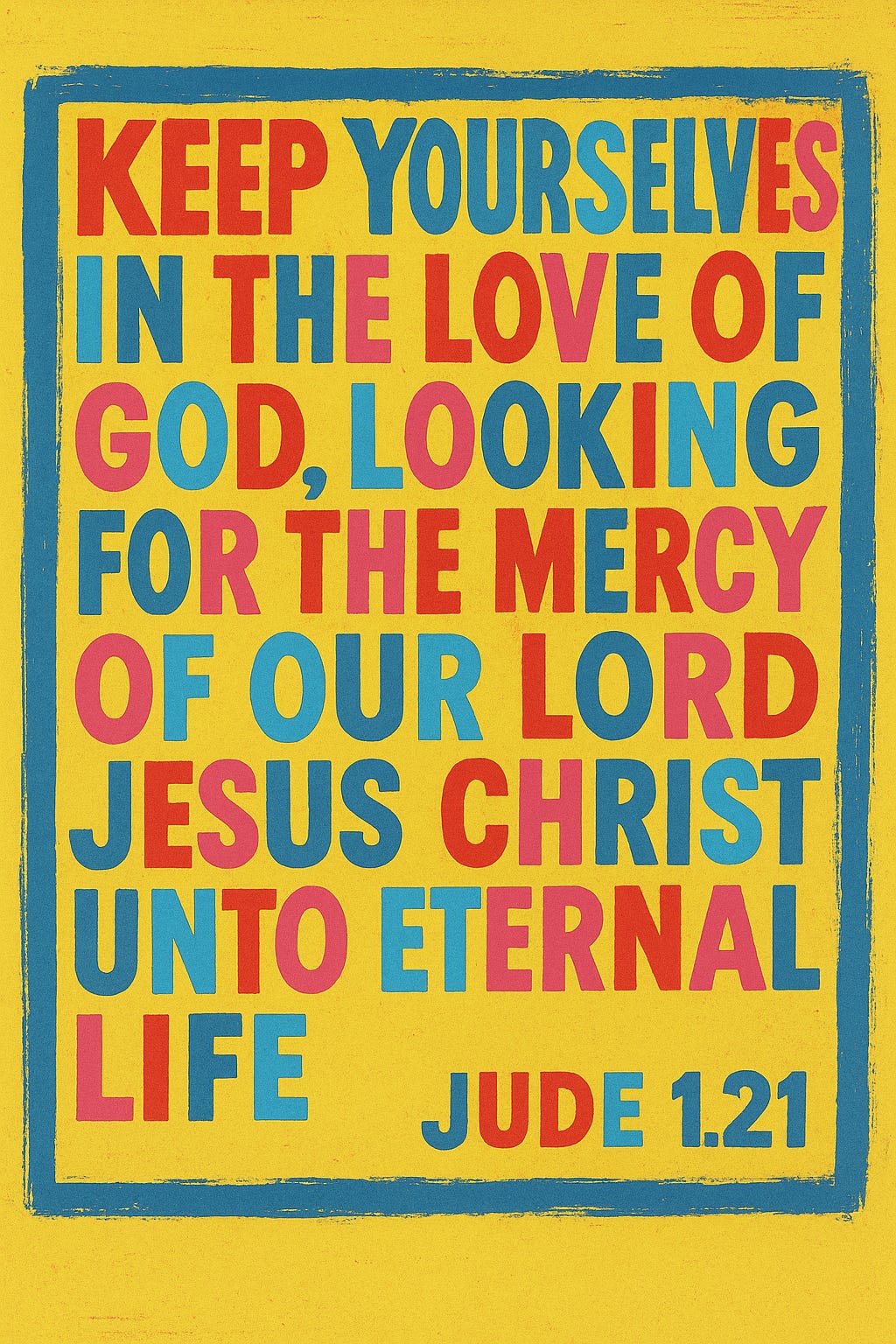
JUDE
This is a public episode. If you'd like to discuss this with other subscribers or get access to bonus episodes, visit alexia.substack.com/subscribe
Daniel 10-12
Daniel 10-12Daniel 10–12 contains some of the most apocalyptic and prophetic material in the Old Testament, and it closely parallels themes found in Revelation and other New Testament apocalyptic passages. Here is a breakdown of key parallels between Daniel 10–12, the Book of Revelation, and other NT scriptures:1. Angelic Visitation and Spiritual WarfareDaniel 10:1–21* Daniel receives a vision after 21 days of fasting. An angel (possibly Gabriel) explains that he was delayed by the "prince of Persia" and assisted by Michael.Parallels:* Revelation 12:7–9: Michael and his angels fight the dragon (Satan) and his angels in heaven.* Ephesians 6:12: Paul speaks of wrestling not against flesh and blood, but against spiritual forces of evil in the heavenly realms.Key Themes:* Spiritual warfare behind geopolitical events* Angels and principalities interacting in unseen realms2. The Vision of Future Conflicts (Kings of the North and South)Daniel 11* A detailed prophecy of wars between northern and southern kingdoms (interpreted historically as Seleucids and Ptolemies, and typologically as ongoing conflicts leading to the Antichrist).Daniel 11:30 “For warships from western coastlands will scare him off, and he will withdraw and return home. But he will vent his anger against the people of the holy covenant and reward those who forsake the covenant.”"Kittim" (Hebrew: כִּתִּים) is an ancient term used to describe western maritime powers.It originally referred to Cyprus, but later also came to symbolize western regions, especially the Mediterranean seafaring powers—and by the time of Daniel, often Rome. The king's frustration turns toward the holy covenant — usually interpreted as the Jewish faith and people in Daniel’s time. He lashes out by persecuting the faithful.Ships of Kittim today—US., EU, NATO, or Western powersThe King/Leader—A rising Middle Eastern, Eurasian, or globalist figure (Antichrist-type)Holy Covenant—Israel, or the covenant people (Jews/Christians)Reward those who forsake the covenant* Co-opting compromised religious leaders, politicians, or even nations who abandon biblical values for gain.* Forming alliances with apostate or secularized entities who undermine biblical truth, both within Israel and globally.Parallels:* Revelation 13: Rise of the beast from the sea (political power) and the beast from the earth (religious power).* Matthew 24:6–7: Jesus speaks of "wars and rumors of wars," aligning with Daniel's ongoing conflict theme.* Antichrist — a future world leader who:* Makes a deceptive peace with Israel (Daniel 9:27),* Breaks that covenant mid-way,* Persecutes the faithful.3. The Abomination of DesolationDaniel 11:31; Daniel 12:11* Reference to the stopping of daily sacrifices and the setting up of the "abomination that causes desolation."Parallels:* Matthew 24:15: Jesus references this exact phrase from Daniel, linking it to the end times.* 2 Thessalonians 2:3–4: Paul describes the "man of lawlessness" who sets himself up in God’s temple.* Revelation 13:14–15: The beast sets up an image to be worshiped under penalty of death.4. The Time of Great TribulationDaniel 12:1* "There shall be a time of trouble, such as never has been..."Parallels:* Matthew 24:21: Jesus: "Then there will be great tribulation..."* Revelation 7:14: "These are the ones who come out of the great tribulation..."* Revelation 6–16: Series of judgments during the tribulation period5. Resurrection and Final JudgmentDaniel 12:2–3* Multitudes asleep in the dust will awake—some to everlasting life, others to shame.Parallels:* John 5:28–29: Jesus: "Those who have done good will rise to live, and those who have done evil will rise to be condemned."* Revelation 20:11–15: Great white throne judgment; resurrection of the dead and final separation* 1 Corinthians 15:52: The resurrection at the last trumpet6. Sealed Book and Mystery of the EndDaniel 12:4, 9* Daniel is told to “seal up the words” until the time of the end.Parallels:* Revelation 5:1–5: A sealed scroll is presented; only the Lamb can open it.* Revelation 10:4: John is told not to write what the seven thunders said.* Revelation 22:10: Unlike Daniel, John is told not to seal the prophecy—“the time is near.” This is a public episode. If you'd like to discuss this with other subscribers or get access to bonus episodes, visit alexia.substack.com/subscribe

Happiness Habits for Enhanced Employee Engagement and Productivity
Download the Team Happiness Habits Planner The lecture is based on Alexia Georghiou’s book, The Future of Work is Human and the Future of Success is Happiness on Amazon Prime. Order your copy HERE. Schedule a discovery call with Alexia Georghiou for a Happiness Habits Keynote for your event HERE. Take our Strategic Leadership Course for 2.5 PDC for SHRM CP and SCP Recertification Activities: https://knoxvillehappinesscoalition.systeme.iohttps://www.knoxvillehappinesscoalition.com This is a public episode. If you'd like to discuss this with other subscribers or get access to bonus episodes, visit alexia.substack.com/subscribe

Empathetic Leadership in Layoffs
Alexia Georghiou is a recognized leadership and organizational development consultant who partners with executives to implement values-driven strategies that strengthen culture, enhance performance, and sustain organizational resilience. She is the founder of the Knoxville Happiness Coalition—SHRM Recertification Provider for SHRM-CP® or SHRM-SCP®. Her book, The Future of Work is Human and the Future of Success is Happiness has been featured at SHRM25, SHRM Talent, TN HR Conference and Expo. Through her V.A.L.U.E.S. Model—Vision, Action, Leadership, Unity, Engagement, and Synthesis—Alexia helps leaders align performance with purpose. She advises executives and HR leaders, writes, and speaks on human-centered leadership rooted in positive psychology.https://www.knoxvillehappinesscoalition.com This is a public episode. If you'd like to discuss this with other subscribers or get access to bonus episodes, visit alexia.substack.com/subscribe
DANIEL 9
Daniel 9* "He" = Antichrist* The 70th week is a yet-future 7-year tribulation period.* Antichrist makes a false covenant with Israel, breaks it halfway through (3.5 years), and causes the "abomination of desolation."* This view often includes the Rapture, the rebuilding of the Temple, and the rise of a global leader. Aligns with Revelation (chapters 6–19) and Jesus' words in Matthew 24Key Themes and Connections:* Covenant: Daniel 9:27 begins with a deceptive peace treaty made by the Antichrist.* Abomination of Desolation: Central turning point — aligns with Jesus’ warning in Matthew 24:15.* 3.5 years + 3.5 years: Common division in both Daniel (9:27; 7:25; 12:7) and Revelation (11:2–3; 12:6; 13:5).* Global Leader: The Antichrist mirrors the Beast in Revelation 13.* Temple Rebuilt: Implied by need for sacrifices to be stopped (Dan. 9:27). This is a public episode. If you'd like to discuss this with other subscribers or get access to bonus episodes, visit alexia.substack.com/subscribe
Daniel 8
Daniel 8Persecuting Power“A little horn… grew exceedingly great…”(Dan 8:9–12)“The beast was given a mouth uttering haughty and blasphemous words…” (Rev 13:5–7)“The man of lawlessness… opposes and exalts himself against every so-called god…” (2 Thess 2:3–4)Desecration of the Temple/Sanctuary“…the place of his sanctuary was overthrown…” (Dan 8:11)“…but do not measure the court outside the temple… it is given over to the nations…” (Rev 11:1–2)“…standing in the holy place, the abomination of desolation…” (Matt 24:15)Stopping of Sacrifices / Worship“…it will take away the regular burnt offering…”(Dan 8:11)“…it was allowed to make war on the saints and to conquer them…”(Rev 13:7)“…offering false worship… in the temple of God…” (2 Thess 2:4)Blasphemy / Exalting Himself“…he shall even rise up against the Prince of princes…”(Dan 8:25)“It opened its mouth to utter blasphemies against God…” (Rev 13:6)“…exalts himself… proclaiming himself to be God…” (2 Thess 2:4)Tribulation Time Period“For 2,300 evenings and mornings…”(Dan 8:14)“...they will trample the holy city for 42 months…” (Rev 11:2); “…1,260 days…” (Rev 12:6)“…time, times, and half a time…”(Dan 7:25; Rev 12:14)Antichrist Figure / ArchetypeLittle horn as type of Antiochus, foreshadowing Antichrist (Dan 8:23–25)Beast from the sea as a global ruler empowered by Satan (Rev 13:1–8)“The antichrist… is coming, and now many antichrists have come.”(1 John 2:18)Divine Judgment and End“He shall be broken—but by no human hand.” (Dan 8:25)“The beast was captured… thrown alive into the lake of fire…” (Rev 19:20)“Whom the Lord Jesus will kill with the breath of his mouth…” (2 Thess 2:8)Heavenly Interpretation / Angelic GuideGabriel explains the vision (Dan 8:15–26)John is guided by angels throughout(Rev 1:1; 17:1; 21:9)Jesus foretells events with clarity and authority (Matt 24; Luke 21)Conflict Between KingdomsRam = Medo-Persia; Goat = Greece (Dan 8:20–21)Beasts represent kingdoms (Rome, revived empire?)(Rev 13, 17)“The kings of the earth will make war on the Lamb…”(Rev 17:14; cf. Acts 4:26) This is a public episode. If you'd like to discuss this with other subscribers or get access to bonus episodes, visit alexia.substack.com/subscribe
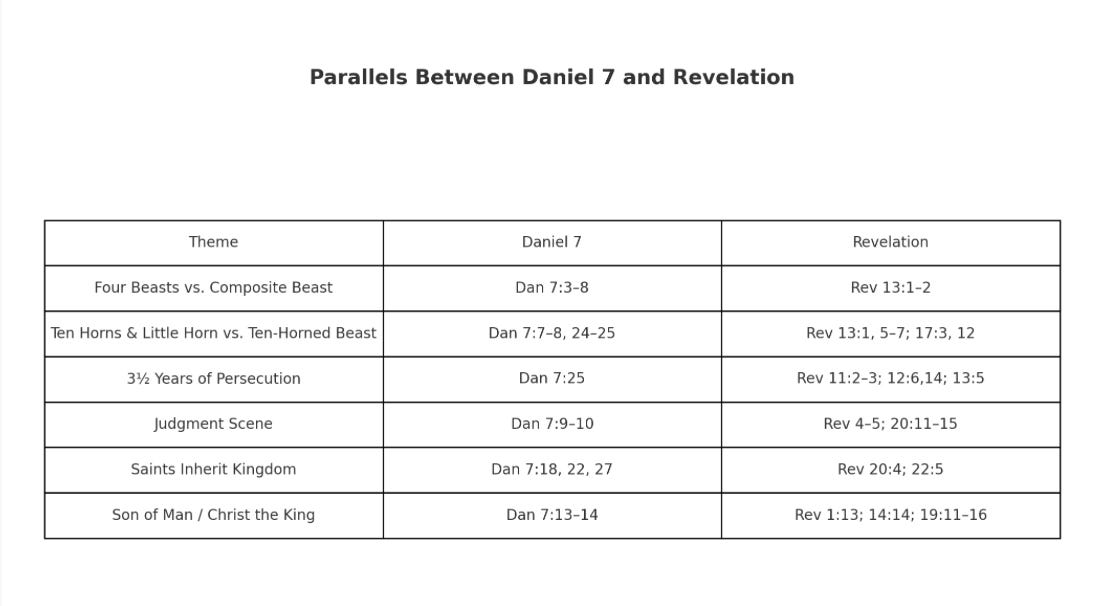
Daniel 7
Daniel 7Revelation This is a public episode. If you'd like to discuss this with other subscribers or get access to bonus episodes, visit alexia.substack.com/subscribe
DANIEL 6
Daniel 6 This is a public episode. If you'd like to discuss this with other subscribers or get access to bonus episodes, visit alexia.substack.com/subscribe
DANIEL 5
Daniel 5 This is a public episode. If you'd like to discuss this with other subscribers or get access to bonus episodes, visit alexia.substack.com/subscribe

Empathetic Leadership in Layoffs
Why Empathy in Layoffs Isn’t Just Kindness — It’s Smart BusinessBy Alexia GeorghiouAs artificial intelligence and automation continue to reshape the economy, layoffs have become an unsettling new normal. Across industries, companies face tough decisions to reduce headcount in order to stay competitive, adapt to new technologies, and survive economic disruptions. But how organizations handle these layoffs can be the difference between short-term survival and long-term decline.When Airbnb’s co-founder and CEO Brian Chesky announced a painful 25% workforce reduction in 2020, he did so with a level of transparency, empathy, and accountability that set a new standard. His letter was not just a message — it was a leadership lesson for every executive navigating this era of rapid change.Why does this matter?Layoffs don’t just affect the individuals losing their jobs — they ripple across the entire organization, impacting morale, trust, and productivity. Research from the Society for Human Resource Management (SHRM) underscores that empathetic, transparent communication during layoffs reduces employee turnover by up to 25%, lowers legal risks, and increases overall engagement and profitability.Brian Chesky’s approach to layoffs exemplifies eight key leadership principles that all leaders should embrace:* Be Transparent: Chesky openly explained the business realities that forced Airbnb’s layoffs. Employees deserve honesty about the “why” behind layoffs — this reduces fear, speculation, and rumor.* Acknowledge Emotions: Chesky recognized the emotional toll layoffs take and affirmed that affected employees were not at fault. Honoring the human cost preserves dignity and prevents long-term resentment.* Communicate Thoughtfully: He delivered the news with care and respect, recognizing that tone, timing, and method matter. Thoughtful communication builds goodwill even in difficult times.* Provide Real Support: Airbnb offered severance, healthcare benefits, and outplacement resources. Offering tangible support is both compassionate and strategic, easing financial stress and protecting company reputation.* Reinforce Purpose: Chesky connected the layoffs back to Airbnb’s mission of belonging and connection, helping those remaining find meaning and motivation in the transition.* Show Gratitude: He thanked both departing and remaining employees sincerely, fostering loyalty and resilience at a vulnerable moment.* Engage the Remaining Team: Chesky committed to ongoing communication and visibility post-layoffs to rebuild trust and maintain focus. This prevents “survivor syndrome” and disengagement.* Own the Decision: Chesky took full personal responsibility for the layoffs, demonstrating leadership accountability — essential for restoring credibility.As automation and AI reshape the workforce, the challenge for leaders is not just whether to downsize, but how to do it responsibly. Companies that invest in empathetic layoffs can expect stronger alumni networks, which often lead to future business partnerships, rehires, and positive word-of-mouth that benefit brand reputation.Moreover, handling layoffs with humanity supports mental health and reduces burnout among remaining employees, helping organizations maintain productivity during times of upheaval. This approach also signals to customers, investors, and the public that the company values people as much as profits—an increasingly important factor in consumer trust and long-term success.In the coming years, leaders who prioritize empathy during workforce transitions will set themselves apart as forward-thinking and resilient. The way we treat employees in their most vulnerable moments will become a defining measure of leadership and organizational strength.The question is no longer just about adapting to change but about leading change with compassion. That mindset will determine which companies thrive in the age of AI—and which become relics of a less human era.Make Empathy the cool thing by supporting my proposal for SXSW. Just click the ❤️Exit with Empathy: Rethinking Layoffs This is a public episode. If you'd like to discuss this with other subscribers or get access to bonus episodes, visit alexia.substack.com/subscribe
DANIEL 4
DANIEL 4 This is a public episode. If you'd like to discuss this with other subscribers or get access to bonus episodes, visit alexia.substack.com/subscribe
DANIEL 1-3
DANIEL Revelation 13 This is a public episode. If you'd like to discuss this with other subscribers or get access to bonus episodes, visit alexia.substack.com/subscribe
PHILIPPIANS
Philippians 35 I was circumcised when I was eight days old. I am a pure-blooded citizen of Israel and a member of the tribe of Benjamin—a real Hebrew if there ever was one! I was a member of the Pharisees, who demand the strictest obedience to the Jewish law. 6 I was so zealous that I harshly persecuted the church. And as for righteousness, I obeyed the law without fault.7 I once thought these things were valuable, but now I consider them worthless because of what Christ has done. 8 Yes, everything else is worthless when compared with the infinite value of knowing Christ Jesus my Lord. For his sake I have discarded everything else, counting it all as garbage, so that I could gain Christ 9 and become one with him. I no longer count on my own righteousness through obeying the law; rather, I become righteous through faith in Christ.[o] For God’s way of making us right with himself depends on faith. 10 I want to know Christ and experience the mighty power that raised him from the dead. I want to suffer with him, sharing in his death, 11 so that one way or another I will experience the resurrection from the dead!Read along PHILIPPIANS This is a public episode. If you'd like to discuss this with other subscribers or get access to bonus episodes, visit alexia.substack.com/subscribe

The Calming Power of Ice: How Cold Stimuli Can Support Emotional Regulation and Improve Conversations
When we feel nervous—before a presentation, during a conflict, or while managing social anxiety—simple physical strategies can have a powerful effect. One scientifically supported method involves applying ice or cold water to specific areas of the body to calm the nervous system. This can enhance emotional regulation and improve conversations.How Ice Calms the Nervous SystemVagus Nerve StimulationCold exposure can stimulate the vagus nerve, which plays a major role in calming stress responses. A higher vagal tone is linked with better emotional regulation and resilience. This connection is explored in both psychiatric and inflammatory contexts.More Practical Applications for Using Ice to Calm the Nervous System* Facial Dunk Method: Fill a bowl with cold water and ice, then submerge your face for 10–15 seconds. This strongly activates the dive reflex and is especially effective before stressful conversations.* Ice Cube Holding: Hold an ice cube tightly in your hand for 30–60 seconds. Focus on the sensation to help ground yourself before or during a conversation.* Cold Pack on Pulse Points: Apply a cold pack or chilled object to areas like the neck, wrists, or inner elbows. These spots allow quicker cooling effects and subtle calming during social interactions.* Emergency Cool-Down: If overwhelmed mid-conversation, excuse yourself briefly and apply cold to your face or neck in a private space to reset your nervous system.* Portable Tools: Carry a small ice pack or cold compress in a lunch cooler or bag for planned stressful events like public speaking or important meetings.Source: Breit, S., Kupferberg, A., Rogler, G., & Hasler, G. (2018). Vagus nerve as modulator of the brain–gut axis in psychiatric and inflammatory disorders. Frontiers in Psychiatry, 9, 44. https://www.frontiersin.org/articles/10.3389/fpsyt.2018.00044/full This is a public episode. If you'd like to discuss this with other subscribers or get access to bonus episodes, visit alexia.substack.com/subscribe
ROMANS 1-8
ROMANS 1-8 This is a public episode. If you'd like to discuss this with other subscribers or get access to bonus episodes, visit alexia.substack.com/subscribe
2JOHN 3JOHN
2JOHN 3JOHN This is a public episode. If you'd like to discuss this with other subscribers or get access to bonus episodes, visit alexia.substack.com/subscribe
1JOHN
1JOHN This is a public episode. If you'd like to discuss this with other subscribers or get access to bonus episodes, visit alexia.substack.com/subscribe
2Peter
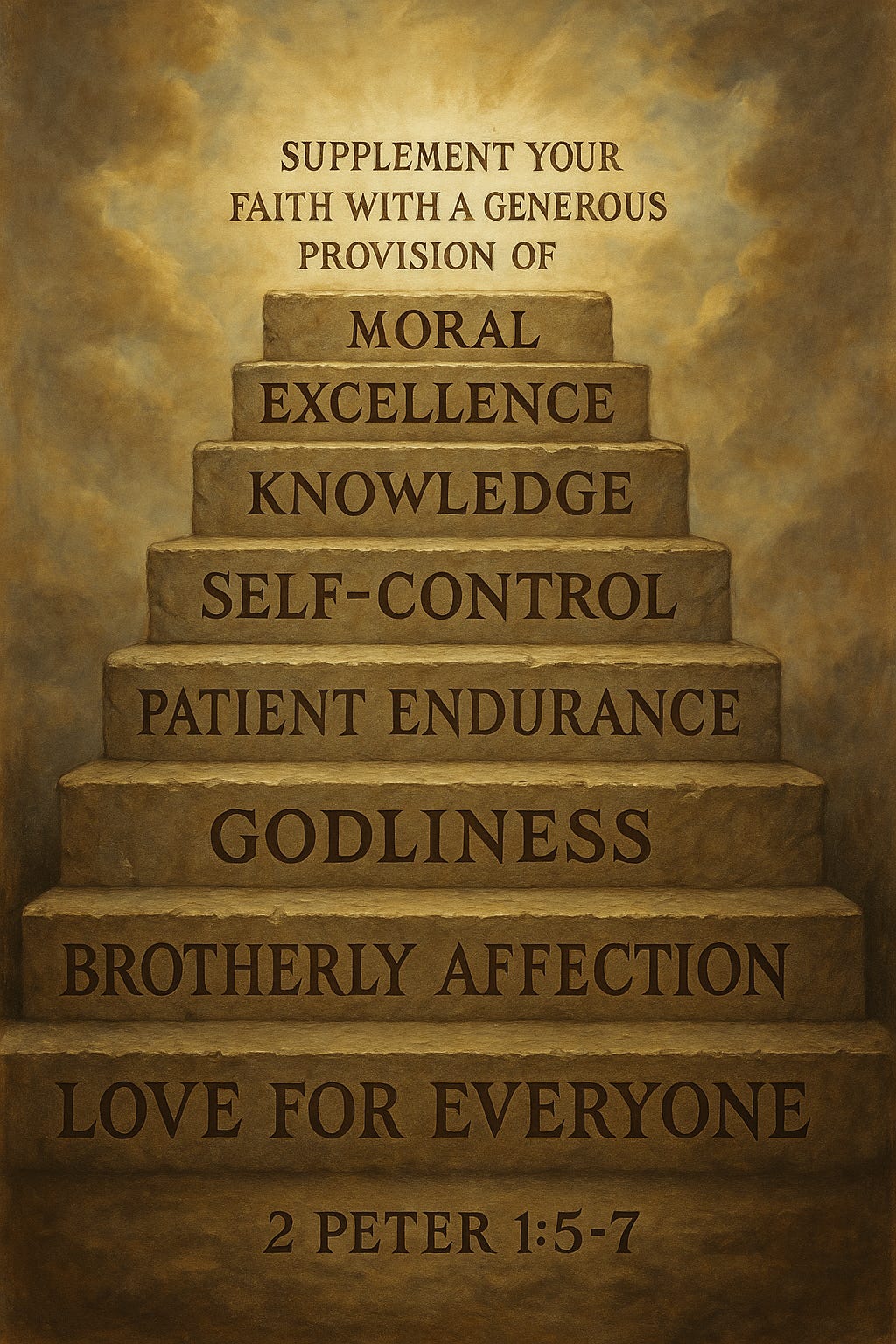
2Peter This is a public episode. If you'd like to discuss this with other subscribers or get access to bonus episodes, visit alexia.substack.com/subscribe
1PETER
1PETER This is a public episode. If you'd like to discuss this with other subscribers or get access to bonus episodes, visit alexia.substack.com/subscribe
2 Thessalonians
2 Thessalonians This is a public episode. If you'd like to discuss this with other subscribers or get access to bonus episodes, visit alexia.substack.com/subscribe
Thessalonians
Thessalonians This is a public episode. If you'd like to discuss this with other subscribers or get access to bonus episodes, visit alexia.substack.com/subscribe

JAMES
James This is a public episode. If you'd like to discuss this with other subscribers or get access to bonus episodes, visit alexia.substack.com/subscribe
2Timothy
2Timothy This is a public episode. If you'd like to discuss this with other subscribers or get access to bonus episodes, visit alexia.substack.com/subscribe
1Timothy
1Timothy 1-6 This is a public episode. If you'd like to discuss this with other subscribers or get access to bonus episodes, visit alexia.substack.com/subscribe
PHILEMON
PHILEMON This is a public episode. If you'd like to discuss this with other subscribers or get access to bonus episodes, visit alexia.substack.com/subscribe
TITUS
TITUS This is a public episode. If you'd like to discuss this with other subscribers or get access to bonus episodes, visit alexia.substack.com/subscribe

Purpose as Your Compass for the Future of Work
Picture the night sky. Stars scattered across the darkness seem random at first glance, but when you pause and trace the patterns, you see constellations—guides that have steered humanity for centuries. These patterns weren’t fixed; they shifted with perspectives and needs, evolving as people looked at them from different angles.Now, think of your life. Your purpose isn’t a single, unchanging North Star. It’s a constellation—a collection of moments, relationships, and choices. It doesn’t tell you exactly where to go or what to do, but it gives you direction. And at the center of this constellation is your compass: your purpose.Learn more about my Keynote Hold your Kryptonite: What Paint Taught Me About Purpose This is a public episode. If you'd like to discuss this with other subscribers or get access to bonus episodes, visit alexia.substack.com/subscribe
JOHN 15-21
JOHN 15-21 This is a public episode. If you'd like to discuss this with other subscribers or get access to bonus episodes, visit alexia.substack.com/subscribe
GALATIANS
Galatians 5:13-2613 For you have been called to live in freedom, my brothers and sisters. But don’t use your freedom to satisfy your sinful nature. Instead, use your freedom to serve one another in love.14 For the whole law can be summed up in this one command: “Love your neighbor as yourself.”[ao] 15 But if you are always biting and devouring one another, watch out! Beware of destroying one another.Living by the Spirit’s Power16 So I say, let the Holy Spirit guide your lives. Then you won’t be doing what your sinful nature craves. 17 The sinful nature wants to do evil, which is just the opposite of what the Spirit wants. And the Spirit gives us desires that are the opposite of what the sinful nature desires. These two forces are constantly fighting each other, so you are not free to carry out your good intentions. 18 But when you are directed by the Spirit, you are not under obligation to the law of Moses.19 When you follow the desires of your sinful nature, the results are very clear: sexual immorality, impurity, lustful pleasures, 20 idolatry, sorcery, hostility, quarreling, jealousy, outbursts of anger, selfish ambition, dissension, division, 21 envy, drunkenness, wild parties, and other sins like these. Let me tell you again, as I have before, that anyone living that sort of life will not inherit the Kingdom of God.22 But the Holy Spirit produces this kind of fruit in our lives: love, joy, peace, patience, kindness, goodness, faithfulness, 23 gentleness, and self-control. There is no law against these things!24 Those who belong to Christ Jesus have nailed the passions and desires of their sinful nature to his cross and crucified them there. 25 Since we are living by the Spirit, let us follow the Spirit’s leading in every part of our lives. 26 Let us not become conceited, or provoke one another, or be jealous of one another.Read along ➡️GALATIANS This is a public episode. If you'd like to discuss this with other subscribers or get access to bonus episodes, visit alexia.substack.com/subscribe
COLOSSIANS
COLOSSIANS This is a public episode. If you'd like to discuss this with other subscribers or get access to bonus episodes, visit alexia.substack.com/subscribe
JUDE
JUDE This is a public episode. If you'd like to discuss this with other subscribers or get access to bonus episodes, visit alexia.substack.com/subscribe
JOHN 13-14
JOHN 13-14 This is a public episode. If you'd like to discuss this with other subscribers or get access to bonus episodes, visit alexia.substack.com/subscribe
EPHESIANS
EPHESIANS NEW LIVING TRANSLATION This is a public episode. If you'd like to discuss this with other subscribers or get access to bonus episodes, visit alexia.substack.com/subscribe

RUTH
Ruth 1-4The Genealogy of Jesus the Messiah1 This is the genealogy of Jesus the Messiah the son of David, the son of Abraham:2 Abraham was the father of Isaac,Isaac the father of Jacob,Jacob the father of Judah and his brothers,3 Judah the father of Perez and Zerah, whose mother was Tamar,Perez the father of Hezron,Hezron the father of Ram,4 Ram the father of Amminadab,Amminadab the father of Nahshon,Nahshon the father of Salmon,5 Salmon the father of Boaz, whose mother was Rahab,Boaz the father of Obed, whose mother was Ruth,Obed the father of Jesse,6 and Jesse the father of King David.The story of Ruth, found in the Book of Ruth in the Bible, is about a Moabite woman who, through her faithfulness and loyalty, is redeemed and honored by God.Ruth was the daughter-in-law of Naomi, an Israelite woman. After Naomi’s husband and two sons died, Naomi decided to return to Bethlehem from Moab, urging her daughters-in-law to stay in Moab. However, Ruth refused to leave Naomi, saying, "Where you go, I will go; where you stay, I will stay. Your people will be my people and your God my God" (Ruth 1:16). This act of devotion demonstrated Ruth's strong faith in God, even as a foreigner.Once in Bethlehem, Ruth provided for herself and Naomi by gleaning in the fields. She happened to work in the fields of Boaz, a relative of Naomi’s late husband. Boaz noticed Ruth’s kindness to Naomi and treated her with favor. Following Naomi’s advice, Ruth approached Boaz as a kinsman-redeemer—an Israelite practice allowing a close relative to marry a widow to protect her family’s lineage. Boaz, moved by Ruth’s loyalty and virtue, agreed to marry her.God honored Ruth’s faith by allowing her to become the great-grandmother of King David, placing her in the genealogy of Jesus Christ (Matthew 1:5). Despite being a Moabite, Ruth’s devotion to God and her love for Naomi led to her redemption, and she was woven into the very lineage of Israel’s greatest king and the Messiah. This is a public episode. If you'd like to discuss this with other subscribers or get access to bonus episodes, visit alexia.substack.com/subscribe
JOHN 10-12
John 10-12 This is a public episode. If you'd like to discuss this with other subscribers or get access to bonus episodes, visit alexia.substack.com/subscribe
JUDGES
Judges 1-21Judges 2:20-23 (NLT):So the Lord burned with anger against Israel. He said, “Because these people have violated my covenant, which I made with their ancestors, and have ignored my commands, I will no longer drive out the nations that Joshua left unconquered when he died. I did this to test Israel—to see whether or not they would follow the ways of the Lord as their ancestors did.” That is why the Lord left those nations in place. He did not quickly drive them out or allow Joshua to conquer them all.Judges 3:1-4 (NLT):These are the nations that the Lord left in the land to test those Israelites who had not experienced the wars of Canaan. He did this to teach warfare to generations of Israelites who had no experience in battle. These are the nations: the Philistines (those living under the five Philistine rulers), all the Canaanites, the Sidonians, and the Hivites living in the mountains of Lebanon from Mount Baal-hermon to Lebo-hamath. These people were left to test the Israelites—to see whether they would obey the commands the Lord had given to their ancestors through Moses.The consequences for Israel not driving out the people of Canaan as God commanded are detailed in several parts of the Book of Judges. The Israelites' failure to fully obey God's command resulted in severe spiritual and social consequences. These include their entanglement with the pagan nations and their practices, which led to idolatry and divine punishment. Here are key passages that describe these consequences:Judges 2:1-3 (NLT):The angel of the Lord went up from Gilgal to Bokim and said to the Israelites, "I brought you out of Egypt into this land that I swore to give your ancestors, and I said I would never break my covenant with you. For your part, you were not to make any covenants with the people living in this land; instead, you were to destroy their altars. But you disobeyed my command. Why did you do this? So now I declare that I will no longer drive out the people living in your land. They will be thorns in your sides, and their gods will be a constant temptation to you."Consequence: The Canaanite nations became a source of constant trouble for Israel, and the foreign gods would continually lead them into temptation and idolatry.Judges 2:11-15 (NLT):The Israelites did evil in the Lord’s sight and served the images of Baal. They abandoned the Lord, the God of their ancestors, who had brought them out of Egypt. They went after other gods, worshiping the gods of the people around them. And they angered the Lord. They abandoned the Lord to serve Baal and the images of Ashtoreth. This made the Lord burn with anger against Israel, so he handed them over to raiders who stole their possessions. He turned them over to their enemies all around, and they were no longer able to resist them. Every time Israel went out to battle, the Lord fought against them, causing them to be defeated, just as he had warned. And the people were in great distress.Consequence: Because of their idolatry and disobedience, the Israelites suffered defeat at the hands of their enemies and were oppressed. The Lord withdrew His protection and allowed their enemies to overpower them.Judges 3:5-8 (NLT):So the people of Israel lived among the Canaanites, Hittites, Amorites, Perizzites, Hivites, and Jebusites, and they intermarried with them. Israelite sons married their daughters, and Israelite daughters were given in marriage to their sons. And the Israelites served their gods. The Israelites did evil in the Lord’s sight. They forgot about the Lord their God, and they served the images of Baal and the Asherah poles. Then the Lord burned with anger against Israel, and he turned them over to King Cushan-rishathaim of Aram-naharaim. And the Israelites were subject to Cushan-rishathaim for eight years.Consequence: By living among and intermarrying with the Canaanites, the Israelites were led into idolatry. As a result, God allowed them to be conquered and oppressed by foreign rulers.Judges 10:13-14 (NLT):Yet you have abandoned me and served other gods. So I will not rescue you anymore. Go and cry out to the gods you have chosen! Let them rescue you in your hour of distress!"Consequence: As a result of Israel's persistent idolatry, God temporarily refused to deliver them, telling them to seek help from the false gods they had chosen to serve.These passages illustrate how Israel’s failure to fully obey God’s command to drive out the inhabitants of the land resulted in idolatry, oppression, and suffering. The foreign nations became "thorns in their sides" (Judges 2:3), leading them away from the covenant with God and into cycles of judgment and distress. This is a public episode. If you'd like to discuss this with other subscribers or get access to bonus episodes, visit alexia.substack.com/subscribe
JOSHUA
Joshua 1-24The land promised to the Israelites in the Bible, specifically in the Book of Joshua, roughly corresponds to a region that spans several modern-day countries in the Middle East. In the Book of Joshua, this "Promised Land" includes the area from the Jordan River to the Mediterranean Sea and extends from Lebanon in the north to the Sinai Peninsula in the south.Here’s how this biblical region maps onto current-day countries:1. Israel:* Much of modern-day Israel is part of the land described in the Book of Joshua. The central and southern parts of Israel, including cities like Jerusalem, Hebron, and Jericho, were key territories.* The coastal plains along the Mediterranean, including areas like Jaffa (modern-day Tel Aviv), are part of this land.2. Palestine (West Bank and Gaza Strip):* Parts of the West Bank, including cities such as Bethlehem, Hebron, and Jericho, are also part of the land described.* Gaza, where the Philistines lived, was part of the Promised Land’s coastal region.3. Jordan:* Eastern Jordan, particularly areas to the east of the Jordan River, such as the region of Gilead, Ammon, and Moab, are part of the biblical descriptions. The tribes of Reuben, Gad, and half of Manasseh settled in this area.4. Lebanon:* The northern boundary of the Promised Land extended into parts of Lebanon, particularly the areas south of the Litani River and the region around Mount Hermon.5. Syria:* Parts of southern Syria, particularly near the Golan Heights and the Bashan region, are included in the northern boundary of the land described in Joshua.6. Egypt (Sinai Peninsula):* The southernmost extent of the Promised Land, according to some biblical descriptions, includes parts of the Sinai Peninsula, which is today part of Egypt.Key Areas in Modern Countries:* Israel and Palestine: Most of the land described as the Promised Land, including Jerusalem, Jericho, Hebron, and the coastal cities, are within modern Israel and the Palestinian territories.* Jordan: Eastern areas, like Ammon and Moab, where the tribes of Israel settled east of the Jordan River.* Lebanon: The far northern boundary touches southern Lebanon, especially near Mount Hermon.* Syria: Southern Syria, around the Golan Heights and Bashan.* Egypt: The southernmost border may have included parts of the Sinai Peninsula.The Promised Land described in the Book of Joshua spans territories that are today part of Israel, Palestine, Jordan, Lebanon, Syria, and Egypt. The specific boundaries are subject to interpretation, but these countries broadly correspond to the areas outlined in the biblical text. This is a public episode. If you'd like to discuss this with other subscribers or get access to bonus episodes, visit alexia.substack.com/subscribe