Show overview
Ag Emerge Podcast has been publishing since 2019, and across the 7 years since has built a catalogue of 197 episodes. That works out to roughly 200 hours of audio in total. Releases follow a monthly cadence.
Episodes typically run thirty-five to sixty minutes — most land between 55 min and 1h 5m — and the run-time is fairly consistent across the catalogue. None of the episodes are flagged explicit by the publisher. It is catalogued as a EN-language Education show.
The show is actively publishing — the most recent episode landed 1 weeks ago, with 19 episodes already out so far this year. The busiest year was 2024, with 46 episodes published.
From the publisher
Soil health, regenerative practices, and emerging technology — The AgEmerge Podcast. Join our host, Monte Bottens, as he engages with guests from diverse agriculture interests to discuss experiences, practices and scalable applications for any operation. Tune in to new episodes every other Tuesday to regenerate your ideas, soil, crops, livestock and livelihood. ag-emerge ag emerge
Latest Episodes
View all 197 episodesAgEmerge Podcast 197 with Chris Jones
AgEmerge Podcast 196 with Colin Hurd of MACH
AgEmerge Podcast 195 with Chuck Schembre
AgEmerge Podcast 194 with Dr. Jessica Chiartas and REGENSCORE
AgEmerge Podcast 193 with Verdant Robotics
AgEmerge Podcast 192 with Chris Baggott
AgEmerge Podcast 191 with Steve Groff
AgEmerge Podcast 190 Bonsai Robotics and Tyler Niday
AgEmerge Podcast 189 with Jason Mauck
AgEmerge Podcast 188 with Natalie Sturm
AgEmerge Podcast 187 with Matt Griggs
AgEmerge Podcast 186 with Dr Lisa Kissing Kucek
AgEmerge Podcast 185 with Ty Brown | Incremental Improvements Transform Farm Operations

AgEmerge Podcast 184 with Dr. Michael McNeill | The Saga of Soggy Sauerkraut
Many farmers assume glyphosate is a reliable tool for weed control with minimal downsides, but Dr. Michael McNeill shows how this herbicide quietly disrupts the very foundation of productive farming—from soil biology to crop health and long-term field resilience. In this eye-opening episode, Dr. McNeill explains the hidden journey of glyphosate through the farm system: how it lingers in manure from treated feed, carries over to contaminate even organic fields, and boosts pathogenic fungi and other disease pressures that hit yields hard. He shares research revealing glyphosate's antibiotic-like effects on soil microbes—shifting the microbial balance, weakening natural disease suppression, and making plants more vulnerable to outbreaks that cost farmers in inputs and lost production. You'll hear about practical, farmer-tested ways to fight back, including using raw sauerkraut juice (loaded with beneficial fermentative microbes like Lactobacillus plantarum) to rapidly break down glyphosate residues in soil and feed crops—potentially slashing contamination by 80-90% in just months and freeing up bound nutrients for better plant uptake. The discussion dives deep into proven regenerative strategies to reclaim fields: strategic cover crops, targeted microbial inoculants, balanced soil nutrition, and other biological practices that naturally crowd out weeds, curb pests and diseases, and rebuild robust soil structure—without leaning on chemicals that create dependency and hidden costs over time. This episode lays bare how over-reliance on glyphosate often leads to nutrient lockups, escalating disease pressure, and rising input needs that eat into profits. But it also delivers real hope: a path to more resilient crops, healthier soils, lower long-term costs, and stronger farm sustainability. Ideal for row-crop farmers, livestock producers, agronomists, and anyone managing land who wants to cut through the noise and explore science-backed ways to reduce chemical dependency while boosting productivity and soil vitality. If you're ready to rethink weed management and invest in farming biologically, this conversation is essential listening. Read the journal article here: https://journals.ashs.org/view/journals/hortsci/59/11/article-p1618.xml About Dr. Michael McNeill: Over the past four decades, Dr. McNeill's focus as an agronomist has been in teaching the agricultural community an understanding of soil and plant nutrition, emphasizing its’ importance for animal and human health. His emphasis has been placed on developing farming systems that promote soil and plant health, as well as, conducting on farm research to develop efficient bio-remediation of soil and water contaminated with farm chemicals and fertilizer nutrients. Also, a major focus of his has been to teach farmers methods to evaluate soil health by measuring soil microbial life, water infiltration rates, soil density, soil compaction, soil fertility levels and how to develop corrective measures if problems are discovered. Positions, Scientific Appointments 1983 – Present President of Ag Advisory, Ltd. (an agricultural consulting company) 1971 – 1983 Research Scientist and Manager of a regional corn breeding station located in Algona, Iowa. 1969 – 1971 U.S. Army research pathologist, study of soybean and corn disease epiphytology. 1964 – 1969 Iowa State University, research associate. Contributions to Science: Published papers in the following: Crop Science, Horticulture Science, Egyptian Journal of Genetics, Plant Disease Reporter, Journal of Genetics, Journal of Economic Entomology, Agronomy Journal, Iowa State University Extension Service Bulletins Popular Press articles: Farm Journal, Successful Farming, Farm Industry News, Iowa Farmer Today, Soybean Digest, Furrow
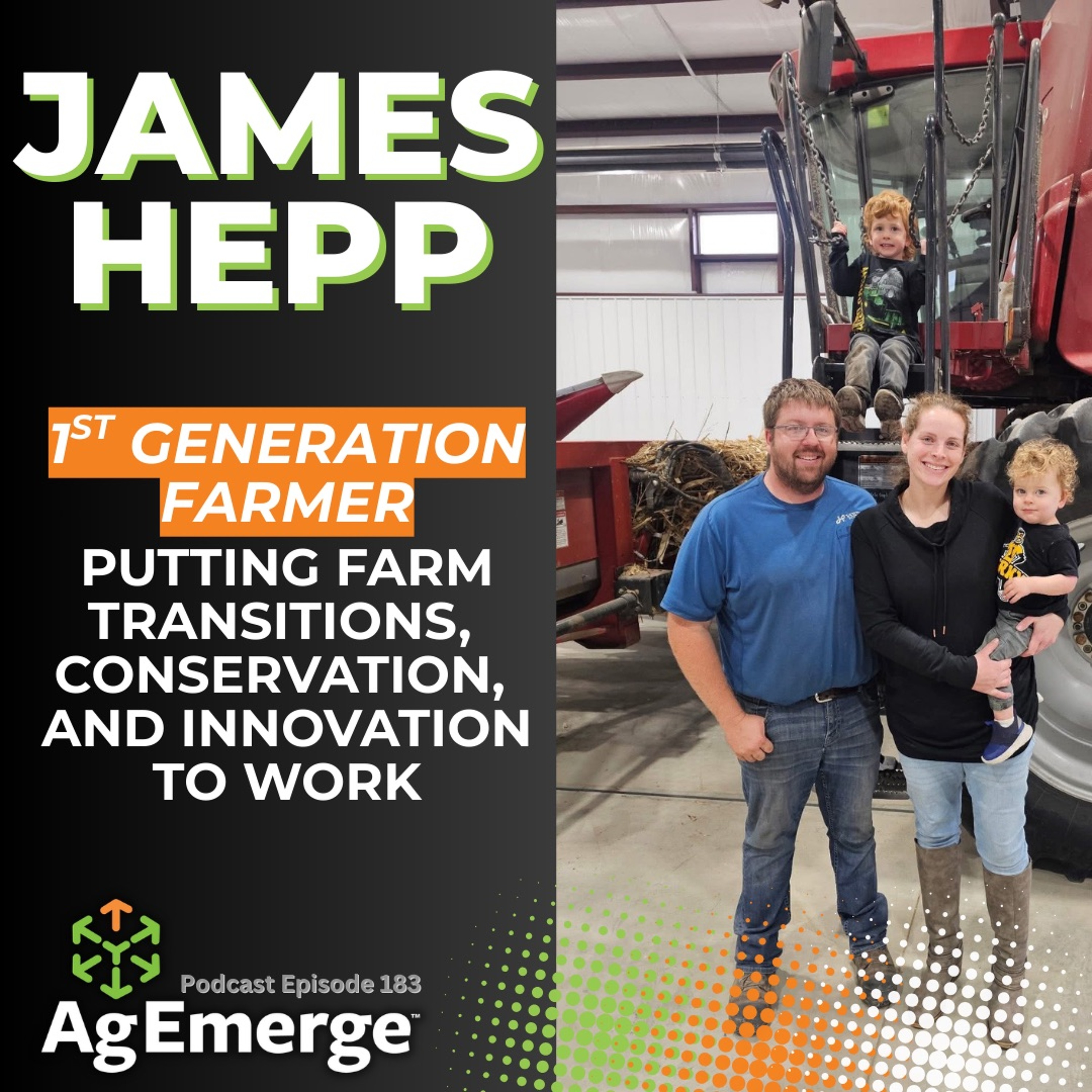
AgEmerge Podcast 183 with James Hepp
Rockwell City native James Hepp aspired to farm, but with no direct ties to land, that dream seemed out of reach. So how did he get to be farming thousands of acres and a Soil and Water Conservation District Commissioner? About Our Guest: James Hepp aspired to farm, but with no direct ties to land, that dream seemed out of reach. Hepp attended Northwest Missouri State University, where he earned a degree in agricultural business and started his career as a crop insurance adjuster after graduation. In 2019, the opportunity to work with a high school friend’s father, who was nearing retirement, led to a crop-share arrangement and opened the door for Hepp to farm full time. At the same time, Hepp started up his own crop insurance agency. Hepp now manages about 1,400 acres of corn, soybeans, and small grains as a first-generation farmer. Hepp also runs an ag retail business selling lots of regenerative products he uses on his acres. With support from his landlord, Hepp incorporates a wide range of conservation and soil-health building practices on his acres, including cover crops, buffer strips, no-till, strip-till, split-applied nitrogen, variable rate seeding, and much more. Hepp is passionate about showing others how to implement conservation practices that protect soil and water quality through field days held annually on his farm. He is also involved in the local fire department and is a past president of the Calhoun County Farm Bureau. In 2024, James earned the Iowa Farm Bureau Young Farmer Environmental Leadership Award. Navigating Farm Transitions, Conservation, and Innovation with James Hepp In this episode, James Hepp shares his inspiring journey from a non-traditional farming background to becoming a full-time, innovative no-till farmer. He discusses transitioning practices, cover crops, soil health, and water quality—offering practical advice for farmers looking to adapt and improve sustainably. Timestamps 00:29 - Introduction to James Hepp's farming story and background 05:44 - Growth of farm acreage and shift to no-till and regenerative practices 06:35 - Balancing family life and farming full-time with young children 07:05 - Diversification: cover crops, regenerative products, and livestock 08:14 - The challenge of farm succession and transition for older farmers 11:55 - Foundations of risk management: having legal agreements in writing 12:24 - Financial and land management strategies with landowners 13:07 - The benefits of innovative lease agreements and crop share options 16:22 - The mindset of free-thinking farmers and stepping outside of traditional practices 17:25 - Risk mitigation: equipment setup, safety, and exit strategies 22:31 - The advantages of simulated rent and crop sharing models 30:02 - Fertilizer timing, fertilizer reduction, and nutrient placement strategies 34:15 - Cover crop choices: triticale, rye, camelina, and their benefits 36:11 - The economics of strip tillage and equipment investment 38:48 - Practical tips for planting soybeans no-till in different row widths 43:18 - Managing cover crop seeding with drone technology and timing considerations 44:36 - Growing seed oats and low-input, high-return cover crops 54:20 - Water quality challenges, policy, and personal responsibility in Iowa 55:48 - The need for a systems approach, collaboration, and conservation policies 65:21 - Final thoughts: encouragement for farmers to innovate and lead Resources & Links Rockwell City, Iowa (local context) Des Moines Water Works Soil health research by Richard Mulvaney Crop insurance programs Cover crop seed providers No-till conference insights Crop and soil testing services Regenerative ag products: Spray Tech Iowa Farm Bureau Roots Program Water quality policy initiatives in Iowa Connect with James Hepp LinkedIn Twitter Rockwell City farm website
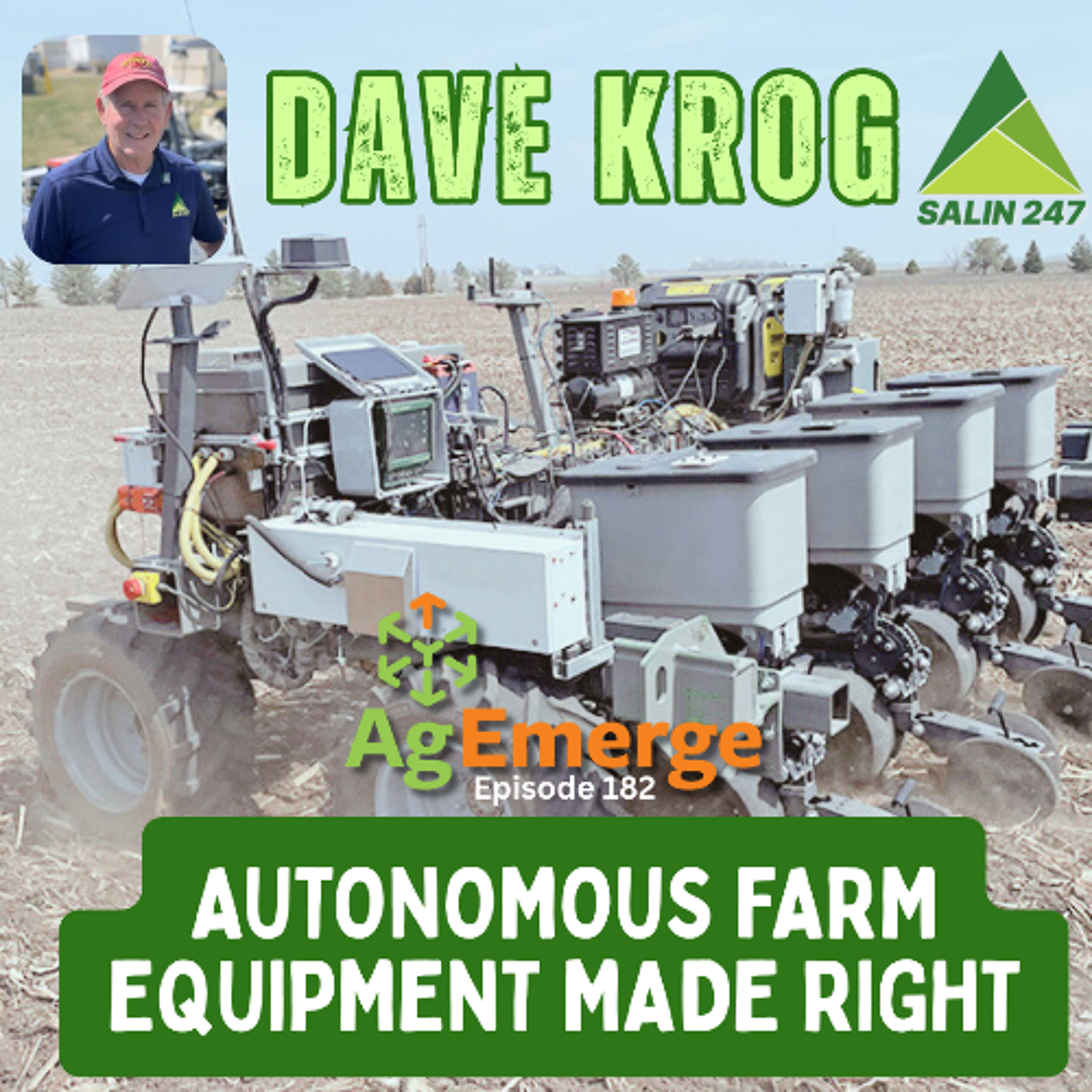
AgEmerge Podcast 182 with Dave Krog
Imagine autonomous equipment that transforms productivity, reduces costs, and addresses soil health like never before. In this episode, Dave Krog—founder of Salin 247— shows how farmers can replace massive, soil-compacting machinery with sleek, small-scale autonomous tools designed to work around the clock without a single operator. Dave walks us through his story from growing up on a farm in Iowa to pioneering autonomous planter prototypes in the fields. He reveals how his team is developing smart, electric implement frameworks that can seamlessly switch between planting, spraying, and other field tasks—cutting costs, lowering environmental impact, and solving labor shortages all at once. Dave explains how small, self-propelled tools can outperform traditional large equipment in efficiency and soil health. With host Monte Bottens, Dave proves the economic advantages of dividing hardware costs and why autonomy is the key to farming practices like strip cropping and organic systems. Timestamps: 0:00:00 Introduction to Autonomous Farming 0:05:00 The Genesis of Salin247 0:07:00 Challenges in Autonomous Technology 0:10:00 Early challenges faced in developing autonomous farming equipment. 0:15:00 Discussion on the transition to electric and autonomous machinery. 0:20:00 How autonomous technology can reduce costs and improve soil health. 0:25:00 Dave's insights on the future of farming with autonomous technology. About our Guest: Dave Krog is an Iowa-based engineer and founder of Salin247, leading the charge with innovative autonomous and electric farm equipment designed to reduce soil impact and elevate productivity. Key Takeaways: - Dave emphasizes the importance of understanding one's 'why' in their work. - The evolution of farm machinery has led to increased soil compaction issues. - Krog's company aims to replace large equipment with smaller, autonomous machines. - Electric machinery is a key focus for sustainable farming solutions. - The journey of developing autonomous farming technology has been ongoing for several years. - Labor availability is a significant challenge in modern agriculture. - Krog's background in farming informs his approach to agricultural technology. - The initial prototype was a four-row planter, which posed unique challenges. - Collaboration with Iowa State University has been crucial for Krog's innovations. - Continuous education and adaptation are essential in the field of ag tech.
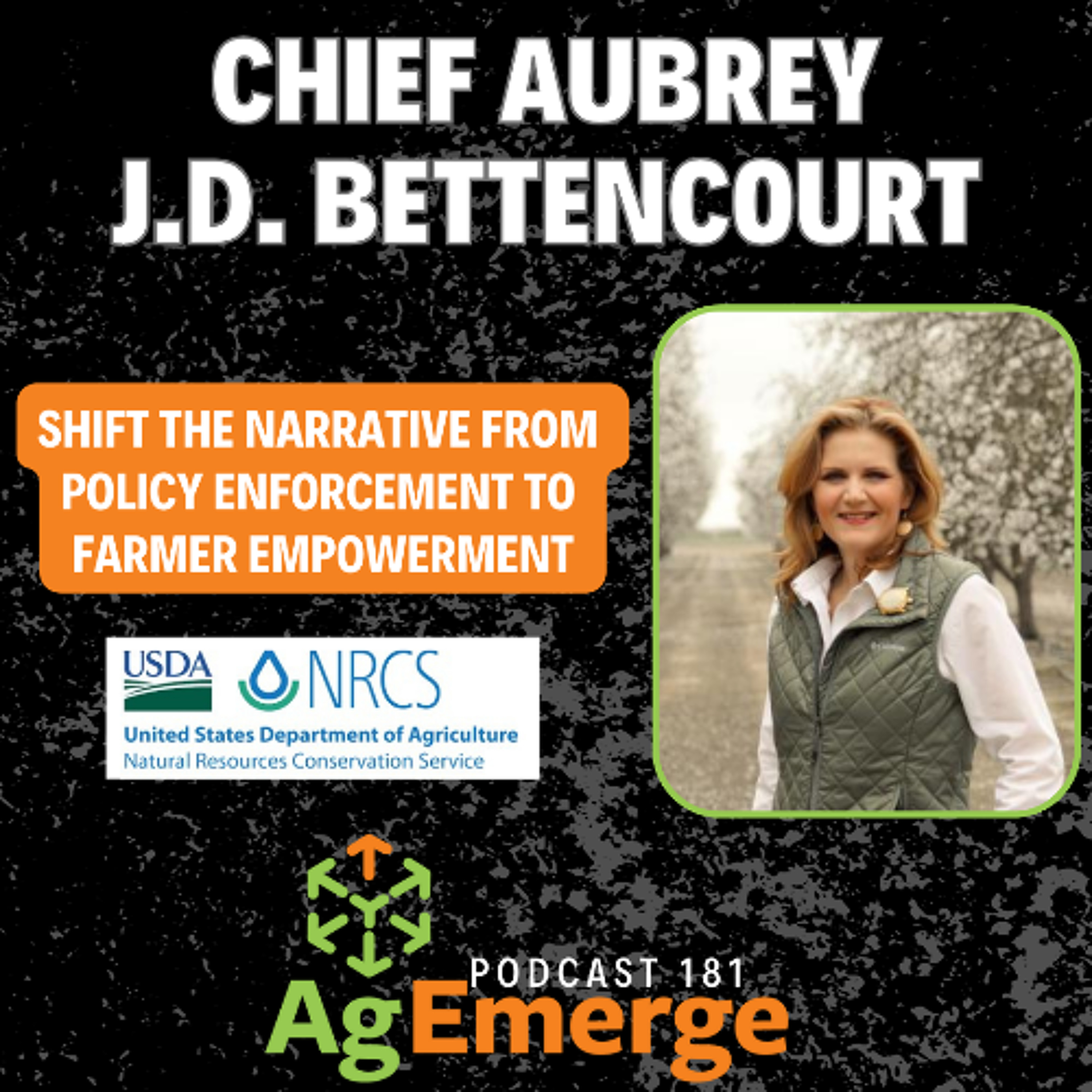
AgEmerge Podcast 181 with NRCS Chief Aubrey JD Bettencourt
Unlock the future of farming with insights from one of America's leading agriculture champions. Aubrey Bettencourt, Chief of the NRCS, and Host Monte Bottens, talk through how innovative programs, voluntary practices, and market-driven solutions are transforming the ways farmers conserve resources, improve soil health, and remain resilient. Hear how the new, USDA outcomes-based regen pilot program is set to redefine the way we address resource concerns—making conservation efforts more practical, impactful, and sticky for farmers from coast to coast. Chief Bettencourt reveals the bold strategy behind the NRCS's reinvigorated mission: keeping farmers on the land and demonstrating that soil health and water management are not just buzzwords but vital pathways to economic and environmental security. We break down how existing programs like EQIP and CSP are being harnessed in innovative ways to accelerate regenerative practices without adding burdens—ensuring voluntary, flexible, and locally driven adoption. Aubrey shares her vision for a future where farmers are empowered, markets are aligned, and soil health becomes a shared goal—ultimately transforming agriculture into a resilient, sustainable engine for generations to come. Click to learn more about NRCS and the Regen Pilot Program: https://www.youtube.com/watch?v=FhuHrYrPXfM About NRCS: https://www.nrcs.usda.gov/ ***About Our Guest: Aubrey J.D. Bettencourt serves as Chief of the Natural Resources Conservation Service (NRCS), the primary private lands conservation agency at the U.S. Department of Agriculture (USDA). NRCS helps producers, soil and water conservation districts, and other partners protect and conserve natural resources on private working lands while supporting American agricultural productivity throughout the United States. NRCS employees in the field work side-by-side with producers in every State and territory. Aubrey is a prominent leader in agriculture, water, and sustainability, most recently serving as the Global Director of Government Relations and External Affairs for Netafim, an Orbia Company. Prior to serving at Netafim, Aubrey was the President and Chief Executive Officer for the Almond Alliance, the national trade association advocating for American almond growers and processors. Prior to joining the Alliance, Aubrey served as the Sustainability Director for Western United Dairies, specifically leading initiatives in groundwater management. During the first Trump Administration, Aubrey worked with both the U.S. Department of the Interior (DOI) and USDA. As a Deputy Assistant Secretary with the DOI, she oversaw water and science policy. Prior to serving at DOI, Aubrey was the State Executive Director of USDA’s Farm Service Agency in California where she directed the administration of farm commodity programs providing support, security, and emergency relief for producers throughout the state. Her work reflects her personal commitment to keep farmers farming through sound water policy, agricultural support, technology, and sustainable practices. This is supported by her family’s farming roots in California’s great Central Valley. Aubrey is a third-generation farmer at Bettencourt Farms in Kings County, California, alongside her father, mother, husband, daughter, and loyal farm dogs. Aubrey is an Eisenhower Agricultural Fellow and holds a degree in History from Westmont College in Santa Barbara, California.
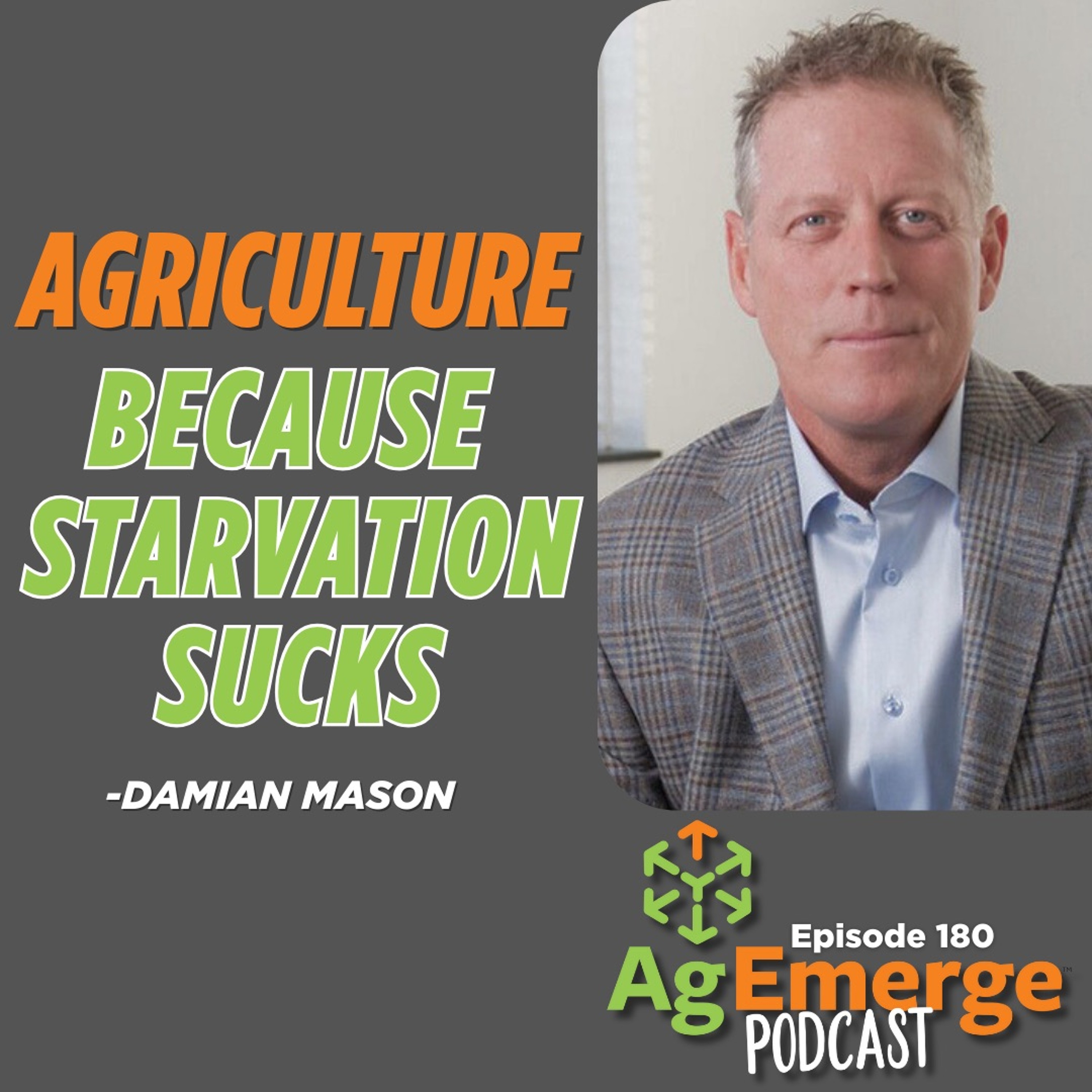
AgEmerge Podcast 180 with Damian Mason
Damian Mason brings his signature wit, straight talk, and decades of experience to remind us: agriculture isn't just about growing crops—it's about feeding people, building resilient systems, and securing the future. Monte Bottens sits down with Damian, an agricultural speaker, podcaster, and industry provocateur, for a no-holds-barred conversation about the real purpose and future of farming. Takeaways - Agriculture is a consumer business. - Understanding consumer needs is crucial for agricultural success. - Sustainable practices are becoming increasingly important in agriculture. - Technology plays a vital role in modern farming. - Market dynamics are constantly evolving in the agricultural sector. - Farmers need to adapt to changing consumer demands. - The importance of storytelling in marketing agricultural products. - Regulations in agriculture are likely to increase. - The role of innovation in addressing agricultural challenges. - The need for a balanced approach between traditional and modern farming methods. Timestamps: 0:00 - Welcome & Episode Intro – Monte Bottens introduces the show and why this conversation matters 1:45 - Introducing Damian Mason – Background as speaker, podcaster, provocateur, and ag industry voice 4:20 - Agriculture's Core Purpose: "Because Starvation Sucks" – Setting the foundation for why ag exists 8:10 - Agriculture as a Consumer Business – Why farmers must prioritize evolving consumer demands 14:35 - The Shift to Consumer-Driven Farming – How ignoring consumers risks irrelevance 21:50 - Sustainability: No Longer Optional – Why sustainable practices are now essential for survival 29:15 - Technology's Transformative Role in Modern Agriculture – Emerging tech tools and adoption 37:40 - Navigating Market Dynamics & Regulations – Challenges from changing markets and increasing rules 45:20 - The Power of Storytelling – Connecting producers directly with consumers effectively 52:05 - Balancing Tradition and Innovation – Merging time-tested wisdom with new approaches to feed the world 59:30 - Key Takeaways & Final Thoughts – Practical insights for growers, ag pros, and eaters Why does agriculture matter? Because starvation sucks—and everything else flows from there. Damian dives deep into why agriculture is fundamentally a consumer business, how understanding (and adapting to) evolving consumer demands is now make-or-break for farmers and agribusiness, and why the industry can no longer ignore the growing calls for sustainability, transparency, and innovation. Whether you're a grower, ag professional, policymaker, or simply someone who eats food, this episode challenges conventional thinking and offers practical insights on how agriculture must evolve to remain relevant, profitable, and truly sustainable. If you care about food security, regenerative agriculture, emerging tech in farming, or the intersection of consumers and producers—this is a must-listen. Subscribe to AgEmerge Podcast for bi-weekly episodes on soil health, regenerative practices, innovative technology, grower stories, and the future of agriculture. New episodes drop every other Tuesday. Hosted by Monte Bottens Produced by Ag Solutions Network & Power2Gro #Agriculture #RegenerativeAg #SoilHealth #SustainableFarming #AgTech #Farming #FoodSecurity #DamianMason #AgEmergePodcast #agpodcast Watch more: https://www.youtube.com/@AgSolutionsNetwork Listen on your favorite podcast platform: Search "AgEmerge Podcast" What are your thoughts on agriculture as a consumer business? Drop a comment below!
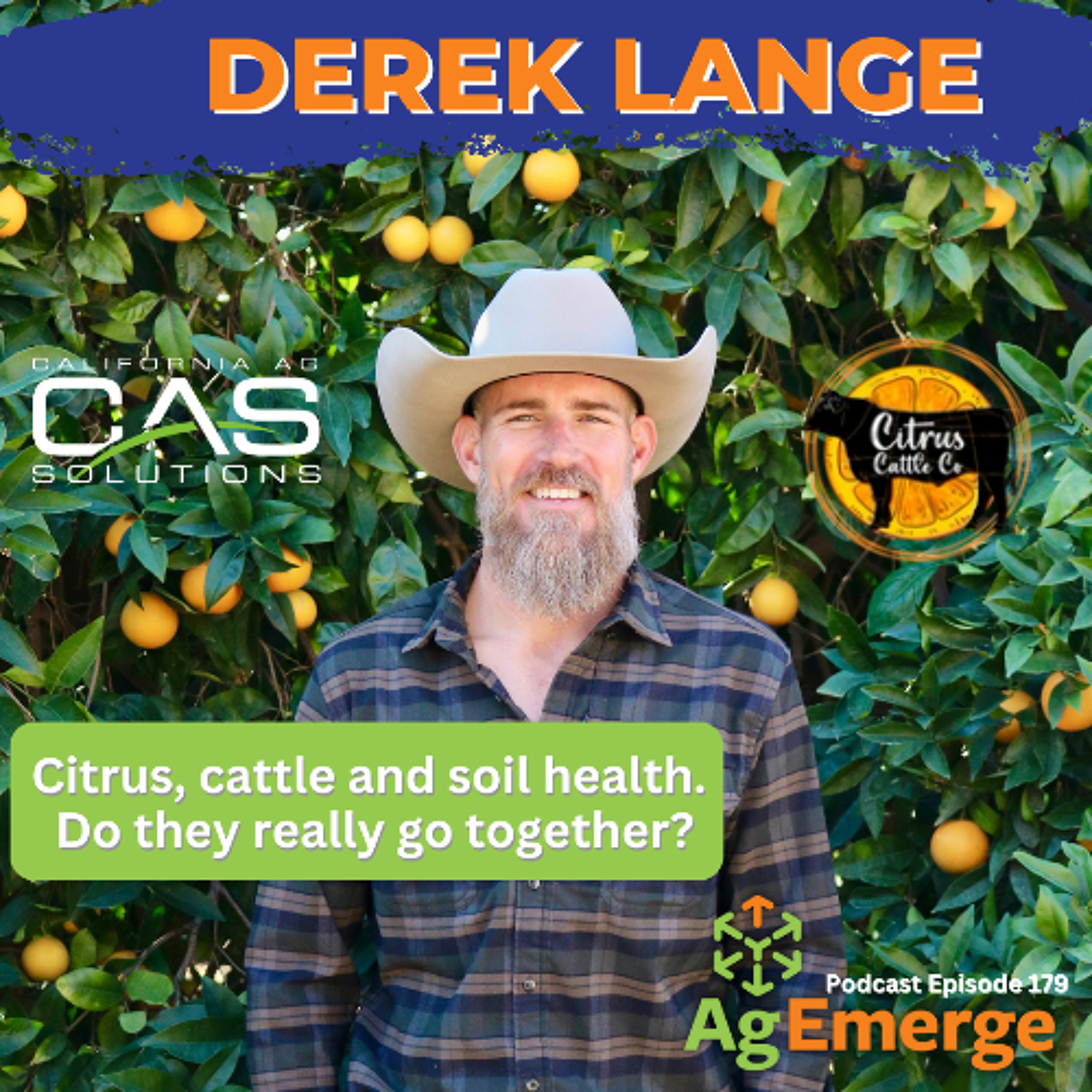
AgEmerge Podcast Episode 179 | Derek Lange's Take on California's Central Valley Agriculture
Derek Lange is a third-generation citrus grower and cattle rancher from Tulare County, California. He's also a Regenerative Agronomist at California Ag Solutions. In AgEmerge Podcast Episode 179, Derek shares his challenges and successes transitioning from conventional farming methods to innovative, soil health first practices. Whether you're a seasoned farmer or new to the world of agriculture, Derek's story offers valuable insights into the evolving landscape of farming. Tune in to learn about the intersection of tradition and innovation in agriculture and how Derek is making farming fun again. *** Ag Solutions Network website: https://www.agsolutionsnetwork.com/ Chapters: 00:00:00 Introduction to Derek Lange 00:03:00 Transition to Regenerative Agriculture 00:09:00 Integrating Citrus and Cattle Farming 00:15:00 Challenges and Successes 00:21:00 The Role of Cover Crops 00:27:00 Epigenetics in Cattle Selection 00:33:00 Impact on Pest Management 00:39:00 Future of Agriculture in Central California 00:45:00 Inspiration for Sustainable Practices Takeaways - Derek Lange transitioned from conventional to regenerative agriculture. - He integrates citrus and cattle farming for sustainability. - Regenerative practices improve soil health and reduce costs. - Derek emphasizes the importance of sustainable farming for the future. - He shares challenges and successes in his farming journey. - Derek discusses the role of cover crops in citrus farming. - He highlights the importance of epigenetics in cattle selection. - Derek talks about the impact of regenerative practices on pest management. - He shares insights into the future of agriculture in Central California. - Derek's story inspires a shift towards sustainable farming practices.
AgEmerge Podcast 178 Recap of Top Episodes
As we close out 2025, we’re excited to launch a special End-of-Year episode of bite-sized 15-minute video clips pulled from some of our most impactful AgEmerge Podcast episodes. Each clip focuses on the heart of the conversation: practical applications, groundbreaking ideas, and actionable steps for building healthier soils, farms, and ecosystems. We encourage you to catch each episode in its entirety and place these sections into greater context. But these recaps are perfect for quick inspiration during the busy holiday season or as you plan for the year ahead. Want to watch a full episode? Click the links below: 1. Human Health Starts in the Soil | https://www.youtube.com/watch?v=wUevAQAQGeo (From Episode 80 with Dr. Stephanie Seneff) MIT Senior Research Scientist Dr. Stephanie Seneff connects the dots between soil-degrading chemicals like glyphosate, micronutrient deficiencies in our food, and rising chronic diseases. Explore how regenerative practices can restore soil biology, boost nutrient density, and directly improve human health. A must-watch for understanding the profound soil-to-human link. 2. Goats: Nature’s Weed Warriors | https://youtu.be/nIth3AKcgOQ (From Episode 164 with Aaron Steele) Join Aaron Steele, founder of Goats on the Go®, talks targeted grazing with goats as profitable vegetation management. Learn real-world stories of controlling invasive species, improving land health, mitigating wildfires, and building scalable affiliate businesses—all while regenerating ecosystems. 3. Revolutionizing Water pH with Carbonic Acid | https://youtu.be/GiBSox_GlPE (From Episode 169 with Waldo Moraga) ECO2MIX founder Waldo Moraga reveals how carbonic acid is transforming sustainable irrigation and pH control in farming (and even golf courses). Discover safer, eco-friendly ways to improve water quality, enhance nutrient uptake, reduce chemical inputs, and support soil health for better crop performance. 4. Scaling Regenerative Practices on the Farm | https://youtu.be/WTgF1zManWs (From Episode 170 with Taylor Herren) Taylor Herren shares proven strategies for transitioning and scaling regenerative agriculture. Packed with practical insights on soil regeneration, overcoming challenges, and unlocking ecosystem benefits—ideal for farmers ready to implement actionable changes. These shorts are designed to spark ideas and motivate action as we head into a new year of regenerative possibilities. Which one resonates most with you? Reply to this email and let us know—or suggest topics for future episodes. Wishing you Merry Christmas and a prosperous 2026. The AgEmerge Team Ag Solutions Network As always, let us know if you have any questions or guest ideas by emailing [email protected].