Afterlives of Ancient Egypt with Kara Cooney
141 episodes — Page 2 of 3

Ritual repair of mummies in the DeB 320 royal cache
During the process of recommodification and reburial by 21st Dynasty elites, several royal mummies in the Deir el Bahri 320 (also known as TT 320) burial cache were badly damaged. In this episode, Kara and Amber discuss the evidence we have for the ritual repair of these mummies carried out during their reburial, including the term rdit Wsir, “to make an Osiris.” Ritner, Robert, 2009, The Libyan Anarchy: Inscriptions from Egypt’s Third Intermediate Period.Ritner, Robert, 1993, The Mechanics of Ancient Egyptian Magical Practice.Read more about the DeB 320 royal cache Get full access to Ancient/Now at ancientnow.substack.com/subscribe
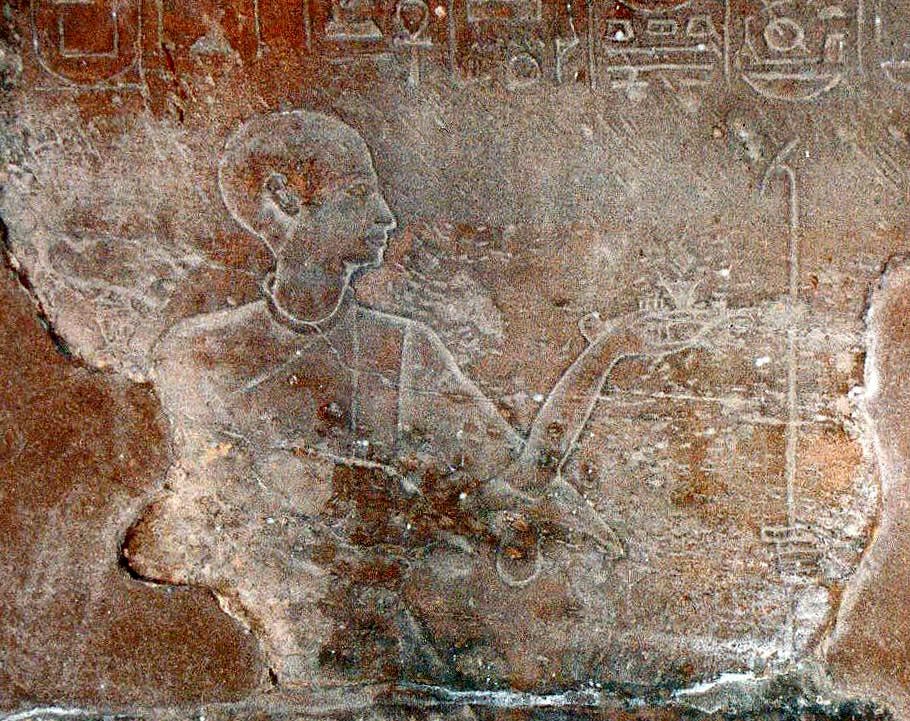
April 2024 Listener Q&A
In this episode Kara and Jordan answer listener questions from April. To submit a question for the monthly Q&A podcast, become a paid subscriber on Substack or join our Patreon!A few photos from Kara’s Egypt tripShow Notes:Female Genitalia Lexicography* Bednarski, Andrew 2000. Hysteria revisited. Women's public health in ancient Egypt. In McDonald, Angela and Christina Riggs (eds), Current research in Egyptology 2000, 11-17. Oxford: Archaeopress.* Ghalioungui, P. 1977. The persistence and spread of some obstetric concepts held in ancient Egypt. Annales du Service des Antiquités de l'Égypte 62, 141-154.* Westendorf, Wolfhart 1999. Handbuch der altägyptischen Medizin, 2 vols. Handbuch der Orientalistik, erste Abteilung 36 (1-2). Leiden: Brill.Burial of Children * Barba, Pablo 2021. Power, personhood and changing emotional engagement with children's burial during the Egyptian Predynastic. Cambridge Archaeological Journal 31 (2), 211-228. DOI: 10.1017/S0959774320000402. * Kaiser, Jessica 2023. When death comes, he steals the infant: child burials at the Wall of the Crow cemetery, Giza. In Kiser-Go, Deanna and Carol A. Redmount (eds), Weseretkau "mighty of kas": papers in memory of Cathleen A. Keller, 347-369. Columbus, GA: Lockwood Press. DOI: 10.5913/2023853.22. Export >>* Marshall, Amandine 2022. Childhood in ancient Egypt. Translated by Colin Clement. Cairo; New York: American University in Cairo Press. * Saleem, Sahar N., Sabah Abd el-Razek Seddik, and Mahmoud el Halwagy 2020. A child mummy in a pot: computed tomography study and insights on child burials in ancient Egypt. In Kamrin, Janice, Miroslav Bárta, Salima Ikram, Mark Lehner, and Mohamed Megahed (eds), Guardian of ancient Egypt: studies in honor of Zahi Hawass 3, 1393-1403. Prague: Charles University, Faculty of Arts.Skin Color and Gender* Shelley Halley, Prof. Emerita of Classics and Africana Studies, Hamilton College* Tutankhamun out of the lotus blossom with ‘naturalistic’ skin * Roth, Ann Macy 2000. Father earth, mother sky: ancient Egyptian beliefs about conception and fertility. In Rautman, Alison E. (ed.), Reading the body: representations and remains in the archaeological record, 187-201. Philadelphia: University of Pennsylvania Press.* Tan Men/Pale Women: Color and Gender in Archaic Greece and Egypt, a Comparative Approach by Mary Ann Eaverly Kara’s ARCE Talk- “Elites Relying on Cultural Memory for Regime Building”Abstract: Theban elites of the late 20th and 21st Dynasties relied on veneration of 17th and 18th Dynasty kings to support their regimes ideologically. The cults of Ahmose-Nefertari and Amenhotep I were vibrant in the west Theban region, and their oracles were essential to solving many disputes. Herihor connected his militarily-achieved kingship to his position in the Karnak priesthood using the ancestor kings as touchstones. Twenty-first Dynasty Theban elites named their children after 18th Dynasty monarchs; Theban High Priest and king Panedjem named a daughter Maatkare, ostensibly after Hatshepsut of the 18th Dynasty, and a son Menkheperre after Thutmose III. Examination of the 20th and 21st Dynasty interventions of the royal mummies from Dra Abu el Naga and the Valley of the Kings indicates these royal corpses were used as sacred effigies of a sort, rewrapped and placed into regilded containers even after they had been stripped of their treasures and golden embellishments. This paper will examine how immigrants and mercenaries were able to move into Theban elite circles by marshaling ancestral connections to power. Men like Herihor and Panedjem, one of them at least of Meshwesh origins, worked within an Upper Egyptian cultural system that put its temple communities of practice before its military and veiled its politics with pious rituals and oracular pronouncements. Such elites had to negotiate their identities and power grabs through the cultural memory of the region’s royal ancestors.* Episode 83- Thutmose III and the Veneration of the Royal Ancestors * Cooney, Kathlyn M. 2022. The New Kingdom of Egypt under the Ramesside dynasty. In Radner, Karen, Nadine Moeller, and D. T. Potts (eds), The Oxford history of the ancient Near East, volume III: from the Hyksos to the late second millennium BC, 251-366. New York: Oxford University Press. DOI: 10.1093/oso/9780190687601.003.0027. * Cooney, Kara. 2024. Recycling for Death AUC Press. * The Khonsu Temple at Karnak Get full access to Ancient/Now at ancientnow.substack.com/subscribe

Making Antiquity TV, Part 2 (with Neil Laird)
In Part 2 of a two-part episode, Kara and multiple Emmy-nominated Executive Producer and novelist Neil Laird continue their conversation about their experiences making television documentaries about the ancient world, how things get done behind the scenes, whether or not romanticizing the past is a bad thing, and what the future may hold for documentary programs.About Neil LairdNeil Laird is a multiple Emmy and BAFTA-nominated creator and Executive Producer on long-running series such as Brain Games, Mysteries of the Abandoned, Border Wars, Through the Wormhole With Morgan Freeman, What on Earth?, How It's Made, Secrets of the Underground, Expedition Unknown With Josh Gates and Survivorman.Neil has worked extensively on both the network and production side of non-fiction TV since 1996. He has developed, overseen, and produced over 1,000 hours of non-fiction programs and specials in nearly every genre, with a particular passion, expertise, and professional contacts in history, mystery, science, and adventure.Neil’s novels Prime Time Travelers and Prime Time Pompeii are slated for release in 2024. Get full access to Ancient/Now at ancientnow.substack.com/subscribe

Making Antiquity TV (with Neil Laird)
In Part 1 of a two-part episode, Kara and multiple Emmy-nominated Executive Producer and novelist Neil Laird talk about their experiences making television documentaries about the ancient world, how things get done behind the scenes, and what the future may hold for documentary programs.Secrets of Egypt's Lost QueenOut of EgyptDigging for the TruthAbout Neil LairdNeil Laird is a multiple Emmy and BAFTA-nominated creator and Executive Producer on long-running series such as Brain Games, Mysteries of the Abandoned, Border Wars, Through the Wormhole With Morgan Freeman, What on Earth?, How It's Made, Secrets of the Underground, Expedition Unknown With Josh Gates and Survivorman.Neil has worked extensively on both the network and production side of non-fiction TV since 1996. He has developed, overseen, and produced over 1,000 hours of non-fiction programs and specials in nearly every genre, with a particular passion, expertise, and professional contacts in history, mystery, science, and adventure.Neil’s novels Prime Time Travelers and Prime Time Pompeii are slated for release in 2024. Get full access to Ancient/Now at ancientnow.substack.com/subscribe

Color in Ancient Art
This week Kara and Amber discuss color (also known as polychromy) in ancient Mediterranean art and how it is studied and understood today. What role did color play in ancient art? How does polychromy affect the way modern audiences view ancient art? What are the origins of the aesthetic preference for plain white marble sculpture in Western art? The Color of Life exhibition (Getty Villa)Kelsey Museum (University of Michigan) resources on color in ancient artBibliography for color in ancient artThe Metropolitan Museum of Art resources on color in ancient artSeated statue of Hatshepsut (Metropolitan Museum of Art)Statue of Leda and the Swan (Getty Villa)Curator and artist jill moniz Get full access to Ancient/Now at ancientnow.substack.com/subscribe
Thutmose III and the Veneration of Royal Ancestors
In this episode Kara and Amber talk about the veneration of ancestor kings in the late 20th-21st Dynasties. During this period the coffins of ancestor kings were manipulated, buried, and reburied in caches like that of Theban Tomb 320 (also known as Deir el Bahri 320). Who was reburying and caching these royal ancestors together and why? Using the coffin of Thutmose III as a case study, they discuss the interplay of the religious, political, and economic factors behind these royal caches. Kara’s forthcoming book, Recycling for Death: Coffin Reuse and the Theban Royal CachesMore about Theban Tomb 320Amber’s post on presidential homes and America’s historical landscape Get full access to Ancient/Now at ancientnow.substack.com/subscribe

The Death of Cleopatra: Murder or Suicide?
CW// self harm and suicide In this episode Kara and Amber discuss the death of Cleopatra VII and whether or not we should trust the ancient Roman accounts regarding the circumstances of her death. Did she really commit suicide, as Roman historians tell us? Or were the accounts of her death by suicide part of a cunning Roman propaganda campaign?Read more about the death of Cleopatra and the ancient sources on it here and here.Listen to our other episodes on Cleopatra:Episode 57 | Reception, Ownership, and Race: Netflix’s ”Queen Cleopatra”Episode 60 | Part II: Reception, Ownership, and Race: Netflix’s ”Queen Cleopatra” Get full access to Ancient/Now at ancientnow.substack.com/subscribe

March 2024 Q&A
EPISODE 81 | This episode is a recording of a live zoom Q&A with our listeners. Thank you to everyone who attended and submitted questions!Show notes* Byblos * Baal and Seth * Prof. Dani Candelora – Her research focuses on interactions between Egypt and West Asia.* Prof. Marian Feldman, Diplomacy by Design* Amarna Letter 23 – A Goddess Travels to Egypt* 1 3 - 1 7 Thus Sauska of Nineveh (goddess statue), mistress of all lands: "I wish to goto Egypt, a country that I love, and then return." Now I herewith sendher, and she is on her way." (Moran 1992)* Hathor and the Myth of the Heavenly Cow* Spalinger Anthony, “The Destruction of Mankind: A Transitional Literary Text,” Studien Zur Altagyptischen Kultur 28: 2000, 257–282. https://www.jstor.org/stable/25152827* Amenhotep III’s Mortuary Temple & Sekhmet Statues* Kara’s Cambridge Elements – Coffin Commerce * Judith Flanders – “Rites of Passage: Death & Mourning in Victorian Britain”* Peter Saris – “Justinian”* Lady Sennuwy, Boston Museum of Fine Arts * Augustus Meroë Head* Great Sphinx of Tanis, Louvre* Vatican Phases of Construction* Demon Bes – Coptic Magical Papyri* End of the ancient Egyptian Religion, Christian Erasure * Egyptian obelisks * Egyptian object outside of Egypt – Egypt’s Dispersed Heritage Project * Maat* Eloquent Peasant – status dynamics, misuse of Maat* Lichtheim, M. (1992) Maat in Egyptian autobiographies and related studies / Miriam Lichtheim. Freiburg, Schweiz: Universitätsverlag.* Teeter, Emily. (1997) The presentation of Maat : ritual and legitimacy in ancient Egypt / by Emily Teeter. Chicago, Ill: Oriental Institute of the University of Chicago.* Isfet* Kemp, B. J. (1995) How Religious were the Ancient Egyptians? Cambridge archaeological journal. [Online] 5 (1), 25–54.* James C. Scott, “Weapons of the Weak” Get full access to Ancient/Now at ancientnow.substack.com/subscribe

Interview: Malayna Evans, author of "Neferura"
EPISODE 80 | In this episode, Jordan and Kara interview Malayna Evans, author of Neferura, about the inspiration behind the story, her writing process, and how her knowledge of Egyptology factored into the choices she made as she was writing the book.About the authorMalayna Evans was raised in Utah and spent her childhood climbing mountains and reading Sci-Fi. She moved to Chicago in her early twenties where she earned an M.A. in the ancient history of the Mediterranean, an M.A. in the ancient history of the Near East, and a Ph.D. in ancient Egyptian history. She enjoys sharing her passion for the ancient world with readers, adores travel, and plays a mean game of cards. A single mom, Malayna lives in Oak Park, IL, with her two children and two very spoiled Frenchies. You can learn more about her on her website or connect with her on Twitter, or Instagram. Get full access to Ancient/Now at ancientnow.substack.com/subscribe

February Q&A
EPISODE 79 | In this episode Kara and Jordan answer this month’s listener questions. They discuss which ancient Egyptians they would like to see a tv show about, colonialism in the ancient world, extreme climate events in ancient Egypt, and more. Get full access to Ancient/Now at ancientnow.substack.com/subscribe

Kemet, the Black Land: Agriculture in Ancient Egypt with Professor Claire Malleson
EPISODE 78 | In this episode Kara and Jordan talk with archaeobotanist and Assistant Professor of Archaeology Claire Malleson (American University in Beirut) about agriculture in ancient Egypt. What can archaeologists learn about the way ancient Egyptians lived from botanical remains? What are the traditional narratives about agriculture in ancient Egypt and how is our understanding of it changing? How was the profession of farming seen in ancient Egypt? Scorpion macehead (Ashmolean Museum) The Satire of the Trades“Tiger nut” - Cyperus esculentus and Cyperus rotundusAbout Professor Claire MallesonAfter a short career in contemporary dance as a designer and technical manager, Claire started Egyptological studies at the University of Liverpool in 2002, and completed her PhD there in 2012 (published in 2019 by AUC Press). Throughout her studies she trained and worked in Egypt as an archaeobotanist at numerous settlement excavations, following graduation she re-located to Cairo to pursue work as a free-lance archaeobotanical specialist, working for multiple international archaeological projects all over Egypt. In 2018 she was appointed as an Assistant Professor of Archaeology at the American University in Beirut, where she teaches Egyptian Archaeology and Archaeobotany. She continues to work as archaeobotanist all over Egypt, gathering data for studies on ancient Egyptian agriculture, and working towards a new book. Get full access to Ancient/Now at ancientnow.substack.com/subscribe

Wisdom Literature (with Prof. Maggie Geoga)
EPISODE 77 | Professor Maggie Geoga joins Kara and Jordan to discuss ancient Egyptian wisdom literature (also known as instruction texts), specifically “The Teaching of Amenemhat,” a Middle Egyptian poem from ca. 1550 to 500 B.C.E. in which the murdered King Amenemhat I advises his son from beyond the grave. They discuss the challenges of studying this ancient text, who the intended audience for this text might have been, and how its reception by the the ancient Egyptians changed over the centuries.Learn more about “The Teaching of Amenemhat”Read a translation of “The Teaching of Amenemhat”Read Prof. Geoga’s article: “New Insights into Papyrus Millingen and the Reception History of The Teaching of Amenemhat”Read about Emily Post and check out the website dedicated to her rules of etiquetteMaggie Geoga is Assistant Professor of Egyptology at the University of Chicago and a Junior Fellow in the Society of Fellows in Critical Bibliography. Her research focuses on ancient Egyptian literature, scribal culture, textual transmission, and reception in both ancient Egypt and later periods. Maggie earned her PhD in Egyptology from Brown University, where she also completed a concurrent MA in Comparative Literature. She is currently working on a monograph on the reception history of the Middle Egyptian poem The Teaching of Amenemhat from ca.1550 to 500 BCE. She also maintains an ongoing project on Jean Terrasson’s 1731 novel Séthos, whose depiction of Egypt strongly influenced numerous eighteenth-century authors, artists, and thinkers and still underlies many contemporary beliefs about ancient Egypt. Get full access to Ancient/Now at ancientnow.substack.com/subscribe

Ancient Egyptian Society (with Drs. Danielle Candelora and Nadia Ben-Marzouk)
EPISODE 76 | In this episode Kara and Jordan are joined by Drs. Danielle Candelora and Nadia Ben-Marzouk, who discuss their experience co-editing Ancient Egyptian Society: Challenging Assumptions, Exploring Approaches, what inspired the book, and how they wanted it to differ from other studies of ancient Egyptian society. Get the book here: Ancient Egyptian Society: Challenging Assumptions, Exploring ApproachesDanielle Candelora is Assistant Professor of Ancient Mediterranean History at SUNY Cortland and co-director of excavations at South Karnak. She received her PhD in Egyptology from UCLA. Her research focuses on immigration in ancient Egypt, the reception of foreigners, strategies of identity maintenance and advertisement.Nadia Ben-Marzouk is Postdoctoral Fellow at Tel Aviv University and the University of Zurich working on the Stamp Seals from the Southern Levant project. Her research explores craft production, producers, and modes of technological transmission in the Bronze and Iron Age Levant, Egypt, and east Mediterranean. She received her PhD from UCLA. Get full access to Ancient/Now at ancientnow.substack.com/subscribe

January Q&A
EPISODE 75 | CW// war, violence, explicit languageIn this month’s Q&A episode Kara and Jordan answer questions about Kara’s upcoming book Recycling for Death: Coffin Reuse in Ancient Egypt and the Theban Royal Caches, their favorite fictional books related to ancient Egypt and Egyptology, female identity and rebirth in ancient Egyptian religion, animal mummies, and more. Show notes:* The Witch Trials of J. K. Rowling* Forest Lawn cemetery * "Where does the Masculine Begin and the Feminine End? The Merging of the Two Genders in Egyptian Coffins during the Ramesside Period," in: Ehrenmord und Emanzipation: Die Geschlechterfrage in Ritualen von Parallelgesellschaften, Geschlecht--Symbol--Religion series, B. Heininger, ed., LIT Verlag (Münster 2009).* "The Fragmentation of the Female: Re-gendered Funerary Equipment as a Means of Rebirth," in: Sex and Gender in Ancient Egypt, C. Graves-Brown, ed., Classical Press of Wales (Swansea 2008), 1-25.* “An eternal aviary: bird mummies from ancient Egypt” (Salima Ikram)* Divine Creatures: Animal Mummies in Ancient Egypt (Salima Ikram) Get full access to Ancient/Now at ancientnow.substack.com/subscribe
The Tale of the Shipwrecked Sailor
EPISODE 74 | In this episode we are crossing the podcast streams of the past and the present, by bringing you a vintage episode of Eric’s Guide to Ancient Egypt in which Eric Wells discusses the ancient Egyptian tale of the shipwrecked sailor. Eric, who earned his PhD in Egyptology from UCLA, produced his podcast from 2015-2016 and has kindly granted us access to his archives. We hope you enjoy it!Read The Shipwrecked SailorMore information on The Shipwrecked Sailor (historical background, synopsis, etc.) Get full access to Ancient/Now at ancientnow.substack.com/subscribe

"The Good Kings" and Colonialism
EPISODE 73 | Is Kara’s book The Good Kings “colonialist”? Should a non-Egyptian write a critical history of ancient Egyptian pharaohs? Kara and Amber discuss the possible reasoning behind this perspective, and Kara talks about how her book came together and why she set out to write a book calling into question the typical positivist historical narratives surrounding ancient Egypt’s “good kings.” Jurman, Claus. Pharaoh’s new clothes. On (post)colonial Egyptology, hypocrisy, and the elephant in the roomCan history be apolitical? (Afterlives of Ancient Egypt, Episode #65) Get full access to Ancient/Now at ancientnow.substack.com/subscribe
December Q&A
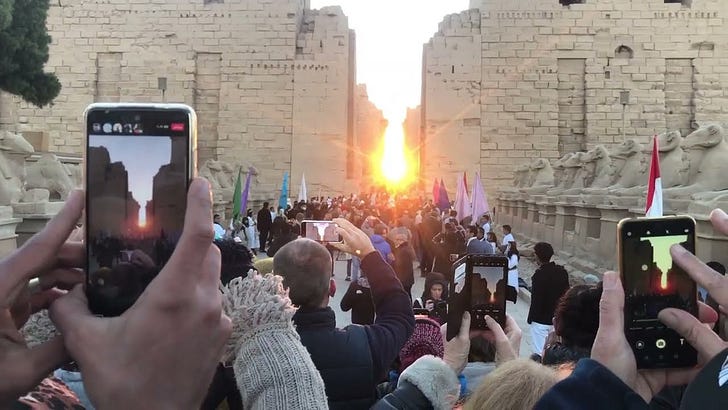
EPISODE 72 | In this episode Kara and Jordan answer this month’s listener questions.Listener Notes:Time & Calendars:* MET- Telling Time in Ancient Egypt* Nile Scribes- Celebrating the Seasons* SAOC 26. The Calendars of Ancient Egypt. Richard A. Parker* Tomb aligned with Winter Solstice Wills & Funerals * NJ van Blerk, The basic tenets of intestate (customary) succession law in Ancient Egypt* Will of NaunakhteAnthropoid Clay Coffins* Cotelle-Michel, Laurence. 2004. “Les Sarcophages en terre cuite”* Wikipedia- Anthropoid Ceramic Coffins* María Rosa Valdesogo blog- The Iconography in a Clay Coffin of Ancient Egypt. A Guarantee of Resurrection.* Kazimierczak, Magdalena, and Konrad Grzyb. “DISTRIBUTION OF THE POTTERY COFFINS AND CERAMIC VESSELS WITHIN THE EARLY DYNASTIC GRAVES FROM TELL EL-MURRA CEMETERY.” Ägypten und Levante / Egypt and the Levant, vol. 30, 2020, pp. 415–44. JSTOR, https://www.jstor.org/stable/27045094. Accessed 20 Dec. 2023. Get full access to Ancient/Now at ancientnow.substack.com/subscribe

Labor Relations in Ancient Egypt — Part II
EPISODE 71 | With the growing number of labor disputes and strikes around the world, Kara and Jordan delve into how labor was organized and issues were settled in ancient Egypt. This is part two of a two-part episode. Listen to Part I here.Also read Jordan’s companion post to this episode, Fashion and Hidden Labor in the Ancient World. Sources:* Papyrus Stories- The First Recorded Strike in History* Turin Strike Papyrus* Edgerton, William F. “The Strikes in Ramses III’s Twenty-Ninth Year.” Journal of Near Eastern Studies, vol. 10, no. 3, 1951, pp. 137–45. JSTOR, http://www.jstor.org/stable/542285. Accessed 11 Dec. 2023.* Wente, Edward F. “A Letter of Complaint to the Vizier To.” Journal of Near Eastern Studies, vol. 20, no. 4, 1961, pp. 252–57. JSTOR, http://www.jstor.org/stable/543915. Accessed 11 Dec. 2023. Get full access to Ancient/Now at ancientnow.substack.com/subscribe

Labor Relations in Ancient Egypt- Part I
EPISODE 70 | With the growing number of labor disputes and strikes around the world, Kara and Jordan delve into how labor was organized and issues settled in ancient Egypt. Part one of two.Sources:* Papyrus Stories- The First Recorded Strike in History * Turin Strike Papyrus* Edgerton, William F. “The Strikes in Ramses III’s Twenty-Ninth Year.” Journal of Near Eastern Studies, vol. 10, no. 3, 1951, pp. 137–45. JSTOR, http://www.jstor.org/stable/542285. Accessed 11 Dec. 2023.* Wente, Edward F. “A Letter of Complaint to the Vizier To.” Journal of Near Eastern Studies, vol. 20, no. 4, 1961, pp. 252–57. JSTOR, http://www.jstor.org/stable/543915. Accessed 11 Dec. 2023. Get full access to Ancient/Now at ancientnow.substack.com/subscribe

Bodies and Power in the Ancient World
EPISODE 69 | Here’s an uncomfortable fact: Having a woman’s body allows one to be much more easily controlled and commodified in patriarchal systems. We are watching this play out in real time in a post-Roe America, but what role did the female body play in the ancient world, and more specifically: How did ancient Egyptians negotiate female power in ancient patriarchal systems like ancient Egypt? In this episode Kara discusses her research on this topic with Amber, and her effort to gain a better understanding of how ancient patriarchal societies used body differences to control, commodify, and exploit female bodies. For more of Kara’s thoughts on some feminist schools of thought and their attitudes toward the female body, read her post from last June: Get full access to Ancient/Now at ancientnow.substack.com/subscribe

November 2023 Supporter Q&A
EPISODE 68 | This month’s Q&A episode features questions on ancient festivals, food, human sacrifice, and marriage and incest in ancient Egypt. Episode Notes* Food* The Pharaoh’s Kitchen, by Madga Mehdawy* Ikram, Salima. 1995. Choice Cuts : Meat Production in Ancient Egypt. Leuven: Peeters.* Ancient Egyptian Festivals * Coppens, F. 2009. Temple Festivals of the Ptolemaic and Roman Periods. UCLA Encyclopedia of Egyptology.* Stadler, M. 2008. Procession. UCLA Encyclopedia of Egyptology.* Beverages* Ancient Egyptian Beer * Discovery of an Industrial Brewery in Ancient Egypt Rewrites the History of Beer* Dr. Amr Shahat’s paleobotany work* Listen to Dr. Rose Campbell’s episode on human sacrifice on Substack at the links below or on Apple Podcasts (Part I and Part II) or Spotify (Part I and Part II):* Campbell, Roselyn. 2023. “Hidden Violence: Reassessing Violence and Human Sacrifice in Ancient Egypt,” in Danielle Candelora, Nadia Ben-Marzouk, & Kathlyn M. Cooney (eds.) Ancient Egyptian Society : Challenging Assumptions, Exploring Approaches. Abingdon; New York: Routledge. Purchase!* Reception of Ancient Egypt - P. Djèlí Clark’s books* Marriage and incest in the ancient world* Ager, Sheila L. 2021. “Royal brother-sister marriage, Ptolemaic and otherwise,” in Elizabeth D. Carney and Sabine Müller (eds.), The Routledge companion to women and monarchy in the ancient Mediterranean world, 346-358. Abingdon; New York: Routledge.* Robinson, Joanne-Marie. 2020. "Blood is thicker than water": non-royal consanguineous marriage in ancient Egypt. An exploration of economic and biological outcomes. Archaeopress Egyptology 29. Oxford: Archaeopress. Get full access to Ancient/Now at ancientnow.substack.com/subscribe

Statuary Reuse with Kylie Thomsen
EPISODE 67 | In this episode Kara and Jordan talk with PhD candidate Kylie Thomsen about her research contextualizing statuary reuse using new technologies like photogrammetry and RTI (Reflectance Transformation Imaging).About Kylie ThomsenKylie is an Egyptology PhD candidate in the department of Near Eastern Languages and Cultures at the University of California, Los Angeles. She received her bachelor’s degree in anthropology from the University of Arizona and holds a master’s degree in Egyptology from Indiana University Bloomington. Kylie is currently a researcher and graphic designer for the UCLA Coffins Project, which investigates coffin reuse in ancient Egypt during the Third Intermediate Period. Her dissertation research focuses on the documentation and contextualization of ancient Egyptian statuary reuse, including documenting statues via high-resolution photography, photogrammetry, RTI (reflectance transformation imaging), and traditional art historical methods in order to analyze the statues for signs of recarving, reinscribing, and other indicators of object reuse.Episode Notes* This article by Daniel Soliman discusses the reuse of two 12th Dynasty colossal statues that were reworked during the reign of Ramesses II.* Soliman, Daniel. “At the Hands of Senwosret III? The Iconography and Style of the Reworked Colossi Cairo JE 45975 and JE 45976.” The Journal of Egyptian Archaeology 105, no. 1 (2019): 97–105. https://www.jstor.org/stable/26949435.* Partially Reworked Statue from the Museo Egizio: https://collezioni.museoegizio.it/en-GB/material/Cat_3017 * This statue demonstrates that a statue could be completely recrafted into a new object. Get full access to Ancient/Now at ancientnow.substack.com/subscribe
October 2023 Q&A
EPISODE 66 | This month’s listener questions covered a variety of topics from ancient Egyptian clothing and furniture to the portrayal of mummies in popular culture.Episode NotesEgyptian linenPleated dresses from the Museo Egizio of Turin: study of the technical data of fabrics in Moor, A. de (Antoine) et al. (eds.) (2015) ‘Textiles, tools and techniques of the 1st millennium AD from Egypt and neighbouring countries : proceedings of the 8th conference of the research group “Textiles from the Nile Valley” Antwerp, 4-6 October 2013 / edited by Antoine De Moor, Cäcilia Fluck and Petra Linscheid.’, in 2015 Tielt, Belgium: Lannoo.Tamburini, D. et al. (2021) A multi-scalar investigation of the colouring materials used in textile wrappings of Egyptian votive animal mummies. Heritage science. [Online] 9 (1), 1–26.Stool Inscriptions Get full access to Ancient/Now at ancientnow.substack.com/subscribe
Can history be apolitical?
EPISODE 65 | Historians are products of their time, place, and life experiences, and yet in many ways they approach their work with the idea that it can be (at least to some degree) separated from all of those things. In this episode Kara and Amber discuss whether or not history can—or should—be apolitical and how historical narratives inevitably reflect the zeitgeist in which they are written. Get full access to Ancient/Now at ancientnow.substack.com/subscribe

Iconoclasm with Lexi Henning
EPISODE 64 | Kara and Jordan discuss iconoclasm in the ancient and medieval worlds with Lexie Henning, the host of the Ancient Office Hours podcast. Below is information about Lexie and some visuals! We include Aya Sofia, also called Hagia Sophia, a 6th century CE multi-domed church turned mosque turned museum turned back to mosque. We also discuss the 13th century CE church of Santa Maria Sopra Minerva, which literally means St. Mary on top of (the goddess) Minerva, indicating a Christian claim over what is now defined as pagan. Both Aya Sofia and Santa Maria Sopra Minerva were victims of iconoclasm, that is having elements of one belief system removed in favor of a different belief system. To that point, check out the removal of the god Amen’s name from a block in Luxor temple in the last image; this removal was ordered by Akhenaten, who was creating a whole new religious system that prioritized the visible sun god Aten.About Lexie HenningLexie is the host of the Ancient Office Hours podcast and Founder/CEO of The Ozymandias Project. She earned her BA in Classics from the University of Missouri (Mizzou) in 2018. Her scholarly interests are in exploring Classical reception through the lens of contemporary storytelling in media, advocating for open access to the ancient world, and making ancient studies applicable in the modern world. In January 2023, she completed an MSc in Southeast European Studies at the National and Kapodistrian University of Athens, writing her thesis on the effects of Islamic iconoclasm on the Hagia Sophia and its impact on cultural heritage policy in Erdoğan’s Turkey. She now serves as the programs and administration coordinator for UCLA’s Pourdavoud Center for the Study of the Iranian World. Hagia Sophia (Istanbul, Turkey)Santa Maria sopra Minerva (Rome, Italy) Get full access to Ancient/Now at ancientnow.substack.com/subscribe

September 2023 Q&A
EPISODE 63 | In this month's Q&A episode, Kara and Jordan discuss questions relating to ancient papyri, display and study of human remains in museums, female power in the ancient world, and more. Get full access to Ancient/Now at ancientnow.substack.com/subscribe
Artifact Stories — The red-shroud mummy of Herakleides
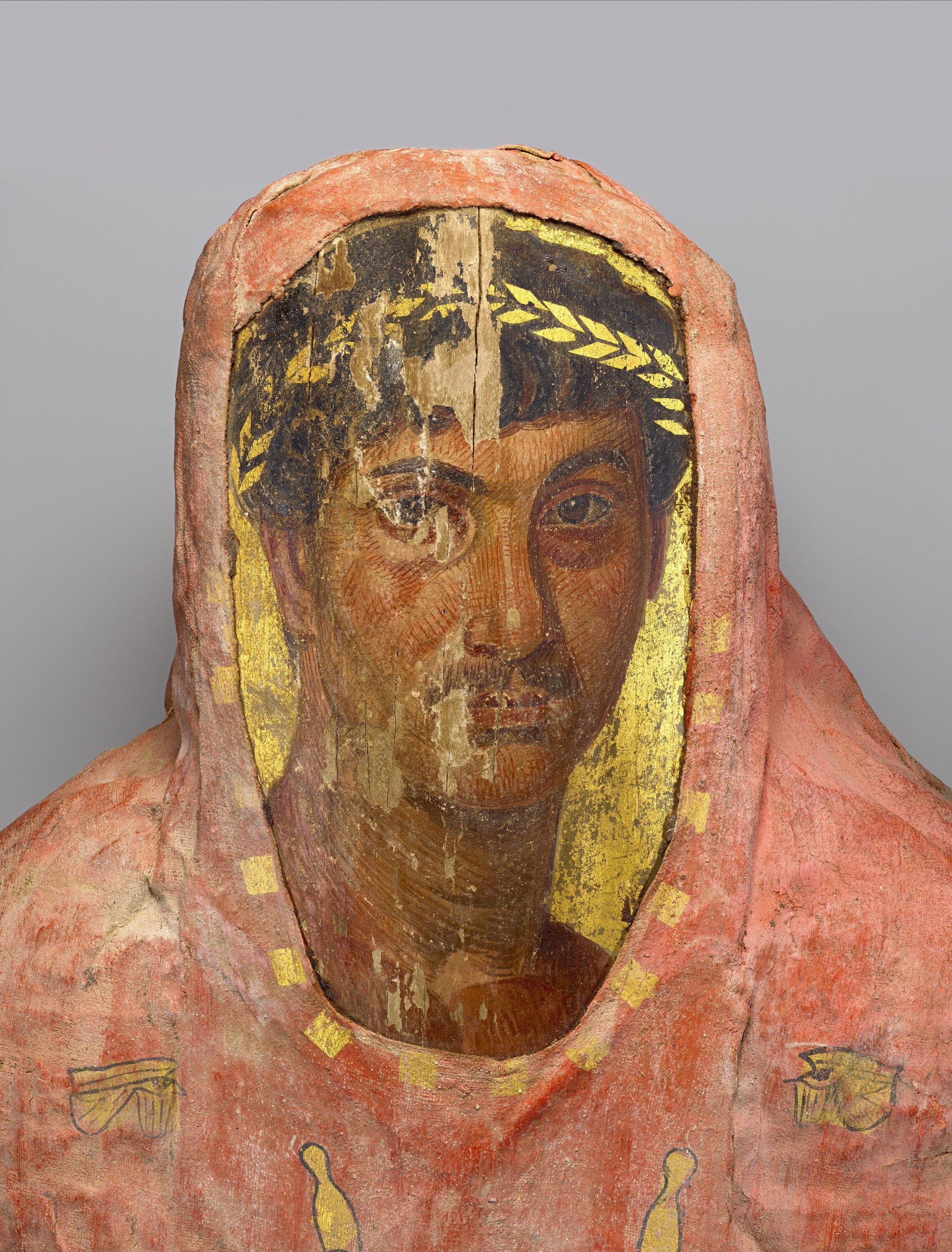
CW// Human remainsThe red-shroud mummy of a young man named Herakleides—don’t ask us how he died so young; we don’t know—presents some tantalizing insights into certain religious practices of the first century CE in Egypt. On view at the Getty Villa in Malibu, the mummy of Herakleides is unprovenanced, but archaeological evidence suggests it probably comes from el-Hibeh (near the Fayum). The mummified remains of Herakleides are wrapped in a linen shroud painted from head to toe in a red pigment derived from red lead imported from Spain, making it part of a group of portrait mummies known as “red-shroud mummies.” Get full access to Ancient/Now at ancientnow.substack.com/subscribe

Patreon Q&A- August 2023
In this month's Patreon Q&A Kara and Jordan answer questions about literature, what they did over the summer and other topics. And as a special treat-- Kara debriefs about the recent International Congress of Egyptologists' conference in Leiden. Get full access to Ancient/Now at ancientnow.substack.com/subscribe

June 2023 Patreon Q&A
EPISODE 59 | In this episode Kara and Amber discuss Patron questions covering topics ranging from Cleopatra to balancing historical accuracy in entertainment and more.----If you want knowledgable hot takes on headlines about archaeology, Egyptology, and antiquity in general delivered to your inbox, subscribe to our Substack Ancient/Now.You can also support the podcast by becoming a Patron.Follow Kara on social media:https://linktr.ee/karacooney Get full access to Ancient/Now at ancientnow.substack.com/subscribe

Part II: Reception, Ownership, and Race: Netflix’s ”Queen Cleopatra”
EPISODE 60 | In Part II of our discussion on Cleopatra VII and reception, ownership, and race we welcome guests Dr. Mai Musie and Professor Rebecca Futo Kennedy. Dr. Musie and Professor Kennedy both study aspects of identity formation, race, and ethnicity in the ancient world and bring their expert perspectives to this discussion of Cleopatra VII, her world, and our modern obsession with her. ----If you want knowledgable hot takes on headlines about archaeology, Egyptology, and antiquity in general delivered to your inbox, subscribe to our Substack Ancient/Now.You can also support the podcast by becoming a Patron.Follow Kara on social media:https://linktr.ee/karacooney Get full access to Ancient/Now at ancientnow.substack.com/subscribe

1000 Bread, 1000 Beer: Reconstructing Ancient Bread with Dr. Serena Love
EPISODE 58 | Kara and Jordan meet with Dr. Serena Love to discuss her ongoing work with Seamus Blackley on the collection of ancient yeast and reconstruction of ancient bread making techniques. How does one collect ancient yeast without contamination? What can be learned through experimental archaeology? And most importantly, what did ancient bread taste like?!---Bio: Serena is an anthropological archaeologist with 30 years’ experience working in Egypt, Turkey, Israel, Iraq and most recently in Australia. She earned a PhD from Stanford University with a specialty in geoarchaeology and prehistoric architecture, where her research developed new methods for analysing mudbricks and theoretically blending phenomenology and archaeological science to reach innovative interpretations about social lives in the past. Serena’s publications have focused on symbolic landscapes in Egypt and the Neolithic site of Çatalhöyük in Turkey. Serena has lectured internationally and taught archaeology at Stanford, Brown University and University of Queensland, and held a Senior Fellowship at Koç University in Istanbul in 2016. Serena is committed to science communication and community-led research and has spent the past 7 years working with Aboriginal communities in Queensland with grant writing, capacity building and developing curriculum aligned, archaeology themed teaching materials for Australian classrooms. Serena uses archaeology to connect the people of today with the people of the past and she is driven to constantly explore, learn and share the subject wherever possible. --If you want knowledgable hot takes on headlines about archaeology, Egyptology, and antiquity in general delivered to your inbox, subscribe to our Substack Ancient/Now.You can also support the podcast by becoming a Patron.Follow Kara on social media:https://linktr.ee/karacooney Get full access to Ancient/Now at ancientnow.substack.com/subscribe

Reception, Ownership, and Race: Netflix’s ”Queen Cleopatra”
EPISODE 57 | In this episode, special guests Dr. Katherine Blouin and Dr. Heba Abd el Gawad join Kara and Jordan for a conversation about Netflix’s docu-drama Queen Cleopatra and the ways in which modern issues of reception, ownership, and race have played into how Cleopatra is seen today. Dr. Abd el Gawad brings her nuanced perspective as a scholar and an Egyptian to the discussion, and Dr. Blouin helps us get into the deep-cuts of how the threads of imperialism, Orientalism, and patriarchy have been used to weave narratives about Cleopatra that continue to influence how she is viewed as an historical figure.----If you want knowledgable hot takes on headlines about archaeology, Egyptology, and antiquity in general delivered to your inbox, subscribe to our Substack Ancient/Now.You can also support the podcast by becoming a Patron.Follow Kara on social media:https://linktr.ee/karacooney Get full access to Ancient/Now at ancientnow.substack.com/subscribe

May Patreon Q&A: Women, Queens, and Goddesses
EPISODE 56 | This is a recording from live Zoom event held on May 27th for this month's Patreon Q&A with a focus on women, women's experiences and goddesses in ancient Egypt. ----If you want knowledgable hot takes on headlines about archaeology, Egyptology, and antiquity in general delivered to your inbox, subscribe to our Substack Ancient/Now.You can also support the podcast by becoming a Patron.Follow Kara on social media:https://linktr.ee/karacooney Get full access to Ancient/Now at ancientnow.substack.com/subscribe

Magic & Medicine: Sickness and Healing in ancient Egypt
EPISODE 55 | Kara and Jordan explore the world of magic & medicine and how illnesses were treated in ancient Egypt. Did the Egyptians distinguish between magic and medicine in efficacy? What illnesses did the Egyptians suffer from? How were they treated? Stay tuned until the end to hear them read from some actual magico-medical papyri! If you want knowledgable hot takes on headlines about archaeology, Egyptology, and antiquity in general delivered to your inbox, subscribe to our Substack Ancient/Now.You can also support the podcast by becoming a Patron.Follow Kara on social media:https://linktr.ee/karacooney Get full access to Ancient/Now at ancientnow.substack.com/subscribe
Afterlives Bookclub: Barbara Michaels’ ”Search the Shadows”
EPISODE 54 | "Don't bring a mace to a gunfight." In our latest Bookclub installment Jordan and Amber cover another book from Egyptologist/author Barbara Mertz (also known as Barbara Michaels and Elizabeth Peters), "Search the Shadows." Spoiler's ahead!!If you want knowledgable hot takes on headlines about archaeology, Egyptology, and antiquity in general delivered to your inbox, subscribe to our Substack Ancient/Now.You can also support the podcast by becoming a Patron. Get full access to Ancient/Now at ancientnow.substack.com/subscribe

Ancient Egypt in the Headlines
EPISODE 52 | Kara and Jordan cover four ancient Egypt-themed headlines from the void in the Great Pyramid to the recently restored zodiac at the Temple of Esna. If you want knowledgable hot takes on headlines about archaeology, Egyptology, and antiquity in general delivered to your inbox, subscribe to our Substack Ancient/Now.You can also support the podcast by becoming a Patron. Get full access to Ancient/Now at ancientnow.substack.com/subscribe

April Patreon Q&A
EPISODE 53 | Kara and Jordan answer this month's Patron questions. Want to submit a question? Support the podcast by becoming a Patron.If you want knowledgable hot takes on headlines about archaeology, Egyptology, and antiquity in general delivered to your inbox, subscribe to our Substack Ancient/Now. Get full access to Ancient/Now at ancientnow.substack.com/subscribe
Artifact Stories: Khufu’s itty, bitty ivory statuette
EPISODE 51 | We are producing a new series of episodes for Afterlives of Ancient Egypt called “Artifact Stories,” in which we choose one thing—be it art, artifact, architecture, etc.—and dive into the details in order to see what insights and perspectives we can draw from it. For each of these episodes we will be publishing a companion post on our Substack, Ancient/Now.In our first spotlight discussion we are featuring an object whose diminutive size belies the significance of the story it tells about the reign of the 4th Dynasty king, Khufu (ca. 2589-2566 BCE), who most people know as the builder of the Great Pyramid of Giza. To see photos of the statuette, visit Ancient/Now.If you want knowledgable hot takes on headlines about archaeology, Egyptology, and antiquity in general delivered to your inbox, subscribe to our Substack Ancient/Now.You can also support the podcast by becoming a Patron. Get full access to Ancient/Now at ancientnow.substack.com/subscribe

March Patreon Q&A
EPISODE 50 | Kara, Jordan, and guest Dr. Jonathan Winnerman answer this month's Patron questions. Become a Patron and join our online community:https://www.patreon.com/afterlivesWant more content about the ancient world? Visit our Substack, Ancient/Now:https://ancientnow.substack.com Get full access to Ancient/Now at ancientnow.substack.com/subscribe

The Rosetta Stone and the Repatriation Debate
EPISODE 49 | Kara, Jordan, and guest Dr. Jonathan Winnerman tackle the history of the Rosetta Stone and the debate surrounding calls for its return to Egypt. Why is the Rosetta Stone so important? What its role in national politics and how has it its ownership always been contentious since its initial discovery? Afterlives delves into the history of the piece as well as its connection to colonialism, nationalism, and discussions surrounding who "owns" the past. If you want knowledgable hot takes on headlines about archaeology, Egyptology, and antiquity in general delivered to your inbox, subscribe to our Substack Ancient/Now.You can also support the podcast by becoming a Patron. Get full access to Ancient/Now at ancientnow.substack.com/subscribe

So you want to travel to Egypt?! Part II
EPISODE 48 | In Part II of our travel to Egypt suggestions, Kara and Jordan continue their discussion covering what to wear and bring as well as other non-Cairo/Luxor travel recommendations. Be sure to check out our Ancient/Now Substack companion post to this episode that provides more info on our tips and recommendations.If you want knowledgable hot takes on headlines about archaeology, Egyptology, and antiquity in general delivered to your inbox, subscribe to our Substack Ancient/Now.You can also support the podcast by becoming a Patron. Get full access to Ancient/Now at ancientnow.substack.com/subscribe

Does Kim Kardashian have Sovereignty?! Conceptions of Globalism in ancient Egypt with Dr. Jonathan Winnerman
EPISODE 46 | In this week's episode, Kara and Jordan sit down with their friend and colleague Dr Jonathan Winnerman to talk about his work on kingship, sovereignty, and globalism. How did the ancient Egyptian conceptualize of their society and increasing interaction with the 'outside' world? How did they imagine the world around them, and what lessons can we learn in our increasingly changing world society?------Jonathan Winnerman is currently Academic Administrator for Ancient Studies at UCLA. He first joined the UCLA community as a lecturer in Egyptology after completing his PhD at the University of Chicago in the department of Near Eastern Languages and Civilizations in 2018. His research focuses on kingship, divinity, and the purpose of sovereignty, topics which encourage reflection on our own social, religious, and political structures. In his administrative capacity, he organizes and assists faculty with the writing of grant proposals and works closely with the Global Antiquity Initiative, a program which advocates viewing the ancient world as a single connected expanse where no community is considered peripheral. ----------------------If you want knowledgable hot takes on headlines about archaeology, Egyptology, and antiquity in general delivered to your inbox, subscribe to our Substack Ancient/Now.You can also support the podcast by becoming a Patron. Get full access to Ancient/Now at ancientnow.substack.com/subscribe
February Patreon Q&A
EPISODE 47 | This month's Patreon Q&A is a recording from our Live Zoom event on February 18th. This month's theme was gods and goddesses of ancient Egypt. If you want knowledgable hot takes on headlines about archaeology, Egyptology, and antiquity in general delivered to your inbox, subscribe to our Substack Ancient/Now.You can also support the podcast by becoming a Patron. Get full access to Ancient/Now at ancientnow.substack.com/subscribe

So you want to travel to Egypt!?
EPISODE 45 | In this week's episode (part I) Kara and Jordan discuss traveling to Egypt and share their travel tips and tricks. Where to stay? What to see? And what to eat? Don't you want to book a trip immediately?!Make sure to check the Ancient/Now Substack companion post with extra information and links to all the places mentioned in this episode.If you want knowledgable hot takes on headlines about archaeology, Egyptology, and antiquity in general delivered to your inbox, subscribe to our Substack Ancient/Now.You can also support the podcast by becoming a Patron. Get full access to Ancient/Now at ancientnow.substack.com/subscribe
January Patreon Questions
EPISODE 44 | In this month's Patron questions, we cover more questions on Amarna family genetics, ancient music and instruments, how the god Amun-Re worked, and many more. Thank you to our Patrons for the thoughtful questions and generous support!If you would like to submit a question and get other additional perks, please consider joining our Patreon.For more content on the ancient world check out our Substack, Ancient/Now. Get full access to Ancient/Now at ancientnow.substack.com/subscribe

Ramesside Papyri and Persian Egypt with Dr. Marissa Stevens
EPISODE 43 | In this episode, Kara and Jordan sit down with their friend and colleague Dr. Marissa Stevens. They discuss Marissa's earlier work on Ramesside papyrus, personal piety, and identity. Next, they pivot to Marissa's current work as the Assistant Director of the Pourdavoud Center for the Study of the Iranian world, looking at the time when Egypt was under Persian control. Enjoy!Check out Marissa's Academia page for all of her publications--https://ucla.academia.edu/MarissaStevensFor more content on the ancient world check out our Substack, Ancient/Now. Get full access to Ancient/Now at ancientnow.substack.com/subscribe

Power and Politics in the Egyptian Harem
EPISODE 41 | In this episode, Kara and Jordan cover the ancient Egyptian harem. They discuss a myriad of topics from the use of the term itself to the associated economies like textile production and, of course, the harem conspiracy. If you remember we previously released a harem episode but the quality was poor--we hope this new episode is all the better!Enjoy!---Like and leave us a comment! If you would like to join our Patreon community for ad-free episodes, live zoom events with Kara and Jordan, and other exclusive benefits, click here.Interested in more history related news--check out our Substack! Get full access to Ancient/Now at ancientnow.substack.com/subscribe

December Patreon Q&A
EPISODE 42 | In this month's Q&A, we cover the rest of the Tut-focused questions as well as some others from the Patrons looking at career choice, Indiana Jones, and much more. If you too would like to ask a questions, join our Patreon.---Like and leave us a comment! If you would like to join our Patreon community for ad-free episodes, live zoom events with Kara and Jordan, and other exclusive benefits, click here.Interested in more history related news--check out our Substack! Get full access to Ancient/Now at ancientnow.substack.com/subscribe

”Metal from the Sky”- Interview with Dr. Victoria Alamansa-Villatoro
EPISODE 40 | In this week's episode, Kara and Jordan interview Dr. Victoria Almansa-Villatoro about her path into academia, her research interests on the Egyptian language, and a deeper dive into one of her publications, "The Cultural Indexicality of the N41 Sign for bj3: The Metal of the Sky and the Sky of Metal" (2020). How did the Egyptian conceptualize of the earth sky divide? What was the relationship between birth, afterlife, and iron? And what about Tut's meteoritic iron dagger!?-----About our guest:Victoria Almansa-Villatoro obtained her Ph.D. in Egyptology at Brown University in 2022. She is currently a Junior Research Fellow at the Harvard Society of Fellows (2022-2025) and specializes in the use of language and hieroglyphs' iconicity to understand oral knowledge and ideology in Old Kingdom Egypt. Since 2019 she is a member of the AERA archaeological project in Giza, and assistant director to the Royal Necropolis and Pyramids of Nuri Expedition since 2021.Academia Page---Like and leave us a comment! If you would like to join our Patreon community for ad-free episodes, live zoom events with Kara and Jordan, and other exclusive benefits, click here.Interested in more history related news--check out our Substack, Ancient/Now. Get full access to Ancient/Now at ancientnow.substack.com/subscribe

Book Club - Amelia Peabody #1: “Crocodile on the Sandbank”
EPISODE 39 | It's our first Book Club episode! Kara, Jordan, and Amber discuss Elizabeth Peters’ first Amelia Peabody novel, Crocodile on the Sandbank, including an expert dive into some of the Egyptological aspects of the book. Don't miss our Substack companion post to this episode.More on Barbara Mertz/Elizabeth Peters/Barbara Michaels:http://barbaramertz.org---Like and leave us a comment! If you would like to join our Patreon community for ad-free episodes, live zoom events with Kara and Jordan, and other exclusive benefits, click here.If you want knowledgable hot takes on headlines about archaeology, Egyptology, and antiquity in general delivered to your inbox, subscribe to our Substack Ancient/Now. Get full access to Ancient/Now at ancientnow.substack.com/subscribe