
More Attention, More Mortgage Leads?
“Ever been chatting with someone in a pub, but your eyes keep drifting to the football on the screen? Don’t worry—you’ve got the perfect excuse. It’s not your fault; psychologists say movement grabs our attention because it might be a threat or, more importantly, food! In fact, research by Luca Cian, Aradhna Krishna, and Ryan S. Elder—published a behavioural science experiment: ‘A Sign of Things to Come’ which shows that dynamic imagery, or visuals that suggest motion, can actually influence our behaviour. This got my team and me thinking: if this works on road signs, could it work in marketing? Could images that suggest movement—like kids running through a room, a car driving past a house, or a football with a shadow suggesting it’s just been kicked—grab people’s attention in the same way? And, more importantly, would this attention translate into action? Could it actually generate more leads?
Advisers Assemble - Lead Generation For Financial Services · Luke Sherran, Sarah Beeson, Lewis Shaw, Christian Duncan, Martin Lightbowne, Joseph Bojang, Caz Cusumano, Alex Curtis, Tom Martin, Andy Storch, Valerie Morris, Ian Hewett
Audio is streamed directly from the publisher (dts.podtrac.com) as published in their RSS feed. Play Podcasts does not host this file. Rights-holders can request removal through the copyright & takedown page.
Show Notes
Research by Luca Cian, Aradhna Krishna, and Ryan S. Elder—published a behavioural science experiment: ‘A Sign of Things to Come’ which shows that dynamic imagery, or visuals that suggest motion, can actually influence our behaviour.
One of the most interesting tests involved a warning sign for falling rocks. In one version, the rocks had already landed at the bottom of the cliff. In the other, the rocks were depicted mid-fall, as if gravity had just pulled them from the cliffside.
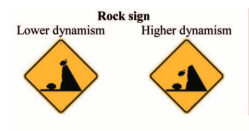
The results were fascinating. Drivers slowed down and paid more attention to the sign with the rocks in mid-air. The implied movement triggered a response—our brains couldn’t help but notice it. This effect isn’t about consciously choosing to look; it’s subconscious. Movement, even implied movement, has a way of pulling our focus.
This got my team and me thinking: if this works on road signs, could it work in marketing? Could images that suggest movement—like kids running through a room, a car driving past a house, or a football with a shadow suggesting it’s just been kicked—grab people’s attention in the same way? And, more importantly, would this attention translate into action? Could it actually generate more leads?
So, we set up a series of experiments to find out. For Facebook ads, we used two types of images: one set featured static visuals, like an empty lounge or a stationary object. The other set used visuals with implied movement, such as kids running through the lounge. We wanted to see which images would make people stop scrolling and click.
But we didn’t stop there. We extended the test to Google Ads and landing pages. Some pages featured static images, while others used animations or visuals suggesting movement. Half the visitors saw one version; half saw the other. The question was simple: does adding motion—or the impression of motion—get more people to leave their details and inquire about a mortgage?
We even asked a few people to compare pairs of images and tell us which one grabbed their attention first. From an empty lounge to kids running, from a plain football to one with a shadow, we wanted to understand what drew their eyes.
Brought to you by the team at The Lead Engine who specialise in generating mortgage leads.