
Advent of Computing
211 episodes — Page 4 of 5
Ep 52Episode 52 - THE SOURCE
One of the great things about the modern Internet is the wide range of services and content available on it. You have news, email, games, even podcasts. And in each category you have a wide range of choices. This wide diversity makes the Internet so compelling and fun to explore. But what happens when you take away that freedom of choice? What would a network look like if there was only one news site, or one place to get eamil? Look no further than THE SOURCE. Formed in 1979 and marketed as the information utility for the information age, THE SOURCE looked remarkably like the Internet in a more closed-off format. The key word here is: looked. Like the show? Then why not head over and support me on Patreon. Perks include early access to future episodes, and bonus content: https://www.patreon.com/adventofcomputing
Ep 51Episode 51 - The IBM PC
Released in August 1981, the IBM PC is perhaps one of the most important computers in history. It originated the basic architecture computers still use today, it flung the doors open to a thriving clone market, and created an ad-hoc set of standards. The heart of the operation, Intel's 8088, solidified the x86 architecture as the computing platform of the future. IBM accomplished this runaway success by breaking all their own rules, heavily leveraging 3rd party hardware and software, and by cutting as many corners as possible. The PC was designed in less than a year, so how did it become the most enduring design in the industry? Some ad clips this episode were from this fabulous PC ad compilation: https://www.youtube.com/watch?v=kQT_YCBb9ao Like the show? Then why not head over and support me on Patreon. Perks include early access to future episodes, and bonus content: https://www.patreon.com/adventofcomputing
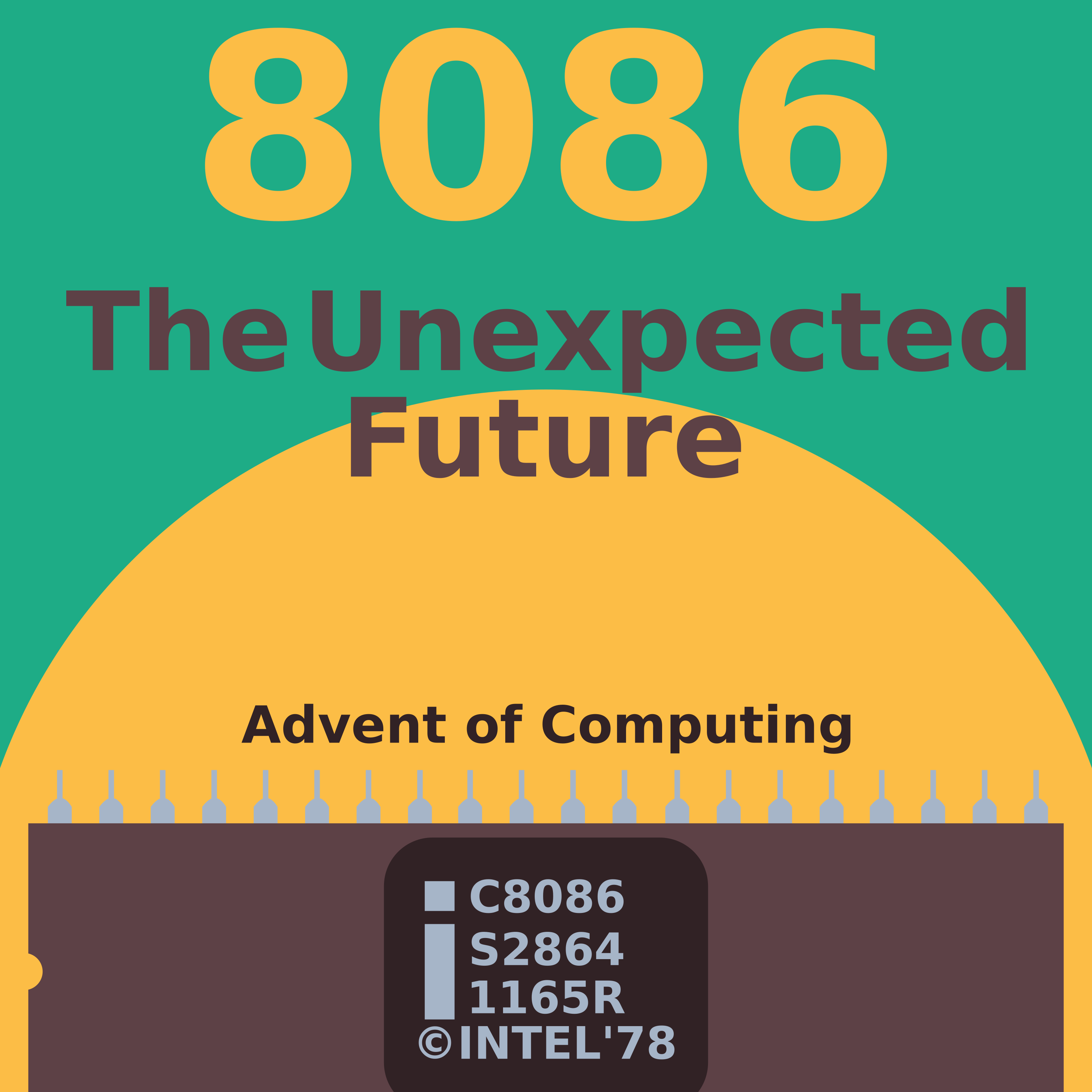
Ep 50Episode 50 - 8086: The Unexpected Future
The Intel 8086 may be the most important processor ever made. It's descendants are central to modern computing, while retaining an absurd level of backwards compatibility. For such an important chip it had an unexpected beginning. The 8086 was meant as a stopgap measure while Intel worked on bigger and better projects. This episode we are looking at how Intel was trying to modernize, how the 8086 fit into that larger plan, and it's pre-IBM life. Like the show? Then why not head over and support me on Patreon. Perks include early access to future episodes, and bonus content: https://www.patreon.com/adventofcomputing
Ep 49Episode 49 - Numeric Control and Digital Westerns
Saga II was a program developed in 1960 that automatically wrote screenplays for TV westerns. Outwardly it looks like artificial intelligence, but that's not entirely accurate. Saga has much more in common with CNC software than AI. This episode we take a look at how the same technology that automated manufacturing found it's way into digital westerns, and how numerically controlled mills are remarkably similar to stage plays. Clips drawn from The Thinking Machine: https://techtv.mit.edu/videos/10268-the-thinking-machine-1961---mit-centennial-film Like the show? Then why not head over and support me on Patreon. Perks include early access to future episodes, and bonus content: https://www.patreon.com/adventofcomputing

Ep 48Episode 48 - Electric Ping-Pong
Sometimes an idea is so good it keeps showing up. Electronic ping-pong games are one of those ideas. The game was independently invented at least twice, in 1958 and then in 1966. But, here's the thing, PONG didn't come around until the 70s. What were theses earlier tennis games? Did Atari steel the idea for their first hit? Today we go on an analog journey to find some answers. Like the show? Then why not head over and support me on Patreon. Perks include early access to future episodes, and bonus content: https://www.patreon.com/adventofcomputing
Episode 47.5 - Lars Brinkhoff Interview, Preserving ITS
bonusLars Brinkhoff has been spearheading the effort to keep the incompatible Timesharing System alive. Today we sit down to talk about the overall ITS restoration project, software preservation, and how emulation can help save the past. You can find the full restoration project at github: https://github.com/PDP-10/its And follow Lars on twitter: @larsbrinkhoff
Ep 47Episode 47 - ITS: Open Computing
Modern operating systems adhere to a pretty rigid formula. They all have users with password-protected accounts and secure files. They all have restrictions to keep programs from breaking stuff. That design has been common for a long time, but that doesn't make it the best solution. In the late 60s ITS, the Incompatible Timesharing System, was developed as a more exciting alternative. ITS was built for hackers to play, there were no passwords, any anyone who could find ITS was welcome to log in. Like the show? Then why not head over and support me on Patreon. Perks include early access to future episodes, and bonus content: https://www.patreon.com/adventofcomputing
Ep 46Episode 46 - Hacker Folklore
Hacker hasn't always been used to describe dangerous computer experts will ill intent. More accurately it should be sued to describe those enamored with computers, programming, and trying to push machines to do interesting things. The values, ethics, morals, and practices around those people make up what's known as hacker culture. Today we are digging into the Jargon File, a compendium of all things hackish and hackable, to take a look at hacker culture through its folklore. Huge thanks to some of my fellow podcasters for doing readings for me this episode. In order of appearance they are: Randall Kindig of the FloppyDays Vintage Computing Podcast(floppydays.com) Charles Edge from The History of Computing(thehistoryofcomputing.libsyn.com) Sebastian Major of Our Fake History(ourfakehistory.com) Like the show? Then why not head over and support me on Patreon. Perks include early access to future episodes, and bonus content: https://www.patreon.com/adventofcomputing
Ep 45Episode 45 - Keeping Things BASIC
BASIC is a strange language. During the early days of home computing it was everywhere you looked, pretty much every microcomputer in the 70s and early 80s ran BASIC. For a time it filled a niche almost perfectly, it was a useable language that anyone could learn. That didn't happen by accident. Today we are looking at the development of BASIC, how two mathematicians started a quest to expose more students to computers, and how their creation got away from them.
Ep 44Episode 44 - ENIAC, Part II
In 1946 John Eckert and John Mauchly left the Moore School, patented ENIAC, and founded a company. One of those discussions would have consequences that wouldn't be resolved until 1973. Today we close out our series on ENIAC with a look at the legal battle it spawned, and how it put ownership over the rights to basic digital technology on trial. Along the way we talk legal gobbledygook, conspiracy, and take a look at some of the earliest electronic computers. Like the show? Then why not head over and support me on Patreon. Perks include early access to future episodes, and bonus content: https://www.patreon.com/adventofcomputing
Ep 43Episode 43 - ENIAC, Part I
Completed in 1945, ENIAC was one of the first electronic digital computers. The machine was archaic, but highly influential. But it wasn't a totally new take on computing. Today we are taking a look at the slow birth of ENIAC, how analog computers started to fall apart, and how earlier ideas transitioned into the digital future. Like the show? Then why not head over and support me on Patreon. Perks include early access to future episodes, and bonus content: https://www.patreon.com/adventofcomputing
Ep 42Episode 42 - IBM Gets Personal
This episode is not about the IBM PC. In 1981 the Personal Computer would change the world. Really, it's hard to talk about home computing without diving into it. But I've always had an issue with the traditional story. The PC didn't come out of left field, IBM had actually been trying to make a home computer for years. In 1981 those efforts would pay off, but the PC wasn't revolutionary hardware for Big Blue, it was evolutionary. So today we are looking at that run up with SCAMP, the 5100, and the Datamaster. Like the show? Then why not head over and support me on Patreon. Perks include early access to future episodes, and bonus content: https://www.patreon.com/adventofcomputing
Ep 41Episode 41 - Return of Viruses: The Spread
It's time to round out spook month with a return to one of last year's topics: the computer virus. Malicious code traveling over networks is actually a relatively new phenomenon, early viruses were much different. In this episode we examine ANIMAL and Elk Cloner, two early viruses that were meant as practical jokes and spread by hapless computer users. Along the way we will see cases of parallel evolution, name calling, and find out if there is any one origin to the word "virus". Like the show? Then why not head over and support me on Patreon. Perks include early access to future episodes, and bonus content: https://www.patreon.com/adventofcomputing

Ep 40Episode 40 - Spam, Email, and Best Intentions
Spam emails are a fact of modern life. Who hasn't been sent annoying and sometimes cryptic messages from unidentified addresses? To understand where spam comes from we need to look at the origins of email itself. Email has had a long and strange history, so too have some of it's most dubious uses. Like the show? Then why not head over and support me on Patreon. Perks include early access to future episodes, and stickers: https://www.patreon.com/adventofcomputing
Ep 39Episode 39 - Learning Along the Oregon Trail
We've all played the Oregon Trail, but what do you know about it's origins? First developed as a mainframe program all the way back in 1971, the Oregon Trail was intended as an educational game first and foremost. In fact, it traces its linage to some of the first efforts to get computers into the classroom. Today we are following the trail back to it's source and seeing how the proper environment was built to create this classic game. You can play the 1975 version here: https://archive.org/details/OregonTrailMainframe Like the show? Then why not head over and support me on Patreon. Perks include early access to future episodes, and stickers: https://www.patreon.com/adventofcomputing

Ep 38Episode 38 - JOVIAL, the Evolution of Programming
The creation of FORTRAN and early compilers set the stage to change computing forever. However, they were just the start of a much longer process. Just like a spoken language, programming languages have morphed and changed over time. Today we are looking at an interesting case of this slow evolution. JOVIAL was developed during the Cold War for use in the US Military, and it's been in constant small-scale use ever since. It's story gives us a wonderful insight into how programming language change over time, and why some stick around while others die out. Like the show? Then why not head over and support me on Patreon. Perks include early access to future episodes, and stickers: https://www.patreon.com/adventofcomputing
Ep 37Episode 37 - The Rise of DOS
Is there a more iconic duo than the IBM PC and MS-DOS? Microsoft's Disk Operating System would be the final success that turned the company into what we know today. But here's a dirty little secret: DOS didn't start out at Microsoft. So how did Gates and Allen get hold of a winning program? Today we look at how Tim Paterson, an engineer at a long forgotten company, created the first x86 computer and the original version of DOS. Important dates: 1979 - Tim Paterson builds first 8086 Computer 1980 - Microsoft licenses DOS from Seattle Computer Products 1981 - DOS ships with the IBM PC Like the show? Then why not head over and support me on Patreon. Perks include early access to future episodes, and stickers: https://www.patreon.com/adventofcomputing
Ep 36Episode 36 - The Rise of CP/M
The IBM PC and MS-DOS, the iconic duo of the early 80s. The two are so interconnected that it's hard to mention one without the other. But in 1980 DOS wasn't IBM's first choice for their soon-to-be flagship hardware. IBM had wanted to license Gary Kildall's CP/M, but in a strange series of events the deal fell through. Legend states that Kildall lost the contract b was too busy flying his private plane to talk business with IBM, but is that true? Today we look at the development of CP/M, why it was a big deal, and why the PC ultimately shipped with Microsoft software. Like the show? Then why not head over and support me on Patreon. Perks include early access to future episodes, and stickers: https://www.patreon.com/adventofcomputing
Ep 35Episode 35 - Analog Computing and the Automatic Totalisator
A lot of the technology we associate with the modern day started on anachronistic machines. I'm not talking about mainframes, I'm talking older. Today we are looking at George Julius's Automatic Totalisator, an analog computer used to manage betting at horse tracks around the world. These were massively complex machines, some networked over 200 input terminals, and they did it all mechanically. Like the show? Then why not head over and support me on Patreon. Perks include early access to future episodes, and stickers: https://www.patreon.com/adventofcomputing Important Dates: 1913: Premier Tote installed in Auckland
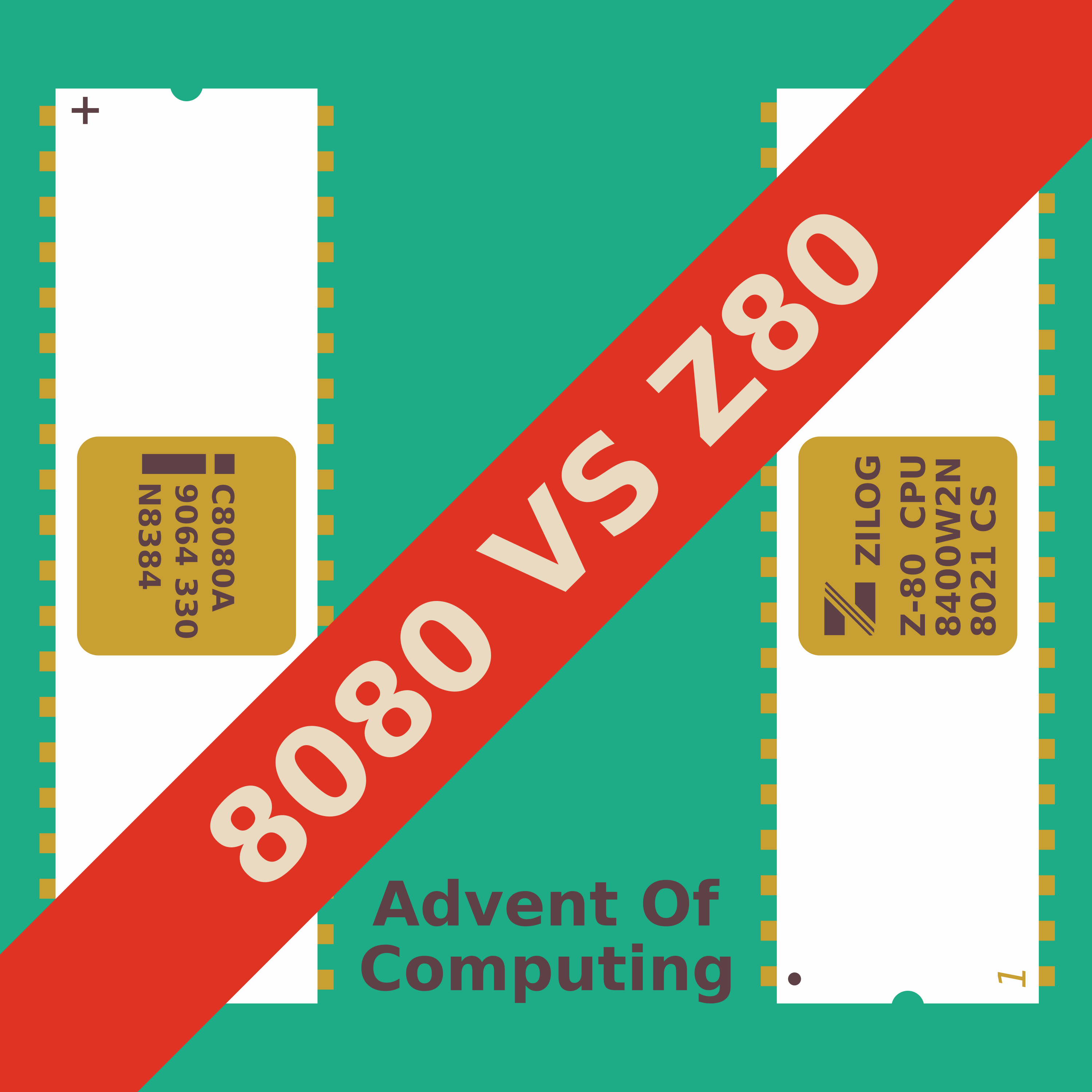
Ep 34Episode 34 - 8080 VS Z80
In 1974 Intel released the 8080 processor, a chip long in the making. It was the first microprocessor that had the right combination of power and price to make personal computers viable. But that same year a small group of employees defected and formed their own company called Zilog. Among this group were Masatoshi Shima and Federico Faggin, two of the principal architects behind the 8080 as well as Intel's other processors. Zilog would go on to release a better chip, the Z80, that blew Intel out of the water. Today we continue our Intel series with a look into this twisting story. Like the show? Then why not head over and support me on Patreon. Perks include early access to future episodes, and stickers: https://www.patreon.com/adventofcomputing Important Dates: 1974: Intel 8080 hits shelves 1976: Zilog Z80 goes on sale
Episode 33.5 - Brad Chase Interview, Marketing Lead for Windows 95 and Much More
bonusI recently got the chance to sit down and talk with Microsoft alumni Brad Chase. He was the product manager for Microsoft Works on the Macintosh, DOS 5, DOS 6, and the marketing lead for Windows 95 as well as much more. We talk about the Apple-Microsoft relationship, the groundbreaking launch of Windows 95, and what it takes to sell software. Editing for this episode was handled by Franck, you can follow him on instagram: www.instagram.com/frc.audio/ Like the show? Then why not head over and support me on Patreon. Perks include early access to future episodes, and stickers: https://www.patreon.com/adventofcomputing
Ep 33Episode 33 - Becoming Portable
Portable computing is now totally ubiquitous. There's a good chance you are listening to this episode on a tiny portable computer right now. But where did it all come from? As it turns out the first portable computer was designed all the way back in 1972. This machine, the DynaBook, only ever existed on paper. Despite that handicap, in the coming years it would inspire a huge shift in both personal and portable computing. Like the show? Then why not head over and support me on Patreon. Perks include early access to future episodes, and stickers: https://www.patreon.com/adventofcomputing Important dates in this episode: 1972: DynaBook designed by Alan Kay 1976: NoteTaker project starts 1982: GRiD Compass released
Ep 32Episode 32 - Road to Transistors, Part II
In this episode we finish up our look at the birth of the transistor. But to do that we have to go back to 1880, the crystal radio detector, and examine the development of semiconductor devices. Once created the transistor would change not just how computers worked, but change how they could be used. That change didn't happen over night, and it would take even longer for the transistor to move from theory to reality. Like the show? Then why not head over and support me on Patreon. Perks include early access to future episodes, and stickers: https://www.patreon.com/adventofcomputing Important dates in this episode: 1939: Russel Ohl Discovers P-N Junction 1947: Point Contact Transistor Invented at Bell Labs 1954: TRADIC, First Transistorized Computer, Built
Ep 31Episode 31 - Road to Transistors: Part I
The transistor changed the world. It made small, complex, and cheap computing possible. But it wasn't the first attempt to crack the case. There is a long and strange lineage of similar devices leading up to the transistor. In this episode we take a look at two of those devices. First the vacuum tube, one of the first components that made computing possible. Then the cryotron, the first device purpose built for computers. You can find the full audio of Atanasoff's talk here: https://www.youtube.com/watch?v=Yxrcp1QSPvw Like the show? Then why not head over and support me on Patreon. Perks include early access to future episodes, and stickers: https://www.patreon.com/adventofcomputing Important dates in this episode: 1880: Thomas Edison Rediscovers Thermionic Emission 1904: Ambrose Fleming Invents the Vacuum Tube 1906: Lee de Forest Patents the Audion Triode Tube 1937: George Stibitz Creates First Binary Adding Circuit from Spare Relays 1938: John Atanasoff Visits a 'Honkey-Tonk' 1941: ABC, First Vacuum Tube Calculator, is Completed 1953: Cryotron Invented by Dudley Allen Buck
Ep 30Episode 30 - Coherent Is Not UNIX!
In the current day Linux is the most widely used UNIX-like operating system. It's rise to prominence has been an amazing success story. From it's humble beginnings Linux has grown to power everything from super computers to car stereos. But it's not the first UNIX clone. A much earlier system existed, called Coherent. And as it turns out both Linux and Coherent share a lot of similarities. The biggest difference being that Coherent was closed source. Like the show? Then why not head over and support me on Patreon. Perks include early access to future episodes, and stickers: https://www.patreon.com/adventofcomputing Important dates in this episode: 1973: AT&T UNIX V4 Goes Public 1949: DOJ Sues AT&T Over Antitrust Violations 1975: AT&T UNIX V6 Released 1977: First Version of BSD Circulates 1977: XYBASIC Released by Mark Williams Company 1980: Coherent Released for PDP/11 1983: Coherent Comes to the IBM PC/XT 1995: Mark Williams Company Closes
Episode 29.5 - A Guided Tour of the Macintosh
bonusIn this byte sized episode I take a look at a pack in that came with the first Macintosh. Along side Apple stickers, manuals, and the computer itself there was a single cassette tape labeled "A Guided Tour of the Macintosh". The purpose? It's a strange addition to the Mac's packing, but a great example of Apple's attention to detail and ingenuity. Like the show? Then why not head over and support me on Patreon. Perks include early access to future episodes, and stickers: https://www.patreon.com/adventofcomputing Important dates in this episode: 1984: A Guided Tour of the Macintosh Released
Ep 29Episode 29 - PCM, Origins of Digital Audio
Every day we are inundated with digital audio: phone calls, music, even this podcast. Digitized sound has become so ubiquitous that it often fades into the background. What makes this all possible is a technology called Pulse Code Modulation, or PCM. This isn't new technology, its roots trace all the way back to 1937. So how exactly did digital audio come into being well before the first digital computers? Like the show? Then why not head over and support me on Patreon. Perks include early access to future episodes, and stickers: https://www.patreon.com/adventofcomputing Important dates in this episode: 1937: PCM Developed by Alec Reeves 1941: Germany Cracks A-3 Code 1943: Bell Labs Develops SIGSALY(aka The Green Hornet) 1957: First PCM Synthesizer, MUSIC I, Programmed by Max Mathews
Ep 28Episode 28 - Applesoft BASIC, Microsoft and Apple's First Collaboration
It's easy to think of Apple and Microsoft as bitter rivals, but that's not always the case. The two companies have a very complicated relationship, and a very long history. This connection goes all the way back to the 1970s and a product called Applesoft BASIC. It would become stock software on nearly every Apple II computer ever sold, it kept Apple competitive in the early home computer market, and it may have saved Microsoft from bankruptcy. Like the show? Then why not head over and support me on Patreon. Perks include early access to future episodes, and stickers: https://www.patreon.com/adventofcomputing Important dates in this episode: 1997: Bill Gates saves Apple from Bankruptcy 1976: Apple I hits shelves, Integer BASIC soon follows 1977: Apple II Released 1978: AppleSoft BASIC Ships
Ep 27Episode 27 - Vectrex, Playing With Vectors
The 1980s were a turbulent and fast-moving decade for the video game industry. There were huge success stories, rapid advancements in technology, and the North American Video Game Crash. Caught up in all of this was an ambitious machine called the Vectrex. In an era dominated by pixelated graphics the Vectrex brought higher resolution vector images and early 3D to market. But ultimately it would be swept away during the market's crash. Today we are taking a dive into the development of the Vectrex, what made it different, and how it survives into the modern day. Like the show? Then why not head over and support me on Patreon. Perks include early access to future episodes, and stickers: https://www.patreon.com/adventofcomputing
Ep 26Episode 26 - Memex and Hyperlinks
The widespread use of the internet has shaped our world, it's hard do imagine the modern day without it. One of the biggest featured would have to be the hyperlink. But despite the modern net feeling so new, links actually date back as far as the 1930s and the creation of the Memex: a machine that was never built but would influence coming generations of dreamers. Like the show? Then why not head over and support me on Patreon. Perks include early access to future episodes, and stickers: https://www.patreon.com/adventofcomputing Important dates in this episode: 1927: Differential Analyzer Built at MIT 1938: Rapid Selector Built by Vannevar Bush 1945: As We May Think Published
Ep 25Episode 25 - Making Disks Flexible, Part 2
The floppy disk is one of the most iconic pieces of technology. While not in use in the modern day there was a period of 40 years where the floppy disk was synonymous with data storage. Today we pick up where we finished in the last episode, with the rise and fall of the 5 1/4 inch disk. We will be looking at the creation and spread of the 3 1/2 inch floppy disk. How did Sony, a non-player in the computer market, create this run away success? And how did Apple contribute to it's rise? Like the show? Then why not head over and support me on Patreon. Perks include early access to future episodes, and stickers: https://www.patreon.com/adventofcomputing Important dates in this episode: 1980: Sony Invents Microfloppy Disk 1983: Apple Builds Prototype MAC with 3 1/2 Inch Floppy
Ep 24Episode 24 - Making Disks Flexible, Part 1
The floppy disk was a ubiquitous technology for nearly 40 years. From mainframes to home computers, the plastic disk was everywhere. And in the decades it was around there were very few changes made to how it fundamentally worked. So how did it get so popular? What made the floppy disk so flexible? And how did it finally fall out of favor? In this episode we will look at the technology's early days. Like the show? Then why not head over and support me on Patreon. Perks include early access to future episodes, and stickers: https://www.patreon.com/adventofcomputing Important dates in this episode: 1971: 8 Inch Floppy Disk(Minnow) Created at IBM 1976: Shugart Invents 5 1/4 Inch Floppy Disk
Ep 23Episode 23 - FORTRAN, Compilers, and Early Programming
Our modern world is full of software, it's what makes everything tick. The sheer amount of code that goes into something like keeping the internet running is staggering. Programming isn't the easiest profession, but there was a time when it was much much harder. It took a huge shift in thinking, and some impressive feats of software development, to make complicated programming possible. And that shift started in the 1950s. Like the show? Then why not head over and support me on Patreon. Perks include early access to future episodes, and stickers: https://www.patreon.com/adventofcomputing Important dates in this episode: 1951: Grace Hopper Creates A-0 Compiler 1954: John Backus Starts FORTRAN Project at IBM 1957: First FORTARN Compiler Ships
Ep 22Episode 22 - Going Rogue
Many video games today make use of randomized content, some more than others. It may seem like an obvious feature, but it turns out that procedural generation didn't really catch on in video games until the 1980 release of Rogue. The game itself never saw much commercial success, but was wildly popular among UNIX users. In this episode we look at Rogue, how it was created, and the legacy that we still see today. Like the show? Then why not head over and support me on Patreon. Perks include early access to future episodes, and stickers: https://www.patreon.com/adventofcomputing Important dates in this episode: 1980: Rogue Written for PDP/11 1984: Rogue Ported to PC, Macintosh, Atari ST
Ep 21Episode 21 - 8008: Intel's Second Shot
It's time to continue our deep dive into the legacy of Intel's processors. This episode we will be looking at the 8008, the second microprocessor produced by Intel and the progenitor of the x86 family. Along the way we will see how an innovative terminal from 1969 inspired the chip, how Intel lost a contract, and discuss some of the first personal computes. Like the show? Then why not head over and support me on Patreon. Perks include early access to future episodes, and stickers: https://www.patreon.com/adventofcomputing Important dates in this episode: 1969: CTC Develops First 'Glass-Teletype' Terminal 1972: 8008 CPU Released by Intel
Episode 20.5 - Cooking in Y2K
bonusIn this mini episode we will look at the Y2K bug, and some of the recipes it spawned. That's right, we are talking about Y2K cookbooks! You can find all more Y2K compliant food here: https://web.archive.org/web/19991012032855/http://y2kkitchen.com/ Like the show? Then why not head over and support me on Patreon. Perks include early access to future episodes, and stickers: https://www.patreon.com/adventofcomputing Important dates in this episode: 1999: Y2K Kitchen Hits Shelves
Ep 20Episode 20 - PLATO Part 2: An Online Revolution
In the conclusion to our discussion of PLATO we look at the final incarnation of the system: PLATO IV. How did an educational machine turn into one of the earliest online communities? What was it like to use PLATO at it's height? Along the way we will look at the software, hardware, and video games that made PLATO so special. Like the show? Then why not head over and support me on Patreon. Perks include early access to future episodes, and stickers: https://www.patreon.com/adventofcomputing Important dates in this episode: 1964: Plasma Display Patented 1972: PLATO IV Launches at University of Illinois 1973: Empire, First MMO, Developed for PLATO IV
Ep 19Episode 19 - PLATO Part 1: A Revolution in Teaching
In the 1960s a small project started at the University of Illinois. This project, called PLATO, would go on to pioneer a truly impressive amount of new technology, including the first plasma screen, MMO video games, and time-sharing. However, PLATO remains relatively unknown today. Like the show? Then why not head over and support me on Patreon. Perks include early access to future episodes, and stickers: https://www.patreon.com/adventofcomputing Important dates in this episode: 1952: ILLIAC Becomes Operational 1960: PLATO I Developed 1961: PLATO II Developed 1969: PLATO III Developed http://tee.pub/lic/4jnwv7m_ZPw
Ep 18Episode 18 - Evolution of the Mouse
The computer mouse is a ubiquitous device, it's also one of the least changed devices we use with a computer. The mice we use today have only seen small incremental improvements since the first mouse was developed. So how did such a long lasting design take shape, and how did it travel the decades up to now? Like the show? Then why not head over and support me on Patreon. Perks include early access to future episodes, and stickers: https://www.patreon.com/adventofcomputing Important dates in this episode: 1961: First Mouse Developed at Engelbart's ARC Lab 1972: Xerox Develops Rollerball Mouse for Alto 1979: Apple LISA Mouse Designed
Episode 17.5 - Bill's Problem with Piracy
bonusIn this mini-episode we look at a strange event in Microsoft's early history and their first case of piracy. Along the way you will learn about the best advetrizing campaign in history: the MITS MOBILE Computer Caravan! Like the show? Then why not head over and support me on Patreon. Perks include early access to future episodes, and stickers: https://www.patreon.com/adventofcomputing Important dates in this episode: 1976: 'Open Letter to Hobbyists' Written by Bill Gates http://tee.pub/lic/4jnwv7m_ZPw

Ep 17Episode 17 - The BBC Domesday Project
In 1086 William the Conqueror commissioned a survey of England that would come to be known as the Domesday Book. 900 years later the BBC would create a similar survey, called the Domesday Project. This new survey spanned two LaserDiscs holding over a gigabyte of data and 200,000 images, most of which were collected by students. It presets an amazing time capsule of the UK in 1986. Also contained within the disks were 3D virtual walks of the country side, and an entire computer generated gallery. So how did such strange technology come together to commemorate a 900 year old manuscript? Like the show? Then why not head over and support me on Patreon. Perks include early access to future episodes, and stickers: https://www.patreon.com/adventofcomputing Important dates in this episode: 1986: BBC Domesday Project Released
Ep 16Episode 16 - 4004: The First Microprocessor
Intel is one of the dominant forces in the computer industry today, they may be most well known for their line of microprocessors. These chips have powered computers going back to the early days of microcomputers. How did Intel become so entrenched in the field? Well, it all started with the 4004 CPU, the first "one-chip" computer. Like the show? Then why not head over and support me on Patreon. Perks include early access to future episodes, and stickers: https://www.patreon.com/adventofcomputing Important dates in this episode: 1971: Intel 4004 Released
Ep 15Episode 15 - Lost in the Colossal Cave
Colossal Cave Adventure is one of the most influential video games of all time. Originally written for the DEC PDP-10 mainframe in 1975 the game has not only spread to just about any computer out there, but it has inspired the entire adventure/RPG genera. In this episode we are going to look at how Adventure got it's start, how it evolved into a full game, and how it came to be a lunch title for the IBM PC. Like the show? Then why not head over and support me on Patreon. Perks include early access to future episodes, and stickers: https://www.patreon.com/adventofcomputing Important dates in this episode: 1975: Colossal Cave Adventure Developed http://tee.pub/lic/MKt4UiBp22g
Ep 14Episode 14 - Creeping Towards Viruses
Computer viruses today pose a very real threat. However, it turns out that their origins are actually very non-threatening. Today, we are going to look at some of the first viruses. We will see how they developed from technical writing, to pulp sci-fi, to traveling code. I talk about The Scarred Man by Gregory Benford in this episode, you can read the full short story here: http://www.gregorybenford.com/extra/the-scarred-man-returns/ Like the show? Then why not head over and support me on Patreon. Perks include early access to future episodes, and stickers: https://www.patreon.com/adventofcomputing Important dates in this episode: 1949: John Von Neumann Writes 'Theory and Organization of Complex Automata' 1969: 'The Scarred Man' Written by Gregory Benford, Coined Term 'Virus' 1971: Creeper Virus Unleashed
Episode 13.5 - Minitel Research Lab Interview, with Julien Mailland and Kevin Driscoll
bonusToday I am joined by Julien Mailland and Kevon Driscoll, co-authors of Minitel: Welcome to the Internet and proprietors of the Minitel Research Lab(minitel.us). We talk about their book, how they first started working on Minitel terminals, and the ongoing work to preserve Minitel.
Ep 13Episode 13 - Minitel, the French Network Connection
Today we are dipping back into the deep and complex history of the proto-internet. We are going to be looking at Minitel, a France-Wide-Web that was built in the 1980s as a way to help the country stay relevant in the digital age. Like the show? Then why not head over and support me on Patreon. Perks include early access to future episodes, and stickers: https://www.patreon.com/adventofcomputing Important dates in this episode: 1980: Minitel Program Networks France
Ep 12Episode 12 - Journey to Altair
Today we are going to be traveling back to the late 1970s to take a look at the early days of the home computer. And specifically how Microsoft found a foothold at just the right time and place. And for Bill Gates and Paul Allen that would come in the form of BASIC. Along the way we will cover the Altair 8800, vaporware, and how Bill Gates violated Harvard student conduct. Like the show? Then why not head over and support me on Patreon. Perks include early access to future episodes, and stickers: https://www.patreon.com/adventofcomputing Important dates in this episode: 1974: Altari 8800 Released 1975: Microsoft BASIC Released
Ep 11Episode 11 - Spacewar! (the Game)
It really seems like in the last decade video games have gone from a somewhat niche hobby to a widespread part of our culture. Nowadays, there are a multitude of ways to get out gaming fix. Consoles, handheld game systems, and even smartphones make video games more accessible than ever. But when and how exactly did video games start to creep into the modern consciousness? In this episode we look at some of the earliest video games and how they came to be. Like the show? Then why not head over and support me on Patreon. Perks include early access to future episodes, and stickers: https://www.patreon.com/adventofcomputing Important dates in this episode: 1962: Spacewar! Developed
Episode 10.5 - The Jargon File
bonusIn this mini-episode we look at the Jargon File, an early primary source about hacker culture. The most recent version of the file lives here: http://catb.org/jargon/html/ If you want more of my voice, I was also recently on the What Do You Do With That podcast talking about restoring an IBM PS/2 Model 25. You can find all their episodes here: https://wdydwt.blubrry.net/
Ep 10Episode 10 - Networking for a Nuclear War, the Americans
In this episode we are going to explore the ARPANET. This is a companion to the last episode, which covered contemporary Soviet attempts to create an early internet. Like with last time, today we are still in the Cold War era. Now, this won't be a point by point comparison of Soviet to US networks. They are totally different beasts. Instead, what I want to do is look at how ARPANET was developed, what influenced it, and how it would kick start the creation of the internet.