Acton Vault
111 episodes — Page 3 of 3
John Suarez on communism in Cuba
John Suarez is the program officer of the Washington, DC based Center for a Free Cuba. He has been interviewed by TV, radio and print media on Cuba. Mr. Suarez is a human rights activist. He holds degrees from Florida International University and Spain’s Universidad Francisco de Vitoria. He has testified before the Inter-American Commission on Human Rights in Washington DC, the United Nations Human Rights Council in Geneva, and served as an interpreter for Cuban dissidents in Congressional hearings. Since 2009 he has maintained the blog, Notes from the Cuban Exile Quarter. He is a member of the Cuban Democratic Directorate (2002-present). Hosted on Acast. See acast.com/privacy for more information.
Greg Forster on Whittaker Chambers’ witness for the 21st century
A Soviet spy who was converted to Christ, Whittaker Chambers sacrificed everything for the sake of his Christian witness against injustice. As one of the most profound Christian thinkers of the 20th century, Chambers offers reflections on religion and public life with far-reaching implications for the 21st. This lecture will explore how his story points to uncomfortable lessons for Left and Right alike in our own day. ===Greg Forster, Ph.D. serves as the director of the Oikonomia Network at the Center for Transformational Churches at Trinity International University, and is a visiting assistant professor of faith and culture. He has a Ph.D. with distinction in political philosophy from Yale University. He is the author of seven books, most recently The Church on Notice and Joy for the World, and the co-editor of four books. He is a Friedman fellow at EdChoice; has published numerous articles in scholarly and popular periodicals; has spoken at the Gospel Coalition and Jubilee conferences; and contributes regularly to online outlets. His primary scholarly interest is studying how the structures of culture and civilization (family, work, education, business, politics, etc.) respond to the challenge of the gospel and the ambiguous tensions of religious freedom, in order to equip the church to be good citizens of both the Kingdom of God and our human communities. Hosted on Acast. See acast.com/privacy for more information.
Jennifer Roback Morse on the economic and social costs of family breakdown
Only the family can provide the sense of security and identity that every person needs. Civilization itself depends on children having a good first year.Family breakdown is expensive. Taxpayers provide programs to step in when the family fails. Businesses have trouble finding workers they need, with even basic skills. Individuals and families struggle to make ends meet when families don’t work together. What exactly are we going to do about all this? Dr. Jennifer Roback Morse, long-time Research Associate at the Acton Institute, and Founder and President of the Ruth Institute, gives practical steps everyone can take to make the family great again. Hosted on Acast. See acast.com/privacy for more information.

2017 Chicago Open Mic Night
Acton’s 8th Annual Chicago Open Mic Night took place on Wednesday, November 8th at the University Club of Chicago. The panel for the evening included:Paul Bonicelli, Ph.D., Director of Education and Programs, Acton InstituteIsmael Hernandez, Founder and Director, Freedom and Virtue InstituteSamuel Gregg, D.Phil., Director of Research, Acton Institute Hosted on Acast. See acast.com/privacy for more information.
J. Daryl Charles on natural law and the Protestant Reformation (10.26.2017)
While the formal significance of the 500th anniversary of the Protestant Reformation might be celebrated by Protestants and lamented by Catholics, reflecting back on sixteenth-century reform 500 years removed affords valuable lessons. The occasion also allows us to highlight the theological and legal thinking of a most remarkable though much forgotten figure of the Protestant Reformation. Hosted on Acast. See acast.com/privacy for more information.

Jim McGann on think tanks, politics, and the casualties in the war of ideas (7.20.17)
In The Fifth Estate: Think Tanks, Public Policy, and Governance, James G. McGann illustrates how policymakers have come to value the independent analysis and advice provided by think tanks and why it has become one of the defining characteristics of the American political system. Drawing on case studies in both foreign and domestic policy, McGann clarifies the correlation between think tank research and the policies enacted by the past three presidential administrations. He also describes a phenomenon known as “the revolving door,” where think tanks provide former government officials an opportunity to share insights from public service, remain involved in policy debates, and continue to provide advice and commentary.Based on the history and the level of involvement seen today, the influence of think tanks is unlikely to diminish in the coming years.James G. McGannJames G. McGann Ph.D. is a senior lecturer of International Studies at the Lauder Institute, director of the Think Tanks and Civil Societies Program and senior fellow, Fels Institute of Government at the University of Pennsylvania. Dr. McGann earned his M.A. and Ph.D. from the University of Pennsylvania and was a National Fellow at Stanford University while writing his doctoral thesis, which examined the nature and evolution of public-policy research organizations in the United States. His research and consulting have enabled him to work with governments and civil society organizations in over 100 countries. He has authored over numerous books on think tanks and is the creator and editor of the annual Global Go To Think Tank Index. Hosted on Acast. See acast.com/privacy for more information.

Leonard Leo on the Trump Administration and the future of the federal judiciary (5.11.17)
The US Supreme Court hangs in the balance when it comes to some of the most important areas of the law, with a couple of more vacancies possible, and there are an unprecedented number of vacancies anticipated on the Federal appeals courts. Leonard Leo - Executive Vice President of the Federalist Society - describes how this state of affairs presents a unique opportunity to transform the courts so as to engender a greater respect for limited, constitutional government. Hosted on Acast. See acast.com/privacy for more information.

Avik Roy on the end of cultural conservatism as we once knew it (1.19.17)
After World War II, Bill Buckley, Frank Meyer, and others assembled the “three-legged stool” of modern American conservatism: free markets, anti-communism, and cultural conservatism. It was a synthesis that elected Ronald Reagan and won the Cold War. But that synthesis is fraying, because cultural conservatism itself has diverging strains that came together in the 20th century, but are now going their separate ways. Cultural conservatism will look very different in 25 years than it did 25 years ago. Hosted on Acast. See acast.com/privacy for more information.
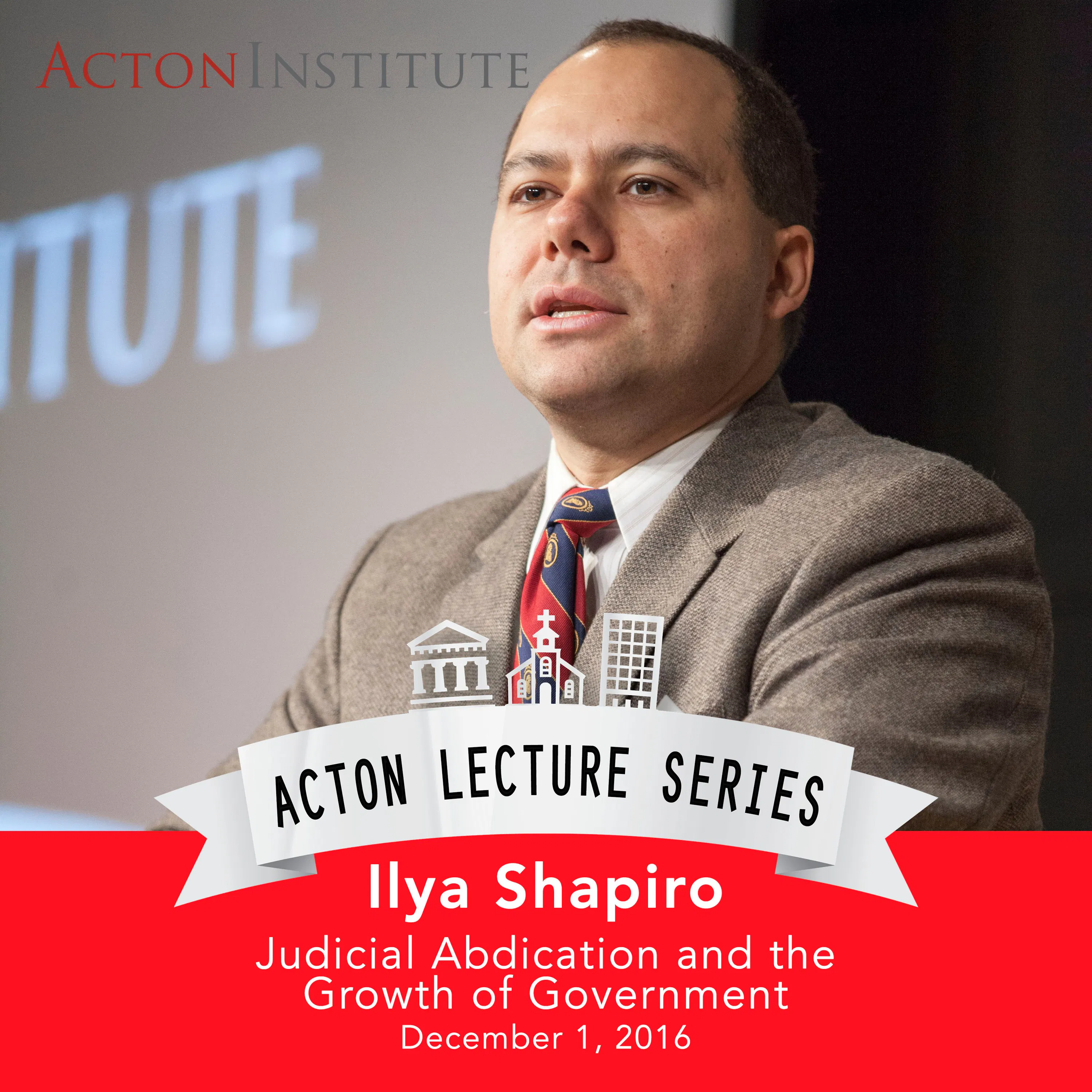
Ilya Shapiro on judicial abdication and the growth of government (12.1.16)
The fight for the Supreme Court during the presidential campaign has crystalized the importance of judges' both having the right constitutional theories and being willing to enforce them. Too much "restraint" - like Chief Justice Roberts in the Obamacare cases - has led to the unchecked growth of government, toxic judicial confirmation battles, and even our current populist moment. Hosted on Acast. See acast.com/privacy for more information.

Victoria Coates on how democracy inspired the West (11.3.16)
In Victoria Coates’ 2016 book David’s Sling: A History of Democracy in Ten Works of Art the author argues that democracy has had a unique capacity to inspire some of the greatest artistic achievements of western civilization from the Parthenon to Picasso’s Guernica. While Dr. Coates does not maintain that this is an exclusive arrangement, or without its fair share of failure and catastrophe, ultimately democracy emerges as one of the great catalysts of western civilization. In this talk Dr. Coates will focus on two case studies from David’s Sling, Michelangelo’s "David" and Albert Bierstadt’s Rocky Mountains: Lander’s Peak, and then expand the discussion to explore how similar histories could be written about two other pillars of western civilization: the Judeo-Christian tradition, and the belief in the limitless potential of the individual. Hosted on Acast. See acast.com/privacy for more information.
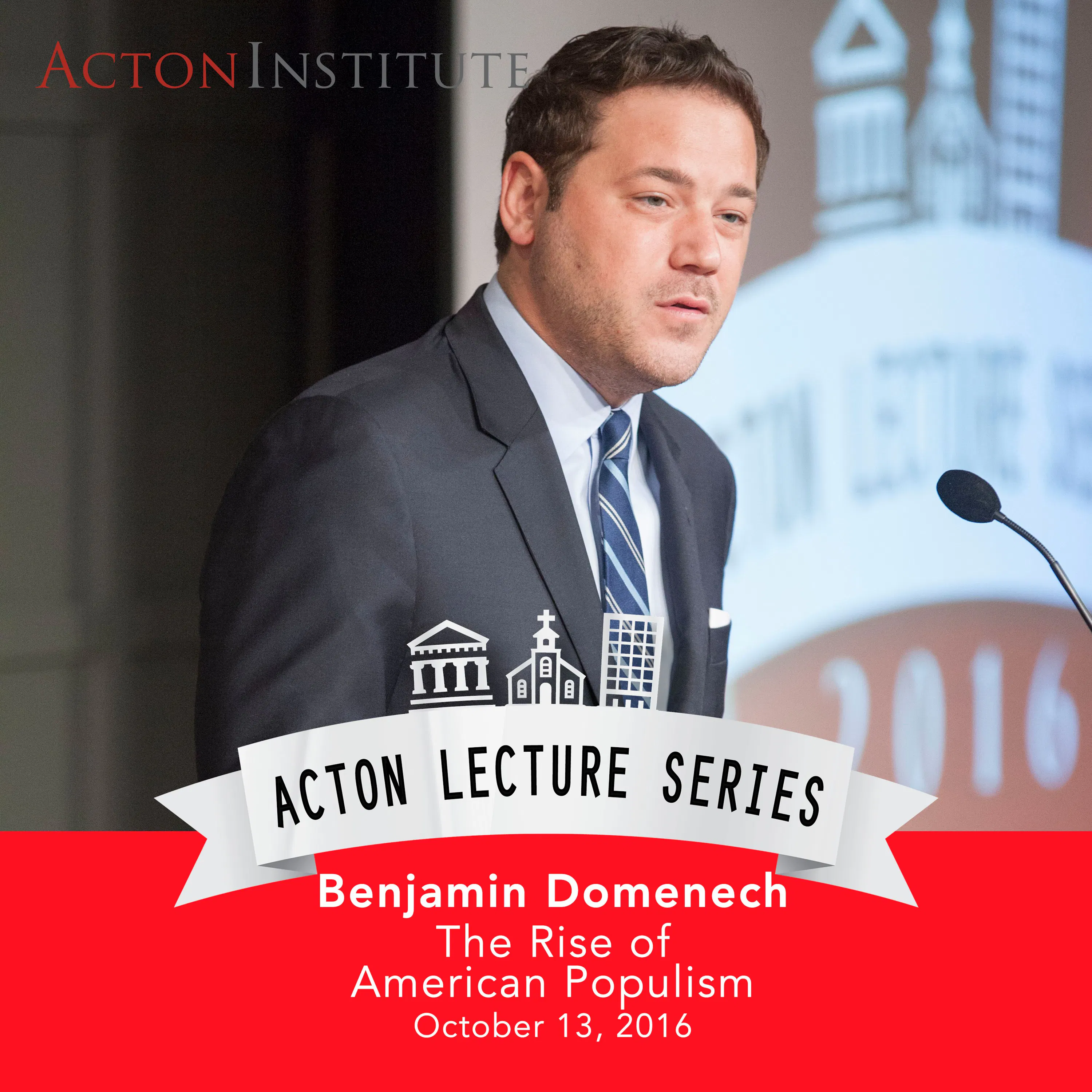
Benjamin Domenech on the rise of American populism (10.13.16)
America has experienced a surge of populism in recent years that has turned the established order of our politics on its head. Where do these movements come from? What can history tell us about where they are going? And what can statesmen do to channel this political outrage for the good of the people? Hosted on Acast. See acast.com/privacy for more information.