
ABC Rewind
470 episodes — Page 2 of 10
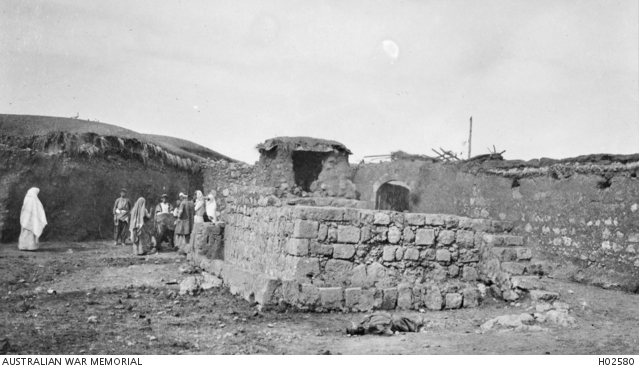
01 | Anzac Massacre
The story of the Surafend massacre of December 1918, an event described by one historian as the worst war crime ever committed by New Zealand and Australian military personnel.
05 | Skase | In sickness and in health
It’s 1994 and fugitive billionaire tycoon Christopher Skase lies in a Majorcan hospital bed under police guard. A Spanish court has ordered he is well enough to be extradited back to Australia to face corporate crime charges. But Skase is appealing. When the decision finally comes, it’s a shock.
04 | Skase | The Chase for Skase
In June 1993, the Australian Federal Police get a call. Someone from Christopher Skase’s inner sanctum, someone who knows all the ins and outs of his business dealing, who knows exactly where all the bodies are buried, is defecting. But Skase isn’t going down without a fight and he’ll use every trick in the book to avoid extradition back to Australia.
03 | Skase | Flying too close to the sun
It’s April 1989 and Christopher Skase is reclining on his private jet, sipping a flute of champagne as he flies home from Hollywood. He's just made a $1.2 billion bid for the MGMUA/United Artists film studio. There’s one small problem though - he doesn’t have the money.
02 | Skase | Building a Mirage
In the 1980s, Christopher and Pixie Skase are headline news, right on top of the billionaire food chain. Australia can’t get enough of them. Skase builds the luxury Mirage resorts in Queensland and throws epic, over-the-top, star-studded parties. Pixie flies in flowers, chefs and dresses on their private jet. It’s a wild ride. But if something seems too good to be true it quite possibly is.
01 | Skase | The Confidence Man
Christopher Skase wants to be a corporate cowboy. He’s handsome and elegant, with Hermes ties and flowing locks. His wife Pixie is beautiful, in a 1980s kind of way, with bouffant blonde hair and more diamonds than a high street jeweller. Together they take on the Melbourne business establishment and start building the Qintex empire.
INTRODUCING — Skase: Fall of a Tycoon
It's 1980s Australia and everyone wants to be seen with billionaire power couple Christopher and Pixie Skase. They have it all — money, power, fame and big hair. Then, in the blink of an eye, they don't.This is the story of Australia's most famous fugitive entrepreneur, his epic fall from grace and the multi-million-dollar chase for Skase.By the age of 40, Christopher Skase's Qintex empire is worth $2 billion, his extravagance legendary, the couple's lavish taste questionable. It's said a glass dome sits in his home office with a million dollars inside. Shredded. An homage to his first mill.But when Skase makes an audacious tilt at Hollywood, his empire collapses.In one of the greatest escapes Australia's ever seen, Christopher and Pixie skip the country owing a whopping $1.5 billion.The Australian courts, government and media are baying for blood. But the billion-dollar question is — will Skase outfox them all?To binge more incredible podcast episodes about 'Australia's fugitive entrepreneur,' the billionaire con man Christopher Skase, hosted by Mark Humphries; search 'Rewind Skase: Fall of a Tycoon podcast' on the ABC listen App (Australia), or wherever you get your podcasts.
Great Aussie Cons | My Mother the Spy
Mercia Masson is one of Australia’s longest serving undercover spies in Cold War era Australia. But her double life remains a secret to those closest to her, including her family, for nearly 50 years
Great Aussie Cons | The Lady Imposter
Young Alexandrina Grant is an audacious liar. Host Richard Roxburgh follows this clever and ambitious crook as she travels from the alleys of Aberdeen to a convict cell in Van Diemen's Land, then onto the streets of colonial Melbourne. It's there that Alexandrina Askew emerges, transformed into a squatter’s wife, with a distinguished pedigree and connections. But when her disguise is revealed, the newspapers pounce. And this notorious fraudster has serious questions to answer.
Great Aussie Cons | The Qantas Hoax
It's May 1971, and Qantas flight 755 takes off from Sydney on a routine flight to Hong Kong. Then a man calls the airline, saying he wants a half a million dollars, or else 'the plane will blow up'.The public anxiously watch the skies above Sydney, as bomb experts are called in, and the plane's fuel runs dangerously low.How can someone hold a plane full of passengers to ransom? Host Richard Roxburgh takes a deep dive into the events of that fateful day.
Great Aussie Cons | The Tichborne Claimant
Is he a baronet or a butcher from Wagga Wagga? Can he claim the estate of an English aristocrat thought to be lost at sea?Throughout the 1870s, this question attracted global attention, and was the subject of one of the longest, most sensational court cases Britain had ever seen. Guests: Robyn Annear (author) The Man Who Lost Himself: The Unbelievable Story of the Tichborne ClaimantZadie Smith (author) The FraudClaire Campbell (former) Wagga Wagga head librarian and Tichborne aficionadoCredits: Narrator - Richard RoxburghProducer - Lyn GallacherSound engineer - Angie GrantScript Editors - Kirsti Melville & Tom WrightMusic - Matthew CrawfordArtwork - Lachlan Conn
Great Aussie Cons | The Flying Forger
One of Australia’s craftiest counterfeiters forges two million dollars in his suburban basement in the 1950s. Richard Roxburgh, renowned for playing shady characters on screen, tells the story of Robert Baudin and his brazen ability to make fake money.
06 | Rainbow Warrior | Legacies
After help from the Greenpeace ship, Rainbow Warrior, the people of Rongelap atoll, in the Marshall Islands, have a new, safer place to live. But at what cost? What does the future hold for them? And will they ever be able to go home? Credits:Writer, producer, host: James NokiseWriter, script editor: Sophie TownsendWriter, producer: Justin GregoryHead ABC Radio Australia: Justine KellyExecutive Editor Audio RNZ: Tim WatkinContent Director ABC Radio Australia: Faleagafulu Inga StünznerRNZ Production Coordinator: Briana JuretichABC Production Manager: Alison BarclayAudio engineer RNZ: Rangi PowickDesign RNZ: Dexter EdwardsEditorial Policies advisor ABC: Tiger Webb
05 | Rainbow Warrior | Operation Satanique
It’s July 1985, and public anger is at its peak in New Zealand, as the hunt begins for those responsible for bombing the Greenpeace ship Rainbow Warrior in Auckland harbour. Shockwaves ripple around the globe once it’s discovered who is behind the attack.
04 | Rainbow Warrior | The Land and the Soul
By 1985, nearly four decades after the US nuclear testing in the Pacific's Marshall Islands, advocate Jeton Anjain has had enough. He decides to act to save his people of Rongelap Atoll. And with the help of some well-connected friends, he pulls off one of the great humanitarian feats of the 20th century.
03 | Rainbow Warrior | Project 4.1
In the days following the 1954 Castle Bravo nuclear detonation, the people of Rongelap, in the Marshall Islands, desperately need help. But when that help arrived, it came with something they didn’t expect and never agreed to.
02 | Rainbow Warrior | The Day of the two suns
The Atomic age arrives in the Marshall Islands as the US turns the region into a nuclear testing ground. But after one massive detonation, nothing will ever be the same for the people of Rongelap Atoll.
01 | Rainbow Warrior | The Other Cold War
The crew of the Greenpeace ship Rainbow Warrior should have felt safe and welcome when they arrived in Auckland, New Zealand in July 1985. Instead they became the target of a violent attack, which led one person dead. But why – what is the twisted back-story to these events, which led to spies, secrets and bombs?
03 The Loveday Trilogy | Miyakatsu Koike
Miyakatsu Koike was a mild-mannered Japanese bank official who was in the wrong place at the wrong time. He was working in Surabaya in Indonesia when Japan attacked Pearl Harbour.Koike was arrested by the Dutch East Indies authorities and sent to Loveday detention camp in South Australia where he spent four long years behind the wire.
02 The Loveday Trilogy | Francesco Fantin
Italian anarchist Francesco Fantin fled Mussolini's Italy for the freedom of the Queensland cane-fields, only to find himself locked up in a detention camp in wartime Australia, surrounded by his political enemies.
01 The Loveday Trilogy | Oskar Speck
The extraordinary tale of one man's mind-bendingly long kayak journey that begins in Germany and ends up in an Australian Detention camp during World War 2.
02 | Ray Denning | The stitch up
The story of one of Australia's most misunderstood criminals. With nothing to lose, Raymond Denning escapes Grafton prison in a rubbish bin. He has help from prisoner rights groups, and a desire to expose police corruption. The man-hunt for Denning turns farcical when he uses the media to make the police look foolish.
01 | Ray Denning | Breaking out
The story of one of Australia's most misunderstood criminals. After a traumatic childhood, Raymond Denning jumps from 'juvie' to jail. When an escape attempt goes wrong, a prison warder is critically injured and the finger is pointed at Denning.
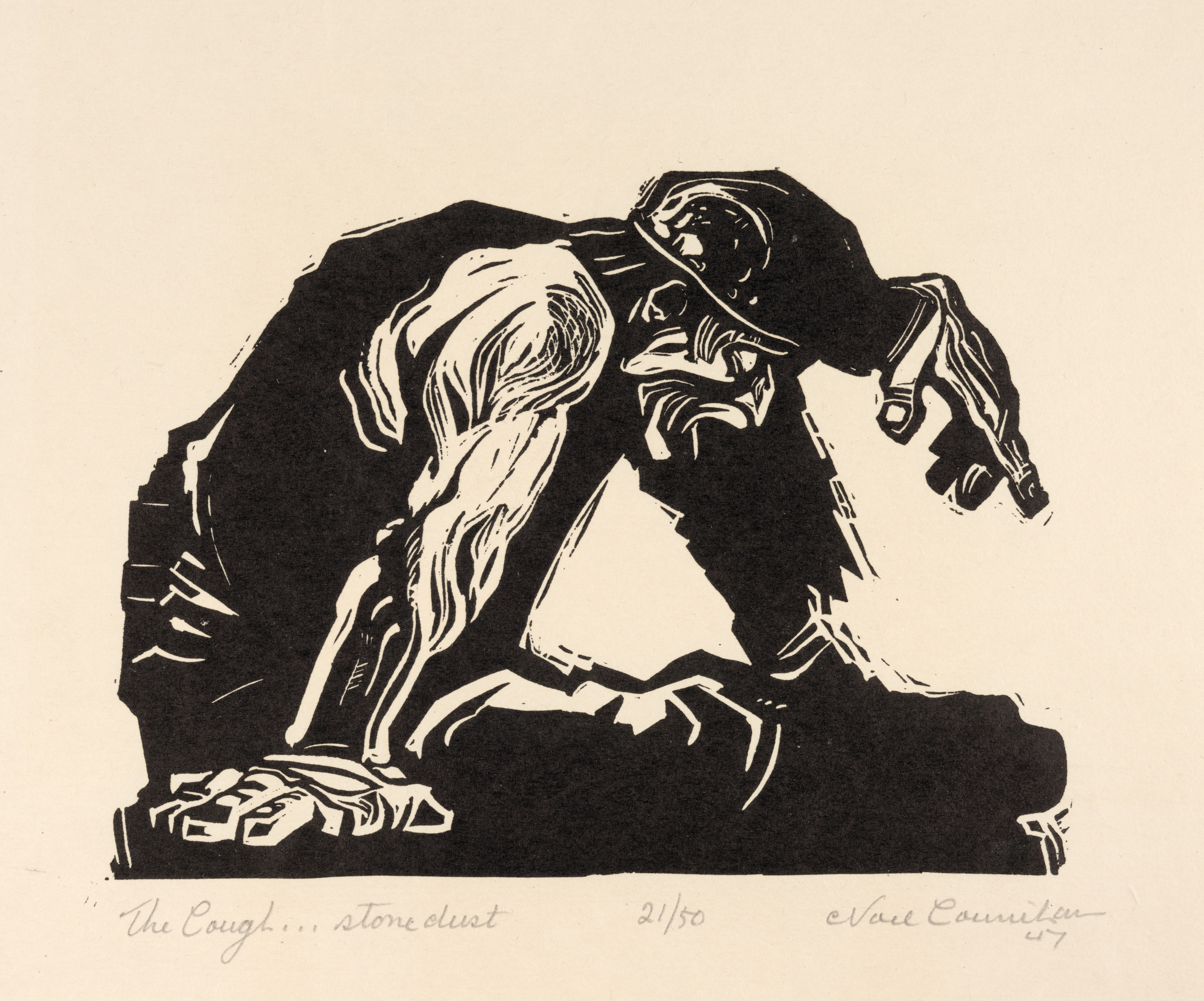
03 | Dusted | The human cost of mining in Australia
Asbestos was once known as the wonder mineral. It's now banned in Australia. But before that happened, companies kept making asbestos products despite growing evidence of its deadly dust and a mounting death toll.
02 | Dusted | The human cost of mining in Australia
When a vast coal seam was found running through the escarpment around the NSW town of Wollongong it seemed that this beautiful part of Australia had got lucky. But had it? Van Badham heads back to her hometown to explore the deadly cost of coal mining for those who worked the pit.
01 | Dusted | The human cost of mining in Australia
Van Badham explores the human cost of mining in Australia across the past 2 centuries. Gold may have made Australia rich, but historians are now digging up evidence about the devastating impact of the silica dust that surfaced with it.
04 Where the bloody hell were you! When the tobacco ads came down
It's the early 1970s and the power of good is unleashed. In the Age of Aquarius the public get wise to being hoodwinked by advertising. Health campaigners hijack the medium — and turn it to their advantage.
03 Where the bloody hell were you! When TV marketing went mad
The hunt is on for the winning TV ad — the one that keeps the client happy and the consumers consuming. What's the right method for making the perfect advertisement? In 1970 a young bloke called John Singleton thought he had the answer.Host Dee Madigan continues her adventures through the vaults of Australian advertising.
02 Where the bloody hell were you! The jingle reigns supreme
It’s the 1970s and we're entering Australia's golden age of advertising. The Aussie larrikin makes his TV appearance and liquid lunches get longer. Salaries get bigger and the egos to match them.Join host Dee Madigan as she digs through the history of advertising in Australia.
01 Where the bloody hell were you! Television comes to Australia
Join host Dee Madigan for a wild ride through the golden days of Australian advertising. When TV arrived in Australia in 1956, it brought American ad agencies, international sophistication and the rise of the cultural cringe.
07 | Conspiracy | We're still feeling it
In this bonus episode Jan Fran and historian Dr Geraldine Fela discuss how the waterfront dispute has shaped the way we work in Australia today. 27 years later work is more precarious – casual and fixed term jobs have grown, the kind of work we do has changed and employers now have more power over employees. Politics and industrial relations were also changed by the dispute and unions have learned to fight in a very different way.
06 | Conspiracy | All the way to the top
Was the Howard government the puppet master of the Waterfront dispute? Host Jan Fran reveals new evidence that provides some answers to questions that’ve dogged Australian politics for 27 years.
05 | Conspiracy | Judgement Day
After Patrick Stevedores sacks its 1,400 maritime union workers the waterfront dispute turns into a courtroom drama as the legal teams battle it out in the Federal Court before heading all the way to the High Court.
04 | Conspiracy | Who Let the Dogs Out
The Maritime Union knows Patrick Stevedores is building up to a dramatic move. But it’s shocked when the company sends in balaclava-clad security guards and dogs to forcibly lock out workers in the dark of night. The union's lawyers take the company to the Federal Court where Patrick drops a bombshell on day one of the hearing.
03 | Conspiracy | The farmers come to town
After the collapse of the Dubai plan Patrick Stevedore's boss Chris Corrigan turns to Plan B, training fresh-faced farmers to work as wharfies. The MUA suspect the farmers will take their jobs and so create chaos at the gates of Patricks’ Webb Dock to stop the farmers getting through. Meanwhile the heat remains on Corrigan to fess up to his masterminding of Dubai.
02 | Conspiracy | Bosom Buddies
When the Opposition Labor Party breaks the news in Parliament about a secret group of ‘industrial mercenaries’ training in Dubai to take over the wharfies' jobs some big questions are asked: who exactly is behind the training operation, and is the government involved?
01 | Conspiracy | If it quacks like a duck
When Patrick Stevedores locks out and fires 1400 wharfies overnight on April 8, 1998, it divides the country. But behind all this is a story of high drama and political intrigue, a complex web of double dealing and high-stakes leaks. It's no secret that the Howard government wants waterfront reform but what role is it playing in Patrick owner Chris Corrigan's "revolution"?
INTRODUCING — Conspiracy? War on the waterfront
On 8 April 1998 Australians woke up to the startling news that dogs and men in balaclavas were invading the docks around the country, locking out workers. This is a story of political intrigue, of lies, double dealing, high stakes leaks and high stakes finances. And guns. It takes us from Queensland’s Ettamogah pub to the ports of Dubai, from low-rent motel rooms to the highest court in the land. And all the way to the Prime Minister.In this six-part investigation into the waterfront dispute between Patrick Stevedores and the Maritime Union of Australia, host Jan Fran talks to the all major players, and digs up new evidence revealing the depth of the government's involvement in one of the biggest industrial showdowns in Australian history.
Anzac Massacre | The story of Surafend | 03
In the final episode of Anzac Massacre, Black Sheep podcast host William Ray delves into the unanswered questions surrounding the killings at Surafend, Southern Palestine by the Anzac Mounted Division in December 1918. What motivated this brutal act?
Anzac Massacre | The story of Surafend | 02
Radio New Zealand podcast Black Sheep brings us the story of the Surafend massacre of December 1918, an event described by one historian as the worst war crime ever committed by New Zealand and Australian military personnel.
Anzac Massacre | The story of Surafend | 01
The story of the Surafend massacre of December 1918, an event described by one historian as the worst war crime ever committed by New Zealand and Australian military personnel.
Inside the Big day Out | Flying too close to the sun
Come on a wild ride through the extraordinary story of the Big Day Out; the festival which, for over two decades, was a summertime rite of passage for music lovers around Australia. Was it really a victim of its' own success?
Introducing Rewind
We''ve got news! The History Listen has been given a makeover. Our new show, ABC Rewind, is still your home for gripping audio storytelling, and still the podcast where you'll hear true stories told by the people who lived through them. Come on a deep dive into the past on Rewind.
Inside the Big Day Out | From Nirvana to nightmare
Come on a wild ride through the extraordinary story of the Big Day Out; the festival which, for over two decades, was a summertime rite of passage for music lovers around Australia
Sam Poo | A Chinese bushranger?
It's 1865 in remote central west NSW. A police office is fatally shot by a man he believes is a Chinese bushranger. The story of Sam Poo is a bushranging tale with a twist
Secrets and Lies | A year behind the Iron Curtain
At the height of the Cold War a New Zealand teenager is sent to a hospital in the Soviet Union to grow new fingers on her left hand. Sounds like fiction? This actually happened to Miranda Jakich and in this episode she tells her tale.
Friedrich the Fraud
Was he Australia's greatest con artist? That was the title given to John Friedrich, the former head of the Victorian Division of National Safety Council of Australia. Back in the 1980s, he famously made $293 million of investors’ money disappear. When his fraud was uncovered, he went missing himself for sixteen days, prompting a nationwide manhunt and a media storm that reported both facts and the fictions.Guests:Barry Whitehead - former NSCA operations managerFrank Bongiorno - professor of history, ANUPeter and Ann Synan - regional historians & Sale residentsZyg Zayler - criminal lawyer, Melasecca Kelly & ZaylerCredits:Composer - Matthew CrawfordSound engineer - Tim SymondsProducer - Lyn Gallacher
Finding Fanny Finch
When Bill Garner began exploring his family history, a puzzling gap in the family tree led him to discover a most extraordinary ancestor: Fanny Finch. Finch was a well-known and controversial figure during the Victorian gold rushes. A London-born woman of African heritage, she pushed a wheelbarrow from Melbourne to the goldfields in 1852, where she became a sly grogger and restaurateur. She actively resisted police corruption, supported women and children against domestic violence and in 1856, cast a vote in municipal elections, decades before women were granted suffrage. And yet her story was not passed down to her descendants.When Bill met historian Kacey Sinclair, who had been researching Finch’s life, a fascinating and sometimes challenging conversation began.In Finding Fanny Finch, Sinclair joins Finch’s direct descendants, Bill and his daughter Alice, in a theatrical reconstruction and reflection on the life and legacy of an unforgettable woman.CreditsWritten by Bill Garner and Sue GoreBased on research by Kacey SinclairPerformed by Kacey Sinclair, Bill Garner and Alice GarnerMusic by ‘Friends of Wendy Cotton’: Briony Phillips, Stephanie Carson, Nicole Simirenko, Christine Webb, Anthony WebbOriginal music recordings by Casey RiceSound engineering by Angie GrantAdditional music mixing by Brendan O'NeillAdapted for radio by Miyuki Jokiranta
Laya's Way Home - part 2
Laya Semler was the last Jew sent to a concentration camp from Wennigsen, Germany, in 1945. Her non-Jewish husband Adolf was sent to slave labour for not denouncing her. Both survived. Now, Wennigsen has invited their Australian family back, to commemorate Laya and Adolf’s incredible story of courage and love. In Part 1, their great-grandchildren discovered a town perhaps finally ready to accept the extent of its role in the Nazi regime. In Part 2, they will experience that history face-to-face.They experience that history face-to-face -- when they visit the slave labour camp, only recently unearthed, where Adolf was held. And where they must reckon with horrors that will shock even the German historians guiding them. Michaela Kalowski, Joanna's husband John Hempton, Joanna Kalowski and Rick KalowskiGuests:Joanna Kalowski - internationally recognised mediator and granddaughter of Laya and Adolf SemlerMichael Wittich - historian for the town of WennigsenChristina Muller - city councillor in WennigsenJutta Henza - historian of the Stolen Gustav slave labour campCredits:Writers: Rick Kalowski and Michaela KalowskiPresenters: Michaela Kalowski and Rick KalowskiProducer: Claudia TarantoSound Engineer: Hamish CamilleriResearch assistance : Tadhg Kalowski
Laja's Way Home part 1
In 1945, Laya Semler became the last Jew sent to a concentration camp from Wennigsen, Germany. Her non-Jewish husband Adolf chose slave labour rather than abandon her. They both survived. In 2022, the village of Wennigsen invited their Australian family back to commemorate Laya and Adolf’s bravery. Told by their great-grandchildren, Laya and Adolf’s story is testament to the power love has to bridge even the greatest differences. But it’s also the story of a town only just coming to terms with the truth of its past. A truth that, as Laya and Adolf’s descendants discover first-hand, not everyone in the town is ready to accept...Joanna Kalowski at the opening of the new street in Wennigsen, Germany, named after her grandmother Laya SemlerGuests:Joanna Kalowski - internationally recognised mediator and granddaughter of Laya and Adolf SemlerMichael Wittich - historian for the town of WennigsenFranz Blazek - former mayor of WennigsenSilke Stremlau - resident of WennigsenCredits:Writers: Rick Kalowski and Michaela KalowskiPresenters: Michaela Kalowski and Rick KalowskiProducer: Claudia TarantoSound Engineer: Hamish CamilleriResearch assistance : Tadhg Kalowski