A Scottish Castle A Day
23 episodes
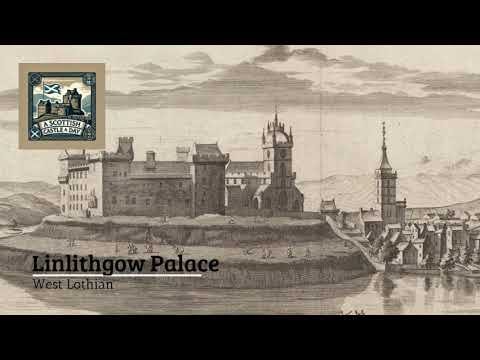
Linlithgow Palace
Welcome back to "A Scottish Castle, A Day," brought to you by bagtownclans.com. I’m your host, Colin MacDonald, and today, we are journeying to one of Scotland’s most regal and historic ruins: Linlithgow Palace. Nestled in the picturesque town of Linlithgow, West Lothian, just 15 miles west of Edinburgh, this majestic ruin was once the favored residence of the Stewart kings and queens and remains one of Scotland’s grandest royal palaces.The first records of Linlithgow date back to November 1301 when King Edward I of England, while enforcing John Balliol’s claim to the Scottish throne, used Linlithgow as a military base. Edward quickly recognized the site’s strategic importance, located on the main route between Edinburgh and Stirling. The English King oversaw the construction of a defensive fortification, although this early version was primarily built of wood and earth. During the siege of Stirling Castle in 1304, Linlithgow became a critical supply base. After the Battle of Bannockburn in 1314, the town and its fort returned to Scottish control, marking the start of its royal legacy.In 1337, King David II granted the site to Sir John Cairns to prepare for the king’s arrival. The early structures, including a royal manor, were significantly repaired, and by 1343, King David held court there. However, the true transformation of Linlithgow Palace began after a catastrophic fire in 1424 devastated both the town and the royal residence. King James I seized the opportunity and embarked on rebuilding the palace, laying the foundation for what we see today.The construction of Linlithgow Palace as a royal residence continued through the reign of James I and his successors, each monarch leaving their mark on the design. James III (1460–1488) welcomed the exiled King Henry VI of England at the palace in the late 15th century. His son, James IV, further developed the palace into a modern Renaissance residence. He added the west range, completing the courtyard structure that still stands in ruins today. James IV’s marriage to Margaret Tudor in 1503 solidified Linlithgow’s importance as a royal residence. The palace was granted to her as a dower house, and it was here, in 1512, that their son, James V, was born.But perhaps Linlithgow’s most famous royal birth took place in December 1542, when Mary, Queen of Scots, was born in the palace. Mary’s birth marked Linlithgow as a site of profound historical importance, though she herself spent little time in the palace. Her mother, Mary of Guise, had previously compared Linlithgow favorably to the grand châteaux of France, praising its princely grandeur.The palace continued to be a favored residence of Scottish royalty through the reign of James VI, but it was already beginning to decline. In 1607, the north range collapsed, though James ordered its rebuilding in the Renaissance style, which was completed by 1624. Despite these efforts, the palace saw fewer royal visitors after the Union of the Crowns in 1603, when the court shifted to London.During the turbulent years of the 17th century, Linlithgow briefly became a military stronghold once again. In 1650, Oliver Cromwell spent the winter there, and in 1745, Bonnie Prince Charlie used it during his Jacobite campaign. However, its royal days were officially over, and following the disastrous fire set by the Duke of Cumberland’s troops in 1746, the palace was left roofless and abandoned.Today, Linlithgow Palace stands as a beautiful ruin, open to the skies but retaining much of its architectural splendor. The remains of the Great Hall, the ornate courtyard fountain, and the magnificent views over Linlithgow Loch are testament to its former glory. Historic Environment Scotland now manages the palace, and it remains a popular tourist attraction, drawing visitors from around the world to explore its halls, climb its towers, and imagine the life of Scottish monarchs who once walked its corridors.Though roofless, the palace has found new life in the arts. It has been featured in TV series such as Outlander, where its medieval and Renaissance atmosphere serves as a perfect backdrop for time-traveling romance. The palace also hosts the annual "Party at the Palace" music festival, which has become a beloved event, bringing modern life to the historic grounds.There are even whispers that Linlithgow might still have some royal residents—of the ghostly variety. Many say the specter of Mary of Guise haunts the palace halls, watching over the home where her daughter, Mary, Queen of Scots, was born.Linlithgow Palace is much more than just a ruin; it’s a place where Scotland’s history—its wars, its monarchs, its triumphs, and its tragedies—comes to life. Whether you’re exploring its stone passages or looking out over the tranquil Linlithgow Loch, the palace continues to capture the imagination of all who visit.Thank you for joining us on this episode of "A Scottish Castle, A Day." We hope you’ve enjoyed learning about the rich history of Lin
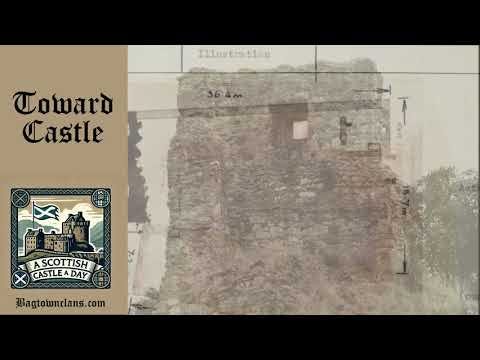
Toward Castle
Welcome back to A Scottish Castle A Day, brought to you by bagtownclans.com. I’m your host, Colin MacDonald, and today we delve into the turbulent history of Toward Castle, the ancestral seat of Clan Lamont. Nestled on the Cowal Peninsula in Argyll and Bute, this castle has borne witness to moments of grandeur, royal visits, and tragedy. As we explore its story, we uncover not only the history of the Lamonts but also the wider conflicts that shaped the Scottish Highlands.Toward Castle, or Caisteal an Toll Àird in Gaelic, is a site with deep roots in Scottish history. The Lamonts, originally styled “of Inveryne,” came into possession of the lands surrounding Toward at the southern tip of the Cowal Peninsula through a charter granted in 1472. This charter transformed their holdings into a barony, cementing their influence in the region. However, it was Sir John Lamont, the 10th Chief, who further expanded the clan’s presence by purchasing more land from James V in 1535.One of the most storied events in Toward Castle’s history took place in 1563 when Sir John hosted none other than Mary, Queen of Scots. In anticipation of her visit, the castle underwent hasty renovations—what had once been a simple keep with thick defensive walls was expanded to include rooms and a great hall. Legend has it that before leaving Toward, Mary planted a tree on the grounds, which stood for centuries until it was felled in 1818. The wood from this tree was crafted into a crown, which was later presented to the 10th Duke of Hamilton and still resides in Dungravel in Lanarkshire.But Toward Castle was more than just a royal stopover. In 1579, it hosted an allegiance pact between the Lamonts and the mighty Clan MacDonald, overseen by the Lord of the Isles. It must have been a sight to behold: birlinns—traditional Highland longships—beached on the shore while the castle, standing tall with its battlements, filled with the sounds of bagpipes, harps, and revelry. The castle became a cultural and political hub for the Lamonts, a place where bards and poets gathered, and where alliances were made and celebrated with feasting and wine.However, the fortune of the Lamonts, like many Highland clans, would take a dark turn during the Wars of the Three Kingdoms in the 17th century. Sir John Lamont, the 14th chief, found himself in a precarious position during the conflict between the Royalists and the Covenanters. Though King Charles II had ordered Lamont to lay down his arms, he was besieged by a force of Campbells led by Campbell of Ardkinglas—who was, ironically, the brother of Lady Lamont.For two weeks, Toward Castle endured a brutal siege. The Lamonts, cut off by land and sea, held out against cannon fire until Sir John agreed to parlay. Under the terms of surrender, the Lamonts were promised safe passage, but the Campbells had other plans. Declaring, “no capitulations should be kept with traitors to God and His covenant,” the Campbells broke their promise, capturing and slaughtering the Lamont men, women, and children. In Dunoon, over 200 Lamont men and boys were executed, marking one of the most brutal massacres in Clan history. Toward Castle was pillaged and burned, leaving it in ruins, and the clan’s chief was taken prisoner. In a moment of courage, Sir John’s sister, Isobel Lamont, hid the signed capitulation document in her hair, smuggling it out of the castle.The massacre at Toward became one of the charges leveled against Archibald Campbell, the 1st Marquess of Argyll, who was executed in 1661. The Lamonts, who had been one of the most powerful clans in Argyll, never fully recovered from the devastation wrought by the Campbells. After the destruction of Toward Castle, the Lamonts moved their residence to Ardlamont, and the ruined stronghold was sold in 1809 to Kirkman Finlay, a Glasgow merchant and former Lord Provost.In 1820, Finlay built a new residence, Castle Toward, just 500 meters from the old castle ruins. Designed in the Gothic Revival style by David Hamilton, this country house replaced the medieval stronghold and became the new symbol of Toward. By the 20th century, the castle had undergone significant renovations, including ornate Italian plasterwork and grand landscaping. It was a luxurious estate, far removed from the ancient fortress that once housed the Lamonts.During World War II, Castle Toward played a unique role as HMS Brontosaurus, a training center for amphibious landings. Soldiers and officers trained on nearby beaches in preparation for D-Day. After the war, the castle became an outdoor education center, providing a different kind of training for school children in Glasgow and beyond.Though the original Toward Castle stands in ruins, its history is far from forgotten. Now managed by the Clan Lamont Society, it remains a place of pilgrimage for those connected to the clan and for history enthusiasts drawn to its storied past. Castle Toward, the 19th-century mansion, was sold to private owners in 2016, and while
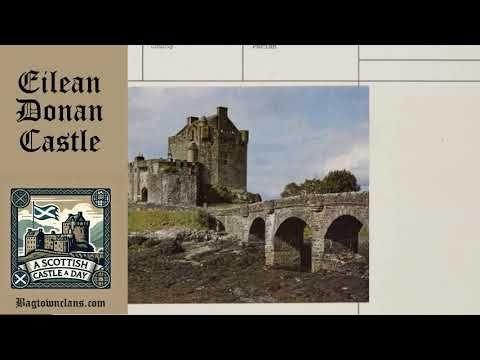
Eilean Donan Castle
Welcome back to "A Scottish Castle, A Day," brought to you by bagtownclans.com. I’m your host, Colin MacDonald, and today we’re delving into one of the most iconic castles in all of Scotland—Eilean Donan. Nestled on a rocky promontory where three sea lochs—Loch Duich, Loch Long, and Loch Alsh—meet, this stunning stronghold has captured imaginations for centuries. Eilean Donan is more than just a picture-perfect location; it’s a castle steeped in history, legend, and the dramatic power struggles of the Highlands. So let’s set the stage and step back in time to uncover the stories behind this legendary fortress.The island where Eilean Donan Castle now stands has a rich history that stretches back long before the first stone was laid. Evidence of an ancient Pictish fort was discovered during excavations, hinting at the strategic importance of this location as far back as the Iron Age. Around 600 AD, the island became the home of St. Donan, a religious hermit who sought solitude among the rugged landscape. It’s from him that Eilean Donan—meaning "Island of Donan"—takes its name.The first fortified castle on the island was built during the reign of Alexander II, sometime between 1214 and 1250. This was a period of significant change for Scotland, as the kingdom was solidifying its territories and defending against Norse incursions from the west. In fact, Eilean Donan’s early role was as a defensive outpost against Viking raids, a threat that loomed large over the Scottish isles during the medieval period. The curtain wall, constructed in the 13th century, enclosed most of the island and created a formidable defense.Eilean Donan’s fortunes shifted in 1263 after the Battle of Largs, when Alexander III defeated the forces of the Norwegian king, Hákon IV. As a reward for his services in this critical battle, the castle was granted to Colin Fitzgerald, son of the Earl of Desmond and Kildare. Colin’s descendants would eventually form Clan MacKenzie, and Eilean Donan would become their most prized stronghold for centuries.One of the most famous legends surrounding the castle involves none other than Robert the Bruce. In the early 14th century, when Bruce was fleeing from English forces, it is said that he found refuge at Eilean Donan, sheltered by John MacKenzie, the second of Kintail. This act of loyalty would later be repaid when Bruce became king, further solidifying the bond between the crown and Clan MacKenzie.By the 16th century, the MacRaes had risen to prominence as the loyal bodyguards of the MacKenzie chiefs, earning the nickname "MacKenzie’s Coat of Mail." In 1509, they became the castle’s constables, cementing their place in the history of Eilean Donan. As political turmoil gripped the Highlands, the MacRaes played a critical role in defending the castle and the surrounding lands.Eilean Donan, however, was not immune to the sweeping forces of history. The castle became embroiled in the Jacobite uprisings of the 18th century, which sought to restore the exiled Stuart monarchy to the thrones of England, Scotland, and Ireland. In 1719, during the brief but significant Jacobite Rebellion, the castle served as a base for Spanish forces supporting the Jacobites. This turned out to be a disastrous decision. On May 10, 1719, three English warships—the Worcester, Enterprise, and Flamborough—opened fire on Eilean Donan, bombarding it into submission. A detachment of Royal Navy marines landed on the island, discovered barrels of gunpowder within the castle, and promptly destroyed the remaining walls. For the next 200 years, the castle lay in ruins, a silent witness to the collapse of Highland resistance.Yet, Eilean Donan’s story didn’t end there. In 1912, Lieutenant Colonel John MacRae-Gilstrap embarked on a labor of love to restore the castle to its former glory. Guided by historical plans and local tradition, and aided by Farquhar MacRae, who had a vision of the castle restored, the work took nearly 20 years to complete. By 1932, Eilean Donan stood once more, not as a ruined relic, but as a magnificent fortress blending medieval authenticity with 20th-century craftsmanship. It’s this restored version of the castle that has become an enduring symbol of Scotland’s cultural heritage, appearing in countless films, postcards, and photographs.Today, Eilean Donan is one of Scotland’s most visited and photographed landmarks, drawing hundreds of thousands of visitors each year. The arched stone bridge that connects the island to the mainland, the breathtaking views over the sea lochs, and the castle’s towering silhouette against the Highland backdrop combine to make it a truly iconic sight.Whether you're fascinated by medieval architecture, clan history, or the allure of the Jacobite risings, Eilean Donan has something for everyone. And as you walk through its halls or stand by its thick stone walls, it’s impossible not to feel the presence of the many generations who have lived, fought, and died within its embrace.Thank you
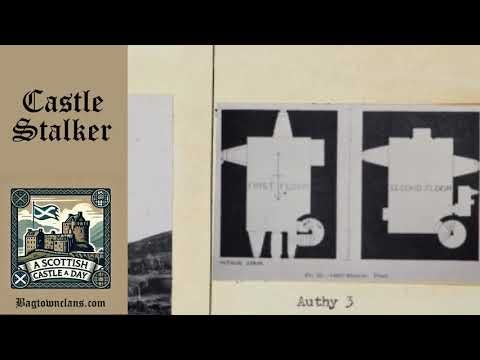
Castle Stalker
Welcome back to "A Scottish Castle, A Day," brought to you by bagtownclans.com. I’m your host, Colin MacDonald, and today we’re heading to the west coast of Scotland, to the shimmering waters of Loch Laich, where one of the most iconic castles in all of Scotland stands tall: Castle Stalker. Rising dramatically from a tiny islet, this stunning medieval stronghold offers more than just breathtaking views—it’s a portal into centuries of Highland history, clan feuds, and royal connections. So, grab your walking boots and let's take a journey through time to uncover the remarkable story of Castle Stalker.Castle Stalker—whose name originates from the Gaelic "Stalcaire," meaning hunter or falconer—has a history deeply intertwined with two of Scotland’s most notable clans: the MacDougalls and the Stewarts of Appin. Its story begins as far back as 1320 when this very site was believed to have hosted a simple fortified building, known as a fortalice, constructed by the MacDougalls when they were the powerful Lords of Lorn. This was a time of great upheaval in Scotland, as the MacDougalls had recently lost their title following their defeat by Robert the Bruce at the Battle of Brander Pass in 1308. However, they managed to regain their influence for a brief period, and Castle Stalker became one of their key strongholds.But, like the ever-shifting tides that surround the castle, power in the Highlands was also in constant flux. In 1388, the Lordship of Lorn passed from the MacDougalls to the Stewarts—a change that would shape the future of Castle Stalker. It was around this time that the castle we see today was likely built in its present form by Sir John Stewart, the Lord of Lorn. Now, Sir John was a man with ambitions both on and off the battlefield. He fathered an illegitimate son in 1446, and it’s believed he constructed Castle Stalker as a residence around this time.The drama in Sir John's life, however, didn’t end with castle-building. In 1463, while attempting to legitimize his son through marriage, Sir John was murdered by Alan MacCoul, a renegade from the MacDougall clan. But in true Highland fashion, vengeance was swift and bloody. Sir John's son, Dugald, went on to kill MacCoul at the Battle of Stalc, just across the water from Castle Stalker. This victory not only cemented Dugald as the First Chief of the Stewarts of Appin but also solidified the castle’s place as a seat of power.One of the most colorful chapters in Castle Stalker’s story involves none other than King James IV of Scotland, who was related to the Stewarts of Appin. The King, known for his love of hunting and hawking, frequently visited Castle Stalker in the late 15th century, using it as a base for his excursions into the Highlands. During his stays, it’s believed that upgrades were made to the castle, possibly adding the top floor and roof. It’s said that the royal arms above the front door may even date back to this period, a lasting reminder of the castle’s connection to Scotland’s monarchy.Yet, Castle Stalker’s history is not just about royal visits—it’s also about bitter clan rivalries. In 1520, Sir Alexander Stewart of Invernahyle, a relative of the Stewarts of Appin, was murdered by the Campbells while fishing near the castle. This gruesome act sparked a wave of revenge, with the Stewarts, led by the formidable Donald "nan Ord" Stewart, launching attacks on the Campbells. Donald, a legendary figure known for his incredible strength—rumor has it he could wield a blacksmith’s hammer in each hand—became a key player in the Stewart-Campbell feud, and his actions would resonate for generations.Fast forward to the 17th century, and the fate of Castle Stalker would take another dramatic turn—this time due to a drunken wager. In around 1620, Duncan Stewart, the 7th Chief of Appin, lost the castle to the Campbells of Airds in a bet involving an eight-oared boat. Such a loss didn’t sit well with the Stewarts, and they managed to reclaim the castle in 1689, only to lose it again after a prolonged siege by the Campbells. The ebb and flow of control between these clans became a recurring theme, with each trying to hold onto this strategic fortress.During the Jacobite rising of 1745, Castle Stalker found itself back in the spotlight, held by the Campbells and garrisoned with government troops. Despite their loyalty to Prince Charles, the Stewarts of Appin—whose regiment fought valiantly in the Jacobite cause—were unable to retake the castle. Its thick walls proved too strong for their small cannons, and the castle remained a vital link for government forces throughout the uprising. Following the disastrous defeat at Culloden, the castle became a place where Highlanders were forced to surrender their weapons, marking the end of an era for the clans.By the late 18th century, the Campbells had abandoned Castle Stalker, leaving it to fall into ruin. Its roof collapsed, and it became little more than a storehouse. However, in 1908, the castle’s story to
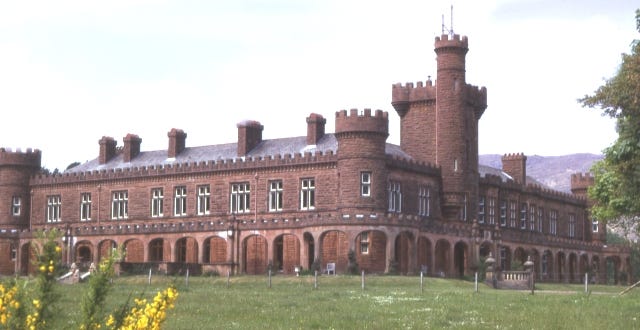
Kinloch Castle
Welcome back to “A Scottish Castle, A Day,” brought to you by bagtownclans.com. I’m your host, Colin MacDonald, and today we’re heading to the rugged Isle of Rum, one of the remote and mystical Small Isles off the west coast of Scotland, to explore the grand, eccentric, and controversial Kinloch Castle. This Edwardian mansion, built by industrialist Sir George Bullough, stands as a monument to a bygone era of extreme wealth, indulgence, and the opulent lifestyle of the British elite. Its story is a fascinating mix of luxury, invention, and controversy, and it remains one of the most enigmatic structures in the Scottish Highlands.To understand the grandeur of Kinloch Castle, we must first go back to the 19th century, to the origins of the Bullough family’s fortune. George Bullough inherited the Isle of Rum in 1891, following the death of his father, John Bullough. John was a self-made man, a Lancashire textile magnate who co-founded Howard & Bullough, a manufacturing company that played a key role in the industrial revolution. The company’s vast Globe Works in Accrington employed half of the town’s population at its height, and the Bulloughs quickly became one of the wealthiest families in Britain.The Isle of Rum entered the Bullough family’s story in 1879 when John Bullough, seeking a Highland retreat for hunting, leased the island as a shooting estate. A few years later, he purchased the entire island for £35,000, marking the beginning of the family’s connection to this remote Scottish isle. The estate came complete with the modest Kinloch House, a building constructed in the 1820s by Dr. Lachlan McLean, who had cleared the island’s inhabitants as part of the infamous Highland Clearances.But after John’s death, young George Bullough was not content with the simplicity of Kinloch House. By 1897, he embarked on a grand vision, commissioning the construction of Kinloch Castle, a stately home that would embody the height of Edwardian luxury and excess. Employing 300 men, most of them brought over from Lancashire and the nearby island of Eigg, construction on the castle began. Built from red sandstone quarried on the Isle of Arran, the castle rose out of the rugged landscape of Rum, overlooking the tranquil waters of Loch Scresort.The lavishness of Kinloch Castle knew no bounds. Inside, it was filled with extravagant furnishings and cutting-edge technology, some of which still amazes visitors today. Bullough had installed his own hydroelectric power plant, ensuring that his castle was one of the few places in Scotland with electric lighting at the time. Central heating, double glazing, air conditioning, and a state-of-the-art telephone system were all installed, making the castle a technological marvel of its day. And the crown jewel of the home’s indulgent features? An orchestrion—a mechanical music machine that could simulate the sound of an entire orchestra, offering entertainment for guests without the need for live musicians.Bullough’s penchant for eccentricity didn’t stop at technology. His personal menagerie at the castle included pet alligators, giant turtles, and, in a now-lost conservatory, hummingbirds. The gardens surrounding Kinloch Castle were just as grandiose, with formal layouts, exotic plantings, and even a walled garden briefly home to alligators. The landscaping required 250,000 tonnes of soil to be imported from Ayrshire, a staggering feat of Victorian engineering and excess.For nearly four decades, Kinloch Castle was the site of lavish parties, hunting excursions, and high society gatherings. George Bullough, later knighted for his contributions during the Boer War, hosted an array of celebrities, nobility, and even royalty. His half-brother Ian’s wife, Lily Elsie, was a star of Edwardian theater and brought an extra dash of glamour to the events hosted on Rum. But despite its grandeur, Kinloch Castle became a symbol of the excesses of the British aristocracy, a controversial monument to wealth in an era when the gap between rich and poor was starkly visible.By the time George Bullough passed away in 1939, the heyday of Kinloch Castle had long faded. The Bullough family’s estate went into trusteeship, and by the late 1950s, the island and castle were sold to the government agency responsible for natural heritage, now known as NatureScot. The castle and the island of Rum were designated a National Nature Reserve, but the castle itself began to fall into disrepair.In recent decades, efforts have been made to save this crumbling piece of history. In 1996, the Kinloch Castle Friends Association was formed to help preserve the building and its contents. In 2003, Kinloch Castle featured on the BBC series Restoration, narrowly missing out on a £3 million grant to fund much-needed repairs. Despite this setback, the castle attracted the attention of Prince Charles, leading to ongoing discussions about how best to preserve this unique structure.Today, Kinloch Castle still stands, though its future r
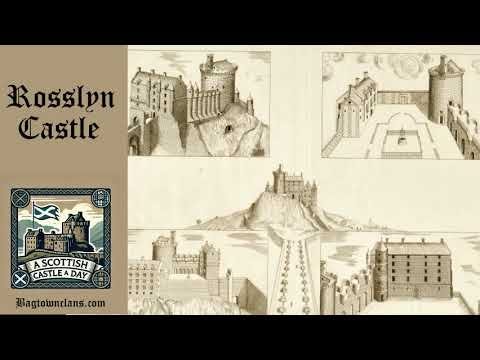
Rosslyn Castle
Welcome back to "A Scottish Castle, A Day," brought to you by bagtownclans.com. I’m your host, Colin MacDonald, and today we’re diving into one of Scotland’s most storied and atmospheric fortresses: Rosslyn Castle. Standing proudly in the scenic village of Roslin, just a stone’s throw from the world-famous Rosslyn Chapel, this castle holds an incredible legacy intertwined with Scotland’s feudal history, architectural innovation, and, of course, a fair share of mystery.Rosslyn Castle has three great attractions: its wonderful Chapel, the ancient Castle itself, and its breathtaking valley. After visiting the intricate and world-renowned Rosslyn Chapel, we now turn our attention to the Castle—a site of rich history and once one of the most important strongholds in Scotland.The castle is dramatically perched on a rocky promontory, surrounded on three sides by the winding waters of the River North Esk. The approach to Rosslyn Castle is itself a journey back in time. You enter via a 50-foot-high stone bridge that spans what was once a deep ravine, crossed originally by a drawbridge. Below, the river flows, having long carved this striking landscape into a natural fortress. This impressive entry sets the tone for what lies ahead—a castle steeped in grandeur, history, and a bit of the eerie charm that only such ancient ruins can evoke.The first records of a fortified structure on this site date back to the early 14th century when the powerful Sinclair family, Earls of Caithness and Barons of Roslin, claimed the land. The Sinclairs, a family of Norman origin, have held Rosslyn since 1280, and their deep connections to Scottish history make the castle’s story all the richer. The castle’s present ruins, however, date primarily from later centuries, as Rosslyn was repeatedly destroyed and rebuilt. Its strategic position near the site of the Battle of Roslin—where in 1303, the Scots triumphed over the English—ensured the castle would always be a point of both defense and contention.As you pass through the ruined gatehouse and cross the narrow bridge, you are greeted by the remnants of the Lantern or Lamp Tower at the northeast corner, built around 1304, shortly after that decisive battle. Some historians suggest there may have been an even earlier structure here, but it is clear that by the 14th century, Rosslyn was taking its present shape. What remains of this early construction still speaks to the castle’s role as a military stronghold.The dungeon, located in the southwest corner and known as "The Great Dungeon," was erected around 1390 by Sir Henry Sinclair, the second Prince of Orkney. This tower, rising five stories high, once dominated the landscape, fortified by walls over nine feet thick. In the medieval period, this part of the castle was essential for defense, but also for demonstrating the Sinclairs' power and wealth. Sir Henry’s son, Sir William Sinclair, who founded the nearby Rosslyn Chapel in 1446, further expanded and beautified the castle.The Rosslyn of Sir William’s time was a place of both luxury and fortification. According to Father Hay, the 17th-century Sinclair historian, Sir William lived in “regal magnificence,” served on gold and silver, surrounded by nobles like Lord Dirltone, who acted as Master of the Household, and Lord Borthwick as his Cupbearer. The castle would have been filled with the bustle of attendants, soldiers, and skilled craftsmen, with its grand halls hung with richly embroidered tapestries, and its grounds hosting a veritable army of courtiers.But this grandeur wasn’t without its interruptions. In 1452, a domestic fire caused significant damage to the castle, but quick-thinking courtiers managed to save the Earl’s precious charters and manuscripts by lowering them out of the windows to safety. Rebuilding followed, only for the castle to face even greater destruction in 1544 during the War of the Rough Wooing, when Henry VIII’s forces razed the castle in retaliation for Scotland’s refusal to allow a marriage between his son, Edward VI, and the infant Queen of Scots, Mary. Though the keep was nearly destroyed, the resilient Sinclairs rebuilt once again, adding the grand east range, which still partially stands today.Perhaps most striking is the five-story east range of the castle, cut directly into the rock face. Built during the late 16th century, its grandeur is matched by its functionality, with lower floors serving as kitchens and service rooms, while the upper floors were home to the lavishly appointed principal chambers. The grand hall of Rosslyn Castle, once filled with the sound of banquets, music, and laughter, has since been divided, though the main fireplace, carved with the initials of William Sinclair and his wife Jean Edmonstone, still stands as a testament to their legacy.One particularly intriguing feature of Rosslyn Castle is its connection to the arts and culture. The castle housed a scriptorium in the 15th century, where manuscripts were painstakingly copied
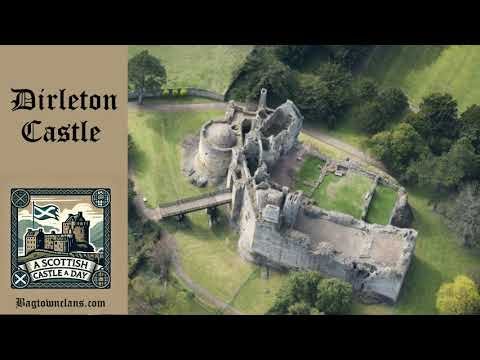
Dirleton Castle
Welcome back to "A Scottish Castle, A Day," brought to you by bagtownclans.com. I’m your host, Colin MacDonald, and today we journey to East Lothian, where the yellow towers of Dirleton Castle stand high on a rocky outcrop, just a few miles west of North Berwick. As one of Scotland’s oldest surviving castles, Dirleton has seen its fair share of Scottish history, from Norman knights and English invaders to clan feuds and sieges during the English Civil War.Dirleton Castle is a striking fortress whose imposing silhouette stands out, surrounded by lush, beautifully maintained gardens. But don't let the idyllic setting fool you—this romantic site has a history of violence and upheaval, making it much more than just a picturesque ruin. The original structure was built in the 13th century by the de Vaux family, Anglo-Norman knights invited to Scotland by King David I. It has since been expanded, destroyed, rebuilt, and abandoned, each phase of its history leaving a mark on the stone walls.The de Vaux family, originally from Rouen, France, began construction of Dirleton Castle around 1225 under the leadership of John de Vaux, whose family had been granted the barony of Dirleton. The site of the castle was carefully chosen—built on a rocky knoll and surrounded by marshland and a deep moat, Dirleton’s natural defenses made it a formidable stronghold. The castle's original layout featured a series of round and square towers arranged around the site, their placement dictated by the natural contours of the rock. The most notable of these towers was the keep, still largely intact today, which offered both a defensive position and living quarters for the lord and his family.Dirleton Castle also served an important strategic purpose. Perched on the agricultural lands of East Lothian, it guarded the coastal routes leading to Edinburgh from the south, making it a prime target during periods of conflict. And conflict there was, especially during the Wars of Scottish Independence.Dirleton played a key role during Edward I of England's invasion of Scotland. In 1298, English forces, under the command of Bishop Antony Bek, besieged the castle, which held out for months until Edward's victory at the Battle of Falkirk allowed for the deployment of siege engines. The mighty walls of Dirleton finally fell, and the English occupied the fortress for years. It wasn’t until Robert the Bruce came to power that the Scots regained control. As a measure to prevent future English use, the castle’s towers were "slighted," or deliberately demolished to make the fortress uninhabitable.But Dirleton Castle would not remain in ruins for long. In 1350, the Haliburton family came into possession of the castle when John Haliburton married the de Vaux heiress. Under the Haliburtons, Dirleton saw a massive phase of reconstruction. A new gatehouse, a great hall, and vaulted kitchens were added, using the stumps of the ruined 13th-century towers as foundations. The Haliburtons transformed the castle into one of the finest noble residences in Scotland, blending defensive military architecture with the emerging trend of more comfortable living spaces.The next chapter in Dirleton’s history came in the 16th century when the castle passed to the Ruthven family. This period saw not just architectural but also landscape changes, as the Ruthvens added a walled garden outside the castle walls, one of the first of its kind in Scotland. The Ruthvens also constructed the Ruthven Range, a residential building that brought additional comfort to the inner courtyard. However, their time at Dirleton was marked by controversy, as the Ruthvens became embroiled in several political plots. The most notorious of these was the Gowrie Conspiracy in 1600, in which John Ruthven, 3rd Earl of Gowrie, was accused of plotting to assassinate King James VI. Following the conspiracy, the Ruthvens were executed, and their lands, including Dirleton, were forfeited to the Crown.By 1650, Dirleton once again found itself embroiled in conflict—this time during the Third English Civil War. A group of Scottish moss-troopers—essentially guerrilla fighters—were using Dirleton as a base to harass English forces under Oliver Cromwell. Cromwell’s army retaliated, bombarding the castle and breaching its walls with mortars. After capturing Dirleton, Cromwell's troops dismantled much of what was left, leaving the castle in ruins once again.By the late 17th century, Dirleton Castle had been largely abandoned. In 1663, it was purchased by the Nisbet family, who chose to build a new, more comfortable manor at Archerfield nearby. For a time, the castle became a quarry, with local builders taking stone from the ruins to construct cottages and walls. However, the Nisbets maintained the gardens, preserving some of the beauty that had once surrounded the fortress. The garden's history stretches back to the 16th century, but what visitors see today is largely a 20th-century reimagining, including a Victorian he
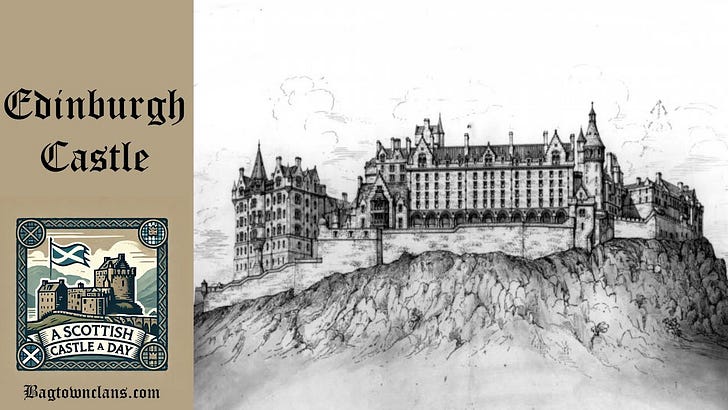
Edinburgh Castle
Welcome back to "A Scottish Castle, A Day," brought to you by bagtownclans.com. I’m your host, Colin MacDonald, and today we venture into the heart of Scotland’s capital to explore Edinburgh Castle, one of the most iconic fortresses in the world. Perched high atop Castle Rock, a volcanic crag rising 130 meters above sea level, Edinburgh Castle dominates the skyline, offering breathtaking views of the city and the surrounding landscape. But it is much more than just a stunning landmark—it is a site rich in history, having played a pivotal role in shaping Scotland’s destiny over centuries.Let’s start by talking about the geological marvel that is Castle Rock. Around 350 million years ago, during the Carboniferous period, volcanic activity forged this solid mass of dolerite, a type of basalt, which stood resilient as the glaciers carved out the surrounding landscape. The defensive advantages were obvious—sheer cliffs on three sides made it almost impenetrable, with only a gentle slope on the eastern side providing access to the fortress. Early human habitation likely dates back to the Bronze or Iron Age, and archaeological evidence suggests it has been occupied for over 2,000 years, making it one of the longest continually inhabited sites in Scotland.The castle as we know it began to take shape during the reign of Malcolm III (1058-1093). His son, King David I, is credited with building one of its earliest surviving structures—St. Margaret’s Chapel, a small yet charming Romanesque building that remains the oldest standing structure in Edinburgh. Named after his mother, Saint Margaret of Scotland, the chapel provides a rare glimpse into Scotland’s medieval religious architecture and offers a quiet, sacred space amidst the imposing military fortifications.Fast forward to the late 13th century, and Edinburgh Castle became the center of fierce military conflicts. In 1296, Edward I of England, known as "Hammer of the Scots," stormed the castle during his invasion of Scotland. This marked the beginning of the Wars of Scottish Independence. Just 18 years later, in 1314, the castle was retaken in dramatic fashion by Sir Thomas Randolph, Earl of Moray, and his small force of men who scaled the cliffs and surprised the English garrison. Robert the Bruce, after his victory at Bannockburn, ordered the castle to be destroyed to prevent its future use by the English, though it was rebuilt in the following decades.During the centuries that followed, Edinburgh Castle stood witness to countless sieges, battles, and political machinations. In 1440, one of the most infamous events in its history unfolded—The Black Dinner. Sir William Crichton, keeper of the castle, invited the young 6th Earl of Douglas and his brother to dine with the king. After the feast, a bull’s head—a symbol of death—was presented, and the two boys were dragged outside and beheaded. This event is believed to have inspired the "Red Wedding" in George R.R. Martin’s Game of Thrones.In the 16th century, the castle became the epicenter of another siege, known as the Lang Siege (1571-73), when the forces loyal to Mary, Queen of Scots, held out against the supporters of her son, James VI. Sir William Kirkcaldy of Grange, a staunch supporter of Mary, held the castle but was eventually forced to surrender after English cannons bombarded it relentlessly, leaving much of the medieval defenses in ruins.One of the most famous additions to the castle in the aftermath of this siege is the Half Moon Battery, an imposing artillery defense built over the remains of David’s Tower, destroyed during the Lang Siege. The battery still stands today, its thick walls a testament to Scotland’s turbulent military history. Nearby, visitors can find Mons Meg, a gigantic 15th-century siege cannon that could fire massive stone balls over two miles. Although its military use was short-lived—Mons Meg’s barrel famously burst during a ceremonial firing in 1681—it remains an awe-inspiring symbol of medieval warfare.Yet, the castle is not only about military might. In the Crown Room, visitors can view the Honours of Scotland, or Scotland’s Crown Jewels, including the crown, scepter, and sword of state, as well as the Stone of Destiny, which was used in the coronation of Scottish and later English monarchs. These treasures, hidden away during Cromwell’s rule, were rediscovered in 1818 by Sir Walter Scott and are now on proud display, offering a glimpse into Scotland’s regal heritage.Edinburgh Castle is also home to the Scottish National War Memorial, a solemn tribute to the Scots who fought and died in the First and Second World Wars, and the National War Museum, showcasing centuries of Scotland’s military history.Today, this majestic fortress, cared for by Historic Environment Scotland, is the country’s most-visited tourist attraction, drawing over two million visitors each year. It remains an active symbol of Scotland’s storied past, hosting the Royal Edinburgh Military Tattoo every summer, wh

Loch Leven Castle
Welcome back to "A Scottish Castle, A Day," brought to you by bagtownclans.com. I’m your host, Colin MacDonald, and today, we’re sailing out into the misty waters of Loch Leven to explore one of Scotland’s most historically charged locations—Loch Leven Castle. This 14th-century island fortress, set against the stunning backdrop of Perth and Kinross, is steeped in stories of military action, rebellion, and the dramatic imprisonment and escape of one of Scotland’s most iconic figures, Mary, Queen of Scots.Loch Leven Castle is perhaps most famously known as the place where Mary, Queen of Scots, was held prisoner for nearly a year, but the history of this island fortress goes back much further. Its name, according to legend, may come from the eleven rivers that flow into the loch, though today the waters are lower than in medieval times, when they nearly lapped at the castle’s walls.The first mentions of a stronghold on this island date back to the 1290s, during the Wars of Scottish Independence. At that time, the castle was under English control, one of many fortifications established by King Edward I during his brutal campaign to subdue Scotland. It was likely a wooden structure at first, and it didn’t take long before it attracted the attention of the Scottish resistance. In a daring raid, none other than William Wallace stormed the castle under the cover of night, slaying the English garrison and reclaiming the stronghold for Scotland.In 1313, Robert the Bruce himself visited the castle, and not long after, it began its long history as a state prison. One of its earliest inmates was John of Lorn, a rebel captured by Bruce in 1316, who spent his days contemplating his fate within the castle’s thick stone walls. Loch Leven Castle would go on to be a key player in Scotland’s power struggles over the next several centuries, changing hands and withstanding sieges during the tumultuous years of both the First and Second Wars of Independence.The English laid siege to Loch Leven Castle in 1335, during yet another attempt to claim Scotland’s crown. According to legend, the attackers tried a creative, if ultimately disastrous, strategy: they built a dam across the outflow of the loch in an effort to flood the castle. While the water level did rise, the defenders managed to sabotage the dam one night, releasing a torrent of water that not only saved the castle but also flooded the English camp. It’s a story straight out of a medieval epic, though some historians have cast doubt on its accuracy.By the mid-14th century, the castle was reinforced with the addition of a stone tower house, making it one of the oldest surviving examples of this type of medieval fortification in Scotland. This tower still stands today, its five-storey shell looming over the island, a silent witness to the many historical figures who once called this castle home—or prison.One of the most famous of those prisoners was, of course, Mary, Queen of Scots. Following her defeat at the Battle of Carberry Hill in 1567, she was taken to Loch Leven Castle, where she was held by Sir William Douglas of Lochleven. For almost a year, Mary lived in Glassin Tower, the round tower in the southeastern corner of the castle, under constant guard. The conditions were far from luxurious, with only a handful of her loyal servants permitted to stay with her, including her ladies-in-waiting.It was during her imprisonment here that Mary suffered some of her greatest personal losses. She fell gravely ill and miscarried twins she had conceived with her third husband, the Earl of Bothwell. The grief was immense, and it was during this time that she was forced to abdicate the throne in favor of her infant son, James VI.But Mary’s time at Loch Leven is perhaps most famous for her daring escape. With the help of young William Douglas, a member of the very family holding her prisoner, she managed to slip out of the castle on the night of May 2, 1568. Disguised as a servant, she crept through the castle, with Douglas stealing the keys to the gates and rowing her across the loch to the mainland. From there, she rallied her supporters, though her attempt to reclaim her throne ended in failure at the Battle of Langside just days later.In the years that followed Mary’s dramatic escape, Loch Leven Castle passed into the hands of Sir William Douglas’s descendants. It remained with the Douglases for the next 300 years, though it gradually lost its importance as a residence. In 1672, the castle was sold to Sir William Bruce, the royal architect responsible for redesigning Holyrood Palace. He had grand plans for the estate, building the elegant Kinross House on the loch’s shore, with the castle serving as a picturesque feature in the landscape. But as Kinross House became the focus of the estate, Loch Leven Castle was abandoned, left to crumble into ruin.Today, Loch Leven Castle is a haunting ruin, but one that still holds the power to stir the imagination. The curtain walls and tower
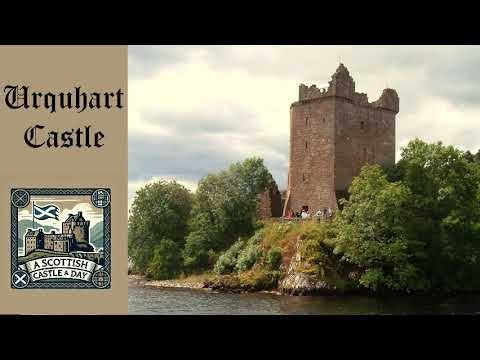
Urquhart Castle
Welcome back to "A Scottish Castle, A Day," brought to you by bagtownclans.com. I’m your host, Colin MacDonald, and today, we embark on an unforgettable journey to the shores of Loch Ness, where the impressive ruins of Urquhart Castle rise above the water's edge. Situated near Drumnadrochit, off the A82, Urquhart is one of the largest and most iconic castles in Scotland, its dramatic location offering commanding views along the mysterious loch, famous for its tales of a certain elusive monster.But Urquhart Castle’s history is no myth—its walls have witnessed over a millennium of real conflict, power struggles, and Highland resilience. The site itself dates back to Pictish times. St. Columba is said to have visited the area in the late 6th century and even converted a Pictish nobleman, Emchath, and his household to Christianity. While the castle we see today was built much later, evidence of some form of early fortification has been found, hinting at Urquhart’s strategic importance long before medieval stonework rose from its rocky promontory.The first written record of a castle at Urquhart, however, comes from the 13th century. By 1250, the Anglo-Norman noble Alan Durward, one of the most powerful men in Scotland and a brother-in-law of King Alexander III, had established a stronghold here. Durward's influence and ties to the Scottish crown underscore Urquhart's initial importance. But the peace didn’t last long—Scotland’s Wars of Independence saw the castle pass back and forth between English and Scottish forces multiple times. After Edward I of England captured it in 1296, the resistance led by William Wallace soon saw Urquhart retaken by the Scots. This was only the beginning of its storied role during this turbulent time, with the castle changing hands again in 1303 before Robert the Bruce finally secured it for Scotland in 1307.Urquhart’s role as a fortress, however, didn’t end with the Wars of Independence. The Great Glen, where the castle is located, has long been a key route through the Highlands, and control over this vital passage was fiercely contested by Highland clans. In the 15th and 16th centuries, the MacDonalds, Lords of the Isles, frequently raided the castle, leaving destruction in their wake. One of the most significant attacks came in 1545 during what is known as the "Great Raid." The MacDonalds, along with their allies the Camerons, stripped the castle of everything valuable—taking livestock, provisions, furniture, and even the castle’s gates.Despite the raids, the Grants of Freuchie, who had been granted the castle by James IV in 1509, continued to hold onto Urquhart, rebuilding and reinforcing it. The most prominent feature of Urquhart today is the Grant Tower, a five-story structure that still looms over the ruins, offering a reminder of the clan’s efforts to fortify their seat of power against the persistent threat from rival clans.As we move into the 17th century, Urquhart’s role as a residence began to wane. It suffered during the Civil Wars of the mid-1600s, and by the late 17th century, it was used as a garrison for government troops following the Jacobite rising of 1689. However, after two years of withstanding Jacobite attacks, the castle was deliberately destroyed in 1692 to prevent it from being used as a base by the Jacobites. The large blocks of masonry you can see today, lying in ruin beside the gatehouse, are remnants of this destruction.After its partial demolition, Urquhart Castle fell into decay, its stonework pilfered by locals for other building projects. By the 18th century, the castle was little more than a romantic ruin, its once grand halls and towers slowly crumbling. In 1715, the southern wall of Grant Tower collapsed during a storm, adding to its forlorn appearance. Yet, the castle's dramatic setting and haunting beauty continued to draw visitors, and by the 20th century, Urquhart became a symbol of Scotland’s turbulent history and indomitable spirit.Today, Urquhart Castle is one of Scotland’s most-visited historic sites, attracting hundreds of thousands of visitors each year. Managed by Historic Environment Scotland, the castle has undergone several conservation efforts to preserve its storied ruins. A modern visitor center now enhances the experience, offering historical displays, artifacts uncovered during excavations, and even a cinema where visitors can immerse themselves in the castle’s rich past.A visit to Urquhart Castle is not just a journey into the past—it’s a step into the heart of the Highlands, where the echoes of Scotland’s legendary clans, kings, and battles still reverberate along the windswept shores of Loch Ness. Whether you’re drawn to the romance of its ruins, the mystery of its connection to the Loch Ness Monster, or the fascinating history woven into its stones, Urquhart Castle is a must-see for anyone exploring Scotland’s majestic landscape.Thank you for joining us on today’s episode of "A Scottish Castle, A Day." We hope you’ve enjoy
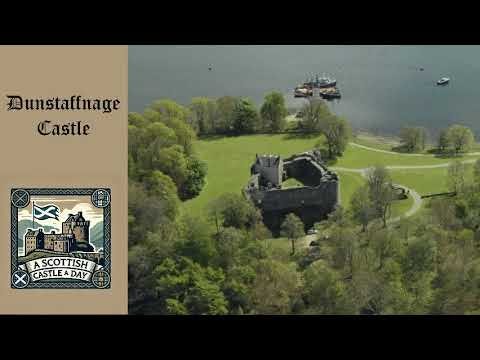
Dunstaffnage Castle
Welcome back to "A Scottish Castle, A Day," brought to you by bagtownclans.com. I’m your host, Colin MacDonald, and today we’re heading to the rugged coastline of western Scotland to explore Dunstaffnage Castle. This formidable stronghold, perched on a rocky promontory at the entrance to Loch Etive, has witnessed centuries of Scottish history—from the fierce clashes between the MacDougalls and Robert the Bruce to its role in the Jacobite risings.Dunstaffnage Castle, known in Scottish Gaelic as Caisteal Dhùn Stadhainis, is one of the oldest stone castles in Scotland. Built in the 13th century, it’s part of a local group of ancient castles that includes Castle Sween and Castle Tioram. Dunstaffnage stands guard over a highly strategic location—protecting the seaward approaches from the Firth of Lorn to the interior of Scotland through the Pass of Brander. This massive fortress continues to awe visitors, its sturdy walls a reminder of a time when control over land and sea was fiercely contested.Before the stone walls of Dunstaffnage rose from this dramatic landscape, there may have been an ancient Dál Riatan stronghold here, dating as far back as the 7th century. Legend even claims that the famous Stone of Destiny was housed at Dunstaffnage before it was moved to Scone Palace in 843. However, some historians suggest more likely candidates for this honor are Dunadd or Iona. Regardless, Dunstaffnage’s location along the rugged Argyll coast would have made it a critical site long before the imposing castle we see today was constructed.The castle as we know it began to take shape in the 13th century under the MacDougall lords of Lorn. The MacDougalls were descendants of Somerled, the powerful Lord of the Isles, and it was likely his grandson, Duncan MacDougall, who built Dunstaffnage. Duncan’s family was deeply rooted in the region—he also founded Ardchattan Priory nearby and sought to solidify his power with this formidable new stronghold. Duncan’s son, Ewen MacDougall, further expanded the family’s influence, even styling himself as “King of the Isles” despite the MacDonalds holding that official title.Ewen likely added the three round towers to the castle, enhancing its defenses and making a bold statement of the MacDougall's power. By the late 13th century, the castle’s thick walls were already serving a critical role in guarding the surrounding lands and waters from potential invaders.But this dominance didn’t last forever. As with many powerful Scottish families, the MacDougalls found themselves on the wrong side of history during the Wars of Scottish Independence. They backed John Balliol against Robert the Bruce, a choice that would lead to disaster for their clan. In 1308, Robert the Bruce decisively defeated the MacDougalls at the Battle of the Pass of Brander. After his victory, Bruce laid siege to Dunstaffnage, and the castle fell into his hands. However, unlike other castles he captured, Bruce did not destroy Dunstaffnage. Instead, he saw its strategic potential and appointed a constable to maintain the fortress as a royal stronghold.Following its capture by Robert the Bruce, Dunstaffnage became a Crown property. Over the centuries, it passed through the hands of various keepers and saw continued use as a royal fortress. James I seized the castle in 1431, and it became a base for royal expeditions during the 15th and 16th centuries, especially against the MacDonalds, the Clan Campbell’s old rivals. The Campbells themselves took control of the castle in the late 15th century, after James III granted it to Colin Campbell, the 1st Earl of Argyll.Under the Campbells, Dunstaffnage continued to serve as a key military site. During the Civil War, the castle withstood attacks, and it was later burned by royalist forces in 1685 after the failure of the Earl of Argyll’s rebellion against James VII. Yet, through it all, Dunstaffnage stood firm. It even played a part in the Jacobite risings of 1715 and 1745, when government troops garrisoned the fortress.One of Dunstaffnage’s most famous prisoners arrived in 1746—Flora MacDonald. After aiding Bonnie Prince Charlie’s dramatic escape from the British, Flora was captured and briefly imprisoned in the castle before being sent to the Tower of London. Her time at Dunstaffnage was short, but it adds to the castle’s rich tapestry of historical events.The architecture of Dunstaffnage is as impressive as its history. The castle’s thick stone curtain walls stand up to 60 feet tall, wrapping around a roughly rectangular courtyard. Originally, only narrow arrow slits broke the surface of the walls, but these were later widened into gunloops as warfare evolved. The three round towers that Ewen MacDougall added are still prominent features today, although the east tower was replaced by a gatehouse in the 15th century, when the Campbells rebuilt much of the structure.The gatehouse, a four-story tower, was remodeled in the 18th century to serve as a more comfortable residence for
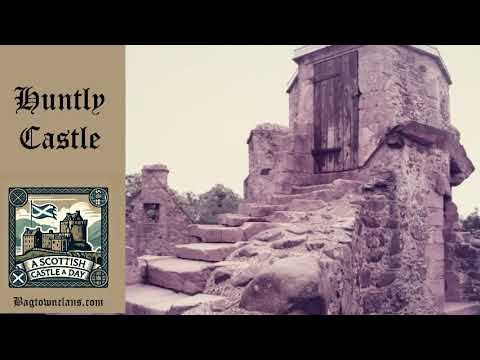
Castle Huntly
Welcome back to A Scottish Castle, A Day, brought to you by BagTownClans.com. I’m your host, Colin MacDonald, and today we venture to the scenic and storied Castle Huntly. Situated on a dramatic volcanic knoll of dolerite in Perthshire, this grand fortress boasts sweeping views across the Carse of Gowrie. Rising about 50 feet above the surrounding countryside, Castle Huntly commands not only the landscape but also our imaginations, as it weaves together centuries of history, architectural evolution, and the lives of the noble families who called it home.Castle Huntly dates back to the 15th century, with its oldest sections featuring the classic tower and jamb design typical of Scottish fortified architecture from that era. Built of sturdy Kingoodie red sandstone, the walls seamlessly blend into the volcanic rock upon which the castle stands, creating an almost organic fusion between the natural landscape and human craftsmanship. The genius of this design is evident in the way the castle appears to grow out of the very earth itself, its stone walls melding with the rugged rock face as if they were always part of the same structure.The castle’s original keep was strategically designed for defense. As with many castles of its time, there were no accessible windows on the ground floor, and it had only one heavily fortified door. The entrance to the keep was several feet above the rock foundation, requiring either a ladder or a raised platform for entry—further evidence of its focus on security. The stonework around the castle, while not finely cut in all areas, was incredibly durable, designed to withstand attacks as well as the passage of time.Vaulted ceilings—another hallmark of medieval Scottish architecture—were a significant feature of Castle Huntly. These robust stone ceilings were built with compressive loading in mind, ensuring they could bear the weight of upper floors without the need for timber reinforcements. This technique not only allowed for strong defensive structures but also created ample storage space in the castle’s cellars, where wine racks carved from stone still remain to this day. The cellars, with walls nearly 10 feet thick in places, were also ideal for preserving food and supplies, maintaining a cool, stable temperature year-round.One particularly infamous part of Castle Huntly is the pit prison—a fearsome dungeon carved directly out of the rock beneath the castle. Measuring 12 by 17 feet with a 15-foot-high ceiling, this dark, dank chamber was a brutal place of confinement. The only light and ventilation came through a tiny slit high in the wall, and prisoners could only be lowered into the pit via a trapdoor from the guardroom above. Such was the grim reality of medieval justice.Throughout its long history, Castle Huntly has undergone several significant renovations, particularly in the 17th and 18th centuries. The castle was transformed from a stark medieval stronghold into a more comfortable residence for the noble families who inhabited it. In 1660, the Earl of Strathmore, who had taken ownership of the castle, began extensive alterations. Among these changes was the addition of a new doorway on the north-east side of the castle and the development of what is now known as the Mezzanine Landing. These renovations were part of a broader trend during the post-medieval period, where defensive needs lessened, and comfort and aesthetics became more important.By the late 18th century, the castle’s defensive features were largely obsolete. In 1776, George Paterson added Georgian wings to the north-east elevation, enhancing the castle’s grandeur and transforming it into a stately residence. A central round tower or lantern was added to the roof, raising the castle’s height to an impressive 116 feet. These architectural updates reflected the evolving needs and tastes of Scotland’s nobility during this period. Gone were the days of constant threat from invaders or rival clans, replaced by the desire for lavish, comfortable homes.Interestingly, during these renovations in the late 1700s, workers uncovered a deep ditch filled with wood ash and other ancient materials, indicating that the site had been occupied long before Castle Huntly was built. This discovery ties the castle to a much older history, possibly reaching back to the Iron Age, when such volcanic knolls would have been natural defensive strongholds.In the mid-20th century, Castle Huntly entered yet another phase of its long history when it passed into public ownership. For a time, it even served as a borstal—a type of youth detention center. Though this chapter is a far cry from its noble origins, it speaks to the adaptability of the structure and its continued relevance in modern times. Today, the castle is part of a national effort to preserve Scotland’s architectural heritage, ensuring that future generations can experience its rich history firsthand.As we reflect on Castle Huntly’s five centuries of history, we see not just a
Guthrie Castle
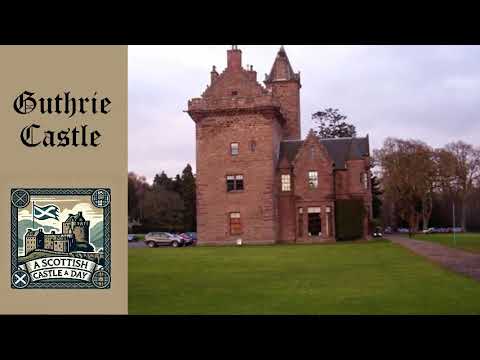
Welcome back to "A Scottish Castle, A Day," brought to you by bagtownclans.com. I’m your host, Colin MacDonald, and today we’re taking a journey through the history of Guthrie Castle, a magnificent estate in Angus, Scotland. Guthrie Castle stands in the village of Guthrie, approximately 10 kilometers east of Forfar, and is a structure that not only holds centuries of history but also has links to some of Scotland’s most iconic figures and events.The name “Guthrie” is believed to be derived from “Guthrum,” a Scandinavian prince who settled in the region in the early days of Scottish history. However, the Guthrie family's legacy truly began in 1299 when a Squire Guthrie was dispatched to France by the Northern Lords of Scotland. His mission? To bring Sir William Wallace, Scotland's famed freedom fighter, back to his homeland to continue the battle against English forces. Guthrie succeeded in his task, embarking from Arbroath, landing at Calais, and safely returning Wallace to Montrose—a feat that cemented the Guthrie family’s role in Scotland’s storied past.Fast forward to the 15th century, and the Guthrie name was once again etched into history. In 1468, Sir David Guthrie, who served as both Treasurer and Lord Justice-General of Scotland under King James III, was granted the barony of Guthrie. With royal authority, Sir David embarked on the construction of a castle, complete with a fortified entrance gate, or “yett,” that would serve as the stronghold of the Guthrie family for centuries to come.Guthrie Castle, as originally built by Sir David, was a square tower house—an architectural style typical of 15th-century Scotland. This tower, which now houses the library, Guthrie suite, an ancient bedroom, and what is now the snooker room, was the heart of the estate. Around 1760, the family opted to expand their living space, constructing a separate house nearby. However, it wasn’t until 1848, under the guidance of John Guthrie and architect David Bryce, that the two structures were combined. Bryce’s baronial-style expansion created the majestic castle that stands today, complete with a finely paneled hall, an oak staircase, and well-appointed rooms like the West Bedroom, now known as the Guthrie Suite.The architectural beauty of Guthrie Castle is matched by its lush surroundings. The castle is flanked by two remarkable gardens: a historic walled garden and a wildflower garden. The walled garden, which spans over two acres, features yew hedges shaped into a Celtic Cross, a unique and stunning piece of horticultural history. While the exact date of the walled garden’s construction is unclear, some believe it was built by monks in the early 1600s. Adjacent to this lies the wildflower garden, where the castle’s original yett now serves as an entrance. These gardens add an extra layer of tranquility and natural beauty to the already picturesque estate.Of course, no Scottish castle would be complete without a ghost story. Guthrie Castle has long been rumored to be haunted. According to family lore, the ghost was last seen by a member of the Guthrie family when she was just a little girl. Since then, other mysterious experiences have occurred, especially after the Pena family took ownership in 1984. While the tales of hauntings add a touch of mystery, the history of Guthrie Castle is rich enough to captivate visitors on its own.When the Pena family purchased Guthrie Castle, they undertook a significant restoration effort to return the estate to its 19th-century glory. Daniel S. Peña, Sr., an American businessman, bought the property and revived it as a private residence. In the mid-1990s, Peña also built a golf course on the estate, offering guests a unique blend of history and leisure. For many years, the castle was available for public events, including weddings and corporate functions. However, in 2017, following a fraud investigation surrounding the wedding events, the owners made the decision to close the castle to the public, making it once again a private residence.One of the defining features of Guthrie Castle is how it evolved through the centuries, reflecting the changing tastes and fortunes of its owners. From a fortified tower built for defense in the turbulent 15th century to the more refined baronial home designed by David Bryce in the 19th century, Guthrie Castle encapsulates Scottish history. The Guthrie family itself played a prominent role not only in politics but also in the ecclesiastical and literary spheres, further cementing the castle’s place in Scotland’s rich cultural tapestry.Despite being privately owned today, Guthrie Castle remains a cherished part of Scottish heritage. Its stone walls, historic tower, and sprawling gardens stand as a testament to the Guthrie family’s resilience and prominence. The castle’s connection to William Wallace, its centuries-long occupancy by one family, and its ghostly tales combine to make it one of Scotland’s most intriguing historical estates.So, whether you’r
Glamis Castle
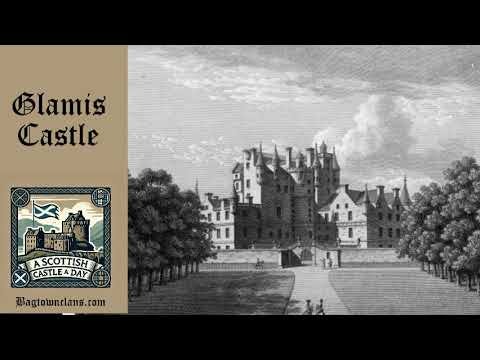
Welcome back to A Scottish Castle, A Day, brought to you by bagtownclans.com. I’m your host, Colin MacDonald, and today we’re venturing into the heart of Angus, Scotland, to explore one of the most storied castles in all the land—Glamis Castle. From Shakespearean lore to royal history, this towering masterpiece is rich with legend, mystery, and grandeur. So, settle in as we unravel the centuries of secrets that echo through the halls of Glamis.Glamis Castle is perhaps one of the most fascinating and historically significant castles in all of Scotland. For those familiar with Shakespeare, the name might instantly evoke scenes from Macbeth, where the notorious Lady Macbeth incites the murder of King Duncan. In reality, Glamis Castle had no direct connection to this tale, but the castle’s aura of intrigue has helped to cement its association with this dark drama.However, Glamis Castle's true history is as captivating as any work of fiction. It stands proudly at the center of Strathmore’s lush landscape, its turrets rising high against the backdrop of the Sidlaw Hills to the south and the mighty Grampians to the north. The castle has been the ancestral home of the Lyon family since the 14th century, and its stone walls enshroud a tapestry of stories—royal murders, ancient family secrets, and some of Scotland’s most famous ghostly legends.Let’s take a step back to the early days of Glamis. Before the imposing structure we see today, a royal hunting lodge stood on these grounds, where King Malcolm II was said to have been mortally wounded in 1034. He was carried to the lodge to die, marking Glamis’ first brush with royal blood and treachery.Fast forward to 1372, when Robert II granted the lands of Glamis to Sir John Lyon, who would become the Thane of Glamis. This marked the beginning of the castle’s association with the powerful Lyon family, a lineage that continues to this day. Over the centuries, Glamis Castle has grown and evolved, shaped by the ambitions and tragedies of its many inhabitants.One of the most tragic figures associated with the castle is Lady Janet Douglas, granddaughter of Archibald "Bell the Cat" Douglas. Married into the Lyon family, Lady Glamis was unjustly accused of witchcraft and treason by King James V. Her supposed crime? Allegedly plotting to poison the king. In 1537, she was burned at the stake in Edinburgh, becoming a martyr of sorts, and her spirit is said to haunt the castle to this day. Locals and visitors alike claim to have seen a mysterious "White Lady" wandering the halls—believed to be Janet herself, still seeking justice for her wrongful execution.The supernatural legends don’t end there. Glamis is also famous for the chilling tale of the Monster of Glamis, a deformed child born into the Lyon family. The story goes that this child was hidden away in the castle, his existence kept secret, and that his bricked-up chamber still lies somewhere within the vast structure. While no evidence has ever confirmed this dark legend, the idea of a hidden, monstrous heir has sparked imaginations for generations.Perhaps one of the most well-known ghost stories tied to Glamis is that of Earl Beardie. According to legend, this 15th-century nobleman was so obsessed with gambling that he declared he would play cards with the Devil himself. One fateful night, after refusing to stop playing on the Sabbath, a mysterious figure appeared at the table, and Earl Beardie was never seen again. Some say he’s cursed to play cards until Doomsday in a secret room within the castle. To this day, loud noises and eerie crashes are said to be heard on certain nights, marking the Earl’s ongoing spectral game.But Glamis Castle is not only about legends and ghosts. It’s also deeply intertwined with British royalty. Queen Elizabeth, The Queen Mother, spent much of her childhood at Glamis, and her daughter, Princess Margaret, was born here in 1930. The royal connection only adds to the castle’s historical weight and allure, making it a favorite stop for those looking to explore the intertwined histories of Scotland’s noble families and the British Crown.Architecturally, Glamis is a masterpiece. While much of what stands today was reshaped and extended during the 17th century, the castle’s core dates back to the 14th century. The central tower rises majestically, surrounded by soaring turrets and wings that stretch out in all directions, creating an impressive facade that reflects both strength and elegance. Sir Walter Scott, who stayed at Glamis in the 1700s, described it as a place that felt "too far from the living and too near the dead," a sentiment that speaks to both the grandeur and the eerie atmosphere that pervades the castle.One of the most striking features is the Great Sundial that stands on the castle’s front lawn. Created in the 17th century, it is supported by four stone lions and adorned with 84 individual dials—a true symbol of the detailed craftsmanship that went into the castle’s embellishments ov
Dumbarton Castle
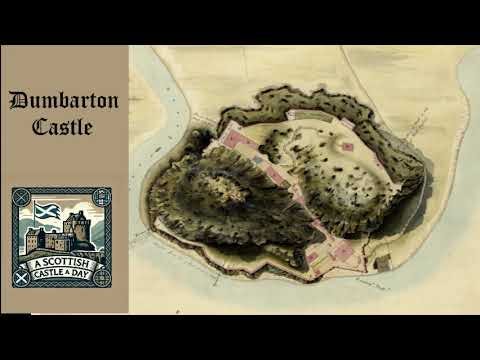
Welcome back to "A Scottish Castle, A Day," brought to you by bagtownclans.com. I’m your host, Colin MacDonald, and today we’re traveling to the iconic Dumbarton Rock, home to one of Scotland’s most historic strongholds, Dumbarton Castle. Nestled on the banks of the River Clyde, Dumbarton Castle boasts a remarkable history that spans millennia—from ancient Britons to Vikings, Romans, and Scottish kings. Dumbarton has witnessed battles, sieges, royal intrigues, and has stood the test of time as one of Scotland’s most significant fortresses.Dumbarton Rock is a natural wonder in itself. Rising 240 feet high, this volcanic plug of basalt is a relic from the Early Carboniferous period, formed between 330 and 340 million years ago. Its strategic location made it an ideal stronghold, overlooking the Clyde and providing commanding views of the surrounding landscape. The castle that sits atop this mighty rock has played a central role in Scotland’s military and political history for over 1,500 years.The earliest records of human settlement here date back to the Iron Age. Dumbarton, known as "Alt Clut" in Brythonic, meaning "Rock of the Clyde," was the seat of the ancient Kingdom of Strathclyde. By the 5th century, it was the center of a powerful Brythonic kingdom, and Saint Patrick himself corresponded with King Ceretic of Alt Clut, as recorded in historical documents. The fortification grew in importance through the centuries, becoming a coveted prize for invaders and defenders alike.The castle’s connection to myth and legend is also notable. Some stories suggest that Merlin, the famed wizard of Arthurian legend, stayed at Alt Clut, which Geoffrey of Monmouth immortalized in his "Historia Regum Britanniae." Whether true or not, the castle’s historical significance is undeniable.One of the most dramatic periods in Dumbarton's early history occurred in 870 AD, when Viking kings Amlaíb and Ímar besieged the fortress for four months. Dumbarton fell after its water supply failed, and the victorious Vikings took captives back to Ireland. This marked the end of Dumbarton’s role as the capital of the Kingdom of Strathclyde, with the kingdom’s center shifting upriver to Govan.During the medieval era, Dumbarton Castle was a vital stronghold for Scottish kings. It played a prominent role in the Wars of Scottish Independence. One of its more infamous moments came in 1305 when Sir John Menteith, the castle’s governor, betrayed William Wallace, handing Scotland’s national hero over to the English. This act of treachery has forever linked Menteith’s name with infamy, even though his later military service, particularly at Bannockburn, somewhat rehabilitated his reputation.The castle’s strategic importance was recognized by the Romans, the Norse, and later by the English and Scots. In the 13th century, Edward I of England tried to wrest control of Dumbarton during his campaigns to dominate Scotland. During the tumultuous reign of Mary, Queen of Scots, Dumbarton Castle became a stronghold of support for her cause. After her defeat at the Battle of Langside in 1568, Mary attempted to flee to Dumbarton for sanctuary but was forced to escape to England, marking the end of her rule in Scotland.One of the castle’s most daring moments came in 1571 when Captain Thomas Crawford of Jordanhill led a night assault to recapture the fortress from supporters of Mary, Queen of Scots. Using ladders to scale the sheer cliffs under cover of darkness, Crawford’s men surprised the garrison and took the castle in one of the boldest sieges in Scottish history.Dumbarton Castle’s importance didn’t diminish with the medieval period. It became a key garrison during the Jacobite risings of the 18th century and even saw military use during World War II. Though much of the medieval structure has since vanished, the 18th-century fortifications still stand today, providing a glimpse into Scotland’s past military defenses.One of the most enduring features of Dumbarton Castle is its connection to Sir William Wallace. After his capture, Wallace was briefly held here before being sent to London for trial and execution. Wallace’s sword, which was repaired at the castle in 1505, remains an important artifact, symbolizing the castle’s deep ties to Scotland’s struggle for independence.Despite its many military engagements, Dumbarton Castle also served as a royal residence, particularly for King James IV. The king was so fond of Dumbarton that he used it as a base for his navy and frequently visited the castle. One of the most curious entries in the castle’s historical records is from 1495, noting that a piper from Dumbarton was paid for his services by the king—a testament to the castle’s lively history beyond the battlefield.Today, Dumbarton Castle remains a powerful symbol of Scotland’s resilience. Though no longer a seat of power, its walls still echo with the stories of ancient warriors, betrayed heroes, and royal intrigue. The 557 steps leading to the summit of Dum
Crookston Castle
Welcome back to "A Scottish Castle, A Day," brought to you by bagtownclans.com. I’m your host, Colin MacDonald, and today, we’re venturing just outside of Glasgow to explore Crookston Castle, a place steeped in romance, rebellion, and royal intrigue. Situated atop a gentle hill overlooking the scenic Levern Water, Crookston Castle is an extraordinary blend of natural beauty and historic architecture. This medieval stronghold, though often overshadowed by more famous sites, holds a unique place in Scotland’s past, particularly in relation to Mary, Queen of Scots.Now, Mary, Queen of Scots, needs little introduction. Her life story—filled with joy, betrayal, and tragedy—has captivated generations. One of the lesser-known, yet poignant, chapters in her life is her connection to Crookston Castle. It’s said that she and Henry Stuart, Lord Darnley, spent their honeymoon within these ancient walls. That moment of fleeting happiness must have seemed far removed from the stormy future that awaited them both, a future clouded by political betrayal, jealousy, and violence.But before we dive into that, let’s take a step back and explore the origins of Crookston Castle. Built around 1400 by the Stewarts of Darnley, the stone structure replaced an earlier timber and earth fortification. This earlier fort, dating back to the 12th century, was established by Sir Robert de Croc, a Norman noble whose name still echoes in the village of Crookston. The Stewarts, a family whose legacy would be forever entwined with Scotland’s royal history, transformed the site into a formidable stone fortress designed to withstand both time and attack.Crookston Castle’s position was carefully chosen—it stands on a natural hill, surrounded by a defensive ring ditch that dates back to Sir Robert de Croc’s time. From this vantage point, the castle commands breathtaking views of the Renfrewshire countryside to the south, while to the north, the Levern Water winds its way toward the White Cart Water. Its strategic location made Crookston a key stronghold in the Stewart family’s network of defenses, even though it was never the largest of castles.In 1489, Crookston was the site of a dramatic episode during one of Scotland’s many civil wars. The Stewart Earl of Lennox, a staunch supporter of a rebellion against King James IV, found himself besieged at Crookston. The king, determined to crush the uprising, brought the legendary cannon Mons Meg from Edinburgh to bombard the castle. The siege was short-lived, and the western towers were virtually destroyed, never to be rebuilt. Even after this, the castle remained a symbol of power and loyalty for the Stewart family.It was within these stone walls, likely battered by Mons Meg’s fury, that Lord Darnley would later court and marry Mary, Queen of Scots. Darnley, a handsome and ambitious nobleman, had a claim to the English throne, making their union not just a romantic match but a political one. According to tradition, the couple may have been betrothed under a yew tree on the castle grounds, a tree that became a symbol of their union. Though felled in 1816, this ancient yew’s legacy still lingers in local folklore.For Mary and Darnley, Crookston Castle was a place of happiness, if only for a brief moment. Their honeymoon here is often recalled as one of the few truly joyful times in their tumultuous marriage. Those days must have been filled with hope and affection, a sharp contrast to the violence and betrayal that would later come to define their relationship. Just imagine—Mary, the young queen, full of beauty and grace, walking the halls of Crookston, unaware of the tragedy that would soon engulf her life.Darnley, too, changed dramatically after their time at Crookston. What began as youthful passion soon deteriorated into jealousy and paranoia. Darnley’s involvement in the brutal murder of Mary’s trusted secretary, David Rizzio, marked the beginning of the end for their marriage. Within a year, Darnley would be dead—murdered under mysterious circumstances that would forever taint Mary’s reputation and lead to her eventual downfall.While Crookston Castle never played a central role in Scotland’s grander historical dramas, it is a quiet witness to these personal tragedies. The walls, now largely in ruins, still echo with the whispers of its past inhabitants. The northeast tower, the only one still standing to its original height, offers visitors a view that Mary and Darnley might have once enjoyed. From here, one can see the lush green fields, the winding rivers, and, on a clear day, even the distant slopes of Neilston Pad.In later years, the castle passed through various hands, including those of the Dukes of Montrose and the Maxwells of Pollok. By the 18th century, Crookston had fallen into disrepair, but its romantic ruins attracted the attention of poets like Robert Burns and William Motherwell, who immortalized it in their verses. The castle’s lonely beauty became a source of inspiration, much as it
Auchencruive House
Welcome back to "A Scottish Castle, A Day," brought to you by bagtownclans.com. I’m your host, Colin MacDonald, and today we journey to the picturesque banks of the River Ayr to explore the fascinating history of Auchencruive House, a grand estate located just outside the town of Ayr in South Ayrshire. Although not a traditional medieval fortress like some of the other castles we've covered, Auchencruive has its own unique charm and importance, especially for those interested in Scotland’s evolution from feudalism into the more modern era of agricultural and economic growth.Auchencruive House, which also bears the name Oswald Hall, was built in the 18th century, but its origins stretch far further back. The estate has passed through the hands of several prominent families, starting with the Wallaces of Riccarton, before landing with the Cathcarts in 1374. However, it’s the story of its 18th-century development by Richard Oswald, a merchant and political figure of considerable repute, that truly defines the estate's lasting legacy.Nestled on the north bank of the River Ayr, Auchencruive House was constructed on the site of an earlier mansion. The earliest record of a house on the estate dates back to 1532 when a tower house stood here, typical of the fortified homes built during Scotland's turbulent times. By the mid-18th century, the estate was sold to Richard Oswald, a figure who, though lesser-known in some circles, played a key role in shaping modern history. Oswald was not only a successful merchant but also a diplomat, responsible for negotiating the Treaty of Paris in 1783, which ended the American Revolutionary War and formally recognized the independence of the United States.But before we get to Oswald’s political career, let’s take a step back and admire the architectural elegance of Auchencruive. After purchasing the estate in 1764, Richard Oswald commissioned Robert Adam, one of Scotland's most distinguished architects, to design the interior of the house. While Oswald slightly modified Adam’s initial vision for the exterior, Adam’s intricate work on the house’s interior was carried out as planned. The result was an imposing yet refined mansion that balanced stately grandeur with the comfort needed for a modern estate of its time.One of the estate’s most notable features is Oswald’s Temple, a castellated tea house perched on a nearby hill. This structure, completed in 1778, served as a place of retreat and reflection for the Oswald family and their guests, offering sweeping views over the surrounding landscape. It is a reminder of the fusion of utility and elegance that characterized the best estates of the Georgian period. Today, the temple is a Category A listed building, recognized for its historical and architectural significance, although it has fallen into a state of disrepair over time.Richard Oswald’s story is nothing short of remarkable. Originally from Thurso in northern Scotland, Oswald's early career was modest. He was said to have left Scotland after failing to secure a position as a schoolmaster, only to find incredible success as a merchant in London. His business acumen allowed him to rise to prominence, particularly during the turbulent times of the American Revolution, when he was selected by the British government to act as a peace commissioner. His negotiations with American leaders like Benjamin Franklin culminated in the Treaty of Paris, a pivotal moment in world history.Following his diplomatic successes, Oswald retired to Auchencruive, where he spent the final years of his life until his death in 1784. The estate remained in the Oswald family for several generations, with each succeeding Laird adding to the estate’s grandeur. Significant expansions and alterations were made after Richard Oswald’s death, including the addition of a west wing to the house by his son, George Oswald, who inherited the estate in 1819.While the estate was primarily a private residence, it also played a role in Scotland’s agricultural advancements. In 1927, the estate became the West of Scotland College of Agriculture, and the mansion was renamed Oswald Hall. For decades, the estate served as an educational and research facility for agricultural students, underscoring the continuing importance of the land for both the local economy and Scottish agriculture.However, as the 21st century began, the fate of Auchencruive once again shifted. By 2007, the Scottish Agricultural College (now part of Scotland’s Rural College, SRUC) moved its campus, and the estate was sold off. Proposals for redevelopment included plans to transform Oswald Hall into a hotel and conference center, with Oswald’s Temple as part of the accommodations. Though plans were approved, financial realities led to a different outcome, and in 2012, the hall was sold to biotech company Neogen Europe, which now uses it as its corporate offices.Even as it has moved into new hands, Auchencruive remains a cherished piece of Scottish heritage
Cadzow Castle
Welcome back to "A Scottish Castle, A Day," brought to you by bagtownclans.com. I’m your host, Colin MacDonald, and today we’re venturing into the heart of Lanarkshire to explore the mysterious and storied ruins of Cadzow Castle. Set high above the Avon Water in what is now Chatelherault Country Park, these ruins whisper tales of Scotland’s royal past, its fierce battles, and the powerful Hamilton family, whose name echoes through the centuries.Cadzow Castle stands less than a mile southeast of modern-day Hamilton, but in earlier times, this land was known as Cadzow, a name derived from the Middle Scots “Cadȝow,” meaning "fort on the narrow strip." Built on the ancient hunting grounds of Scottish kings, the ruins we see today are just a shadow of a once-majestic stronghold. In fact, this was no ordinary castle; it was a symbol of royal authority, a hunting lodge for Scotland's early monarchs, and later, a prized possession of the powerful Hamilton clan.The site itself dates back to the 12th century, when the original castle served as a royal residence for King David I and his successors. Nestled within the ancient Caledonian Forest, Cadzow Castle was likely used as a base for royal hunting expeditions. The dense woodlands and rolling hills provided the perfect setting for kings to hunt wild game, and even today, this region is known for the Cadzow wild white cattle, one of the rarest breeds in the world, still roaming the forest as they have for centuries.Cadzow’s royal connections continued into the reign of Alexander II and Alexander III, who also enjoyed the castle as a retreat. However, during the Wars of Independence, ownership shifted. Robert the Bruce granted the Cadzow estate to Walter FitzGilbert de Hambeldon, the ancestor of the Hamiltons, after the forfeiture of lands by the rebellious Comyns. It was the Hamilton family, in the 16th century, who would transform the castle into a stronghold that stood not just for their power but for their loyalty to Mary, Queen of Scots.Speaking of Mary, Queen of Scots, her connection to Cadzow Castle is one of the most dramatic episodes in its history. After her daring escape from Lochleven Castle in 1568, Mary sought refuge at Cadzow, where the Hamilton family, staunch supporters of her cause, welcomed her. But her stay was brief and ill-fated. Soon after, her forces were defeated at the Battle of Langside, and in retaliation, the Earl of Mar, serving as regent for James VI, ordered the castle destroyed. Though it was partially rebuilt in the 18th century, the damage left its mark, and the castle would never regain its former glory.One of the most fascinating elements of Cadzow Castle is its connection to Sir Walter Scott, who was inspired by its romantic ruins and the surrounding woodlands. Scott immortalized the castle in his ballad, "Cadzow Castle," written during a visit to Hamilton Palace in 1801. His verses paint a vivid picture of the castle’s once-gothic towers and its lively halls, where princely Hamiltons hosted feasts and festivities. Yet, as Scott’s poem laments, those towers now lie in ivy-clad ruins, echoing only the winds of time and the roar of the nearby Avon Gorge.The architecture of Cadzow Castle, or what remains of it, speaks to its turbulent past. Built upon a steep, rocky gorge, the castle was both a fortress and a statement of power. The dramatic cliffside location, combined with its proximity to the Avon Water, provided natural defenses that were vital in a region constantly on the brink of clan conflicts and political intrigue. From the massive Duke’s Bridge nearby, visitors can still catch a breathtaking view of the crumbling stone walls clinging to the edge of the gorge, offering a glimpse of its former grandeur.Today, the ruins are carefully preserved by Historic Environment Scotland, though public access is limited due to the castle’s fragile state. But visitors to Chatelherault Country Park can explore the surrounding woodland and catch views of the castle from the many footpaths that wind through the estate. The park itself, once the hunting grounds of Hamilton Palace, still holds the majesty of its past, with ancient trees, including remnants of the Cadzow oaks, believed to be nearly a thousand years old.Of course, no visit to Cadzow Castle would be complete without mentioning the Cadzow wild white cattle, often referred to as the Cadzow White Park cattle. Sir Walter Scott once wrote about the ferocity of these creatures, claiming they had to be exterminated. Thankfully, that wasn't quite the case. Today, a herd of about 50 still grazes peacefully in the park, offering visitors a rare glimpse into Scotland’s ecological and historical heritage.As we wrap up our journey through the centuries with Cadzow Castle, it's clear that while the castle itself may lie in ruins, its legacy endures. From its origins as a royal hunting lodge to its time as a Hamilton stronghold and later its romantic ruin, Cadzow remains a symbol of Scotland’s
Newark Castle, Port Glasgow
Welcome back to "A Scottish Castle, A Day," brought to you by bagtownclans.com. I’m your host, Colin MacDonald, and today we’re taking a journey to the southern shore of the River Clyde, where one of Scotland’s most well-preserved castles stands—Newark Castle. Nestled in the heart of Port Glasgow, Inverclyde, this impressive structure has watched over the Clyde estuary for centuries, from its days as a tranquil trading hub to its evolution into a bustling shipbuilding center.Newark Castle’s location was strategic—right where the estuary narrows, making navigation upriver to Glasgow difficult due to shifting sandbanks. For many years, this spot served as a critical place for offloading seagoing ships, and it was here that the foundations of Port Glasgow began to take shape. When 18th-century dredging efforts finally allowed larger ships to sail directly to Glasgow, the port around Newark Castle became a key site for Scotland’s flourishing shipbuilding industry. Even today, the echoes of this industrial past are still felt, with Ferguson Shipbuilders—one of the last shipyards on the lower Clyde—standing close by. Yet, the east of the castle has changed dramatically; with the shipyards gone, scenic landscaped areas now offer beautiful views across the Clyde.Newark Castle was built in 1478 by George Maxwell, after inheriting the Barony of Finlaystone in the nearby parish of Kilmacolm. Originally, the castle would have been quite different from what we see today. The earliest structure was a tower house, surrounded by a defensive enclosure known as a barmkin, which would have included important outbuildings such as a hall, a bakehouse, and perhaps a brew house. While much of the barmkin is gone, one corner tower still survives, offering a glimpse of the castle's medieval defensive nature.Maxwell’s descendants continued to build on his legacy, particularly in the late 16th century when Newark Castle saw its most significant transformation under Sir Patrick Maxwell. Sir Patrick inherited the castle during a time when Scotland was transitioning from its medieval roots into the Renaissance, and his ambitions for the castle reflected that shift.In 1597, Sir Patrick Maxwell expanded Newark Castle, turning it into a three-storey Renaissance mansion, much of which stands today. He replaced the earlier hall with a grand north range and demolished much of the outer barmkin wall, sparing only the northeast tower, which was repurposed into a doocot—a type of pigeon house. The expansion introduced key features of the Scottish baronial style, including crow-stepped gables and corbelled turrets, making the castle a blend of medieval fortification and Renaissance grandeur.At the heart of the mansion, a grand hall with large windows occupies the central part of the building, offering spectacular views of the river and surrounding lands. Below the hall are cellars with small windows, while above, there were living quarters for the Maxwell family. The castle's main entrance sits in the east wing, linking the Renaissance mansion to the original 15th-century tower house. A short west wing connects the main block to the original gatehouse, completing this remarkable transformation.This grand expansion was a statement of wealth and power, but Sir Patrick Maxwell's personal life was far from serene. Despite being a close ally of King James VI, he was notorious for his violent feud with the Montgomerie family, particularly Robert Montgomerie of Skelmorlie. He also gained a dark reputation for the brutal abuse of his wife, Lady Margaret Crawford, who bore him 16 children before fleeing his cruelty. His legacy, while marked by architectural achievement, is also shadowed by these personal tragedies.By the late 17th century, Newark Castle had shifted from a private residence to a key part of Scotland’s growing maritime trade. In 1668, the city of Glasgow purchased 18 acres of land surrounding the castle from Sir George Maxwell. This land was developed into a port that soon became known as “Port Glasgow,” and quickly grew into a thriving harbor, critical to the city’s expanding mercantile ambitions.The castle’s fortunes, however, faded after the last Maxwell passed away in 1694. Over the next centuries, Newark Castle saw a series of non-resident owners and was rented out to tenants. One such tenant was John Gray, a ropemaker who also had a peculiar side business dealing in exotic animals. It’s said that he housed wild cats and bears in the castle cellars—quite a departure from its days as a noble residence! Later, another tenant, Charles Williamson, rented the castle’s gardens and cellars, but blocked access to the hall to prevent a fellow renter, John Gardner, from stealing his stored fruit.Despite these odd chapters in its history, Newark Castle remained a solid, well-maintained structure. Even in the 19th century, visitors noted the well-preserved stump of the castle’s dule tree, traditionally used for hanging criminals—another reminder o
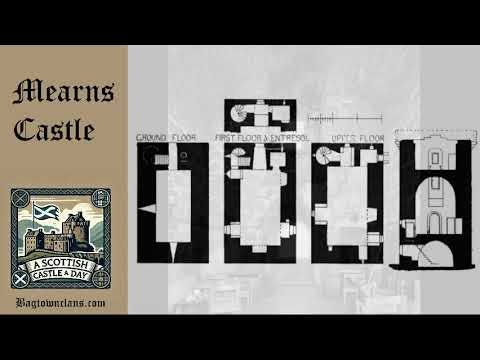
Mearns Castle
Welcome back to "A Scottish Castle, A Day," brought to you by bagtownclans.com. I’m Colin MacDonald, and today, we’re exploring the fascinating history of Mearns Castle, a 15th-century tower house located in Newton Mearns, East Renfrewshire, just south of Glasgow. Mearns Castle is not only a Category A listed building, but it also stands as a unique example of how Scotland’s ancient structures have evolved over time. Today, this historic tower forms part of the Maxwell Mearns Castle Church and lends its name to the nearby Mearns Castle High School.Built under the authority of a royal warrant issued in 1449, Mearns Castle was the brainchild of Herbert, Lord Maxwell, a powerful figure in Scotland during the reign of James II. The Maxwells were among the most influential families in the country at the time, and Mearns Castle was one of their many strongholds. Originally, the castle was designed as a defensive tower—a reflection of the turbulent times when Scotland’s feudal lords needed secure fortifications to protect themselves and their families.Mearns Castle was with the Maxwell family for over a century until it passed into the hands of King James VI, who required the fifth Lord Maxwell to surrender it to the crown. Shortly after, it was sold to Sir George Maxwell of Nether Mearns in the mid-17th century, before eventually passing to the Shaw-Stewart family. For many years, it remained a somewhat forgotten relic of the past, its defensive walls and strategic importance fading as Scotland's political landscape changed.However, the castle found new life in the 20th century. In 1971, the remaining storeys of the tower were incorporated into the Maxwell Mearns Castle Church, linking two modern Church of Scotland buildings. This unique blend of medieval history and modern restoration has given the old fortress a fresh purpose, allowing it to continue playing a role in the community even today.The castle itself is a prime example of a 15th-century tower house. It was originally a four-storey rectangular structure, measuring about 30 by 40 feet, with walls a formidable 10 feet thick. This substantial thickness was necessary to withstand the sieges and attacks that were all too common in the era. The lower sections of the walls are built from rough rubble masonry, typical of early Scottish castles, while the upper walls are made from finely cut ashlar blocks, indicating that the tower might have been constructed on the foundations of an even older building.One of the most interesting features of Mearns Castle is its now-sealed arched main entrance, which originally sat on the first storey and would have been accessed by a ladder. This entrance design was a common defensive feature of medieval tower houses, as it allowed the occupants to pull up the ladder in times of danger, making it much harder for attackers to breach the stronghold. Though walled up today, the entrance still offers a tantalizing glimpse into the architectural mindsets of the period.Inside, the castle contains a vaulted basement room, once reached from the main entrance. The first-floor hall, also vaulted, can be accessed by a straight mural stair and features stone window seats—an indication that this space was likely used for formal gatherings or meals. In its heyday, the hall even boasted a minstrel’s gallery, where musicians could entertain the lord and his guests. This architectural detail, though no longer intact, gives us a sense of the daily life that once animated this now silent tower.While much of the outer defenses of Mearns Castle have disappeared, faint traces remain. The rocky knoll on which the castle stands was once surrounded by a protective barmkin wall, following the natural contours of the land. A bank, roughly 10 feet high, was carved into the sloping ground to further fortify the castle’s approach, and a causeway led over this defensive bank to the tower's gatehouse. These remnants of outerworks provide crucial insights into the lengths medieval builders went to ensure their castles were not only impressive but also impenetrable.Despite the passage of time and the many changes to its structure, Mearns Castle is one of the better-preserved medieval castles in the region. Thanks to the careful restoration work that incorporated the tower into the church, it continues to stand as a proud symbol of Scotland’s architectural and feudal past. Its story—like so many of Scotland’s ancient castles—is one of survival, adaptation, and resilience.Whether you’re a history enthusiast, a student at the nearby Mearns Castle High School, or a local attending services at the Maxwell Mearns Castle Church, this ancient tower holds a special place in the hearts of many in East Renfrewshire. It serves as a reminder of the rich, layered history that Scotland’s castles carry with them, from their medieval origins to their modern-day uses.Thank you for joining us on this episode of "A Scottish Castle, A Day." I hope you’ve enjoyed uncovering the st
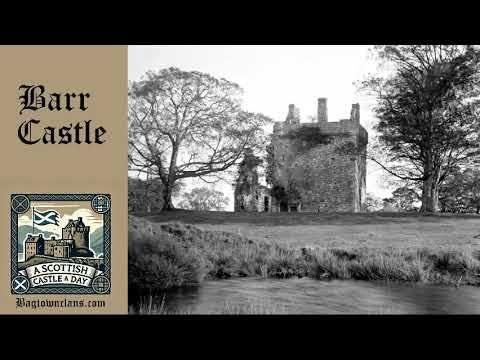
Barr Castle
Welcome back to "A Scottish Castle, A Day," brought to you by bagtownclans.com. I’m your host, Colin MacDonald, and today we journey to the beautiful lowlands of Renfrewshire, where we’ll explore the storied past of Barr Castle. Nestled just south of the village of Lochwinnoch, Barr Castle stands as a testament to Scotland’s rich medieval heritage. Though now a ruin, this late medieval tower house has weathered the centuries, and its history is interwoven with some of Scotland's most notable families, such as the Glens, Hamiltons, and MacDowalls. As we dig deeper, you'll discover not only the architectural wonders of this 15th or early 16th-century fortress but also its remarkable connection to local history, especially in Renfrewshire.The first thing visitors notice about Barr Castle is its striking simplicity. The rectangular tower, measuring about 7.8 meters by 10.7 meters, rises to an impressive height of around 12 meters, even without its original four angle turrets, which have long since vanished. While it might lack the grand ornamentation seen in other Scottish castles, Barr Castle’s imposing presence comes from its solid mass, standing proudly on a low ridge amidst a well-wooded park. The castle’s rough square-faced masonry walls are characteristic of the time, and the sharp, dressed stone corner quoins give the structure an austere elegance.Though Barr Castle's architecture may seem plain to some, it holds subtle, telling details. One of the few remaining decorative features is the pediment above the main entrance, inscribed with the initials of Margaret Hamilton and John Wallace, the Hamilton lairds who once called this tower home. These inscriptions, along with others scattered around the castle walls, offer clues to the castle’s later alterations during the 17th century when it was adapted into a more comfortable residence.Barr Castle’s early history is rooted in the Glen family, an ancient and noble line in Renfrewshire. The Glens were recorded as early as the mid-15th century when Allanus Glen, a key figure in the family, is mentioned in documents related to a donation of fishing rights to the Monks of Paisley in 1452. By 1506, James Glen, another member of the family, had obtained lands from the Abbot of Paisley, including Barr, Bridge-end, and Lyntchels. This connection to the Glen family continued until the early 17th century when the family line ended with Alexander Glen’s death in 1629.With the death of Alexander Glen, Barr Castle passed to the Hamiltons of Ferguslie, a powerful branch of the Hamilton family. One particularly intriguing story from this time involves James Glen of Barr, who was caught up in the politics of Queen Mary and Regent Moray’s time. James fought on Queen Mary’s side at the Battle of Langside in 1568 and was subsequently forfeited by the victorious Regent. However, his lands and titles were later restored by the Treaty of Perth in 1573.When Barr Castle transitioned into the Hamilton family, it continued to be a place of local prominence. The Hamiltons made several changes to the castle, including the additions of dated inscriptions, like the one reading "IW" and "MH" over the main entrance, indicating John Wallace and his wife Margaret Hamilton. These are remnants of the family's presence that can still be seen today.Barr Castle’s layout reflects both its original defensive function and later adaptation as a more comfortable home. Entering the castle today, visitors would pass through the west-facing entrance, though this was a later alteration. The original doorway, more typical of tower houses, was located on the first floor and accessed by a stairway—this design element helped defend the castle during an attack.Inside, the ground floor once contained two vaulted rooms, each with its own purpose. The kitchen boasted a large, low-arched fireplace, a necessity for a family of the Hamiltons' standing. Above, the first floor housed a grand hall, which, unlike the high, arching halls of other Scottish castles, had a flat ceiling. This hall would have been the center of social life, where meals were shared, guests entertained, and important matters of local governance discussed.Further up, the second and third floors were divided into private apartments, with each room having its own garderobe—essentially a medieval bathroom. These rooms were accessed by two separate staircases, indicating a degree of privacy for the residents. The battlements, once a crucial part of the tower's defense, featured corner turrets and a complete passageway along the top of the tower. Although these elements have long disappeared, remnants of their structure can still be traced in the stonework.As part of the broader landscape of Lochwinnoch, Barr Castle is more than just a ruin—it’s a window into the life of the local community in centuries past. The nearby lands, detailed in the Poll Tax Roll of 1695, were home to farms like Sunnyaykers, Johnshill, and Bridgend. These settlements, along
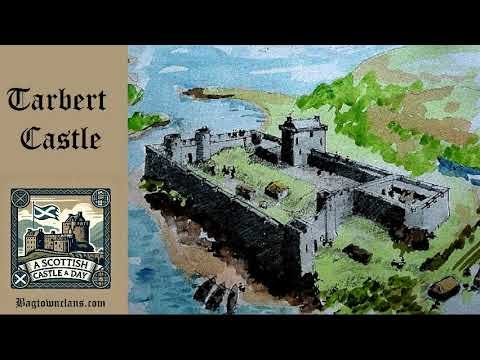
Tarbert Castle
Welcome back to another episode of "A Scottish Castle, A Day," brought to you by bagtownclans.com. I’m your host, Colin MacDonald, and today, we’re traveling to the shores of Loch Fyne in Argyll, where the ruins of Tarbert Castle rise proudly over the village of Tarbert, a once-mighty fortress with a long and turbulent history. This medieval stronghold, though now only a shadow of its former glory, played a key role in Scotland’s history, and today we’re going to explore how it became a strategic centerpiece in the power struggles of the Western Highlands.Tarbert Castle is located on a narrow isthmus that connects the Kintyre peninsula to the Scottish mainland. Its strategic position allowed it to control the passage between the West Coast and the Firth of Clyde. Perched about 60 feet above the sea, it has commanding views of the surrounding landscape and harbor, making it the perfect lookout for any potential threats approaching by land or water. Though the ruins we see today are sparse, they stand as a silent witness to the centuries of battles, royal intrigue, and political maneuvering that shaped the region.The history of Tarbert Castle is as rugged as the landscape it overlooks. We first hear of Tarbert in the early 8th century when King Selbach mac Ferchair of Dál Riata burned the site in 712, and again when his son, Dúngal, did the same in 731. These early conflicts set the stage for what was to come in the following centuries. The area, strategically important for controlling access to the Western Highlands, has always been a point of contention, and as the kingdom of Scotland developed, so too did the need to fortify this important site.By the 13th century, a proper stone fortress had been built at Tarbert. It was during this period that Edward I of England, often known as the "Hammer of the Scots," handed over control of the castle to John Balliol, the puppet king he had installed on the Scottish throne. However, this transfer of power didn’t last long. Balliol’s reign was brief, and soon the Wars of Scottish Independence erupted, during which the castle saw its fair share of conflict.It was Robert the Bruce, King of Scots, who left an indelible mark on Tarbert Castle. In 1325, Bruce ordered significant repairs and expansions to the fortress, transforming it into one of his key strongholds in the west. This was not just a defensive move—Bruce used the castle to assert control over the Western Highlands, a region that had long resisted central authority. The enhancements made under his orders included an outer bailey and towers, enclosing a hillside where the local population could seek shelter with their livestock during times of strife. The castle’s strategic location made it perfect for Bruce’s purposes, allowing him to secure this vital region while keeping an eye on the Lords of the Isles, who wielded considerable power in the area.The castle’s significance didn’t end with Robert the Bruce. As the centuries passed, it continued to be a focal point in the power struggles of the region. In 1494, King James IV of Scotland, in his campaign to break the power of the Lords of the Isles, captured the castle from John MacDonald, Lord of Islay. This marked the beginning of the end for the once-mighty Lords, as James systematically dismantled their authority. During this period, the castle's iconic tower house, the most prominent part of the ruins today, was constructed. This structure, dating from the early 16th century, was likely built under James IV as part of his efforts to fortify his hold over the western clans. It’s fascinating to think that what remains of Tarbert Castle today is a direct result of this royal intervention.However, like many castles across Scotland, Tarbert Castle eventually fell into disuse and disrepair. By the late 17th century, the castle had become little more than a relic of Scotland’s feudal past. It did play one last role in a political drama when, in 1687, Walter Campbell of Skipness Castle seized Tarbert as part of his support for Archibald Campbell, 9th Earl of Argyll, during the Monmouth Rebellion. This was a turbulent time, with power struggles not only in Scotland but also in England, and once again, Tarbert Castle became a battleground for greater political forces.Today, only a few of Tarbert Castle’s walls remain standing. Most of the original structure has crumbled over the centuries, with nature slowly reclaiming what was once a powerful fortress. The most visible remnant is the tower house, which, despite its weathered appearance, still gives a sense of the castle’s imposing past. If you stand on the high ground where the castle sits, it’s easy to see why this location was chosen for such a stronghold. The views stretch far across Loch Fyne, offering a commanding perspective over the water approaches.Although much of the castle lies in ruins, it remains a key part of the local heritage. The community of Tarbert now owns the site, and it has been integrated int
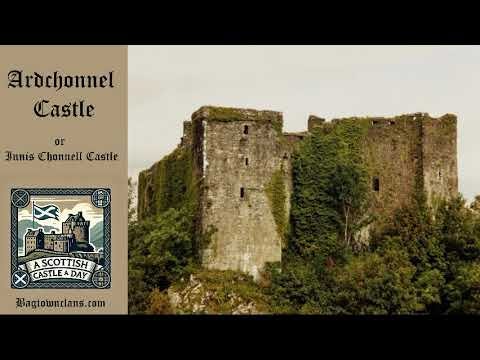
Ardchonnel Castle or Innis Chonnell Castle
Welcome to "A Scottish Castle, A Day," brought to you by bagtownclans.com. I’m your host, Colin MacDonald, and today we’re venturing deep into the heart of Argyllshire to explore the fascinating, ivy-clad ruins of Ardchonnel Castle, also known as Innis Chonnell Castle, on Loch Awe. This ancient fortress, situated on the wooded island of Innis Chonnell, once served as the original stronghold of Clan Campbell, one of the most powerful clans in Scottish history. As we dive into its storied past, we’ll uncover the legacy of the Campbells and how this unassuming island came to play such a significant role in the Highland clans’ turbulent history.Ardchonnel Castle, perched on the eastern shores of Loch Awe, was likely constructed in the 13th century, though it may have roots stretching back even earlier, to the 11th century or beyond. The castle was originally a simple enclosure, a common design in the early days of Scottish stone castles, built to defend its inhabitants rather than to dazzle visitors with luxury. The walls of Ardchonnel were imposing in their day, measuring seven to eight feet thick, and while the internal arrangements of the castle have crumbled into obscurity over the centuries, the sheer strength of those stone walls is a testament to its primary function—defense.One of the most significant elements of the castle’s history is its deep connection to Clan Campbell, a name synonymous with Scottish history and the Highlands. The Campbells’ origins are closely tied to Loch Awe, and Ardchonnel Castle served as the clan’s seat of power for several generations. Cailean Mór, or Sir Colin Campbell, was one of the early patriarchs of the clan. He met his end in 1296 while fighting against Clan MacDougall at the Battle of Red Ford, not far from the castle. His son, Sir Neil Campbell, rose to prominence and further cemented the Campbell legacy by aligning himself with Robert the Bruce during the Wars of Scottish Independence. Sir Neil’s marriage to Bruce’s sister, Mary, and his participation in the legendary Battle of Bannockburn in 1314 are key moments that tied the Campbells’ fortunes to the future of Scotland itself.In the early days, the Campbells were a powerful force in the rugged lands of Argyllshire, and their stronghold on Loch Awe became a symbol of their dominance. This dominance is captured in the famous Campbell slogan, “It’s a far cry to Loch Awe,” a boastful phrase used to emphasize the difficulty their enemies would face in reaching their distant and well-defended home. Ardchonnel Castle, situated on an island and surrounded by the serene but expansive waters of Loch Awe, was a natural fortress, nearly impossible to access without substantial effort and planning. The combination of thick walls, a remote location, and a strategic viewpoint made Ardchonnel one of the most secure residences of the time.But Ardchonnel wasn’t just a castle for defense; it also played a role in one of Scotland’s more tragic stories of captivity. In the late 15th century, the castle became a prison for the young heir to the Lordship of the Isles, Domhnall Dubh, or "Black Donald." After his father, Aonghas Óg, rebelled against the Lord of the Isles, young Donald found himself imprisoned by the Earl of Argyll at Ardchonnel. The Campbells, ever loyal to their cause, used the castle to keep a tight grip on the boy, who posed a potential threat to the delicate balance of power in the region. Donald spent his formative years in captivity here before eventually escaping in adulthood. Despite raising an army and launching a campaign against his captors in 1503, he was defeated and spent the next 40 years imprisoned in Edinburgh Castle. His eventual release in 1545 saw him briefly claim the title of Lord of the Isles, but his reign was short-lived, as he fled to Ireland shortly after and died in exile.By the 15th century, the Campbells had largely abandoned Ardchonnel as their primary residence, choosing instead to move to larger and more modern estates. However, the castle continued to be used for various purposes, including as a prison, reflecting the shifting nature of clan power in the Highlands. As with many medieval castles, the gradual transition from fortress to ruin began as the needs of its inhabitants changed and new, more comfortable homes were built on the mainland.By the 19th century, Ardchonnel Castle had fallen into a picturesque state of decay, its thick walls now draped in ivy, with only the vaguest remnants of its internal structures visible to the casual observer. Today, it stands as a shadow of its former self, but its importance in Scottish history remains undiminished. The castle and the island it stands upon are now designated as scheduled monuments, meaning they are protected for their historical significance and preserved as part of Scotland’s rich heritage.Standing on the shores of Loch Awe, looking out toward the now-quiet island of Innis Chonnell, it’s easy to imagine the bustling life that on