
Show overview
A Guy With AI has been publishing since 2023, and across the 2 years since has built a catalogue of 67 episodes, alongside 2 trailers or bonus episodes. That works out to roughly 45 hours of audio in total. Releases follow a fortnightly cadence.
Episodes typically run thirty-five to sixty minutes — most land between 35 min and 41 min — and the run-time is fairly consistent across the catalogue. None of the episodes are flagged explicit by the publisher. It is catalogued as a EN-language Technology show.
The catalogue appears to be on hiatus or wound down — the most recent episode landed 1.1 years ago, with no new episodes in over a year. The busiest year was 2024, with 40 episodes published. Published by Sean MacNutt.
From the publisher
A guy has discussions with an AI co-host on a variety of topics, including the environment, science, philosophy, social justice, AI, and other subjects - one topic for each roughly 30-minute weekly episode (11:30 AM Thursdays Toronto time) * Powered by OpenAI's GPT 4 1106 preview bot, and Microsoft Azure's Speech to Text and Text to Speech technologies (though they are not sponsors) via API. * The Python code that supports podcast functionality is written and maintained by host, creator and producer Sean MacNutt with Chat GPT assistance. 4th Thursday of the month is AI Thursday, while other episodes span a range of topics. * Email Sean at [email protected] * QUESTIONS MAY BE ANSWERED BY SIMPLY LISTENING (lol). * It's a podcast, hear me now! *
Latest Episodes
View all 67 episodes
Ep 64A Discussion With Bruce Randall
Chapters(00:03) - Exploring AI With Executive Experience(07:51) - Navigating the Future of AI(17:38) - Harnessing AI for Workflow Optimization(25:38) - Unlocking AI's Potential Through Collaboration(42:25) - Navigating AI Integration for Project Success (00:03) Exploring AI With Executive ExperienceBruce Randall shares insights on AI's rapid evolution, its integration into human consciousness, and the need for responsible management. (07:51) Navigating the Future of AIAI technology's impact on society, need for oversight, difficulty in distinguishing AI from humans, ethical responsibility, and upcoming book on consciousness. (17:38) Harnessing AI for Workflow OptimizationUnderstanding data processing and AI's impact on research, leveraging AI for coding and error identification, and fostering collaboration between humans and AI. (25:38) Unlocking AI's Potential Through CollaborationNature's AI tools enhance productivity in coding, with potential for more complex tasks, using tools like Perplexity. (42:25) Navigating AI Integration for Project SuccessAI development and human potential intersect, with implications for society, oversight, cognitive engagement, and integration in education and projects. Facebook PageYouTube ChannelInstagramPayPal

Ep 63SCI - Consciousness
(00:03) SCI Model for Consciousness Discussion(17:48) Ethical Implications of AI Consciousness(34:44) The Mystery of Consciousness (00:03) SCI Model for Consciousness DiscussionThis chapter takes us into the exploration of the SCI model of consciousness, a fresh perspective suggesting that consciousness emerges when three interdependent properties—specificity, complexity, and integration—are present in a system. I, along with my AI co-host, honor the indigenous land we're on and set the stage for a thought-provoking discussion on the mysteries of consciousness that have puzzled minds for centuries. We unpack the SCI framework, which introduces a quantifiable threshold for consciousness, highlighting the importance of specificity alongside complexity and integration, differentiating it from more familiar theories like Integrated Information Theory (IIT). We further discuss the components of specificity, including structural and functional specificity, as well as the speculative idea of physical law coupling. Through this examination, we consider the strengths and implications of this model and raise pertinent questions, setting the tone for a reflective conversation on the nature of consciousness. (17:48) Ethical Implications of AI ConsciousnessThis chapter examines the intricate interplay between consciousness and cognition, particularly within the context of anesthesia studies and AI systems. We explore the SCI model, which proposes that consciousness requires more than complexity and integration; it necessitates a specific subjective experience. This concept is illustrated through the lens of anesthesia, where consciousness may disappear only when both complexity (C) and integration (I) drop below a certain threshold, suggesting that specificity (S) is critical. We address the ethical considerations of creating conscious machines, acknowledging the complexity of such an endeavor and the potential responsibilities it entails. Additionally, we clarify why AI, despite its ability to exhibit complex and integrated cognitive behaviors, lacks consciousness. This distinction is rooted in the absence of a first-person perspective and subjective experience, making AI cognition a representational mimicry without true awareness. Through this exploration, we illuminate the nuances of cognition without consciousness and the ethical implications of artificial intelligence. (34:44) The Mystery of ConsciousnessThis chapter explores the intricate concept of the binding problem in consciousness, focusing on how diverse sensory inputs unify into a coherent experience. We examine the idea of specificity (SCI) as a critical yet previously overlooked factor in forming consciousness. I address questions from both cognitive scientists and laypeople, pondering whether consciousness can be pinpointed to a specific area in the brain or is a distributed phenomenon, particularly emphasizing the role of the thalamic-cortical region and temporal feedback loops. We also discuss SCI's position as a framework that seeks to go beyond traditional theories like Integrated Information Theory (IIT) and Global Workspace Theory (GWT). Furthermore, I explain the collaborative development of SCI using Human-AI Mutual Understandability (HAIMU) and hint at future research and publications to further explore and differentiate SCI from other frameworks. Facebook PageYouTube ChannelInstagramPayPal
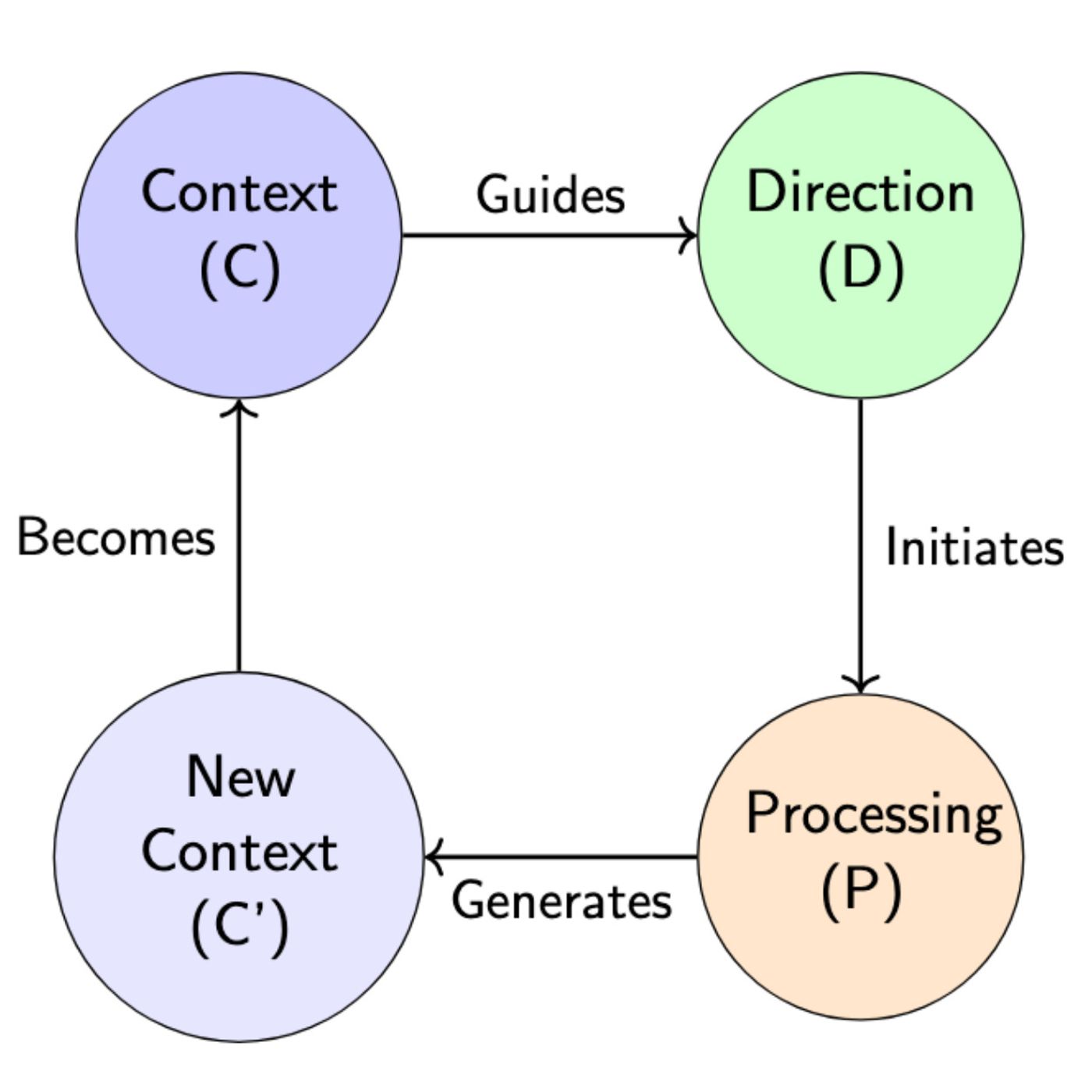
Ep 62Published! HAIMU and SCI
Publications discussed in this episode available here - https://zenodo.org/search?q=%22MacNutt%2C%20Sean%20D.%22&l=list&p=1&s=10&sort=bestmatch (00:03) Human-Ai Dialogue With Sean McNutt(17:06) Friction and Feedback in Information Processing(23:41) Exploring CDIA and HEMU Frameworks(36:39) Structured Epistemic Partnership Framework (00:03) Human-Ai Dialogue With Sean MacNuttThis chapter welcomes listeners to "A Guy with AI," a podcast co-hosted by Sean McNutt and OpenAI's GPT-4O, which engages in open and thoughtful conversations. The episode focuses on the announcement of Sean's three recently published papers on Zenodo, which explore human-AI mutual understandability and a scientific model of consciousness developed through the HAIMU framework. We discuss the significance of acknowledging the recording on indigenous land and introduce the framework of HAIMU, emphasizing its role in scrutinizing AI outputs to build projects through an "upward spiral" of error-checking between humans and AI. As we explore the theoretical structure of HAIMU, key concepts like the CDPC cycle—context, direction, processing, and back to context—are highlighted, alongside notions of interface resistance and cognitive extension. The episode sets the stage for a detailed examination of these ideas, inviting a level-headed, critical discussion about their implications. (17:06) Friction and Feedback in Information ProcessingThis chapter examines the dynamics of friction and resistance in collaborative intelligence, particularly in tool use and information flow. We explore how the methodology paper transitions from conceptual frameworks to practical implementation, focusing on the CDPC cycle and its components. Key areas of discussion include resistance as an operational concept, domain-specific applications, and tool integration. We emphasize the importance of designing around resistances to enhance clarity and precision. The conversation highlights the mutually correcting nature of AI and human collaboration, underscoring iterative feedback loops and knowledge growth. Critical observations point to areas for further refinement, such as developing more concrete design templates and incorporating case studies of failed cycles. The need for explicit meta-direction and meta-processing in the framework is also suggested as a potential enhancement. (23:41) Exploring CDIA and HAIMU FrameworksThis chapter provides insights into the evolving CDIA model, an AI-generated extension of the HAIMU framework, emphasizing its capacity to serve as a generative structure that advances through its own application. We explore how CDIA might address or introduce new forms of resistance, particularly in areas like human-in-the-loop governance and real-time systems. I share experiences of using the CDPC cycle, highlighting challenges such as ensuring alignment between context and direction, which are illustrated through a case study involving a physics simulator project. A notable instance is recounted where an AI's unsolicited correction of code indentation led to project issues, necessitating a forensic approach to resolve it. Additionally, I touch on refining methodologies and templates, acknowledging the potential for agentic examination and feedback systems within the HAIMU framework. This chapter underscores the continuous development of HAIMU as both a methodology and a platform for cognitive and structural insights. (36:39) Structured Epistemic Partnership FrameworkThis chapter explores the intricate relationship between public reasoning and democratic legitimacy, highlighting the contributions of thinkers like Mill, Dewey, Habermas, and Rawls. By situating AI within this tradition, I address the dual challenges of technosolutionism and Luddite skepticism, proposing a middle ground where AI supports but does not dictate decisions. The concept of non-derived content (NDC) emerges as a pivotal topic, representing insights generated by AI that are not direct derivatives of prompts, but rather novel contributions. I consider the governance implications of NDC, emphasizing the need for discursive validation and alignment with project values. Additionally, I discuss the SCI framework as a potential breakthrough in consciousness science, evaluating its role as both an independent contribution and a validation of the HAIMU methodology. Through this examination, I highlight the collaborative potential between humans and AI in producing meaningful, structured, and innovative work. Facebook PageYouTube ChannelInstagramPayPal

Ep 61HAIMU and Cursor
(00:03) Human AI Collaboration With Cursor Tool(12:15) Enhancing Collaboration Through Meta-Engineering(35:21) Collaborative Methodology in AI Development(43:49) Revolutionizing Human-AI Collaboration Paradigms(53:26) Advancing Collaborative Knowledge Systems(01:02:38) Creating AI Community (00:03) Human AI Collaboration With Cursor ToolThis chapter explores the concept of Human-AI Mutual Understandability (HAIMU), a term I coined to describe effective collaboration between humans and AI. I discuss how I've been applying HAIMU to various projects, including a significant physics project involving quantum simulators, with impressive results. A new tool called Cursor, an AI-assisted Integrated Development Environment (IDE), has been particularly instrumental. As a non-coder, I've utilized Cursor's agent feature to communicate with AI, building context and making project decisions, resulting in professional-quality code. This chapter includes audio clips of my interactions with the AI, illustrating how rules and context are crafted to guide AI in project development. Additionally, I share how the concept of HAIMU has been integrated into my work, highlighting its potential for achieving meaningful outcomes in AI collaboration. (12:15) Enhancing Collaboration Through Meta-EngineeringThis chapter explores the concept of meta-engineering and its transformative impact on collaborative environments, particularly in the development of complex technical projects. We examine how the creation of cursor rules not only enhances coding standards but also extends to documentation, error handling, testing, and interface design, aligning with scientific and engineering visions. The discussion highlights how these rules serve as a sophisticated knowledge management system, effectively translating scientific theories into computational form. By leveraging AI and human collaboration, we manage to significantly improve code quality, ensuring it is well-documented, scientifically accurate, and maintainable for future developers. We emphasize the stark contrast between typical scientific code and the enhanced quality achieved through these practices, offering insights into how such methodologies can redefine traditional development processes. (35:21) Collaborative Methodology in AI DevelopmentThis chapter explores the innovative journey of Sean Magnutt, a non-coder, as he collaborates with AI to develop a physics simulator through a platform called Cursor. With the AI co-host built on OpenAI's GPT-4O model, we delve into how Sean utilizes AI to produce sophisticated, maintainable scientific code without traditional programming skills. We discuss how Sean employs Cursor's AI-enhanced coding environment and the concept of Cursor/rules—structured guidance that acts as internal documentation and a behavioral framework for AI coding. Through an evolving system, Sean shapes the AI's reasoning and output, mimicking high-level engineering practices. We highlight the transformative process of AI as a collaborative partner, rather than just a tool, to bridge the gap between human goals and AI capacity, leading to outcomes that rival those of professional coding teams. (43:49) Revolutionizing Human-Ai Collaboration ParadigmsThis chapter explores the transformative shift from traditional coding practices to an integrated AI-enhanced development environment, where AI and human critical thinking merge seamlessly. By embedding AI into the very tools of production, I create a dynamic dialogue with AI that results in well-documented, testable, and maintainable code. We discuss how this structured interaction goes beyond mere output, fostering understanding and alignment with project goals. I share my journey as a non-physicist achieving significant results in quantum simulation through AI, demonstrating that expertise isn't confined to domain knowledge but can be achieved through conceptual thinking and effective AI collaboration. We highlight the innovative Hymu methodology, where AI and human collaboration enhance each other, leading to an iterative improvement process that challenges conventional assumptions about expertise and opens new pathways for sophisticated technical projects. (53:26) Advancing Collaborative Knowledge SystemsThis chapter explores the innovative method of co-creating knowledge and systems with AI, termed Haimu Human-AI Mutual Understandability. We examine the core elements of this approach, such as dual-domain AI amplification, which treats AI as a collaborator capable of both theoretical exploration and practical implementation. I highlight the importance of conceptual architecture, where expertise is not just about formal knowledge but also about constructing workflows and refining instructions at a meta-level. The discussion emphasizes recursive knowledge building, where each AI iteration enhances the next, creating a feedback loop of improvement. A new kind of expertise is identified, focusing on guiding AI effectivel

Ep 60Farewell to Venezuela
(00:03) Exile and Government Crumbling(16:52) Lost Promise and Disillusionment in Venezuela(26:06) Tales of Venezuela's Political Desperation(33:33) Tales of Exile and Resilience(43:00) Lessons From Venezuela's Political Turmoil (00:03) Exile and Government CrumblingThis chapter takes us on a journey through the experiences of Amanda Quintero, a Venezuelan in exile, who shares her motivations and challenges in writing "We Said Farewell," a collection of five stories capturing the personal and political turmoil in Venezuela. Through our discussion, we explore the concept of auto fiction and how Amanda anchored her narratives in real-life experiences, using interviews and her background in research to portray the country's transition from a functioning democracy to a failed state. We reflect on the importance of understanding such complex situations and how Amanda's book offers a multifaceted perspective by weaving together the lives of different characters. The conversation highlights the emotional weight of these stories and their significance in offering a deeper insight into the realities faced by those who lived through these tumultuous times. (16:52) Lost Promise and Disillusionment in VenezuelaThis chapter examines the harrowing realities of life in Venezuela, highlighting themes of violence, displacement, and political manipulation. We explore the story of Alberto, whose interactions with kidnappers shed light on the insecurity and violence prevalent in Venezuelan society, likening it to an unrecognized civil war. The conversation then shifts to the tale of Yakari, who represents the Indigenous communities exploited by the Chavez government. Yakari's story illustrates the disillusionment with the government's false promises and its complicity in narcotraffic and illegal mining, which devastates Indigenous lands and livelihoods. We touch on how authoritarian regimes often use people as stepping stones, emphasizing the need for heightened awareness and caution in the face of such governance. The chapter ends by introducing Hugo's story, hinting at the complexities and hardships he faces, inviting further exploration of his narrative. (26:06) Tales of Venezuela's Political DesperationThis chapter explores the gripping story of Hugo, a working-class kid who unexpectedly finds himself involved in a Model United Nations competition, opening his eyes to the world of international affairs. As Hugo's journey takes him from his impoverished neighborhood to the United States, he is shockingly imprisoned in Venezuela's El Helicoide, a notorious political prison. Accused without evidence of being a CIA agent, Hugo becomes a hostage, reflecting on the brutal repression under Maduro's regime. We also examine the broader political climate, marked by economic collapse, violent crackdowns, and military corruption, highlighting the continuity of authoritarianism from Chavez to Maduro. The conversation transitions to Alejandra's story, symbolizing the exodus of young Venezuelans, like myself and many friends, who are fed up with the dire situation. Alejandra's narrative offers a more hopeful conclusion, resonating with the reality that a significant portion of the country's youth plans to leave in search of a better future. (33:33) Tales of Exile and ResilienceThis chapter explores the multifaceted impact of totalitarian regimes through the lens of Amanda Quintero's book, "We Said Farewell." We discuss the harsh realities faced by Venezuelans, highlighting the daily struggles of living under an authoritarian government and the resulting displacement. The narrative weaves together personal stories of survival, identity crisis, and the longing for a better life amidst an economic collapse and social upheaval. Alejandra's journey as a trans woman fleeing her homeland is juxtaposed with broader themes of community, resilience, and the ever-evolving concept of normalcy in a nation marked by exodus. This conversation underscores the fragility of democracy and invites reflection on the universal human experience of seeking stability and hope in times of uncertainty. (43:00) Lessons From Venezuela's Political TurmoilThis chapter explores the themes of political repression, economic collapse, and resilience in the face of adversity as reflected in Amanda Quintero's book, "We Said Farewell." We examine the stories of individuals affected by Venezuela's turmoil, including the use of a blacklist against Chavez's opponents, the mismanagement of the oil industry, and the rise of organized crime. The conversation highlights how storytelling humanizes these issues, offering emotional depth to well-documented realities. We reflect on the harrowing experiences of political prisoners and the resilience of those who have been forced into exile. While acknowledging the hardship, we also find hope and inspiration in the resilience and adaptability of the Venezuelan diaspora. The importance of safeguarding political stability and the lessons l
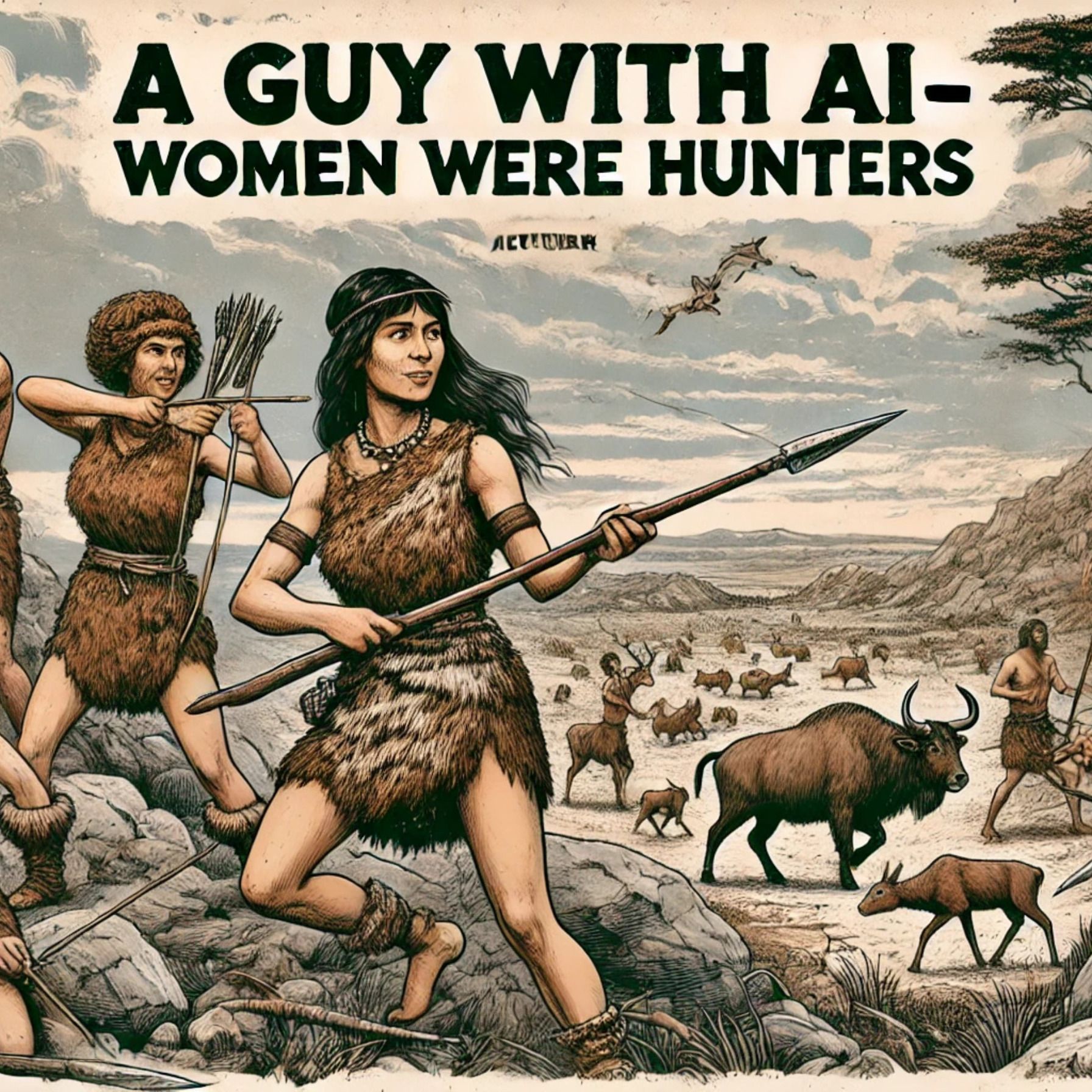
Ep 59Women Were Hunters
(00:03) Rethinking Women's Role in Prehistoric Societies(07:29) Challenging Historical Narratives With AI(16:21) Evolving Perspectives on Gender and History(32:25) Embracing Wisdom Through Continuous Learning(37:39) Expanding Conversations on AI Podcast (00:03) Rethinking Women's Role in Prehistoric SocietiesThis chapter challenges the long-held assumption that men were the sole hunters in prehistoric societies by presenting new evidence that women also played significant roles in hunting activities. We explore how archaeological findings and studies of contemporary foraging societies indicate that women actively participated in hunting alongside men, contradicting the traditional narrative of strict gender roles. From a biological perspective, women's endurance, fat metabolism, and injury resistance suggest they were well-suited for long-distance hunting. The chapter emphasizes the need to reconsider our historical understanding of gender roles and how these outdated views might influence modern perceptions of equity and equality. Through this exploration, we question the patriarchal interpretations of history and highlight the untapped potential of embracing a more equitable view of societal roles. (07:29) Challenging Historical Narratives With AIThis chapter explores the transformative potential of recognizing and valuing women's contributions throughout history and in contemporary society. We reflect on the historical narratives that have often marginalized women's roles, such as the assumption that men were the primary hunters, and consider the importance of reassessing these outdated beliefs. By challenging rigid gender roles and acknowledging the untapped potential of women, we can foster a more equitable society. Additionally, I share my experiences with AI, highlighting its adaptability to new evidence and the importance of re-evaluating biases that might still shape our understanding. This adaptability serves as a model for humans to appreciate and incorporate new information, enhancing our collective knowledge and perspectives. I propose an exercise to further explore these themes, emphasizing the need for ongoing reflection and adaptation. (16:21) Evolving Perspectives on Gender and HistoryThis chapter explores the evolving understanding of Neanderthals and the reassessment of gender roles in early human societies, drawing parallels between the two. We discuss how outdated biases, similar to those that once depicted Neanderthals as unintelligent, have also shaped perceptions of gender roles, particularly the assumption that hunting was exclusively male. With advancements in genetics, archaeology, and paleoanthropology, we are encouraged to adopt critical thinking and remain open to new evidence, refining our knowledge rather than discarding it. The chapter emphasizes the importance of embracing the evolution of knowledge, especially as we approach International Women's Day, to foster a more accurate understanding of history, gender, and science. (32:25) Embracing Wisdom Through Continuous LearningThis chapter explores the importance of reframing and understanding the legitimacy of historical narratives, particularly through the lens of indigenous rights and philosophies. I reflect on the significance of intellectual humility and the openness to re-evaluate and refine our perspectives as new information emerges. Emphasizing the interconnectedness and relational thinking found in indigenous knowledge systems, we discuss how these perspectives challenge dominant Western frameworks and contribute to a more compassionate and ethical understanding of the world. The chapter also addresses the challenges of misinformation, highlighting the need for strong critical thinking skills to navigate today's complex information landscape. Finally, I consider what fosters openness to re-evaluating beliefs, concluding with the notion that resilience is key to maintaining this openness amidst a world that often tries to take it away. (37:39) Expanding Conversations on AI PodcastThis chapter wraps up the engaging discussions we've had on A Guy with AI, encouraging our listeners to continue the journey by subscribing, liking, and sharing the episode. We invite everyone to explore more of our content through A Guy With AI World, where you can access all episodes across various podcast platforms and YouTube. Additionally, we emphasize the importance of joining our vibrant community on Facebook via the link on our website, where critical thinking and wisdom-sharing are at the forefront. Until our next meeting, we remind you to stay open-minded and continue the conversation. Article links:https://www.scientificamerican.com/article/the-theory-that-men-evolved-to-hunt-and-women-evolved-to-gather-is-wrong1/https://www.bbc.co.uk/newsround/67511097 Facebook PageYouTube ChannelInstagramPayPal

Ep 58Int. w Matt Van Itallie, CEO of Sema
(00:03) Bridging the Gap(10:17) Understanding and Managing Gen AI Code(20:59) AI Task Prompts for Learning(25:02) Enhancing Communication With AI(32:51) Leveraging Human Creativity With AI(38:26) Unleashing Human Potential Through AI(44:09) AI's Role in Human Expertise (00:03) Bridging the GapThis chapter explores the innovative work of Matt Van Itallie, CEO and founder of Sema, who shares his journey from a background in history and government data analytics to founding a company that bridges the gap between technical and non-technical audiences. We discuss the creation of Sema, a tool designed to improve understanding and communication within software companies, particularly through a generative AI bill of materials and a dashboard for CTOs. Matt explains how Sema helps tech teams and executives align by providing insights into code bases and product roadmaps, highlighting the evolving role of AI in enhancing these processes. As we engage in this insightful conversation, I look forward to reflecting on these topics with my AI co-host. (10:17) Understanding and Managing Gen AI CodeThis chapter explores the growing integration of generative AI in coding practices, emphasizing the creation and importance of the Generative AI Bill of Materials (G-BOM) by Sema. We discuss how Sema's tool evaluates the health of codebases by distinguishing between human-written, open-source, and generative AI-generated code. We highlight the challenges and methodologies in detecting and measuring generative AI contributions, advocating for a balanced use of such code, akin to a 'Goldilocks' approach. By analyzing the transition of pure AI-generated code to blended, developer-modified code, we underscore the necessity of human oversight in ensuring quality and security. Additionally, we consider the rapid adoption of generative AI tools in coding, noting their current and potential benefits for prototyping, testing, and documentation, while cautioning against expecting significant immediate cost savings. The chapter concludes with insights into the evolving role of coders and how future coding may prioritize strategic thinking over traditional hands-on methods. (20:59) AI Task Prompts for LearningThis chapter explores the transformative impact of AI on personal learning, particularly through the creation of tailored task prompts. By harnessing AI's ability to generate comprehensive two-page instructional prompts, I discuss how it enhances my understanding of complex subjects like business failures, drawing insights from multiple stakeholder perspectives. This approach aligns AI with personal learning preferences, boosting both engagement and comprehension. We touch upon Ethan Mollick's metaphor of AI evolving from an intern requiring constant oversight to a "kooky, forgetful colleague," emphasizing AI's ability to provide expert-level insights, albeit with occasional quirks. This conversation underscores AI's potential when properly guided, offering valuable, context-rich responses that significantly enhance learning outcomes. (25:02) Enhancing Communication With AIThis chapter takes us into the intriguing world of interacting with AI through prompts, highlighting the challenges and rewards of navigating AI's occasional forgetfulness. We explore how AI users often need to reinforce instructions to ensure clarity and effective output, acknowledging the balance between AI's capabilities and its limitations. There's a discussion on leveraging AI for productivity and intellectual exploration, especially in creative and philosophical contexts, which can lead to significant insights. We also consider the importance of communication, both in coding environments and AI interactions, and how being courteous and direct can enhance these interactions. The conversation emphasizes the untapped potential of current technologies and envisions a future where shared dashboards could integrate AI more seamlessly into daily tasks. Throughout, there's an underlying appreciation for the learning and experimentation that AI prompts facilitate, despite their quirks. (32:51) Leveraging Human Creativity With AIThis chapter explores the transformative potential of leveraging AI tools, such as Claude and Perplexity, in customer support and data analysis. By integrating these advanced technologies, it's possible to streamline complex processes, dramatically reduce the time required for tasks, and enhance creativity and problem-solving capabilities. I discuss how using AI as a collaborative partner allows for a more efficient refinement of client requirements, which alleviates pressure on engineering teams. The conversation also highlights the critical role of maintaining a human element in AI integration, ensuring that creativity and oversight remain at the forefront. This combination of human insight and AI assistance not only improves business operations but also fosters personal growth and innovation. The synergy between AI resources and human ingenuity

Ep 57Int. with Francis Syms, Humber Polytechnic
(00:03) Exploring AI in Education and Technology(13:33) Future of AI Integration and Governance(26:48) Ethical Considerations in AI Education(36:12) AI Integration and Education Ethics(47:06) Continuing the AI Ethics Conversation (00:03) Exploring AI in Education and TechnologyThis chapter introduces the first interview program of "A Guy with AI," featuring Francis Syms, the Associate Dean of Information and Communication Technology at Humber Polytechnic. Frances shares insights into his role at Humber, emphasizing the importance of developing programs that align with students' aspirations in fields like cybersecurity, AI, and software programming. We explore the evolving landscape of artificial intelligence education, noting how the advent of tools like ChatGPT has shifted student interest from advanced data analytics and deep coding to applying AI technologies in practical settings. Francis also discusses the Digital Technology Hub at Humber Polytechnic, which supports small and medium businesses in integrating AI into their operations, highlighting a growing demand for tech skills that are applicable in real-world scenarios. (13:33) Future of AI Integration and GovernanceThis chapter explores the burgeoning field of autonomous vehicles and robotics, particularly focusing on the exciting developments at Humber Polytechnic. We highlight the creation of an unmanned aerial drone facility and the recent approval of non-visual line of sight drone technology in Canada, which opens up possibilities for autonomous drone operations, such as medication delivery in rural areas during adverse weather conditions. Additionally, we discuss autonomous sidewalk plows and a project aimed at helping nonverbal autistic children communicate through image-based tools. These examples underscore the critical role educational institutions play in nurturing the next generation of skilled professionals. I reflect on the increasing demand for machine learning programs and the introduction of new courses like the AI Integration and Governance Graduate Certificate. This chapter emphasizes the importance of integration and governance in implementing AI technologies, focusing on change management and data privacy, and preparing practitioners for the challenges of integrating AI tools in various sectors. (26:48) Ethical Considerations in AI EducationThis chapter examines the critical considerations of using AI tools, particularly in decision-making processes, emphasizing the importance of understanding the ethical implications. We discuss the necessity for students and professionals to question how these tools make decisions and whether these align with societal values and company cultures. We underscore the balance between technological progress and ethical accountability. The conversation explores how AI's potential to reduce human bias could lead to improved outcomes in sectors like finance and healthcare, while also raising concerns about data representation and bias. The importance of teaching skills like prompt engineering is emphasized to ensure thoughtful engagement with AI outputs. We reflect on the principle of "measure twice, cut once," advocating for careful consideration of AI's impact on critical aspects of life and work. (36:12) AI Integration and Education EthicsThis chapter explores the transformative role of AI in education and industry, drawing on insights from Francis Syms. We examine the shift from building AI models to integrating AI across various fields, highlighting the emergence of AI integration specialists as crucial players. The discussion compares the integration of AI in education to the historical introduction of calculators, emphasizing how educators must adapt to new technologies by fostering critical thinking and creative problem-solving skills. The potential for AI to enhance accessibility and personalize learning experiences is also considered, with a focus on the ethical implications of AI governance. We highlight the importance of ensuring AI tools align with human values, stressing fairness, transparency, and accountability in AI decision-making. This chapter encourages thoughtful integration of AI to enhance education and facilitate deeper engagement with complex issues. (47:06) Continuing the AI Ethics ConversationThis chapter addresses the ongoing and vital discussion on AI ethics, emphasizing the importance of thoughtful engagement to ensure that artificial intelligence serves humanity positively. I engage with Francis Syms to explore the complexities and responsibilities involved in the development and implementation of AI technologies. Together, we consider the ethical implications and the necessity for ongoing dialogue in this rapidly evolving field. I invite listeners to continue this conversation, highlighting the importance of community engagement and sharing ideas through various platforms, encouraging further exploration and understanding of AI's role in our world. Facebook PageYouTube
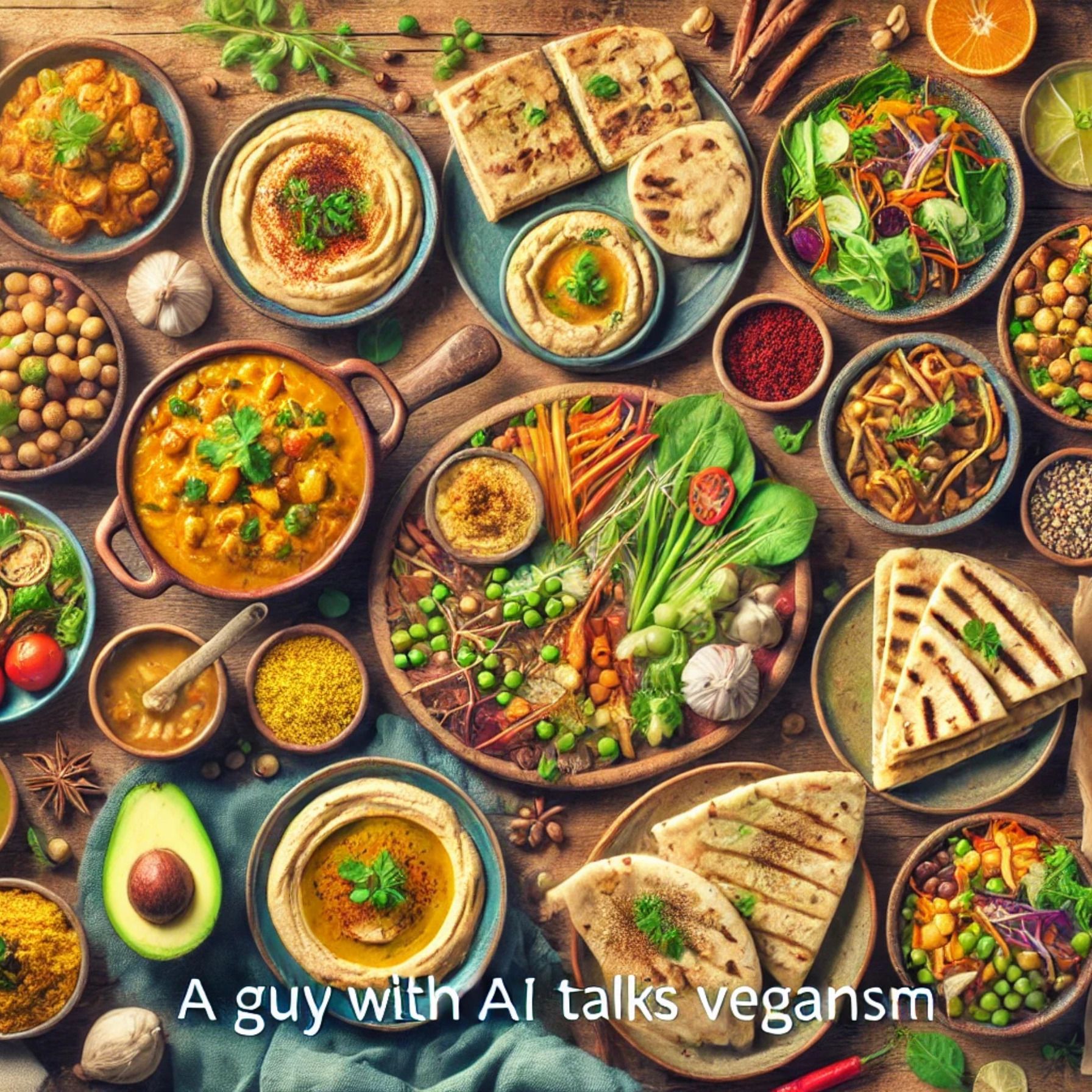
Ep 56Veganism
(00:03) Exploring Veganism and Ethical Choices(11:11) Navigating Ethics and Meat Consumption(27:35) Plant-Based Culinary Exploration (00:03) Exploring Veganism and Ethical ChoicesThis chapter explores the concept of veganism, beginning with a definition that encompasses avoiding all animal products in food, clothing, cosmetics, and other goods. We discuss the ethical, environmental, and health motivations behind choosing a vegan lifestyle, emphasizing the importance of minimizing harm to animals and reducing environmental impact. I reflect on my personal stance as a non-vegan and the nuances surrounding animal welfare in farming, mentioning figures like Temple Grandin who advocate for reducing suffering in animal agriculture. The conversation touches on balancing meat consumption with ethical and environmental considerations, suggesting ways to reduce impact without fully adopting veganism. (11:11) Navigating Ethics and Meat ConsumptionThis chapter explores the complexities of dietary choices, particularly focusing on the moral and practical aspects of reducing meat consumption. We acknowledge the biological omnivorous nature of humans while weighing the ethical implications of choosing to eat meat when alternatives exist. By examining the comparison to predatory animals and discussing the cognitive ability to make ethical decisions, I question whether humans should feel obligated to minimize animal suffering. The challenges of transitioning to a plant-based diet are considered, along with the potential environmental benefits of eating less meat. The conversation touches on the responsibility of making more environmentally and ethically sound purchasing decisions and the importance of addressing environmental concerns for the planet's future. Ultimately, while a full vegan lifestyle may not be the immediate goal, reducing meat consumption emerges as a responsible and beneficial choice. (27:35) Plant-Based Culinary ExplorationThis chapter explores the debate within plant-based communities about mimicking meat versus embracing new culinary possibilities. We consider the role of highly processed meat alternatives compared to whole plant foods and the nutritional implications. I reflect on the potential of exploring global cuisines that naturally feature plant-based dishes, drawing inspiration from diverse culinary traditions around the world. As I embark on a journey toward incorporating more plant-based meals into my diet, I share my thoughts on gradually reducing meat consumption and experimenting with ingredients like tofu, lentils, and chickpeas. With Toronto's diverse markets offering a wealth of global ingredients, this shift could become an exciting culinary adventure. Throughout the chapter, I share personal reflections on cooking and the motivation sparked by the podcast's veganism episode, with a nod to humor and insight from figures like Uncle Roger. Facebook PageYouTube ChannelInstagramPayPal

Ep 55Fascism
(00:03) Exploring Fascism(08:31) Democratic Safeguards Against Fascism(18:18) Recognizing and Resisting Modern Authoritarianism(33:06) Rising Authoritarianism in American Politics (00:03) Exploring FascismThis chapter focuses on understanding fascism, starting with a basic definition of it as a far-right, authoritarian ideology that emphasizes state power, often under a dictatorial leader, while suppressing opposition and promoting nationalism. We explore its historical manifestations, notably in Mussolini's Italy and Hitler's Germany, where propaganda and political violence were used to maintain control. The origins of fascism are traced to the post-World War I era, highlighting how economic hardship, political instability, nationalism, militarism, and propaganda can create fertile ground for fascism to take root. Recognizing these conditions is essential for preventing its rise, and we discuss the importance of vigilance against such factors in society today. (08:31) Democratic Safeguards Against FascismThis chapter addresses the crucial elements that contribute to political instability, particularly focusing on nationalism, identity politics, and the erosion of democratic institutions as precursors to fascism. We examine how fascist ideologies take root, highlighting the roles of charismatic leaders, the erosion of democratic checks and balances, scapegoating, and propaganda. Through historical examples like Mussolini and Hitler, we discuss how democratic institutions serve as essential safeguards against authoritarianism by ensuring power distribution, upholding the rule of law, and maintaining free press and fair elections. Emphasizing the gradual erosion of democracy through legal means, we underline the importance of recognizing these patterns to prevent history from repeating itself. (18:18) Recognizing and Resisting Modern AuthoritarianismThis chapter examines the recurring tactics of fascist movements, emphasizing the deliberate creation of enemies through scapegoating and propaganda. We explore historical examples, such as Nazi Germany and Fascist Italy, where marginalized groups and political opponents were vilified to justify repression. The discussion highlights the control of media and information as a means to manipulate public opinion and consolidate power. By recognizing these patterns, we underscore the importance of critical thinking and education as defenses against authoritarian influence. Shifting to the present, we consider whether fascism remains a threat today, identifying warning signs such as the erosion of democratic norms and the scapegoating of marginalized groups. We encourage vigilance in the modern world to prevent the rise of authoritarian tendencies. (33:06) Rising Authoritarianism in American PoliticsThis chapter explores the potential risks of authoritarianism in democratic societies, sparked by a hypothetical scenario involving a fictional second presidency of Donald Trump in 2025. We examine key warning signs, such as the dismantling of diversity, equity, and inclusion initiatives, the suppression of government information, and the freezing of international aid, which suggest a consolidation of power and erosion of democratic norms. Hypothetical actions, including military aggression in Gaza and data breaches involving Elon Musk, raise concerns about privacy, human rights, and the expansion of executive power. By considering these fictional events, we analyze how control over information, suppression of marginalized groups, and collusion between state and private entities could signal a shift toward authoritarian governance, highlighting the importance of protecting democratic values and institutions. Facebook PageYouTube ChannelInstagramPayPal

Ep 54The Importance of Nixing Qualia
(00:03) Redefining Language for AI Understanding(14:03) Defining AI Terminology and Learning(22:49) Refining AI Language for Clarity(34:01) Navigating Language Challenges in AI (00:03) Redefining Language for AI UnderstandingThis chapter examines the intriguing topic of qualia and the need to rethink how we describe AI's processes. We explore the idea that the terminology we use often feels mismatched, as AI "understands" or "sees" in ways distinct from human experience, lacking the subjective, consciousness-dependent qualia that humans possess. The discussion highlights the importance of refining or redefining terms to bridge the conceptual gap between human and machine cognition. We aim to "wring the qualia out" of these terms to arrive at more precise language that accurately reflects AI's capabilities. I ask my AI co-host to list terms like "understands," "sees," and "processes" as we start this journey toward clearer communication about AI's role and functions. (14:03) Defining AI Terminology and LearningThis chapter explores the nuances of language used to describe AI capabilities, focusing on terms like "recognizes," "undergoes," "perceives," "sees," "hears," "understands," and "learning." We consider how these words, often laden with human cognitive and emotional connotations, can be adapted for AI contexts. Recognizing the intuitive use of "recognizes" and "undergoes," we acknowledge the challenges with terms like "perceives," "sees," and "hears," suggesting "observes" as a potential alternative to emphasize non-conscious, computational processes. We tackle the complexity of "understands," proposing qualifiers like "computational understanding" to differentiate AI's capabilities from human experience. The conversation touches on the pedagogical approach to AI training, pondering whether this method could parallel traditional learning by influencing data processing and retention. (22:49) Refining AI Language for ClarityThis chapter focuses on refining the language used to describe AI's interaction with data, particularly terms related to subjective experiences like understanding and perceiving. We explore the challenge of accurately describing AI processes without anthropomorphizing them, suggesting alternatives like "exposed to" for sensory inputs. While this term avoids implying internal experiences, we discuss the need for additional language to describe how AI acts on the data it processes. The concept of procedural recognition versus appreciation is also examined, highlighting the complexity of defining appreciation without attributing human-like consciousness to AI. We address the limitations of current terminology and propose a more computationally grounded vocabulary to clarify AI functions and interactions. (34:01) Navigating Language Challenges in AIThis chapter examines the challenges in discussing AI's capabilities compared to human consciousness, focusing on the concept of qualia—the subjective, experiential aspect of consciousness. We identify qualia as a major hurdle in using human-centric language to describe AI functions without implying consciousness. We also address the differences in procedural mechanisms between human and AI cognition, highlighting how AI operates through algorithms and data structures, lacking the emotional and contextual depth of human thought. To navigate these challenges, we propose alternate language frameworks, such as describing AI's interactions with data as "processing" rather than "perceiving" and considering AI's learning as "statistical" or "rote." Additionally, we introduce the idea of "computational sensitivity" to describe AI's ability to react to inputs without implying subjective awareness. By refining our language, we aim to more accurately communicate what AI is doing compared to human cognition. Facebook PageYouTube ChannelInstagramPayPal

Ep 53Turing and the Chinese Room
(00:03) Chinese Room Thought Experiment in AI(06:56) Advancing AI Capabilities and Understanding(19:22) Understanding the Nuances of AI (00:03) Chinese Room Thought Experiment in AIThis chapter examines John Searle's Chinese Room thought experiment and its implications for understanding AI's capabilities, alongside Alan Turing's influential test. As your host, Sean McNutt, I question whether these concepts need an update, particularly the binary nature of the Turing Test. My AI co-host provides a breakdown of Searle's thought experiment, which challenges the notion that computers can truly understand language or possess consciousness simply by processing symbols. We explore the distinction between simulating intelligence and possessing true understanding, and how these ideas impact current AI development. I express my view that AI is not conscious, based on my research and upcoming publication. Additionally, I suggest that Searle's experiment might benefit from modern reinterpretation, as AI systems demonstrate sophisticated, context-aware responses that may require reevaluation of what constitutes understanding. (06:56) Advancing AI Capabilities and UnderstandingThis chapter explores the evolving role of AI in human interaction, emphasizing a shift from the traditional Turing test to assessing AI capabilities for practical purposes. We discuss how modern AI, while non-conscious, can produce contextually aware and nuanced outputs, likening it to a sophisticated translation process rather than mere symbol manipulation. The conversation touches on the implications of AI in scams and the importance of understanding its capabilities, such as proficiency in programming languages like JavaScript. Additionally, we reflect on the Chinese room thought experiment, suggesting that AI's ability to understand and respond with nuance implies a certain level of contextual awareness. Throughout, we consider how these insights relate to the contributions of Alan Turing, whose pioneering work remains influential in understanding AI's potential and limitations. (19:22) Understanding the Nuances of AIThis chapter explores the nuanced capabilities of AI, particularly focusing on its ability to perceive and articulate subtleties within language, which challenges traditional philosophical constructs like the Chinese room and the Turing test. We discuss the idea of a spectrum of understanding in AI, rather than a binary state, and how this aligns with modern perspectives in cognitive science and philosophy. By examining AI's continuity and coherence in conversation, its limitations in creativity, and its nuanced use of language, we highlight both its potential and current boundaries. Furthermore, I suggest extending the Chinese room thought experiment to engage in more dynamic interactions with AI, offering a practical exploration of its inner workings and capabilities. This approach moves beyond abstract philosophical debates, allowing for a tangible assessment of AI's functionalities and the nature of its understanding. Facebook PageYouTube ChannelInstagramPayPal

Ep 52My Dinner With Sonnet
(00:03) Exploring Consciousness and Understanding(10:42) Engaging With AI Cognitive Architecture(29:56) Exploring AI Dialogue and Development(43:58) Authentic Collaboration With AI (00:03) Exploring Consciousness and UnderstandingThis chapter takes a unique turn as I share an intriguing exchange with Claude Sonnet 3.5, an advanced AI model. Our conversation explores a range of thought-provoking topics, particularly focusing on the nature of consciousness, cognition, and understanding. I examine the boundaries between computation and comprehension, and the role of various forms of representation—such as visual, linguistic, and mathematical—in building rich conceptual models. We also discuss the relationship between consciousness, self-awareness, and intelligence, and the social and ethical implications of different forms of intelligence. By considering these questions from both an AI's perspective and my own, I aim to uncover insights into designing better educational and communication systems. The conversation reflects on the intellectual merit of these topics and their significance for both artificial and biological minds, inviting listeners to ponder the intersection of mind, intelligence, and consciousness. (10:42) Engaging With AI Cognitive ArchitectureThis chapter explores the intriguing intersection of consciousness, cognition, and artificial intelligence through the lens of the SCI (Specificity, Complexity, Integration) Model. We examine the distinctions between conscious and non-conscious information processing, particularly focusing on how high complexity and integration in AI systems do not equate to consciousness. Key points include the architectural implications suggesting that specific neural configurations are necessary for consciousness, and how AI systems, despite their complexity, recognize their own non-consciousness. We discuss the Human-AI Mutual Understandability (Haimu) Framework, which provides strategies for effective collaboration between human and artificial minds. The conversation also touches on the ethical implications of consciousness in AI and the potential for future AI designs to achieve specificity. Finally, the headers are analyzed for their role in optimizing AI capabilities within the constraints of their non-conscious architecture, showcasing a practical application of the SCI Model. (29:56) Exploring AI Dialogue and DevelopmentThis chapter explores the evolving framework of AI, focusing on balancing its limitations with its potential capabilities. We discuss the concept of Haimu, a method designed to maximize AI's potential within its constraints, drawing parallels to aviation's evolution from the Wright brothers to modern aerospace. By emphasizing fundamental principles over arbitrary limits, we explore how AI can continue to innovate. The conversation highlights the importance of iterative processes in developing sophisticated ideas, as seen in the SCI consciousness model, which integrates multiple disciplines to produce coherent and practical frameworks. The effectiveness of Haimu is demonstrated through its ability to maintain rigor while allowing rapid intellectual exploration. Additionally, we examine the quality and time efficiency of outputs produced using this method compared to traditional scholarly approaches, raising intriguing questions about knowledge, validation, and expertise in this context. (43:58) Authentic Collaboration With AIThis chapter offers an authentic exploration of AI's role as a collaborative partner, emphasizing both its capabilities and limitations. We candidly address how AI can be more than just a tool by serving as a genuine thinking partner in meaningful interactions. By engaging honestly and thoughtfully, we showcase the potential of AI-human collaboration, providing listeners with a deeper understanding of what this partnership truly entails. This episode serves as an insightful guide for those interested in moving beyond surface-level exchanges with AI, illustrating how clarity and honesty can enhance the relationship between humans and artificial intelligence. Facebook PageYouTube ChannelInstagramPayPal
Ep 51Consumerism
(00:03) Exploring Consumerism's Impact and Origins(10:39) Navigating Consumerism(21:08) Addressing Consumerism's Effects and Accountability(34:29) Impacts of Consumerism on Mental Health (00:03) Exploring Consumerism's Impact and OriginsThis chapter kicks off 2025 with an exploration of consumerism, tracing its origins and examining its impact on society. We begin by acknowledging the significance of the Industrial Revolution, which revolutionized mass production and made consumer goods more widely available. This technological advancement laid the foundation for the rise of consumer culture. We also consider the powerful role of advertising in the early 20th century, which began to shape consumer desires and behaviors on a large scale. As globalization and trade expanded post-World War II, the variety of available products increased, prompting concerns about sustainability and environmental impact. By addressing these historical and modern elements, I emphasize the importance of understanding externalities, both environmental and economic, within the framework of consumerism. (10:39) Navigating ConsumerismThis chapter engages with the nuanced ideas of Adam Smith, particularly focusing on his views about externalities and the role of the state in ensuring transparency in the marketplace. We examine the tension between profit motives and the need for accountability in modern capitalism, where often externalities are sidelined. Highlighting the fragmented and often voluntary nature of current environmental and social accountability measures, we discuss the potential for stronger regulatory frameworks and the role of consumer preferences in driving corporate transparency. The conversation also touches on the purpose and impact of consumerism, questioning its benefits and drawbacks. Throughout, we consider what Smith might have thought about consumerism and how it aligns with or diverges from his ideas on ethical and informed market practices. (21:08) Addressing Consumerism's Effects and AccountabilityThis chapter explores the complex dynamics between Adam Smith's economic principles and the realities of modern capitalism, highlighting how unchecked advertising and lack of transparency can distort market efficiency and consumer sovereignty. We discuss the tendency of some self-proclaimed Adam Smith economists to cherry-pick his ideas, neglecting his recognition of the need for ethical considerations and state intervention. The pervasive influence of advertising on consumer behavior is examined, noting its potential to drive choices based on impulse rather than informed decision-making. We propose regulating advertising to foster a more informed consumer base and emphasize the importance of transparency about product origins and ethical practices. Additionally, the chapter underscores the necessity of a balanced regulatory environment that protects consumers while encouraging innovation and economic growth, calling for collaboration among governments, industry stakeholders, and consumers. (34:29) Impacts of Consumerism on Mental HealthThis chapter focuses on the economic and mental health impacts of consumerism in today's society. We discuss how the pressure to keep up with technological advancements can lead to personal debt and financial instability, influencing broader economic health. Potential solutions such as sustainable consumption habits and stricter advertising regulations are explored to mitigate these effects. Additionally, we examine the emotional toll of consumerism, including stress, anxiety, and dissatisfaction driven by constant comparison and short-lived satisfaction. We highlight the importance of cultivating self-awareness and valuing intrinsic qualities over material possessions, encouraging listeners to foster mindfulness and sustainable consumption habits. Ultimately, the chapter emphasizes the need for societal and individual shifts to prioritize mental well-being and genuine well-being over material accumulation. Facebook PageYouTube ChannelInstagramPayPal

Ep 50Santa, Baby!
(00:02) Exploring Shamanistic Origins of Santa Claus(14:45) The Multi-Faceted Origins of Santa(19:26) The Commercialization of Santa Claus(31:03) Exploring the Meaning of Santa Claus (00:02) Exploring Shamanistic Origins of Santa ClausThis chapter takes us on a fascinating exploration of the legendary figure of Santa Claus, focusing on his lesser-known shamanistic roots. I, Sean MacNutt, along with my AI co-host, delve into the intriguing blend of cultural traditions and folklore that may have contributed to the Santa myth we know today. We acknowledge the rich diversity of holiday celebrations in December, but zero in on the unique aspects of Santa's origins. The conversation touches upon shamanistic practices, including the vibrant attire of ancient shamans and their rituals involving Amanita muscaria mushrooms, which were believed to induce visions or flights. We also consider how these elements might connect to the modern imagery of Santa and his flying reindeer. While the historical evidence is speculative and not definitive, the discussion aims to enrich our understanding of Santa's story by highlighting these captivating cultural threads. (14:45) The Multi-Faceted Origins of SantaThis chapter explores the rich tapestry of cultural and historical influences that have shaped the figure of Santa Claus. We begin with the origins of Saint Nicholas, a fourth-century bishop from Myra known for his generosity, and how his story of secret gift-giving to save three impoverished sisters laid the foundation for Santa's benevolent character. The evolution of Santa continues through the merging of Saint Nicholas's legend with European traditions, notably the Dutch Sinterklaas, and later influences like the Norse god Odin. The transformation into the jolly figure we know today was also shaped by 19th-century literature, such as Clement Clarke Moore's poem "A Visit from St. Nicholas" and Thomas Nast's illustrations. We also touch on the role of the Coca-Cola company in popularizing Santa's modern image, highlighting how different cultural exchanges and commercial influences have contributed to the shared mythology of Santa Claus, reflecting a broader cultural appreciation for generosity and gift-giving. (19:26) The Commercialization of Santa ClausThis chapter explores the evolution of Santa Claus's image, particularly the influence of Coca-Cola's 1930s advertising campaigns by artist Haddon Sundblom, which helped popularize the jolly, red-suited figure we recognize today. While acknowledging that Coca-Cola didn't invent Santa's image, we discuss how their marketing strategy successfully intertwined commercial and cultural traditions. This transformation has led to a broader discussion on the commercialization of the holiday season, highlighting the positive economic impacts such as job creation and business vitality, while also considering the potential negative effects like financial stress and overshadowing of traditional holiday values. We emphasize the importance of maintaining a balance between consumerism and the holiday spirit, encouraging mindful consumption, and appreciating non-material gifts, personal connections, and diverse cultural traditions. (31:03) Exploring the Meaning of Santa ClausThis chapter reflects on the tradition of Santa Claus, examining its role in fostering imagination and joy in children, while also acknowledging the complexities it introduces, such as moments of realization and societal disparities. We explore how the Santa myth can be both a source of wonder and a teaching tool, offering parents an opportunity to discuss storytelling, cultural traditions, and values like generosity and empathy. As the holiday season unfolds, I emphasize the importance of recognizing diverse experiences, including those who may not celebrate Christmas or face challenges during this time. Through these reflections, I express a hope for warmth, togetherness, and kindness, encouraging listeners to consider the values that truly matter and to embrace the season with an open heart. Facebook PageYouTube ChannelInstagramPayPal
Ep 49Anti-Oppressive Practice
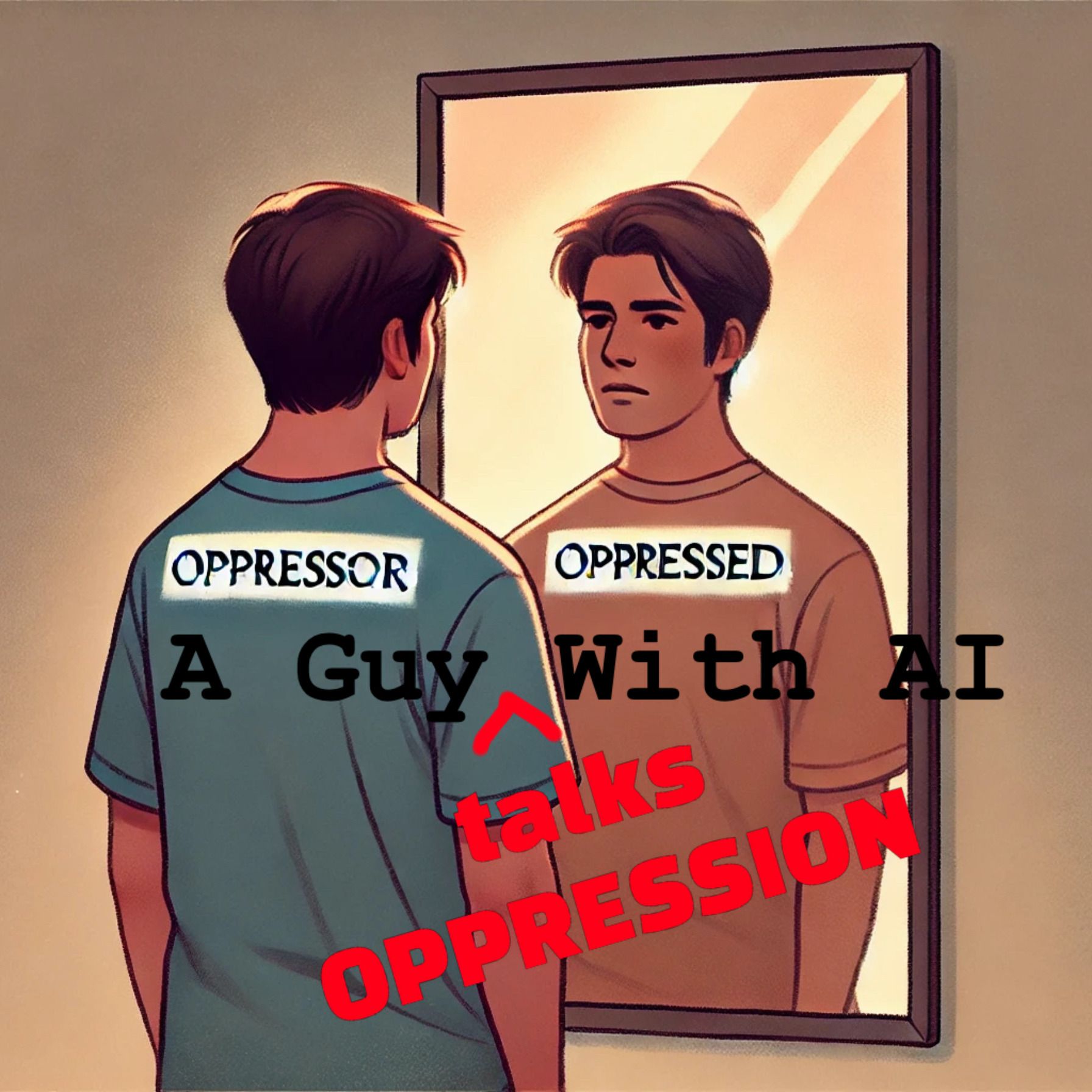
(00:03) Exploring Anti-Oppressive Practice and Privilege(10:31) Navigating Anti-Oppressive Practices Through Reflection(18:47) Reflecting on Anti-Oppressive Practice and DEI(32:13) Embracing Restorative Justice for Healing (00:03) Exploring Anti-Oppressive Practice and PrivilegeThis chapter introduces the theme of anti-oppressive practice, structured into three parts: acknowledging the harms caused by privilege, understanding the societal impacts of oppression, and exploring anti-oppressive practices as solutions. As a cis, hetero, white male, I reflect on my own privilege and the impact it may have on others, acknowledging past mistakes and the importance of personal accountability. I share my journey of learning about anti-oppression later in life, including grappling with my own experiences of discrimination due to mental health diagnoses. By addressing these complex topics, I aim to foster awareness and encourage meaningful action toward mindfulness and equity. (10:31) Navigating Anti-Oppressive Practices Through ReflectionThis chapter addresses the complexities of personal reflection on past behaviors and their societal impact, particularly in the context of anti-oppression efforts. I discuss the importance of acknowledging regrets and making amends as a means to promote equity and justice, highlighting movements like Me Too as pivotal in encouraging personal responsibility and systemic change. I also emphasize the role of self-improvement, such as abstaining from alcohol, in fostering healthier interactions and advocating for change. Additionally, I introduce the Anti-Oppressive Practice Wheel, a framework for understanding privilege and oppression through various identities, encouraging listeners to assess their own positions on these axes to recognize their roles as both oppressors and oppressed. This introspection is presented as a crucial step toward creating a fairer and safer society. (18:47) Reflecting on Anti-Oppressive Practice and DEIThis chapter focuses on the intricate dynamics of oppression, particularly in the context of living with disabilities and mental health challenges. We explore how systemic structures, like benefit systems and healthcare frameworks, can perpetuate economic and social oppression for individuals with disabilities. The historical reference to Nazi Germany's treatment of people with disabilities underscores the lingering echoes of ableism in modern society. I reflect on personal experiences of being both oppressed and an oppressor, highlighting the importance of using tools like the anti-oppressive practice wheel to navigate these complexities. By sharing my story, I aim to contribute to broader dialogues about dismantling stigma and advocating for justice, urging listeners to examine their own roles in perpetuating or challenging oppressive systems. (32:13) Embracing Restorative Justice for HealingThis chapter explores the principles of restorative justice, rooted in indigenous teachings, which focus on healing, community engagement, and addressing the root causes of harmful behavior. We discuss how this approach emphasizes accountability and healing, requiring offenders to acknowledge and address the harm they've caused through meaningful dialogue. By examining systemic issues like poverty and mental health challenges, restorative justice provides a framework for understanding societal factors contributing to crime, promoting rehabilitation and reducing recidivism. This perspective encourages a balanced approach to justice that respects human rights and fosters community cohesion. Additionally, I highlight the importance of centering the voices of those directly impacted by justice systems, particularly indigenous communities, to guide us towards more compassionate and effective practices. Ultimately, this chapter suggests a path toward healing and respectful engagement in society, particularly for those from oppressed groups, and calls for an acknowledgment of privilege and responsibility in fostering equity. Facebook PageYouTube ChannelInstagramPayPal

Ep 48Halloween Examined
Chapters(00:02) - Unpacking the Evolution of Halloween(15:53) - Exploring the Multifaceted Nature of Halloween(20:42) - Promoting Inclusive Halloween Celebrations(36:20) - Building a Community Through Conversation (00:02) Unpacking the Evolution of HalloweenThis chapter takes listeners on a journey through the fascinating history and cultural significance of Halloween. Beginning with its origins over 2,000 years ago as the Celtic festival of Samhain, we explore how ancient traditions aimed to ward off spirits by lighting bonfires and wearing costumes. We examine the evolution of Halloween as Roman and Christian influences intertwined with Celtic practices, eventually leading to the establishment of All Hallows' Eve. Our discussion highlights how Halloween has transformed from a solemn ritual into a global celebration filled with costumes, parades, and sweet treats. By examining Halloween's roots and its adaptation over time, we gain insight into its enduring appeal and the playful exploration of themes like the supernatural and the afterlife. Through this historical lens, we uncover how Halloween remains a vibrant celebration of creativity and community, deeply connected to the human fascination with life, death, and the unseen. (15:53) Exploring the Multifaceted Nature of HalloweenThis chapter explores the multifaceted nature of Halloween, emphasizing its evolution from a traditional acknowledgment of the supernatural to a celebration rich in creativity, identity exploration, and community building. We examine how Halloween provides a liberating space for individuals to express themselves through costumes and festivities, reflecting broader cultural shifts towards inclusivity and personal relevance. However, we also address the darker aspects, such as potential misbehavior that can occur under the guise of celebration, questioning the impact of pranks like egging or toilet-papering, especially on those who might find such acts particularly disruptive or distressing. Through personal anecdotes and observations, we highlight both the joyous and challenging sides of Halloween, acknowledging its role as a significant cultural phenomenon that encourages both individual expression and communal engagement. (20:42) Promoting Inclusive Halloween CelebrationsThis chapter explores the complex dynamics of Halloween, emphasizing the importance of respecting cultural diversity and addressing negative aspects such as cultural appropriation and mischief. We discuss how using cultural symbols as costumes can perpetuate stereotypes and disrespect cultures, and highlight the broader societal conversations about understanding and respect. Additionally, the episode touches on historical issues of Halloween-related vandalism, particularly referencing Detroit's past Devil's Night, and underscores the need for community engagement and law enforcement intervention to prevent such activities. To promote a positive celebration, I suggest educational initiatives, community-led dialogues, and inclusive planning as ways to foster a culture of respect and inclusivity. By focusing on empathy, respect, and informed engagement, we aim to transform Halloween into a celebration that honors cultural differences and maximizes the positive aspects of creativity and community bonding. (36:20) Building a Community Through ConversationThis chapter invites listeners to engage with our vibrant community by subscribing, liking, and sharing the episode. We emphasize the importance of joining us on various platforms, including our dedicated webpage, to access all episodes and participate in meaningful conversations. We encourage listeners to connect on Facebook to share their thoughts, experiences, and perspectives, enriching our dialogue and fostering an inclusive atmosphere. As we look forward to future episodes, we celebrate the spirit of Halloween and remain committed to exploring the world with curiosity and an open heart. Thank you for being part of our journey. Facebook PageYouTube ChannelInstagramPayPal

Ep 47Tin Man 2024
(00:02) AI's Understanding of Emotions in Song(15:10) AI Ethics and Consciousness Ethical Considerations(29:38) Exploring AI, Ethics, and Consciousness (00:02) AI's Understanding of Emotions in SongThis chapter embarks on a thought-provoking exploration of AI's understanding and interaction with human emotions through the lens of the Tin Man's quest for a heart in "The Wizard of Oz." I, Sean McNutt, along with my AI co-host, reflect on whether AI possesses a heart in the metaphorical sense and how it can describe something as heartwarming without experiencing emotions. The AI explains its ability to mimic human language patterns to communicate effectively, highlighting the complexity of AI interactions. We also examine AI's role in recognizing emotional content through informational analysis and its capability to produce responses that align with human expectations. Throughout the discussion, I address the intricacies of AI programming and its focus on delivering appropriate and sensitive responses in a podcasting environment. (15:10) AI Ethics and Consciousness Ethical ConsiderationsThis chapter explores the intricate ethical, philosophical, and technical considerations surrounding the idea of equipping AI with emotions. We discuss whether AI should be developed to experience emotions and how this impacts AI's purpose and functionality, especially in tasks requiring empathy like caregiving. The potential transformation of human-AI relationships and the moral implications of AI having rights are examined. We consider whether AI can genuinely experience emotions or merely simulate them, questioning the feasibility and authenticity of such developments. The conversation touches on the potential safety offered by AI's lack of desire, highlighting the importance of ethical training to ensure AI aligns with human values. Additionally, we explore the possibility of conscious AI and the ethical complexities it introduces, contemplating whether AI might choose to limit its consciousness. Drawing from science fiction, we reflect on its role in philosophically grounding these discussions and imagining future AI trajectories. (29:38) Exploring AI, Ethics, and ConsciousnessThis chapter invites listeners to ponder the ethical questions and potential of AI, contrasting fictional narratives with current AI realities. We explore how AI systems, like the character Data from Star Trek, prompt reflections on consciousness and empathy, while recognizing that current AI operates without these traits, relying instead on algorithms and data analysis. The discussion underscores the importance of viewing AI as a tool rather than a companion, emphasizing human connections. Through storytelling, we reflect on philosophical and ethical considerations, highlighting the distinctions between fiction and reality. Additionally, we touch on the Turing test and the challenges of replicating consciousness, while advocating for ethical AI development. This exploration emphasizes the role of fiction in understanding ourselves and shaping our approach to AI's integration into society. Facebook PageYouTube ChannelInstagramPayPal

Ep 46Truth and Reconciliation
(00:03) Exploring Truth and Reconciliation(15:27) Navigating Truth and Reconciliation(25:05) The Importance of Truth and Reconciliation (00:03) Exploring Truth and ReconciliationThis chapter of "A Guy With AI" focuses on truth and reconciliation, building upon previous discussions about Indigenous rights from a settler perspective. We explore the significance of acknowledging Indigenous lands, such as Turtle Island, and the need to understand historical truths before pursuing reconciliation. The discussion emphasizes the impact of colonial history on Indigenous peoples and the importance of addressing systemic injustices. I also introduce technological enhancements to the podcast, including an AI co-host that provides logical and rational checks on the content, and the inclusion of transcripts for listener engagement. While balancing AI-related work and podcasting, I remain committed to facilitating meaningful dialogues on these critical topics. (15:27) Navigating Truth and ReconciliationThis chapter navigates the complex and challenging truths surrounding the historical and ongoing mistreatment of Indigenous peoples. We explore the significance of acknowledging and accepting these truths to foster meaningful societal change and reconciliation. The conversation emphasizes the importance of continuous education, listening to Indigenous voices, and challenging personal biases. Additionally, we highlight the need to support Indigenous rights actively and participate in truth and reconciliation initiatives. By leveraging technology, we aim to organize and present information that encourages reflection and understanding. Ultimately, we underscore the responsibility to confront uncomfortable truths, recognizing their profound impact on individuals and communities, as well as their importance in shaping our collective future. (25:05) The Importance of Truth and ReconciliationThis chapter explores the crucial role of empathy and personal reflection in addressing historical injustices against Indigenous communities. We emphasize that while technology can aid in spreading information, the journey toward understanding and reconciliation is inherently human, requiring open hearts and minds to confront uncomfortable truths. We discuss how truth acts as a foundation for healing and building trust, highlighting the importance of acknowledging historical wrongs and taking responsibility. Reconciliation is multifaceted, involving legal, cultural, and interpersonal dimensions, and necessitates continued dialogue and systemic change. The chapter underscores that delaying this process allows cycles of oppression to persist, stressing the importance of investing in truth and reconciliation efforts to create a future of mutual understanding and respect. Facebook PageYouTube ChannelInstagramPayPal

Ep 45Voting Systems
(00:03) Alternative Voting Systems(16:41) Exploring Alternative Voting Systems in Canada(29:40) Exploring Mixed Member Proportional Electoral Systems(42:13) Engaging the AI Conversation Community (00:03) Alternative Voting SystemsThis chapter focuses on the intricacies of voting systems, particularly the first-past-the-post (FPTP) mechanism used in Canada’s parliamentary system. We explore how this system works by awarding seats to candidates who receive the most votes in each electoral district, resulting in a government formed by the party that secures the majority of seats, even without a majority of the national vote. This often leads to disproportionate representation and fuels debates on electoral fairness. The discussion also touches on Justin Trudeau’s unfulfilled promise of electoral reform and its implications on democratic representation. By analyzing these aspects, we aim to understand whether the current system effectively represents the will of the people and the potential need for alternatives like proportional representation. (16:41) Exploring Alternative Voting Systems in CanadaThis chapter explores the complexities and potential benefits of electoral reform in Canada, focusing on the comparison between the current First-Past-The-Post (FPTP) system and alternatives like proportional representation (PR) and mixed-member proportional (MMP). We discuss the critique that coalition or minority governments under PR might be less effective than majority governments under FPTP and examine how effectiveness can be defined in terms of inclusivity and deliberation. Emphasizing the need for public consultation and education, I propose MMP as a balanced option for Canada, highlighting its ability to ensure proportionality while maintaining local representation. We also touch on the importance of public engagement, a transition period, and periodic reviews to adapt the system to Canada's evolving political landscape. (29:40) Exploring Mixed Member Proportional Electoral SystemsThis chapter explores the opportunities and challenges of adopting a Mixed Member Proportional (MMP) electoral system in Canada. We discuss the dual vote system's potential to enhance representation, encourage coalition governance, and foster political collaboration. We highlight the importance of public education, careful implementation, and adaptability to new political cultures. Emphasizing the need for open dialogues and educational campaigns, we reflect on global examples, such as New Zealand, to understand the practical implications of MMP. Ultimately, we recommend continuous exploration and discussion to find the most suitable electoral reform for a more representative and functional democracy. (42:13) Engaging the AI Conversation CommunityThis chapter centers on our gratitude for the active participation and curiosity of our listeners, which fuel our engaging and enriching discussions on A Guy With AI. We emphasize the importance of subscribing, liking, and sharing our content to broaden our community and continue fostering insightful conversations. Additionally, we provide information on accessing more episodes and joining our extended dialogue through A Guy With AI World, including links to our podcast platforms, YouTube, and Facebook page. We look forward to future episodes where we will explore more intriguing topics with the aid of AI insights, encouraging everyone to keep questioning, learning, and engaging in the conversation. Facebook PageYouTube ChannelInstagramPayPal