
2 Cent Dad Podcast
72 episodes — Page 1 of 2
Ep 72#72 - Gaming & God with Luke Richey
Luke Richey has a long history of founding companies in the gaming industry. He has pioneered augmented reality technology and worked with cutting edge virtual reality scientists. Today he talks about his journey to God and the miraculous path that brought him there.
Ep 71#71 - Spiritual Fraternity with Jaime Baxter
Jamie Exodus is the founder of Exodus 90 which is a fraternity for men to grow spiritually. Jamie on LinkedInExodus website
Ep 70#70 - Building a Strong Marriage with Joel Lopez
Joel Lopez works with men to help them build strong marriages.https://twitter.com/TheeJoelLopez
Ep 69#69 - Marketing Meets Fatherhood with Ross Simmons
Ross Simmonds is a father of 3 kids. He is a marketing mastermind in the areas of SaaS and all things digital creation. He hails from Nova Scotia. Where to Find Rosshttps://rosssimmonds.com/https://twitter.com/thecoolestcool/https://www.linkedin.com/in/rosssimmonds/https://open.spotify.com/show/3xtAETor7wKlNEVrH8OPAF?si=1a4bc39873a74481

Ep 68#68 - New Founding of America with Nate Fischer
Nate is the founder of New Founding, a venture firm in Dallas Texas. The mission of NF is to "Build the America you want to live in", and branded as "A venture firm for American vitality". He is also a father of 4 (soon to be 5).Where To Find NateNate on TwitterNate on LinkedInNate's Venture Firm
Ep 67#67 Founding a Family - Blake Smith father of 6
Blake Smith - Founder of Allsmith and father of 6 talks about founding companies and families and the overlap between the two. We discuss what it means to be a team and focus less on the individual. Blake on twitter

Ep 66#66 - DadGang! Side Hustle to Full Time with Bart Szaniewski
Bart Szaniewski is one of the founders and the current head of DadGang. HE shares the story of taking it from a side hustle fun idea to his current full-time gig.

Ep 65Permanent Equity & Salvation with Brent Beshore
Brent Beshore runs a PE firm in Columbia Missouri named Permanent Equity with 9 portfolio companies and a current capital base in excess of $300 million. Brent is also a father and also an ex-atheist turned Christ follower.Where To Find BrentBrent's TwitterBrent's LinkedInPermanent Equity website
Ep 64Coach Lantz Howard
Coach Lantz Howard joins the podcast.https://www.lantzhoward.com/https://www.linkedin.com/in/lantzhoward/

Ep 62Body healthcare impulses a better life with Chris Boettcher
Chris is a 10X Ironman race finisher. He talked about fitness and the healthcare system. Chris is also a former Physical Therapist. He is really good at what he does and wants to spread his knowledge to the most people he can. Throughout the years, he has developed different techniques to incentivize and motivate people to care for their health and work on their fitness.Where to find ChrisChris on Twitter
Ep 63Accomplishments in changing cultural environments with Joe Colangelo
Joe runs a company called Boxcar (boxcar.com), he is also a father of 5. We talked about trends in the world today, navigating business shifts, and raising our kids in a changing culture. There are many things we can talk about, like the environments where we live and how we feel comfortable managing time and resources to engage in life properly. However, filling the gaps in his company when it comes to running it is something he has learned to do, as many things need improvement, and sometimes there is not enough time to do it. Where to find JoeJoe on TwitterJoe's company website
Ep 61Mental health and attachment improvement with Adam Lane Smith
It's all about attachment. At least that's what Adam Lane Smith would say, who is a master psychologist, retired psychotherapist, and now an attachment specialist. He joins the 2 Cent Dad podcast today to talk about how a lot of issues that we face in our marriages, in our relationships, and even with our kids stem from our own attachment issues, often attachment issues that have come up from our childhood. And so he hits on many important things and, uh, actually efficient advice about how we can go about fixing our attachment issues, but also not creating attachment issues with our kids.Where to Find AdamAdam Lane Smith on InstagramAdam Lane Smith on TwitterAdam Lane Smith on TikTokAdam Lane Smith's Website

Ep 60Investing life and money with Nate Dean
You probably contribute to a 401K or an IRA or some other investment account to save for your retirement. That's normal. Well, today's guest, Nate Dean, is gonna talk about a concept called the infinite banking concept, and it flips things kind of on its head. When you talk about retirement, when you talk about saving, when you talk about financing, vehicles, cars, that sort of thing, and super interesting concept that he talks about, and I think we'll find a lot of value in as you think about retirement, especially as you think about how to prepare yourself and your family for your generation and the next generation.Where To Find Nate:Nate on TwitterPersonal WebsiteUnlimited Life Concepts on InstagramUnlimited Life Concepts WebsiteMentions in this episodeBecoming Your Own Banker by Nelson NashLife, Success, and Legacy podcast

Ep 59Family, a multi-generation team with Jeremy Pryor
When you think about families, do you think about a nest? Or do you think about a multi-generational family that you're contributing to a legacy? Most Western families think about a nest and they think about getting the kids out of the nest. My guest today, Jeremy Pryor, who runs familyteams.com really flips that on its head and instead talks about a multi-generational family and how we should view families differently, and how the western view of family has really messed up so many fundamental things in how we raise our kids, how we talk about family, and how we create multi-generational families that love each other and actually inves Where To Find Jeremy Jeremy on FacebookJeremy on TwitterJeremy on LinkedInFamily Teams WebsiteiTunes podcast
Ep 58Revitalizing healthcare with Nathan Baar
Nathan is the founder of HealthBar (https://healthbar.com/) and is working to provide an alternative to the current system by streamlining it and removing waste in the system.Where To Find NathanNathan Baar on LinkedInHealth Bar Website

Ep 57Classical Education with Jeremy Tate of CLT
Classical Education, what is it? Maybe you have heard some about it or you have been following the complete disruption of the education system in the USA. I talk with Jeremy Tate, the founder of CLT about the history of education and what is happening in K-12 as well as higher ed right now. Where To Find JeremyJeremy on TwitterCLT WebsiteAnchored podcastLinks MentionBattle for the American Mind (book) (Amazon link)Closing of the American Mind (book) (Amazon link)
Ep 56Return to "traditional' with Tex
Tex joins us to talk about re-igniting his marriage through a return to more "traditional" roles. Hitting on the "dom/sub" relationship he has with his wife and his journey to help young men lead better. Where to find Tex?Twitter https://twitter.com/TexasDom1Blog Link https://texasdom.com/bio/Transcription below (May contain typos...):Mike: [00:00:00] [00:00:00] today we got texts on the show. Texas is from Texas, he's an author. Um, and he writes a lot about masculinity and about, um, I think the Renaissance of, uh, or the resurgence of masculinity that we're seeing in the world today.Um, in some of these circles, you know, it's kind of under the, the mainstream radar, but it's, it's a response to what's going on and, and texts. I love. The stuff that you put out and I love your story and I'm excited to have you share it with my audience, man. Tex: [00:00:28] Well, thank you for having me on. I appreciate it.Yeah, Mike: [00:00:31] well, um, let's get into, uh, you know, one of the things I like to start sometimes when my podcast with interview with is, um, I'm curious because this is a fatherhood podcast. If a young young man came to you was married having their first kid and they said texts. I need some advice. I don't know what the hell I'm doing.My wife is pregnant. What are some advice you can give me being a new dad? Tex: [00:00:58] Be patient, um, [00:01:00] be, be, be loving and, um, realize there's no owner's manual and you're going to screw some stuff up and you're going to figure it out along the way. By the time you get to kid two and three and four, it's going to be so much easier.And, um, you know, don't, don't worry about the fact that you think you can't afford a baby or a second or third. Um, no one can, so we just figure it out, you know, that's how we do it. And you realized that, um, when your wife does have this baby, she's going to go through some hormonal changes, right. As you know, as you're leading up to it during, and then right after, and she is going to be out of her mind and some things, and you're going to look at her and go, who is this woman sometimes.Right. And, but that's going to happen. I mean, it happens to most people. And so, you know, hopefully you can avoid the whole post postpartum depression and all that stuff. Just be, just be kind. Be loving and, uh, and not saying be your slave. I'm not saying, you know, be her fetching boy, I'm just saying no, that her emotions are going to be all over the map [00:02:00] and it's up to you to be calm and to just be a little stoic and just love her when she needs to be loved.Yeah. Mike: [00:02:09] The perspective glasses you got to put on? I think I'm finally learning that after we were having our fifth, you know, pretty soon. And it's like, man, I'm finally learning that lesson. Okay. She's probably of Tex: [00:02:19] five kids, man. Can't imagine five kids. Good Lord. I got three grandsons when they come down to visit twice at the beach this summer and.After about where they were like eight days, both times. Right. And I'm like, Ooh, man, these guys are work. I forgot how much work this was. And they were like 12, 10 and seven. So they're, they're just constantly, even their motors are running the whole time. Right. So, uh, yeah, I realized I, that was the only thing I regret.I didn't have enough kids, man. I only had, we stopped at two and I wish we'd had more. Now I look back at that and go, I, that was, uh, and, and what was it? It was, you know, stressful. Yeah, we were broke. We were poor. We were broke. And I managed to convince myself that having [00:03:00] more kids was a really, really bad idea.And my wife and I were both in agreement of that. We're like, yeah, we're, we're done. I mean, yeah, she wasn't even 30. When she had our second kid, we could have had plenty of time to have, you know, at least one or two more. So Mike: [00:03:13] that is funny that you, you rarely hear people say they, you hear people often say they wish they had more.Not that they had too many, you know, it's often that Tex: [00:03:24] it depends on if you got that one. That's totally screw up at age 40. Oh yeah. I wish I hadn't had that one. Oh, no, they don't say that. They don't say that they think that, but they don't say that. They'll say it. Somebody said the other day, um, one of my friends online.So it's something about how amazing it was to be able to, uh, use your phone, to text message money to your kids. And I replied back. Yeah, well not when they're 36. No, that's not cool. That's right. Mike: [00:03:54] They know it's just a text message away so they can just text you for it. Tex: [00:03:58] That's it never make it [00:04:00] to you. I'm writing Mike: [00:04:02] though.It's funny. You talk about, um, the stress of having young kids and, and, and even just the perspective of having a pregnant wife and keeping that in perspective. And that's, that's a huge lesson. I don't stress that enough with friends that are having kids late

Ep 55Startup Burnout with Ryan Vaughn
"In other discipline, at some point you have someone working with you to take you to the next level. Every single professional athlete has a coach because they reached the limit of what they can do on their own." -Ryan VaughnIf one of your employees or team members came to you and said they were feeling overwhelmed and overworked, needing a break, what would you do? Like any great leader you would listen to what they were going through and likely give them the time they needed to sort things out, and get back on track mentally. The issue as leaders is that we rarely do this for ourselves, and we should. Most leaders are burnt out on some level, and few invest in themselves in a way that gets them back to full speed.Today's guest, Ryan Vaughn, talks about the burnout he experienced in his startup (VNN) and how he came to grips with it. He now helps founders that are dealing with similar issues in their own company. Where to find Ryan:Twitter https://twitter.com/RyanHVaughn Blog http://ryanhvaughn.com/LinkedIn https://www.linkedin.com/in/ryanhvaughn/Transcription below (may contain typos...):Ryan: [00:00:00] [00:00:00] I was swimming in the water to such a degree that I didn't realize that I was in the water.Right. I just, I didn't realize that I was, I was. Playing such a role that it, that I actually was, I felt like this was just what you had to do. Mike: [00:00:13] What would you do if one of your employees or one of your team members came to you and said they were stressed out, they were feeling overwhelmed. They felt like that was inhibiting their ability to do their job. Well, if you're actually a good leader, you would first listen to what they're going through and, and what that means for them. But then second, you would probably be pretty gracious with letting them have some time off to sort through some of the things so that they can come back to their a hundred percent capacity or potential. And oftentimes as leaders, we see this with our direct reports or people in our team. But we don't extend that same grace to ourselves. We don't allow ourselves [00:01:00] to. Heal or to address those personal issues that were maybe experiencing when it comes to feeling overwhelmed or burnout. Um, as some might call it. Well, that's exactly what I hit on today with Ryan Vaughn and the conversation we had about his startup and, and the journey over almost a decade, uh, of, you know, building a company and then dealing with burnout and trying to sort that out and. And now he helps founders do that and it helps founders, you know, sort out. You know, levels of burnout and how to recover and return with their best, um, efforts for their business. So let's happen to interview with ryan all right today on the podcast. I have Ryan Vaughn. Who's the founder of varsity news network. He is a recovering founder, I think is maybe the term that he would use, but, um, very successful startup here in grand Rapids, Michigan.He's also a father. Um, welcome to the show, Ryan. Ryan: [00:01:58] Thank you. Thanks for having me on Mike. It's [00:02:00] good to be here. Mike: [00:02:01] Yeah, I, um, you know, obviously you and I have, um, met previously, uh, which is different from some guests that I have on, you know, I haven't met them and haven't had a personal relationship with them, but you started varsity news network, um, here in grand Rapids.Um, Which is a tech startup and, you know, your journey in that is what I really want to hear and, Ryan: [00:02:22] and unpack, because I Mike: [00:02:23] think it's a, probably a familiar story for a lot of startup founders that, um, you know, go through this rush of the fundraising and then they get to a point where maybe they get burned out.And, um, by me, they don't even know that they're burned out and then. In the midst of that, they're trying to be a dad. And that's where this podcast is really meant to, to talk about as well. So I was wondering if you could just start at the beginning, tell me a little bit about, um, how varsity news network came to be Ryan: [00:02:51] and a little bit of that story and the origin.Yeah. Um, yeah, so [00:03:00] I, I, uh, didn't have any sort of business background. Uh, you know, I, I got my degree in creative writing and was a fine arts kid for, you know, throughout most of my life. Although I did play sports wizard, which was maybe a little bit of a contradiction. Um, and, and started, uh, you know, after school I was working at a car dealership and I was the director of e-commerce at the car dealership, which was a made up title that basically meant that they didn't have a website.And I was the guy who was going to do that. And, uh, and you know, it was a way for me to have a title that I liked this post and. In the midst of doing that, I started, uh, a, uh, blog, which became something became like a pretty successful blog called West Michigan all-star and convinced my boss to pay for it, uh, through sponsorship.And basically instead of paying m

Ep 54Burnout and Sabbatical with Sean McCabe
"I completely numbed myself out because it's like, you know, what do you do if your kid's stuck under the car? Like. You lift up the car, you find a way, and if it feels like your, your arms are going to come out of their sockets, will you keep holding until they crawl out from underneath the car?You don't know where you find the energy you just, you just do. Right. It was like that, you know, you just have to numb yourself out to take care of people. But that was the wrong way to go about it. Like I, and of course it ultimately reached a breaking point. I ultimately reached a breaking point that resulted in my being burned out and depressed for two years." -Sean McCabeHave you ever thought to yourself "am I burning out?", then that means you already are on your way (according to Sean McCabe). Sean (known to most as seanwes) talks about burnout from very real experience, having reached max burnout running his company over the past 10 years. He is someone that I have followed over the past few years because of the wisdom that he shares openly with his audience, this topic being no exception. This topic is so very important today more than ever due to the changes going on in the world. Most people are operating in some low level burn out state and don't realize it or know how to fix it. Very fun chat with Sean. I also found out in the interview that he is from a family with 13 kids! Where to find Sean:Twitter: https://twitter.com/seanwesHis Blog: https://seanwes.com/ His Agency: DailyContentMachine.coTranscript Below (May contain typos):Sean: [00:00:00] [00:00:00]I completely numbed myself out because it's like, you know, what do you do if your kid's stuck under the car? Like. You lift up the car, you find a way, and if it feels like your, your arms are going to come out of their sockets, will you keep holding until they crawl out from underneath the car?You don't know where you find the energy you just, you just do. Right. It was like that, you know, you just have to numb yourself out to take care of people. But that was the wrong way to go about it. Like I, and of course it ultimately reached a breaking point. I ultimately reached a breaking point that resulted in my being burned out and depressed for two years. Mike: [00:00:38] Have you ever asked yourself? I feel like I might be burning out. Well, if you have, then you probably already are on your way. It just a matter of how burned out you are, but you're inevitably going to reach that point of total burnout unless you change something. , that was the advice given by today's guest, Sean McCabe. [00:01:00] Most might know him by his, online named Sean Wes. He's a guy that I've followed for quite a few years and very prolific entrepreneur online, very, , inspiring creator, , in a lot of the work that he does, but. He shares a lot of good wisdom around the topic of burnout, which has come up a lot in conversations I've had with fellow entrepreneurs. So if you're feeling like you're burned out, I encourage you just to listen in on today's episode, to understand a little bit more about what you can do about it. And one of the topics that Sean talks about is this notion of a sabbatical. And it's something I've been really interested in, really seeing a lot more people. Experiment with it. And there will be more content on that to come in the podcast. But I wanted you to learn from Sean and hear his story because. The last thing you want to do is repeat a mistake that you could have [00:02:00] learned by hearing someone else talk about it so let's jump into the episode with sean today on the podcast, we have a very special guest, um, Sean McCabe known on the internet as Shawn West, um, from many projects, but I've been following Sean for a long time. He does amazing work. He is an entrepreneur with many different ventures. He's an author, podcaster, vlogger, um, He's not a dad, but he brings a very unique perspective to balancing entrepreneurship with, um, with burnout and, and, and a sabbatical as a solution.So, Sean, thank you so much for being on the show, man. It's it's such an honor to have you on the show. Sean: [00:02:39] Oh, thanks so much, Mike. I I've been looking forward to it. I'm glad we were able to make it happen. You're right. Not a dad, but I am the oldest of 13 kids and I've changed well over a thousand diapers. So I don't know what that qualifies me, but Mike: [00:02:52] I should have known that before this interview, I knew you had a big family.You're the oldest of Sean: [00:02:56] 13 kids. That is awesome. Mike: [00:02:59] That is [00:03:00] amazing. Yeah. So, so we need to start there then. So you got, so I guess, um, you know, I know you've done a lot and I don't want to get too much into the business side, even though you, you have some amazing accomplishments there and, and a lot of the ventures that you started, but, um, man, tell me about, tell me about growing up in a family of 13 kids.That's awesome. Sean: [00:03:22] Never a dull mo

Ep 53Gap year on Steroids with Josh Sabo
SummaryHigh education is in crisis. Student debt in the USA is now past $1.6 Trillion and many students are coming out ill-equipped as well as disillusioned. Josh Sabo is trying to help students caught up in this. He is the founder of a non-profit called "The Industry". They help people sort out their careers and life, to develop a plan that sets them up for success in each area. Where to Find Josh:His website: https://www.learntheindustry.org/Transcription below (may contain typo's...):[00:00:00] Josh: [00:00:00] and that's, what's so important about our line. We help young people clarify their career path. Just like you said, with those glasses, when it's clear, it's easy, maybe not easy but easier.You, you know where you're heading. You know, you have a, the detailed plan, our students graduate with a detailed life plan. That means, what am I doing tomorrow the next day, next week, all the way to their end, a vision plan, where they have that house, they have that family, they have that job. That's perfect for them and we help them connect the dots all the way through. Mike: [00:00:33] Today's episode is all about college and careers. Did you know that the total us student debt is 1.6 trillion with a T trillion dollars. And that the average student holds about $30,000 of debt. Wow. Those are astronomical numbers. Maybe some of those you knew, but nonetheless [00:01:00] daunting. And so there's obviously a large crisis at hand here. And so I talked with Josh Who's the founder of a non-profit called the industry. And what they do is they work with, , future college students, current college students, and even graduates to sort out their life and help them plan out what the best path is for them. Sometimes that. Includes college. Sometimes it doesn't include college, but they are trying to beat this hat on to prevent students from racking up a bunch of debt, just to figure out they didn't want to do that thing. So let's jump into the episode with Josh. He shares a little bit about what they are doing now, what the future of the organization is and where they are pro success, not anti college. welcome to another edition of the Tucson dad podcast. Today. I have the pleasure of speaking with mr. Josh SIBO, who runs the industry.He's also a good friend of mine. He was a, I [00:02:00] lived with him when I was in college. So we go way back. So Josh, thank you so much for being on the podcast, man. Josh: [00:02:06] And it's good to be here. Mike: [00:02:08] So you are. You are disrupting the college kind of plan in a good way, in the sense like what the industry does is it helps people avoid getting into tons of debt.And just going into colleges cause that's the default, right? Maybe I should let you pitch it. Cause I'm real excited. I love, I love what you're doing, man. Josh: [00:02:28] I mean, I don't know. I'm not sure if anybody can agree that a bunch of debt is a good thing, unless that debt is going to a degree, that's going to make you more money.That'll pay it off and make you more money in the end. Uh, it was funny. I think it was Warren buffet that says I wouldn't invest in most kids' college education. So it's gotta be a real investment, but we are not against, we are pro success. We are anti failure. And with the amount of people that are graduating and not using their degree for its intended purpose, the amount of freshmen that are dropping out, I think it's at 36%.[00:03:00] Um, there was a new study out that 60 something percent of young people are just disappointed with the jobs they have after college. They use their degree for, so the industry is a program that helps young people clarify their career path. Uh, IBM we just partnered with IBM and they said they wanted to partner with us because we have a listic view of education with the individual.So essentially we'll look at the idea unity of the person, you know, a lot of people say, follow your passion. I say, follow your identity because passion is involved in identity. What's also involved as personality values, experiences, your whole life, all summed up in one semester with the industry. And then we take all that information and put it into three desired paths, three careers that would make sense for the individual.So when they go to college, they are more. Confident in what they want to be doing. They'll get way better grades. They won't have as near as much anxiety or depression or fear of the future. And there's [00:04:00] just an enormous amount of, of success. So that's, that's what we do. Mike: [00:04:06] That's awesome. It, to me, it's almost like, sounds like a structured gap year.You know, when people are like take a gap year and don't go to the default and rack up a bunch of debt, but the gap year is not really structured. Right. And maybe someone's like, well, I'm going to travel and you'll learn a little bit about yourself, but you're not in a structured way where you come out of that way, better off in terms of direction.Righ

Ep 52Career Conversations with Ryan Seamons
Ryan Seamons is a father of 5, the founder or Groove, and also a friend. They make physical products to help people have meaningful conversations about work and their careers. So much of that carries over to life at home and how we think about the paths that we are on. A great conversation about making time to have conversations with each other and ourselves to craft the best future.Where To Find RyanTwitter https://twitter.com/ryanseamonsBlog https://ryanseamons.com/https://www.linkedin.com/in/ryanseamonsCompany https://meetgroove.com/Study Mentioned in Episode https://bronnieware.com/blog/regrets-of-the-dying/ Transcription below (may contain typos...):[00:00:00] Ryan: [00:00:00] regret, number one, she said this was far and away.The biggest, the most common regret that people had, and it was, I wish I'd had the courage to live a life true to me, self, not the life others expected of me. And so when you talk about the stories, you tell yourself what, in listening, we hear advice from others all the time, right? People think they're coaching.What they're actually doing is giving advice. Giving advice is not coaching. Coaching is helping you understand what you want and people aren't good at that. Mike: [00:00:25] Careers and kids, how do we talk about our own careers? How do we talk about careers to our kids? What are the stories that we tell ourselves about our careers and what we like and dislike about them? that's a conversation I had with Ryan Siemens who runs a company called groove. They actually make physical cards. , that facilitate conversations. About careers. And we talked about careers. We talked about schooling. We talked about education and ukuleles and how to get your kids to do. Anything you want them to do using ukuleles. [00:01:00] So let's jump into the interview well today on the podcast, Ryan Siemens joins us. Thank you for being on the show, Ryan. Welcome. Ryan: [00:01:10] Yeah. Thanks. Glad to be here. Mike: [00:01:11] Yeah. So Ryan runs company called groove.I was previously with LinkedIn. He's a multi startup kind of guy too. Um, But groove is a really interesting company. Um, and maybe I'll have you explain it because you'd explain it better, but I will say, I should say you are a father of five as well, which is one of the key reasons I wanted to have you on this podcast, um, to share wisdom there.You're also a friend. Um, so Ryan tell us what, tell us what groove is all about. Ryan: [00:01:37] Yeah, well, excited to be here. And so groove, this is a recent, um, recent company has started and the idea behind groove is we are creating physical experiences to help people be more fulfilled in life. And so we're, we're building a series of, of physical experiences, uh, that are, uh, conversational.Most of them in nature, and they are centered around work. Around education and then [00:02:00] around family. So our we've really just released our first product for work. It's called career conversations, and it is a card deck. And soon to becoming a career roadmap guide that you can fill out with, uh, to help you think about what's important in your career and where do you want to go?Uh, so that you can not just have a good path ahead of you, but find fulfillment in work. Mike: [00:02:20] Yeah, no, that's great. I think it's a huge need and I'm actually holding the physical cards right here in front of me, your career cards, which I wear are very well done. They're very well designed. Tell, tell us a little bit about how the tell, tell me how the, the idea came about.Like how, how did you identify this need and how, how did the whole product come to fruition? Ryan: [00:02:41] Yeah. So the, the, for me, the idea of guidance experiences has always been an interesting thought in my mind. And this started actually when I was at LinkedIn. So we designed, I got hired at LinkedIn to design the first learning system internally.At the time we called it learning today, you'll know that as LinkedIn learning, right. Um, and as we [00:03:00] design that, the piece that resonated most with people as we were building that out was something we called at the time. The transformation plan sounds pretty cliche now, but the idea behind it was a walkthrough experience kind of step by step to help people identify, well, what skill do I want to learn?What content could I learn about and how do I take steps in that? And people just really like that right there. There's naturally we all want to know what's the next step. Like, what's the next thing. So I've liked that idea of telling people the next step fast forward then to about a year ago. Uh, we got introduced to some other companies that were doing, uh, then card decks out there.One is Stanford. There's something they call the values deck. They don't sell it externally. Another company called Instructure, created something called the drivers deck, which is similar to this. But again, they don't, they don't sell it. They use it as lead generation for the pro

Ep 51Daddy Saturday with Justin Batt
As a father of four children with an entrepreneurial wife who worked almost every Saturday, Justin quickly found himself alone, overwhelmed and outnumbered on Saturdays. He woke up one Saturday ready to make a change and armed with a game plan to engage my children in an intentional way. A trampoline, a GoPro, and 500 water balloons resulted in an incredible day with my children and he knew he was on to something special. His kids began asking on Wednesday, “Hey Dad, what’s the plan for Saturday?”. That has morphed into a book, a worldwide movement, and multiple non-profit efforts.Where can you find Justin:Twitter: https://twitter.com/justinbattBlog Link: https://justinbatt.comLinkedin:https://www.linkedin.com/in/justinbatt/Facebook:https://www.facebook.com/justin.batt.14Book: https://justinbatt.com/the-book/HisTEDx TalkTranscription below (Typo's may be present...):[00:00:00] Justin: [00:00:00] this individual or independent drive that we've been given to, to be the man and to be the driver and to operate in that business capacity, which is easy for most guys.And then, you know, we'd rather go be a workaholic and work more. Cause we know what that looks like. We know what the end result is. You don't always get that with your kids. And frankly, kids are also probably some of the most invalidating people that have ever existed. Mike: [00:00:23] Have you ever experienced the daddy hangover on a Saturday? that's a term coined by Justin batt, who was a guest on the podcast today. He is the founder of daddy Saturday, which is a foundation and it's a platform and it's a book and it's all around how to get dads more engaged, specifically devoting time on Saturday. To be a more engaged dad and to avoid the dad hangover. Which he would say is being physically present but not mentally present and being checked out so [00:01:00] he had some great wisdom to share on the podcast so let's jump into the interview with justin Today on the podcast, we have Justin batt, who is the founder of daddy Saturday, which is a foundation that has been around since 2007, with the goal of impacting 10 million fathers in the next 10 years.And I'm Hey Justin, thanks for being on the show. Justin: [00:01:22] Mike. I'm so glad to be here. Thanks for having me. And, um, I got to say a bit of a clarifying statement. Yeah. So I've been a dad since 2007. The foundation started about a year and a half ago, but I always backdated to that because that's the date that I officially became a dad and entered this journey of fatherhood.Mike: [00:01:41] That's awesome, man. No, I think that's, that's a, that's an appropriate backdating. I mean, that's when that's, when you actually started the true foundation, which is, is it your kids? Right. Justin: [00:01:50] They're founded as a right. Mike: [00:01:53] Yeah. So tell, tell us a little bit about, um, the whole foundation and what you got going on.I just love, um, [00:02:00] the content you put out and I know that you you're also the author of a book. Um, so tell me a little about the foundation, how it came. He came to be. Justin: [00:02:07] Yeah, I'll give you the, the Genesis of daddy Saturday. So essentially about 13 years ago, my wife decided to leave teaching and go into being an entrepreneur.I supported her a hundred percent of the journey. I was a young corporate executive at the time in the pharma industry. And so we decided to embark and then entrepreneur journey. At the same time we had our daughter, our first child. And so my wife found herself being a entrepreneur, owning a couture bridal boutique.And that meant she worked, you know, most weekends every Saturday, all day. So I was at home with our daughter at the time, and then we added three more boys to the mix one every two years. So very quickly, I'm a setting that corporate ladder I'm home with all four kids all day on Saturday, eight to 10 hours, just dad and the kids and quickly found myself overwhelmed, overcome often feeling very inadequate and having what I call the dad [00:03:00] hangover on a lot of those Saturdays.I mean, I was there with my kids physically. Um, but I wasn't always emotionally present. I wasn't giving my all in those days. And I realized that I'd been given it gift of spending that Saturday with my kids. So I started to just change everything and, and became intentional and engaged and was planning our days ahead of time.And I saw this dramatic transition in my kids, in our relationship and in those Epic moments we were having in those Saturdays together. And they became a real blessing for me and for our family and for even my wife and I, and our relationship. And I'll never forget the Saturday or the Wednesday. My kids would often ask midweek, dad, what are we doing for dad on Saturday?And my middle son, Mason goes one set one Wednesday, dad, what are we doing for daddy Saturday? And I was like, Oh my gosh, son, you just named it. That's what we're calling this thing. And fast forward a couple of years lat

Ep 50"Get To" vs "Have to" with Tyler Todt
Tyler is a ball of energy and has a ton of wisdom to shore through struggles in his marriage and life. A "normal guy" in many way which makes him approachable but very abnormal in the way he approaches life and the energy that he brings. Find Tyler on twitter (https://twitter.com/tyromper) Where to find Tyler:https://twitter.com/jerryteixeirahttps://twitter.com/jackdcoulsonNail in the head videoTranscription below (May contain typo's...):Tyler: [00:00:00] [00:00:00] I want to be that crusher at work. You want to get your I've done, but you also want to come home and be alive. And I, I talk to my wife all the time. I want to infuse energy when I've walked through the door, I don't want to bring work home.I want to be that dad that's in there now we're wrestling, we're throwing each other around. We're playing, it's much needed, man. it's so important. Mike: [00:00:17] I think there is such a thing people miss out on when they're not intentionally immersing themselves in their kids' world.getting down 'em and just like totally being all about it. Like I'm talking like the character, like they're like getting in on it and it's yeah. I think that's a serious thing because it's about being mentally present, but it's you've got to, it's not just turning your phone off.It's actually getting in and saying I'm going to actually be engaged with you and it's totally on her level. Tyler: [00:00:46] Yeah. 100%, man. I agree with you. And they notice, right? Like you're, my daughter can notice, if I'm not present, if I'm not there or if I'm really like last night, we took her to the park and I just had this little thing.I don't know where popped into my head, where I said, I'm a [00:01:00] robot. To hug you. That's just, I'm just like chasing her around being a robot. Like she's running, we're screaming, I'm hugging her, and it just, it was the best hour of my life, but you can't do that if you're not present, if you're not really intentional about it, So 100% agree with you, man. How old are yours, Mike? Mike: [00:01:16] So my oldest is nine. And then, so it's nine, seven. four and two, and then we get number five coming effective. Tyler: [00:01:24] That's right. That's you're good. We're going to have five, man. You never sleep, right? Mike: [00:01:27] Yeah. Never Tyler: [00:01:28] see it. Mike: [00:01:31] No, it's like part of it gets a little easier.The old, like the more kids you have because they play so well together. it's a lot harder in a lot of ways, but it's like the kids play well together. And, they get out of that higher maintenance stage, after they're like, four plus, like they're doing more stuff, they're more autonomous and it's great.I love it, man. Tyler: [00:01:52] Nothing better, man. That's Fred that said Mike: [00:01:55] we're done at five, but I don't Tyler: [00:01:56] know. you're, you've got a basketball team. Why not just go for a [00:02:00] baseball team? Great. Mike: [00:02:01] I will say that, a man is blessed and having, having a children's like having arrows in a quiver, in the equivalent of a warrior or something to that.The fact, and I Googled what a quiver arrows isn't it's 10. And I was like, I don't know about that. Tyler: [00:02:19] It's all right for your wife, but there's your answer, Mike: [00:02:21] fortunately she's the one that's wanting, would want more kids and probably I would, but anyways. Tyler: [00:02:25] Yeah, man. Awesome. Hey Mike: [00:02:26] Tom, I want to say thanks for being on Tyler.Todd tote. Sorry on the podcast here, dude. I, we first met on Twitter. because you are like a cosmic beam of energy man of positivity. And I just love everything that you do. And this is your message. And so I just want to say thank you for one for just totally amping me up every time I see a post from you.Tyler: [00:02:49] Thank you so much, man. It's honored to be on here too. I've watched a couple of other podcasts and you're a guy that I love interacting with too, man. I think we got the kids thing. We got the faith thing. We got the hard work thing. We got the positivity. [00:03:00] So it's, you're a man that I just love interacting with Mike and it's, I'm honored to be here.I'm humbled to beyond man. So thank you so much. I appreciate it. Mike: [00:03:07] Awesome, man. Hey, I wanted you to tell your story a little bit. I know you were like, you were a professional poker player for a little while. Yeah, I know you also had, have gone through some struggles in your past and your marriage and in your parenting and some of that stuff, and that's shaped who you are and the positivity you bring.And I would love to hear that story for one. The other thing I'm going to throw at you, cause I didn't tell you before this podcast, I love, you're always posting these videos. Are you doing these workouts at this like outdoor gym? And I have this, I was wondering. Do you about resources around just for dads to do workouts like that with it that maybe don't have a gym membership.Maybe that's th

Ep 49A Fraternity of Excellence with Zac Small
Zac Small runs a mastermind group for men called Fraternity of Excellence. He is helping men become the best versions of themselves and lead their family well. He shares a bit about what the group is and why it is needed. Where To Find ZacFraternity of Excellence - https://fraternityofexcellence.com/Blog - https://thefamilyalpha.com/Twitter - https://twitter.com/ZacSmall_Zac: [00:00:00] [00:00:00] I would rather be successful than appear to be successful. I'd rather just have a happy life, a connected family and all these things. And to your point on working on yourself, that's where it all starts.you can't fully enjoy your life. If you're physically incapable of it, going out and enjoying your life. if you can't hike a mountain, you'll never see the tops of mountains. You'll never see that view. You'll never earn that with your children. if you always tell them, Hey, you go train for your sport and you eat right.And you read your books, but you're the father. And you're sitting there not reading, always on your phone, always playing games on your phone or playing video games on television. And you're eating crap while your children, they follow your example, not your advice. They're going to follow what it is you do.Mike: [00:00:43] Are you living up to your full potential? Do you have people and other men around you that are calling you to a higher standard and holding you accountable? The answer is probably no, because it's pretty rare in the world today. so today I had on a [00:01:00] podcast Zak's small who runs an online group, called the fraternity of excellence. And he's aiming to do exactly that a group of men to hold each other accountable, call each other to a higher standard so that they can be. The husbands they need to be. The dads they need to be and the members of the community that they need to be. And it was a great conversation with Zack and to hear about what they're doing over at fraternity of excellence. So let's jump into the interview with Zack. on the podcast this morning, we have Zach small and I wanted to have Zach on cause he is a man's man and he's a dad as well, but runs a site called fraternity of excellence, which is a fraternity for dads men. really just encouraging them to live their best.most, most potential, is what I say. And uniting dads and men to be real, authentic men. And so Zach, thanks for being on the podcast. Zac: [00:01:56] Thank you for having me. I appreciate it, Mike. Mike: [00:01:58] Yeah. Hey man, I, maybe we should just start [00:02:00] with excellent. So I know you do a lot of writing, you do podcasting as well.but just tell us a little bit about what fraternity of excellence is and how it came Zac: [00:02:08] to be. So what's really cool is I was on FOS our inner communication channel right before we kick this off. And one of the guys put a reminder out that today's our thousandth day since we kicked it off. So we've been in day and we've been in operation for 1000 days today.Wow. That is awesome. So a thousand days ago we had just finished up a 31 DTM campaign. I wrote a book called 31 days to masculinity. And I started doing these community campaigns where we all come together. And for 31 days we'd focus on just stripping everything down and rebuilding it back up as men.And at the end of that, I was like, I want to keep this going. And one of the men inside there was Craig James for masculine by design.com. And he's I love this. He's and I can do it. I can build this out. I was like, dude, let's go in on it together. So we together co-founded fraternity of excellence and it is a long form permanent version of what 31 DTM is about.It [00:03:00] is every day going in, you're mixing up with other men on a mission. you're joining, there are subject matter experts in every field. So there are guys who are there to, they want to improve their business skills. there are men inside looking to improve their family skills and want to be better fathers.just last night we had to zoom in for an hour and a half. I was talking to a bunch of other gentlemen about being a better dad. I'm swapping notes and issues I've been having with Corona issues they've been having, how can we work together to fix that? And it's just the entire group builds itself up.our momentum is generated within, we don't need exterior. So all the guys inside work with one another to improve and it's working. Mike: [00:03:34] That's awesome. So tell me about what, the progress people are finding that they're making. we talked about like building just products in general, like people are like, they're wanting to make progress when they buy a product or something.And tell me about. How people are like, Hey, I've looked for this other places or cause you're obviously solving a problem that in the world is that, men are not getting right. There's a, there's that fraternity aspect. That group dynamic the [00:04:00] trust. If you will, that people are, we're not getting other places.And they're sayin
Ep 48Struggling to learn with Bob Moesta
Struggling is essential to learning. We know this intuitively but it’s easy to forget with kids. It’s also a careful balance of letting our kids struggle while offering them just enough guidance in the process. The topic of struggling moments is what today’s guest specializes in. He helps companies with innovation by identifying these moments. He’s also a father of 4 and we talk about some of the ways he helped his kids find their career path after college. He’s a repeat guest on the show and always a pleasure to talk with.Where to Find BobTwitterLinkedinCompany Site Book Book on College Past Interview Transcription below (May contain typos...):[00:00:00]Bob: [00:00:01] So progress is the main thing that actually helps kids build confidence. And most people think is if I it's, so my thing is you can't build confidence without them failing. I, I don't, maybe you can, I don't know how to do it. Mike: [00:00:19] But why does everyone want to avoid the failure? Bob: [00:00:21] Just cause they don't want to be judged as a bad parent.It's the focus is actually more on them than they are as the kid. Yeah. And it's that notion of at some point to, it's almost like a paradox, right? if I let my kids struggle, that actually means I'm a bad parent. And the fact is that the fact that you're letting your kids struggle means that you're actually a good parent. you got to fail and you got to fail fast, Mike: [00:00:46] Struggling is essential to learning. We know this intuitively, but it's easy to forget with kids. And it's also a careful balance of letting our kids struggle while offering them just enough [00:01:00] guidance in the process. And this topic of struggling moments is what today's guest specializes in. Bob Mesta helps companies with innovation by identifying some of these moments. he's also a father of four and we talk about some of the ways that he's helped his kids find their career path after college and helping them through that struggling moment. So he's a repeat guest on the show and he's always a pleasure to talk with. Let's roll the interview with bob today on the podcast we have Bob Mesta, who is a re repeat guest and he was on about three years ago, which we were chatting.And, it's surprising that it's been three years already since we spoke Bob, but it's nice to have Bob: [00:01:39] great to be back. Thanks for having me, Mike. Mike: [00:01:42] you originally were on your, you're a father of four married for over 30 years. Bob: [00:01:48] Yeah, I'm old. Yes. Mike: [00:01:52] That's a huge Bob: [00:01:52] accomplishment. And I think that's Mike: [00:01:53] the reason I wanted to have you on is because I'm originally because of that and, that your success story in that regard, Bob [00:02:00] and I really look up to you in a lot of the work that you do with jobs to be done, but mostly to.The fatherhood and staying successfully married for 30 years. So I think that's pretty awesome. Bob: [00:02:10] it takes two. And, I would say if you've met my wife is a Saint. I think about it as I've done seven startups seven and she's still. We're still happy and we're, she's just very tolerant, but she's also stern, which is good.Cause I'm all over the place. So we're I would call us opposites and we compliment each other well, and we don't try to change each other, which is, I think part of the key is that we're there to help each other be better versions of ourselves. So how have you, I'm sorry.Mike: [00:02:41] So tell me a little bit about that journey to get to that. It sounds like that's a mature, taking years of experience of trial and error to get to that point because Bob: [00:02:49] I, or is that not the case? I don't think that's the case. I think the fact is that we were both, it's one of those things where I guess it's one of those, and maybe we just learned this when we were young, but it's like that [00:03:00] anybody who, and again, I'm going back more than 30 years, but.my friends who dated or, when, whenever I dated somebody who was and tried to change them, it never worked out. yeah, like you had to accept people for who they were and it was about helping them be better versions of that. And it was that aspect of, no I'm going to, I'm going to make them better and it's no, they need to be better.And so it's, it follows some of the underlying. Principals of jobs to be done, which is, you don't people make progress, you make your progress and I can help you make progress, but you make the progress, not me. And so it's that underlying principle and it's the same thing for kids, right?Like at some point I gotta be able to empower my kids to make progress. I can't give my kids the answer or the solution. They have to figure it out and that requires struggling. And so I think the. to me, it's that combination of struggle and growth and all of that together. And so I think, me trying to want or wanting to change somebody is not, it's just not, it's not a useful concept to me.[00:04:00] Mike: [00:03:59]
Ep 47A Chat with Kalen Jordan
I had a lengthy chat with my buddy Kalen Jordan. We covered topics on marriage, homeschooling, to the pandemic. It was for his podcast but I wanted to share the audio with this channel as well. Enjoy!Transcription below (May contain typo's...):[00:00:00] Kalen: [00:00:00] Mike Sudyk in the building. Did I pronounce your last name Mike: [00:00:04] correctly? Yeah, I did work with friends.Kalen: [00:00:10] Hey man, it's great to get you here on the podcast. we've talked a lot about, fatherhood, you have a podcast two cent dad, which you've had some ridiculous level of guests on. and also just some really cool insights. And, we talk about homeschooling, you also homeschool. So a lot of interesting, and you also are like a recruiter.You work for a company that does that builds teams. So it's like we have, there's so much to talk about. but, what, how do you introduce yourself? Mike: [00:00:38] first of all, Kalen is a pleasure to be on your show, man. And I love everything you're doing. I love your consistency of just quality output, man.You're like Kalen: [00:00:47] output consistency of output, the quality you gotta caveat on that. that word, Mike: [00:00:54] I didn't say that, you could say that again. Kalen: [00:00:56] I can say that. I can say that. I can say that's kind of bias though, is [00:01:00] I have a bit of a bias for putting stuff out. And I think that it, it is what it is.Like I have a buddy that focuses intensely on quality of his technical setup and, maybe it's not as consistent on putting stuff out. So it's an interesting balance to find, Mike: [00:01:16] It's interesting. It made me think of, do you follow Matt D Smith? He does. Is he's a designer MDs. He goes by the Twitter handle MDs.He's a guy at Atlanta. Kalen: [00:01:25] I don't think so. Mike: [00:01:26] So it's interesting. Kalen: [00:01:27] I know a guy, I know a guy with a Twitter handle whale who I think his name is Matthew Smith. Mike: [00:01:34] I'm going to, I'm going to open up right now, Kalen: [00:01:36] but his Twitter handle is Mike: [00:01:37] whale. Kalen: [00:01:39] I don't think Mike: [00:01:41] it's MDs, Kalen: [00:01:42] but anyways, he Mike: [00:01:43] did this, like he did this like video project where it was like him, like in a, like a dystopian future where it had, it was like, you're looking through the lens of a computer.It's like annulling is analyzing his face and things are popping up and he did this. It was like an, it was like a time lapse. I took him [00:02:00] like an hour or two and it looked really. Cool. and this guy is super talented. and he's like a known designer, but I'm like, why is he doing this? this had to have taken so much time, yeah.Like content marketing, whatever. Maybe it's good for him to put out, but it struck me Kaylin that I was like, he got good by doing stuff like this. And to speak to your like, consistent output. It's You just do that. Like he probably, he enjoys it, obviously. I think you enjoy it too.I don't think it's torture for you. What, the content you put out, it's that's what he just does that. And he just gets better, yeah, just part of the process, And I was like, have I rationalized away doing something that probably would have gotten me better skills or whatever down the road of where I want to go, because I didn't think it was like higher ROI or something.Kalen: [00:02:47] Yeah. I think I think it is, we were talking a little bit about Gary V and one of the things that Gary V talks about a lot is don't get blocked by why not have the perfect setup, the perfect camera, just start putting stuff [00:03:00] out. and he talks about that a lot. And then, and of course his quality has gotten up over the years quite a bit.but yeah, that's definitely, I have a bias in that direction for better or worse. And then I'm also try to be. Conscious of improving quality as well, putting out content is tricky. I think for me really enjoying it is so much of the battle and I've definitely have times when I get burned down on it, I stopped doing it, and finding I T I think finding something you're genuinely interested in is the whole game on some level, like your podcast on fatherhood, I think is Cool on so many levels. And I think there's this real, I think there's this real gap in the world right now for fathers specifically. and particularly that intersection of people that are in business and at the same time, like if you're putting on your growth, hacker hat, Like doing a dad podcast, isn't going to make money necessarily.[00:04:00] But you're doing it because you love it. Cause you care about it. And maybe there's a cool way to monetize that. Maybe you could sell beards like kits or like who knows? Mike: [00:04:07] that doesn't even have a Kalen: [00:04:08] beard that's as cool as yours, but like maybe there's a way to do that. And that would be great.it'd be awesome to be able to give yourself this space too. 10 X, what you're doing there, but you just do it cause you love it. An
Ep 46Climbing Mount Everest with John Beede
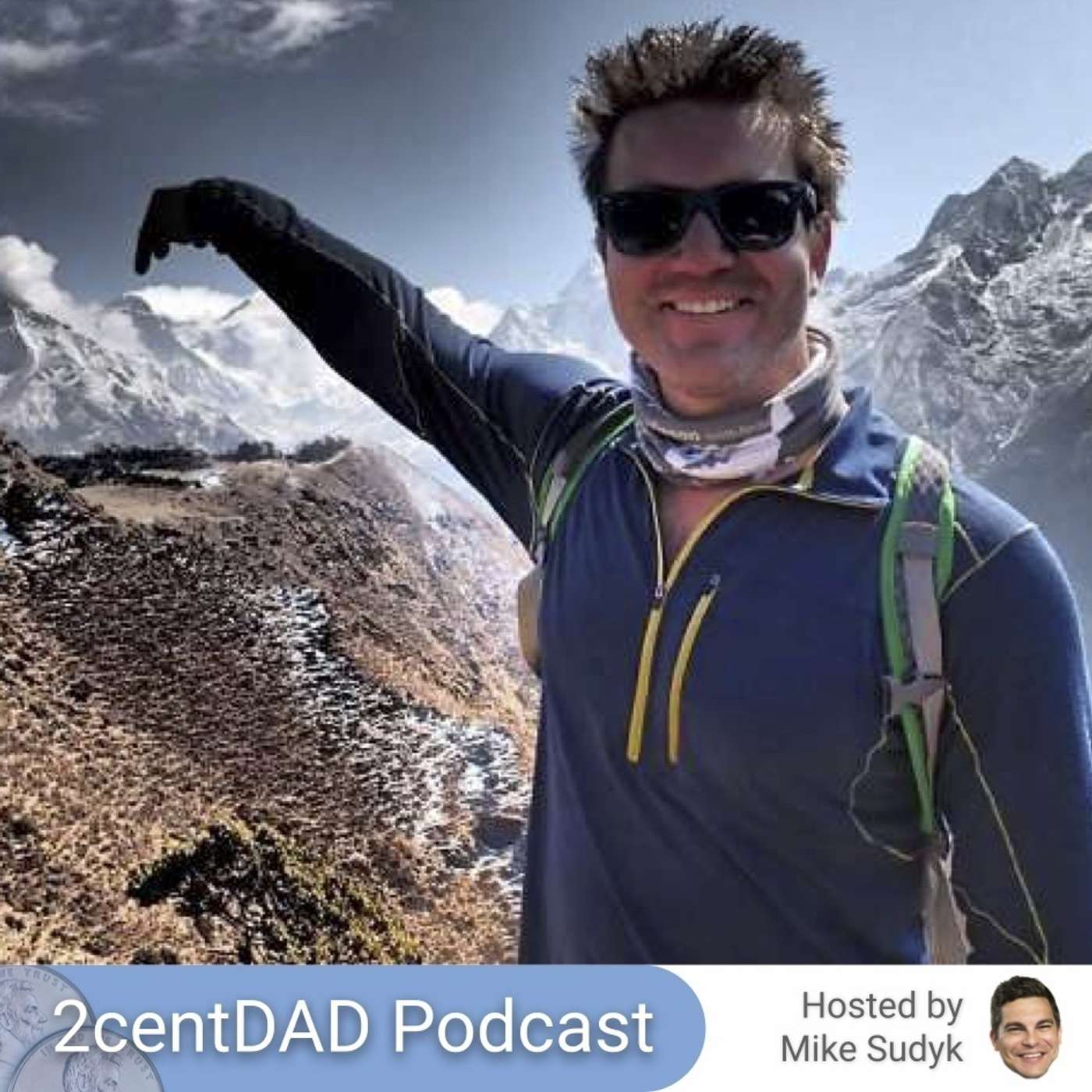
John Beede, a legendary mountain climber (and dad) joins me on the podcast to talk about his journey up Mount Everest and the discoveries made during the journey that influence young men today. Where to find John:Warrior Challenge BooksJohn’s YouTube ChannelJohn on TwitterTranscription below (May contain typos...)[00:03:00] [00:02:00] [00:01:00] [00:00:00]Mike: [00:03:34] on the podcast, we have a mountain climber, a Mount Everest summiting mountain climber. John BD is on the two set dad podcast today. I'm super excited to talk to you and hear your stories, John.Thanks for being on, man. Mike John: [00:03:48] also happy to be here. Thanks for having me. Yeah. And I Mike: [00:03:51] know you've got an upcoming book coming out called the warrior challenge, you know, eight steps for 'em. Becoming a true warrior that's, that's aimed at, young [00:04:00] boys. And, yeah, but, and we've talked about that a little bit, but I'm just excited to hear some stories, man, that, you know, you've done quite a bit.And, you know, maybe, maybe give a little background for, for the listeners on, on how you came to, to climb Mount Everest. John: [00:04:13] Sure. So not only Everest, but I've climbed the tallest mountain on every continent have traveled to, I think it's at 67 countries now. It's an only, so often it actually kind of like sit down and add them up.and I've been kite surfing on every major ocean. so I've had some adventures that's for sure not to, to fund all of this. I've been giving professional keynote speeches to now call almost like just short of 1 million live audience members in 48 States, six continents or six countries on six continents.So that's my. That's who I am. That's Mike: [00:04:47] awesome. That's amazing. I knew some of those facts that I was gonna say those before the interview started. I'm like, I'm probably going to miss a few anyways. So I see John get, fill in the gap. Oh John: [00:04:57] good. There you go. There you go. That's it. [00:05:00] Mike: [00:05:00] So w which was the first mountain you climb?Tell me about like, take me back to how you got started doing this man and like, John: [00:05:07] Oh, okay. So I was a boy scout. Eagle scout and would teach rock climbing, you know, just up 30, 40 foot tiny walls in Washington state. where I went to the summer camp in 2004, my buddy rings me up and says, I'm in university now.And he's like, Hey, if you want, I'm going to climb the grand Teton. Do you want to go with me? And we were dirt bag. Poor had no money, had no equipment. And we're like, yeah, sure. And I'm thinking like, I'm an instructor I've got, there's no problem. So we, we roll up, we get to the trail head at 10:00 PM and we don't, we can't afford a tent.So we decided we're going to do it all in one day. Most people do it in three days. We were like, we're going to just go do it in one shot because tents are too expensive. We don't have. Proper gear. Like we call them, cams and quick draws the equipment [00:06:00] to secure your rope into the cliff. Well, all we had was a rope.We said, okay, here's the plan? Here's the plan. If one person falls. While that person is falling. The other person needs to jump over a rock so that we pendulum swing and both of us were like, yeah, that makes sense. Okay. Well that's how we're going to climb this thing. Mike: [00:06:21] That's good. Sounds like a plan. John: [00:06:24] Yeah.Why not? So like out of complete moron, stupidity, and total disregard for anything safety, somehow we made it up, got back down and like on the way back down word. Somehow got out and people were going, are you to the idiots that were like, did it in one shot and didn't use like any gear? Yeah. That was us thinking.We're all cool. Yeah. So that was the start of it then I, but the progression forward was the exact same, but with learned lessons on each progressing lead difficult mountain. [00:07:00] So it would start with this like, so totally silly, climb in, in Wyoming. Then I went to South America, climbed the tallest mountain.There didn't even summit got knocked off, but learned a lot from it. Then I went and took a Denali prep course, went and climbed Denali summited, and learned from it, made a bunch of mistakes and went like that over and over and over until I had made all the mistakes possible that you could make on Everest, but I learned how to overcome them or how to handle it when situations like that came up.and by the time that I decided, yep, I'm ready. Like, I know everything that, that Mountain's gonna throw to me. I believed I was, I was ready for it. And I was, yeah. Mike: [00:07:38] Yeah. And tell me about that, that process. You know, I was watching one of the speeches that you gave around, you tell a story about climbing Everest and where you're, I think it's like your jacket turns from like red.To like w w black and white, you know, and I was like, and you talk about this notion of like Cocker yourself. And so tell me a little bit [00:08:00] abo

Ep 44Being a Fit Dad with Dan Go
It's not about being super muscular, its about being generally healthy in your body, soul, and mind. Dan Go joins me to chat about why this is vital for being a great dad but also a great husband. Dan explains why he helps entrepreneurs in this space and how he continues to work on himself in the process.Where to find Dan:TwitterHis websitePod episodeTranscription (May contain typos…)[00:00:00] Dan: [00:00:00] it's not about being Arnold Schwarzenegger. Actually, I don't think the six pack should be the goal for everybody. I don't think aesthetics should be the goal for everybody, although they do count.They're great. I believe the goal should be again, a brain, enhancing your brain, reducing stress and getting your body to a point of where we feel it is normal enough, or you can live a nice, energetic and healthy life. Mike: [00:00:26] today [00:01:00]on the podcast, we have Dan go as my special guest. and Dan is gonna talk about fitness. He's gonna talk about fatherhood.He's a new dad. He's got a three month old daughter. so Dan, thanks for being on the podcast, man. Dan: [00:01:20] Dude. Thank you so much for having me, Mike. yeah, man, I've been interacting with you on Twitter and it's been a, it's been a joy to interact with you. You're one of the 99% of people that are just awesome to interact with.So very Mike: [00:01:31] glad to be here. Okay. Back at you, man. that's why I wanted you have on this podcast is just because, obviously, cause you're a dad and, but one of the things that you talk about a lot is not becoming complacent. it's easy as dads when. you have your first kid, like stuff starts to just, you can get sot.You think you can get soft in other areas. And fitness being the one that most people get soft on. So that's why I wanted to have you on man. Dan: [00:01:54] Yeah. It's a, it's insidious, man. I'll tell you that, to see the [00:02:00] lack of, care that's put into their bodies. Once they have a kid, it's almost a.It's almost like they're shooting themselves in the foot. So I, how I help a lot, dads, I hope specifically entrepreneurs, but I'll literally like 99% of the entrepreneurs. I help their dads. And usually when I talked to them, one of the things that's missing is energy with the kids. Also attraction to the wife.they want their wife to feel proud of them. And I always say this to dads too. It's like you attracted your wife based maybe on 60, the 50% of physical attractiveness. Sure. Yeah. And then when you lose that, what do you think she's gonna, what do you think she's going to do?And if, and to me it's like the whole being out of health is also insidious. It goes down to the family as well. So if you're out of shape, then it you're most likely going to have out of shape kids. And then you hear on Twitter, it's very binary, everyone says that being out of shape as being is like child abuse to kids or something like that, but [00:03:00] it is, it's a, we're all controlled by our environment and the people that we look up to.And if they're not in shape, then yeah. It's not a good thing. Mike: [00:03:08] so you hit on a topic that it was pretty charged, right? off the bat, which is being out of shape, but also raising out of shape. Kids is like child abuse. It's it is. Dan: [00:03:15] A little bit in it's, it's something that a lot of people can't, I can't necessarily see because they're so focused on trying to survive a lot of them.And, there's the trying to raise this kid. They're trying to put this kid on a sleep schedule. They're trying to get some sleep and they're trying to make money. They're trying to support the family, especially from a data perspective. I feel like there's two dichotomies, at least from my perspective, because my wife is doing, she's not working right now.She's taking care of the kids and I'm still like working at home and I'm going in and out of taking care of her and all this kind of stuff. And I can see why the dad bod. Becomes a reality because if I didn't have my standards for my body, before I got into fatherhood, then I [00:04:00] saw myself starting to miss workouts.I saw myself starting to get tired. I saw myself, I don't really want to cook today. Can we just like order from Uber? Yeah. And I see, but it's, it comes to a point where you have to set standards for yourself. When it comes to taking care of your body when it comes to eating, it's literally, you have to make the maturity into adulthood when you make, when you have to make these choices.And a lot of people are still stuck in eating like children right now, or eating like their children, essentially. Mike: [00:04:29] Yeah. And I can't remember if it was you that said making a comment about, with this whole quarantine COVID stuff, how that's easy, it's easy to just make an excuse, then like it either there's a group of people that utilize this time and said, I'm going to, I'm going to learn a skill or I'm gonna, I'm gonna work out more.Or they're just like, they use an excuse to

Ep 45ReFABricating School with Ana Fabrega
Ana joins me to chat about why kids need to be creative ini the classroom (and at home!). Creativity is the name of the game in many cases. Not only has Ana had experiences that has shown he that kids work best when they are creative but finds that most schools just don't cut it in the creativity department and lack learning that gets kids excited.Where to find Ana:Her YouTube page!Her website!PodcastTranscription (May contain typos…)[00:00:00] Ana: [00:00:00] kids are not interested in learning. They're interested in doing, they love creating. They love using their hands. They love exploring things. And again, it's very counterintuitive in school.They do the opposite, right? Kids are sitting down with you. And they were listening for hours to a lecture. They have little opportunity to really engage in the content that they're learning, quote unquote. and that goes against everything we know about kids, right? Kids are very active kids love to explore.So giving kids a chance at home to get really like hands on the things that they want to do. [00:01:00]Mike: [00:01:09]today on the podcast, I have a very special guest, miss fab, herself on a fiber guy, who is an edge opener, former teacher. but one of the things that she does is she, teachers, I think just really a different way to approach education.And, I wanted to have her on to hear her a little bit of her story and how she can open up our minds a little bit on how we think about education for our kids. So Ana, thank you so much for being on the Ana: [00:01:34] show. Thank you, Mike. Thank you for inviting me over. I'm excited to be here. Mike: [00:01:38] Yeah. obviously a lot going on in the education space, given COVID and anywhere from elementary school, all the way up to higher education, there's a lot of disruption happening as much as I hate to overuse that word.But, I know on a, you speak a lot on some of those trends that are happening, whether it's micro schools or other things that are Busting into the scene. [00:02:00] And I, one of the things that maybe you could give your background a little bit, the listeners, cause I know you have a teaching background and then we can jump into some of the things that happening.Ana: [00:02:08] Yeah, sure. I think that's a good idea. My add typical school experience provided a springboard to, me wanting to transform this. so yeah, I was born in Panama, but due to my father's job, we had to relocate Kate a lot when I was a kid. So I was born here, but we moved to Colombia, Venezuela, India, Mexico, Brazil.We lived in Panama and the U S yes. so by the time I was 14, I had been to. Seven different 10 different schools in seven different countries. And in regions, those specs, I know, realize that. a lot of my wanting to change things comes from what I saw in all this different placements. and it was, it looked pretty much the same, regardless of what school, what type of school, what country would continent the learning experience K through 12 doesn't really change.and [00:03:00] I had this love for working with kids. I really wanted to be I'm a teacher and being the education space. So I studied childhood education. Special education at NYU. And I have the opportunity to be a student teacher, five different placements there while I was studying. And that was really the first time that I got to see teaching in its purest form and seeing what, they would consider great teachers doing what they do.And it was evident, that kids were not really engaged. Kids were not really learning in terms of, they're not retaining the information after the tests. they're leaving school without an idea of what they want to do or what they're good at because they have very little opportunities to explore this and to build things and create things.so I was seeing all these things, even from great teachers and I was wondering, what am I going to do when I have a classroom? So I then became a teacher and I taught in Boston for a year while my husband finished his MBA at a small private school. And I taught first and third grade there. And then I moved to [00:04:00] Panama.I taught for four years at this big American in schools and I taught third and fourth grade. And that's when it really hit me. I don't really know what I'm doing here cause I love teaching, but I can't really do the things that seems valuable inside the system. I realized that schools worry too much about the specifics of what kids are learning and too little about whether kids are learning at all or the kinds of attitudes that kids hold toward learning.it was really concerning to me that the kids were just not engaged and they didn't really want to be there. They wanted to leave school so that they could start playing sports and engaging in all this things that they wanted to do. It became evident to me that we're asking the wrong questions, we're making the wrong assumptions.And the best thing that I could do as a concerned teacher was to just leave and try to fi

Ep 43Fit Daddy 365 with Soren Harrison
Is most of what you know about nutrition and fitness wrong? I chat with Soren Harrison about fitness and his journey from tech to his current mission to make dads fit again.

Ep 42Homeschool Hockey Stick Growth with Robert Bortins
Interest in homeschool is booming right now with the COVID pandemic disrupting traditional education. One of the bigger players in the homeschool game is Classical Conversations, a family operations which has been around for a few decades. Robert Bortins is second generation and now running the business. We talk about what “classical education” is and what is happening in the education space.

Ep 41Higher Education Disruption with Austen Allred
Austen wasn't happy with school, there wasn't something that quite fit him and he saw a lot of options that weren't practical for a 18-22 year old. He saw a huge gap in education, but also in the ever changing landscape oof education. That is where Lambda school was born. Austen talks about what it is like being a dad while building and education system that is ever changing and growing.
Ep 40Masculine Fashion Matters with Tanner Guzy
Tanner joins me on the podcast to talk about why being a fashionable dad actually matters. I was skeptical at first, but after listening to Tanner shed light on the topic I get it. Being a fashionable dad not only helps you look and feel better but also helps your kids, family, and friends see that you are intentionally making an effort to work to become the better version of yourself.
Ep 39Ryan Delk on the future of education
What is the future of education? Interested in homeschool? These are some of the topics we cover with Ryan Delk. Ryan Delk is the founder and CEO of Primer (https://www.withprimer.com/) Ryan can be found on twitter at https://twitter.com/delk
Ep 38Ed Latimore on Masculinity
Ed Latimore talks masculinity and the current state of mental toughness. Ed is a former professional boxer and writer. He can be found on twitter at https://twitter.com/EdLatimore His website is https://edlatimore.com/

Ep 37Steli Efti of Close.com
Steli Efti is the Founder & CEO of Close.comSteli on Twitter https://twitter.com/Steli/photoSteli's podcast https://thestartupchat.com/Close https://close.com/

Ep 36Jim Sheils
Where to find Jim:Personal WebsiteThe Family Board Meeting (Amazon)ShownotesMike Sudyk:Jim Sheils is the author of The Family Board Meeting. Tell us what the concept of The Family Board Meeting is all about.Jim Sheils:It’s a simple rhythm that I’ve added to my family life to make sure as I started with my business, that I stayed connected with my family.MS:How did you reach that moment of getting started?JS:- It got started before I had a family. I saw things in business that I didn’t like to see. People I admired whose lives were in shambles. I said that’s not going to be me.- When I started my family - 2 biological and 2 adopted children - I wanted to be sure I was there for them.- It all started with “quality time coupons”- Now it’s been around for 7 years.3:00MS:Tell me about those moments you were asked to talk to people’s kids.JS- When I would speak on stage, I was in my mid 20s but I still looked very young. I was at that between age, and parents told me they wished their kids had been there to hear me talk.- A few families would come visit me at a time, and we started doing retreats. Then I got hired by a few organizations to do workshops.- People needed someway to connect at home, and that’s what my focus became.MS:Sometimes you hear if your life at home is good, work will be good too.JS:- There are two dominating emotions within these people: guilt and depression.- There is no possible way you can do your personal or professional best if you have an overbearing feeling of guilt and depression.6:00MS:I was reading about this pizza Fridays concept…JS:- My family strategy is this: my kids are my most important clients and investors. For big companies you have quarterly board meetings, so I said I’m going to start doing that with my kids.- Every quarter I do that one-on-one with my kids.- I wanted to make sure one of these a year we incorporated service and contribution.- This teaches kids to appreciate what they have.- Our last one-on-ones of the year, we do a service project—and now we do pizza parties for homeless people.- It’s a simple lesson in active service10:00MS:You also do interesting things when it comes to home or alternative education…JS:- Retreats started as a way for my family to meet likeminded families. We wanted have fun and deepen connections, we wanted to strengthen the relationship and teach important lessons not taught in school.- When you’re in that atmosphere with other families, you start to hear some common threads. We all had had tough times…we saw that our kids were also going to face hard times. We said we could help our kids out through them, or we could prepare them to be better prepared than we were…- Three buckets seemed to help people the most: personal development, relationship skills, and financial intelligence. If the kids had a foundation in those three subjects, the odds of kids having personal and professional success were significantly higher.- For my kids, we do all kinds of schooling, but I say once you hit sixth grade these are the most important subjects.13:00MS:How do you teach those things? Why are those not taught?JS:- I’m not a huge fan of formal education…there’s a myth that schools will fill all the educational needs.- Parents teaching these subjects will help strengthen the relationship with your kids.- We teach this through games and books.16:30MS:I’m guilty of just trying to achieve different milestones, but it’s more about quality time.JS:- yes, I always say to people baby steps. Start slow, with one thing that will introduce them to these startups.- Growing up I didn’t know about financial intelligence. I didn’t know emotional intelligence was a thing.MS:Would you say that parents you talk to have that belief that they need to outsource that education to someone else? Why?JS:Being busy, the fear of not knowing how, and there’s this myth that you’re not qualified. That’s just not true.19:00MS:We homeschool our kids, and my wife does 99% of it. Sometimes when I’m teaching my 8-year-old grammar, I don’t remember half the rules. but that’s ok, there’s some magic there for him where we’re almost learning together. If I waited, I’d never actually start…JS:You may not remember all the rules, but I guarantee you have more enthusiasm than anyone else would. And the kid might feel like they’re teaching you. That’s a really good thing.MS:You don’t have to homeschool to do a lot of this stuff, there’s a lot of other teachable moments in everyday life…JS:- Yes, true.- We’re using a hybrid model of schooling- A lot of people feel like they’re not allowed to ask for help.- When I was growing up, if you were homeschooled you were either mega wealthy with a tutor, or you had something wrong or had been getting into trouble in class.22:00MS:Anything else to add?JS- those first 18 summers are so important. It gives you a motivation to think about the time.KeywordsFatherhoodThe Family Board Meetingone-on-one timeActive ServiceAlternative schooling

Ep 35JD Graffam
Where to find JD:TwitterInstagramLinkedInWebsiteSimple FocusShownotes(Content is summarized and paraphrased. Timestamps are approximate.)00:20JD Graffam:- One of my boys doesn’t pee a lot- One kid who’s really physical, and doesn’t want junk food. He wants salad and grilled chicken.- The other kid only wants club crackers.- The healthier kid pees like a racehorseMike SudykYou are a father of three, and a father to a ton of different companies. Tell me about yourself and Simple Focus.JD:- I started Simple Focus in 2009 because I had been moonlighting as a designer since college in 2000.- I had a good day job, but I was making more money moonlighting than at my day job.- It made more sense for me to leave. I had always wanted to be a business owner.- I was fortunate that the business made money- Now Simple Focus is a user experience firm, and also has a portfolio of SASS businesses. I also have various other business investments.- Ten years later I have 11 different companies under Simple Focus and three kids.6:30MS:So what are your kids ages?JD:Daughter in Kindergarten who is 6, and twin boys who are 4.5MS:Having those kids while you’re building your business, tell me about that, about the risk.JD:- I’m probably more courageous now with experience- Someone asked if I would go back and do it all over again, and I said yes. If it were still ten years ago.- Before I started my company an entrepreneurial person gave me some advice. He said you don’t have a family, and now’s the time that you can take a risk.- You’re either born with a bug to be an entrepreneur or you’re not. If your kids need to see you take chances, then need to see their father be willing to compete. If it doesn’t work out, they need to see what it’s like.- I don’t buy that early advice so much anymore…MS:The other risk is you have regret later.JD:- Sure, but zoom out and make it about more than just you.- My father always has these great ideas, and he has an itch, but he and I are cut from a different cloth.- Now he has a lot of “what if?”- If you’re the kind of person who’s like, I’m going to do this or I’m not going to feel like I did everything I could. It’s also about setting the example for your children so they can see you chasing after your dreams.- I’m assertive with my entrepreneurial spirit, but I’m also doing it for my dad.13:00MS:When you talk about regret and fulfillment, I think that makes you a better dad and husband. If you’re full of “what ifs” you’re not operating at the efficiency you should be, and that’s going to cascade into other things…JD:- About a year ago we had to let some people go to save some costs in the business…and it was tough. I had to lay off my mother-in-law- when the kids learn about this one day, we need to tell the truth and tell them business was tough.- Those are important stories for them to have as reference points in their own careers.- Because I was so careful about doing things the right way, I was able to go home at the end of the day and be present. I could leave work at work.18:00MS:What are some times where you’ve seen those things out of balance? What are the pitfalls?JD:- I talk to my therapist about that regularly.- I can lose my cool and grab my kid by the arm too hard, or raise my voice, and I feel terrible about those moments.- The thing that gives me hope is something my therapist shared…she asked about what about when my parents did stuff like that? I asked my dad about those moments when he felt bad…my therapist said that kids are resilient, and you have to be consistent and show them love. Some of these moments will standout more to you than to the child.- If you don’t show the step of conflict resolution, then they won’t understand that step.- Not being perfect is ok, but they need to know for later in their lives how to resolve conflict with other people in their lives.24:00MS:My wife’s parents were a little better at that than mine were, and recognize that in myself. My wife taught me to be able to resolve some of those conflicts.JD:- It’s important for the kids to be able to understand that it’s not about them.- I’m 37 years old and I’m still trying to learn that with other people…if they snap it’s probably not about me.27:30MS:You mentioned therapy, I wonder if you were reluctant to doing that at first…JD:- I’ve been going for 6 or 7 years now consistently every week and every other week when I’m in town.- She asked me one time, “How do you feel about that?” And I said, “angry.” She told me it didn’t sound like anger. I said I was upset, and she said that wasn’t a feeling, how do you feel? She ended up showing me a chart of basic feelings. She helped me pinpoint my feeling. And suddenly I realized I was unable to articulate my feelings.- You may not know as much about how you feel as you think you do. If you can’t articulate them, you can’t process them.- Therapy helps me in business because I can learn from the way my therapist helps me.- I also take care of my body in other w
Ep 33Aaron Ross, Back Again
Shownotes:(Content has been summarized and paraphrased. Time stamps are approximate.):30Mike Sudyk:- Aaron is a coach to high growth companies- Started out building the team at salesforce- Father of 9 with a blended family, wife’s kids from a previous marriage, adopted kids, kids together with your wife.Aaron Ross:Yeah, it’s a little bit of everything.1:20MS:You’re doing unscripted parenting videos on LinkedIn. Can you talk about how you manage the chaos. I ask because you mention systems in your videos. What do you say to someone who asks, “How do you do that?”AR:- Got married 8 years ago. Went form zero to nine kids in 6 years.- Published 4 books.- Grew my income from 72k a year to 800k a year- Grew a business of a few million dollars- How do I do it? I’m not really sure…it’s day by day. Trying to advance things when I can.- Doing a book is a big project, and the only way to do it on top of a family is that I committed to it, I told people I was going to do it, got a partner, got a publisher, dates announced…and then I had to do it.- A lot of it comes down to blocking out time. For a book I blocked out time every Wednesday. It took a couple years to do a whole new book.- We did separate things to grow income, separate systems to control chores. Calendars.- Systems are always evolving—chores, allowances, calendars.- We can talk about things that work, but parenting is messy. Whatever people project to the outside world, it’s messy. No matter what gurus say.6:00MS:Sometimes people take that to the extreme and bring nature vs. nurture into it. Saying, my kids are just this way…AR:- It’s probably 50/50- We’ve got biological kids who are teenagers and younger. We’ve adopted kids as teenagers and younger.- We have all this variety, and there are things that people are born with, but generally most of the impact that you see while they are kids…nurture makes such a huge difference.- If you have more of an aggressive parenting style or a pleaser parenting style…you can see the difference.- I think my wife and I are better parents because we identify the things we don’t do well and try to become better.9:10MS:How do you guys work on your marriage in the midst of all that?AR:- I’ve seen this in studies where people after they have kids, you’ll be unhappier in general…you’ll go through a phase where you need to work on the romantic part.- You need to invest in your relationship- One thing that was important, one of them was making a lot more money. Making more money makes the relationship work better and takes a lot of the stress away.- We do a once a week date night. When we skip it we can tell there’s more of a roommate feeling.- I’m active as a father. I work at the business 20 hours a week, and the rest is just fathering.- My wife is a writer, so she has her own work.- Sometimes it’s smoother and sometimes it’s hard to handle.- When I’m working to make money, to support the family, that’s still family time. But if family life is difficult at home, I can see why you’d stay at the office more. So what are the reasons you’re working?13:00MS:Is part of it learning to accept the chaos as a new normal?AR:- It’s like the messy rooms. It takes too much work to have them clean all the time. Pick your battles.- Some people are more comfortable with chaos than others. In our family we have some systems and plans…we realize a lot of times there are interruptions. You just have to go with the flow.- But you do need to identify the chaos you don’t need. Our chore system works well. Assign jobs.- People hate chores, and that’s ok. It’s got to get done, so you’ve got to do it. If you don’t do it, there are consequences.- Too much structure became unmanageable, too little left them frustrated.19:30MS:When do you and your wife have those discussions?AR:- I would love to have a weekly meeting with the teenagers, but there’s always stuff that comes up in the time slot. It always seems like it’s just out of reach.- My wife and I try not to talk about family business when we’re out on our date. We might talk about it in the car, but then it’s got to stop when we get there.22:00MS:Those dates could turn into talking about the kids the whole time…AR:- Yeah, each kids has their challenges…it could go on forever. It can steal the attention away from the romantic relationship.- Somedays the only things I look forward to are bed, or coffee treats, or our date…- I have all the pieces in front of me to have this amazing life, but sometimes it’s stressful. More moving pieces means more challenges can pop up, though.- The nature of entrepreneurship is that you’re always problem solving. Parenting has problems with more emotional weight.- It just seems normal now.- Plus we’re moving the family to Scotland this year, because we don’t have enough to do.26:07AR:- We wanted to be someplace closer to nature. Different from LA.- We’re waiting to deal with houses and visa, not to mention taxes and healthcare.- thinking about the question, “How do you

Ep 34Dan Martell
Where you can find Dan:TwitterInstagramdanmartell.comShownotes(Content is summarized and paraphrases. Timestamps are approximate.)Mike Sudyk:Dan Martell,- Multiple entrepreneur- Multiple exits- Celebrity of SAAS1:00Mike Sudyk:You’re married with two kidsDan Martell:- Yes 6 and 7. They’re my world and my wife is my best friend.- We live a crazy lifeMS:If you follow Dan on instagram you’ll know his kids do everything with him.DM:- Board meetings- Kite boarding- Car racing- 100 flights at this point in there life- Multiple schools, because we travel a lot2:00MS:How did you arrive at that? Tell me about your upbringing. On your website you list all your failures instead of pounding your chest about your successes…DM:- Yeah I call that success theater, that’s just not me.- I’m an open book, and I’m a product of a ton of incredible people who support me.- At 17 I found myself high and drunk driving a stolen car, trying to get away from the police, and with a gun sitting next to me. If the police caught me I was going to pull the gun so that they’d shoot me. They caught up with me, but the gun got stuck in my bag. They pulled me from the car. I woke up sober in a jail cell wondering what my life was going to look like.- Served 5-6 months. Did rehab. Spent 11 months in a 6 month program. Spent a lot of time working on myself, and my values, and learning to love myself and having any level of self worth. It saved my life.- At rehab I discovered JAVA.- I got fascinated with computers. Computers became my addiction, and entrepreneurship my personal development program.- I’ve built 5 businesses since then.- It’s been a slow change.- For 15 years I didn’t tell a soul what I had gone through as a kid. I did a talk about the entrepreneurial journey, and started with that story. It was the most amazing experience after to have people I knew come up to me and share their thing. Afterwards I thought, I want that openness with everybody.7:00MS:I’ve heard your story a few places. My question is, the journey you went on…a lot of entrepreneur dads feel like they’re stretched in a million directions and feel like they’re hitting a breaking point. It’s not ever bad enough where they make a drastic change. What are some things, having gone through that journey, what are the fundamental things you have to change to get out of the valley?DM:- There’s different things at different stages.- When I was 28 I came home one day, and my fiancé at the time broke up with me because I was working too much in the name of success for her. But she never asked me for any of that.- Your kids and your wife never asked you to kill yourself working.- Here was my problem: if i’m so good in business, how am I so stupid in relationships?- So I asked myself, “Who do I need to become to achieve the next level of outcome?”- I mapped out who would be the perfect person for me, and what kind of person would attract that quality.- The process of being successful can apply to any aspect of your life.- I do quarterly board meetings with each of my boys, an idea I got from my buddy Jim in The Family Board Meeting- Me and my wife do quarterly retreats where we discuss goals- Me and my wife do a weekly meeting where we score ourselves on 5 different dimensions, and if we don’t do well enough we need to reevaluate.- It’s all the same as a business.- Do you ever run into scenarios where you’ve got something to talk to your wife about, and there’s never a good time and it’s going to piss her off? We have a time and place for that now.- These times help us reconnect17:00- We have a playbook for our family- We have people who support us, and we have processes for when we go on vacation, or starting at a new school.18:00MS:What do you think the processes are for that? For some reason we don’t bring business processes into our marriage.DM:- I think there’s a belief that it shouldn’t be so hard. If I need to schedule a weekly meeting with my spouse it means something is wrong…- You need to build habits. Being an athlete, being in a marriage.- If you want to have a life of mediocrity, fine, if you want to see if there’s another level, then go there.- I coach ambitious entrepreneurs, and there’s this problem they often have where they’re growing and their partner is not.- As you climb the mountain you’re going to want to pull your partner with you, but they may not be there yet. You’re going to suffocate the relationship if you try to pull them up. They’ll feel inadequate. Instead of pulling them, support them.- It’s just the discipline of saying one night a quarter, we’re going to turn off our phones and spend time together.- People throw up a resource complaint issue, but you can scale anything back to make it work.22:00MS:We do a family night once a week, and we keep it religiously. It’s not rocket science.DM:- I’m not a fan of holidays or the world’s rhythm for life. I am a fan of rituals. Let’s make it our own.- When the kid turns 13, what’s the adventure I bring them o
Ep 32The RAD DAD - Kirill Zubovsky
Kirill is the host of the Rad Dad Podcast

Ep 31Darius Monsef – Sniper Parent, Entrepreneur
<p>Darius Monsef (aka "<a href="https://twitter.com/bubs">bubs</a>") joins the podcast today. I think that the way Darius would want to be described in this bio would be in the following order...</p><!-- /wp:paragraph --><ul><li>Lover of his wife (THE one).</li><li>Lover of his children.</li><li>Entrepreneur.</li><li>CEO of <a href="https://www.bravecare.com">Brave Care</a>.</li></ul><p>He is a very unique guy that has <a href="https://en.wikipedia.org/wiki/Darius_A._Monsef_IV">done a lot</a>, including creating and driving, a <a href="https://instagram.com/lightningvette">real life Lightning McQueen car</a> to visit kids at children's hospitals.</p>
Ep 30Ryan Deiss: Husband. Father of Three. Founder Digital Marketer.
Ryan Deiss joins the podcast. He is the founder of Digital Marketer.
Ep 29Rob and Sherry Walling
Today’s guests are husband and wife Rob and Sherry Walling. Collectively, the couple has started multiple businesses, podcasts, and written several books. In this episode, Rob and Sherry talk about the stresses of entrepreneurship and parenthood, and what resources you need to maintain wellness throughout the ups and downs of business and family life. Rob's 2 Cents I reached out to a couple friends and started doing a Skype Mastermind. All it was was the three of us talking once a week—I believe it was once a week it might have been every other week—for 90 minutes. Each person took 30 minutes and said hey this is what I’m up to, this is what I’m struggling with. Most of the time it was about business but some of the time it was about emotional things, like man I’ve got to fire two people this week and somebody quit on me
Ep 28Nathan Barry
Nathan Barry is the founder of ConvertKit, a super successful email marketing software company, but the road to success hasn’t been an easy one. Nathan shares how his family’s money struggles growing up instilled in him a sense of resourcefulness, and how he’s passing on those lessons to his kids. Nathan also talks about how his support systems have gotten him through troubled times.Nathan's 2 Cents:If you build into kids a desire to learn and a desire to create, that's really important.
Ep 27Joshua Becker
Minimalist Joshua Becker joins the podcast. He is a blogger and author of numerous books on how to life with less. He can be found at http://www.becomingminimalist.com

Ep 26Jason Calacanis
Serial entrepreneur, angel investor, and author Jason Calacanis joins the podcast.

Ep 25Ash Maurya on Lean and Family
Ash Maurya is founder and speaker, and author of the books Running Lean and Scaling Lean. We discuss his kids’ Montessori education, and how he borrows those same principles for his professional work.

Ep 24Peter Awad of the Slow Hustle Podcast
Peter Awad of the Slow Hustle podcast joins us today. Peter’s mission and goals are similar to the 2 Cent Dad podcast in his focus on family and business and life’s mission.

Ep 23Hiten Shah
Hiten Shah http://www.2centdad.com/hiten-shah Link's to Hiten https://twitter.com/hnshah https://producthabits.com/ https://thestartupchat.com/