PLAY PODCASTS
1001 Stories For The Road

1001 Stories For The Road

512 episodes — Page 1 of 11

THE SEVEN DIALS MYSTERY (CHAPS 27-28)

May 10, 202624 min

THE SEVEN DIALS MYSTERY (CHAPS 25-26) JIMMY LAYS HIS PLANS and MAINLY ABOUT GOLF

May 3, 202625 min

THE SEVEN DIALS MYSTERY (CHAPS 23-24) SUPERINTENDANT BATTLE IN CHARGE and BUNDLE'S WONDERINGS

Apr 26, 202630 min

THE SEVEN DIALS MYSTERY (CHAPS 21-22)

Apr 19, 202632 min

THE SEVEN DIALS MYSTERY (CHAPS 19-20)

Apr 12, 202621 min

THE SEVEN DIALS MYSTERY (CHAPS 17-18) AGATHA CHRISTIE

Apr 5, 202622 min

THE SEVEN DIALS MYSTERY (CHAPS 15-16)

. ⭐ Chapter 15 — Summary Chapter 15 finds Bundle Brent pushing deeper into the strange web of secrets surrounding Chimneys and the elusive Seven Dials group. What began as curiosity has now become a determined hunt for the truth, and Bundle spends this chapter gathering fragments of information from people who seem to know far more than they're willing to admit. Christie uses the chapter to shift the ground under the reader's feet. Characters who once appeared harmless now carry a faint air of suspicion, while others who seemed suspicious begin to look unexpectedly innocent. Bundle's conversations, observations, and chance encounters all hint at a larger conspiracy involving stolen scientific information and a covert organization operating behind a façade of respectability. By the end of the chapter, Bundle realizes she's no longer dealing with a prank gone wrong — she's stumbled into something organized, dangerous, and very much alive. ⭐ Chapter 16 — Summary In Chapter 16, the pace tightens. Bundle follows a promising lead that takes her into unfamiliar territory, widening the scope of the mystery. Christie introduces new locations, new clues, and a growing sense that the Seven Dials are not just a rumor but a coordinated group with a purpose. Bundle's instincts sharpen as she begins connecting threads others have overlooked. A seemingly casual remark, an unexpected meeting, and a discovery made almost by accident all point toward a secret gathering — a meeting that may finally reveal who the Seven Dials are and what they're after. The chapter closes with momentum building. Bundle is no longer reacting to events; she's actively pursuing the truth, and the truth is beginning to take shape.

Mar 29, 202632 min

THE SEVEN DIALSMYSTERY (CHAPS 13-14) AGATHA CHRISTIE

The Seven Dials Mystery, Chapters 13 & 14 Episode Summary In Chapters 13 and 14 of The Seven Dials Mystery, Agatha Christie shifts the story into a higher gear. What began as a lighthearted country‑house puzzle now deepens into a full‑fledged conspiracy, and Bundle Brent finds herself standing closer than ever to the truth—and to danger. These chapters bring Bundle face‑to‑face with the unsettling reality that the Seven Dials group is not a rumor, not a prank, and not a figment of anyone's imagination. It is real, organized, and operating with purpose. And the people involved may be far closer to her circle than she ever expected. What Bundle Knows Now By the end of Chapter 14, Bundle has gathered several key insights: • The Seven Dials are active and watching, and their influence reaches deeper than she imagined. • Ronny Devereux's death was no accident, and the same forces behind it are still moving pieces in the background. • Several people she knows may be involved, willingly or not—including Jimmy Thesiger, Bill Eversleigh, and others in the Coote household. • She herself is now being watched, and her curiosity has crossed into dangerous territory. The list of suspects is growing, motives are blurring, and Christie's trademark misdirection is beginning to tighten around the reader—and around Bundle. TEASER — Chapters 15 & 16 Chapters 15 and 16 mark the moment when the mystery stops simmering and begins to boil. Without giving anything away, listeners can expect: • A major revelation that reshapes everything Bundle thought she understood about the Seven Dials. • A deeper look inside the organization, its purpose, and the surprising people connected to it. • A confrontation that forces Bundle to question who she can trust—and who she absolutely cannot. • A new clue that points straight toward the heart of the conspiracy. • A rising sense of danger, as Bundle's investigation puts her directly in the path of people who do not want to be discovered. Christie's tone sharpens here. The stakes rise. The shadows lengthen. And Bundle Brent finds herself closer than ever to the truth—and to the people who would do anything to keep that truth buried.

Mar 22, 202635 min

THE SEVEN DIALS MYSTERY (CHAPS 10-11-12)

⭐ Episode Overview In this week's installment of The Seven Dials Mystery, Agatha Christie shifts the story into a higher gear. Bundle Brent's curiosity has now become full‑fledged investigation, and the odd clues scattered through earlier chapters begin to align into something far more organized—and far more dangerous—than anyone at Chimneys first suspected. These three chapters deepen the conspiracy, widen the cast of suspects, and push Bundle into the center of a mystery that seems to watch her as closely as she watches it. ⭐ Chapter 10 — Rising Stakes at Chimneys Bundle's search for answers leads her back into the social circles surrounding Chimneys, where casual conversations reveal subtle inconsistencies that don't sit right. Christie uses this chapter to tighten the tension: small details suddenly matter, and Bundle begins to sense that the people she trusts may be keeping secrets of their own. The tone shifts from curiosity to unease as the mystery grows larger than she imagined. ⭐ Chapter 11 — A Shadowy Organization Takes Shape Hints about the Seven Dials begin to crystallize into something real. Bundle encounters new information that suggests the group is not only active but highly organized, with motives that reach beyond the death of Ronny Devereux. Christie blends humor with suspense as Bundle follows a lead that takes her into unfamiliar territory—one that confirms she is now dealing with a conspiracy that operates in the dark and does not appreciate interference. ⭐ Chapter 12 — A Breakthrough… and a Warning A fresh clue emerges that ties several earlier threads together, giving Bundle her first solid direction. But with that progress comes a sense of danger: someone is watching, someone is listening, and someone is determined to keep the truth buried. Christie uses this chapter to widen the scope of the mystery while reminding readers that Bundle's boldness may soon put her in real peril.

Mar 15, 202649 min

THE SEVEN DIALS MYSTERY (CHAPS 7-8-9) (IN FULL)

Chapter 7 Summary Bundle's curiosity pushes her deeper into the mystery as she begins retracing the steps surrounding Ronny Devereux's death. A seemingly casual conversation reveals new inconsistencies, and Bundle starts to sense that the people closest to the case may be hiding more than they admit. Christie uses this chapter to shift Bundle from bystander to active investigator, sharpening the stakes and widening the circle of suspicion. ⭐ Chapter 8 Summary Bundle's search leads her to a surprising encounter—one that hints at a larger, more organized force behind the strange events at Chimneys. Odd warnings, evasive answers, and a growing sense of surveillance suggest that the Seven Dials group is not just a rumor but a very real presence. The tone darkens as Bundle realizes she may be stepping into something far more dangerous than she expected. ⭐ Chapter 9 Summary A new clue emerges, linking several earlier threads and giving Bundle her first real sense of direction. The chapter blends humor, tension, and Christie's trademark misdirection as Bundle follows a lead that takes her into unfamiliar territory. What begins as a simple inquiry turns into a moment that confirms the conspiracy is not only real—it's active, coordinated, and watching. 🎣 Next Weeks Chapters 10 & 11 As Bundle presses forward, the next two chapters pull her straight into the heart of the mystery. Hidden motives begin to surface, new alliances form, and the shadowy Seven Dials move from rumor to revelation. What Bundle uncovers next will challenge everything she thinks she knows—and place her closer than ever to the truth… and to danger.

Mar 8, 202643 min

THE SEVEN DIALS MYSTERY (CHAPS 5-6) AGATHA CHRISTIE

⭐ SHOW NOTES SUMMARY — The Seven Dials Mystery, Chapters 5 & 6 Chapter 5 — "The Man in the Road" Christie shifts the mystery into motion — literally — as Bundle Brent encounters a startling scene on a quiet country road. What begins as an ordinary drive becomes a pivotal moment when she comes across a distressed stranger who delivers a cryptic warning before slipping out of reach. His message hints at a danger far larger than the household mishaps at Chimneys, and Bundle suddenly finds herself drawn into a web of intrigue she never asked for. This chapter marks the point where the story widens beyond the country‑house setting, suggesting that the earlier death may be only one piece of a much broader and more perilous puzzle. Chapter 6 — "Seven Dials Again" The mysterious phrase "Seven Dials" resurfaces — no longer a prank, no longer a joke, but a name carrying real menace. As Bundle begins to connect the stranger's warning with the earlier events at Chimneys, Christie introduces the first solid hints that a secret organization may be operating in the shadows. The tone darkens, the stakes rise, and the playful atmosphere of the opening chapters is replaced by a sense of gathering conspiracy. Christie uses this chapter to signal that the mystery is no longer confined to a single death — it may involve a network of hidden actors with dangerous intentions. 🔮 Teaser for Chapters 7 & 8 (No Spoilers) In the next chapters, Bundle takes her first active steps into the investigation, following a trail that leads her into unexpected drawing rooms and uncomfortable conversations. New visitors arrive, old assumptions crumble, and Christie begins tightening the threads that will eventually reveal the truth behind the Seven Dials. Listeners should be ready — the mystery is about to accelerate, and Bundle's role in it will become far more central than she ever imagined. Visit our webswite at www.bestof1001stories.com and sign up for our monthly newsletter! Thanks

Mar 1, 202626 min

THE SEVEN DIALS MYSTERY (CHAPS 3-4) by AGATHA CHRISTIE

Chapters 3 & 4 Summary (Spoiler‑Safe) In Chapters 3 ("The Joke That Failed") and 4 ("A Letter"), Agatha Christie shifts the tone from lighthearted country‑house mischief to something far more unsettling. What began as a harmless prank — a group of young aristocrats trying to teach a notorious oversleeper a lesson — takes a dark turn when the intended joke reveals a grim and unexpected truth. As the characters scramble to understand what really happened, Christie begins planting the first real clues of the mystery. A letter surfaces that raises more questions than answers, hinting that the events at Chimneys are not random at all. Motives begin to emerge, suspicions sharpen, and the carefree atmosphere of the house party evaporates as the guests realize they've stumbled into something deeper and more dangerous than a practical joke gone wrong. These chapters mark the moment when Christie's story pivots — from playful banter and social comedy into a genuine puzzle filled with secrets, misunderstandings, and the first whispers of a conspiracy that stretches far beyond the walls of Chimneys. 🔮 Teaser for Chapters 5 & 6 (No Spoilers) In the next chapters, Christie widens the lens. New information comes to light, unexpected alliances form, and the mystery begins to take on a shape no one at Chimneys could have predicted. A seemingly minor detail becomes suddenly important, and a new character steps forward with knowledge that changes everything. Chapters 5 and 6 deepen the intrigue, sharpen the stakes, and introduce the first real hints of the shadowy organization whose name gives the novel its title. Listeners should be ready — the game is about to expand, and nothing is quite what it seems.

Feb 22, 202640 min

THE SEVEN DIALS MYSTERY (CHAPS 1-2) by AGATHA CHRISTIE

Pirates will return at a later date! For now- Agatha Christie's 1929 novel The Seven Dials Mystery, the story kicks off with a mix of high-society high jinks and a sudden, sobering tragedy. Set against the vibrant, slightly reckless backdrop of the 1920s, this is one of Christie's more "light-hearted" thrillers. It leans into the "bright young things" trope of the era, blending a comedic, adventurous tone with a classic whodunnit structure. Chapter 1: The Alarm Clocks The story begins at Chimneys, a grand country estate currently being rented by Sir Oswald and Lady Coote. A group of young houseguests, including the likable but lazy Gerry Wade, is staying there. Gerry is notoriously difficult to wake up in the morning, so his friends—led by Jimmy Thesiger—decide to play a prank. They purchase eight alarm clocks and hide them in Gerry's room, timed to go off at intervals starting early the next morning to ensure he finally gets up on time. Chapter 2: Death at Chimneys The prank takes a dark turn the following morning. While the alarm clocks go off as planned, Gerry doesn't emerge. When the guests eventually enter his room, they find Gerry Wade dead in his bed from an apparent overdose of sleeping draught. Curiously, seven of the alarm clocks are lined up on the mantelpiece, but the eighth is missing (later found discarded in the garden). The chapter introduces the vibrant and sharp-witted "Bundle" Brent, daughter of the estate's owner, who returns home to find the police and a brewing mystery.
Feb 15, 202637 min

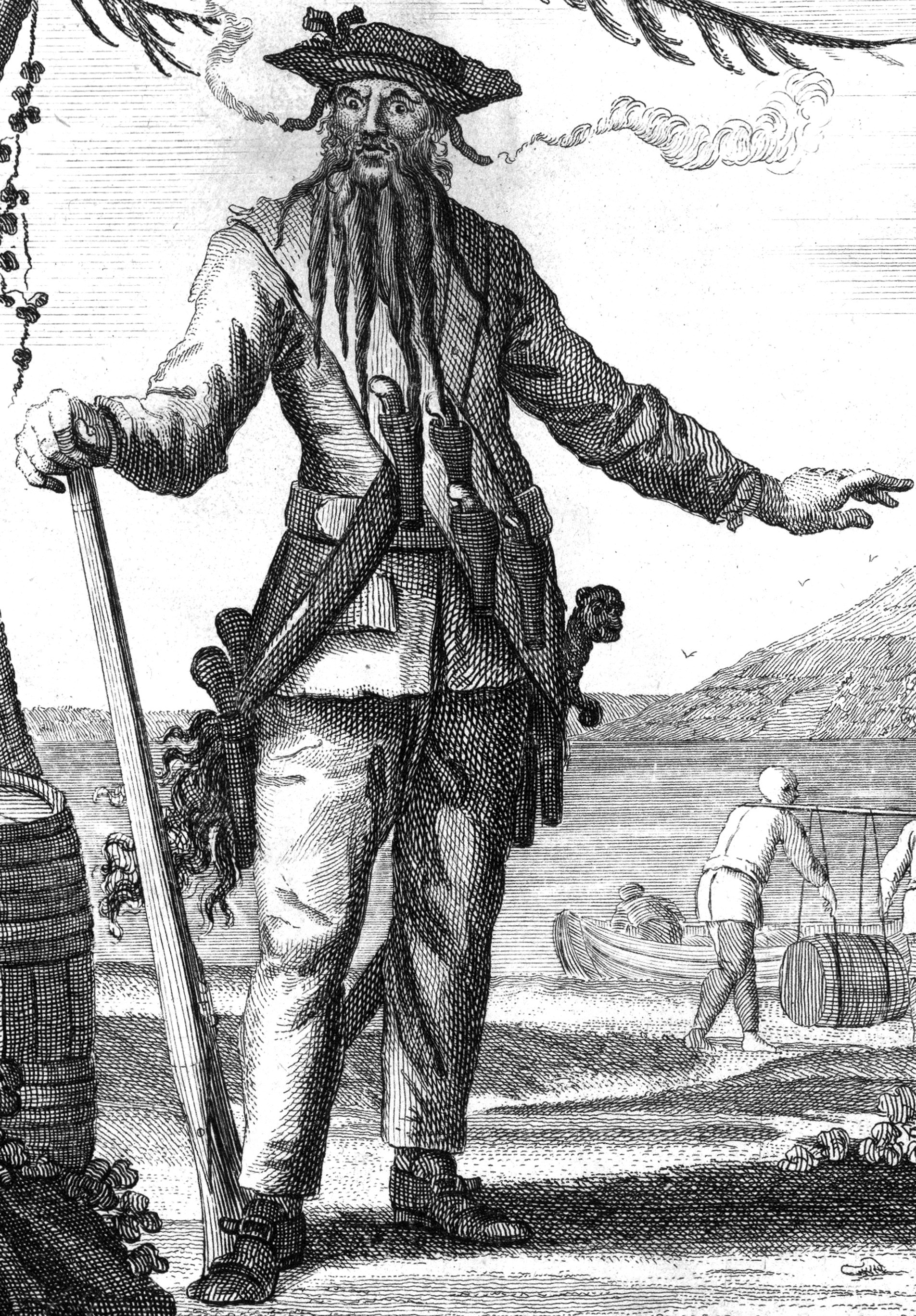
A GENERAL HISTORY OF THE PYRATES (CH 3 PT 2) PLUS THE TRUE STORY OF BLACKBEARD AS TOLD IN 'THE LAST DAYS OF THE PIRATE BLACKBEARD'

Chapm3 begins with Virginia Governor Spotswood's decree that a reward was in effect for the capture of Blackbeard and his crew and ends with the battle between Blackbeard and Capt. Maynard at Ocracoke Inlet. BONUS: Source "The Last Days of Bladckbeard The Pirate" by Kevin Dufus The "Local Legend" Theory (Edward Beard) • True Identity: Claims Blackbeard was Edward Beard, not "Edward Teach." He was a colonial native, likely the son of Captain James Beard (who owned land in Bath, NC and Goose Creek, SC). Kevin Duffus Official Site • The "Black" Alias: Argues "Black" was a nickname or nom de guerre added to his real surname (Beard) to protect his family's social standing. North Carolina Historical Review • Local Knowledge: His ability to navigate the treacherous, shallow waters of the Pamlico Sound and hide in Bath (50 miles inland) proves he was a local mariner, not a stranger from England. North Carolina Department of Natural and Cultural Resources The "Survival" Narrative (The Crew) Duffus challenges the "General History" claim that the crew was largely wiped out, suggesting many used their social status and spoils to buy their way home. • Edward Salter (The Legislator): o The Myth: Reported as hanged in Virginia. o The Reality: Duffus found he was released, returned to Bath, and became a wealthy cooper, landowner, and member of the Colonial Assembly. o Legacy: He was a founding warden of St. Thomas Episcopal Church. His remains were recovered and re-interred there in 2011. St. Thomas Episcopal Church History • William Howard (The Island Owner): o The Near-Miss: Blackbeard's quartermaster was sentenced to hang but saved by a last-minute Royal Pardon in December 1718. o Legacy: He eventually purchased Ocracoke Island in 1759. His descendants, the Howard family, still reside on the island today. Ocracoke Island History • Caesar (The Trusted Associate): o The Survival: Though often said to have been executed, Duffus cites evidence of a "Caesar" of matching description appearing in the estate inventory of Tobias Knight in 1719. • Samuel Odell: o Aquitted after proving he was a local man forced into service just the night before the battle at Ocracoke. The Political Connection (The "Shield") • Tobias Knight: North Carolina's Secretary and Chief Justice who acted as a legal shield for the pirates. • The Evidence: A letter from Knight was found on Blackbeard's body after his death, proving a direct "pay-to-play" relationship between the pirate and the NC government. North Carolina History Project Key Departures from "A General History" • Characterization: Duffus views them as "Pamlico mariners" and "sons of plantation owners" rather than the bloodthirsty monsters described by Captain Charles Johnson. • Motivation: Suggests the pirates were motivated by local economic pressures and political Jacobite sympathies rather than pure nihilism.

Feb 8, 202631 min

A GENERAL HISTORY OF THE PYRATES (CHAP 2-3) CAPT MARTEL & CAPT BLACKBEARD

The story of Capt.Martel, who was notable in 1716 and 1717 until his disappearance, and of Capt "Teach", also known as Blackbeard, who raided ships from 1716 until his demise at Ocracoke NC in the fall of 1718. There is much to learn anout Blackbeard outside of DeFoe's account so we are adding my research to next week's episode. Cjeck out all our shows at www.bestorf1001stories.com

Feb 1, 202625 min

A GENERAL HISTORY OF THE PYRATES BY DANIEL DEFOE (CHAP 1) HENRY AVERY & CREW

This book is an excellent choice! Episode Overview Title: A General History of the Pyrates by Daniel Defoe (Chap 1) Henry Avery & Crew Duration: 43:02 Key Figures: Henry Avery (the "Arch-Pirate" who famously vanished with his loot) and Daniel Defoe (widely believed to be the true author behind the pseudonym "Capt. Charles Johnson"). Quick Historical Context The Author Mystery: While the book was originally attributed to Captain Charles Johnson in 1724, most modern scholars credit Daniel Defoe. Defoe's background as a journalist and his fascination with criminals (seen in Moll Flanders) makes him the prime suspect for having the "inside scoop" from Newgate Prison. Music Credits Pixabay Spanish Ladies-m ebUNNY Leave Her Johnny Nascara da Alexander The Sailor's Bargain Kaazoom Ocean Fluite Universfield Browse/listen to any/allof our 12 1001 podcasts here: www.bestof1001stories.com
Jan 24, 202643 min

THE COUNT OF MONTE CRISTO (CHAP,117) THE FIFTH OF OCTOBER (FINAL CHAPTER)

The Count of Monte Cristo was an enormous commercial and critical success, captivating readers with its intricate plot and universal themes. Following its publication, Alexandre Dumas earned a fortune but died poor due to an extravagant lifestyle, chronic overspending, and political upheaval. Success of the Novel The novel, published in serial form from 1844 to 1846, was an immediate sensation and remains one of the most widely read French authors globally. Popularity: The serialization format, coupled with Dumas' ability to create suspenseful, page-turning narratives, ensured massive popularity among the 19th-century reading public. Themes: Its exploration of justice, vengeance, mercy, and forgiveness, along with a complex plot and well-developed characters, resonated strongly with readers and secured its place as a classic of world literature. Enduring Legacy: The book has been translated into numerous languages and adapted into countless films, TV series, and stage productions, demonstrating its lasting cultural influence. Life of Dumas After Publication Dumas became one of the most famous and wealthy Frenchmen of his day, but his life after the novel's publication was marked by extravagance and financial difficulty. Flamboyant Lifestyle: He lived a life as dramatic as his heroes, engaging in numerous love affairs and foreign adventures. He was known for his extreme generosity, often granting money and gifts to anyone who asked. Château de Monte-Cristo: A testament to his success, Dumas built an extravagant mansion on the outskirts of Paris, which he named the Château de Monte-Cristo, along with a theater, the Théâtre Historique, specifically for his plays. Financial Ruin: Despite earning millions, his lavish spending habits outpaced his income, leading to significant debt. He eventually had to sell the Château de Monte-Cristo property just two years after its completion. Exile and Travel: In 1851, to escape his creditors, Dumas fled to Brussels. He later traveled to Russia and then Italy, where he founded a newspaper, Indipendente, and supported Garibaldi's campaign for Italian independence. Later Years and Death: Dumas returned to France in 1864 and continued to write prolifically. He died of a stroke at his son's home near Dieppe in December 1870, far from a rich man, despite his monumental literary success.

Jan 16, 202638 min

THE COUNT OF MONTE CRISTO (CHAPS 115-116) LUIGI VAMPA'S BILL OF FARE and THE PARDON

CHAP 115 SUMMARY Peppino, the jailor in the catacombs, announces to Danglars the next day that, if the banker would like to eat, he must pay 100,000 francs for a chicken, or 100,000 francs for a loaf of bread. Peppino says he knows that Danglars is carrying over 5 million francs worth of banknotes on his person, and so he asks that, for each individual item, Danglars pay out 100,000 francs so that he might survive. Danglars realizes this is how his ransom is to be meted out, and he does in fact pay 100,000 francs for a chicken, which he considers rather "thin" as he eats it angrily in the cave. This is a small, humorous episode in Danglars capture, allowing Vampa, Peppino, and their men to slowly peel away Danglars' money. It should be noted that this money has effectively been stolen from Boville, who was to use it for charitable ends. Thus, though Vampa is stealing it for himself, he is at least stealing from a thief, one who is doing all he can to maintain his social standing in the face of public shaming. CHAP 116 SUMMARY Danglars continues bargaining his money, thousands by thousands, so that he might eat in the prison for five days. The Count of Monte Cristo finally appears with Vampa when Danglars is down to his last 50,000 francs, and the Count says that he is now pardoning Danglars—and that Villefort and Fernand were not so lucky, as the first is now mad with grief, and the second is dead by suicide. The Count announces that he is actually Edmond Dantes, and that Danglars' utter financial ruin is for the sake of punishment, but the Count allows Danglars to start his life anew somewhere else upon release by Vampa. He also states that the 5 million francs "paid out" to the bandits have been given to the hospice account of Boville, from which Danglars first drew them under criminal circumstances in Rome. This shows that, though he could exact even more damning revenge on Danglars by killing him, the Count has chosen not to – he has placed a limit on his desire for vengeance.

Jan 14, 202629 min

THE COUNT OF MONTE CRISTO (CHAPS 113-114) THE PAST and PEPPINO

113 THE PAST SUMMARY the Count returns to Marseilles with Maximilien Morrel, witnessing Albert's departure for Africa before visiting Mercédès, who accepts her fate, and then revisiting his old prison cell at the Château d'If, where he receives Abbé Faria's manuscript and reflects on his past before telling Max to meet him on the Isle of Monte Cristo on October 5th for their final encounter, signaling the end of his vengeance and the start of a new path. 114 PEPPINOKey Events in Chapter 114: The Withdrawal: After fleeing Paris, Baron Danglars goes to the banking firm of Thomson and French in Rome to cash a receipt for five million francs from the Count, planning to use the money to rebuild his fortune. Peppino's Role: Peppino, a young man connected to Vampa, works at the bank and informs Vampa of Danglars's large withdrawal, setting the trap. The Ambush: The next day, as Danglars travels by carriage towards Venice, he is intercepted by Vampa's bandits, led by Peppino, and taken to the catacombs. False Security: Danglars is placed in a comfortable cell with a bed and, remembering Albert de Morcerf's experience, assumes he'll be held for a reasonable ransom, believing he'll still have plenty of money left, and falls asleep contentedly. The Count's Indirect Vengeance: This event is part of Monte Cristo's broader plan, as Vampa and his bandits are essentially working for the Count, systematically stripping Danglars of his wealth. In essence, Chapter 114 marks Danglars's capture and the beginning of his financial ruin at the hands of the Count, though Danglars remains blissfully ignorant

Jan 11, 202657 min

THE COUNT OF MONTE CRISTO (CHAPS 111-112) EXPIATION and THE DEPARTURE

In chapters 111 and 112 of The Count of Monte Cristo, titled "Expiation" and "The Departure," the story reaches a critical psychological turning point as the Count's quest for revenge results in unintended tragedy. Chapter 111: Expiation Following the public disgrace of his trial, Villefort rushes home. He has realized that he is no more virtuous than his wife and intends to forgive her so they can flee France together with their son, Edward. The Discovery: Upon arriving, Villefort finds that his wife has already followed his earlier command to commit suicide. Horrifically, she has also poisoned Edward, refusing to leave her son behind to face a world of shame. The Confrontation: A broken Villefort encounters the Count (disguised as Abbé Busoni) in his father Noirtier's room. The Count reveals his true identity as Edmond Dantès, expecting a moment of triumph. The Turning Point: Instead of triumph, Dantès is met with the sight of Edward's corpse. Shaken to his core by the death of an innocent child, he tries and fails to revive the boy with his elixir. He begins to doubt if he has overstepped his role as the hand of "Divine Providence." Villefort's Fate: The chapter ends with Villefort losing his mind completely, seen digging in his garden for his dead son. Chapter 112: The Departure This chapter focuses on the emotional aftermath and the transition away from Paris. Leaving Paris: The Count picks up a grieving Maximilian Morrel from the home of Julie and Emmanuel. As they leave the city, the Count looks back at Paris and declares his work of vengeance is finally done. Return to Marseille: They travel to Marseille, where they witness Albert de Morcerf boarding a ship to begin his new life as a soldier. The Meeting with Mercédès: The Count visits his father's old house and finds Mercédès living there in solitude. Their meeting is deeply bittersweet. While he offers her his fortune, she refuses most of it, choosing a life of quiet penance. Resolution: The Count encourages her to live, but Mercédès remains a shell of her former self, resigned to her fate. This encounter reinforces the Count's growing sense of remorse for the collateral damage caused by his long-plotted revenge.

Jan 7, 20261h 1m

THE COUNT OF MONTE CRISTO (CHAPS 109-110) THE ASSIZES and THE INDICTMENT

CHAP 109 THE ASSIZES Chateau-Renaud, Debray, and Beauchamp are in court to see the beginning of the famous Benedetto Affair. They discuss the rumor that the murderer in the house of Villefort is young Edouard, who has become increasingly jealous of his stepsister and her grandparents. But others in the group dismiss this as nonsense and wait for the excitement of the case to begin, with Villefort drawing up evidence against the accused "Prince," Cavalcanti. CHAP110 THE INDICTMENT Villefort is called as the crown prosecutor before the court, and the judges similarly call Andrea to testify. He admits that he lived a life of petty crime before causing the murder of Caderousse, and when the court asks him for his identity, he pauses and says he does not really know his "actual" name, for he was abandoned as a very young infant by his father. When the court asks who this father might be, Andrea/Benedetto declares that it is the crown prosecutor himself, Villefort. Villefort understands instantly that, from this point on, there is nothing he can do to protect his good name. Like Fernand and Danglars, he too will suffer in shame, and will need to determine some way to slide nobly off the public stage of French civic life. The crimes Villefort committed so many years ago have finally come back to light, causing the criminal to be punished. AT OUR WEBSITE: WWW.BESTOF1001STORIES.COM GO TO 1001 STORIES FOR THE ROAD

Jan 4, 202635 min

THE COUNT OF MONTE CRISTO (CHAPS 107-108) THE LIONS DEN and THE JUDGE

The scene shifts to the prison, called the Lion's Pit, where violent criminals are kept awaiting trial. This includes Andrea, who still insists to the other prisoners that he is of royal birth, although they make fun of him, harry him, and threaten him. Late one day, Bertuccio pays off the guards to visit his adoptive son, telling him he has information related to Benedetto's real father. Bertuccio promises to return with this information in due course, and Andrea says he awaits it with great eagerness. This important interstitial chapter shows that Andrea is once again in prison, a place he's become accustomed to at this stage of the novel. It is not entirely clear to the reader what Bertuccio intends to do to his "son."n this brief chapter, Villefort finally confronts his wife Heloise after many days spent going over evidence—evidence not only of the poisonings in his own home, but also in the case regarding Benedetto, now known publicly as the Benedetto Affair (because it involves the famous Count). This affair has taken over Paris, and indeed every affair involving the Count seems to be of citywide, and indeed national, importance. In the space of only a few months, the Count has placed himself in the center of French social life. Villefort abruptly asks Heloise if she still has the poison she has used on the Saint-Merans, Barrois, and Valentine. He says that he asks not because he will denounce her publically, but instead because he expects her to do the honorable thing and commit suicide at her earliest convenience. If she does not do this in the next day, he warns, he will send her to prison, which will result in her eventual execution.

Dec 31, 202542 min

THE COUNT OF MONTE CRISTO (CHAPS 105-106) DIVIDING THE PROCEEDS and CEMETERY PERE-LA-CHAISE

The Count heads to Pere Lachaise where the funeral is taking place, and finds Maximilien off to the side of the funeral ceremony itself, overcome with grief. The Count then follows Morrel back to the home of Julie and Emmanuel, and his fears are justified, for as he walks into Morrel's room unannounced, he finds the young soldier drafting a suicide note. The Count begs Morrel not to do this, but Morrel insists that without Valentine, life is no longer worth living. The Count realizes the effect that his ruse with Valentine will have on Young Morrel. And though he wants to tell Morrel the plot he has concocted, he also wants to make sure this plot can succeed. Thus, to protect Maximilien, he asks only that the young man promise him to hold off on the thought of suicide for some time. To stay his hand, the Count blurts out that he is Edmond Dantes, and that he is the man responsible for saving Old Morrel exactly ten years ago when that man was afraid he would become bankrupt. Julie and Emmanuel come upstairs, but the Count asks Morrel to reveal only that he is the benefactor, not that he is Edmond Dantes. His reasons for this discretion are unclear. The Count has, by now, revealed his identity to Mercedes, Caderousse, and Fernand. He reveals it here to try to convince Morrel that he has a plan in place to help him – that he is not simply a man of society in Paris, but a person with a deep connection to the Morrel family, going back to their days in Marseille. Catch all 1001 Road stories in order at www.bestof1001stories.com

Dec 28, 20251h 9m

THE COUNT OF MONTE CRISTO (CHAPS 103-104) MAXIMILIAN and DANGLERS SIGNATURE

CHAPTER 103 MAXIMILIAN Analysis Maximilien flies into a hysterical rage on hearing the news that his intended, Valentine, is dead. He does this in the presence of Villefort, the doctor, and Noirtier. When Villefort and the doctor ask who Morrel is, and why he has been admitted to the house in which the murder has taken place, Morrel asks Noirtier to confirm that he, Morrel, was engaged to Valentine before her death, and that he loved her dearly. Young Morrel is finally able to reveal to Villefort that he has been in love with Valentine all along, and that the two were to be married. Although Young Morrel believes that Valentine has already died, this admission of their love feels like a victory for him, a confirmation that their love, while it lasted, was real. CHAPTER 104 DANGLER'S SIGNATURE The funeral for Valentine commences, and the narrator shifts his attention to a commercial interaction between the Baron Danglars and the Count, who spots him outside his home. The Count says he would like to take up the balance of his initially-requested credit with the Baron, for a sum of 5 million francs, assuming that the Baron has it on hand. The Baron pretends that this is no issue, that he will be able to cash out the receipts the Count holds; but when the Count heads to the Bank of France with these receipts, the Baron is met by Boville, the former inspector of prisons, who is collecting money for a charity hospice. The Count wishes to allow himself the joy of collecting a final amount of money from Danglars that Danglars himself is unable to pay out. This is a mirror and an opposite to the scene far earlier in the text, when the Count, as Lord Wilmore, offers Old Morrel sufficient money to remain open and in business. The Count seems to delight just as much, if not more, in viewing the financial ruin of one family as the financial security of another. It turns out that this hospice also has 5 million francs drawn on the Baron. This rather complex set of banking conversations reduces to the simple fact that the Baron does not have enough money to cover his debts. He is, in fact, bankrupt. The Count of course knows this, but Boville does not yet, and so the Baron tries to maintain his composure with him during their conversation. He tells Boville, headed to the funeral, that he himself will not be going, that he must instead go back to the office. At home, Danglars takes his remaining funds (about 50,000 francs) and his passport and prepares to leave the country as his daughter Eugenie has just done, presumably to avoid financial ruin. Fernand has committed suicide rather than accept public humiliation for the treachery he engaged in overseas. Caderousse has died, not being given the option to atone for his past crimes, after the Count determined that he was fundamentally beyond redemption. But Danglars tries to take his chances abroad, figuring that if he escapes Paris, he at least has a chance of speculating whatever money he retains in another market, with the hope of regaining some of what he's lost.

Dec 24, 202548 min

THE COUNT OF MONTE CRISTO (CHAPS 101-102) LOCUSTA and VALENTINE

In 101 and 102 the effort to kill Valentine continues....and that'sall I can say here. EXCEPT:PLEASE SEND REVIEWS AND SHARE WITH YOUR PALS !

Dec 21, 202529 min

THE COUNT OF MONTE CRISTO (CHAPS 99-100) THE LAW and THE APPARARITION

CHAP 99-THE LAW The Baroness Danglars, unsure what to do with herself and believing that Eugenie and Danglars are both locked in their rooms, first goes to visit Debray. But she finds him out at the club, and so later that day she goes instead to the Villefort home, where she is greeted with suspicion by the servants before finally being allowed into Villefort's study. There, the two old friends and former lovers speak to each other about Benedetto, though they do not know the truth of that man's identity and relation to them. CHAP100 THE APPARITION The narrator moves to Valentine, who has been recuperating in her room at the Villefort home. One night, when Valentine is lying between sleep and wakefulness, the Count (who, as the Abbe, has recently purchased the land next door) comes out of the shadows in her room. He tells her not to fear, that he has been protecting her in the home for the sake of Maximilien Morrel. In the case of Valentine, the Count has turned from an avenging angel to a protector. He sees Valentine as a part of Young Morrel's family, and so the Count has committed himself to making sure that she will suffer no more harm at the hands of the phantom poisoner. At this Valentine is confused and afraid, for she believes she was naturally sickened by some disease and not poisoned. But the Count convinces her that she has fallen ill of the same ailment that killed her grandparents, and he reminds her that Noirtier had asked her to drink the same drink he himself had been prescribed by the doctor. The Count reveals he has been providing her with another draught of this red potion, designed to counteract any possible poison that might be put into her food or drink. When Valentine asks who in the house could be doing this harm, the Count retreats into the shadows and tells Valentine to pay attention, for the criminal is about to attempt once more act of violence against Valentine.

Dec 17, 202544 min

THE COUNT OF MONTE CRISTO (CHAPS 97-98) THE DEPARTURE FOR BELGIUM and THE BELL & BOTTLE TAVERN

CHAP 97 THE DEPARTURE FOR BELGIUM Eugenie shears her hair and says she will dress as a man and accompany Louise to Belgium with what money they can grab. They will live together as partners and musicians, thus earning money to survive. Eugenie's relationship with Louise has, over the course of the novel, seemed like a particularly intense friendship. CHAP 98 THE BELL & BOTTLE TAVERN Analysis Andrea heads away from Paris in a mail coach as fast as he can, and winds up at an inn called the Bell and Bottle. There, he orders a room in the dress of a common bourgeois and makes a plan for the following day: he will move out into the countryside, rent a small shack or room from a peasant, and avoid contact with people as much as is possible. He wakes early in the morning to head out into the countryside. But when he does this, he notices that the inn is swarming with gendarmes. Alarmed, Andrea climbs up onto the roof, then tumbles down and hides in a room of the inn. There, to his surprise, he finds Eugenie and Louise, with Eugenie traveling as a man. Andrea believes, much to the girls' laughter, that they have followed him to the inn because Eugenie is still in love with him. Out of a mixture of condescension and basic fellow-feeling, they tell him to run, but he steps outside and is caught by the gendarmes to be taken back to Paris and tried. This allows Louise and Eugenie to continue their escape to Belgium later that day, as the commotion of the arrest of Andrea has caused enough of a distraction for them to sneak away. It is another of the novel's coincidences that Andrea and Eugenie wind up fleeing to the same inn. But Eugenie and Louise manage to maintain their low profile and to escape to Belgium, whereas Andrea, even though Eugenie tries to help him, will be caught by the authorities. This is an instance in the text where characters appear to receive their just desserts: Andrea, the criminal, will have trouble escaping the law, whereas Eugenie, who has only ever wanted her independence, is able to fight for it and gain it on her own terms. Catch 1001 Classic Short Stories aswe celebrate 2 million listens for the year and our new video ads at Instagram and Facebook~ www.bestof1001stories.com

Dec 14, 202545 min

THE COUNT OF MONTE CRISTO (CHAPS 95-96) FATHER AND DAUGHTER, THE CONTRACT

CHAP 95 FATHER AND DAUGHTER Eugenie requests a formal meeting with Danglars, in whom she confides that she no longer wishes to marry anyone, especially Andrea Cavalcanti, who seems fine enough to her but has no charm beyond his bare good looks. Danglars, for his part, says that he largely respects Eugenie's wishes, but says that he is ruined financially, and that he needs the capital Andrea can provide in order to guarantee his current loans and speculate on a railway with other investors. He asks Eugenie to go through the motions of signing the contract and marrying Andrea so that this loan and his good name can be secured. This is the first acknowledgment Danglars makes about his financial situation. For many chapters, it has seemed that Danglars has sustained heavy losses on the markets, but he has not yet admitted that these losses are more than he can bear. The Count, then, has succeeded in eroding the Baron's fortunes, forcing the Baron to look for other avenues for wealth – including a marriage to Andrea, whom he believes to be a nobleman. Eugenie agrees to this, although she insists that she has her own secret plan, which she will not divulge to her father and that will not, she insists, interrupt his plan for obtaining the loan from Andrea. Danglars seems to appreciate this negotiation on Eugenie's part, and they shake hands before Eugenie readies herself to visit the Villeforts with her mother. Danglars seems to respect a certain kind of financial negotiation, as Eugenie has offered her father here. Eugenie seems to know this as well, and so has given herself some bargaining room as she figures out what to do with the idea of a potential marital match to Andrea. Active Themes

Dec 10, 202553 min

THE COUNT OF MONTE CRISTO (CHAPS 93-94)

CHAP 93 VALENTINE Maximilien Morrel, fresh from the aborted duel, goes to visit Valentine at the Villefort home, where she announces that she has decided that finally she and Noirtier will move out together into their own quarters. Mme Danglars and Eugenie visit Mme de Villefort to announce that Eugenie will be marrying Andrea Cavalcanti, and though Eugenie says she does not wish to marry at all, she says it is at least better that she marry Andrea than a man disgraced. This is another instance of dramatic irony, for the reader understands that Andrea himself is an imposter, and as previous events in the novel have indicated, it seems only a matter of time until Andrea's past is also brought to light. Eugenie is a fascinating character, one who attempts to make her own life in a society where this kind of independence for women is rarely possible. Valentine has been feeling faint and unwell, and she tells Maximilien that Noirtier has prescribed to her the same potion that he drinks in large quantities, as a medicine for his own condition. This same potion is what the doctor formerly described as a poison which, in preparatory doses, can be used actually to prevent poisoning, if one builds up resistance to it slowly. Coming to pay respects to the Danglars, Valentine excuses herself, falls ill again, and collapses in another room near Noirtier and Morrel, who immediately call for help. For many chapters the groundwork has seemingly been laid for Valentine's poisoning. Although it has not been stated explicitly that Mme de Villefort is the poisoner, it always seemed unlikely that Valentine was the culprit. Now that Valentine has fallen ill, this gives even more credence to the idea that it is Mme de Villefort who is to blame. The question now is the emergency of Valentine's condition, and whether she will be able to survive this sickness.\ CHAP 94 MAXIMILIAN'S RENEWAL Villefort calls on the doctor who had warned him about the poisoning in his family, and after hearing that it is Valentine who has now fallen ill—Valentine whom the doctor initially suspected of the crime—he agrees to help Villefort in finding the true criminal. The doctor arrives at the Villefort home and questions Noirtier, who admits in his sign-language to having prepared Valentine by administering to her protective doses of brucine, the poison, in order to inoculate her against possible attack. The doctor thanks Noirtier for saving Valentine's life. The doctor discovers practice the method that, long ago, the Count discussed with Mme de Villefort. Noirtier, in his wisdom, saw that Valentine was going to be a target of poisoning in the home, and so he used a small amount of poison to build up Valentine's tolerance, allowing her to suffer larger doses without immediately succumbing to them. The doctor recognizes how clever and compassionate Noirtier's care for Valentine has been. In parallel, Maximilien runs to the house of the Count, begging him for help, since there is a murderer in the Villefort house. Morrel finally admits to the Count that he is in love with and wishes to marry Valentine. As devoted as the Count is to Morrel, this harms his plan, for the Count has sworn vengeance against Villefort and calls Valentine the child of a "dangerous breed." At this, however, the Count says he will ponder what best to do. After the doctor has finished checking up on Valentine and realizes that she will survive this poisoning attack, the narrator relates that the Abbe Busoni has purchased the house next to the Villeforts, the house whose garden Morrel has tended as a way of courting Valentine. This is another complication to the Count's plan. The Count wants to elevate Young Morrel, to name him as his son and heir, as indicated in previous chapters. But if Maximilien is joined to the Villefort family, the Count finds himself in a conundrum, for he wants to destroy the Villeforts. With this said, however, the episode with Albert and Mercedes has helped him to separate the innocent from the guilty, even within a family. Thus, after much thought, he seems open to the possibility that he can disentangle helping Valentine from harming Villefort.

Dec 7, 202545 min

THE COUNT OF MONTE CRISTO (CHAPS 91-92) MOTHER & SON and THE SUICIDE

SPOILER CAUTION Chapter 91: The Meeting Monte Cristo confides to Maximilian and Emmanuel that he plans to let himself be killed. He then demonstrates his almost superhuman skill with the pistol so that there will be no doubt as to whether he lost the duel on purpose. Albert finally arrives at the site of the duel, but rather than pick up his pistol he apologizes to Monte Cristo, telling him that he was right to avenge Fernand for wronging him. Monte Cristo realizes that Mercédès has told her son the entire story. Chapter 92: The Mother and Son Albert and Mercédès both plan to leave all their worldly possessions behind and create a new life away from the sins of Fernand. As they are about to depart their home forever, a letter from Monte Cristo arrives. Monte Cristo instructs Mercédès to travel to Marseilles, to the house in which Louis Dantès once lived. Buried under a tree in front of that house is the money that Dantès once planned to use to start a family with Mercédès. He writes that this money, though a pittance, is rightfully hers and should be enough to support her comfortably for the rest of her life. Mercédès accepts the gift and declares that she will use it as a dowry to gain entrance to a convent. Catch ALL our shows and episodes at one place at www.bestof1001stories.com! and sign up for our newsletter

Dec 3, 202539 min

HE COUNT OF MONTE CRISTO (CAPS 89-90) A NOTURNAL INTERVIEW, THE MEETING

Two dramatic chapters no summary to give away the plot.......

Nov 30, 202555 min

THE COUNT OF MONTE CRISTO (CHAPS 87-88) THE CHALLENGE and THE INSULT

CHAP 87 THE CHALLENGE SummaryAnalysis Infuriated, Morcerf says that he must go to the man who set all these things in motion. He asks Beauchamp if he knows who could have planted the story at the rival paper, and Beauchamp says that during his trip to Janina, he heard that an emissary of Danglars' was there just two weeks previously. Albert is instantly convinced that Danglars is behind the attack on his father's name, and he goes to Danglars' house to confront him. Albert finds himself angry at the man who once plotted, along with his own father Fernand, to put Dantes in prison. The Count, though not directly involved in any of this activity, has nevertheless made it so that the families of the plotters have turned against each other. Now, it seems, the Count's desire to stay out of active roles in these machinations makes more sense: he wants the other characters to avenge themselves on each other, as if he's entirely uninvolved. In front of Andrea, who is standing in the main receiving room, Albert challenges Danglars to admit to his wrongdoing against Fernand. Danglars says that it was really nothing personal, that he was only checking up on the family of the man who wished to marry his only daughter—and that, at any rate, he was encouraged to take this investigative step by the Count. Albert immediately puts together the Count's role in this (living with Haydee, and ensuring that Albert and Haydee could meet and talk) and vows to Beauchamp to confront the Count before returning to Danglars. In an intriguing turn, Danglars indicates that his investigation into Albert's family was not entirely of his own initiative, and that the Count really is involved in the machinations from which he's tried so hard to absent himself. Albert feels betrayed by a friend to whom he was devoted, and thus his dueling impulse has moved from Beauchamp, then to Danglars, and finally to the man to whom he's closest: the Count. CHAP 88 THE INSULT SummaryAnalysis Albert goes to the Count's home, but the Count is bathing and then napping before the opera. Albert quickly goes home to see his mother, who is devastated by Fernand's social reversals. Albert tells Mercedes he has realized that the Count never eats in the home of his sworn enemies, thus explaining why he took no food at the Morcerfs' July party, despite Mercedes' urging. At this, Albert tells his mother he is off to meet the Count at the opera to challenge him to a duel. Finally, Albert has put together the fact that the Count is not exactly his friend. Instead, the Count believes that he has a blood-feud with the Morcerf family, and Albert recognizes that what he thought was a friendship was, in fact, a sham. This raises an interesting moral question: is it fair or "just" for the Count to have misled Albert in order to exact revenge on Albert's father? At the opera, Albert and Beauchamp find the Count in his box. Albert challenges him to a duel, says that Beauchamp will be his second, and declares that they will meet the next morning before 10 am. The Count, sitting with Maximilien in the box, says that it is all a matter of "perfect indifference" to him, that he will win the duel regardless of the time or instrument. Beauchamp, shocked, conveys this information back to Albert, and Morrel asks the Count in private if he really believes that he is on the right side. The Count says that this is indeed the case, that they will absolutely win, and Morrel agrees to be his second. Morrel says he will also ask Emmanuel to join them the next morning at seven, before meeting Albert in the forest at eight. The Count, as is characteristic of him, appears to have no concern whatsoever about his ability to win the duel. This faith in his abilities seems to be a more pronounced version of that same skill he demonstrated many years ago as the first mate on the Pharaon, and then again in prison, under the tutelage of the Abbe Faria. Although the Count feels it would not necessarily be a good thing to wound or kill Albert, he, like Albert, knows that a gentleman must participate in a duel if he is called to do so.

Nov 26, 202538 min

THE COUNT OF MONTE CRISTO (CHAPS 85-86) THE JOURNEY and THE TRIAL

SummaryAnalysis CHAP 85 THE JOURNEY When the two men reach the Count, they do not tell him what has happened, although the Count can sense that Albert is out of sorts. At this, the Count suggests that Albert travel with him, this time to Normandy, where he has just bought a house and a boat. Bertuccio has previously arranged for post horses to be available all along the way so the Count can reach his home in eight hours. Albert thinks over this proposal for a while, and at the thought of spending time with his friend the Count by the seaside, he agrees. To this end, Albert agrees to go away with the Count. Although very little of their time together is described, it is another of the moments when the Count disappears from the narrative for a while. This happened previously when Dantes first came upon the gold of Monte Cristo, and was moving about Marseille in a variety of disguises, paying visits to places he remembered from his youth. Active Themes Justice, Revenge, and God's Will Theme Icon Love, Devotion, and Redemption Theme Icon Debt and Gratitude Theme Icon The Count and Albert set off that night, while Beauchamp stays back in Paris to mind the newspaper for any further news about Fernand. For three days, Albert delights in the hunting and fishing of the Normandy home, and the Count believes that some good is indeed coming to Albert there. But on the third day, one of Mercedes' footmen reaches Albert at the Normandy home, saying that a piece has run in another newspaper, not run by Beauchamp, clarifying that the "Fernand" of the previous story of the Ali Pasha is indeed Albert's father. Albert asks the Count and Ali for post-horses right away so he might travel back to Paris and see to his distraught mother, about whom he is deeply worried. It seems that Albert and Beauchamp cannot prevent the knowledge of Fernand's deceit from coming out. The preparations the Count has made for his travel are a somewhat curious development in the text. As far as the novel is concerned, this house in Normandy is no longer important, and it appears that the Count has purchased it solely as a retiring-place for Albert – as though the Count had expected precisely this public humiliation of the Morcerf family. SummaryAnalysis Albert heads directly to the office of Beauchamp, who has been in Paris the last three days and followed the events closely. First Beauchamp visited the competing newspaper that ran the story connecting Fernand de Morcerf to the Ali Pasha incident—they confirmed that they had documentation supporting the event. Then Beauchamp went to the Upper House of the Chamber of Deputies, where Morcerf was called upon to defend himself. Although Morcerf's occupation was previously that of a soldier, at the present time he is a member of the political and ruling class in Paris, something of a gentleman-politician. For this reason, then, it is of the utmost importance that he publicly argues that he is not a treacherous and bloodthirsty individual, as these newspaper accounts claim. Active Themes Justice, Revenge, and God's Will Theme Icon Changes of Identity and Station Theme Icon Debt and Gratitude Theme Icon Morcerf requests that a commission be set up to adjudicate these claims, and the commission quickly comes into power, gathering information that day and meeting again that night. Morcerf defends himself, as Beauchamp reports to Albert, but he cannot produce a witness to say he was indeed faithful to the Ali Pasha until the end. At this, a witness against Fernand is announced—Haydee herself, the daughter of the Ali Pasha, and the Count's slave. Finally Haydee is granted an opportunity to tell her story publicly, just as she has told part of her story to Albert in the Count's home on the Champs-Elysees. Here, the crowd seems at rapt attention, waiting for this mysterious woman to speak. Since Haydee's debut in Paris society, she has only sat quietly beside the Count at public functions. Active Themes Justice, Revenge, and God's Will Theme Icon Changes of Identity and Station Theme Icon Debt and Gratitude Theme Icon Haydee recounts for the Chamber of Deputies the story she told Albert several chapters before, in which she witnessed Fernand's treachery in selling over the Ali Pasha to the Turks to enrich himself. This story, which Haydee tells passionately and which accords with the independent and mysterious evidence the rival newspaper has received, prompts Fernand to flee the Chamber in anguish. The remaining members vote for him to be convicted of high treason, for going against the Greeks and consorting with the Turks, and Haydee walks very calmly out of the building, having exacted, as she says, revenge for the murder of her beloved father. Haydee believes that she has fulfilled her own plot of vengeance – she has avenged her father's death, after having been granted an opportunity to plead her case at the Chamber of Deputies. This vengeance of Haydee's coincides, of course, with the vengeance of the Coun

Nov 23, 202554 min

THE COUNT OF MONTE CRISTO (CHAP 84) BEAUCHAMP

Beauchamp visits Albert after their agreed-upon three weeks have passed, and reveals that he has spent these three weeks traveling out to Janina and back, to see whether there is any truth in the story touching on the reputation of his friend's family. Albert is anxious to hear the news, and Beauchamp breaks it as gently as he can, and as a friend: that it is in fact true that Fernand betrayed the Ali Pasha to the Turks for "two thousand purses" and took that money to buy his title in Paris and establish his initial fortune. Beauchamp has done the work that is necessary to verify his information. He is a punctilious man, and not unlike the Count in this regard, although Beauchamp is motivated only by a desire for knowledge of the truth, and not for vengeance. Nevertheless, Beauchamp understands that this information will come as a great blow to Albert, who is proud of his father and his family name. Active Themes Changes of Identity and Station Theme Icon Debt and Gratitude Theme Icon The Domestic and the Foreign Theme Icon Albert is dumbstruck at this news and does what he can to control himself as he thinks of a next step. Beauchamp implies that perhaps the Danglars family has been involved in this, hoping to discredit the marriage between Albert and Eugenie, and Albert does in fact relay that Eugenie and Andrea appear to be more or less officially engaged. Beauchamp suggests that the two go for a walk and check in on the Count, who is so good, Beauchamp says, at raising the spirits of those who are in need of help. It is to Albert's credit that he does not immediately lose his temper at Beauchamp, despite the latter being the bearer of truly horrible news. Both Beauchamp and Albert seem inherently to trust the Count, whom they believe to be a wise and fair judge of all things. Thus Albert, perhaps without even acknowledging it, believes the Count to be his ally in this affair.

Nov 19, 202519 min

THE COUNT OF MONTE CRISTO (CHAPS 82-83)

CHAP 82 SUMMARY Monte Cristo does indeed go to Auteuil to try out some horses. There, however, Baptistin informs him that an anonymous letter has arrived saying that the Count's house in Paris is to be burgled that night. The Count wonders if this note isn't a trap designed to murder him instead. Despite this fear, he tells his servants he will be off in the woods, and goes to Paris straightaway that evening, meeting Ali at the door and then changing into the clothes of Abbe Busoni. Upstairs, he meets Caderousse, who with an accomplice waiting outside has tried his best to steal from his former "friend"—although he does not recognize the Count, but instead thinks it is the Abbe from ten years ago. This is the first time have actually seen the Count transform into the Abbe Busoni. Previously, the novel has strongly implied that they are the same person, but it is with a certain coyness that the narrator shifts between the identities of the Count and the Abbe, as though leaving open the possibility that they might in fact be two separate people. Caderousse, of course, has met the Abbe before, receiving the diamond from him long ago at the inn, and the Count appears to be setting a particular kind of trap for the man he believes to be breaking into his home. CHAP83 SUMMARY While Ali goes out in search of a doctor, the Abbe Busoni tends to the mortally wounded Caderousse. Caderousse asks why the Abbe didn't tell him he could see his accomplice outside, lying in wait to kill him. The Abbe replies that he was waiting for the will of God to be done, and though Caderousse denies that there is anything like God in the world, the Abbe insists that there is, and that it was the Hand of God that resulted in Caderousse's murder. Caderousse then signs another paper, saying he has been hurt by Benedetto while attempting to burgle the Count, and Caderousse says that this Benedetto would indeed have come to murder the Count if given the opportunity. The Count, disguised here as the Abbe, learns that both Caderousse and Benedetto (or Andrea) had only blood and spoils on their minds. The Abbe makes sure here, as Dantes/the Count has done throughout the novel, to acquire written proof of a statement, which he can then use against the assailant at a later time. This proof helps the Count to build the moral justification for his revenge, which, he believes, carries out the divine will for vengeance against the aggressor, Caderousse.

Nov 16, 202552 min

THE COUNT OF MONTE CRISTO (CHAP 81) THE ROOM OF THE RETIRED BAKER

CHAPTER 81 THE ROOM OF THE RETIRED BAKER Andrea receives his monthly installment from his "father," via the Count, who is managing the income for him by drawing on Danglars' bank. Danglars is convinced that Andrea comes from not one but two rich families, maternal and paternal fortunes both, and so he is growing increasingly willing to marry Eugenie to Andrea. Although the Count appears to be in favor of this match for obscure reasons, he does not wish actually to broker it between Danglars and Andrea. This is another important yet nearly unnoticeable feature of the Count's behavior during his revenge plot. He does not wish to be the active agent who causes the marriage between Danglars's daughter and Andrea. It's not immediately clear why this is, but as we have seen in the Count's behavior toward Mercedes, it must have something to do with his desire to appear as merely an observer rather than an agent in the vengeance that falls upon the plotters. Andrea gets word back home that Caderousse has refused his monthly "stipend" of 200 francs. Andrea goes to visit him in his little hut, where he is living as a "retired baker." There, Caderousse says that he has known Danglars and Fernand for many years, although Andrea cannot believe this is true. He says that he wishes to leave Paris, and to do this he needs a nest egg. He asks Andrea to draw a plan of the Count's house for him, which he does—it seems Caderousse is resolved to rob the Count while the Count is at Auteuil. Before Andrea leaves, Caderousse also asks that his monthly allowance be raised to 500 francs, and Andrea grudgingly agrees. Caderousse has turned from a passive participant in the villainy of others – as during the initial plot against Dantes – to an active plotter himself. He believes that the Count possesses enormous wealth, and he wants some of that wealth. He is willing to do anything he can to grab some of it, even if it means manipulating Andrea into being his accomplice. It seems that a life of crime suits Caderousse after all, and that in Paris he is willing to live out-and-out as a criminal.

Nov 12, 202546 min

THE COUNT OF MONTE CRISTO (CHAPS 79-80)

CHAP 79 THE LEMONADE still in a good mood, Maximilien walks to the Villefort home, where he is scheduled to meet with Valentine (who is now free of her engagement to Franz) and Noirtier. Valentine interprets for her grandfather and says that, either when she reaches the age of eighteen or if her father consents, she and Noirtier will move out of the house and Noirtier will serve as her protector. In these new lodgings, with Valentine's independent means from Noirtier and her maternal grandparents, she will receive Morrel as her official suitor, and if their relationship progresses, they can marry. Morrel is overwhelmed at this news and he thanks Noirtier deeply and profusely. Morrel believes he is one step closer to marrying Valentine. Morrel is frustrated that events do not move more quickly, but he is also motivated by conflicting desires. On the one hand, he loves and is devoted to Valentine because of her firmness of moral resolve; he does not want them to elope. On the other, he feels his love quite passionately, and worries that something might happen in the coming days that will make their marriage impossible – that other people might interfere with their happiness somehow. Barrois, who is overheated from the summer's day, has a drink of the lemonade found in a jug in Noirtier's room. Suddenly, without warning, he falls over of a stroke, similar to that experienced by the Saint-Merans. The same doctor who warned Villefort of poisoning before happens to be in the house, tending to Edouard, and so he comes down to care for Barrois, but it is too late—he cannot be saved, and he dies of his seizure. The doctor confirms that the lemonade is poisoned by pouring it onto another chemical tincture, causing it to change color. At this incontrovertible proof, Villefort collapses into a chair, for there is "death in his house." This is an instance of vengeance that has been misplaced. The poisoner in the home, of course, did not intend to harm the servant Barrois, but instead to kill off Noirtier, who stands in the way of Valentine's marriage and her relationship to the other characters in the Villefort home. Although the reader might suspect that Mme de Villefort is the culprit, since she has much to gain from all these poisonings, Villefort himself remains baffled by the events in his home. CHAP 80 THE ACCUSATION' In this brief chapter, the doctor continues in his reasoning with Villefort, saying that it must be the case that someone in the house has poisoned the Saint-Merans and Barrois, trying, in the latter case, to poison and finally kill Noirtier. The doctor says that the only logical killer is Valentine—that she apparently did not wish to be married, and was disinherited for a time by Noirtier, and so must have been protecting whatever money would be coming her way from both parties. But while Villefort is momentarily swayed by this, he concludes that Valentine cannot be responsible for these murders, for she is too pure a spirit. The doctor leaves, saying he cannot work in that house anymore, as it is a house of death. A powerful instance of dramatic irony. While the reader may have guessed that Mme de Villefort is the culprit, the doctor seems to understand Valentine as the only logical answer. It is not clear why Valentine, who till this point has exhibited not a single negative emotion, could be a more plausible killer than Mme de Villefort, who seems devoted to her son's happiness above all else (including Valentine's wellbeing), but this is only to say that both the doctor and Villefort are blind to the events that are unfolding right in front of their eyes. Active Themes Justice, Revenge, and God's Will Theme Icon Love, Devotion, and Redemption Theme Icon Debt and Gratitude Theme Icon The servants, too, begin to leave, and Villefort wonders what will become of the family. He notes that Valentine is desperately sad at what has taken place, thus confirming that she was not in fact responsible for the death. But at the very close of the chapter, Villefort sees a "thin smile" curl across his wife's lips, and he begins to wonder if it is perhaps Heloise who has been orchestrating the poisonings that are ruining his household and threatening its inhabitants.

Nov 9, 202544 min

THE COUNT OF MONTE CRISTO (CHAP 78) PANNINA

The chapter opens with Fernand de Morcerf meeting Danglars at the latter's home. Morcerf is there, finally, to confirm what the two men have discussed between themselves for eight years: that Albert is to marry Eugenie. But Morcerf is shocked to find out from Danglars that the banker is asking for a pause on the betrothal; it seems that Danglars wishes to marry Eugenie to another man. Morcerf is flabbergasted by Danglars' claim and wonders if it has something to do with his daughter (the narrator notes that Morcerf does not consider it might have something to do with him). Morcerf agrees to a deferral of the engagement until Danglars is allowed time to think matters through. Up until this point, Morcerf and Danglars have had an uneasy truce in Parisian society. It is hard to imagine that, many years ago, both these men were involved in a plot against Dantes, back when Danglars was just a ship's manager and Fernand a mere fisherman. Now, both men have their own reputations in Parisian society to protect. Like the Count, they have come very far from their humble origins—but both men realize that their individual reputations are at stake in a potential marriage between their kin, and Danglars wants to be sure he guarantees what he perceives to be a high position in society for his daughter. In parallel, Albert finds the Count at a shooting range and asks him to be his second for a duel with Beauchamp, his former friend and a newspaper editor. The Count asks what is the matter, and Albert shows the Count a blind item from a recent edition saying that an officer named Fernand betrayed the Ali Pasha to the Turks, thus ensuring that the Greeks would lose decisively in their battle for independence. Albert declares that this item refers to his father, that it cannot be true, and that he therefore needs the Count to support him in dueling Beauchamp. The Count, however, advises caution, and says that Albert should first meet with Beauchamp and see if there is any truth to the accusation. Albert has uncovered a piece of important information regarding his father. Albert believes it is his duty, out of an abundance of devotion to his father, to fight a duel on Fernand's behalf. But the Count demonstrates a shade of complexity in his plot – for he realizes that he does not want Albert to fight a duel under false pretenses. In other words, the Count doesn't want Albert to die defending the honor of a man whom the Count really does want to suffer. This is a wrinkle in the revenge plot, which the Count may or may not have intuited from the beginning, but which he attempts now to influence. At the newspaper office, Albert finds Beauchamp and aggressively asks that he retract the item, which Beauchamp himself didn't write. The journalist asks for three weeks to check the facts: if the item is correct, Beauchamp will stand by the story and duel with Albert; and if it is incorrect, he will apologize to Albert and issue a full retraction. Albert leaves impatiently, and spots Maximilien on the street, walking very happily along. Beauchamp is pulled in two directions, by divided loyalties. On the one hand, as a newspaper editor he believes he must be devoted to the truth at all costs, even if that truth puts a friend in a difficult position. On the other, Beauchamp is a good friend to Albert, and both men wish to preserve their social standing.

Nov 5, 202550 min

THE COUNT OF MONTE CRISTO (CHAP 77) HAITEE

Analysis Albert de Morcerf returns to the house of the Count of Monte Cristo, where, after some discussion, he says that he wishes to speak with Haydee, whose guzla-playing he hears in the other room. The Count warns Albert not to mention that his father, Fernand, served with Haydee's father, the Ali Pasha, in the Greek wars against the Turks—the Count intimates that this might cause Haydee to become upset. The Count repeats what he has told other characters throughout the novel to this point—that Haydee is his slave, and that he bought her to save her from another master in Constantinople after her father and mother died. Of course, Count the knows full well that by introducing Haydee and Albert he is setting in motion another stage of his plot. Once Albert realizes what his father has allegedly done to Haydee's father, he will begin to be curious about his family's lineage. The Count depends upon Albert's, and other citizens', investigations into the crimes Fernand has committed as a way of outing him as a fraud among Parisian high society. Active Themes Justice, Revenge, and God's Will Theme Icon Love, Devotion, and Redemption Theme Icon Debt and Gratitude Theme Icon The Domestic and the Foreign Theme Icon The Count and Albert find Haydee in her chambers, where she is smoking her pipe and drinking coffee. Albert asks her about her life in Paris, but the Count directs Albert to ask instead about her childhood in the East. Haydee tells a story about fleeing with her mother from operatives who were spying on her father. These men, working for the Turks, wound up stabbing the Ali Pasha dead in front of Haydee, and eventually Haydee's mother died of grief from the ill treatment her husband received. This is another embedded narrative in the text. Here Haydee is the storyteller, and once again she supplies details of her life with which the characters in the room, and the reader, are not yet acquainted. Like Dantes, Haydee has suffered a great deal at a young age, and although the Count never states this directly, their misfortunes in youth are another bond linking these two figures together. Haydee says that she is eternally grateful to the Count for saving her from whatever ill fate awaited her at the hands of the Turks in Constantinople. Albert apologizes for prompting so sad a tale as this, but the Count replies that Haydee likes to speak of her past, and that Albert, perhaps, has learned something about the Count's relationship to her. They finish their coffee and Albert departs. Now the Count has made sure that Albert knows just what happened to Haydee's family. All that is missing is the key link between Fernand and Haydee – which, the Count believes, will be supplied in short enough order. The Count understands that his plot against the Morcerfs has come close to fruition.

Nov 2, 202556 min

THE COUNT OF MONTE CRISTO (CHAP 76) PROGRESS OF CAVALCANTI THE YOUNGER

One episode this week - voice bad due to pre-back surgery meds. Will be 100% next week. Danglers entertains the Count and tries to push young Cavalcanti on his daughter Eugenie even though he proised her to the patient Morcerf.

Oct 26, 202525 min

THE COUNT OF MONTE CRISTO (CHAPS 74-75)

Afterward, Villefort finds Franz and asks him to come to the Villefort residence very shortly, where he will be briefed on the situation with Valentine. When Franz does arrive there, Villefort tells him that Valentine has no objections to the match, that it was the dying wish of both Villefort grandparents that Franz be married to Valentine, and that the marriage can take place that day, as soon as Franz brings along as witnesses Albert and Chauteau-Renaud. Franz agrees to all this, returns with his witnesses in thirty minutes, and the notary stands before Franz, Valentine, and the Villefort family, ready to read out the contract to be signed. Villefort's wife, present in the corner of the room, looks especially pale during the proceedings. Franz is ready to move forward in the marriage, and does not know that anything might be standing in his way. It is important to note that Franz and Valentine barely know one another, and that their "romance," therefore, has been almost entirely arranged, so as to benefit both families. Villefort is largely responsible for this. Such a marriage stands in sharp contrast to the genuine romance between Young Morrel and Valentine, and to the long-ago romance that Dantes and Mercedes once shared.

Oct 22, 202548 min

THE COUNT OF MONTE CRISTO (CHAPS 71-73) BREAD & SALT, MDME ST. MERAN, AND THE PROMISE

CHAP 71 The Count and Mercedes walk outside together and into a greenhouse on the Morcerf property. There Mercedes asks the Count if he's suffered many "sorrows," and to this the Count assents, saying that he once loved a woman in Malta, that he went away to war and, when he returned, she was married to another—but that this is a "common story." Mercedes seems affected by this answer, but she says little. She also begs the Count to eat with her, some grapes from the greenhouse or other fruits, but he says no, that he cannot. Nevertheless, he says, they are and will remain friends. Here, Mercedes really does put into practice her avowed test, and indeed the Count claims there is nothing he can do about it—he cannot eat in front of her—but he wishes that they remain civil to one another. In a strange double twist of dramatic irony, the reader intuits that both Mercedes and the Count know each others' true identities, but neither is willing to speak this truth aloud in the context of the ball, thus adding to the tension of the conversation. CHAP 72 MDME DE VILLAFORT Villefort is at home when his family returns from the ball with the news that his former father in law, M. de Saint-Meran, has died of a stroke after taking his "normally prescribed" pills while en route to Paris with his wife. The couple had come to visit the Villeforts to bring about the marriage of Franz and Valentine, and Valentine, as ever, is as reluctant to carry out the wedding as Villefort is determined to make it final. The reader might remember Mme de Villefort's demonstrated interest in poisons, which she discussed with the Count many chapters earlier. The death here is also reminiscent of Noirtier's stroke, which occurred many years previously under mysterious circumstances. CHAP 73 THE ROMANCE When the lovers speak, Valentine relays that, though there is nothing she can do to help it, she will be forced to sign a marriage contract with Franz as soon as he enters Paris, since it is the wish of her grandmother. Maximilien replies that Franz has just that day arrived in Paris, and so the contract will be signed as quickly as possible, then. He asks that Valentine elope with him, but she says she cannot go against her father's and grandmother's wishes; that she must do as the family demands. At this, Maximilien says that the only honorable course for him is to commit suicide. Valentine loves Maximilien, but her loyalty to her father and family's wishes are also deeply important to her. In other words, she is being made to choose between these different devotions, and she is not sure to whom she should accord her utmost loyalty. It is striking that, as a response, Maximilien says exactly what his father said, many years ago – that, in order to avoid dishonor, he must take his own life. Active Themes Justice, Revenge, and God's Will Theme Icon Love, Devotion, and Redemption Theme Icon Debt and Gratitude Theme Icon At this, however, Valentine says that she will in fact elope with Maximilien—that she cannot be responsible for his death, and that she is struck by his honor. She plans to meet with him at 9 pm the next night, by the garden wall, and he will escort her away in a carriage where they can be wed outside Paris. They part without even a kiss, and Morrel goes about the next day worrying that the plan will not in fact take place. Just as Old Morrel did not commit suicide and was saved from ruin, Maximilien is saved, too, this time by Valentine's kindness. Valentine believes that, though it will be terrible to disobey her father, it would be worse to force Maximilien to kill himself (although one might also argue that he is emotionally blackmailing her with his threat of suicide). Active Themes

Oct 19, 20251h 44m

THE COUNT OF MONTE CRISTO (CHAP 70) THE BALL

The Morcerf ball is held on a hot July night, and many gather to celebrate, though they complain of the heat. Danglars learns from the Count, when he makes his much-anticipated arrival, that some of his German debtors have lost their fortunes too, meaning increasing losses for Danglars. But Danglars warns the Count not to speak of his fortune in front of Andrea Cavalcanti, whom Danglars hopes to marry to Eugenie. It is revealed that the Count has continued to erode the Baron's fortunes through further manipulation of the foreign stock markets. Incredibly, the Count's machinations only make the Baron more willing to marry his daughter to Andrea, because the Baron believes that Andrea is worth a good deal of money and comes from a noble family. Active Themes Justice, Revenge, and God's Will Theme Icon Changes of Identity and Station Theme Icon Love, Devotion, and Redemption Theme Icon Debt and Gratitude Theme Icon The Count finally makes his way to Mercedes, who greats him kindly if formally. The Count offers to open the windows and doors and walk out together into the garden, to which Mercedes agrees. Previously, Mercedes had noted to her son that the Count has never eaten or drunk anything in anyone's presence in Paris, and she wonders aloud if there is some reason for this mystery. She vows to test it. Once again, it's made clear that the Count never eats or drinks when he is before Mercedes. This mystery is now freshly in the reader's mind, as Mercedes prepares to have a conversation with the Count, but it is unclear why the Count would insist on so strange a scruple as this. Active Themes Justice, Revenge, and God's Will Theme Icon Changes of Identity and Station Theme Icon Love, Devotion, and Redemption Theme Icon Debt and Gratitude Theme Icon

Oct 15, 202532 min

THE COUNT OF MONTE CRISTO (CHAP 69) SPECIAL ANNOUNCEMENT THE INQUIRY

My apologies to all of you great fans for how long this story has taken- I have been putting the word out there for a second voice to help me with some of the work but so far no luck. Soon I will add some longer readings so we can get to the end- and in the future I will keep these selections shorter! Thanks again for your patience. Meanwhile- in the coming chapter (70) you will find The Count and his long lost love taking a long walk in the garden where they finally get a chance to talk.

Oct 12, 202525 min

THE COUNT OF MONTE CRISTO (CHAP,68) THE SUMMER BALL

The Count received an unexpected visit from Albert Morcerf , who tells him that he and his mother (The Count's old flame, Mercedes) were talking about him the past four days, and that she would like the Count to attent a summer ball that Albert's father has arranged. Albert returns from his trip to the country with his mother, Mercedes, and visits with the Count to invite him to a ball he's planning on throwing in the next few days. For this, Albert has two reasons: first, because he wishes very much to arrange a marriage between Eugenie Danglars and Andrea Cavalcanti (which Baron Danglars also wants); and second, because Mercedes has mentioned she wants to speak more intimately with the Count. At this second piece of information, the Count shudders but tries to maintain his composure. It is not exactly clear to the reader at this stage why the Count is unwilling to meet with Mercedes face-to-face. It can be intuited that the Count is simply avoiding Mercedes because the thought of their interaction is too great for his heart to bear. Or, it could be that the Count understands that his desire for revenge against Fernand will indirectly harm Mercedes and Albert, and there is nothing he can do about this. Active Themes Justice, Revenge, and God's Will Theme Icon Changes of Identity and Station Theme Icon Love, Devotion, and Redemption Theme Icon Debt and Gratitude Theme Icon Literary Devices Allusions Hyperbole Albert argues that Eugenie would make a wonderful mistress but a terrible wife, and so he feels that it's best if she does marry Andrea. The Count, after some cajoling, says that he will in fact go to the ball because Mercedes requests his attendance. Albert feels that he has been freed of a social obligation to Eugenie, allowing Danglars to continue to push for Eugenie's marriage to Andrea.

Oct 8, 202519 min

THE COUNT OF MONTE CRISTO (CHAP 67) AT THE OFFICE OF THE KING'S ATTORNEY

Baroness Danglars visits Villefort at his offices, coming in incognito so as to avoid the attention of others. Villefort does not mince words: he tells her that someone seems to be onto both the details of their affair twenty years ago and the death of the child. Based on the dinner at Auteuil, Villefort believes that the Count must know all, although he's not sure how Monte Cristo could have found out, as neither Villefort nor Baroness Danglars has told anyone about their tryst. Villefort demonstrates some of his abilities as a prosecutor, noting what the reader already knows: that the Count is aware of his and Hermine's past misdeeds. Villefort nevertheless really believes that their secret is still hidden – that no one alive could have knowledge of it. But it appears strange that Villefort does not think of the man who tried to kill him, who might still be alive. Active Themes Justice, Revenge, and God's Will Theme Icon Changes of Identity and Station Theme Icon Love, Devotion, and Redemption Theme Icon Debt and Gratitude Theme Icon Villefort reveals that, when Bertuccio stabbed him, he crawled inside to the Baroness, able to survive the wound. After his convalescence in the south, Villefort tells the Baroness, who was not aware before, how he dug in the garden to try to find the body of their illegitimate child, only to discover that Bertuccio had taken it. Villefort was able to track the child to a foundling hospital nearby, but he found no information on the family who adopted him. Villefort wonders if the child is still alive and, if so, where he is living—he also wonders how the Count could have figured out the sordid tale of Villefort's life, which, as he tells the Baroness mysteriously, is filled with other deeds of which he'd rather not speak. What is striking is that Villefort was indeed nearly able to track down Bertuccio, but after Bertuccio's common-law wife Assunta adopted Benedetto, the trail went cold for Villefort. In these pages, Villefort emerges as a man haunted by the things he's done in the past, but also a man unwilling to atone for these misdeeds. Instead, he only wishes to continue covering them up, to do what he can to keep them from ruining his and Hermine's reputations in Paris. Join us at our new weebsite www.bestof1001stories.com~Browse shows and episodes~ sign up for newsletter~ leave a kind review~ Thanks!

Oct 5, 202530 min

THE COUNT OF MONTE CRISTO (CHAP 66) MATRIMONIAL PROJECTS

The Baron Danglars comes to the Count's home in Paris to meet with him about business matters regarding the Cavalcantis. The Count says that Abbe Busoni has just arrived in Paris, and that he has been meeting with him, excusing himself for being late for the Baron. The Baron complains that, in recent days, his fortune has taken a significant hit on the Spanish question, and the Count, mocking the Baron but pretending to sympathize with him, says that the Baron's is a "third-class fortune" because it can be affected by fluctuations in the stock or bond markets, or by changes in and garbled messages on the telegraph wires. The Baron insists that he has plenty of money to survive more stock turbulence, but the Count isn't so sure. The Count uses his meeting with the Baron as another opportunity to bring Danglars down a peg. The Count's revenge on Danglars, as revealed here and in ensuing chapters, will involve the slow erosion of his wealth and status, and the mockery of that erosion as it occurs. Danglars seems not to be surprised that the Count knows of his misfortune, and still appears to suspect that it is Lucien and his wife, and not the Count, who are involved in his losses. The Count also uses this as a chance to indicate just how well-preserved and safe his own fortune is, compared to Danglars'. They turn to the Cavalcantis, with the Count insisting that that family comes from ancient money, that the Major has a great deal of wealth to his name, and that the Baron would be in a good position if he were to do business with Andrea as a "sound investment." The Baron wonders, too, if a young lad like that might not be a good investment for his daughter, Eugenie, who does not want to marry Albert de Morcerf. A second part of the Count's plan regarding Danglars is revealed. The Count knows that Eugenie, Danglars' daughter, does not wish to marry Albert, and the Count wants to do all he can to link Eugenie to an even more reprobate and unsatisfactory match than Albert – whose reputation he also plans to ruin, as he ruins Fernand's. Thus the Count plants the seed of a union between Andrea/Benedetto and Eugenie. When the Count asks whether the name of Morcerf is an ancient heraldry, the Baron admits to him that the Morcerf family "bought" its name with wealth acquired through a shady dealing with the Ali Pasha during the Greek wars, and that Fernand, Albert's father, was nothing more than a fishmonger in Marseille. The Count says that this information about the Morcerf family could be of great use to the Baron, and he gives the Baron a name of a source in Greece to whom he can write in order to confirm this information about the Morcerfs' wealth, which the Baron can use to blackmail Morcerf. With luck, the Baron says, he can force his daughter into marrying Andrea, whom he believes to be a better match than Albert. The Count is delighted at this. The Count is so devilishly cunning that he uses one of Danglars' old methods against him. As the reader might remember from the beginning of the novel, Danglars managed to convince Fernand to send the letter even as he pretended he wasn't involved – that the act was somehow Fernand's, and not Danglars', ultimate responsibility. Here, although the Count wishes very much that Andrea and Eugenie be betrothed, he encourages Danglars to believe that this plan is his own, thus making this turn of the revenge plot all the more satisfying for the Count. Sign up for our newsletter at www.bestof1001stories.com

Oct 1, 202524 min

THE COUNT OF MONTE CRISTO (CHAP 65) A CONJUGAL SCENE

SummaryAnalysis The narrator turns to the Danglars' home, where Lucien Debray visits the Baroness, asking what is on her mind after the events at Auteuil earlier that day. The Baroness says that it was nothing, that she is simply feeling faint, but she asks that Debray stay with her and read to her in the night. At this, however, the Baron comes in and tells Lucien to leave—that the younger man will have plenty of time to discuss matters with the Baroness the next day. Hermine is surprised, because typically the Baron does not interfere in her affairs so directly and brusquely. The affair between Lucien and Hermine has been referred to for some time in the novel, but has not been shown "on stage," as an event unfolding in the text itself. Here, however, their affair is again referenced only glancingly, when the Baron appears to acknowledge that he knows what has been going on, and that he wishes, contrary to normal procedures in the family, to spend some time alone with his wife. The Baron then has a private conversation with Hermine in her chambers. He reveals that he has long known about her affair with Lucien, just as Hermine, surely, has known about his own affairs, and that they have decided to live "no longer as man and wife" for four years, only pretending to maintain a normalcy in marriage. Danglars says that this arrangement has been fine for him so long as he has not lost out financially. But the Baron strongly implies that Lucien, with his diplomatic connections in Paris, arranged the mix-up in the telegram that resulted in the Baron's enormous financial loss. The Baron seems to understand that someone has been behind the malfeasance with the telegraph operator. Of course, the reader knows that this bungling was caused by the Count, not Lucien, and so we have another instance of dramatic irony. Nevertheless, the Baron seems to sense that his fortune is under attack in some way, and he wishes to do what he can to preserve the money upon which his reputation rests. Join us at www.bestof1001stories.com, listen and browse our shows, leave an easy review, and sign up for our newsletter! Thanks

Sep 28, 202527 min

THE COUNT OF MONTE CRISTO (CHAP 64) THE BEGGAR

Andrea Cavalcanti leaves the party at Auteuil alone, as his "father," the Major, has his own cab and servants. On his way out the door with his own servant, however, Andrea is stopped by a man dressed as a beggar, revealed to the reader to be none other than Caderousse, who is on the run since murdering La Carconte many years before in the botched scheme with the jeweler. It is revealed that Andrea/Benedetto and Caderousse know each other from the past, in the south of France, when Caderousse was on the lam for his crime and Benedetto for starting the fire that led to his stepmother's death. It has been unclear what has happened to Caderousse in the time since he was sentenced to hard labor in a prison colony for the murders of La Carconte and the jeweler. As it turns out, Benedetto/Andrea and Caderousse know each other from the colony, as will be described in detail later. This is another of the novel's many coincidences, for, of course, Bertuccio (unbeknownst to Caderousse) is the only witness to the murders in the inn so many years ago, when Bertuccio was drenched in the jeweler's blood. Enjoy a rich collection of short stories and classic novels at our website at www.bestof1001stories.com

Sep 24, 202522 min

THE COUNT OF MONTE CRISTO (CHAP 63) THE DINNER

.The dinner is served, and everyone eats heartily, if somewhat suspiciously, the various delights the Count has assembled, including fish from as far away as Russia, carried to the table in specially-fitted water-carriages. After the meal, the Count takes the guests on a tour of the estate, and when he shows them a room in which, he avers, a crime has been committed, Madame Danglars swoons and Villefort rises to comfort her. The Count demonstrates two things in this section. First, he shows that he is capable of bringing in some of the most extreme and expensive delights in all the known (European) world. And second, he makes clear to Villefort and Hermine that he is aware of some crime committed in the house, without explicitly stating that Villefort and Hermine are involved – thus causing them additional agony at the thought of being found out in front of some of the luminaries of French society. lEAVE US A REVIEW AT WWW.BESTOF1001STORIES.COM!!!

Sep 21, 202527 min