The Transcript Shelf: How British Podcasts Are Turning Words on a Page Into Their Next Discovery Surface
British podcasts spent years treating transcripts as a compliance chore. In 2026 they have quietly become a second publishing surface — and the shows with a CMS are pulling ahead. Here is where ten of the biggest stand.
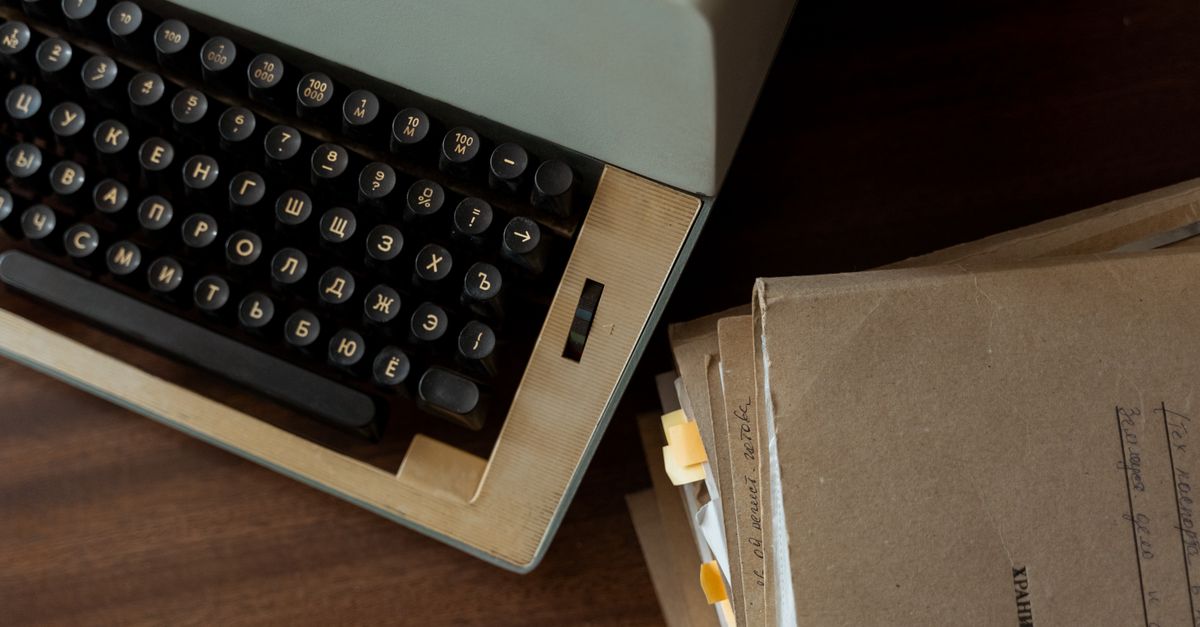
There is a small, telling moment that happens to every regular podcast listener. A presenter says something quotable — a turn of phrase, a number, a confession — and a few hours later you want to find it again. To text it to a friend, drop into a group chat, or simply work out whether you remembered it correctly. What happens next sorts British podcasts into two distinct camps. With some shows the line is on the page within a minute: you Google the half-quote you remember, you land on a transcript page, you scroll, you copy. With others, you scrub a 90-minute episode bar for ten minutes, fail, and give up.
For a long time that divide was treated as a niche accessibility question. In 2026 it has become something else: a quiet competitive front in podcast discovery. Transcripts have stopped being a compliance chore and started being a shelf — a second surface on which a show can be read, indexed, quoted and re-sold.
Why now
Three forces converged in the last eighteen months.
The first is platform-level automatic transcription. Apple Podcasts added auto-generated transcripts to its app in iOS 17.4 in March 2024, then expanded the feature to its episode pages on the web. Spotify followed for selected shows. YouTube has been auto-captioning long-form video uploads for years. The technical question of "how do we get a transcript" stopped being interesting overnight, because the platforms now do it for you whether you ask or not.
The second is the rise of listener tools. Apps like Snipd, Airr and Podscribe — covered previously in our look at six podcast apps for engaged listeners — all run on transcripts. So do the new wave of AI summarisers that listeners use to skim shows before committing to a full episode. The better the transcript a show provides, the better those tools work on it, and the more reasons a casual listener has to actually finish the thing.
The third is search. Google has been indexing podcast transcript pages aggressively since the death of its short-lived dedicated Google Podcasts app in April 2024. For any reasonably specific quote, the search engine now treats podcast transcripts the way it treats news articles. A show with published transcripts is a show with hundreds of indexable pages. A show without is, in search terms, a single line in a directory.
Put bluntly: publishing your words has moved from a thing to consider to a thing to compete on.
Where British podcasts actually stand
We looked at the public-facing transcript provision of ten of the country's most-listened-to podcasts as of late May 2026. What we found is more interesting than a binary "have them or don't". Shows are making different bets about where transcripts should live, how polished they should be, and who pays for them.
| Show | Own-site transcripts | Apple auto-transcripts | Production method | Notes |
|---|---|---|---|---|
| The Rest is Politics (Goalhanger) | No | Yes | Platform-auto only | Discovery ceded to Apple |
| The News Agents (Persephonica/Global) | Yes — selected | Yes | Human-edited highlights | Quotes pulled for newsletter |
| Off Menu (Plosive) | No | Yes | Platform-auto only | Conversational style; reads roughly in print |
| The Infinite Monkey Cage (BBC) | Yes — full | Yes | BBC in-house, human-checked | Highest-quality pages in the sample |
| The High Performance Podcast | Yes — selected | Yes | Auto + light edit | Quote shelf used heavily on socials |
| The Diary of a CEO | Yes — full | Yes | Auto + human pass | Quote-extract button on every page |
| Empire (Goalhanger) | No | Yes | Platform-auto only | History-heavy script; would index well if published |
| Today in Focus (The Guardian) | Yes — full | Yes | Human-produced | Reuses house newsroom transcription pipeline |
| Newscast (BBC) | Yes — full | Yes | BBC in-house | Chapter-headed, timestamped |
| The Rest is History (Goalhanger) | No | Yes | Platform-auto only | Largest gap between audience and search footprint |
A pattern leaps off the page. The shows with full, human-produced transcripts on their own sites are the ones with a publisher behind them — the BBC, the Guardian, Steven Bartlett's Flight Studio. The big independents, especially the Goalhanger stable, are content to let Apple do the work and link no transcript page of their own. The middle ground — selected highlights — is occupied by shows that came out of newsrooms but are not bankrolled by them.
That divide is not ideological. It is a question of who has a CMS, who has a sub-editor on payroll, and who already runs a website that earns its keep through search.
The accessibility floor
Underneath all of this is a quietly rising legal floor. The European Accessibility Act took effect on 28 June 2025 and applies to a wide range of digital services aimed at consumers. The UK is not bound by it directly, but British shows that publish into European markets — which is almost all of them — increasingly behave as though they are. Several production houses we spoke to mentioned a shift in 2025 from "we'll get to it" to "we need transcripts on the site by end of year".
For the listener who is deaf or hard of hearing, this is an unambiguous gain. The 4–6 per cent figure for severe hearing loss in the UK adult population is well known; what is less widely appreciated is that the cohort who use captions for cognitive reasons — non-native English speakers, listeners with attention difficulties, anyone who is half-watching while doing something else — is significantly larger. Ofcom's 2023 work on television captioning suggested somewhere between 18 and 24 per cent of viewers use subtitles routinely. There is no reason to think the figure for podcasts, once the option exists, would be very different.
What a good transcript page actually looks like
Producing a transcript is the easy bit. Producing one that listeners and search engines both want is where the craft lives. Across the sites we examined, the consistent features of a transcript page that earns its keep are:
- Speaker tags on every paragraph, not just at the start of a turn. A reader landing from search needs to know who is talking instantly.
- Timestamped paragraphs that link back into the player on the same page — ideally with a small "play from here" affordance. Newscast does this beautifully.
- Chapter-style headings that match whatever chapter markers the audio has. Apple's auto-transcripts do not produce these; a human edit does.
- Light copy-editing, particularly the removal of half-words and crosstalk. A transcript reads more naturally than the audio it is drawn from. That is not dishonesty; it is the same favour newspapers do quoted politicians every day.
- A quote-extraction affordance — a button that highlights a passage and produces a shareable image or formatted snippet. The Diary of a CEO does this well; almost no one else does.
- Crawlable HTML, not a PDF. Several otherwise excellent publishers still hide transcripts behind a PDF link, which is almost as bad as having no transcript at all.
A transcript that ticks five of these six items is doing work for the show. One that ticks two is a fig leaf.
The reasonable case against
Not every podcast should publish a transcript, and the arguments against are worth respecting.
The first is cost. A human-edited transcript of a ninety-minute interview is between three and five hours of skilled work, which at British market rates is £90–£200 per episode. For a show that publishes weekly, that is a £5,000–£10,000 annual line item with no obvious revenue against it.
The second is on-air style. A certain kind of unscripted conversation — the rambling, half-finished, talking-over-each-other texture of an Off Menu or a Triggernometry — reads dreadful on the page. Hosts who pride themselves on warmth and looseness are sometimes reluctant to see their own words in cold print, and not without reason. There is a real risk of having a quote pulled out of context and weaponised that the audio's tone would have softened.
The third is editorial labour. The moment you publish a transcript, you implicitly own its accuracy. That means fact-correction emails, takedown requests where someone has been misheard, and the standing risk of a lawsuit over a misattributed sentence. Newsrooms are built for that pipeline. Two presenters and a producer in a basement studio are not.
The unexpected second-order effect
A transcript culture changes how people talk. Several political podcasters have privately told us that the rise of auto-transcribed clips on Twitter and TikTok has made them more careful with their wording — they now speak as though they will be quoted in print, because in effect they will be. Whether that produces better journalism or duller conversation is the kind of question this publication likes to leave open. We note the shift and let listeners decide.
The other effect, less remarked on, is on guest behaviour. Off-the-record asides used to live in the audio. They now risk landing in a Google-indexed page within hours. Several booking agents we spoke to in the last six months have started asking, as a matter of course, whether a podcast publishes transcripts before agreeing a date. The answer increasingly shapes what gets said in the room.
Our view
The transcript shelf is going to matter more in 2027 than it did in 2025. The platforms have made auto-transcription a default; the listener tools have made quality transcripts a multiplier; and the search engines have made the absence of a transcript page a tangible cost. The shows that already have a CMS will publish them as a matter of housekeeping. The ones that do not will be edged off the search results by the ones that do.
Goalhanger and the bigger independents may eventually decide they would rather build their own transcript pages than concede the discovery surface to Apple's app. We would not be surprised to see them do exactly that within the next year. The economics — even at £10,000 a show — sit comfortably inside their advertising margins, and the SEO upside of a few hundred indexable pages per series is genuinely material.
For listeners, the transcript shelf is one of the few unambiguously good developments in podcasting in the last two years. It makes shows easier to quote, easier to share, easier to skim and — for a significant minority — possible to enjoy in the first place. If your favourite British podcast does not have a transcript page yet, the polite move is to email and ask. The less polite move, increasingly, is to drift towards a show that does.