The Listening Context: What Six British Podcast Audiences Are Actually Doing While You Talk
A podcast isn't just competing with other podcasts — it's competing with the kettle, the traffic lights, and the runner's mile marker. Here's how six British shows engineer their audio for the room their listeners are actually in.
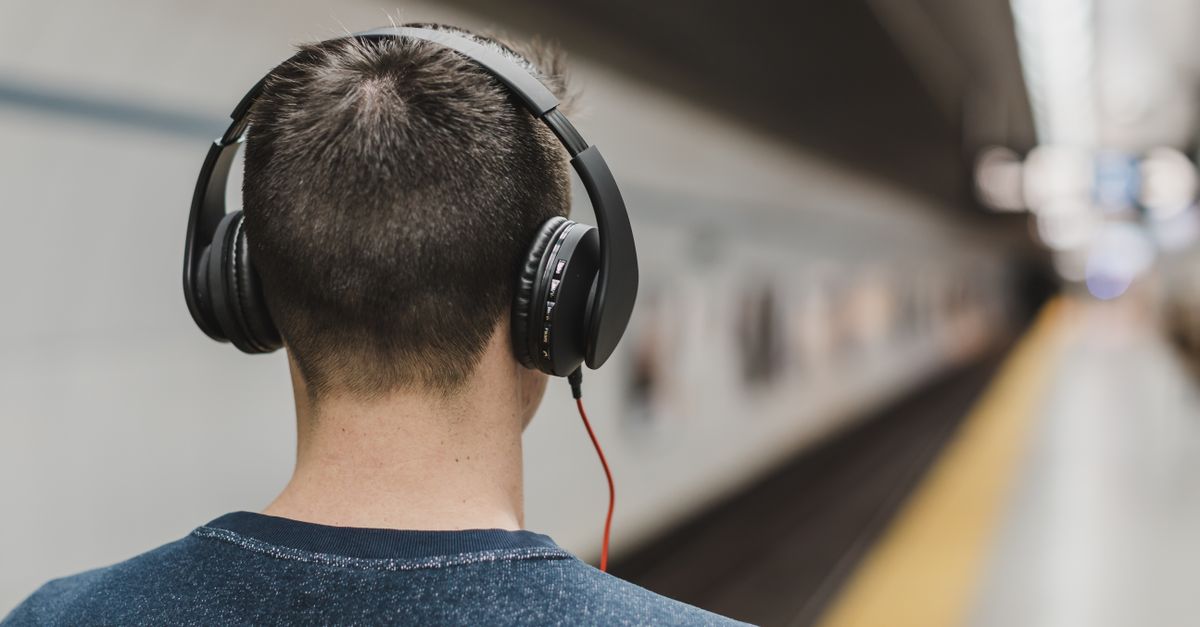
There is a small, strange intimacy to podcast listening that radio never quite managed. A presenter speaks into your ears while you chop an onion. A comedian delivers a punchline as you merge onto the M6. A historian describes a battlefield while you fold laundry on a Tuesday evening. The listener and the host occupy the same moment, but they are having fundamentally different experiences of it — one is performing, the other is living.
That gap — between what the podcaster intends and what the listener is actually doing — is where the craft of a great show lives. And British podcasting, with its particular obsession with tone and texture, has become unusually good at engineering for it.
The companion-activity gap
Industry data tells a story that most podcasters already feel in their bones: the majority of listening happens while someone is doing something else. The latest RAJAR MIDAS survey puts at-home listening at roughly 60% of all podcast consumption in the UK, with in-car and on public transport accounting for another 20%, and exercise, work, and chores splitting the remainder. Only a sliver of listening — perhaps 5% to 8% — happens with a listener sitting still, doing nothing but paying attention.
This is both a challenge and a liberation. A podcast that demands undivided attention is a podcast that loses its audience the moment the washing machine beeps. But a podcast that understands its listener's context — that knows when they're likely to be tuning in and what their hands are doing at that moment — can design around it. The best British shows treat the listener's activity not as a limitation but as a prompt.
Six shows, six contexts
Here is how six of Britain's most popular podcasts map onto their listeners' likely physical contexts — and how each show's production decisions reflect that reality.
| Podcast | Primary Listening Context | Typical Episode Length | Production Feature Suited to Context |
|---|---|---|---|
| The Rest Is Politics | Commuting, household chores | 45–55 min | Tightly segmented into distinct blocks with clear topic handoffs; listeners can dip in and out across a journey |
| The Diary of a CEO | Gym sessions, long walks | 90–120 min | Sustained interview energy with conversational pacing that rewards extended, uninterrupted listening |
| Off Menu | Cooking, evening wind-down | 50–70 min | Warm, visually rich food descriptions that pair naturally with meal preparation; low cognitive load, high charm |
| The News Agents | Morning commute, school run | 25–35 min | Clockwork daily structure, sharp first segment that grabs attention before the traffic lights change |
| Empire | Evening walks, weekend gardening | 40–55 min | Lush, unhurried storytelling with rich ambient texture; designed for listeners who want to be transported while their hands are occupied |
| Happy Place | Solo exercise, quiet moments | 40–60 min | Intimate, close-mic delivery with low dynamic range; built for earbuds in a yoga studio or a quiet park bench |
The Rest Is Politics: engineered for the interrupted listener
Goalhanger's flagship show knows something that took radio decades to learn: listeners on the move need signposting. Alastair Campbell and Rory Stewart don't just discuss a topic for 45 minutes — they move through five or six distinct blocks, each introduced with a clear verbal handoff. "Let's talk about the US tariffs" is not just a segue; it is a signal to someone walking through a train station that a new thread has begun and it is safe to start paying attention again.
The show's producers also enforce a rhythm that works in noisy environments. Campbell's combative pace and Stewart's measured, patrician counterpoints create a natural dynamic range that cuts through background hum without requiring the listener to ride the volume button. You can hear the production team's hand in this — the levelling is aggressive, the silences are clipped, and no one ever trails off into a mumble. That is not an accident. It is audio built for the Central line at 08:15.
The Diary of a CEO: the long-haul companion
Steven Bartlett's interview show sits at the opposite end of the context spectrum. At 90 to 120 minutes, an episode of The Diary of a CEO is not something you squeeze between Tube stops. It is designed for extended, physically repetitive activity — the gym session, the long Sunday walk, the three-hour drive to see family.
Bartlett's production team makes a deliberate choice here: they do not rush. The first 20 minutes of any episode are often biographical, unhurried, almost meditative. The show trusts that its listener is not about to arrive at their station. The payoff is a kind of intimacy that shorter, more segmented shows cannot replicate. By the time the conversation reaches its difficult third act — the part where the guest is asked about failure, regret, or fear — the listener has been running on a treadmill or walking a coastal path long enough that the emotional wall has come down on both sides of the microphone.
Off Menu: the kitchen companion
James Acaster and Ed Gamble's food-and-comedy format is, almost accidentally, the most context-aware show in British podcasting. It releases on Wednesday mornings, a slot that lands in time for weekend meal planning and the evening cooking window. Its dream-restaurant premise is inherently visual, which means the audio has to do the descriptive work that television would delegate to the camera — and it does, with a specificity that rewards the home cook whose hands are busy with a chopping board.
The show's production is also unusually quiet. There is no background music bed, no sound effects, no audience laughter. Acaster and Gamble work in a dry, intimate register that cuts through kitchen noise without competing with it. The result is a show that feels like conversation rather than broadcast — exactly the register you want when you are alone with a risotto and a glass of wine.
The News Agents: the school-run sprint
Global's daily news podcast has perhaps the most constrained brief in British audio: deliver a complete news analysis in roughly the time it takes to do the school run, walk the dog, or commute from Zone 3 to Zone 1. Emily Maitlis, Jon Sopel, and Lewis Goodall have honed a structure so tight it could be taught in journalism schools.
The first 90 seconds of every episode function as a cold open in miniature — a sharp question, a provocative clip, a statement of what is at stake. By minute three, the listener knows exactly what the episode will argue. By minute 25, the argument has been made, examined, and contextualised. There is no fat, no throat-clearing, no "how was your weekend" banter. The show respects that its listener might have exactly one window of attention — the gap between dropping off the children and pulling into the office car park — and it fills that window completely.
Empire: the transport mechanism
William Dalrymple and Anita Anand's history podcast operates on a different premise: the listener is not looking for information but for immersion. The show's audience tends to listen during evening walks, weekend gardening, or long cooking sessions — activities where the body is occupied but the mind is free to wander.
Empire's production leans into this. The episodes are built around extended narrative passages — sometimes 10 or 12 minutes without a break — that would test a commuter's attention span but feel luxurious to someone weeding a flowerbed. The sound design is richer than most speech podcasts: subtle music beds, location recordings from Dalrymple's research trips, the occasional archival clip. These are not distractions; they are handrails for a listener who wants to be somewhere else for 45 minutes.
Happy Place: the quiet companion
Fearne Cotton's wellbeing podcast occupies a specialised niche: it is designed for moments of deliberate solitude. Listeners put it on during solo walks, yoga practice, or the quiet half-hour before bed — contexts where the audio environment is already controlled and the listener's attention is available.
This frees Cotton's producers to make choices that would not work in a noisier context. The show is recorded at close proximity, with a soft, almost ASMR-quality intimacy that would be swallowed by traffic noise. The dynamic range is wide — whispers and laughter sit alongside normal speech — which works in quiet environments but would force a commuter to constantly adjust the volume. Happy Place does not try to be all things to all contexts, and that is precisely its strength. It knows its room.
The shows that break the rule — and get away with it
Not every successful British podcast designs for a specific listening context. Some of the most interesting production decisions come from shows that deliberately ignore the companion-activity rule.
Take The Rest Is Entertainment, Goalhanger's Marina Hyde and Richard Osman vehicle. At roughly 35 to 40 minutes per episode, it sits in the commuter sweet spot. But its production style — dense with rapid-fire references, inside jokes, and conversational cross-talk — demands more attention than a typical commute show. It works anyway, partly because Hyde and Osman's chemistry is compelling enough to hold focus, and partly because the show has trained its audience to treat it as appointment listening rather than background noise.
Then there is A Thorough Examination, the BBC Radio 4 podcast in which Drs Chris and Xand van Tulleken explore a single health topic across a series. Its episodes run 28 minutes and are produced with the narrative density of a Radio 4 documentary — layered interviews, scripted narration, a composed score. This is not companion listening. It is sit-down-and-pay-attention listening. The show gets away with it because its audience self-selects: people who choose a medical-deep-dive podcast are already signalling a willingness to concentrate.
What this means for podcasters
The listening-context lens has practical implications for anyone making a show. If your audience is primarily commuting, your first three minutes need to work in a noisy environment — which means clear speech, limited dynamic range, and a hook that survives being interrupted by a platform-change announcement. If your audience is cooking, descriptive language and steady pacing matter more than rapid-fire editing. If your audience is falling asleep, you need to engineer a gentle landing, not a crescendo.
These are not abstract concerns. They are production decisions that play out in every edit. The British shows that have lasted — the ones that have built loyal, returning audiences across hundreds of episodes — have all, consciously or not, answered the same question: what is my listener actually doing right now? The answer shapes everything from episode length to segment structure to the distance between the host's mouth and the microphone.
A podcast is a guest in someone's life. The best ones know which room they are being invited into.