Hours In, Minutes Out: How Britain's Biggest Podcasts Decide What to Cut
Every podcast you hear is the survivor of a longer conversation. We map the raw-to-finished editing ratios of eight British shows, from The Rest Is Politics to The Infinite Monkey Cage, and what the cuts tell you about the craft.
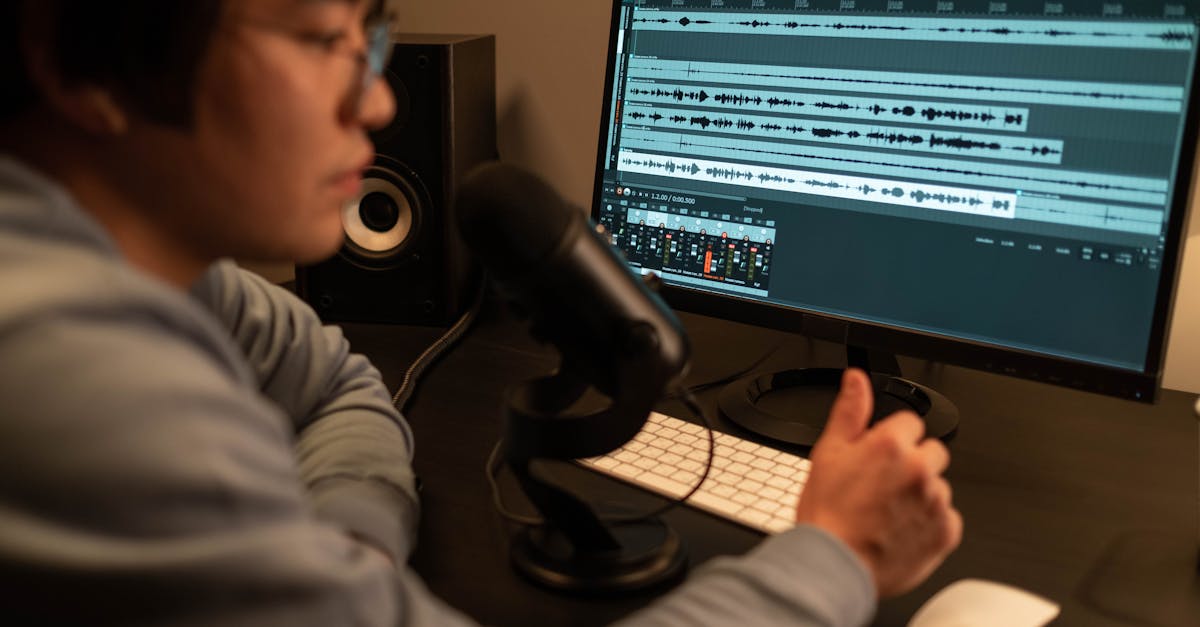
Every podcast in your feed is the survivor of a longer conversation. Somewhere between the moment the record button stops and the moment the episode lands on Apple Podcasts, a decision is made about what stays in and what disappears. That decision — repeated dozens of times per episode, hundreds of times per series — is one of the most consequential and least-discussed parts of the craft.
We spent a few weeks ringing producers, listening to making-of bonuses and reading the sparse interviews where editors talk shop, and tried to put rough numbers on something that's usually kept behind the studio door: how much tape do Britain's biggest podcasts throw away to make the version you hear?
A rough map of the British edit
These figures are approximate. Few shows publish exact recording lengths, and the ratio for any given episode wobbles with guest, format, and how much went wrong on the day. But producers tend to be candid about the ballpark when asked, and the picture that emerges is more varied than the smooth, conversational surface of British podcasting suggests.
| Podcast | Typical raw recording | Finished episode | Edit ratio | House philosophy |
|---|---|---|---|---|
| The Rest Is Politics | ~90 min | ~70 min | 1.3 : 1 | Light touch — Campbell and Stewart famously dislike retakes |
| The News Agents | ~55 min | ~40 min | 1.4 : 1 | Daily news rhythm; recorded close to publish |
| The Diary of a CEO | ~3 hrs | ~2 hrs | 1.5 : 1 | Long-form interview, modest pruning |
| Empire | ~1 hr 45 min | ~60 min | 1.7 : 1 | Conversational, light reordering |
| The Rest Is History | ~2 hrs | ~75 min | 1.6 : 1 | Tangents trimmed, headlines kept |
| High Performance | ~2 hrs | ~75 min | 1.6 : 1 | Scripted prompts, structural tightening |
| Off Menu | ~2 hrs 15 min | ~75 min | 1.8 : 1 | Comedy beats sculpted for timing |
| The Infinite Monkey Cage (BBC R4) | ~90 min | ~28 min | 3.2 : 1 | Radio 4 standards: every line earns its place |
The spread is wider than you might expect. At one end, a show like The Rest Is Politics publishes something close to what was said in the room — tape arrives at the editor, gets topped and tailed, and the ad breaks are dropped in. At the other, The Infinite Monkey Cage takes ninety minutes of Brian Cox and Robin Ince and a panel of physicists and chips it back to a twenty-eight-minute object so precise it has to fit the Radio 4 schedule.
That 3.2:1 ratio is doing real work. Roughly two-thirds of what Cox and Ince record never reaches a listener.
Six things 'editing' actually means
When producers talk about 'the edit', they're collapsing at least six different operations into one word. Different shows lean on different ones, and that lean is most of what gives a podcast its tonal signature.
- Topping and tailing. The bit before everyone settled in, the bit after the goodbyes. Almost every show cuts this; the ones that don't (mostly American long-form) are making a deliberate aesthetic choice.
- Tightening. Pauses, half-starts, the cleared throat, the second attempt at a sentence. Heavy on narrative podcasts and comedy, almost absent on Goalhanger's flagship talk shows.
- Content removal. The bit a guest later asked to lose, the half-formed opinion the host wants to walk back, the wrong date that the fact-checker flagged. Often the most ethically charged decision in the suite.
- Reordering. Moving a strong moment up so the episode opens with a hook, dragging the long context earlier so a later beat lands. You can usually hear this when a host says, 'As I mentioned earlier…' over something they've actually mentioned later.
- Inserts. Corrections, sponsor reads, pre-recorded context, an apology, a reaction to a news story that broke between record and publish. These are often added days after the main session.
- Pickups. The host pops back into a studio (or a phone box, or a hotel bathroom) and re-records a line that didn't land. The good ones you'll never notice. The less good ones have a different room tone for half a sentence.
A show like Off Menu relies heavily on points 2 and 4: Ed Gamble and James Acaster's instinct for comedy timing is shaped further in the edit, where pauses are tightened and tangents are sequenced for maximum payoff. A show like The News Agents, working against the clock, mostly does points 1, 3 and 5 and leaves the rest alone.
The two philosophies
Underneath the numbers, British podcasting has split into roughly two camps.
The first is the conversational-fidelity camp. The pitch to the listener is that you are eavesdropping. Editing should be invisible and minimal; the unrehearsed quality is the product. Goalhanger's flagship shows live here, as does The Diary of a CEO, as do most of the chat-led shows on Acast. The risk is meandering. The reward is intimacy — and a release cadence that allows two or three episodes a week without breaking the producer.
The second is the every-word-earns-its-place camp. This is the Radio 4 tradition, narrative true crime, audio drama and most BBC podcasts. Editing is the craft. The product is the polish. The risk is that it feels overworked; the reward is the kind of episode you remember a decade later. The Infinite Monkey Cage sits here. So does Tunnel 29. So does almost anything from the BBC's Radio Documentary unit.
Most shows that get described as 'naturalistic' actually sit somewhere between the two — closer to the first, but doing more shaping than the listener realises.
The economics of the cutting room
The edit ratio determines almost everything about how a show can operate.
A 1.3:1 light edit (say, The Rest Is Politics) needs roughly two to three hours of editor time per finished hour, with most of that being sponsor inserts and cleanup. One full-time editor can comfortably handle two episodes a week and have time for the bonus feed.
A 1.7:1 talk show like Empire tips that up to four or five hours of editor time per finished hour. Still single-editor territory, but you start needing a producer who is also an editor when guests cancel and rescheduling shifts the cut into the small hours.
A 3:1 narrative or comedy show is a different operation entirely. Off Menu-style comedy editing can run twelve to fifteen hours per finished hour by the time you've sculpted every beat. The Infinite Monkey Cage and other Radio 4 comparators run higher still — Radio 4 documentary editors routinely speak of one week per finished hour, which puts the ratio closer to 30:1 in editor-time terms.
This is why heavy-edit shows release weekly or fortnightly, and conversational shows release three times a week. The cutting room sets the metabolism.
How to hear the edit
Once you start noticing it, you can't stop. A few tells:
- Cross-fades and music stings. When a tiny phrase of theme music pops in for two bars between sentences, someone is paving over a join.
- A sudden tonal shift. A host laughing, then immediately serious, with no transition? The link between has been cut.
- Echo or breath that disappears. When the room tone goes from present to vacuum-sealed for a beat, you're hearing a noise gate clamping down on a tightened pause.
- Restarts disguised as emphasis. 'Look — look. The reason this matters is…' is often a host re-attempting a line they didn't nail the first time.
- Mid-episode reframes. When the host says 'we'll come to that' and then doesn't come to it for forty minutes, the bit you were promised was probably moved or cut.
None of this is a complaint. Editing is craft. The shows that lean into it most are often the ones we end up loving most — even though, by definition, we never hear the version that needed it.
Why Britain edits less than America
A loose generalisation, but a useful one: a British two-host talk show typically edits less than its American equivalent. The Rest Is Politics is tighter than Pod Save America; The News Agents is leaner than Pivot; Empire runs to roughly the same length as it was recorded, while a comparable US history podcast will often have been pruned by 30%.
Part of that is inheritance. British factual podcasting grew out of Radio 4 — a tradition where presenters are trained to be broadcastable in one take. Part of it is economic: the Goalhanger model assumes a small producer team and frequent releases, which only works if editing is light. And part of it is simply the BBC's long shadow: the idea that the polish belongs to drama and documentary, not to chat.
The Infinite Monkey Cage edit — twenty-eight minutes carved from ninety — is what's left of an older British craft, the one that used to be the whole industry and is now a small, particular corner of it. Both ends of the table can coexist. But every time you press play, you're choosing — without quite knowing it — which philosophy of cutting you've signed up for.