
Know Your Enemy
287 episodes — Page 4 of 6

Ep 76Midge Decter: Anti-Feminist Cold Warrior (w/ Moira Donegan & Adrian Daub)
EIn this episode, Matt and Sam join Moira Donegan and Adrian Daub — co-hosts of the new podcast “In Bed With The Right" — for an in-depth look at the life, times, and work of the late Midge Decter, who died in 2022. Decter was inspired by a distinctly conservative, mid-century American reading of Freudian psychology, mobilized in defense of traditional family hierarchies, which made her an important link between neoconservatives and the religious right — unsurprisingly, she helped found or served on the boards of numerous conservative organizations, including the Heritage Foundation, Committee for the Free World, and the Independent Women's Forum, among others. Her essays, books, and memoirs represent an anguished counter-revolt against the sexual liberation movements of the 1960s, 70s, and 80s, and her trajectory from (ostensible) New Deal liberal to anti-feminist Cold Warrior proves a perfect subject for Know Your Enemy. Decter also was married to Norman Podhoretz (another subject of KYE lore) and the mother of John Podhoretz, current editor of Commentary magazine. A quarrelsome, Jewish conservative with a lively writing style and a fascinating, emblematic life story: what could be better?Further Reading:Midge Decter, An Old Wife’s Tale: My Seven Decades in Love and War (2002) —The New Chastity and Other Arguments Against Women's Liberation (1972)— Always Right: Selected Writings of Midge Decter (2002)— Liberal Parents, Radical Children (1975)— Rumsfeld: A Personal Portrait (2003)— “The Boys on the Beach,” Commentary, Sept 1980.— “Socialism & Its Irresponsibilities: The Case of Irving Howe,” Commentary, Dec 1982.— “Documentation: Sex Education on Trial—What They’re Teaching Our Children,” Crisis Magazine, Dec 1, 1998.John Podhoretz, A Son’s Eulogy for Midge Decter (1927-2022), Commentary, May 12, 2022.R. R. Reno, “My Memories of Midge Decter,” First Things, May 11, 2022.Jeet Heer, “Farewell to Midge Decter, the Bigot on the Beach,” The Nation, May 13, 2022.Ronnie Grinberg, “An overlooked conservative writer helps explain Trump’s enduring appeal,” Washington Post, May 20, 2022.Douglas Martin, “Midge Decter, an Architect of Neoconservatism, Dies at 94,” NYTimes, May 9, 2022.Adrienne Rich, “The Anti-Feminist Woman,” NYRB, Nov 30, 1972. ...and don't forget to subscribe to Know Your Enemy on Patreon for access to all of our bonus episodes!

TEASER: Sin and Salvation in the Righteous Gemstones (w/ Jesse Brenneman)
bonusESubscribe to Know Your Enemy on Patreon to listen to this bonus episode, and all of our bonus content: https://www.patreon.com/knowyourenemyMatt and Sam welcome their intrepid producer and great friend Jesse Brenneman back to the third mic to talk about HBO's The Righteous Gemstones. In addition to being a wildly entertaining entry to the Danny McBride cinematic and television universe, the show perceptively explores the culture of American megachurch, evangelical Christianity—and offers your hosts plenty of fodder to discuss where faith ends and cynicism begins, the relationship between evangelicalism and consumer capitalism, cheap grace vs. real grace, whether or not people can change, the pathologies of evangelical purity culture, and much more. Plus: Jesse takes us behind the scenes of his brilliant, very funny podcast Tech Talk and its surprising connections to Elon Musk, Eli Gemstone, and others.Sources:John Jeremiah Sullivan, "Upon This Rock," GQ, January 24, 2004Austin Considine, "Danny McBride Keeps It Righteous," New York Times, June 14, 2023Doreen St. Félix, "The Lost Sheep of Danny McBride's The Righteous Gemstones," New Yorker, January 17, 2022Matthew Sitman, "Speaking of New York: An Interview with Fran Lebowitz," Commonweal, February 7, 2019

Ep 75Legal Trouble
EAfter several trying months, Matt and Sam can finally discuss the lawsuit against KYE and Dissent magazine filed by Young Americans Foundation , the successor organization to Young Americans for Freedom. (We prevailed, for now anyway.) Then we turn to three SCOTUS rulings from the end of the session: (1) Biden vs Nebraska (the student debt ruling); (2) Students for Fair Admissions v. Harvard (the affirmative action ruling); and (3) 303 Creative LLC v. Elenis (the gay wedding website design ruling). Each of these rulings represents a victory for the conservative legal movement, an exercise of raw power by the court, and a blow to dignity and decent policy for millions of Americans. Taken together, they help us understand the workings of the conservative intellectual pipeline — at law schools, fellowships, and well-endowed non-profits — to change federal policy. How do conservative institutions work together to (in the eyes of the law) turn victims into oppressors and vice versa? Listen to find out. Sources:Jennifer Schuessler, "Conservative Group Withdraws Lawsuit Against Left-Wing Podcast," New York Times, July 12, 2023John A. Andrew III, The Other Side of the Sixties: Young Americans for Freedom and the Rise of Conservative Politics (1997)Sarah Posner, "The Legal Muscle Leading the Fight to End the Separation of Church and State," Washington Spectator, April 1, 2007Emma Brown and Jon Swaine, "Amy Coney Barrett, Supreme Court Nominee, Spoke at Program Founded to Inspire a 'Distinctly Christian Worldview in Every Area of Law,'" Washington Post, September 27, 2020Melissa Gira Grant, "The Mysterious Case of the Fake Gay Marriage Website, the Real Straight Man, and the Supreme Court," New Republic, June 29, 2023Thomas Sowell, "The Day Cornell Died," Weekly Standard, October 30, 1999Katherine Stewart, The Power Worshippers: Inside the Dangerous Rise of Religious Nationalism (2020)...and don't forget to subscribe to Know Your Enemy on Patreon for access to all of our bonus episodes!

Impossible Professions: Freud and Janet Malcolm (ft. Patrick Blanchfield & Abby Kluchin)
bonusEKnow Your Enemy presents: an episode of Ordinary Unhappiness — a new podcast about psychoanalysis with hosts Abby Kluchin and Patrick Blanchfield. Their guest? Sam Adler-Bell! In the episode that follows, we talk about how Sam came to study conservative thought from a leftist perspective and what role psychoanalysis plays in that project; discuss the libidinal satisfactions of conservative politics; and speculate about the contemporary absence of sophisticated right-wing psychoanalytic thinkers. Then they turn to a favorite writer, journalist Janet Malcolm, author of Psychoanalysis: The Impossible Profession and The Journalist and the Murderer. They talk about parallels between the role of the analyst and that of the journalist; interiors and interiority; secrets, thefts, and betrayals; the so-called “Freud wars”; and the internal politics of psychoanalytic institutions. Finally, they examine Malcolm’s famous claim that the task of the journalist is “morally indefensible” and its implications for the work of the analyst. Further reading: Sam Adler-Bell, "Janet Malcolm’s Dangerous Method," The New Republic, Mar 20, 2023Sam Adler-Bell, "Succession's Repetition Compulsion," The Nation, Nov 10, 2021Hannah Gold, “Analysis Interminable: On Janet Malcolm,” The Nation, June 25, 2021.Janet Malcolm, Psychoanalysis: The Impossible Profession (1982)— In The Freud Archives (1984)— The Journalist and the Murderer (1990)...and don't forget to subscribe to Know Your Enemy on Patreon for access to all of our bonus episodes! For more Ordinary Unhappiness: Linktree: https://linktr.ee/OrdinaryUnhappinessTwitter: @UnhappinessPodInstagram: @OrdinaryUnhappinessPatreon: patreon.com/OrdinaryUnhappiness

Grow Up, Men (w/ Phil Christman) [TEASER]
bonusESubscribe to Know Your Enemy on Patreon to listen to this bonus episode, and all of our bonus content: https://www.patreon.com/knowyourenemyIn this follow-up to "What's Wrong with Men?, Matt and Sam talk with the essayist and critic Phil Christman about his 2018 Hedgehog Review article, "What Is It Like To Be a Man?"—an article that figured prominently in their conversation—as well as two posts responding to the episode published on his always excellent Substack, The Tourist. They discuss how the discourse about men has evolved in recent years, the darker and more deranged consequences of an "abstract rage to protect," some of the ways gender and class might relate to each other, and more about Matt's psyche than you might care to know.Sources:Phil Christman, How To Be Normal (2022)"What Is It Like To Be a Man?" Hedgehog Review, Summer 2018"Guy stuff. Boy time. Brosephery." The Tourist, June 11, 2023"Manfulness. Hot guy stuff. Convening a bro-seph bro-dsky reading group." The Tourist, June 22, 2023Leonard Michaels, The Men’s Club, (1981)Rudyard Kipling, “If—“ (1941)

The Prayers and Prophecies of Pat Robertson [TEASER]
bonusESubscribe to Know Your Enemy on Patreon to listen to this bonus episode, and all of our bonus content: https://www.patreon.com/knowyourenemyLast week, televangelist, businessman, conspiracy theorist, and former Republican presidential candidate Pat Robertson died at the age of 93. Though mostly known today for his deranged comments about homosexuality, abortion, feminism, and other "sins" causing everything from natural disasters to 9-11, Robertson had a major influence on the evolution of the Republican Party and the religious right. Where did Robertson come from, and what was distinctive about Robertson's theological and political views? What were the innovations of the Christian Coalition, the group he founded in 1987, in organizing conservative believers for the GOP? How did he respond to the end of the Cold War and adapt his message for the 1990s and the supposed advent of a "New World Order"?In this episode, Matt and Sam take up these questions and more, plus offer a discussion of James G. Watt, Ronald Reagan's first Secretary of the Interior, who died in late May. An evangelical Christian known for railing against the Beach Boys, his offensive comments about Native Americans and others, and using the supposed imminent return of Christ to justify destroying the environment.Sources:Pat Robertson obituaries: NYT, Washington PostJames G. Watt obituaries: NYT, Washington PostDaniel Schlozman, When Movements Anchor Parties: Electoral Alignments in American History (2016)Jacob Heilbrunn, "His Anti-Semitic Sources," New York Review of Books, April 20, 1995Pat Robertson, The New World Order (1991)James Conaway, "James Watt, In the Right with the Lord," Washington Post, April 27, 1983John Taylor "Pat Robertson’s God, Inc." Esquire, Nov 1994.

Ep 74What's Wrong With Men?
E"Many men in this country are in crisis, and their ranks are swelling," Missouri Senator Josh Hawley said at the National Conservatism conference in 2021. "And that's not just a crisis for men. It's a crisis for the republic." Some version of this sentiment — that men are in trouble, adrift, or falling behind — is shared by writers and thinkers across the political spectrum. It's nearly impossible to open a magazine without finding an article about the state of manhood in America. Brookings Institution scholar Richard Reeves' 2022 book Of Boys and Men: Why the Modern Male Is Struggling, Why It Matters, and What to Do about It is a best-seller. Figures like Jordan Peterson and Andrew Tate attract huge audiences, serving as reactionary self-help gurus for young people eager to be told what a man is and how he should behave. One doesn't have to accept the right's framing of the problem — nor any kind of gender essentialism — to acknowledge the statistics: boys and men are falling behind in education, in work-force participation, and succumbing to drugs, alcoholism, and suicide. Hawley — apparently having stewed on the topic for two years — has just released a book on "manhood," which advises a revival of biblical virtues to guide the aimless young men of 21st century America. To pair with Hawley, we read Harvey Mansfield's 2006 book on "manliness." Putting Hawley's evangelical Christian preaching in conversation with Mansfield's Straussian philosophical playfulness proved very constructive. Along the way, we talk about our own relationship to manhood and try to decide which (if any) of the virtues associated with maleness are worth preserving, defending, or even advising young men to embrace. Further reading: Harvey C. Mansfield, Manliness, Yale University Press, 2006.Joshua Hawley, Manhood: The Masculine Virtues America Needs, Regnery, 2023. Joshua Hawley, "America's Epicurean Liberalism," National Affairs, Fall 2010.Becca Rothfeld, "How to be a man? Josh Hawley has the (incoherent) answers," The Washington Post, May 18, 2023. Phil Christman, "What Is It Like to Be a Man?" Hedgehog Review, Summer 2018.Martin Amis, "Return of the Male," London Review of Books, Dec 5, 1991. Martha Nussbaum, "Man Overboard," New Republic, June 22, 2006. Idrees Kahloon, "What's the Matter With Men?" The New Yorker, Jan 23, 2023.Zoë Heller, "How Toxic Is Masculinity?" The New Yorker, Aug 1, 2022. Lisa Miller, "Tate-Pilled What a generation of boys have found in Andrew Tate’s extreme male gospel." New York Magazine, Mar 14, 2023. ...and don't forget to subscribe to Know Your Enemy on Patreon for access to all of our bonus episodes!

The 2024 Race: "It's Showtime, Folks!" (TEASER)
bonusESubscribe to Know Your Enemy on Patreon to listen to this bonus episode, and all of our bonus content: https://www.patreon.com/knowyourenemyMatt and Sam take the pulse of the 2024 presidential race: Is DeSantis already doomed? Does Trump still have the juice? Can Biden handle a full campaign schedule? And how do you solve a problem like Kamala?The answers to these questions and more! Enjoy some rank punditry!SourcesNate Cohn, "Why Ron DeSantis Is Struggling," New York Times, May 5, 2023Shane Goldmacher, Maggie Haberman & Jonathan Swan, "Why Ron DeSantis Is Limping to the Starting Line," New York Times, May 13, 2023Reid J. Epstein & Shane Goldmacher, "Biden’s Slow Start Worries Democrats. Aides Insist All Is Well," New York Times, May 14, 2023Sam Adler-Bell, "The One Thing Trump Has That DeSantis Never Will," New York Times, Apr 10, 2023Matthew Sitman, "The 'Weekend at Bernie’s' Primary," Commonweal, Mar 3, 2020.

Ep 73"Succession," "Extrapolations," and TV Writing Today (w/ Dorothy Fortenberry and Will Arbery)
EWith the Writers Guild of America strike underway, the plight of television writers—especially their treatment in the age of streaming and artificial intelligence—is garnering new, and overdue, attention. Matt and Sam are joined by two friends of the podcast, Will Arbery and Dorothy Fortenberry, who write for major television shows: Will is a writer for HBO's Succession, and Dorothy for Apple TV+'s Extrapolations. They discuss how they write about political topics and themes, such as rightwing political candidates or the effects of climate change, in these fraught times, when the demands of good art can seem in tension with a simplistic and moralistic culture. Also discussed: parents, children, and families, now and in the coming climate crisis; how and whether people can change; and, of course, the WGA strike and why it matters.Sources Cited:Michael Schulman, "Why Are TV Writers So Miserable," The New Yorker, Apr 29, 2023Alex Press, "TV Writers Say They’re Striking to Stop the Destruction of Their Profession," Jacobin, May 3, 2023.Sam Adler-Bell, "Succession's Repetition Compulsion," The Nation, Nov 10, 2021.Pope Francis, Laudato si’ (“On Care for Our Common Home”), May 2015Listen to previous Know Your Enemy episodes with these guests:"We Can Be Heroes" (w/ Will Arbery), November 11, 2019"Suburban Woman" (w/ Dorothy Fortenberry), October 29, 2020"Living at the End of Our World" (w/ Daniel Sherrell & Dorothy Fortenberry), September 2, 2021...and don't forget to subscribe to Know Your Enemy on Patreon for access to all of our bonus episodes!

TEASER: The January 6th Committee Report
bonusESubscribe to Know Your Enemy on Patreon to listen to this bonus episode, and all of our bonus content: https://www.patreon.com/knowyourenemyThe boys discuss Matt's recent Dissent essay on the 845-page report of the "Select Committee to Investigate the January 6th Attack on the United States Capitol." What did the Jan 6 report — and the committee's work — achieve? Was the report a missed opportunity? How should political actors navigate the relationship between historical constraints and contingency? And is there a way to wed the Democrats' eagerness to "defend democracy," as such, with a more robust program for social and economic justice? We puzzle it out.Sources:Matthew Sitman, "Will Be Wild," Dissent, Apr 18, 2023.Jill Lepore, "What the January 6th Report is Missing," The New Yorker, Jan 9, 2023.David Sirota, "The Long American Meltdown Led to the January 6 Insurrection" Jacobin, Jan 6, 2022Sam Adler-Bell, "Is the January 6 Committee Really Saving Democracy?" New York Magazine, Jul 11, 2022.Executive Summary of the Jan 6 Report

Ep 72Ron DeSantis Wants to Make America Florida (w/ Gillian Branstetter)
EGillian Branstetter (of the ACLU's Women’s Rights Project and LGBTQ & HIV Project) returns to Know Your Enemy for an episode on the strange case of Ron DeSantis: what is his ideology and vision for America? And why do his political aspirations involve inflicting wanton cruelty upon LGBTQ children and adults in his home state? For our sins, we read DeSantis's new book — a campaign book, though he has not yet formally announce his presidential run — The Courage to Be Free: Florida's Blueprint for America's Revival. (You heard it here: it sucks.) Along the way, Gillian provides an update on the conservative war on so-called "gender ideology" and "wokeness," how organizations like hers are fighting back, and why superficial expressions of sympathy for trans people by major corporations and banks — which so outrage the right — are themselves a trap and a means of evading real justice. We also discuss Sam's New York Times piece on DeSantis as an anti-woke technocrat, an embodiment of the twin cults of expertise and meritocracy, even as he disavows and demonizes the "ruling class" and it's irksome cultural mores. Finally, we identify the violent underpinnings of DeSantis's political impulses, discussing his alleged involvement in detainee abuse at Guantanamo Bay. As Gillian summarizes DeSantis's worldview, “It’s just cold efficiency and shared enemies. That’s what he’s selling. It’s like getting a moral lecture from a gun." Sources:Gillian Branstetter, "The Gender War Is A Forever War," The Autonomy, Mar 5, 2023.— "When Biology Needs Some Help," The Autonomy, Feb 9, 2023.Ron DeSantis, The Courage to Be Free: Florida's Blueprint for America's Revival, Feb 2023Sam Adler-Bell, "The One Thing Trump Has That DeSantis Never Will," NY Times, Apr 10, 2023.Adrian Daub, What Tech Calls Thinking: An Inquiry into the Intellectual Bedrock of Silicon Valley, Oct 2020.Zack Beauchamp, "Ron DeSantis is following a trail blazed by a Hungarian authoritarian," Vox, Apr 28, 2022. Angelo Codevilla, "America's Ruling Class," The American Spectator, Jul 16, 2010. Jasper Craven, "The Sunshine Imperium: The militarism of Ron DeSantis," The Baffler, Mar 2023.Daniel Luban, "The Belligerent: Angelo Codevilla and the ideological origins of the New Right," The Baffler, Oct 2022. Wendy Brown, In the Ruins of Neoliberalism: The Rise of Antidemocratic Politics in the West, Jul 2019.Joseph Darda, The Strange Career of Racial Liberalism, Mar 2022. Olúfẹ́mi O. Táíwò, "Identity Politics and Elite Capture," Boston Review, May 7, 2020.Michael Kranish, "DeSantis’s pivotal service at Guantánamo during a violent year," Washington Post, March 19, 2023....and don't forget to subscribe to Know Your Enemy on Patreon for access to all of our bonus episodes!

TEASER: Whittaker Chambers, Redux (w/ Sam Tanenhaus)
bonusESubscribe to Know Your Enemy on Patreon to listen to this bonus episode, and all of our bonus content: https://www.patreon.com/knowyourenemyThe great Sam Tanenhaus (author of Whittaker Chambers: A Biography) returns to the podcast for a spirited and gossipy discussion of everything we missed — or only briefly mentioned — in our main episode on Chambers, including: his religious faith, his sexuality, his ideological position in the National Review crowd, Hannah Arendt's review of Witness, and much more.Plus: we extract from Sam Tanenhaus an update on the status of his HIGHLY-anticipated biography of William F. Buckley Jr... This one is for real heads. Enjoy!

Ep 71Bob Dylan's America (w/ Will Epstein)
E"That’s the problem with a lot of things these days," wrote Bob Dylan in 2022, "Everything is too full now; we are spoon-fed everything. All songs are about one thing and one thing specifically, there is no shading, no nuance, no mystery. Perhaps this is why music is not a place where people put their dreams at the moment; dreams suffocate in these airless environs." This mournful attitude — for a lost age of artfulness, mystery, and hope — pervades Dylan's 2022 book, Philosophy of Modern Song. In this sense, it's a quintessentially conservative book. But decline and nostalgia are not its only themes. In short bursts of prose reflecting on sixty-six totemic songs (from Webb Pierce's 1953 hit "There Stands the Glass;" to The Fugs' 1967 proto-punk romp "CIA Man;" to Nina Simone's unimpeachable "Don't Let Me Be Misunderstood"), Dylan conjures a country — and canon — defined most of all by mutability, motion, and menace. Dylan's America never stops moving, reinventing itself, or rebelling against its own strictures. Things get better; things get worse; what they don't do is stay the same. To help us make sense of Bob Dylan's idiosyncratic vision of America and American song, we're joined by Know Your Enemy musician-in-residence (and Bob super-fan) Will Epstein. Besides providing the music for our show, Will is a song-writer, composer, and improvisor; his latest album, WENDY, is out from Fat Possum records. (Download it or buy the vinyl here.) Music may not be the place where most people put their dreams these days, but it's still where we put ours. And there is no better way to understand America's dreams than by listening — closely — to its music. Sources:Bob Dylan, The Philosophy of Modern Song (2022)Bob Dylan, Chronicles: Volume One (2005)Sean Wilentz, Bob Dylan in America (2010)Clinton Heylin, Bob Dylan: Behind the Shades Revisited (2003)Martin Chilton, "Bob Dylan and the Great American Songbook," May 24, 2022Raymond Foye, "Bob Dylan’s The Philosophy of Modern Song," The Brooklyn Rail, Nov. 2022.Hua Hsu, "How Nam June Paik’s Past Shaped His Visions of the Future," The New Yorker, Mar 29, 2023.John Szwed, Cosmic Scholar: The Life and Times of Harry Smith, coming Aug 2023....and don't forget to subscribe to Know Your Enemy on Patreon for access to all of our bonus episodes!

TEASER: Our Lady of Guadalupe and American Democracy (w/ Nichole M. Flores)
bonusESubscribe to Know Your Enemy on Patreon to listen to this bonus episode, and all of our bonus content: https://www.patreon.com/knowyourenemy In the second (and final) of Matt's Lent-related conversations with theologians, he's joined by Dr. Nichole M. Flores of the University of Virginia, where she is Associate Professor of Religious Studies and researches the constructive contributions of Catholic and Latinx theologies to notions of justice and aesthetics to the life of democracy. This conversation focuses on her recent book, The Aesthetics of Solidarity: Our Lady of Guadalupe and American Democracy, and considers the promise and perils of using particular religious symbols, imagery, and language in a pluralistic, democratic society. Sources:Nichole M. Flores, The Aesthetics of Solidarity: Our Lady of Guadalupe and American Democracy (2021)

TEASER: Suffering, Solidarity, and Ritual (w/ Susan Bigelow Reynolds)
bonusESubscribe to Know Your Enemy on Patreon to listen to this bonus episode, and all of our bonus content: https://www.patreon.com/knowyourenemy This conversation is the first of two that Matt recorded to be released during Lent, the forty-day season when Christians prepare for Easter Sunday by fasting and giving of their time and treasure to those in need. This episodes features Catholic theologian and Emory University professor Dr. Susan Bigelow Reynolds discussing her new book, People Get Ready: Ritual, Solidarity, and Lived Ecclesiology in Catholic Roxbury. In the book, she draws on years of ethnographic research about St. Mary of the Angels, a small, urban parish near Boston's Egleston Square, to understand how that religious community "constructed rituals of solidarity as a practical foundation for building radical solidarity in the face of racial and economic injustice." Sources:Susan Bigelow Reynolds, People Get Ready: Ritual, Solidarity, and Lived Ecclesiology in Catholic Roxbury (2023)Susan Bigelow Reynolds, "Ways of the Cross," Commonweal, March 14, 2023

Ep 70Whittaker Chambers and the Freight Train of History
EIn this episode, Matt and Sam go deep into the life and times of Whittaker Chambers, most famous for his role in the "trial of the century"—the trial of Alger Hiss for perjury after Chambers accused Hiss of being a Communist spy during his years working in the federal government, especially the State Department. The two figures, once friends, came to symbolize a clash that was bigger than themselves, and prefigured the turn American politics would take at the onset of the Cold War. Chambers would become a hero of the nascent postwar conservative movement, with his status as an ex-Communist—one of many who would congregate around National Review in the mid-to-late 1950s—bringing his moral credibility to the right as one who had seen the other side and lived to tell his tale. Before all that, though, Chambers's life was like something out of a novel: a difficult family life, early brilliance at Columbia University, literary achievement in leftwing publications, and years "underground" engaging in espionage for the Soviet Union against the United States. "Out of my weakness and folly (but also out of my strength), I committed the characteristic crimes of my century," writes Chambers in his 1952 memoir/jeremiad Witness. Your hosts break it all down, assess his crimes and contributions, and explore one of the most consequential American lives of the twentieth century. Sources:Sam Tanenhaus, Whittaker Chambers: A Biography (1997)Whittaker Chambers, Witness (1952)Whittaker Chambers, Cold Friday (1964)Whittaker Chambers, "Big Sister is Watching You," National Review, December 28, 1957The Whittaker Chambers Reader: His Complete National ReviewWritings, 1957-1959 (2014)William F. Buckley, Jr., editor, Odyssey of a Friend: Whittaker Chambers Letters to William F. Buckley, Jr. (1969)L. Brent Bozell, Jr. and William F. Buckley, Jr., McCarthy and His Enemies: The Record and Its Meaning (1954)Murray Kempton, Part of Our Time: Some Ruins and Monuments of the Thirties (1956)Landon R.Y. Storrs, The Second Red Scare and the Unmaking of the New Deal Left (2013)Richard H. Crossman, editor, The God that Failed: A Confession (1949)Lionel Trilling, The Middle of the Journey (1947)Matthew Richer, "The Cry Against Ninevah: A Centennial Tribute to Whittaker Chambers," Modern Age, Summer 2001Christopher Hitchens, "A Regular Bull," London Review of Books, July 1997Christopher Hitchens and Martin Amis, "No Laughing Matter" (YouTube, 2007)Jess Bravin, "Whittaker Chambers Award Draws Criticism—From His Family," Wall Street Journal, March 28, 2019Isaac Deutscher, "The Ex-Communist's Conscience," The Reporter, 1950. John Patrick Diggins, Up From Communism: Conservative odysseys in American intellectual history, (1975)Daniel Aaron, Writers on the Left, (1961)Larry Ceplair, Anti-Communism in Twentieth-Century America: A Critical History, (2011) ...and don't forget to subscribe to Know Your Enemy on Patreon for access to all of our bonus episodes!

Realignments (w/ Timothy Shenk)
bonusEEarly in Timothy Shenk's absorbing, provocative recent book, Realigners: Partisan Hacks, Political Visionaries, and the Struggle to Rule American Democracy, he describes it as "a biography of American democracy told through its majorities, and the people who made them." Looking at American figures from Martin Van Buren to Charles Sumner to Mark Hanna to Phyllis Schlafly and Barack Obama, the book attempts to define the character and conditions necessary for fashioning a durable electoral majority — in those moments when existing partisan and coalitional structures were reshuffled and articulated anew. In other words: a realignment.In this thrilling conversation, Matt, Sam, and Tim talk through the implications of past realignments and argue about whether something similar is possible today.Sources:Timothy Shenk, Realigners: Partisan Hacks, Political Visionaries, and the Struggle to Rule American Democracy (Farrar, Straus & Giroux, 2022)Stephen Skowronek, The Politics Presidents Make: Leadership from John Adams to Bill Clinton (Harvard University Press, 1993)Sam Adler-Bell, "The Radical Young Intellectuals Who Want to Take Over the American Right," The New Republic, Dec 2021Firing Line debate on the Panama Canal (YouTube) This episode was unlocked from Patreon. To hear more bonus episodes, subscribe at https://www.patreon.com/knowyourenemy.

TEASER: Le Carre's Cold War (w/ Jamelle Bouie and John Ganz)
bonusESubscribe to Know Your Enemy on Patreon to listen to this bonus episode, and all of our bonus content: https://www.patreon.com/knowyourenemySam is joined by returning KYE all-stars Jamelle Bouie (of the NYTimes) and John Ganz (of Unpopular Front) for a spirited discussion of the 1984 film "The Little Drummer Girl," starring Diane Keaton — an adaptation of John le Carré's 1983 novel of the same name.We approach the film — which, it turns out, is not very good — with the same analytical rigor that Jamelle and John bring to their own podcast, "Unclear and Present Danger," which focuses on the post-Cold War thrillers of the 1990s. We wind up talking about why the film doesn't work and about le Carré's ambiguous approach to spy fiction, in particular, how his perspective differs from other British chroniclers of Cold War espionage, like Ian Flemming and Graham Greene.In what ways does le Carré's approach represent an essentially (small-c) conservative disposition? And why is it so attractive to all of us? Listen to find out! Recommended Reading:Sam Adler-Bell, "The Father of All Secrets," The Baffler, Dec 2022.Laura Marsh, "The Nonconformist," NYRB, Feb 2022.Nicholas Dames, "Coming in from the Cold," n+1, Spring 2018.John le Carré, The Little Drummer Girl, Hodder & Stoughton, 1983.Tim Cornwell ed., A Private Spy: The Letters of John le Carré, Random House, Jan 2023.

Ep 69Triumph of the Therapeutic (w/ Hannah Zeavin & Alex Colston)
EModern conservatives have long asked the following questions: how can we live together without God? Is there any substitute for religion in cohering a moral community? And if not, what can we do to revive the old sacred authority that reason, science, and liberalism have interred?These were also the questions that preoccupied Philip Rieff (1922-2006), an idiosyncratic sociologist and product of the University of Chicago, whose thought cast a long shadow over right-wing intellectuals, theologians, and other Jeremiahs of the modern condition (like Christopher Lasch and Alasdair MacIntyre). In the two books that made his name — 1959's Freud: Mind of the Moralist and 1966's Triumph of the Therapeutic: The Uses of Faith After Freud — Rieff engages deeply with psychoanalysis, deriving from Sigmund Freud a theory of how culture creates morality and, in turn, why modern culture, with its emphasis on psychological well-being over moral instruction, no longer functions to shape individuals into a community of shared purpose. Rieff, a secular Jew, remained concerned to the very end of his life with the problem of living in a society without faith, one in which the rudderless self is mediated, most of all, by therapeutic ideas and psychological institutions rather than by religious or political ones. Less sophisticated versions of this conundrum haunt conservative thought to this day — from complaints about "wokeness" as a religion to the right's treatment of sexual and gender transgression as mental pathology. To help us navigate Rieff, Freud, and the conservative underbelly of psychoanalysis, we're joined by two brilliant thinkers and writers: Hannah Zeavin and Alex Colston. Hannah is an Assistant Professor at Indiana University in the Luddy School of Informatics; Alex is a PhD student at Duquesne in clinical psychology. Most importantly, for our purposes, Hannah and Alex are also the editors of Parapraxis, a new magazine of psychoanalysis on the left. We hope you enjoy this (admittedly, heady) episode. If you do, consider signing up for a new podcast — on psychoanalysis and politics, of all things — hosted by beloved KYE guest Patrick Blanchfield and his partner Abby Kluchin entitled "Ordinary Unhappiness." Further Reading: Philip Rieff, Freud: Mind of the Moralist (Viking, 1959)— The Triumph of the Therapeutic: Uses of Faith After Freud (Harper & Row, 1966)— Fellow Teachers (Harper & Row, 1973)Gerald Howard, "Reasons to Believe," Bookforum, Feb 2007. Blake Smith, "The Secret Life of Philip Rieff." Tablet, Dec 15, 2022George Scialabba, "The Curse of Modernity: Rieff's Problem with Freedom," Boston Review, Jul 1, 2007.Christopher Lasch, "The Saving Remnant," The New Republic, Nov 19, 1990. Hannah Zeavin, "Composite Case: The fate of the children of psychoanalysis," Parapraxis, Nov 14, 2022. Alex Colston, "Father," Parapraxis, Nov 21, 2022. Rod Dreher, "We Live In Rieff World," Mar 1, 2019. Park MacDougald, "The Importance of Repression," Sept 29, 2021...and don't forget to subscribe to Know Your Enemy on Patreon for access to all of our bonus episodes!

TEASER: Realignments (w/ Timothy Shenk)
bonusESubscribe to Know Your Enemy on Patreon to listen to this bonus episode, and all of our bonus content: https://www.patreon.com/knowyourenemyEarly in Timothy Shenk's absorbing, provocative book, Realigners: Partisan Hacks, Political Visionaries, and the Struggle to Rule American Democracy, he describes it as "a biography of American democracy told through its majorities, and the people who made them." Looking at American figures from Martin Van Buren to Charles Sumner to Mark Hanna to Phyllis Schlafly and Barack Obama, the book attempts to define the character and conditions necessary for fashioning a durable electoral majority — in those moments when existing partisan and coalitional structures were reshuffled and articulated anew. In other words: a realignment. In this thrilling conversation, Matt, Sam, and Tim talk through the implications of past realignments and argue about whether something similar is possible today. Sources:Timothy Shenk, Realigners: Partisan Hacks, Political Visionaries, and the Struggle to Rule American Democracy (Farrar, Straus & Giroux, 2022)Stephen Skowronek, The Politics Presidents Make: Leadership from John Adams to Bill Clinton (Harvard University Press, 1993)Sam Adler-Bell, "The Radical Young Intellectuals Who Want to Take Over the American Right," The New Republic, Dec 2021

Ep 68The Eyes of the Ranger (w/ Jesse Brenneman)
EThis episode is a little different. Rather than dissecting an influential conservative book written by long-dead intellectual, Matt and Sam are joined by Know Your Enemy's brilliant producer (and host of the very funny podcast, Tech Talk) to unpack a different kind of "text"—the hit CBS television show from the 1990s, Walker, Texas Ranger, starring the very much still-living Chuck Norris. Set in the Dallas-Fort Worth area, Norris stars as Sergeant Cordell Walker, a member of the storied Texas Rangers who takes on drug dealers, Satanists, corrupt cops, and other bad guys, a task aided by his incredible martial-arts skills. The episodes of Walker discussed in this conversation were carefully curated by Jesse, and they provide a great deal of fodder for understanding conservatism (and America) in the 1990s, law and order politics, the American penchant for moral panics, how the Right has changed in the decades since the show aired, and more.Sources:Walker, Texas Ranger on IMDB"Chuck Norris's code of honor," drawn from the Chuck Norris System of martial arts (Chun Kuk Do)Chuck Norris, Black Belt Patriotism: How to Reawaken America (2008)Aaron Cantú, The Chaparral Insurgents of South Texas,The New Inquiry, April 2016. ...and don't forget to subscribe to Know Your Enemy on Patreon for access to all of our bonus episodes!

TEASER: The Death of Pope Benedict XVI (w/ Michael O'Loughlin)
bonusEListen to the entire conversation by subscribing to Know Your Enemy on Patreon!On Dec. 31, Pope Emeritus Benedict XVI died at the age of 95. During his long career as a towering figure in the Catholic Church in the second half of the twentieth century and beyond—especially his decades helming the Vatican's powerful Congregation for the Doctrine of the Faith, then as Pope and Pope Emeritus—Benedict was involved in nearly all of the Church's crises and controversies. He cracked down on liberation theologians, held a reactionary line on homosexuality at the height of the AIDS crisis, and slowly awakened to the depths and depravity of the Catholic sex-abuse scandal—but he also wrote movingly about God's love and took positions on the environment and the economy that would be mostly ignored by his conservative fans. To try to make sense of Benedict's life and work, especially his relationship with American Catholics, Matt is joined by Michael O'Loughlin, the national correspondent at America magazine and author of Hidden Mercy: AIDS, Catholics, and the Untold Stories of Compassion in the Face of Fear.Listen to the entire conversation by subscribing to Know Your Enemy on Patreon!

Ep 67Jesus and Bob Dylan (w/ the Jokermen)
EMerry Christmas! Here's a little bonus content to tide you over until 2023. In April, Matt and Sam appeared on the excellent Jokermen podcast to discuss Bob Dylan's Christian rock records. And now we're sharing it with you. Lots to chew on in here for fans of KYE, Dylan, Jesus, and rock n' roll. Enjoy.

Ep 66J. Edgar Hoover, G-Man (w/ Beverly Gage)
EFor forty-eight years, American presidents came and went, but J. Edgar Hoover remained as the powerful director of the FBI. In her authoritative new biography, G-Man, Yale historian Beverly Gage brings Hoover to life, uncovering the all-too-human man who played such an outsized role in twentieth-century U.S. political history. Gage's decade of research provides fascinating insights into the troubles that impinged on Hoover's childhood; his formative time in a white supremacist, Southern fraternity at George Washington University, Kappa Alpha; his early years in what was then the Bureau of Investigation and eventual rise to running it; Hoover's personal life and sexuality, including his longterm relationship with Clyde Tolson; and the transformation of the FBI across the 1930s and 1940s, and the ways it drew Hoover into a number of controversies that followed, from the Kennedy assassination to COINTELPRO and the FBI's attacks on Dr. Martin Luther King, Jr. Sources:Beverly Gage, G-Man: J. Edgar Hoover and the Making of the American Century (Viking, 2022)Michael Kazin, "J. Edgar Hoover’s Long Shadow," New Republic, Dec 9, 2022Alexis de Tocqueville, Democracy in America, trans. Harvey Mansfield and Delba Winthrop (1835, 2002)Please consider making an end-of-year donation to Dissent this holiday season, Know Your Enemy's beloved sponsor. And don't forget to subscribe to KYE on Patreon for access to all of our bonus episodes.

TEASER: More Mail, More Bag
bonusESubscribe to Know Your Enemy on Patreon to listen to this bonus episode, and all of our bonus content: https://www.patreon.com/knowyourenemyMatt and Sam pick up where they left off in their recent mailbag episode and keep answering listener questions. Topics include: KYE merchandise, the existence of Hell, Francis Fukuyama, Mormonism, gun violence, and more. Sources:David Bentley Hart, That All Shall Be Saved (Yale University Press, 2019)John G. Turner, Brigham Young: Pioneer Prophet (Harvard University Press, 2012)Francis Fukuyama, "Still the End of History," Atlantic, October 17, 2022Francis Fukuyama, The End of History and the Last Man (Free Press, 1992)W.H. Auden, "In Memory of Sigmund Freud" (1940)Christopher Isherwood, Christopher and His Kind (Farrar, Straus & Giroux, 1976)Sohrab Ahmari, "Urban Jeremiah: Mike Davis, 1946-2022," Compact, October 26, 2022

Ep 65You Have Questions, We Have Answers (Mailbag episode)
EAs the end of the year approaches, Matt and Sam are once again answering questions from you, their beloved listeners. Like previous mailbag episodes, there was an abundance of excellent questions that were submitted. Topics include: the possibilities for the religious left, white Christian nationalism, your hosts' literary habits and favorite novels, conspiracy theories—and more. For those who especially enjoy this type of episode, check out the next KYE bonus episode on Patreon, which will take up even more listener questions!Sources:Hannah Gold, "The Loud Parts," Harper's, October 2022Jewish Currents, "The Jews" (On the Nose podcast episode), November 23, 2022Alastair Roberts, "On Thomas Achord," Alastair's Adversaria, November 27, 2022Rod Dreher, "The Thomas Achord – Alastair Roberts Mess," The American Conservative, November 27, 2022Matthew Sitman, "Whither the Religious Left?" New Republic, April 15, 2021Ned Rorem, Lies: A Diary, 1986-1999 (2002)Breece D'J Pancake, The Stories of Breece D'J Pancake (2002)Breece D'J Pancake, "Trilobites," The Atlantic, December 1977Andre Dubus, Selected Stories (1995)Janet Malcolm, "I Should Have Made Him for a Dentist," New York Review of Books, March 2018John le Carré, The Spy Who Came in from the Cold (1963)Art Shay, Album for an Age: Unconventional Words and Pictures from the Twentieth Century (2000)...and don't forget to subscribe to Know Your Enemy on Patreon for access to all of our bonus episodes

How Fetterman Won (w/ Joe Calvello)
bonusEThis is episode is a little different. Listeners know that Matt and Sam have been following John Fetterman's Senate campaign in Pennsylvania from the start, doing their first episode about him after his primary win in May. After his victory over Dr. Oz earlier this week in the general election, they talked to the Fetterman campaign's Director of Communications, Joe Calvello, for a behind-the-scenes look at how they did it. Topics discussed: Fetterman's strategy of defining Oz early (and, yes, the origins of some of Fetterman's most popular Twitter dunks), left populism, crime, abortion, why voters have a right to be angry, and how the campaign responded to Fetterman's stroke and turned his very public recovery into one more argument about why he'd fight for Pennsylvanians. To hear Know Your Enemy's full take on the midterm elections, recorded earlier this week, listen and subscribe on Patreon here — you'll also get access to all of our previous bonus episodes!

TEASER: The Red Ripple (Midterm Debrief)
bonusESubscribe to Know Your Enemy on Patreon to listen to this bonus episode, and all of our bonus content: https://www.patreon.com/knowyourenemyMatt and Sam recap and analyze the 2022 midterms — as we know them so far. Why did Dems do so much better than we thought? Why did the GOP underperform? How cucked were the polls? How happy is Matt that John Fetterman beat Dr. Oz? (Very) What about Blake Masters in Arizona? Was this a bad night for Trump? Was it a good night for DeSantis? How worried should we be about the integrity of American democracy given these results? And how happy should we be that the Democrats managed to stave off the worst possible outcome? Listen while it's hot...
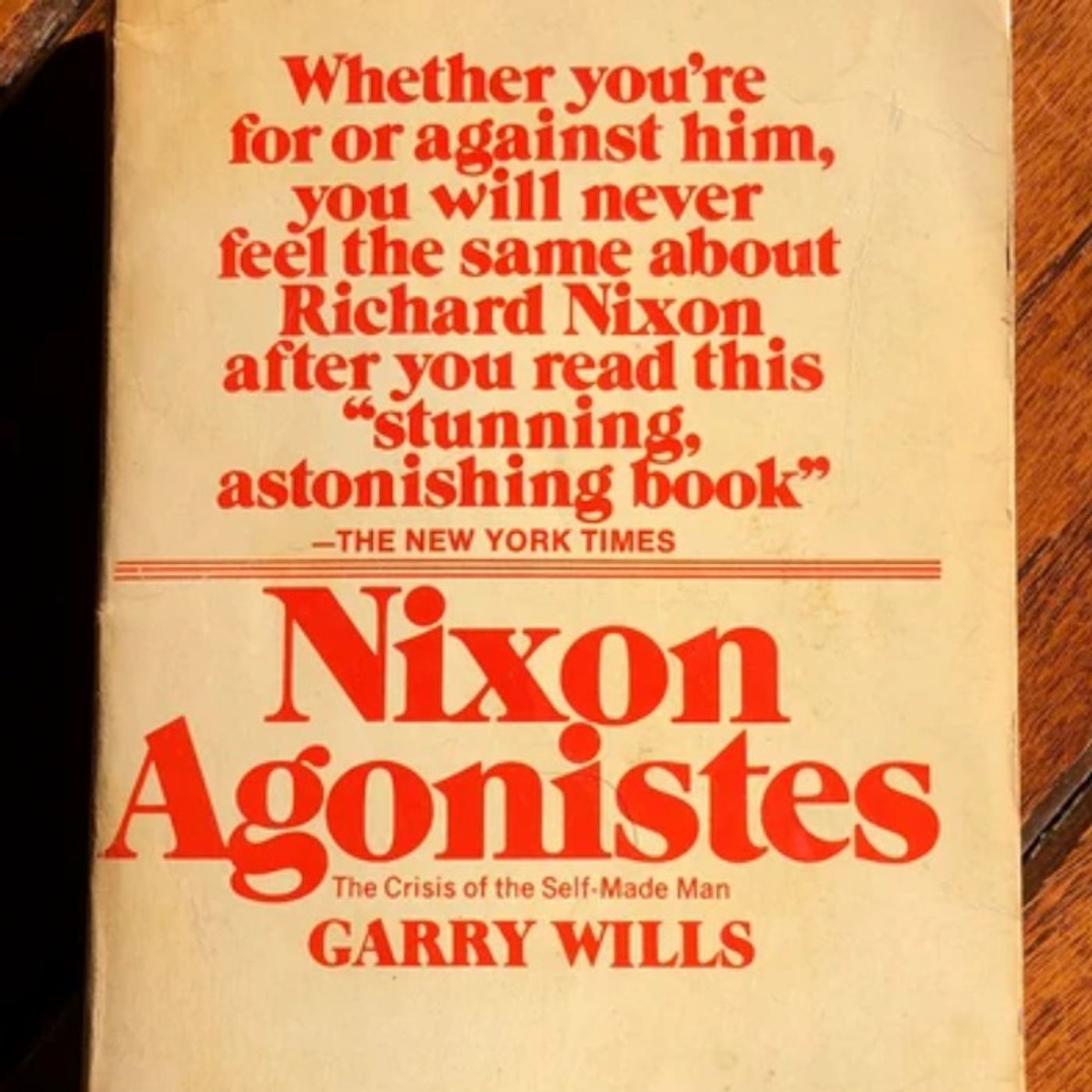
Ep 64Nixon Agonistes
E"What is best and weakest in America goes out to reciprocating strength and deficiencies in Richard Nixon." It's difficult to think of a more electric meeting of author and subject than Garry Wills and Richard Nixon, a meeting that produced what might be the best book ever written about American politics, Wills's Nixon Agonistes: The Crisis of the Self-Made Man. What begins as reporting from the campaign trail during the 1968 presidential contest—where Wills introduces us to Nixon, George Wallace, Nelson Rockefeller, and more—eventually becomes a profound meditation on the fate of liberalism in the United States. Wills found in Nixon the key to unlocking the reigning—but by then faltering—myths of their country's history and self-understanding, and what they reveal about each other. Along the way he discusses the complex psychological dance between Nixon and Dwight Eisenhower; takes us on a tour of Nixon's hometown, Whittier, California; describes the Republicans' "southern strategy"; examines the roiling anger and protests over the Vietnam War; and offers on-the-ground reportage from the 1968 conventions (the GOP's in Miami, the Democrats', infamously, in Chicago). Matt and Sam try to make sense of it all and ponder what Nixon Agonistes might say about how we got here and where we're going. Sources:Garry Wills, Nixon Agonistes: The Crisis of the Self-Made Man (1970) Confessions of a Conservative (1979) Outsider Looking In: Adventures of an Observer (2010)Kevin Phillips, The Emerging Republican Majority (1968)Tom Wolfe, The New Journalism (1973)KYE, "Joan Didion, Conservative, (w/ Sam Tanenhaus)" Jan 13, 2022 ...and don't forget to subscribe to Know Your Enemy on Patreon for access to all of our bonus episodes!
TEASER: State of the States (w/ Aaron Kleinman)
bonusESubscribe to Know Your Enemy on Patreon to listen to this bonus episode, and all of our bonus content: https://www.patreon.com/knowyourenemyWith the midterms a week away, Sam talked to Aaron Kleinman of The States Project (aka @BobbyBigWheel) about the battle to defend American democracy at the state level — where Trumpist state legislators continue to deny the 2020 election and lay the groundwork for ignoring the will of the majority in the future. How did the conservative movement manage to to take over so many statehouses? Can Democrats still turn back the tide? What is the "independent state legislature" theory? Aaron helps answers these questions and more — and gives us a useful rundown of the states to watch closely in the midterms next Tuesday.

Ep 63Why Conservatives Love Baseball (w/ David Roth)
EAt long last, an episode about baseball—America's national pastime, and a sport that conservatives in the United States seem to especially love. To understand baseball's appeal, both to conservatives and the rest of us, Matt and Sam are joined by David Roth of Defector Media, a brilliant, funny writer who also is a long suffering Mets fan. Topics include: the start of the MLB playoffs, baseball's interesting place in American history, varieties of conservative baseball fans, and more!Sources: George F. Will, Men at Work: The Craft of Baseball (Macmillan, 1990) "Foul Ball," New York Review of Books, June 1991Donald Kagan, "George Will's Baseball—A Conservative Critique," Public Interest, Fall 1990Tim Marchman, "Did George Will’s Men at Work Anticipate Baseball’s Statistical Revolution?" Slate, April 27, 2010David Bentley Hart, "A Perfect Game," First Things, August 2010Greg Hillis, "Quit Trying to 'Fix' Baseball," Commonweal, March 27, 2018David Roth, "Replacement-Level Billionaires," The Baffler, March 2020Leander Schaerlaeckens, "Was Donald Trump Good at Baseball?" Slate, May 5, 2020Michael Serazio, "The GOP hates baseball now. But it has always been a conservative sport," Washington Post, April 7, 2021...and don't forget to subscribe to Know Your Enemy on Patreon for access to all of our bonus episodes!

TEASER: Giorgia Meloni's Neo-Fascism (w/ David Broder)
bonusESubscribe to Know Your Enemy on Patreon to listen to this bonus episode, and all of our bonus content: https://www.patreon.com/knowyourenemySam is joined by David Broder — the Europe editor of Jacobin Magazine and author of First They Took Rome: How the Populist Right Conquered Italy and the forthcoming book, Mussolini's Grandchildren: Fascism in Contemporary Italy — to discuss the recent victory of Giorgia Meloni in Italian general elections. Meloni's Brothers for Italy party descends directly from the neo-fascist parties of post-war Italy. We discuss the ways in which her victory is continuous and discontinuous with the recent history of right-wing populism in Italy — from Silvio Berlusconi to Matteo Salvini. And David explains how Meloni has incorporated fascist nostalgia and historical revision into a 21st century, identitarian nationalism, which draws heavily on conservative economics, anti-feminist and anti-LGBTQ politics, and "great replacement" nativist conspiracy. Further reading: David Broder, "Italy’s drift to the far right began long before the rise of Giorgia Meloni," Guardian, Sept. 2022. Natasha Lennard, "It's a Girl (Fascist!)," The Intercept, Sept. 2022.Adam Tooze, "Who is going to vote for Italy's right-wing coalition?," Chartbook, Sept 2022.

TEASER: I Taught the Sheriff (w/ John Ganz)
bonusESubscribe to Know Your Enemy on Patreon to listen to this bonus episode, and all of our bonus content: https://www.patreon.com/knowyourenemyKYE super guest John Ganz joins Matt and Sam for a characteristically spirited discussion of The Claremont Institute's "Sheriff Fellowship," which invites county sheriffs from across the country to California for a weekend of West Coast Straussian ideological programing. Drawing on the history of "posse comitatus" movements and recent reports on the role of conservative sheriffs in resisting COVID mandates, propagating 2020 election lies, and cozying up to vigilante militias, we offer a synthesized account of why the mythologized figure of the sheriff — and sheriffs themselves — have such an attraction for right-wing radicals intent on subverting American democracy.Further Reading:Jessica Pishko, "Here’s the Secret “Sheriff Fellowship” Curriculum From the Country’s Most Prominent MAGA Think Tank," Slate, Sept 21, 2022.Alexandra Berzon and Nick Corasaniti, "2020 Election Deniers Seek Out Powerful Allies: County Sheriffs," NYTimes, Jul 25, 2022.Adam Rawnsley, "MAGA Claremont Institute Honors Sheriffs Who Defy Laws They Don’t Like," Daily Beast, Nov 22, 2021.Ashley Powers, "The Renegade Sheriffs," The New Yorker, Apr 23, 2018. Kimberly Kindy, "Boosted by the pandemic, ‘constitutional sheriffs’ are a political force," Washington Post, Nov 2, 2021.Christian Vanderbrouk, "Notes on an Authoritarian Conspiracy: Inside the Claremont Institute’s “79 Days to Inauguration” Report," The Bulwark, Nov 8, 2021. Michael Anton & Glenn Elmers, "The Stakes: Harry Jaffa’s Philosophy," The American Mind, Sept 19, 2022.

Ep 62After the Theocons (w/ Damon Linker)
EDamon Linker is an idiosyncratic figure among political writers—trained by Straussians as a political philosopher, he's a former editor of First Things, the flagship publication for intellectual religious conservatives, who broke with that publication over the Iraq War (among other things) and is now a self-described centrist. He's also a longtime friend of the podcast, who recently started his own attempt to grapple with what's happening in the GOP and among conservatives, a Substack newsletter he titled Eyes on the Right. In this conversation, Matt and Sam talk with Linker about what his own trajectory can teach us about the Right: his experiences working at First Things while the Bush administration was gearing up to invade Iraq; why thinks Sarah Palin marked a turning point on the Right; and his case for understanding Donald Trump as a political, rather than legal, problem. Sources:"The End of Democracy? The Judicial Usurpation of Politics," First Things, November 1996Damon Linker, "There is No Happy Ending to America's Trump Problem," New York Times, Aug 21, 2022 "A Giving of Intellectual Accounts," Eyes on the Right, Sept 9, 2022 "How Do You Solve a Problem Like Donald Trump?" Eyes on the Right, July 18, 2022 The Theocons: Secular America Under Seige (Doubleday, 2006)Matthew Sitman, "Reading Left to Right" (review of Richard John Neuhaus: A Life in the Public Square), Commonweal, Aug 24, 2015...and don't forget to subscribe to Know Your Enemy on Patreon for access to all of our bonus episodes!

Ep 61On Barbara Ehrenreich (w/ Alex Press & Gabriel Winant)
EThis episode was unplanned, but when Barbara Ehrenreich died on September 1, 2022, we felt an urge to honor her memory and the profound influence she has had on the American left, socialism, feminism, and our collective thinking about class struggle. From her work in the women's health movement of the 1960s, to her theorizing (with ex-husband John Ehrenreich) of the "professional-managerial class" in the 1970s, to her explorations of Reagan-era yuppie pathologies, and her renowned exposé of low-wage work in 2001's Nickel and Dimed, Barbara Ehrenreich has been an essential and nuanced guide to the inner-life of American class conflict in the latter half of the 20th century and the beginning of the 21st. To undertake this journey through an extraordinary body of work, we're joined by two brilliant writers who have both — in their own way — taken up Ehrenreich's profound ethical and intellectual challenge: Alex Press, staff writer at Jacobin magazine (and KYE's favorite labor journalist); and returning guest Gabe Winant, University of Chicago historian and author of The Next Shift: The Fall of Industry and the Rise of Health Care.As Gabe writes in his stunning obituary last week, "Ehrenreich’s specialty was to reveal her readers to themselves by showing them the other. Her humor and projection of personal vulnerability were particularly deft techniques for asking the reader to see their own position, often through identification with Ehrenreich: she invites this, beckoning you to follow her into her subject, and then suddenly wheels around on you—and you are caught out." We hope this episode can manage something of that technique for the listener, that you might find yourself "caught out" too, thinking deeply about where you fit into the story Barbara is telling — and what it might call on you to do, fight for, or think harder about. Enjoy. Further Reading: Barbara & John Ehrenreich, "The Professional-Managerial Class," Radical America, March 1977. — "The New Left and the Professional Managerial Class," Radical America, May 1977.— "Death of a Yuppie Dream," Rosa Luxemburg Stiftung, Feb 2013. Barbara Ehrenreich & Deirdre English, Witches, Midwives, and Nurses: A History of Women Healers, The Feminist Press, 1973.Barbara Ehrenreich, Fear of Falling: The Inner Life of the Middle Class, Pantheon, 1989. Barbara Ehrenreich, Nickel and Dimed: On (Not) Getting By in America, Metropolitan, 2001. Barbara Ehrenreich, "Preface to Klaus Theweleit's Male Fantasies Volume 1: Women, Floods, Bodies, History," U of Minnesota Press, 1987. Gabriel Winant, "On Barbara Ehrenreich," n+1, Sept 9, 2022. — "Professional-Managerial Chasm," n+1, Oct 10, 2019. — "The Right Kind of Worker," Know Your Enemy, May 2022. Alex Press, "On the Origins of the Professional-Managerial Class: An Interview with Barbara Ehrenreich." Dissent, Oct 22, 2019. David Rieff, "White Bread, White Dread (review of Fear of Falling)," LA Times, Aug 20, 1989. This episode of Know Your Enemy is dedicated to Barbara Ehrenreich (1941-2022) and all those who loved and learned from her.

Ep 60A Low, Dishonest Decade: The Right in the 1990s (w/ Nicole Hemmer)
EIn this episode, historian Nicole Hemmer returns to the show to discuss her new book, Partisans, about the ascendancy of an angrier, more radical strain of conservatism in the Republican Party in the 1990s—a backlash driven by the right's dissatisfaction with the genial, popularity-seeking Ronald Reagan. As the Cold War ended, many conservatives stopped genuflecting to democracy and freedom and used new forms of media—talk radio and cable news especially—to spread their grievances. Topics include: Pat Buchanan's campaigns for the presidency, Ross Perot, Newt Gingrich and the GOP's takeover of the House of Representatives, Rush Limbaugh, Dinesh D'Souza, and the new breed of anti-feminist, rightwing women such as Laura Ingraham and Ann Coulter.Sources:Nicole Hemmer, Partisans: The Conservative Revolutionaries Who Remade American Politics in the 1990s (Basic, 2022) Messengers of the Right: Conservative Media and the Transformation of American Politics (Penn, 2016)Kevin Phillips, The Politics of Rich and Poor (Random House, 1990)John Ganz, "The Year the Clock Broke," The Baffler, November 2018Know Your Enemy, "The Year the Clock Broke" (w/ John Ganz), March 16, 2020...and don't forget to subscribe to Know Your Enemy to listen to all of our bonus episodes!

TEASER: Blake Masters + Claremont
bonusESubscribe to Know Your Enemy on Patreon to listen to this bonus episode, and all of our bonus content: https://www.patreon.com/knowyourenemy Matt and Sam bring you the latest from the “caesarist” wing of the conservative movement, discussing two recent and related articles in the New York Times. The first: Sam’s profile of Arizona GOP senate nominee Blake Masters, who, like J.D. Vance, is bankrolled by his former employer and mentor, the Silicon Valley billionaire Peter Thiel. And second: an in-depth look at the Claremont Institute by Elizabeth Zerofsky, whose excellent reporting gives the boys an opportunity to refine their thoughts on the West Coast Straussian legacy of Harry Jaffa.It’s KYE classico. Enjoy. Cited:Adler-Bell, “The Violent Fantasies of Blake Masters,” NYTimes, Aug 3, 2022.Adler-Bell, “The Radical Young Intellectuals Who Want to Take Over the American Right,” The New Republic, Dec 2, 2021.Elizabeth Zerofsky, “How the Claremont Institute Became a Nerve Center of the American Right,” NYTimes Magazine, Aug 3, 2022.Marc Fisher & Isaac Stanley-Becker, “The Claremont Institute triumphed in the Trump years. Then came Jan. 6.” Washington Post, Jul 30, 2022.Glenn Ellmers, “‘Conservatism’ is no Longer Enough,” The American Mind, Mar 24, 2021.Michael Anton, “Are the Kids Al(t)right?” Claremont Review of Books, Summer 2019Harry V. Jaffa, Crisis of the House Divided, U Chicago Press, 1982.Harry V. Jaffa, A New Birth of Freedom: Abraham Lincoln and the Coming of the Civil War, Roman & Littlefield, 2000.David Tucker "Why Did Harry Jaffa Change His Mind?" Law and Liberty, Jul 3, 2019.For more on Claremont/Jaffa/Strauss:KYE: "Midnight in the Garden of American Heroes" Feb 2021.KYE: The Long Farewell to Majority Rule (w/ Joshua Tait), May 2021.

Ep 59Christopher Lasch's Critique of Progress (w/ Chris Lehmann)
EChristopher Lasch, the late historian and social critic, can be difficult to pin down. Despite writing with startling clarity and verve, Lasch frustrates his readers' longing for clean partisan taxonomies and explicit programmatic statements. Taken up in recent years by Steve Bannon and post-liberal populists, he was, in life, a man of the left who never ceased interrogating his own side’s pathologies and historical blindspots — often using Marxism, psychoanalysis, and a rich, idiosyncratic historiography of the American scene to do so. As George Scialabba once put it, “Virtually every political and cultural tendency in recent American history has smarted under Lasch’s criticism." And even his most devoted readers have been left asking — “plaintively or exasperatedly,” writes Scialabba — what exactly does Christopher Lasch want? For our guest, editor and writer Chris Lehmann, Lasch was more than an admired intellectual iconoclast and gadfly; he was a treasured teacher and mentor — who was nonetheless difficult to get to know well. In our conversation, Lehmann finds fault with tendentious readings of Lasch’s work by his most ardent fans and virulent enemies alike. To unearth the powerful critique running through Lasch’s oeuvre, we spend most of this episode discussing his late-career opus The True and Only Heaven. Along the way, Lasch’s insights frustrate and illuminate in equal measure, inspiring new variations on classic KYE themes: the relationship between particularity and solidarity, tradition and hierarchy, egalitarianism and expertise, and religion and political virtue. Come along for the ride! Further Reading: Chris Lehmann, "Pilgrim's Progress," BookForum, Summer 2010.Chris Lehmann, "The Betrayal of Democracy," The Baffler, March, 13, 2017.George Scialabba, "A Whole World of Heroes: Christopher Lasch on Democracy," Dissent, 1995. Patrick Deneen, "Christopher Lasch and the Limits of Hope," First Things, Dec 2004.Matthew Sitman, "Whither the Religious Left?" The New Republic, April 15, 2021. Eric Miller, Hope in a Scattering Time: A Life of Christopher Lasch, Wm B Eerdmans, 2010. Lasch, The True and Only Heaven: Progress and Its Critics, Norton, 1991. Lasch, The Culture of Narcissism: American Life in An Age of Diminishing Expectations, Norton, 1978.Lasch, The Minimal Self: Psychic Survival in Troubled Times, Norton, 1984.

TEASER: Far-Right Vanguard (w/ John S. Huntington)
bonusEMatt is joined by John Huntington, author of Far-Right Vanguard, which chronicles the history of what he calls the "ultraconservative" movement, its national network, its influence on Republican Party politics, and its centrality to America's rightward turn during the second half of the twentieth century.John is a history professor at Houston Community College.Subscribe to Know Your Enemy on Patreon to listen to this bonus episode, and all of our bonus content: https://www.patreon.com/knowyourenemy

Up From Straussianism (w/ Matt McManus & Victor Bruzzone)
bonusEHere's something fun and a little different: your beloved cohost Matt Sitman was recently interviewed by Victor Bruzzone and Matt McManus on their podcast, Plastic Pills, and the ensuing conversation — about Matt's own history, the right-wing intellectual pipeline, and the enduring and contested influence of Leo Strauss on the conservative movement and its minds — is just fascinating. So we're sharing it with you, dear listeners. I do want to acknowledge the elephant in the room: we're in a bit of a summer slow down at KYE headquarters. After sprinting to get the Roe v Wade series done last month, we've all had to take a bit of a breath amid the July heat — our producer, Jesse, has been on vacation — and so there've been fewer new episodes in the feed than we would prefer. But thank you for bearing with us. And trust that many excellent episodes are in the works! ...if you're hurting for KYE content, feel free to subscribe to Know Your Enemy on Patreon for access our back catalog of bonus episodes!

Ep 58How They Did It, Pt. 3: The End of the Beginning
EIn the third and final episode in their series on the overturning of Roe v. Wade—recorded on the day it happened—Matt and Sam pick up with 1990s, the George W. Bush administration, and eventually take listeners up to the present. They focus especially on way conservative, mostly Christian intellectuals, many of them connected to the religious journal First Things, brought Catholics and evangelicals together to fight against abortion rights, with figures like Fr. Richard John Neuhaus, Robert P. George, and Hadley Arkes providing language and arguments in a more elite idiom—a project that deeply influenced Bush's presidency and helped cement the anti-abortion movement's place not just in the religious right but the broader conservative movement and the GOP.Sources:"Killing Abortionists: A Symposium," First Things, December 1994"Evangelicals and Catholics Together: The Christian Mission in the Third Millenium," First Things, May 1994"The End of Democracy? The Judicial Usurpation of Politics," First Things, November 1996Damon Linker, The Theocons: Secular America Under Siege (Doubleday, 2006)Mary Ziegler, Dollars for Life: The Anti-Abortion Movement and the Fall of the Republican Establishment (Yale University Press, 2021)Joshua Wilson, The Street Politics of Abortion: Speech, Violence, and America's Culture Wars, (Stanford University Press, 2013)Richard John Neuhaus, The Naked Public Square: Religion and Democracy in America (Eerdmans, 1984)Robert P. George, Making Men Moral: Civil Liberties and Public Morality (Oxford University Press, 1993)Hadley Arkes, "The End of the Beginning of the End of Abortion," First Things, June 24, 2022Matthew Sitman, "Reading Left to Right" (review of Richard John Neuhaus: A Life in the Public Square), Commonweal, August 24, 2015Tara Isabella Burton, "The Biblical Story the Christian Right Uses to Defend Trump," Vox, March 5, 2018

The State of the American Right (w/ Daniel Denvir)
bonusEToday we're sharing a special "Dig Your Enemy" crossover event, as Daniel Denvir of Jacobin magazine's The Dig podcast puts Matt and Sam in the hot seat. We answer all of Dan's excellent questions about the state of the American right, including: the return of isolationism, the New Right, Peter Thiel, Curtis Yarvin, Blake Masters, Doug Mastriano, the prospects for a multi-racial conservative majority, the "groomer" panic, masculinity and gender politics, MAGA, authoritarianism, NYC's new reactionary "downtown scene," and the bad dialectic between racial liberalism and the anti-woke reactionaries. Enjoy! This episode was originally posted by The Dig; find the rest of their excellent podcasts here: https://thedigradio.com/ ...and don't forget to subscribe to Know Your Enemy on Patreon for access to all of our bonus episodes!

Ep 57How They Did It, Pt. 2: The Christian Right and Roe
EAt long last, Matt and Sam dive into the origins of the Christian right—a complicated tale often flattened by contemporary debates. What was the history of Christian anti-abortion activism before Roe, and how soon after the landmark Supreme Court decision did conservative Christians coalesce around the abortion—and other issues—to become the political force we know today? What did it take to get Catholics and evangelicals to join forces, and what were the barriers to them coming together, especially given the history of anti-Catholicism in the United States? And how did all this help reshape the GOP into a vehicle for anti-abortion politics, given that such a scenario was not fated on the eve of Roe? Your hosts take up these questions and more, stopping in the early 1990s—when they'll pick up with the story in the third and final episode in the series.Sources and Citations:Randall Balmer, "The Religious Right and the Abortion Myth," Politico Magazine, May 10, 2022Neil J. Young and Gillian Frank, "What Everyone Gets Wrong about Evangelicals and Abortion," Washington Post, May 16, 2022Neil J. Young, We Gather Together: The Religious Right and the Problem of Interfaith Politics (Oxford University Press, 2015)Kristen Luker, Abortion & the Politics of Motherhood, (University of California Press, 1985)Mary Ziegler, After Roe: The Lost History of the Abortion Debate, (Harvard University Press, 2015)Ilyse Hogue and Ellie Langford, The Lie That Binds (Strong Arm Press, 2020)Rick Perlstein, Reaganland: America's Right Turn 1976-80 (Simon & Schuster, 2020)Daniel K. Williams, Defenders of the Unborn: The Pro-Life Movement Before Roe v. Wade (Oxford University Press, 2016)Joshua Wilson, The Street Politics of Abortion: Speech, Violence, and America's Culture Wars, (Stanford University Press, 2013)David L. Chappell, A Stone of Hope: Prophetic Religion and the Death of Jim Crow (UNC Press, 2005)"Killing Abortionists: A Symposium," First Things, December 1994

Ep 56How They Did It: Overturning Roe, Pt. 1 (w/ the 5-4 podcast)
EOn May 5, Politico published a leaked draft of the majority opinion in Dobbs v. Jackson Women's Health, written by Justice Samuel Alito, that would overturn Roe v. Wade. How did we get here? In the first of three episodes dedicated to answering that question, Matt and Sam talk to Peter, Rhiannon, and Michael of the 5-4 Podcast about the conservative legal movement's role and the right's use of the courts in achieving their aims. What were the main arguments in the leaded Dobbs decision, and where did these ideas come from? How important was opposition to abortion rights to the development of originalism and organizations like the Federalist Society? What function has the Federalist Society served in the conservative takeover of the Supreme Court? Also discussed in this episode: the relationship between radical, violent anti-abortion groups and the broader anti-abortion legal movement, the narrower victories the right won against abortion rights along the way, and what might come next from an emboldened conservative movement with the Supreme Court on their side.Sources:Josh Gerstein and Alexander Ward, "Supreme Court Has Voted to Overturn Abortion Rights, Draft Opinion Shows," Politico, May 5, 20225-4 Podcast, "Dobbs v. Jackson Women's Health: The End of Roe," May 4, 20225-4 Podcast, "The Return of the Rise and Fall of Roe v. Wade, Pt. 1," January 4, 2022 "The Return of the Rise and Fall of Roe v. Wade, Pt. 2," January 4, 2022Know Your Enemy (w/ 5-4's Rhiannon), "The Texas Bounty Hunter Bill," September 30, 2021Amanda Hollis-Brusky, Ideas with Consequences: The Federalist Society and the Conservative Counterrevolution (Oxford University Press, 2019)Ilyse Hogue and Ellie Langford, The Lie That Binds (Strong Arm Press, 2020)Joshua C. Wilson, The Street Politics of Abortion: Speech, Violence, America's Culture Wars (Stanford University Press, 2013)...and don't forget to subscribe to Know Your Enemy on Patreon to access to all of our bonus episodes!

UNLOCKED: A New Pink Tide? (w/ Thea Riofrancos & David Adler)
bonusEA conversation with David Adler and Thea Riofrancos about the return of the Latin American left — unlocked from Patreon in advance of hugely consequential elections in Colombia this weekend!! (Originally published May 15, 2022.)Hope for the American left is at a fairly low ebb, at the moment, but our counterparts in Latin America are on the march and succeeding at beating back repressive right wing governments across the region. What can we learn from them? And given extremely volatile global conditions — and the continued role of the US in defending the interests of capital in the region — what can these new left-wing governments hope to accomplish?Sam is joined by political scientist Thea Riofrancos and David Adler, the General Coordinator of the Progressive International, to discuss left populism in Chile, Colombia, Brazil, and elsewhere. Further Reading: Thea Riofrancos & David Adler, "Gabriel Boric and Latin America’s new pink tide," New Statesman, Mar 11, 2022.Thea Riofrancos, "The rush to ‘go electric’ comes with a hidden cost: destructive lithium mining," Guardian, Jun 14, 2021.— "The View from Latin America," Boston Review, Apr 27, 2020. — "Ecuador After Correa," n+1, Fall 2017.John Bartlett, "Chilean journalist dies after being shot while covering Workers’ Day marches," Guardian, May 12, 2022...and don't forget to subscribe to Know Your Enemy on Patreon for access to all of our bonus episodes!

TEASER: Yinzer Country
bonusEIn this bonus episode, Matt takes Sam on a tour of his native state, Pennsylvania, where a number of key primaries were held this week. The results brought some hopeful news: Lt. Gov. John Fetterman handily defeated State Rep. Malcolm Kenyatta and (even better) Manchin-backed moderate Rep. Conor Lamb in the contest for the Democratic senate nomination. But it also revealed the madness that continues to grip the GOP: State Sen. Doug Mastriano, a January 6 marcher and election-fraud true believer, will be running for governor in November, and Dr. Oz, as of this writing, was clinging to a narrow lead in the race to take on Fetterman. Don't worry, though, it's not all punditry: the cuisines, strange regional dialects, and curious folkways of the virtuous commonwealth also are discussed. Then the episode turns to the fortunes of the Thiel tools: J.D. Vance and Blake Masters, both of whom are running for the Senate (Vance in Ohio and Masters in Arizona). The former won the Republican nod, and in come-from-behind fashion—how did he do it, especially after months of woke pundits dismissing his campaign? And what are Masters chances in August, when the Arizona GOP primary will be held?Subscribe to Know Your Enemy on Patreon to listen to this bonus episode, and all of our bonus content: https://www.patreon.com/knowyourenemy

TEASER: A New Pink Tide? (w/ Thea Riofrancos & David Adler)
bonusEHope for the American left is at a fairly low ebb, at the moment, but our counterparts in Latin America are on the march and succeeding at beating back repressive right wing governments across the region. What can we learn from them? And given extremely volatile global conditions — and the continued role of the US in defending the interests of capital in the region — what can these new left-wing governments hope to accomplish?Sam is joined by political scientist Thea Riofrancos and David Adler, the General Coordinator of the Progressive International, to discuss left populism in Chile, Colombia, Brazil, and elsewhere. Subscribe to Know Your Enemy on Patreon to listen to this bonus episode, and all of our bonus content: https://www.patreon.com/knowyourenemy

Ep 55The Conservative and the Convict (w/ Sarah Weinman)
ESarah Weinman's new book—Scoundrel: How a Convicted Murderer Persuaded the Women Who Loved Him, the Conservative Establishment, and the Courts to Set Him Free—is a gripping true crime story, and perhaps the tale of an ill-fated love triangle. It also is a story about William F. Buckley, Jr., who defied expectations to show mercy to a death-row prisoner, Edgar Smith, after finding out that he supposedly read National Review. In this episode, Weinman joins Matt and Sam to talk about this fascinating, half-forgotten episode from a key period in Buckley's life and career—how Smith and Buckley met; what Buckley did for him; the role played by Sophie Wilkins, Smith's editor at Knopf, in what happened; and the sad ending toward which it all careened.Sources:Sarah Weinman, Scoundrel: How a Convicted Murderer Persuaded the Women Who Loved Him, the Conservative Establishment, and the Courts to Set Him Free (Ecco Press, February 2022)Sam Adler-Bell, "The Conservative and the Murderer," New Republic, March 7, 2022Christopher Buckley, Losing Mum and Pup: A Memoir (Twelve Books, May 2009)Garry Wills, "Daredevil," Atlantic, July/August 2009Sophie Wilkins, trans., The Man Without Qualities by Robert Musil (1930, 2017)Alexander Chee, "Mr. and Mrs. B," Apology Magazine, Winter 2014...and don't forget to subscribe to Know Your Enemy on Patreon for access to all of our bonus episodes!

Ep 54The Right Kind of Worker (w/ Gabriel Winant)
ESince Donald Trump was elected president — partially on the strength of white working class support in the Rust Belt — we've heard that the GOP is a working class party; that liberals sold out American labor to globalized capital; and that American workers are too socially and culturally conservative to remain within the increasingly progressive Democratic tent. According to the populist right, the culture war is itself a class war, waged on behalf of real workers against a secular, libertine professional elite who control the commanding heights of the economy, government, and media. What's wrong with this story? Labor historian and essayist Gabriel Winant joins Matt and Sam to answer that question. Using Gabe's award-winning book The Next Shift: The Fall of Industry and the Rise of Health Care in Rust Belt America as a guide, we tell a different story about working class formation in this country, about the forces that led to the decline of America's industrial base, and about the prospects for renewing labor's power relative to capital. Along the way, we take on figures of the newly labor-curious right — Oren Cass, Sohrab Ahmari, and others — explaining how their vision is based on ideologically motivated elisions that seek to resolve rather than energize class conflict. It's a hot one, folks! Further Reading:Gabriel Winant, "We Live in a Society," n+1, Dec 12, 2020— "Professional-Managerial Chasm," n+1, Oct 10, 2019— "Coronavirus and Chronopolitics" n+1, Spring 2020.— "Strike Wave," New Left Review, Nov 25, 2021.Sohrab Ahmari, "How America Kneecapped Its Unions," Compact, Mar 31, 2022.Julius Krein, "The Real Class War," American Affairs, Nov 20, 2019.Alexander Riley, "Labor Betrayed by the Progressive Left," Chronicles, Mar 2022. Landon R.Y. Storrs, The Second Red Scare and the Unmaking of the New Deal Left, Princeton U Press, 2012.Melinda Cooper, Family Values: Between Neoliberalism and the New Social Conservatism Zone Books, 2017.Alice Kessler-Harris, In Pursuit of Equity: Women, Men, and the Quest for Economic Citizenship in 20th-Century America, 2001. Oxford U Press. 2001.

Macron vs. Le Pen (w/ Cole Stangler)
bonusEDid this week's one-on-one debate between Emmanuel Macron and Marine Le Pen change the race in any significant ways? Why is Le Pen drawing notably more support this time around than she did in 2017? How much is Macron's strategy of pivoting to the right on issues of culture and identity to blame for her rise? What about Jean-Luc Mélenchon, the leftwing politician who nearly made it to the runoff? And why did the far-right candidate Éric Zemmour fade? Listen for the answers to these questions—and more! You can do so by subscribing to Know Your Enemy at Patreon.