
Know Your Enemy
287 episodes — Page 3 of 6

More Mailbag, More Friends [Teaser]
bonusEListen to the rest of this premium episode by subscribing at patreon.com/knowyourenemyMatt and Sam continue the 100th episode extravaganza by answering more truly excellent listener questions and hear from more friends of the show. Topics include: leftwing politics and orthodox Christianity, how to maintain hope (especially on the socialist left), learning to love Freud, complicated family politics, and more! Plus: Dissent co-editor Tash Lewis sings "Happy Birthday" to Matt in Welsh.Sources:Charles Péguy, Portal of the Mystery of Hope (1911)Wesley Hill, "After Boomer Religion," Commonweal, April 29, 2019Herbert McCabe, "The Class Struggle and Christian Love," in God Matters (2012)Matthew Sitman, "Against Moral Austerity: On the Need for a Christian Left," Dissent, Summer 2017Dan Walden, "Gender, Sex, and Other Nonsense," Commonweal, March 1, 2021Peter Gay, Freud: A Life for Our Time(1988)Pat Blanchfield, "Death Drive Nation," Late Light, Nov 1, 2022Casey Blake and Christopher Phelps, "History as Social Criticism: Conversations with Christopher Lasch," Journal of American History, Mar 1994Sam Adler-Bell, "Beautiful Losers," Commonweal, Mar 11, 2020— "Jews in the diaspora must resist the inhumanity being done by Israel in our name," New Statesman, Nov 29, 2023— "Good Enough," The Baffler, April 2024Kim LaCapria & David Mikkelson, "Does This Photograph Show Bernie Sanders at a 1962 Civil Rights Sit-In?" Snopes, Mar 3, 2016

Ep 100Know Your Friends: 100th Episode Mailbag
ETo celebrate the 100th episode of Know Your Enemy, Matt and Sam decided to open up the mailbag and field listener questions—which, as always, proved to be incredibly intelligent and interesting, with topics ranging from what they've learned along the way to the politics of guns. Plus, past guests from the podcast stop by to offer their commentary on this auspicious occasion. Sources:John Lukacs, The Hitler of History (1997)— Confessions of an Original Sinner (1989)— A New History of the Cold War (1966)Michael Oakeshott, Notebooks, 1922-1986 (2014)Christopher Smart, "from Jubilate Agno," written between 1759-1763, published 1939...and don't forget to subscribe to Know Your Enemy on Patreon to listen to all of our bonus episodes!

Kamala's Commanding Debate Performance [TEASER]
bonusEListen to the rest of this premium episode by subscribing at patreon.com/knowyourenemyYour intrepid hosts watched the first, and possibly only, presidential debate between Kamala Harris and Donald Trump so you didn't have to—and then stayed up late to talk about it. After a somewhat wobbly start, Harris seized the momentum with a visceral, deeply affecting answer about the consequences of the GOP's assault on abortion rights, then baited Trump into a rambling rant about the size of his crowds. He never really recovered, and spent much of the rest of the debate running his mouth about the debunked story of Haitian immigrants stealing and eat pets in Ohio or claiming that Harris was responsible for every policy of the Biden administration. What did we learn about the candidates and their priorities? Did Harris break with Biden in any significant ways? What does the Trump-Vance obsession with immigrants reveal about their campaign? What firearm does Harris own? And what about foreign policy? Make sure you listen to the very end!Sources:Sam Roberts, "Noel Parmentel Jr., Essayist, Polemicist and Apostate, Dies at 98," New York Times, Sept 6, 2024Watch the entire Harris-Trump debate (YouTube)Nate Cohn, "New Poll Suggests Harris’s Support Has Stalled After a Euphoric August," New York Times, Sept 8, 2024 Huo Jingnan and Jasmine Garsd, "JD Vance Spreads Debunked Claims about Haitian Immigrants Eating Pets," NPR, Sept 10, 2024Mike Catalini, et al, "Trump Falsely Accuses Immigrants in Ohio of Abducting and Eating Pets," Associated Press, Sept 11, 2024B.D. McClay, "The Taylor Swift Endorsement Fantasy," New York Times, Sept. 8, 2024"Taylor Swift Derangement Syndrome," Know Your Enemy, Mar 26, 2024

[UNLOCKED] The Uncommitted Movement (w/ Waleed Shahid & Abbas Alawieh)
bonusEMatt and Sam interview Waleed Shahid and Abbas Alawieh, two organizers of the Uncommitted Movement, about their experiences in the months following October 7 as well as before, during, and after the Democratic National Convention. As an Arab-American from Michigan and one of the state's two Uncommitted delegates to the DNC, what has Abbas heard from the people in his community, and what has he heard from his party? Why try to work within the Democratic Party to change its approach to Israel-Palestine? What were the Uncommitted Movement's "asks" at the convention, and why were they all refused? How does the Democratic Party, institutionally, need to change to better reflect the broadly pro-ceasefire views of its voters? And is there any hope that a possible Harris administration will be an improvement on the dreadful status quo?Sources:Waleed Shahid, “Why the Uncommitted Movement Was a Success at the DNC,” Jacobin, Aug 27, 2024"'The Uncommitted Movement Is the Floor of What’s Possible:' An Interview with Waleed Shahid," Dissent, Aug 16, 2024Ben Terris, "A 'Ceasefire Delegate' Finds Lots to Do but Little to Celebrate," Washington Post, Aug 21, 2024Akbar Shahid Ahmed, "Gaza War Critics Are Inspired By The 1964 DNC — And They're Playing The Long Game," HuffPost, Aug 23, 2024Noah Lanard, "Why Were Democrats Afraid to Hear a Palestinian?" Mother Jones, Aug 31, 2024— "Here Is the Speech That the Uncommitted Movement Wants to Give at the DNC," Mother Jones, Aug 23, 2024Ta-Nehisi Coates, "A Palestinian American’s Place Under the Democrats’ Big Tent?" Vanity Fair, Aug 21, 2024

The Uncommitted Movement (w/ Waleed Shahid & Abbas Alawieh) [Teaser]
bonusEListen to the rest of this premium episode by subscribing at patreon.com/knowyourenemyMatt and Sam interview Waleed Shahid and Abbas Alawieh, two organizers of the Uncommitted Movement, about their experiences in the months following October 7 as well as before, during, and after the Democratic National Convention. As an Arab-American from Michigan and one of the state's two Uncommitted delegates to the DNC, what has Abbas heard from the people in his community, and what has he heard from his party? Why try to work within the Democratic Party to change its approach to Israel-Palestine? What were the Uncommitted Movement's "asks" at the convention, and why were they all refused? How does the Democratic Party, institutionally, need to change to better reflect the broadly pro-ceasefire views of its voters? And is there any hope that a possible Harris administration will be an improvement on the dreadful status quo?Sources:Waleed Shahid, “Why the Uncommitted Movement Was a Success at the DNC,” Jacobin, Aug 27, 2024"'The Uncommitted Movement Is the Floor of What’s Possible:' An Interview with Waleed Shahid," Dissent, Aug 16, 2024Ben Terris, "A 'Ceasefire Delegate' Finds Lots to Do but Little to Celebrate," Washington Post, Aug 21, 2024Akbar Shahid Ahmed, "Gaza War Critics Are Inspired By The 1964 DNC — And They're Playing The Long Game," HuffPost, Aug 23, 2024Noah Lanard, "Why Were Democrats Afraid to Hear a Palestinian?" Mother Jones, Aug 31, 2024— "Here Is the Speech That the Uncommitted Movement Wants to Give at the DNC," Mother Jones, Aug 23, 2024Ta-Nehisi Coates, "A Palestinian American’s Place Under the Democrats’ Big Tent?" Vanity Fair, Aug 21, 2024

Ep 99Political Fictions (w/ Vinson Cunningham)
EToday, we're joined by one of our favorite writers and thinkers, Vinson Cunningham, to discuss his excellent debut novel, Great Expectations, which tells the story of brilliant-but-unmoored young black man, David Hammond, who finds himself recruited — by fluke, folly, or fate — onto a historic presidential campaign for a certain charismatic Illinois senator. A staff writer at the New Yorker, Vinson also worked for Obama's 2008 campaign in his early twenties. (He bears at least some resemblance to his protagonist.) And his novel provides a wonderful jumping-off point for a deep discussion of political theater, the novel of ideas, race, faith, the meaning of Barack Obama, and the meaning of Kamala Harris. Also discussed: Christopher Isherwood, Saul Bellow, Garry Wills, Ralph Ellison, Marilynne Robinson, Paul Pierce, and Kobe Bryant! If you can't get enough Vinson, check out his podcast with Naomi Fry and Alexandra Schwartz, Critics at Large. Sources:Vinson Cunningham, Great Expectations: A Novel (2024)— "The Kamala Show," The New Yorker, Aug 19, 2024— "Searching for the Star of the N.B.A. Finals," The New Yorker, June 21, 2024— "Many and One," Commonweal, Dec 14, 2020.Saul Bellow, Ravelstein (2001) Garry Wills, Lincoln at Gettysburg (1992)Ralph Ellison, Invisible Man (1952)— Shadow and Act (1964)David Haglund, "Leaving the Morman Church, After Reading a Poem," New Yorker Radio Hour, Mar 25, 2016. Phil Jackson, Sacred Hoops: Spiritual Lessons of a Hardwood Warrior (1995)Glenn Loury, Late Admissions: Confessions of a Black Conservative (2024)Matthew Sitman, "Saving Calvin from Clichés: An Interview with Marilynne Robinson," Commonweal, Oct 5, 2017...and don't forget to subscribe to Know Your Enemy on Patreon so you can listen to all of our premium episodes!

Kamala's Convention [Teaser]
bonusEFour days in Chicago, dozens of speeches by Democratic luminaries and backbenchers, and a spotlight on Kamala Harris, who reintroduced herself to America — your favorite podcast co-hosts endured watching the Democratic National Convention and are here to report on what they saw.It was, in many ways, a highly successful convention: massive crowds, palpable energy for the Harris-Walz ticket, and orations met with pundits' plaudits. But the Democrats' refusal to feature a speaker from the Uncommitted delegates, and the general lack of evident concern for Palestinian suffering, was profoundly disappointing — and morally grotesque. As were the choices to feature cops and ex-CIA agents on the convention stage, and the broad affirmation, from Democrats, of the right's positions on crime and the border. What to make of it all? We discuss how Kamala tried to define her career and candidacy, what we make of Tim Walz (so far), how Democrats talked about Trump (including the shifts from how they've done so in the past), and the state of the presidential race now that both conventions are, blessedly, over.Sources:Watch Kamala Harris's full DNC speech (YouTube)Watch Tim Walz's full DNC speech (YouTube)Watch Michelle Obama's full DNC speech (YouTube)Liliana Segura, "Democrats Abandoned Their Anti-Death Penalty Stance. Those on Federal Death Row May Pay the Price," The Intercept, Aug 23, 2024.Josh Leifer and Waleed Shahid, "The Uncommitted Movement Is the Floor of What’s Possible,” Dissent, Aug 16, 2024Noah Lanard, "Here Is the Speech That the Uncommitted Movement Wants to Give at the DNC," Mother Jones, Aug 23, 2024

Ep 98What Happened to America's Political Parties? (w/ Daniel Schlozman and Sam Rosenfeld)
EWhy are American political parties so ineffectual? Why do they seem, simultaneously, so frantically active and so incapable of achieving specific objectives? Why have the Democrats tended to seem listless, uncertain of their own ideological identity; while the Republicans are increasingly dominated by a radical, lunatic fringe more interested in becoming famous on television, radio, and social media than in governing? Why, in other words, are the political parties seemingly "everywhere and nowhere, overbearing and enfeebled, all at once?" In their new book, The Hollow Parties: The Many Pasts and Disordered Present of American Party Politics, political scientists Daniel Schlozman and Sam Rosenfeld set out to untangle this paradox. Theyargue that much of the discord, dysfunction, and democratic deficit which characterize contemporary politics can be attributed to the "hollowing out" of American political parties — a process which began, in earnest, in the 1970s, with the neoliberal dismantling of New Deal civil society, the rise of the New Right, and reforms to the party system in the wake of the 1968 conventions. In the wake of these changes, our parties have become unrooted from the communities where their constituents live; they are nationalized instead of locally oriented; they are swarmed by para-party groups and networks (the "party blob") which are both unaccountable and parasitic on the Party's aims; and they are lacking in legitimacy — mistrusted and often treated with contempt, even by their own members. What has this hollowness wrought in our politics? And can anything be done about it? Sam and Danny are here to explain. Here's a link for 25 percent off print subs to Dissent magazine through August 31: https://www.ezsubscription.com/dis/subscribe?key=DEKYESources:Daniel Schlozman and Sam Rosenfeld, The Hollow Parties: The Many Pasts and Disordered Present of American Party Politics (2024)Sam Rosenfeld, The Polarizers: Postwar Architects of Our Partisan Era (2017)Daniel Schlozman, When Movements Anchor Parties: Electoral Alignments in American History (2015)Please subscribe on Patreon to hear our bonus episodes!

Ep 97What's Wrong with J.D. Vance?
EIn this episode, your co-hosts take a harrowing journey into the life, mind, and times of J.D. Vance, the Republican senator from Ohio and current vice-presidential pick of Donald Trump. You probably were introduced to Vance as the author of Hillbilly Elegy, his 2016 memoir that attempts to explain the plight of the "white working class" in places like Kentucky and Ohio, and now know him as the deranged post-liberal purveyor of insults to single women, lies about Joe Biden targeting MAGA voters with fentanyl to thin their ranks, and deranged comments about the 2020 election and Jan. 6. In short, how did Vance become so weird—and menacing? We try to answer that question by starting with a close reading of Hillbilly Elegy, and then take listeners from the end of that book through the transformations that made Vance Trump's toadie-in-chief.Sources:J.D. Vance, Hillbilly Elegy: A Memoir of a Family and Culture in Crisis (2016)— "How I Joined the Resistance: On Mamaw and Becoming Catholic," The Lamp, April 1, 2020Glenn Kessler, "J.D. Vance’s Claim That Biden is Targeting ‘MAGA voters’ with Fentanyl," Washington Post, May 11, 2022Colby Itkowitz, Beth Reinhard and Clara Ence Morse, "In Vance, Trump Finds a Kindred Spirit on Election Denial and Jan. 6," Washington Post, July 17, 2024Ian Ward, "The Seven Thinkers and Groups That Have Shaped JD Vance’s Unusual Worldview," Politico, July 18, 2024Simon Van Zuylan-Wood, “The Radicalization of J.D. Vance,” Washington Post, Jan 4, 2022John Ganz, "The Meaning of JD Vance," Unpopular Front, Jul 16, 2024Dorothy Thompson, “Who Goes Nazi?” Harper’s, Aug 1941. Please subscribe on Patreon to hear our bonus episodes!

Project 2025 Implodes (w/ Mary Harris)
bonusEAn extra episode for you: Sam went on Slate's What Next podcast (hosted by Mary Harris) to discuss the rise and fall of the Heritage Foundation's Trump transition project — Project 2025. Is it dead? Why did Trump's campaign resent it so much? And how much influence would its architects have in a second Trump administration?We'll back to your regular programming (the J.D. Vance episode!) later in the week.

Trump Survives, Biden Doesn't. Where Are We? [Teaser]
bonusEListen to the rest of this premium episode by subscribing at patreon.com/knowyourenemyIn the week-and-a-half since we last offered you, our beloved subscribers, the highest quality election punditry around, a lot has happened: on the Democratic side of the ledger, "The Podcasters' Coup" succeeded and Joe Biden has stepped down as the party's presidential candidate; at least for now, the nomination appears to be Kamala Harris's to lose. Republicans, meanwhile, just wrapped up their carnivalesque Convention, where Ohio senator J.D. Vance was unveiled as Donald Trump's running mate. And, of course, looming over it all was the assassination attempt on Trump in western Pennsylvania only days before the GOP gathered in Milwaukee.Did Vance impress, and Trump charm? Did the assassination attempt change the race, or—as some credulous journalists ludicrously asserted—Trump himself? Where does the presidential race stand? Are Democrats in disarray? It doesn't seem that way, now, but does Harris have a real chance? Your hosts take up these questions and more!Read:Josh Boak, "Biden’s legacy: Far-reaching Accomplishments That Didn’t Translate into Political Support," Associated Press, July 22, 2024.Ruth Igielnik, "How Kamala Harris Performs Against Donald Trump in the Polls," New York Times, July 21, 2024.Tim Alberta, "This Is Exactly What the Trump Team Feared," The Atlantic, July 21, 2024.Ian Ward, "The Seven Thinkers and Groups That Have Shaped JD Vance’s Unusual Worldview," Politico, July 18, 2024.Matthew Sitman, "Will Be Wild," Dissent, April 18, 2023.Susan Sontag, Against Interpretations and Other Essays(1966).Listen:The Ezra Klein Show, "The Trump Campaign's Theory of Victory" (w/ Tim Alberta), July 18, 2024

Ep 96Yoram Hazony’s Israeli Model (w/ Suzanne Schneider)
ELast week, as Israel continued to prosecute its eliminationist war against Palestinians in Gaza, an eclectic group of right-wing bigwigs gathered in Washington, DC for the fourth iteration of the National Conservatism conference — convened by Yarom Hazony, an Israeli-born writer, activist, and former speechwriter for Benjamin Netanyahu. As our guest, historian Suzanne Schneider, explains, Hazony aspires to export Israel’s model of illiberal democracy and dispossession to the nations of the world. And if the embrace of NatCon by American conservatives is any indication, he is succeeding. Nations, for Hazony, derive their legitimacy not from the consent of the governed (which, for Israel, would include disenfranchised Palestinians in the West Bank) but from God, who designated the land of Israel as the home of the Jews. All nations are born of divine covenant, not consent; political community is based on unchosen and inherited obligations extending outward in concentric circles of coercion, from the nuclear family, to the clan, to the tribe, and so on. This slipshod political theology authorizes a world of sovereign, militarized ethno-states, intensely protective of patriarchal prerogatives, and with no obligation to international law, human rights, judicial interference, or constitutional guarantees for religious or racial minorities. If Israel is the God-given home of the Jews, why shouldn't America be the God-given home of white Christians? It’s not difficult to perceive the appeal of this vision for NatCon’s attendees, including Trumpist senators like Josh Hawley and Mike Lee, Catholic integralists like Gladdin Pappin and Chad Pecknold, racist nativists like Stephen Miller, or Viktor Orbán propagandists like John O’Sullivan. These figures may not all acknowledge or recognize their debt to Israeli Zionism, but they all look with admiration on the impunity with which Israel has treated its Arab subjects, seeing in Israel’s contempt for liberal norms, universal rights, and human dignity an aspirational model for America and the globe.Further Reading:Suzanne Schneider, "Light Among the Nations," Jewish Currents, Sept 28, 2023— "How Israel’s Illiberal Democracy Became a Model for the Right," Dissent, Spring 2024. — "Beyond Athens and Jerusalem," Strange Matters, Spring 2024.— "A Note on Means and Ends," Dr. Small Talk (Suzanne's Substack), Feb 4, 2024.Yoram Hazony, The Virtue of Nationalism (2018).— Conservatism: A Rediscovery (2022).Sarah Jones, "The Authoritarian Plot (Live from NatCon 4)," New York Magazine, Jul 14, 2024.Further Listening:KYE, The Rise of Illiberal Right, Jul 2019.KYE, Return of the National Conservatives, Nov 2021....and don't forget to subscribe to Know Your Enemy on Patreon to listen to all of our extensive catalogue of bonus episodes!

If Joe’s Cooked, What Now? (w/ Ettingermentum) [Teaser]
bonusEListen to the rest of this premium episode by subscribing at patreon.com/knowyourenemyJust about two weeks ago, we gave a nearly real-time reaction to Joe Biden's catastrophically inept performance in his first presidential debate against Donald Trump. The fallout has been swift but not certain—a flood of stories in the press were unleashed, giving the impression that Biden has been worse, for longer, than most of us knew, all of them filled with cringe-inducing details that gave the impression of a man in rapid decline. Still, Biden has stubbornly insisted that he will remain the Democratic nominee, and the party seemingly has not yet coalesced around a strategy to force his exit.So where are we? To help us answer that question, we had on Josh Cohen, the proprietor of the must-read Ettingermentum newsletter, one of the most essential reads on U.S. electoral politics, especially the presidential race. We tried to figure out just how bad of shape Joe Biden is currently in, why the age and infirmity issues will not go away, the possibilities for replacing Biden, what the upsides of his various replacements (especially Kamala Harris and Gretchen Whitmer) could be, how Democrats should attack Trump, and more!

The Wolfe in the White Suit (w/ Osita Nwanevu) [UNLOCKED]
bonusEWe took the holiday week off, so we're sharing an episode from behind the paywall. Coming soon: new episodes on The Biden Problem, SCOTUS, and Israeli illiberalism as an inspiration for the global right. ***In this episode, from January 2024, writer Osita Nwanevu joins for a rip-roaring conversation about legendary prose stylist, "new journalist," and novelist Tom Wolfe. Reviewing a new documentary about Wolfe ("Radical Wolfe" on Netflix), Osita writes, "Behind the ellipses and exclamation points and between the lines of his prose, a lively though often lazy conservative mind was at work, making sense of the half-century that birthed our garish and dismal present, Trump and all."Answered herein: is Tom Wolfe a good writer? What kind of conservative is he? How does his approach compare to other "new journalists" like Joan Didion and Garry Wills? And what's the deal with the white suit?Further Reading:Osita Nwanevu, "The Electric Kool-Aid Conservative," The New Republic, Jan 5, 2023Tom Wolfe, "The Kandy-Kolored Tangerine-Flake Streamline Baby," Esquire, Nov 1963.— "The Birth of ‘The New Journalism’; Eyewitness Report," New York Magazine, Feb 1972.— "Radical Chic: That Party at Lenny’s," New York Magazine, June 1972— The Bonfire of the Vanities (1987)— A Man in Full (1998)— The Kingdom of Speech (2016)Peter Augustine Lawler, "What is Southern Stoicism? An Interview with Professor Peter Lawler," Daily Stoic, March 2017...and don't forget to subscribe to Know Your Enemy on Patreon to listen to all of our extensive catalogue of bonus episodes!

Joe's Gotta Go [Teaser]
bonusESubscribe to Know Your Enemy on Patreon to listen to this premium episode, and all of our bonus content: https://www.patreon.com/knowyourenemy We watched it, and you probably did too. Here is our analysis of the incredibly depressing, even shocking first presidential debate between Joe Biden and Donald Trump. While the topic of this episode is self-explanatory, it's worth making a few comments about our conversation. We recorded this on the afternoon of Friday, June 28, the day after the debate (thus, you'll often hear us refer to "last night"), and you can tell we're still somewhat processing what happened—in particular, we'd have a clearer sense of what could, and could not, be done in the weeks ahead to find an alternative to Biden if we were to record it now. Even more, in the past 24-36 hours new reporting has emerged that portrays Biden's capabilities in bleak terms, from the claim that Biden has about six "good" hours a day to damning portrayals of his confused, stumbling performances at key international meetings with foreign heads of state. Because that reporting largely confirms an off-the-record story shared with Matt, we thought, especially given the circumstances, it was worth including here. And because of the seriousness of Biden's apparent decline, your hosts' positions to continue to evolve. Matt, for example, has called for Biden to not just step aside from the campaign, but resign from office.Sources:Daniel Schlozman, "Elder Statesmen," Dissent, Spring 2024Alex Thompson, "Two Joe Biden's: The Night America Saw the Other One," Axios, June 29, 2024Annie Linskey, Laurence Norman, & Drew Hinshaw, "The World Saw Biden Deteriorating. Democrats Ignored the Warnings," WSJ, June 28, 2024Matthew Sitman, "The 'Weekend at Bernie's' Primary," Commonweal, March 3, 2020

Has the Far Right Won in Europe? (w/ David Adler & David Broder) [Teaser]
bonusEWe're joined by two experts on European politics to explain the EU parliamentary election results: David Adler, general coordinator of the Progressive International, and David Broder, historian of Italy and Europe editor at Jacobin.What do the results say about the strength of the far right in Europe? And why has Emmanuel Macron of France called snap parliamentary elections in response? Is Macron welcoming the far-right into power in France, or is there some other explanation for his gamble? Further Reading:David Broder, "Giorgia Meloni’s Europe," Dissent, Spring 2024.Cole Stangler, "France Is on the Brink of Something Terrifying," NYTimes, Jun 13, 2024.

Ep 95When the Clock Broke (w/ John Ganz)
ESomething happened to America — and to American conservatism — in the early 1990s: an unspooling, a coarsening, a turn from substance to symbol and from narrative to fragment; prevailing political myths ceased to make sense or have purchase, and nothing sufficiently capacious or legible emerged to replace them, leaving only a dank, foggy climate of conspiracy, bellicosity, and despair. Victorious in the Cold War, America was supposed to be riding high; instead the whole country was experiencing a crisis of confidence.Why? What happened? And did we ever get over it — or are we still somehow stuck in the "long 1990s?" No one is better equipped to tease out answers to these questions than our great friend John Ganz, whose riveting new book is called When the Clock Broke: Con Men, Conspiracists, and How America Cracked Up in the Early 1990s. With his characteristic wit and panache, John guides us through a lively discussion of: Sam Francis's middle American radicalism; Pat Buchanan's "culture war" speech; Ross Perot and POW-MIA; Carroll Quigley's influence on Bill Clinton; John Gotti's appeal; and how these figures, and this era, prepared the way for Donald Trump. It's a barnburner, folks! Enjoy!Sources:John Ganz, When the Clock Broke: Con Men, Conspiracists, and How America Cracked Up in the Early 1990s (2024)— "The Year the Clock Broke: How the world we live in already happened in 1992," The Baffler, Nov 2018Jen Szalai, "The 1990s Were Weirder Than You Think. We’re Feeling the Effects." NYTimes, Jun 12, 2024. Listening: KYE "The Year the Clock Broke, (w/ John Ganz)" Mar 16, 2020KYE "Christopher Lasch’s Critique of Progress, (w/ Chris Lehmann)" Aug 11, 2022 ...and don't forget to subscribe to Know Your Enemy on Patreon to listen to all of our extensive catalogue of bonus episodes!

Ep 94The Gay Men Who Built the Conservative Movement (w/ Neil J. Young)
EIn this special Pride Month episode of Know Your Enemy, Matt and Sam talk to historian Neil J. Young about his new book, Coming Out Republican: A History of the Gay Right. His absorbing account picks up in after World War II, when neither party made for a good political home for gay people, which helped make a libertarian approach to sexual politics—getting the government out of their private lives—compelling, a feature that would mark the gay right for years to come. The conversation then turns to some of the gay, often closeted architects of the postwar conservative movement, the hopeful years between Stonewall and AIDS, Ronald Reagan's embrace of the religious right and the growing partisan divide on LGBTQ rights, and goes on through the very campy Trump years—and more!Sources:Neil J. Young, Coming Out Republican: A History of the Gay Right (2024)Neil J. Young, We Gather Together: The Religious Right and the Problem of Interfaith Politics (2015)Andrew Sullivan, Virtually Normal: An Argument About Homosexuality, (1996)James Kirchick, Secret City: The Hidden History of Gay Washington, (2022)Marvin Leibman, Coming Out Conservative: An Autobiography, (1992)...and don't forget to subscribe to Know Your Enemy on Patreon to listen to all of our extensive catalogue of bonus episodes!

Will the Trump Verdict Matter? [Teaser]
bonusESubscribe to Know Your Enemy on Patreon to listen to this premium episode, and all of our bonus content: https://www.patreon.com/knowyourenemy Matt and Sam break down the Trump guilty verdict—what happened during the trial, why the jury might have reached the decision they did, how Republicans and the right reacted, and the ways it all could matter, or not, for the 2024 presidential election. It's a wide-ranging conversation, including discussions of low-trust voters, educational polarization, how everything in the United States has become a scam, our doubts about Biden, and more!Sources:Trailer for Mitch McCabe's documentary, 23 Mile (YouTube)Eric Levitz, "One explanation for the 2024 election’s biggest mystery," Vox, May 28, 2024Michael Brenes, "How Liberalism Betrayed the Enlightenment and Lost Its Soul," Jacobin, May 31, 2024Matthew Sitman, "Will Be Wild," Dissent, April 18, 2023Timothy Snyder, "Not a Normal Election," Commonweal, Nov 2, 2020

Ep 93What Was the CIO? (w/ Tim Barker and Ben Mabie)
EHistorian Tim Barker and editor/organizer Ben Mabie join to discuss a thrilling episode in the history of American labor. Barker and Mabie are two co-hosts of Fragile Juggernaut, a Haymarket Originals podcast exploring the history, politics, and strategic lessons of the Congress of Industrial Organizations (or CIO). Along with co-hosts Alex Press, Gabriel Winant, Andrew Elrod, and Emma Teitelman, they've been telling the story of organized labor in the 1930s, the radical possibilities of that decade, and the eclipsing of those possibilities in the post-war years — with the onset of the cold war, McCarthyism, and anti-union legislation like Taft-Hartley.In a sense, this episode is a pre-history of the story we tell on Know Your Enemy. If you’ve ever wondered, what was it that so terrified reactionary businessmen about the New Deal era? How did they come to believe that revolutionary upheaval was a real prospect in America, that Communists were everywhere, threatening the social order, and that this peril demanded the creation and funding of a new conservative movement? Well part of the answer is: the CIO. From a certain angle, the right-wing fever dream was real, at least for a time: the CIO really was filled with Communists, labor militants really did take over factories and shut down whole cities, and it really did seem possible, if only briefly, that the American working class — including immigrants from all over Europe, black workers, and women — might find solidarity on the shop floor, consolidate politically, and threaten the reign of capital. That didn’t quite happen. And this episode will partially explain why. Further Reading:Andrew Elrod, "Fragile Juggernaut: What was the CIO?" n+1, Jan 24, 2024. Bruce Nelson, Workers on the Waterfront: Seamen, Longshoremen, and Unionism in the 1930s, U of Illinois Press, 1988.Robert H. Zieger, The CIO, 1935-1955, UNC Press, 1995. Landon R.Y. Storrs, The Second Red Scare and the Unmaking of the New Deal Left, Princeton U Press, 2012. Eric Blanc, “Revisiting the Wagner Act & its Causes,” Labor Politics, Jul 28, 2022. Rhonda Levine, "Class Struggle and the New Deal: Industrial Labor, Industrial Capital, and the State," U of Kansas Press, 1988.Further Listening:The podcast: "Haymarket Originals: Fragile Juggernaut," 2024 ...and don't forget to subscribe to Know Your Enemy for access to all of our bonus episodes!

Ep 92Consider the Cranks (w/ David Austin Walsh)
EHistorian David Austin Walsh joins to discuss his excellent new book Taking America Back: The Conservative Movement and the Far Right — a fascinating re-description of the relationship between the far right and the American conservative movement from the 1930s to the end of the Cold War. How did figures like William F. Buckley, Jr. relate to figures on the further right fringes of right-wing politics, people like Merwin K Hart, Revilo Oliver, Russel Maguire, and George Lincoln Rockwell? And how should we make sense of Buckley and others' furtive efforts to sanitize the right of its more explicitly racist, anti-semitic, and conspiratorial elements? In this conversation, Walsh makes the case for viewing the conservative coalition, from National Review to the John Birch Society to white power movements and neo-Nazis, as embodying a "popular front." That is to say — like the American left in the 1930s — these groups thought of themselves as part of a unified movement with a common enemy; and despite their differences over strategy, tactics, and rhetoric, they shared a fundamental worldview and vision of the good. What's more, as Walsh demonstrates, figures of the fringe and mainstream tended to maintain relationships and contact with one another, even if formal ties were severed. Walsh's book is a major contribution to ongoing historiographic debates about 20th century American conservatism — of the sort we love to have on KYE — and he himself is a delightful source of detail and texture about the cranks and weirdos who make up a larger share of the right than many mainstream liberals and conservatives would like to believe. Further Reading: David Austin Walsh, Taking America Back: The Conservative Movement and the Far Right, Yale U Press, April 2024. John S. Huntington, Far-Right Vanguard: The Radical Roots of Modern Conservatism, Penn Press, Oct. 2021. Edward Miller, A Conspiratorial Life: Robert Welch, the John Birch Society, and the Revolution of American Conservatism, U Chicago Press. Feb 2022.Rick Perlstein, "I Thought I Understood the American Right. Trump Proved Me Wrong." New York Times. April 11, 2017.Peter Khiss, "KENNEDY TARGET OF BIRCH WRITER; Article Says He Was Killed for Fumbling Red Plot," New York Times, Feb 11, 1964.Leo Ribuffo, "The Old Christian Right: The Protestant Far Right from the Depression to the Cold War," Temple U Press. 1983.Sam Adler-Bell, "The Remnant and the Restless Crowd," Commonweal, Aug 1, 2018....and don't forget to subscribe to Know Your Enemy for access to all of our bonus episodes!

The Inconclusive Mr. Buckley [Teaser]
bonusESubscribe to Know Your Enemy on Patreon to listen to this premium episode, and all of our bonus content: https://www.patreon.com/knowyourenemy Matt and Sam gab about "The Incomparable Mr. Buckley," a new PBS documentary on William F. Buckley Jr., which features Matt Sitman (!) as a talking head — along with a rogue's gallery of KYE friends and former guests: Perlstein, Tanenhaus, Tait, Gage, Burns, the whole gang... What do we make of the doc? Is it a whitewash? Is it too credulous about the conservative movement? Does it "get" Buckley, the man? (Does anyone?) And what does Buckley have to do with Donald Trump? This was a lot of fun. Good ol' KYE classico.Sources Cited:Barak Goodman, "The Incomparable Mr. Buckley," PBS (2024)Rick Perlstein, "An Implausible Mr. Buckley," American Prospect, April 17, 2024.Alexander Chee, "Mr. and Mrs. B," Apology Magazine, Jan 1, 2014.Ross Douthat, "'We're On Our Way Home Now, Duckie!'" Atlantic, Feb 2008Nicholas Buccola, "The Fire Is upon Us: James Baldwin, William F. Buckley Jr., and the Debate over Race in America," Princeton U Press, Oct 2019.Sam Adler-Bell, "The Conservative and the Murderer," New Republic, March 7, 2022Previously on KYE:Buckley vs. Vidal (2020)Buckley for Mayor (w/ Sam Tanenhaus) (2021)The Conservative and the Convict (w/ Sarah Weinman) (2022)In Search of Anti-Semitism (w/ John Ganz) (2023)

Ep 91Against Despair (w/ Christian Wiman)
EThis conversation is a little different. We wanted to take a break from the election-year political jousting to talk to the poet Christian Wiman about Zero at the Bone: Fifty Entries Against Despair, one of the most singular books published in recent memory—part memoir, part commonplace book, part poetry collection. As with his previous My Bright Abyss, Wiman, more than any other contemporary Christian writer, manages to shake off our culture's desiccated religious tropes to write and talk about matters of ultimate concern in ways that are bracing, even exhilarating. How does poetry tap into reality, or, even better, what does poetry reveal about it? How does he think about the relationship between "life and art"? Why does he resist "Saul on the Road to Damascus"-style accounts of religious conversion? Why did he almost not write about his cancer diagnosis in My Bright Abyss? Why might postmodernism be good for religion, actually? How does the love of another person connect to the love of God? And how does any of this matter for how we live? We take up these questions and more.Sources:Christian Wiman, Zero at the Bone: Fifty Entries Against Despair (2023)— My Bright Abyss: Meditations of a Modern Believer (2013)— Ambition and Survival: Becoming a Poet (2004)— Every Riven Thing: Poems (2014)— "The Preacher Addresses the Seminarians" in Once in the West (2014)Matthew Sitman, "Finding the Words for Faith: Meet America's Most Important Christian Writer," The Dish, Sept 3, 2014Casey Cep, "How the Poet Christian Wiman Keeps His Faith," New Yorker, Dec 4, 2023Andre Dubus, "A Father's Story," in Selected Stories of Andre Dubus (1996)Simone Weil, Gravity and Grace (1947)Robert Bringhurst, "These Poems, She Said," from The Beauty of the Weapons: Selected Poems 1972-1982. Copper Canyon Press (1982)...and don't forget to subscribe to Know Your Enemy for access to all of our bonus episodes!

Ep 90"Write Like a Man" (w/ Ronnie Grinberg)
EHistorian Ronnie Grinberg's new book Write Like a Man: Jewish Masculinity and the New York Intellectuals couldn't be better "Know Your Enemy" fodder. (Main characters include: Midge Decter and Norman Podhoretz, Diana and Lionel Trilling, Irving Howe, Alfred Kazin, and Mary McCarthy!) These writers, Grinberg shows, built and sustained a novel, secular, Jewish, and masculine concept of the intellectual life, an ideology that would profoundly affected the development of Cold War liberalism, neo-conservativism, Zionism, and right-wing reaction against feminism, gay rights, and black power. As we discovered in this conversation, it's impossible to make sense of the creative and scholarly contributions of the New York Intellectuals — good and bad — without gender as an essential lens. Moreover, Grinberg shows how scholars can easily misapprehend the deeper motivations for neoconservative reaction (among those such as Podhoretz and Decter) if they are not attentive to the centrality of gender, sexuality, and patriarchy in these thinkers' work. Further Reading:Ronnie Grinberg, Write Like a Man: Jewish Masculinity and the New York Intellectuals (Mar 2024)Sam Adler-Bell, "The New York Intellectuals Were a Boys' Club," Chronicle of Higher Education, Apr 10, 2024Matthew Sitman, "Midge Decter to Howard Meyer, April 15, 1987," Friends and Enemies, Apr 8, 2024B.D. McClay, "Of Course They Hated Her: The Uncomfortable Honesty of Mary McCarthy," Commonweal, Dec 18, 2017William Barrett, The Truants: Adventures Among the Intellectuals (1982)Mary McCarthy, The Group (1963)Tess Slesinger, The Unpossessed (1934)Norman Podhoretz, Breaking Ranks: A Political Memoir (1979)Irving Howe, World of Our Fathers (1976)Further Viewing:D. A. Pennebaker and Chris Hegedus,"Town Bloody Hall" (1979)Further Listening:KYE, "Midge Decter, Anti-Feminist Cold Warrior (w/ Moira Donegan and Adrian Daub," Jul 28, 2023KYE, "What Happened to Norman (w/ David Klion)," Jan 16, 2020

Arguing the World: Howe, Kristol, Glazer, and Bell [Teaser]
bonusESubscribe to Know Your Enemy on Patreon to listen to this premium episode, and all of our bonus content: https://www.patreon.com/knowyourenemy It was inevitable that Know Your Enemy would eventually discuss Arguing the World, the 1998 documentary about four Jewish intellectuals who emerged from the alcoves and arguments of City College in the 1930s and influenced American politics and letters for much of the rest of the twentieth century, and beyond: Irving Howe, Irving Kristol, Daniel Bell, and Nathan Glazer.Why now? Most of all, it's the kind of documentary we love—the personal rivalries, the gossip, the self-conscious intellectuality, and the, well, arguments. But we'll also be publishing an episode next week with historian Ronnie Grinberg about her new book, Write Like a Man: Jewish Masculinity and the New York Intellectuals, and while the overlap in subject matter is not perfect, this documentary would make for a great primer for listeners (since we know you're the kind of listeners who do not despise homework). It's also an excellent chance to revisit the history of the left, old and new, and their fraught relationship with each other; to consider the place of intellectuals and thinking in a time of urgent action; and, as ever, to talk about the ways the subjects of Arguing the World might fit into America's right turn and "how we got here."Watch:Arguing the World, dir. Joseph Dorman (1998); YouTube, PBS, IMDBRead:Irving Howe, "This Age of Conformity," Partisan Review, Jan-Feb 1954Irving Howe, "Socialism and Liberalism: Articles of Conciliation?" Dissent, Winter 1977Irving Kristol, “Memoirs of a Trotskyist,” NYTimes, Jan 23, 1977

Ep 89Taylor Swift Derangement Syndrome (w/ B.D. McClay)
EWhy are Republicans and the right losing their minds over Taylor Swift, the gifted songwriter and globe-bestriding pop star? Why do they think her NFL-playing, Super Bowl-winning boyfriend is secretly gay—precisely because he's dating Taylor Swift? Why is this slice of Americana being portrayed as a deep-state op meant to hand the 2024 election to Joe Biden? To try to answer these, and other, similarly bewildering questions, Matt and Sam talked to writer B.D. McClay, whose Substack, Notebook, has become the essential guide to understanding Taylor Swift, her place in our culture and politics, and why she drives right-wingers (but not just right-wingers!) crazy. Read:B.D. McClay, "taylor derangement syndrome: on losing the normies," Notebook, Feb 3, 2024— "cruel summer is going number one," Notebook, Oct 22, 2023— "your future is me: let's talk about (sigh) swifties," Notebook, Oct 7, 2023— "Taylor Swift studies takes a detour," Sept 4, 2023— "Taylor Swift, Rockist," Notebook, Aug 4, 2023— "Taylor Swift studies, contd," Notebook, July 3, 2023— "(but I'm only looking at you)," Notebook, May 29, 2023— "A Decade of Sore Winners," The Outline, Dec 31, 2019. Clare Coffey, "Miss Americana and the Heartbreak Prince," Notebook, Sept 25, 2023Mark Harris, "Taylor Swift’s ‘Look What You Made Me Do’ Is the First Pure Piece of Trump-Era Pop Art," Vulture, Aug 30, 2017Edmund Smirk, "Swiftian Normality and the Freak Right," The American Mind, March, 7, 2024.Watch:Taylor Swift arguing with her Boomer Republican father about Tennessee U.S. Senate race (YouTube)Taylor Swift, folklore: the long pond studio sessions (2020)Bob Dylan, "Murder Most Foul" (2020)...and don't forget to subscribe to Know Your Enemy on Patreon for access to all of our bonus episodes!

UNLOCKED: Keeping Up with the Bozells
bonusEWhat can four generations of men named "L. Brent Bozell" tell us about the trajectory of modern American conservatism? Well, quite a lot. In this classic KYE bonus episode from February 2021, newly unlocked for these last weeks of Lent, Matt and Sam discuss one of the first families of the postwar right, which ends up being a story about faith, fanaticism, and the "awful grace of God."From the union-busting, ad-man scion (Brent Sr.), to the fiercely brilliant and troubled National Review editor-turned-Catholic zealot (Brent Jr.), to the insipid media watchdog and Trump apologist (Brent III), and finally, to the ball-cap-wearing January 6 capitol siege participant (Brent IV, aka "Zeeker") — the Bozell epic has all the elements of a great family saga: pathos, intrigue, tragedy, farce, decline, and even a bit of redemption. In classic KYE fashion, we over-prepared and over-imbibed to bring you this story. Please enjoy responsibly!Further Reading:Jeet Heer, "Meet the Bozells, America’s First Family of Right-Wing Violence," The Nation, February 22, 2021Jon Schwarz, "Accused Capitol Rioter Brent Bozell IV Comes from Right-Wing Royalty," The Intercept, February 17, 2021Timothy Noah, "The Rise and Fall of the L. Brent Bozells," The New Republic, February 19, 2021Eve Tushnet, "Order, Chaos, Peace," The American Conservative, November 18, 2016L. Brent Bozell Jr., "Freedom or Virtue?" National Review, Sept 11, 1962Daniel Kelly, Living on Fire: The Life of L. Brent Bozell Jr., Intercollegiate Studies Institute, January 2014Further Listening:"Conservative Intelligentsia with Sam Adler-Bell & Matt Sitman," The Dig, February 18, 2021

Ep 88Why the Right Loves Foreign Dictators (w/ Jacob Heilbrunn)
EThe right's romance with odious foreign dictators didn't start with Putin or Viktor Orbán, and their profound contempt for democracy long predates January 6. In his new book, America Last: The Right's Century-Long Romance with Foreign Dictators, Jacob Heilbrunn traces this tradition on the right—in many ways their most deeply rooted and enduring tradition in foreign affairs—back over a century to the embrace of Kaiser Wilhelm during World War I and envy of Mussolini to the present. In this discussion, Matt and Sam ask Heilbrunn about the connection between race science and fear of democracy in the early 20th century, what the right saw in Italian fascism, the machinations of the right's pivot from Nazi revisionism to the onset of the Cold War, Jeane Kirkpatrick and the supposed distinction between authoritarianism and "totalitarianism," the profound consequences of the failure of neoconservatism, the coming disaster of a second Trump term, and more.Sources:Jacob Heilbrunn, America Last: The Right's Century-Long Romance with Foreign Dictators (2024) The Knew They Were Right: The Rise of the Neocons (2008)RJB Bosworth, Mussolini (2010)J. Valerio Borghese, Sea Devils: Suicide Squad (Regnery, 1954)Jeane J. Kirkpatrick, "Dictatorships & Double Standards," Commentary, Nov 1979. Listen:Know Your Enemy, "The American Right’s Hungary Hearts, (w/ Lauren Stokes and John Ganz)" ...and don't forget to subscribe to Know Your Enemy on Patreon for access to all of our bonus episodes!

A Remedy for Envy? René Girard Redux [TEASER]
bonusESubscribe to Know Your Enemy on Patreon to listen to this premium episode, and all of our bonus content: https://www.patreon.com/knowyourenemy Matt and Sam return to René Girard via Pope Francis—whom Matt personally met at a recent general audience at the Vatican, and whose homily at that audience addressed the problem of envy, and what Christianity might have to teach us about it. Topics include: how to think about Girard's Christianity, in terms both of how it informs his work and his own attachment to it; the politics of Jesus, and whether or not any of the preceding can actually help us avoid the apocalyptic violence Girard thought was building as we hurtle toward "the end times."Read:René Girard, I See Satan Fall Like Lightning (1999)Scott Cowdell, René Girard and Secular Modernity: Christ, Culture, and Crisis (2015)Pope Francis, "Envy and Vainglory," Full text of general audience remarks, Feb 28, 2024John Ganz's Unpopular Front series on Girard: part 1, part 2, part 3, part 4Herbert McCabe, "Class Struggle and Christian Love" in God Matters (2012)James Alison, The Joy of Being Wrong: Original Sin Through Easter Eyes (1998)James Allison, "Girard's Breakthrough," The Tablet, June 29, 1996.Patricia Lockwood, "When I Met the Pope," LRB, Nov 30, 2023.Listen: Know Your Enemy, "René Girard and the Right" (w/ John Ganz), Feb 26, 2024View:Pericle Fazzini, "The Resurrection" (statue in the Paul VI Audience Hall in Vatican City)r

Ep 87René Girard and the Right (w/ John Ganz)
EThe late René Girard, former Stanford professor of literature and mentor to Peter Thiel, is having something of a moment on the right these days—as Sam Kriss recently put it in a Harper's essay, Girard's name is being "dropped on podcasts and shoved into reading lists," and "Girardianism has become a secret doctrine of a strange new frontier in reactionary thought." Why might that be the case? To unpack this question, Matt and Sam welcomed back John Ganz, whose four-part series on Girard is one of the best primers available. What does Girard have to say about who we are as human beings, why we want what we want, the origins of both violence and social order (and what they have to do with each others), the uniqueness of Christianity, and the nature of secular modernity? What use is all this to the right? And to what uses do they put it? Also: please pre-order John's book, When the Clock Broke: Con Men, Conspiracists, and How America Cracked Up in the Early 1990s — it's sure to be excellent.Sources:John Ganz's Unpopular Front series on Girard: part 1, part 2, part 3, part 4René Girard, Deceit, Desire, and the Novel: Self and Other in Literary Structure (1976) Things Hidden Since the Foundation of the World (1987) The Scapegoat (1989) I See Satan Fall Like Lightning (1999)Sam Kriss, "Overwhelming and Collective Murder: The Grand, Gruesome Theories of René Girard," Harper's, Nov 2023Scott Cowdell, René Girard and Secular Modernity: Christ, Culture, and Crisis (2013)...and don't forget to subscribe to Know Your Enemy on Patreon for access to all of our bonus episodes!

Thinking the "Far Right" [Teaser]
bonusESubscribe to Know Your Enemy on Patreon to listen to this premium episode, and all of our bonus content: https://www.patreon.com/knowyourenemy Matt and Sam return to some historiographic questions from our episode with Kim Phillips-Fein — especially how to think the relationship between "right" and "far right" — and then discuss the troubling return of scientific racism to mainstream conservative thought. Further Reading:James Alison, "Facing Down the Wolf," Commonweal, June 10, 2020.Matthew Sitman, "Time in the Eternal City," Commonweal, Dec 24, 2024.Samuel L. Popkin, Crackup: The Republican Implosion and the Future of Presidential Politics, Oxford UP, May 2021. Joseph E. Lowndes, From the New Deal to the New Right: Race and the Southern Origins of Modern Conservatism, Yale UP, June 2009John S. Huntington, Far-Right Vanguard: The Radical Roots of Modern Conservatism, Penn Press, Oct 2021.

Ep 86Project 2025: Building a "Better" Trump Administration
EAs listeners might have noticed, 2024 is a presidential election year, and already the prospect of Donald Trump returning to power is looming over the campaign and the media's coverage of it. In a second term, Trump has promised to weaponize the Justice Department to punish his enemies, deconstruct major portions of the administrative state, and mobilize the largest deportation force in US history — to cleanse the nation of immigrants who, as Trump says, "are poisoning the blood of our country." The key to achieving these goals, conservatives believe, is ensuring that this time — unlike in 2016 — Trump is surrounded by the right people: populist true-believers who are sufficiently loyal and sufficiently competent to implement his extreme agenda. "Personnel is policy" is the watchword. And think tanks like the Heritage Foundation and the America First Policy Institute (AFPI) are busy building rival rosters of ideologically-vetted political appointees. (And pissing each other off in the process.)This episode explores how movement conservatives are refashioning the "conservative pipeline" for an anti-establishment era — through their efforts to recruit, credential, and train political professionals for a second Trump term. The question is: can these initiatives overcome the candidate's own erratic style, his weakness for sycophancy, his preference for hiring devoted courtiers over disciplined ideologues? If push came to shove, would Trump submit to the Heritage Foundation's plans for his presidential transition? Or would he resent being managed by these self-understood "adults in the room?" In other words, can the eggheads of the conservative movement clean up the mess that is MAGA? Or is that just another intellectual fantasy? After all, as we often say on Know Your Enemy: "MAGA is the mess."Sources:Sam Adler-Bell, "The Shadow War to Determine the Next Trump Administration," New York Times, Jan 10, 2024Isaac Arnsdorf, Josh Dawsey, and Devlin Barrett, "Trump and allies plot revenge, Justice Department control in a second term," Washington Post, Nov 6, 2023. Charlie Savage, Maggie Haberman, Jonathan Swan, "Sweeping Raids, Giant Camps and Mass Deportation: Inside Trump's 2025 Immigration Plans," NYTimes, Nov 11, 2023. Jonathan D. Karl, "The Man Who Made January 6 Possible," Atlantic, Nov 9, 2021.Zachary Petrizzo, "Trumpworld Is Already at War Over Staffing a New Trump White House," Daily Beast, Nov 16, 2023. Jim VandeHei and Mike Allen, "Behind the Curtain — Scoop: The Trump job applications revealed," Axios, Dec 1, 2023.Ian Ward, "The Brash Group of Young Conservatives Getting Ready for the Next Trump Administration," Politico, Nov 3, 2023. Michael Hirsh, "Inside the Next Republican Revolution," Politico, Sept 9, 2023. Dylan Riley, "What Is Trump?" New Left Review, Nov 2018.Timothy Snyder, "Not a Normal Election," Commonweal, Nov 2, 2020...and don't forget to subscribe to Know Your Enemy on Patreon for access to all of our bonus episodes!

[TEASER] The Politics of Seinfeld (w/ Gabe Winant and Jesse Brenneman)
bonusESubscribe to Know Your Enemy on Patreon to listen to this premium episode, and all of our bonus content: https://www.patreon.com/knowyourenemyJourneyman actor Peter Crombie, who appeared in films such as Seven, Born on the Fourth of July, and Natural Born Killers, died earlier this month, on January 10, 2024, at the age of 71. But his most famous, or at least memorable, role probably was his five-episode arc in season four of Seinfeld as "Crazy" Joe Davola, a struggling writer who becomes obsessed with Elaine and believes Jerry is sabotaging his career.The "Crazy" Joe Davola episodes come at a major turning point in Seinfeld's nine seasons. The grittier, nearly vanished working-class New York City that's depicted in its earliest episodes, filled with dingy laundromats, struggling actors, immigrant relatives, and people who are literally poor, begins to drop out of view as Jerry's career takes off and the settings, references, and concerns of the show becomes more absurd and removed from the day to day life of ordinary people in Manhattan and beyond.Using the death of Peter Crombie as the thinnest of excuses to do an episode on the politics of Seinfeld, Matt was joined by KYE producer Jesse Brenneman and historian Gabe Winant to explain its "Jewish humor"; how the class politics of New York City in the 70s and 80s informed the show; the deeper meaning of its many references to dictators, Nazis, communists, and others; the Dinkins vs. Giuliani race for mayor; and more!

Ep 85The History of the History of the Right (w/ Kim Phillips-Fein)
EWhen did the American conservative movement begin? Who were its chief protagonists? What were their main motivations? Is the conservative movement a social movement, like any other, or is it something different? Should scholars have "sympathy" for their conservative subjects in order to study them? And are there important distinctions to be drawn between "conservative," "the right," and "the far right?" These are the sorts of questions historians ask each other and themselves. The changing ways they answer them — and the reasons their answers change — is the subject of today's episode. In other words: we're discussing the historiography of the American right. (Fun!)In a highly influential 1994 essay, historian Alan Brinkley referred to conservatism as "something of an orphan in historical scholarship." By 2011, when our brilliant guest, Kim Phillips-Fein, surveyed the historical literature on conservatism, she found a dynamic, prolific, even "trendy" field, but one with many unsettled methodological debates. In 2017, friend of the pod Rick Perlstein wrote that historians, himself included, had made a mistake, privileging the more respectable and intellectual dimensions of conservatism over the more irrational, rank, and racist. "If Donald Trump is the latest chapter of conservatism’s story," Perlstein mused, "might historians have been telling that story wrong?" Since then, several studies and popular books have emerged which correct the record, and take up Perlstein's call to study "conservative history’s political surrealists and intellectual embarrassments, its con artists and tribunes of white rage." To start off the year — an election year, no less — we're taking up these questions again. What is the state of the field of conservative studies now? Have historians, popular writers, and/or podcasters over-corrected, in the Trump era, for the mistakes Perlstein cites? What might we be missing this time? We're so very lucky to have long-time friend of the show Kim Phillips-Fein, the Robert Gardiner-Kenneth T. Jackson Professor of History at Columbia University, as our guide. Let's get big picture and take stock. 2024, here we go. Further Reading:Alan Brinkley, "The Problem of American Conservatism," The American Historical Review, Apr 1994. Kim Phillips Fein, "Conservatism: A State of the Field," The Journal of American History, Dec 2011. — Invisible Hands: The Businessmen's Crusade Against the New Deal (2010)— Fear City: New York's Fiscal Crisis and the Rise of Austerity Politics (2017)Rick Perlstein, "I Thought I Understood the American Right. Trump Proved Me Wrong." New York Times, Apr 11, 2017. Richard Hofstadter, "The Pseudo-Conservative Revolt," The American Scholar, Winter, 1954. Willmoore Kendall, The Conservative Affirmation (Regnery Publishing, 1963)John Huntington, Far-Right Vanguard: The Radical Roots of Modern Conservatism (2021)...and don't forget to subscribe to Know Your Enemy on Patreon for access to all of our bonus episodes!

Tom Wolfe (w/ Osita Nwanevu) [TEASER]
bonusESubscribe to Know Your Enemy on Patreon to listen to this premium episode, and all of our bonus content: https://www.patreon.com/knowyourenemyWriter Osita Nwanevu joins for a rip-roaring conversation about legendary prose stylist, "new journalist," and novelist Tom Wolfe. Reviewing a new documentary about Wolfe ("Radical Wolfe" on Netflix), Osita writes, "Behind the ellipses and exclamation points and between the lines of his prose, a lively though often lazy conservative mind was at work, making sense of the half-century that birthed our garish and dismal present, Trump and all."Answered herein: is Tom Wolfe a good writer? What kind of conservative is he? How does his approach compare to other "new journalists" like Joan Didion and Garry Wills? And what's the deal with the white suit?Further Reading:Osita Nwanevu, "The Electric Kool-Aid Conservative," The New Republic, Jan 5, 2023Tom Wolfe, "The Kandy-Kolored Tangerine-Flake Streamline Baby," Esquire, Nov 1963.— "The Birth of ‘The New Journalism’; Eyewitness Report," New York Magazine, Feb 1972.— "Radical Chic: That Party at Lenny’s," New York Magazine, June 1972— The Bonfire of the Vanities (1987)— A Man in Full (1998)— The Kingdom of Speech (2016)Peter Augustine Lawler, "What is Southern Stoicism? An Interview with Professor Peter Lawler," Daily Stoic, March 2017

Ep 84Bomb Power (w/ Erik Baker)
EFor our final main episode of 2023, we're dipping back into the Wills well to discuss Garry's under-appreciated 2010 book, Bomb Power: The Modern Presidency and the National Security State. Joining us is our great friend Erik Baker, lecturer in the History of Science Department at Harvard University and an editor at The Drift magazine. In Bomb Power, Garry Wills elegantly demonstrates how the imperatives of secretly conceiving, building, and deploying the nuclear bomb fundamentally changed American democracy — massively empowering the presidency, disempowering Congress, and setting the nation on a permanent war footing. At the same time, secrecy and deception metastasized through the American system, enabling the rise of extra-judicial assassinations, coup plotting, domestic surveillance, torture, and clandestine war. "Secrecy emanated from the Manhattan Project like a giant radiation emission..." writes Wills, "Because the government was the keeper of the great secret, it began specializing in secret keeping.” Also discussed: Christopher Nolan's Oppenheimer (2023), Henry Kissinger (RIP), Bush and Obama, Snowden, Ellsberg, and the ways in which Bomb Power is a profoundly Catholic book. Enjoy!Sources:Garry Wills, Bomb Power: The Modern Presidency and the National Security State (2010)Daniel Ellsberg, The Doomsday Machine: Confessions of a Nuclear Planner (2017)Barton Gellman, Dark Mirror: Edward Snowden and the American Surveillance State (2021)Archbishop John Wester, "Living in the Light of Christ's Peace: A Conversation Toward Nuclear Disarmament," Jan 11, 2022Erik Baker, "Daniel in the Lion's Den: On the Moral Courage of Daniel Ellsberg," The Baffler, June 17, 2023John Schwenkler and Mark Souva, "False Choices: The Unjustifiable Bombing of Hiroshima and Nagasaki," Commonweal, Oct 14, 2020...and don't forget to subscribe to Know Your Enemy on Patreon for access to all of our bonus episodes!

Ep 83Milton Friedman and the Making of Our Times (w/ Jennifer Burns)
EIn this episode, Matt and Sam are joined by Stanford historian Jennifer Burns to discuss her new biography of Milton Friedman, the Nobel Prize-winning economist whose influence would reach far beyond the academy when, during his last decades, he became one of the most effective popularizers of libertarian ideas—in books, columns, and even a ten-part PBS program, Free to Choose. How did the son of Jewish immigrants in New Jersey come to hold the often radical ideas that made him famous? How does Friedman's variety of libertarianism differ from, say, that of Mises or Hayek? What made Friedman, unusually for the times, someone who valued the intellects and work of the women around him? And what should we make of Friedman now, as Trump and elements of the conservative movement and Republican Party supposedly jettison the "fusionism" of which Friedman's free markets were a part? As mentioned in the episode's introduction, listeners might want to revisit episode 16 with economist Marshall Steinbaum for a broader, and more critical, look at the Chicago school.Sources:Jennifer Burns, Milton Friedman: The Last Conservative (2023)Jennifer Burns, Ayn Rand: Goddess of the Market (2009)Naomi Klein, "40 Years Ago, This Chilean Exile Warned Us About the Shock Doctrine. Then He Was Assassinated." The Nation, Sept 21, 2016.Tim Barker, "Other People’s Blood," n+1 , Spring 2019. Pascale Bonnefoy, "50 Years Ago, a Bloody Coup Ended Democracy in Chile," NY Times, Sept 11, 2023....and don't forget to subscribe to Know Your Enemy on Patreon for access to all of our bonus episodes!

Anarcho-Capitalism in Argentina? (w/ David Adler) [TEASER]
bonusESubscribe to Know Your Enemy on Patreon to listen to this premium episode, and all of our bonus content: https://www.patreon.com/knowyourenemyKnow Your Enemy Latin America correspondent David Adler returns to breakdown the (terrible) election results from Argentina, where Javier Milei, a deranged disciple of Murray Rothbard, Milton Friedman, and Austrian economics, who consults his cloned dogs for political advice and promises to tear down the Peronist state with a chainsaw, has won the presidency.David is the General Coordinator of the Progressive International, and despite what he tells people at parties, unrelated to Sam.Further ReadingQuinn Slobodian, "Monster of the Mainstream," New Statesman, Nov 20, 2023Murray Rothbard, "Right-Wing Populism: A Strategy for the Paleo Movement," Rothbard-Rockwell Report, Jan 1992.John Ganz, "Murray Rothbard's America," Unpopular Front, May 30, 2022.Manuel García Gojon “Will Argentina’s Next President Be a Rothbardian?” The Mises Institute, Jul 4, 2022. Philipp Bagus, "Javier's Milei's Populist Strategy in Argentina Is Working," The Mises Institute, Sept 14, 2023.

Ep 82The Kennedy Imprisonment (w/ Jeet Heer)
EIn this episode, Matt and Sam welcome the Nation's Jeet Heer to the podcast to continue their journey into the work of Garry Wills—in particular, Wills's under-appreciated 1982 masterpiece, The Kennedy Imprisonment: A Meditation on Power. The book might be thought of as a sequel to his earlier Nixon Agonistes (1970). As Wills puts it in his introduction to the most recent edition of The Kennedy Imprisonment, "I had written a book about Nixon, and it was not a biography, but an attempt to see what could be learned about America from the way Nixon attracted or repelled his fellow countrymen. Why not do the same thing for the Kennedys?"The result of Wills's efforts is a devastating portrait of an Irish-Catholic family who strove to be accepted at the most rarified heights of American society—and then, when they weren't, relentlessly pursued political power. Along the way, the family patriarch, Joseph Kennedy, used his money and influence to create a series of myths surrounding his sons, most of all the son who would become president, John F. Kennedy. It is these myths at which Wills takes aim, showing how Joseph Kennedy bought his second son good press, a heroic war record, and even a Pulitzer Prize. And it was Joseph Kennedy who taught his sons what was expected of them as men: to use and dominate women (many, many women), to valorize virility and daring and risk, and to understand power as enlightened leadership by the best and brightest (most of all, the Kennedys), not as harnessing the popular energy of mass movements. What begins as a book exposing the Kennedy men as wannabe aristocrats bent on conquest, both sexual and political, ends as an indictment of the liberalism they came to represent.Sources:Garry Wills, The Kennedy Imprisonment: A Meditation on Power (1982)Garry Wills, Nixon Agonistes: The Crisis of the Self-Made Man (1970)Garry Wills, Bare Ruined Choirs: Doubt, Prophecy, and Radical Religion (1972)Joan Didion, "Wayne at the Alamo," National Review, Dec 31, 1960Hugh Kenner, The Mechanic Muse (1988)Hugh Kenner, The Pound Era (1971)Richard E. Neustadt, Presidential Power and the Modern Presidents: The Politics of Leadership from Roosevelt to Reagan (1960)John Leonard, "Camelot's Failure," New York Times, Feb 25, 1982Norman Mailer, "Superman Comes to the Supermarket," Esquire, Nov 1960...and don't forget to subscribe to Know Your Enemy on Patreon for access to all of our bonus episodes!

More Questions, More Answers [Teaser]
bonusESubscribe to Know Your Enemy on Patreon to listen to this premium episode, and all of our bonus content: https://www.patreon.com/knowyourenemyIn which we answer more of your excellent questions, including: the right-wing panic over children; how to leave grad school; Tillich, Niebuhr, and Dorothy Day; why 21st century Bob Dylan is the best Bob Dylan; how to teach a course on post-war conservatism; and more!Sources cited:Matthew Sitman, "Anti-Social Conservatives," Gawker, July 25, 2022.— "Whither the Religious Left?" The New Republic, April 15, 2021.Jules Gill-Peterson, Histories of the Transgender Child, 2018.Kyle Riismandel, Neighborhood of Fear: The Suburban Crisis in American Culture, 1975–2001, (2020)Paul Renfro, Stranger Danger: Family Values, Childhood, and the American Carceral State, (2020)Edward H. Miller, A Conspiratorial Life: Robert Welch, the John Birch Society, and the Revolution of American Conservatism, (2021)John S Huntington, Far-Right Vanguard: The Radical Roots of Modern Conservatism, (2021)Kim Phillips-Fein, "Conservatism: A State of the Field," Journal of American History, Dec 2011.Allen Brinkley, "The Problem of American Conservatism," The American Historical Review, Apr 1994.Rick Perlstein, "I Thought I Understood the American Right. Trump Proved Me Wrong," New York Times, Apr 11, 2017.Peter Steinfels, The Neoconservatives: The Origins of a Movement, (1979)Mike Davis, Prisoners of the American Dream, (1986)Stuart Hall, The Great Moving Right Show and Other Essays, (2017)Corey Robin, The Reactionary Mind: Conservatism from Edmund Burke to Donald Trump, (2017)
Ep 81Your Questions, Answered
EOnce a year Matt and Sam take questions from listeners—and they always prove to be incredibly smart and interesting. This time around was no different, with questions that include such topics as: the crisis in Israel and Palestine, the influence of postliberal thinkers on the right, polarization and our political future, the state of the GOP, Willie Nelson, conservative art (and artists), and more!Sources:Joshua Leifer, "Toward a Humane Left," Dissent, Oct 12, 2023; read Gabriel Winant's reply, "On Mourning and Statehood," and Leifer's response to Winant herePatrick Deneen, Regime Change: Toward a Postliberal Future (2023)Kurt Vonnegut, Player Piano (1952)Kurt Vonnegut, "Harrison Bergeron" (1961)Lilliana Mason, Uncivil Agreement: How Politics Became Our Identity (2018)Samuel L. Popkin, Crackup: The Republican Implosion and the Future of Presidential Politics (2021)Matt Grossmann and David A. Hopkins, Asymmetric Politics: Ideological Republicans and Group Interest Democrats (2016)John Spong, "Daniel Lanois on Recording Willie Nelson’s Landmark Album 'Teatro,'" Texas Monthly, June 2023Walker Percy, Love in the Ruins (1971)Suzanne Schneider, "Light Among the Nations," Jewish Currents, Sept 23, 2023Ellis Sandoz, Political Apocalypse: A Study of Dostoevsky's Grand Inquisitor (1971)Mark C. Henrie, ed., Doomed Bourgeois in Love: Essays on the Films of Whit Stillman (2001) ...and don't forget to subscribe to Know Your Enemy on Patreon for access to all of our bonus episodes!

Ep 80In Search of Anti-Semitism (w/ John Ganz)
EIn a 1991, William F. Buckley, Jr. dedicated almost an entire issue of National Review to an essay entitled "In Search of Anti-Semitism." In its pages, Buckley attempted to adjudicate a conflict that was then roiling America's right wing intelligentsia — over whether two of its leading lights, Pat Buchanan and Joseph Sobran, were guilty of antisemitism in their syndicated columns and speeches. (Never one to miss an opportunity to antagonize an enemy or blame the left, Buckley threw in Gore Vidal for good measure.) The article, despite its meandering prose and fuzzy-headed conclusions, sparked an enormous response from NR's readership, some of whom felt Buckley was too hard on Pat and Joe, others who thought he was not hard enough. The following year, Buckley combined the essay, several of the responses, and a few new thoughts of his own... and sold it as a "book." And thirty-one years later, we read that book — carefully — and recorded a podcast about it with our friend John Ganz, author of the forthcoming book, When the Clock Broke, about the derangement of American politics in the 1990s. (You can pre-order it here. It's sure to be excellent). Unfortunately for us all, In Search of Anti-Semitism is not a good book; it's hardly a book at all. But it is a fascinating artifact of a fleeting post-Cold War moment in which conservatives furtively faced their own demons — before turning right back around. For those interested, here is the link mentioned in the episode's introduction for tickets to Dissent's 70th anniversary event later this month.Sources:William F. Buckley Jr., In Search of Anti-Semitism (1992)John Ganz, "The Year the Clock Broke," The Baffler, Nov 2018Joshua Muravchik, "Pat Buchanan and the Jews," Commentary, Jan 1991Matthew Sitman, "There Will Be No Buckley Revival," Commonweal, July 2015 ...and don't forget to subscribe to Know Your Enemy on Patreon for access to all of our bonus episodes!

House of Pain (w/ Eric Levitz) [Teaser]
bonusESubscribe to Know Your Enemy on Patreon to listen to this premium episode, and all of our bonus content: https://www.patreon.com/knowyourenemyRepublican congressman Kevin McCarthy always wanted to make history—and he did when, earlier this week, he became the first Speaker of the House to be ousted from the job after eight Republicans joined Democrats to approve a motion to vacate the position. How does a motion to vacate work? What events led to McCarthy's fall from grace? How deranged is the Republican caucus in the House, and how did they get that way? Were Democrats right to not bail out McCarthy? In this episode, Matt and Sam are joined by New York's Eric Levitz to provides answers to all these question—and more. Listen:Todd Snider, "Conservative, Christian, Right Wing Republican, Straight, White, American Males" (2004)Sources:Robert Draper, Weapons of Mass Delusion: When the Republican Party Lost Its Mind (Penguin, 2022)Eric Levitz, "The GOP Is More Ungovernable Than Ever Before," New York, Jan 5, 2023Ettingermentum, "The Art of Losing the Speaker's Gavel," Oct 3, 2023Matthew Loh, "Mitch McConnell Says House Republicans Should Get Rid of the Motion to Vacate Because It 'Makes the Speaker's Job Impossible,'" Insider, Oct 5, 2023

The Debate, the Donald, and the Strike [Teaser]
bonusESubscribe to Know Your Enemy on Patreon to listen to this premium episode, and all of our bonus content: https://www.patreon.com/knowyourenemyMatt and Sam suffer through the second GOP debate—a pathetic display from a gaggle of generally uninteresting reactionaries with no chance of defeating Trump in the primary—and then turn to an extended conversation about the politics and possibilities of the UAW auto strike against the Big Three car manufacturers. President Biden walked the picket line, while Trump spoke to employees of a non-union auto parts company. Why did the mainstream media continually insist that Biden and Trump were both appealing to striking workers? Did Biden do enough in his brief visit to the picket line? What did Trump actually say about the strike? These questions and more get answered in this primary season special!Sources:Alex Press, "Trump Is Speaking Tonight in Michigan at a Nonunion Auto Shop, as a Guest of Its Boss," Jacobin, Sept 27, 2023Craig Mauger, "Donald Trump: UAW Negotiations 'Don't Mean as Much as You Think,'" Detroit Free Press, Sept 27, 2023Martin Pengelly, "Signs Touting ‘Auto Workers for Trump’ at Michigan Rally Found to be Fake – Report," The Guardian, Sept 28, 2023Heather Carter, "UAW President Shawn Fain Is Reviving That Old-Time Religion: Christian Radicalism," Jacobin, Sept 29, 2023

Ep 79Elon Musk, the Jews, and the ADL (w/ Mari Cohen, Alex Kane, & Peter Beinart)
EA few weeks ago, the richest man in the world, Elon Musk, eagerly joined in a campaign, originating on the far right, to demonize the Anti-Defamation League (ADL), a century-old Jewish civil rights organization whose leaders have criticized Musk for allowing anti-semitic and white supremacist hate speech to proliferate on Twitter/X. To many progressives, it could sound like a simple story of good vs. evil — the righteous vs. the hateful — especially for those who've experienced the palpable flourishing of Nazi and Nazi-adjacent sentiment on Twitter/X since Musk purchased the platform.But for our guests — Mari Cohen, Alex Kane, and Peter Beinart of Jewish Currents — the story is more complicated. Over the past five years, Jewish Currents has been perhaps the only outlet on the left aggressively reporting on the ADL, exposing its complicity with the Trump presidency, its attacks on pro-Palestinian activism, and its fraying relationships with Muslim and black-led civil rights groups. In this episode, we explore the central tension animating the ADL's erratic politics: can an organization officially dedicated to securing "justice and fair treatment to all" simultaneously forbid criticism of a state — the state of Israel — whose ethnonationalist social order is an inspiration to right-wing movements the world over? And if that contradiction can't be reconciled, how should we respond to Musk's attacks on the organization? Is the ADL salvageable? And does it deserve to be saved? Listen to find out! Further Reading Emmaia Gelman, "The Anti-Democratic Origins of the ADL and AJC," Jewish Currents, March 12, 2021Peter Beinart, "Has the Fight Against Antisemitism Lost Its Way?" New York Times, Aug 26, 2022Mari Cohen, The ADL's Antisemitism Findings, Explained, Jewish Currents, April 4, 2023Mari Cohen & Isaac Scher, "The ADL Doubles Down on Opposing the Anti-Zionist Left," Jewish Currents, May 1, 2022Alex Kane & Jacob Hutt, "How the ADL’s Israel Advocacy Undermines Its Civil Rights Work," February 8, 2021Noah Kulwin, "The Unbearable Ignorance of the ADL," Jewish Currents, Dec 9, 2022 Mari Cohen & Alex Kane, "ADL Staffers Dissented After CEO Compared Palestinian Rights Groups to Right-Wing Extremists, Leaked Audio Reveals," Jewish Currents, Mar 8, 2023Alex Kane & Sam Levin, "Internal ADL Memo Recommended Ending Police Delegations to Israel Amid Backlash," Jewish Currents, Mar 17, 2022Eric Alterman, "What Does the ADL Stand for Today?" The New Republic, Aug 21, 2023James Traub, "Does Abe Foxman Have an Anti-Anti-Semite Problem?" New York Times, Jan 14, 2007 Find our intrepid producer Jesse Brenneman's new record "Modern Life" on Bandcamp, Spotify, or YouTube. ...and don't forget to subscribe to Know Your Enemy on Patreon for access to all of our bonus episodes!

Reading the Trump Indictments [Teaser]
bonusESubscribe to Know Your Enemy on Patreon to listen to this premium episode, and all of our bonus content: https://www.patreon.com/knowyourenemyFormer president Donald Trump is currently facing 91 criminal charges in four different jurisdictions — Georgia, Florida, New York, and the District of Columbia. Two of these indictments — Special Prosecutor Jack Smith's in D.C. and District Attorney Fani Willis's Fulton County, Georgia — take up Trump's and his co-conspirators efforts to steal the 2020 election, efforts that culminated with the insurrection on January 6. In this episode, Matt and Sam try to make sense of them and weigh the possible risks and rewards of "breaking the seal" and criminally charging a former president. In particular, they give closes readings to the two January 6-related indictments and discuss what they reveal about the deranged efforts Trump and his team made to overturn the election and a Republican Party that seemed to mostly go along with it, along with some of the problems with the RICO statute Trump and others are being charged under in Georgia. And of course, these indictments came down just as we're entering presidential election season — how will Trump's legal problems effect the 2024 race?Sources:Charlie Savage and Adam Goldman, "The Trump Jan. 6 Indictment, Annotated," NYT, Aug 1, 2023Alan Feuer, et al, "The Trump Georgia Indictment, Annotated," NYT, Aug 15, 2023Charlie Savage, "The Four Trump Criminal Cases: Strengths and Weaknesses," NYT, Aug 28, 2023James Risen, "In Trump’s Georgia Indictment, a Tale of Two Election Workers," The Intercept, Aug 17, 2023Rick Rojas and Sean Keenan, "Dozens of ‘Cop City’ Activists Are Indicted on Racketeering Charges," NYT, Sept 5, 2023Laurence Tribe, "Anatomy of a Fraud," Just Security, Aug 8, 2023Matthew Sitman, "Will Be Wild," Dissent, Spring 2023Damon Linker, "How Do You Solve a Problem Like Trump?" Notes from the Middleground, July 18, 2022

Ep 78What the Cold War Did to Liberalism (w/ Samuel Moyn)
EIn his provocative new book, Liberalism Against Itself, historian Samuel Moyn revisits the work of five key Cold War thinkers—Judith Shklar, Isaiah Berlin, Karl Popper, Gertrude Himmelfarb, and Lionel Trilling—to explain the deformation of liberalism in the middle of the twentieth century, a time when, in his telling, liberals abandoned their commitment to progress, the Enlightenment, and grand dreams of emancipation and instead embraced fatalism, pessimism, and a narrow conception of freedom. For Moyn, the liberalism that emerged from the Cold War is, lamentably, still with us—a culprit in the rise of Donald Trump, and a barrier to offering a compelling alternative to him. Sources:Samuel Moyn, Liberalism Against Itself: Cold War Intellectuals and the Making of Our Times (2023)Judith Shklar, After Utopia: The Decline of Political Faith (1957)Lionel Trilling, The Middle of the Journey (1947)Lionel Trilling, The Liberal Imagination (1950)Matthew Sitman, "How to Read Reinhold Niebuhr, After 9-11," Society, Spring 2012 ...and don't forget to subscribe to Know Your Enemy on Patreon for access to all of our bonus episodes!
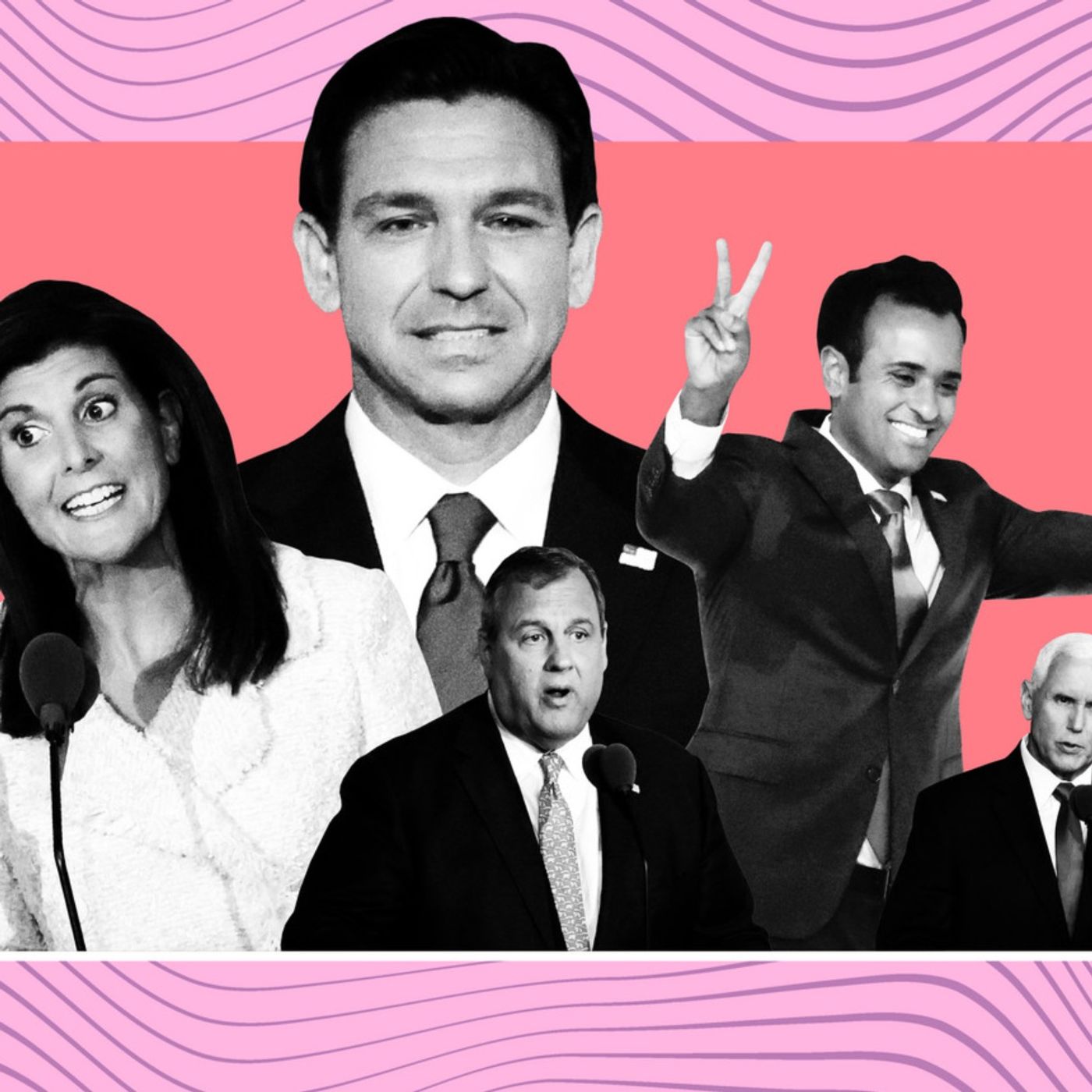
The First 2024 GOP Presidential Debate [TEASER]
bonusEMatt and Sam stayed up late to record just minutes after the first GOP presidential debate ended on Wednesday night; we did this for you, our beloved subscribers, because we care. This episode (full of blistering insights) is the result of that decision. "Enjoy."Subscribe to Know Your Enemy on Patreon to listen to this bonus episode, and all of our bonus content: https://www.patreon.com/knowyourenemy

Ep 77The Hochman Affair
EThree weeks ago, one-time Know Your Enemy guest and “frenemy” of the show Nate Hochman was fired from Ron DeSantis’s presidential campaign for his role in producing a campaign video featuring a Nazi “sonnenrad” symbol. (You may have read about it!) Unsurprisingly, the Hochman affair inspired some soul-searching on the part of your podcast hosts: had we inadvertently exposed our audience to a neo-nazi? Was our original December 2021 interview insufficiently combative — or too credulous (as many of our most vigilant listeners have suggested)? Were we naive about the value of welcoming young conservatives on the show? And, perhaps most illuminatingly, what can Hochman’s trajectory (from Never-Trump conservative and Michael Oakeshott fan to disgraced DeSantis speechwriter) tell us about the young right today?After all, Hochman was not alone. A few weeks before the Hochman affair, DeSantis influencer and Chronicles magazine editor Pedro Gonzalez was exposed for expressing virulent anti-Semitic sentiments in private group chats in 2019. And most recently, Huffington Post reported that Richard Hanania, another young conservative — a darling of Silicon Valley reactionaries and a frequent interlocutor with centrist pundits on Twitter — had lived a previous life as an alt-right white supremacist and misogynist.In this episode, we ask (not for the first time): what exactly is going on with young conservatives? Has the wall between mainstream conservatism and unacceptably hard-right sentiments completely broken down? Was it ever there? Or has it only become more porous in the age of Twitter, Telegram, and online anonymity? Did the alt-right of 2016, with its Pepe memes and winking fascist apologia, ever go away? Or did it merely merge, seamlessly, with today’s young right, turning an entire generation of GOP operatives into half-ironic racists, neofascists, and violent homophobes? Further Reading:Michelle Goldberg, “The Radicalization of the Young Right,” NYTimes, July 31, 2023.“Young, Radical, and on the Right, with Nate Hochman,” KYE, Dec 16, 2021."How Euphemisms Muddy Our Political Conversations," On the Media (WNYC), Jan 21, 2022David Weigel and Shelby Talcott, “‘This belongs in the Smithsonian’: Inside the meme video operation that swallowed Ron DeSantis’ campaign,” Aug 1, 2023.Sam Adler-Bell, “The Radical Young Intellectuals Who Want to Take Over the American Right,” The New Republic, Dec 2, 2021.Michael Oakeshott, “On Being Conservative,” from Rationalism in politics and other essays, 1962.John Ganz, “They’re All Like That,” Unpopular Front, Aug 6, 2023.Jordan Nixon-Hamilton, “‘F**k This President’: More Messages Show Pro-DeSantis Influencer Pedro Gonzalez Turned on Trump in 2019,” Breitbart, Aug 1, 2023.Christopher Mathias, “Richard Hanania, Rising Right-Wing Star, Wrote For White Supremacist Sites Under Pseudonym,” Huffington Post, Aug 4, 2023. ...and don't forget to subscribe to Know Your Enemy on Patreon for access to all of our bonus episodes!

Grateful Dead Conservatives (w/ Sophie Haigney) [TEASER]
bonusESubscribe to Know Your Enemy on Patreon to listen to this bonus episode, and all of our bonus content: https://www.patreon.com/knowyourenemyThe Grateful Dead Conservative (w/ Sophie Haigney)Another fun summer-y episode for you, our beloved subscribers: This time, we talked to writer, Paris Review editor, and Grateful Dead super-fan Sophie Haigney about a topic we've long pondered: the phenomenon of the "Grateful Dead conservative."Why is it that right-wing figures including Tucker Carlson, Ann Coulter, and Paul Ryan count the Grateful Dead among their favorite bands? Isn't there something odd about these social conservative luminaries loving the Dead, such avatars of 1960s psychedelia, libertinism, and hippie counterculture? Or else, have we misunderstood something essential about the band — their Americana roots, their individualist ethos, their reverence for transcendent experiences — which makes them particularly suitable to conservative sensibilities?And also why do we all love them so much — this band that tests our patience, produces largely forgettable studio records, and often sounds, in concert, as if they're playing their own songs for the first time? The mind reels...Strap in for a long, strange, improvisational trip to the heart of these bewildering matters.Further Reading:Sophie Haigney, "Those of Us Who Love the Dead," Gawker, Dec 3, 2021.— "The Final Dead Shows: Part One," The Paris Review, Jul 17, 2023.— "The Final Dead Shows: Part Two," The Paris Review, July 18, 2023.— "The Final Dead Shows: Part Three," The Paris Review, Jul 19, 2023.Ann Coulter, "I’m A Grateful Dead Fan For Life," Billboard, Jun 24, 2016.Noah Eckstein, "'Wave That Flag': Meet the Deadheads Who Stump for Trump," Variety, Nov 2, 2020.Zachary D. Carter and Arthur Delaney, "Why Do Conservatives Love The Grateful Dead? We Ask Tucker Carlson," Huffington Post, Jul 15, 2015.Dean Budnick, "Behind The Scene: Jake Sherman on Phish, the Grateful Dead and Covering 535 Class Presidents at Punchbowl News," Relix, May 12, 2021.Martin Longman, "Why Do Republicans Love the Grateful Dead?" Washington Monthly, July 3, 2015Nick Paumgarten, "Dead Head," The New Yorker, Nov 18, 2012.Hunter Schwartz, "Grateful Dead fans: Surprisingly Republican," Washington Post, Jul 1, 2015.Marc Tracy, "Saying Goodbye to the Dead. (Again.)" NYTimes, Jul 14, 2023.Andy Kroll, "Jon Huntsman: We Need a 'Grateful Dead Tour' to Save America," Mother Jones, Jan 8, 2012.