Gita For Life
330 episodes — Page 6 of 7
23 Moksha Purusharthas Part-10
"Bandhan" is a Hindi word that translates to "bond," "binding," or "tie" in English. In the spiritual context, Bandhan often refers to the attachments or bonds we form in the physical world. These could be relationships, desires, emotions, habits, or material possessions that we are attached to. It is believed that these attachments can lead to suffering and can prevent us from achieving spiritual liberation because they keep us tied to the cycle of birth and death, also known as Samsara in Hinduism and other Indian religions.Liberation, or Mukti, from these bonds or Bandhan can be pursued through various spiritual practices and paths. Though different spiritual traditions might have slightly different views, the following steps are generally suggested:Self-Realization: The first step towards liberation is self-realization. This means understanding the true nature of oneself, beyond the physical body and the mind. It is the realization that you are not your body, your thoughts, or your emotions, but a divine soul which is a part of the ultimate reality, Brahman.Detachment: To break free from the Bandhan, one must cultivate a sense of detachment. This does not mean renouncing worldly life or relationships, but rather developing an attitude of non-attachment where one does not get overly attached to people, material possessions, or outcomes.Mindfulness and Meditation: Regular practice of mindfulness and meditation helps in quieting the mind and reducing attachments. It can also lead to increased self-awareness and help in recognizing and overcoming negative patterns of thought and behavior.Right Conduct: Living a life based on ethical and moral principles is another important step towards liberation. This includes practices like truthfulness, non-violence, kindness, compassion, and selflessness.Devotion: In many spiritual traditions, devotion to a higher power is considered a path towards liberation. This devotion can be expressed through prayer, worship, or service.Knowledge and Wisdom: Gaining spiritual knowledge and wisdom, often through the teachings of spiritual texts or enlightened gurus, is considered essential in the path to liberation. This knowledge helps one to understand the nature of the self, the world, and the ultimate reality.Grace: Lastly, it is often said that liberation is ultimately achieved by the grace of the divine power or the guru. One can make efforts, but it is the divine grace that finally leads to liberation.Remember, the path to liberation is a personal journey and what works for one person may not work for another. It's often recommended to seek guidance from a spiritual teacher or guru to help navigate this path.Support the showAll by the grace of Guru ji, Brahmleen Sant Samvit Somgiri Ji Maharaj.
22 Moksha Purusharthas Part-09.
Chapter-24तत्त्वमसि (Tattvamasi) is a significant and profound principle in the teachings of Brahmleen Samvit Somgiri Ji Maharaj. Derived from the ancient Upanishads, this Sanskrit phrase translates to "Thou art That" or "You are That." It highlights the essential unity between the individual self (आत्मन्, Ātman) and the ultimate reality (ब्रह्मन्, Brahman).तत्त्वमसि is found in the Chandogya Upanishad, where the sage Uddalaka Aruni instructs his son Śvetaketu about the nature of reality, emphasizing that the ultimate truth transcends the limitations of individuality and duality.तत्सत्यं स आत्मा तत्त्वमसि श्वेतकेतो।इति भूय एव मा भगवान्विज्ञापयत्विति।Tatsatyaṁ sa ātmā tattvamasi śvetaketo |Iti bhūya eva mā bhagavānvijñāpayatviti ||(That is the truth, That is the Self, and you, Śvetaketu, are That. Enlighten me further, venerable sir!)Brahmleen Samvit Somgiri Ji Maharaj teaches that understanding and realizing the truth of तत्त्वमसि (Tattvamasi) is crucial to spiritual growth and self-realization. Some key aspects of this principle are:आत्म-ब्रह्म ऐक्यम् (Ātma-Brahma Aikyam): The unity between the individual self and the ultimate reality is the foundation of this principle. It emphasizes that the true nature of every being is divine and one with the Absolute.अध्यात्म अध्ययन (Adhyātma Adhyayana): The study and understanding of the Self is essential to recognize the truth of तत्त्वमसि (Tattvamasi). Engaging in self-inquiry and spiritual practices can lead to this realization.ज्ञानयोग (Jñānayoga): The path of knowledge and wisdom is a critical approach to realizing the unity of Ātman and Brahman. It involves the cultivation of discrimination (विवेक, Viveka) and detachment (वैराग्य, Vairāgya).आत्मज्ञान (Ātmajñāna): Self-realization is the ultimate goal of spiritual practice. Understanding the truth of तत्त्वमसि (Tattvamasi) allows one to transcend the cycle of birth and death, attaining liberation (मोक्ष, Mokṣa).By comprehending and realizing the truth of तत्त्वमसि (Tattvamasi), individuals can experience the unity between their true selves and the ultimate reality. This profound understanding leads to spiritual growth, self-realization, and ultimate liberation from the cycle of birth and death.Support the showAll by the grace of Guru ji, Brahmleen Sant Samvit Somgiri Ji Maharaj.
21 Moksha Purusharthas Part-08
Chapter -23कर्मयोग (Karmayoga), a central teaching of Brahmleen Samvit Somgiri Ji Maharaj, is deeply rooted in the wisdom of ancient Indian scriptures, particularly the Bhagavad Gita. It is the path of selfless action in which an individual performs their duties without being attached to the results. This approach helps purify the mind, attenuate the influence of karma, and fosters spiritual growth and liberation.सर्वकर्माण्यपि सदा कुर्वाणो मद्व्यपाश्रयः।मत्प्रसादादवाप्नोति शाश्वतं पदमव्ययम्॥Sarvakarmāṇyapi sadā kurvāṇo madvyapāśrayaḥ |Matprasādādavāpnoti śāśvataṁ padamavyayam ||(Performing all actions while taking refuge in Me, one attains the eternal, imperishable abode by My grace.)To delve deeper into कर्मयोग (Karmayoga), let's explore some key principles and aspects from the teachings of Brahmleen Samvit Somgiri Ji Maharaj:निष्काम कर्म (Niṣkāma Karma): This principle emphasizes the importance of performing actions selflessly, without any expectation of personal gain or reward. Practicing Niṣkāma Karma helps to cultivate a selfless attitude, which in turn minimizes the influence of karma on one's life.स्वधर्म (Svadharma): Svadharma refers to the unique duties and responsibilities of an individual based on their life stage, social position, and personal abilities. Understanding and adhering to one's Svadharma helps maintain balance and harmony in life.समर्पणभाव (Samarpaṇabhāva): This principle entails the attitude of surrendering the results of one's actions to the divine. By cultivating this attitude, one can eliminate ego and reduce the burden of karma.सेवा (Sevā): Offering selfless service to others is an essential aspect of Karmayoga. It helps purify the mind and promote spiritual growth.साधारण धर्म (Sādhāraṇa Dharma): Universal moral principles, such as non-violence, truthfulness, and compassion, should be followed by all individuals, irrespective of their personal Svadharma.बुद्धियोग (Buddhiyoga): This concept emphasizes the importance of using one's intellect and discernment while performing actions. By acting with a clear understanding of right and wrong, one can avoid accumulating negative karma.यदा ते मोहकलिलं बुद्धिर्व्यतितरिष्यति।तदा गन्तासि निर्वेदं श्रोतव्यस्य श्रुतस्य च॥Yadā te mohakalilaṁ buddhirvyatitariṣyati |Tadā Tadā gantāsi nirvedaṁ śrotavyasya śrutasya ca ||(When your intellect crosses beyond the mire of delusion, you will achieve a state of dispassion towards what has been heard and what is yet to be heard.)In conclusion, the teachings of Brahmleen Samvit Somgiri Ji Maharaj on कर्मयोग (Karmayoga) emphasize the importance of performing selfless actions and fulfilling one's duties without attachment to the results. By embracing the principles of Niṣkāma Karma, Svadharma, Samarpaṇabhāva, Sevā, Sādhāraṇa Dharma, and Buddhiyoga, an individual can progress on the path of spiritual growth, ultimately attaining self-realization and liberation.Karmayoga, as a path of selfless action, encourages the practitioner to cultivate virtues such as detachment, humility, and compassion, while continuously striving to improve their understanding of the nature of reality. By integrating these principles into daily life, one can experience profound spiritual transformation and a deepening connection with the divine.Support the showAll by the grace of Guru ji, Brahmleen Sant Samvit Somgiri Ji Maharaj.
20 Moksha Purusharthas Part-07
Chapter -23कर्मयोग (Karmayoga), a central teaching of Brahmleen Samvit Somgiri Ji Maharaj, is deeply rooted in the wisdom of ancient Indian scriptures, particularly the Bhagavad Gita. It is the path of selfless action in which an individual performs their duties without being attached to the results. This approach helps purify the mind, attenuate the influence of karma, and fosters spiritual growth and liberation.सर्वकर्माण्यपि सदा कुर्वाणो मद्व्यपाश्रयः।मत्प्रसादादवाप्नोति शाश्वतं पदमव्ययम्॥Sarvakarmāṇyapi sadā kurvāṇo madvyapāśrayaḥ |Matprasādādavāpnoti śāśvataṁ padamavyayam ||(Performing all actions while taking refuge in Me, one attains the eternal, imperishable abode by My grace.)To delve deeper into कर्मयोग (Karmayoga), let's explore some key principles and aspects from the teachings of Brahmleen Samvit Somgiri Ji Maharaj:निष्काम कर्म (Niṣkāma Karma): This principle emphasizes the importance of performing actions selflessly, without any expectation of personal gain or reward. Practicing Niṣkāma Karma helps to cultivate a selfless attitude, which in turn minimizes the influence of karma on one's life.स्वधर्म (Svadharma): Svadharma refers to the unique duties and responsibilities of an individual based on their life stage, social position, and personal abilities. Understanding and adhering to one's Svadharma helps maintain balance and harmony in life.समर्पणभाव (Samarpaṇabhāva): This principle entails the attitude of surrendering the results of one's actions to the divine. By cultivating this attitude, one can eliminate ego and reduce the burden of karma.सेवा (Sevā): Offering selfless service to others is an essential aspect of Karmayoga. It helps purify the mind and promote spiritual growth.साधारण धर्म (Sādhāraṇa Dharma): Universal moral principles, such as non-violence, truthfulness, and compassion, should be followed by all individuals, irrespective of their personal Svadharma.बुद्धियोग (Buddhiyoga): This concept emphasizes the importance of using one's intellect and discernment while performing actions. By acting with a clear understanding of right and wrong, one can avoid accumulating negative karma.यदा ते मोहकलिलं बुद्धिर्व्यतितरिष्यति।तदा गन्तासि निर्वेदं श्रोतव्यस्य श्रुतस्य च॥Yadā te mohakalilaṁ buddhirvyatitariṣyati |Tadā Tadā gantāsi nirvedaṁ śrotavyasya śrutasya ca ||(When your intellect crosses beyond the mire of delusion, you will achieve a state of dispassion towards what has been heard and what is yet to be heard.)In conclusion, the teachings of Brahmleen Samvit Somgiri Ji Maharaj on कर्मयोग (Karmayoga) emphasize the importance of performing selfless actions and fulfilling one's duties without attachment to the results. By embracing the principles of Niṣkāma Karma, Svadharma, Samarpaṇabhāva, Sevā, Sādhāraṇa Dharma, and Buddhiyoga, an individual can progress on the path of spiritual growth, ultimately attaining self-realization and liberation.Karmayoga, as a path of selfless action, encourages the practitioner to cultivate virtues such as detachment, humility, and compassion, while continuously striving to improve their understanding of the nature of reality. By integrating these principles into daily life, one can experience profound spiritual transformation and a deepening connection with the divine.Support the showAll by the grace of Guru ji, Brahmleen Sant Samvit Somgiri Ji Maharaj.
19 Moksha Purusharthas Part-06
Chapter -23कर्मयोग (Karmayoga), a central teaching of Brahmleen Samvit Somgiri Ji Maharaj, is deeply rooted in the wisdom of ancient Indian scriptures, particularly the Bhagavad Gita. It is the path of selfless action in which an individual performs their duties without being attached to the results. This approach helps purify the mind, attenuate the influence of karma, and fosters spiritual growth and liberation.सर्वकर्माण्यपि सदा कुर्वाणो मद्व्यपाश्रयः।मत्प्रसादादवाप्नोति शाश्वतं पदमव्ययम्॥Sarvakarmāṇyapi sadā kurvāṇo madvyapāśrayaḥ |Matprasādādavāpnoti śāśvataṁ padamavyayam ||(Performing all actions while taking refuge in Me, one attains the eternal, imperishable abode by My grace.)To delve deeper into कर्मयोग (Karmayoga), let's explore some key principles and aspects from the teachings of Brahmleen Samvit Somgiri Ji Maharaj:निष्काम कर्म (Niṣkāma Karma): This principle emphasizes the importance of performing actions selflessly, without any expectation of personal gain or reward. Practicing Niṣkāma Karma helps to cultivate a selfless attitude, which in turn minimizes the influence of karma on one's life.स्वधर्म (Svadharma): Svadharma refers to the unique duties and responsibilities of an individual based on their life stage, social position, and personal abilities. Understanding and adhering to one's Svadharma helps maintain balance and harmony in life.समर्पणभाव (Samarpaṇabhāva): This principle entails the attitude of surrendering the results of one's actions to the divine. By cultivating this attitude, one can eliminate ego and reduce the burden of karma.सेवा (Sevā): Offering selfless service to others is an essential aspect of Karmayoga. It helps purify the mind and promote spiritual growth.साधारण धर्म (Sādhāraṇa Dharma): Universal moral principles, such as non-violence, truthfulness, and compassion, should be followed by all individuals, irrespective of their personal Svadharma.बुद्धियोग (Buddhiyoga): This concept emphasizes the importance of using one's intellect and discernment while performing actions. By acting with a clear understanding of right and wrong, one can avoid accumulating negative karma.यदा ते मोहकलिलं बुद्धिर्व्यतितरिष्यति।तदा गन्तासि निर्वेदं श्रोतव्यस्य श्रुतस्य च॥Yadā te mohakalilaṁ buddhirvyatitariṣyati |Tadā Tadā gantāsi nirvedaṁ śrotavyasya śrutasya ca ||(When your intellect crosses beyond the mire of delusion, you will achieve a state of dispassion towards what has been heard and what is yet to be heard.)In conclusion, the teachings of Brahmleen Samvit Somgiri Ji Maharaj on कर्मयोग (Karmayoga) emphasize the importance of performing selfless actions and fulfilling one's duties without attachment to the results. By embracing the principles of Niṣkāma Karma, Svadharma, Samarpaṇabhāva, Sevā, Sādhāraṇa Dharma, and Buddhiyoga, an individual can progress on the path of spiritual growth, ultimately attaining self-realization and liberation.Karmayoga, as a path of selfless action, encourages the practitioner to cultivate virtues such as detachment, humility, and compassion, while continuously striving to improve their understanding of the nature of reality. By integrating these principles into daily life, one can experience profound spiritual transformation and a deepening connection with the divine.Support the showAll by the grace of Guru ji, Brahmleen Sant Samvit Somgiri Ji Maharaj.
18 Moksha Purusharthas Part-05
Chapter-22जीवन्मुक्ति (Jīvanmukti) refers to the state of liberation while still living in a physical body, as taught by Brahmleen Samvit Somgiri Ji Maharaj. This concept emphasizes the realization of the true nature of the Self, leading to freedom from the cycle of birth and death, and union with the divine.जीवन्मुक्तिर्धर्मार्थकाममोक्षयुगधर्मिणाम्।सम्वित्सोमगिरेर्वाणी परमात्मनि संयुगम्॥Jīvanmuktirdharmārthakāmamokṣayugadharmiṇām |Samvitsomagirervāṇī paramātmani saṁyugam ||(Jīvanmukti, as taught by Guru Samvit Somgiri, unites one with the supreme Self and encompasses the essence of Dharma, Artha, Kāma, and Mokṣa.)Various concepts related to जीवन्मुक्ति (Jīvanmukti) as taught by Brahmleen Samvit Somgiri Ji Maharaj include:आत्मज्ञान (Ātmajñāna): The attainment of Self-realization through introspection, contemplation, and meditation.वैराग्य (Vairāgya): Developing detachment from material desires and attachments, enabling one to remain unaffected by worldly experiences.ध्यान (Dhyāna): Deepening one's practice of meditation to attain a state of self-awareness and inner peace.कर्मयोग (Karmayoga): Performing selfless actions without attachment to the fruits of one's deeds, thereby purifying the mind and eliminating the ego.ब्रह्मचिंतन (Brahmacintana): Constantly contemplating on the nature of the divine and the ultimate reality, which helps in dissolving the sense of individuality.जीवन्मुक्तियुक्तं धर्मयुक्तं च सर्वदा।सम्वित्सोमगिरेर्मार्गे सततं निष्ठा वर्धते॥Jīvanmuktiyuktaṁ dharmayuktaṁ ca sarvadā |Samvitsomagirermārge satataṁ niṣṭhā vardhate ||(Where Jīvanmukti is aligned with Dharma, on the path of Guru Samvit Somgiri, constant commitment and growth are nurtured.)In conclusion, the teachings of Brahmleen Samvit Somgiri Ji Maharaj on जीवन्मुक्ति (Jīvanmukti) emphasize the importance of realizing the true nature of the Self while living in the physical body. By practicing self-realization, detachment, meditation, selfless action, and divine contemplation, one can attain liberation from the cycle of birth and death and experience union with the divine.जीवन्मुक्तिस्थितिर्विश्वं जगदद्वैतवर्जितम्।सम्वित्सोमगिरेर्मार्गे सदा शान्तिप्रदायिनि॥Jīvanmuktisthitirviśvaṁ jagadadvaitavarjitam |Samvitsomagirermārge sadā śāntipradāyini ||(With Jīvanmukti, the world transcends duality, and Guru Samvit Somgiri's path always bestows inner peace.)Through the teachings of Brahmleen Samvit Somgiri Ji Maharaj on जीवन्मुक्ति (Jīvanmukti), one can attain a higher state of consciousness and live a life of freedom, inner peace, and harmony. By aligning with the path of Jīvanmukti and embracing the principles of self-realization, detachment, meditation, selfless action, and divine contemplation, one can experience the profound connection with the ultimate reality, leading to a life of true spiritual fulfillment.Support the showAll by the grace of Guru ji, Brahmleen Sant Samvit Somgiri Ji Maharaj.
17 Moksha Purusharthas Part-04
Chapter-22जीवन्मुक्ति (Jīvanmukti) refers to the state of liberation while still living in a physical body, as taught by Brahmleen Samvit Somgiri Ji Maharaj. This concept emphasizes the realization of the true nature of the Self, leading to freedom from the cycle of birth and death, and union with the divine.जीवन्मुक्तिर्धर्मार्थकाममोक्षयुगधर्मिणाम्।सम्वित्सोमगिरेर्वाणी परमात्मनि संयुगम्॥Jīvanmuktirdharmārthakāmamokṣayugadharmiṇām |Samvitsomagirervāṇī paramātmani saṁyugam ||(Jīvanmukti, as taught by Guru Samvit Somgiri, unites one with the supreme Self and encompasses the essence of Dharma, Artha, Kāma, and Mokṣa.)Various concepts related to जीवन्मुक्ति (Jīvanmukti) as taught by Brahmleen Samvit Somgiri Ji Maharaj include:आत्मज्ञान (Ātmajñāna): The attainment of Self-realization through introspection, contemplation, and meditation.वैराग्य (Vairāgya): Developing detachment from material desires and attachments, enabling one to remain unaffected by worldly experiences.ध्यान (Dhyāna): Deepening one's practice of meditation to attain a state of self-awareness and inner peace.कर्मयोग (Karmayoga): Performing selfless actions without attachment to the fruits of one's deeds, thereby purifying the mind and eliminating the ego.ब्रह्मचिंतन (Brahmacintana): Constantly contemplating on the nature of the divine and the ultimate reality, which helps in dissolving the sense of individuality.जीवन्मुक्तियुक्तं धर्मयुक्तं च सर्वदा।सम्वित्सोमगिरेर्मार्गे सततं निष्ठा वर्धते॥Jīvanmuktiyuktaṁ dharmayuktaṁ ca sarvadā |Samvitsomagirermārge satataṁ niṣṭhā vardhate ||(Where Jīvanmukti is aligned with Dharma, on the path of Guru Samvit Somgiri, constant commitment and growth are nurtured.)In conclusion, the teachings of Brahmleen Samvit Somgiri Ji Maharaj on जीवन्मुक्ति (Jīvanmukti) emphasize the importance of realizing the true nature of the Self while living in the physical body. By practicing self-realization, detachment, meditation, selfless action, and divine contemplation, one can attain liberation from the cycle of birth and death and experience union with the divine.जीवन्मुक्तिस्थितिर्विश्वं जगदद्वैतवर्जितम्।सम्वित्सोमगिरेर्मार्गे सदा शान्तिप्रदायिनि॥Jīvanmuktisthitirviśvaṁ jagadadvaitavarjitam |Samvitsomagirermārge sadā śāntipradāyini ||(With Jīvanmukti, the world transcends duality, and Guru Samvit Somgiri's path always bestows inner peace.)Through the teachings of Brahmleen Samvit Somgiri Ji Maharaj on जीवन्मुक्ति (Jīvanmukti), one can attain a higher state of consciousness and live a life of freedom, inner peace, and harmony. By aligning with the path of Jīvanmukti and embracing the principles of self-realization, detachment, meditation, selfless action, and divine contemplation, one can experience the profound connection with the ultimate reality, leading to a life of true spiritual fulfillment.Support the showAll by the grace of Guru ji, Brahmleen Sant Samvit Somgiri Ji Maharaj.
16 Moksha Purusharthas Part-03
Chapter-21मोक्ष पुरुषार्थ (Mokṣa Puruṣārtha) represents the ultimate goal of human life according to the teachings of Brahmleen Samvit Somgiri Ji Maharaj. It signifies the pursuit of spiritual liberation, transcending the cycle of birth and death (Saṁsāra) through self-realization and union with the Divine.आत्मबोधविवेकाभ्यां वैराग्येन च साधनैः।मोक्षपुरुषार्थो यत्र सम्वित्सोमगिरौ स्थितः॥Ātmabodhavivekābhyāṁ vairāgyena cha sādhanaiḥ |Mokṣapuruṣārtho yatra samvitsomagirau sthitaḥ ||(Through self-realization, discernment, dispassion, and spiritual practices, one attains Mokṣa Puruṣārtha, as taught by Samvit Somgiri.)Various concepts related to मोक्ष पुरुषार्थ (Mokṣa Puruṣārtha) as expounded by Brahmleen Samvit Somgiri Ji Maharaj include:अहंकार त्याग (Ahaṁkāra Tyāga): Renouncing ego and the sense of individuality to realize the oneness of the Self with the Divine, which allows the seeker to experience the ultimate truth.जीवन्मुक्ति (Jīvanmukti): Living in a state of spiritual liberation even while embodied, experiencing freedom from the limitations of the physical world, and embodying divine qualities.कर्मयोग (Karmayoga): Performing actions selflessly and without attachment to the fruits of one's actions, as a means of purifying the mind and progressing towards Mokṣa.ध्यान (Dhyāna): Deep meditation and contemplation on the nature of the Self, leading to an experiential understanding of the ultimate Reality and paving the way to Mokṣa.तत्त्वमसि (Tattvamasi): The profound realization of the unity of individual consciousness (Jīvātman) with the supreme consciousness (Paramātman), revealing the essence of the Upanishadic teaching: "Thou art That."By embracing these deeper aspects of Mokṣa Puruṣārtha, individuals can achieve spiritual liberation, transcending the cycle of birth and death, and attaining union with the Divine.योगविद्यापरामर्शाद्विमोचनं मोक्षलक्षणम्।सम्वित्सोमगिरेर्दिशा सर्वदुःखप्रणाशनम्॥Yogavidyāparāmarśādvimocanaṁ mokṣalakṣaṇam |Samvitsomagirerdiśā sarvaduḥkhapraṇāśanam ||(Through the application of Yoga and spiritual knowledge, Mokṣa, characterized by liberation, is attained under the guidance of Samvit Somgiri, destroying all suffering.)In conclusion, the teachings of Brahmleen Samvit Somgiri Ji Maharaj on मोक्ष पुरुषार्थ (Mokṣa Puruṣārtha) emphasize the importance of pursuing spiritual liberation and union with the Divine. By delving deeper into aspects like renouncing ego, living in a state of Jīvanmukti, practicing Karmayoga, engaging in Dhyāna, and realizing the unity of individual and supreme consciousness, individuals can transcend the cycle of birth and death, attaining the ultimate state of Mokṣa. Integrating Mokṣa Puruṣārtha with Dharma, Artha, and Kāma enables the seeker to achieve holistic well-being and spiritual growth under the guidance of the enlightened wisdom of Brahmleen Samvit Somgiri Ji Maharaj.Support the showAll by the grace of Guru ji, Brahmleen Sant Samvit Somgiri Ji Maharaj.
15 Moksha Purusharthas Part-02
Chapter-21मोक्ष पुरुषार्थ (Mokṣa Puruṣārtha) represents the ultimate goal of human life according to the teachings of Brahmleen Samvit Somgiri Ji Maharaj. It signifies the pursuit of spiritual liberation, transcending the cycle of birth and death (Saṁsāra) through self-realization and union with the Divine.आत्मबोधविवेकाभ्यां वैराग्येन च साधनैः।मोक्षपुरुषार्थो यत्र सम्वित्सोमगिरौ स्थितः॥Ātmabodhavivekābhyāṁ vairāgyena cha sādhanaiḥ |Mokṣapuruṣārtho yatra samvitsomagirau sthitaḥ ||(Through self-realization, discernment, dispassion, and spiritual practices, one attains Mokṣa Puruṣārtha, as taught by Samvit Somgiri.)Various concepts related to मोक्ष पुरुषार्थ (Mokṣa Puruṣārtha) as expounded by Brahmleen Samvit Somgiri Ji Maharaj include:अहंकार त्याग (Ahaṁkāra Tyāga): Renouncing ego and the sense of individuality to realize the oneness of the Self with the Divine, which allows the seeker to experience the ultimate truth.जीवन्मुक्ति (Jīvanmukti): Living in a state of spiritual liberation even while embodied, experiencing freedom from the limitations of the physical world, and embodying divine qualities.कर्मयोग (Karmayoga): Performing actions selflessly and without attachment to the fruits of one's actions, as a means of purifying the mind and progressing towards Mokṣa.ध्यान (Dhyāna): Deep meditation and contemplation on the nature of the Self, leading to an experiential understanding of the ultimate Reality and paving the way to Mokṣa.तत्त्वमसि (Tattvamasi): The profound realization of the unity of individual consciousness (Jīvātman) with the supreme consciousness (Paramātman), revealing the essence of the Upanishadic teaching: "Thou art That."By embracing these deeper aspects of Mokṣa Puruṣārtha, individuals can achieve spiritual liberation, transcending the cycle of birth and death, and attaining union with the Divine.योगविद्यापरामर्शाद्विमोचनं मोक्षलक्षणम्।सम्वित्सोमगिरेर्दिशा सर्वदुःखप्रणाशनम्॥Yogavidyāparāmarśādvimocanaṁ mokṣalakṣaṇam |Samvitsomagirerdiśā sarvaduḥkhapraṇāśanam ||(Through the application of Yoga and spiritual knowledge, Mokṣa, characterized by liberation, is attained under the guidance of Samvit Somgiri, destroying all suffering.)In conclusion, the teachings of Brahmleen Samvit Somgiri Ji Maharaj on मोक्ष पुरुषार्थ (Mokṣa Puruṣārtha) emphasize the importance of pursuing spiritual liberation and union with the Divine. By delving deeper into aspects like renouncing ego, living in a state of Jīvanmukti, practicing Karmayoga, engaging in Dhyāna, and realizing the unity of individual and supreme consciousness, individuals can transcend the cycle of birth and death, attaining the ultimate state of Mokṣa. Integrating Mokṣa Puruṣārtha with Dharma, Artha, and Kāma enables the seeker to achieve holistic well-being and spiritual growth under the guidance of the enlightened wisdom of Brahmleen Samvit Somgiri Ji Maharaj.Support the showAll by the grace of Guru ji, Brahmleen Sant Samvit Somgiri Ji Maharaj.
14 Moksha Purusharthas Part-01
Chapter-21मोक्ष पुरुषार्थ (Mokṣa Puruṣārtha) represents the ultimate goal of human life according to the teachings of Brahmleen Samvit Somgiri Ji Maharaj. It signifies the pursuit of spiritual liberation, transcending the cycle of birth and death (Saṁsāra) through self-realization and union with the Divine.आत्मबोधविवेकाभ्यां वैराग्येन च साधनैः।मोक्षपुरुषार्थो यत्र सम्वित्सोमगिरौ स्थितः॥Ātmabodhavivekābhyāṁ vairāgyena cha sādhanaiḥ |Mokṣapuruṣārtho yatra samvitsomagirau sthitaḥ ||(Through self-realization, discernment, dispassion, and spiritual practices, one attains Mokṣa Puruṣārtha, as taught by Samvit Somgiri.)Various concepts related to मोक्ष पुरुषार्थ (Mokṣa Puruṣārtha) as expounded by Brahmleen Samvit Somgiri Ji Maharaj include:अहंकार त्याग (Ahaṁkāra Tyāga): Renouncing ego and the sense of individuality to realize the oneness of the Self with the Divine, which allows the seeker to experience the ultimate truth.जीवन्मुक्ति (Jīvanmukti): Living in a state of spiritual liberation even while embodied, experiencing freedom from the limitations of the physical world, and embodying divine qualities.कर्मयोग (Karmayoga): Performing actions selflessly and without attachment to the fruits of one's actions, as a means of purifying the mind and progressing towards Mokṣa.ध्यान (Dhyāna): Deep meditation and contemplation on the nature of the Self, leading to an experiential understanding of the ultimate Reality and paving the way to Mokṣa.तत्त्वमसि (Tattvamasi): The profound realization of the unity of individual consciousness (Jīvātman) with the supreme consciousness (Paramātman), revealing the essence of the Upanishadic teaching: "Thou art That."By embracing these deeper aspects of Mokṣa Puruṣārtha, individuals can achieve spiritual liberation, transcending the cycle of birth and death, and attaining union with the Divine.योगविद्यापरामर्शाद्विमोचनं मोक्षलक्षणम्।सम्वित्सोमगिरेर्दिशा सर्वदुःखप्रणाशनम्॥Yogavidyāparāmarśādvimocanaṁ mokṣalakṣaṇam |Samvitsomagirerdiśā sarvaduḥkhapraṇāśanam ||(Through the application of Yoga and spiritual knowledge, Mokṣa, characterized by liberation, is attained under the guidance of Samvit Somgiri, destroying all suffering.)In conclusion, the teachings of Brahmleen Samvit Somgiri Ji Maharaj on मोक्ष पुरुषार्थ (Mokṣa Puruṣārtha) emphasize the importance of pursuing spiritual liberation and union with the Divine. By delving deeper into aspects like renouncing ego, living in a state of Jīvanmukti, practicing Karmayoga, engaging in Dhyāna, and realizing the unity of individual and supreme consciousness, individuals can transcend the cycle of birth and death, attaining the ultimate state of Mokṣa. Integrating Mokṣa Puruṣārtha with Dharma, Artha, and Kāma enables the seeker to achieve holistic well-being and spiritual growth under the guidance of the enlightened wisdom of Brahmleen Samvit Somgiri Ji Maharaj.Support the showAll by the grace of Guru ji, Brahmleen Sant Samvit Somgiri Ji Maharaj.
13 Kama Purusharth Part 06
Chapter - 18प्रेम सम्बन्ध (Prema Sambandha) refers to the loving relationships that form the basis of human connections, as per the teachings of Brahmleen Samvit Somgiri Ji Maharaj. These relationships, rooted in love, care, and understanding, play a crucial role in one's spiritual journey and personal growth.प्रेमबन्धः सुखायात्र धर्मार्थकामसंगतः।सम्वित्सोमगिरेर्वाणी हृदयानन्दवर्धनम्॥Premabandhaḥ sukhāyātra dharmārthakāmasaṅgataḥ |Samvitsomagirervāṇī hṛdayānandavardhanam ||(Loving relationships bring happiness, harmonized with Dharma, Artha, and Kāma, and the teachings of Guru Samvit Somgiri enhance the joy of the heart.)Various concepts related to प्रेम सम्बन्ध (Prema Sambandha) as taught by Brahmleen Samvit Somgiri Ji Maharaj include:मैत्री (Maitrī): Cultivating friendships based on trust, understanding, and mutual support, contributing to emotional and spiritual well-being.कुटुम्ब सम्बन्ध (Kuṭumba Sambandha): Nurturing family bonds that foster love, care, and a sense of belonging, essential for personal growth and spiritual development.स्नेह (Sneha): Developing affectionate relationships with peers, neighbors, and the larger community, promoting a sense of unity and interconnectedness.दायित्व (Dāyitva): Embracing responsibility and commitment in relationships, understanding the role of duty in sustaining love and care.क्षमा (Kṣamā): Practicing forgiveness and compassion in relationships, allowing for healing and personal growth.प्रेमसम्बन्धसंयुक्तं धर्मयुक्तं च सर्वदा।सम्वित्सोमगिरेर्मार्गे सततं निष्ठा वर्धते॥Premasambandhasaṁyuktaṁ dharmayuktaṁ ca sarvadā |Samvitsomagirermārge satataṁ niṣṭhā vardhate ||(Where loving relationships are aligned with Dharma, on the path of Guru Samvit Somgiri, constant commitment and growth are nurtured.)In conclusion, the teachings of Brahmleen Samvit Somgiri Ji Maharaj on प्रेम सम्बन्ध (Prema Sambandha) emphasize the importance of fostering loving relationships in life. By nurturing connections based on trust, understanding, and care, individuals can experience emotional and spiritual growth. The deep insights provided by Guru Samvit Somgiri guide seekers on the path of love and relationship, harmonizing them with the principles of Dharma, Artha, and Kāma,Support the showAll by the grace of Guru ji, Brahmleen Sant Samvit Somgiri Ji Maharaj.
12 Kama Purusharthas Part-05
Chapter - 18प्रेम सम्बन्ध (Prema Sambandha) refers to the loving relationships that form the basis of human connections, as per the teachings of Brahmleen Samvit Somgiri Ji Maharaj. These relationships, rooted in love, care, and understanding, play a crucial role in one's spiritual journey and personal growth.प्रेमबन्धः सुखायात्र धर्मार्थकामसंगतः।सम्वित्सोमगिरेर्वाणी हृदयानन्दवर्धनम्॥Premabandhaḥ sukhāyātra dharmārthakāmasaṅgataḥ |Samvitsomagirervāṇī hṛdayānandavardhanam ||(Loving relationships bring happiness, harmonized with Dharma, Artha, and Kāma, and the teachings of Guru Samvit Somgiri enhance the joy of the heart.)Various concepts related to प्रेम सम्बन्ध (Prema Sambandha) as taught by Brahmleen Samvit Somgiri Ji Maharaj include:मैत्री (Maitrī): Cultivating friendships based on trust, understanding, and mutual support, contributing to emotional and spiritual well-being.कुटुम्ब सम्बन्ध (Kuṭumba Sambandha): Nurturing family bonds that foster love, care, and a sense of belonging, essential for personal growth and spiritual development.स्नेह (Sneha): Developing affectionate relationships with peers, neighbors, and the larger community, promoting a sense of unity and interconnectedness.दायित्व (Dāyitva): Embracing responsibility and commitment in relationships, understanding the role of duty in sustaining love and care.क्षमा (Kṣamā): Practicing forgiveness and compassion in relationships, allowing for healing and personal growth.प्रेमसम्बन्धसंयुक्तं धर्मयुक्तं च सर्वदा।सम्वित्सोमगिरेर्मार्गे सततं निष्ठा वर्धते॥Premasambandhasaṁyuktaṁ dharmayuktaṁ ca sarvadā |Samvitsomagirermārge satataṁ niṣṭhā vardhate ||(Where loving relationships are aligned with Dharma, on the path of Guru Samvit Somgiri, constant commitment and growth are nurtured.)In conclusion, the teachings of Brahmleen Samvit Somgiri Ji Maharaj on प्रेम सम्बन्ध (Prema Sambandha) emphasize the importance of fostering loving relationships in life. By nurturing connections based on trust, understanding, and care, individuals can experience emotional and spiritual growth. The deep insights provided by Guru Samvit Somgiri guide seekers on the path of love and relationship, harmonizing them with the principles of Dharma, Artha, and Kāma.Support the showAll by the grace of Guru ji, Brahmleen Sant Samvit Somgiri Ji Maharaj.
11 Kama Purusharthas Part-04
Chapter - 18प्रेम सम्बन्ध (Prema Sambandha) refers to the loving relationships that form the basis of human connections, as per the teachings of Brahmleen Samvit Somgiri Ji Maharaj. These relationships, rooted in love, care, and understanding, play a crucial role in one's spiritual journey and personal growth.प्रेमबन्धः सुखायात्र धर्मार्थकामसंगतः।सम्वित्सोमगिरेर्वाणी हृदयानन्दवर्धनम्॥Premabandhaḥ sukhāyātra dharmārthakāmasaṅgataḥ |Samvitsomagirervāṇī hṛdayānandavardhanam ||(Loving relationships bring happiness, harmonized with Dharma, Artha, and Kāma, and the teachings of Guru Samvit Somgiri enhance the joy of the heart.)Various concepts related to प्रेम सम्बन्ध (Prema Sambandha) as taught by Brahmleen Samvit Somgiri Ji Maharaj include:मैत्री (Maitrī): Cultivating friendships based on trust, understanding, and mutual support, contributing to emotional and spiritual well-being.कुटुम्ब सम्बन्ध (Kuṭumba Sambandha): Nurturing family bonds that foster love, care, and a sense of belonging, essential for personal growth and spiritual development.स्नेह (Sneha): Developing affectionate relationships with peers, neighbors, and the larger community, promoting a sense of unity and interconnectedness.दायित्व (Dāyitva): Embracing responsibility and commitment in relationships, understanding the role of duty in sustaining love and care.क्षमा (Kṣamā): Practicing forgiveness and compassion in relationships, allowing for healing and personal growth.प्रेमसम्बन्धसंयुक्तं धर्मयुक्तं च सर्वदा।सम्वित्सोमगिरेर्मार्गे सततं निष्ठा वर्धते॥Premasambandhasaṁyuktaṁ dharmayuktaṁ ca sarvadā |Samvitsomagirermārge satataṁ niṣṭhā vardhate ||(Where loving relationships are aligned with Dharma, on the path of Guru Samvit Somgiri, constant commitment and growth are nurtured.)In conclusion, the teachings of Brahmleen Samvit Somgiri Ji Maharaj on प्रेम सम्बन्ध (Prema Sambandha) emphasize the importance of fostering loving relationships in life. By nurturing connections based on trust, understanding, and care, individuals can experience emotional and spiritual growth. The deep insights provided by Guru Samvit Somgiri guide seekers on the path of love and relationship, harmonizing them with the principles of Dharma, Artha, and Kāma.Support the showAll by the grace of Guru ji, Brahmleen Sant Samvit Somgiri Ji Maharaj.
10 Kama Purusharthas Part-03
Unconditional love is a type of love that doesn't rely on specific conditions, behaviors, or circumstances. It is a type of love that exists regardless of changing circumstances or actions. To love someone unconditionally means to love them regardless of their faults, mistakes, or differences.Practicing Unconditional LoveIn today's social circumstances, where most relationships are based on reciprocity and conditions, practicing unconditional love can be quite challenging but not impossible. Here are a few techniques and spiritual practices:1. Empathy and Understanding:It's essential to approach every interaction from a place of empathy. Try to understand where others are coming from and what they're going through. This helps to foster unconditional love because it reminds you that everyone has their own struggles and needs understanding and support.2. Acceptance:Unconditional love means accepting people as they are, not as you want them to be. This requires letting go of expectations and judgments. Everyone has their own path and makes mistakes along the way. Remembering this can help cultivate a loving, accepting attitude.3. Forgiveness:To love unconditionally, we must learn to forgive. Holding onto grudges or resentment only hurts ourselves and prevents us from experiencing love. Forgiveness allows us to let go of negative feelings and accept that we all make mistakes.4. Self-Love:We can't offer unconditional love to others if we don't have it for ourselves. Practice self-compassion and kindness. Learn to forgive your own mistakes and accept yourself as you are.5. Open Communication:Express your feelings and thoughts openly. Encourage your family members, friends, and neighbors to do the same. Respect their opinions and listen to their concerns. Open communication fosters understanding, which is the foundation of unconditional love.Spiritual ProcessesIn addition to the above-mentioned techniques, you can also engage in spiritual practices to cultivate unconditional love.1. Meditation:Loving-kindness meditation (Metta Meditation) is a great practice. It involves focusing on developing feelings of goodwill, kindness, and warmth towards others. It typically involves focusing on loving and caring for oneself, then expanding this love to close loved ones, then to acquaintances, and finally to all beings.2. Mindfulness:Practice being fully present in each moment. When you're fully engaged in the present, you're less likely to judge others and more likely to approach them with compassion and understanding.3. Gratitude Practice:Cultivate an attitude of gratitude. Appreciate and acknowledge the good qualities and deeds of others, no matter how small. This can help to foster unconditional love by reminding us of the good in everyone.4. Spiritual Readings and Teachings:Many spiritual teachings emphasize the importance of unconditional love. Reading such teachings can help inspire and guide you. Some recommended readings include the works of Thich Nhat Hanh, Eckhart Tolle, and Dalai Lama.Remember, practicing unconditional love is a journey, not a destination. It's a lifelong practice that will evolve and deepen over time. Be patient with yourself and others as you embark on this journey.Support the showAll by the grace of Guru ji, Brahmleen Sant Samvit Somgiri Ji Maharaj.
09 Kama Purusharthas Part-02
Chapter -17कला सम्मान (Kalā Sammāna) refers to the appreciation and respect for various arts, as per the teachings of Brahmleen Samvit Somgiri Ji Maharaj. The arts play a vital role in refining human emotions, contributing to personal and societal growth, and enhancing spiritual understanding.कलासु प्रविवेकेन धर्मार्थकामसंगतम्।सम्वित्सोमगिरेर्वाणी जीवनानन्दवर्धनम्॥Kalāsu pravivekena dharmārthakāmasaṅgatam |Samvitsomagirervāṇī jīvanānandavardhanam ||(Through discernment in the arts, in harmony with Dharma, Artha, and Kāma, the teachings of Guru Samvit Somgiri enhance life's bliss.)Various conceptsrelated to कला सम्मान (Kalā Sammāna) as taught by Brahmleen Samvit Somgiri Ji Maharaj include:संगीत (Saṅgīta): Appreciating the power of music, understanding its ability to evoke emotions and contribute to spiritual growth.नृत्य (Nṛtya): Acknowledging the value of dance, recognizing its potential to express emotions, and bring people closer to their spiritual selves.चित्रकला (Citrapariṇāma): Respecting the art of painting and visual expression, understanding the role of visual art in inspiring spiritual contemplation.काव्य (Kāvya): Appreciating the beauty of poetry and literature, recognizing their potential to convey profound truths and uplift the spirit.नाट्य (Nāṭya): Acknowledging the significance of drama and theater, understanding their ability to convey life's truths and foster empathy.कलानां सम्मानं यत्र धर्मयुक्तं च सर्वदा।सम्वित्सोमगिरेर्मार्गे सततं निष्ठा वर्धते॥Kalānāṁ sammānaṁ yatra dharmayuktaṁ ca sarvadā |Samvitsomagirermārge satataṁ niṣṭhā vardhate ||(Where arts are respected and aligned with Dharma, on the path of Guru Samvit Somgiri, constant commitment and growth are nurtured.)In conclusion, the teachings of Brahmleen Samvit Somgiri Ji Maharaj on कला सम्मान (Kalā Sammāna) emphasize the importance of appreciating and respecting the various arts in life. By engaging with music, dance, painting, poetry, and drama, individuals can enrich their emotional and spiritual understanding, ultimately contributing to personal and societal growth. The deep insights provided by Guru Samvit Somgiri guide seekers on the path of artistic appreciation and respect while upholding the principles of Dharma, Artha, and Kāma.Support the showAll by the grace of Guru ji, Brahmleen Sant Samvit Somgiri Ji Maharaj.
08 Kama Purusharthas Part-01
Chapter -16काम पुरुषार्थ (Kāma Puruṣārtha) represents the pursuit of pleasure, love, and enjoyment in life, in accordance with the teachings of Brahmleen Samvit Somgiri Ji Maharaj. It emphasizes the importance of experiencing worldly pleasures while adhering to the principles of Dharma, ultimately contributing to a well-rounded and fulfilling life.कामचारणयुक्तेन धर्मार्थमोक्षवर्तिना।सम्वित्सोमगिरेर्गुरोः श्रेयांसि प्रतिपद्यते॥Kāmacāraṇayuktena dharmārthamokṣavartinā |Samvitsomagirerguroḥ śreyāṁsi pratipadyate ||(Endowed with the pursuit of Kāma in accordance with Dharma, Artha, and Mokṣa, and following the guidance of Guru Samvit Somgiri, one attains the ultimate good.)Various conceptsrelated to काम पुरुषार्थ (Kāma Puruṣārtha) as taught by Brahmleen Samvit Somgiri Ji Maharaj include:इन्द्रियसुख (Indriyasukha): Experiencing pleasure through the senses, recognizing the importance of sensory experiences in leading a balanced and fulfilling life.कला सम्मान (Kalā Sammāna): Appreciating and respecting the various arts, acknowledging their role in refining human emotions and contributing to personal and societal growth.प्रेम सम्बन्ध (Prema Sambandha): Fostering loving relationships with others, understanding the significance of love and companionship for emotional well-being and spiritual growth.कुटुंब विस्तार (Kuṭumba Vistāra): Nurturing family bonds, realizing the importance of family in providing emotional support, and creating a conducive environment for spiritual growth.विश्राम और मनोरंजन (Viśrāma aura Manorañjana): Engaging in relaxation and recreation, giving importance to leisure and entertainment for maintaining mental health and rejuvenation.धर्मार्थकामसहिते जीवनानन्दवर्धनम्।सम्वित्सोमगिरेर्ज्ञानं नित्यानन्दमयं गुरोः॥Dharmārthakāmasahite jīvanānandavardhanam |Samvitsomagirerjñānaṁ nityānandamayaṁ guroḥ ||(With the harmonious integration of Dharma, Artha, and Kāma in life, the knowledge imparted by Guru Samvit Somgiri leads to the constant expansion of bliss.)In conclusion, the teachings of Brahmleen Samvit Somgiri Ji Maharaj on काम पुरुषार्थ (Kāma Puruṣārtha) emphasize the importance of pursuing pleasure, love, and enjoyment in life while adhering to the principles of Dharma, Artha, and Mokṣa. By experiencing sensory pleasures, appreciating arts, fostering loving relationships, nurturing family bonds, and engaging in relaxation and recreation, one can attain a well-rounded, fulfilling life.The deep insights provided by Brahmleen Samvit Somgiri Ji Maharaj serve as a reminder that a balanced approach to life, integrating all four Puruṣārthas, is essential for overall well-being and spiritual growth. Through the harmonious integration of Dharma, Artha, Kāma, and Mokṣa, individuals can experience the constant expansion of bliss, guided by the enlightened wisdom of Guru Samvit Somgiri.Support the showAll by the grace of Guru ji, Brahmleen Sant Samvit Somgiri Ji Maharaj.
07 Artha Purusharthas Part-04
विवेक (Viveka) - Discernment, as taught by Brahmleen Samvit Somgiri Ji Maharaj, is a crucial aspect of spiritual growth. It refers to the ability to differentiate between the real and the unreal, the eternal and the transient, and the morally right and wrong actions. This discernment allows individuals to make choices that align with their spiritual goals and adhere to the principles of Dharma.विवेकबोधं सम्प्राप्य धर्माधर्मविचक्षणः।सम्वित्सोमगिरेर्वचः सततं साधयेच्चित्तम्॥Vivekabodhaṁ samprāpya dharmādharmavicakṣaṇaḥ |Samvitsomagirervacaḥ satataṁ sādhayecchittam ||(Through the wisdom of discernment, as taught by Śrī Samvit Somgiri, one becomes skilled in distinguishing between Dharma and Adharma, and continually refines their mind.)Various conceptswithin Viveka, as per the teachings of Samvit Somgiri Ji Maharaj, include:श्रेयः-प्रेयः-विवेक (Śreyaḥ-Preyaḥ-Viveka): The ability to differentiate between what is truly beneficial (Śreyaḥ) and what is immediately pleasurable (Preyaḥ), allowing one to make choices that lead to long-term well-being and spiritual growth.नित्य-अनित्य-वस्तु-विवेक (Nitya-Anitya-Vastu-Viveka): The discernment to distinguish between the eternal (Nitya) and the transient (Anitya), which helps individuals to focus on the timeless spiritual essence rather than the fleeting material world.आत्म-अनात्म-विवेचन (Ātma-Anātma-Vivecana): Understanding the difference between the true Self (Ātma) and the non-self (Anātma) – the body, mind, and ego – enables one to recognize their true nature and detach from false identifications. The capacity to distinguish between righteous (Dharma) and unrighteous (Adharma) actions, ensuring that one's choices are aligned with moral principles and spiritual growth.सत्संग-दुःसंग-विवेक (Satsaṅga-Duḥsaṅga-Viveka): Discerning between beneficial association (Satsaṅga) and harmful association (Duḥsaṅga), allowing individuals to surround themselves with positive influences that support their spiritual journey.बुद्धिनिश्चय (Buddhiniścaya): Cultivating a firm and clear intellect that is capable of making wise decisions in alignment with one's spiritual goals and values.By developing these aspects of Viveka, individuals can progress on the path of spiritual growth as guided by Brahmleen Samvit Somgiri Ji Maharaj. Cultivating discernment helps seekers make informed choices, ensuring that their actions align with the principles of Dharma and contribute to their spiritual well-being.विवेकज्ञानवर्धितैः साधकैः सम्प्रयुज्यते।सम्वित्सोमगिरेर्मार्गः परमानन्ददायकः॥Vivekajñānavardhitaiḥ sādhakaiḥ samprayujyate |Samvitsomagirermārgaḥ paramānandadāyakaḥ ||(Endowed with the knowledge of discernment, seekers follow the path of Samvit Somgiri, which bestows supreme bliss.)In conclusion, the teachings of Brahmleen Samvit Somgiri Ji Maharaj on Viveka provide invaluable guidance for individuals seeking spiritual growth. By cultivating discernment and applying it in their daily lives, seekers can make wise decisions that align with their spiritual aspirations and ultimately attain a deeper understanding of their true nature.Support the showAll by the grace of Guru ji, Brahmleen Sant Samvit Somgiri Ji Maharaj.
06 Artha Purusharthas Part-03.
विवेक (Viveka) - Discernment, as taught by Brahmleen Samvit Somgiri Ji Maharaj, is a crucial aspect of spiritual growth. It refers to the ability to differentiate between the real and the unreal, the eternal and the transient, and the morally right and wrong actions. This discernment allows individuals to make choices that align with their spiritual goals and adhere to the principles of Dharma.विवेकबोधं सम्प्राप्य धर्माधर्मविचक्षणः।सम्वित्सोमगिरेर्वचः सततं साधयेच्चित्तम्॥Vivekabodhaṁ samprāpya dharmādharmavicakṣaṇaḥ |Samvitsomagirervacaḥ satataṁ sādhayecchittam ||(Through the wisdom of discernment, as taught by Śrī Samvit Somgiri, one becomes skilled in distinguishing between Dharma and Adharma, and continually refines their mind.)Various conceptswithin Viveka, as per the teachings of Samvit Somgiri Ji Maharaj, include:श्रेयः-प्रेयः-विवेक (Śreyaḥ-Preyaḥ-Viveka): The ability to differentiate between what is truly beneficial (Śreyaḥ) and what is immediately pleasurable (Preyaḥ), allowing one to make choices that lead to long-term well-being and spiritual growth.नित्य-अनित्य-वस्तु-विवेक (Nitya-Anitya-Vastu-Viveka): The discernment to distinguish between the eternal (Nitya) and the transient (Anitya), which helps individuals to focus on the timeless spiritual essence rather than the fleeting material world.आत्म-अनात्म-विवेचन (Ātma-Anātma-Vivecana): Understanding the difference between the true Self (Ātma) and the non-self (Anātma) – the body, mind, and ego – enables one to recognize their true nature and detach from false identifications. The capacity to distinguish between righteous (Dharma) and unrighteous (Adharma) actions, ensuring that one's choices are aligned with moral principles and spiritual growth.सत्संग-दुःसंग-विवेक (Satsaṅga-Duḥsaṅga-Viveka): Discerning between beneficial association (Satsaṅga) and harmful association (Duḥsaṅga), allowing individuals to surround themselves with positive influences that support their spiritual journey.बुद्धिनिश्चय (Buddhiniścaya): Cultivating a firm and clear intellect that is capable of making wise decisions in alignment with one's spiritual goals and values.By developing these aspects of Viveka, individuals can progress on the path of spiritual growth as guided by Brahmleen Samvit Somgiri Ji Maharaj. Cultivating discernment helps seekers make informed choices, ensuring that their actions align with the principles of Dharma and contribute to their spiritual well-being.विवेकज्ञानवर्धितैः साधकैः सम्प्रयुज्यते।सम्वित्सोमगिरेर्मार्गः परमानन्ददायकः॥Vivekajñānavardhitaiḥ sādhakaiḥ samprayujyate |Samvitsomagirermārgaḥ paramānandadāyakaḥ ||(Endowed with the knowledge of discernment, seekers follow the path of Samvit Somgiri, which bestows supreme bliss.)In conclusion, the teachings of Brahmleen Samvit Somgiri Ji Maharaj on Viveka provide invaluable guidance for individuals seeking spiritual growth. By cultivating discernment and applying it in their daily lives, seekers can make wise decisions that align with their spiritual aspirations and ultimately attain a deeper understanding of their true nature.Support the showAll by the grace of Guru ji, Brahmleen Sant Samvit Somgiri Ji Maharaj.
05 Artha Purusharthas Part-02
Arth Purushartha, as taught by Brahmleen Samvit Somgiri Ji Maharaj, is a crucial aspect of his teachings. It refers to the pursuit of material prosperity and economic well-being while maintaining a spiritual outlook on life. According to Samvit Somgiri Ji Maharaj, the pursuit of wealth is not contrary to spiritual growth, provided it is earned ethically and used for righteous purposes.अर्थस्य सम्यगुपार्जनं धर्मनियमवर्तितम्।श्रीसम्वित्सोमगिरेर्वचः सुखावाप्तिर्मनीषिणाम्॥Arthasya samyagupārjanaṁ dharmaniyamavartitam |Śrīsamvitsomagirervacaḥ sukhāvāptirmanīṣiṇām ||(The wise obtain happiness by rightfully earning wealth in accordance with the principles of Dharma, as taught by Śrī Samvit Somgiri.)Some of the key conceptsin Arth Purushartha as per the teachings of Samvit Somgiri Ji Maharaj include:धर्मानुसारिणी अर्थोपार्जन (Dharmānusāriṇī arthopārjana) - Ethical Earning: Wealth should be earned through ethical means, without causing harm to others or compromising one's integrity. By adhering to the principles of Dharma, one can ensure that their pursuit of wealth does not lead to spiritual degradation.विवेक (Viveka) - Discernment: The ability to differentiate between righteous and unrighteous means of wealth acquisition is essential for spiritual progress. By practicing discernment, one can avoid actions that hinder their spiritual growth.दान (Dāna) - Charity: Wealth should be used for the welfare of others, as giving is an essential aspect of spiritual growth. By engaging in acts of charity, one can elevate their consciousness and contribute to the well-being of society.स्वाध्याय (Svādhyāya) - Self-study: In the pursuit of wealth, one should continuously engage in self-study to ensure that their actions align with the principles of Dharma. This practice helps maintain balance between material and spiritual goals.निष्ठा (Niṣṭhā) - Commitment: A strong commitment to one's duties, responsibilities, and spiritual principles is essential in the pursuit of wealth. By remaining steadfast in their commitments, individuals can achieve material success without losing sight of their spiritual goals.आत्मसंयम (Ātmasaṁyama) - Self-restraint: The pursuit of wealth should be accompanied by self-restraint to avoid falling prey to greed, attachment, and other negative tendencies. By exercising control over their desires, individuals can ensure that their pursuit of wealth remains in harmony with their spiritual growth.लोकसंग्रह (Lokasaṁgraha) - Welfare of all beings: The ultimate aim of wealth acquisition should be to contribute to the welfare of all beings, fostering harmony and compassion in society.By incorporating these concepts into their lives, individuals can pursue Arth Purushartha in a manner that is in harmony with their spiritual growth. The teachings of Brahmleen Samvit Somgiri Ji Maharaj emphasize the importance of maintaining a balance between material and spiritual pursuits, ensuring that one's actions are in alignment with the principles of Dharma.अर्थधर्मयुक्तेन क्रियमाणं नरैर्विशुद्धम्।सम्वित्सोमगिरेर्वाणी सर्वभूतहितात्मकम्॥Arthadharmayuktena kriyamāṇaṁ narairviśuddham |Samvitsomagirervāṇī sarvabhūtahitātmakam ||(Wealth pursued with adherence to Dharma, as taught by Samvit Somgiri, leads to purity and is focused on the well-being of all beings.)In conclusion, the teachings of Brahmleen Samvit Somgiri Ji Maharaj on Arth Purushartha provide valuable guidance for individuals seeking to achieve material prosperity without compromising their spiritual values. By followinSupport the showAll by the grace of Guru ji, Brahmleen Sant Samvit Somgiri Ji Maharaj.
04 Artha Puruṣārtha 01
Arth Purushartha, as taught by Brahmleen Samvit Somgiri Ji Maharaj, is a crucial aspect of his teachings. It refers to the pursuit of material prosperity and economic well-being while maintaining a spiritual outlook on life. According to Samvit Somgiri Ji Maharaj, the pursuit of wealth is not contrary to spiritual growth, provided it is earned ethically and used for righteous purposes. अर्थस्य सम्यगुपार्जनं धर्मनियमवर्तितम्।श्रीसम्वित्सोमगिरेर्वचः सुखावाप्तिर्मनीषिणाम्॥ Arthasya samyagupārjanaṁ dharmaniyamavartitam |Śrīsamvitsomagirervacaḥ sukhāvāptirmanīṣiṇām || (The wise obtain happiness by rightfully earning wealth in accordance with the principles of Dharma, as taught by Śrī Samvit Somgiri.) Some of the key conceptsin Arth Purushartha as per the teachings of Samvit Somgiri Ji Maharaj include: धर्मानुसारिणी अर्थोपार्जन (Dharmānusāriṇī arthopārjana) - Ethical Earning: Wealth should be earned through ethical means, without causing harm to others or compromising one's integrity. By adhering to the principles of Dharma, one can ensure that their pursuit of wealth does not lead to spiritual degradation. विवेक (Viveka) - Discernment: The ability to differentiate between righteous and unrighteous means of wealth acquisition is essential for spiritual progress. By practicing discernment, one can avoid actions that hinder their spiritual growth. दान (Dāna) - Charity: Wealth should be used for the welfare of others, as giving is an essential aspect of spiritual growth. By engaging in acts of charity, one can elevate their consciousness and contribute to the well-being of society. स्वाध्याय (Svādhyāya) - Self-study: In the pursuit of wealth, one should continuously engage in self-study to ensure that their actions align with the principles of Dharma. This practice helps maintain balance between material and spiritual goals. निष्ठा (Niṣṭhā) - Commitment: A strong commitment to one's duties, responsibilities, and spiritual principles is essential in the pursuit of wealth. By remaining steadfast in their commitments, individuals can achieve material success without losing sight of their spiritual goals. आत्मसंयम (Ātmasaṁyama) - Self-restraint: The pursuit of wealth should be accompanied by self-restraint to avoid falling prey to greed, attachment, and other negative tendencies. By exercising control over their desires, individuals can ensure that their pursuit of wealth remains in harmony with their spiritual growth. लोकसंग्रह (Lokasaṁgraha) - Welfare of all beings: The ultimate aim of wealth acquisition should be to contribute to the welfare of all beings, fostering harmony and compassion in society.By incorporating these concepts into their lives, individuals can pursue Arth Purushartha in a manner that is in harmony with their spiritual growth. The teachings of Brahmleen Samvit Somgiri Ji Maharaj emphasize the importance of maintaining a balance between material and spiritual pursuits, ensuring that one's actions are in alignment with the principles of Dharma. अर्थधर्मयुक्तेन क्रियमाणं नरैर्विशुद्धम्।सम्वित्सोमगिरेर्वाणी सर्वभूतहितात्मकम्॥ Arthadharmayuktena kriyamāṇaṁ narairviśuddham |Samvitsomagirervāṇī sarvabhūtahitātmakam ||(Wealth pursued with adherence to Dharma, as taught by Samvit Somgiri, leads to purity and is focused on the well-being of all beings.) In conclusion, the teachings of Brahmleen Samvit Somgiri Ji Maharaj on Arth Purushartha provide valuable guidance for individuals seeking to achieve material prosperity without compromising their spiritual values. By following these teachings, one can attain a balanced and fulfilling liSupport the showAll by the grace of Guru ji, Brahmleen Sant Samvit Somgiri Ji Maharaj.
03 Dharma Puruṣārtha 02.
Brahmleen Samvit Somgiri Ji Maharaj provided an extensive understanding of Dharma, the first of the four Purusharthas. They emphasized the importance of incorporating these principles into our lives to achieve a balanced, holistic, and fulfilled existence. Here are various concepts of Dharma as explained by Samvit Somgiri Ji Maharaj:Svadharma:a. Individual Purpose: Understanding one's unique qualities, abilities, and circumstances to determine personal duties and responsibilities.b. Life Stages: Recognizing the different stages of life (Ashramas) and fulfilling appropriate duties during each stage.c. Varna System: Understanding the traditional classification system based on qualities and duties, ensuring the harmonious functioning of society.Support the showAll by the grace of Guru ji, Brahmleen Sant Samvit Somgiri Ji Maharaj.
02 Dharma Puruṣārtha 01
Brahmleen Samvit Somgiri Ji Maharaj provided an extensive understanding of Dharma, the first of the four Purusharthas. They emphasized the importance of incorporating these principles into our lives to achieve a balanced, holistic, and fulfilled existence. Here are various concepts of Dharma as explained by Samvit Somgiri Ji Maharaj:Svadharma:a. Individual Purpose: Understanding one's unique qualities, abilities, and circumstances to determine personal duties and responsibilities.b. Life Stages: Recognizing the different stages of life (Ashramas) and fulfilling appropriate duties during each stage.c. Varna System: Understanding the traditional classification system based on qualities and duties, ensuring the harmonious functioning of society.Social Dharma:a. Family: Upholding responsibilities towards one's family members, ensuring their well-being, and supporting their growth.b. Community: Contributing to the welfare and harmony of the community by participating in local activities and supporting social causes.c. Environment: Practicing sustainable living and environmental stewardship to preserve the Earth for future generations.d. Nation: Respecting the laws and traditions of one's nation and working towards its progress and development.Spiritual Dharma:a. Yamas and Niyamas: Observing the ethical guidelines and personal disciplines outlined in yogic scriptures for spiritual growth and self-realization.b. Guru-Disciple Relationship: Following the guidance of a spiritual teacher to deepen one's understanding of the spiritual path and principles.c. Satsang: Engaging in spiritual gatherings and discussions to strengthen one's spiritual practice and understanding.d. Seva: Performing selfless service to help others and contribute to the spiritual growth of both oneself and others.Ethical Dharma:a. Truthfulness (Satya): Practicing honesty and transparency in all aspects of life, including personal and professional relationships.b. Non-violence (Ahimsa): Embracing the principle of non-violence in thoughts, words, and actions, fostering peace and compassion.c. Non-stealing (Asteya): Respecting the property and rights of others and refraining from theft, exploitation, or dishonesty.d. Contentment (Santosha): Cultivating a sense of contentment and gratitude for what one has, instead of constantly seeking more.Mental Dharma:a. Mindfulness: Developing present-moment awareness to cultivate focus, clarity, and self-awareness.b. Emotional Regulation: Practicing self-control over emotions to maintain inner peace and foster healthy relationships.c. Positive Thinking: Cultivating an optimistic mindset to overcome challenges and improve overall well-being.d. Resilience: Developing the ability to cope with adversity and bounce back from setbacks.By embracing the teachings of Brahmleen Samvit Somgiri Ji Maharaj and incorporating the various aspects of Dharma into our lives, we can achieve a balanced, holistic, and fulfilled life.d. Resilience: Developing the ability to cope with adversity and bounce back from setbacks.By embracing the teachings of Brahmleen Samvit Somgiri Ji Maharaj and incorporating the various aspects of Dharma into our lives, we can achieve a balanced, holistic, and fulfilled life.Support the showAll by the grace of Guru ji, Brahmleen Sant Samvit Somgiri Ji Maharaj.
01 Four Puruṣārthas for ULTIMATE LIFE.
How to Live ULTIMATE LIFE by pursuing 4 Purusharthas mentioned in 18.78 of Bhagwat Gita?The Purusharthas are:Dharma (righteousness, moral values)Artha (prosperity, economic values)Kama (pleasure, love, psychological values)Moksha (liberation, spiritual values)Here's how one might live the ultimate life by pursuing these four goals:Dharma: Live a life of righteousness, staying true to your personal and social responsibilities. Be honest, kind, and compassionate in your dealings with others. The Gita emphasizes the importance of fulfilling one's duties and responsibilities without attachment to the results.Artha: Seek prosperity and stability, but not for selfish reasons. Use your wealth to provide for your family, help others, and contribute to the wellbeing of your community. The Bhagavad Gita encourages us to perform our duties diligently, which includes working towards economic stability, but without excessive attachment to material wealth.Kama: Enjoy the pleasures of life, but do not let them control you. Find joy and fulfillment in your relationships, hobbies, and passions, but maintain a sense of balance and don't let desires overrule your sense of duty or spiritual pursuits.Moksha: Ultimately, strive for spiritual liberation. This doesn't necessarily mean renouncing worldly life; instead, it can mean finding peace, contentment, and liberation from worldly attachments while living in the world. The Bhagavad Gita teaches that self-realization and understanding one's eternal spiritual nature is the ultimate goal.By balancing these four aspects of life, one can live a fulfilling, meaningful life as suggested by the teachings of the Bhagavad Gita. The key is balance, and not allowing one aspect to overshadow the others. Living the ultimate life means integrating these principles into your daily life, making decisions that honor them, and maintaining a mindset that encourages growth and compassion.Support the showAll by the grace of Guru ji, Brahmleen Sant Samvit Somgiri Ji Maharaj.

50 श्रीमद् भगवद्गीता Chapter 13 - THE SUPREME SELF in you-Part-08
In the Bhagavad Gita, Chapter 13, the concepts of the higher self and lower self can be understood in terms of the "field" (Kshetra) and the "knower of the field" (Kshetrajna). Lord Krishna uses these terms to describe the body-mind complex and the eternal Self (Atman) within it.The field (Kshetra) represents the lower self, which includes the physical body, the mind, and the intellect. It consists of the elements, sense organs, ego, and various processes of life. The field is subject to change, decay, and death. It is driven by desires, fears, and attachments, which create the illusion of individuality and separation.The knower of the field (Kshetrajna) represents the higher self or the Atman, which is the eternal consciousness that pervades all living beings. It is the unchanging witness that observes the ever-changing field. The Atman is inherently pure, limitless, and one with the Supreme Consciousness (Brahman).In Chapter 13, Lord Krishna emphasizes the importance of understanding the difference between the field and the knower of the field. By cultivating self-awareness, discernment, and detachment, individuals can overcome the limitations of the lower self (Kshetra) and realize their true nature as the higher self (Kshetrajna).Ultimately, the Bhagavad Gita encourages individuals to recognize and connect with their true nature, transcending the limitations of the lower self and experiencing the infinite potential of their higher self.Support the showAll by the grace of Guru ji, Brahmleen Sant Samvit Somgiri Ji Maharaj.
49 श्रीमद् भगवद्गीता Chapter 13 - THE SUPREME SELF in you-Part-07
Biocentrism is a philosophical theory and ethical perspective that puts the value of life and living organisms at the center of its worldview. It was developed by American scientist and author Dr. Robert Lanza, who posits that life and consciousness are the foundations of the universe, rather than being mere byproducts of physical processes.Biocentrism challenges the traditional scientific view that the universe and its laws are separate from life and consciousness. Instead, it proposes that our understanding of the universe is shaped by our conscious experiences and perceptions. The theory suggests that space and time are not absolute entities but rather are forms of animal perception.Biocentrism has been met with both interest and skepticism within the scientific community. While some appreciate its novel approach to understanding the universe, others argue that the theory lacks empirical evidence and relies too heavily on philosophical conjecture. The discussion surrounding biocentrism is ongoing and serves as an example of how scientific understanding is constantly evolving.Support the showAll by the grace of Guru ji, Brahmleen Sant Samvit Somgiri Ji Maharaj.

48 श्रीमद् भगवद्गीता Chapter 13 - THE SUPREME SELF in you-Part-06.
Support the showAll by the grace of Guru ji, Brahmleen Sant Samvit Somgiri Ji Maharaj.
47 श्रीमद् भगवद्गीता Chapter 13 - THE SUPREME SELF in you-Part-05
To discover the Supreme Self within, one needs to embark on a spiritual journey of self-discovery and self-realization. This journey involves different practices and paths, including meditation, yoga, self-inquiry, and mindfulness, which help you to become aware of your thoughts, emotions, and physical sensations, and gradually peel away the layers of illusion that separate you from your true nature.By connecting with your Supreme Self, you can develop a deeper understanding of yourself and your place in the universe. This realization can lead to spiritual growth, inner peace, and a sense of unity with all living beings. Ultimately, the discovery of the Supreme Self within can help you attain liberation from the cycle of birth and death and the suffering that arises from a limited sense of self.Support the showAll by the grace of Guru ji, Brahmleen Sant Samvit Somgiri Ji Maharaj.
45 श्रीमद् भगवद्गीता Chapter 13 - Understanding THE SUPREME SELF in you-Part-03
Support the showAll by the grace of Guru ji, Brahmleen Sant Samvit Somgiri Ji Maharaj.

46 श्रीमद् भगवद्गीता Chapter 13 - Understanding THE SUPREME SELF in you-Part-04.
In the Bhagavad Gita, Prakriti and Purusha are important concepts from the ancient Indian philosophy of Samkhya.Prakrit is often translated as "nature" or "matter," and refers to the basic constituents of the material world. It is the source of all material existence, including the physical body and the senses. Prakrit is seen as being composed of three gunas, or qualities: sattva (purity), rajas (passion), and tamas (ignorance).Purusha, on the other hand, is often translated as "spirit" or "consciousness," and refers to the true self or soul. It is the unchanging, eternal aspect of the individual that transcends the material world. Purusha is pure and free from all the gunas of Prakriti.In the Bhagavad Gita, these two concepts are discussed in the morning session in context of the yoga of knowledge (Jnana yoga). The goal of this yoga is to gain an understanding of the true nature of the self, which is said to be identical with Purusha. Through this understanding, one can detach from the material world and achieve liberation from suffering.Support the showAll by the grace of Guru ji, Brahmleen Sant Samvit Somgiri Ji Maharaj.
44 श्रीमद् भगवद्गीता Chapter 13 - Understanding THE SUPREME SELF in you-Part02
The Supreme Self, also known as the Atman, Paramatman, or Brahman, refers to the ultimate, eternal, and divine consciousness that pervades all of creation. In Hindu philosophy, it is considered the essence of existence and the highest reality. The Supreme Self is present within each individual, as well as in the entire universe. The concept of the Supreme Self is central to the teachings of the Bhagavad Gita and other Hindu scriptures like the Upanishads.Here are some key aspects of the Supreme Self in you:Immanent and transcendent: The Supreme Self is both immanent (present within everything) and transcendent (beyond the physical and material realm). It is the divine consciousness that pervades all beings and the universe.Unchanging and eternal: The Supreme Self is unchanging and eternal, unlike the ever-changing material world. It is not affected by the cycle of birth and death, and it is beyond time, space, and causation.Witness and substratum: The Supreme Self is the silent witness of all thoughts, emotions, and actions. It is the substratum or underlying reality of every individual and the source of true knowledge, bliss, and freedom.Unity of existence: The Supreme Self is the unifying principle that connects all of existence. The realization of the Supreme Self leads to the understanding that all beings are interconnected and that there is no separation between the individual self (Atman) and the Supreme Self (Brahman).Path to self-realization: To experience the Supreme Self, one must embark on a spiritual journey to purify the mind and realize one's true nature. Various paths, such as selfless action (Karma Yoga), devotion (Bhakti Yoga), and knowledge (Jnana Yoga), can lead to the realization of the Supreme Self.The goal of human life, according to Hindu philosophy, is to realize and experience the Supreme Self within, also known as self-realization or moksha (liberation). This realization leads to the dissolution of the illusion of duality and separation, transcending the cycle of birth and death, and ultimately experiencing lasting peace, bliss, and freedom.Support the showAll by the grace of Guru ji, Brahmleen Sant Samvit Somgiri Ji Maharaj.
43 श्रीमद् भगवद्गीता Chapter 13 - Understanding THE SUPREME SELF in you
The Supreme Self in you, also known as the Atman, the Higher Self, or the True Self, is the pure, unchanging essence of your consciousness that transcends the ego, the physical body, and the material world. It is the core of your being, the eternal and divine aspect of your existence that is one with the ultimate reality or the source of all existence.The concept of the Supreme Self is rooted in Hinduism and other Eastern philosophies, which teach that every individual's true nature is the same as the ultimate reality or the Divine. This Supreme Self is considered to be infinite, eternal, and unchanging, in contrast to the temporary, ever-changing nature of the material world and our daily experiences.Connecting with the Supreme Self is believed to lead to spiritual awakening, self-realization, and ultimately, liberation from the cycle of birth and death. By understanding and experiencing the Supreme Self, one can attain inner peace, wisdom, and a deeper sense of purpose in life. Understand what Lord Krishna says about the Supreme Self in Chapter 13th of Shrimad Bhagwat Geeta. Support the showAll by the grace of Guru ji, Brahmleen Sant Samvit Somgiri Ji Maharaj.
42 श्रीमद् भगवद्गीता Chapter 14 - The KEY to BE an ultimate Person
Support the showAll by the grace of Guru ji, Brahmleen Sant Samvit Somgiri Ji Maharaj.
41 श्रीमद् भगवद्गीता Chapter 14 - The KEY to CREATE your LIFE
Support the showAll by the grace of Guru ji, Brahmleen Sant Samvit Somgiri Ji Maharaj.

40 श्रीमद् भगवद्गीता Chapter 14 - The CORE which can change everything in your LIFE
Shrimad Bhagwat Geeta gives us the scientific way by which we can truly transform lives and can become empowered and enlightened beings, living life with all the beauty in heart and best of the reasoning in the head. Chapter number 14 of Shrimad Bhagwat Geeta talks about becoming fully aware and getting dissolved in sublime nature, finding the pure bliss within. Support the showAll by the grace of Guru ji, Brahmleen Sant Samvit Somgiri Ji Maharaj.

39 श्रीमद् भगवद्गीता Chapter 14 - Understand how an Ultimate Life is created.
Why do we do what we do? This extraordinary chapter-14 of Shrimad Bhagwat Geeta explains the root cause of the actions we perform. Our life is always created in accordance with the actions we take. This chapter helps us to achieve perfection in our actions to create the ultimate life. We need to understand the art of handling our actions, thoughts and emotions.Support the showAll by the grace of Guru ji, Brahmleen Sant Samvit Somgiri Ji Maharaj.
38 श्रीमद् भगवद्गीता - Live Ultimate Life with THIS
We emerge from nature and slowly and gradually build our own nature. Our nature is based on 3 settled natural forces called Satogun, Rajogun and Tamogun. These guna's, when mixed with the consciousness within us, directs our thoughts and feelings towards a particular area. So we need to develop mindfulness or Sakshi Bhav to see in which stream my consciousness is flowing. Am I enjoying learning, or forcing myself towards more and more action, or just lying on the couch watching Netflix. The way your consciousness flows your life goes. Get control and make your life. Support the showAll by the grace of Guru ji, Brahmleen Sant Samvit Somgiri Ji Maharaj.
37 श्रीमद् भगवद्गीता - Understanding Jeev, Jagat and Jagdishwar
Support the showAll by the grace of Guru ji, Brahmleen Sant Samvit Somgiri Ji Maharaj.
36 श्रीमद् भगवद्गीता - Understanding Nature to Understand Own Nature
The core of success in life is understanding our OWN SELF. Once we understand how the inner things work, we really can make a life, better and greater. Why do I procrastinate, why do I get lazy, why do my mind wanders from here to there and I am not able to focus. Your understanding creates the magic because it gives you power to control yourself. Self control is the key to success in life. This chapter of Bhagavad Gita explains how to do it. Support the showAll by the grace of Guru ji, Brahmleen Sant Samvit Somgiri Ji Maharaj.
35 श्रीमद् भगवद्गीता - How and Where to Find GOD Part 04
How and where to find God? that source which has created everything. Lord Krishna explains this beautifully in the Chapter 15 of Shrimad Bhagwat Geeta. We are trying to understand this chapter in the morning self study sessions. This is a really very powerful life changing experience when we try to understand and implement the knowledge of Bhagwat Geeta in our own life.Support the showAll by the grace of Guru ji, Brahmleen Sant Samvit Somgiri Ji Maharaj.
34 श्रीमद् भगवद्गीता - How and Where to Find GOD Part 03
How and where to find God? that source which has created everything. Lord Krishna explains this beautifully in the Chapter 15 of Shrimad Bhagwat Geeta. We are trying to understand this chapter in the morning self study sessions. This is a really very powerful life changing experience when we try to understand and implement the knowledge of Bhagwat Geeta in our own life.Support the showAll by the grace of Guru ji, Brahmleen Sant Samvit Somgiri Ji Maharaj.

05 Practice 5 Minutes Meditation
Neurologically speaking, prayer is a type of meditation, because it produces remarkably similar brain activity and long-term effects. The prayer and meditation are so similar in the brain that we can describe prayer as a type of meditation. And this should be encouraging, because research shows that meditation is one of the best things you can do for your brain—right up there with reading and physical exercise. Neuroscientists have found that people who pray regularly have thicker gray matter in their prefrontal cortex (that’s your brain’s CEO, responsible for focus and willpower) and their anterior cingulate cortex (the part of your brain responsible for compassion and empathy). The heightened activity in these key parts of the brain also reduces the responsiveness of the amygdala (the part of the brain responsible for fear and anger). You could almost say that consistent prayer meditation makes you a better person—more focused, more compassionate, and less likely to be angry or frightened.Support the showAll by the grace of Guru ji, Brahmleen Sant Samvit Somgiri Ji Maharaj.
03 Practice 5 Minutes Meditation
PRAYER AND MEDITATION: Neurologically speaking, prayer is a type of meditation, because it produces remarkably similar brain activity and long-term effects. The prayer and meditation are so similar in the brain that we can describe prayer as a type of meditation. And this should be encouraging, because research shows that meditation is one of the best things you can do for your brain—right up there with reading and physical exercise. Neuroscientists have found that people who pray regularly have thicker gray matter in their prefrontal cortex (that’s your brain’s CEO, responsible for focus and willpower) and their anterior cingulate cortex (the part of your brain responsible for compassion and empathy). The heightened activity in these key parts of the brain also reduces the responsiveness of the amygdala (the part of the brain responsible for fear and anger). You could almost say that consistent prayer meditation makes you a better person—more focused, more compassionate, and less likely to be angry or frightened.Support the showAll by the grace of Guru ji, Brahmleen Sant Samvit Somgiri Ji Maharaj.
04 Practice 5 Minutes Meditation
PRAYER AND MEDITATION: Neurologically speaking, prayer is a type of meditation, because it produces remarkably similar brain activity and long-term effects. The prayer and meditation are so similar in the brain that we can describe prayer as a type of meditation. And this should be encouraging, because research shows that meditation is one of the best things you can do for your brain—right up there with reading and physical exercise. Neuroscientists have found that people who pray regularly have thicker gray matter in their prefrontal cortex (that’s your brain’s CEO, responsible for focus and willpower) and their anterior cingulate cortex (the part of your brain responsible for compassion and empathy). The heightened activity in these key parts of the brain also reduces the responsiveness of the amygdala (the part of the brain responsible for fear and anger). You could almost say that consistent prayer meditation makes you a better person—more focused, more compassionate, and less likely to be angry or frightened.Support the showAll by the grace of Guru ji, Brahmleen Sant Samvit Somgiri Ji Maharaj.
07 Practice 5 Minutes Meditation
Support the showAll by the grace of Guru ji, Brahmleen Sant Samvit Somgiri Ji Maharaj.

06 Practice 5 Minutes Meditation
Support the showAll by the grace of Guru ji, Brahmleen Sant Samvit Somgiri Ji Maharaj.
01 Practice 5 Minutes Meditation
PRAYER AND MEDITATION: Neurologically speaking, prayer is a type of meditation, because it produces remarkably similar brain activity and long-term effects. The prayer and meditation are so similar in the brain that we can describe prayer as a type of meditation. And this should be encouraging, because research shows that meditation is one of the best things you can do for your brain—right up there with reading and physical exercise. Neuroscientists have found that people who pray regularly have thicker gray matter in their prefrontal cortex (that’s your brain’s CEO, responsible for focus and willpower) and their anterior cingulate cortex (the part of your brain responsible for compassion and empathy). The heightened activity in these key parts of the brain also reduces the responsiveness of the amygdala (the part of the brain responsible for fear and anger). You could almost say that consistent prayer meditation makes you a better person—more focused, more compassionate, and less likely to be angry or frightened.Support the showAll by the grace of Guru ji, Brahmleen Sant Samvit Somgiri Ji Maharaj.
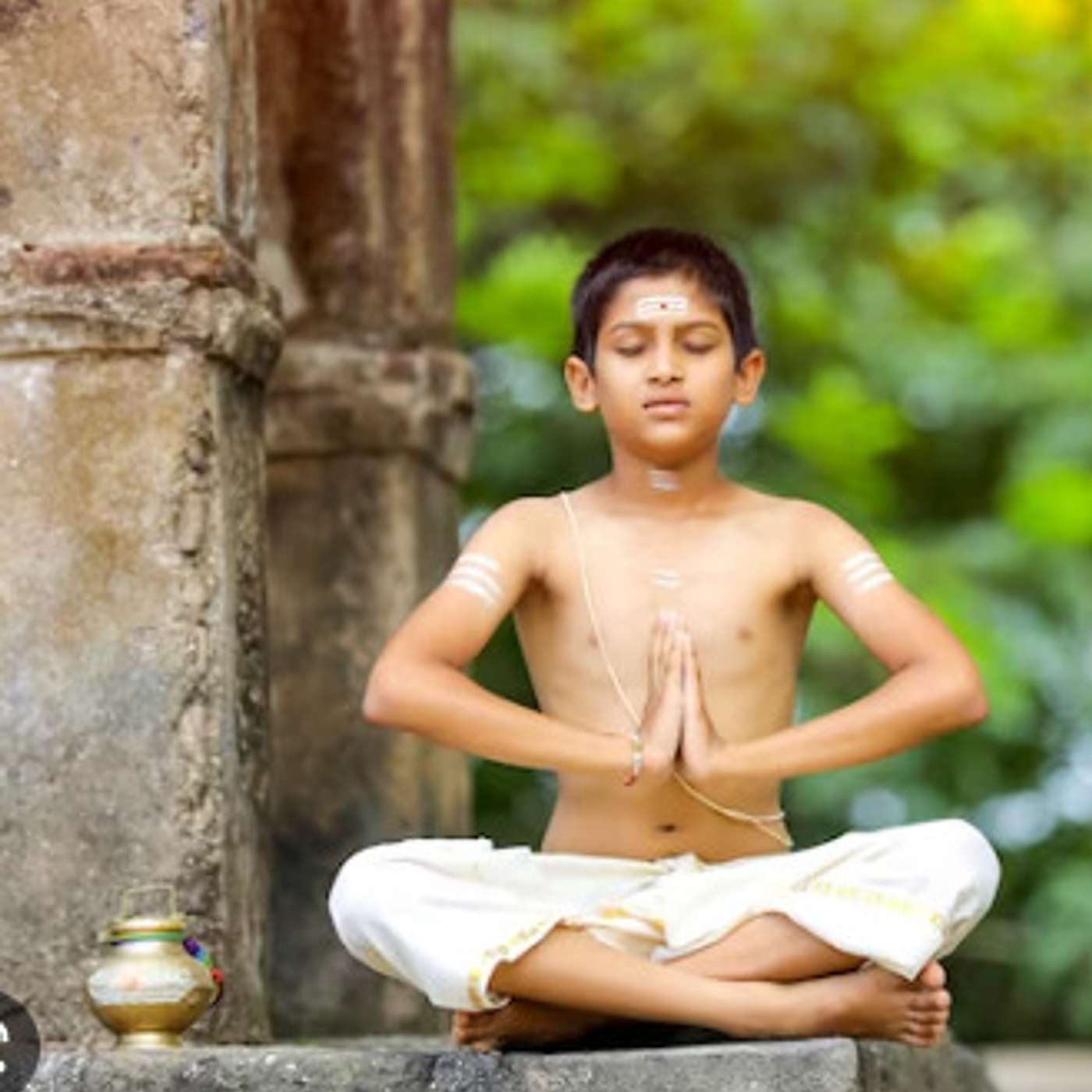
02 Practice 5 Minutes Meditation
Support the showAll by the grace of Guru ji, Brahmleen Sant Samvit Somgiri Ji Maharaj.
33 श्रीमद् भगवद्गीता - How and Where to Find GOD Part 02
Support the showAll by the grace of Guru ji, Brahmleen Sant Samvit Somgiri Ji Maharaj.

32 श्रीमद् भगवद्गीता - How and Where to Find GOD?
How and where to find God? that source which has created everything. Lord Krishna explains this beautifully in the Chapter 15 of Shrimad Bhagwat Geeta. We are trying to understand this chapter in the morning self study sessions. This is a really very powerful life changing experience when we try to understand and implement the knowledge of Bhagwat Geeta in our own life.Support the showAll by the grace of Guru ji, Brahmleen Sant Samvit Somgiri Ji Maharaj.
31 श्रीमद् भगवद्गीता - How to Design your Own Destiny Part 02
Whatever we learn, that learning fridges are capacity to perceive the reality in totality, we create bias and we have a conditioned mind. Our learning preferences shape our personality and personality sets up what our life is going to be.Support the showAll by the grace of Guru ji, Brahmleen Sant Samvit Somgiri Ji Maharaj.