The Music Underneath: How Six Narrative Podcasts Score Their Stories
Strip the score out of a narrative podcast and what comes back is often unrecognisable. We compare how Serial, S-Town, Heavyweight, Radiolab, Reply All and The Daily use music to do structural work most listeners never notice.
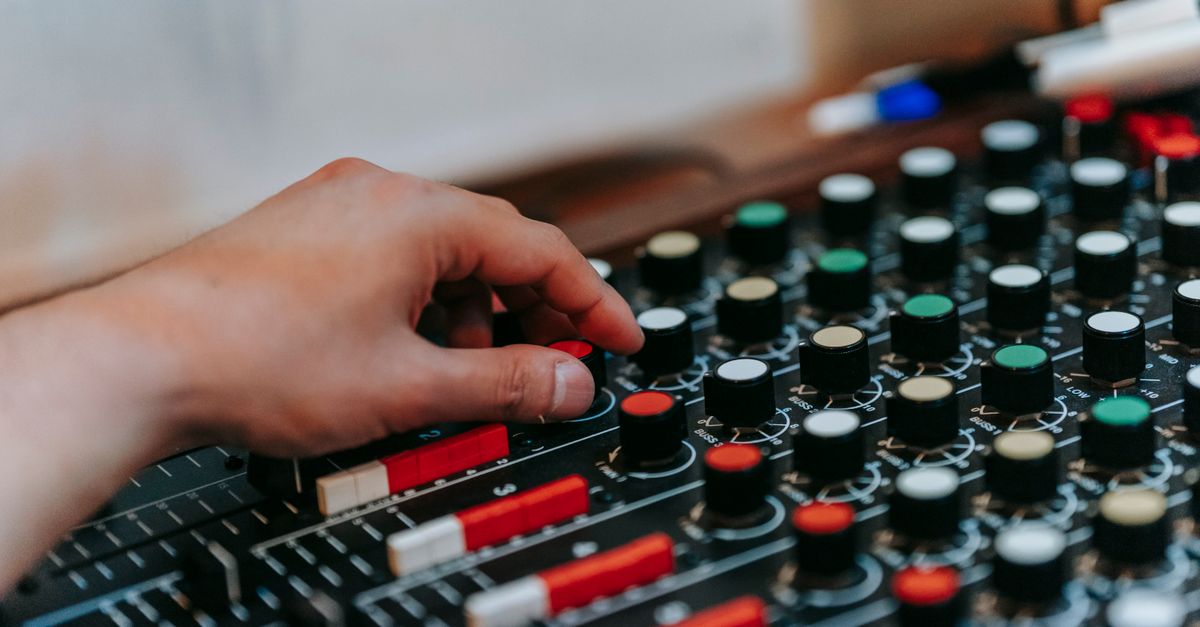
When people quote a podcast back to you, they almost never quote the music. They quote a line, a tone of voice, sometimes a long pause. And yet ask any narrative producer to strip the music out of a finished episode and what comes back is often unrecognisable: flatter, slower, harder to follow. Score in podcasting is the load-bearing structure most listeners never consciously notice — until it is gone.
This piece is an argument, with examples, that podcast music does specific structural work that has very little to do with "atmosphere" or "feel". It is wayfinding. And the six shows below treat that wayfinding job in radically different ways.
Six shows, six sound worlds
| Show | Composer / sound team | Signature instrument(s) | Primary function of score |
|---|---|---|---|
| Serial | Nick Thorburn (Islands) | Pizzicato strings, vibraphone | Cliffhanger punctuation; week-to-week continuity |
| S-Town | Daniel Hart | Solo violin, banjo, choir | Emotional shading of a single character |
| Heavyweight | Christine Fellows & John K. Samson; Springsteen theme | Piano, brushed drums, classic-rock cue | Tonal whiplash between melancholy and joke |
| Radiolab | Dylan Keefe and team (Jad Abumrad legacy) | Synthesised pads, found-sound loops | Aural representation of an idea, not a feeling |
| Reply All | Breakmaster Cylinder | Drum machines, vocal chops, lo-fi beats | Pace control; comic timing |
| The Daily | Marion Lozano, Dan Powell, Rowan Niemisto | Sparse piano, low strings, drone | Beat marking; near-invisible "listen now" signal |
There is no "podcast music sound". Each show has built a sonic identity that reflects what it actually is. Serial's strings sit close to a TV-procedural drama. S-Town's solo violin sounds like the Alabama it describes. Heavyweight's score is built around the comic deflation of a Springsteen line. The score is answering a question the producers had already asked about the show's identity. It is not decoration applied at the end.
Original score, library cue, or needle drop?
Three different sourcing strategies sit behind the table above, and the choice carries editorial weight.
Original score is the prestige option. Serial commissioned Nick Thorburn for season one and has used variations of his theme for nearly a decade — a continuity move no library cue could deliver. S-Town's brief to Daniel Hart was, in effect, write Brian Reed a film score, and the resulting cues were later released as a standalone album, which is still unusual for a podcast.
Library cues — pre-cleared instrumental tracks from services such as APM, Marmoset and Audio Network — are the workhorse of mid-budget podcasting. This American Life uses library music constantly, often the same recurring beds across years, because the show needs hundreds of cues per season and bespoke composition does not scale. The trade-off: a few of those tracks have become so widely used that any producer can name them, and they begin to read as "podcast music" generically.
Needle drops — recognisable commercial tracks — are the rarest, because of clearance cost. That is precisely why Heavyweight's use of "Tougher Than the Rest" is so striking. When a podcast can afford a Springsteen needle drop in the cold open, it tells you something about its production budget and its tonal ambitions in one move.
The choice is not purely budgetary. A bespoke score offers ownership and reuse; library music offers speed and breadth; needle drops offer recognition. Most shows blend at least two of the three.
What music actually does in a podcast
Strip a narrative podcast back and pay attention to the precise moments where music enters and leaves. Four jobs come up over and over.
Bridging. Cuts in audio storytelling are harder than cuts in video, because the listener has nothing to look at while the scene changes. A short musical phrase — even four seconds of a held string — is often the difference between a clean transition and a confusing one. The Daily is a quiet masterclass in this: almost every piece of music in a Daily episode is functional bridging that the listener barely registers.
Underlining. Music tells you how to feel about a quote you have already heard. Serial leans on this constantly: the same Adnan Syed clip, played dry, can sound flat; played beneath a minor-key vibraphone phrase, it sounds ominous. This is a powerful tool that crosses ethical lines easily, which is one reason some serious narrative producers minimise it.
Thinking time. When a host needs the listener to process information — a date, a fact, a character revelation — a short instrumental beat creates the space to do so. Reply All used this almost compulsively: a one-bar Breakmaster Cylinder loop after a punchline gave the joke room to land. Without that loop the joke died.
Structural signposting. Score tells you where you are in an episode. Serial uses three distinct musical motifs to mark a return from break, a chapter shift, and a cliffhanger ending. Listeners learn these signals in the first episode and rely on them in subsequent ones, often without realising they are doing so. Once a listener has internalised the cue, the score is doing the navigational job a chapter heading would do in a book.
How much music is too much?
There is no agreed standard, but a rough listen-back of representative recent episodes from the six shows above gives a useful map. The figures below are estimated active-music-bed coverage as a share of total episode runtime; they are illustrative rather than authoritative, but the ranking is reliable.
- Reply All (final season episodes): roughly 40–55% of runtime carried an active music bed. The show used score as pace control more than any other in the sample.
- S-Town: around 30–40% across the seven-chapter run, with one chapter (Chapter VI) climbing above 50% — a deliberate immersive choice for that section of the story.
- Serial (recent seasons): roughly 25–35%. Concentrated at chapter transitions and cliffhanger moments rather than spread evenly across acts.
- Radiolab: variable, 20–45% depending on episode type. Idea-driven episodes carry more bed than character-driven ones, because the score is doing the work of visualising a concept.
- Heavyweight: roughly 20–30%, but with very high musical density at openings and resolutions and a near-dry middle.
- The Daily: around 8–15%, the lowest of the six, almost entirely concentrated at the open, the ad bumpers and the close.
Two patterns matter. First, news-led shows score sparingly; narrative shows score heavily. The Daily's restraint is a tonal choice — score under hard news reads as editorialising. Second, the highest-scoring shows in the sample (Reply All; S-Town in places) used music to do work that a different production would have done with a host narrating over silence. Score, in those cases, is a substitute for telling.
The case for less
The interesting move in 2026 podcasting may be in the opposite direction. Search Engine, PJ Vogt's post-Reply All show, uses noticeably less music than its predecessor and seems to have lost nothing in clarity. Sarah Koenig's Serial productions have trended slightly drier over the seasons. The Daily's near-musicless news episodes do not feel undernourished; they feel serious.
The argument against heavy scoring is not aesthetic, it is editorial. Music tells the listener how to feel about a sentence before the sentence has finished. In journalism, that is a strong claim to make every few seconds. The best narrative producers seem to be reaching for music when they need it to do a specific job — a transition, a beat, a deliberate emotional cue — and reaching past it when they do not.
The score is doing real work in every show in the table above. The question worth asking, episode by episode, is whether the work is structural — bridging, signposting, pacing — or rhetorical. Structural music can be invisible and excellent. Rhetorical music, when overused, starts to feel like the producers do not quite trust the tape they have.