The Mid-Roll Problem: How Dynamic Ad Insertion Is Quietly Reshaping Podcast Craft
Dynamic ad insertion was supposed to make podcast monetisation effortless. Five years on, it is reshaping how shows are structured — and the data shows listeners are voting with the skip button.
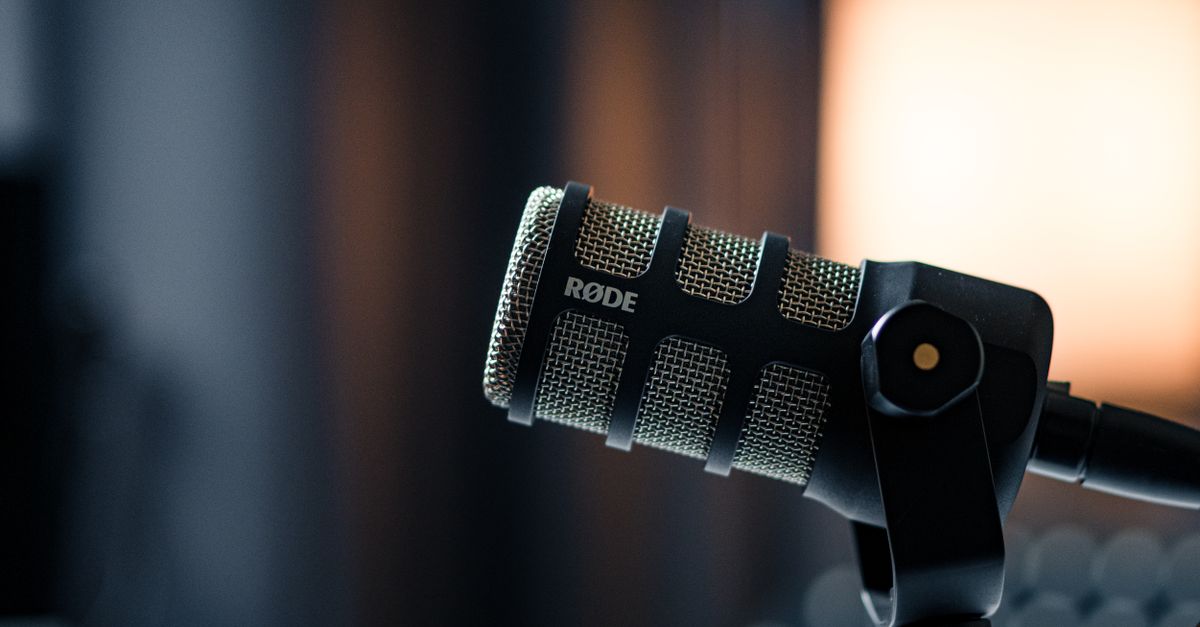
There is a small, ugly cut that happens about eleven minutes into most podcasts you listen to. The host finishes a sentence. There is a pause that feels half a beat too long. Then a brand-new audio bed kicks in, the timbre of the room subtly different, and you are being sold a mattress, a meal kit, or a productivity tool. Twenty seconds later, the original audio bed returns, the host picks up almost — but not quite — where they left off, and you are back in the episode.
That cut is what dynamic ad insertion sounds like. It has been the dominant monetisation model in podcasting since around 2021, and after four years of it, the data is clear enough to draw conclusions. Dynamic insertion solved a real problem for hosts and networks. It also broke things — and the shows getting the best results in 2026 are those that have started to push back against the format rather than lean into it.
This is the publication's take on what is actually going on, what the numbers show, and which shows are demonstrating that craft and monetisation are not, in fact, in opposition.
What "dynamic insertion" actually means
To understand why the pause feels wrong, you have to understand what has been happening on the production side. There are essentially three ways an ad ends up in your earbuds.
- Baked-in host reads. The host records the ad, the producer mixes it into the master file, and every listener — for the entire life of the episode — hears the same ad in the same place. Old-school. Expensive in producer time. Lovely to listen to.
- Server-side DAI (dynamic ad insertion). The episode is published with empty "slots" at predetermined markers. The hosting platform — Megaphone, Acast, ART19, Transistor, Podtrac — fills those slots with whatever ad won that listener's auction at the moment of download. Cheap, scalable, ugly.
- Hybrid placements. Host-read sponsor at a fixed slot (often pre-roll), DAI in the mid-rolls, occasional baked-in for premium partners. The model most major networks have settled on.
Industry data now suggests roughly 74% of all podcast ad impressions are served via DAI. That number is up from around 48% in 2021. The shift was driven by simple economics: DAI lets a network sell a single slot to a thousand different advertisers across geographies, whereas host reads scale linearly with effort.
The trade-off is craft.
The drop-off cliff
Most podcast hosting platforms now expose listen-through analytics down to the second. The pattern is consistent enough across the industry that it is safe to generalise.
| Episode length | Avg. mid-roll markers | Listener drop-off per marker | Total audience lost by end |
|---|---|---|---|
| 20–30 min | 1 | 3–5% | ~5% |
| 40–60 min | 2 | 4–7% | ~12% |
| 70–90 min | 3 | 5–9% | ~18% |
| 90 min+ | 4+ | 6–10% | ~24% |
These figures are aggregated industry medians, and they vary wildly by genre — interview shows hold listeners through ad breaks far better than comedy and chat shows do — but the directional finding is robust. Each additional dynamic mid-roll costs you somewhere between a one-in-twenty and a one-in-ten listener at that point in the episode.
The kicker: drop-off at baked-in host reads is consistently lower, often by half. Listeners tolerate, and sometimes actively enjoy, a host they trust telling them about a sponsor. They do not tolerate the audio rupture of a stranger reading copy in a different room with a different mic chain.
How six shows are responding
The interesting question is what producers are doing about it. Six shows, six different answers.
| Show | Length | Mid-roll strategy | What it tells us |
|---|---|---|---|
| The Daily (NYT) | ~25 min | One DAI slot, placed within 90 seconds of the cold open | Front-loads the ad break before listeners are emotionally invested in the day's story |
| Hard Fork (NYT) | ~70 min | Host-read sponsor mid-show; DAI at structural breaks | Treats ad reads as content; Casey Newton and Kevin Roose riff into and out of them |
| Acquired | 3–4 hrs | Single host-read partner per episode, at the natural act break | Premium CPM model; the show has explicitly rejected adding inventory |
| 99% Invisible | ~30 min | Two DAI slots, bracketed by the show's own bumper | Production-controlled DAI: the network sets the markers, but the bumper protects the listener |
| Search Engine | ~50 min | DAI bracketed by host-read transitions | PJ Vogt's playbook: read your way into and out of the break so the cut feels intentional |
| This American Life | ~60 min | Baked-in sponsor at the act break; no DAI mid-act | Treats ad placement as part of episode structure, not separate from it |
The pattern, stacked up, is clear: the shows that command the highest CPMs are the ones treating ad placement as an editorial decision rather than a hosting-platform default.
The economics behind the craft
If DAI is so corrosive to listener experience, why do it at all? Because the spreadsheet is unforgiving for shows in the middle of the long tail. Indicative 2026 CPMs by ad type, drawn from the major hosting platforms' published rate cards and recent quarterly reports:
- Programmatic DAI (open marketplace): £11–17 CPM
- DAI sold direct by network: £16–24 CPM
- Host-read mid-roll: £24–44 CPM
- Host-read pre-roll with endorsement: £36–64 CPM
A show pulling 80,000 downloads per episode and running three programmatic DAI mid-rolls earns roughly £2,600–£4,100 per episode. The same show running one carefully placed host-read sponsor at a £40 CPM earns £3,200 per episode — for a fraction of the listener cost and none of the audio rupture.
The implication is that for most independent and mid-tier shows, fewer, better-placed host reads earn equivalent or higher revenue with materially better retention. The DAI volume strategy is genuinely only better for shows that cannot fill their inventory with direct host-read partners — and that is a much smaller universe than the industry behaves as if it is.
The producer's checklist
If you make a podcast, this is what the data and the craft are converging on.
- Use baked-in host reads where you can. The CPM is higher and the drop-off is lower. The maths is not subtle.
- If you must use DAI, control the markers yourself. Do not let the hosting platform pick where to break the audio. Set them at structural breaks, not mid-thought.
- Bracket DAI with host-read transitions. Two seconds of "we'll be right back" before, two seconds of "and we're back" after. It costs you nothing and softens the cut considerably.
- Match the audio bed. If your hosting platform inserts an ad into a segment with active background music, the rupture is severe. Mute or duck the bed across the marker.
- Audit your own show in a podcast app once a quarter. Producers listen to masters; listeners hear the version with three mortgage refinancing ads dropped into the back half of an emotional beat. Find out which one your show actually is.
Where the listener fits in
The reason this matters editorially — and the reason this publication keeps returning to it — is that the mid-roll problem is now the single biggest determinant of how a show feels in 2026. You can have the best cold open in the medium. You can have an interviewer who wields silence like a scalpel. You can spend three weeks scoring a single act. And you can lose all of it at the eleven-minute mark, when an unduckable mattress ad slams into the back half of a carefully built emotional beat.
The shows winning in 2026 — both critically and commercially — have realised that ad placement is not an afterthought handed off to the platform. It is part of the episode's architecture, as much as the cold open and the closing tag. The craft of the mid-roll, the most maligned forty seconds in podcasting, is quietly becoming one of the clearest signals of which producers actually understand the medium they are working in.
The next time a podcast you love handles its ad break gracefully — bracketed, ducked, in the right place, in a voice you trust — pay attention to who made it. The credits will tell you. They are the producers who are still listening.