
Stereo Chemistry
111 episodes — Page 2 of 3

Bonus: Carolyn Bertozzi and Barry Sharpless reflect on winning the 2022 Nobel Prize in Chemistry
bonusIn this bonus episode of C&EN's Bonding Time, we hear from 2022 chemistry Nobel laureates Carolyn Bertozzi and K. Barry Sharpless, who shared the prize along with Morten Meldal for their work on click chemistry and bioorthogonal chemistry. After a November symposium honoring the US-based Nobel awardees at the Embassy of Sweden in Washington, DC, the two chemists discussed their long history of collaboration, how winning the 2022 Nobel Prize in Chemistry has changed their lives, and how they hope to use the spotlight to break down barriers within science. A transcript of this episode is available at bit.ly/3BiU3GZ. To learn even more about this year's Nobel-winning science, listen to our October bonus episode about the prize at bit.ly/3iJ1iSc. Credits Executive producer/host: Kerri Jansen Writer: Gina Vitale Audio editor: Mark Feuer DiTusa Story editor: Michael Torrice Copyeditor: Sabrina Ashwell Logo design: William A. Ludwig Episode artwork: Laura Morton (Bertozzi); Sandy Huffaker (Sharpless)/C&EN Music: "Street Dreams" by Julian Hartwell Contact Stereo Chemistry: Tweet at us @cenmag or email [email protected].
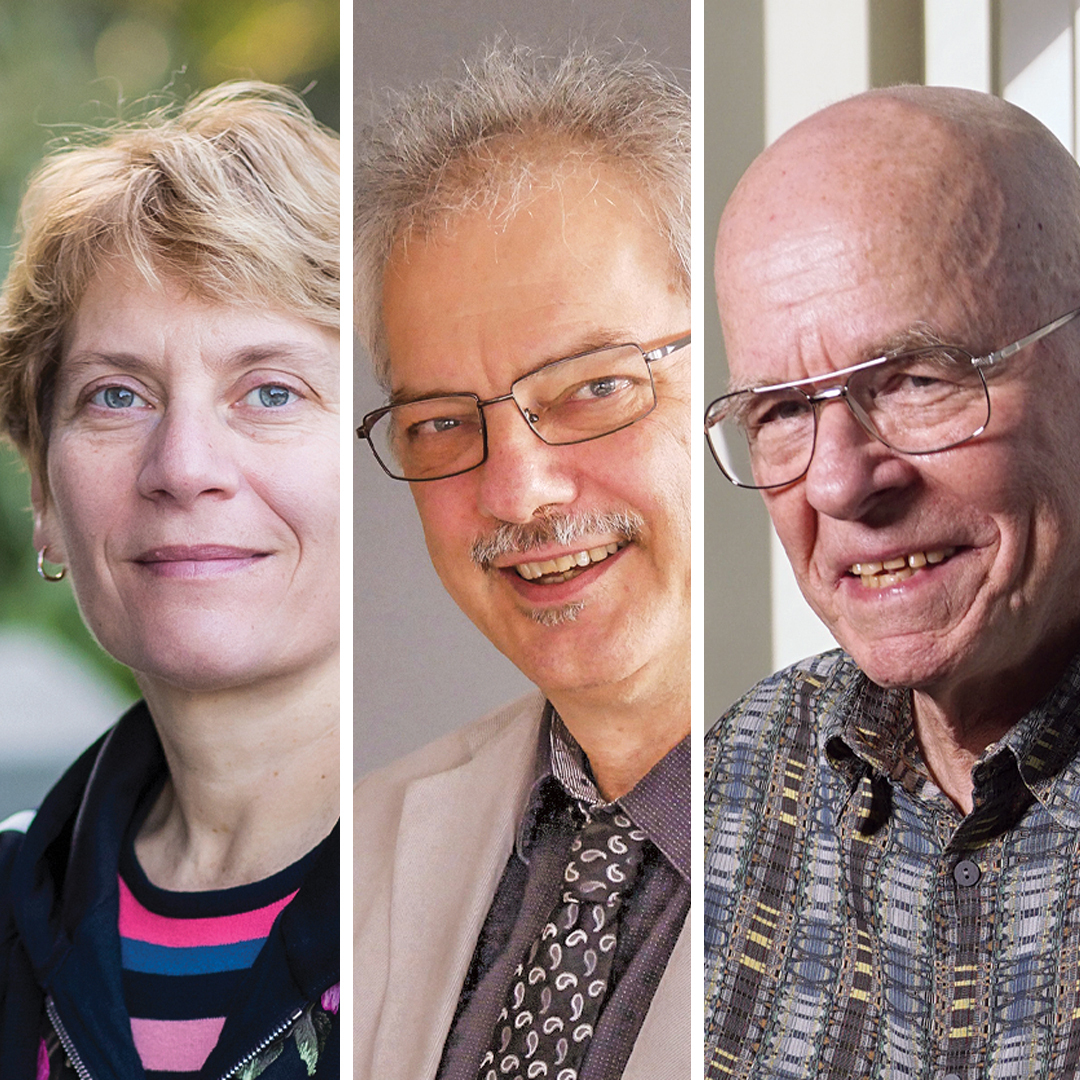
BONUS: Click and bioorthogonal chemistry win Nobel Prize in Chemistry
bonusThe 2022 Nobel Prize in Chemistry was awarded to Carolyn Bertozzi, Morten Meldal and K. Barry Sharpless for their development of click and bioorthogonal chemistry which are used by chemists around the world to track biological processes and produce pharmaceuticals. In this special episode of Stereo Chemistry, hosts Gina Vitale and Ariana Remmel delve into the science behind the prize and talk with organic chemist Antoni Riera to discuss the applications of the award-winning chemistry. C&EN contributor Mark Peplow also joins the Stereo Chemistry crew to talk about his conversation with Nobel Laureate Carolyn Bertozzi. Read more about this award-winning science in Mark Peplow's article about the 2022 Nobel Prize in Chemistry: https://cen.acs.org/people/nobel-prize/Click-and-biorthogonal-chemistry-win-2022-Nobel-Prize-in-Chemistry/100/web/2022/10 A transcription of this episode is available at https://cenm.ag/nobelpod22. CORRECTION: On Oct. 6, 2022, part of this episode was rerecorded to correct an error at 0:48 about when the 2022 Nobel Prize in Chemistry was announced. It was announced Oct. 5, not Oct. 6. The episode description was also updated to remove Heather Holt as copyeditor. She did not copyedit this episode. Credits Executive producer/host: Kerri Jansen Writer: Ariana Remmel, Gina Vitale Audio editor: Mark Feuer DiTusa Story editors: Jessica Marshall Production assistance: Mark Peplow, Krystal Vasquez Audience editor: Dorea I. Reeser Logo design: William A. Ludwig Episode artwork: Laura Morton (Bertozzi), University of Copenhagen (Meldal), Sandy Huffaker (Sharpless) Press conference recordings: Courtesy of ©The Nobel Foundation Music: "Rising Tide" by C.K. Martin. Contact Stereo Chemistry: Tweet at us @cenmag or email [email protected].

Ep 46Lithium mining's water use sparks bitter conflicts and novel chemistry
Replacing gas cars with electric ones is a main pillar of plans to fight climate change. But the lithium-ion batteries used in electric cars come with a cost. Communities near the Salar de Atacama in Chile, where about a quarter of the world's lithium is extracted from salty aquifers, say mining companies pose a serious threat to the local environment and their access to water. Mining companies strongly dispute those claims. In this episode of Stereo Chemistry, we'll explore the environmental factors at play in the salar and the differing perspectives on how best to measure impact. And we'll hear from a new group of mining start-ups that claim they can use chemical methods—as yet unproven—to extract lithium without the same impact on water. This is the first episode in a new series exploring the future of water. A transcript of this episode, along with English translations of all Spanish dialogue, is available at bit.ly/3QGlQpu. Sign up for C&EN's email series "Advancing in the Art of Science Communication" at bit.ly/scicommadvanced. Credits Executive producer/host: Kerri Jansen Writer: Matt Blois Audio editor: Mark Feuer DiTusa Story editors: Michael McCoy, Manny I. Fox Morone, Ariana Remmel Sensitivity editor: Sofía Jarrín Audience editor: Dorea I. Reeser Copyeditor: Heather Holt Translator: Fernando Gomollón Bel, Juan José Sáenz de la Torre Logo design: William A. Ludwig Episode artwork: SQM Music (in order of appearance): "Tinker Toys" by Colton Dewberry, "Pebbles Dance" by Roie Shpigler, "Earth & Heavens" by Sémø and Ian Post, "Street Dreams" by Julian Hartwell, "There's No One Else Just Like Me" by Shahar Guttman, "Eternal Sunshine" by Stanley Gurvich Contact Stereo Chemistry: Tweet at us @cenmag or email [email protected].

Bonus: For John Goodenough's 100th birthday, we revisit a fan-favorite interview with the renowned scientist
bonusFamed lithium-ion-battery pioneer and Nobel Prize–winner John Goodenough has achieved yet another milestone—a century on Earth. Goodenough celebrates his 100th birthday on July 25, 2022. In honor of the occasion, Stereo Chemistry host Kerri Jansen and C&EN reporter Mitch Jacoby revisit their 2019 interview with the renowned scientist, recorded at his office at the University of Texas at Austin just prior to his Nobel win. In the expansive and candid conversation, Goodenough tells Stereo Chemistry about childhood adventures, infernal exams with Enrico Fermi, and his path to the innovation that enabled an electronics revolution. A transcript of this episode is available at bit.ly/3otFrh3. Music credit: "Happy Birthday To You (Orchestral)" by beanstalkaudio/Pond5.com Image credit: Mitch Jacoby/Robert Bryson/C&EN/Milano M/Shutterstock

Bonus: Jess Wade on Wikipedia and work-life balance
bonusThis month, Stereo Chemistry is sharing an episode of the podcast ChemConvos featuring an interview with materials scientist, self-described "Raman spectroscopy enthusiast," and prolific Wikipedia editor Jess Wade. On ChemConvos, hosts Henry Powell-Davies and Medina Afandiyeva seek to uncover the story behind the scientist. In this episode, the trio discusses not only Jess's work as a research fellow at Imperial College London but also how she manages burnout and the importance of a supportive lab culture. And, of course, they dig into the origins of her Wikipedia project, which has resulted in Wade creating more than 1,400 biographies on Wikipedia aiming to highlight women, people of color, and LGBTQ+ scientists and engineers. Follow ChemConvos on Twitter at @ChemConvosPod. Find new episodes at anchor.fm/chemconvospod or on your favorite podcast platform. A transcript of this episode is available at bit.ly/3yb4lb8. Image credit: Courtesy of ChemConvos/C&EN

Bonus: The sticky science of why we eat so much sugar
bonusOur bodies need sugar to survive. But most of us consume way more than we actually need, and many foods and beverages pack a dose of added sweeteners. So why are we eating all of this extra sugar? This month, Stereo Chemistry is sharing an episode of the podcast Tiny Matters that examines that question. In the episode, hosts Sam Jones and Deboki Chakravarti explore sugar's impact on our bodies and trace how a genetic mutation that helped our distant ancestors survive is influencing our health today. And they dig into the debate around whether sugar can fairly be called addictive. Note: This episode contains discussion of addiction and eating disorders. Listen to Tiny Matters on the American Chemical Society's website at https://www.acs.org/content/acs/en/pressroom/tiny-matters.html or on your favorite podcast platform. ACS also publishes Chemical & Engineering News, which is the independent news outlet that powers Stereo Chemistry. More on sugar from C&EN: The sugar wars are about to change your food label. Here's why.https://cen.acs.org/business/specialty-chemicals/sugar-wars-change-food-label/97/i41 The case against sugar https://cen.acs.org/articles/92/i31/Case-Against-Sugar.html Image credit: Courtesy of Tiny Matters/C&EN

Bonus: There's more to James Harris's story
bonusChemists may know James Harris as the first Black scientist to be credited with codiscovering an element. In fact, we referenced this in a previous episode of Stereo Chemistry about making superheavy elements. But beyond this memorable factoid, details about the accomplished nuclear chemist are scarce, and most sources repeat the same superficial information. Kristen Frederick-Frost, curator of modern science at the Smithsonian's National Museum of American History, wants to change that. After discovering that the museum's database lacked material on Harris, she scoured archival records and sought out former colleagues, friends, and family members to fill in details of his life and career. In this bonus episode of Stereo Chemistry, host Kerri Jansen and special guest Dr. Darryl Boyd join Frederick-Frost to explore James Harris's story beyond the discoveries that made him famous. And we even get an unexpected peek into his lab, courtesy of the US National Archives. Boyd, a polymer chemist, previously researched James Harris while writing a short article for C&EN's "Black Chemists You Should Know About." A transcript of this episode is available at bit.ly/37P0qpY. Image credit: Steve Gerber/Lawrence Berkeley National Laboratory © 2010 The Regents of the University of California, through the Lawrence Berkeley National Laboratory Music credit: "Just Enough for a Heartbeat" by Roy Young Contact Stereo Chemistry by emailing [email protected].

Bonus: The helium shortage that wasn't supposed to be
bonusHelium shortages can derail research and threaten expensive instruments that depend on the gas to operate safely. In late 2020, analysts predicted—and we reported—that pressures on the global helium market were likely to ease as new production capacity came online. Today, helium users are again facing price spikes and limited supplies, driven by a variety of factors including political instability in Europe and technical malfunctions at key suppliers. In this bonus episode of Stereo Chemistry, C&EN industrial gas reporter Craig Bettenhausen explains how we ended up here again and how the outlook for the global helium market has evolved. A transcript of this episode is available at bit.ly/3tBSGzF. For more background about where helium comes from, why it's so important to science, and what happens when you can't get enough of it, check out our October 2020 podcast episode, How helium shortages have changed science. Image credit: Boris Steinberg, Johns Hopkins Chemistry Music credit: "How Did I Get Here" by Sean Solo Contact Stereo Chemistry by emailing [email protected].

Sarah Reisman and Melanie Sanford on how organic chemistry is changing and how they've learned to choose priorities
Being a chemistry professor is a juggling act. But sometimes professors have too many balls in the air. How do they know which ones to grab and which to let drop? In this episode of Stereo Chemistry, C&EN's Leigh Krietsch Boerner sits down with organic chemists Sarah Reisman and Melanie Sanford to hear how they decide what projects to work on, what sparks joy for them in the lab, and what being an organic chemist really means to them. A transcript of this episode will be available soon at cen.acs.org. Sign up for C&EN's Selling Your Science: The Art of Science Communication at cenm.ag/sciencecommunication. Contact Stereo Chemistry by emailing [email protected]. Image credit: Will Ludwig/C&EN/Lance Hayashida/University of Michigan

Jose-Luis Jimenez and Kimberly Prather on the intersection of aerosol science and the COVID-19 pandemic
Imagine you're an atmospheric chemist. There's a pandemic. And public health officials release information about how the virus spreads from one person to another—information that directly contradicts your knowledge of how tiny particles move in the air. What do you do? In this episode of Stereo Chemistry, Jose-Luis Jimenez and Kimberly Prather talk to C&EN editor Jyllian Kemsley about how they've handled that situation over the past 2 years. They share their frustrations with public health officials along with the heartbreak and rewards of communicating science with the general public, and what they plan to take from their experiences as they think about their research going forward. A transcript of this episode is available at bit.ly/3rzzCzI. Sign up for C&EN's Selling Your Science: The Art of Science Communication at cenm.ag/sciencecommunication. Contact Stereo Chemistry: [email protected] Image credit: Will Ludwig/C&EN/Mariana Pereira (Jimenez)/Erik Jepsen/University of California San Diego (Prather)

Jessica Ray and William Tarpeh on clean water, turning trash into treasure, and life as assistant professors
How do we build water systems that are sustainable and also equitable? On this episode of Stereo Chemistry, Jessica Ray and William Tarpeh talk with C&EN reporter Katherine Bourzac about how they use their chemical engineering know-how to develop simple systems for filtering toxic chemicals from our water and harvesting useful chemicals from urine. They also discuss finding ways to thrive as assistant professors and building support networks as Black junior faculty. A transcript of this episode is available at https://bit.ly/3pggyGU. Sign up for C&EN's weekly newsletter at bit.ly/chemnewsletter. Contact us: [email protected] Image credit: Will Ludwig/C&EN/University of Washington/Courtesy of William Tarpeh

Ep 42David Liu and Stuart Schreiber on the science that motivates, fascinates, and tells us who we are
What motivates a creative scientific mind? How does an accomplished scientist pinpoint new subjects to explore? How is the field of chemical biology evolving? In this episode of Stereo Chemistry, we probe those questions with scientists and serial entrepreneurs David Liu and Stuart Schreiber, both pioneers in developing tools that use chemistry to explore biology. A transcript of this episode and links to past C&EN coverage of David Liu and Stuart Schreiber are available at bit.ly/3D4L4HB. Read Stuart Schreiber's Harvard Magazine article about discovering his family's secrets at https://www.harvardmagazine.com/2019/07/dna-testing-schreiber Sign up for C&EN's weekly newsletter at bit.ly/chemnewsletter. Image credit: Will Ludwig/C&EN/Beam Therapeutics/Stuart Schreiber

Preview: New season coming on Nov. 23
bonusStereo Chemistry's new season will launch on Nov. 23, featuring eight chemistry greats in conversation with . . . each other. In each episode, two sensational chemists will pair up for in-depth conversations moderated by a C&EN reporter. Listen now as show host Kerri Jansen reveals the lineup with new Stereo Chemistry team member Attabey Rodríguez Benítez. Image credit: C&EN/Shutterstock Want to contact Stereo Chemistry? Email [email protected]
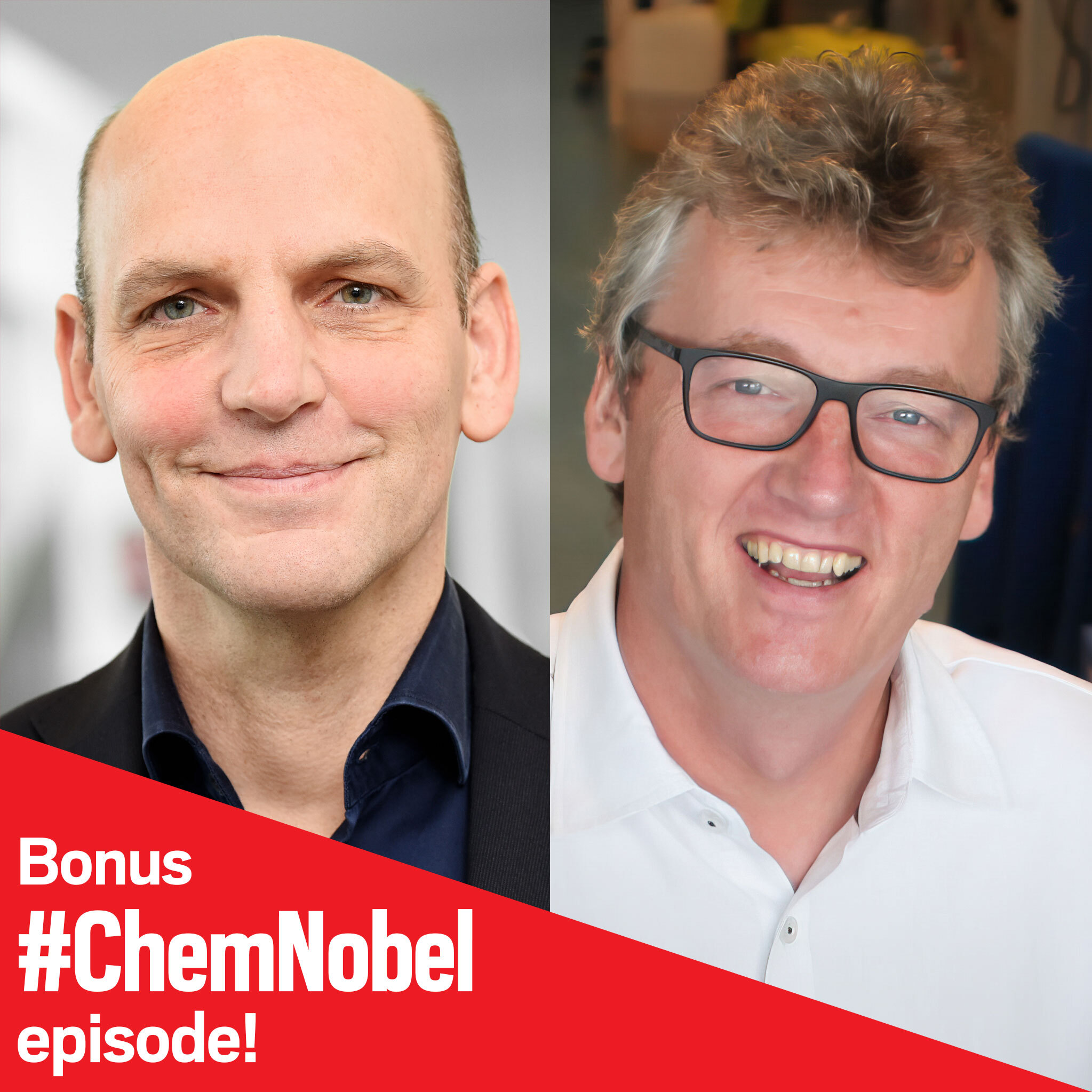
BONUS: Molecule-building tool wins Nobel Prize in Chemistry
bonusThe 2021 Nobel Prize in Chemistry went to Benjamin List and David W. C. MacMillan for their development of asymmetric organocatalysis, which has proved to be a powerful tool for building molecules. In this special episode of Stereo Chemistry, host Kerri Jansen, C&EN reporter Leigh Krietsch Boerner, and C&EN editorial fellow Emily Harwitz delve into the science behind the prize. Merck's Rebecca Ruck also joins the Stereo Chemistry crew to weigh in on how organocatalysis has impacted drug development. An edited transcript of this episode is available at bit.ly/2WOGCNR. Read more about the 2021 Nobel Prize in Chemistry in Leigh Krietsch Boerner's article on the prize at bit.ly/3iD0hs2. Image credit: © Frank Vinken (List); Princeton University, Department of Chemistry, © Todd Reichart (MacMillan)

BONUS: Astronaut Leland Melvin's journey from chemistry to the cosmos
bonusThis month, Stereo Chemistry is sharing an episode of Third Pod from the Sun, a podcast from the American Geophysical Union, featuring an interview with retired astronaut and former professional athlete Leland Melvin. In the episode, Melvin describes how an early—and explosive—interest in chemistry grew into a scientific career at NASA and two missions to the International Space Station. Find more stories from Third Pod from the Sun at thirdpodfromthesun.com, Apple podcasts, and wherever you get podcasts. Image credit: Courtesy of Third Pod from the Sun/C&EN

BONUS: How body farms can help solve cases
bonusThis month, Stereo Chemistry is sharing an episode of Orbitals that features an interview with forensic chemist Shari Forbes, an expert in human decomposition who studies the odors of decomposition at a body farm in chilly Quebec. Research at body farms—research facilities dedicated to studying what happens to human bodies after death—supplies law enforcement with valuable information about the process of decomposition in various scenarios. A transcript of this episode is available at bit.ly/3jdvLFN. Find more stories from Orbitals on the American Chemical Society's website, acs.org, or wherever you listen to podcasts. Image credit: Courtesy of Orbitals/C&EN

BONUS: Rare earths' magic comes at a cost (Part 2)
bonus(Part 2/2) This month, Stereo Chemistry is sharing a pair of episodes from Distillations, a podcast from the Science History Institute. We rely on rare-earth elements to make many essential technologies like smartphones, medical imaging devices, and wind turbines. But how much do you know about where these extraordinary materials come from? In this two-part series, Distillations hosts Alexis Pedrick and Elisabeth Berry Drago explore the source of rare earths' "magic," the costs of acquiring these elements and what scientists are doing to try to find a way to produce them sustainably. A transcript of this episode is available at https://bit.ly/373odhN. Find more stories from Distillations at Distillations.org. Image credit: Courtesy of Distillations/C&EN
BONUS: Rare earths' magic comes at a cost (Part 1)
bonus(Part 1/2) This month, Stereo Chemistry is sharing a pair of episodes from Distillations, a podcast from the Science History Institute. We rely on rare-earth elements to make many essential technologies like smartphones, medical imaging devices, and wind turbines. But how much do you know about where these extraordinary materials come from? In this two-part series, Distillations hosts Alexis Pedrick and Elisabeth Berry Drago explore the source of rare earths' "magic," the costs of acquiring these elements and what scientists are doing to try to find a way to produce them sustainably. A transcript of this episode is available at https://bit.ly/373odhN. Find more stories from Distillations at Distillations.org. Image credit: Courtesy of Distillations/C&EN

BONUS: Celebrating LGBTQ+ excellence with My Fave Queer Chemist
bonusThis month, we're sharing an episode of the podcast My Fave Queer Chemist. Hosted by graduate students Bec Roldan and Geraldo Duran-Camacho, the show celebrates the excellence of LGBTQ+ chemists everywhere. Stereo Chemistry is excited to share this recent episode featuring inorganic photochemist Irving Rettig. In the episode, Rettig discusses his background in art conservation, his experiences finding support and community in grad school, and his work promoting transgender-inclusive name change policies within academic publishing. Note: This episode includes the use of slang terms for some members of the LGBTQ+ community. A transcript of this episode is available at bit.ly/3624azW. Follow My Fave Queer Chemist on Twitter at @MFQCPod. Find new episodes at anchor.fm/mfqc. Read C&EN's article "LGBTQ+ Chemists You Should Know About" at cenm.ag/historiclqbtq. Image credit: My Fave Queer Chemist/Will Ludwig/Yang Ku/C&EN

Ep 41Ep. 41: Searching for Mars's missing water
More than 50 years of missions to Mars paint a clear picture of a cold, dry, desert planet. And at the same time, photographs, minerals, and other data tell scientists that Mars once had as much water as Earth, or even more. Why are the two planets so different today? In this episode of Stereo Chemistry, we talk to scientists about the latest research on Mars's water and where they think the water went. Listen to the end of the episode for an announcement about the future of Stereo Chemistry. Sign up for C&EN's newsletter at bit.ly/chemnewsletter. A transcript for this episode is available at bit.ly/3hPfHcP. Image credit: Kevin Gill/Flickr based on data from NASA/JPL/University of Arizona/USGS

Ep 40Ep. 40: Reducing toxic metals in food
Toxic elements like lead, arsenic, mercury, and cadmium in food are not a new problem. But when they show up in pureed vegetables and other foods intended for babies, alarm bells go off. That's what happened in recent months following a bombshell congressional report that found neurotoxic metals in baby food from multiple manufacturers. In this episode of Stereo Chemistry, host Kerri Jansen and C&EN reporter Britt Erickson explore the fallout from that report and renewed efforts by baby food manufacturers, regulators, advocacy groups, and agricultural scientists to rein in the problem. Subscribe to Stereo Chemistry now on Apple Podcasts, Spotify, or wherever you get your podcasts. Instructions for adding Chemistry Update to your smart speaker are available at cenm.ag/chemistryupdate. An edited transcript of this episode is available at bit.ly/32JQhox. Image credit: Ollinka/Shutterstock

Ep 39Ep. 39: How research on aging could keep us healthier longer
Living longer has been a human obsession for centuries, but while medical science has helped extend average life span, not all those extra years can be healthy. It turns out that aging is a major risk factor for disease. Follow along as host Kerri Jansen and reporter Laura Howes ask if instead of extending life span, we could extend health span and how modern science could make that a reality. An edited transcript of this episode is available at bit.ly/2NKNZkV. Help us shape the future of Stereo Chemistry by taking the survey at bit.ly/StereoChemSurvey. Image credit: Yang H. Ku/C&EN

Ep 38Ep. 38: Nobel laureates Frances Arnold and Jennifer Doudna on prizes, pandemics, and Jimmy Page
Where do you take your career after you've won all of science's biggest prizes? In this episode of Stereo Chemistry, C&EN executive editor Lisa Jarvis sits down with Nobel laureates Frances Arnold and Jennifer Doudna to hear about whether their career goals changed after they got that early-morning phone call in October and how the pandemic has shifted the way they approach their work. A script of this episode is available at bit.ly/3u7jCW7. Sign up for C&EN's newsletter at cenm.ag/chemnewsletter. Catch up on last year's package of trailblazing women chemists, edited by Jennifer Doudna, at cenm.ag/2020trailblazers. Image credit: Caltech (Arnold)/Laura Morton Photography (Doudna)

Ep 37Ep. 37: Historians pursue centuries-old chemical secrets—Green reading glass, Bologna stones, and Greek fire
Researchers want to invent the technologies of the future, but there are plenty of chemical questions lurking in the past. In this episode of Stereo Chemistry, C&EN assistant editor Gina Vitale joins host Kerri Jansen to explore the centuries-old secrets and nagging mysteries that keep science historians up at night—and how these researchers go about solving them. A script and additional resources are available at bit.ly/3qGGHg5. Sign up for C&EN's Grad Student Survival Guide at cenm.ag/gradsurvivalguide. Image credit: Marjolijn Bol/Lawrence Principe/John Haldon

Ep 36Ep. 36: How will Biden's election impact chemistry?
As we prepare for a new US president, many chemists are wondering how the administration change may affect them and their work. Will President-Elect Joe Biden change immigration policies that have reduced the number of foreign students studying at US universities? How might scientific integrity standards in the federal government change under the Biden-Harris team? And will this administration grant the chemical industry's wish to stop the trade war with China and other US trading partners? In this episode of Stereo Chemistry, C&EN policy reporter Cheryl Hogue joins host Kerri Jansen to help orient listeners to how a Biden administration is likely to impact the world of chemistry. A script for this episode is available at bit.ly/37oPYT9. Find all C&EN's COVID-19 coverage at cenm.ag/coronavirus. Make a donation to support C&EN's nonprofit science journalism at cenm.ag/donate. Image credit: Luca Perra/Shutterstock

Ep 35Ep. 35: Grad students, lab injuries, and workers' compensation—it's complicated
Many grad students may be surprised to learn their university's policies for reimbursing medical fees for lab injuries do not cover grad students, or cover grad students only under certain circumstances. And it can be hard to get clarity on what is and is not covered. That's left some grad students in an uncomfortable limbo of seeking answers after they've already racked up thousands of dollars in bills for an injury in the lab. In the latest episode of Stereo Chemistry, we uncover the source of this confusion and ask what—if anything—grad students can do about it. A script for this episode is available at https://bit.ly/3kMwE5O. Read C&EN's cover story, "Who pays when a graduate student gets hurt?" at bit.ly/2INB4M5. Sign up for the Grad Student Survival Guide at cenm.ag/gradsurvivalguide. Image credit: danielfela/Shutterstock

Ep 34Ep. 34: Chemists confront the helium shortage
Helium shortage 3.0 is winding down. But 2021 is likely to bring more changes to the global market for this critical, non-renewable gas. And even if there isn't another crunch, scientists who use helium are tired of unstable supply of a material they need to keep their instruments running. In this episode of Stereo Chemistry, we'll look at what's behind the wobbly helium market and what scientists and instrument makers are doing to lift the heavy burden of helium use. A script for this episode is available at bit.ly/34nmunf. Find all of C&EN's COVID-19 coverage at cenm.ag/coronavirus. Make a donation to support C&EN's nonprofit science journalism at cenm.ag/donate. Image courtesy of Bruker BioSpin

Ep 33Ep. 33: On being #BlackInChem
In August 2020, Black chemists and allies took to Twitter to celebrate the inaugural #BlackInChem week. The social media campaign highlighted the diversity and accomplishments of Black chemists at all stages of their career and also created space for candid discussions about the discrimination these scientists face in chemistry. In the latest episode of Stereo Chemistry, host Kerri Jansen and reporter Ariana Remmel hear from Black chemists from a variety of disciplines across academia and industry about the current state of diversity, equity, and inclusion in the chemical sciences and what non-Black allies can do to support Black chemists. Update 11/24/20: In response to listener feedback, C&EN has added an editor's note to this episode. View the note at bit.ly/361aFUR Sign up for C&EN's newsletter at bit.ly/chemnewsletter 9 Black chemists you should know about: bit.ly/2FioR0l More resources and a script for this episode are available at bit.ly/361aFUR Image credit: Daniel Fishel

Ep 32Ep. 32: Should organic chemistry's name reactions go the way of mouth pipetting?
Scientists have been naming ideas, theorems, discoveries, and so on after other scientists for a very long time (Newton's laws of motion, anyone?). Chemists are no different. They've been naming reactions after each other since about the early to mid 1800s. Nowadays, organic chemists in particular use them as a kind of shorthand. However, because the majority of name reactions honor white men, some organic chemists wonder if using these names is exclusionary. In the latest episode of Stereo Chemistry, host Kerri Jansen and reporter Leigh Krietsch Boerner hear from a plethora of organic chemists on how reactions get named, who they're named after, and whether the practice should stop. A script of this episode is available at bit.ly/3kU3enk. Share your thoughts with us on Twitter! Tweet at us @cenmag, @absoluteKerri, and @LeighJKBoerner, using the hashtag #namereactions. View the Twitter thread that inspired this episode at bit.ly/34a2dS6. Read about the 2020 class of C&EN's Talented 12 at cenm.ag/T12. Register for C&EN's Futures Festival at futuresfestival.org. Image credit: Yang Ku/C&EN

Ep 31Ep. 31: A world without Rosalind Franklin
Rosalind Franklin and her lab assistant famously imaged the structure of DNA using X-ray crystallography, an achievement that directly facilitated James Watson and Francis Crick's discovery of the double helix. For what would be Rosalind's 100th birthday, the Stereo Chemistry team consults scientists and historians to envision the many ways the world might be different without the now-famous Photograph 51. Listen to the Distillations episode "Science on TV" at bit.ly/30yjZuU. A script of this episode is available at bit.ly/3hqR9Uf. Image credit: Henry Grant Collection/Museum of London

Bonus episode: Talking TSCA—is the chemical law living up to expectations?
bonusThis month marks 4 years since the Toxic Substances Control Act, or TSCA, was revised to boost confidence in chemical safety in the US by strengthening regulations. The updated law gave the Environmental Protection Agency sweeping new authority to ensure that the tens of thousands of chemicals in everyday products do not pose unreasonable risks to human health and the environment. In this bonus episode of Stereo Chemistry, host Kerri Jansen and C&EN senior reporter Britt Erickson examine how the EPA is using that authority to evaluate new chemicals before they hit the market and to assess the risks of chemicals that have been in use for decades. Is the EPA protecting public health by sufficiently evaluating the risks of chemicals, or is it giving industry a free pass to market chemicals with little toxicity data? A script of this episode is available at bit.ly/2UTlD8F. Image credit: Barry Barnes/Shutterstock

Ep 30Ep. 30: The chemical culprit in 2019's mysterious vaping illnesses—what we still don't know
Months before the novel coronavirus took hold of the globe in late 2019, clusters of patients began appearing in emergency rooms throughout the US with a mysterious lung disease. Investigators quickly linked the illnesses not to a pathogen, but to patients' use of vaping products. By examining the chemicals in these products, they eventually found a chief suspect: vitamin E acetate. The compound was being used as a cutting agent in some counterfeit or illicit cannabis-based vaping products. Still, many questions remain about how vitamin E acetate could have caused those injuries and whether it was acting alone. In this episode of Stereo Chemistry, host Kerri Jansen and C&EN senior reporter Britt Erickson sift through the complicated chemistry of vaping and explore some new evidence in the investigation. They'll also discuss how the tragic events of last summer could prove to be a wake-up call for chemical regulators as they evaluate vaping products. A script of this episode is available at bit.ly/2ZJ1JjW. Find all of C&EN's COVID-19 coverage at cenm.ag/coronavirus. Make a donation to support C&EN's nonprofit science journalism at donate.acs.org. Image credit: Fedorovacz/Shutterstock

Ep 29Ep. 29: This virus is here now, it's going to stay with us
As COVID-19 continues to spread, so does the effort to treat and vaccinate against the novel coronavirus that causes the disease. Around the world, scientists are working nonstop on the different therapies that they hope will quell the loss of life during this pandemic while, at the same time, setting us up to prevent future outbreaks. What's not clear is which, if any, of these treatments will work. Much about SARS-CoV-2 remains unknown. In this episode of Stereo Chemistry, we dig into the efforts to beat the novel coronavirus and why, in some cases, it's like throwing spaghetti up against the wall to see what sticks. Image credit: NIAID-RML

Bonus episode: That just isn't how you land on the moon without crashing
bonusFifty years ago this week, an explosion on the Apollo 13 moon mission stranded three astronauts hundreds of thousands of miles from home. You probably know that Fred Haise, Jim Lovell, and Jack Swigert made it home safely (water landing shown, with two of the astronauts in white). You may not know the chemist behind the rocket engine that saved them, which began its life as an apparatus for measuring chemical reaction rates. This bonus episode of Stereo Chemistry tells the story of the engine's design with help from two of the people who created it. Listen now to a tale that starts with an explosion and ends with SpaceX's pioneering reusable rockets, with one small step for a man along the way. CORRECTIONS: This episode was updated on April 15, 2020, to reflect that Fred Haise, not Ken Mattingly, flew aboard Apollo 13. On April 22, 2020, this podcast description was also corrected to reflect Haise's role and clarify that the photo shows only two of the astronauts. To learn more about the chemistry of rocket fuel, check out Ep. 23 of Stereo Chemistry: https://cen.acs.org/physical-chemistry/astrochemistry/Podcast-rocket-chemistry-blasted-off/97/i42 Image credit: NASA

Ep 28Ep. 28: So that's why we threw a robot into the back of a truck
Chemistry is going the way of computing: It's getting smaller and faster. High-throughput experimentation, or HTE, is part of this push. Borrowing from biologists and biochemists, HTE has brought in microplates and multichannel pipettes to miniaturize reactions, as well as robots to run those reactions rapidly without sacrificing precision. But it's also been around for decades. So why are so many in the field excited about HTE right now? Stereo Chemistry looks at the technology and culture shift behind the current buzz. See more at cenm.ag/showmetherobots. Nominate an amazing early-career chemist for our annual Talented 12 feature at cenm.ag/t12nom Photo credit: Shutterstock

Bonus episode: We're watching it very closely
bonusAs the novel coronavirus responsible for causing COVID-19 continues to spread, questions about the virus, the disease, and its impacts on our daily lives mount. To help you stay current with the science, policy, and business implications of this outbreak, C&EN has made all of its coronavirus coverage freely available at cenm.ag/coronavirus. And in the latest bonus episode of Stereo Chemistry, we discuss one of the largest questions on the business front: How is the coronavirus affect-ing the global drug supply? UPDATE: This podcast was updated on March 18, 2020 to help ensure listeners are aware of the podcast's original publication date (March 10). Image credit: Shutterstock
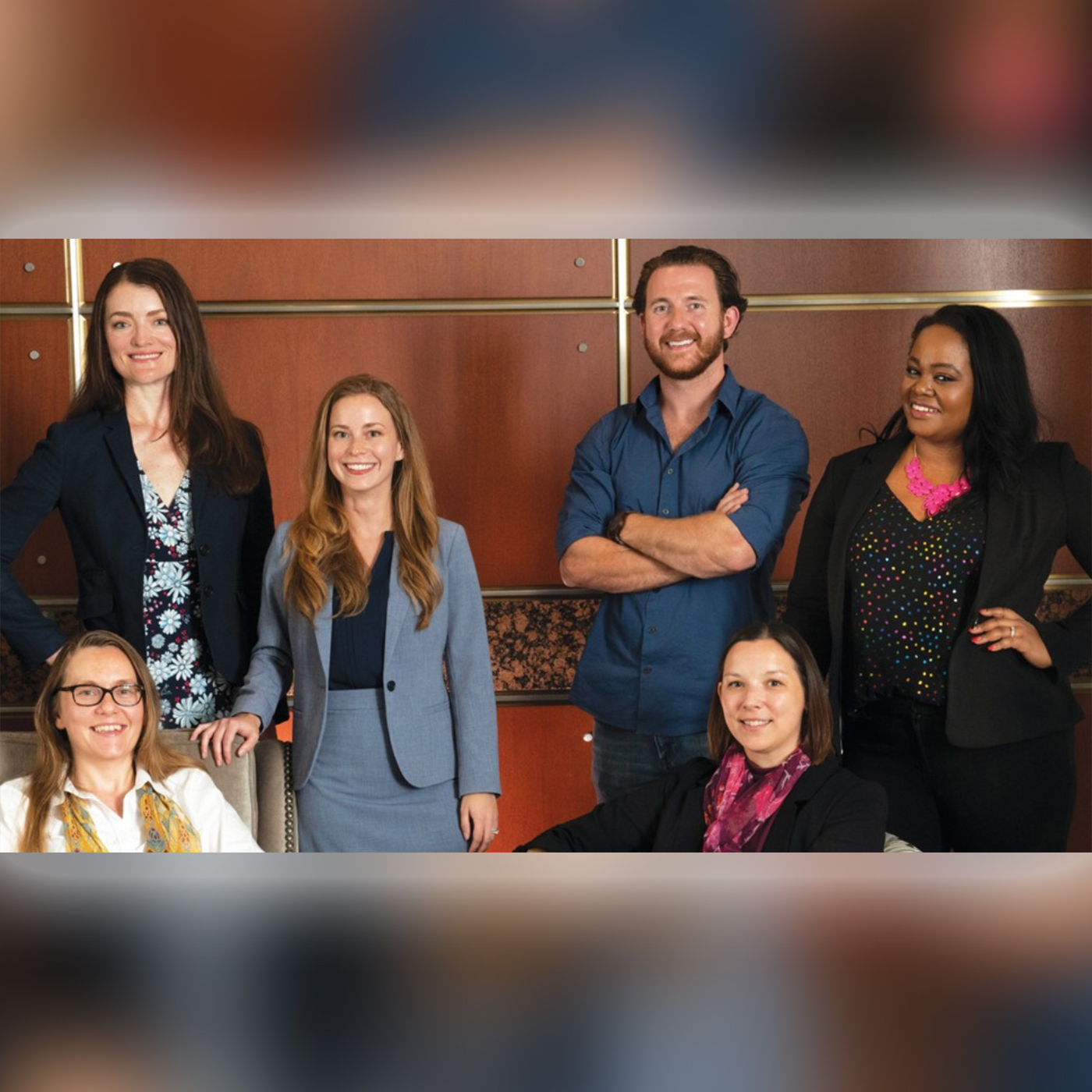
Bonus episode: We saw a lot of that scientific sage savior syndrome
bonusStereo Chemistry talked with six chemists who spent a year in Washington on a policy fellowship to find out what they learned and what advice they would give to other scientists who are interested in science policy. Check out Andrea Widener's AAAS policy fellows story on C&EN at https://cen.acs.org/policy/Lessons-learned-from-a-year-in-Washington/98/i4. And learn more about the AAAS Science and Technology Policy Fellowship at https://www.aaas.org/programs/science-technology-policy-fellowships. Photo credit: James Kegley

Ep. 27: The earth is going to be fine; what we're saving is ourselves
Climate change is on the public's mind, thanks in no small part to the efforts of Swedish activist Greta Thunberg and protests and rallies involving young people around the world. In the latest episode of Stereo Chemistry, host Kerri Jansen talks to early-career researchers developing the tools and knowledge we'll need to thrive in a changing climate. These scientists are part of a generation who will experience the effects of climate change throughout their lifetimes. They share what drew them to climate science and what keeps them motivated when the questions—and the obstacles—are so vast. A script of this episode is available at cen.acs.org/environment/climate-change/Podcast-5-climate-scientists-share/98/i6 Read C&EN's special issue on climate change adaptation at cenm.ag/adapt Image credit: Ink Drop/Shutterstock

Bonus episode: It's this big, giant brouhaha of pharmaceutical companies
bonusM&A, the FDA, and an empty elevator. In this bonus episode, C&EN reporters Ryan Cross and Megha Satyanarayana share their takeaways from their time at the J.P. Morgan Healthcare conference a few weeks ago. Read more about JPM 2020 here: https://cen.acs.org/business/investment/JP-Morgan-Healthcare-Conference-slow/98/i3 Image credit: Credit: Megha Satyanarayana/C&EN

Ep 26Ep. 26: Evolution is kind of the be all end all in the problem of influenza
Although the Wuhan coronavirus is currently dominating headlines across the globe, influenza kills hundreds of thousands of people worldwide each year. In the US, millions of people roll up their sleeves annually for a flu shot. But this ritual is confusing for many. Why is it that most vaccines are effective for a lifetime while the flu vaccine is only effective for a year? And why do we sometimes get the flu even when we've gotten the vaccine? The answer is evolution: the flu is constantly evolving to evade our immune systems. In this episode of Stereo Chemistry, scientists who study flu evolution and pandemics explain what makes fighting the flu so difficult. For more, visit cenm.ag/flucast. Image credit: US Army photographer

Bonus episode: All this is happening at Northvolt speed
bonusLate last year, C&EN contributing editor Mark Peplow toured a new battery company's R&D facility in Sweden. That company, called Northvolt, aims to produce the world's greenest lithium-ion batteries, to help meet the growing demand for electric vehicles. Ride along with Mark to learn more about the company, its work, and its goals in the first bonus episode of Stereo Chemistry. Check out Mark's full story for C&EN here: https://cen.acs.org/energy/energy-storage-/Northvolt-building-future-greener-batteries/97/i48 Image credit: Northvolt

Ep 25Ep. 25: It was like, bam, half the ozone layer over Antarctica is gone
The discovery of the ozone hole in the mid-1980s sent shock waves through the scientific community and society at large. As scientists scrambled to make sense of the unprecedented phenomenon, a clear culprit emerged. Chlorofluorocarbons (CFCs)—once thought of as near-miraculous compounds that revolutionized refrigeration—were suddenly revealed to be one of the biggest environmental dangers known to humankind. What followed was an international push by scientists, media, and policy makers to ban CFCs. In October 2019, NASA announced the ozone hole is the smallest recorded since 1982. In this episode of Stereo Chemistry, we hear from some of the scientists who were instrumental in discovering—and helping heal—the ozone hole and who think lessons learned could help us fight climate change. A script of this episode is available here. To read more from C&EN on hot trends in chemistry, check out our 2019 Year in Chemistry issue at cenm.ag/yic2019. Image credit: D. Murphy/NOAA

Ep 24Ep. 24: Kids are happy to get to ask whatever they want
For its latest episode, Stereo Chemistry handed its recorders over to kid journalists interviewing grown-up chemists about cutting-edge research. Listen in as the children get answers to questions about DNA, environmental clean-up, and even C-H activation. The kids' reporting was part of an outreach event called Science Storytellers that took place during the American Chemical Society National Meeting in San Diego in August. Science Storytellers empowers kids to ask questions as they interact, one-on-one, with real scientists. In this episode, you'll hear from the creator of the Science Storytellers program, Jenny Cutraro, to learn how this outreach activity is designed to break down barriers between scientists and the public. For a full transcript and additional resources, visit our website. And here's our Facebook Live event from the ACS Kid Zone.

Ep 23Ep. 23: That's a hell of a lot of explosive material
Rocket propellant research had its heyday in the mid-20th century, when the space race and the Cold War meant chemists had plenty of money and long leashes. Few of their most interesting ideas ended up in working rockets, but they charted new areas of chemical space, some of which, like boron chemistry, have proved useful in other fields. Geopolitical shifts, along with a growing emphasis on health, safety, and the environment, dampened propellant chemistry in the last decades of the 1900s. But the need for high-performance propellants hasn't gone away, and neither has chemists' interest in pushing the envelope. In this episode of Stereo Chemistry, we hear from chemists who lived through the heady days of the '50s and '60s and the ones carrying rocket chemistry's torch today. A script of this episode is available here. Music credits: "Leaving Earth" by Stanley Gurvich "Plain Loafer" by Kevin MacLeod Rocket launch sound illustration adapted from NASA audio Image credit: NASA

Ep 22Ep. 22: I didn't know they were going to be worth billions—A conversation with John Goodenough
Without fail, the name John Goodenough crops up during Nobel Prize season. Many scientists believe he's deserving of chemistry's top honor. The University of Texas at Austin materials scientist is credited with developing a material that led to mass commercialization of lithium-ion batteries, the technology that powers our smartphones, laptops, electric vehicles, and other gadgets big and small. Though Goodenough, aged 97, hasn't yet won a Nobel Prize, he's not mired down by what could have been. He is renowned for his scientific accomplishments, warm personality, and infectious laugh. In this episode of Stereo Chemistry, C&EN reporter Mitch Jacoby joins cohost Kerri Jansen to tell the story of how a former meteorologist with a background in physics came up with a key material that enabled an electronics revolution and how he continues to pursue big questions in electrochemistry today. Register for C&EN's Nobel Prize predictions webinar at bit.ly/nobelwebinar19. UPDATE: We're happy to announce that Goodenough, along with fellow battery pioneers M. Stanley Whittingham and Akira Yoshino, has won the 2019 Nobel Prize in Chemistry. Read our coverage of the award and these scientists' contributions to lithium-ion batteries at C&EN. CORRECTION 10/23/19: The material Akira Yoshino used for his seminal battery anode was petroleum coke, a graphite-like material derived from petroleum. Researchers, including Samar Basu, had previously worked with graphite but found that it broke down in the battery's electrolyte. Also, estimates for the voltage of Stan Whittingham's TiS2 battery vary. This podcast episode refers to a 2.4-volt battery; some sources estimate the voltage at 2.5 V. A script of this podcast is available here. "Shir Hama'alos" is by Even Sh'siyah, provided courtesy of Mitch Jacoby. "Plain Loafer" by Kevin MacLeod is licensed under CC BY 3.0. Image credit: Mitch Jacoby/C&EN

Ep 21Ep. 21: Culture always starts at the top, but it also starts from the bottom
In our last episode of Stereo Chemistry, we talked to chemists who had survived accidents at the bench to learn what went wrong and what lessons we could share to improve lab safety. In this episode, we're looking at what it takes to build a culture of safety. That is, what can organizations do to let researchers know that their safety is not only valued, but expected? Hosts Jyllian Kemsley and Matt Davenport talk to experts about the importance of leadership, commitment, and education to transform lab safety from an exercise in compliance to a core element of the central science. Find the transcript for this episode on our webiste. Visit ACS Webinars to learn more about their excellent programming. Music credits: "Played by Ear" by Unheard Music Concepts is licensed under CC BY 4.0. "Compassion (keys version)," "Let That Sink In," and "Thought Bubbles" by Lee Rosevere are licensed under CC BY 4.0. Image credit: Shutterstock/C&EN
Ep 20Ep. 20: What happens when you take risks?
Research science is full of hazards. Chemists and safety professionals do their best to minimize the danger, but accidents do happen and the stakes can be extremely high. So how can chemists ensure that when things do go wrong—or when they nearly go wrong—that we learn from those experiences to work toward a safer future? Communication is key. In this episode of Stereo Chemistry, we talk with four chemists who have survived accidents and shared their stories so others can learn from them. Read the full transcript of this episode here. Nominate a Start-Up to Watch by August 1! Music credits: "Pure Water" and "Interplanetary Forest" by Meydän are licensed under CC BY 4.0. "Let That Sink In" and "We Don't Know How it Ends" by Lee Rosevere are licensed under CC BY 4.0. "Blue Lobster" by Daniel Birch is licensed under CC BY 4.0. Image credit: Shutterstock/C&EN

Ep 19Ep. 19: This is a mess. But there might also be gasoline in here.
In the aftermath of a building fire, investigators study the scene for clues to the fire's cause. They look for burn patterns and suspicious materials while chemists search charred debris for traces of flammable liquids. But investigating fires is not as straightforward as it once was, because investigators now know more about the complexity of how fires burn. In this episode of Stereo Chemistry, host Kerri Jansen explores how scientists are working to better pinpoint specific chemicals amid the chaos a fire leaves behind and how a new understanding of the chemistry and physics of fire has revolutionized the way fire scenes are interpreted. Nominate innovative young companies for C&EN's 10 Start-Ups to Watch feature at cenm.ag/startupnom. A script of this episode is available on our website. "Blonde" by Nctrnm is licensed under CC BY 4.0. "Plain Loafer" by Kevin MacLeod is licensed under CC BY 3.0. Image credit: UL FSRI

Ep 18Ep. 18: Our job is to make sure we have the data
Robots in the ocean are giving scientists more details about processes above and below the surface that affect our weather, our food supply, and more. They're also helping chemical oceanographers understand and record the effects that climate change is having on our waters. The past 2 decades have seen a growing fleet of uncrewed research vessels and a proliferation of chemical sensors, which together are giving chemical oceanographers access to an unprecedented wealth of data. That's changing not just the way they think the oceans work but also how they themselves work. In this episode, pioneers of ocean robotics and scientists developing new sensors for the crewless vehicles tell tales of that work. And hacky sacks. For a script of this podcast and a video of a sail drone, visit our website. Music credits: "Blind Love Dub" by Jeris is licensed under CC BY 3.0 "Morning Cruise," "September Sky," and "Dance of the Pixies" by Jens Kiilstofte are licensed under CC BY 4.0. "Where Was I?" by Lee Rosevere is licensed under CC BY 4.0. Image credit: NOAA

Ep 17Ep. 17: If you want to change the element, you have to change the nucleus
In honor of the International Year of the Periodic Table, Stereo Chemistry explores the stories behind some of the elements in this episode. C&EN and ACS on Campus hosted periodic table pub trivia during the ACS Spring 2019 National Meeting in Orlando, Florida. Inspired by the event, its participants, and its questions, host Kerri Jansen investigated what it takes to make a new superheavy element, starting a half century ago and tracking the making of new elements through time. She tells the tales of scientists commonly associated with shaping the periodic table but also of the unsung heroes behind the scenes. A script of this podcast is available at our website. Read all of C&EN's International Year of the Periodic Table stories. Sign up for C&EN's weekly newsletter at bit.ly/chemnewsletter. Music credits: "Rewound" by Chris Zabriskie is licensed under CC BY 4.0. "Plain Loafer" by Kevin MacLeod is licensed under CC BY 3.0. Image credit: Lawrence Berkeley National Laboratory/The Regents of the University of California