
Physics World Stories Podcast
107 episodes — Page 1 of 3
Drones, AI and the future of wildlife conservation
‘Unicorn careers’ in STEM and the weirdness of AI
With e-MERLIN facing the axe, what next for Jodrell Bank and UK astronomy?
From pit stop to plant food: how Grand Prix crowd’s urine becomes fertilizer
Beyond the data: art meets climate at the edge of the world
Back to the Moon: inside the Artemis II mission
Oppenheimer unfiltered: rare recordings released to the public
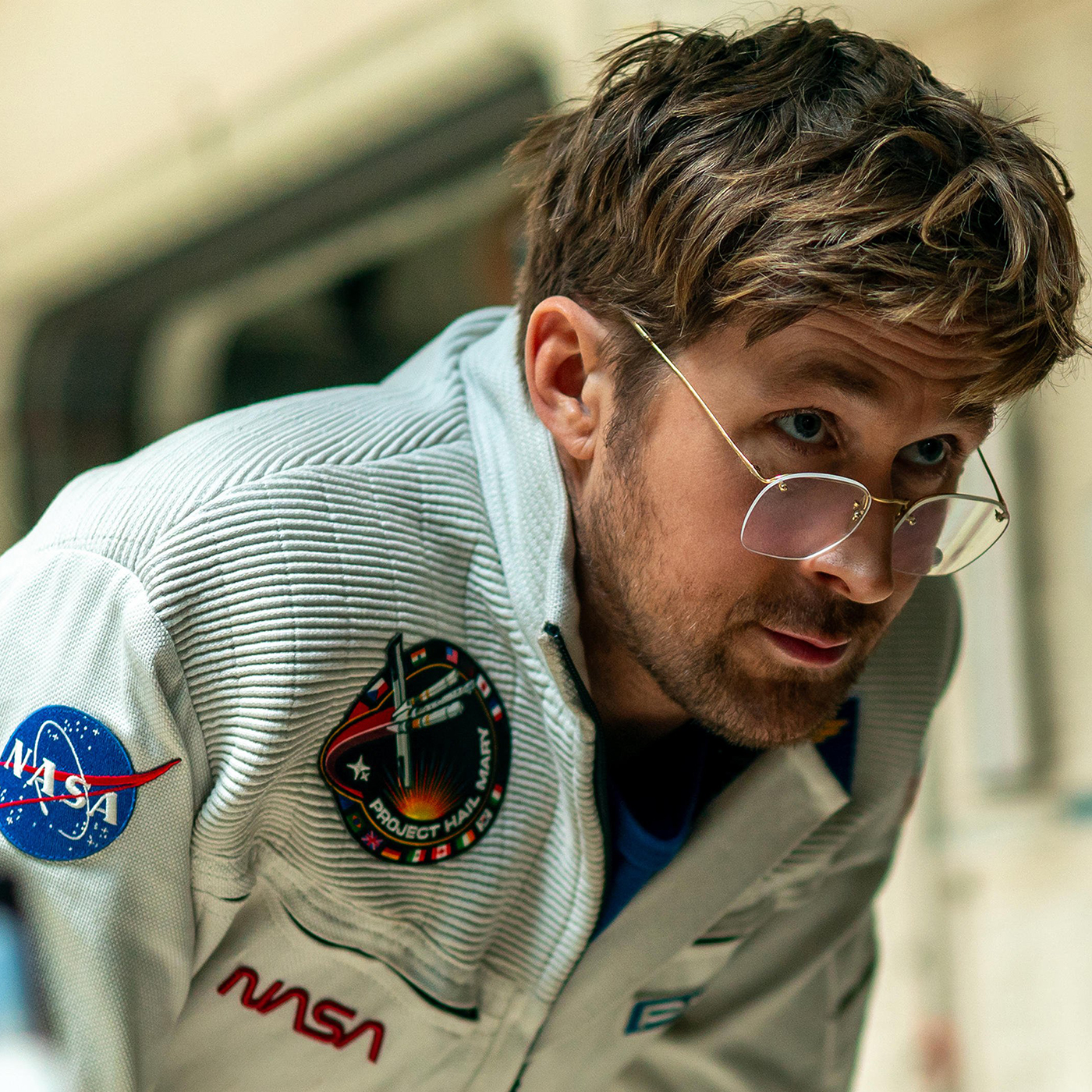
Exploring the astrophysics behind Project Hail Mary
What happens when hard science fiction collides with big-budget cinema? The latest episode of Physics World Stories delves into the ideas within Project Hail Mary – a new film about a science teacher (portrayed by Ryan Gosling) who finds himself alone on a spacecraft with the job of saving humanity from a star-dimming threat. Host Andrew Glester talks to science-fiction author Andy Weir, whose 2021 novel inspired the production. Weir, also known for The Martian and Artemis – both adapted for the screen – has built a reputation for scientific rigour, sometimes spending days perfecting calculations for the smallest plot details. In the interview, he reflects on how his writing has evolved over time, with a growing focus on character development alongside the hardcore science. Also in the episode is astrophysicist and science communicator Becky Smethurst, who gives her take on the film’s science. From the treatment of relativity to its refreshingly plausible take on alien life, Smethurst loves how Project Hail Mary avoids many familiar sci-fi clichés. She also shares some of her favourite recent science fiction. Smethurst, who runs the popular YouTube channel Dr Becky, recently released a series about Project Hail Mary. It’s well worth checking out the entertaining interviews with Weir, Gosling and directors Phil Lord and Christopher Miller – all grappling with the challenge of bringing complex physics to the screen. https://youtu.be/lYHCTEnYOr4?si=ZLwG_2VfQMeEFOzZ
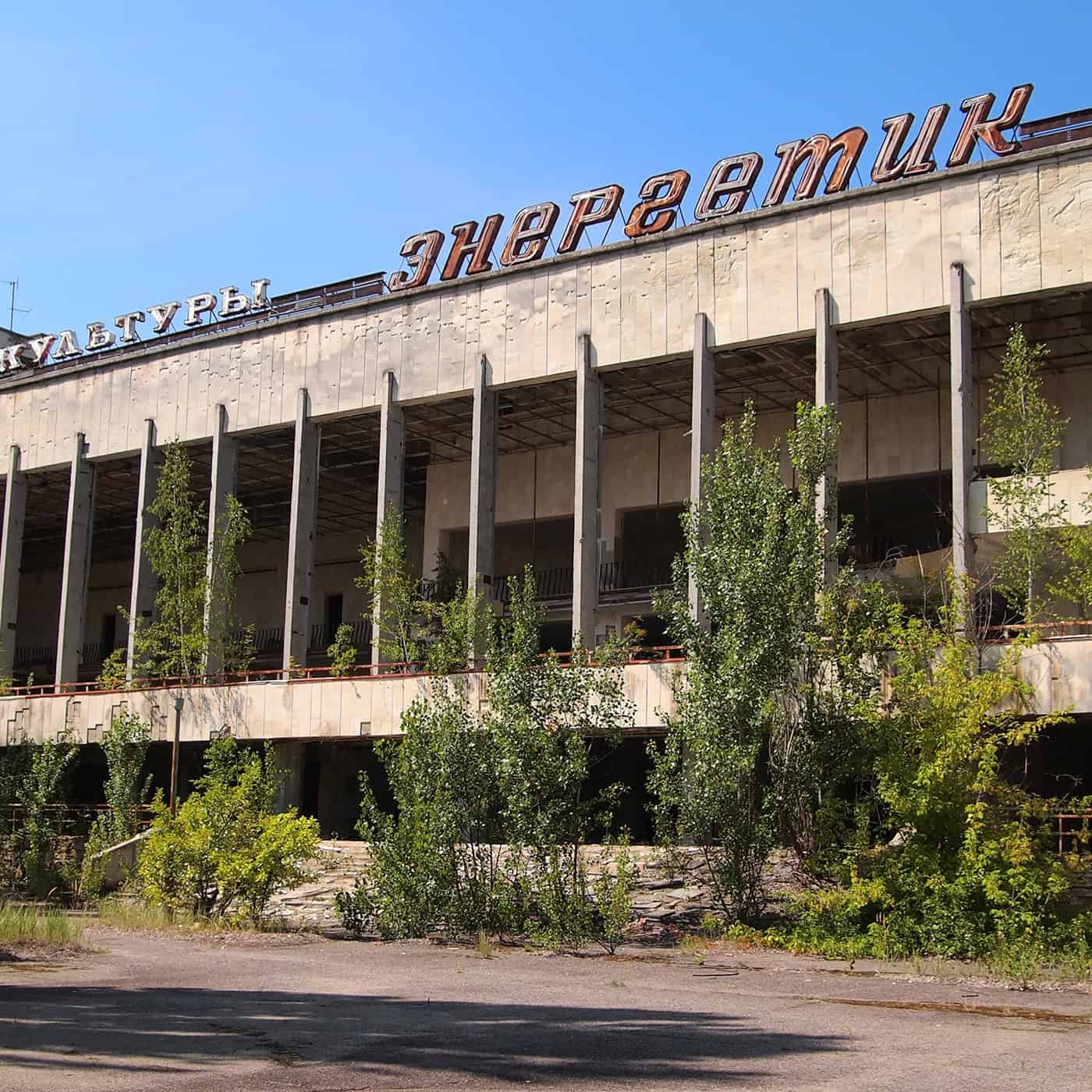
Chernobyl at 40: physics, politics and the nuclear debate today
On 26 April 2026, it will be 40 years since the explosion at Unit 4 of the Chernobyl Nuclear Power Plant – the worst nuclear accident the world has known. In the early hours of 26 April 1986, a badly designed reactor, operated under intense pressure during a safety test, ran out of control. A powerful explosion and prolonged fire followed, releasing radioactive material across Ukraine, Belarus, Russia, with smaller quantities spewing across Europe. In this episode of Physics World Stories, host Andrew Glester speaks with Jim Smith, an environmental physicist at the University of Portsmouth. Smith began his academic life studying astrophysics, but always had an interest in environmental issues. His PhD in applied mathematics at Liverpool focused on modelling how radioactive material from Chernobyl was transported through the atmosphere and deposited as far away as the Lake District in north-western England. Smith recounts his visits to the abandoned Chernobyl plant and the 1000-square-mile exclusion zone, now home to roaming wolves and other thriving wildlife. He wants a rational debate about the relative risks, arguing that the accident’s social and economic consequences have significantly outweighed the long-term impacts of radiation itself. The discussion ranges from the politics of nuclear energy and the hierarchical culture of the Soviet system, to lessons later applied during the Fukushima accident. Smith makes the case for nuclear power as a vital complement to renewables. He also shares the story behind the Chernobyl Spirit Company – a social enterprise he has launched with Ukrainian colleagues, producing safe, high-quality spirits to support Ukrainian communities. Listen to find out whether Andrew Glester dared to try one.
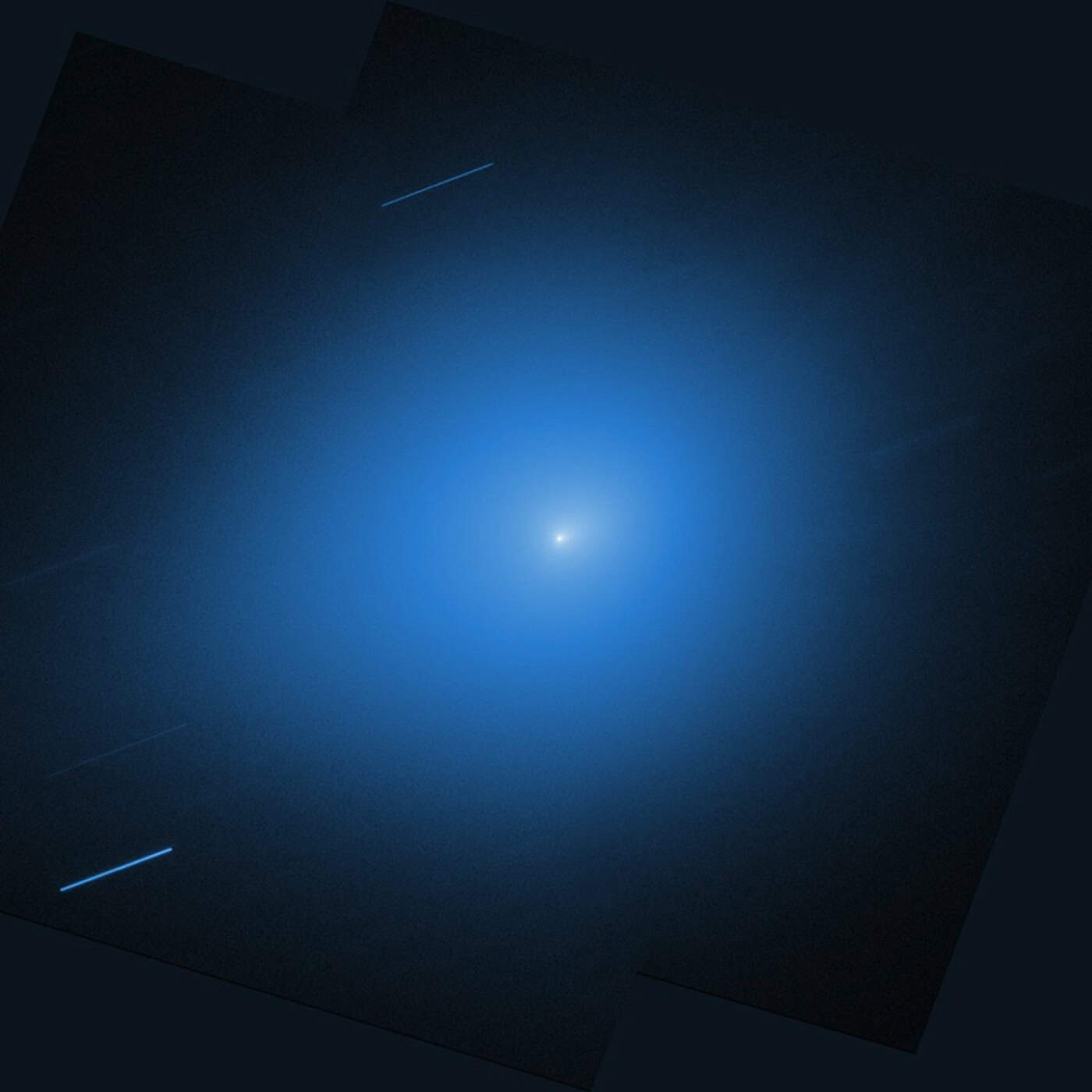
Cosmic time capsules: the search for pristine comets
In this episode of Physics World Stories, host Andrew Glester explores the fascinating hunt for pristine comets – icy bodies that preserve material from the solar system’s beginnings and even earlier. Unlike more familiar comets that repeatedly swing close to the Sun and transform, these frozen relics act as time capsules, offering unique insights into our cosmic history. "Interstellar comet 3I\/ATLAS is seen in this composite image captured on 6 November 2025 by the Europa Ultraviolet Spectrograph instrument on NASA’s Europa Clipper spacecraft. (Courtesy: NASA\/JPL-Caltech\/SWRI)"Interstellar comet 3I/ATLAS is seen in this composite image captured on 6 November 2025 by the Europa Ultraviolet Spectrograph instrument on NASA’s Europa Clipper spacecraft. (Courtesy: NASA/JPL-Caltech/SWRI) The first guest is Tracy Becker, deputy principal investigator for the Ultraviolet Spectrograph on NASA’s Europa Clipper mission. Becker describes how the Jupiter-bound spacecraft recently turned its gaze to 3I/ATLAS, an interstellar visitor that appeared last July. Mission scientists quickly reacted to this unique opportunity, which also enabled them to test the mission’s instruments before it arrives at the icy world of Europa. Michael Küppers then introduces the upcoming Comet Interceptor mission, set for launch in 2029. This joint ESA–JAXA mission will “park” in space until a suitable comet arrives from the outer reaches of the solar system. They will deploy two probes to study it from multiple angles – offering a first-ever close look at material untouched since the solar system’s birth. From interstellar wanderers to carefully orchestrated intercepts, this episode blends pioneering missions and cosmic detective work. Keep up to date with all the latest space and astronomy developments in the dedicated section of the Physics World website.

Forging a more inclusive new generation of physicists
The latest episode of Physics World Stories takes you inside CUWiP+, the Conference for Undergraduate Women and Non-Binary Physicists, and the role the annual event plays in shaping early experiences of studying physics. The episode features June McCombie from the University of Nottingham, who discusses what happens at CUWiP+ events and why they are so important for improving the retention of women and non-binary students in STEM. She reflects on how the conferences create space for students to explore career paths, build confidence and see themselves as part of the physics community. Reflections and tips from CUWiP+ 2025 University of Birmingham students Tanshpreet Kaur and Harriett McCormick share their experiences of attending the 2025 CUWiP+ event at the University of Warwick and explain why they are excited for the next event, set for Birmingham, 19–22 March 2026. They describe standout moments from 2025, including being starstruck at meeting Dame Jocelyn Bell Burnell, who discovered radio pulsars in 1967. The episode provides practical advice to get the most out of the event. Organizers design the programme to cater for all personalities – whether you thrive in lively, social situations, or prefer time to step back and reflect. Either way, CUWiP+ offers opportunities to be inspired and to make meaningful connections. Hosted by Andrew Glester, the episode highlights how shared experiences and supportive networks can balance the often-solitary nature of studying physics, especially when you feel excluded from the majority group.
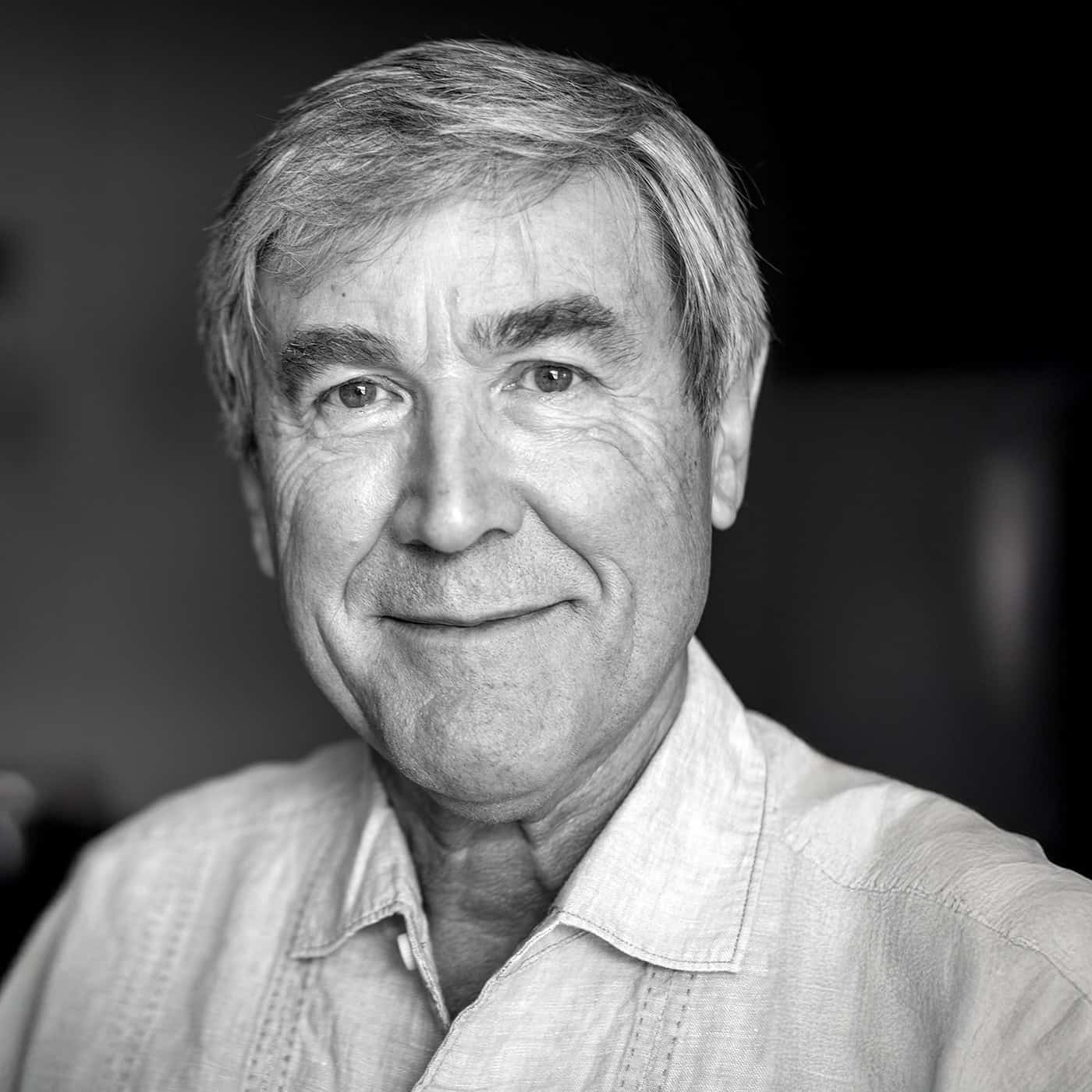
Quantum 2.0: Paul Davies on the next revolution in physics
In this episode of Physics World Stories, theoretical physicist, cosmologist and author Paul Davies discusses his latest book, Quantum 2.0: the Past, Present and Future of Quantum Physics. A Regents Professor at Arizona State University, Davies reflects on how the first quantum revolution transformed our understanding of nature – and what the next one might bring. He explores how emerging quantum technologies are beginning to merge with artificial intelligence, raising new ethical and philosophical questions. Could quantum AI help tackle climate change or tackle issues like hunger? And how far should we go in outsourcing planetary management to machines that may well prioritize their own survival? Davies also turns his gaze to the arts, imagining a future where quantum ideas inspire music, theatre and performance. From jazz improvized by quantum algorithms to plays whose endings depend on quantum outcomes, creativity itself could enter a new superposition. Hosted by Andrew Glester, this episode blends cutting-edge science and imagination in trademark Paul Davies style. This article forms part of Physics World‘s contribution to the 2025 International Year of Quantum Science and Technology (IYQ), which aims to raise global awareness of quantum physics and its applications. Stayed tuned to Physics World and our international partners throughout the year for more coverage of the IYQ. Find out more on our quantum channel.  
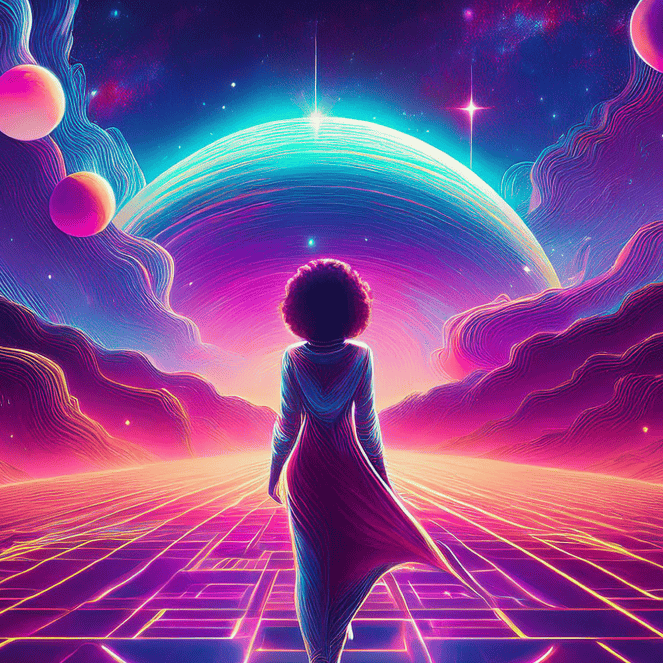
Queer Quest: a quantum-inspired journey of self-discovery
This episode of Physics World Stories features an interview with Jessica Esquivel and Emily Esquivel – the creative duo behind Queer Quest. The event created a shared space for 2SLGBTQIA+ Black and Brown people working in science, technology, engineering, arts and mathematics (STEAM). Mental health professionals also joined Queer Quest, which was officially recognized by UNESCO as part of the International Year of Quantum Science and Technology (IYQ). Over two days in Chicago this October, the event brought science, identity and wellbeing into powerful conversation. Jessica Esquivel, a particle physicist and associate scientist at Fermilab, is part of the Muon g-2 experiment, pushing the limits of the Standard Model. Emily Esquivel is a licensed clinical professional counsellor. Together, they run Oyanova, an organization empowering Black and Brown communities through science and wellness. Quantum metaphors and resilience through connection "queer quest advert - a woman's face inside a planet"Courtesy: Oyanova Queer Quest blended keynote talks, with collective conversations, alongside meditation and other wellbeing activities. Panellists drew on quantum metaphors – such as entanglement – to explore identity, community and mental health. In a wide-ranging conversation with podcast host Andrew Glester, Jessica and Emily speak about the inspiration for the event, and the personal challenges they have faced within academia. They speak about the importance of building resilience through community connections, especially given the social tensions in the US right now. Hear more from Jessica Esquivel in her 2021 Physics World Stories appearance on the latest developments in muon science. This article forms part of Physics World‘s contribution to the 2025 International Year of Quantum Science and Technology (IYQ), which aims to raise global awareness of quantum physics and its applications. Stayed tuned to Physics World and our international partners throughout the year for more coverage of the IYQ. Find out more on our quantum channel.  
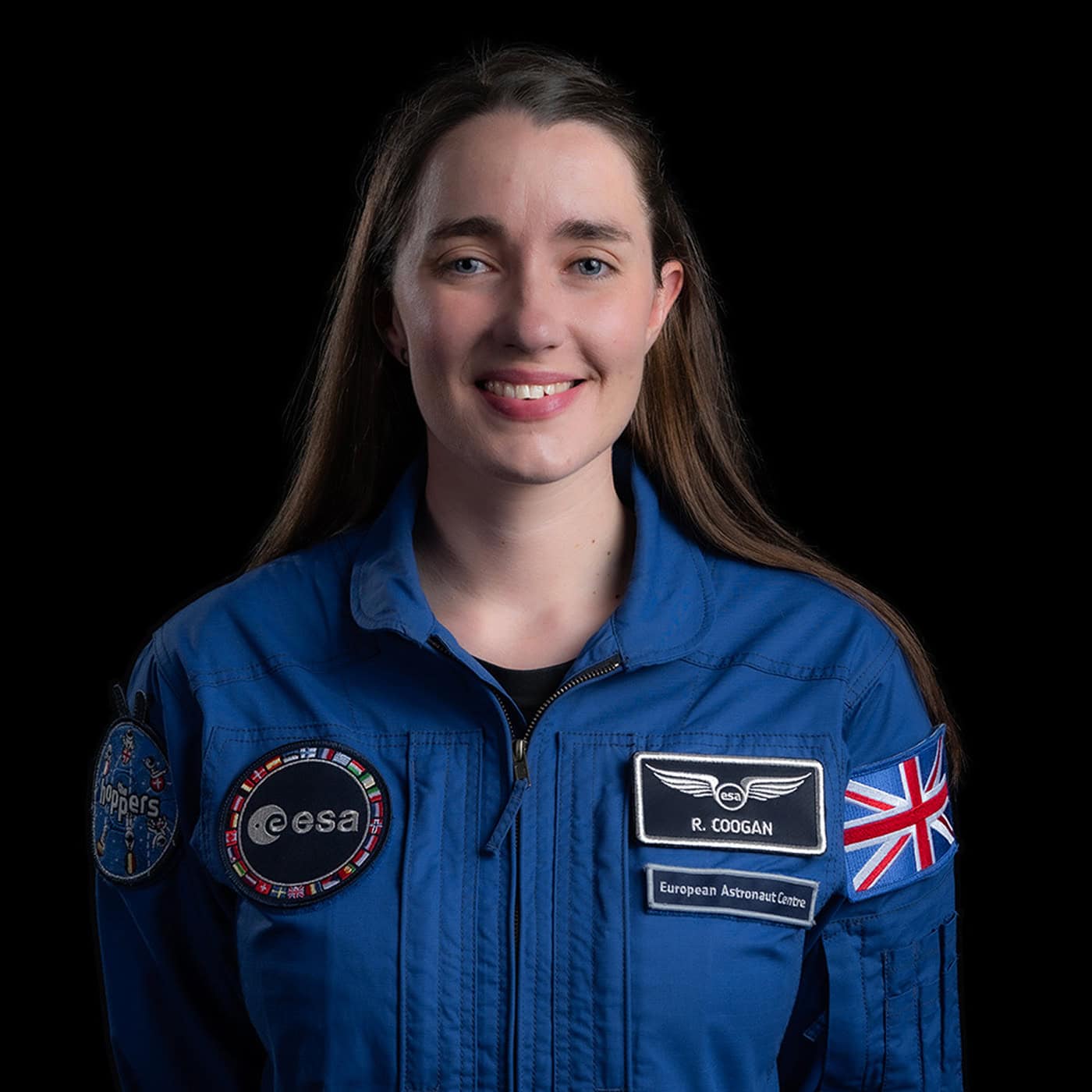
Training for the stars: Rosemary Coogan on becoming an astronaut
In this episode of the Physics World Stories podcast, Rosemary Coogan offers a glimpse into life as one of the European Space Agency’s newest astronauts. Selected as part of ESA’s 2022 cohort, she received astronaut certification in 2024, and is now in line to visit the International Space Station within the next five years. One day, she may even walk on the Moon as part of the Artemis programme. Coogan explains what astronaut training really entails: classroom sessions packed with technical knowledge, zero-gravity parabolic flights, and underwater practice in Houston’s neutral buoyancy pool. Born in Northern Ireland, Coogan reflects on her personal journey. From a child dreaming of space, she went on to study physics and astrophysics at Durham University, then completed a PhD on the evolution of distant galaxies. When not preparing for lift off, Coogan counts sci-fi among her interests – she loves getting lost in the world of possibilities. She’s also candid about the psychological side of astronaut training, and how she’s learned to savour the learning process itself rather than obsess over launch dates. Hosted by Andrew Glester, this episode captures both the challenge and wonder of preparing for an imminent journey to space.
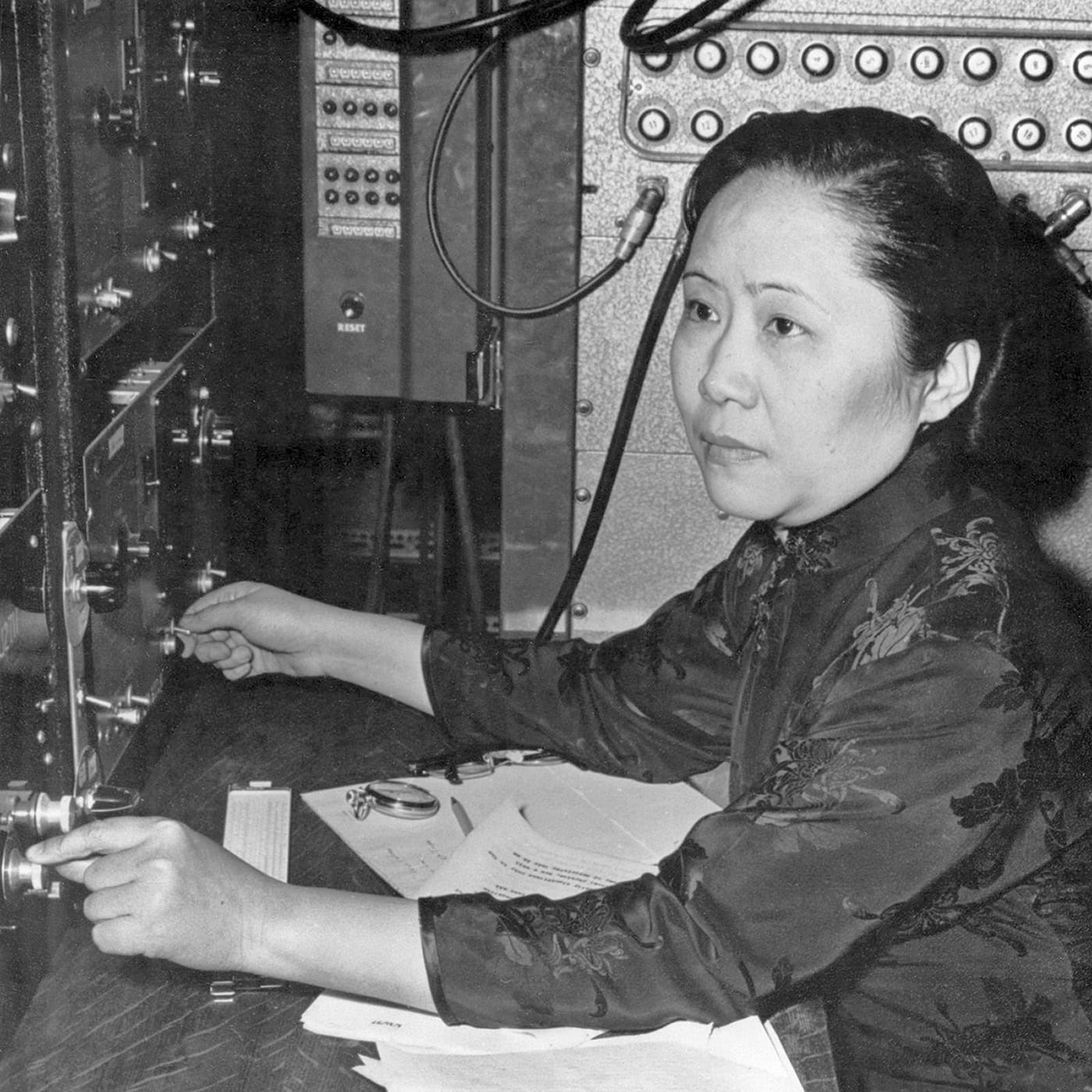
Overlooked pioneers from quantum history
In the folklore of physics, the origins of quantum mechanics are often told as the story of a handful of brilliant young men, trading ideas in lecture halls and cafes. The German term Knabenphysik – “boys’ physics” – helped cement that image, and its gender bias went largely unchallenged for decades. The latest Physics World Stories podcast, hosted by Andrew Glester, features Margriet van der Heijden, professor of science communication at Eindhoven University of Technology in the Netherlands, and Michelle Frank, a 2024–25 Public Scholar with the US National Endowment for the Humanities. Both contributed to Women in the History of Quantum Physics: Beyond Knabenphysik, a new book that brings together the stories of sixteen women whose work, ideas and problem-solving helped shape the field from the very start. The book challenges the “lone genius” narrative, showing that quantum theory emerged from a much wider network of people – many of whom were women, and many of whom went unrecognized. The discussion also reflects on barriers that remain in physics today. Van der Heijden and Frank are part of the international working group of Women in the History of Quantum Physics. Visit the group’s website for links to a range of publications and events. This article forms part of Physics World‘s contribution to the 2025 International Year of Quantum Science and Technology (IYQ), which aims to raise global awareness of quantum physics and its applications. Stayed tuned to Physics World and our international partners throughout the year for more coverage of the IYQ. Find out more on our quantum channel.
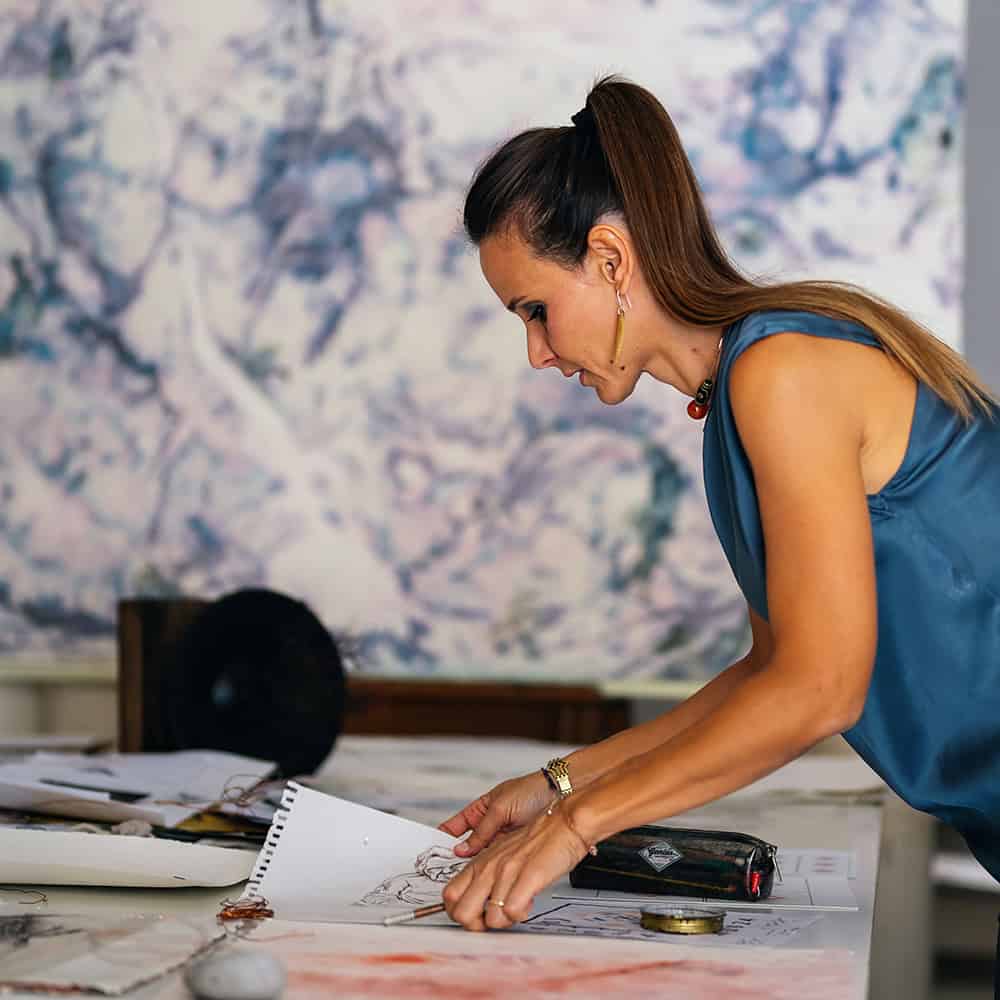
Entangled expressions: where quantum science and art come together
What happens when you put a visual artist in the middle of a quantum physics lab? This month’s Physics World Stories podcast explores that very question, as host Andrew Glester dives into the artist-in-residence programme at the Yale Quantum Institute in the US. "Serena Scapagnini, 2025. (Credit: Filippo Silvestris)"Serena Scapagnini, 2025. (Credit: Filippo Silvestris) Each year, the institute welcomes an artist to explore the intersections of art and quantum science, bridging the ever-fuzzy boundary between the humanities and the sciences. You will hear from the current artist-in-residence Serena Scapagnini, a visual artist and art historian from Italy. At Yale, she’s exploring the nature of memory, both human and quantum, through her multidisciplinary projects. You’ll also hear from Florian Carle, managing director of the institute and the co-ordinator of the residency. Once a rocket scientist, Carle has always held a love of theatre and the arts alongside his scientific work. He believes art–science collaborations open new possibilities for engaging with quantum ideas, and that includes music – which you’ll hear in the episode. Discover more about quantum art and science in the free-to-read Physics World Quantum Briefing 2025 This article forms part of Physics World‘s contribution to the 2025 International Year of Quantum Science and Technology (IYQ), which aims to raise global awareness of quantum physics and its applications. Stayed tuned to Physics World and our international partners throughout the year for more coverage of the IYQ. Find out more on our quantum channel.
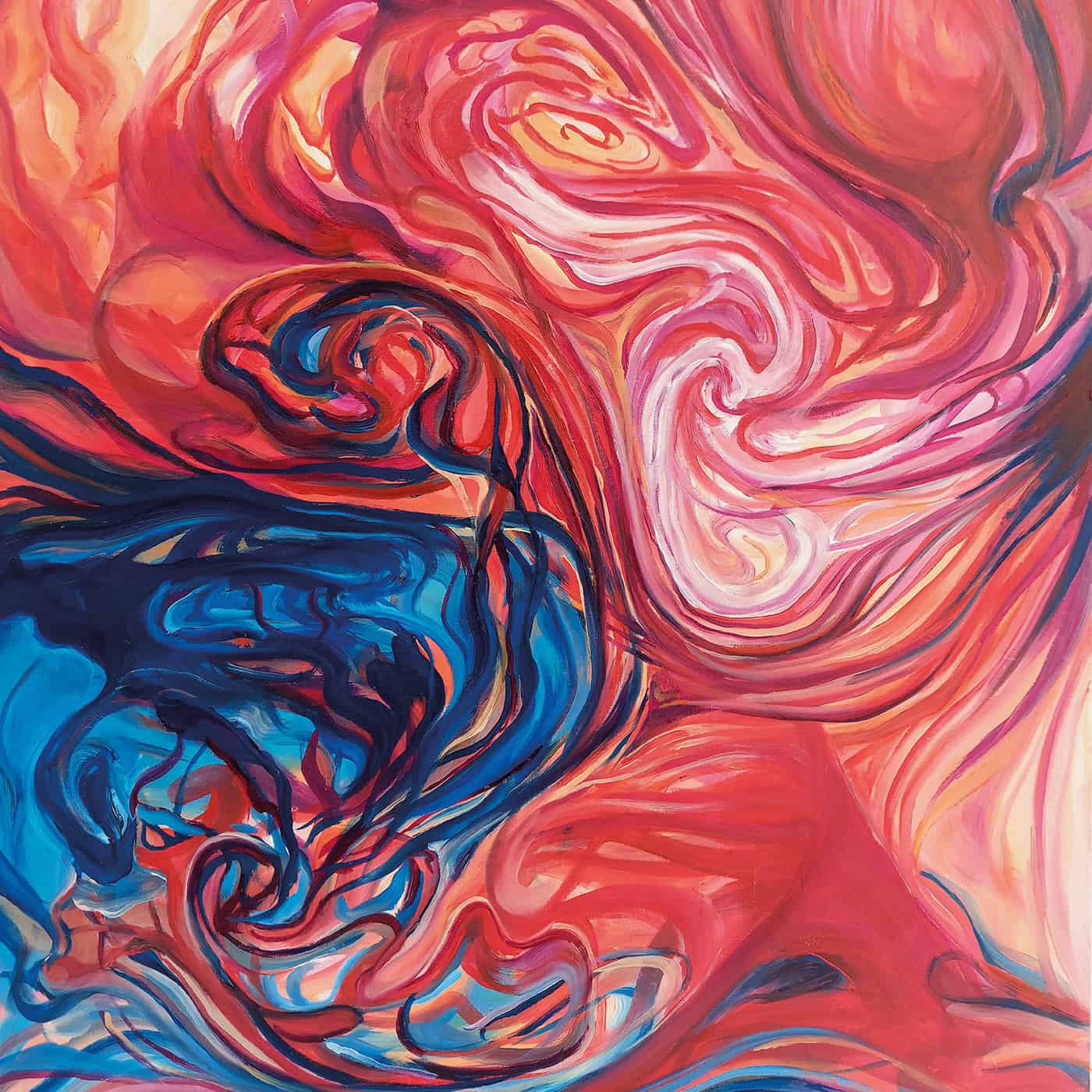
Painting the unseen: visualizing the quantum world
What does quantum physics have to do with vibrant oil paintings and the ghostly grin of a disappearing cat? Quite a lot, as it turns out. In this month’s Physics World Stories podcast, host Andrew Glester takes a colourful look at how we visualize – and try to make sense of – the curious world of quantum mechanics. First up is Felicity Inkpen, a Scotland-based artist who began her career in physics and neuroscience before turning to art full-time. Her painting Qubits, Duality appears on the cover of a Physics World Quantum Briefing published to celebrate the 2025 International Year of Quantum Science and Technology (IYQ). Felicity shares her journey from academia to art, and how her experience of number-colour synaesthesia – where numbers are associated with colours in her mind – shapes her creative process as she explores the elusive nature of quantum reality. Later, Physics World features editor Tushna Commissariat introduces the Physics World Quantum Briefing and delves into one of its stories, ‘The curious case of quantum Cheshire cats’. It explores the strange phenomenon where a particle’s properties seem to be in a different place from the particle itself – reminiscent of Lewis Carroll’s famous feline in Alice in Wonderland, whose grin lingers even after he’s gone. You’ll find plenty more on the history, mystery and industry of quantum mechanics in the free-to-read Quantum Briefing. Stay tuned to the Physics World quantum channel for more IYQ content throughout the year. You can already enjoy a blog series from Matin Durrani, reporting from the tiny North Sea archipelago Helgoland, where Heisenberg made his breakthrough in quantum mechanics 100 years ago.
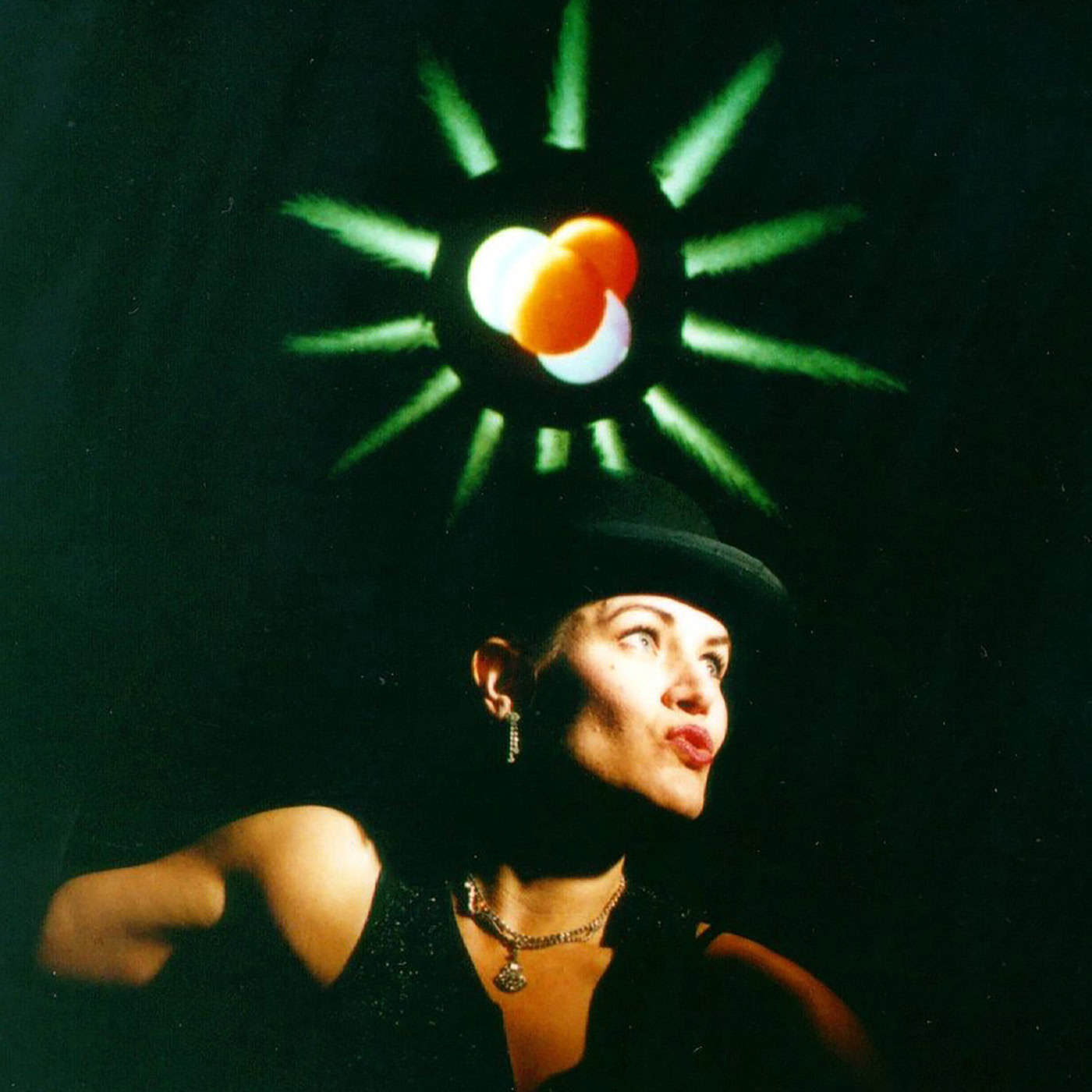
The Physics Chanteuse: when science hits a high note
What do pulsars, nuclear politics and hypothetical love particles have in common? They’ve all inspired songs by Lynda Williams – physicist, performer and self-styled “Physics Chanteuse”. In this month’s Physics World Stories podcast, host Andrew Glester is in conversation with Williams, whose unique approach to science communication blends physics with cabaret and satire. You’ll be treated to a selection of her songs, including a toe-tapping tribute to Jocelyn Bell Burnell, the Northern Irish physicist who discovered pulsars. Williams discusses her writing process, which includes a full-blooded commitment to getting the science right. She describes how her shows evolve throughout the course of a tour, how she balances life on the road with other life commitments, and how Kip Thorne once arranged for her to perform at a birthday celebration for Stephen Hawking. (Yes, really.) Her latest show, Atomic Cabaret, dives into the existential risks of the nuclear age, marking 80 years since Hiroshima and Nagasaki. The one-woman musical kicks off in Belfast on 18 June and heads to the Edinburgh Festival in August. If you like your physics with a side of showbiz and social activism, this episode hits all the right notes. Find out more at Lynda’s website.
Alternate quantum realities: what if Heisenberg stayed at home?
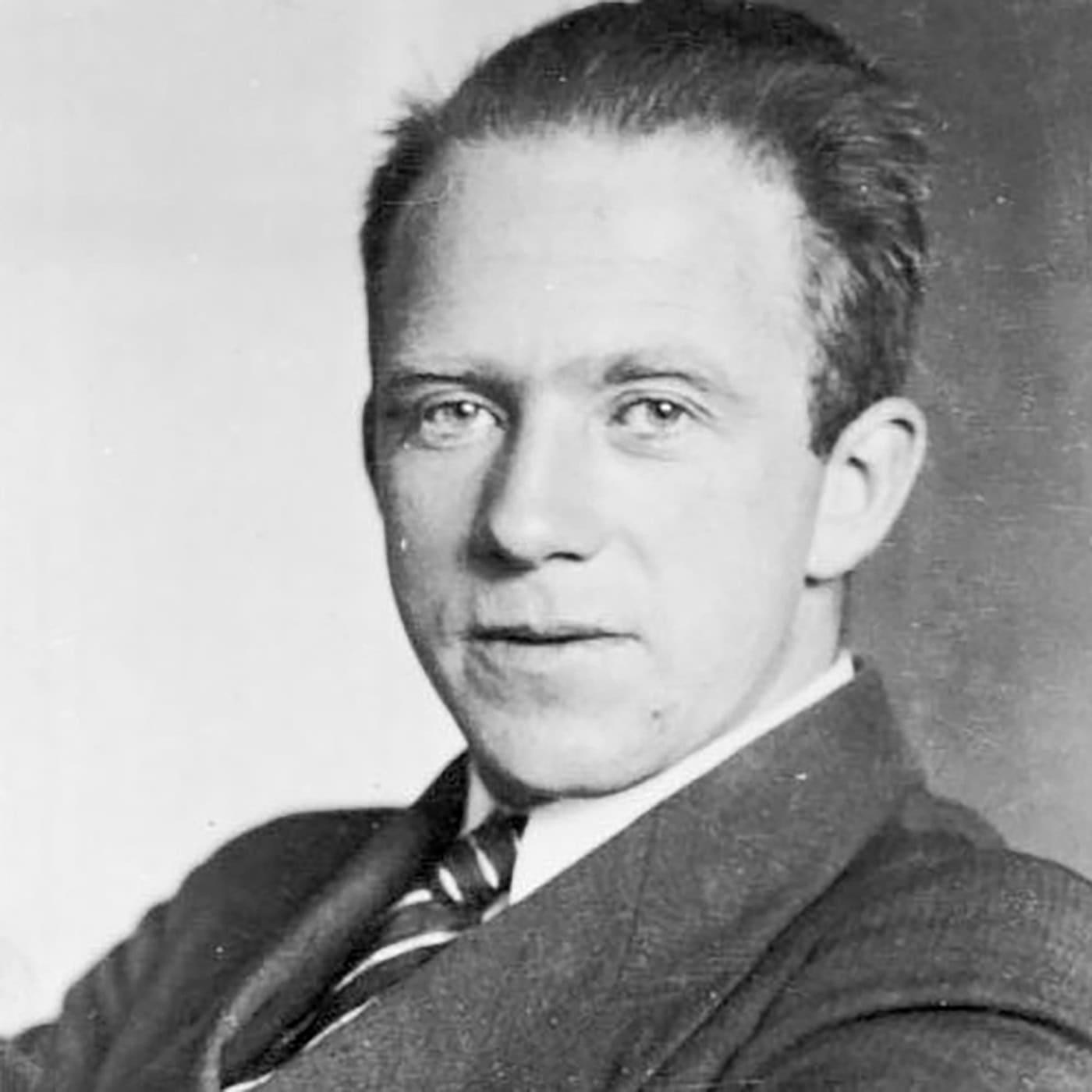
In this episode of Physics World Stories, writer Kevlin Henney discusses his new flash fiction, Heisenberg (not) in Helgoland – written exclusively for Physics World as part of the International Year of Quantum Science and Technology. The story spans two worlds: the one we know, and an alternate reality in which Werner Heisenberg never visits the island of Helgoland – a trip that played a key role in the development of quantum theory. Henney reads an extract from the piece and reflects on the power of flash fiction – why the format’s brevity and clarity make it an interesting space for exploring complex ideas. In conversation with host Andrew Glester, he also discusses his varied career as an independent software consultant, trainer and writer. Tune in to hear his thoughts on quantum computing, and why there should be greater appreciation for how modern physics underpins the technologies we use every day. The full version of Henney’s story will be published in the Physics World Quantum Briefing 2025 – a free-to-read digital issue launching in May. Packed with features on the history, mystery and applications of quantum mechanics, it will be available via the Physics World website. The image accompanying this article is Werner Heisenberg in 1933 (Credit: German Federal Archive with posterised version by James Dacey/Physics World) CC-BY-SA 3.0 On 13–14 May, The Economist is hosting Commercialising Quantum Global 2025 in London. The event is supported by the Institute of Physics – which brings you Physics World. Participants will join global leaders from business, science and policy for two days of real-world insights into quantum’s future. In London you will explore breakthroughs in quantum computing, communications and sensing, and discover how these technologies are shaping industries, economies and global regulation. Register now and use code QUANTUM20 to receive 20% off. This offer ends on 4 May.
AI and the future of physics
Artificial intelligence is transforming physics at an unprecedented pace. In the latest episode of Physics World Stories, host Andrew Glester is joined by three expert guests to explore AI’s impact on discovery, research and the future of the field. Tony Hey, a physicist who worked with Richard Feynman and Murray Gell-Mann at Caltech in the 1970s, shares his perspective on AI’s role in computation and discovery. A former vice-president of Microsoft Research Connections, he also edited the Feynman Lectures on Computation (Anniversary Edition), a key text on physics and computing. Caterina Doglioni, a particle physicist at the University of Manchester and part of CERN’s ATLAS collaboration, explains how AI is unlocking new physics at the Large Hadron Collider. She sees big potential but warns against relying too much on AI’s “black box” models without truly understanding nature’s behaviour. Felice Frankel, a science photographer and MIT research scientist, discusses AI’s promise for visualizing science. However, she is concerned about its potential to manipulate scientific data and imagery – distorting reality. Frankel wrote about the need for an ethical code of conduct for AI in science imagery in this recent Nature essay. The episode also questions the environmental cost of AI’s vast energy demands. As AI becomes central to physics, should researchers worry about its sustainability? What responsibility do physicists have in managing its impact? Hey and Doglioni were advisers for the IOP report Physics and AI: A Physics Community Perspective, which explores the opportunities and challenges at the intersection of AI and physics. Listen now for a lively discussion on AI’s evolving role in physics.
Threads of fire: uncovering volcanic secrets with Pele’s hair and tears
Volcanoes are awe-inspiring beasts. They spew molten rivers, towering ash plumes, and – in rarer cases – delicate glassy formations known as Pele’s hair and Pele’s tears. These volcanic materials, named after the Hawaiian goddess of volcanoes and fire, are the focus of the latest Physics World Stories podcast, featuring volcanologists Kenna Rubin (University of Rhode Island) and Tamsin Mather (University of Oxford). Pele’s hair is striking: fine, golden filaments of volcanic glass that shimmer like spider silk in the sunlight. Formed when lava is ejected explosively and rapidly stretched into thin strands, these fragile fibres range from 1 to 300 µm thick – similar to human hair. Meanwhile, Pele’s tears – small, smooth droplets of solidified lava – can preserve tiny bubbles of volcanic gases within themselves, trapped in cavities. These materials are more than just geological curiosities. By studying their structure and chemistry, researchers can infer crucial details about past eruptions. Understanding these “fossil” samples provides insights into the history of volcanic activity and its role in shaping planetary environments. Rubin and Mather describe what it’s like working in extreme volcanic landscapes. One day, you might be near the molten slopes of active craters, and then on another trip you could be exploring the murky depths of underwater eruptions via deep-sea research submersibles like Alvin. For a deeper dive into Pele’s hair and tears, listen to the podcast and explore our recent Physics World feature on the subject.
Helgoland: leading physicists to gather on the tiny island where quantum mechanics was born
In this episode of Physics World Stories, we celebrate the 100th anniversary of Werner Heisenberg’s trip to the North Sea island of Helgoland, where he developed the first formulation of quantum theory. Listen to the podcast as we delve into the latest advances in quantum science and technology with three researchers who will be attending a 6-day workshop on Helgoland in June 2025. Featuring in the episode are: Nathalie De Leon of Princeton University, Ana Maria Rey from the University of Colorado Boulder, and Jack Harris from Yale University, a member of the programme committee. These experts share their insights on the current state of quantum science and technology: discussing the latest developments in quantum sensing, quantum information and quantum computing. They also reflect on the significance of attending a conference at a location that is so deeply ingrained in the story of quantum mechanics. Talks at the event will span the science and the history of quantum theory, as well as the nature of scientific revolutions. This episode is part of Physics World’s quantum coverage throughout 2025, designated by the UN as the International Year of Quantum Science and Technology (IYQ). Check out this article, for all you need to know about IYQ. This article forms part of Physics World‘s contribution to the 2025 International Year of Quantum Science and Technology (IYQ), which aims to raise global awareness of quantum physics and its applications. Stayed tuned to Physics World and our international partners throughout the next 12 months for more coverage of the IYQ. Find out more on our quantum channel.
From physics to filmmaking: Mark Levinson on his new documentary, The Universe in a Grain of Sand
In this episode of Physics World Stories, host Andrew Glester interviews Mark Levinson, a former theoretical particle physicist turned acclaimed filmmaker, about his newest work, The Universe in a Grain of Sand. Far from a conventional documentary, Levinson’s latest project is a creative work of art in its own right – a visually rich meditation on how science and art both strive to make sense of the natural world. Drawing from his background in theoretical physics and his filmmaking successes, such as Particle Fever (2013) and The Bit Player (2018), Levinson explores the shared language of creativity that unites these two domains. In The Universe in a Grain of Sand, he weaves together conversations with leading figures at the interface of art and science, with evocative imagery and artistic interpretations of nature’s mysteries. Listen to the episode for a glimpse into the mind of a filmmaker who continues to expand the boundaries of science storytelling. For details on how to watch the film in your location, see The Universe in a Grain of Sand website.
Trailblazer: Astronaut Eileen Collins reflects on space, adventure, and the power of lifelong learning
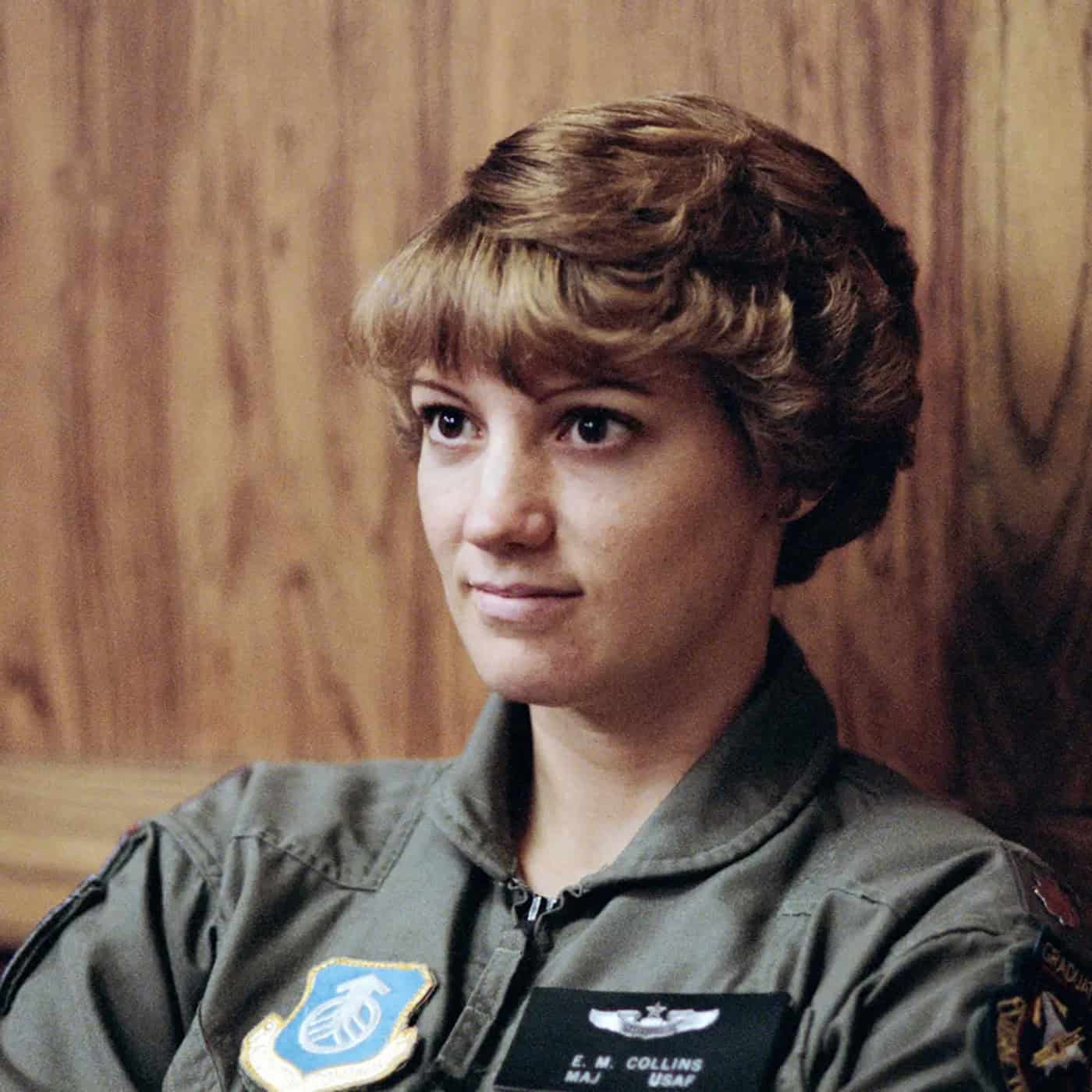
In this episode of Physics World Stories, astronaut Eileen Collins shares her extraordinary journey as the first woman to pilot and command a spacecraft. Collins broke barriers in space exploration, inspiring generations with her courage and commitment to discovery. Reflecting on her career, she discusses not only her time in space but also her lifelong sense of adventure and her recent passion for reading history books. Today, Collins frequently shares her experiences with audiences around the world, encouraging curiosity and inspiring others to pursue their dreams. Joining the conversation is Hannah Berryman, director of the new documentary SPACEWOMAN, which is based on Collins’ memoir Through the Glass Ceiling to the Stars, co-written with Jonathan H Ward. The British filmmaker describes what attracted her to Collins’ story and the universal messages it reveals. Hosted by science communicator Andrew Glester, this episode offers a glimpse into the life of a true explorer – one whose spirit of adventure knows no bounds. SPACEWOMAN has its world premiere on 16 November 2024 at DOC NYC. Keep an eye on the documentary’s website for details of how you can watch the film wherever you are.

Flocking together: the physics of sheep herding and pedestrian flows
In this episode of Physics World Stories, host Andrew Glester shepherds you through the fascinating world of crowd dynamics. While gazing at a flock of sheep or meandering through a busy street, you may not immediately think of the physics at play – but there is much more than you think. Give the episode a listen to discover the surprising science behind how animals and people move together in large groups. The first guest, Philip Ball, a UK-based science writer, explores the principles that underpin the movement of sheep in flocks. Insights from physics can even be used to inform herding tactics, whereby dogs are guided – usually through whistles – to control flocks of sheep and direct them towards a chosen destination. For even more detail, check out Ball’s recent Physics World feature “Field work – the physics of sheep, from phase transitions to collective motion“. Next, Alessandro Corbetta, from Eindhoven University of Technology in the Netherlands, talks about his research on pedestrian flow that won him an Ig Nobel Prize. Corbetta explains how his research field is helping us understand – and manage – the movements of human crowds in bustling spaces such as museums, transport hubs and stadia. Plus, he shares how winning the Ig Nobel has enabled the research to reach a far broader audience than he initially imagined.
Working in quantum tech: where are the opportunities for success?
The quantum industry in booming. An estimated $42bn was invested in the sector in 2023 and is projected to rise to $106 billion by 2040. In this episode of Physics World Stories, two experts from the quantum industry share their experiences, and give advice on how to enter this blossoming sector. Quantum technologies – including computing, communications and sensing – could vastly outperform today’s technology for certain applications, such as efficient and scalable artificial intelligence. Our first guest is Matthew Hutchings, chief product officer and co-founder of SEEQC. Based in New York and with facilities in Europe, SEEQC is developing a digital quantum computing platform with a broad industrial market due to its combination of classical and quantum technologies. Hutchings speaks about the increasing need for engineering positions in a sector that to date has been dominated by workers with a PhD in quantum information science. The second guest is Araceli Venegas-Gomez, founder and CEO of QURECA, which helps to train and recruit individuals, while also providing business development services. Venegas-Gomez’s journey into the sector began with her reading about quantum mechanics as a hobby while working in aerospace engineering. In launching QURECA, she realized there was an important gap to be filled between quantum information science and business – two communities that have tended to speak entirely different languages. Get even more tips and advice in the recent feature article ‘Taking the leap – how to prepare for your future in the quantum workforce’.
CERN at 70: how the Higgs hunt elevated particle physics to Hollywood status
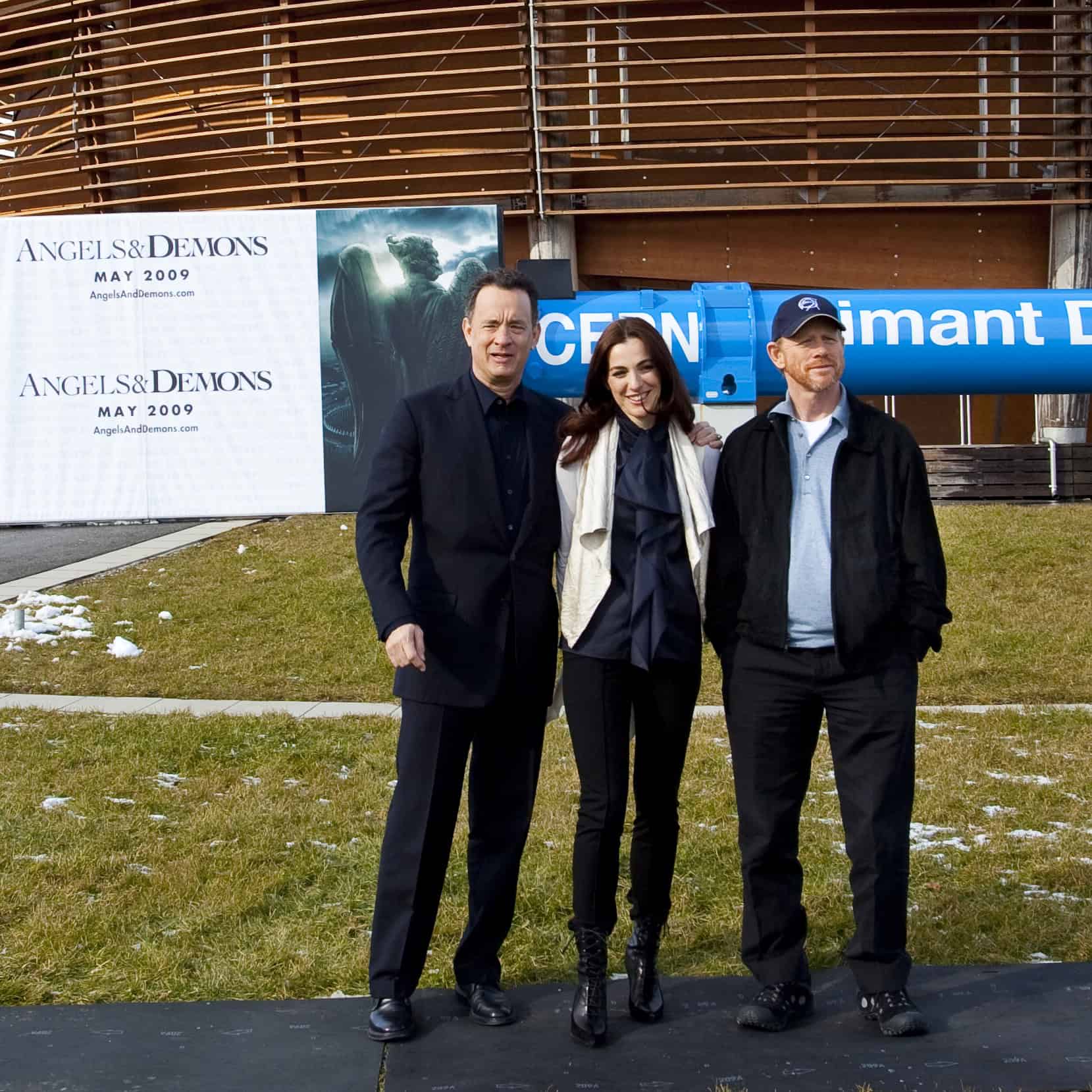
When former physicist James Gillies sat down for dinner in 2009 with actors Tom Hanks and Ayelet Zurer, joined by legendary director Ron Howard, he could scarcely believe the turn of events. Gillies was the head of communications at CERN, and the Hollywood trio were in town for the launch of Angels & Demons – the blockbuster film partly set at CERN with antimatter central to its plot, based on the Dan Brown novel. With CERN turning 70 this year, Gillies joins the Physics World Stories podcast to reflect on how his team handled unprecedented global interest in the Large Hadron Collider (LHC) and the hunt for the Higgs boson. Alongside the highs, the CERN comms team also had to deal with the lows. Not least, the electrical fault that put the LHC out of action for 18 months shortly after its switch-on. Or figuring out a way to engage with the conspiracy theory that particle collisions in the LHC would somehow destroy the Earth. Spoiler alert: the planet survived. And the Higgs boson discovery was announced in that famous 2012 seminar, which saw tears drop from the eyes of Peter Higgs – the British theorist who had predicted the particle in 1964. Our other guest on the podcast, Achintya Rao, describes how excitement among CERN scientists became increasingly palpable in the days leading to the announcement. Rao was working in the comms team within CMS, one of the two LHC detectors searching independently for the Higgs. Could particle physics ever capture the public imagination in the same way again? Discover more by reading the feature “Angels & Demons, Tom Hanks and Peter Higgs: how CERN sold its story to the world” by James Gillies.

Could humans run on water?
With the 2024 Paris Olympics just days away, sports fans are braced to see who will run, jump, row, fight and dance themselves into the history books. One of the most exciting moments will be the 100 m sprint finals, when athletes compete to become the fastest man or woman on Earth. Over the years we have seen jaw-dropping performances from the likes of Usain Bolt and Florence Griffith-Joyner. Scientists have been captivated by top sprinters – trying to understand how physique, technique and nutritional intake can help athletes push the limits of human ability. In this episode of the Physics World Stories podcast, we tackle the more speculative question: could an Olympic-level athlete ever run on water? Grappling with this question is our guest Nicole Sharp, engineer and science communicator specializing in fluid dynamics. She runs the fluid dynamics blog FYFD and authored the recent Physics World feature “Could athletes mimic basilisk lizards and turn water-running into an Olympic sport?“. Basilisk lizards are famed for their ability to skitter across water surfaces, usually to escape predators. It won’t surprise you to know that scientists have already grappled with this question. For instance, a team in Italy studied whether it was possible in reduced gravity conditions equivalent to the Moon. Sadly, a water race on the Moon is unlikely due to the absence of pools of liquid on the lunar surface. One place that could provide the setting for a liquid sprint are the ethane and methane lakes on Saturn’s moon Titan. These are the only large stable bodies of surface liquid in our solar system found outside Earth. If such an event were to happen tomorrow, perhaps the gold medal favourite would be US sprinter Sha’Carri Richardson – the current 100 m world champion who weighs just 45 kg. Listen to the podcast to discover whether Richardson would sprint or sink at the inaugural Titan Olympics.

Physics and sport: flying balls, perfecting technique, and wellbeing in academia
For sports fans, the next few weeks will bring excitement and drama. The Euro 2024 football (soccer) tournament is under way in Germany and the Copa América is about to kick off in the US. Then at the end of July, the Olympics starts in Paris as athletes from across the world compete to run, jump, sail, cycle and dance themselves into the history books. In this episode of Physics World Stories, you will hear from two US physicists with a profound connection with sport. The first guest is John Eric Goff of the University of Lynchburg, author of Gold Medal Physics: the Science of Sports. After training as a condensed-matter theorist, Goff has focused his research career the physics of sport. In a wide-ranging conversation with podcast host Andrew Glester, Goff discusses everything from the flight of balls to the biodynamics of martial arts. He also considers how data and AI in sport are changing the practice and the spectacle of sport. Our second guest is Harvard University’s Jenny Hoffman, who recently set the record for the fastest woman to run across the US. In November 2023 Hoffman completed the 3000 mile (5000 km) journey in just 47 days, 12 hours and 35 minutes, running from San Francisco to New York City. Hoffman, who studies the electronic properties of exotic materials, speaks about the benefits of having hobbies and passions outside of work. For her, running plays an essential role in wellbeing during her successful career in academia.

Swift Quakes and new podcast music inspired by the fine-structure constant
Whether you’re a Swiftie, a devout metalhead, or a 1980s synth pop aficionado, there is something for every musical taste in this month’s Physics World Stories. In part one, podcast host Andrew Glester is joined by Jacqueline Caplan-Auerbach, a geophysicist at Western Washington University, US. She has analysed “Swift quakes”, a seismological phenomenon during Taylor Swift’s Eras tour, answering two important questions. Are the quakes triggered by the music or the crowd? And how does their magnitude compare with similar events like the 2011 “Beast quake” triggered by celebrations at an American Football game between the Seattle Seahawks and the New Orleans Saints. It turns out that Swifties (dedicated Taylor Swift fans) are queuing up to share data for geophysics research. Regular listeners will notice that this month’s episode has a new podcast jingle. In part two, Glester is joined by the song’s creator Philip Moriarty, a physicist and science communicator at the University of Nottingham, UK. Titled 137, the song is inspired by the fine-structure constant, and is packed with cheeky references to this dimensionless constant and the physicists closely associated with it. (Yes, you can expect bongos!) Moriarty reveals even more about the song in his article “H1dd3n variab7es: the fundamental constant on which the new Physics World podcast music is built“, where you can also listen to the tune in full.

3 Body Problem: a deep dive into the Netflix show
This episode of Physics World Stories explores the science, politics and ethics in the Netflix series 3 Body Problem. Adapted from the celebrated Chinese novel The Three-Body Problem by Liu Cixin, the multi-layered story centres around humanity’s first contact with an alien civilization. As the drama unfolds, with physicists among its lead protagonists, the plot navigates the challenges of communicating with aliens across interstellar space – and the inevitable tensions that arise on Earth. To discuss 3 Body Problem, podcast host Andrew Glester is joined by three special guests: Matt Kenzie: the series’ science adviser, a particle physicist at the University of Cambridge. Kenzie’s role in informing the show’s scientific elements gives him unparalleled insight into the integration of physics into its narrative. Jennifer Ouellette: a renowned science writer who reviewed Cixin’s book The Three-Body Problem for Physics World back in 2015. Ouellette shares her thoughts on the book’s themes, and assesses the merits of the TV adaptation by the creators of Game of Thrones. Hannah Little: a linguist at the University of Liverpool who is also a member of the SETI Post-Detection Hub. That initiative, based at the University of St Andrews in Scotland, considers how we should communicate with aliens should we discover we are not alone in the cosmos. (Image courtesy: Ed Miller/Netflix)

An orchestral trip through the moons of our solar system
This month’s episode of Physics World Stories features an interview with composer Amanda Lee Falkenberg with music from her The Moons Symphony. Her creation takes listeners on an epic journey through the science and stories of the moons of our solar system. The seven-movement symphony dramatizes the geophysical features of Io, Europa, Titan, Enceladus, Miranda and Ganymede, before turning to our own Moon for a two-part finale. In creating the work, Australian-born Falkenberg immersed herself in the scientific research and consulted many scientists and astronauts. The Moons Symphony performed by the London Symphony Orchestra is available now via Signum Records.
Dark matter vs modified gravity: which team are you on?
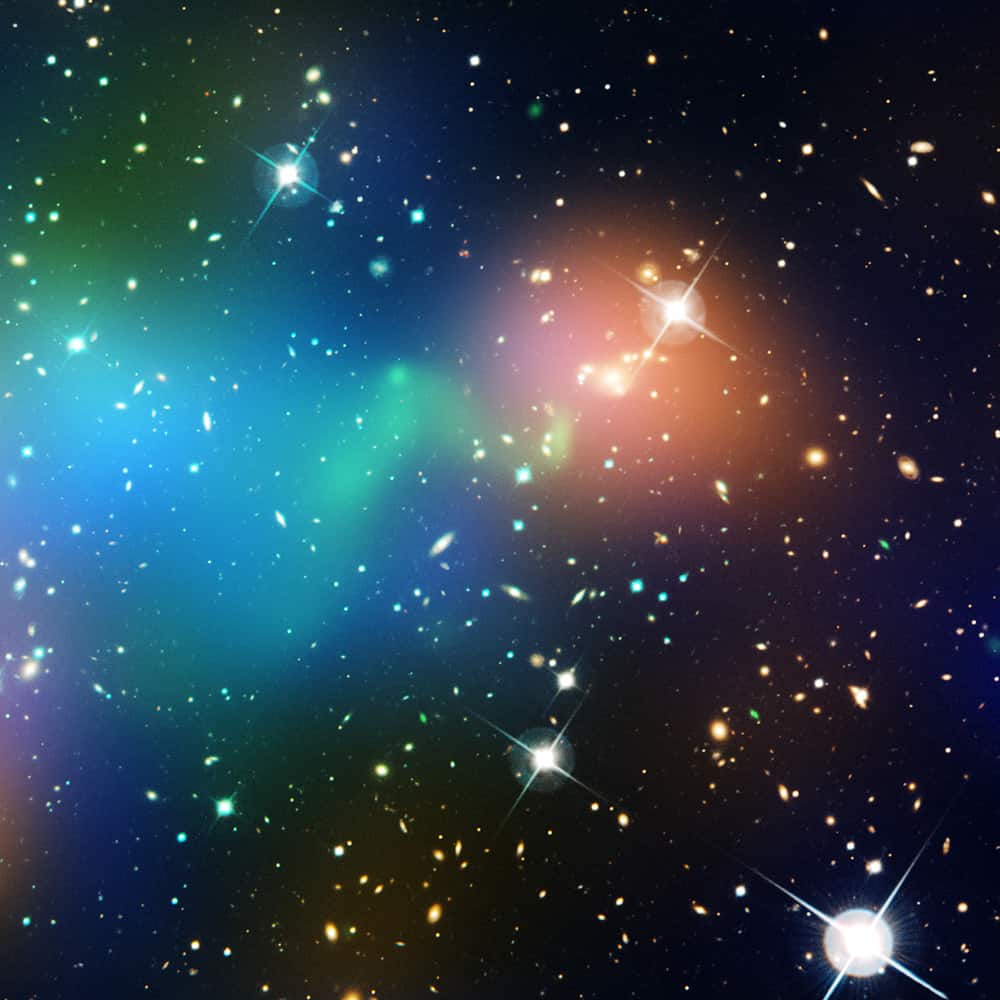
Coke or Pepsi? Messi or Ronaldo? Taylor Swift or…well, without wanting to set the Swifties against Physics World, let’s just say there’s often a tribal element to who we support or the choices we make. In the world of cosmology, one heated divide is whether you’re for dark matter or modified Newtonian dynamics (MOND). Both theories attempt to explain the discrepancies between the predicted gravitational effects in the universe and some of the actual observed motions of stars and galaxies. In the latest episode of Physics World Stories, Andrew Glester speaks to two cosmologists on opposing sides of this debate. Stacy McGaugh from Case Western Reserve University in the US is a former dark-matter researcher who switched sides overnight after MOND successfully predicted the rotation velocities of stars in galaxies. The other guest, Indranil Banik from the University of St Andrews in the UK, took the opposite journey. While working on a six-year project to measure MOND in wide binaries, he found no deviation from standard Newtonian gravity at all – a hammer blow for MOND. Now a dark matter advocate, Banik cites observations in our own solar system as further evidence against MOND. Naturally, others disagree. For more detailed insight into this debate, see the recent Physics World feature “Cosmic combat: delving into the battle between dark matter and modified gravity“.
Radio pioneers: the enduring role of ‘amateurs’ in radio astronomy
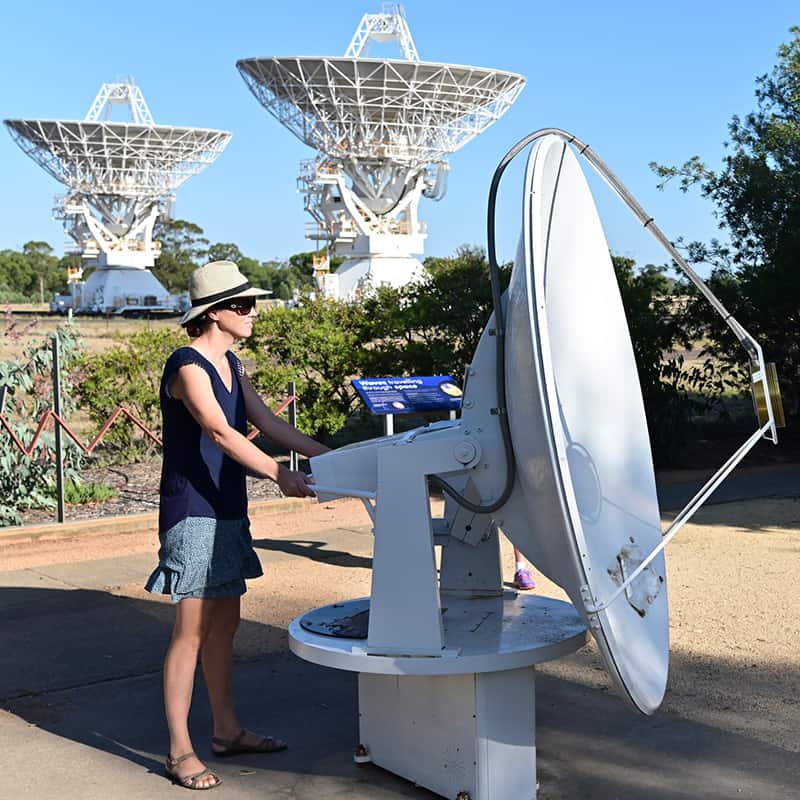
In the latest Physics World Stories podcast, astrophysicist Emma Chapman is in conversation with host Andrew Glester about the history of radio astronomy. It’s a field that has always maintained a do-it-yourself ethic, with valuable contributions from people outside the established academic community. Chapman, an astrophysicist at the University of Nottingham in the UK is the author of the popular-science book First Light: Switching on Stars at the Dawn of Time. Alongside her research, Chapman regularly visits amateur radio astronomy clubs and admires the technical expertise she encounters among members. Cold War boom Using much of the same technology as radar, radio astronomy evolved rapidly in the post-war period and took on strategic importance during the Space Race. Indeed, the Lovell Telescope at the Jodrell Bank observatory in northern England was the only facility in the Western world that could track Sputnik 1, launched by the Soviet Union in 1957. One reason that radio astronomy attracts public interest is that its facilities are ground-based: they’re tangible and accessible. Sites such as the Arecibo Observatory in Puerto Rico have iconic status in popular culture. That status looks set to grow thanks to the SKA Observatory being constructed at sites across Australia and South Africa – a truly global project, epic in scale. Chapman is the author of a Physics World feature about how the craft of doing radio astronomy has evolved since its origins.
Radiant chills: the revolutionary science of laser cooling
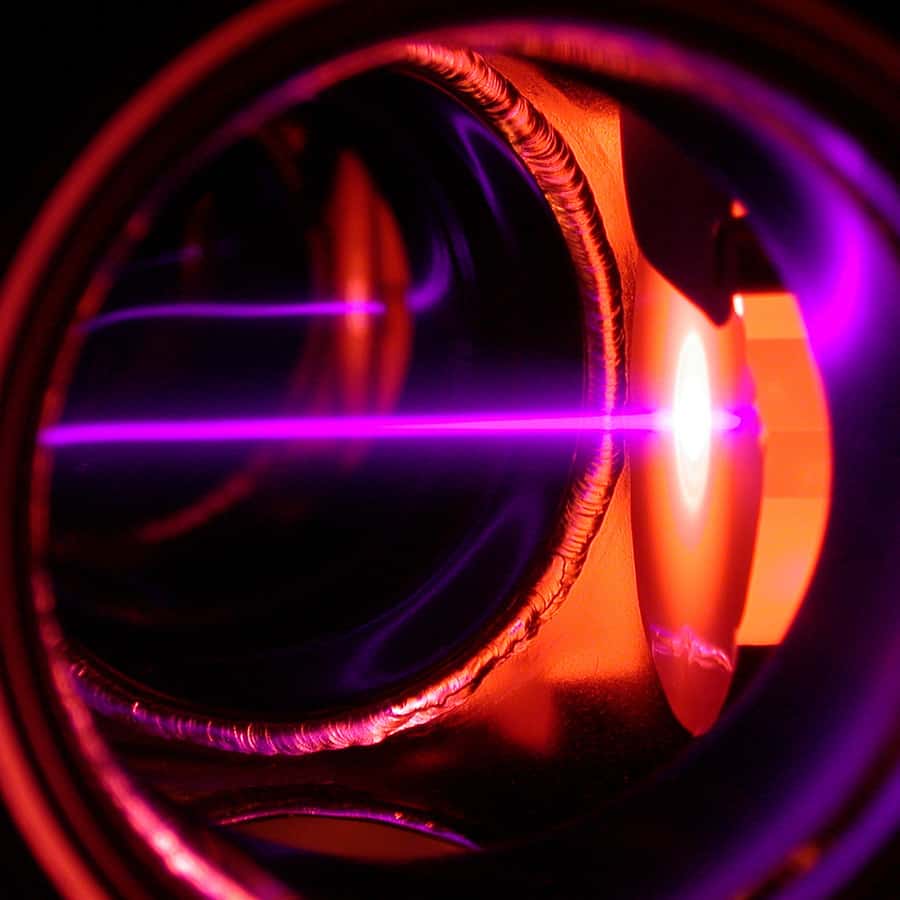
Over the past half century, laser cooling has revolutionized atomic, molecular and optical physics. Laser cooling of atoms and ions has enabled dramatic leaps in the precision of atomic clocks, allowing new tests of fundamental physics and potential improvements in clock-based navigation via the Global Positioning System. Now it is also laying the foundations for quantum computing with atoms and ions. In this episode of Physics World Stories, you can enjoy a vibrant tour through the history of laser cooling with Chad Orzel, a popular-science author and researcher at Union College in the US, who is in conversation with Andrew Glester. Orzel describes the key research breakthroughs – which have led to several Nobel prizes – but also the personal stories behind the discoveries, involving physics titans such as Hal Metcalf, Bill Phillips and Steven Chu. You can learn more about this topic via a trilology of features that Chad Orzel has written for Physics World. The final instalment will be available in January and you can already read the first two articles: “Cold: how physicists learned to manipulate and move particles with laser cooling“ “Colder: how physicists beat the theoretical limit for laser cooling and laid the foundations for a quantum revolution“
The biographer who inspired Christopher Nolan’s blockbuster film Oppenheimer
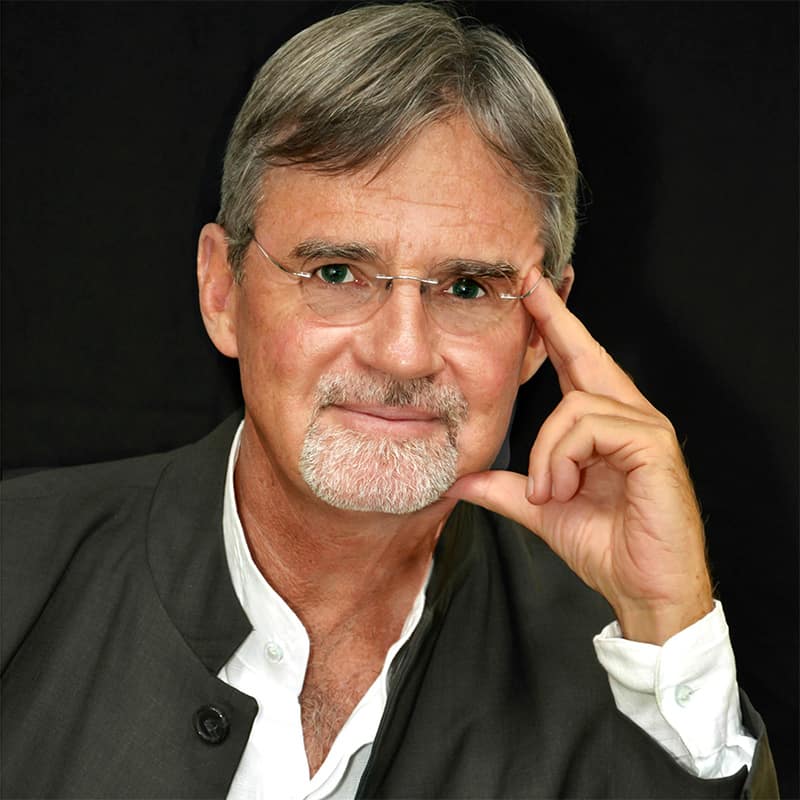
This episode of the Physics World Stories podcast features an interview with Kai Bird, co-author of the book that inspired the recent blockbuster film Oppenheimer, directed by Christopher Nolan. Winner of the 2006 Pulitzer Prize in Biography, American Prometheus: the Triumph and Tragedy of J. Robert Oppenheimer is an exploration of the brilliant and enigmatic physicist who led the project to develop the world’s first atomic weapons. Oppenheimer is a fascinating but complicated character for a biographer to tackle. Despite excelling in his leadership of the Manhattan Project, Oppenheimer’s conscience was torn by the power he had unleashed on the world. “Now I am become Death, the destroyer of worlds,” is the line he infamously recalled from the Hindu scripture the Bhagavad Gita, upon witnessing the Trinity Test fireball in 1945. Parallels between the nuclear dawn and AI today The physicist’s relationship with politics was also fraught and difficult to define. Oppenheimer held personal connections with Communist Party members prior to the Second World War, and spent the post-war years warning against nuclear proliferation – provoking the ire of McCarthy Era politicians and ultimately having his security clearance revoked in 1954. Unsurprisingly, American Prometheus is receiving a resurgence of interest following the success of Nolan’s film. Readers are fascinated once again with the dawn of the nuclear age, which Bird says has parallels with where we are today with AI and the threat of climate change. He also sees the political threads from McCarthyism to the post-truth tactics and populist playbook deployed in US politics today. As always, the podcast is presented by Andrew Glester and you can read his review of the film Oppenheimer, as well as a recent opinion piece by Robert P Crease “What the movie Oppenheimer can teach today’s politicians about scientific advice“.
Physics for fairness: tackling global sustainability challenges through science
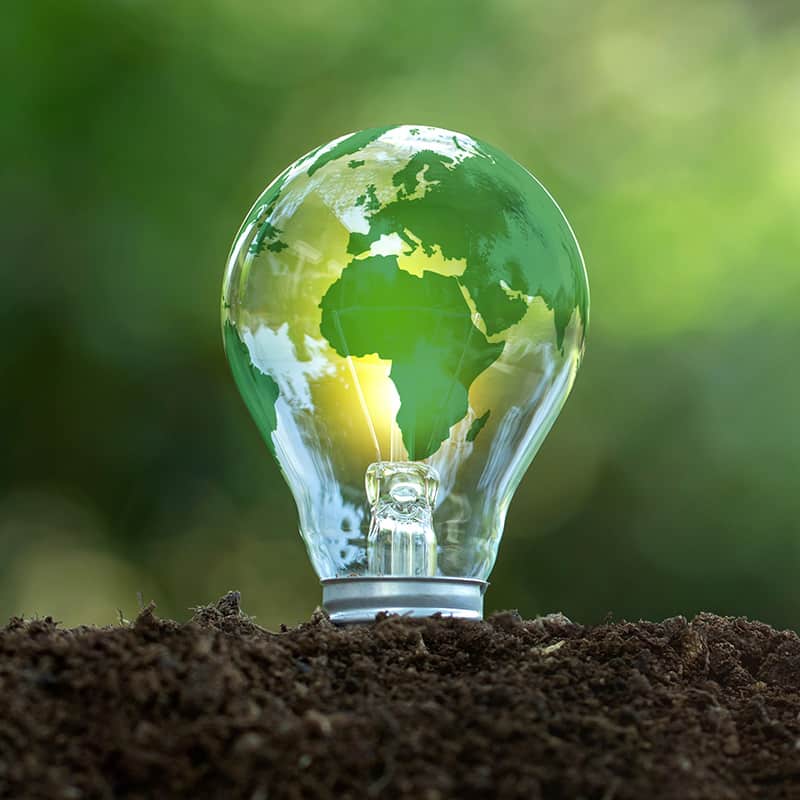
This year, 2023, marks the half-way point to the 2030 deadline for achieving the 17 Sustainable Development Goals (SDGs). Recent global developments, including conflicts and the COVID-19 pandemic, make SDGs such as “Zero Hunger” and “Reduced Inequalities” seem more daunting than ever. The scale of the challenge is clear; but professionals working on the frontline of sustainable development are as committed as ever to enabling positive change. That includes physicists and engineers, and July 2022 – July 2023 was the International Year of Basic Sciences for Sustainable Development. In this episode of the Physics World Stories podcast you will hear from with two physical scientists whose careers enable them to apply their scientific knowledge to tackling inequities. As always, the episode is hosted by Andrew Glester. Ruhi Chitre is an intern at UNESCO, Paris, who was previously president of the International Association of Physics Students. Chitre believes that international policymaking can be strengthened by the contribution of more people with backgrounds in fundamental science, not least because they have a nuanced understanding of the concept of risk. Later in the episode, you will hear from Destenie Nock, a civil & environmental engineer at Carnegie Mellon University in the US. Nock’s research includes looking for patterns in energy usage that can reveal local inequalities, such as correlations between household incomes and use of heating in winter. In her teaching, Nock encourages her students to take engineering back to its fundamental purpose – to think about how innovation can improve livelihoods. Nock is among the invited speakers at Environmental Research 2023, a series of free-to-attend virtual events on 16 October – 23 November hosted by IOP Publishing (which publishes Physics World).
Green and novel: the future of energy generation
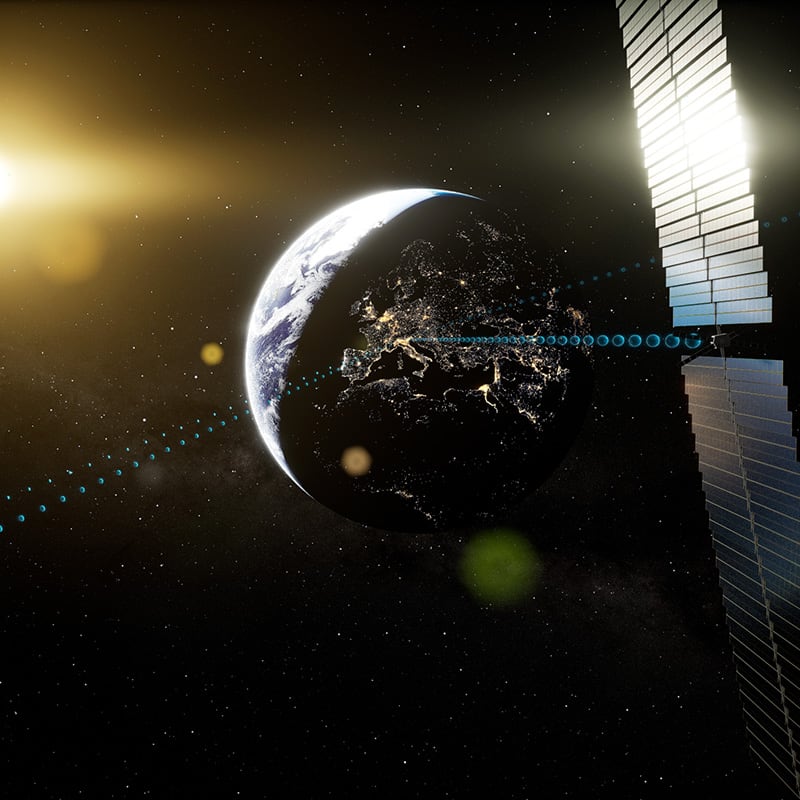
Energy accounts for more than three-quarters of our greenhouse gas emissions globally each year. That’s not surprising, given the role of energy in almost every aspect of modern life. To stand any chance of hitting net zero climate targets, we need to accelerate the transition to greener forms of energy generation. In this episode of the Physics World Stories podcast, Andrew Glester explores two novel forms of renewable-energy generation, both with the potential to scale and not suffer from issues of intermittency. First up, Nicol Caplin speaks about SOLARIS, an ambitious ESA project investigating the feasibility of sending a fleet of solar cells into space. In principle, the robot-assembled technology could capture solar energy 24/7 and beam it back to Earth in the form of microwave radiation. ESA is currently calling on scientists to submit research activities related to space-based solar power, with a deadline of 25 September. Next up, Danny Coles from the University of Plymouth, UK, speaks about the potential to upscale tidal stream energy generation. This is a way of harnessing kinetic energy from the movement of water in tidal currents – a predictable source of energy driven by lunar and solar cycles. Coles works on the Tidal Stream Industry Energiser Project (TIGER), designed to drive the growth of tidal-stream energy and bring down its costs. Of course, introducing any large machinery into the marine environment brings potential risks for marine wildlife. Our final guest, Douglas Gillespie from St Andrews University in Scotland, describes how he is assessing the risks to cetaceans, including dolphins and porpoises. A physicist-turned-biologist, Gillespie and his team have recently been tracking the movement of marine mammals in the vicinity of tidal-energy infrastructure. To learn more about the challenges associated with energy, take a look at IOP Publishing’s new open-access journal Environmental Research: Energy. You can also register for Environmental Research 2023, a series of free-to-attend online events, from 16 October to 23 November.
Our universe is humming with gravitational waves
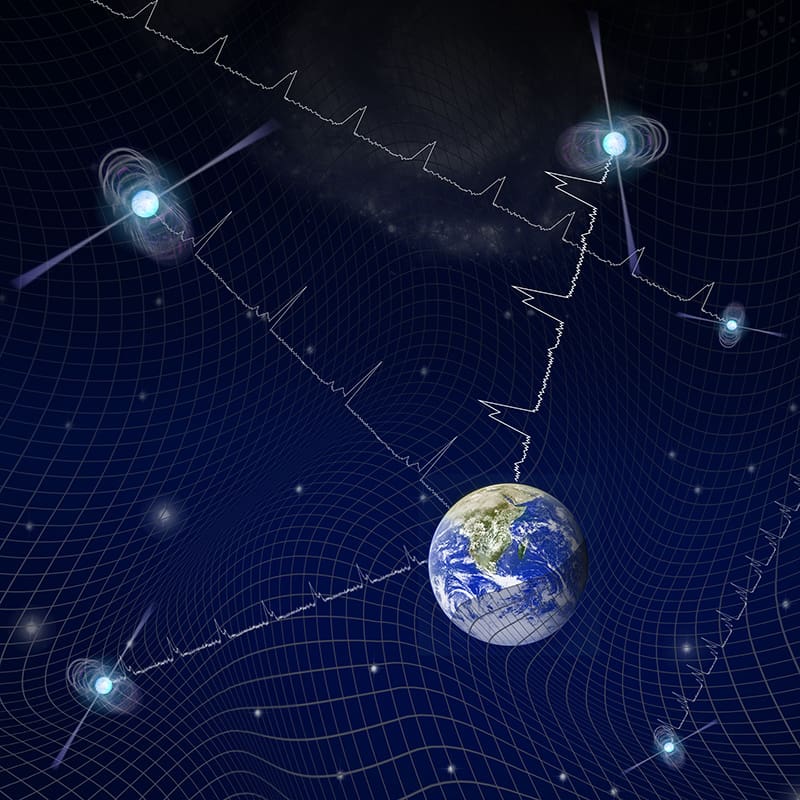
In recent weeks the astrophysics community has been buzzing following the discovery that the universe appears to be filled with a background hum of gravitational waves. Using radio telescopes in the Africa, Asia, Australia, Europe and the US, several teams have noted the same thing: that gravitational waves leave a faint fingerprint in the signals received from pulsars within our galaxy. The discovery is another exciting breakthrough within multimessenger astronomy. In this episode of the Physics World Stories podcast, Andrew Glester explores the implications of the new gravitational wave discovery, announced on June 28 by the NANOGrav collaboration in the US. He is joined by Cherry Ng, an astronomer at the Laboratory of the Physics and Chemistry of the Environment and Space, part of the French National Centre for Scientific Research (CNRS). In the podcast, you will hear about what this gravitational wave signals can reveal about the massive objects triggering them, most likely the merger of supermassive black holes.

Moore’s law in peril and the future of computing
Gordon Moore, the co-founder of Intel who died earlier this year, is famous for forecasting a continuous rise in the density of transistors that we can pack onto semiconductor chips. His eponymous “Moore’s law” still holds true after almost six decades, but further progress is becoming harder and eye-wateringly expensive to sustain. In this episode of the Physics World Stories podcast we look at the practicalities of keeping Moore’s law alive, why it matters, and why physicists have a critical role to play. Right now, one of the key questions is whether computer hardware can keep up with the demands of large language models and other forms of generative AI. There is also concern over whether computing can help tackle today’s complex global challenges without skyrocketing energy demands. New computing paradigms are needed, and optical- and quantum based-computing may have key roles to play, but there are still big question makers over their practical usefulness at scale. Physics Word Stories is presented by Andrew Glester and this month’s podcast guests are: Louis Barson, director of science, innovation and skills at the Institute of Physics (which publishes Physics World) Thomas Ferreira de Lima, a researcher at NEC Labs America Anson Ho, an AI forecasting researcher at Epoch Find out more on this topic in the recent Physics World article ‘Moore’s law: further progress will push hard on the boundaries of physics and economics’.

Will AI chatbots replace physicists?
When discussing the capabilities of the latest AI chatbots, a physicist may argue: “Okay, they’re impressive at regurgitating texts that sound increasingly human. But we physicists don’t have much to worry about. It will be ages before the bots learn to grapple with physical concepts and the creativity required to do real physics!” Such a view is almost certainly misguided. In a recent paper uploaded to arXiv, Colin West from the University of Colorado Boulder reported that the latest version of ChatGPT (built on GPT-4) scored 28 out of 30 on a test designed to assess students’ grasp of basic Newtonian mechanics. The previous version (GPT-3.5) managed just 15 correct answers, and neither version had any explicit programming regarding the laws of physics. Can you imagine the improvement 20 years from now? In the latest episode of the Physics World Stories podcast, Andrew Glester considers how the exponential improvement in GPT (and other large language models) will change the way we teach and practise physics. Should we be excited or scared? Should physics courses ban or embrace the use of AI chatbots? What are the skills that future physics will need? Will physics cease to exist as a discipline in the way we understand it now? These are just some of the existential questions tackled by two guests from the University of Nottingham: Philip Moriarty, a nanotechnology specialist; and Karel Green, an astronomy PhD student and Physics World contributor.

Cosmic generosity: a selfless investment in the future of physics
If you were awarded $3m prize money for your scientific excellence and hard graft, would you give it all away to strangers? That’s what the Northern Irish astrophysicist Dame Jocelyn Bell Burnell did in 2018 after winning the Special Breakthrough Prize in Fundamental Physics for her 1967 discovery of pulsars and her inspiring scientific leadership. She used the cash – topped up with more personal money from a separate prize – to launch the Bell Burnell Graduate Scholarship Fund, which supports PhD students in the UK and Ireland from groups under-represented in physics. In this episode of the Physics World Stories podcast, we look at the impacts the award is already having on the lives of early-career physicists. Our first guest is Helen Gleeson, a liquid crystals and soft matter researcher at the University of Leeds, who is chair of the selection panel for the fund. She talks about the importance of providing opportunities for physics students from non-traditional backgrounds, who may face multiple barriers – both personal and structural within the physics community. https://youtu.be/EigAPYgJo0M Later in the episode, we also hear from a fund awardee. Joanna Sakowska, a PhD student at the University of Surrey, is studying the formation and evolution of the Magellanic Clouds galaxies, while searching for neighbouring ultra-faint dwarf galaxies believed to contain large quantities of dark matter. Sakowska offers inspiring, practical advice to anyone interested in a career in physics, emphasizing the importance of reflecting on your personal achievements, even if self-promotion does not come naturally! Want to know more about the Bell Burnell Graduate Scholarship Fund and how to apply? Listen to the episode or read this recent Physics World article by Helen Gleeson.  
How can we make lithium-ion batteries more sustainable?
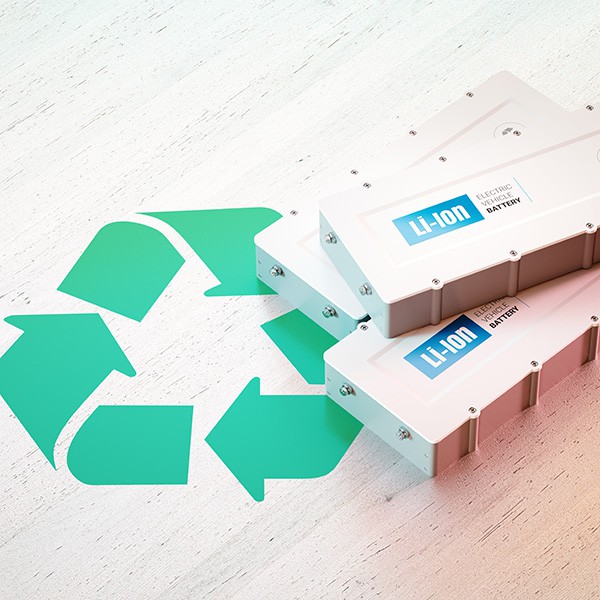
Lithium-ion batteries (LIBs) are set to play a key role in the transition to a decarbonized world. They are one of the principal energy sources for electric vehicles, grid storage and many consumer electronics. As things stand, however, the way that we produce and manage LIBs over their life cycles is far from perfect – bringing environmental, economic and geopolitical concerns. In the latest episode of the Physics World Stories podcast, Andrew Glester looks at how we can make LIBs more sustainable, with a focus on activities in the UK. The first guest is Gavin Harper, a metallurgy researcher at the University of Birmingham, a lead author on a recent LIB roadmap article in JPhys Energy. Harper talks about opportunities for improving LIB waste management and creating circular economies. For instance, batteries can be designed to make it far easier to reuse constituent parts, while smart grids can enable consumers to trade energy between electric cars, houses, and the grid. Harper tackles the big question: is it more environmentally friendly to own an electric car, rather than a conventional fossil fuel-powered vehicle, if you consider the full life cycle? Local lithium supplies Some of the most contentious issues with LIBs relate to lithium mining. Roughly 60% of known lithium reserves are located within the salt flats of Latin America, mostly within the “lithium triangle” of Bolivia, Argentina and Chile. The vast amounts of water needed for extracting lithium from brine deposits can lead to water scarcity, pollution of local soils and water, and disruption of local ecosystems. Meanwhile, China has surged ahead of the world in its capacity for manufacturing LIBs, with Western nations now keen to build up their own knowledge bases and search for local lithium deposits. One intriguing possibility in the UK is to extract lithium directly from geothermal waters near the coast of Cornwall. Ali Salisbury, an exploration geologist at Cornish Lithium, joins the podcast to explain how Cornwall’s unique geology – lying on top of a large, fractured mass of granite containing lithium-rich minerals – is enabling this possibility. Cornish Lithium says the method could have minimal environmental impacts, and the company is also investigating more sustainable forms of hard-rock lithium mining in the same region.
Quantum melodies: the intersection of music and quantum physics
When pioneering musicians such as Kraftwerk and Brian Eno began experimenting with synthesizers and digital samplers in the 1970s, it was considered avant-garde and confined to niche audiences. It didn’t take long, however, for electronic music to explode in popularity, and today computer-produced music is ubiquitous among many genres and styles. This episode of the Physics World Stories podcast looks at a new trend in its nascent stages – music generated by quantum computers. The first guest is science writer Philip Ball, who recently attended an improvised musical performance at the Goethe-Institut in London, an experience he described in this Physics World feature. Ball explains why the interface of quantum mechanics and music is interesting from both a scientific an artistic point of view. Later in the episode, podcast host Andrew Glester is joined by Maria Mannone, a theoretical physicist working on quantum information at the University of Palermo in Italy, who is also a composer. Mannone discusses some of her experiments that incorporate scientific concepts into sound, and you can hear some of the music that emerges. For much more quantum-inspired content, make sure to visit this website again on 14 April for World Quantum Day. During that week, the Physics World Weekly podcast will have a quantum theme and we will share a selection of quantum-related feature articles, interviews and analysis pieces. There will also be a chance to access quantum content and discounted quantum ebooks, shared by IOP Publishing – which publishes Physics World. This episode is sponsored by Pfeiffer Vacuum. The company provides all types of vacuum equipment, including hybrid and magnetically-levitated turbopumps, leak detectors and analysis equipment, as well as vacuum chambers and systems. You can find about Pfeiffer Vacuum’s impact in space research in this video, and explore all its products on the Pfeiffer Vacuum website.  
Finding solace in the stars
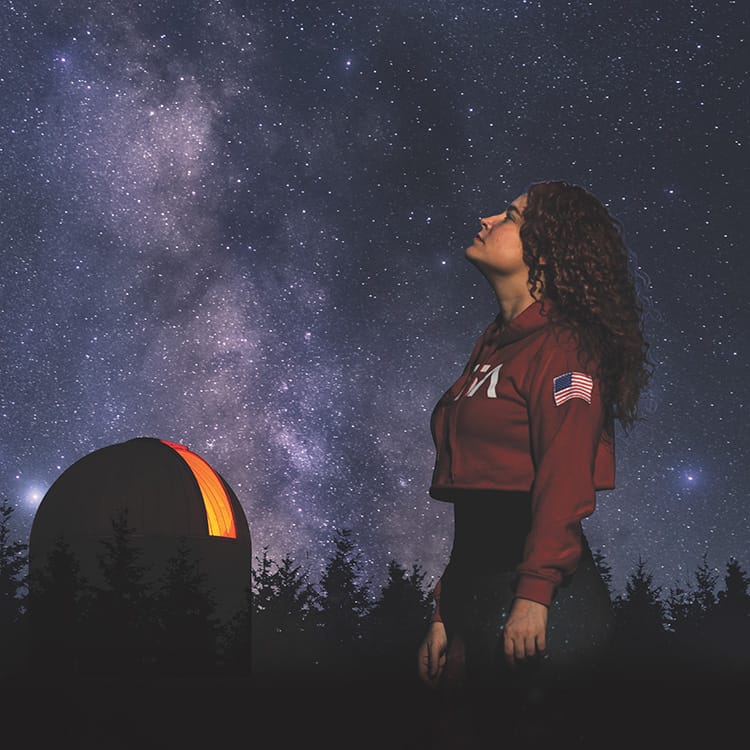
A new film Space, Hope and Charity tells the story of Charity Woodrum, an astrophysicist whose childhood dream of working for NASA was nearly derailed by a personal tragedy. Woodrum is now studying for a doctorate in galaxy quenching at the University of Arizona using data from the James Webb Space Telescope. She joins this episode of the Physics World Stories podcast to speak about finding purpose in academic research, and her gratitude to the colleagues who helped her through the darkest moments. Podcast host Andrew Glester is also joined by the film’s director Sandy Cummings, a broadcast journalist with more than 20 years of experience working for NBC News. Cummings says she is drawn to stories of people facing huge challenges, and the quest for hope and purpose. Space, Hope and Charity aired at this year’s American Astronomical Society annual meeting in Seattle, US. Its official premiere is at the Phoenix Film Festival with three screenings and Q&A sessions over three days, 31 March – 2 April 2023. See the trailer on YouTube.
Making spaceflight accessible to people with physical disabilities
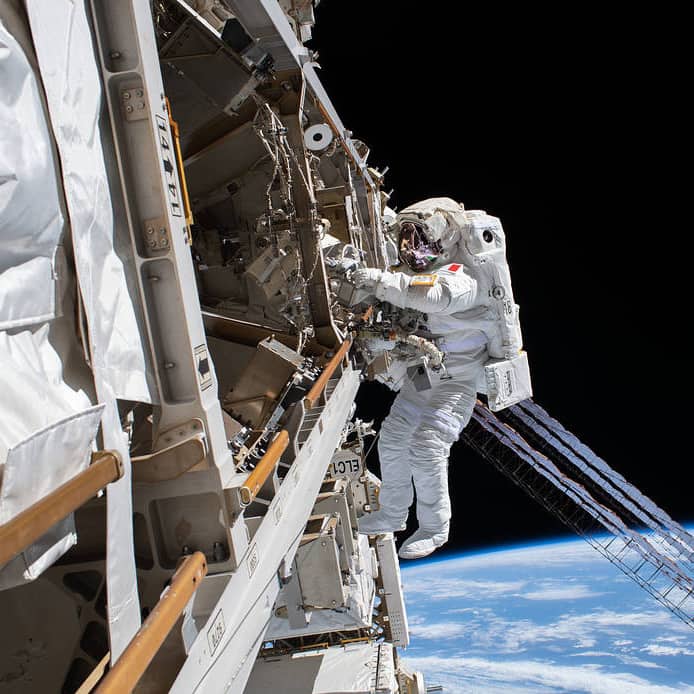
The European Space Agency (ESA) recently made history by selecting John McFall – an amputee, Paralympic sprinter and medical scientist – among its latest cohort of astronauts. McFall’s inclusion is part of an ESA parastronaut feasibility project for making human spaceflight accessible to people with physical disabilities. In the latest episode of the Physics World Stories podcast, people involved in this initiative explain why making space more accessible is not only fair but also the very essence of exploration. The first guest is Mike Miller-Smith, chief executive of Aerobility, a UK-based charity that helps people with any disability to fly planes. Aerobility is being consulted as part of ESA’s feasibility study and the organization will share its experiences in adapting aircraft. “People often say to us: ‘when I’m flying, I’m leaving my disability on the ground’,” Miller-Smith tells podcast host Andrew Glester. Also in the episode you will hear from Irene Di Giulio, an anatomy and biomechanics researcher at King’s College London, whose research group is also part of ESA’s initiative. Di Giulio says that almost everything we currently know about space biomechanics is based on non-disabled people, often with athlete levels of fitness. She says that small adjustments to equipment can make space far more accessible, and certain disabilities may even bring advantages in microgravity environments.

Robin Ince and the joy of popular-science books
Long-term listeners will know that the December episode of Physics World Stories is a celebration of the year’s best popular-science writing. This year, Andrew Glester is joined by comedian and writer Robin Ince, author of the recent book The Importance of Being Interested: Adventures in Scientific Curiosity and host of the longstanding BBC Radio 4 science show The Infinite Monkey Cage, co-presented with the physicist Brian Cox. Ince talks about his circular journey with science: from enjoying it as a child, to feeling disengaged as a young adult, to now building his entire creative output around his fascination with the natural world. In an entertaining conversation, Ince talks about the importance of critical thinking and how he longs for a society that celebrates the beauty of uncertainty. Also in the episode, Physics World editors discuss the following books, reviewed in the latest issue of the magazine: First Dawn: From the Big Bang to Our Future in Space by Roberto Battiston Horizons: a Global History of Science by James Poskett Nomad Century: How to Survive the Climate Upheaval by Gaia Vince
Quantum technology gathers pace
This month’s episode of the Physics World Stories podcast looks in depth at the science behind the 2022 Nobel Prize for Physics and the technologies that are emerging as a result. Alain Aspect, John Clauser and Anton Zeilinger shared this year’s award “for their experiments with entangled photons, establishing the violation of Bell’s inequalities and pioneering quantum information science”. The first guest is Maksym Sich, co-founder and chief executive of Aegiq, a quantum-photonics spin-out company working on the development of secure quantum data communications and quantum photonics. Aegiq, which received a business start-up award from the Institute of Physics in 2021, has developed a high-performance source of indistinguishable single photons on demand. “The one thing that is harder than actually doing quantum mechanics is describing it verbally,” says Sich. The quantum entrepreneur gives it a go anyway and neatly explains how quantum technologies emerging today relate to the pioneering experiments of Aspect, Clauser and Zeilinger. Their work helped to demonstrate that entanglement is indeed a quantum phenomenon rather than a classical one. Later in the episode you will hear from Oscar Kennedy, a quantum engineer from Oxford Quantum Circuits (OQC), a start-up based in Reading, UK. OQC has developed a chip based on superconducting quantum bits “qubits”, which is billed as the UK’s most advanced quantum computer. In addition to explaining his company’s technology innovations, Kennedy also speaks about what it’s like day-to-day working in quantum computing. Spoiler alert: he loves it. “OQC are hiring all sorts of roles that transcend quantum information because we’re building a world-class company. So if anyone wants to join the quantum revolution, we’re always looking,” he says. You can discover much more about some of the themes in this episode by visiting the quantum section of the Physics World website, where you can also sign up to our Quantum bimonthly newsletter.

Is the 2022 FIFA World Cup really carbon neutral?
The 2022 FIFA World Cup is about to kick off in Qatar, with millions of football fans across the planet set to be gripped by sporting drama. But in the years leading up to the event, concerns have been raised over the environmental impact of the seven huge new stadia that have been built in and around Doha for the event. In this episode of Physics World Stories, podcast host Andrew Glester talks to Gilles Dufrasne from the not-for-profit organisation Carbon Market Watch. Dufrasne has co-authored a recent report that questions the claim by FIFA – football’s governing body – that the 2022 World Cup will be a carbon-neutral event. Among other things, Dufrasne discusses why the idea of “transportable stadia” is good in principle but challenging in practice. Given that most sporting events take place at the local level, Glester then catches up with representatives from local sports teams in Physics World‘s home city of Bristol, UK, to learn about their attempts to inspire more sustainable behaviours. Peter Smith from Bristol Sport talks about initiatives at Bristol City Football Club to reduce the environmental impact, which includes redistributing the first team’s excess food to local food banks during home and away matches in the second tier of English football. Later, Xeena Cooper speaks about why she founded the Bristol Dodos, a local cricket team that began life as part of the Extinction Rebellion environmental movement.
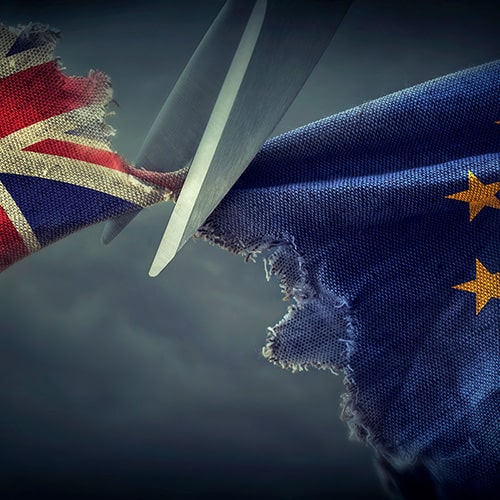
Trouble on the Horizon for UK-based researchers
Researchers in the United Kingdom are facing an uncertain future, due to a political spat about the UK’s participation in Horizon Europe – Europe’s flagship research funding programme. Following Brexit, the UK was set to become an official associate within the scheme, which brings funding and leadership opportunities within European projects. This is now threatened by a political disagreement over trading arrangements in Northern Ireland. In this episode of the Physics World Stories podcast, science communicator Andrew Glester speaks with physical scientists affected by the issue. Rachel Armstrong, an experimental architecture researcher explains why Brexit repercussions led her to relocate from the UK to KU Leuven in Belgium. Medical physicist Karen Kirkby, based at the Christie Hospital in Manchester, explains why failure to associate with Horizon Europe will damage European partnerships developed over years. Glester also catches up with science policy researcher Graeme Reid from University College London, a former engineer who has been advising the UK government on its post-Brexit science strategy. Reid outlines the government’s recently mooted ‘Plan B’, which would involve launching an alternative national funding body. The issue, as Reid explains, is that it would take years to develop, and the UK science community is almost unanimous in its desire to remain associated with Horizon Europe. Find out more about the political debacle around the UK’s status in Horizon Europe in this analysis article by science writer Michael Allen.