
Design Better
262 episodes — Page 4 of 6

S8 Ep 85Tycho: The soundtrack for creative work
Find the episode transcript and show notes on designbetterpodcast.com Our show starts with a little sample of the music that fuels our creative work. Eli’s been listening to Tycho, aka Scott Hansen, since 2006. It just happened to coincide with the first time he took the leap into being a creative entrepreneur, starting his own small design consultancy as well as co-founding a magazine about underwater photography. Tycho’s music was a constant, motivating soundtrack to his work, and it has been for the past 17 years. In our conversation with Scott, we talked about his childhood influences, his enduring nostalgia for the 80s, how graphic design led him to music, and the importance of cultivating attention and observation as a foundation of his creative process. At the end of the episode, we’ll share a post show discussion with takeaways from the conversation and you’ll get to hear Tycho’s new single, Small Sanctuary. You can find all his music at tychomusic.com. Bio Scott Hansen, known professionally as Tycho, is an American musician, record producer, composer, and songwriter based in the San Francisco Bay Area. He is also known as ISO50 for his photographic and design work. *** DB+ is our new premium service that gives you access to ad-free versions of the show released a week early. Subscribers will be invited to AMA (Ask Me Anything) conversations with big names in design and tech from companies like Nike, Netflix, and The New York Times who will field your questions about compelling topics. Early bird subscribers get 50% off for the first three months of DB+. Visit designbetter.plus to learn more and subscribe. *** Visiting the links below is one of the best ways to support our show: American Giant: Makers of the best hoodie on the planet, their clothing is American-made, ethically produced, and built to last. What more could you ask for? Save 20% off your first order with American Giant using our promo code DESIGNBETTER at checkout. dbtr.co/americangiant Factor, America’s #1 Ready-To-Eat Meal Delivery Service, can help you fuel up fast for breakfast, lunch, and dinner with chef-prepared, dietitian-approved ready-to-eat meals delivered straight to your door. You’ll save time, eat well, and stay on track with your healthy lifestyle while tackling all your holiday to-dos. https://factormeals.com/designbetter50 (use code "designbetter50" for 50% off ). Heath Ceramics: We love Heath Ceramics. They're the types of objects you pass on from generation to generation, the kind of gift you bring to a wedding, or the dishes that you'd want to put on a beautiful Thanksgiving table: dbtr.co/heathceramics Methodical Coffee: Roasted, blended, brewed, served and perfected by verified coffee nerds 🤓 : https://methodicalcoffee.com (use code "designbetter" for 10% off of your order). Brain.fm: Music scientifically proven to increase focus. We use it to focus on important work, tap into our creativity, and wind down at night when we need to rest. As a Design Better subscriber, you can take 30% off of your subscription: https://www.brain.fm/designbetter Freehand by InVision: The intelligent whiteboard that's half the price of Miro and Mural: https://freehandapp.com Help us make the show even better by taking a short survey: www.dbtr.co/survey If you're interested in sponsoring the show, please contact us at: [email protected] If you'd like to submit a guest idea, please contact us at: [email protected]

Bonus Episode: Gil Gershoni on Dyslexic Design Thinking
bonusFind the transcript and episode notes here: https://designbetterpodcast.com/p/gil-gershoni#details October is dyslexia awareness month, and we were recently introduced to Gil Gershoni, who is on a mission to help us all recognize dyslexia as a creative superpower. Gershoni runs an influential agency that’s been reshaping brands with the power of dyslexic design thinking for decades. One in five people have dyslexia, and there are many other kinds of neurodivergent thinkers out there. We hope this bonus episode opens your eyes to other modes of creative thinking. Thanks for listening. Books & Links The Dyslexic Advantage The Bigger Picture Book of Dyslexics and the Things They Do Dyslexic Design Thinking Podcast Bio Gil Gershoni is the founder and creative director of Gershoni Creative in San Francisco and Dallas. For more than 25 years, Gil has worked with clients like Google, Apple, Spotify, Deloitte, Patrón, San Francisco Art Institute, BBC and Nike, and he has presented at the Whitney Biennial, Sundance Film Festival, South by Southwest, Vancouver Institute of Media Arts, Contemporary Jewish Museum and San Francisco Design Week. Gil is an advocate for the reframing of dyslexia as a hyper-ability and regularly speaks on neurodiversity’s influence on design thinking. *** Last week we launched DB+, our new premium service that gives you access to ad-free versions of the show released a week early. Subscribers will be invited to AMA (Ask Me Anything) conversations with big names in design and tech from companies like Nike, Netflix, and The New York Times who will field your questions about compelling topics. Early bird subscribers get 50% off for the first three months. Visit designbetter.plus to learn more and subscribe. *** isiting the links below is one of the best ways to support our show: American Giant: Makers of the best hoodie on the planet, their clothing is American-made, ethically produced, and built to last. What more could you ask for? Save 20% off your first order with American Giant using our promo code DESIGNBETTER at checkout. dbtr.co/americangiant Heath Ceramics: We love Heath Ceramics. They're the types of objects you pass on from generation to generation, the kind of gift you bring to a wedding, or the dishes that you'd want to put on a beautiful Thanksgiving table: dbtr.co/heathceramics Methodical Coffee: Roasted, blended, brewed, served and perfected by verified coffee nerds 🤓 : https://methodicalcoffee.com (use code "designbetter" for 10% off of your order). Brain.fm: Music scientifically proven to increase focus. We use it to focus on important work, tap into our creativity, and wind down at night when we need to rest. As a Design Better subscriber, you can take 30% off of your subscription: https://www.brain.fm/designbetter *** Help us make the show even better by taking a short survey: www.dbtr.co/survey If you're interested in sponsoring the show, please contact us at: [email protected] If you'd like to submit a guest idea, please contact us at: [email protected]

S9 Ep 84OK Go: Making the impossible possible
Show notes and transcript: https://designbetterpodcast.com/p/ok-go Not many bands hire Russian pilots to film a Zero-G video on their cosmonaut training plane, known as the “vomit comet”. But those are the kinds of extremes that OK Go will go to in the pursuit of creativity. Tim Nordwind and Damien Kulash, the band’s founders, met at camp as pre-teens in search of a fellow creative nerd, and founded the band in 1998. Over the past 25 years, they’ve created 3 Grammy-nominated music videos, and won Best Music Video for Here It Goes Again. From the perfectly timed explosions filmed in slow-motion for their song The One Moment, to the immensely elaborate Rube Goldberg contraption they created for This Too Shall Pass, OK Go is almost like a performance-art troupe that just happens to be a fantastic rock band. In this episode on the creative process, we talk to Tim and Damian about how they come up with ideas, the macro and micro elements of their creativity, and achieving the impossible. One more thing…last week we launched DB+, our new premium service that gives you access to ad-free versions of the show released a week early. Subscribers will be invited to AMA (Ask Me Anything) conversations with big names in design and tech from companies like Nike, Netflix, and The New York Times who will field your questions about compelling topics. Early bird subscribers get 50% off for the first three months. Visit designbetter.plus to learn more and subscribe. *** Visiting the links below is one of the best ways to support our show: American Giant: Makers of the best hoodie on the planet, their clothing is American-made, ethically produced, and built to last. What more could you ask for? Save 20% off your first order with American Giant using our promo code DESIGNBETTER at checkout. dbtr.co/americangiant Heath Ceramics: We love Heath Ceramics. They're the types of objects you pass on from generation to generation, the kind of gift you bring to a wedding, or the dishes that you'd want to put on a beautiful Thanksgiving table: dbtr.co/heathceramics Methodical Coffee: Roasted, blended, brewed, served and perfected by verified coffee nerds 🤓 : https://methodicalcoffee.com (use code "designbetter" for 10% off of your order). Brain.fm: Music scientifically proven to increase focus. We use it to focus on important work, tap into our creativity, and wind down at night when we need to rest. As a Design Better subscriber, you can take 30% off of your subscription: https://www.brain.fm/designbetter
Announcing something new…
bonusOver the seven years doing the show, we noticed a pattern in those who achieve their career goals fastest—they consciously invest in themselves by building skills and knowledge. And one of the best ways to learn is to have direct access to people who inform and inspire. Today, we’re launching a premium service called DB+ designed to help you learn faster and grow your career. Subscribers to the Power Listener plan get access to episodes ad-free and a week before everyone else for the price of your daily coffee. For folks who want direct access to some of the guests we’ve had on the show and industry experts, we have another tier for Accelerated Learners. Each month, we’ll invite you to AMA (Ask Me Anything) conversations with big names in design and tech from companies like Nike, Netflix, and The New York Times. We’ll dive into topics most relevant to your work to help you learn from those with deep experience. You’ll have a chance to ask questions about UX research, UI design, the creative process, getting ahead in your career, and more. Here are some of our upcoming AMAs: Meredith Black, DesignOps superstar at the New York Times Greg Hoffman, former Chief Marketing Officer at Nike Brad Frost, author of Atomic Design Felix Lee, founder of ADPList If you’re unable to attend, no sweat. You’ll get a private feed of every AMA so you never miss an opportunity to learn. And it’s also affordable. For less than what you’d pay for a sandwich at your local deli, you can become a DB+ Accelerated Learner. Also, entire teams can get access to DB+ too. To learn more, get in touch with us at [email protected]. We love this show, and we’re excited to continue to expand Design Better to feed your passion for design. We want to help you learn more and stay inspired. Subscribing to DB+ is one of the best ways to do that. Early bird subscribers get 50% off for the first three months (until November 17th when the sale ends). Visit designbetter.plus to learn more and subscribe. You’ll also get early access to our interview with one of the most creative bands in the world, OK Go. Thank you so much for your support, and for being a fan of the show. -Eli & Aarron

S9 Ep 83Paula Scher: Pentagram legend on design, persuasion & embracing mistakes
Aarron first met Paula Scher as a grad student in Philadelphia. He worked at the Temple University gallery and was hanging an exhibition of her posters when they first spoke about her work. He didn’t know at the time how significant her influence on graphic design was, but her work made an impression on him. Paula’s work and kinetic typography sits in the canon of graphic design history. Described as the “master conjurer of the instantly familiar,” Scher straddles the line between pop culture and fine art in her work. She’s been a partner at Pentagram since 1991 where she has led the redesign of numerous major brands including Citi and Tiffany & Co. One other fun story from the show…we learn the real backstory behind the Citibank logo that Paula created, and the story isn’t the same one you’ll find if you Google it. This is the second episode of our series on design history, to be followed by interviews with legendary designers like Jonathan Hoefler, design curators like Paola Antonelli, and design historians like Barry Katz. After the interview, stay tuned for another special conversation with Heath Ceramics, which was founded by Edith Heath in the 1940s and played a major role in defining the mid-century modern aesthetic. Learn about the origins of Heath Ceramics and bring the history home with a special discount that we'll share at the end of the conversation. Heath Ceramics is one of our sponsors for this series on design history. Bring Heath home and take 15% off your online order using code “DesignBetter” between now and October 31st.Heath Ceramics is one of our sponsors for this series on design history. Bring Heath home and take 15% off your online order using code “DesignBetter” between now and October 31st. *** Visiting the links below is one of the best ways to support our show: Heath Ceramics: We love Heath Ceramics. They're the types of objects you pass on from generation to generation, the kind of gift you bring to a wedding, or the dishes that you'd want to put on a beautiful Thanksgiving table. You can support our show, bring Heath home and take 15% off your online order using code “DesignBetter” between now and October 31st: dbtr.co/heathceramics American Giant: Makers of the best hoodie on the planet, their clothing is American-made, ethically produced, and built to last. What more could you ask for? Save 20% off your first order with American Giant using our promo code DESIGNBETTER at checkout. dbtr.co/americangiant Methodical Coffee: Roasted, blended, brewed, served and perfected by verified coffee nerds 🤓 : https://methodicalcoffee.com (use code "designbetter" for 10% off of your order). Brain.fm: Music scientifically proven to increase focus. We use it to focus on important work, tap into our creativity, and wind down at night when we need to rest. As a Design Better subscriber, you can take 30% off of your subscription: https://www.brain.fm/designbetter Freehand by InVision: The intelligent whiteboard that's half the price of Miro and Mural: https://freehandapp.com *** Help us make the show even better by taking a short survey: www.dbtr.co/survey If you're interested in sponsoring the show, please contact us at: [email protected] If you'd like to submit a guest idea, please contact us at: [email protected]

Bonus Episode: Matt D Smith from Shift Nudge on the elements of a great user interface
bonusShow notes and transcript: https://designbetterpodcast.com/p/bonus-episode-matt-d-smith#details We’ve got a special bonus episode for you today. Matt D. Smith, better known as MDS, is the founder of Shift Nudge, and he has a mission to lead a new generation of interface designers to build the digital products of the future. Matt’s courses on Shift Nudge have helped thousands of students at top companies like Apple, Figma, Lyft, Slack, and more, learn the visual skills of interface design, even when they didn’t start with a design background. In today’s episode, we talk about the elements of a great UI, typography, color theory, and where people often go wrong in UI design. One more thing before we get to the show. Design Better listeners can get access to 3 free lessons from shift nudge for a limited time. Just go to shiftnudge.com/designbetter to get free access. Bio Matt D Smith earned his BFA in Graphic Design from UGA in 2005 and has specialized in interface design ever since. He’s led projects around the world, served as an adjunct design professor, guest lectured at Harvard, and taught workshops at conferences all over the US. *** Visiting the links below is one of the best ways to support our show: Heath Ceramics: We love Heath Ceramics. They're the types of objects you pass on from generation to generation, the kind of gift you bring to a wedding, or the dishes that you'd want to put on a beautiful Thanksgiving table. You can support our show, bring Heath home and take 15% off your online order using code “DesignBetter” between now and October 31st: dbtr.co/heathceramics American Giant: Makers of the best hoodie on the planet, their clothing is American-made, ethically produced, and built to last. What more could you ask for? Save 20% off your first order with American Giant using our promo code DESIGNBETTER at checkout. dbtr.co/americangiant Methodical Coffee: Roasted, blended, brewed, served and perfected by verified coffee nerds 🤓 : https://methodicalcoffee.com/ (use code "designbetter" for 10% off of your order). Brain.fm: Music scientifically proven to increase focus. We use it to focus on important work, tap into our creativity, and wind down at night when we need to rest. As a Design Better subscriber, you can take 30% off of your subscription: https://www.brain.fm/designbetter Freehand by InVision: The intelligent whiteboard that's half the price of Miro and Mural: https://freehandapp.com/ *** Help us make the show even better by taking a short survey: www.dbtr.co/survey If you're interested in sponsoring the show, please contact us at: [email protected] If you'd like to submit a guest idea, please contact us at: [email protected]
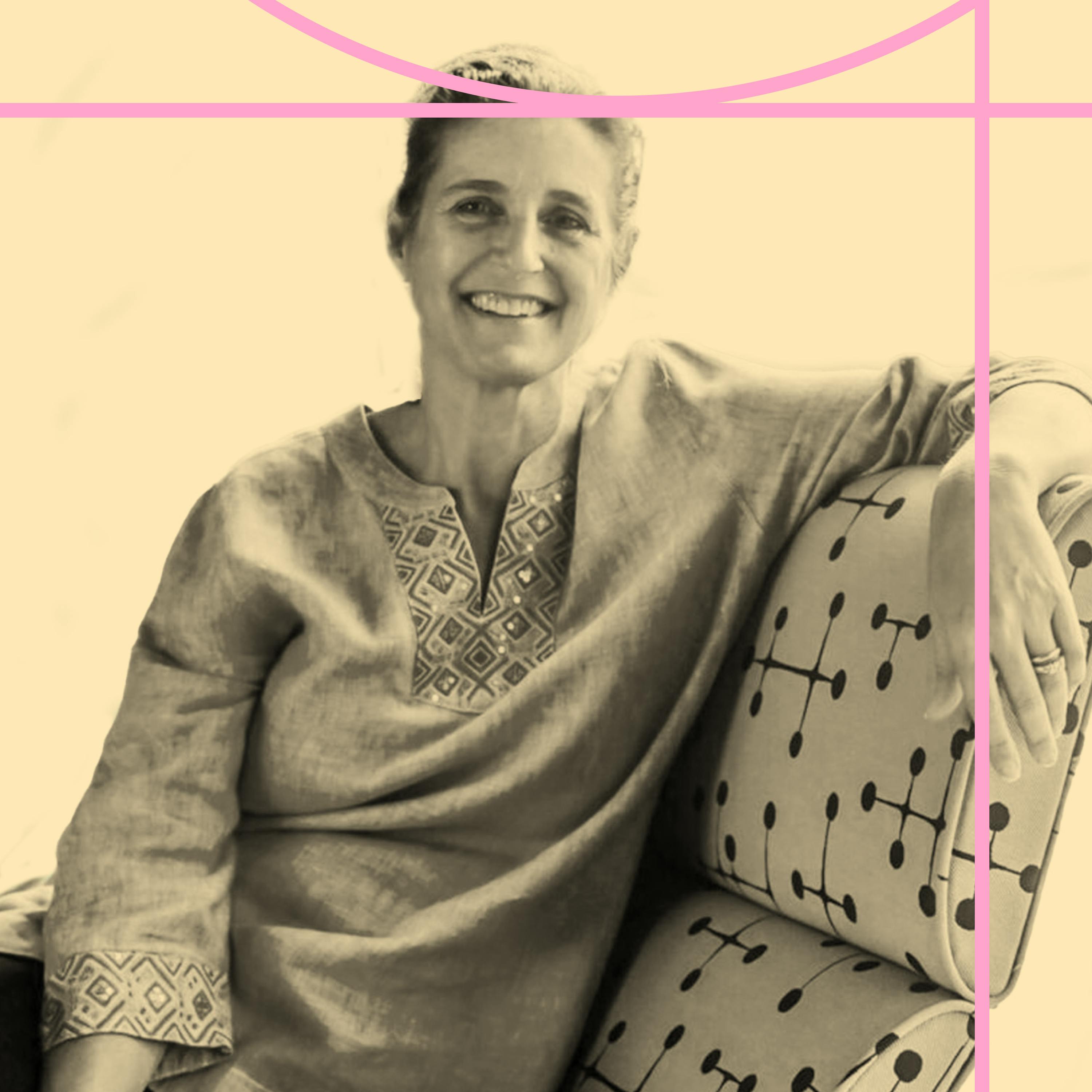
S9 Ep 82Llisa Demetrios: Ray and Charles Eames's granddaughter on their legacy and influence on mid century modern design
Show notes and transcript: https://designbetterpodcast.com/p/llisa-demetrios#details Mid century modern design aesthetics are enduring and as relevant today as ever. Perhaps no designers influenced those philosophies more than Charles and Ray Eames whose body of work transcends media and is still being produced today. It’s hard not to think of the Eames’ as monolithic design heroes, but today we’re taking a different look at them as human beings. We’re talking with Llisa Demetrios, Chief Curator of the Eames Institute and the granddaughter of Charles and Ray. In this interview, we get to know some of the personal stories behind the legendary designers, from how they met, to Llisa’s experience having two of the most creative grandparents a child could wish for. This is the first episode of our series on design history, to be followed by interviews with legendary designers like Paula Scher and Jonathan Hoefler, design curators like Paola Antonelli, and design historians like Barry Katz. After the interview, stay tuned for a special conversation with Heath Ceramics, founded by Edith Heath in the 1940s and which played a major role in defining the mid-century modern aesthetic. Learn about the origins of Heath Ceramics and bring the history home with a special discount that we'll share at the end of the conversation. Heath Ceramics is one of our sponsors for this series on design history. Bring Heath home and take 15% off your online order using code “DesignBetter” between now and October 31st. Bio Llisa Demetrios is the Chief Curator for the Eames Institute, a non-profit 501(c)(3) public charity that aims to equip everyone with the lessons of Ray and Charles Eames, so that anyone can solve problems through design. Llisa has also been a bronze sculptor for over twenty years. She makes mainly in bronze material sculptures for contemplative retreats set in homes, private gardens and corporate spaces. Additionally, Llisa has worked as an archivist for both the Eames Office and MOMA. Please visit the links below to help support our show: Methodical Coffee: Roasted, blended, brewed, served and perfected by verified coffee nerds 🤓 : https://methodicalcoffee.com/ (use code "designbetter" for 10% off of your order). Brain.fm: Music scientifically proven to increase focus. We use it to focus on important work, tap into our creativity, and wind down at night when we need to rest. As a Design Better subscriber, you can take 30% off of your subscription: https://www.brain.fm/designbetter Freehand by InVision: The intelligent whiteboard that's half the price of Miro and Mural: https://freehandapp.com/ Help us make the show even better by taking a short survey: www.dbtr.co/survey If you're interested in sponsoring the show, please contact us at: [email protected] If you'd like to submit a guest idea, please contact us at: [email protected]
Bonus Episode: Bayard Winthrop, CEO of American Giant
bonusHey everybody, we have a special bonus episode for you today. We're having a conversation with Bayard Winthrop, the founder and CEO of American Giant, one of our favorite clothing companies. This episode is all about the intersection of design and entrepreneurship. Designers often hear that they need to develop business acumen: they need to know how a business works, and how a product makes money. And Bayard shares some of those insights here in our conversation. This episode is different in one other way: it's our very first sponsored episode. We want to occasionally bring you stories from brands that we love, who share our values, and who we feel have something to teach us about design. Why we love American Giant American Giant’s mission is threefold: to make clothing that stands apart, grow jobs for people who need them, and revitalize local communities. They also care deeply about sustainability, and makes clothes that are durable, not disposable. Bayard speaks in depth about their mission in this episode, and it’s one of the reasons we love the brand. Another reason is the clothing itself. Sometimes being a designer can be painful, because we pay attention to all the details: we check into a hotel room and the faucet doesn't work right, or the light switch is in the wrong place, or they don't have space in the closet for your luggage. So when we encounter a company like American Giant— where it’s clear that every little detail from the zippers to the stitching has been cared for immensely—it’s something that we want to bring into our lives. We love everything about American Giant, and we know you will too. Their clothing is American-made, ethically produced, and built to last. What more could you ask for? We’ve got a special partnership running with American Giant, where Design Better listeners can get 20% off your first order. Just go to dbtr.co/americangiant and use the code “DESIGNBETTER” at checkout.

S9 Ep 81Ed Catmull: Creative lessons from Lucasfilm to Pixar and beyond
Welcome to our second Design Better episode on the creative process. You may not know Ed Catmull’s name, but there’s almost no doubt you’re familiar with his work. As the co-founder of Pixar, he’s responsible for helping to create movies ranging from the original Toy Story on through The Incredibles, Wall-E, Moana, and Inside Out. Ed has a background in computer science, and as someone who pioneered many of the computer graphics and digital animation techniques that we now take for granted, he has a unique perspective on the intersection of technology and creativity. We chat with Ed about his transition from creating things himself, to leading creative teams; the elements of a sustainable creative culture, and how to give people feedback so they’ll actually listen to you. Ed also collaborated with Steve Jobs longer than probably anyone else who knew him—for over 30 years—and we hear some stories that haven’t been told anywhere else. One more quick thing before we go: we have some amazing guests lined up for our upcoming AMAs, like Judy Wert Debbie Millman, which are filling up quickly. Go to our events page and you can register for free. Show notes: https://designbetterpodcast.com/p/ed-catmull-the-journey-from-lucasfilm#details Bio Dr. Ed Catmull is co-founder of Pixar Animation Studios and the former president of Pixar, Walt Disney Animation Studios, and Disneytoon Studios. For over twenty-five years, Pixar has dominated the world of animation, producing #1 box office hits that include iconic works such as Toy Story, Frozen, Cars, and The Incredibles. Pixar’s works have grossed more than $14 billion at the worldwide box office, and won twenty-three Academy Awards®, 10 Golden Globes Awards, and 11 Grammys, among countless other achievements. Dr. Ed Catmull’s book Creativity, Inc.—co-written with journalist Amy Wallace and years in the making—is a distillation of the ideas and management principles he has used to develop a creative culture. A book for managers who want to encourage a growth mindset and lead their employees to new heights, it also grants readers an all-access trip into the nerve center of Pixar Animation Studios—into the meetings, postmortems, and “Braintrust” sessions where some of the most successful films in history have been made. Dr. Catmull has been honored with five Academy Awards®, including an Oscar of Lifetime Achievement for his technical contributions and leadership in the field of computer graphics for the motion picture industry. He also has been awarded the Turing Award by the world’s largest society of computing professionals, the Association for Computing Machinery, for his work on three-dimensional computer graphics. Please visit the links below to help support our show: Methodical Coffee: Roasted, blended, brewed, served and perfected by verified coffee nerds 🤓 : https://methodicalcoffee.com/products/design-better-coffee (use code "designbetter" for 10% off of your order). Brain.fm: Music scientifically proven to increase focus. We use it to focus on important work, tap into our creativity, and wind down at night when we need to rest. As a Design Better subscriber, you can take 30% off of your subscription: https://www.brain.fm/designbetter
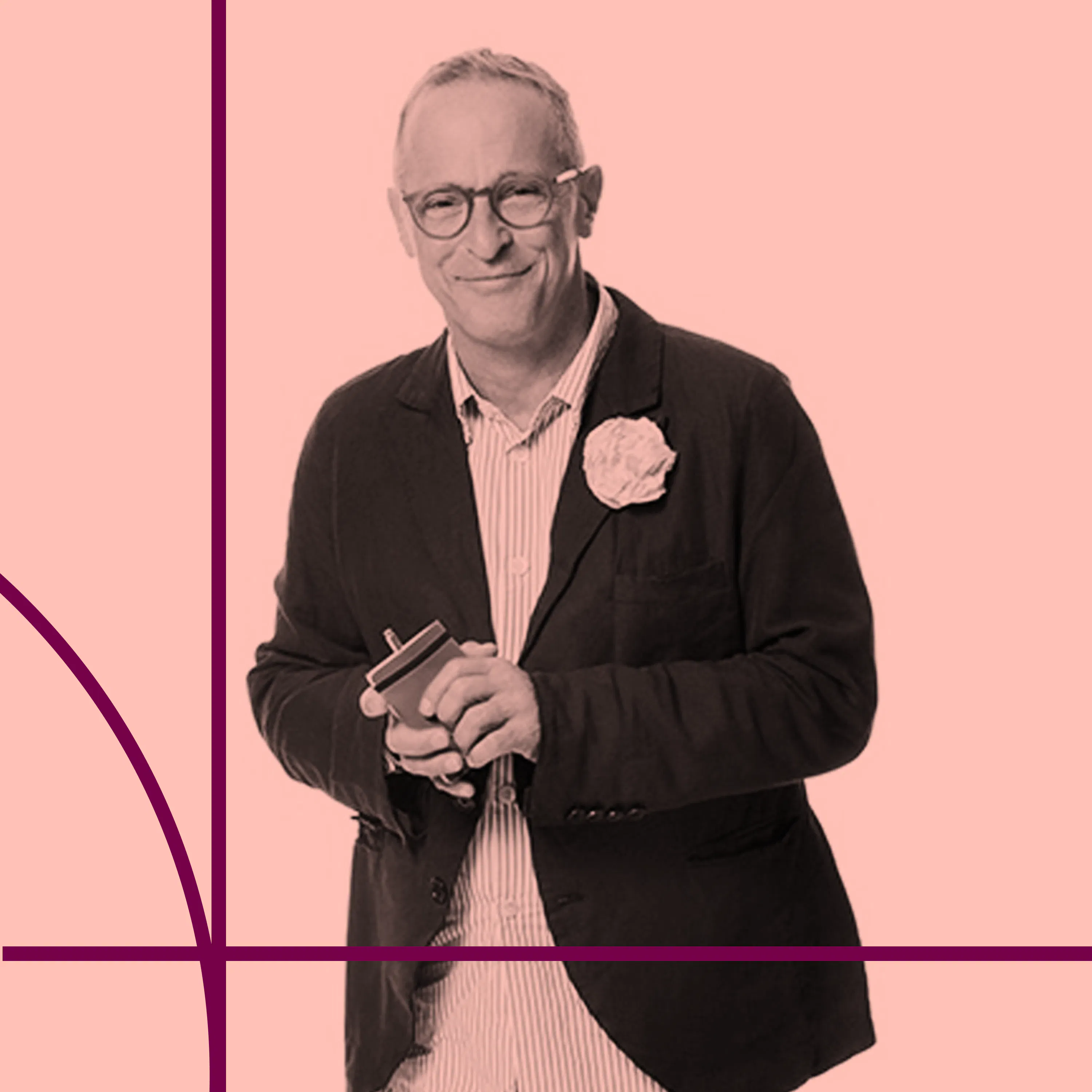
S9 Ep 80David Sedaris: How observation and prototyping shapes his work
EWelcome to the first episode in our Design Better series on the creative process. In this series, we’re going beyond the confines of design to speak with some of the most creative people in the world, to learn how they approach collaboration, come up with innovative ideas, and overcome creative obstacles. We’ll speak with guests like Ed Catmull, co-founder of Pixar; Autumn Durald Arkapaw, cinematographer for Loki and Wakanda Forever, and OK Go, one of the most creative bands in the world right now. Before we get there though, we have a very special guest for you. You may have first heard of David Sedaris from his annual reading of The Santaland Diaries on National Public Radio in the U.S., a story that chronicles his misadventures as Crumpet the holiday elf, and has been a holiday tradition for over 30 years. Or, if you’re like us, you may have gotten to know him from some of his early books like Naked. And if you don’t know David Sedaris, you’re in for a real treat. We chat with David about his acute powers of observation, how he prototypes his essays in front of live audiences, and whether fear exists in his creative process. One quick announcement before we get started. We’re continuing to explore new ways to help you learn, grow your career, hone your craft, and get inspired here at Design Better. As part of that, we’d like to invite you to 3 free AMAs (“Ask Me Anything”) with some amazing experts: First, on September 21st, Dan Mall, founder of Design System University, who’s helped companies ranging from Eventbrite, to Nike, to United Airlines, develop and deploy sustainable design systems will share what he’s learned to help designers get the respect they deserve while scaling digital products sustainable. Next, on September 28th, Judy Wert, co-founder of Wert & Co, who has been guiding the careers of top designers through ups and downs in the job market, will join us for an open discussion where you can ask questions, get career guidance, and gain perspective on the challenging design and tech job landscape. Finally, on October 4th, Debbie Millman, host of Design Matters —the first podcast about design, and one of the longest running shows in the world—will be with us and you’ll have a chance to ask one of the best interviewers in the world what inspires her and what she’s learned about creativity over the course of her career. For more details and to sign up for free to each AMA, go to dbtr.co/AMA2023. Bio David Sedaris is the author of Barrel Fever and Holidays on Ice, as well as collections of personal essays, Naked, Me Talk Pretty One Day, Dress Your Family in Corduroy and Denim, When You Are Engulfed in Flames, and his most recent book, Let’s Explore Diabetes with Owls, each of which became an immediate bestseller. Please visit the links below to help support our show: Methodical Coffee: Roasted, blended, brewed, served and perfected by verified coffee nerds 🤓 : https://methodicalcoffee.com/ (use code "designbetter" for 10% off of your order). Brain.fm: Music scientifically proven to increase focus. We use it to focus on important work, tap into our creativity, and wind down at night when we need to rest. As a Design Better subscriber, you can take 30% off of your subscription: https://www.brain.fm/designbetter Freehand by InVision: The intelligent whiteboard that's half the price of Miro and Mural: https://freehandapp.com/ Help us make the show even better by taking a short survey: www.dbtr.co/survey If you're interested in sponsoring the show, please contact us at: [email protected] If you'd like to submit a guest idea, please contact us at: [email protected]

Design Better Trailer
trailerDesign Better co-hosts Eli Woolery and Aarron Walter explore the intersection of design, technology, and the creative process through conversations with inspiring guests across many creative fields. Whether you’re design curious or a design pro, Design Better is guaranteed to inspire and inform. Episodes are released semi-weekly. Vanity Fair calls Design Better, “sharp, to the point, and full of incredibly valuable information for anyone looking to better understand how to build a more innovative world.”

Design Better's New Adventure: Exciting changes to the show
bonusWe recently hit our 100th episode, and we have a big announcement to share. If you haven't already subscribed to our Substack at https://designbetterpodcast.com/ head over there so you can stay up to day with all the latest episodes, as well as our free newsletter. Thank you for your support!

Bonus Episode with Don Norman: Panel discussion on designing a better world
Show notes: https://designbetterpodcast.com/p/bonus-episode-with-don-norman-panel In this special bonus episode, renowned scholar and author Don Norman (The Design of Everyday Things, Design for a Better World) leads a discussion with recognized design leaders about how design can and should play a role in solving the biggest challenges of humanity today. This conversation was recorded at a live online event August 17, 2023 produced by the UX Design Institute. Panelists who participated in the conversation with Don Norman include Brenda Laurel (researcher, writer, and consultant), Irene Au (Design partner at Khosla Ventures and former Design Better guest), and our own Aarron Walter. Gareth Dunlop is the MC of the event.In this hour-long conversation the panelists discuss: The role of design in understanding and navigating our current socio-economic challenges How to think about design and UX as humanity-centered versus human-centered How to harness the power of design in creating a better future for all of us Learn more about the UX Design Institute, the gold standard in UX education at: https://www.uxdesigninstitute.com/ Get Don Norman’s new book Designing for a Better World at: https://mitpress.mit.edu/9780262047951/design-for-a-better-world/
S8 Ep 79Ole Lütjens: The story behind the Disney+ launch
ESubscribe for free to our show on Substack to receive episodes a week early, bonus content like post-show discussions, and more: https://designbetterpodcast.com/ Show notes: https://designbetterpodcast.com/p/ole-lutjens-evidence-based-design What was it like to lead product design at Disney through the creation of Disney+, one of its biggest launches in the digital age? And how did a designer from Germany become a design leader for Major League Baseball, when he knew almost nothing about the sport? We talk to Ole Lütjens, former VP of Product Design at Disney, about the arc of his career, from his early days in the electronic music scene through his roles at MLB Advanced Media, Hulu and Disney. We also talk about evidence-based design, the Nemawashi method, and why designer storytelling can be too fast. Bio Ole Lütjens is a design executive with over 25 years of experience building and leading product design teams. He was formerly the Vice President of Product Design at Disney Streaming where he oversaw UX for Disney+, Hulu and Star+. Throughout his career, he’s been generating and implementing new ideas about the design and technology of content interaction. He’s interested in new models of experience and storytelling and has been fortunate to work with thought leaders in diverse industries on the cutting edge of technology since the 90s. This episode is brought to you by: Methodical Coffee: Roasted, blended, brewed, served and perfected by verified coffee nerds 🤓 : https://methodicalcoffee.com/ (use code "designbetter" for 10% off of your order). Freehand by InVision: The intelligent whiteboard that's half the price of Miro and Mural: https://freehandapp.com/ Help us make the show even better by taking a short survey: www.dbtr.co/survey If you're interested in sponsoring the show, please contact us at: [email protected] If you'd like to submit a guest idea, please contact us at: [email protected]
S8 Ep 78Georg Petschnigg: Product design and storytelling at The New York Times
Subscribe to the Design Better Podcast on Substack to get episodes a week early and other bonus content: https://designbetterpodcast.com/ Show notes: https://designbetterpodcast.com/p/georg-petschnigg-product-design-and#details *** The New York Times has gone through many challenges and evolutions during its storied history. Founded in 1851—when it was called the New-York Daily Times—it faced draft riots during the Civil War, received the first telegraph transmission from a naval battle in 1904, and was involved in libel suits in the 1960’s that helped establish freedom of the press through the US Supreme Court But it’s within the past 25 years or so that the “Newspaper of Record” has undergone some of its most radical transformations: shifting much of its focus away from the printed page to the web and app ecosystem, and expanding into food with NYT Cooking, consumer product reviews with The Wirecutter, and podcasts with The Daily. Today we chat with Georg Petschnigg, SVP of Product Design at the New York Times, about what it takes to balance the tension between the rich legacy of the Times with the rapidly evolving digital landscape. We also talk about designing across products and platforms for a more unified experience, creating a tight coupling between design and engineering, and what the future holds for news products in a world where AI and ML can facilitate content creation but also manufacture deception. Before we get to the show, we wanted to let you know about a cool project that our friend Felix Lee started called ADPList. If you’re early in your career, or if you’re in the midst of a transition, you might want to connect with top-notch professionals in design. Well, now you can now tap into the knowledge and wisdom of some of the most prominent figures in the design industry. And best of all, it's completely free! ADPList is a community platform on a mission to democratize mentorship for all, with over 16,000 verified mentors contributing worldwide; opening up an entire world of possibilities for mentorship and networking. Join ADPList today—for free—and accelerate your career growth. Visit https://dbtr.co/adplist Bio Georg Petschnigg is an executive, entrepreneur, and product leader. He feels most comfortable at the intersection of design, technology, and business. He currently serves as Head of Product Design at The New York Times. Throughout his career, he’s created products that changed how people work, create, and see the world. He believes technology needs to serve the human need to create. Georg co-founded FiftyThree in 2011 and served as CEO until WeTransfer’s acquisition in 2018. FiftyThree are the makers of Paper®, the fast and beautiful productivity app for getting ideas down, Paste® the fastest way for teams to share and gather around their ideas, and Pencil, the award-winning stylus. Internationally recognized for design excellence and innovation, they’ve received awards from Apple, IDSA, Communication Arts, and IxDA. FiftyThree’s products reach more than 30 Million creative thinkers worldwide and defined mobile creativity. This episode is brought to you by: Methodical Coffee: Roasted, blended, brewed, served and perfected by verified coffee nerds 🤓 : https://methodicalcoffee.com/ (use code "designbetter" for 10% off of your order). Help us make the show even better by taking a short survey: www.dbtr.co/survey If you're interested in sponsoring the show, please contact us at: [email protected] If you'd like to submit a guest idea, please contact us at: [email protected] Links Georg Petschnigg on Design Matters by Debbie Millman

Eileen Fisher, Rewind: How design principles and systems guide a clothing company
bonusShow notes: https://designbetterpodcast.com/p/rewind-eileen-fisher-embracing-imperfect Hi Folks- We hope that everyone is enjoying their summer so far. We’re taking a few weeks off to be with our families, and to prepare for an exciting announcement that we plan to share soon. In the meantime, we’re rewinding to one of our favorite episodes with Eileen Fisher, founder of her eponymous fashion brand Eileen Fisher, Inc. Enjoy the episode, and we’ll see you in a few weeks. You can subscribe to our Substack to receive episodes a week early, our monthly newsletter with job opportunities and career advice, and more bonus content: https://designbetterpodcast.com/ We’d also like to give a huge thank you and shout-out to our sponsors so far this season. Please help us continue to bring you great guests by visiting the links below: Fable: Build inclusive products: https://makeitfable.com/designbetter/ Methodical Coffee: Roasted, blended, brewed, served and perfected by verified coffee nerds 🤓 : https://methodicalcoffee.com/ (use code "designbetter" for 10% off of your order). Freehand by InVision: The intelligent whiteboard that's half the price of Miro and Mural: https://freehandapp.com/ Cruise: Cruise is a team of researchers and designers creating a self-driving transportation service for the people and cities we love. Visit design.getcruise.com to learn more about how you can help design the future of transportation! In his book The Laws of Simplicity, John Maeda says that “simplicity is about subtracting the obvious, and adding the meaningful.” Our final guest this season, Eileen Fisher, is a master at making the simple, meaningful. Eileen is the founder of her eponymous and iconic fashion brand Eileen Fisher, Inc., which is known for its ethical & sustainable practices, and elegant yet simple clothing. She started the company in 1984, and grew it from her first sale of $3000, to annual revenue of over $300 million. We speak with Eileen about her design principles, how she thinks about form, function, and sustainability, and how systems thinking has helped her develop a brand that stands the test of time. We’re so glad you joined us for the sixth season of our show, and hope you were inspired along the way. Stay tuned for the next season, and in the meantime, we’ll be sharing some of our best episodes from past seasons, in case you missed them. Thanks for listening. Bio Eileen Fisher founded her women's fashion brand in 1984, with $350 of startup money. It's since grown into a company with over 1200 employees and hundreds of millions of dollars a year in revenue. The company focuses on producing simple, timeless clothing, with sustainability initiatives including selling used pieces in excellent condition, resold through their Renew take-back program, as well as a Waste No More program which transforms damaged clothes into a new felted fabric, used to create wall hangings, pillows, and other accessories.
S8 Ep 77Donna Lichaw: The leader’s journey
Show notes: https://designbetterpodcast.com/p/donna-lichaw-the-leaders-journey “Management is a job, whereas leadership is a quality you have to earn,” as we learned way back in Episode 21 from our guest Julie Zhuo. Today, we’re diving deeper into the topic of leadership with Donna Lichaw, author of the new book The Leader's Journey: Transforming Your Leadership To Achieve the Extraordinary Donna is also the author of The User's Journey: Storymapping Products That People Love. We chat with Donna about why leadership often gets conflated with management, how to find your own narrative, and why your product isn’t the hero. One more thing before we get to the show: our newsletter this month is going to feature a new column by Margaret Lee, who founded the UX Community & Culture program for Google's global User Experience organization, and who is now an executive and leadership coach. If you’re looking for solid leadership advice from someone who’s been in the trenches, subscribe at designbetterpodcast.com so you get the newsletter when it comes out later this month. Thanks for subscribing, and for listening. Bio Donna Lichaw is an executive coach, keynote speaker, and author of the bestselling books, The User’s Journey and much-awaited follow-up, The Leader’s Journey. She helps high-growth startup CEOs, tech executives, and senior leadership teams scale their leadership so that they can amplify their business growth and make a positive impact in the world. Before coaching, she was a product leader and consultant working with some of the most successful companies on the planet. What she found was that teams would bring her in to help solve product problems…and that their biggest challenges were actually people problems that could be easily solved with a little bit of design thinking, psychology, and ingenuity. This episode is brought to you by: Fable: Build inclusive products: https://makeitfable.com/designbetter/ Methodical Coffee: Roasted, blended, brewed, served and perfected by verified coffee nerds: https://methodicalcoffee.com/ (use code "designbetter" for 10% off of your order). Freehand by InVision: The intelligent whiteboard that's half the price of Miro and Mural: https://freehandapp.com/ Help us make the show even better by taking a short survey: www.dbtr.co/survey If you're interested in sponsoring the show, please contact us at: [email protected] If you'd like to submit a guest idea, please contact us at: [email protected] Links SCARF: Status, Certainty, Autonomy, Relatedness, Fairness The Coddling of the American Mind: How Good Intentions and Bad Ideas Are Setting Up a Generation for Failure by Greg Lukianoff and Jonathan Haidt
S8 Ep 76Robert Brunner: The design giant who hired Jony Ive
Show notes: https://designbetterpodcast.com/p/robert-brunner-where-art-and-commerce Our guest today, Robert Brunner, once joked that his tombstone will say: “Here lies the guy who hired Jonathan Ive.” But there’s much more to Robert than that. He did indeed build out the industrial design team at Apple in the 90’s, but he’s also been a partner at Pentagram Design, and was the chief designer of Beats by Dr. Dre, a brand that sold to Apple for $3 billion dollars. We talk with Robert about the arc of his career, what it takes to run a successful design consulting business, and why great products are more about ideas than objects. Before we get to the episode, we’ve got something new to share. We just released the first issue of our monthly newsletter. It includes a guest post from April Luelling, former Senior Product Design Recruiter and Program Manager at Meta, who shares tips on working with recruiters as well as current job openings in the design world. We also share highlights from some of our recent interviews, and links to interesting tools and summer reads. You can subscribe for free to the newsletter, and also get the podcast a week early, at designbetterpodcast.com. Thanks for subscribing, and for listening. Bio Robert Brunner is an industrial design leader with broad experience in consumer electronics, personal computers, communications, and appliance industries. He was the co-founder of Lunar Design and former Director of Industrial Design at Apple Computer. Robert was also a Partner at Pentagram Design in San Francisco, after which he formed Ammunition LLC, a product design and brand development group in San Francisco, CA. He co-authored the book Do you matter? How great design will make people love your company, published by Financial Times Press. This episode is brought to you by: Fable: Build inclusive products: https://makeitfable.com/designbetter/ Methodical Coffee: Roasted, blended, brewed, served and perfected by verified coffee nerds: https://methodicalcoffee.com/ (use code "designbetter" for 10% off of your order). Cruise: Cruise is a team of researchers and designers creating a self-driving transportation service for the people and cities we love. Visit design.getcruise.com to learn more about how you can help design the future of transportation! Freehand by InVision: The intelligent whiteboard that's half the price of Miro and Mural: https://freehandapp.com/ Help us make the show even better by taking a short survey: www.dbtr.co/survey If you're interested in sponsoring the show, please contact us at: [email protected] If you'd like to submit a guest idea, please contact us at: [email protected] Links Rethinking Everyday Things - Robert Brunner keynote How Design Drives The World's Best Companies w/ Robert Brunner | Chase Jarvis LIVE Do You Matter? Robert Brunner, Stewart Emery, Russ Hall
S8 Ep 75John Maeda: AI + Design
Show notes: https://designbetterpodcast.com/p/john-maeda-ai-design Today we welcome back John Maeda, who is currently Vice President of Design and Artificial Intelligence at Microsoft. You’re probably familiar with John’s work, but if not, take a listen to Episode 42 of this show, where he talks about the arc of his remarkable career. In today’s episode, we talk with John about his role at Microsoft, what’s most misunderstood about AI, and his optimistic take on what the future holds for designers who embrace these new tools. One more thing before we get to the show…if you can take a moment to leave us a review on Apple Podcasts, or rate the show on Spotify, that will help us reach new people. Go ahead and hit the pause button right now and leave your review, we’ll wait for you. 😉 Thank you for listening, and thanks for your support. Bio John Maeda is an American technologist, designer, engineer, artist, investor, author, and teacher. He is currently the VP of Design and Artificial Intelligence at Microsoft. He’s the author of five books including a gentle intro to AI/ML "How To Speak Machine (Penguin)" and the "Laws of Simplicity (MIT Press)." John is represented in the permanent collections of the Museum of Modern Art, NYC, and the Cartier Foundation, Paris. He’s the first recipient of the White House’s National Design Award for algorithmically-generated visualizations informed by data. Maeda serves on the Board of Sonos and the Cooper Hewitt Smithsonian Design Museum. He has held positions with Automattic, the parent company of WordPress.com; the venture capital firm Kleiner Perkins; served as president of the Rhode Island School of Design; and began his early career at the MIT Media Lab at the intersection of computer science and visual art. Named as one of the “75 Most Influential People of the 21st Century” by Esquire, Maeda draws on his diverse background as an MIT-trained engineer, award-winning designer, and MBA-community translator to bring people and ideas together at scale. *** This episode is brought to you by: Fable: Build inclusive products: https://makeitfable.com/designbetter/ Methodical Coffee: Roasted, blended, brewed, served and perfected by verified coffee nerds: https://methodicalcoffee.com/ (use code "designbetter" for 10% off of your order). Freehand by InVision: The intelligent whiteboard that's half the price of Miro and Mural: https://freehandapp.com/ Help us make the show even better by taking a short survey: www.dbtr.co/survey If you're interested in sponsoring the show, please contact us at: [email protected] If you'd like to submit a guest idea, please contact us at: [email protected]

S8 Ep 74Sheena Iyengar: Decision making and innovation myths
Show notes: https://designbetterpodcast.com/p/sheena-iyengar-choose-to-think-bigger We may not think about it all that often, but the choices that we make often end up defining who we become. Dr. Sheena Iyengar, the S.T. Lee Professor of Business at the Columbia Business School, makes the psychology of choice and decision-making the focus of much of her research. She wrote a best-selling book called The Art of Choosing, and just published a new book called Think Bigger. We talk about Sheena’s new book, and dive into why decision-making has become a focus of her career. We also have a lively discussion about design thinking and its shortcomings, and talk about some of the myths associated with innovation. Join our Substack to get access to episodes a week early, post-show discussions, and other bonus content: https://thecuriositydepartment.substack.com/ Bio Sheena S. Iyengar is the S.T. Lee Professor of Business at the Columbia Business School. She graduated with a B.S. in Economics from the Wharton School of the University of Pennsylvania and received her Ph.D. in Social Psychology from Stanford University. Dr. Iyengar’s research focuses on the psychology of choice and decision-making, addressing how humans face challenges in a world where they are inundated with options. She has also tackled issues in the business world through the lenses of network analysis and diversity-inspired ideation. She studies the processes used by both groups and individuals in making choices to see how we can improve on innovation, problem-solving, and leveraging business relationships. Dr. Iyengar currently sits on the board of the Asian University for Women and is looking to expand her work on further board opportunities. She is also a member of the Ashinaga Kenjin-Tatsujin International Advisory Council. She is a blind, first-generation Indian-American who lives in New York City. *** This episode is brought to you by: Fable: Build inclusive products: https://makeitfable.com/designbetter/ Freehand by InVision: The intelligent whiteboard that's half the price of Miro and Mural: https://freehandapp.com/ Methodical Coffee: Roasted, blended, brewed, served and perfected by verified coffee nerds: https://methodicalcoffee.com/ (use code "designbetter" for 10% off of your order). Help us make the show even better by taking a short survey: www.dbtr.co/survey If you're interested in sponsoring the show, please contact us at: [email protected] If you'd like to submit a guest idea, please contact us at: [email protected]
S8 Ep 73Matt Mullenweg: WordPress, AI, and jazz
Show notes: https://designbetterpodcast.com/p/matt-mullenweg-wordpress-ai-and-jazz Matt Mullenweg started out as a jazz saxophonist, and went on to create WordPress, which is the platform behind an astonishing 42% of the websites in the world. We chat with Matt about his journey from musician to developer to entrepreneur, his perspective on distributed work, and his thoughts on the transformative capabilities of the latest generation of Generative Artificial Intelligence. We also come back to Matt’s roots in jazz and his continued love for music and musicians. Get the show transcript, bonus content, and access to episodes a week early on our Substack: https://thecuriositydepartment.substack.com/ Bio (via Wikipedia) Matthew Mullenweg is an American entrepreneur and web developer living in Houston. He is known for developing and founding the free and open-source web software WordPress, and its parent company Automattic. After dropping out of the University of Houston, he worked at CNET Networks from 2004 to 2006 until he quit and founded Automattic, an internet company whose brands include WordPress.com, Akismet, Gravatar, VaultPress, IntenseDebate, Crowdsignal, and Tumblr. *** Help us make the show even better by taking a short survey: www.dbtr.co/survey If you're interested in sponsoring the show, please contact us at: [email protected] If you'd like to submit a guest idea, please contact us at: [email protected] *** This episode is brought to you by: Fable: Build inclusive products: https://makeitfable.com/designbetter/ Freehand by InVision: The intelligent whiteboard that's half the price of Miro and Mural: https://freehandapp.com/ Methodical Coffee: Roasted, blended, brewed, served and perfected by verified coffee nerds: https://methodicalcoffee.com/ (use code "designbetter" for 10% off of your order). Cruise: We’re a team of researchers and designers creating a self-driving transportation service for the people and cities we love. Visit design.getcruise.com to learn more about how you can help design the future of transportation!

S8 Ep 72Kevin Bethune: Innovation lessons from a nuclear engineer turned Air Jordan designer
Show notes: https://designbetterpodcast.com/p/kevin-bethune-reimagining-design Not many people can say they’ve gone from being a nuclear engineer to helping design Air Jordans at Nike. But that’s part of Kevin Bethune’s story, and today we chat with him about his journey from engineering to design. Kevin also published a best-selling book last year called Reimagining Design: Unlocking Strategic Innovation. We talk about what he hoped to learn from writing the book, and discuss a critique of design thinking, the role of rigor in creativity, and the rewards and challenges of working with multidisciplinary teams. Bio Kevin Bethune is a Design and innovation executive leader serving, scaling and leading creative teams as large as 30+ nationwide, and influencing global teams as large as 70+ in the definition of design functional excellence and innovation best practices while respecting local differences. He’s also an entrepreneur and founder of dreams • design + life, a “think tank” combining strategic design and industrial design to address human-centric and holistic opportunities to solve latent needs across industries that benefit from integrated physical, digital and service-oriented experiences. Kevin is a globally recognized speaker who’s given talks at TED, DMI, IDSA, AIGA, MIT, Northwestern, Carnegie Mellon, Notre Dame, ArtCenter, Lucerne, Nike, BCG and Google Design. * Help us make the show even better by taking a short survey: www.dbtr.co/survey If you're interested in sponsoring the show, please contact us at: [email protected] If you'd like to submit a guest idea, please contact us at: [email protected] * This episode is brought to you by: Fable: Build inclusive products: https://makeitfable.com/designbetter/ Freehand by InVision: The intelligent whiteboard that's half the price of Miro and Mural: https://freehandapp.com/ Methodical Coffee: Roasted, blended, brewed, served and perfected by verified coffee nerds: https://methodicalcoffee.com/ (use code "designbetter" for 10% off of your order). Athletic Greens: Build a foundation for better health: http://athleticgreens.com/designbetter

S8 Ep 71Tony Fadell: iPhone inventor on how to build the future
EShow notes: https://designbetterpodcast.com/p/tony-fadell-how-to-build-the-future For many of us, being the co-creator of two of the most transformative products of the early 21st century—the iPod and iPhone—would be enough for one career. But Tony Fadell was just getting started. After his time at Apple, Tony went on to start Nest Labs, known for its smart home products like thermostats and fire alarms, which sold to Google for over 3 billion dollars. He’s authored more than 300 patents, and with his newest venture, the Build Collective, he’s investing time and money to help engineers and scientists build a greener world. He’s also written a book about what he’s learned over the years called Build. In this interview, we chat with him about what some of his early failures taught him, why the best teams are multigenerational, and how to deal with the different types of—for lack of a better word—a*holes you might encounter in your career. Bio Tony Fadell started his 30+ year Silicon Valley career at General Magic, the most influential startup nobody has ever heard of. Then he went on to make the iPod and iPhone, start Nest and create the Nest Learning Thermostat. Throughout his career Tony has authored more than 300 patents. He now leads the investment and advisory firm Build Collective, which invests its money and time to help engineers and scientists build a greener world, in which every person enjoys a longer, richer life. * Help us make the show even better by taking a short survey: www.dbtr.co/survey If you're interested in sponsoring the show, please contact us at: [email protected] If you'd like to submit a guest idea, please contact us at: [email protected] * This episode is brought to you by: Fable: Build inclusive products: https://makeitfable.com/designbetter/ Freehand by InVision: The intelligent whiteboard that's half the price of Miro and Mural: https://freehandapp.com/ Methodical Coffee: Roasted, blended, brewed, served and perfected by verified coffee nerds: https://methodicalcoffee.com/ (use code "designbetter" for 10% off of your order). Athletic Greens: Build a foundation for better health: http://athleticgreens.com/designbetter

S8 Ep 70Judy and Daniel Wert: Surviving the tech layoffs
Show notes: https://designbetterpodcast.com/p/judy-and-daniel-wert-challenging It’s a challenging time in tech right now. Chances are, if you haven’t been directly affected by the layoffs, you know someone—or many people—who have. In today’s episode, we’re welcoming back Judy Wert, along with her son and colleague Daniel. At their executive search firm Wert & Co, they’ve guided many leaders through navigating career changes. We discuss the layoffs, and strategies for dealing with changes in your own career when the environment is as difficult as it is right now. We’ll also discuss what skills you need to cultivate as an individual contributor if you want to advance your career, and the ins-and-outs of transparency when it comes to salary policies. Thanks for joining us, and we hope it’s helpful wherever you are in your career. Bios Judy WertJudy has been working with the leadership of innovative companies for over 25 years. She has earned an international reputation as a pivotal force in executive search. A trusted authority in the world of design and business, Judy is also known for bringing an added dimension to her work—a humanistic approach—fostering deep relationships through empathy, intuition, and curiosity. Daniel WertWith an intimate understanding of venture-backed start-ups, Daniel has developed expertise in recruiting at scale, executive search, and in the people operations that hold businesses together. He has spent the last decade in-house, building companies, managing cross-functional teams, and coaching executive leaders to better understand the value of both people and design.

S7 Ep 69Tina Seelig: Constraints drive creativity
Show notes: https://designbetterpodcast.com/p/tina-seelig-constraints-drive-creativity What is the difference between creativity and innovation? What does it take to find your superpowers? How can you become open to embracing failure to learn and grow? Tina Seelig, Executive Director of the Knight-Hennessy Scholars program at Stanford, has spent a large part of her career answering questions like these, while studying and teaching creativity, leadership, and entrepreneurship. Tina has a PhD in neuroscience, and we speak with her about how her background influences the way that she approaches these topics. We also discuss how to approach creativity in a corporate environment, and why being a good listener is an underrated superpower that many of us can cultivate. Bio Dr. Tina Seelig is Executive Director of Knight-Hennessy Scholars and Emeritus Director of the Stanford Technology Ventures Program at Stanford School of Engineering. She teaches courses on leadership, creativity, innovation, and entrepreneurship at the Hasso Plattner Institute of Design (d.school) at Stanford. In 2014, Dr. Seelig was honored with the SVForum Visionary Award, and in 2009 she received the Gordon Prize from the National Academy of Engineering, recognizing her as a national leader in engineering education. She also received the 2014 MS&E Award for Graduate Teaching, the 2008 National Olympus Innovation Award, and the 2005 and 2019 Stanford Tau Beta Pi Award for Excellence in Undergraduate Teaching. Dr. Seelig earned her Ph.D. from Stanford University Medical School in 1985 where she studied Neuroscience. She has worked as a management consultant for Booz, Allen, and Hamilton, as a multimedia producer at Compaq Computer Corporation, and was the founder of a multimedia company called BookBrowser. She has written 17 popular science books and educational games. Her books include The Epicurean Laboratory and Incredible Edible Science, published by Scientific American; and a series of twelve games called Games for Your Brain, published by Chronicle Books. Her three newest books, published by HarperCollins are What I Wish I Knew When I Was 20, inGenius, and Creativity Rules.

S7 Ep 68Meredith Black: DesignOps has become essential
Show notes: https://designbetterpodcast.com/p/meredith-black-a-new-era-of-designops Design Operations, or “Design Ops,” is entering a new era. No longer the new kid on the block, it’s becoming a required discipline in many design organizations. We wanted to catch up to see where design ops is now, so who better to chat with than Meredith Black, a guest from our second season back in 2018. After leaving Pinterest, where she was head of Design Operations, Meredith co-founded the DesignOps Assembly, which focuses on fostering community, offering educational opportunities, sharing resources, and generating best practices within the DesignOps Industry. We chat with Meredith about what’s changed with design ops in the past four years, the skills that a person needs to be successful in a design ops role, and what she’s hoping to accomplish with the DesignOps Assembly. Bio Meredith Black is the co-founder of DesignOps Assembly and now a consultant working with companies worldwide to implement DesignOps within their organizations. Prior, Meredith spent five years at Pinterest, where she started and grew the DesignOps team into an internationally renowned team while also being instrumental in growing and building the Pinterest Product Design Team. You can listen to her discuss DesignOps on an earlier episode of the Design Better Podcast, or check out “The DesignOps Handbook.” Meredith is also the co-host of the Reconsidering Podcast, along with our very own Aarron Walter.

S7 Ep 67Greg Hoffman: Nike CMO on the role of emotion in design
Show notes: https://designbetterpodcast.com/p/greg-hoffman There is probably no better training ground than Nike to learn about creativity as a team sport, and Greg Hoffman, former Chief Marketing Officer of Nike, shares this lesson—along with many other valuable insights—in his new book, Emotion by Design. In this episode, we chat with Greg about how his childhood shaped the way he thinks about creativity and collaboration, how working in inspiring spaces can influence your work (and how you might accomplish that in a remote environment), and about curiosity as a catalyst for creativity. Bio Greg Hoffman is a global brand leader, former NIKE Chief Marketing Officer, and founder and principal of the brand advisory group Modern Arena. For over 27 years, Greg held marketing, design, and innovation leadership roles at NIKE, including time as the brand’s CMO. In his most recent role as NIKE’s Vice President of Global Brand Innovation, he led teams tasked with envisioning the future of storytelling and consumer experiences for the brand. Greg oversaw NIKE’s brand communications and experiences as NIKE was solidifying its position as one of the preeminent brand storytellers of the modern era and the leading innovator in digital and physical brand experiences. His role in the rise of marketing and design through that period was recognized in 2015 when Fast Company named him one of the Most Creative People in Business. He’s also been recognized for his transformative leadership in the industry through the Business Insider’s 50 Most Innovative CMO’s and AdAge’s Power Players annual lists. For over two decades, he was a major strategic and creative influence for Nike at every major global sporting event, for the launches of NIKE’s signature products and innovations, and for the building of the brands of its athletes. Through his leadership, Nike drove themes of equality, sustainability, and empowerment through sport in some of its most significant brand communications. That work was, in part, driven by his role on the Advisory Board of the NIKE Black Employee Network and as a member of the NIKE Foundation Board of Directors. Today as founder and principal of Modern Arena, Greg advises Fortune 1000 brands, startups, and nonprofits in creating brand strength, business growth, and social impact. He sits on the advisory boards of the brands Shred Adventures and AO-Air and is a board member for Summit Impact, the philanthropic arm of Summit Series. In addition, he is the Branding instructor at the University of Oregon's Lundquist College of Business and the Innovation Chair of the Board of Trustees for the Minneapolis College of Art and Design. In 2022, Greg brings all of his brand experience to the world through his new book Emotion by Design: Creative Leadership Lessons From a Life at Nike.

S7 Ep 66Felecia Hatcher: Black Ambition CEO on entrepreneurship and working with Pharrell Williams
Show notes: https://designbetterpodcast.com/p/felicia-hatcher Often it’s the little things, and not the flashy technology or slick user interface that make a product or experience memorable. The handwritten note from customer service, or the humorous quote that pops up as you’re waiting for a screen to load. Our guest today, Felecia Hatcher, calls these “moments of enchantment,” and she advocates for more opportunities for a human touch, as artificial intelligence and machine learning push us in the opposite direction. Felecia is the CEO of Black Ambition, an organization founded by Pharrell Williams that works towards closing the opportunity and wealth gap through entrepreneurship. Prior to her current role, she was Chief Popsicle and co-owner of Feverish Ice Cream, and was Co-Founder & Executive Director of the Center for Black Innovation. In our conversation, we talk about the perpetual growth and achievement across her career, what she learned bootstrapping her ice cream business from her parent’s backyard to Fortune 500 clients, and how her entrepreneurial experiences shape the way she advises and mentors students and entrepreneurs. Bio Felecia Hatcher is on a mission to rid communities of innovation deserts by working with community leaders and government officials to create inclusive and diverse tech/startup ecosystems as the Co-Founder of Code Fever, Black Tech Week and Tribe Cowork and Urban Innovation Lab. Hatcher has raised over 3 million dollars to support Code Fever's work which sits at the intersection of economic development and inclusive innovation. As an Author, Social Entrepreneur and the former Chief Popsicle of Feverish Ice Cream, Hatcher was named one of the Empact 100 Top 100 Entrepreneurs under the age of 30 by the White House and Kauffman Foundation in 2011, a 2014 White House Champion of Change for STEM Access and Diversity, Ruth Shack Honoree, 2017 Comcast/Nationswell Tech Impact Allstar, a Black Enterprise 2017 TechConnext Game Changer and 2016 Innovator of the Week, Essence Magazine Tech Master, and featured on the NBC Today Show, MSNBC, FORBES, INC, The Cooking Channel, & Grio’s 100 African American’s Making History.

Seth Godin, Rewind: Learning to take risks, be generous, and make a ruckus
bonusShow notes: https://designbetterpodcast.com/p/seth-godin If you don’t know who Seth Godin is, just type “Seth” into Google or DuckDuckGo. The first entry will lead you to his blog, where he writes—every day—about marketing, design, writing, how being a better human will make you better at your job. Once you’ve started to read his blog, you’ll probably be hungry for more of his wisdom. He’s written over eighteen bestselling books on business and marketing, including Linchpin, Purple Cow, and The Dip. We’ve been following Seth for a long time, and his writing and speaking have influenced how we think about creating and marketing products. So it was a huge honor to have him on our show, where we spoke about subjects ranging from how to take risks in your career, to why being creative is an act of generosity, to the idea of “creative destruction.” We hope you enjoy our conversation with Seth as much as we did, and after you finish, we encourage you to go make a ruckus. Takeaways: Why the counterintuitive idea of “surplus” means that, despite everything going on in the world, we all have access to more resources than the last King of France did. Why writing is often the best starting point for almost any type of creative work. Why a company is more like an organism than an organization Bio Seth is an entrepreneur, best-selling author, speaker and teacher. In addition to launching one of the most popular blogs in the world, he has written 19 best-selling books, including The Dip, Linchpin, Purple Cow, Tribes, and What To Do When It's Your Turn (And It's Always Your Turn). His most recent book, This is Marketing, was an instant bestseller in countries around the world. Though renowned for his writing and speaking, Seth also founded two companies, Squidoo and Yoyodyne (acquired by Yahoo!). By focusing on everything from effective marketing and leadership, to the spread of ideas and changing everything, Seth has been able to motivate and inspire countless people around the world. In 2013, Seth was one of just three professionals inducted into the Direct Marketing Hall of Fame. In an astonishing turn of events, in May 2018, he was inducted into the Marketing Hall of Fame as well. He might be the only person in both. Seth created the altMBA and Marketing Seminar to transform online education and help people connect with their audience.

S7 Ep 65Dr. Sian Proctor: SpaceX astronaut on imposter syndrome
Show notes: https://designbetterpodcast.com/p/sian-proctor If you’re looking for an inspiring human being, it would be hard to beat Dr. Sian Proctor. Dr. Proctor is a geoscientist, and also an artist and poet who uses her afro-futurist space art to encourage conversations about women of color in the space industry. For 21 years, she taught geology, sustainability, and planetary science. She also happens to be an astronaut(!), and was the mission pilot for the Inspiration4 all-civilian orbital mission to space. Her call sign “Leo” was eaned from her crewmates, who consider her a modern-day Rennaisance woman in the mold of Leonardo DaVinci. This special episode of the Design Better Podcast was recorded at an internal event for InVision, where we brought Dr.Proctor in to speak to our team. After her inspiring presentation, we had the chance to interview her, and we spoke about topics ranging from imposter syndrome, to learning to speak the language of your collaborators, to the natural synthesis between art and science. Bio Dr. Proctor is a geoscientist, explorer, space artist, and astronaut. She is the mission pilot for the Inspiration4 all-civilian orbital mission to space. She is also one of The Explorer’s Club 50: Fifty People Changing the World. Her motto is called Space2inspire where she encourages people to use their unique, one-of-a-kind strengths, and passion to inspire those within their reach and beyond. She believes that we need to actively strive for a J.E.D.I. space: a just, equitable, diverse, and inclusive space as we advance human spaceflight. Dr. Proctor spent 21 years as a professor teaching geology, sustainability, and planetary science at South Mountain Community College, Phoenix, Arizona. She is currently the Open Educations Resource Coordinator for the Maricopa Community College District. She has a B.S. in Environmental Science, an M.S. in Geology, and a Ph.D. in Curriculum and Instruction: Science Education. She recently finished a sabbatical at Arizona State University’s Center for Education Through Exploration creating virtual field trips. She did her 2012-13 sabbatical at the Federal Emergency Management Agency’s (FEMA) Emergency Management Institute developing their science of disasters curriculum. She has appeared in multiple international science shows and is currently on A World Without NASA and Strange Evidence. You can follow her on social media @DrSianProctor.
S7 Ep 64Katrina Alcorn: IBM’s head of design on why partnerships are essential
Show notes: https://designbetterpodcast.com/p/katrina-alcorn If you lead a team of over 700 people, what skills would you need to bring to the table to help them collaborate effectively? In today’s episode, we chat with Katrina Alcorn, General Manager of Design at IBM, about how she develops partnerships across her organization to resolve conflicts and get aligned. We also talk to Katrina about the challenges that large teams face in remote and hybrid environments, how her training in journalism influences her work as a leader, and what she learned about living a balanced life from writing her book Maxed Out: American Moms on the Brink. Bio Katrina Alcorn spent the first decade+ of her career as a consultant, leading strategic design and research initiatives for startups, non-profits, and Fortune 500s in a variety of industries including financial services, medical devices, energy, e-commerce, the arts, and education. In 2015 she went “in-house” and learned what it means to be a change-maker from the inside. Katrina built two successful design practices, the first at Hot Studio (bought by Facebook in 2013) and the second at Autodesk, centralizing all digital design and research functions, leading to major improvements in e-commerce sales and customer satisfaction.

S7 Ep 63Nir Eyal: How to be indistractable
Show notes: https://designbetterpodcast.com/p/nir-eyal You’re sitting at your desk, trying to do some deep work—finishing up a presentation, writing some code, sketching out a new interface—and you hear a noise. It’s the familiar knock of Slack, or the chime of your e-mail inbox. All of a sudden, you’re taken away from a state of flow and into an attempt to multi-task, which is the enemy of getting things done. By some estimates, distractions cost the US economy more than $650 billion dollars a year in lost productivity. And Nir Eyal, bestselling author of the book Hooked, may have been the inspiration behind some of the most habit-forming products out there. But he also has another book, Indistractable, which can give you the tools to avoid distractions both at work and at home. In this episode, we chat with Nir about what got him interested in the intersection of technology and psychology, how we as consumers can have a better relationship with habit-forming products, and how he—as a parent— thinks about kids and technology. Bio Nir Eyal writes, consults, and teaches about the intersection of psychology, technology, and business. Nir previously taught as a Lecturer in Marketing at the Stanford Graduate School of Business and the Hasso Plattner Institute of Design at Stanford. Nir co-founded and sold two tech companies since 2003 and was dubbed by The M.I.T. Technology Review as, “The Prophet of Habit-Forming Technology.” Bloomberg Businessweek wrote, “Nir Eyal is the habits guy. Want to understand how to get app users to come back again and again? Then Eyal is your man.” He is the author of two bestselling books, Hooked: How to Build Habit-Forming Products and Indistractable: How to Control Your Attention and Choose Your Life. Indistractable received critical acclaim, winning the Outstanding Works of Literature Award as well as being named one of the Best Business and Leadership Books of the Year by Amazon and one of the Best Personal Development Books of the Year by Audible. The Globe and Mail called Indistractable, “the best business book of 2019.” In addition to blogging at NirAndFar.com, Nir’s writing has been featured in The New York Times, The Harvard Business Review, Time Magazine, and Psychology Today. Nir invests in habit-forming products that improve users’ lives. Some of his past investments include Eventbrite (NYSE:EB), Anchor.fm (acquired by Spotify), Kahoot! (KAHOOT-ME.OL), Canva, Homelight, Product Hunt, Marco Polo, Byte Foods, FocusMate, Dynamicare, Wise App, and Cutback Coach. Nir attended The Stanford Graduate School of Business and Emory University.

S7 Ep 62Detria Williamson: IDEO CMO on making collaboration more inclusive
Show notes: https://designbetterpodcast.com/p/detria-williamson In an interview with the Wall Street Journal last year, Detria Williamson, former Chief Marketing Officer of IDEO, said that “diversity can be engineered and inclusion cannot.” In this episode, we dive deeper into that statement, and also ask Detria what roadblocks she encountered over the course of her career—from working as a head of marketing in Dubai, to her most recent role at IDEO. We also ask her about what it means when design becomes commoditized, and how remote and hybrid work impact inclusivity. Bio Detria Williamson is an internationally recognized digital marketer, who for over 20 years has helped category-leading companies become experience-led and content-driven. Informed by her experiences living and working from the U.S., London, Singapore, and the Middle East, she created the ICX (inclusive customer experience) approach, enabling visionary leaders to embrace inclusivity as an end-to-end element of their business ecosystem.

S7 Ep 61Guy Kawasaki: Lessons from Apple's early days
EShow notes: https://designbetterpodcast.com/p/guy-kawasaki Guy Kawasaki has certainly had a remarkable career. From gaining popularity as the Chief Evangelist at Apple for the Macintosh computer in the 1980’s, to authoring fifteen books, to hosting the Remarkable People podcast, Guy has made a habit of trying new things During our conversation with Guy, we talk about why it’s important to be able to make a sale, no matter what your role is. We discuss the start of his career at Apple, and how he got developers to write software for a relatively unknown platform. And we ask his advice for people just getting started in their own careers, whether that’s in tech, writing, or entrepreneurship.

John Cleese, Rewind: Monty Python's cheerful guide to creativity
bonusShow notes: https://designbetterpodcast.com/p/john-cleese The Ministry of Silly Walks. The Cheese Shop. French Taunting. If you haven’t seen any of these Monty Python sketches before, do us a favor and go watch one or two of them. You’ll discover—or re-discover—why our guest for this episode is a creative comic legend. John Cleese starred in and co-wrote the award-winning series Fawlty Towers, was nominated for an Academy Award for the screenplay of A Fish Called Wanda, and even has a species of lemur named after him (Cleese’s wooly lemur, Avahi cleesei). He’s also an expert on the creative process, and so if you’re looking for a new framework to level-up your own workflow, his book Creativity: A Short and Cheerful Guide is a great resource. We talk with John about his new book, and also about creative collaboration in the midst of friction, how to be comfortable with ambiguity, and creating boundaries of space and time to get in a creative mode. We also get to ask him a question that’s been bugging us ever since we first watched Monty Python and The Holy Grail. After everything that happened in 2020, we can all use a little more laughter in our lives. We hope our interview with John sparks some joy, and leaves you with some new creative tools. Thanks for listening. Takeaways: How John’s childhood influences the way he approaches creativity Why John uses writing to explore ideas What “closed mode” and “open mode” are (and how they relate to convergent and divergent modes of thinking). Bio John Cleese is an English actor, comedian, writer, and film producer. He achieved success at the Edinburgh Festival Fringe and as a scriptwriter and performer on The Frost Report. In the late 1960s, he co-founded Monty Python, the comedy troupe responsible for the sketch show Monty Python's Flying Circus and the four Monty Python films, And Now for Something Completely Different, Monty Python and the Holy Grail, Life of Brian, and The Meaning of Life. In the mid-1970s, Cleese and his first wife, Connie Booth, co-wrote and starred in the British sitcom Fawlty Towers. Later, he co-starred with Kevin Kline, Jamie Lee Curtis, and former Python colleague Michael Palin in A Fish Called Wanda and Fierce Creatures. He also starred in Clockwise, and has appeared in many other films, including two James Bond films, two Harry Potter films, and the last three Shrek films. He is also the author of Creativity: A Short and Cheerful Guide.

S6 Ep 60Eileen Fisher: How design principles and systems guide a clothing company
Show notes: https://designbetterpodcast.com/p/rewind-eileen-fisher-embracing-imperfect In his book The Laws of Simplicity, John Maeda says that “simplicity is about subtracting the obvious, and adding the meaningful.” Our final guest this season, Eileen Fisher, is a master at making the simple, meaningful. Eileen is the founder of her eponymous and iconic fashion brand Eileen Fisher, Inc., which is known for its ethical & sustainable practices, and elegant yet simple clothing. She started the company in 1984, and grew it from her first sale of $3000, to annual revenue of over $300 million. We speak with Eileen about her design principles, how she thinks about form, function, and sustainability, and how systems thinking has helped her develop a brand that stands the test of time. We’re so glad you joined us for the sixth season of our show, and hope you were inspired along the way. Stay tuned for the next season, and in the meantime, we’ll be sharing some of our best episodes from past seasons, in case you missed them. Thanks for listening. Bio Eileen Fisher founded her women's fashion brand in 1984, with $350 of startup money. It's since grown into a company with over 1200 employees and hundreds of millions of dollars a year in revenue. The company focuses on producing simple, timeless clothing, with sustainability initiatives including selling used pieces in excellent condition, resold through their Renew take-back program, as well as a Waste No More program which transforms damaged clothes into a new felted fabric, used to create wall hangings, pillows, and other accessories.

S6 Ep 59Robin Petravic: Midcentury modern design principles and Heath Ceramics
Show notes: https://designbetterpodcast.com/p/robin-petravic If you’re a fan of architecture and design, you’re probably familiar with the mid-century modern movement. It brought a simple, clean aesthetic inspired by the Bauhaus and International movements to the US. Heath Ceramics, founded by Edith Heath in 1948 and influenced by mid-century modern principles, is still making beautiful hand-crafted tableware and architectural tile in Sausalito, California. We wanted to chat with Heath’s current owner, Robin Petravic, to find out how they approach designing within the legacy of the Heath brand, as well as the story of how he and his partner and co-owner Catherine Bailey came to be owners of the company. We also talk with Robin about how the pandemic affected their business, and some of the collaborative challenges and opportunities they faced in transitioning to a hybrid-remote scenario. Bio Robin Petravic runs the day-to-day business of Heath Ceramics with a focus on operations, manufacturing, and retail. As co-owner, he also sets the long-term vision and goals for the company which is led by design and a passion for creative opportunity, with the responsibility to ensure they are met while maintaining financial viability and the ability to continue to invest for the long term. In business since 1948, the company has 130+ employees and is headquartered in Sausalito, CA, where all design, marketing, and administrative functions are based, and has two factories in Sausalito and San Francisco which produce all of is ceramic dinnerware and tile. Prior to Heath Ceramics, Robin studied product design in the MFA program at Stanford University, and worked as a product designer and mechanical engineer at several companies.

S6 Ep 58Vicki Tan: Spotify's design process and finding your purpose
Show notes: https://designbetterpodcast.com/p/spotifys-vicki-tan-learning-from Vicki Tan has worked at companies that change the way we travel, think about our mental health, and access music from around the globe. To each of these roles she has brought her background in psychology, to better understand the needs of the people using these products. We chat with Vicki about some of the things she has learned over the course of her career, from Lyft to Headspace to Spotify, the ways that the pandemic has changed her work and her creative process, and how her team does research. Vicki also talks about why she regularly takes a sabbatical from her work, and why “finding umami” is important to figuring out the core mission of a company. Bio Vicki Tan is an Associate Principal Product Designer at Spotify Earlier in her career, she was a senior product designer at Headspace, worked on communication and UX design at Google, and product design at Lyft. According to Frank Yoo, design director at Lyft, Vicki “is positive and thoughtful and puts as much care into people and teams as she does creating the artifacts themselves.”

S6 Ep 57Judy Wert: Negotiating salary and navigating career changes
Show notes: https://designbetterpodcast.com/p/judy-wert The way that we work has been disrupted by the global pandemic, and for those of us who are fortunate enough to have kept our jobs, it’s also caused many of us to question why we do what we do, and wonder if there are ways we could have a more positive influence on the world. We thought it would be great to speak with Judy Wert, co-founder of the executive search agency Wert & Co, who has guided many leaders through navigating career changes, and who shares her perspective on knowing when it’s time for something new, and when it might be better to stick it out. We also chat with Judy about pay transparency, the kinds of skills that individual contributors should cultivate to advance in their career, and tips on negotiating your salary. Bio Judy has been working with the leadership of innovative companies for over 25 years. She has earned an international reputation as a pivotal force in executive search. A trusted authority in the world of design and business, Judy is also known for bringing an added dimension to her work—a humanistic approach—fostering deep relationships through empathy, intuition, and curiosity.

Benjamin Evans, Rewind: Inclusive design at Airbnb
bonusShow notes: https://designbetterpodcast.com/p/benjamin-evans Benjamin Evans, Inclusive Design Lead for Airbnb, is part of a new kind of problem solvers tackling issues like racism, sexism, and bias in digital product design. In this episode of the Design Better Podcast, Eli and Aarron chat with Benjamin about using techniques like design thinking, research, and storytelling to ensure a more inclusive experience for all your users.
S6 Ep 56Scott Berkun: How design makes the world
Show notes: https://designbetterpodcast.com/p/scott-berkun Do you have a colleague who just doesn’t get what design is all about? Or maybe you’ve tried explaining it to your parents, but they just respond by asking you to fix their printer. If that’s the case, then Scott Berkun has written a book for you, to give to them. It’s called How Design Makes the World, and it’s a great beginner’s guide to how design shapes just about everything we interact with in modern society, for better or for worse. It is also a good refresher for those of us who are more well-versed in design. Scott—who has written other bestselling books like The Myths of Innovation and Making Things Happen—does a great job of distilling design concepts down into everyday examples that are accessible and engaging. In our conversation, we chat with Scott about the differences in thinking between designers and engineers, what UX design has to do with deep-sea anglerfish, and how good design is often shaped by understanding the constraints on a product. Bio Scott Berkun is a bestselling author and popular speaker on creativity, leading projects, public speaking, design and many other subjects. He’s the author of eight books, including How Design Makes The World, The Myths of Innovation, Confessions of a Public Speaker, and The Year Without Pants. His work has appeared in The New York Times, The Washington Post, Forbes, The Wall Street Journal, The Economist, The Guardian, Wired magazine, USA Today, Fast Company, National Public Radio, CNN, NPR, MSNBC and other media. His popular blog is at scottberkun.com and he tweets at @berkun.

S6 Ep 55Sandy Fershee: How design thinking is transforming Ford
Show notes: https://designbetterpodcast.com/p/sandy-fershee The most innovative electric car announced in 2021 was not a Tesla, but a Ford. The new Ford F-150 Lightning, a fully electric version of the best-selling vehicle in America for the past 30 years, is the culmination of thorough user research and fresh thinking on a familiar product. We were curious to learn how design and innovation are playing a role in Ford’s transformation, so we’re excited to bring Sandy Fershee, lab director at D-Ford Detroit, on to the show. Sandy talks about her role at D-Ford, and we also discuss the challenges of doing research and development in a large organization, how her team shares their design and innovation tools with the whole company, and how they approach design at the intersection of hardware and software. Bio Sandy Fershee leads a human-centered design team at At D-Ford Detroit, pushing the edge of Ford’s future strategies. They design new products, services, and ventures that customers love and drive business profitability. Prior to this role, Sandy was the global leader of Experience Design at Ford, transforming Ford’s ways of working through human-centered design and creating new possibilities for future customer and business value. Sandy was also Managing Director at the agency Punchcut, and Design Manager at Motorola.

S6 Ep 54Chris Kemp: CEO of rocket maker Astra on collaborating on challenging problems
Show notes: https://designbetterpodcast.com/p/chris-kemp Over 50 years after humans first landed on the moon, it’s still extremely difficult—and expensive—to get anything into orbit. But imagine if there were a more affordable way to give scientists and entrepreneurs access to space. We could develop more efficient agriculture to feed people more affordably and sustainably, or more closely monitor the evolution of dangerous storm patterns to save lives. The company Astra is on a mission to do just that, by creating a lower-cost platform that offers smaller, more frequent launches to get satellites into space. We sat down with Astra co-founder and CEO Chris Kemp to learn more about how his teams collaborate on the immense technical challenges involved, and how design is playing an increasingly important role as traditional control room roles become automated. Chris has an impressive background, from founding 3 companies to being the CTO of NASA, and we dive into the arc of his career, the lessons he has learned in leading people, and how he communicates mission and vision to his teams. Bio Chris is the Founder, Chairman and CEO of Astra. Previously, Chris founded several tech start-ups and served as the Chief Technology Officer of NASA, where he introduced new technologies into America’s space program and founded OpenStack, the largest and fastest-growing open-source project in history. While at NASA, Chris worked at the White House to develop the cloud strategy for the United States. Chris has been recognized in the Silicon Valley Business Journal "40 under 40," the CNBC Disruptor 50 list, and received the prestigious "Federal 100" award for his service at NASA.
Julie Zhuo, Rewind: Facebook's VP of Product Design on what she got right and wrong as a leader
bonusShow notes: https://designbetterpodcast.com/p/julie-zhuo Listen as Julie Zhuo, VP of Product Design at Facebook and author of The Making of a Manager, recalls some of her earliest professional experiences at one of the fastest growing companies on the planet. She reveals how she got her start and grew to be a highly influential design leader renowned for building top-notch teams. Julie talks about the difference between leading and managing, and shares personal examples that can help you advance your career. Bio Julie Zhuo is one of Silicon Valley’s top product design executives and author of The Making of a Manager. Aside from her day job as VP of Product Design at Facebook, Julie writes about technology, design, and leadership on her popular blog The Year of the Looking Glass and in The New York Times and Fast Company.

S6 Ep 53Rosanne Somerson: A look inside RISD, one of America’s premier design schools
Show notes: https://designbetterpodcast.com/p/rosanne-somerson In its 144-year history, the Rhode Island School of Design—also known as RISD—has graduated numerous notable designers and creatives, from graphic designers Shepard Fairey and Tobias Frere-Jones, to painter Kara Walker, to cartoonist Roz Chast, to Airbnb co-founders Brian Chesky and Joe Gebbia. Rosanne Somerson became president of RISD in 2015 after a distinguished teaching career there (and after John Maeda’s departure). We speak with her about some of the common traits of RISDs most successful graduates. We also learn what she brings from her own studio practice of furniture design to her current work, how COVID has changed higher education, and about the power of a degree in the arts. Rosanne also talks about how the overlap of disciplines leads to innovation, and the importance of staying connected to your craft. Bio An accomplished educator, academic leader and furniture designer, and a sought-after speaker and juror, President Rosanne Somerson is an advocate for the arts and the relevance of RISD’s unique type of studio-based education. As the 17th president she is committed to expanding inclusion, equity and access to enhance a genuinely rich learning environment full of diverse experiences, viewpoints and talents. Somerson is also a practitioner with three decades of experience directing her own furniture design studio. Somerson has deep roots at RISD—extending back to when she was an undergraduate student at the college in the 1970s. In 1985 she returned to campus to teach furniture design, and in 1995 became the first leader of RISD’s new Furniture Design department, helping to establish its strong reputation in the field. After subsequently serving in several academic leadership roles on an interim basis, Somerson emerged as the top candidate in two separate international searches, which led to her appointment as provost in 2012 and then president in 2015. An interview with Somerson is included in the Smithsonian’s Archives of American Art Oral History Project and she has earned fellowships from the National Endowment for the Arts along with the James Renwick Alliance Distinguished Crafts Educator Award and a 2019 Pell Award for Outstanding Leadership in the Arts.

S6 Ep 52Sara Seager: What the search for exoplanets can teach us about collaboration
Show notes: https://designbetterpodcast.com/p/sara-seager If you’re lucky enough to look up into a clear night sky and see the thousands of stars visible to the naked eye, it’s hard not to wonder, “are there other planets like ours out there?” Our guest for this episode, Professor Sara Seager, is on a mission to discover potentially habitable planets outside our solar system. Sara is an astrophysicist and planetary scientist at MIT, and to discover these exoplanets, she relies not only on her own brilliance—she’s the recipient of a Macarthur Fellowship, otherwise known as the “Genius Grant”—but also on some pretty extreme collaboration across different disciplines. In the course of our conversation, we talk to Sara about how these teams push beyond initial friction, and how giving herself permission to fail has driven much of her success. Sara is also the author of a memoir titled The Smallest Lights in the Universe, and we talk to her about the book and bringing her full self to work Bio Sara Seager is the Class of 1941 Professor of Planetary Science, Professor of Physics, and Professor of Aeronautics and Astronautics at the Massachusetts Institute of Technology. Her past research is credited with laying the foundation for the field of exoplanet atmospheres, while her current research focuses on exoplanet atmospheres and the future search for signs of life by way of atmospheric biosignature gases. Professor Seager is involved with a number of space-based exoplanet searches including as the Deputy Science Director for the MIT-led NASA mission TESS, as the PI for the on-orbit JPL/MIT CubeSat ASTERIA, and as a lead for Starshade Rendezvous Mission (a space-based mission concept under technology development for direct imaging discovery and characterization of Earth analogs). Having authored three of her own books (’The Smallest Lights in the Universe: a Memoir’, ‘Exoplanets and the Search For Habitable Worlds’, and ‘Exoplanet Atmospheres: Physical Processes’) and edited a fourth, Sara has experience consolidating years of research into an authoritative resource and is credited with producing a book that “will be a bible for students and professionals interested in exoplanet atmospheres.”

S6 Ep 51Dan Pink: Why collaboration is the key to being persuasive
Show notes: https://designbetterpodcast.com/p/dan-pink To Sell is Human. That’s the title of one of Dan Pink’s books, and also the foundational concept for his recent Masterclass on persuasion. Dan is also the bestselling author of books like When, Drive, and A Whole New Mind, and we sat down with him to discuss how we’re all tasked with selling something in our day-to-day roles, and why collaboration is the key to being persuasive. We chat with Dan about creating meaningful connections in a Zoom-dominated workplace, and giving teams a sense of purpose given all that is going on in the world today. Dan also dives into the reasons that design literacy is critical for all business leaders who want to remain relevant. We hope you enjoy this mini-masterclass with Dan, and thanks for joining us as we kick off the sixth season of the show.

S5 Ep 50Steve Johnson and Rochelle King: How Netflix designs for a global audience
Show notes: https://designbetterpodcast.com/p/steve-johnson-rochelle-king If you’re anything like us, you’ve been watching more than your fair share of Netflix this past year. And with such great original content, from The Queen’s Gambit to more obscure shows like Midnight Diner, we were curious what it takes from a product design perspective to create and deliver these shows to a massive audience, in a way that’s accessible not only to audiences here in the US, but all around the world. So we sat down to chat with Steve Johnson, Vice President of Design, and Rochelle King, Vice President of Creative Production at Netflix, to talk about how they approach inclusive design for a global audience, how they use a data-informed rather than data-driven product strategy, and why looking for passion rather than for credentials might be the key to your next great hire. This is the last episode of Season Five of the Design Better Podcast. But don’t worry, Season Six is just around the corner, where we’ll be sharing interviews with guests like bestselling author Dan Pink, who will teach us how to use persuasion to be better at our jobs, and Professor Sara Seager, an astrophysicist and planetary scientist whose research on exoplanets can shed light on how we can be better collaborators here on Earth. Also, in-between seasons we’re going to do a bonus Q&A show, where you’ll have a chance to record your questions about design, creativity, leadership, or any of the topics we cover here on the show and we’ll do our best to answer them. Just head over to http://dbtr.co/ama and fill out the short survey there to submit your question. Takeaways: Learn about the ROI for inclusive design Hear how the design team at Netflix approaches the power dynamics between product and design Understand how to prioritize and say no to work that won’t impact the business

S5 Ep 49Doug Pray and Matt Weaver: Apple TV+ Home and how spaces change our behavior
Show notes: https://designbetterpodcast.com/p/matt-weaver-doug-pray Of the designed objects we interact with on a daily basis, our homes are probably the most influential on the way we live our lives. In Apple’s new series Home, the creators investigate the ways that some of the world’s most imaginative dwellings help their occupants reframe the way they live and work. In this episode, we chat with Matt Weaver and Doug Pray, who are both executive producers for the show. Matt also produced several other notable documentaries, including Chef’s Table and Jiro Dreams of Sushi. In addition to directing several episodes of the Home, Doug has directed or produced a number of documentaries including The Defiant Ones, and collaborated with Doug on the documentary Surfwise. We’re always curious how creative folks in different industries address challenging design problems, so we asked Matt and Doug about how the subjects of Home used their own stubbornness and resilience to push their projects forward, how constraints of location and material encouraged creative solutions, and about some of the common threads they see across creative disciplines. Takeaways: How the creators profiled in Home think about seeing: seeing in detail, seeing the unseen, seeing opportunity where others don’t, seeing a better way. How design can shape behavior by building community, connecting us to nature, and calming and shifting emotions. The benefits of bringing professional life into personal life, and living an intentional life. Bios Doug Pray is best known as a director of feature documentary films about American subcultures and maverick individuals. He has also directed short films and documentary-style commercials for a wide range of major clients and causes. He received a BA in sociology from Colorado College and an MFA from the UCLA School of Film and Television. He recently wrote, edited, and executive produced The Defiant Ones (2017), a television documentary mini-series that aired on HBO and garnered a Grammy Award and five Emmy nominations. Matt Weaver is an executive producer of Apple’s TV series Home, and also produced many other notable documentaries such as Chef’s Table, I’ll Sleep When I’m Dead, The First Monday in May, and Jiro Dreams of Sushi.

S5 Ep 47Jason Mayden: Air Jordan design and a brush with death that shaped a career
Show notes: https://designbetterpodcast.com/p/jason-mayden As we head into a new year—and leave behind a year that was challenging for just about everyone on the planet, with the hope that this year will be better for all—we wanted to share an interview with one of the most optimistic, creative, and insightful people we know: designer, entrepreneur, and educator Jason Mayden. When we first interviewed Jason in 2018 for one of our Design Better Conversations, we knew we had to get him on the podcast. He had such a unique perspective on design as a service to humanity that we sensed our audience would love to hear his story. We spoke with Jason on a wide range of topics, from how a near-death experience in childhood shaped his career and life, to how he maintains his energy and focus, to why being a polymath is an enormous advantage in today’s job market. We finish the interview on a topic that strays a little from our usual subjects but is ultimately more important: how through all of our individual struggles we can benefit from recognizing our shared humanity. Takeaways: Learn what drove Jason to create his company SuperHeroic, and what he took away from the process. Hear how servant leadership shapes his work and creativity. Understand how Jason designs his life using tools like creative direction and brand strategy, Bio In his previous role at Nike, Jason oversaw the design and execution of all conceptual products, data-driven innovations, and inline lifestyle and performance product for Jordan Brand, as the Senior Global Design Director. During his 13+ year career at Nike, Mayden led and contributed to the creation of innovative sport performance products for athletes and cultural icons such as Carmelo Anthony, Chris Paul, Russell Westbrook, Derek Jeter, and Michael Jordan. In 2011, Mayden successfully received his Master’s in General Management and Social Innovation from Stanford University’s Graduate School of Business and shortly thereafter he returned to Nike as the Global Director of Innovation for Nike's Digital Sport division where he was responsible for the strategic investigation of new technologies and services, such as the Nike Fuel Band and the Nike+ platform. Currently, Jason is an advisor, d.Fellow and Media Designer at the Hasso Plattner Institute of Design at Stanford University, a frequent lecturer at Stanford University’s prestigious Graduate School of Business, and an advisory board member to his undergraduate alma mater, the College for Creative Studies.