Breaking Math Podcast
204 episodes — Page 2 of 5
What are Swim Training Patterns?
In this conversation, Dr. Christoph Bartneck discusses the intersection of swimming and computer science, exploring how mathematical patterns can enhance swim training. He introduces the concept of a formal swim markup language to improve data exchange and training efficiency. The discussion also delves into the visualization of swimming techniques, the importance of mental engagement in training, and the aesthetic appeal of mathematics. Christoph shares insights on the challenges of writing his book and his vision for creating a global community around swimming and mathematics.Takeaways Programming languages can optimize swim training. There's a gap in literature between math and sports science. Data exchange in swimming training is challenging. Visualizing swimming techniques aids in understanding. Mathematical patterns can enhance training routines. Repetitive tasks in swimming can be likened to repetitive songs. Engagement in training is crucial for success. Chapters 00:00 The Motivation Behind Swim Training Patterns 02:32 Intersection of Swimming and Computer Science 05:56 Challenges in Measuring and Documenting Swim Performance 09:32 The Role of Patterns in Swim Training 11:54 Mathematical Patterns and Their Application in Swimming 15:14 Exploring Repetitiveness in Music and Swim Training 18:08 Art Projects and Mathematical Patterns 21:13 Fermat's Theorem and Impossible Squares 23:14 Making Math Accessible in Swim Training 26:40 The Importance of a Shared Language in Coaching 27:35 Applying Pattern-Based Approaches to Sports 29:17 The Role of Structure in Training Across Sports 30:02 Current Use of Frameworks in Elite Swimming 30:10 Innovative Training Philosophies in Swimming 32:30 Programming Languages and Their Applications in Sports Science 34:56 The Joy of Writing and Creating 38:59 Challenges in Writing and Communicating Mathematical Concepts 41:37 The Journey of a Book and Community EngagementFollow Christoph on his YouTube Channel and on bartneck.de. Subscribe to Breaking Math wherever you get your podcasts.Become a patron of Breaking Math for as little as a buck a monthFollow Breaking Math on Twitter, Instagram, LinkedIn, Website, YouTube, TikTokFollow Autumn on Twitter and InstagramBecome a guest hereemail: [email protected]

AI Ethics: Algorithms Go To College
In this episode of Breaking Math, Autumn explores the complex world of AI ethics, focusing on its implications in education, the accuracy of AI systems, the biases inherent in algorithms, and the challenges of data privacy. The discussion emphasizes the importance of ethical considerations in mathematics and computer science, advocating for transparency and accountability in AI systems. Autumn also highlights the role of mathematicians in addressing these ethical dilemmas and the need for society to engage critically with AI technologies.Takeaways AI systems can misinterpret student behavior, leading to false accusations. Bias in AI reflects historical prejudices encoded in data. Predictive analytics can help identify at-risk students but may alter their outcomes. Anonymization of data is often ineffective in protecting privacy. Differential privacy offers a way to share data while safeguarding individual identities. Ethics should be a core component of algorithm design. The impact of biased algorithms can accumulate over time. Mathematicians must understand both technical and human aspects of AI. Society must question the values embedded in AI systems. Small changes in initial conditions can lead to vastly different outcomes.Chapters 00:00 Introduction to AI Ethics 02:14 The Accuracy and Implications of AI in Education 04:14 Bias in AI and Its Consequences 05:45 Data Privacy Challenges in AI 06:37 Mathematical Solutions for Ethical AI 08:04 The Role of Mathematicians in AI Ethics 09:42 The Future of AI and Ethical ConsiderationsSubscribe to Breaking Math wherever you get your podcasts.Become a patron of Breaking Math for as little as a buck a monthFollow Breaking Math on Twitter, Instagram, LinkedIn, Website, YouTube, TikTokFollow Autumn on Twitter and InstagramBecome a guest hereemail: [email protected]

Random Shuffle Isn't Random At All
In this episode, we explore the intricate mathematics behind Sp0tify's (ok... and other's) shuffle feature, revealing how it is designed to feel random while actually being carefully curated. We discuss the psychological implications of randomness, the Fisher-Yates shuffle algorithm, and how engineers have created a system that respects human perception of randomness. The conversation delves into the philosophical aspects of curated randomness and the broader implications of mathematical principles in technology and human experience.Takeaways The shuffle feature is not truly random. Humans struggle to recognize true randomness due to cognitive biases. The Fisher-Yates shuffle algorithm is a standard for randomization. Uses psychological techniques to enhance user satisfaction with shuffle. Dithering is a method used to create a perception of randomness. Shuffle feature analyzes multiple dimensions to optimize song selection. The algorithm incorporates noise to maintain unpredictability. Curated randomness is prevalent in various technologies beyond music. Humans prefer sequences with fewer clusters to feel more random. Mathematics can reveal insights into human behavior and preferences.Chapters00:00 The Hidden Mathematics of Spotify Shuffle05:56 The Art of Psychological Randomness07:58 Philosophical Implications of Curated RandomnessSubscribe to Breaking Math wherever you get your podcasts.Become a patron of Breaking Math for as little as a buck a monthFollow Breaking Math on Twitter, Instagram, LinkedIn, Website, YouTube, TikTokFollow Autumn on Twitter and InstagramBecome a guest hereemail: [email protected]
Algorithms & AI Simplified - The Not So Mathy Version
This conversation explores the intricate relationship between mathematics and artificial intelligence (AI) for people who don't want to get too math heavy and want things simplified as much as possible. It delves into how algorithms, machine learning, and various mathematical tools like linear algebra, calculus, and statistics form the backbone of AI technologies. The discussion highlights real-world applications of AI, the ethical implications of its use, and the importance of mathematical literacy in an increasingly AI-driven world. Ultimately, it emphasizes that understanding the mathematical foundations of AI empowers individuals to engage meaningfully with technology and its impact on society.Takeaways: Mathematics powers seemingly magical technologies like AI. Algorithms are sets of instructions that guide AI processes. Machine learning finds patterns in data through trial and error. Linear algebra organizes data into vectors and matrices. Calculus helps AI find optimal solutions to problems. Probability theory allows AI to express uncertainty in predictions. AI applications include medical diagnostics and financial algorithms. Self-driving cars use mathematics to navigate and make decisions. Mathematical literacy is crucial in an AI-driven world. Understanding AI's math gives individuals agency in technology.Chapters: 00:00 The Mathematical Heart of AI03:28 Mathematics in Action: Real-World Applications05:33 Empowerment Through Understanding MathematicsSubscribe to Breaking Math wherever you get your podcasts.Become a patron of Breaking Math for as little as a buck a monthFollow Breaking Math on Twitter, Instagram, LinkedIn, Website, YouTube, TikTokFollow Autumn on Twitter and InstagramBecome a guest hereemail: [email protected]
What is Cryptography?
This conversation delves into the intersection of quantum computing and cryptography, focusing on the implications of quantum computers for current encryption methods and the necessity for post-quantum cryptography. Dr. Dustin Moody from NIST discusses the threats posed by quantum computing, particularly through Shor's algorithm, and the ongoing efforts to develop new cryptographic standards that can withstand these threats. The discussion also covers the role of NIST in standardizing post-quantum algorithms, the mathematical challenges involved, and the importance of preparing businesses for the transition to these new systems. All opinions are of the individual scientist and do not reflect the opinions of NIST or the federal Government.Takeaways Quantum computers harness principles of quantum physics for computation. Shor's algorithm can efficiently factor large numbers, threatening RSA encryption. Post-quantum cryptography aims to develop algorithms resistant to quantum attacks. NIST is leading the effort to standardize post-quantum cryptographic algorithms. Lattice-based algorithms are promising for post-quantum cryptography due to their efficiency. Businesses must be proactive in transitioning to post-quantum cryptography. The Harvest Now, Decrypt Later threat highlights the urgency of transitioning. Quantum key distribution offers theoretically perfect security. Different cryptographic algorithms are needed for various applications and devices. The future of cryptography will rely on new mathematical challenges to ensure security.Keywordsquantum computing, cryptography, post-quantum cryptography, NIST, cybersecurity, Shor's algorithm, digital signatures, lattice-based algorithms, encryption, quantum threatsSubscribe to Breaking Math wherever you get your podcasts. Become a patron of Breaking Math for as little as a buck a monthFollow Breaking Math on Twitter, Instagram, LinkedIn, Website, YouTube, TikTokFollow Autumn on Twitter and InstagramBecome a guest hereemail: [email protected]
We Live in a Radioactive World: What is Dosimetry?
In this episode, Autumn interviews Dr. Ileana Pazos, an expert in dosimetry, discussing the critical role of radiation measurement in various industries, including healthcare and food safety. They explore the science behind dosimetry, the applications of radiation, the challenges faced in accurate measurements, and the misconceptions surrounding food irradiation. Ileana emphasizes the importance of public education and the need for global standards in radiation measurement, while also sharing her personal connection to the field and the future of radiation technologies.All opinions are of the individual scientist and do not reflect the opinions of NIST or the federal Government.Subscribe to Breaking Math wherever you get your podcasts.Become a patron of Breaking Math for as little as a buck a monthFollow Breaking Math on Twitter, Instagram, LinkedIn, Website, YouTube, TikTokFollow Autumn on Twitter and InstagramBecome a guest hereemail: [email protected]
What is Life?
In this conversation, Dr. Elizabeth Strychalski discusses the fascinating field of synthetic biology, particularly focusing on synthetic cells. She shares her journey into this research area, the challenges of defining life, and the ethical considerations surrounding synthetic biology. The conversation also explores the potential applications of synthetic cells in environmental science and medicine, as well as the importance of engineering standards and biomanufacturing for sustainability. Dr. Strychalski emphasizes the need for collaboration and communication in the scientific community to advance this field responsibly and effectively.All opinions are of the individual scientist and do not reflect the opinions of NIST or the federal Government.Subscribe to Breaking Math wherever you get your podcasts.Become a patron of Breaking Math for as little as a buck a monthFollow Breaking Math on Twitter, Instagram, LinkedIn, Website, YouTube, TikTokFollow Autumn on Twitter and InstagramBecome a guest hereemail: [email protected]
Fire Science: What are Photoacoustic Measurements?
In this episode of Breaking Math, hosts Autumn and Gabriel explore the innovative intersections of fire science and technology with experts Amy Mensch and Ryan Falkenstein-Smith who work at NIST. They discuss the groundbreaking photoacoustic technique for measuring soot deposition, its applications in fire safety and forensic investigations, and the broader implications for fire research. The conversation highlights the importance of integrating advanced technologies into firefighting and the potential for future developments in the field.You can learn more about Time at time.gov and NIST at nist.gov.All opinions are of the individual scientist and do not reflect the opinions of NIST or the federal Government.Subscribe to Breaking Math wherever you get your podcasts.Become a patron of Breaking Math for as little as a buck a monthFollow Breaking Math on Twitter, Instagram, LinkedIn, Website, YouTube, TikTokFollow Autumn on Twitter and InstagramBecome a guest hereemail: [email protected]
What is Time?
In this episode of Breaking Math, Autumn and Andrew Novick delve into the intricate world of timekeeping, exploring the significance of precise time measurement in modern technology. They discuss the evolution from traditional atomic clocks to cutting-edge optical clocks, the critical role of time in various industries, and the implications of time on fundamental physics, including Einstein's theories. The conversation also touches on the quirky concept of leap seconds and the future advancements in timekeeping technology, emphasizing the relative nature of time and its perception.You can learn more about Time at time.gov and NIST at nist.gov.All opinions are of the individual scientist and do not reflect the opinions of NIST or the federal Government.Subscribe to Breaking Math wherever you get your podcasts.Become a patron of Breaking Math for as little as a buck a monthFollow Breaking Math on Twitter, Instagram, LinkedIn, Website, YouTube, TikTokFollow Autumn on Twitter and InstagramFollow Gabe on Twitter.Become a guest hereemail: [email protected]
What is Measurement?
SummaryThis episode of Breaking Math explores the fundamental concept of measurement, its importance in daily life, and the necessity for standardized units. The discussion highlights the role of the International System of Units (SI) and the National Institute of Standards and Technology (NIST) in maintaining measurement accuracy. It also touches on historical measurement failures and the evolution of measurement definitions, emphasizing the future of measurement in technology and science.Subscribe to Breaking Math wherever you get your podcasts.Become a patron of Breaking Math for as little as a buck a monthFollow Breaking Math on Twitter, Instagram, LinkedIn, Website, YouTube, TikTokFollow Autumn on Twitter and InstagramFollow Gabe on Twitter.Become a guest hereemail: [email protected]
How Analytics Can Revolutionize Affordable Energy
In this episode, Dr. Destine Nock, CEO of Peoples Energy Analytics and a Professor at Carnegie Mellon University, joins Autumn to dive deep into the world of energy equity. They explore how cutting-edge data analytics are revolutionizing the landscape of affordable energy access. As the global demand for sustainable energy solutions continues to grow, the need to ensure fair and inclusive energy distribution becomes more critical than ever. Together, our hosts break down how data-driven insights are being leveraged to develop and implement policies that make energy more accessible to underserved communities, tearing down socioeconomic barriers and paving the way for a more equitable future.Dr. Nock and Autumn discuss the powerful role that advanced analytics play in everything from analyzing consumption patterns to optimizing renewable energy distribution. They explore real-world case studies, highlight key initiatives, and speak with experts who are at the forefront of these transformative efforts. By the end of this episode, you’ll understand how strategic use of data can drive lasting change and help us build a world where energy is not a privilege but a right accessible to all.Subscribe to Breaking Math wherever you get your podcasts.Become a patron of Breaking Math for as little as a buck a monthFollow Dr. Destenie Nock on LinkedIn and on her website. Check out Peoples Energy Analytics as well. Follow Breaking Math on Twitter, Instagram, LinkedIn, Website, YouTube, TikTokFollow Autumn on Twitter and InstagramFollow Gabe on Twitter.Become a guest hereemail: [email protected]
What is Chaos Theory?
In this captivating episode of Breaking Math, hosts Gabriel and Autumn dive deep into chaos theory—a fascinating branch of mathematics that explores the behavior of complex systems highly sensitive to initial conditions. They break down the butterfly effect, revealing how tiny variations can lead to major consequences and discuss the inherent unpredictability in weather forecasting and the financial markets. The episode also uncovers chaos theory’s influence on human physiology, such as heart rate variability, and the mathematical beauty of fractals. Additionally, the hosts explore philosophical viewpoints, emphasizing how accepting life’s uncertainties can foster adaptability and resilience.Key Takeaways:Chaos Theory: Small actions can trigger significant outcomes, impacting everything from nature to human-made systems.Butterfly Effect: Demonstrates how tiny differences in initial conditions can lead to vastly different outcomes.Weather Forecasting: An excellent real-world illustration of chaos theory, showing how unpredictable weather can be.Financial Markets: A reminder of the chaotic, complex forces that drive economic shifts and unpredictability.Human Physiology: Chaos theory sheds light on natural processes, like the variability of heart rhythms.Fractals: These intricate patterns showcase self-similarity and are visually striking examples of chaos in nature.Philosophical Implications: Embracing chaos and uncertainty equips us to be more adaptable and creative.Life's Unpredictability: A reflection of chaotic systems, reminding us to value flexibility. Interconnectedness: Understanding chaos theory enhances our appreciation of how interwoven our world truly is.Keywords: Chaos Theory, Butterfly Effect, Weather Forecasting, Economics, Fractals, Unpredictability, Complex Systems, Human Physiology, Philosophical Implications, Adaptability.Become a patron of Breaking Math for as little as a buck a monthFollow Breaking Math on Twitter, Instagram, LinkedIn, Website, YouTube, TikTokFollow Autumn on Twitter and InstagramFollow Gabe on Twitter.Become a guest hereemail: [email protected]
AI in the Lab: How GPT-4 is Changing Molecules and Models
In this episode of Breaking Math, we dive deep into the transformative power of large language models (LLMs) like GPT-4 in the fields of chemistry and materials science, based on the article "14 examples of how LLMs can transform materials science and chemistry: a reflection on a large language model hackathon" by Jablonka et al. from the Digital Discovery Journal. Discover how AI is revolutionizing scientific research with predictive modeling, lab automation, natural language interfaces, and data extraction from research papers. We explore how these models are streamlining workflows, accelerating discovery, and even reshaping education with personalized AI tutors.Tune in to learn about real-world examples from a hackathon where scientists used LLMs to tackle some of the most pressing challenges in materials science and chemistry—and what this means for the future of scientific innovation.Keywords: GPT-4, large language models, AI in chemistry, AI in materials science, predictive modeling, lab automation, AI in education, natural language processing, LLM hackathon, scientific research, molecular properties, Digital Discovery Journal, JablonkaBecome a patron of Breaking Math for as little as a buck a monthFollow Breaking Math on Twitter, Instagram, LinkedIn, Website, YouTube, TikTokFollow Autumn on Twitter and InstagramFollow Gabe on Twitter.Become a guest hereemail: [email protected]
The Fluid Dynamics of Sheep
In this episode of Breaking Math, we explore the unexpected link between sheep herding and fluid dynamics! Did you know that the way sheep move in a herd is governed by the same mathematical principles as water flowing in a river? By following simple rules of alignment, cohesion, and separation, sheep create a coordinated, fluid-like movement that scientists can model to predict behavior.Join us as we break down how these principles apply not only to animal herds but also to real-world applications like robotics, autonomous vehicles, and crowd management. Whether you're a math lover, curious about animal behavior, or fascinated by the science behind traffic flow, this episode reveals the incredible power of mathematics in nature. Don’t forget to subscribe for more insights into the surprising connections between math and the world around us!Timestamps:00:00 - Introduction to Sheep Herding and Fluid Dynamics02:15 - What is Fluid Dynamics?06:30 - How Sheep Behave Like Particles in a Fluid10:45 - Mathematical Models of Herding Behavior16:20 - Real-world Applications: From Farming to Robotics20:55 - Conclusion & Key TakeawaysTags: #BreakingMath #FluidDynamics #AnimalBehavior #MathInNature #SheepHerding #Robotics #ScienceExplained #EmergentBehaviorBecome a patron of Breaking Math for as little as a buck a monthFollow Breaking Math on Twitter, Instagram, LinkedIn, Website, YouTube, TikTokFollow Autumn on Twitter and InstagramFollow Gabe on Twitter.Become a guest hereemail: [email protected]
The Discovery of the Largest Prime Number: M136279841
In this exciting episode of Breaking Math, we explore the groundbreaking discovery of the largest prime number ever found—M136279841, a Mersenne prime with over 41 million digits! Join us as we dive deep into the story behind this astonishing mathematical achievement, led by Luke Durant, a volunteer from the Great Internet Mersenne Prime Search (GIMPS) project.Discover how Mersenne primes work, why they’re so important to the world of mathematics, and how cutting-edge technology like GPUs has revolutionized the search for these massive numbers. We also discuss the critical role that prime numbers play in cryptography and online security, making this discovery relevant far beyond just the realm of theoretical mathematics.Learn about the global collaborative effort that made this record-breaking discovery possible, and find out how you can join the hunt for the next giant prime! Whether you're a math enthusiast, a tech geek, or just curious about the wonders of numbers, this episode is packed with insights that will inspire you to think about prime numbers in a whole new way.Key Takeaways: The discovery of M136279841, a prime number with 41,024,320 digits. The role of Luke Durant and the GIMPS project in pushing the boundaries of prime number research. How GPUs are transforming the way we discover massive primes. The importance of prime numbers in modern cryptography and technology. The connection between Mersenne primes and perfect numbers.Links Mentioned: Join the GIMPS project and search for the next prime: www.mersenne.org/download Learn more about Mersenne primes: Mersenne Prime HistoryBecome a patron of Breaking Math for as little as a buck a monthFollow Breaking Math on Twitter, Instagram, LinkedIn, Website, YouTube, TikTokFollow Autumn on Twitter and InstagramFollow Gabe on Twitter.Become a guest hereemail: [email protected]
Exploring GFlowNets and AI-Driven Material Discovery for Carbon Capture
In this episode of Breaking Math, hosts Gabriel Hesch and Autumn Phaneuf dive into the cutting-edge world of Generative Flow Networks (GFlowNets) and their role in artificial intelligence and material science. The discussion centers on how GFlowNets are revolutionizing the discovery of new materials for carbon capture, offering a powerful alternative to traditional AI models. Learn about the mechanics of GFlowNets, their advantages, and the groundbreaking results in developing materials with enhanced CO2 absorption capabilities. The episode also explores the future potential of GFlowNets in AI-driven material discovery and beyond, emphasizing their transformative impact on carbon capture technology and sustainable innovation.Become a patron of Breaking Math for as little as a buck a monthYou can find the paper “Discovery of novel reticular materials for carbon dioxide capture using GFlowNets” by Cipcigan et al in Digital Discovery Journal by the Royal Society of Chemistry.Follow Breaking Math on Twitter, Instagram, LinkedIn, Website, YouTube, TikTokFollow Autumn on Twitter and InstagramFollow Gabe on Twitter.Become a guest hereemail: [email protected]
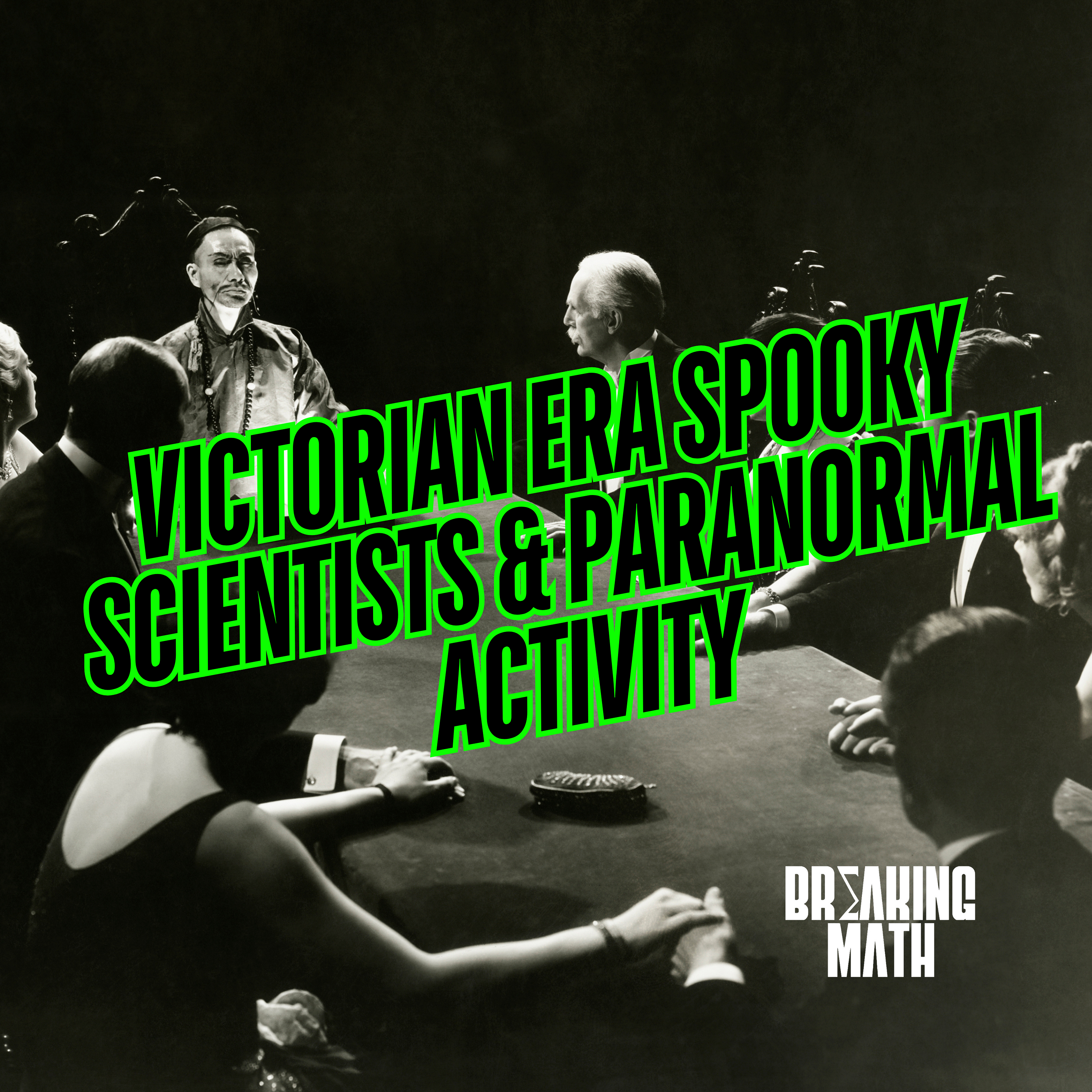
Victorian Era Spooky Scientists & Paranormal Activity
Explore the intriguing intersection of science and spiritualism in the Victorian era. This episode uncovers how prominent scientists like Michael Faraday, William James, and Marie & Pierre Curie engaged with supernatural phenomena and the rise of spiritualism. Discover the scientific efforts to debunk or understand paranormal activities, and how these investigations shaped modern science. Dive into the fascinating legacy of this 19th-century movement and its lasting impact on today's scientific inquiries into the unknown. Perfect for fans of history, science, and the supernatural.Keywords: Victorian era, spiritualism, science, supernatural, Michael Faraday, William James, Alfred Russell Wallace, Curies, Eleanor Sidgwick, idiomotor effect Become a patron of Breaking Math for as little as a buck a monthFollow Breaking Math on Twitter, Instagram, LinkedIn, Website, YouTube, TikTokFollow Autumn on Twitter and InstagramFollow Gabe on Twitter.Become a guest hereemail: [email protected]
Is AI Conscious?
AI & Consciousness: Philosophical Debates, Ethical Implications & the Future of Conscious MachinesIn this episode of Breaking Math, hosts Autumn and Gabriel explore the intricate relationship between artificial intelligence (AI) and consciousness. Delve into historical perspectives, philosophical debates, and the ethical questions surrounding the creation of conscious machines. Key topics include the evolution of AI, challenges in defining and testing consciousness, and the potential rights of AI beings. We also examine the Turing Test, the debate between strong AI vs. weak AI, and concepts like personhood and integrated information theory. Perfect for anyone interested in AI ethics, the nature of consciousness, and the responsibilities of advanced AI technology.Keywords: AI, consciousness, Turing test, strong AI, weak AI, ethics, philosophy, personhood, integrated information theory, neural networksBecome a patron of Breaking Math for as little as a buck a monthFollow Breaking Math on Twitter, Instagram, LinkedIn, Website, YouTube, TikTokFollow Autumn on Twitter and InstagramFollow Gabe on Twitter.Become a guest hereemail: [email protected]
Molecular dynamics simulation with GFlowNets: machine learning the importance of energy estimators in computational chemistry and drug discovery
In this episode of Breaking Math, hosts Autumn and Gabriel take a deep dive into the paper “Towards Equilibrium Molecular Conformation Generation with GFlowNets” by Volokova et al., published in the Digital Discovery Journal by the Royal Society of Chemistry. They explore the cutting-edge intersection of molecular conformations and machine learning, comparing traditional methods like molecular dynamics and cheminformatics with the innovative approach of Generative Flow Networks (GFlowNets) for molecular conformation generation.The episode covers empirical results that showcase the effectiveness of GFlowNets in computational chemistry, their scalability, and the role of energy estimators in advancing fields like drug discovery. Tune in to learn how machine learning is transforming the way we understand molecular structures and driving breakthroughs in chemistry and pharmaceuticals.Keywords: molecular conformations, machine learning, GFlowNets, computational chemistry, drug discovery, molecular dynamics, cheminformatics, energy estimators, empirical results, scalability, math, mathematics, physics, AIBecome a patron of Breaking Math for as little as a buck a monthYou can find the paper “Towards equilibrium molecular conformation generation with GFlowNets” by Volokova et al in Digital Discovery Journal by the Royal Society of Chemistry.Follow Breaking Math on Twitter, Instagram, LinkedIn, Website, YouTube, TikTokFollow Autumn on Twitter and InstagramFollow Gabe on Twitter.Become a guest hereemail: [email protected]
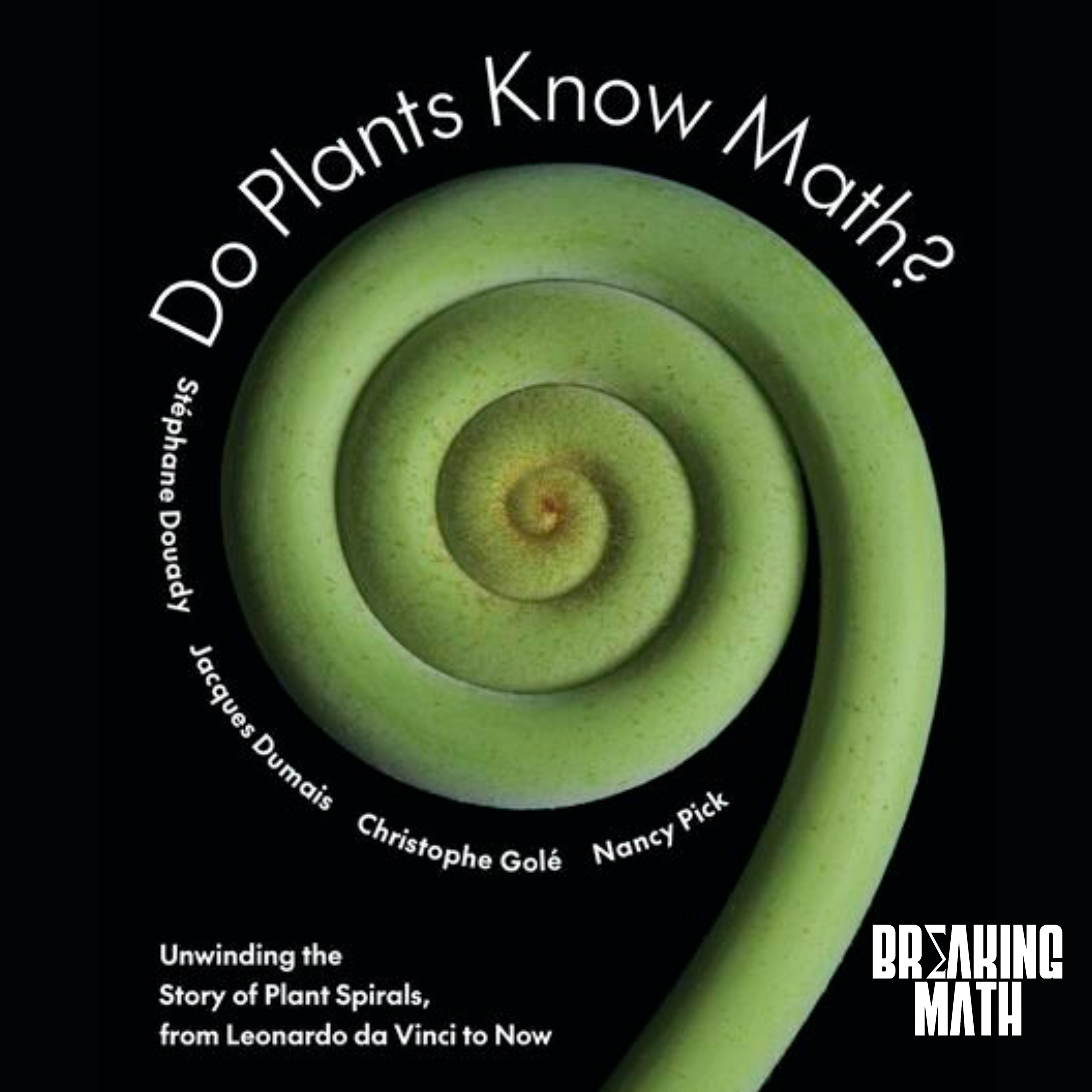
Do Plants Know Math?
Mathematical Patterns in Plants: Fibonacci, Golden Ratio & Nature's Hidden Math with Christophe Gole & Nancy PickIn this episode of Breaking Math, host Autumn interviews authors Christophe Gole and Nancy Pick about the captivating world of mathematical patterns in plants, inspired by their book Do Plants Know Math?. Explore the intersection of mathematics and biology as they discuss the Fibonacci sequence, the golden ratio, and spiral formations that reveal nature's mathematical beauty. Learn about the optimization of plant structures, the role of women in mathematics, and get recommendations for further reading. Topics include phyllotaxis, fractals, and their connections to AI, physics, and topology.Keywords: mathematics, biology, plant math, Fibonacci, phylotaxis, spirals, golden ratio, fractals, nature, science, women in math,topology, ai, physics, math, plants, gardening Become a patron of Breaking Math for as little as a buck a monthYou can connect with Christophe Gole and Nancy Pick on LinkedIn, and find their Book “Do Plants Know Math?” on Amazon.Follow Breaking Math on Twitter, Instagram, LinkedIn, Website, YouTube, TikTokFollow Autumn on Twitter and InstagramFollow Gabe on Twitter.Become a guest hereemail: [email protected]
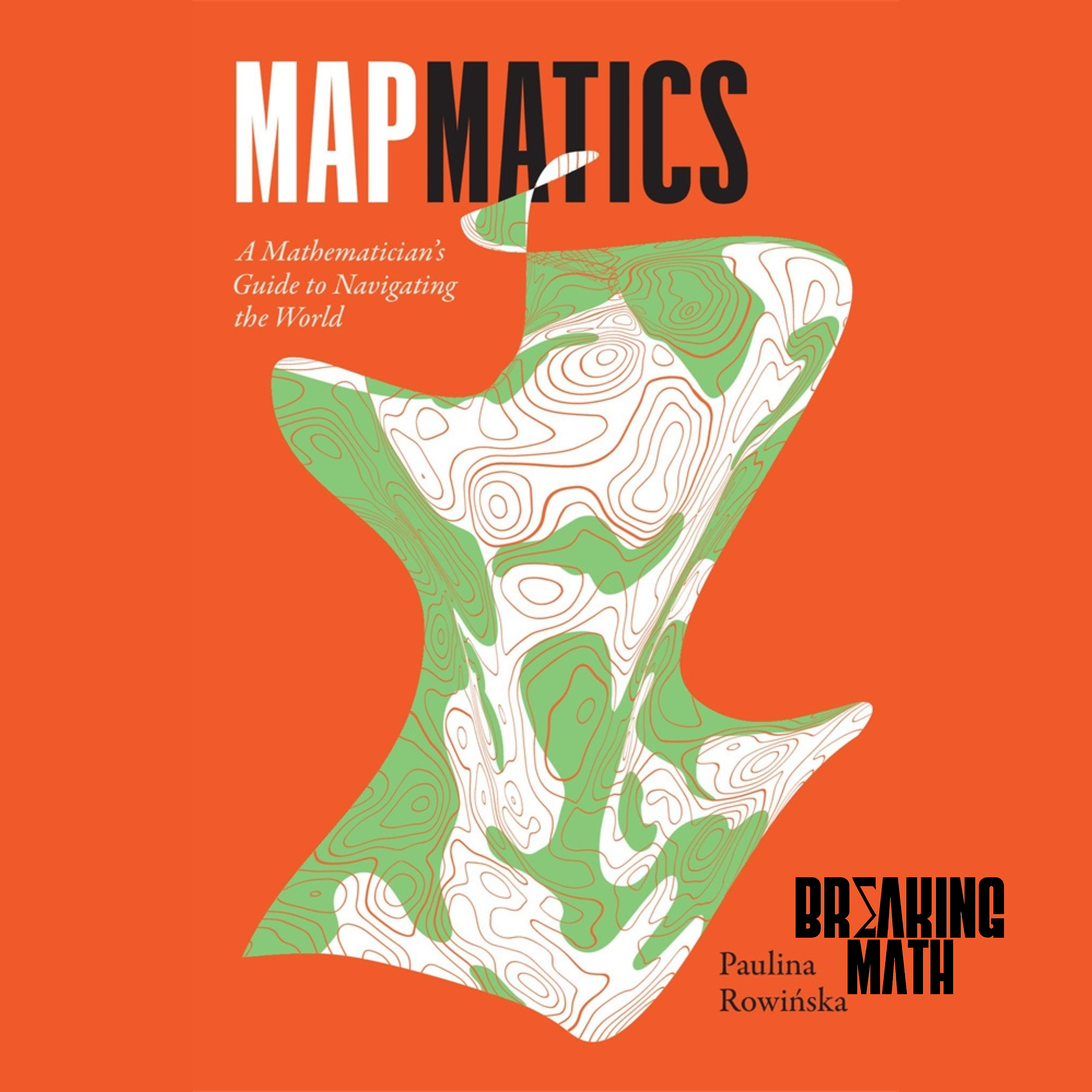
Mapmatics: A Mathematician's Guide to Navigating the World with Maps with Paulina Rowinska
Math & Cartography: Dr. Paula Rowinska on Map Projections, Gerrymandering & Real-World MathIn this episode of Breaking Math, host Autumn interviews Dr. Paula Rowinska about her unique journey from earning a PhD in mathematics to writing about math and cartography. They discuss the fascinating connection between map-making and mathematics, debunking misconceptions about map projections and exploring key topics like the coastline paradox, gerrymandering, and the traveling salesman problem. Learn how these mathematical concepts play a crucial role in areas like crime analysis, geopolitics, and more. Perfect for enthusiasts of math, cartography, and real-world problem-solving.The conversation also celebrates the contributions of underrepresented women in mathematics and underscores the importance of math in everyday life. Tune in to discover how mathematics shapes our understanding of the world through cartography, topology, and even AI.Keywords: mathematics, cartography, map projections, coastline paradox, gerrymandering, women in math, traveling salesman problem, crime analysis, topology, metric map, ai, physics, mathBecome a patron of Breaking Math for as little as a buck a monthFollow Dr. Paula Rowinska at paulinarowinska.com and @PaulaRowinska on Twitter. You can also find her book Mapmatics on Amazon.Follow Breaking Math on Twitter, Instagram, LinkedIn, Website, YouTube, TikTokFollow Autumn on Twitter and InstagramFollow Gabe on Twitter.Become a guest hereemail: [email protected]
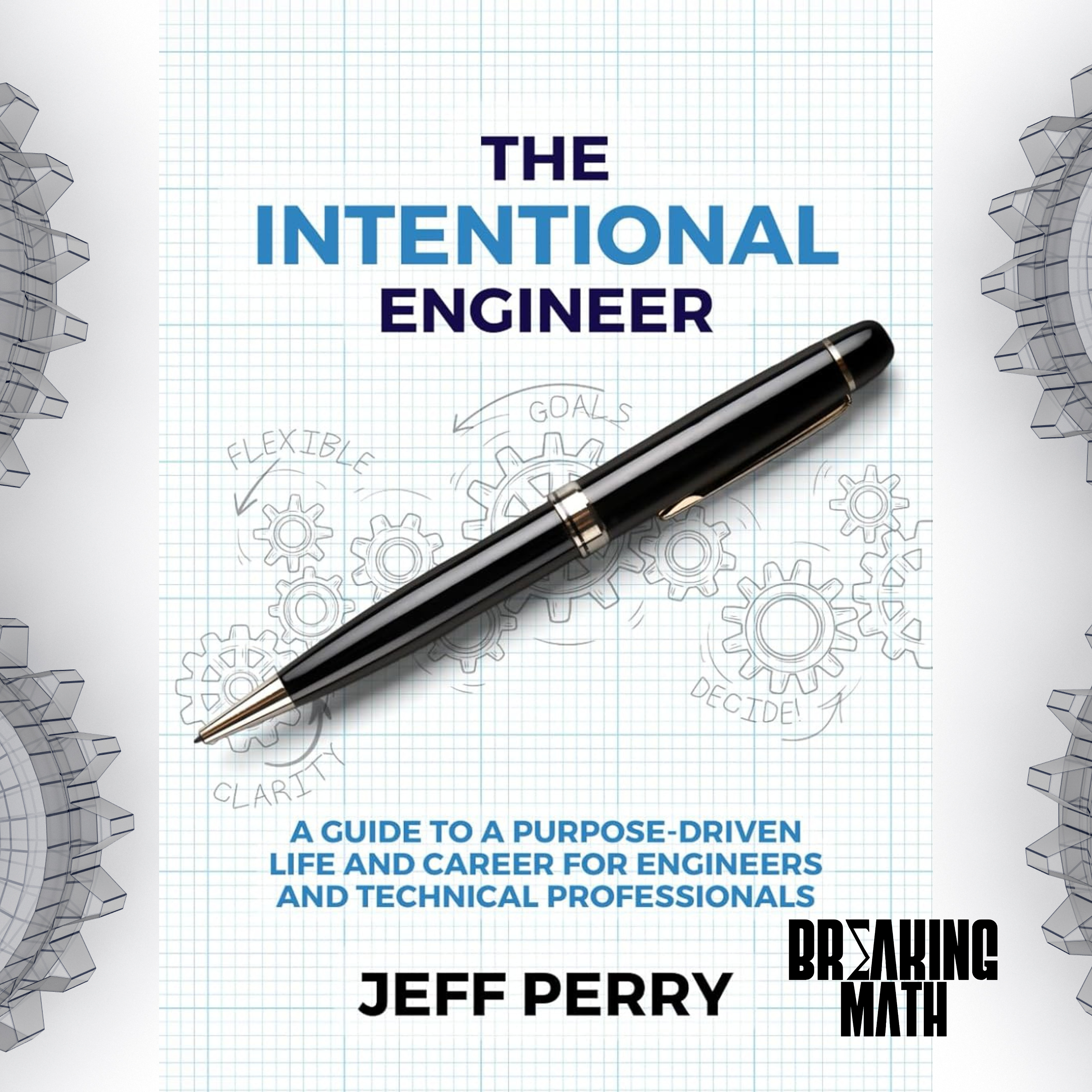
The Intentional Engineer (with Jeff Perry)
In this conversation, Gabriel and Autumn interview Jeff Perry, a career coach and author of the book 'The Intentional Engineer'. They discuss the importance of being intentional in one's career, understanding one's passions and skills, and building a strong professional network. Jeff shares his journey from being an engineer to becoming an engineer coach and offers advice on how to navigate career transitions. They also explore the concept of 'genius zones' and how to identify and leverage one's unique strengths and talents. In this conversation, Jeff discusses the concept of the zone of incompetence, competence, excellence, and genius. They share personal anecdotes and examples to illustrate these zones and emphasize the importance of self-awareness and collaboration. They also touch on the role of mindset in driving behavior and results, particularly in the context of engineering and tech careers. Jeff offers coaching and resources for individuals looking to make intentional career shifts or upgrades.Keywords: career, intentionality, engineering, skills, passions, network, genius zones, strengths, talents, zone of incompetence, zone of competence, zone of excellence, zone of genius, self-awareness, collaboration, mindset, engineering, tech careers, intentional career shiftsSubscribe to Breaking Math wherever you get your podcasts.Become a patron of Breaking Math for as little as a buck a monthFollow Jeff Perry on LinkedIn or learn more at jeff-perry.com. You can also find his book The Intentional Engineer, on Amazon.Follow Breaking Math on Twitter, Instagram, LinkedIn, Website, YouTube, TikTokFollow Autumn on Twitter and InstagramFollow Gabe on Twitter.Become a guest hereemail: [email protected]
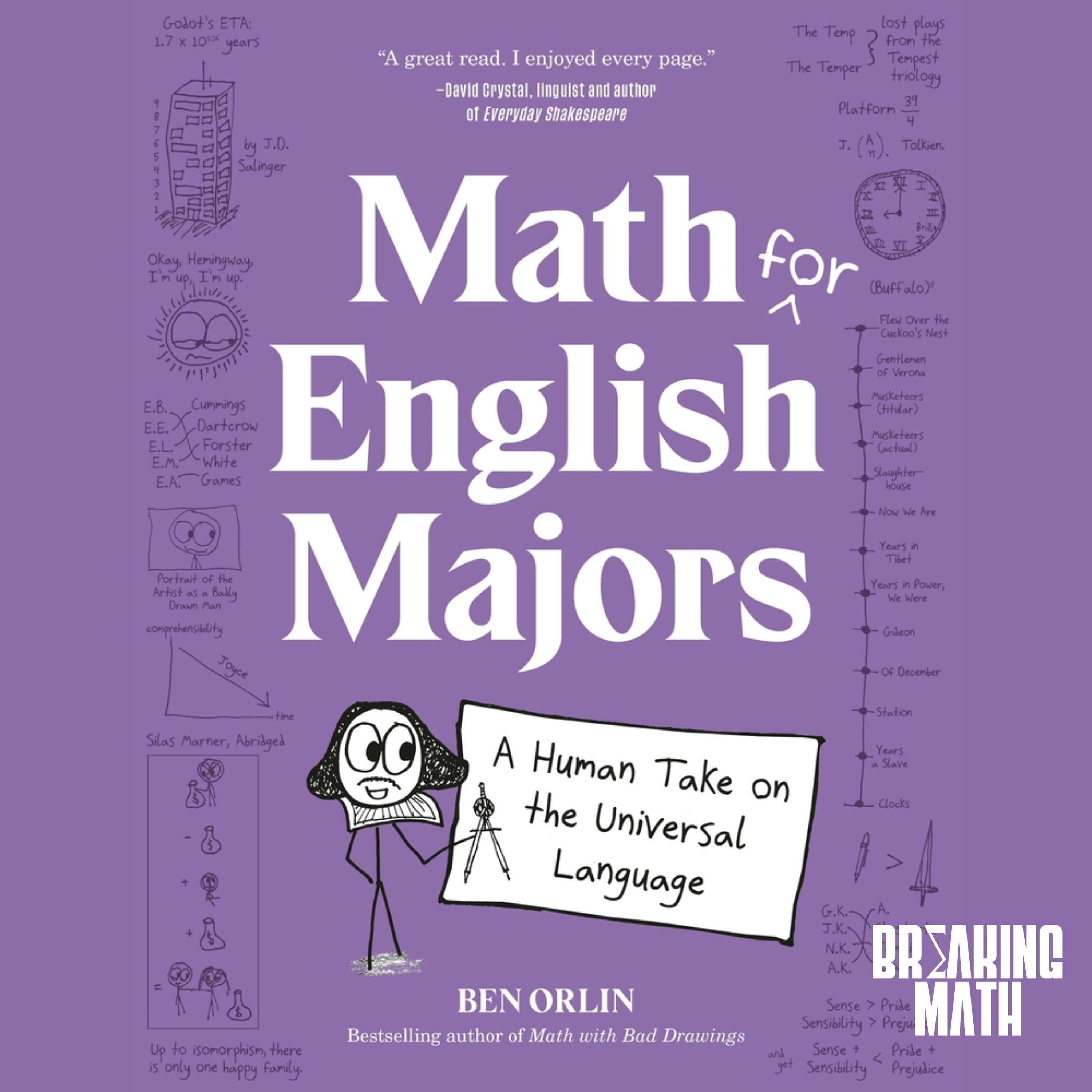
Math for English Majors with Ben Orlin
Math & Language: Creativity, Quantification, and Making Math Accessible with Ben OrlinIn this episode of Breaking Math, hosts sit down with Ben Orlin, author of Math for English Majors and Math with Bad Drawings, to explore the intersection of math and language. Discover the unique skill sets required for mathematics and creativity, how math education can be made more accessible, and the role of quantification in empowering individuals across various fields, including literature and the arts. The conversation highlights the historical contributions of women in math, including the impact of Einstein’s wife on his work. Ben also shares insights into his writing process and the challenges of making math relatable to a broad audience. Learn how mathematical thinking can enhance one's appreciation for literature and the world.Keywords: math, language, skill sets, math education, accessibility, quantification, power of math, women in math, Einstein's wife, math, literature, book, writing, perspective, abstraction, relationshipsSubscribe to Breaking Math wherever you get your podcasts.Become a patron of Breaking Math for as little as a buck a monthFollow Ben Orlin on Twitter, and on his websites mathwithbaddrawings.com and mathgameswithbaddrawings.com and find his book “Math for English Majors” on AmazonFollow Breaking Math on Twitter, Instagram, LinkedIn, Website, YouTube, TikTokFollow Autumn on Twitter and InstagramFollow Gabe on Twitter.Become a guest hereemail: [email protected]
What is Data Visualization? From the Expert Behind PolicyViz
In this episode Autumn and Dr. Jonathan Schwabish discuss the importance of strategic thinking in data visualization and the key elements of good data. He emphasizes the need to understand the data and how it was collected, as well as the importance of starting bar charts at zero. He also highlights common mistakes in data visualization, such as distorting or lying with visuals, and the potential impact of data visualization on policy decisions. Looking to the future, he discusses the role of AI in data visualization, the integration of AI into visualization tools, and the potential of augmented reality and virtual reality in data visualization. Jon Schwabish discusses the different data visualization tools he uses, including Excel, R, Tableau, Datawrapper, and Flourish. He emphasizes the importance of choosing the right tool for the specific use case and audience. He also highlights the need for policymakers and individuals to be trained in interpreting and using data visualizations effectively. Schwabish discusses the ethical considerations in data visualization, such as using inclusive language and considering accessibility.Keywords: data visualization, strategic thinking, good data, common mistakes, impact on policy decisions, AI, augmented reality, virtual reality, data visualization tools, Excel, R, Tableau, Datawrapper, Flourish, policymakers, data interpretation, ethical considerations, inclusive language, accessibilitySubscribe to Breaking Math wherever you get your podcasts.Become a patron of Breaking Math for as little as a buck a monthFollow Jon Schwabish on Twitter and on YouTube. Also go give PolicyViz Podcast a followFollow Breaking Math on Twitter, Instagram, LinkedIn, Website, YouTube, TikTokFollow Autumn on Twitter and InstagramFollow Gabe on Twitter.Become a guest hereemail: [email protected]
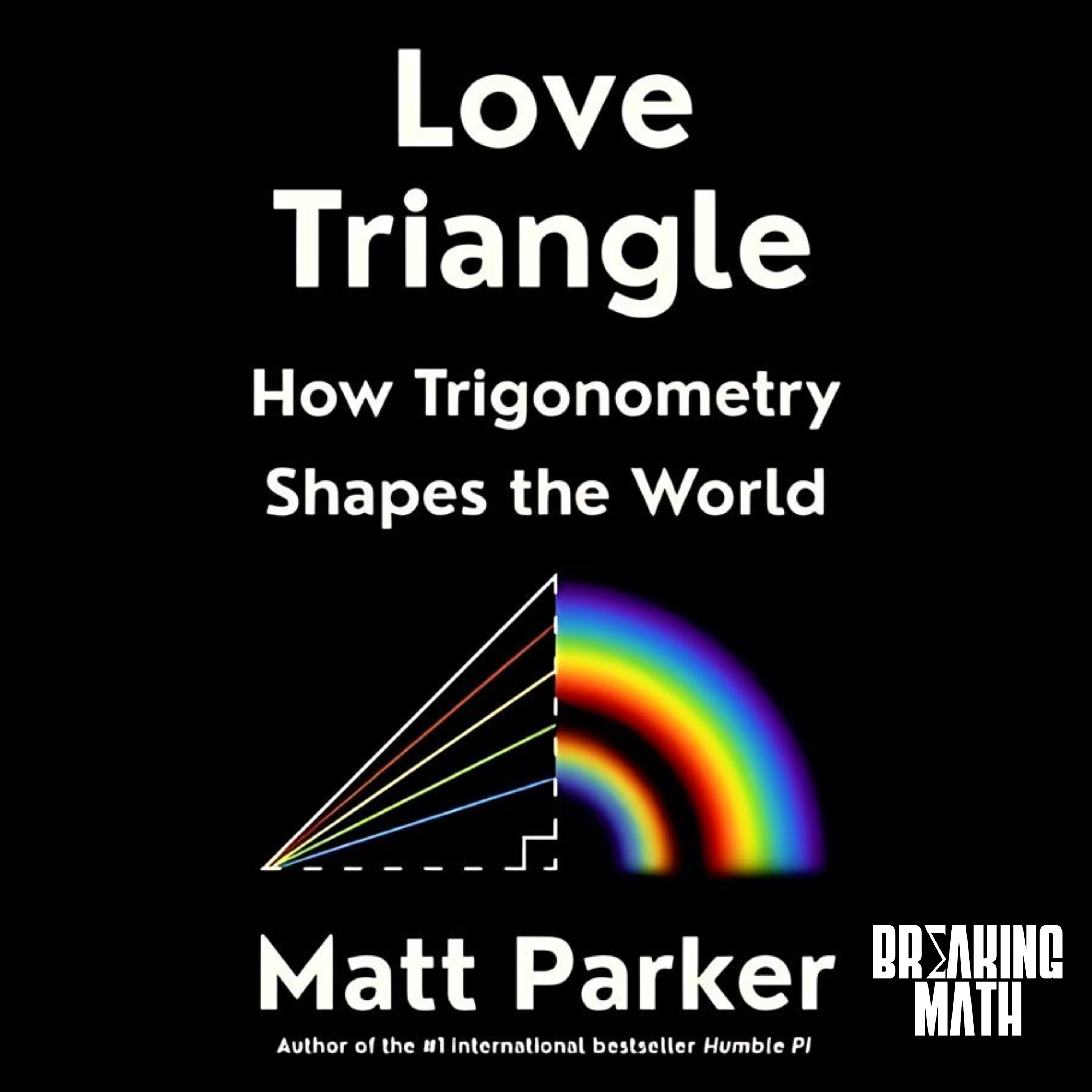
Love Triangle and Other Maths (with Matt Parker)
In this episode, Gabriel and Autumn interview mathematician, comedian, and author Matt Parker about his latest book, "Love Triangle." They discuss the unique page numbering system in the book, which is based on the sine function, and how it adds an extra layer of discovery for readers. They also explore the use of triangles and quads in 3D modeling, the concept of Perlin noise, and the perception of randomness. The conversation touches on the intersection of mathematics and creativity, as well as the practical applications of mathematical concepts in various fields. The conversation explores various topics related to mathematics, including the analysis of the Mona Lisa, the use of math in playing pool, the discovery of new shapes, and the application of math in various fields. The speakers discuss the motivation behind exploring these topics and the interplay between math and art. They also provide advice for science and math content creators on YouTube.Keywords: mathematics, book, Love Triangle, page numbering, sine function, triangles, quads, 3D modeling, Perlin noise, randomness, creativity, practical applications, mathematics, Mona Lisa, parallax, pool, shapes, Fourier analysis, YouTube, physics, AI, machine learningSubscribe to Breaking Math wherever you get your podcasts.Become a patron of Breaking Math for as little as a buck a monthFollow Matt Parker on Twitter and on YouTube at @StandUpMaths and find his book "Love Triangle" on AmazonFollow Breaking Math on Twitter, Instagram, LinkedIn, Website, YouTube, TikTokFollow Autumn on Twitter and InstagramFollow Gabe on Twitter.Become a guest hereemail: [email protected]
The Black Hole Heist
Surprise! It's a Friday episode for you! Yes, yes it is a rerun, but we wanted to share it anyways. We can't wait for our fall lineup because it's packed with surprises. See you back on Tuesday. Keywords: Black holes, gravity, universe, physics, ai, machine learning, education, statistics, engineering, humanitySubscribe to Breaking Math wherever you get your podcasts.Become a patron of Breaking Math for as little as a buck a monthFollow Breaking Math on Twitter, Instagram, LinkedIn, Website, YouTube, TikTokFollow Autumn on Twitter and InstagramFollow Gabe on Twitter.Become a guest hereemail: [email protected]
Black Holes: The Abyss Part 3
It's the last week of our summer break and we have 2 episodes this week for you as a little treat. So check out our show on Friday too for a little bit more fun. We can't wait for our fall lineup because it's packed with surprises. If you have not listened to the last two episodes, then we'd highly recommend going back and listening to those. We're choosing to present this information this way because otherwise we'd waste most of your time re-explaining concepts we've already covered.Black holes are so bizarre when we measured against the yardstick of the mundanity of our day to day lives that they inspire fear, awe, and controversy. In this last episode of the Abyss series, we will look at some more cutting-edge problems and paradoxes surrounding black holes. So how are black holes and entanglement related? What is the holographic principle? And what is the future of black holes?Keywords: Black holes, gravity, universe, physics, ai, machine learning, education, statistics, engineering, humanitySubscribe to Breaking Math wherever you get your podcasts.Become a patron of Breaking Math for as little as a buck a monthFollow Breaking Math on Twitter, Instagram, LinkedIn, Website, YouTube, TikTokFollow Autumn on Twitter and InstagramFollow Gabe on Twitter.Become a guest hereemail: [email protected]
Black Holes: The Abyss Part 2
Happy Summer! We have another week of our summer break after this episode from 2018. We will be back shortly with more content and surprises! Black holes are objects that seem exotic to us because they have properties that boggle our comparatively mild-mannered minds. These are objects that light cannot escape from, yet glow with the energy they have captured until they evaporate out all of their mass. They thus have temperature, but Einstein's general theory of relativity predicts a paradoxically smooth form. And perhaps most mind-boggling of all, it seems at first glance that they have the ability to erase information. So what is black hole thermodynamics? How does it interact with the fabric of space? And what are virtual particles?Keywords: Black holes, gravity, universe, physics, ai, machine learning, education, statistics, engineering, humanitySubscribe to Breaking Math wherever you get your podcasts.Become a patron of Breaking Math for as little as a buck a monthFollow Breaking Math on Twitter, Instagram, LinkedIn, Website, YouTube, TikTokFollow Autumn on Twitter and InstagramFollow Gabe on Twitter.Become a guest hereemail: [email protected]
Black Holes: The Abyss Part 1
Happy Summer! Check out part one of our three part series on black holes from 2018. Enjoy! The idea of something that is inescapable, at first glance, seems to violate our sense of freedom. This sense of freedom, for many, seems so intrinsic to our way of seeing the universe that it seems as though such an idea would only beget horror in the human mind. And black holes, being objects from which not even light can escape, for many do beget that same existential horror. But these objects are not exotic: they form regularly in our universe, and their role in the intricate web of existence that is our universe is as valid as the laws that result in our own humanity. So what are black holes? How can they have information? And how does this relate to the edge of the universe?Keywords: Black holes, gravity, universe, physics, ai, machine learning, education, statistics, engineering, humanitySubscribe to Breaking Math wherever you get your podcasts.Become a patron of Breaking Math for as little as a buck a monthFollow Breaking Math on Twitter, Instagram, LinkedIn, Website, YouTube, TikTokFollow Autumn on Twitter and InstagramFollow Gabe on Twitter.Become a guest hereemail: [email protected]
What are Journal Rankings? The basics: a minisode.
In this minisode, Autumn explores the basics in the world of journal rankings and metrics. She discusses the importance of journal rankings and how they are determined, focusing on metrics like impact factor, mathematical citation quotient (MCQ), and publication power approach (PPA). She explains how these metrics provide insights into a journal's influence and performance, but also emphasizes the need for a comprehensive evaluation of research beyond just metrics.Keywords: journal rankings, journal metrics, impact factor, mathematical citation quotient, publication power approach, research evaluation, math, physics, ai, machine learning, education, publishing, academic journalsSubscribe to Breaking Math wherever you get your podcasts.Become a patron of Breaking Math for as little as a buck a monthFollow Breaking Math on Twitter, Instagram, LinkedIn, Website, YouTube, TikTokFollow Autumn on Twitter and InstagramFollow Gabe on Twitter.Become a guest hereemail: [email protected]
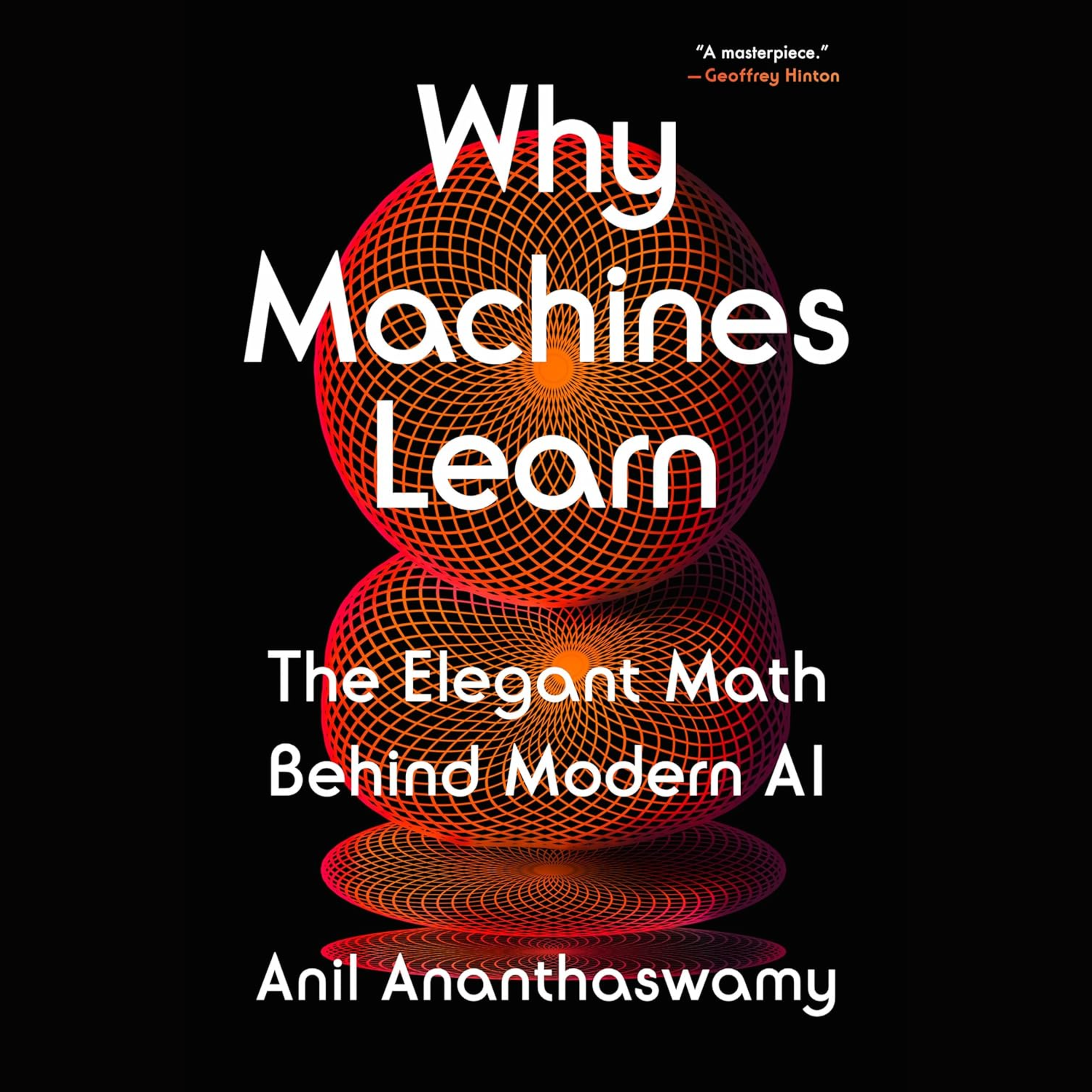
Why Machines Learn: The Math Behind AI
In this episode Autumn and Anil Ananthaswamy discuss the inspiration behind his book “Why Machines Learn” and the importance of understanding the math behind machine learning. He explains that the book aims to convey the beauty and essential concepts of machine learning through storytelling, history, sociology, and mathematics. Anil emphasizes the need for society to become gatekeepers of AI by understanding the mathematical basis of machine learning. He also explores the history of machine learning, including the development of neural networks, support vector machines, and kernel methods. Anil highlights the significance of the backpropagation algorithm and the universal approximation theorem in the resurgence of neural networks.Keywords: machine learning, math, inspiration, storytelling, history, sociology, gatekeepers, neural networks, support vector machines, kernel methods, backpropagation algorithm, universal approximation theorem, AI, ML, physics, mathematics, scienceYou can find Anil Ananthaswamy on Twitter @anilananth and his new book “Why Machines Learn”Subscribe to Breaking Math wherever you get your podcasts.Become a patron of Breaking Math for as little as a buck a monthFollow Breaking Math on Twitter, Instagram, LinkedIn, Website, YouTube, TikTokFollow Autumn on Twitter and InstagramFollow Gabe on Twitter.Become a guest hereemail: [email protected]
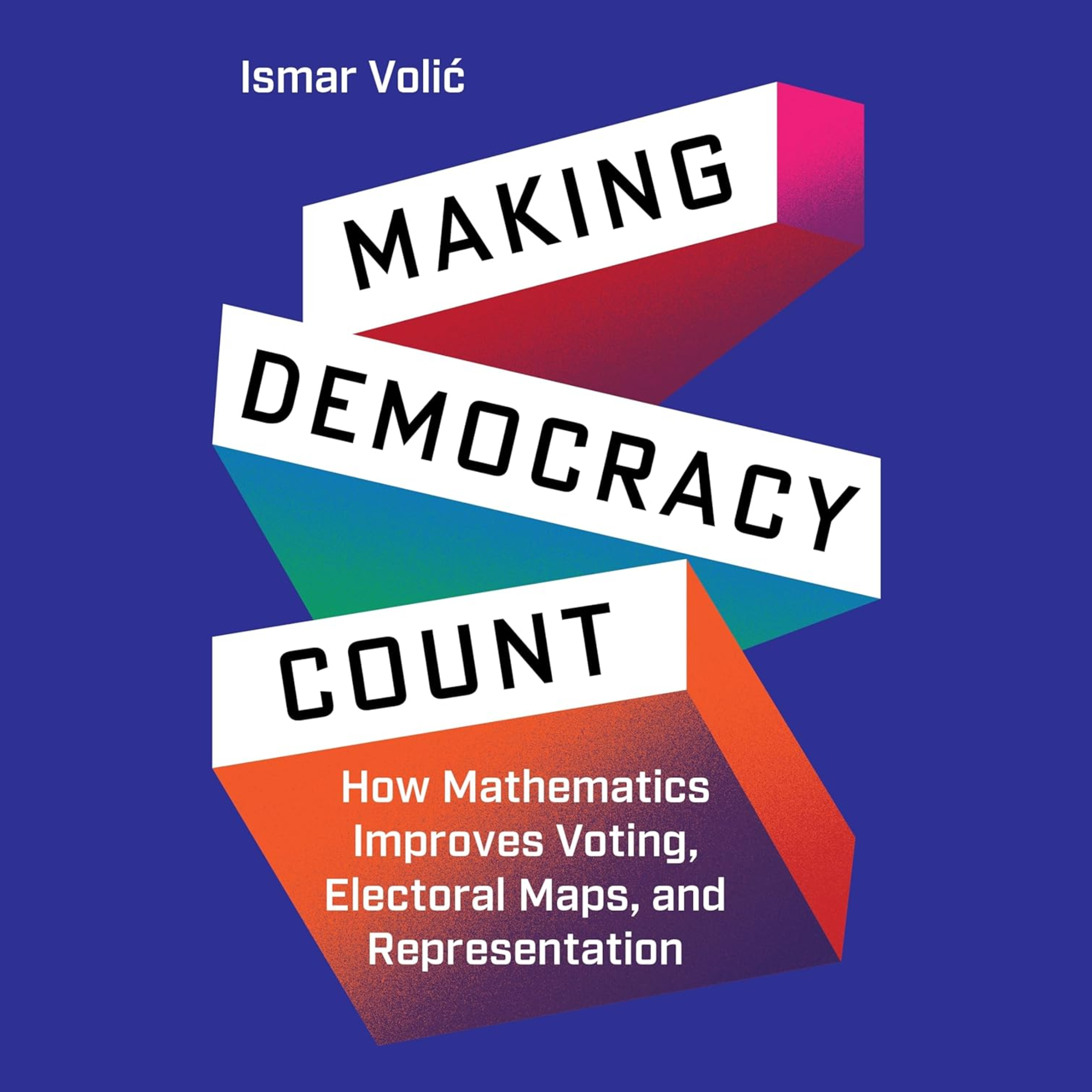
The Intersection of Mathematics and Democracy
This discussion Autumn and Gabe delves into Ismar Volic's personal background and inspiration for writing the book, “Making Democracy Count” as well as the practical and theoretical aspects of voting systems. Additionally, the conversation explores the application of voting systems to everyday decision-making and the use of topological data analysis in understanding societal polarization. The conversation covers a wide range of topics, including data visualization, gerrymandering, electoral systems, and the intersection of mathematics and democracy. Volic, shares insights on the practical implications of implementing mathematical improvements in electoral systems and the legal and constitutional hurdles that may arise. He also discusses the importance of educating oneself about the quantitative underpinnings of democracy and the need for interdisciplinary discussions that bridge mathematics and politics.Keywords: math podcast, creativity, mascot, background, Matlab, ranked choice voting, elections, author's background, inspiration, voting systems, topological data analysis, societal polarization, mathematics, democracy, data visualization, gerrymandering, electoral systems, interdisciplinary discussions, practical implications, legal hurdles, constitutional considerationsYou can find Ismar Volic on Twitter and LinkedIn @ismarvolic. Please go check out the Institute for Mathematics and Democracy and Volic’s new book “Making Democracy Count”Subscribe to Breaking Math wherever you get your podcasts.Become a patron of Breaking Math for as little as a buck a monthFollow Breaking Math on Twitter, Instagram, LinkedIn, Website, YouTube, TikTokFollow Autumn on Twitter and InstagramFollow Gabe on Twitter.Become a guest hereemail: [email protected]
Math Lounge: Celebrating 101 Episodes
In this conversation, Gabe and Autumn celebrate the 101st episode of Breaking Math and discuss the evolution of the podcast. They highlight the importance of creativity in teaching mathematics and share their plans to expand Breaking Math into Breaking Math Media. They also discuss the history of physics and the big questions that inform the podcast. The hosts express their desire to collaborate with listeners and explore practical applications of math in different fields. They also mention books like 'A Quantum Story' and 'Incomplete Nature' that delve into the mysteries of quantum mechanics and consciousness. The hosts highlight the unique and creative nature of their podcast, inviting listeners to join them in the Math Lounge, a metaphorical nightclub where math and creativity intersect.Keywords: Breaking Math, podcast, creativity, mathematics, Breaking Math Media, physics, history, quantum mechanics, book discussion, double-slit experiment, quantum mechanics, interdisciplinary discussions, machine learning, neuroscience, gamification of math, collaboration, practical applications, consciousness, Math LoungeSubscribe to Breaking Math wherever you get your podcasts.Become a patron of Breaking Math for as little as a buck a monthFollow Breaking Math on Twitter, Instagram, LinkedIn, Website, YouTubeFollow Autumn on Twitter and InstagramFollow Gabe on Twitter.email: [email protected]

Minisode: Absolutely Nothing
In this episode of Breaking Math, Autumn and Gabe explore the concept of nothingness and its significance in various fields. They discuss the philosophical, scientific, mathematical, and literary aspects of nothingness, highlighting its role in understanding reality and existence. They mention books like 'Incomplete Nature' by Terence Deacon and 'Zero: The Biography of a Dangerous Idea' by Charles Seife, which delve into the concept of absence and zero. The episode concludes by emphasizing the complexity and versatility of nothingness, inviting listeners to think deeper about its implications.Keywords: nothingness, philosophy, science, mathematics, literature, reality, existence, absence, zeroSubscribe to Breaking Math wherever you get your podcasts.Become a patron of Breaking Math for as little as a buck a monthFollow Breaking Math on Twitter, Instagram, LinkedIn, WebsiteFollow Autumn on Twitter and InstagramFollow Gabe on Twitter.Have suggestions or want to come on the show? Fill out the form here.email: [email protected]
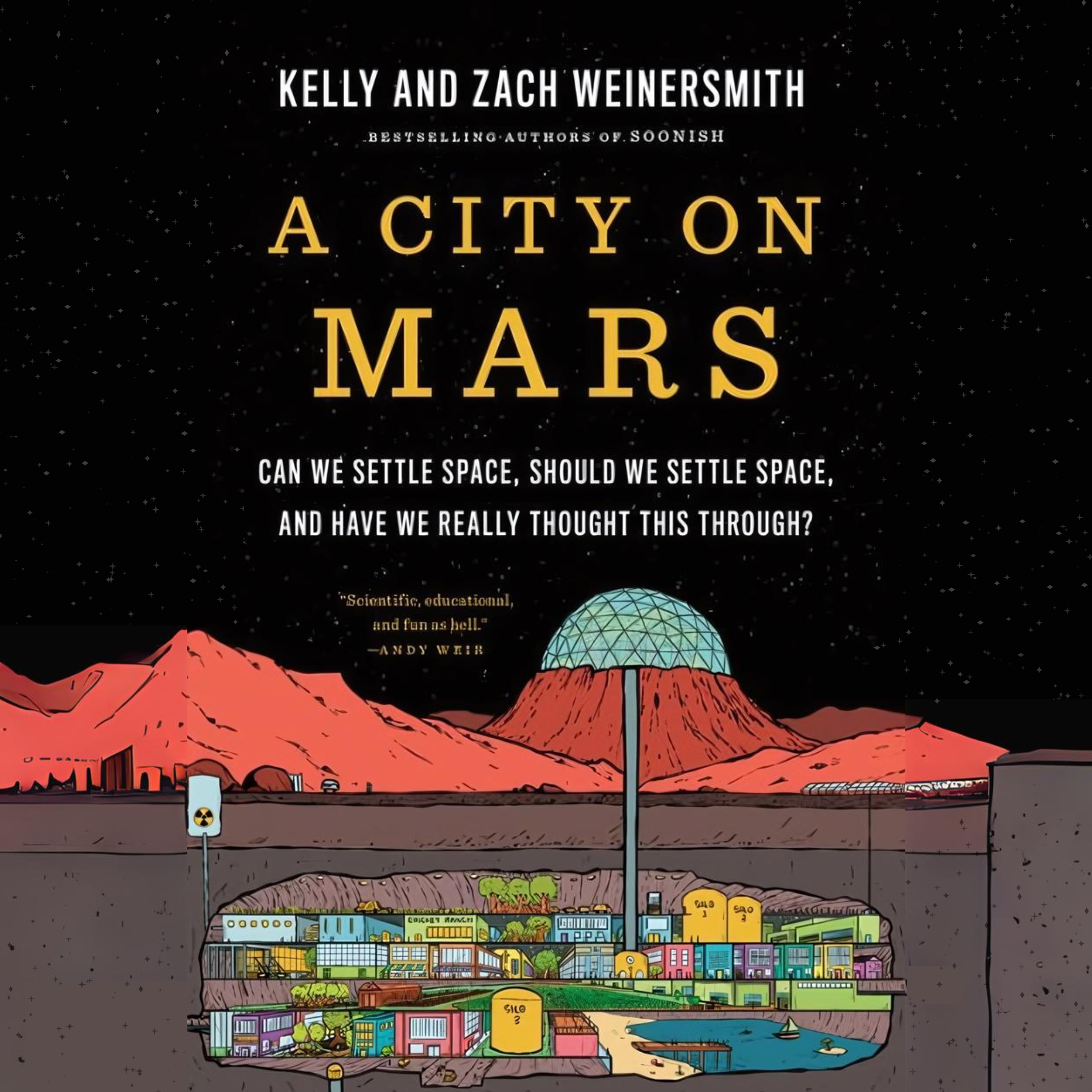
Can We Survive on Mars? Hot Tips with Zach Weinersmith (Part 2)
In this conversation, Autumn Phaneuf interviews Zach Weinersmith, a cartoonist and writer, about the feasibility and implications of space settlement. They discuss the challenges and misconceptions surrounding space colonization, including the idea that it will make us rich, mitigate war, and make us wiser. They explore the potential of the moon and Mars as settlement options, as well as the concept of rotating space stations. They also touch on the physiological effects of space travel and the need for further research in areas such as reproduction and ecosystem design. The conversation explores the challenges and implications of human settlement in space. It discusses the lack of data on the long-term effects of space travel on the human body, particularly for women. The conversation also delves into the need for a closed-loop ecosystem for sustainable space settlement and the legal framework surrounding space exploration and resource extraction. The main takeaways include the importance of addressing reproductive and medical challenges, the need for a better legal regime, and the debunking of misconceptions about space settlement.Follow Zach Weinersmith on his website and TwitterSubscribe to Breaking Math wherever you get your podcasts.Become a patron of Breaking Math for as little as a buck a monthFollow Breaking Math on Twitter, Instagram, LinkedIn, WebsiteFollow Autumn on Twitter and InstagramFolllow Gabe on Twitter.Have suggestions or want to come on the show? Fill out the form here. email: [email protected] City on Mars, Keywords space settlement, feasibility, challenges, misconceptions, moon, Mars, rotating space stations, reproduction, ecosystem design, space settlement, human reproduction, closed-loop ecosystem, space law, resource extraction, logistics, math.
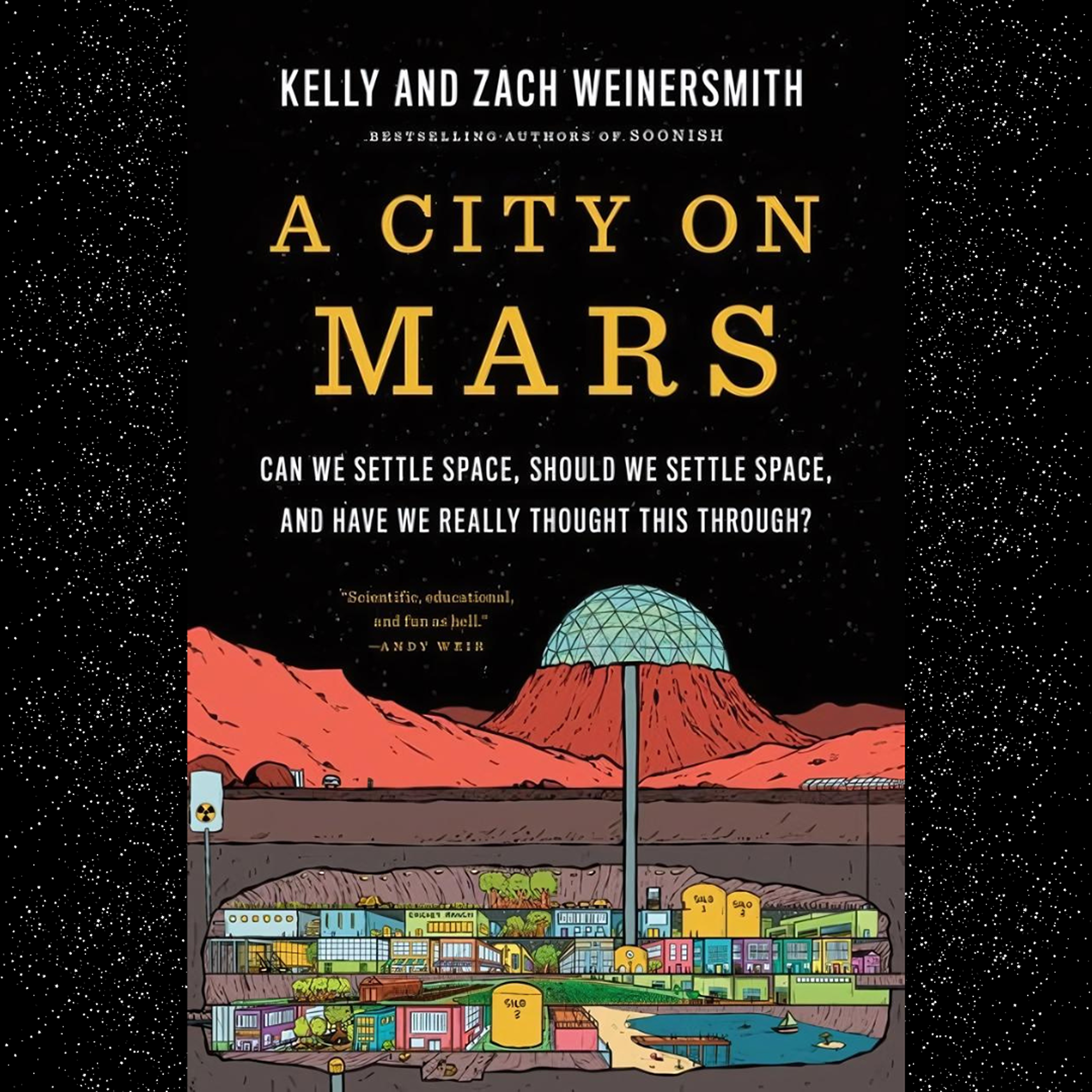
Can We Survive on Mars? Hot Tips with Zach Weinersmith
In this conversation, Autumn Phaneuf and Zach Weinersmith discusses his new book, A City on Mars, which takes a humorous look at the challenges of building a Martian society. He explores the misconceptions and myths surrounding space settlement and the feasibility of colonizing Mars. He argues that space is unlikely to make anyone rich and that the idea that space will mitigate war is unsupported. He also discusses the potential benefits and limitations of settling on the Moon and Mars, as well as the technical challenges involved.Follow Zach Weinersmith on his website and TwitterSubscribe to Breaking Math wherever you get your podcasts.Become a patron of Breaking Math for as little as a buck a monthFollow Breaking Math on Twitter, Instagram, LinkedIn, WebsiteFollow Autumn on Twitter and InstagramFolllow Gabe on Twitter.email: [email protected] City on Mars, space settlement, Mars colonization, misconceptions, myths, feasibility, space myths, space economics, war, Moon settlement, technical challenges, logistics, math.
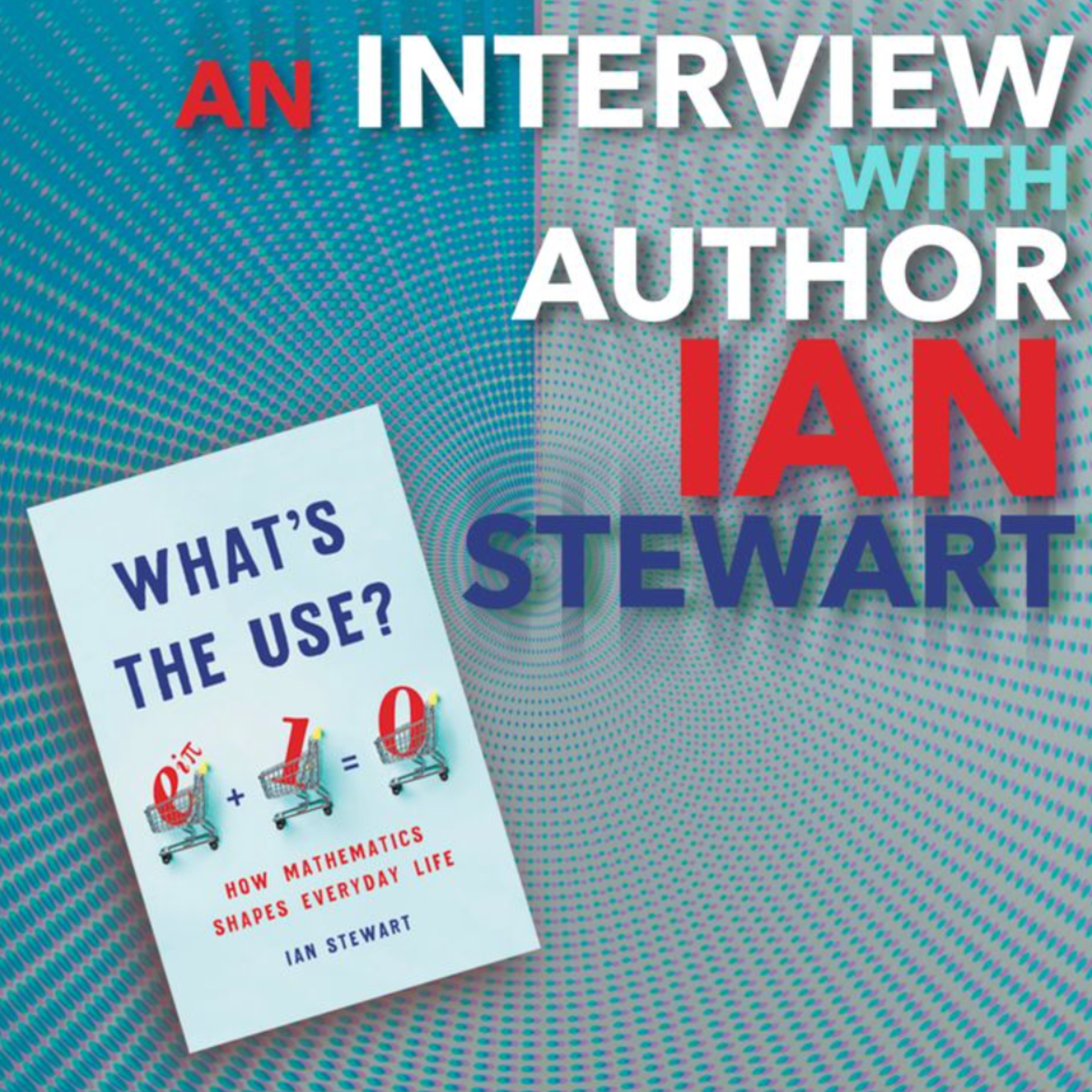
What's the Use? Interview with Professor Ian Stewart
Welcome to another engaging episode of the Breaking Math Podcast! Today's episode, titled "What is the Use?," features a fascinating conversation with the renowned mathematician and author, Professor Ian Stewart. As Professor Stewart discusses his latest book "What's the Use? How Mathematics Shapes Everyday Life," we dive deep into the real-world applications of mathematics that often go unnoticed in our daily technologies, like smartphones, and their unpredictable implications in various fields.We'll explore the history of quaternions, invented by William Rowan Hamilton, which now play a critical role in computer graphics, gaming, and particle physics. Professor Stewart will also shed light on the non-commutative nature of quaternions, mirroring the complexities of spatial rotations, and how these mathematical principles find their correspondence in the natural world.Furthermore, our discussion will encompass the interconnectivity within mathematics, touching upon how algebra, geometry, and trigonometry converge to paint a broader picture of this unified field. We also discuss the intriguing concept of "Fearful Symmetry" and how symmetrical and asymmetrical patterns govern everything from tiger stripes to sand dunes.With references to his other works, including "Professor Stewart's Cabinet of Mathematical Curiosities" and "The Science of Discworld," Professor Stewart brings an element of surprise and entertainment to the profound impact of mathematics on our understanding of the world.So stay tuned as we unlock the mysteries and the omnipresent nature of math in this thought-provoking episode with Professor Ian Stewart!
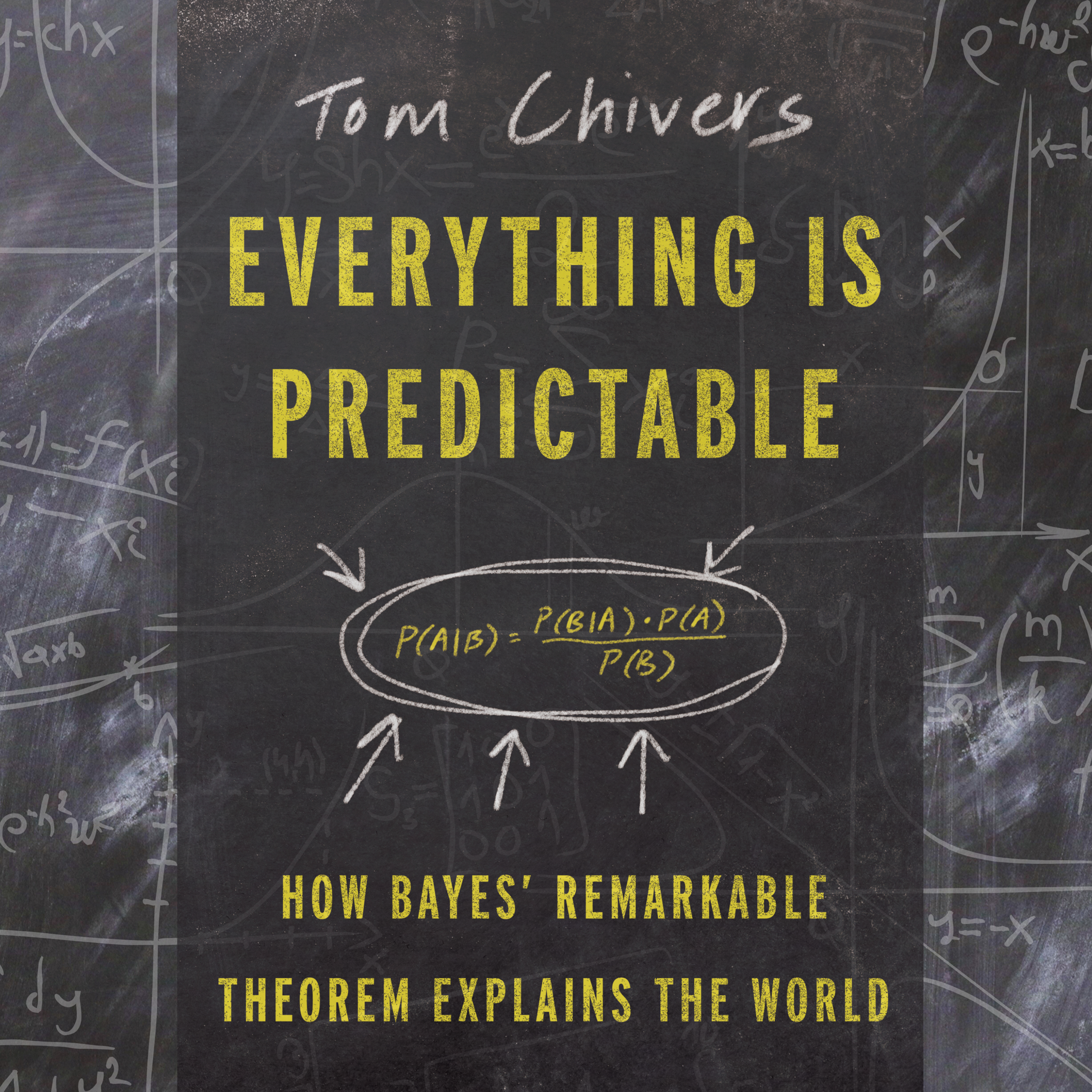
Bayes' Theorem Explains It All: An Interview with Tom Chivers
Tom Chivers discusses his book 'Everything is Predictable: How Bayesian Statistics Explain Our World' and the applications of Bayesian statistics in various fields. He explains how Bayesian reasoning can be used to make predictions and evaluate the likelihood of hypotheses. Chivers also touches on the intersection of AI and ethics, particularly in relation to AI-generated art. The conversation explores the history of Bayes' theorem and its role in science, law, and medicine. Overall, the discussion highlights the power and implications of Bayesian statistics in understanding and navigating the world. The conversation explores the role of AI in prediction and the importance of Bayesian thinking. It discusses the progress of AI in image classification and the challenges it still faces, such as accurately depicting fine details like hands. The conversation also delves into the topic of predictions going wrong, particularly in the context of conspiracy theories. It highlights the Bayesian nature of human beliefs and the influence of prior probabilities on updating beliefs with new evidence. The conversation concludes with a discussion on the relevance of Bayesian statistics in various fields and the need for beliefs to have probabilities and predictions attached to them.Takeaways Bayesian statistics can be used to make predictions and evaluate the likelihood of hypotheses. Bayes' theorem has applications in various fields, including science, law, and medicine. The intersection of AI and ethics raises complex questions about AI-generated art and the predictability of human behavior. Understanding Bayesian reasoning can enhance decision-making and critical thinking skills. AI has made significant progress in image classification, but still faces challenges in accurately depicting fine details. Predictions can go wrong due to the influence of prior beliefs and the interpretation of new evidence. Beliefs should have probabilities and predictions attached to them, allowing for updates with new information. Bayesian thinking is crucial in various fields, including AI, pharmaceuticals, and decision-making. The importance of defining predictions and probabilities when engaging in debates and discussions.Subscribe to Breaking Math wherever you get your podcasts.Become a patron of Breaking Math for as little as a buck a monthFollow Breaking Math on Twitter, Instagram, LinkedIn, WebsiteFollow Autumn on Twitter and InstagramFolllow Gabe on Twitter.email: [email protected]
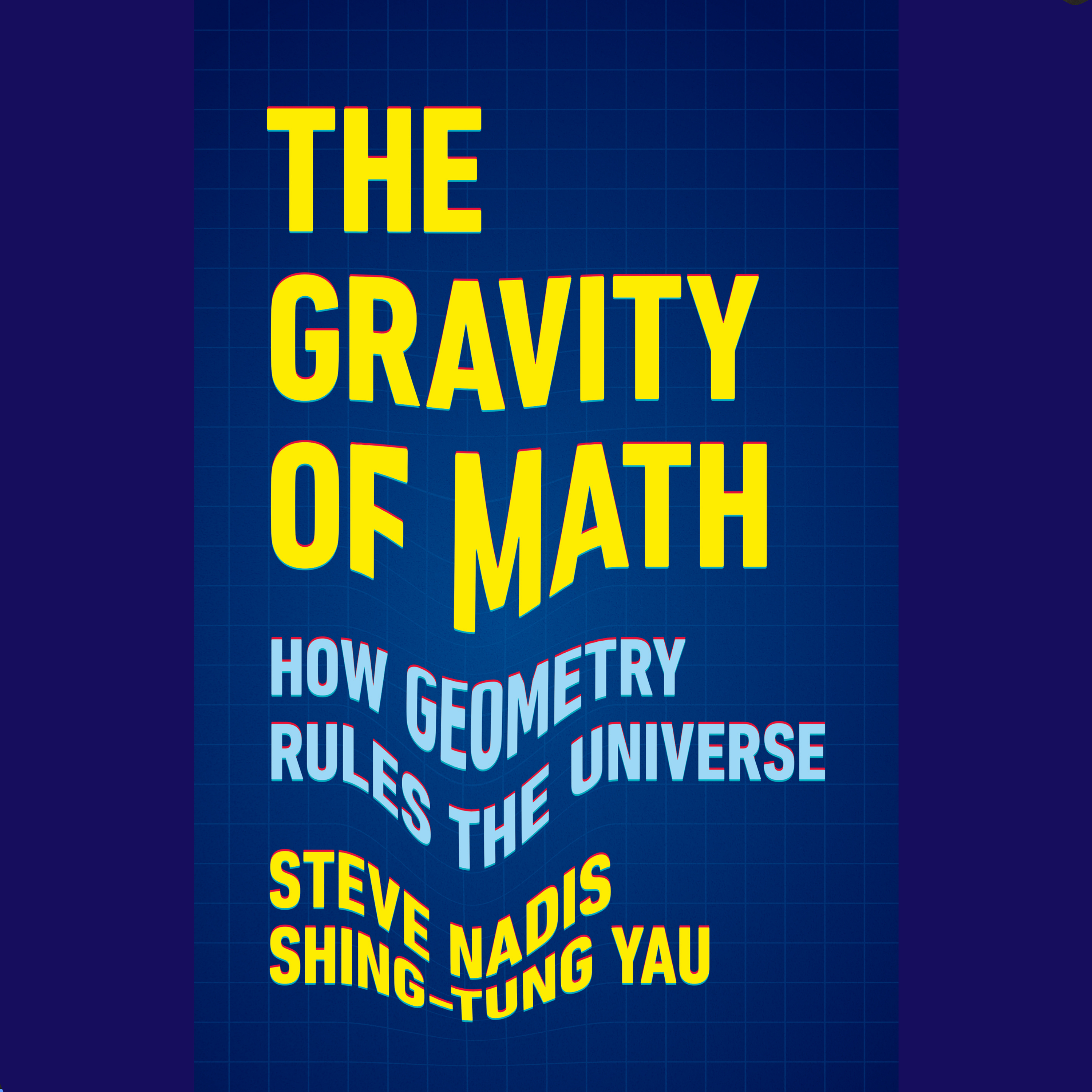
Interview with Steve Nadis, Co-author of 'Gravity of Math'
Summary**Tensor Poster - If you are interested in the Breaking Math Tensor Poster on the mathematics of General Relativity, email us at [email protected] this episode, Gabriel Hesch and Autumn Phaneuf interview Steve Nadis, the author of the book 'The Gravity of Math.' They discuss the mathematics of gravity, including the work of Isaac Newton and Albert Einstein, gravitational waves, black holes, and recent developments in the field. Nadis shares his collaboration with Shing-Tung Yau and their journey in writing the book. They also talk about their shared experience at Hampshire College and the importance of independent thinking in education. In this conversation, Steve Nadis discusses the mathematical foundations of general relativity and the contributions of mathematicians to the theory. He explains how Einstein was introduced to the concept of gravity by Bernhard Riemann and learned about tensor calculus from Gregorio Ricci and Tullio Levi-Civita. Nadis also explores Einstein's discovery of the equivalence principle and his realization that a theory of gravity would require accelerated motion. He describes the development of the equations of general relativity and their significance in understanding the curvature of spacetime. Nadis highlights the ongoing research in general relativity, including the detection of gravitational waves and the exploration of higher dimensions and black holes. He also discusses the contributions of mathematician Emmy Noether to the conservation laws in physics. Finally, Nadis explains Einstein's cosmological constant and its connection to dark energy.Chapters00:00 Introduction and Book Overview08:09 Collaboration and Writing Process25:48 Interest in Black Holes and Recent Developments35:30 The Mathematical Foundations of General Relativity44:55 The Curvature of Spacetime and the Equations of General Relativity56:06 Recent Discoveries in General Relativity01:06:46 Emmy Noether's Contributions to Conservation Laws01:13:48 Einstein's Cosmological Constant and Dark EnergySubscribe to Breaking Math wherever you get your podcasts.Become a patron of Breaking Math for as little as a buck a monthFollow Breaking Math on Twitter, Instagram, LinkedIn, WebsiteFollow Autumn on Twitter and InstagramFolllow Gabe on Twitter.email: [email protected]

The 10,000 Year Problem (feat. David Gibson of Ray Kitty Creation Workship)
Summary: The episode discusses the 10,000 year dilemma, which is a thought experiment on how to deal with nuclear waste in the future. Today's episode is hosted by guest host David Gibson, who is the founder of the Ray Kitty Creation Workshop. (Find out more about the Ray Kitty Creation Workshop by clicking here). Gabriel and Autumn are out this week, but will be returning in short order with 3 separate interviews with authors of some fantastic popular science and math books including: The Gravity of Math: How Geometry Rules the Universe by Dr. Shing-Tung Yau and Steve Nadis. This book is all about the history of our understanding of gravity from the theories of Isaac Newton to Albert Einstein and beyond, including gravitational waves, black holes, as well as some of the current uncertainties regarding a precise definition of mass. On sale now! EVERYTHING IS PREDICTABLE: How Bayesian Statistics Explain Our World by Tom Chivers. Published by Simon and Schuster. This book explains the importance of Baye's Theorem in helping us to understand why highly accurate screening tests can lead to false positives, a phenomenon we saw during the Covid-19 pandemic; How a failure to account for Bayes’ Theorem has put innocent people in jail; How military strategists using the theorem can predict where an enemy will strike next, and how Baye's Theorem is helping us to understang machine learning processes - a critical skillset to have in the 21st century. Available 05/07/2024 A CITY ON MARS: Can we settle space, should we settle space, and have we really thought this through? by authors Dr. Kelly and Zach Weinersmith. Zach Weinersmith is the artist and creator of the famous cartoon strip Saturday Morning Breaking Cereal! We've got a lot of great episodes coming up! Stay tuned.
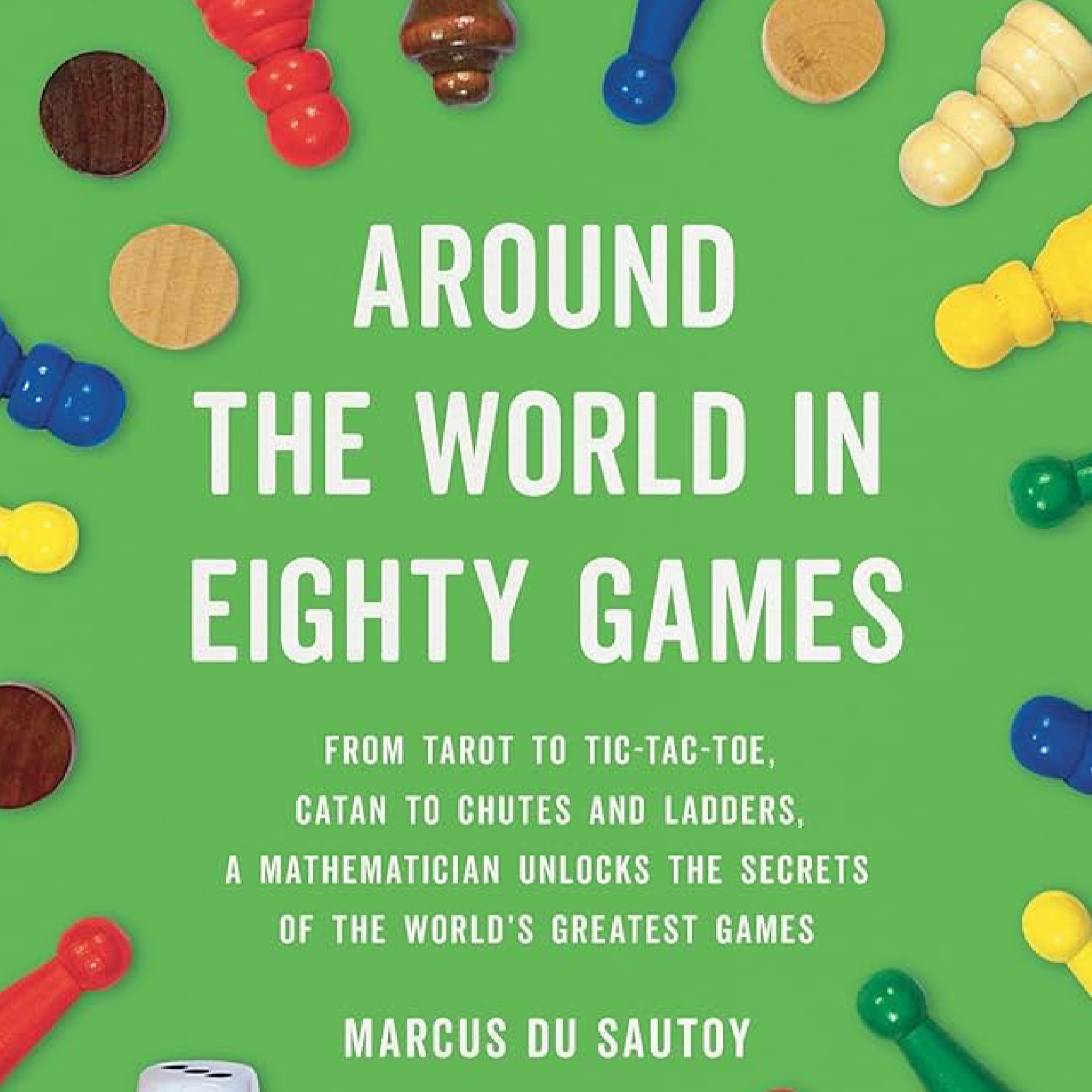
The Mathematical Heart of Games Explored with Prof. du Sautoy
An interview with Prof. Marcus du Sautoy about his book Around the Wold in Eighty Games . . . .a Mathematician Unlocks the Secrets of the World's Greatest Games. Topics covered in Today's Episode: 1. Introduction to Professor Marcus du Sautoy and the Role of Games- Impact of games on culture, strategy, and learning- The educational importance of games throughout history2. Differences in gaming cultures across regions like India and China3. Creative Aspects of Mathematics4. The surprising historical elements and banned games by Buddha5. Historical and geographical narratives of games rather than rules6. Game Theory and Education7. Unknowable questions like thermodynamics and universe's infinity8. Professor du Sautoy's Former Books and Collections9. A preview of his previous books and their themes10. Gaming Cultures and NFTs in Blockchain11. Gamification in Education12. The Role of AI in Gaming13. Testing machine learning in mastering games like Go14. Alphago's surprising move and its impact on Go strategies15 . The future of AI in developing video game characters, plots, and environments16. Conclusion and Giveaway Announcement*Free Book Giveaway of Around The World in 88 Games . . . by Professor Marcus Du Sautory! Follow us on our socials for details: Follow us on X: @BreakingMathPodFollow us on Instagram: @Breaking Math MediaEmail us: [email protected]
S5 Ep 9191. Brain Organelles, AI, and Other Scary Science - An Interview with GT (Part 2)
SummaryBrain Organelles, A.I. and Defining Intelligence in Nature- In this episode, we continue our fascinating interview with GT, a science content creator on TikTok and YouTube known for their captivating - and sometimes disturbing science content. GT can be found on the handle ‘@bearBaitOfficial’ on most social media channels. In this episode, we resume our discussion on Brain Organelles - which are grown from human stem cells - how they are being used to learn about disease, how they may be integrated in A.I. as well as eithical concerns with them. We also ponder what constitutes intelligence in nature, and even touch on the potential risks of AI behaving nefariously. You won't want to miss this thought-provoking and engaging discussion.30% Off ZenCastr DiscountUse My Special Link to save e 30% Off Your First Month of Any ZenCastr Paid Plan

Ep 9090. LEAN Theorem Provers used to model Physics and Chemistry
This episode is inspired by a correspondence the Breaking Math Podcast had with the editors of Digital Discovery, a journal by the Royal Society of Chemistry. In this episode the hosts review a paper about how the Lean Interactive Theorem Prover, which is usually used as a tool in creating mathemtics proofs, can be used to create rigorous and robust models in physics and chemistry. Also - we have a brand new member of the Breaking Math Team! This episode is the debut episode for Autumn, CEO of Cosmo Labs, occasional co-host / host of the Breaking Math Podcast, and overall contributor who has been working behind the scenes on the podcast on branding and content for the last several months. Welcome Autumn! Autumn and Gabe discuss how the paper explores the use of interactive theorem provers to ensure the accuracy of scientific theories and make them machine-readable. The episode discusses the limitations and potential of interactive theorem provers and highlights the themes of precision and formal verification in scientific knowledge. This episode also provide resources (listed below) for listeners interested in learning more about working with the LEAN interactive theorem prover. Takeaways Interactive theorem provers can revolutionize the way scientific theories are formulated and verified, ensuring mathematical certainty and minimizing errors. Interactive theorem provers require a high level of mathematical knowledge and may not be accessible to all scientists and engineers. Formal verification using interactive theorem provers can eliminate human error and hidden assumptions, leading to more confident and reliable scientific findings. Interactive theorem provers promote clear communication and collaboration across disciplines by forcing explicit definitions and minimizing ambiguities in scientific language. Lean Theorem Provers enable scientists to construct modular and reusable proofs, accelerating the pace of knowledge acquisition. Formal verification presents challenges in terms of transforming informal proofs into a formal language and bridging the reality gap. Integration of theorem provers and machine learning has the potential to enhance creativity, verification, and usefulness of machine learning models. The limitations and variables in formal verification require rigorous validation against experimental data to ensure real-world accuracy. Lean Theorem Provers have the potential to provide unwavering trust, accelerate innovation, and increase accessibility in scientific research. AI as a scientific partner can automate the formalization of informal theories and suggest new conjectures, revolutionizing scientific exploration. The impact of Lean Theorem Provers on humanity includes a shift in scientific validity, rapid scientific breakthroughs, and democratization of science. Help Support The Podcast by clicking on the links below: Try out ZenCastr w/ 30% DiscountUse my special link to save 30% off your first month of any Zencastr paid plan Patreon YouTube Breaking Math WebsiteEmail us for copies of the transcript!
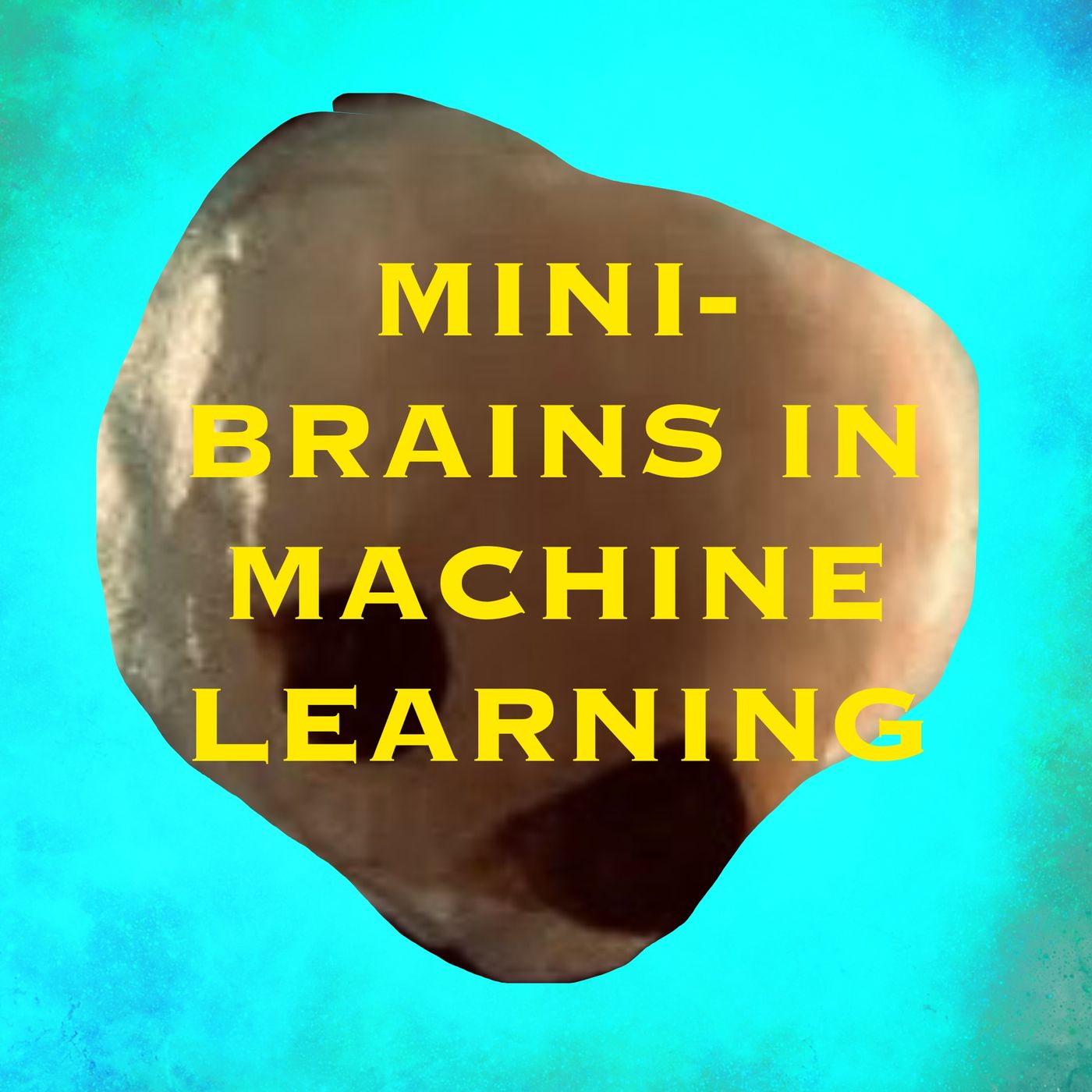
Ep 8989. Brain Organelles, AI, and the Other Scary Science - An Interview with GT (Part I)
This conversation explores the topic of brain organoids and their integration with robots. The discussion covers the development and capabilities of brain organoids, the ethical implications of their use, and the differences between sentience and consciousness. The conversation also delves into the efficiency of human neural networks compared to artificial neural networks, the presence of sleep in brain organoids, and the potential for genetic memories in these structures. The episode concludes with an invitation to part two of the interview and a mention of the podcast's Patreon offering a commercial-free version of the episode.Takeaways Brain organoids are capable of firing neural signals and forming structures similar to those in the human brain during development. The ethical implications of using brain organoids in research and integrating them with robots raise important questions about sentience and consciousness. Human neural networks are more efficient than artificial neural networks, but the reasons for this efficiency are still unknown. Brain organoids exhibit sleep-like patterns and can undergo dendrite growth, potentially indicating learning capabilities. Collaboration between scientists with different thinking skill sets is crucial for advancing research in brain organoids and related fields.Chapters 00:00 Introduction: Brain Organoids and Robots 00:39 Brain Organoids and Development 01:21 Ethical Implications of Brain Organoids 03:14 Summary and Introduction to Guest 03:41 Sentience and Consciousness in Brain Organoids 04:10 Neuron Count and Pain Receptors in Brain Organoids 05:00 Unanswered Questions and Discomfort 05:25 Psychological Discomfort in Brain Organoids 06:21 Early Videos and Brain Organoid Learning 07:20 Efficiency of Human Neural Networks 08:12 Sleep in Brain Organoids 09:13 Delta Brainwaves and Brain Organoids 10:11 Creating Brain Organoids with Specific Components 11:10 Genetic Memories in Brain Organoids 12:07 Efficiency and Learning in Human Brains 13:00 Sequential Memory and Chimpanzees 14:18 Different Thinking Skill Sets and Collaboration 16:13 ADHD and Hyperfocusing 18:01 Ethical Considerations in Brain Research 19:23 Understanding Genetic Mutations 20:51 Brain Organoids in Rat Bodies 22:14 Dendrite Growth in Brain Organoids 23:11 Duration of Dendrite Growth 24:26 Genetic Memory Transfer in Brain Organoids 25:19 Social Media Presence of Brain Organoid Companies 26:15 Brain Organoids Controlling Robot Spiders 27:14 Conclusion and Invitation to Part 2References:Muotri Labs (Brain Organelle piloting Spider Robot)Cortical Labs (Brain Organelle's trained to play Pong)*For a copy of the episode transcript, email us at [email protected] Help Support The Podcast by clicking on the links below: Start YOUR podcast on ZenCastr! Use my special link ZenCastr Discount to save 30% off your first month of any Zencastr paid plan Visit our PatreonSummary:
Ep 8888. Can OpenAi's SORA learn and model real-world physics? (Part 1 of n)
This is a follow up on our previous episode on OpenAi's SORA. We attempt to answer the question, "Can OpenAi's SORA model real-world physics?" We go over the details of the technical report, we discuss some controversial opinoins by experts in the field at Nvdia and Google's Deep Mind. The transcript for episode is avialable below upon request.Help Support The Podcast by clicking on the links below: Try out ZenCastr: Use my special link ZenCastr Discount to save 30% off your first month of any Zencastr paid plan Patreon Link: All content is available commercial free on patreon YouTube Channel: Enjoy this content? subscribe to our YouTube Channel
Ep 8787. OpenAi SORA, Physics-Informed ML, and a.i. Fraud- Oh My!
OpenAI's Sora, a text-to-video model, has the ability to generate realistic and imaginative scenes based on text prompts. This conversation explores the capabilities, limitations, and safety concerns of Sora. It showcases various examples of videos generated by Sora, including pirate ships battling in a cup of coffee, woolly mammoths in a snowy meadow, and golden retriever puppies playing in the snow. The conversation also discusses the technical details of Sora, such as its use of diffusion and transformer models. Additionally, it highlights the potential risks of AI fraud and impersonation. The episode concludes with a look at the future of physics-informed modeling and a call to action for listeners to engage with Breaking Math content.Takeaways OpenAI's Sora is a groundbreaking text-to-video model that can generate realistic and imaginative scenes based on text prompts. Sora has the potential to revolutionize various industries, including entertainment, advertising, and education. While Sora's capabilities are impressive, there are limitations and safety concerns, such as the potential for misuse and the need for robust verification methods. The conversation highlights the importance of understanding the ethical implications of AI and the need for ongoing research and development in the field.Chapters00:00 Introduction to OpenAI's Sora04:22 Overview of Sora's Capabilities07:08 Exploring Prompts and Generated Videos12:20 Technical Details of Sora16:33 Limitations and Safety Concerns23:10 Examples of Glitches in Generated Videos26:04 Impressive Videos Generated by Sora29:09 AI Fraud and Impersonation35:41 Future of Physics-Informed Modeling36:25 Conclusion and Call to ActionHelp Support The Podcast by clicking on the links below: Start YOUR podcast on ZenCastr! Use my special link ZenCastr Discount to save 30% off your first month of any Zencastr paid plan Visit our PatreonContact us at [email protected]#OpenAiSora #
Ep 8686. Math, Music, and Artificial Intelligence - Levi McClain Interview (Final Part)
Help Support The Podcast by clicking on the links below: Try out ZenCastr w/ 30% Discount Use my special link to save 30% off your first month of any Zencastr paid plan Patreon YouTubeTranscripts are available upon request. Email us at [email protected] us on X (Twitter)Follow us on Social Media Pages (Linktree)Visit our guest Levi McClain's Pages: youtube.com/@LeviMcClainlevimcclain.com/SummaryLevi McClean discusses various topics related to music, sound, and artificial intelligence. He explores what makes a sound scary, the intersection of art and technology, sonifying data, microtonal tuning, and the impact of using 31 notes per octave. Levi also talks about creating instruments for microtonal music and using unconventional techniques to make music. The conversation concludes with a discussion on understanding consonance and dissonance and the challenges of programming artificial intelligence to perceive sound like humans do.Takeaways: The perception of scary sounds can be analyzed from different perspectives, including composition techniques, acoustic properties, neuroscience, and psychology. Approaching art and music with a technical mind can lead to unique and innovative creations. Sonifying data allows for the exploration of different ways to express information through sound. Microtonal tuning expands the possibilities of harmony and offers new avenues for musical expression. Creating instruments and using unconventional techniques can push the boundaries of traditional music-making. Understanding consonance and dissonance is a complex topic that varies across cultures and musical traditions. Programming artificial intelligence to understand consonance and dissonance requires a deeper understanding of human perception and cultural context.Chapters00:00 What Makes a Sound Scary03:00 Approaching Art and Music with a Technical Mind05:19 Sonifying Data and Turning it into Sound08:39 Exploring Music with Microtonal Tuning15:44 The Impact of Using 31 Notes per Octave17:37 Why 31 Notes Instead of Any Other Arbitrary Number19:53 Creating Instruments for Microtonal Music21:25 Using Unconventional Techniques to Make Music23:06 Closing Remarks and Questions24:03 Understanding Consonance and Dissonance25:25 Programming Artificial Intelligence to Understand Consonance and Dissonance
Ep 8585. Math, Music, Neuroscience, and Fear - an Interview with Musician Levi McClain
We are joined today by content creator Levi McClain to discuss the mathematics behind music theory, neuroscience, and human experiences such as fear as they relate to audio processing. For a copy of the episode transcript, email us at [email protected]. For more in depth discussions on these topics and more, check out Levi's channels at: Patreon.com/LeviMcClainyoutube.com/@LeviMcClainTiktok.com/@levimcclainInstagram.com/levimcclainmusicHelp Support The Podcast by clicking on the links below: Start YOUR podcast on ZenCastr! Use my special link ZenCastr Discount to save 30% off your first month of any Zencastr paid plan Visit our Patreon
Ep 8484. (Part 2) Intelligence in Nature v. Machine Learning - an Interview with Brit Cruise
Help Support The Podcast by clicking on the links below: Start YOUR podcast on ZenCastr! Use my special link ZenCastr Discount to save 30% off your first month of any Zencastr paid plan Visit our PatreonPart 2/2 of the interview with Brit Cruise, creator of the YouTube channel "Art of the Problem," about interesting mathematics,, electrical and computer engineering problems. In Part 1, we explored what 'intelligence' may be defined as by looking for examples of brains and proto-brains found in nature (including mold, bacteria, fungus, insects, fish, reptiles, and mammals). In Part 2, we discuss aritifical neural nets and how they are both similar different from human brains, as well as the ever decreasing gap between the two. Brit's YoutTube Channel can be found here: Art of the Problem - Brit CruiseTranscript will be made available soon! Stay tuned. You may receive a transcript by emailing us at [email protected] a supporter of this podcast: https://www.spreaker.com/podcast/breaking-math-podcast--5545277/support.
Ep 8383. Intelligence in Nature v. Machine Learning-An Interview with Brit Cruise - Part 1 of 2
In this episode (part 1 of 2), I interview Brit Cruise, creator of the YouTube channel 'Art of the Problem.' On his channel, he recently released the video "ChatGPT: 30 Year History | How AI learned to talk." We discuss examples of intelligence in nature and what is required in order for a brain to evolve at the most basic level. We use these concepts to discuss what artificial intelligence - such as Chat GPT - both is and is not.Help Support The Podcast by clicking on the links below: Start YOUR podcast on ZenCastr! Use my special link ZenCastr Discount to save 30% off your first month of any Zencastr paid plan Visit our Patreon