The Thomistic Institute
2,030 episodes — Page 29 of 41
Friendship for Young Adults: A Practical Thomistic Approach | Prof. John Cuddeback
This talk was given on December 10, 2021 at Ashland University. For more information on upcoming events, please visit our website at www.thomisticinstitute.org. About the speaker: John A. Cuddeback, PhD, is professor of Philosophy at Christendom College, where he has taught for twenty-five years. He lectures widely on topics including virtue, fatherhood, friendship, and household, and his professional writings appear in various academic journals and books. His book True Friendship is being republished by Ignatius Press. His blogging at BaconFromAcorns and LifeCraft is renowned for applying an ancient wisdom to life today.
Aquinas and Religious Pluralism: How to Engage Without Sacrificing the Truth | Prof. Thomas Hibbs
This lecture was given on December 7, 2021 at George Mason University. For more information on upcoming events, please visit our website at www.thomisticinstitute.org. About the speaker: Thomas Hibbs is currently Distinguished Professor of Ethics & Culture and Dean of the Honors College at Baylor University. He is the author of books including Virtue's Splendor: Wisdom, Prudence, and the Human Good and Shows About Nothing, one of two books of his about film. He has nearly completed a book on Pascal, tentatively entitled Divine Irony and is at work on a book on Nihilism, Beauty, and God, an application of Jacques Maritain’s aesthetic theory to the arts of poetry and painting in the 20th century. He also has written on film, culture, books and higher education in publications including Books and Culture, Christianity Today, First Things, and The Chronicle of Higher Education.
Why Should We Believe God Exists? | Prof. Gregory Doolan (duplicate)
This lecture was given on December 7, 2021 at the University of Wisconsin, Madison. The handout for this lecture can be found here: https://tinyurl.com/mrrhu2sp. For more information on upcoming events, please visit our website at www.thomisticinstitute.org. About the speaker: Gregory T. Doolan received his B.A. in political theory from Georgetown University in 1993 and his Ph.D. in philosophy from The Catholic University of America in 2003. He taught philosophy at the Dominican House of Studies in Washington, D.C. from 2004–05 and joined the faculty of the School of Philosophy at the Catholic University of America in 2005. Dr. Doolan’s research interest is in the area of Aquinas’s metaphysics; in recent years, his focus has been on Aquinas’s account of the Aristotelian categories of being. A native of Philadelphia, Dr. Doolan currently lives in Washington, D.C. with his wife and three children.
Thomists at War: Dante, Aquinas, and the Dominicans | Dr. George Corbett
This lecture was given on November 15, 2021 at Oxford University. For more information on upcoming events, please visit our website at www.thomisticinstitute.org. About the speaker: Dr. George Corbett is a Senior Lecturer in Theology and the Arts at the University of St Andrews. Previously, he held positions as Junior Research Fellow in Philosophy, Trinity College, and affiliated lecturer in Italian, University of Cambridge, where he also taught English literature and theology. He received his BA (double first), MPhil (distinction), and PhD (AHRC-funded) from the University of Cambridge. He has also studied in Pisa (as an Erasmus-Socrates exchange scholar at La Scuola Normale Superiore), Rome (Institutum Pontificium Alterioris Latinitatis), and Montella (Vivarium Novum). Dr. Corbett directs CEPHAS (a Thomistic Centre for Philosophy and Scholastic Theology), TheoArtistry (a project linking up theologians and artists), and is leading on a new collaborative MLitt in Sacred Music. 892718

Can You Be Spiritual But Not Religious? | Dr. R.J. Snell
This walk was given on September 21, 2021 at Yale University. For more information on upcoming events, please visit our website at www.thomisticinstitute.org. About the speaker: R. J. Snell is Director of Academic Programs at the Witherspoon Institute in Princeton, NJ. Prior to his appointment at the Witherspoon Institute, he was Professor of Philosophy and Director of the Philosophy Program at Eastern University and the Templeton Honors College, where he founded and directed the Agora Institute for Civic Virtue and the Common Good. He has been visiting instructor at Princeton University, where he is also executive director of the Aquinas Institute for Catholic Life. He's written books and articles on natural law, education, Bernard Lonergan, boredom, subjectivity, and sexual ethics for a variety of publications. 892718
Why Do We Die? | Prof. Christopher Frey
This lecture was delivered on October 28, 2021 at the University of South Carolina. For more information on upcoming events, please visit our website at www.thomisticinstitute.org. About the speaker: Christopher Frey is currently an associate professor in the department of philosophy at the University of South Carolina. Prof. Frey works primarily in Ancient Greek philosophy, especially Aristotle’s natural philosophy and metaphysics. He is writing a book entitled The Principle of Life: Aristotelian Souls in an Inanimate World. It concerns the distinction between the animate and the inanimate, the unity of living organisms, nutrition, birth, death, and, more generally, what one’s metaphysical worldview looks like if one takes life to be central. He also works in contemporary philosophy of perception and mind and has written extensively on the relationship between the intentionality and phenomenality of perceptual experience. In addition to these two main areas of research, he has secondary projects in metaphysics, the philosophy of action, Medieval philosophy, Early Modern philosophy, and the history of analytic philosophy.
Does Moral Knowledge Require God?: An Introduction To Thomistic Epistemology | Prof. Tomás Bogardus
Prof. Bogardus' slides can be viewed here: https://tinyurl.com/dc329b72 This lecture was given on November 30, 2021 at the University of Texas at Austin. For more information on upcoming events, please visit our website at www.thomisticinstitute.org. About the speaker: Tomás Bogardus is associate professor of philosophy at Pepperdine University. He was born in Long Beach, California, and earned his BS in biology at UC San Diego, his MA in philosophy at Biola University, and his PhD in philosophy at the University of Texas at Austin. He works mainly in metaphysics and epistemology, and is most interested in the mind-body problem and the rationality of religious belief.
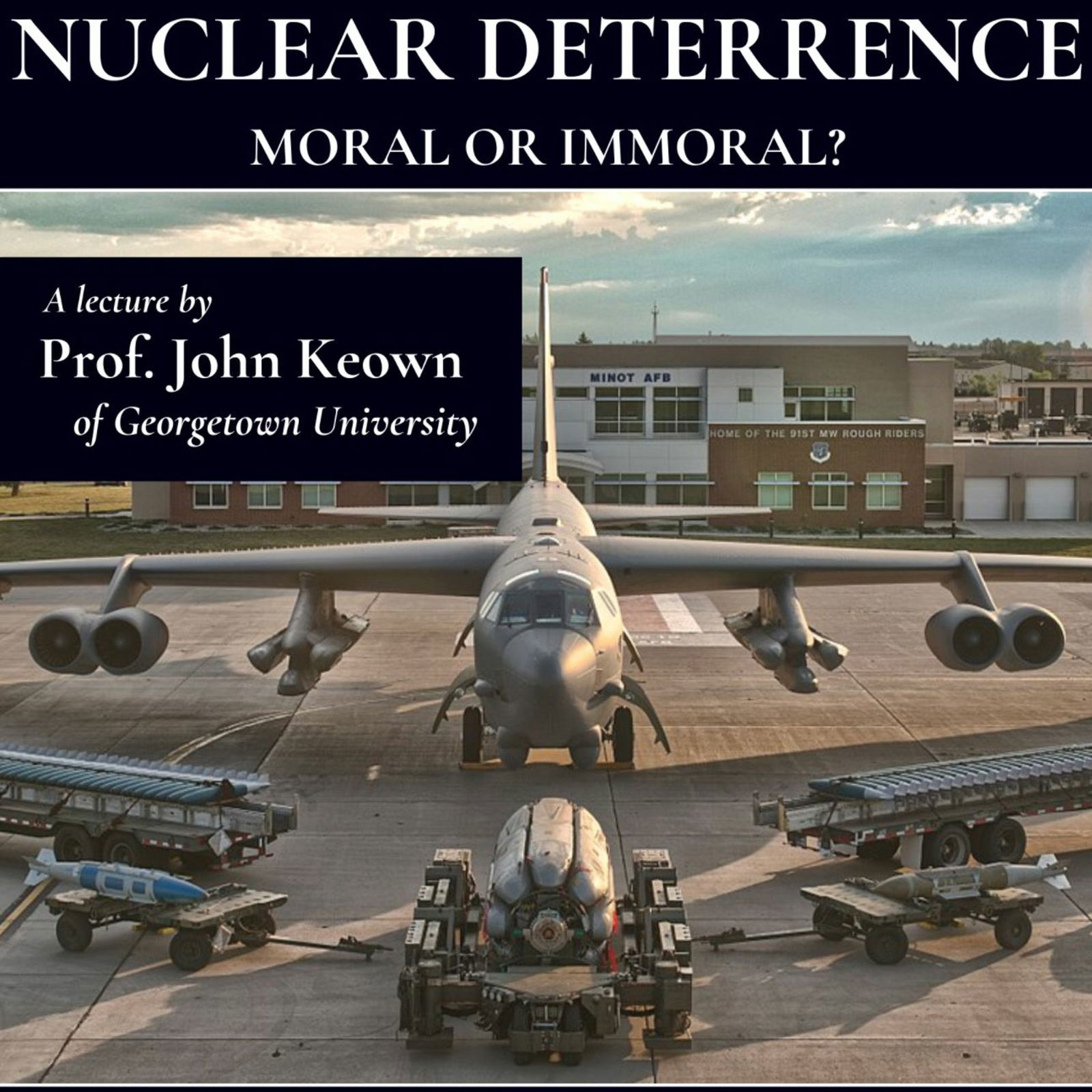
Nuclear Deterrence: Moral or Immoral? | Prof. John Keown
This lecture was given on November 19, 2021 at the University of South Carolina. View Prof. Keown's slides here: https://tinyurl.com/yck2hbwu For more information on upcoming events, please visit our website at www.thomisticinstitute.org. About the speaker: Dr. John Keown is the Rose F. Kennedy Professor of Christian Ethics in the Kennedy Institute of Ethics.He graduated in law from Cambridge and took a doctorate in law at Oxford, after which he was called to the Bar of England and Wales (Middle Temple). After a spell teaching medical and criminal law at the University of Leicester, he became the first holder of a lectureship in the law and ethics of medicine at Cambridge, where he was elected to a Fellowship at Queens' College and, later, a Senior Research Fellowship at Churchill College. In 2015 he was made a Doctor of Civil Law by the University of Oxford in recognition of his contribution to law and bioethics.He has published widely in the law and ethics of medicine, specializing in issues at the beginning and end of life. The second and heavily revised edition of his widely acclaimed book Euthanasia, Ethics and Public Policy: An Argument Against Legalisation was published by Cambridge University Press in 2018.His research has been cited by distinguished bodies worldwide, including the United States Supreme Court; the Law Lords; the House of Commons; the House of Lords Select Committee on Medical Ethics, and the Australian Senate. In 2011 he testified as an expert witness for Canada in a leading case concerning the country’s laws against euthanasia and physician-assisted suicide. He has served as a member of the Ethics Committee of the British Medical Association and has been regularly consulted, not least by legislators and the media, on legal and ethical aspects of medicine. Author of the first paper to demonstrate comprehensively that the American War for Independence failed to satisfy all (if any) of the criteria for a ‘just war’ (and was, therefore, an unjust revolution), he has also written a play based on one of the classic cases in law and bioethics: the trial of Dr. Leonard Arthur for the attempted murder of a newborn baby with Down's syndrome.

Tolstoy's Anna Karenina and the Project of Literature | Sr. Jane Dominic Laurel, O.P.
This lecture was given on November 5, 2021 at Auburn University. For more information on upcoming events, please visit our website at www.thomisticinstitute.org. About the speaker: Sr. Jane Dominic Laurel is a member of the St. Cecilia Congregation of Dominican Sisters of Nashville, Tennessee. She received her Doctorate in Sacred Theology from the Pontifical University of St. Thomas Aquinas in Rome, Italy. She has been active in her religious community's teaching apostolate for over fifteen years and has assisted with the theological formation of the newest members of her religious congregation. In addition to contributing articles to a number of journals and magazines, including the Vatican newspaper (L'Osservatore Romano), The National Catholic Bioethics Quarterly, The Linacre Quarterly, and the Baylor University Medical Center Proceedings, Sister has served as editor-in-chief of her Congregation's book, Praying as a Family (also available in Spanish, Chinese, and Arabic versions). With EWTN, she directed a television series of the same title. She has also served as the creator and founding Director of the University of Dallas Studies in Catholic Faith & Culture Program.
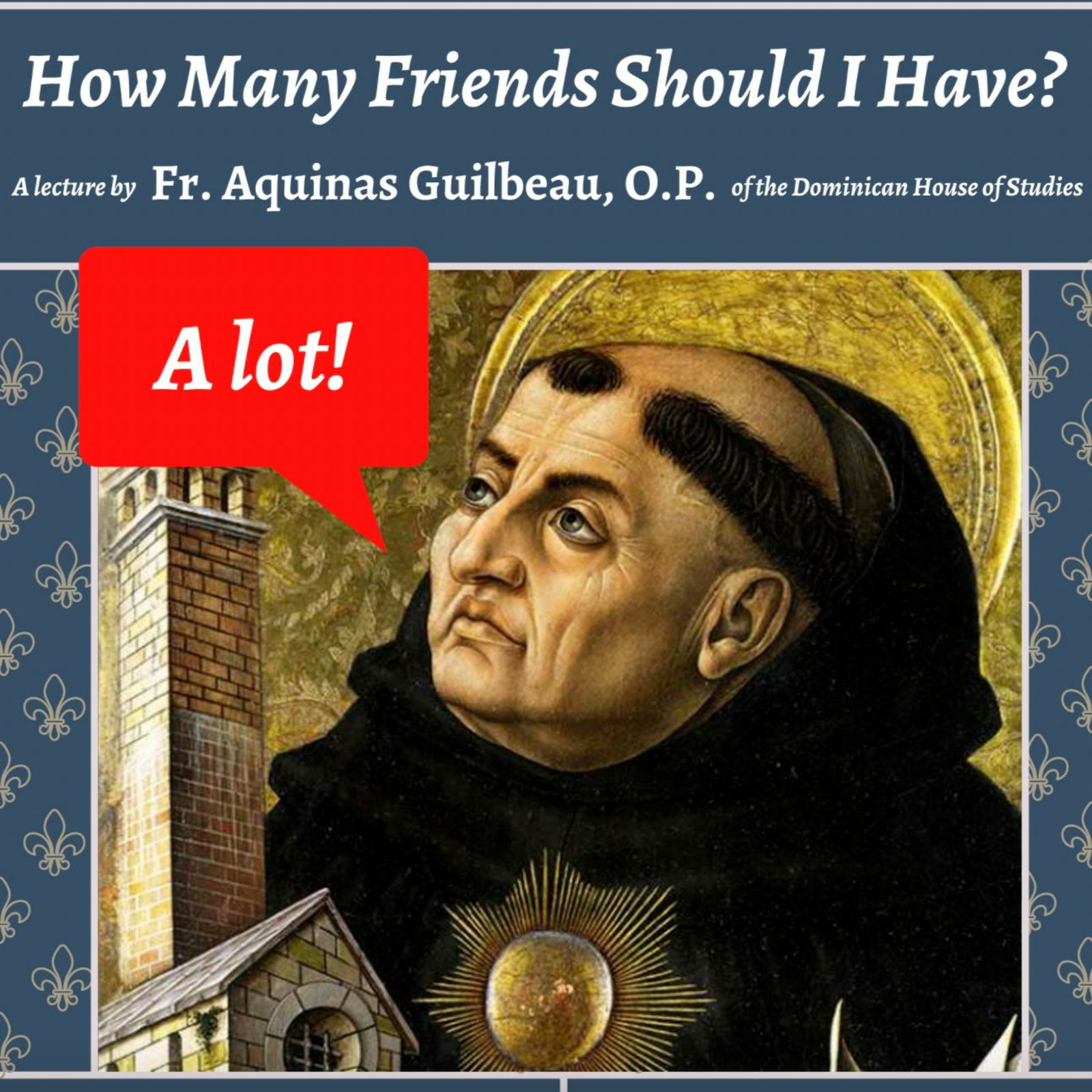
How Many Friends Should I Have? ‘A Lot,’ says Thomas Aquinas | Fr. Aquinas Guilbeau, O.P.
Fr. Guilbeau's handout can be found here: https://tinyurl.com/3vw4dp4e This lecture was delivered on December 6, 2021 at St. Mary Mother of God Catholic Church for the DC Young Professionals Chapter of the Thomistic Institute. For more information on upcoming events, please visit our website at www.thomisticinstitute.org. About the speaker: A native of Louisiana, Fr. Aquinas Guilbeau, O.P. entered the Province of St. Joseph in 2005. After several years of pastoral work in New York City, Fr. Guilbeau began doctoral studies in moral theology at the University of Fribourg, where he completed a dissertation in moral theology. His topic was Charles De Koninck’s doctrine of the common good. In addition to his teaching, Fr. Guilbeau is prior of the Dominican House of Studies.
St. Thomas Aquinas' Pursuit of Wisdom and Friendship with God | Fr. Dominic Legge, O.P.
This homily by Fr. Dominic Legge, O.P. was given on Thursday, Jan. 27 in the Basilica of the National Shrine of the Immaculate Conception for the Catholic University of America's annual University Mass in honor of the school's patron, St. Thomas Aquinas. For more information on upcoming events, please visit our website at www.thomisticinstitute.org About the speaker: Fr. Dominic Legge, O.P., is the Director of the Thomistic Institute and an Assistant Professor in systematic theology at the Pontifical Faculty of the Immaculate Conception in Washington, D.C. He holds a J.D. from Yale Law School, a Ph.L. from the School of Philosophy of the Catholic University of America, and a doctorate in Sacred Theology from the University of Fribourg. He entered the Order of Preachers in 2001 and was ordained a priest in 2007. He practiced law for several years as a trial attorney for the U.S. Department of Justice before becoming a Dominican.

How to Die Well | Dr. Farr Curlin
This lecture was given on November 2, 2021 at Yale University. For more information on upcoming events, please visit our website at www.thomisticinstitute.org. About the speaker: Farr Curlin is the Josiah C. Trent Professor of Medical Humanities and Co-Director of the Theology, Medicine, and Culture Initiative (TMC) at Duke University. Dr. Curlin’s ethics scholarship takes up moral questions that are raised by religion-associated differences in physicians’ practices. He is an active palliative medicine physician and holds appointments in both the School of Medicine and the Divinity School, where he is working with colleagues to develop a new interdisciplinary community of scholarship and training focused on the intersection of theology, medicine, and culture.
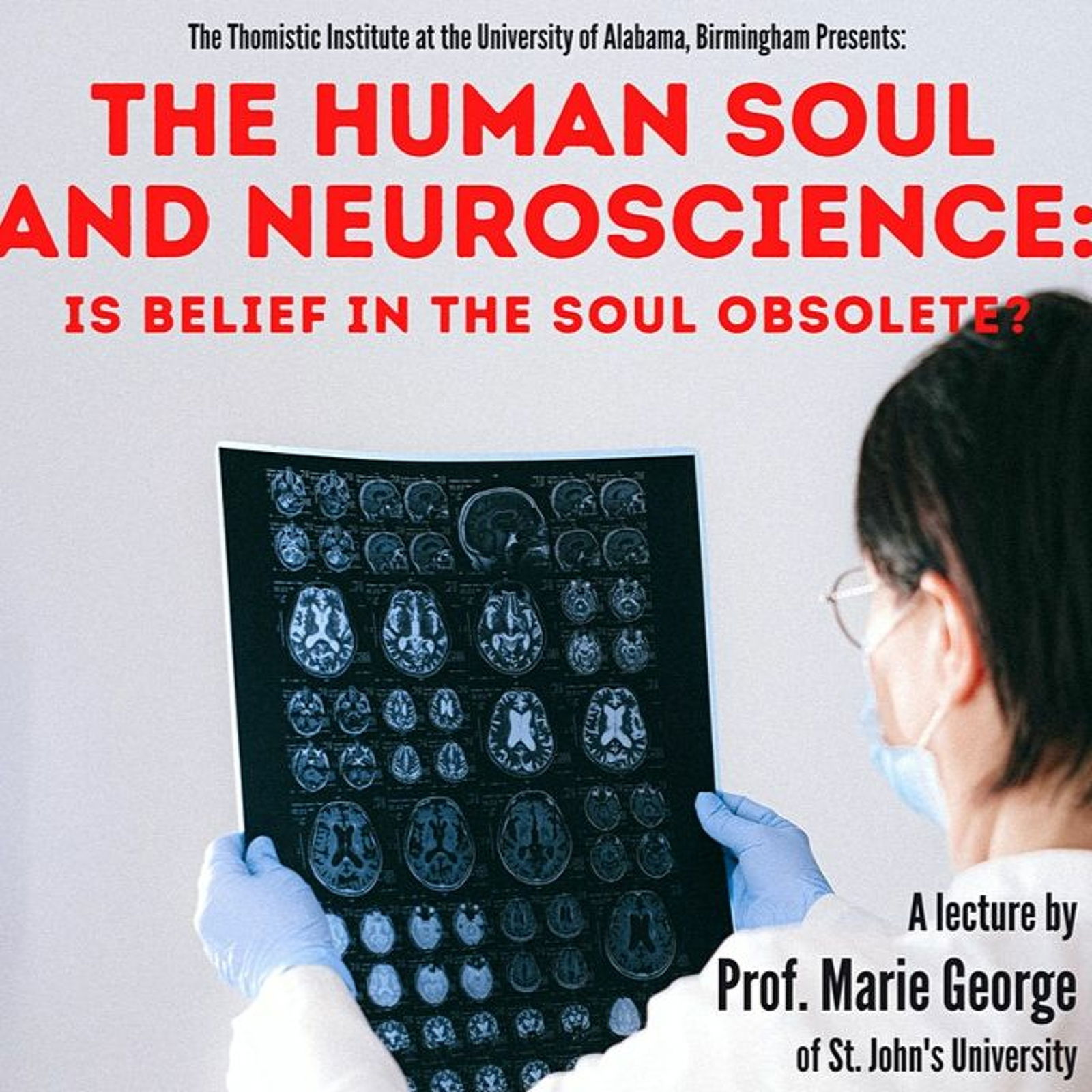
The Human Soul and Neuroscience: Is Belief in the Soul Obsolete? | Prof. Marie George
This lecture was given at University of Alabama, Birmingham on November 1, 2021. For more events and info visit thomisticinstitute.org/events-1. Marie George has been a member of the Philosophy Department since 1988. Professor George is an Aristotelian-Thomist whose interests lie primarily in the areas of philosophy of nature and philosophy of science. She has received several awards from the John Templeton foundation for her work in science and religion, and in 2007 she received a grant from the Center for Theology and the Natural Sciences (CTNS) for an interdisciplinary project entitled: “The Evolution of Sympathy and Morality.” Professor George has authored over 50 peer-reviewed articles and two books: Christianity and Extraterrestrials? A Catholic Perspective (2005) and Stewardship of Creation (2009). She is currently working on Aquinas’s “Fifth Way,” and also on a variety of questions concerning living things (self-motion, consciousness, evolution, etc.). Professor George is a member of ten philosophical societies, including the American Catholic Philosophical Association, the Society for Ancient Greek Philosophy, and more.
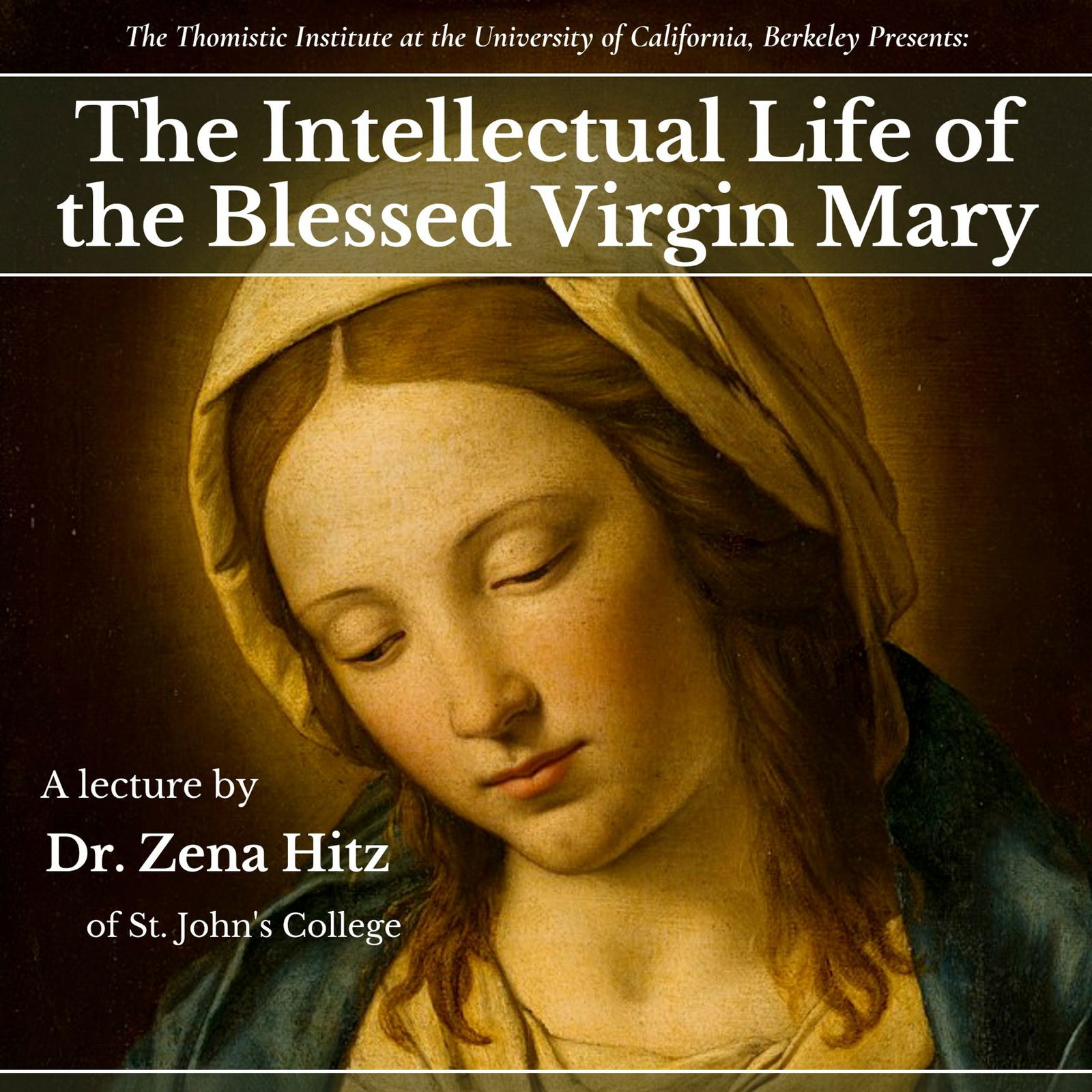
The Intellectual Life of The Blessed Virgin Mary | Dr. Zena Hitz
This lecture was given at University of California, Berkeley on November 16, 2021. For more events and info visit thomisticinstitute.org/events-1. Zena Hitz is a Tutor at St. John's College where she teaches across the liberal arts. She is interested in defending intellectual activity for its own sake, as against its use for economic or political goals. Her forthcoming book, Intellectual Life, is rooted in essays that have appeared in First Things, Modern Age, and The Washington Post. Her scholarly work has focused on the political thought of Plato and Aristotle, especially the question of how law cultivates or fails to cultivate human excellence. She received an MPhil in Classics from Cambridge and studied Social Thought and Philosophy at the University of Chicago before finishing her PhD in Philosophy at Princeton.
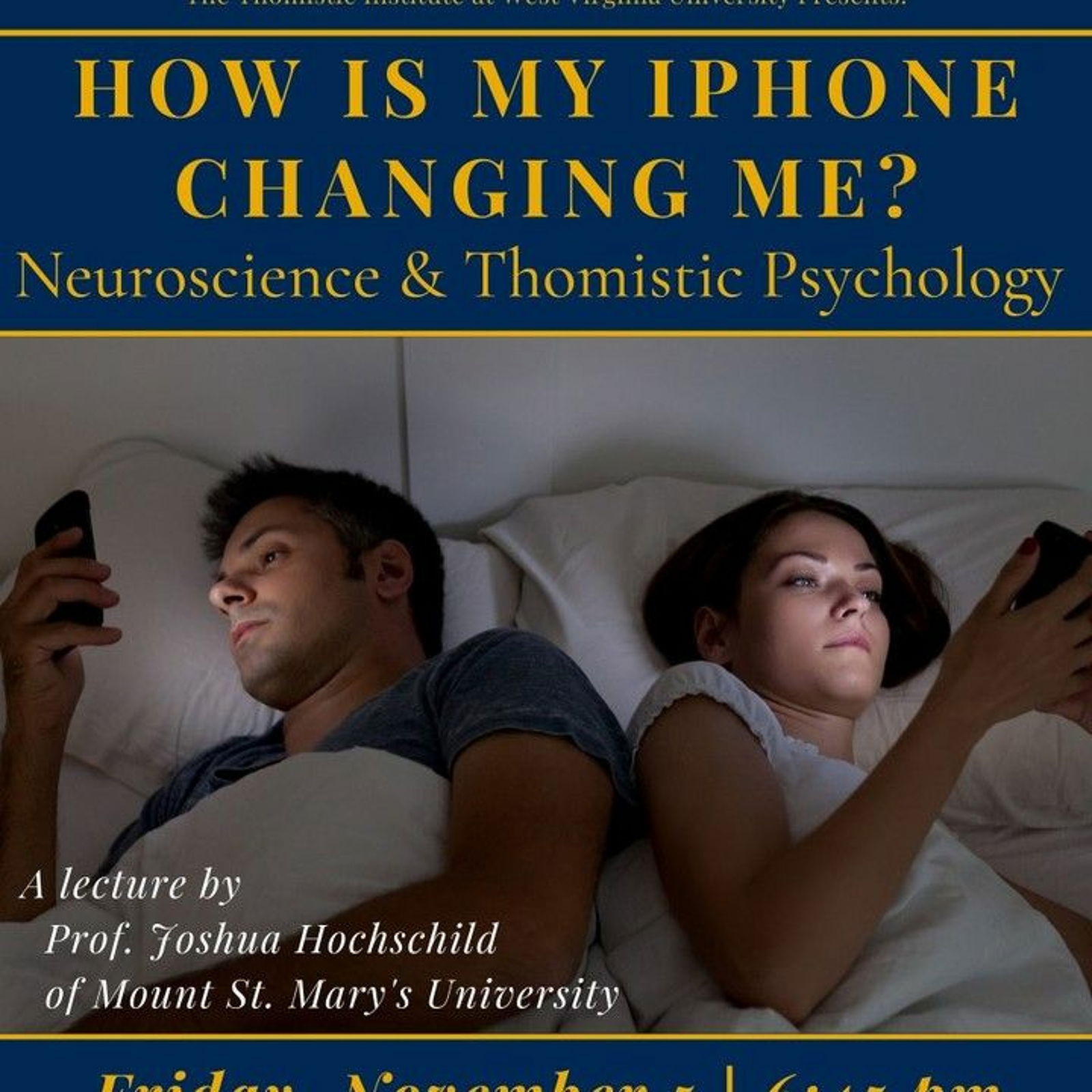
How Is My iPhone Changing Me? Neuroscience and Thomistic Psychology | Prof. Joshua Hochschild
This lecture was given at West Virginia University on November 5, 2021. For information on upcoming events, please visit our website at www.thomisticinstitute.org. About the speaker: Joshua Hochschild is the Monsignor Robert R. Kline Professor of Philosophy at Mount St. Mary’s University, where he also served six years as the inaugural Dean of the College of Liberal Arts. His primary research is in medieval logic, metaphysics, and ethics, with broad interest in liberal education and the continuing relevance of the Catholic intellectual tradition. He is the author of The Semantics of Analogy: Rereading Cajetan’s De Nominum Analogia (2010), translator of Claude Panaccio’s Mental Language: From Plato to William of Ockham (2017), and co-author of A Mind at Peace: Reclaiming an Ordered Soul in the Age of Distraction (2017). His writing has appeared in First Things, Commonweal, Modern Age and the Wall Street Journal. For 2020-21 he’s been elected to serve as President of the American Catholic Philosophical Association.
God and Suffering: How Could God Allow Evil? | Fr. Thomas Petri, O.P.
This lecture was delivered for the University of Texas, El Paso Chapter on 4/28/2021.For information on upcoming events, please visit our website at www.thomisticinstitute.org.About the Speaker:Father Thomas Petri, O.P. is the Vice President and Dean of the Pontifical Faculty of the Immaculate Conception at the Dominican House of Studies, where he also serves as an assistant professor of moral theology and pastoral studies. Ordained a priest in 2009, he holds a Doctorate in Sacred Theology from The Catholic University of America.
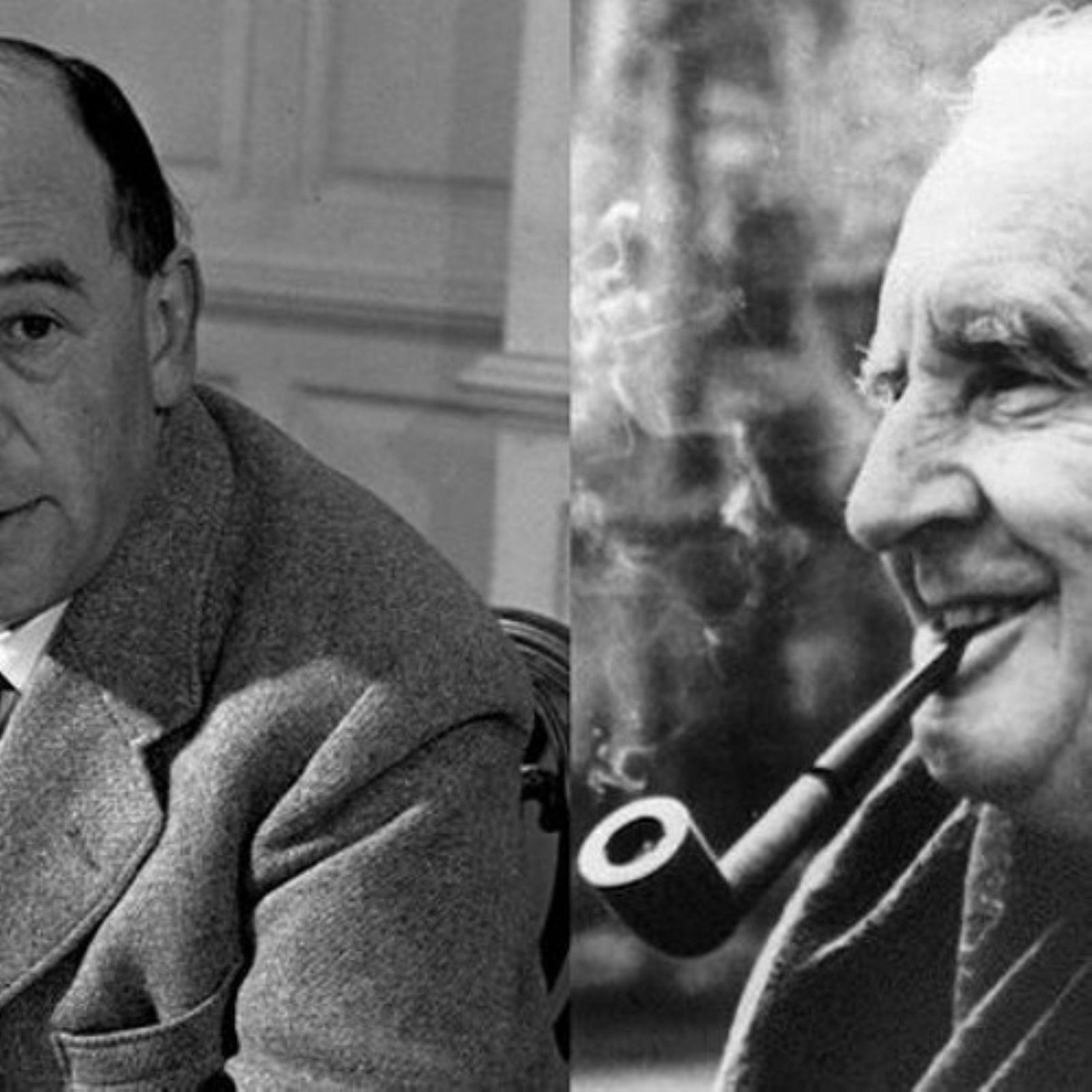
C.S. Lewis and J.R.R. Tolkien: Faith and Reason in a World under Siege | Prof. Carol Zaleski
This lecture was given to the University of California, Los Angeles and the University of California, Santa Barbara on February 24, 2021.For more information on upcoming events, visit our website at www.thomisticinstitute.org.About the speaker:Carol Zaleski is the Professor of World Religions at Smith College in Northampton Massachusetts, where she has been teaching philosophy of religion, world religions, religion and literature, and Catholic thought since 1989. She is the author of Otherworld Journeys: Accounts of NearDeath Experience in Medieval and Modern Times (Oxford University Press) and The Life of the World to Come: NearDeath Experience and Christian Hope (Oxford University Press); and she is coauthor with Philip Zaleski of Prayer: A History (Houghton Mifflin), The Book of Heaven (Oxford University Press), and The Fellowship: The Literary Lives of the Inklings: J.R.R. Tolkien, C. S. Lewis, Owen Barfield, Charles Williams (Farrar, Straus & Giroux).
On Distributism | Prof. Andrew Abela
This lecture was given to the University of Virginia on February 11, 2021.For more information on upcoming events, visit our website at www.thomisticinstitute.org.About the speaker:Andrew Abela is the founding dean of the Busch School of Business and at The Catholic University of America, in Washington, D.C. His research on the integrity of the marketing process, including marketing ethics, Catholic Social Doctrine, and internal communication, has been published in several academic journals, including the Journal of Marketing, the Journal of the Academy of Marketing Science, the Journal of Business Ethics, and the Journal of Markets & Morality, and in two books. He is the co-editor of A Catechism for Business, from Catholic University Press, and winner of the 2009 Novak Award, a $10,000 prize given by the Acton Institute for “significant contributions to the study of the relationship between religion and economic liberty.”Dr. Abela also provides consulting and training in internal communications; recent clients of his include Microsoft Corporation, JPMorganChase, and the Corporate Executive Board. Prior to his academic career, he spent several years in industry as brand manager at Procter & Gamble, management consultant with McKinsey & Company, and Managing Director of the Marketing Leadership Council of the Corporate Executive Board. He holds a B.Sc. from the University of Toronto, an MBA from the Institute for Management Development (IMD) in Switzerland, and a Ph.D. in Marketing and Ethics from the Darden Business School at the University of Virginia. He and his wife, Kathleen, live in Great Falls, Virginia with their six children.
Physics and Philosophy: Does Thomas Aquinas Have Anything to Offer? | Fr. Thomas Davenport, O.P.
This lecture was given to UC Berkeley on February 8, 2021.For more information on upcoming events, visit our website at www.thomisticinstitute.org.About the Speaker:Fr. Thomas Davenport, O.P. is a Dominican friar, physicist, and philosopher. He joined the faculty of philosophy at the Angelicum in Rome in 2020, where he co-leads the Project for Science and Religion. Before joining the Dominican order he studied physics at the California Institute of Technology before going on to earn his doctorate in physics from Stanford University studying theoretical particle physics. The focus of his scientific research is writing and testing simulations for high energy particle colliders like the LHC at CERN. After joining the Dominicans in 2010, he studied philosophy and theology in preparation for his ordination to the priesthood in 2017. In addition, he earned a Licentiate in Philosophy from the Catholic University of America, focusing on the philosophy of science and natural philosophy. For two years he was an Assistant Professor of Physics at Providence College in Providence, RI, where he taught physics and restarted a research program in particle physics. He has written and spoken in a number of forums on the relationship between faith and science including contributions to the Thomistic Evolution project and organizing conferences on science and philosophy for the Thomistic Institute in Washington, DC.
Are Science And Religion Compatible? | Fr. Michael Dodds, O.P.
This lecture was given to the University of Edinburgh on January 26, 2021. The handout for this lecture is available here: tinyurl.com/tncfnsfeFor more information on upcoming events, visit our website at www.thomisticinstitute.org.About the speaker:Michael J. Dodds, O.P., is Professor of Philosophy and Systematic Theology at the Dominican School of Philosophy and Theology at the Graduate Theological Union, Berkeley, California. After undergraduate studies at Seattle University, he entered the Order of Preachers in 1970 and was ordained in 1977. He then taught for three years at St. Mary’s College, Moraga, California, before doing his doctoral studies at the University of Fribourg, Switzerland, from which he graduated summa cum laude in 1986. He has served as Academic Dean of the Dominican School of Philosophy and Theology, Convener of the Theology Area at the Graduate Theological Union, and Regent of Studies and Vicar Provincial of the Western Dominican Province. He is the author of The Unchanging God of Love: Thomas Aquinas and Contemporary Theology on Divine Immutability (2008), and Unlocking Divine Action: Contemporary Science and Thomas Aquinas (2012), both from The Catholic University of America Press.
Aquinas on the New Adam | Prof. Matthew Levering
This talk was given at the annual lecture in honor of St. Thomas Aquinas held at the Dominican House of Studies in Washington, D.C. on Jan. 21, 2021.For more information about upcoming events, visit thomisticinstitute.orgAbout the speaker:Matthew Levering holds the James N. and Mary D. Perry Jr. Chair of Theology at Mundelein Seminary. He is the author or editor of over forty books on topics of dogmatic, sacramental, moral, historical, and biblical theology. He is the translator of Gilles Emery’s The Trinity. Most recently he has published Engaging the Doctrine of Creation, An Introduction to Vatican II as an Ongoing Theological Event, and Engaging the Doctrine of the Holy Spirit: Love and Gift in the Trinity and the Church. He coedits two quarterly journals, Nova et Vetera and International Journal of Systematic Theology. Since 2004, he has been a participant in Evangelicals and Catholics Together, and from 20072016 he served as Chair of the Board of the Academy of Catholic Theology. He cofounded the Chicago Theological Initiative and has directed the Center for Scriptural Exegesis, Philosophy, and Doctrine since 2011. He is a Distinguished Fellow of the St. Paul Center.
So You Want to Be a Doctor? Medicine as Instrumental Job vs. Sacred Vocation | Dr. Farr Curlin
This lecture was given on February 11, 2021 to the Vanderbilt University and Vanderbilt Medical School chapters.For more information on upcoming events, visit our website at www.thomisticinstitute.orgAbout the Speaker:Farr Curlin is the Josiah C. Trent Professor of Medical Humanities and Co-Director of the Theology, Medicine, and Culture Initiative (TMC) at Duke University. Dr. Curlin’s ethics scholarship takes up moral questions that are raised by religion associated differences in physicians’ practices. He is an active palliative medicine physician and holds appointments in both the School of Medicine and the Divinity School, where he is working with colleagues to develop a new interdisciplinary community of scholarship and training focused on the intersection of theology, medicine, and culture.
Law without a Lawgiver? | Prof. Francis Beckwith
This lecture was given on October 29, 2020 to Texas A&M University.For more information on upcoming events, visit our website at www.thomisticinstitute.orgAbout the Speaker:Francis J. Beckwith is Professor of Philosophy & Church-State Studies at Baylor University, where he also serves as Associate Director of the Graduate Program in Philosophy. Among his over one dozen books are Defending Life: A Moral and Legal Case Against Abortion Choice (Cambridge University Press, 2007), Politics For Christians: Statecraft As Soulcraft (IVP, 2010), and Taking Rites Seriously: Law, Politics, and the Reasonableness of Faith (Cambridge University Press, 2015), winner of the American Academy of Religion's prestigious 2016 Book Award for Excellence in the Study of Religion in Constructive-Reflective Studies. He is a graduate of the Washington University School of Law, St. Louis (MJS) as well as Fordham University (PhD, MA, philosophy).
Creation and Evolution: Answers to Different Questions | Prof. Kenneth Kemp
This lecture was given on January 25, 2021 to West Virginia University.For more information on upcoming events, visit our website at www.thomisticinstitute.orgAbout the Speaker:Kenneth W. Kemp is Associate Professor Emeritus in the Department of Philosophy at the University of St. Thomas in St. Paul, Minnesota, and a Fellow of that University’s Center for Catholic Studies. His education includes an M.A. in the History and Philosophy of Science as well as a Ph.D. in Philosophy from the University of Notre Dame. His research work has included ethics (in particular questions of morality and war) and historical and philosophical inquiry into the relations between science and religion (with a particular focus on the theory of evolution).
Suffering, Sacrifice, and Leadership | Prof. Joseph McInerney
This lecture was given on November 23, 2020 to the United States Military Academy - West Point.For more information on upcoming events, visit our website at www.thomisticinstitute.orgAbout the Speaker:Captain Joe McInerney is the Chairman of the Department of Leadership, Ethics, and Law and Permanent Military Professor of Applied Ethics at the United States Naval Academy. Captain McInerney lectures in the Naval Academy’s core ethics course, which is offered to all Third Class Midshipman (sophomores) at the Naval Academy and teaches elective courses in the fields of Christian morality and leadership. In 2016, Captain McInerney published his first book, The Greatness of Humility: St. Augustine on Moral Excellence. Captain McInerney served as a Fellow at the Stockdale Center for Ethical Leadership at the United States Naval Academy for the 2008-2009 academic year. He graduated from The Catholic University of America with a doctorate in systematic theology in October 2012 after completing a dissertation on the moral thought of St. Augustine. Captain McInerney also holds a bachelor’s degree in history from the United States Naval Academy and a Masters of Theological Studies from the Pontifical Lateran University.
When is War Justified? A Catholic Perspective | Prof. Joseph Capizzi
This lecture was given on November 4, 2020 to University College Dublin. The slides for this lecture are available here: tinyurl.com/ydf93234For more information on upcoming events, visit our website at www.thomisticinstitute.orgAbout the Speaker:Joseph E. Capizzi is Ordinary Professor of Moral Theology at the Catholic University of America. He teaches in the areas of social and political theology, with special interests in issues in peace and war, citizenship, political authority, and Augustinian theology. He has written, lectured, and published widely on just war theory, bioethics, the history of moral theology, and political liberalism. Dr. Capizzi is the Executive Director of the Institute for Human Ecology at Catholic University. He received his B.A. from the University of Virginia, his Masters in Theological Studies from Emory University, and his M.A. and Ph.D. in Theology from the University of Notre Dame. He lives in Maryland with his wife and six children.
Reading Scripture with Benedict and Francis | Prof. Lewis Ayres
The lecture was given to the University of Edinburgh on November 10, 2020.For more information on upcoming events, visit our website at www.thomisticinstitute.orgAbout the Speaker:Lewis Ayres is Professor of Catholic and Historical Theology at Durham University in the United Kingdom. He specializes in the study of early Christian theology, especially the history of Trinitarian theology and early Christian exegesis. He is also deeply interested in the relationship between the shape of early Christian modes of discourse and reflection and the manner in which renewals of Catholic theology during the last hundred years have attempted to engage forms of modern historical consciousness and sought to negotiate the shape of appropriate scriptural interpretation in modernity, even as they remain faithful to the practices of classical Catholic discourse and contemplation.
Catholicism in Contemporary Astronomy | Prof. Karin Oberg
The lecture was given to Boston University on October 27, 2020.For more information on upcoming events, visit our website at www.thomisticinstitute.orgAbout the Speaker:Karin Öberg is Professor of Astronomy at Harvard University. Her specialty is astrochemistry and her research aims to uncover how chemical processes affect the outcome of planet formation, especially the chemical habitability of nascent planets. Dr. Öberg obtained her B.Sc. in chemistry at Caltech in 2005, and her Ph.D. in astronomy, with a thesis focused on laboratory astrochemistry, from Leiden University in 2009. She did postdoctoral work at Harvard-Smithsonian Center for Astrophysics as a NASA Hubble fellow, focusing on millimeter observations of planet-forming disks around young stars. In 2013 she joined the Harvard astronomy faculty as an assistant professor. She was promoted and named the Thomas D. Cabot Associate Professor in Astronomy in 2016, and promoted to full professor with tenure in 2017. Dr. Öberg’s research in astrochemistry has been recognized with a Sloan fellowship, a Packard fellowship, the Newton Lacy Pierce Award from the American Astronomical Society, and a Simons fellowship.
Does God Exist? And How Could We Know? | Prof. Joshua Hochschild
The lecture was given to West Virginia University on October 16, 2020.For more information on upcoming events, visit our website at www.thomisticinstitute.orgAbout the Speaker:Joshua Hochschild is the Monsignor Robert R. Kline Professor of Philosophy at Mount St. Mary’s University, where he also served six years as the inaugural Dean of the College of Liberal Arts. His primary research is in medieval logic, metaphysics, and ethics, with broad interest in liberal education and the continuing relevance of the Catholic intellectual tradition. He is the author of The Semantics of Analogy: Rereading Cajetan’s De Nominum Analogia (2010), translator of Claude Panaccio’s Mental Language: From Plato to William of Ockham (2017), and co-author of A Mind at Peace: Reclaiming an Ordered Soul in the Age of Distraction (2017). His writing has appeared in First Things, Commonweal, Modern Age and the Wall Street Journal. For 2020-21 he’s been elected to serve as President of the American Catholic Philosophical Association.
Aquinas on the Final Purpose of Human Existence and Human Prudence | Fr. Thomas Joseph White, O.P.
This lecture was given to the University of Texas at Austin on November 19, 2020.For more information on upcoming events, visit our website at www.thomisticinstitute.org/upcoming-eventsAbout the speaker:Fr. Thomas Joseph White, O.P. is the Director of the Thomistic Institute at the Angelicum. He did his doctoral studies at Oxford University and has research interests in metaphysics, Christology, Trinitarian theology, and the theology of grace. His books include The Incarnate Lord, A Thomistic Study in Christology (2015) and The Light of Christ: An Introduction to Catholicism (2017). He is co-editor of the academic journal Nova et Vetera and in 2011 was appointed an ordinary member of the Pontifical Academy of St. Thomas Aquinas. In 2019 Fr. White was named a McDonald Agape Foundation Distinguished Scholar.
Why Did God Become Man? | Prof. Corey Barnes
This lecture was given to the University of Illinois at Urbana-Champaign on November 16, 2020.For more information on upcoming events, visit our website at www.thomisticinstitute.org/upcoming-eventsAbout the speaker:Corey Barnes is an Associate Professor of Religion at Oberlin College specializing in scholastic thought from the 12th to the 14th centuries. His research areas include Christology, causation, creation, providence, knowledge of God, theological language, and scholastic receptions of classical, patristic, and late antique sources.
Flannery O'Connor and the Christian Intellectual Tradition | Prof. Ralph Wood
This talk was given at Texas A&M University on November 9, 2020.For more information on upcoming event, visit our website thomisticinstitute.org/About the speaker: Ralph C. Wood has served as University Professor of Theology and Literature at Baylor since 1998. He holds the B.A. and M.A. from East Texas State College (now Texas A&M University-Commerce) as well as the A.M. and Ph.D. from the University of Chicago. From 1971-1997 he taught at Wake Forest University in Winston-Salem, North Carolina, where he was the John Allen Easley Professor of Religion from 1990. At Baylor, he has a graduate appointment in Religion, though he teaches entirely in the Great Texts program. He serves as an editorial board member for both the Flannery O’Connor Review and Seven: An Anglo-American Literary Review. He has also taught at Providence College in Rhode Island, at Samford University in Birmingham, and at Regent College in Vancouver.
Christianity and Nationalism | Fr. Conor McDonough, O.P.
This lecture was given to Trinity College Dublin on December 16, 2020. The handout is available here: tinyurl.com/y689bga8For more information on upcoming events, visit our website at www.thomisticinstitute.org/upcoming-eventsAbout the Speaker:Fr. Conor McDonough, O.P. is a Dominican friar from Galway. He studied science and theology at the University of Cambridge and taught theology at secondary school before joining the Dominicans in 2009. He was ordained priest in 2016 and undertook further studies in theology at the University of Fribourg (Switzerland), focussing on the writings of St Thomas Aquinas and John Calvin. He is currently based in Dublin where he teaches theology to the students at the Dominican House of Studies in Dublin.
Prayer, Study, and the Mind's Ascent to God | Fr. Dominic Legge, O.P.
This lecture was given at Texas A&M University on October 15, 2020.For more information on upcoming event, visit our website thomisticinstitute.org/About the speaker:Fr. Dominic Legge, O.P., is the Director of the Thomistic Institute and Assistant Professor in Dogmatic Theology at the Pontifical Faculty of the Immaculate Conception in Washington, D.C. He holds a J.D. from Yale Law School, a Ph.L. from the School of Philosophy of the Catholic University of America, and a doctorate in Sacred Theology from the University of Fribourg in Switzerland. He entered the Order of Preachers in 2001, after having practiced constitutional law for several years as a trial attorney for the U.S. Department of Justice. He has also taught at The Catholic University of America Law School and at Providence College. He is the author of The Trinitarian Christology of St. Thomas Aquinas (Oxford University Press, 2016).
Does Nature Make Laws? An Introduction to the Natural Law Tradition | Prof. Joshua Hochschild (duplicate?)
This lecture was delivered at University of Illinois at Urbana-Champaign on November 02, 2020.For more information on upcoming events, visit us online: thomisticinstitute.org.About the speaker:Joshua Hochschild is the Monsignor Robert R. Kline Professor of Philosophy at Mount St. Mary’s University, where he also served six years as the inaugural Dean of the College of Liberal Arts. His primary research is in medieval logic, metaphysics, and ethics, with broad interest in liberal education and the continuing relevance of the Catholic intellectual tradition. He is the author of The Semantics of Analogy: Rereading Cajetan’s De Nominum Analogia (2010), translator of Claude Panaccio’s Mental Language: From Plato to William of Ockham (2017), and co-author of A Mind at Peace: Reclaiming an Ordered Soul in the Age of Distraction (2017). His writing has appeared in First Things, Commonweal, Modern Age and the Wall Street Journal. For 2020-21 he’s been elected to serve as President of the American Catholic Philosophical Association.
The Fifth Way | Prof. Brian Carl
This lecture was given on December 6, 2020 as part of "The Five Ways: A Symposium on Aquinas’s Proofs for the Existence of God" at St. Bernard Abbey in Cullman, AL.For more information on upcoming events, please visit our website: thomisticinstitute.orgSpeaker Bio:Brian T. Carl earned his M.A. in Philosophy from Saint Louis University and his Ph.D. in Philosophy from The Catholic University of America. He is an assistant professor at the Center for Thomistic Studies at the University of St. Thomas in Houston, Texas. His research focuses on Thomistic metaphysics, philosophical theology, cognitive theory, and moral psychology.
The Fourth Way | Fr. Ambrose Mary Little, O.P.
This lecture was given on December 5, 2020 as part of "The Five Ways: A Symposium on Aquinas’s Proofs for the Existence of God" at St. Bernard Abbey in Cullman, AL.The hand out for this talk can be found here tinyurl.com/y7vdmng8For more information on upcoming events, please visit our website: thomisticinstitute.orgSpeaker Bio:Fr. Ambrose Mary Little O.P. was ordained to the priesthood in 2013 and is a member of the Dominican Order in the Province of St. Joseph. He is currently pursuing a doctorate in philosophy at the University of Virginia.
The Third Way | Prof. Thomas Osborne
This lecture was given on December 5, 2020 as part of "The Five Ways: A Symposium on Aquinas’s Proofs for the Existence of God" at St. Bernard Abbey in Cullman, AL.The hand out for this talk can be found here tinyurl.com/y7lr4uzdFor more information on upcoming events, please visit our website: thomisticinstitute.orgSpeaker Bio:Thomas M. Osborne, Jr. (Ph.D., Duke 2001), is Professor of Philosophy and Chair of the Department of Philosophy, and a member of the Center for Thomistic Studies, University of St. Thomas (Houston). He has written many articles on medieval and late-scholastic philosophy and other topics, and is the author of Love of Self and Love of God in Thirteenth-Century Ethics (2005), Human Action in Thomas Aquinas, John Duns Scotus, and WIlliam of Ockham (2014), and Aquinas's Ethics (2020).
What Makes a Lawyer Good? | Fr. Dominic Legge, O.P.
This lecture was given to the St. Thomas More Society of Richmond Virginia on October 17, 2020.For more information on upcoming event, visit our website thomisticinstitute.org/About the speaker:Fr. Dominic Legge, O.P., is the Director of the Thomistic Institute and Assistant Professor in Dogmatic Theology at the Pontifical Faculty of the Immaculate Conception in Washington, D.C. He holds a J.D. from Yale Law School, a Ph.L. from the School of Philosophy of the Catholic University of America, and a doctorate in Sacred Theology from the University of Fribourg in Switzerland. He entered the Order of Preachers in 2001, after having practiced constitutional law for several years as a trial attorney for the U.S. Department of Justice. He has also taught at The Catholic University of America Law School and at Providence College. He is the author of The Trinitarian Christology of St. Thomas Aquinas (Oxford University Press, 2016).
The Novelty of Transubstantiation: The Presence of Christ in the Eucharist | Fr. James Brent, O.P. (duplicate?)
This lecture was delivered to the William & Mary chapter on October 5, 2020. Fr. Brent's lecture concludes around 35:05. The rest of the recording is a Q&A session with students from the William & Mary Thomistic Institute chapter.For more information on upcoming events, please visit our website: www.thomisticinstitute.orgAbout the speaker:Fr. James Dominic Brent, O.P. was born and raised in Michigan. He pursued his undergraduate and graduate studies in Philosophy, and completed his doctorate in Philosophy at Saint Louis University on the epistemic status of Christian beliefs according to Saint Thomas Aquinas. He has articles in the Internet Encyclopedia of Philosophy on Natural Theology, in the Oxford Handbook of Thomas Aquinas on “God’s Knowledge and Will,” and an article forthcoming on “Thomas Aquinas” in the Oxford Handbook of the Epistemology of Theology. He earned his STL from the Pontifical Faculty of the Immaculate Conception, and was ordained a priest in the same year. He taught in the School of Philosophy at The Catholic University of America from 2010- 2014, and spent the year of 2014-2015 doing full time itinerant preaching on college campuses across the United States.
Christian Imagination of Flannery O’Connor and J. R. R. Tolkien | Prof. Raymond Hain
This lecture was given on October 29, 2020 at Baylor University.For more information on other upcoming events, please visit our website: thomisticinstitute.orgAbout the speaker:Professor Raymond Hain is Associate Professor of Philosophy at Providence College and Associate Director of the Providence College Humanities Program. He received his BA in Philosophy from Christendom College and his MA and PhD in Philosophy from the University of Notre Dame, where he studied under Ralph McInerny and David Solomon. He works primarily in moral philosophy in the Thomistic tradition, as well as topics in applied ethics (especially bioethics and the ethics of architecture) and connections between philosophy and literature. As part of the Humanities Program, he directs the Providence College Humanities Forum and the Providence College Humanities Reading Seminars.
The Last Plague: Thinking about God and Justice in the Old Testament | Fr. Thomas Joseph White, O.P.
This talk was given to the Texas A&M Chapter on October 7, 2020.For more events and info, visit thomisticinstitute.org/events-1.About the Speaker:Fr. Thomas Joseph White, O.P. is the Director of the Thomistic Institute at the Angelicum. He did his doctoral studies at Oxford University, and has research interests in metaphysics, Christology, Trinitarian theology, and the theology of grace. His books include The Incarnate Lord, A Thomistic Study in Christology (2015) and The Light of Christ: An Introduction to Catholicism (2017). He is co-editor of the academic journal Nova et Vetera and in 2011 was appointed an ordinary member of the Pontifical Academy of St. Thomas Aquinas. In 2019 Fr. White was named a McDonald Agape Foundation Distinguished Scholar.
Finding Hope in the Time Of COVID: C.S. Lewis and Thomas Aquinas | Prof. Michael Dauphinais
This lecture was given at Saint Louis University on November 11, 2020.For more information on upcoming events, please visit our website: thomisticinstitute.org.About the Speaker:Michael Dauphinais, Ph.D. is Professor and Chair of the Theology Department at Ave Maria University in Ave Maria, Florida. Professor Dauphinais holds a B.S.E. from Duke University, an M.T.S. from Duke Divinity School, and a Ph.D. from the University of Notre Dame. He has co-authored Knowing the Love of Christ: An Introduction to the Theology of Thomas Aquinas and Holy People, Holy Land: A Theological Introduction to the Bible. He has co-edited multiple volumes as well as numerous articles and chapters in books dedicated to theology and exegesis in Aquinas and other topics relating to Catholic theology. Professor Dauphinais previously served as Vice President for Academic Affairs and Dean of Faculty. His favorite courses are C.S. Lewis, Triune God, and the Colloquium on Ancients and Moderns. He also enjoys riding horses and running.
Chesterton on Saints Francis and Thomas Aquinas | Dr. Thomas Hibbs
This lecture was given at the University of Virginia on November 18, 2020. Dr. Hibbs' lecture concludes at 43:22. The rest of the recording is Q&A with him and the students of the chapter.For more information on upcoming events, please visit our website: thomisticinstitute.org.Speaker Bio:Thomas Hibbs has been President of the University of Dallas since 2019. Previously, he served as distinguished Professor of Ethics & Culture and Dean of the Honors College at Baylor University. He is the author of books including Virtue's Splendor: Wisdom, Prudence, and the Human Good and Shows About Nothing, one of two books of his about film. He has nearly completed a book on Pascal, tentatively entitled Divine Irony and is at work on a book on Nihilism, Beauty, and God, an application of Jacques Maritain’s aesthetic theory to the arts of poetry and painting in the 20th century. He also has written on film, culture, books and higher education in publications including Books and Culture, Christianity Today, First Things, and The Chronicle of Higher Education.
Thomas Aquinas and the Theology of the Body | Fr. Thomas Petri, O.P.
This lecture was given at Hillsdale College on October 22, 2020.For more events and info, visit thomisticinstitute.org/events-1.Speaker Bio:Father Thomas Petri, O.P. is the Vice President and Dean of the Pontifical Faculty of the Immaculate Conception at the Dominican House of Studies, where he also serves as an assistant professor of moral theology and pastoral studies. Ordained a priest in 2009, he holds a Doctorate in Sacred Theology from The Catholic University of America.
The Incarnate, Sacramental, and Redeeming Christ at Christmas | Fr. Albert Trudel, O.P.
This talk was given as part of the Thomistic Institute's Advent livestream series. For more information on upcoming events, please visit our website: thomisticinstitute.org.About the speaker:Fr. Trudel received his doctorate from the University of Oxford in 2000, and after receiving the post-doctoral License in Mediaeval Studies in 2002, he served as a Junior Fellow at the Pontifical Institute of Mediaeval Studies until 2006. He has taught courses in English Literature at the University of Toronto, Providence College, and Aquinas College (Nashville, TN). His academic interests are in editing medieval Latin and vernacular texts. He joined the Faculty in the spring semester of 2014.
Arguments for God's Existence: Recent Work on Ancient Arguments | Prof. Robert Koons
This lecture was delivered on October 23, 2020 at Florida State University. Prof. Koons' lecture concludes around the 28:50 mark. The rest of the recording is Q&A with students.For more information on upcoming events, please visit our website: thomisticinstitute.orgSpeaker Bio:Robert C. (“Rob”) Koons is a professor of philosophy at the University of Texas at Austin, where he has taught for 33 years. M. A. Oxford, Ph.D. UCLA. He is the author or co-author of four books, including: Realism Regained (Oxford University Press, 2000), and The Atlas of Reality: A Comprehensive Guide to Metaphysics, with Timothy H. Pickavance (Wiley-Blackwell, 2017). He is the co-editor (with George Bealer) of The Waning of Materialism (Oxford University Press, 2010), and co-editor (with Nicholas Teh and William Simpson) of Neo-Aristotelian Perspectives on Contemporary Science (Routledge, 2018). He has been working recently on an Aristotelian interpretation of quantum theory, on defending and articulating Thomism in contemporary terms, and on arguments for classical theism.
Mary and the Victory Over Evil | Fr. John Corbett, O.P.
This talk was given as part of the Thomistic Institute's Advent livestream series. For more information on upcoming events, please visit our website: thomisticinstitute.org.About the speaker:Fr. Corbett grew up in Columbus, Ohio, and came to know the Dominicans through family members in the Order, through St. Patrick’s Parish, and through attending Providence College, from which he graduated in 1973 with a B.A. in Political Science. Fr. Corbett joined the Dominicans in the summer of 1974 and was ordained a priest on May 12th, 1980. He completed his Licentiate in Sacred Theology in 1981 and began to teach moral theology as well as the Development of Western Civilization at Providence College. Three years later he began his doctoral studies under Servais Pinckaers, O.P., at the University of Fribourg in Switzerland and was awarded his Ph.D. after completing his dissertation on the theology of virtue in the thought of Thomas Aquinas. Fr. Corbett was appointed to the Faculty of the Pontifical College Josephinum in Columbus, Ohio, in 1991, and spent the next seven years teaching various courses in moral theology, as well as offering retreats, spiritual direction, and personal formation for seminarians.Joining the Pontifical Faculty of the Immaculate Conception in the Fall of 1998, Fr. Corbett teaches in the area of fundamental moral theology and the theology of the virtues, covering material from the Prima Secundae and the Secunda Secundae in four sequential courses. He also offers seminars in Thomistic Action Theory, Contemporary Interpretations of Natural Law, as well as a seminar in the thought of Charles Taylor and Alasdair MacIntyre. He is interested in developing courses on the Ethics of Homicide, as well as on the Development of Casuistry in the Catholic Church.
What is Good Music? What Good is Music? | Prof. Michael Dickson
This lecture was given at the University of South Carolina on September 29, 2020.For more events and info visit thomisticinstitute.org/events-1.Speaker Bio:Michael Dickson is Professor of Philosophy at the University of South Carolina. After a brief term as a professional french horn player, he earned his PhD in philosophy from the University of Notre Dame in 1995. He was a member of the faculty of the Department of History and Philosophy of Science at Indiana University for ten years prior to joining the faculty at the University South Carolina, where he currently teaches philosophy of music and medieval philosophy, among other things. He also serves in a Schola Cantorum and teaches Gregorian chant to children and adults.
What the COVID Pandemic Teaches Us about the Honored but Humble Role of Medicine | Prof. Farr Curlin
This lecture was given at Baylor University on September 24, 2020.For more events and info visit thomisticinstitute.org/events-1.Speaker Bio:Farr Curlin is Josiah C. Trent Professor of Medical Humanities and CoDirector of the Theology, Medicine, and Culture Initiative (TMC) at Duke University. Dr. Curlin’s ethics scholarship takes up moral questions that are raised by religion-associated differences in physicians’ practices. He is an active palliative medicine physician and holds appointments in both the School of Medicine and the Divinity School, where he is working with colleagues to develop a new interdisciplinary community of scholarship and training focused on the intersection of theology, medicine, and culture.